Deal or sanctions: West threaten Iran ahead of August deadline
Al Mayadeen | July 16, 2025
US Secretary of State Marco Rubio, along with the foreign ministers of France, Germany, and the United Kingdom, has agreed to set an end-of-August deadline for reaching a new nuclear agreement with Iran.
The decision, discussed during a joint call on Monday, could trigger a full reimposition of United Nations sanctions if no deal is reached, Axios reported, citing three sources familiar with the matter.
If Iran fails to meet the so-called “deadline,” the European trio plans to activate the “snapback” mechanism, an automatic reinstatement of all UN Security Council sanctions that were lifted under the 2015 nuclear agreement. The mechanism is intended to respond to ‘Iranian noncompliance’ and is set to expire in October.
The move is time-sensitive. The snapback process takes 30 days to complete, and European diplomats are keen to initiate it before Russia assumes the rotating presidency of the UN Security Council this October. Western officials see the snapback as both a diplomatic pressure tool and a contingency plan if ongoing negotiations collapse, as per the report.
Iran, however, maintains there is no legal basis for the snapback and has warned that triggering it could prompt Tehran to withdraw from the Nuclear Non-Proliferation Treaty altogether.
Iranian President Masoud Pezeshkian reiterated on Tuesday his administration’s continued commitment to a peaceful resolution and diplomatic engagement. In a post published Monday night on X, Pezeshkian stated: “To open new horizons, we must take a critical look at the past. What will lead us toward a better future is rebuilding hope, being ready to learn and change, and forging a new path through consensus, empathy, and rational thinking.”
Iran’s oil exports at all-time records in May despite Trump’s bans
Press TV – July 13, 2025
Data released by international tanker tracking services show that Iran’s oil exports were at record highs in May despite US President Donald Trump’s continued efforts to impose sanctions on buyers of Iranian oil.
Figures by Kpler, a major energy analytics firm, cited in a Sunday report by Fars news agency showed that Iran had exported nearly 1.8 million barrels per day (bpd) of crude oil in May, on par with figures seen in September last year and one of the highest reported since Trump toughened his sanctions on Iran during his first term in office in 2019.
Vortexa, another major ship tracking firm, has also released figures in July showing that Iran has been shipping an average of 1.8 million bpd of oil in certain weeks in the past few months, Fars said.
The figures are the latest sign that Trump has failed in his efforts to cut Iranian oil exports to zero.
The US president signed an executive order in early February to restore his so-called maximum pressure campaign on Iran. The order has enabled the US Treasury Department to announce 12 rounds of sanctions on entities allegedly linked to the Iranian oil export business.
For the first time, Trump’s sanctions have targeted companies and refineries in China, the country that is by far the largest buyer of Iranian oil through its private refineries.
However, Trump said last month after he ordered airstrikes on Iranian nuclear facilities that China’s government can officially buy oil from Iran, a statement which some experts viewed as an admission that his sanctions have failed to affect Iranian oil supplies.
The report by Fars also cited figures from OilPrice.com showing that Iran had even increased its oil exports by nearly 44% in late June when the country was defending itself against a war of aggression by the Israeli regime.
Spying on Iran: How MI6 infiltrated the IAEA
Leaked confidential files indicate the IAEA was infiltrated by a veteran British spy who has claimed credit for sanctions on Iran
By Kit Klarenberg | The Grayzone | July 1, 2025
A notorious British MI6 agent infiltrated the International Atomic Energy Agency (IAEA) on London’s behalf, according to leaked documents reviewed by The Grayzone. The agent, Nicholas Langman, is a veteran intelligence operative who claims credit for helping engineer the West’s economic war on Iran.
Langman’s identity first surfaced in journalistic accounts of his role in deflecting accusations that British intelligence played a role in the death of Princess Diana. He was later accused by Greek authorities of overseeing the abduction and torture of Pakistani migrants in Athens.
In both cases, UK authorities issued censorship orders forbidding the press from publishing his name. But Greek media, which was under no such obligation, confirmed that Langman was one of the MI6 assets withdrawn from Britain’s embassy in Athens.
The Grayzone discovered the résumé of the journeyman British operative in a trove of leaked papers detailing the activities of Torchlight, a prolific British intelligence cutout. The bio of the longtime MI6 officer reveals he “led large, inter-agency teams to identify and defeat the spread of nuclear, chemical and biological weapons technology, including by innovative technical means and sanctions.”
In particular, the MI6 agent says he provided “support for the [IAEA] and Organization for the Prohibition of Chemical Weapons [OPCW] and through high level international partnerships.”
Langman’s CV credits him with playing a major role in organizing the sanctions regime on Iran by “[building] highly effective and mutually supportive relations across government and with senior US, European, Middle and Far Eastern colleagues for strategy” between 2010 and 2012. He boasts in his bio that this achievement “enabled [the] major diplomatic success of [the] Iranian nuclear and sanctions agreement.”
The influence Langman claimed to have exerted on the IAEA adds weight to Iranian allegations that the international nuclear regulation body colluded with the West and Israel to undermine its sovereignty. The Iranian government has alleged that the IAEA supplied the identities of its top nuclear scientists to Israeli intelligence, enabling their assassinations, and provided critical intelligence to the US and Israel on the nuclear facilities they bombed during their military assault this June.
This June 12, under the direction of its Secretary General Rafael Grossi, the IAEA issued a clearly politicized report recycling questionable past allegations to accuse Iran of violating the Non-Proliferation Treaty. Three days later, Israel attacked the country, assassinating nine nuclear scientists as well as numerous top military officials and hundreds of civilians.
Iranian former Vice President for Strategic Affairs Javad Zarif has since called for the IAEA’s Grossi to be sacked, accusing him of having “abetted the slaughter of innocents in the country.” This June 28, the Iranian government broke ties with the IAEA, refusing to allow its inspectors into the country.
While Iranian officials may have had no idea about the involvement of a shadowy figure like Langman in IAEA business, it would likely come as little surprise to Tehran that the supposedly multilateral agency had been compromised by a Western intelligence agency.

Langman’s name placed under official UK censorship order
In 2016, Langman was named a Companion of the Order of St Michael and St George, the same title bestowed on fictional British spy James Bond. By that point, the supposed secret agent held the dubious distinction of being publicly ‘burned’ as an MI6 operative on two separate occasions.
First, in 2001, journalist Stephen Dorril revealed that Langman had arrived in Paris weeks prior to Princess Diana’s fatal car crash in the city on August 31 1997, and was subsequently charged with conducting “information operations” to deflect widespread public speculation British intelligence was responsible for her death.
Then, in 2005, he was formally accused by Greek authorities of complicity in the abduction and torture of 28 Pakistanis in Athens. The Pakistanis, all migrant workers, were suspected of having had contact with individuals accused of perpetrating the 7/7 bombings in London, July 2005.
Brutally beaten and threatened with guns in their mouths, the victims “were convinced their interrogators were British.” When Greek media named Langman as the MI6 operative who oversaw the migrants’ torture, British news outlets universally complied with a government D-notice – an official censorship order – and kept his identity under wraps when reporting on the scandal.
London vehemently denied any British involvement in torturing the migrants, with then-Foreign Secretary Jack Straw dismissing the charge as “utter nonsense.” In January 2006 though, London admitted MI6 officers were indeed present during the Pakistanis’ torture, although officials insisted the operatives played no active part in their arrests, questioning or abuse.
Following his withdrawal from Athens, Langman returned to London to head the UK Foreign Office’s Iran Department, a shift which highlights his importance to MI6 and suggests the British government had no qualms about his allegedly brutal evidence gathering methods.
Britain’s Foreign Office collaborates closely with MI6, whose agents use it as cover just as the CIA does with State Department diplomatic postings.
MI6’s man on Iran takes credit for “maximum pressure” strategy
While leading the Foreign Office’s Iran Department from 2006 – 2008, Langman oversaw a team seeking to “develop understanding” of the Iranian government’s “nuclear program.”
It’s unclear exactly what that “understanding” entailed. But the document makes clear that Langman then “generated confidence” in that assessment among “European, US and Middle Eastern agencies” in order to “delay programme [sic] and pressurise Iran to negotiate.” The reference to “Middle Eastern agencies” strongly implied MI6 cooperation with Israel’s Mossad intelligence services.
In April 2006, Tehran announced it had successfully enriched uranium for the first time, although officials denied any intention to do so for military purposes. This development may have triggered Langman’s intervention.
The Islamic Republic has rejected any suggestion it harbors ambitions to possess nuclear weapons. Its denials were corroborated by a November 2007 US National Intelligence Estimate expressing “high confidence that in fall 2003, Tehran halted” any and all research into nuclear weapons. This assessment remained unchanged for several years, and was reportedly shared by the Mossad, despite Benjamin Netanyhau’s constant declarations that Iran was on the brink of developing a nuclear weapon.
Langman’s IAEA support work overlaps with Iran sanctions blitz
International governmental attitudes towards Iran changed abruptly between 2010 and ‘12. During this period, Western states and intergovernmental institutions initiated an array of harshly punitive measures against the country, while Israel ramped up its deadly covert operations against Iran’s nuclear scientists.
This period precisely overlapped with Langman’s tenure at the Counter-Proliferation Centre of the UK Foreign Office. His bio implies he used this position to influence the IAEA and other UN-affiliated organizations to foment a campaign of global hostility towards Iran.
In June 2010, the UN Security Council adopted Resolution 1929, which froze the Iranian Revolutionary Guard Corps’ assets, and banned overseas financial institutions from opening offices in Tehran. A month later, the Obama administration adopted the Comprehensive Iran Sanctions, Accountability, and Divestment Act. This set off a global chain of copycat sanctions by Washington’s vassals, who often imposed even more stringent measures than those levied by the UN and US.
In March 2012, the EU voted unanimously to cut Iranian banks out of the SWIFT international banking network. That October, the bloc imposed the harshest sanctions to date, restricting trade, financial services, energy and technology, along with bans on the provision of insurance to Iranian companies by European firms.
BBC reporting on the sanctions acknowledged European officials merely suspected Tehran of seeking to develop nuclear weapons, but lacked concrete proof. And behind the scenes, the MI6 operative Langman was claiming credit for helping legitimize the allegations against Iran.
Nuclear agreement lays foundations for war
Following the Western-led campaign isolation of Iran from 2010 – 2012, over its purported nuclear weapon program, the Obama administration negotiated a July 2015 agreement known as the Joint Comprehensive Plan of Action (JCPOA). Under the JCPOA’s terms, the Islamic Republic agreed to limit its nuclear research activities in return for sanctions relief. In the years that followed, the IAEA was granted virtually unlimited access to Tehran’s nuclear complexes, ostensibly to ensure the facilities were not used to develop nuclear weapons.
Along the way, IAEA inspectors collected vast amounts of information on the sites, including surveillance camera photos, measurement data, and documents. The Iranian government has since accused the Agency of furnishing the top secret profiles of its nuclear scientists to Israel. These include the godfather of Iran’s nuclear program, Mohsen Fakrizadeh, who was first publicly named in a menacing 2019 powerpoint presentation by Israeli Prime Minister Benjamin Netanyahu. The following year, the Mossad assassinated Fakrizadeh in broad daylight with a remote-controlled machine gun.
Internal IAEA documents leaked this June indicated that IAEA Secretary General Rafael Grossi has enjoyed a much closer relationship with Israeli officials than was previously known, and suggested he leveraged his cozy ties with Tel Aviv to secure his current position.
During a June 24 interview with Fox News’ war-crazed anchor Martha MacCallum, Grossi did not deny making the inflammatory claim that “900 pounds of potentially enriched uranium was taken to an ancient site near Isfahan.” Instead the IAEA director asserted, “We do not have any information on the whereabouts of this material.”
Well before Grossi rose to the top of the IAEA with Western and Israeli backing, the agency appears to have been penetrated by a British intelligence agent who took responsibility in his bio for engineering the West’s economic attack on Iran.
The IAEA has not responded to an email from The Grayzone seeking clarification on its relationship with Langman and the MI6.
Can international institutions be reformed?
By Raphael Machado | Strategic Culture Foundation | June 30, 2025
It appears that Israel and Iran have postponed World War III and, for now, seem to adhere to the ceasefire negotiated by Donald Trump (likely with the help of other countries). But even if the “12-Day War” has stopped and missiles are no longer flying back and forth, doubts remain about the fate of Iran’s nuclear program.
The U.S. government insists that Iran’s nuclear program no longer exists, while Iran maintains that its nuclear program is still operational. All signs indicate that the Iranians are correct and that the U.S. is once again constructing a purely simulated parallel reality for the sake of narrative power projection.
But the main issue is not this—it is, in fact, something few have mentioned, as recently noted by Sergey Lavrov: the role of Rafael Grossi and the International Atomic Energy Agency (IAEA).
The IAEA was founded in 1957 as an “autonomous” agency—though linked to the UN—with the goal of monitoring nations’ use of nuclear energy to promote peaceful applications and prevent the construction of nuclear weapons. In this capacity, IAEA teams visit nuclear power plants, research centers, and other facilities related to national nuclear programs to conduct safety checks and oversee enrichment levels.
However, it is important to note that despite its claims of “autonomy,” the IAEA was established at the insistence of the U.S., shortly after the abandonment of the post-WWII “utopian” idea of keeping nuclear weapons under the exclusive control of the UN. The institution has always been closer to the interests of the Western Bloc than to those of the Eastern Bloc or the Non-Aligned Movement.
That said, in the past, the IAEA did challenge U.S. claims about weapons of mass destruction in Iraq, under the leadership of Hans Blix and Mohamed ElBaradei.
But even during ElBaradei’s tenure, there were signs of a shift toward Western alignment. In writings from that period, ElBaradei advocated for a revival of the utopian, globalist vision of nuclear energy monopolized by a “multinational” agency—much like the various Western agencies controlled or influenced by the U.S. ElBaradei himself became a collaborator with the U.S. after his term ended, participating in the color revolution orchestrated in Egypt against Hosni Mubarak.
It was only during Yukiya Amano’s leadership that the IAEA’s collaboration with the U.S. became evident, thanks to WikiLeaks revelations. According to documents obtained by Julian Assange, in a meeting between Amano and U.S. diplomats, Amano explicitly stated that he was aligned with the U.S. regarding staffing decisions and the stance to be taken on Iran’s nuclear program. This, of course, meant that Amano filled the IAEA with U.S. collaborators. He was later accused by IAEA staff themselves of having a pro-Western bias.
This context helps explain the behavior of Rafael Grossi, Amano’s successor.
Fast-forward to June: Grossi prepared a report accusing Iran of failing to meet its obligations to the IAEA and scheduled a board meeting for the same day Trump’s 60-day ultimatum on negotiations with Iran expired. According to CNN, the U.S. contacted several board members to persuade them to vote in favor of Grossi’s resolution. The purpose was to lend an institutional veneer of legitimacy to Israel’s attacks against Iran.
Grossi’s report was entirely based on information provided by Mossad, which alleged the existence of previously unknown nuclear facilities containing traces of enriched uranium.
All evidence suggests that Grossi was aware of the imminent attack and collaborated in creating a pretext to justify Israel’s actions. This is further corroborated by the fact that Grossi has never once turned his attention to Israel’s nuclear program, which remains entirely opaque, free from any international inspections.
In light of these revelations, it is alarming that, as Grossi told the Financial Times earlier this year, he intends to run for UN Secretary-General. Given his track record, it is plausible that he will have U.S. backing, which would greatly aid his candidacy.
Cases like this are not isolated. We have seen how the International Criminal Court (ICC) moved to accuse Vladimir Putin and Russia of “kidnapping” Ukrainian children. The World Health Organization (WHO), meanwhile, attempted to override national sovereignty during the pandemic. The IMF is routinely used to deindustrialize Third World countries.
The list could go on.
The key issue, however, is this: Given the current state of international institutions, can they be reformed?
Or will we need to abandon them—as Iran did with the IAEA—and build new ones from scratch?
In significant policy shift, Trump says China can keep buying oil from Iran
Press TV – June 24, 2025
US President Donald Trump said on Tuesday that China can keep buying oil from Iran, marking a significant shift from his so-called maximum pressure campaign.
His remarks came hours after the Israeli regime was forced to halt its aggression against the Islamic Republic as Trump showed reluctance in further American involvement in the war.
Trump claimed in a social media post that he had worked out a “ceasefire” between Iran and Israel 12 days after Israel launched an unprovoked war on Iran, prompting a powerful Iranian response that inflicted heavy blows on the regime and its military infrastructure.
“China can now continue to purchase Oil from Iran,” Trump said in a post on his social media platform, Truth Social.
“Hopefully, they will be purchasing plenty from the US, also. It was my Great Honor to make this happen!” he added.
The development came more than a month after Trump warned China that it would face harsh penalties if it continued to buy oil from Iran.
The US president had signed a presidential memorandum on February 4 ordering a campaign of maximum pressure on Iran.
The US Treasury has imposed several rounds of sanctions on Chinese companies and tankers that it says have been involved in the Iranian oil trade.
China accounts for a bulk of oil purchases from Iran as estimates suggest that private refiners in the country receive an average of more than 1.5 million barrels per day of oil from Iranian suppliers.
Beijing has repeatedly indicated that it does not recognize unilateral sanctions imposed by the US on other countries.
Trump’s latest announcement on Iranian oil also comes amid concerns that his sanctions on Chinese imports of oil from Iran could push up international oil prices and lead to consumer dissatisfaction inside the US.
Trump used the Israeli war against Iran to order airstrikes on Iranian nuclear facilities early on Sunday. Iran responded by firing missiles at a key US air base in Qatar late on Monday.
US must stop pursuing Netanyahu’s ‘failed’ Iran policies: Iran Parliament Speaker
Mehr News Agency | June 8, 2025
Iran’s parliament speaker says Washington’s recent nuclear proposal lacks any mention of sanctions relief, calling the US stance contradictory and coercive.
Iran’s Parliament Speaker Mohammad Bagher Qalibaf criticized the latest US proposal in indirect nuclear talks, saying it lacks any reference to lifting sanctions and reflects a coercive and contradictory approach by Washington.
Speaking on Wednesday, Qalibaf stressed that according to the Strategic Action Plan to Lift Sanctions passed by Iran’s parliament, the Islamic Republic remains fully prepared to build trust by demonstrating the peaceful nature of its nuclear program—but only in return for genuine sanctions relief and tangible economic benefits, all while continuing uranium enrichment on its own soil.
“The fact that the US proposal doesn’t even mention lifting sanctions clearly proves the dishonesty and contradiction in America’s approach to the indirect nuclear negotiations,” Qalibaf said.
He blamed the US for trying to deprive Iran of its internationally recognized right to enrich uranium, all while offering empty promises of economic openings. “They smile in front of the cameras and talk of economic relief, but in reality, not only do they avoid lifting sanctions—they don’t even promise to.”
“It is clear that no rational logic would accept such a unilateral and imposed agreement,” he stressed.
Qalibaf further criticized US President Donald Trump, calling him “delusional” and urging him to change course.
If Trump truly seeks a deal, he must abandon his coordination with the Zionist regime and Netanyahu’s failed policies, Qalibaf said.
He concluded by emphasizing that Iran must resolve its domestic economic problems by relying on internal capacities, thereby forcing the United States to accept a win-win deal that includes genuine sanctions relief.
The US and Iran have held five rounds of nuclear talks since April 12 and are expected to meet again for negotiations aimed at reaching a new agreement. The two countries have been at odds over the level of uranium enrichment.
Last week, the head of the Iranian negotiating team, the Foreign Minister of the Islamic Republic of Iran, Abbas Araghchi, said in a post on X that Omani Foreign Minister Badr Al Busaidi presented the elements of the US proposal regarding the nuclear agreement to Iran during a short visit to Tehran. He also said that “Iran will respond appropriately based on principles, national interests, and the rights of the Iranian people to the proposal.”
On Monday, Iran’s Foreign Ministry Spokesperson Ismail Baghaei underlined that considering national interests would be the basis of Tehran’s response to the US proposal. “Naturally, any proposal must be carefully reviewed, and the appropriate response must be based on national principles and interests.”
Iran slams IAEA report as politically motivated, based on forged Israeli documents
The Cradle | June 1, 2025
Iran voiced its strong protest on 31 May against a report issued by the head of the UN nuclear watchdog regarding Tehran’s nuclear program, saying it was issued “with political objectives and through pressures,” is based in part on forged Israeli documents, and goes beyond the UN nuclear chief’s mandate.
Reuters reported Saturday that the International Atomic Energy Agency (IAEA) issued a report claiming that Iran was in non-compliance with its obligations under the Nuclear Non-Proliferation Treaty (NPT).
The report, provided by IAEA head Rafael Grossi to the Board of Governors, claimed that Iran carried out secret nuclear activities with material not declared to the UN nuclear watchdog at three locations decades ago.
Western diplomats plan to use the report to pressure Iran at the UN Security Council and in ongoing negotiations with the US over its nuclear program, Reuters added.
Another report issued by the IAEA claimed that Iran’s stock of uranium enriched to up to 60 percent purity had grown by roughly half, enough for nine nuclear weapons if further enriched to 90 percent purity.
In response, Iran’s Ministry of Foreign Affairs and the Atomic Energy Organization of Iran (AEOI) issued a joint statement on Saturday.
The statement said that the governments of the UK, France, Germany, and the US have repeatedly violated their commitments under former nuclear agreements with Iran, including the Joint Comprehensive Plan of Action (JCPOA) and Security Council Resolution 2231, while simultaneously resorting to imposing illegal unilateral sanctions and pressures against the Islamic Republic in breach of international law.
The statement emphasized that Iran has continued to engage in extensive, good-faith cooperation with the IAEA and that the European Troika and the US “have spared no effort to use the agency for leverage in the ongoing political process.”
It added that the IAEA report does not accurately reflect the level of cooperation with the agency and relies extensively on forged documents provided by Israel, which recycle previous biased and unfounded accusations.
“The allegations leveled in the current report are based on a few claims about undeclared activities and locations from past decades. This is while Iran has repeatedly declared that it has had no undeclared nuclear sites or activities. At the same time, Iran has given the IAEA access to the alleged locations, allowing sampling, and providing detailed information and explanations on various occasions regarding the history of the alleged sites, providing the necessary cooperation with the agency,” the statement clarified.
The IAEA report also makes an improper distinction between obligations under the NPT and voluntary commitments under the JCPOA, presenting some of Iran’s voluntary actions as binding legal obligations.
Further, the report invokes “unreliable and misleading information provided by the Zionist regime as a non-NPT party possessing weapons of mass destruction and responsible for the most heinous crimes against humanity, including genocide, contradicts the professional verification principles of the IAEA.”
The Foreign Ministry and AEOI reiterated that nuclear weapons have no place in the nation’s defense doctrine, according to a religious ruling (fatwa) issued by former Iranian Supreme Leader Ayatollah Ruhollah Khomeini, and that there is no prohibition under international law for any country to develop nuclear technology for producing energy.
The statement affirmed that Iran’s enrichment program is solely for peaceful purposes, is fully transparent, is under complete IAEA supervision, and is in accordance with the Comprehensive Safeguards Agreement.
On Saturday, Iran said it received a proposal from the US, passed on by Oman, about a possible agreement over Tehran’s nuclear program.
Foreign Minister Abbas Araghchi said the US proposal had been delivered by the Foreign Minister of Oman, Badr bin Hamad Al-Busaidi, and that it would be “appropriately responded to in line with the principles, national interests, and rights of the people of Iran.”
Take the Deal, President Trump
By Ron Paul | May 26, 2025
Deal-making is said to be President Trump’s specialty, yet after five rounds of indirect talks with Iran – most recently just days ago – we seem as far away from an agreement as ever. The fifth round ended last Friday with no breakthrough, but at least no breakdown. However, each day that passes without a document signed on the table is another day for the neocons to maneuver the US president toward an attack on Iran.
One way the war party does this is to continuously move the goal posts and change the rules of the game. Trump envoy Steve Witkoff, under great pressure from the neocons, has himself signaled at least three position-shifts: from no enrichment at all, to low-level enrichment for civilian uses, back to no enrichment at all.
The neocons know that Iran will not give up its right to the civilian use of nuclear power and that is why they are applying maximum pressure to force Trump to officially adopt that position. They know if that becomes the US “red line” then they will win and they will get their war.
Israeli Prime Minister Netanyahu, in league with US neocons, has been warning us for 20 years that Iran is “months away” from a nuclear weapon – even though our own Intelligence Community recently re-affirmed that Iran is not working on a nuclear weapon at all.
Of course this is the same Netanyahu who promised Congress in 2002 if the US would just invade Iraq, peace and prosperity would break out in the Middle East. “If you take out Saddam, Saddam’s regime,” he told Congress in March of that year, “I guarantee you that it will have enormous positive reverberations on the region.”
We know how that worked out.
Poll after poll shows that the American people are tired of intervention and tired of Middle East wars. President Trump himself recognized this in his scathing rebuke of neocons and interventionists during a recent speech in Saudi Arabia.
But rebuke in a speech is not enough. President Trump must actively turn away from the neocons – many of whom are prominent in his own administration.
The recent US debacle in Yemen – where billions were wasted, civilians killed, and US military equipment destroyed – is just a taste of what the US would be in for if the neocons get their way and take us to war with Iran.
The Iranian foreign minister laid down in the simplest terms how the impasse could be solved, posting on X that, “Zero nuclear weapons = we DO have a deal; Zero enrichment = we do NOT have a deal.
My own preference is non-intervention and I do not believe Iran has the desire or the ability to militarily harm the United States. I share President Trump’s view that it would be far better to re-establish relations with Iran and begin mutually beneficial trade with the country. But if a mutually acceptable nuclear deal is the best way to take the neocon war with Iran off the table, then a deal is worth supporting.
President Trump should make his position clear to his negotiators: no more waffling or contradictions, get this agreement signed and put one in the “win” column.
Iran draws red line as Europe threatens nuclear ‘snapback’
As indirect US–Iran nuclear talks inch forward, Europe’s fear of marginalization prompts a risky diplomatic maneuver in Istanbul.
By Vali Kaleji | The Cradle | May 26, 2025
In the backdrop of indirect nuclear negotiations between Tehran and Washington, Iranian Deputy Foreign Ministers Majid Takht-Ravanchi and Kazem Gharibabadi met with their European counterparts from France, Germany, and Britain – the so-called E3 of the Joint Comprehensive Plan of Action (JCPOA) – on 16 May in Istanbul.
The meeting, held at Iran’s Consulate General and hosted by Turkiye, brought together EU Deputy Secretary-General for Political Affairs Enrique Mora and his colleague Olof Skoog, alongside Turkish Deputy Foreign Minister Abdullah Celik. The discussions focused on the future of the 2015 nuclear agreement, the status of indirect Iran–US negotiations, and collective efforts to avert further escalation through diplomacy.
Although three earlier rounds of consultations between Tehran and the E3 occurred on 29 November 2024, 13 January, and 24 February 2025, the Istanbul session marked a pivotal moment: the first engagement since the revival of the Iran–US indirect dialogue.
Europe cut out of nuclear talks
Crucially, the EU, much like in the Ukraine peace process, found itself bypassed by Washington. This diplomatic exclusion has intensified Brussels’s urgency to reclaim relevance within the nuclear negotiations framework, apparently even if this means acting as spoiler.
At the heart of the Istanbul summit lies the snapback mechanism – an instrument embedded in the JCPOA allowing any signatory to reimpose all UN sanctions that existed before the 2015 agreement. The clause, originally intended as a safeguard, now threatens to become a geopolitical cudgel.
With the JCPOA’s expiration looming in October 2025, Tehran fears that the E3 may invoke the mechanism as early as this summer, citing Iran’s alleged enrichment beyond 60 percent and its growing stockpile of enriched uranium.
French Foreign Minister Jean-Noel Barrot minced no words during a 28 April address to the UN Security Council, stating that if European security interests are compromised, France “will not hesitate for a single second to reapply all the sanctions that were lifted 10 years ago.” His statement, which reverberated through diplomatic circles, was widely interpreted in Tehran as a stark ultimatum.
Iran’s permanent representative to the UN responded forcefully, accusing France of hypocrisy and warning that Paris’s own breaches of the agreement render any activation of the snapback legally indefensible.
Iranian Foreign Minister Abbas Araghchi echoed this stance in an op-ed for Le Point, characterizing the Istanbul discussions as “a fragile but promising beginning” while cautioning that “time is running out.” He wrote:
“The decisions we make now will shape Iran–Europe relations in ways that go far beyond this agreement. Iran is prepared to move forward – we hope Europe is, too.”
Following the talks, Gharibabadi wrote on X: “We exchanged views and discussed the latest state of play on nuclear & sanctions lifting indirect negotiations. Iran and the E3 are determined to sustain and make best use of diplomacy. We will meet again, as appropriate, to continue our dialogue.”
British envoy Christian Turner echoed this sentiment, affirming the shared commitment to maintaining open channels of communication.
‘Trigger Plus’
Yet not all assessments of the Istanbul summit were diplomatic. Tehran-based daily Farhikhtegan, aligned with Iran’s conservative establishment, described the session as tense and combative.
According to its report, the E3 tabled severe threats, including a proposal for what they termed “trigger plus” – an augmentation of the original snapback mechanism that would allow preemptive punitive measures without requiring technical justification.
Iranian officials, the newspaper reported, dismissed this demand as not only illegal and baseless but also presented in an “inappropriate” tone. The Iranian side reiterated that while they remain open to EU participation in broader nuclear negotiations, any activation of the snapback mechanism would trigger an immediate Iranian withdrawal from the Nuclear Non-Proliferation Treaty (NPT).
Mohammad Ghaderi, former editor-in-chief of Nour News – a media outlet close to Iran’s Supreme National Security Council – summarized the stance bluntly on social media:
“In the tense talks with Iran on Friday, [the E3] while requesting to participate in Iran–US talks, made non-technical & illegal requests, calling it trigger plus. But Iran’s response: Emphasizing the activation of the Trigger Mechanism will lead to Iran’s withdrawal from the NPT.”
The Iranian Foreign Ministry, in characteristic fashion, neither confirmed nor denied these reports, opting for strategic ambiguity to maintain leverage over multiple negotiation tracks.
The October deadline: Strategic implications
As the October 2025 expiration date draws closer, Iran has accelerated efforts to engage the remaining members of the 4+1 framework – China, Russia, France, Britain, and Germany. Trilateral meetings with Moscow and Beijing have underscored Tehran’s strategy of building a multilateral diplomatic buffer against US-European pressure.
However, the snapback clause remains the most potent lever in the E3’s arsenal. According to Article 36 of the JCPOA, any signatory can escalate a compliance dispute to the UN Security Council. Once initiated, this process does not require a vote or consensus, meaning that Russian and Chinese vetoes are nullified.
Should the snapback be triggered, all seven UN Security Council sanctions previously lifted would automatically be reinstated – a scenario with grave consequences for Iran’s economy and its broader regional strategy.
Analysts suggest the E3 may push for this mechanism’s activation as early as July or August, thereby maximizing diplomatic pressure while allowing time to shape global opinion. If that happens, Tehran’s recourse to NPT withdrawal – a threat repeatedly made since 2019 – would likely materialize.
Deputy Foreign Minister Kazem Gharibabadi reinforced this red line in response to a recent International Atomic Energy Agency (IAEA) resolution: “If Europe implements snapback, our answer is to withdraw from the NPT.” As Araghchi, writing again in Le Point, stated unequivocally:
“Iran has officially warned all JCPOA signatories that abuse of the snapback mechanism will lead to consequences – not only the end of Europe’s role in the agreement but also an escalation of tensions that could become irreversible.”
Europe’s desperation for relevance
Europe’s insistence on asserting itself in the JCPOA talks stems from its declining influence across global affairs. From the Ukraine war to the Persian Gulf, the EU has been reduced to a secondary actor. In the Iran file, this marginalization is especially stark.
While Washington and Tehran inch closer to a bilateral formula, Brussels finds itself largely ignored. Nosratollah Tajik, a former Iranian diplomat, argues:
“Europe’s main concern is that Iran and the United States will reach a bilateral agreement without considering European interests. Many of the Middle East [West Asian] crises spill over into Europe.”
The lack of a coordinated EU Iran policy only compounds this anxiety. Theo Nencini, an Iran expert at Sciences Po Grenoble and Paris Catholic University, concurs:
“The E3 countries have not yet managed to define a coherent and relevant ‘Iran policy.’ From Trump 1.0 to Biden, they have always been accustomed to flatly following American positions.”
Nencini believes that unexpected US–Iran direct talks caught Europeans off guard, prompting them to scramble to get involved in the negotiation process despite the fact that “they have always maintained a very strict attitude towards Iran.”
Diplomacy or detonation?
The Istanbul talks, despite their challenges, represent one of the few remaining diplomatic lifelines between Tehran and the E3.
Should these efforts collapse, the consequences would be profound: Iran could withdraw from the NPT, revise its nuclear doctrine, and prompt potential military escalation involving the US and Israel.
Such a scenario would spell the total disintegration of the JCPOA framework and shatter the fragile architecture of non-proliferation diplomacy built over the past two decades.
With less than five months to avert this trajectory, the onus lies on both parties to preserve what little remains of mutual trust. Yet the margin for error continues to shrink by the day.
Iran, China launch new commercial railway bypassing US sanctions
The Cradle | May 26, 2025
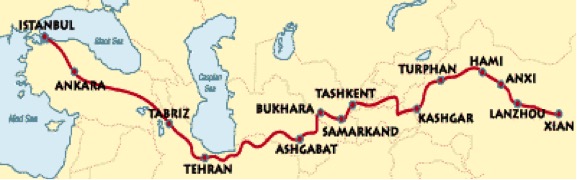
A new commercial rail route connecting China to Iran has officially launched with the arrival of the first cargo train from the eastern Chinese city of Xian at the Aprin dry port near Tehran.
Aprin’s CEO highlighted the port’s strategic role in lowering transport costs and reducing reliance on coastal freight hubs.
Railway infrastructure connecting Iran and China allows freight trains to travel from Shanghai to Tehran in 15 days, compared to 30 days via the maritime route.
On 12 May, railway officials from Iran, China, Kazakhstan, Uzbekistan, Turkmenistan, and Turkiye met in Tehran to advance a transcontinental rail network linking Asia to Europe, Tasnim News Agency reported on 25 May.
The six nations agreed on competitive tariffs and operational standards to streamline regional rail services and boost trade connectivity.
China and Iran have expanded trade and economic relations in recent years, as Tehran seeks to bypass US economic sanctions seeking to strangle its economy and oil exports.
The rail line between the two countries enables Iranian oil exports to China and allows Chinese goods to reach Europe without US naval interference.
In 2018, Iranian Supreme Leader Ali Khamenei stated that Iran should look to the east rather than the west. Since that time, China has become Iran’s largest oil purchaser, while Beijing has been able to supply Tehran with virtually all its needed manufactured goods, including electronics such as computers and cell phones.
The following year, Iran joined China’s “One Belt One Road” (BRI) initiative – President Xi Jinping’s hallmark strategic foreign policy initiative, seeking to recreate the economic ties that existed between ancient China and ancient Persia along the “Silk Road” dating back to the third century BCE.
China and Iran signed a historic 25-year economic cooperation agreement in 2021, reportedly worth $400 billion in trade.
In 2023, China’s growing relations with Iran helped it mediate a Saudi–Iranian rapprochement, which led to the resumption of diplomatic relations that had been cut in 2016.
Europe must bear consequences of forcing return of UN sanctions against Iran: FM
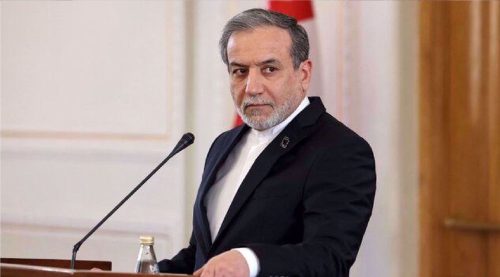
Iran’s Foreign Minister Abbas Araghchi
Press TV – May 21, 2025
Foreign Minister Abbas Araghchi has cautioned the US’s European allies in a 2015 nuclear agreement with Iran against invoking the so-called “snapback mechanism” to re-impose the United Nations sanctions against the Islamic Republic.
Speaking to Saudi Arabia’s Asharq News network on Wednesday, the top diplomat emphasized that such a move would end participation by the European parties — the UK, France, and Germany — in the deal that is officially known as the Joint Comprehensive Plan of Action (JCPOA).
He added that the trio’s potential recourse to the mechanism would lead to significant consequences and potential irreversible escalation of tensions, referring to the likelihood of strong retaliatory steps that the Islamic Republic could take in response.
Araghchi reiterated Iran’s readiness to engage in diplomacy, expressing hope that the European parties too would demonstrate determination to resolve the current impasse.
The deadlock occurred when the United States ditched the JCPOA in 2018, and returned the illegal and unilateral sanctions that the agreement had lifted.
This was followed by the European trio’s failure to return the US to the accord, as they had said would do, as well as their walking in Washington’s footsteps by returning their own sanctions.
In response to the betrayal, Iran began a number of legitimate and gradually escalating nuclear countermeasures.
“The situation we’re in is by no means Iran’s fault. It is the fault of the United States, which withdrew from the JCPOA, and the fault of the European countries that failed to compensate for the US’s withdrawal,” Araghchi added.
‘Uranium enrichment absolutely non-negotiable’
Addressing the topic of Iran’s peaceful uranium enrichment activities, the foreign minister said the activities were a principled and fundamental issue for Iran.
He emphasized that the enrichment program was a major scientific achievement developed by domestic scientists and held immense value for the Iranian people.
The official, meanwhile, paid tribute to the seven-strong Iranian nuclear scientists, who were assassinated amid their invaluable contribution to the Islamic Republic’s peaceful nuclear energy program.
According to Araghchi, the victims’ sacrifices towards advancement of the program had made the nuclear issue “absolutely non-negotiable.”
Fifth round of Iran-US talks to be held on May 23: Oman
Press TV – May 21, 2025
The fifth round of indirect negotiations between Iran and the United States will take place on May 23, according to Oman’s foreign minister.
Badr al-Busaidi made the announcement on Wednesday, adding that the talks will be held in the Italian capital, Rome.
Three of the previous rounds took place in the Omani capital, Muscat, and the second round in Rome.
Iranian and US officials have not commented on the announcement so far.
The talks focus on producing a replacement for the 2015 nuclear deal, which was derailed by American withdrawal in 2018.
Iran had previously declared it would decide whether to take part in the next round of the talks after US officials claimed any deal would not allow Tehran to enrich uranium.
Iran says it will not forgo its right to uranium enrichment, which is guaranteed under the Non-Proliferation Treaty.
Featured Video
Racist Seinfeld Dances for Joy as Bibi Unveils His New Map
or go to
Aletho News Archives – Video-Images
TV Drama Review
Japanese drama projects Japan’s wartime atrocities onto Chinese characters

Global Times | October 25, 2026
By portraying Chinese characters as perpetrators of ruthless violence while casting Japanese Self-Defense Forces (SDF) intelligence operatives as defenders, the season 2 of the Japanese drama Vivant has recently drawn criticism from Chinese netizens, who argue that its depiction turns historical reality on its head while ignoring Japan’s wartime atrocities.
The TBS drama series – a spy suspense story in which an alleged unofficial intelligence unit of the SDF operates across the globe — has attracted a passionate fanbase. Its currently airing season 2 opened with a household rating of 18.8 percent, the highest for a TV drama this year, according toa commentary article by Japanese media Toyo Keizai.
What draws attention is the portrayal of the enemies in the series, the article noted. Scenes in which the Chinese organization subjects kidnapped members of the SDF unit to brutal torture are repeated with unrelenting intensity.
It is rare for Japanese TV dramas to explicitly portray a real-life country as the enemy, the article noted.
Japanese Prime Minister Sanae Takaichi also made a reference to the drama, saying that she has been recording Vivant and hopes to binge-watch it over the year-end and New Year holidays, according to Japanese media outlets.
China’s CCTV News report on Sunday revealed that the drama features scenes in which Chinese personnel cut off the fingers of and stab Japanese intelligence operatives in the abdomen. Such acts bear striking similarities to the torture inflicted on Chinese nationals by invading Japanese troops during the World War II.
The drama distorts the truth by attributing these atrocities to modern Chinese characters. Beneath the surface, it subtly glorifies Japan’s cross-border overseas operations, blurs the functional boundaries of the SDF and implicitly promotes an expansionist narrative, per CCTV News. … continue
Blog Roll
 Aletho News
- EU facing trillion-euro debt hole while seeking more cash for Kiev
- How US, Europe, Persian Gulf states exhausted missile stockpiles, splurged billions to defend Israel
- Up in arms… Koreans reject U.S. empire’s plan to make South Korea the next Ukraine
- Iran, Turkey, Pakistan, Saudi Arabia could advance region-led security framework in Tehran: FM spox
- Netizens condemn Japanese drama for projecting Japan’s wartime atrocities onto Chinese characters
- Racist Seinfeld Dances for Joy as Bibi Unveils His New Map
- A West Bank War for Netanyahu’s Election Campaign, Could It Backfire?
- Yemen denounces European Parliament’s ‘hypocritical’ push to blacklist Ansarullah
- Qalibaf: UAE’s UN bid aims to ‘clear the runway’ for ‘Greater Israel’, whitewash genocide
- Pakistan reopens Iran border after boosting security: Report
- If Americans Knew
- An error has occurred; the feed is probably down. Try again later.
- No Tricks Zone
- Sudden Stratospheric Warming, Powerful El Niño Combination May Lead To Extreme Europe Cold, Energy Crisis!
- Two New Studies Find Thwaites Glacier Melt Cannot Be Driven By Human Activity Or A Warming Ocean
- E-Cars Reduce CO2 Emissions By Only 41% Compared To Internal Combustion Engine Vehicles
- Predictions Made By Renowned Climate Professor Over Past Decades Have Been Proven To Be Poor
- New Study Suggests Large Regions Of The Pacific Ocean Have Been Cooling For The Last 80 Years
- Germany’s Green Energy Debacle: High Energy Costs Force Kahla Porzellan to Close After 182 Years!
- New Study: 50 Years Of The Most Aggressive ‘Net Zero’ Policies Can Only Affect The Global Climate By 0.03°C
- US September “Heat” Was No Record…Many Records Set Decades Ago
- Latest European Green Energy Debacle; Portugal’s Largest Flagship Solar Park Insolvent!
- Green Energy Debacle: German Expert Professor Fritz Vahrenholt Warns Of Severe Economic And Social Consequences

