I was invited along with other presidential candidates to be at the AIPAC conference in Washington, but obviously I could not make it because we are here.
The issues that AIPAC is dealing with are very important issues and I wanted to give the same speech here as I would have given if we were at that conference.
Let me begin by saying that I think I am probably the only candidate for president who has personal ties with Israel. I spent a number of months there when I was a young man on a kibbutz, so I know a little bit about Israel.
Clearly, the United States and Israel are united by historical ties. We are united by culture. We are united by our values, including a deep commitment to democratic principles, civil rights and the rule of law.
Israel is one of America’s closest allies, and we – as a nation – are committed not just to guaranteeing Israel’s survival, but also to make sure that its people have a right to live in peace and security.
To my mind, as friends – long term friends with Israel – we are obligated to speak the truth as we see it. That is what real friendship demands, especially in difficult times.
Our disagreements will come and go, and we must weather them constructively.
But it is important among friends to be honest and truthful about differences that we may have.
America and Israel have faced great challenges together. We have supported each other, and we will continue to do just that as we face a very daunting challenge and that is the Israeli-Palestinian conflict.
I am here to tell the American people that, if elected president, I will work tirelessly to advance the cause of peace as a partner and as a friend to Israel.
But to be successful, we have also got to be a friend not only to Israel, but to the Palestinian people, where in Gaza unemployment today is 44 percent and we have there a poverty rate which is almost as high.
So when we talk about Israel and Palestinian areas, it is important to understand that today there is a whole lot of among Palestinians and that cannot be ignored. You can’t have good policy that results in peace if you ignore one side.
The road towards peace will be difficult. Wonderful people, well-intentioned people have tried decade after decade to achieve that and it will not be easy. I cannot tell you exactly how it will look – I do not believe anyone can – but I firmly believe that the only prospect for peace is the successful negotiation of a two-state solution.
The first step in that road ahead is to set the stage for resuming the peace process through direct negotiations.
Progress is never made unless people are prepared to sit down and talk to each other. This is no small thing. It means building confidence on both sides, offering some signs of good faith, and then proceeding to talks when conditions permit them to be constructive. Again, this is not easy, but that is the direction we’ve got to go.
This will require compromises on both sides, but I believe it can be done. I believe that Israel, the Palestinians, and the international community can, must, and will rise to the occasion and do what needs to be done to achieve a lasting peace in a region of the world that has seen so much war, so much conflict and so much suffering.
Peace will require the unconditional recognition by all people of Israel’s right to exist. It will require an end to attacks of all kinds against Israel.
Peace will require that organizations like Hamas and Hezbollah renounce their efforts to undermine the security of Israel. It will require the entire world to recognize Israel.
Peace has to mean security for every Israeli from violence and terrorism.
But peace also means security for every Palestinian. It means achieving self-determination, civil rights, and economic well-being for the Palestinian people.
Peace will mean ending what amounts to the occupation of Palestinian territory, establishing mutually agreed upon borders, and pulling back settlements in the West Bank, just as Israel did in Gaza – once considered an unthinkable move on Israel’s part.
That is why I join much of the international community, including the U.S. State Department and European Union, in voicing my concern that Israel’s recent expropriation of an additional 579 acres of land in the West Bank undermines the peace process and, ultimately, Israeli security as well.
It is absurd for elements within the Netanyahu government to suggest that building more settlements in the West Bank is the appropriate response to the most recent violence. It is also not acceptable that the Netanyahu government decided to withhold hundreds of millions of Shekels in tax revenue from the Palestinians, which it is supposed to collect on their behalf.
But, by the same token, it is also unacceptable for President Abbas to call for the abrogation of the Oslo Agreement when the goal should be the ending of violence.
Peace will also mean ending the economic blockade of Gaza. And it will mean a sustainable and equitable distribution of precious water resources so that Israel and Palestine can both thrive as neighbors.
Right now, Israel controls 80 percent of the water reserves in the West Bank. Inadequate water supply has contributed to the degradation and desertification of Palestinian land. A lasting a peace will have to recognize Palestinians are entitled to control their own lives and there is nothing human life needs more than water.
Peace will require strict adherence by both sides to the tenets of international humanitarian law. This includes Israeli ending disproportionate responses to being attacked – even though any attack on Israel is unacceptable.
We recently saw a dramatic example of just how important this concept is. In 2014, the decades-old conflict escalated once more as Israel launched a major military campaign against Hamas in the Gaza Strip. The Israeli offensive came after weeks of indiscriminate rocket fire into its territory and the kidnapping of Israeli citizens.
Of course, I strongly object to Hamas’ long held position that Israel does not have the right to exist – that is unacceptable. Of course, I strongly condemn indiscriminate rocket fire by Hamas into Israeli territory, and Hamas’ use of civilian neighborhoods to launch those attacks. I condemn the fact that Hamas diverted funds and materials for much-needed construction projects designed to improve the quality of life of the Palestinian people, and instead used those funds to construct a network of tunnels for military purposes.
However, let me also be very clear: I – along with many supporters of Israel – spoke out strongly against the Israeli counter attacks that killed nearly 1,500 civilians and wounded thousands more. I condemned the bombing of hospitals, schools and refugee camps.
Today, Gaza is still largely in ruins. The international community must come together to help Gaza recover. That doesn’t mean rebuilding factories that produce bombs and missiles – but it does mean rebuilding schools, homes and hospitals that are vital to the future of the Palestinian people.
These are difficult subjects. They are hard to talk about both for many Americans and for Israelis. I recognize that, but it is clear to me that the path toward peace will require tapping into our shared humanity to make hard but just decisions.
Nobody can tell you when peace will be achieved between Israel and the Palestinians. No one knows the exact order that compromises will have to be made to reach a viable two-state solution. But as we undertake that work together, the United States will continue its unwavering commitment to the safety of Israeli citizens and the country of Israel.
Let me just say a word about an overall agenda for the Middle East.
Of course, beyond the Palestinian question, Israel finds itself in the midst of a region in severe upheaval.
First, the so-called Islamic State – ISIS – threatens the security of the entire region and beyond, including our own country and our allies. Secretary of State Kerry was right to say that ISIS is committing genocide, and there is no doubt in my mind that the United States must continue to participate in an international coalition to destroy this barbaric organization.
While obviously much needs to be done, so far our effort has had some important progress, as airstrikes have degraded ISIS’ military capacity, and the group has lost more than 20 percent of its territory in the past year. So we are making some progress.
But we are entering a difficult period in the campaign against ISIS.
The government in Baghdad has yet to achieve a sustainable political order that unites Iraq’s various ethnic and sectarian factions, which has limited its ability to sustain military victories against ISIS. Unless there is a united government, it’s going to be hard to be effective in destroying ISIS.
More inclusive, stable governance in Iraq will be vital to inflict a lasting defeat on ISIS. Otherwise, ISIS could regain its influence or another, similar organization may spring up in its place.
In Syria, the challenges are even more difficult. The fractured nature of the civil war there has often diluted the fight against ISIS – exemplified by the Russian airstrikes that prioritized hitting anti-Assad fighters rather than ISIS. And, just like in Iraq, ISIS cannot be defeated until the groups that take territory from ISIS can responsibly govern the areas they take back. Ultimately, this will require a political framework for all of Syria.
The U.S. must also play a greater role disrupting the financing of ISIS and efforts on the Internet to turn disaffected youth into a new generation of terrorists.
While the U.S. has an important role to play in defeating ISIS, that struggle must be led by the Muslim countries themselves on the ground. I agree with King Abdullah of Jordan who a number of months ago [said] that what is going on there right now is nothing less than a battle for the soul of Islam and the only people who will effectively destroy ISIS there will be Muslim troops on the ground.
So what we need is a coalition of those countries.
Now, I am not suggesting that Saudi Arabia or any other states in the region invade other countries, nor unilaterally intervene in conflicts driven in part by sectarian tensions.
What I am saying is that the major powers in the region – especially the Gulf States – have to take greater responsibility for the future of the Middle East and the defeat of ISIS.
What I am saying is that countries like Qatar – which intends to spend up to $200 billion to host the 2022 World Cup – Qatar which per capita is the wealthiest nation in the world – Qatar can do more to contribute to the fight Against ISIS. If they are prepared to spend $200 billion for a soccer tournament, then they have got to spend a lot spend a lot more against a barbaric organization.
What I am also saying is that other countries in the region – like Saudi Arabia, which has the 4th largest defense budget in the world – has to dedicate itself more fully to the destruction of ISIS, instead of other military adventures like the one it is pursuing right now in Yemen.
And keep in mind that while ISIS is obviously a dangerous and formidable enemy, ISIS has only 30,000 fighters on the ground. So when we ask the nations in the region to stand up to do more against ISIS – nations in the region which have millions of men and women under arms – we know it is surely within their capability to destroy ISIS.
Now the United States has every right in the world to insist on these points. Remember – I want everybody to remember – that not so many years ago it was the United States and our troops that reinstalled the royal family in Kuwait after Saddam Hussein’s invasion in 1990. We put these people back on the throne. Now they have the obligation to work with us and other countries to destroy ISIS.
The very wealthy – and some of these countries are extraordinarily wealthy from oil money or gas money – these very wealthy and powerful nations in the region can no longer expect the United States to do their work for them. Uncle Sam cannot and should not do it all. We are not the policeman of the world.
As we continue a strongly coordinated effort against ISIS, the United States and other western nations should be supportive of efforts to fight ISIS and al-Qaeda. But it is the countries in the region that have to stand up against these violently extremist and brutal organizations.
Now I realize that given the geopolitics of the region this is not going to be easy. I realize that there are very strong and historical disagreements between different countries in the region about how ISIS should be dealt with.
I realize different countries have different priorities. But we can help set the agenda and mobilize stronger collective action to defeat ISIS in a lasting way.
Bottom line is the countries in the region – countries which by the way are most threatened by ISIS – they’re going to have to come together, they’re going to have to work out their compromises, they are going to have to lead the effort with the support of the United States and other major powers in destroying ISIS.
Another major challenge in the region, of course, is the Syrian Civil War itself – one of the worst humanitarian disasters in recent history.
After five years of brutal conflict, the only solution in Syria will be, in my view, a negotiated political settlement. Those who advocate for stronger military involvement by the U.S. to oust Assad from power have not paid close enough attention to history. That would simply prolong the war and increase the chaos in Syria, not end it.
In other words, we all recognize that Assad is a brutal dictator. But I think that our priorities right now have got to be destroy ISIS, work out a political settlement with Russia and Iran to get Assad out of power.
I applaud Secretary Kerry and the Obama administration for negotiating a partial ceasefire between the Assad regime and most opposition forces. The ceasefire shows the value of American-led diplomacy, rather than escalating violence. It may not seem like a lot, but it is. Diplomacy in this instance has had some real success.
Let me also say what I think most Americans now understand, that for a great military power like the United States it is easy to use a war to remove a tyrant from power, but it is much more difficult to comprehend the day after that tyrant is removed from power and a political vacuum occurs.
All of us know what has occurred in Iraq. We got rid of Saddam Hussein, a brutal, brutal murderer and a tyrant. And yet we created massive instability in that region which led to the creation of ISIS. I am very proud to have been one of the members in Congress to vote against that disastrous war.
And the situation is not totally dissimilar from what has happened in Libya. We got rid of a terrible dictator there, Colonel Gaddafi, but right now chaos has erupted and ISIS now has a foothold in that area.
Bottom line is that regime change for a major power like us is not hard. But understanding what happens afterward is something that always has got to be taken into consideration.
In my view, the military option for a powerful nation like ours – the most powerful nation in the world – should always be on the table. That’s why we have the most powerful military in the world. But it should always be the last resort not the first resort.
Another major challenge in the region is Iran, which routinely destabilizes the Middle East and threatens the security of Israel.
Now, I think all of us agree that Iran must be able to acquire a nuclear weapon. That would just destabilize the entire region and create disastrous consequences.
Where we may disagree is how to achieve that goal. I personally strongly supported the nuclear deal with the United States, France, China, Germany, Russia, the United Kingdom and Iran because I believe it is the best hope to prevent Iran from developing a nuclear weapon.
I want to thank the Obama administration for doing a very good job under very, very difficult circumstances.
I believe we have an obligation to pursue diplomatic solutions before resorting to military intervention.
You know it is very easy for politicians to go before the people and talk about how tough we are, and we want to wipe out everybody else. But I think if we have learned anything from history is that we pursue every diplomatic option before we resort to military intervention.
And interestingly enough, more often than not, diplomacy can achieve goals that military intervention cannot achieve. And that is why I supported the sanctions that brought Iran to the negotiating table and allowed us to reach an agreement.
But let me tell you what I firmly believe. The bottom line is this: if successfully implemented – and I think it can be – the nuclear deal will prevent Iran from obtaining a nuclear weapon. And preventing Iran from getting the bomb makes the world a safer place.
Does the agreement achieve everything I would like? Of course not.
But to my mind, it is far better than the path we were on with Iran developing nuclear weapons and the potential for military intervention by the United States and Israel growing greater by the day.
I do not accept the idea that the “pro-Israel” position was to oppose the deal. Preventing Iran from getting a nuclear weapon will strengthen not only the United States’ security, but Israel’s security as well.
And I am not alone in that idea. While Prime Minister Netanyahu is vocally opposed to the accord, his is hardly a consensus opinion in Israel and it’s important that everyone understand that. Dozens of former security officials, including retired Army generals and chiefs of the Shin Bet and Mossad intelligence agencies support the agreement. Netanyahu may not, but many others in Israel do.
But let me be clear: if Iran does not live up to the agreement, we should re-impose sanctions and all options are back on the table.
Moreover, the deal does not mean we let Iran’s aggressive acts go unchecked. The world must stand united in condemning Iran’s recent ballistic missile tests as well as its continued support for terrorism through groups like Hezbollah.
Going forward, I believe we need a longer-term vision for dealing with Iran that balances two important objectives.
First, we must counter the destabilizing behavior of Iran’s leaders.
But secondly we must also leave the door open to more diplomacy to encourage Iranian moderates and the segments of the Iranian people – especially the younger generations – who want a better relationship with the West. While only a small step in the right direction, I was heartened by the results of the recent parliamentary elections in which Iranian voters elected moderates in what was, in part, a referendum on the nuclear deal.
I know that some say there is just no dealing with Iran – in any way at all – for the foreseeable future. And that is the position of some. After all, Iran is in a competition with Saudi Arabia and its allies for influences over that region.
But a more balanced approach towards Iran that serves our national security interests should hardly be a radical idea. We have serious concerns about the nature of the Iranian government, but we have to [be] honest enough, and sometimes we are not, to admit that Saudi Arabia – a repressive regime in its own right – is hardly an example of Jeffersonian democracy.
Balancing firmness with willingness to engage with diplomacy in dealing with Iran will not be easy. But it is the wisest course of action to help improve the long-term prospects of stability and peace in the Middle East – and to keep us safe.
Lastly, these are but some – not all – of the major issues where the interests of Israel intersect with those of the United States. I would address these issues and challenges as I would most issues and that is by having an honest discussion and by bringing people together.
The truth is there are good people on both sides who want peace, And the other truth is there despots and liars on both sides who benefit from continued antagonism.
I would conclude by saying there has a disturbing trend among some of the Republicans in this presidential election that take a very, very different approach. And their approach I think would be a disaster for this country. The Republican front-runner, Donald Trump, suggested limiting immigration according to religion and creating a national database based on religion – something unprecedented in our country’s history.
Now this would not only go against everything we stand for as a nation, but also – in terms of our relationship to the rest of the world – it would be a disaster.
Let me just conclude by saying this: the issues that I’ve discussed today are not going to be easily solved.
Everybody knows that. But I think the United States has the opportunity, as the the most powerful nation on earth, to play an extraordinary role in trying to bring to people together – to try to put together coalitions in the region to destroy ISIS.
And that is a responsibility that I, if elected president, would accept in a very, very serious way. We have seen too many wars, too much killing, too much suffering. And let us all together – people of good faith – do everything we can to finally, finally bring peace and stability to that region.
Thank you all very much.
March 21, 2016
Posted by aletho |
Ethnic Cleansing, Racism, Zionism, Timeless or most popular, War Crimes, Wars for Israel | Bernie Sanders, Hamas, Hezbollah, Iran, Israel, Middle East, Palestine, Sanctions against Iran, Saudi Arabia, United States, Zionism |
Leave a comment
A group of US Republican senators has introduced legislation to impose new sanctions against Iran over what legislators have described as Tehran’s support for terrorism and human rights violations.
The legislation, which was introduced on Thursday by Senator Kelly Ayotte, aims to impose harsher sanctions on Iran’s economy.
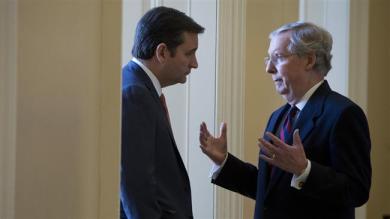
The bill is sponsored by Senator Marco Rubio and Senators Mark Kirk, Dan Coats and Cory Gardner as well as Senate Majority Leader Mitch McConnell.
Several other Republican senators have also signed on the new bill, dubbed the “Iran Terrorism and Human Rights Sanctions Act of 2016.”
The bill’s co-sponsors include Senator Ted Cruz, a Republican presidential candidate, and Senators John Cornyn, Rob Portman, Pat Roberts, Ben Sasse, Tom Cotton, Jerry Moran, Johnny Isakson and Lisa Murkowski.
The senators have accused Iran of supporting terrorism in the Middle East and committing human rights abuses.
“I reject our current posture of willful ignorance and inaction towards Iran’s terrorist activities, illegal missile testing, funding Assad’s war, and human rights abuses,” said Kirk, a strong supporter of Israel and advocate of Iran sanctions.
“The Administration’s response cannot once again be it’s ‘not supposed to be doing that’ as Iran continues to walk all over US foreign policy and the international community,” he said.
The Obama administration has advised the Republican-dominated Senate not to impose more sanctions on Iran after the historic nuclear agreement between Tehran and the world powers.
With the Iran Sanctions Act expiring at the end of this year, GOP senators are trying their best to reauthorize and impose more sanctions on Tehran on the pretext of terrorism, human rights issues, and ballistic missile tests.
Iran and the five permanent members of the UN Security Council – the United States, Britain, Russia, China, France as well as Germany started implementation of the deal, dubbed the Joint Comprehensive Plan of Action, on January 16.
After JCPOA went into effect, all nuclear-related sanctions imposed on Iran by the European Union, the Security Council and the US were lifted.
Iran in return has put some limitations on its nuclear activities. The nuclear agreement was signed on July 14, 2015 following two and a half years of intensive talks.
March 18, 2016
Posted by aletho |
Corruption, Economics, Wars for Israel | Cory Gardner, Dan Coats, Marco Rubio, Mark Kirk, Mitch McConnell, Sanctions against Iran, Ted Cruz, United States |
Leave a comment
On March 10, leader of the Islamic Revolution Ayatollah Khamenei met the newly elected Assembly of Experts. He said the United States harbors plans to change the state structure of Iran, but an attempt to stage a coup d’état is doomed to fail.
The Iranian spiritual leader noted that Iranians must not forget what the West has done to their country. They must always remember who Iran has to deal with. The West does not represent the entire world community; it’s just part of it. The Ayatollah warned that those who wish Iran ill will soon have to stay in line willing to normalize the relations.
The Assembly of Experts of Iran is a deliberative body of eighty-eight mujtahids (Islamic theologians) that is charged with electing and removing the supreme leader of Iran and supervising his activities. The members are elected from lists of candidates by direct public vote for eight-year terms. President Hassan Rouhani is a member of the Assembly, as well as other top officials. If Ayatollah Khamenei (76) is not able to continue in the office, the Assembly will elect another person to perform his duties. The spiritual leader called on the Assembly members to serve the interests of the state and preserve allegiance to the values of Islamic revolution.
According to him, today the normalization of the relationship with the United States does not serve the Iranian interests. The US is still viewed as a threat.
The Iranian nuclear dossier was closed in July 2015, but it did not lead to normalization of the relationship. The US continues to exert economic pressure on the Islamic Republic. The United States lifted the sanctions against Iran only partially with numerous reservations unlike America’s European allies who lifted them all on January 17. Obama’s temporary softening his position on Iran was nothing more than just another tactical move.
President Obama extended the status of national emergency vis-a-vis Tehran despite the recent lifting of nuclear-related sanctions stipulated in Iran’s agreement with the P5+1 group of countries, President Barack Obama told the Speaker of the US House of Representatives in a letter on March 9.
“Certain actions and policies of the Government of Iran are contrary to the interests of the United States in the region and continue to pose an unusual and extraordinary threat to the national security, foreign policy, and economy of the United States. For these reasons, I have determined that it is necessary to continue the national emergency declared with respect to Iran and to maintain in force comprehensive sanctions,” the President informed the Congress.
US firms will still be largely left out of the market. Washington tries to expand the sanctions regime internationally.
This time the United States wants to impose additional sanctions related to Iran’s recent launches of ballistic missiles. The US Congress wants the administration to immediately bring the issue before the UN Security Council. It’s not clear what the Security Council has to consider. Could the Iranian missiles be nuclear-tipped? Probably yes, but Iran has no nuclear warheads to be fitted on the missiles. The International Atomic Energy Agency (IAEA) created the Iran Task Force within the Department of Safeguards, reporting directly to the deputy director-general for safeguards. The task force is responsible for all technical activities that now are carried out under the Joint Plan of Action and to be carried out under the new agreement between Iran and the P5+1 upon its entering into force. The Joint Plan of Action is being implemented according to the United Nations Security Council resolution 2231 and the decisions taken in December 2015. The Council simply has nothing to discuss.
Still, the US continues to stick to its present course. The US wants the discussion on Iran to go beyond the missiles program to include the destabilization role of Iran in the region, especially the security of Israel. During the recent visit of US Vice President to Israel, it was stated that Tehran’s Middle East policy was no less dangerous than the activities of international terrorist organizations. Israel’s motivation for rising tensions is clear. Tel Aviv is involved in a bargain deal with the United States over increased military aid in view of the nuclear deal concluded with Iran. It’s hard to understand why the Obama administration puts Israeli security interests above the interests of the United States and why the mission to counter Iran is given higher priority than the fight against terrorism.
Surprisingly, that’s what US military top leaders do. Gen. Lloyd Austin III, the head of the US Central Command and Gen. Joseph Votel – the head of the US Special Operations Command who has been nominated to replace Austin – told lawmakers that Islamic State fighters represent the greatest short-term threat to US security in the Middle East.
But over the long-term, both men are more concerned with Iranian support for terrorist groups and interference in neighboring governments’ operations.
In reality, Tehran’s regional policy is focused on providing aid to the Syrian government in its fight against the terrorist organizations that have seized parts of the Syrian national territory. In 2015, 37 thousand foreign mercenaries were fighting the Syrian army. The absolute majority of them infiltrated Syria from Turkey. Ankara’s main enemy are not terrorist groups, but the Syrian Kurds – the only ground force capable of fighting the Islamic State on the ground. It’s an open secret that in 2013 President Obama allowed the CIA to arm rebels. The arms shipments were paid for by another US vassal state – Saudi Arabia, which provided recommendations on who the weapons should go to. As a result, the weapons went right into wrong hands.
By accusing Iran of supporting international terrorism, the US does not shy away from outright provocations.
For instance, Iran was ordered by a US judge to pay more than $10.5 billion in damages to families of people killed in the Sept. 11, 2001, terrorist attacks and to a group of insurers.
US District Judge George Daniels in New York issued a default judgment Wednesday against Iran for $7.5 billion to the estates and families of people who died at the World Trade Center and Pentagon. It includes $2 million to each estate for the victims’ pain and suffering plus $6.88 million in punitive damages. Daniels also awarded $3 billion to insurers including Chubb Ltd. that paid property damage, business interruption and other claims. Earlier in the case, Daniels found that Iran had failed to defend claims that it aided the Sept. 11 hijackers and was therefore liable for damages tied to the attacks. Daniels’s March 9 ruling adopts damages findings by a US magistrate judge in December. While it is difficult to collect damages from an unwilling foreign nation, the plaintiffs may try to collect part of the judgments using a law that permits parties to tap terrorists’ assets frozen by the government.
It’s clear, the US wants to rob Iran. For instance, a new US export restriction against China’s ZTE Corp. for alleged Iran sanctions violations is likely to disrupt the telecom manufacturer’s sprawling global supply chain and could create substantial parts shortages, according to sanctions experts. Under the measure announced by the Commerce Department on March 7, US manufacturers will be banned from selling components to ZTE, which is a major global supplier of telecom-networking equipment. In addition, foreign manufacturers will be prohibited from selling products containing a significant amount of US-made parts to the Chinese company. The Commerce Department said ZTE planned to use a series of shell companies “to illicitly re-export controlled items to Iran in violation of US export control laws.” It said ZTE acted “contrary to the national security or foreign policy interests of the United States.”
Under the circumstances, there is no alternative to the decision made by the Iranian top leadership to improve relations with the whole world, except the United States. Sticking to such a policy seems to be a natural thing to do. It’s also easily understandable why Tehran is reluctant to seek ways to normalize the relations with the United States.
There is no thaw in the bilateral relationship. Instead, the countries are in for a new round of confrontation.
March 17, 2016
Posted by aletho |
Ethnic Cleansing, Racism, Zionism, Progressive Hypocrite, Timeless or most popular, Wars for Israel | George Daniels, Israel, Middle East, Obama, Sanctions against Iran, United States, Zionism |
Leave a comment

Russia’s envoy to the United Nations Vitaly Churkin
Russia opposes the imposition of any new sanctions on Iran over its recent ballistic missile tests, saying the missile launches did not violate UN resolutions.
In response to a question on whether new sanctions should be imposed on Iran over its recent missile tests, Russia’s envoy to the United Nations Vitaly Churkin said Monday, “The clear and short answer is no.”
He added that Iran did not breach the Security Council Resolution 2231 that endorsed a nuclear agreement between the Islamic Republic and the P5+1 group of countries on July 14, 2015.
Resolution 2231 (2015) provides for the termination of the provisions of previous Security Council resolutions on the Iranian nuclear program and establishes specific restrictions that apply to all states without exception.
The resolution calls upon Iran not to undertake any activity related to ballistic missiles designed to be capable of delivering nuclear weapons, including launches using such ballistic missile technology.
The Islamic Revolution Guards Corps (IRGC) successfully test-fired two more ballistic missiles on March 9 as part of military drills to assess the IRGC’s capabilities. The missiles dubbed Qadr-H and Qadr-F were fired during large-scale drills, code-named Eqtedar-e-Velayat.
On March 8, Iran fired another ballistic missile called Qiam from silo-based launchers in different locations across the country.
On January 16, Iran and the five permanent members of the UN Security Council plus Germany – started to implement the Joint Comprehensive Plan of Action (JCPOA).
After the JCPOA went into effect, all nuclear-related sanctions imposed on Iran by the European Union, the Security Council and the US were lifted. Iran, in return, has put some limitations on its nuclear activities.
Iranian Foreign Ministry spokesman, Hossein Jaberi Ansari, said on March 10 that the test-fire of ballistic missiles was “neither inconsistent with Iran’s commitments under the JCPOA, nor is it against the Security Council Resolution 2231.”
March 14, 2016
Posted by aletho |
Economics, Wars for Israel | Iran, Russia, Sanctions against Iran |
Leave a comment
France says Iran may be targeted with new sanctions over its recent ballistic missile tests, to which the Islamic Republic says it is entitled because they fall within the realm of conventional military capabilities.
“If necessary, sanctions will be taken,” French Foreign Minister Jean-Marc Ayrault said in Paris on Sunday. He was speaking after a meeting with US Secretary of State John Kerry and several European counterparts.
Iran’s Islamic Revolution Guards Corps (IRGC) successfully test-fired two ballistic missiles, dubbed Qadr-H and Qadr-F, on Wednesday as part of military drills to assess their capabilities.
A day earlier, the Guards had fired another ballistic missile, called Qiam, from silo-based launchers in different locations across the country.
Last October, Iran successfully test-fired its precision-guided long-range Emad missile, sparking an uproar among US politicians.
In January, the US Department of the Treasury imposed new sanctions against Iranian citizens and companies over the country’s ballistic missile program.
Iran says it has a right to carry out missile tests, asserting that none of its missiles are capable of carrying nuclear warheads.
US Secretary of State John Kerry, who was speaking alongside the French top diplomat, described the recent tests as a breach of UN resolutions. Washington has, meanwhile, asked the UN Security Council to discuss the matter on Monday.
The Islamic Republic has repeatedly said that its military might poses no threat to other countries, reiterating that its defense doctrine is merely based on deterrence.
March 13, 2016
Posted by aletho |
Wars for Israel | France, Iran, Israel, Sanctions against Iran, Zionism |
Leave a comment
The United States extended the national emergency vis-a-vis Tehran despite the recent lifting of nuclear-related sanctions stipulated in Iran’s agreement with the P5+1 group of countries, President Barack Obama told the Speaker of the US House of Representatives in a letter on Wednesday.
On July 14, 2015, Iran and the P5+1 group of negotiators, comprising China, France, Russia, United Kingdom, United States plus Germany, signed a historic accord to guarantee the peaceful nature of Tehran’s nuclear activities in exchange for the lifting of sanctions.
“The national emergency with respect to Iran that was declared on March 15, 1995, is to continue in effect beyond March 15, 2016,” Obama stated.
“Though lifting of nuclear-related sanctions constitutes a significant change in our sanctions posture [with Iran], non-nuclear related sanctions remain in place.”
The United States, Obama explained, lifted nuclear-related sanctions against Iran after the International Atomic Energy Agency issued a report in January verifying that Iran implemented key nuclear-related steps specified in the JCPOA.
“Nevertheless, certain actions and policies of the government of Iran are contrary to the interests of the United States in the region and continue to pose an unusual and extraordinary threat to the national security, foreign policy and economy of the United States,” Obama claimed.
Earlier this week, according to reports, Iran carried out ballistic missile tests that Washington vowed to raise with the UN Security Council if confirmed.
March 10, 2016
Posted by aletho |
Economics, Progressive Hypocrite, Wars for Israel | Iran, Obama, Sanctions against Iran, United States |
Leave a comment
Pluto-Zionism is the three-way marriage of plutocracy, right-wing Zionism and US presidential candidate Hillary Clinton, a serial war criminal, racist and servant of Wall Street. How did this deadly ménage-a-trois come about? The answer is that a stratospherically wealthy donor group, dedicated to promoting Israel’s dominance in the Middle East and deepening US military intervention in the region, has secured Clinton’s unconditional support for Tel Aviv’s ambitions and, in exchange, Hilary receives scores of millions to finance her Democratic Party foot soldiers and voters for her campaign.
Pluto-Zionism and Clinton
Pluto-Zionists comprise the leading financial backers of Clinton. Her million-dollar backers, among the most powerful financiers and media moguls in America, include: George Soros ($6 million), Marc Benioff, Roger Altman, Steven Spielberg, Haim and Cheryl Saban ($3 million and counting), Jeffrey Katzenberg, Donald Sussman, Herb Sandler, Jay and Mark Pritzker, S. Daniel Abraham ($1 million), Bernard Schwartz, Marc Lasry, Paul Singer, David Geffen, Fred Eychaner, Norman Braman and Bernie Marcus. Waiting in the wings are the Republican billionaire ‘king-makers’, Sheldon and Miriam Adelson, the Koch brothers as well as the ‘liberal’ multi-billionaire, Michael Bloomberg who had contributed $11 million in 2012 elections. These erstwhile Republican funders are increasing frightened by the anti-‘free trade and anti-intervention’ rhetoric of their party’s front-runner, Donald Trump, and are approaching the solidly pro-Israel, pro-war and pro-Wall Street candidate, Madame Clinton.
Israeli-First Ideologues and Clinton
In addition to the powerful Pluto-Zionists, a vast army of Israel-First ideologues is behind Clinton, including ‘veteran’ arm-chair war mongers like Victoria Nuland Kagan, Donald and Robert Kagan, Robert Zoellick, Michael Chertoff, Dov Zakheim among so many other promoters of Washington’s continuous wars on many fronts. Ms Nuland-Kagan, as US Undersecretary of State for East European Affairs, openly bragged about using hundreds of millions of dollars of US taxpayer money to finance the right-wing Ukrainian coup. Michael Chertoff, as head of Homeland Security after 9/11, jailed thousands of innocent Muslims while freeing five Israeli-Mossad agents arrested by the FBI for suspected involvement or pre-knowledge of the attacks in New York after they were seen filming the collapse of the towers and celebrating the event from a warehouse rooftop in New Jersey!).
Pluto-Zionists and the Israel-First ideologues support Ms Clinton as a reward for her extraordinary military and economic activities on behalf of Tel Aviv’s quest for regional dominance. Her accomplishments for the Jewish State include the promotion of full-scale wars, which have destroyed Iraq, Syria, Libya and Afghanistan; economic sanctions and blockade against Iran (she threatened to ‘obliterate Iran’ in 2007; and her own repeatedly stated unconditional support for Israel’s devastation against the people imprisoned in Gaza, which has cost thousands of civilian lives and rendered hundreds of thousands homeless. (In a letter to her ‘banker’, Haim Saban, Hillary stated: “Israel didn’t teach Hamas (the people of Gaza) a harsh enough lesson last year”).
Clinton versus Trump: ‘Moderation’ is in the Eyes of the Deceiver
The Pluto-Zionists, Israel-First ideologues, the US mass media and their acolytes on Wall Street and the Republican and Democratic Party elite are all on a rampage against the wildly popular Republican frontrunner, Donald Trump, labeling him as ‘a danger to everything America stands for. (sic)’ Apart from savaging his persona, the anti-Trump chorus contrast his ‘extremism’ with warmonger Clinton’s ‘pragmatism’.
A careful examination of the facts reveals who is the ultra-extremist and who deals with reality:
Women
Madame Clinton’s much touted wars against the people of Iraq, Afghanistan, Syria and Libya have killed and maimed hundreds of thousands of women and children and uprooted millions of households. This bloody and undeniable record of mayhem was cited by Donald Trump when he argued that his policies would be much better for women than the Feminist Clinton’s had been.
So far, Trump’s worst offenses against women are his crude rhetorical misogynist quips, which pale before Hillary’s bloody record of devastation.
African-Americans
Clinton is backed by the leading black politicians who have long fed out of the Democratic Party patronage trough while selling the Clintons to the black electorate as ardent protectors of civil rights. In fact, as Steve Lendman has written, Hillary had referred to marginalized black youth as “super predators (with) no conscience, no empathy”. During her husband Bill’s presidency, she was on record supporting his draconian ‘three strikes’ crime laws, leading to the mass incarceration of hundreds of thousands of young blacks; and she backed his ‘welfare reform’ program, which shredded the social safety net for the poor and forced millions of impoverished mothers to work for sub-poverty wages, further eroding the stability of black female-headed households. On the African front, ‘Sister’ Secretary of State Hillary’s war on Libya led to the displacement, rape and murder of tens of thousands of black women of sub-Saharan origin at the hands of her jihadi war-lord allies. Millions of black sub-Saharan migrants had lived and worked in Gadhafi’s Libya for years, tens of thousands becoming Libyan citizens. They endured the horror of rampant ethnic cleansing in Clinton’s ‘liberated’ Libya.
Trump, at worst, has done nothing of direct harm to African Americans and remains an enigma on black issues. He opposes Clinton’s war on Libya and has vividly blamed her policies as responsible for the chaos and human misery in post-NATO bombing Libya.
Latinos
Under the Obama-Clinton administration almost 2 million Latino immigrants have been seized from their homes and workplaces, separated from their families and summarily expelled. As Madame Secretary of State, Clinton backed the Honduran military coup that overthrew the elected government of President Zelaya and led directly to assassination of over three hundred activists, including feminist, indigenous, human rights and environmental leaders, like Berta Caceres. Clinton actively backed unsuccessful coups against the democratically elected Bolivian and Venezuelan governments.
Trump has verbally threatened to extend and deepen the Obama-Clinton expulsion of whatever remains of the estimated 11 million undocumented immigrant Latino workers after Obama’s expulsion of the 2 million and the hundreds of thousands who have voluntarily gone home. His ‘extremist’ vision is completely in line with that of his allegedly ‘pragmatic’ opponent whose State Department promoted the destruction of so many Latino families in the US.
Foreign Policy
Clinton has launched or promoted more simultaneous wars than any Secretary of State in US history. She was the leading force behind the US bombing of Libya and the brutal ‘regime change’ that has fractured that nation. She promoted the military escalation in Iraq, backed the violent seizure of power in Ukraine, ‘engineered’ the military build-up (pivot to Asia) against China and negotiated the continued presence of thousands of US troops in Afghanistan.
Clinton has repeatedly pledged to her supporter Haim Saban and Israeli Prime Minister Benjamin Netanyahu, Victoria Nuland Kagan, Donald and Robert Kagan, Robert Zoellick, Michael Chertoff, Dov Zakheim that she will give Israel with “all the necessary military, diplomatic, economic and moral support it needs to vanquish Hamas” regardless of the many thousands of Palestinian civilian casualties. The ‘pragmatic feminist’ Hillary is a fervent supporter of the Saudi despotism and its genocide war against the popular forces in Yemen. Hillary tried to pressure President Obama to send US ground troops into Syria. She promotes the continuation of harsh trade sanctions against Russia.
Trump opposes any further direct US intervention in the Middle East. During his debate in South Carolina, he repeatedly denounced President George W. Bush’s invasion of Iraq – as based on ‘deliberate lies to the American people’, to the shock and horror of the Republican Party elite. He has rejected Pluto-Zionist financing, arguing that only as an independent ‘honest broker’, who doesn’t take the side of Israel in its conflict with Palestinians, can he be effective in brokering a ‘deal’. He opposes sending ground troops overseas to Europe or Asia, which imposes a huge financial burden on the US taxpayers. He has gone on to suggest that European and Asian powers can and should pay for their own defense. Trump argues that the US could work with Putin against radical Islamist terrorism and he regards Russia as a potential trading partner. His anti-interventionism has been labeled as ‘isolationist’ by the Pluto-Zionist ideologues and militarist warlords holed up in their Washington think tanks, but Trump’s ‘America First’ resonates profoundly with the war-weary and economically devastated US electorate.
Israel
Clinton has totally and unconditionally pledged to widen and deepen US subordination to Israel’s war aims in the Middle East and to defend Israel’s war crimes against the Palestinian people in the occupied territories and within apartheid Israel. As a result, Clinton has built a coalition made-up of unsavory mafia-linked, gambling, media and speculator billionaires, whose first loyalty is not to America but Israel. She denounces all critics of Israel as ‘anti-Semites’.
Trump has never been a critic of Israel but he has called for greater ‘evenhandedness’, which is anathema within Zionist circles. For that reason he has not secured a single Pluto-Zionist supporter. So far, he has not been labelled an anti-Semite…. perhaps because his own daughter converted to Judaism following her marriage, but his lack of effusive philo-Zionism has him marked as ‘unreliable’ to the Jewish State. As a subterfuge for his lack of servility to Tel Aviv, Democratic Party Zionist hacks emphasize his ‘racism’ and ‘fascist’ tendencies…
The Democratic Elections: The Real Muck
Clinton currently leads Sanders for the Democratic nomination mostly on the basis of non-elected delegates, the so-called ‘super delegates’, who are party loyalists appointed by the bosses and elite politicians. Sanders’ call for a “political revolution in America” has no traction unless there is first a political revolution within the Democratic Party. But the Democratic Party is like the Augean Stable – a clean up requiring a Herculean effort and a loud pugnacious leader with a big broom. Senator Sanders is no Hercules.
As a positive beginning, Sanders has mobilized grass roots support, raised progressive health, education and tax policies that adversely affect Clinton’s billionaire Wall Street backers (Big financier Jaime Diamond called Sanders ‘the most dangerous man in America’), and secured millions of contributions from small donors. But he has failed to target and demand the exit of the Pluto-Zionists, the Wall Street bankers and speculators and venal black politicians controlling the Democratic Party. They run the elections of US presidents and will make sure Hillary Clinton secures the nomination by hook or (more likely) crook.
Clinton is backed by this formidable authoritarian (profoundly anti-democratic) electoral machine. She is totally embedded in the process. Clinton has a track record of enthusiastic support for the barbarism of torture – laughing at and cheering on the torture-death of the wounded Libyan leader Muammar Gaddafi. In the pursuit of wars and war crimes, Hillary Clinton knows no limit and has borne no accountability. What makes Hillary so terrifyingly dangerous is that she could be ‘Commander in Chief’ of a great military power. While Clinton may be no Hitler, the US is vastly more engaged in world politics than Weimer Germany ever was. Her dictate would bring on global destruction.
If the Democratic primaries are as profoundly undemocratic as they have been in the past, the Republicans and their plutocrat partners are openly planning and plotting to ‘Dump the Donald’ and prevent Trump from obtaining an electoral victory. They have been discussing ways to use convention procedures to undermine a majority vote, and set up a ‘brokered convention’, where the ‘big-wigs’ jigger the delegates, rules and voting procedures behind closed doors robbing the populist front-runner of his party candidacy.
Conclusion
The US presidential primaries reveal in all their facets the decay and corruption of democracy in an era of imperial decline. The ascendancy of a financial oligarchy in the Democratic Party, backing a psychopathic militarist, like Hillary, cannot disguise her track record by labeling their candidate a ‘pragmatist’; the majority of Sanders supporters have no illusions about Madame Clinton. Panic and hysteria among an unsavory elite in the Republican Party and its efforts to block a sui-generis conservative Republican isolationist speaks to the fragility of imperial rule.
If the psychopathic war-monger Clinton is crowned the Democratic Party’s presidential candidate, there is no way she can be considered the pragmatic ‘lesser evil’ to Donald Trump or any Republican – their bosses decide to spew out. At best, she might be the ‘equal evil’. In this case, more than 50% of the electorate will not vote. If, after being robbed of his growing movement for the Democratic Party candidacy, ‘Bernie’ Sanders does not break out with an independent bid for the White House, I will join the minuscule 1% who vote for Green Party candidate, Dr. Jill Stein.
James Petras is author of The Politics of Empire: The US, Israel and the Middle East.
March 10, 2016
Posted by aletho |
Ethnic Cleansing, Racism, Zionism, Militarism, Timeless or most popular, War Crimes, Wars for Israel | Democratic Party, Donald Trump, George Soros, Haim Saban, Hillary Clinton, Iran, Iraq, Israel, Libya, Middle East, Palestine, Sanctions against Iran, Syria, United States, Zionism |
Leave a comment
“We must remember that the plutocrats dominated by the Israeli supporters [have] been extremely generous in financing Hillary’s campaign for president,” Professor James Petras says.
An American scholar says that “the plutocrats dominated by the Israeli supporters” are financing Hillary Clinton’s campaign for president of the United States.
Professor James Petras, who has written dozens of books on the Latin America and Middle East, made the remarks in a phone interview with Press TV on Tuesday.
He was commenting on US Vice President Joe Biden’s visit to Israel to discuss a new military aid package.
Washington and Tel Aviv are discussing details of a 10-year military aid package that will be larger than the $3.1 billion US package Israel received this year.
According to reports, Israeli officials have asked the US to increase its annual military assistance by 60 percent to an average of $5 billion a year over the 2018-2028 period.
Biden’s visit comes as the relationship between US President Barack Obama and Netanyahu took a new setback over the Israeli premier’s decision not to accept an invitation for talks in Washington later this month.
Netanyahu cancelled the meeting with Obama, US National Security Council spokesperson Ned Price said in a statement on Monday.
“This visit by Biden fits in with the Obama administration, which has at times had personal conflicts between Obama and Netanyahu, but on the substance of military and economic aid to Israel, [the US] has been exceedingly generous,” Professor Petras said.
“This despite the fact that Israel has been engaged in a war against the Palestinians, in particular the savage invasions of Gaza which seem not be of importance either to Biden, Obama or Hillary Clinton,” he added.
“We must remember that the plutocrats dominated by the Israeli supporters [have] been extremely generous in financing Hillary’s campaign for president and this new visit by Biden fits in with the attempt by the rightwing of the Democratic Party to undermine the challenge from Bernie Sanders,” the analyst stated.
Professor Petras said “an increase in military support for Israel is a destabilizing element not only because of Israel’s threat to the Palestinians and the land-grabbing but also because it could invite Israel to become more aggressive and threatening to Iran.”
“And I think it is a very foolish move by Obama and Biden and Clinton to destabilize the agreement that was reached with Iran regarding the nuclear understanding. I think it’s a very a bad omen for peace in the Middle East,” he concluded.
Israeli Prime Minister Benjamin Netanyahu has been a vocal critic of the P5+1 group’s nuclear deal with Iran and has focused on derailing it, causing great resentment within the White House.
Ties between Obama and Netanyahu have been further strained over the Israeli premier’s resistance to the creation of a Palestinian state, which has been a key element of the Obama administration’s foreign policy.
See also:
Clinton calls for sanctions on Tehran over test-firing missiles
March 9, 2016
Posted by aletho |
Ethnic Cleansing, Racism, Zionism, Wars for Israel | Benjamin Netanyahu, Hillary Clinton, Israel, Palestine, Sanctions against Iran, United States, Zionism |
Leave a comment

US Democratic presidential front runner Hillary Clinton has called for sanctions against Iran over the country’s test-firing of ballistic missiles.
“Iran should face sanctions for these activities and the international community must demonstrate that Iran’s threats toward Israel will not be tolerated,” claimed the former first lady, who is running for the 2016 presidential election, in a statement on Wednesday.
Her remarks run contrary to the Obama administration’s statement that the move is “not a violation of the Iran deal.”
Earlier in the day, Iran’s Islamic Revolution Guards Corps (IRGC) successfully test-fired two ballistic missiles in line with the country’s defense doctrine.
The missiles were fired from East Alborz heights in northern Iran and could hit targets 1,400 kilometers away in Makran Coasts southeast of the country.
Last month, Iranian Foreign Minister Mohammad Javad Zarif said the Islamic Republic would continue to develop its missile program and that Tehran would need “no permission” to enhance the country’s defense capabilities.
US State Department Spokesman John Kirby has expressed concerns over the move but made it clear that it does not violate the Joint Comprehensive Plan of Action (JCPOA) singed between Tehran and the world powers last year.
“We’re not going to turn a blind eye to this… I’m just trying to get to a technical point here, which is that it’s not a violation of the Iran deal itself,” Kirby said earlier.
In recent years, Iran has made great achievements in its defense sector and manufactured different types of military equipment.
Iran has repeatedly assured other countries that its military might poses no threat to other states, insisting that its defense doctrine is entirely based on deterrence.
In her new statement, Clinton repeated her pro-Israeli rhetoric, calling Iran a “threat.”
“As President, I will continue to stand with Israel against such threats,” she said, adding she was “deeply concerned.”
She stated that it was possible to “address Iran’s destabilizing activities across the region, while vigorously enforcing the nuclear deal.”
The former secretary of state had heartily supported President Barack Obama for his efforts in reaching a deal with Tehran, which she had described as “the path of diplomacy.”
According to Barry Grossman, an international lawyer based in Indonesia, voting for Hillary means voting for “the Israeli hard right and the US war machine.”
“By making prior unqualified commitments on US policy in return for large sums of money and media support, Hillary Clinton is now incapable of honoring the oath of office which any president must take before stepping into the oval office,” he said in an interview with Press TV in July 2015.
See also:
Israeli supporters financing Clinton’s campaign: James Petras
March 9, 2016
Posted by aletho |
Wars for Israel | Hillary Clinton, Iran, Sanctions against Iran, United States |
Leave a comment
Saudi Arabia’s alleged strategy of pushing high-cost oil producers off the market may have worked, as investors have shifted their focus away from high-cost shale oil operations and large multinationals are increasingly looking at short-term projects.
Although hedge funds such as Goldman Sachs are warning against thinking that commodities including oil are facing a long-term rally, there are several signs that oil prices may have already hit bottom.
1. OPEC Rebalance
News of a looming oil deal among OPEC countries may have helped oil prices begin a stable, nearly month-long rally on February 12. Days earlier, Igor Sechin, head of Rosneft, Russia’s biggest oil company, said it would be open to the idea of an output cut and OPEC’s Venezuela made the first concrete proposal the following day.
Unlike OPEC countries, Russia’s oil producers are predominantly private companies responsible to shareholders, although some, such as Rosneft, also have a significant share of government control. The new deal, however, may lead to a rebalance of OPEC influence by including Russia and Mexico, both of which held negotiations, while members such as Venezuela, which has the world’s largest oil reserves, could lose standing.
At the same time, Russian oil companies are starting to diversify internationally, with Lukoil looking into Iranian assets while Rosneft begins drilling off the coast of Vietnam to regain positions potentially lost as a result of US sanctions.
2. Shale Crash
Despite a rise in prices over the past few weeks, US shale oil companies announced that they would cut output as a result of major losses.
Companies such as Chevron and ConocoPhillips may actually compete against shale oil companies as they cut investments in deepwater oil extraction, giving domestic shale producers more opportunities to cut losses and liquidate their assets.
In the long term, however, the effect may be temporary, as the lifting of the US oil export ban could lead major US companies to increase exports.
3. Chinese Weather
Despite fears regarding China’s economy and predictions of an economic “perfect storm,” the fears did not materialize. As a result, volatility unseen since the 2008-2009 financial crisis began to fall, allowing oil prices to regain stability and head higher.
China’s troubles still prevail, but disruptions in the country’s stock market proved to not significantly impact economic fundamentals, in an economy which still suffers more from overinvestment as a result of government planning than from problems raising capital.
4. Iranian supplies
While Iran was ready to ship oil as soon as sanctions were lifted, with long-term supplies stored in tankers, the introduction of Iranian oil did not greatly impact the European oil market, as the country shipped less than a third of the oil it promised to export.
Low oil prices may have also been behind Iran’s less-than-spectacular results when it came to raising capital for new oil production, which the country plans to grow to pre-sanctions highs.
5. US Inventories May No Longer Matter
Although the oil glut prevails, in the United States, oil prices have continued steadily rising even after announcements that US inventories grew nearly three times more than expected. The country’s oil producers have actually begun eyeing oil exports to Europe, which faces supply disruptions as a result of an accident in Nigeria and financial trouble among offshore North Sea oil operations.
At the same time, major oil companies are increasingly wary of long-term investments which could be subject to future volatility.
The situation suggests that Saudi Arabia’s alleged strategy of forcing out high-cost operations for both shale and offshore projects may have actually worked, and while the US would face beneficial export conditions while the glut is ongoing, consolidation and liquidation in the shale sector could bring back the pre-shale world while scaring off investors from higher-cost projects.
March 8, 2016
Posted by aletho |
Economics | Iran, Russia, Sanctions against Iran, Saudi Arabia, United States, Venezuela |
Leave a comment

China is outraged as the US government plans to punish its largest telecom equipment maker ZTE Corps for alleged violations of sanctions on Iran.
China and Iran have close diplomatic, economic, trade and energy ties. Beijing played a key role in a nuclear agreement which came into effect in January and lifted sanctions on the Islamic Republic.
The US, however, contends that the deal involves “secondary sanctions” related to Iran’s nuclear program and “primary sanctions” linked to terrorism and human rights accusations are still in place.
The US Commerce Department is set to place export restrictions on ZTE, effective on Tuesday and applying to any company worldwide that ships American-made products to the Chinese company.
The announcement forced ZTE to suspend its shares in Hong Kong Monday.
The company is accused of having signed contracts in 2012 to ship millions of dollars worth of hardware and software to Iran’s largest telecoms carrier, Telecommunication Co of Iran (TCI).
China’s Foreign Ministry expressed anger at the action, saying it is “opposed to the US citing domestic laws to place sanctions on Chinese enterprises.”
“We hope the US stops this erroneous action and avoids damaging Sino-US trade cooperation and bilateral relations,” Foreign Ministry spokesman Hong Lei told a daily news briefing in Beijing.
Experts say the move is set to further strain relations between China and the US. Beijing, they say, is likely to retaliate against American companies by tightening market access or regulatory control over US companies in China.
The US move comes as China is trying to make its companies global leaders in next generation IT.
ZTE is already the fourth-largest provider of smart phones to the US market and expanding in Europe. According to its website, the company has operations in 160 countries.
Under the US restrictions, ZTE’s suppliers will need to apply for an export license before selling US equipment or parts to the Chinese company anywhere in the world.
The US restrictions will reportedly also apply to two of ZTE affiliates in China as well as Iran’s ZTE Parsian.
March 7, 2016
Posted by aletho |
Economics | China, Iran, Sanctions against Iran, United States, ZTE |
Leave a comment
The US government has been urged to impose economic sanctions on any company doing business with the private Iranian airline Mahan Air, four US senators wrote in a letter to Treasury Secretary Jack Lew.
The US Department of the Treasury has designated Mahan Air for its support for terrorism and funneling of weapons to Hezbollah and to the government of President Bashar Assad in Syria, yet the airline continues to operate with a network of partners throughout Europe, the senators pointed out.
“Mahan Air continues to operate and even expand its international business network… It is time to impose sanctions now on companies aiding Mahan Air,” Senators Kelly Ayotte, Chris Coons, Lindsey Graham and Richard Blumenthal wrote in the letter on Friday.
“We urge you to immediately identify to us all known entities engaged in commercial transactions with Mahan Air and take action now to sanction those companies, including freezing all assets of those entities found under US jurisdiction,” the lawmakers said.
Mahan Air flies to and from Denmark, Sweden, United Kingdom, France, Germany and Italy, as well as Persian Gulf Arab allied nations. The airline has recently introduced new flights to Russia, the senators added.
March 5, 2016
Posted by aletho |
Economics, Ethnic Cleansing, Racism, Zionism, Wars for Israel | Chris Coons, Iran, Kelly Ayotte, Lebanon, Lindsey Graham, Mahan Air, Richard Blumentha, Sanctions against Iran, United States, Zionism |
Leave a comment
 Aletho News
 Aletho News