4 Yemen tribes sign no aggression deal with Houthis in Marib
MEMO | September 10, 2020
Four major Yemeni tribes in the city of Marib, northeast of the capital Sanaa, signed an agreement with Houthi military leaders in Sanaa on Saturday, to spare their areas from fighting while talks continue with other tribes in the region to sign similar deals, Lebanese Al-Akhbar newspaper reported.
Until recently, the region’s tribes have supported the Saudi-led coalition which backs the internationally recognised Yemeni government.
According to reports from Yemen, with the new development, the Houthis will be able to control the city of Marib, after they seized ten of the governorate’s 14 directorates.
Local sources said the Houthis have Gained control of Al-Sadara strategic area as well as the Al-Kula region, adding that violent clashes were taking place between the Houthis backed by tribesmen, and the Yemeni government forces in the Al-Manqil area near Al-Jawba.
Canadian Troops in Saudi Arabia a Legacy of Support for Iraq War
By Yves Engler | Dissident Voice | September 9, 2020
The revelation that Canadian soldiers have been in Saudi Arabia for 17 years highlights Canada’s ties to the repressive monarchy, contribution to the Iraq war and hollowness of Canadian foreign policy mythology.
Recently researcher Anthony Fenton tweeted, “raise your hand if you knew that there was a ‘Detachment’ of Canadian soldiers serving under US auspices operating AWACS spy planes out of a Saudi Arabian air base since the war on Iraq began in 2003 to THE PRESENT DAY.”
The Canadian soldiers stationed at Prince Sultan Air base near Riyadh represent another example of Canada’s military ties to the authoritarian, belligerent monarchy. Canadian naval vessels are engaged in multinational patrols with their Saudi counterparts in the region; Saudi Air Force pilots have trained in Alberta and Saskatchewan; Montreal-based flight simulator company CAE has trained Saudi pilots in numerous locales; Canadian-made rifles and armoured vehicles have been shipped to the monarchy, etc.
According to DND, Canada’s deployment to Saudi Arabia began on February 27, 2003. That’s four weeks before the massive US-led invasion of Iraq. The Canadians stationed in Riyadh were almost certainly dispatched to support the US invasion and occupation.
In another example of Canadian complicity in a war Ottawa ostensibly opposed, it was recently reported that Canadian intelligence agencies hid their disagreement with politicized US intelligence reports on Iraq. According to “Getting it Right: Canadian Intelligence Assessments on Iraq, 2002-2003”, Canada’s intelligence agencies mostly concluded that Saddam Hussein had no weapons of mass destruction, which was the justification Washington gave for invading Iraq. While CSIS delivered a report to their US counterparts claiming Iraq was seeking nuclear weapons capabilities, more serious analyses, reported the Canadian Press, were “classified ‘Canadian Eyes Only’ in order to avoid uncomfortable disagreements with the U.S. intelligence community which would exacerbate the sensitivities affecting relations at the political level.”
As Richard Sanders has detailed, Canada supported the US-led invasion of Iraq in many ways: Dozens of Canadian troops were integrated in US units fighting in Iraq; US warplanes en route to that country refueled in Newfoundland; Canadian fighter pilots participated in “training” missions in Iraq; Three different Canadian generals oversaw tens of thousands of international troops there; Canadian aid flowed to the country in support of US policy; With Canadian naval vessels leading maritime interdiction efforts off the coast of Iraq, Ottawa had legal opinion suggesting it was technically at war with that country.
As such, some have concluded Canada was the fifth or sixth biggest contributor to the US-led war. But the Jean Chrétien government didn’t do what the Bush administration wanted above all else, which was to publicly endorse the invasion by joining the “coalition of the willing”. This wasn’t because he distrusted pre-war US intelligence or because of any moral principle. Rather, the Liberal government refused to join the “coalition of the willing” because hundreds of thousands of Canadians took to the streets against the war, particularly in Quebec. With the biggest demonstrations taking place in Montréal and Quebecers strongly opposed to the war, the federal government feared that openly endorsing the invasion would boost the sovereignist Parti Québecois vote in the next provincial election.
Over the past 17 years this important, if partial, victory won by antiwar activists has been widely distorted and mythologized. The recent National Film Board documentary High Wire continues the pattern. It purportedly “examines the reasons that Canada declined to take part in the 2003 US-led military mission in Iraq.” But, High Wire all but ignores Canada’s military contribution to the war and the central role popular protest played in the “coalition of the willing” decision, focusing instead on an enlightened leader who simply chose to do the right thing.
The revelation that Canadian troops have been stationed in Saudi Arabia for 17 years highlights our military ties to the Saudi monarchy and warfare in the Middle East. It also contradicts benevolent Canada foreign policy mythology.
Yves Engler is the author of 10 books, including A Propaganda System: How Canada’s Government, Corporations, Media and Academia Sell War and Exploitation.
Troop Withdrawal from Iraq isn’t an ‘American Retreat’
By Salman Rafi Sheikh – New Eastern Outlook – 04.09.2020
The US president is reportedly in talks with Iraq’s Prime Minister to bring the current level of US troops in Iraq down to the level of 2015. This change will see troop number coming down from the current 5200 to about 3500, indicating a US ‘drawdown’ from Iraq following the Iraqi parliament’s resolution to force all US troops out of the country. While, on the face of it, these talks indicate a massive ‘respect for the Iraqi sovereignty’ and Trump’s resolve to end the US’ ‘endless wars’, a deep look at the wider regional and American core strategic interests indicates that not only America’s wars are not ending, the ‘drawdown’ does not mean ending region’s militarization too, although it does have some significance for Trump’s own domestic political interests ahead of elections.
For Trump supporters, he is fulfilling yet another of the promises he made during his previous campaign. He is withdrawing from Afghanistan, is bringing home thousands of troops from Germany and has already withdrawn 500 troops from Syria. While this may bode well politically, strategically he is still continuing America’s wars, particularly against Iran. This was indeed what Gen. Kenneth F. McKenzie Jr., the head of the Pentagon’s Central Command, said in a virtual conference organized by the United States Institute of Peace. To quote him:
“As I look at the theater, we remain focused on Iran as our central problem. This headquarters focuses on Iran, executing deterrence activities against Iran, and doing those things”, adding that “The threat against our forces from Shiite militant groups has caused us to put resources that we would otherwise use against ISIS to provide for our own defense and that has lowered our ability to work effectively against them.”
McKenzie’s comments are very much consistent with what the Trump administration has been trying to do against Iran in the form of re-imposition of arms embargoes, a stubborn insistence that has already become a fiasco, indicating how fast the US is losing its ability to unilaterally design global scenarios.
It is, therefore, imperative to understand that bringing US troops level down does not indicate a step towards an imminent US-Iran normalization. For instance, even if the US troops were there to check Iran’s influence, the US is still very much into establishing its political and economic tentacles in Iraq through non-military means. This is evident from the expanding US economic presence in Iraq to supposedly reduce Iraq’s dependence on Iran for meeting its energy needs.
Five US firms, including Chevron Corp, have already signed agreements with the Iraqi government. These agreements were signed on the sidelines of Kadhimi’s recent visit to the US where he discussed with Trump the future of US troops in Iraq and the continuing need for the training of Iraqi troops. Chevron has already been drilling oil in Iraq’s Kurdistan region. With the second largest US oil company now set to establish itself in the mainland Iraq as well, there remains little gainsaying that the US is rapidly allowing for replacing Iraq’s dependence on Iran with Iraq’s dependence on the US. This is a straightforward case of adding Iraq’s economic dependence to its already military dependence on the US.
According to US officials, this move towards increasing Iraq’s indigenous energy and electricity capacity is a part of the larger plan to wean the country away from Iranian influence and connect it more deeply with Arab countries. “It is vital that Iraq’s electricity grid be connected to the GCC. We’ve been working on this, as I’m sure you know, and there’s more work to be done. And so that will continue,” a US official was quoted to have said.
Doing this is crucial for the US as Iraq’s dependence on Iran is seen as the key to the latter’s influence in the former. Iraq’s energy sector is dependent on imports from Iran, and even after the US slapped sanctions on Iran’s energy exports, Iraq continues to import natural gas and electricity from Iran under a special waiver that the US has regularly extended. The US wants to change it.
The US State department has already affirmed that “The Government of Iraq, Gulf Cooperation Council, and United States have renewed their full support for the Gulf Cooperation Council Interconnection Authority (GCCIA) project to connect the electricity grids of Iraq and the GCC. The United States is committed to facilitating this project and providing support where needed. This project will provide much-needed electricity to the people of Iraq and support Iraq’s economic development, particularly in the southern provinces.”
Accordingly, while announcing commercial agreements worth as much as US$8 billion between US energy companies and the Government of Iraq, the US Secretary of Energy Brouillette emphasized the critical role U.S. private investment will continue to play in Iraq’s energy future and stressed the need for “rapid progress towards energy independence from Iran.”
There is no denying that the US presence in Iraq, military or otherwise, remains Iran-centric. A troop drawdown does in no way indicate a US ‘retreat’ from Iraq because of continuous military tensions and rocket attacks by Iran backed militias. While Iran’s influence in Iraq goes way beyond the Iraqi regime, an enhanced US presence indicates that the US will continue to push against Iranian influence through military (the US would still have more than 3000 troops in Iraq) and politico-economic means.
Salman Rafi Sheikh is a research-analyst of International Relations and Pakistan’s foreign and domestic affairs.
UN: Saudi Arabia, UAE used cluster bombs in Yemen
MEMO | September 1, 2020
UN reports revealed that the Saudi-UAE coalition has recently used internationally banned weapons in its military operations in the Hudaydah Governorate, western Yemen.
The United Nations report expressed the organisation’s “concern” after it revealed the use of cluster bombs by the Saudi-Emirati coalition in Yemen in one of the air strikes that targeted the Hudaydah Governorate.
The head of the United Nations mission to support the Hudaydah agreement, Abhijit Guha, said in a statement that he is concerned about the repeated air strikes in the Al-Arj area between the city of Hudaydah and the port of Salif between 16-23 August, according to the Yemeni Al-Mahrah Post website.
Guha, who chairs the redeployment committee, indicated that the heavy fighting that broke out around Hudaydah city on Thursday morning, is of “special concern”, in addition to “reports of the use of cluster weapons during one of these air strikes.” Guha called on the parties to the conflict in Yemen to “desist from any measures that harm the implementation of Al-Hudaydah agreement that was reached in Stockholm on 13 December 2018.”
The UN official urged the parties to the conflict in Yemen to “refrain from any other activities that put the lives of civilians in the governorate in danger.” The Houthi group, through an official source in Hudaydah, accused the Saudi-Emirati coalition of using a cluster bomb on 23 August, on a farm in the Al-Arj area, Bajil District.
China no longer interested in expensive Saudi oil: Report
Press TV – August 31, 2020
China has significantly reduced its imports of crude oil from Saudi Arabia in recent months, shows a report, adding that the Saudis are no longer among the top suppliers of crude to China.
The analytic report published by Oilprice shows that Chinese buyers of oil, including state-oil companies and independent refiners, imported a total 1.26 million barrels per day (bpd) of oil from Saudi Arabia in July, a record low that have come mainly as a result of high benchmark prices set by Persian Gulf Arab producers for orders placed in April.
For two years, Saudi Arabia has been either the number-one or number-two oil supplier to China, the world’s top oil importer.
However, a slump in global oil prices that began in March and continued into April, mainly a result of a price war between Saudi Arabia and Russia and the subsequent decline in demand for oil because of the coronavirus pandemic, pushed many Chinese buyers to look for ultra-cheap oil.
That caused imports into China from America to surge at the expense of Saudi Arabia. In fact, imports from the United States and Brazil increased in July, showing that Chinese preferred supplies that took almost 45 days to reach the country from America over the cargoes on the shorter route between the Middle East and China.
The report predicted that Saudis would have to wait for months to be able to capture their previous share of the Chinese market. It cited economic data as showing that supply of crude from the US and Brazil into China would continue to be strong in August and even in September as the Chinese buyers have continued to be price-conscious earlier this month when they chartered tankers for future deliveries.
Lebanon’s Hariri demands freedom to form upcoming government
MEMO | August 14, 2020
Lebanon’s former Prime Minister Saad Hariri demanded freedom to select his own cabinet ministers to become the country’s prime minister for a third term, Lebanese Al-Akhbar newspaper reported.
According to the paper, Hariri has demanded that all Lebanese forces grant him freedom to select his ministers, noting that his only external concern is to obtain the approval of Saudi Arabia which he has not yet received.
France has given its support for Hariri to become prime minister for a third time, but Paris wants a general consensus on his candidacy.
However, senior sources in the Free Patriotic Movement party, founded by Lebanese President Michel Aoun, stressed that experience has shown that Saad Hariri is neither a reformist nor productive.
The paper quoted unnamed sources as saying that Aoun is also not enthusiastic about naming Hariri as prime minister.
According to the sources, Hariri is not in a position to set conditions, but is rather someone to set conditions for.
Last week, Lebanese Prime Minister, Hassan Diab, resigned in the aftermath of a massive explosion that hit Beirut port killing nearly 200 people and wounding more than 6,000 others.
Saudi king suggested ground invasion of Qatar to Trump in June 2017: Report
Press TV – August 9, 2020
A new report has revealed that Saudi King Salman bin Abdulaziz Al Saud proposed a plan to US President Donald Trump to invade Qatar in the summer of 2017, as a bitter feud between Saudi Arabia and the Doha government escalated.
According to American news magazine Foreign Policy, the Saudi monarch put forward the proposal during a telephone conversation with Trump back on June 6, 2017, suggesting a ground invasion of Qatar.
Trump, however, roundly dismissed the idea, and requested Kuwait to mediate between Saudi Arabia and Qatar to resolve the conflict.
Saudi Arabia, the United Arab Emirates, Bahrain and Egypt severed diplomatic and trade ties with Qatar on June 5, 2017, after the quartet officially accused Doha of meddling in regional affairs and supporting terrorism.
Qatar’s Foreign Ministry condemned the decision to cut diplomatic ties as unjustified and based on false claims and assumptions.
That year, Saudi Arabia and its allies issued a 13-point list of demands, including the closure of al-Jazeera television news network and downgrade of relations with Iran, in return for the reconciliation.
The document also asked Qatar to cut all ties with the Muslim Brotherhood and the Lebanese resistance movement Hezbollah. Qatar rebuffed the demands as “unreasonable.”
Director of the Information Office at the Qatari Foreign Ministry, Ahmed bin Saeed bin Jabor al-Rumaihi, reacted to the report, stating that charges that Saudi Arabia and its allies have been trying to level against his country since June 2017 are meant “only to create justifications to achieve other targets that gamble with the future of the region and its people.”
“The military option, which was considered by the blockading countries, violates international law and all international conventions, which we have approved as a member country of the UN, to resolve disputes peacefully. It also clearly indicates a ‘gambling irresponsible policy’, similar to that which led the region to a state of instability in the beginning of the 1970s,” Rumaihi said in a series of Arabic posts published on his Twitter page.
He underlined that Saudi Arabia’s decision up until now not to deny the report of the US magazine “indicates the reality of what had happened.”
“The military option proposal, as revealed by the magazine, corroborates remarks made by Emir of Kuwait Sheikh Sabah al-Ahmad al-Jaber al-Sabah at a joint press conference with US President Donald Trump on September 7, 2017 at the White House, where he said the Kuwaiti mediation successfully stopped military invasion of Qatar,” he pointed out.
Back in May 2019, US daily The Wall Street Journal revealed that the Saudi army prepared in 2017 to invade Qatar.
The newspaper quoted American, Saudi and Qatari officials as saying that the Saudi plan included the seizure of the North Field, which is the largest single, non-associated gas reservoir in the world.
Lebanon: The Beirut Blast, Destabilisation, Chaos, And An Attempt At Regime Change
By Feroze Mithiborwala | OneWorld | August 9, 2020
Interference By The US & France In The Immediate Aftermath Of The Terror Attack
Statements by US Ambassador Dorothy Shea & French President Macron are clear pointers to this nefarious design.
USA Ambassador Shea issued a statement supporting the rioters stating, “The Lebanese people deserve leadership that listens to their demands for transparency and accountability.”
In fact MK Moshe Feiglin, an extreme right-winger from Israeli PM Netanyahu’s Likud Party, could not hide his happiness at the tragedy that had befallen Beirut. Feiglin wrote that he was, “sending his thanks to G-d, and all the geniuses and heroes really (!) who organized for us this wonderful celebration in honour of the Day of Love.”
Feiglin surely seems to know the “geniuses & heroes who organised” this massive terror attack. Interesting indeed, should I say, “Elementary my dear Watson!”
President Macron of France, the old colonial power, immediately flew into Beirut on the 6th of August, two days after the terror attack on the 4th of August & went on to say, “If reforms are not carried out, Lebanon will continue to sink. What is also needed here is political change. This explosion should be the start of a new era.”
This is the same Macron facing massive popular protests in France from hundreds of thousands of discontented & angry farmers, workers, students, and pensioners who are protesting against Macrons’ neo-liberal reforms and massive corruption. The Yellow Vest movement as it’s popularly called faces great repression and violence from the French police. Thus the pretentious & arrogant Macron is hardly qualified to preach to other nations. In fact, on a lighter note, the French are appealing to the Lebanese to keep Macron in Beirut as he’s a disaster for France.
Which country, which government, which army will permit an ambassador or a president of a foreign nation to make such provocative statements immediately in the aftermath of such a massive terror attack on their soil?
The entire Beirut port destroyed, more than a 150 dead and counting, more than 5,000 injured, with an unprecedented 300,000 people who have lost their homes. The population of Beirut itself is around a million, whilst the entire population on Lebanon is around 4 million. It will take between an estimated $10 to $15 billion to rebuild the port and the city. Beirut city itself has been declared a national disaster.
An online petition has been floated on Avaaz appealing to France to once again come & rule Lebanon under the French Colonial mandate for 10 years. This is truly pathetic & the collaborators will soon be exposed.
These are all clear signals for the collaborator forces to carry out a coup, ensuring US, French, Israeli & Saudi support.
Protesters Resort To Violence & Vandalism
Protesters have killed one policeman, even as many protesters have been injured in violent clashes with the police. A group of retired army officers too got into the act & took over the Foreign Ministry & announced that it was the HQ of the revolution & appealed to the protesters to take over other government buildings. Three hours later they were vacated by a contingent of the Lebanese Army.
The protesters are destroying, burning documents & files in key government ministries, namely Foreign Affairs, the Economic & the Environment Ministries. These are clear attempts to destroy the evidence & thus pre-empt the time-bound investigation being carried out by the government looking into the Beirut blast.
On their part, the Lebanese government, President Michel Aoun, PM Hassan Diab, and the Army have stated that the people have legitimate grievances and the right to protest. But the protests must be peaceful and the vandalisation of property, of government buildings, and destruction documents will not be allowed. PM Diab has also called for elections to be held within a period of 2 months.
Target: The Lebanese National Resistance
The target of this terror attack, contrived destabilisation & chaos is undoubtedly Hezbollah & all the constituents of Lebanese National Resistance that have all made great sacrifices whilst valiantly resisting the Israeli invasion of Lebanon in 1982. They have defended & successfully defeated Israel, when finally the Zionist military machine was forced to retreat in the year 2000, though yet they continue to occupy the Sheba farms.
This was followed by another Israeli invasion in 2006, where again the Lebanese National Resistance defeated Israel & ended their military domination of the region. Israeli terror, its military machine had finally been counter-balanced by the courage & resilience of the Resistance.
The Beirut Port Blast
In context of the Beirut blast, aspersions are being cast and anger mainly being directed against Hezbollah for storing weapons at the port, a charge that Sheikh Hassan Nasrallah has denied & scoffed at. Hezbollah is the primary target of the Israeli war machine and thus Hezbollah takes great precautions in hiding & securing its weaponry from being targeted by Israel. Thus a public place like the port is clearly out of the question. On his part, Sheikh Hassan Nasrallah has called for an open & transparent investigation into the Beirut blast.
Key Questions For The Investigation
The investigation will prove who were the real perpetrators & thus some of the key issues that they need to ascertain are the following:-
▪ Who controlled the port security?
▪ Was there a Hezbollah weapons depot?
▪ Who was responsible for the storage of the ammonium nitrate, since when was it present, why was it allowed to remain in the port?
▪ Was the destruction caused by an advanced potent weapon fired by a foreign nation?
▪ According to the Lebanese Army, there were 29 aerial incursions of Lebanese airspace by Israeli fighter-jets over the 1st & 2nd of August just 48 hours prior to the blast on the 4th of August.
▪Radar images of unusual patrols and reconnaissance operations of four US Navy spy planes on the Lebanon-Syria border are also part of the evidence. Was the US monitoring the operation leading to the massive attack on Beirut?
So Who Controls Access To The Port?
According to Steven Sahounie, a Damascus-based journalist & political analyst, “Hassan Koraytem is the General Manager of the Port Authority of Beirut, and a member of former Prime Minister Saad Hariri’s ‘Future Party’, which controls access to the Port.”
Thus once again we have the Hariri factor, the pro-US-Saudi ally in control of the port. Another key part of the mounting evidence of internal sabotage and an external attack.
On the issue of the ammonium nitrate, that does require further investigation, as it was clearly present in the port. Yet the “white mushroom cloud” that we all have witnessed is evidence of another volatile material, a new weapon, a new advanced missile, that has been ominously plausibly unleashed in this terror attack.
Here Lebanese President General Michel Aoun has publicly stated that, “The cause has not been determined yet. There is a possibility of external interference through a rocket or bomb or other act.”
In fact, US President Trump clearly stated that it was a “terrible attack”, and went on to say that “American generals told him that it was likely caused by a bomb.”
Trump’s public statement is remarkable indeed, as his generals clearly told their President that it was an “attack”.
This later led to denials by Defence Secretary Mark Esper, who insisted that it was an “accident”. Yet the White House Chief of Staff Mark Meadows defended the President and stated that Trump only told reporters on Tuesday what military officials had told him. “The president shared with the American people what he was briefed on, with 100% certainty I can tell you that.”
Clearly an attack by an external force, namely Israel, with the full knowledge of the US, France & Saudi Arabia cannot be ruled out. In my estimation, they are the real perpetrators of this vile act of terror. They have a history of such bloody acts, as we all well know.
The Lebanese National Resistance
In this hour of great peril, we stand in solidarity with the Lebanese people & the Lebanese National Resistance and both are intertwined. This remarkable nation has survived despite all the plots to divide the society & engineer civil wars.
Lebanon has survived despite the economic sanctions imposed upon them by the US, France and Saudi Arabia. This has created a severe economic crisis, leading to hyper-inflation & record unemployment rates. That even as Lebanese oligarchs have swindled the banks, leaving Lebanon burdened with gargantuan debt of around $90 billion. This compounded with the fact that the war on Syria itself has led to a great degree of political, economic and social destabilisation within Lebanon.
Do note that effigies of President Michel Aoun & Sheikh Hassan Nasrallah are being selectively burnt by protesters. This is despite the well-known fact that it was the US-Saudi-backed Hariri clan, the Future Party, their allies that control the key sectors of the economy and have gained enormously by their corrupt misrule of the country. Thus if the current Michel Aoun government arrests certain powerful corrupt leaders & individuals, Lebanon will descend into civil war, protected as they are by foreign powers & private militias.
The Lebanese Confessional Political System
According to noted Syrian-Palestinian analyst & Beirut-based journalist Laith Marouf, it is in fact the French gift of the sectarian parliamentary system that has been the bane of Lebanon. The entire political edifice is based on a “confessional system” whereby the political representatives are elected on the basis of their narrow religious and sectarian identities. This has ensured that Lebanon remains internally divided and thus weak. The political system itself is designed to prevent a larger Lebanese national identity from emerging, strait-jacketed as they are in a narrow religio-sectarian system.
This compounded with the fact that there is a disproportionate amount of foreign interference in domestic Lebanese affairs, due to which the government remains divided, weak & indecisive. This in fact provides the space for the unbridled loot & corruption of the ruling classes.
The Lebanese National Resistance
Yet, despite all these seemingly insurmountable hurdles, Lebanese society has given birth to one of the most remarkable national resistance movements of our times. A resistance movement that has withstood and defeated the combined might of the US & Israel over nearly four decades. This in itself is a miracle.
Basically, Lebanon is paying the price of standing with the Axis of the Resistance in the region, namely Palestine, Syria, Iraq, Iran & Yemen. These nations refuse to surrender their sovereignty and their independence to the might of the imperial, Zionist, collaborator nexus & are thus facing an outright war on both the military, and economic fronts.
Despite all the odds, this nation with a population of only 4 million continues to resolutely stand with the Resistance. An overwhelming number of the Lebanese people remain committed to the liberation of Palestine, of the entire region – and it is due to this very reason that they are paying the ultimate price.
All these plots have failed, that even as the Lebanese National Resistance has grown stronger & has gained legitimacy & respect across the world, much to the chagrin of the imperial-collaborator nexus.
We Stand With Lebanon
This is also an appeal to the International solidarity movements against Imperialism & Zionism, the international Palestine solidarity movements, the anti-war movements, to come out and expose this nefarious plot against the Lebanese National Resistance and the liberation movements across the region & the world. An appeal to come and stand with Lebanon and defend the Resistance that today is the vanguard and stands at the front lines & defends the world.
Feroze Mithiborwala is an expert on West Asian affairs, he is also the Founder-National General Secretary of the India Palestine Solidarity Forum and was the organiser of the First Asian Convoy to Gaza (2010) & the Global March to Jerusalem (2012).
Belgian court suspends issuing arms export licenses to companies dealing with Riyadh
Press TV – August 8, 2020
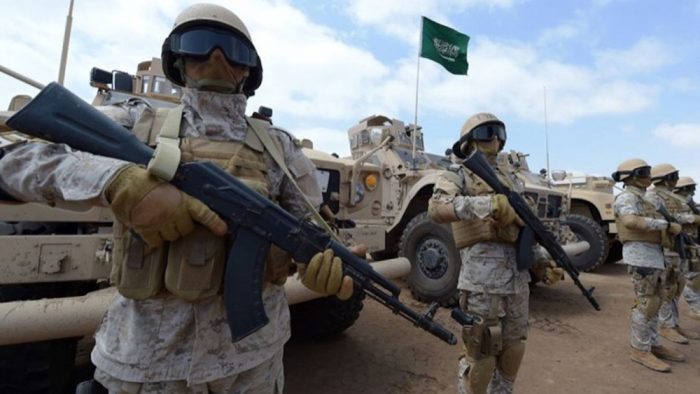
Belgium’s highest administrative court has suspended issuing arms export licenses for a number of Belgian companies in a bid to block the flow of arms to Saudi Arabia over its poor human rights record and the bloody campaign against Yemen.
On Friday, the Council of State decided on the move by an emergency ruling, which overturned the decision by the Wallonian minister-president, Elio di Rupo, who had granted licenses to two arms companies FN Herstal and CMI Defence.
Back in early July, Di Rupo had given authorization to the two Wallonia-based companies to sell weapons to the Saudi Arabia’s National Guard and Royal Guard. The licenses were meant to replace previous authorizations canceled by the same court.
“It cannot be excluded that there is a real risk for the weapons … to be used in the context of the conflict in Yemen or to contribute to internal repression,” the Friday ruling said.
The Saudi regime is the most important client of Wallonia’s arms industry. In 2018, Riyadh purchased weapons for $267 million from local arms companies, based in Belgium’s southern region, representing one-quarter of Wallonia’s total arms export.
Wallonian arms company John Cockerill, whose arms export license was suspended by a previous court ruling, gave military training to the Saudi army in eastern France two years ago, Amnesty International says.
Saudi Arabia has violated the very basics of human rights by killing tens of thousands of civilians in its war on Yemen, besides its other rights violations against its own citizens.
The Yemen conflict, which began in earnest in March 2015, has devastated large swathes of the country and triggered multiple humanitarian disasters, including famine and the internal displacement of millions of people into disease-infested camps and areas.
Saudi Arabia seeking to partition Yemen since 2011: Secret documents
Press TV – August 7, 2020
Leaked Saudi secret documents have revealed that the kingdom has been pursuing a policy to partition Yemen through supporting various tribal leaders.
According to the Qatari Arabic-language al-Jazeera television news network, which leaked the documents, they indicate that several plots adopted by the Riyadh regime have plunged Yemen into its current situation.
Some of the 162 pages of documents disclosed that the Saudi regime has been constantly trying to consolidate the authority of tribes by providing material support to some sheikhs in exchange for assurances that they would advance Riyadh’s agendas and policies.
The amount of support for the tribal leaders is definite, given the importance of each tribe and the extent of its sheikhs’ commitment to implement the directives and instructions received away from the sovereignty and authority of the Yemeni state.
The documents included a letter classified as “top secret” and dated February 14, 2010, in which then King Abdullah bin Abdulaziz instructed Saudi officials to provide 50 million riyals (about $13 million) to support and arm Yemeni tribes loyal to the kingdom and living in areas adjacent to the Saudi border.
The documents revealed that Saudi Arabia was dealing with the separation of southern Yemen as one of the main options for resolving what it describes as the “southern issue.”
A document dated from September 2012 showed that some southern entities received significant Saudi support after 2011.
Meanwhile, the kingdom had employed spies to report on meetings between southern leaders, which were held under international sponsorship.
The kingdom’s initiative towards southern powers took place without the knowledge of the Yemeni government, according to the document.
Other documents showed Saudi Arabia hindered German and Qatari reconstruction efforts in the northern Yemeni city of Sa’ada, after a ceasefire had ended six years of conflicts between Houthi fighters and forces loyal to then president, Ali Abdullah Saleh, in 2010.
In March 2015, Saudi Arabia launched a devastating war on Yemen with the declared aim of putting Abd Rabbuh Mansur Hadi back to power, and eliminating the popular Houthi Ansarullah movement.
Riyadh has not been alone in the bloody campaign, enjoying arms supplies from its Western backers and support from its regional allies, chief among them, the United Arab Emirates.
Over 100,000 people have been killed in the Saudi war on Yemen, according to some semi-official figures.
The Saudi regime has failed to fulfill the objective of its deadly campaign.
The war has also destroyed and shut down Yemen’s infrastructure. The Yemeni population has been subjected to large-scale hunger and diseases aggravated by the naval blockade imposed on the country by Saudi Arabia and its allies.
Saudi Arabia: Ambitious Plans and Facts on the Ground
By Viktor Mikhin – New Eastern Outlook – 20.07.2020
Saudi Arabia has announced plans to implement an ambitious $800 billion initiative aimed at increasing the size of Riyadh in the next decade, and at transforming the capital into an economic, social and cultural hub in the Persian Gulf region.
The ambitious strategy was presented by Fahd Al-Rasheed, the President of the Royal Commission for Riyadh City, ahead of this year’s key high-level meetings between leaders of G20 and of the commission responsible for the urban, economic, social, and cultural development of the capital city of Saudi Arabia. “Riyadh is already a very important economic engine for the Kingdom, and although it’s already very successful, the plan now, under Vision 2030, is to actually take that way further, to double the population to 15 million people,” Fahd Al-Rasheed told Arab News. “We’ve already launched 18 megaprojects in the city, worth over SR1 trillion, over $250 billion, to both improve livability and deliver much higher economic growth so we can create jobs and double the population in 10 years. It’s a significant plan and the whole city is working to make sure this happens,” he added. In the next few years, 7 million trees will be planted in Riyadh, despite its arid climate, and once completed, King Salman Park is expected to be bigger than Hyde Park in London.
All of these plans sound really promising and it would be easy to share in the enthusiasm of our Saudi partners in the oil industry. Unfortunately, the current reality is not as rosy and “plots of the folk tales One Thousand and One Nights” often change to reflect the stark facts on the ground. Although Fahd Al-Rasheed talked about Saudi Vision 2030, few in the Kingdom appear to concern themselves with the strategy. And it is not that the Saudi leadership does not wish to transform the Kingdom into a heavenly place, but that they simply lack money for even the nation’s basic necessities and have to save money in every sphere. Hence, it is far more sensible to forget the unrealistic plans for the time being. Of course, it is pure joy to live and not to worry about a thing, but to do so a country needs to have a robust economy and high earnings, as it did earlier.
The poorly thought through and formulated oil strategy, which Crown Prince Mohammad Bin Salman Al Saud has been trying to implement, has had a strong negative impact on all the oil producing nations, and especially on Saudi Arabia. As a result, the Saudi leadership was forced to come back down to Earth and start saving money in every possible sphere. So for now, Saudi Vision 2030 appears all but forgotten.
To cope with the hardship, Saudi Arabia tripled its value-added tax (VAT) rate starting on July 1, and suspended a cost of living allowance from June as part of cost-cutting programs to counter the severe economic impact of the Coronavirus pandemic and the sudden fall in oil prices. Approximately 1.5 million state employees are affected by the latter measure. The cost of living allowance was a monthly payment of 1,000 riyals ($267) introduced by King Salman bin Abdulaziz Al Saud in 2018 “to help offset increased financial burdens, including VAT and a rise in the price of petrol”. The Kingdom’s “central bank foreign exchange reserves fell in March at their fastest rate in at least 20 years”, reaching their lowest levels since 2011, while Saudi Arabia’s budget deficit hit $9 billion in the first quarter of 2020 as oil revenues collapsed. The news outlet Middle East Eye reported that in January 2015, when Salman bin Abdulaziz Al Saud became king, the country’s “foreign reserves totaled $732 billion”. According to the Saudi Arabian Monetary Authority, these reserves had been diminished to $499 billion by December 2019, and they have since continued to decrease. The Kingdom has sustained considerable financial losses and damage to its reputation, because it was forced to temporarily suspend entry for foreigners for pilgrimage to the two holy cities of Mecca and Medina.
Saudi Arabia’s Minister of Finance Mohammed Al-Jadaan ruefully said that “the global economic crisis associated with the Coronavirus pandemic” had led to three major shocks to the Saudi economy. The first was the unprecedented fall in oil prices “leading to a sharp decline in” the kingdom’s revenues. The second stemmed from “the preventive measures taken to curb the spread of Covid-19, leading to the suspension of many economic activities”, which in turn took a toll on non-oil revenues. The third shock was caused “by the rising expenditure on the health sector to deal with the rising number of Covid-19 patients”. “The challenges combined have led to a decline in government revenues and pressure on public finance to levels that are hard to counter without harming the kingdom’s macroeconomics and public finances in the medium and long term,” Mohammed Al-Jadaan said. “Therefore, a further reduction in expenditures is a must, along with measures to stabilize non-oil revenues,” added the Minister of Finance.
Incidentally, Mohammed Al-Jadaan appears to have forgotten to mention the vast sums of money the power-hungry Crown Prince has wasted. Seemingly on autopilot, he spent enormous amounts to oust the democratically elected President of Syria Bashar al-Assad. Even nowadays, Mohammad Bin Salman Al Saud allegedly continues to provide financial support to militants occupying Syria’s Idlib Governorate, thus contributing to the delay in finding a resolution to the complex Syrian conflict. It was at the Crown Prince’s initiative that Saudi Arabia spearheaded a coalition that intervened in the civil war in the brotherly nation of Yemen, resulting in death and destruction in this impoverished nation. Such a military undertaking requires a considerable amount of money, something that the Kingdom’s budget is in dire need of. Even now, Riyadh continues to stoke tensions with Iran, seemingly failing to comprehend the simple fact that the West, while appearing to support Saudi Arabia, is actually following its favorite divide and conquer strategy and thus strengthening its position in this important region of the world. In addition, outdated US weapons are being sold for too high a price to the Kingdom. In fact, Saudi Arabia has accumulated more military equipment and arms than its army needs. And do Saudi “falcons” really expect to emerge victorious from a confrontation with Iran, while they continue to suffer defeats at the hands of poor Yemeni inhabitants, who are still mainly fighting with Soviet armaments? Plus another question arises: “Why did Saudi Arabia spoil its relationship with Qatar and impose tough sanctions (as Americans are prone to do) against this small nation?” It appears that the answer is “Just for the fun of it.”
Consequences of Crown Prince’s poorly thought through policies are being felt even today. In fact, there is still a risk of new tensions arising in the global oil market and further financial losses for everyone and especially the Kingdom. Media outlets and experts have been reporting about yet another rivalry on world markets. Saudi Arabia has threatened to sell its oil at a discount to undercut Nigeria and Angola for their non-compliance with production cuts, agreed by the Organization of Petroleum Exporting Countries (OPEC) and its allies. The tough stance taken by the Kingdom, with its world’s largest crude oil production capacity, may lead to yet another oil price war, which is bound to have serious consequences. “We know who your customers are,” Saudi Arabia’s Minister of Energy reportedly told the representatives of Nigeria and Angola, which count China and India as their biggest clients. However, India is still in the midst of the Coronavirus pandemic, hence its economy has not recovered as yet. Riyadh’s only hope is China, which receives unlimited supplies of cheap oil and gas from Russia via pipelines. It is quite clear that Moscow has no plans to reduce supplies of these fossil fuels in the current tough climate. The Saudi leadership, therefore, has no other choice but to stop and think long and hard before taking any rash decisions. The world has changed and Saudi Arabia is no longer the only leader on the global oil market.
Still, Riyadh’s officials are free to continue talking about their ambitious plans, but realizing them requires vast sums of money, which the Kingdom simply does not have in its budget at present. And without financial backing, all of these hopes and dreams are nothing more than a mirage in the Arabian Desert, which disappears as soon as one tries to take a closer look at it.
Victor Mikhin is a member-correspondent of the Russian Academy of Natural Sciences.
Britain’s Gentleman Posturing Comes Undone With Absurd Hypocrisy
By Finian Cunningham | Strategic Culture Foundation | July 13, 2020
It’s official Britain at its best, posing as the quintessential gentleman upholding morality while at the same time engaging in despicable double-dealing for grubby interests.
The British government announced sanctions against various nations last week, including Russia and Saudi Arabia, proclaiming the punitive measures were due to alleged human rights violations. Foreign minister Dominic Raab, summoning throaty British authority, declared to the House of Commons that it sent a “clear message” to the world of British rectitude.
The next day, however, London made a separate announcement that it was resuming arms sales to Saudi Arabia, despite an international outcry over war crimes committed in Yemen. Thousands of civilians have been killed in Yemen by Saudi warplanes bombing that country over the past five years.
It is estimated by the United Nations that the majority of civilian casualties have been caused by air strikes carried out by the Saudi-led coalition.
Britain, as well as the United States and France, has been arming the Saudi military coalition in its war in Yemen. The British arms trade was halted last year as “unlawful” by a court ruling out of concern for civilian deaths. Now though the British government has decided that the arms dealing can resume because violations were deemed by ministers to be “isolated” incidents. How quaint is the self-serving subjectivity of British officialdom.
The UK-based Campaign Against the Arms Trade (CAAT) slammed the government’s decision, saying it was “morally bankrupt”.
“The Saudi-led bombardment of Yemen has created the world’s worst humanitarian crisis, and the government itself admits that UK-made arms have played a central role in the bombing,” said CAAT, adding with wry irony: “The government claims that these are isolated incidents, but how many hundreds of isolated incidents would it take for the government to stop supplying the weaponry?”
What’s more, it turns out that the British posturing on human rights and sanctions was only meant for public appearance, not be taken seriously. That’s according to the British government itself.
The Independent newspaper reports that British defense minister Ben Wallace immediately phoned his counterpart in Riyadh to “apologize” for the latest imposition of sanctions. “The UK government privately showered Saudi Arabia’s government with praise,” it is reported.
The “discreet” phone call, which emphasized the importance of British arms sales to the oil-rich kingdom, was not publicly disclosed by London. Instead it was revealed by the Saudi state media which boasted about the lavish praise from the British government.
Between 2015 and 2019, it is estimated that Britain sold over £5.3 billion ($6.7 bn) worth of weapons to Saudi Arabia, much of that boosted by the war in Yemen.
The war has led to the world’s worst current humanitarian crisis with millions of Yemenis facing starvation and death from disease. Images of skeletal children dying from cholera and other preventable diseases should make anyone with a heart tremble with indignation.
The UK’s arms trade is fueling that catastrophe. Evidently, British avarice for profits is too great to put a check on its lucrative weapons dealing regardless of the death and destruction it generates.
But that best of British baseness is only matched by its government’s rank hypocrisy in posing as a defender of human rights and wielding sanctions against other nations.
The sanctions it imposed on Russia were, according to London, related the death in a Moscow prison of tax accountant Sergei Magnitsky in 2009. Russia claims Magnitsky died from an existing medical condition while in detention on massive corruption charges. Washington has used the case as a political stick to beat Moscow with. London is doing Washington’s bidding with its latest sanctions. It also fits the lurid narrative of Russia allegedly running assassination plots in Western states against dissidents and former spies. Thereby stoking a Cold War-style stand-off between the West and Russia.
Britain has been doing similar kowtowing to Washington with its belated ban on China’s Huawei telecoms firm being involved in modernizing mobile phone and internet networks.
Moscow has dismissed the latest British sanctions as “pointless” and said it would reciprocate with its own punitive diplomatic measures against London. That’s something which the British government may come to rue as it seeks to drum up wider international business in the post-Brexit world. The price for serving as Washington’s Jeeves-the-butler flunkey could be high indeed.
How absurd and surreal for London to lecture others about violations when it is complicit in genocide in Yemen. We could also cite Iraq and Afghanistan among many other foreign aggressions. That feat of preposterousness is a reflection of the insidious efficacy of British state propaganda and “education”. Polls show Britons are more likely (compared with other former colonial powers) to think that the British Empire was a good thing, despite the tens of millions who were killed under British subjugation.
One can only hope for the day when the world will actually implement human rights justice and the government in London will be sanctioned to the hilt for the pariah that it truly is.
Featured Video
Your Enslavement Begins in Gaza: The ‘Board of Peace’
or go to
Aletho News Archives – Video-Images
From the Archives
The US: The Century of Lost Wars
By James Petras | Global Research | September 12, 2018
Introduction
Despite having the biggest military budget in the world, five times larger than the next six countries, the largest number of military bases – over 180 – in the world and the most expensive military industrial complex, the US has failed to win a single war in the 21st century.
In this paper we will enumerate the wars and proceed to analyze why, despite the powerful material basis for wars, it has led to failures. … continue
Blog Roll
 Aletho News
- Zelensky Refused to Discuss Druzhba Pipeline Issue – Fico
- U.S. General Caine Warns: STRIKING IRAN is a HUGE RISK /Glenn Diesen & Lt Col Daniel Davis
- Israel designates five Palestinian media outlets as ‘terrorist organizations’
- Israel, not America, first: Carlson’s Huckabee interview lays bare US foreign policy priorities
- Israeli troops executed Palestinian aid workers at ‘point blank range’: Report
- Iran war What if today’s Iran is resigned to a long, hellish war with the US?
- Why Israel Is Escalating Its War Crimes Against Lebanon
- Iran in the face of the armed diplomacy of imperialism
- The US build-up around Iran constitutes strategic war option, not ‘deterrence’
- Iran to US: Sanctions and war failed; try diplomacy and respect
- If Americans Knew
- Footage Shows Israeli Troops Waiting in Ambush, Then Opening Fire on a Palestinian Teen
- The US is on the brink of a major new war that Trump has not even bothered explaining
- Latest Epstein document dump is one more cover-up
- No Protection, No Justice: US Citizens Killed with Impunity by Israel
- Maria Farmer: Epstein Victim Reveals Explosive Information Covered Up by Media
- Average of five Palestinians killed by Israel every day in Gaza since ceasefire – Not a ceasefire Day 136
- Palestinian church leaders admonish Christian Zionist Mike Huckabee – Not a ceasefire Day 135
- Ominous messaging from Trump’s “Board of Peace” – Not a ceasefire Day 134
- ‘Christians Out’: Jerusalem Church Tagged With Hate Graffiti, Police Investigating
- Israeli Settlers Kill American Teen
- No Tricks Zone
- New Research Reaffirms Clouds, Aerosols, And Surface Solar Radiation Are ‘Driving The Climate System’
- Germany: Electric Car Catches Fire At Charging Station, Sets Off Local “Inferno”, Widespread Damage
- New Study: Canada’s New Brunswick Was 1°C Warmer Than Today During The Medieval Warm Period
- Coal Power Back In Trend As Globe Tries To Keep Pace With Growing Demand For Power
- New Study: A 4°C Warmer Beaufort Sea Had ‘No Sea Ice’ 11,700 – 8200 Years Ago
- Unfudging The Data: Dutch Meteorological Institute Reinstates Early 20th Centruy Heat Waves It Had Erased Earlier
- German Gas Crisis…Chancellor Merz Allegedly Bans Gas Debate Ahead of Elections!
- Pollen Reconstructions Show The Last Glacial’s Warming Events Were Global, 10x Greater Than Modern
- Germany’s Natural Gas Storage Level Dwindles To Just 28%… Increasingly Critical
- New Study Rebuts The Assumption That Anthropogenic CO2 Molecules Have ‘Special’ Properties
 Aletho News