Retired Israeli general joins anti-Qatar conference
MEMO | September 15, 2017
A review of the list of participants in an anti-Qatar conference revealed that the list includes right-wing extremists, pro-Israel figures and a retired Israeli general.
The Qatar, Global Security & Stability Conference was held in London, UK, yesterday, and according to a list of participant which Al-Araby Al-Jadeed obtained, US-Israeli citizen and chairperson of the Jewish Religious Equality Coalition, Dov Zakheim; a founder of the neoconservative think-tank the Henry Jackson Society Alan Mendoza and Shlomo Brom, a retired Brigadier-General in the Israeli Air Force, were all due to participate.
According to the news site, the conference’s programme was not released until Tuesday, 48 hours before the event was due to take place for alleged security reasons.
Bill Richardson, former US ambassador to the UN who has been involved in financial corruption cases, and Charles Chuck Wald, a retired US Air Force General who has suggested that Washington should support Israel should it decides to launch a military attack on Iran, were also amongst the list of those taking part in the conference.
The list of participants also include Egyptian journalist Mohamed Fahmy, who had previously filed a case against Qatar after receiving money from the UAE.
The British Conservative party politicians speaking at the event include MPs, Daniel Kawczynski, Iain Duncan Smith and former Deputy Mayor of London, Roger Evans.
The Qatari opposition is represented by businessman Khalid Al-Hail who is accused of receiving funds from the countries boycotting Qatar to organise the conference.
In early June, Saudi Arabia, the UAE, Egypt, and Bahrain severed diplomatic and economic ties with Qatar, accusing it of supporting terrorist groups in the region.
The four countries also imposed an embargo on Qatar and issued a long list of demands, including the closure of Doha-based news broadcaster Al Jazeera, under the threat of further sanctions.
Qatar has refused to submit, denying charges that it supports terrorism and describing the bloc’s efforts to isolate it as a violation of international law and an infringement of its national sovereignty.
The conference is seen as a means through which they hope to give legitimacy to the boycott.

Photo-compilation of those attending the anti-Qatar conference [Alaraby]
September 11, 2001: Questions to Ask if You Still Believe the Official Narrative
By Tony Cartalucci | Land Destroyer | September 11, 2017
The attacks of September 11, 2001 (9/11) left nearly 3,000 dead in NYC, Washington D.C. and over Pennsylvania. The attacks transformed America into a deepening police state at home and a nation perpetually at war abroad.
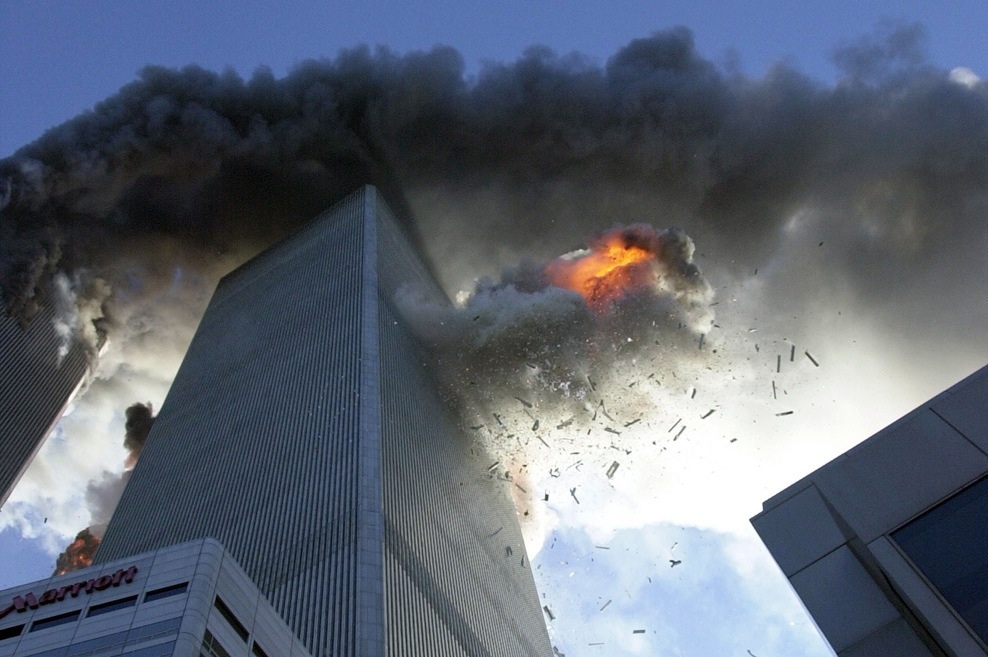
The official narrative claims that 19 hijackers representing Al Qaeda took over 4 commercial aircraft to carry out attacks on New York City’s World Trade Center and the Pentagon in Washington D.C.
The event served as impetus for the invasion and occupation of Afghanistan which continues to present day. It also led directly to the invasion and occupation of Iraq. Attempts to cite the attack to precipitate a war with Iran and other members of the so-called “Axis of Evil” (Libya, Syria, North Korea, and Cuba) have also been made.
And if this is the version of reality one subscribes to, several questions remain worth asking.
1. Can the similarities between 9/11 and plans drawn up by the US Department of Defense (DoD) and Joint Chiefs of Staff (JCS) in 1962 under the code name “Operation Northwoods” be easily dismissed?
The US DoD and JCS wrote a detailed plan almost identical to the 9/11 attacks as early as 1962 called “Operation Northwoods” where the US proposed hijacking commercial airliners, committing terrorist attacks, and blaming Cuba to justify a US military intervention.

Far from a fringe conspiracy theory, mainstream media outlets including ABC News would cover the document in articles like, “U.S. Military Wanted to Provoke War With Cuba,” which would report:
In the early 1960s, America’s top military leaders reportedly drafted plans to kill innocent people and commit acts of terrorism in U.S. cities to create public support for a war against Cuba.
Code named Operation Northwoods, the plans reportedly included the possible assassination of Cuban émigrés, sinking boats of Cuban refugees on the high seas, hijacking planes, blowing up a U.S. ship, and even orchestrating violent terrorism in U.S. cities.
The plans were developed as ways to trick the American public and the international community into supporting a war to oust Cuba’s then new leader, communist Fidel Castro.
A full PDF copy of the document is available via George Washington University’s archives and states specifically regarding the hijacking of commercial aircraft:
An aircraft at Eglin AFB would be painted and numbered as an exact duplicate for a civil registered aircraft belonging to a CIA proprietary organization in the Miami area. At a designated time the duplicate would be substituted for the actual civil aircraft and would be loaded with the selected passengers, all boarded under carefully prepared aliases. The actual registered aircraft would be converted to a drone.
The document also cites the USS Maine in describing the sort of event the DoD-JCS sought to stage, a US warship whose destruction was used to maliciously provoke the Spanish-American War. It should be noted, that unlike the DoD-JCS document’s suggestion that airliner-related casualties be staged, the USS Maine explosion killed 260 sailors. It is likely that DoD and JCS would not risk engineering a provocation that leads to major war but allow low-level operators left alive with the knowledge of what they had participated in.
Considering that the US sought to deceive the public in order to provoke an unjustifiable war that would undoubtedly kill thousands or tens of thousands of innocent people, and that other proposals did include killing innocent people, it is worth considering that US policymakers would also be just as willing to extinguish innocent lives when staging the hijacking of aircraft to provoke such a war.
2. Why did US policymakers draw up extensive plans to reassert US global hegemony – including regime change in Afghanistan, Iraq, Iran, Libya, Somalia, Sudan, and Yemen – without any conceivable pretext until 9/11 conveniently unfolded?
In 2000, US policymakers from the Project for a New American Century (PNAC) sought a sweeping plan to reassert America as a global hegemon. In a 90-page document titled, “Rebuilding America’s Defense: Strategy, Forces and Resources For a New Century” (PDF), a strategy for maintaining what it called “American military preeminence” would be laid out in detail.
It involved global moves the United States – in 2000 – could never justify, including placing US troops in Southeast Asia, building a global missile defense network prohibited by treaties signed during the Cold War, and the containment of developing nations that would eventually end up rolling back US global hegemony in the near future, including Iran, Iraq, China, North Korea, Libya, and Syria.

The report noted the difficulties of proposing and executing the transformations necessary to achieve the objectives laid out in the document. It would be explicitly stated that:
Further, the process of transformation, even if it brings revolutionary change, is likely to be a long one, absent some catastrophic and catalyzing event – like a new Pearl Harbor.
In fact, the entire body of the document is an uncanny description of the post-9/11 “international order,” an order unimaginable had the events of 9/11 not transpired.
It should also be remembered that wars predicated on 9/11 like the invasion and occupation of Afghanistan, were admittedly planned before 9/11 took place.
The Guardian in its 2004 article, “Bush team ‘agreed plan to attack the Taliban the day before September 11’,” would report:
The day before the September 11 attacks, the Bush administration agreed on a plan to oust the Taliban regime in Afghanistan by force if it refused to hand over Osama bin Laden, according to a report by a bipartisan commission of inquiry. The report pointed out that agreement on the plan, which involved a steady escalation of pressure over three years, had been repeatedly put off by the Clinton and Bush administrations, despite the repeated failure of attempts to use diplomatic and economic pressure.
While it seems inconceivable that the American or global public would tolerate the multi-trillion dollar 16 year war that the invasion of Afghanistan has become without the attacks on 9/11, such a war was admittedly in the making – in fact – years before 9/11 unfolded.
Similarly, the invasion of Iraq in 2003 was strongly linked to the aftermath of 9/11, but was likewise decided upon long before 9/11 unfolded.
CNN in its article, “O’Neill: Bush planned Iraq invasion before 9/11,” would report:
The Bush administration began planning to use U.S. troops to invade Iraq within days after the former Texas governor entered the White House three years ago, former Treasury Secretary Paul O’Neill told CBS News’ 60 Minutes.
This echos similar statements made by US Army General Wesley Clark who repeatedly warned that the US sought global-spanning war post-Cold War to assert its hegemony over the planet, and fully sought to use 9/11 as a pretext to do it.
General Clark would list seven nations slated for regime change post 9/11, including Iraq, Iran, Libya, Somalia, Sudan, and Yemen – all nations now either at war or facing war with the United States and its proxies – or in the case of Libya – entirely divided and destroyed in the wake of US military operations.
3. If primarily Saudi hijackers with Saudi money and Saudi organization perpetrated the attacks of 9/11, why has the United States waged war or threatened war with every nation in the Middle East except Saudi Arabia and its allies?
Not only has the United States made no moves against Saudi Arabia for its apparent role in the 9/11 attacks – spanning the administrations of US President George Bush, Barack Obama, and Donald Trump – the United States has sold Saudi Arabia billions in arms, provided military support and protection to Saudi Arabia’s military and government, partnered with Saudi Arabia in its ongoing conflict with Yemen – all while US government documents and leaked e-mails between US politicians reveal Saudi Arabia is still a state sponsor of Al Qaeda – the organization officially blamed for the 9/11 attacks.

Indeed, a 2012 US Defense Intelligence Agency (DIA) report would explicitly admit:
If the situation unravels there is the possibility of establishing a declared or undeclared Salafist principality in eastern Syria (Hasaka and Der Zor), and this is exactly what the supporting powers to the opposition want, in order to isolate the Syrian regime, which is considered the strategic depth of the Shia expansion (Iraq and Iran).
The DIA memo then explains exactly who this “Salafist principality’s” supporters are:
The West, Gulf countries, and Turkey support the opposition; while Russia, China, and Iran support the regime.
This “Salafist principality” is now known as the “Islamic State,” an affiliate of Al Qaeda still operating with significant state sponsorship everywhere from Syria, Iraq, and Libya, to the Philippines and beyond.
Coincidentally, Saudi-armed and funded terrorists in the Philippines has served as a pretext for US military assets to begin expanding their presence in Southeast Asia, just as the aforementioned 2000 PNAC document had sought.
Additionally, in a 2014 e-mail between US Counselor to the President John Podesta and former US Secretary of State Hillary Clinton, it would be admitted that two of America’s closest regional allies – Saudi Arabia and Qatar – were providing financial and logistical support to the Islamic State.

The e-mail, leaked to the public through Wikileaks, stated:
… we need to use our diplomatic and more traditional intelligence assets to bring pressure on the governments of Qatar and Saudi Arabia, which are providing clandestine financial and logistic support to [the Islamic State] and other radical Sunni groups in the region.
While the e-mail portrays the US in a fight against the very “Salafist” (Islamic) “principality” (State) it sought to create and use as a strategic asset in 2012, the fact that Saudi Arabia and Qatar are both acknowledged as state sponsors of the terrorist organization – and are both still enjoying immense military, economic, and political support from the United States and its European allies – indicates just how disingenuous America’s “war on terror” really is.
If the US truly believed Al Qaeda carried out the deadly attacks of 9/11, why does it count among its closest allies two of Al Qaeda’s largest and most prolific state sponsors?
Together – by honestly answering these three questions – we are left considering the very real possibility that 9/11 was not a terrorist attack carried out by foreign terrorists, but rather an attack engineered by special interests within the United States itself.
If we reject that conclusion, we must ask ourselves why the US DoD and JCS would take the time to draft plans for false flag attacks if they did not believe they were viable options US policymakers might seriously consider. At the very least we must ask why those at the DoD and JCS could be caught signing and dating a conspiracy to commit unspeakable terrorism to justify an unjust war and not only avoid criminal charges, but remain employed within the US government.
We must also ask ourselves why US policymakers would draft long-term plans for reasserting American global hegemony without any conceivable pretext to justify such plans. Even in the wake of 9/11, the US government found it difficult to sell the invasion of Iraq to the American public and its allies. Without 9/11, such salesmanship would have been impossible. In Syria – with 9/11 disappearing into the distant past – US regime change efforts have all but stalled.
Finally, we must find adequate explanations as to why those sponsoring the supposed perpetrators of 9/11 have remained recipients of unwavering American support, weapon sales, and both political and military protection. We must attempt to answer why militants fighting in Syria under the banner of Al Qaeda have been able to openly operate out of NATO-member Turkey’s territory for the past 6 years, side-by-side US Central Intelligence Agency (CIA) personnel who are admittedly fueling the conflict with weapons, money, and training “accidentally” ending up in Al Qaeda’s hands.
It is clear – that at the very least – the official narrative in no shape, form, or way adds up. If the official narrative doesn’t add up, what does?
Fake 9/11 Activism on 9/11. “Saudi Arabia was Behind the Attacks”
By Prof Michel Chossudovsky | Global Research | September 10, 2017
There is an element of confusion which has served to divide the 9/11 Truth movement. Saudi Arabia is said to have supported the alleged 9/11 highjackers.
What are the implications of “the Saudi did it” narrative?
It is very convenient to say that Saudi Arabia was behind the 9/11 terrorists. Why, because it upholds the official narrative of the 9/11 Commission Report and it whitewashes the US Deep State including its military and intelligence apparatus.
The official narrative –which has been amply refuted– states that 19 Al Qaeda hijackers brought down the WTC towers, i.e Muslims were behind the attack on America, –i.e. it was not an “inside job” or a false flag.
And now what is happening is that Saudi Arabia is blamed for having supported the al Qaeda hijackers.
And if Saudi Arabia is held responsible, pari passu the official narrative holds, namely the hijackers did it with the support of the House of Saud.
And now 9/11 truth activists are holding a demonstration on September 11, 2017 in front of the Saudi embassy in Washington which will receive extensive coverage by the US corporate media.
What this means is that many 9/11 truthers have been sucked into the “Saudi Arabia did it” narrative, which serves to divide the 9/11 Truth movement, while upholding the official narrative, i.e “the CIA, the Pentagon et al were not involved”.
And the families of the victims are waging a legal battle against Saudi Arabia.
Why is this a red herring which serves to perpetuate the “Big Lie”.
Yes, Saudi Arabia is a sponsor of al Qaeda. That is amply documented. But it is a sponsor of al Qaeda on behalf of the US. And this also applies to Saudi support of Al Qaeda and ISIS in Syria and Iraq.
Saudi Arabia’s intelligence services work hand in glove with the CIA.
But al Qaeda WAS NOT BEHIND THE COLLAPSE OF THE WTC TOWERS. And going after the House of Saud serves a very useful purpose: it whitewashes the US Deep State including the CIA and the Pentagon of any involvement in the 9/11 attacks.
It is fairly well established that the hijackers did not bring down the towers; they were brought down through controlled demolition.
And the hijackers allegedly led by Osama bin laden did not have the ability to implement the pulling down of the WTC buildings, not to mention WTC Building Seven, which collapsed mysteriously in the afternoon of 9/11, with CNN and BCC reporting the collapse 20 minutes before the actual occurrence.
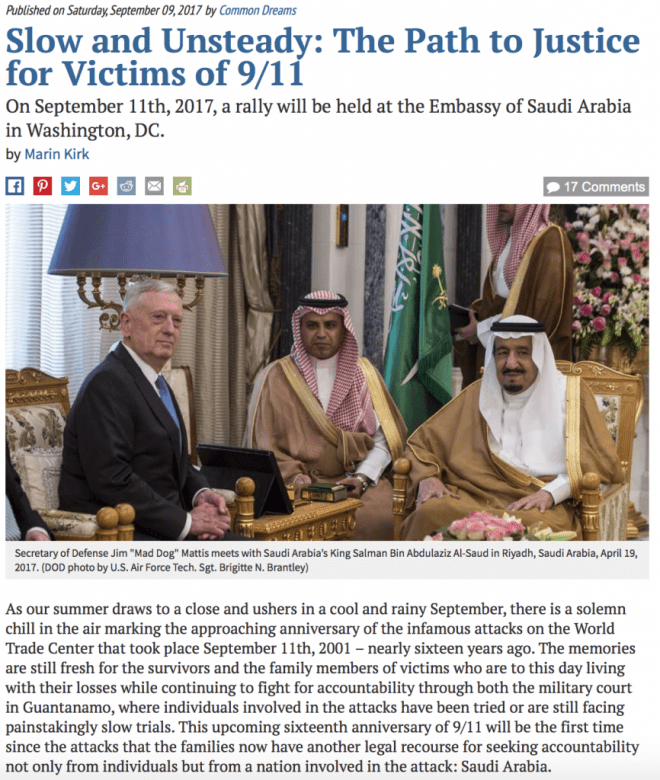
But there is a lot more to the “Saudi did it” saga which serves as a convenient instrument of propaganda.
The two key figures behind this wave of propaganda (initiated in 2014) are former Senator Bob Graham, who led the joint inquiry of the Senate and the House intelligence committees together with Rep. Porter Goss, a career CIA official who was subsequently appointed Director of National Intelligence (DNI) by the Bush administration.
Graham coordinated the drafting and editing of the joint Senate-House report including a 28 classified pages on Saudi Arabia’s alleged role. These 28 pages were eventually declassified.
Framed in a “Tele Novela” style scenario featuring wealthy Saudis in the plush suburban surroundings of Sarasota, Florida two weeks before 9/11, the New York Post described the circumstances of Saudi involvement (quoting the FBI 9/11 Review Commission Report and the 28 pages of the joint inquiry report) in an article entitled How the FBI is whitewashing the Saudi connection to 9/11:
Former Democratic Sen. Bob Graham, who in 2002 chaired the congressional Joint Inquiry into 9/11, maintains the FBI is covering up a Saudi support cell in Sarasota for the hijackers. He says the al-Hijjis “urgent” pre-9/11 exit suggests “someone may have tipped them off” about the coming attacks.
Graham has been working with a 14-member group in Congress to urge President Obama to declassify 28 pages of the final report of his inquiry which were originally redacted, wholesale, by President George W. Bush. ….
Sources who have read the censored Saudi section say it cites CIA and FBI case files that directly implicate officials of the Saudi Embassy in Washington and its consulate in Los Angeles in the attacks — which if true, would make 9/11 not just an act of terrorism, but an act of war by a foreign government. The section allegedly identifies high-level Saudi officials and intelligence agents by name, and details their financial transactions and other dealings with the San Diego hijackers. It zeroes in on the Islamic Affairs Department of the Saudi Embassy, among other Saudi entities.
The [FBI] review commission, however, concludes there is “no evidence” that any Saudi official provided assistance to the hijackers, even though the panel failed to interview Graham or his two key investigators — former Justice Department attorney Dana Lesemann and FBI investigator Michael Jacobson — who ran down FBI leads tying Saudi officials to the San Diego hijackers and documented their findings in the 28 pages. (emphasis added)
While Graham is now heralded by the mainstream media as a 911 Truther, the evidence suggests that immediately in the wake of 9/11, he was involved (together with Porter Goss) in a coverup on behalf of Bush-Cheney.
The 28 pages have nothing to do with 9/11 Truth. This alleged Saudi involvement in the 9/11 attacks has served to precipitate segments of the 9/11 Truth movement into an erroneous and contradictory discourse.
Saudi Arabia may have supported the 9/11 al Qaeda terrorists, but the terrorists did not bring down the WTC towers.
The objective of the Saudi connection propaganda ploy is to ultimately sustain the official narrative which states that Islamic terrorists were behind the 9/11 attacks, which has been disproved by Architects and Engineers for 9/11 Truth.
Even assuming that Al Qaeda were behind the attacks, it is amply documented that al Qaeda, “the Base” was a creation of the CIA and that Osama bin Laden was a CIA intelligence asset. In this regard, Saudi Arabia as well Pakistan were involved in close liaison with the CIA in the recruitment and training of terrorists.
And because Bob Graham accused the FBI and the federal government, the 9/11 Truth movement applauds without realizing that these accusations directed against the FBI are “framed” with a view to sustaining the mainstream 9/11 narrative.
What is at stake is a desperate ploy to uphold the legend that Muslims were behind 9/11 and that Saudi Arabia was behind the terrorists giving them money, with the FBI involved in a coverup, George W. Bush protecting his Saudi cronies because the Bushes and the bin Ladens were “intimo amigos”.
Below is an excerpt of my April 2015 article Saudi Arabia’s Alleged Involvement in the 9/11 Attacks:
Graham’s staged accusations thereby serve to distract the American public’s attention from the real evidence, amply documented that the WTC towers were brought down through controlled demolition and that Islamic terrorists were not behind the 9/11 attacks. The issue of Saudi financial support of al Qaeda is not only known and documented since the heyday of the Soviet Afghan war, it is irrelevant in establishing who was behind the terror attacks. Moreover, the contents of the 28 classified pages are known.
In a bitter irony, Graham’s track record (mentioned above) in supporting the official 9/11 narrative on behalf of Bush-Cheney is not mentioned:
Former Senator Bob Graham (D-Fla.), who co-chaired a congressional inquiry into 9/11 — separate from the 9/11 Commission — stated, as though now it was obvious, “None of the people leading this investigation think it is credible that 19 people — most who could not speak English and did not have previous experience in the United States — could carry out such a complicated task without external assistance.”
Now, Graham says, a breakthrough may finally be around the corner with the upcoming declassification of the 28 pages of the “Joint Inquiry into Intelligence Community Activities Before and After the Terrorist Attacks of September 11, 2001.”
Calling for the official release and publication of the 28 page classified section of the joint inquiry report pertaining to Saudi Arabia is an obvious red-herring. The objective is to confuse matters, create divisions within the 9/11 Truth movement and ultimately dispel the fact that the 9/11 attacks were a carefully organized False Flag event which was used to declare war on Afghanistan as well as usher in sweeping anti-terrorist legislation.
Both the Congressional inquiry as well the 9/11 Commission report are flawed, their objective was to sustain the official narrative that America was under attack on September 11, 2001. And Graham’s role in liaison with the CIA, is “damage control” with a view to protecting those who were behind the demolition of the WTC towers as well sustaining the al Qaeda legend, which constitutes the cornerstone of US military doctrine under the so-called “Global War on Terrorism”.
Without 9/11 and the “Global War on Terrorism”, the warmongers in high office would not have a leg to stand on. In turn, 9/11 Truth is an encroachment which undermines war propaganda and the US-led campaign of Islamophobia, which is sweeping the Western World. (Michel Chossudovsky, Saudi Arabia’s Alleged Involvement in the 9/11 Attacks, Global Research, April 14, 2015)
Copyright © Prof Michel Chossudovsky, Global Research, 2017
Report reveals UK exploiting Qatar crisis for own profit through arms exports
Press TV – September 10, 2017
Britain is exploiting a rift between several Arab countries of the Persian Gulf and Qatar through designating both sides as the “priority markets” for its arms sales, a report suggests.
The Middle East Eye (MEE) report cited a list of 46 states highlighted by the UK Department for International Trade Defense and Security Organization as potentially lucrative markets for weapons exports.
The list included Qatar as well as Saudi Arabia, the United Arab Emirates (UAE) and Bahrain, which cut ties with Doha three months ago.
This is while many of the countries identified as key targets for the British arms sales are included in the government’s own “human rights priority registers.”
The list comes ahead of the Defense & Security Equipment International (DSEI) arms fair scheduled to be held in London on September 12-15.
“The fact that, despite current tensions, Saudi Arabia and Qatar are both on the list tells us everything we need to know,” Andrew Smith, spokesperson of the UK-based Campaign Against Arms Trade organization, told the MEE.
Britain, he said, has “made clear that it will pull out all stops to sell arms to” both sides of the Qatar crisis.
Back in June, Saudi Arabia, Egypt, Bahrain and the UAE imposed a trade and diplomatic embargo on Qatar, accusing Doha of supporting terrorism.
They presented Qatar with a list of 13 wide-ranging demands and gave it an ultimatum to comply with them or face unspecified consequences.
Doha, however, refused to meet the demands and said that they were meant to force the country to surrender its sovereignty.
UK arms fair hosts despots
In a relevant development, the UK government published its official guest list for DSEI, comprising 56 countries, among them Saudi Arabia, the UAE, Bahrain, Egypt and Qatar.
Smith said the list included “a roll call of despots, dictatorships and human rights abusers. They will be greeted by civil servants and government ministers who are there for one reason only: to promote weapons.”
MP Caroline Lucas, UK Green Party co-leader, also called for the closure of the London arms fair.
“DSEI is a dark stain on our country’s already tarnished reputation. It’s time that this festival of violence was shut down for good – and for the UK to engage in peace-building rather
How Media Obscure US/Saudi Responsibility for Killing Yemeni Civilians
By Ben Norton | FAIR | August 31, 2107
A coalition of Saudi Arabia, the United States, the United Kingdom and the United Arab Emirates, with minor support from several other Middle Eastern nations, has relentlessly bombed Yemen since March 2015. This August, the coalition ramped up the ferocity of its airstrikes, killing dozens of civilians.
On August 23, the US/Saudi coalition bombed a hotel near Yemen’s capital Sanaa, killing 41 people, 33 of whom—80 percent—were civilians, according to the United Nations.
Then on August 25, the coalition bombed homes in Sanaa, massacring a dozen civilians, including eight members of the same family.
Major Western media outlets have, however, obscured the responsibility Saudi Arabia, and its US and European supporters, bear for launching these airstrikes.
There are no other parties presently bombing Yemen, so media cannot feign ignorance as to who is responsible for the attacks. But reports on the bloody US/Saudi coalition airstrikes were nonetheless rife with ambiguous and downright misleading language.

It seems worth mentioning that the airstrike was
supported by the same government that supports NPR.
“Dozens of People Killed as Airstrike Hits Hotel Near Yemen’s Capital,” wrote NPR (8/23/17), in a masterwork of euphemism. Apparently dozens of Yemenis mysteriously died of unknown causes at the exact moment a generic, unaffiliated airstrike hit the hotel. NPR only indirectly mentioned, in the story’s fifth paragraph, that the “Saudi-led coalition” was “blamed” for the attack.
AFP‘s news wire (8/23/17), which was republished by Yahoo, the Daily Mail and Breitbart, used the headline “Air Raids on Outskirts of Yemen Capital Kill ‘at least 30,’” again obscuring who was responsible for those air raids. France 24 (8/23/17) ran the wire with the headline “Air Raids on Yemen Capital Kill Dozens.”
The BBC (8/23/17) wrote, “Yemen War: Air Strike on Hotel Outside Sanaa ‘Leaves 30 Dead.’” “Dozens Killed in Airstrike on Yemeni Hotel,” the Guardian headline (8/23/17) read.
The London-based Middle East Eye (8/23/17) was just as ambiguous, with “Yemen Air Attack Destroys Hotel, Killing at Least 35 People,” as was Qatar-owned Al Jazeera (8/23/17), with “Air Raid in Yemen Kills at Least 35 people” and the Turkish TRT World (8/24/17), which wrote, “At Least 60 people Killed in Airstrikes on Hotel in Yemen.”
Whose airstrike was it? What party was responsible? This remains unknown to those who only glanced at the headlines—that is to say, to most readers.
The 29-month war has killed thousands of Yemeni civilians, with tens of thousands more injured and millions facing famine. And the United Nations has repeatedly reported that the US/Saudi coalition is responsible for a majority of the civilian casualties.
Even when Saudi Arabia’s guilt is acknowledged by media, the crucial role of the US is typically ignored (FAIR.org, 8/31/15, 10/14/16, 2/27/17). Readers miss out on crucial context that is needed to understand the war, and their governments’ contributions to it: Saudi Arabia is flying US-made planes, full of fuel provided by the US Air Force, dropping US- and UK-made bombs, with intelligence and assistance from American and British military officials.
Non-Yemeni ‘Yemeni Airstrikes’

Neither the headline nor the accompanying story mention who conducted
the airstrike—though the photo caption refers to the “Saudi-led airstrike.”
Two days later, reports were just as obfuscatory, and even used the term “Yemeni airstrike,” to refer to an airstrike that was carried out by non-Yemenis.
“Yemen Airstrike Kills 12, Including Six Children: Rescuers,” Reuters reported on August 25. This brief two-paragraph wire did not once mention the US/Saudi coalition was responsible.
“After Yemeni Airstrike, Little Girl Is Family’s Only Survivor,” the international news agency wrote the next day (8/26/17). This Reuters piece noted that the “Saudi-led coalition” was “blamed,” though even that language seems designed to deflect; blamers can be wrong, after all.
Major newspapers were similarly misleading. “Young Yemeni Girl Is Sole Survivor After Airstrike Topples Her Home,” the New York Times (8/26/17) reported. The lead provided no further information: “An airstrike toppled their apartment building.” In fact, it was not until the seventh paragraph, after three large photos, that the Times finally conceded, “A Saudi Arabia–led coalition took responsibility for the airstrike a day after the attack, citing a ‘technical mistake.’” The Times did not once mention American or British support for the coalition.
Al Jazeera (8/25/17) likewise used the headline “Children Among Dead in Latest Attack on Yemen Civilians.” And TRT World (8/26/17) reported, “Yemen Airstrike Kills 12, Including Six Children.”
Even when Saudi Arabia admitted responsibility for killing Yemeni civilians, media watered down the language. “Saudi-Led Force Admits Strike in Yemen’s Capital Hit Civilians,” Reuters (8/26/17) headlined its news wire. Note the airstrike hit civilians, not killed them.
The attack was also reduced to a mere “mistake.” Larger context was not provided: namely that more than one-third of US/Saudi coalition airstrikes have hit civilian areas, and that there is a growing body of evidence that the coalition has intentionally targeted civilian infrastructure in Yemen.
Not all media were equally misleading; some were more forthright. AP‘s news wire (8/23/17), which was republished by the Chicago Tribune, New York Daily News, Houston Chronicle and San Francisco Chronicle, used a headline that told readers who was responsible for the deadly attack: “Saudi-Led Airstrikes Hit Yemen Hotel, Killing at Least 41.”
The Washington Post was similarly direct, with its reports “Saudi-Led Coalition Airstrike Kills Dozens in Yemen Ahead of Major Rally” (8/23/17) and “Saudi-Led Airstrikes Kill 14 Civilians in Yemen’s Capital” (8/25/17).
The Art of Obfuscation
To justify this ambiguity in reporting, media might claim it is sometimes not immediately clear who launched the airstrikes. But, again, there are no other parties flying warplanes in Yemen.
Yemeni Houthi-Saleh forces, who govern the north of the country and roughly 80 percent of the population, have not been bombing their country. Moreover, the US/Saudi coalition has imposed an air blockade on the impoverished country since March 2015 (another significant fact that is rarely reported by corporate media).
In Syria, where numerous rival countries have been launching airstrikes, it is understandable that media may sometimes have to exercise caution before apportioning blame. But this is not the case with Yemen.
In the 29-month war in Yemen, there is one party that has been responsible for thousands of air raids: the Saudi air force, as part of a coalition with the US, the UK and the UAE.
Yet Yemen is not an isolated case of this ambiguity. Media frequently obfuscate and downplay the culpability for bombing when the US and its allies are responsible.
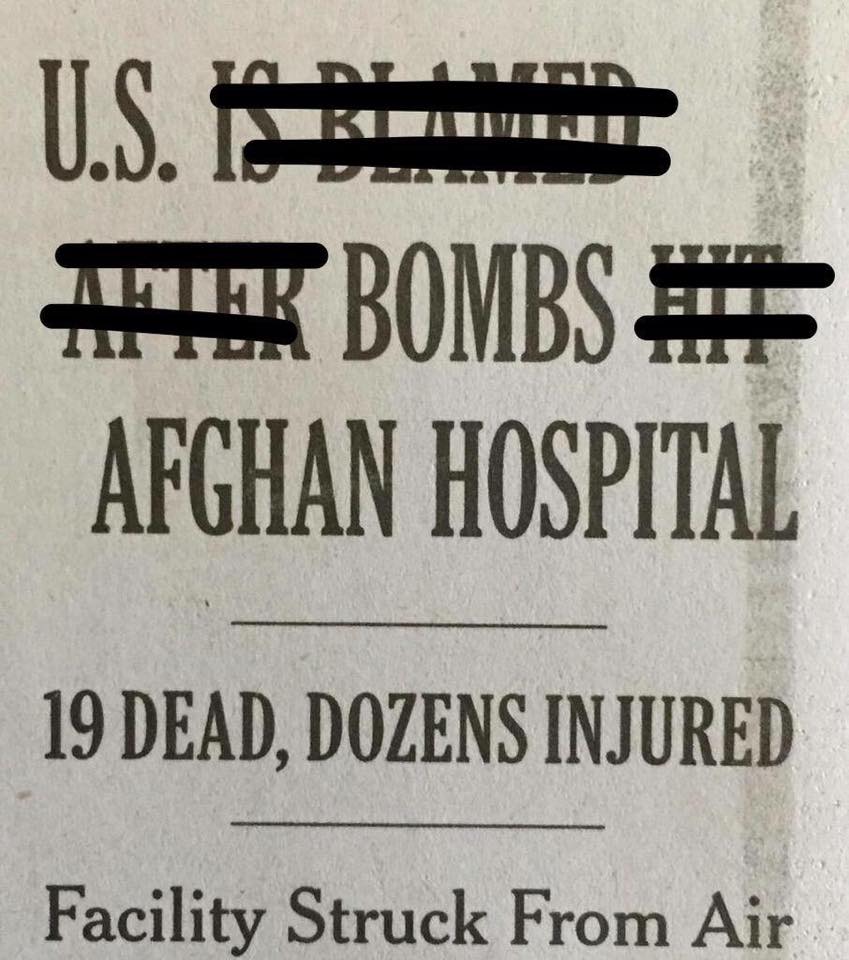
NYT headline (10/3/15) improved by Twitter user @OneKade
When the US bombed a hospital in Kunduz, Afghanistan, in October 2015, killing dozens of civilians, media scrambled to craft almost laughable euphemisms. FAIR (10/5/15) documented at the time how news outlets used circuitous headlines like “US Is Blamed After Bombs Hit Afghan Hospital.” Also seen in the August 23 NPR report cited above, this brand of misleading, ambiguous rhetoric is the “officer-involved shooting” of war reporting.
On the other hand, the responsibility of US enemies for killing civilians is rarely if ever obscured.
It is instructive to compare Western media coverage of Yemen to that of Syria, where attacks are “Assad bombing” (Fox News, 2/15/17), “Assad airstrikes” (Breitbart, 4/28/16), “Assad regime airstrikes” (Times of Israel, 10/16/12; Australian, 8/18/15), “regime airstrikes” (NBC, 8/19/16) or “regime bombing” (Daily Caller, 8/17/15).
Media have even written of a “pro-Assad drone” that was “displaying hostile intent,” and thus just had to be shot down by the US (Guardian, 6/20/17; Independent, 6/20/17; The Hill, 6/20/17), as if the robot were personally a fan of the Syrian leader.
The phrases “Salman bombing,” “Salman airstrikes” or “Saudi regime airstrikes” are, however, nowhere to be found in reports on Yemen.
Downplaying the Key US Role
Media calling US/Saudi coalition attacks “Yemeni airstrikes” is at best misleading, and at worst flat-out false. Yet this language also has a political effect: It obscures the character of the war. This framing is part of the “civil war” trope media have propagated for two-and-a-half years.
When Yemen is discussed, it is virtually always through the lens of a “civil war.” As FAIR (7/25/17) has detailed before, this exceedingly widespread myth, which has permeated media discourse, denies the extent to which the conflict is actually a foreign war on Yemen, led by Saudi Arabia, the UAE and their US and European sponsors.
Even the term “Saudi-led” coalition is misleading. The New York Times editorial board (8/17/16) acknowledged, in a little-noted editorial on Yemen, “Experts say the coalition would be grounded if Washington withheld its support.”
That is to say, if the US wanted the war in Yemen to end, it would end overnight. The “Saudi-led” coalition is only led by Saudi Arabia in name.
Surprisingly, in the midst of intensified coalition attacks, the New York Times published another rare editorial on Yemen on August 25. In the piece, dramatically titled “The Slaughter of Children in Yemen,” the editorial board forcefully warned of exactly what critics have been saying for 29 months:
The Saudi coalition—and its American enablers, who provide military equipment, aerial refueling and targeting—simply cannot be allowed to continue killing civilians and destroying what little is left of Yemen. That is why it is imperative to publicly identify the unconscionable slaughter of innocents for what it is, and to hope that this will shame Saudi Arabia and its American backers to search for a humane end to Yemen’s hell.
Reporters at the Times and elsewhere should heed this call to demonstrate journalistic responsibility by clearly conveying their governments’ responsibility for the slaughter in Yemen—not just in editorials, but in news articles, every time.
The Possible Education of Donald Trump
By Robert Parry | Consortium News | August 25, 2017
Despite the chaos and ugliness of the past seven months, President Trump has finally begun to turn U.S. foreign policy away from the neoconservative approach of endless war against an ever-expanding roster of enemies.
This change has occurred largely behind the scenes and has been obscured by Trump’s own bellicose language, such as his vow to “win” in Afghanistan, and his occasional lashing out with violence, such as his lethal Tomahawk missile strike on a Syrian airfield.
Some Trump advisers also have downplayed the current shift because it may fuel the Democrats’ obsession with Russia-gate as a much-desired excuse to impeach Trump. Every peaceful move that Trump makes is called a sop to Russia and thus an excuse to reprise the dubious allegations about Russia somehow helping to elect him.
Yet, despite these external obstacles and Trump’s own erratic behavior, he has remained open to unconventional alternatives to what President Obama once criticized as the Washington “playbook,” i.e. favoring military solutions to international problems.
In this sense, Trump’s shallow understanding of the world has been a partial benefit in that he is not locked into the usual Washington groupthinks – and he personally despises the prominent politicians and news executives who have sought to neuter him since his election. But his ignorance also prevents him from seeing how global crises often intersect and thus stops him from developing a cohesive or coherent doctrine.
Though little noted, arguably the most important foreign policy decision of Trump’s presidency was his termination of the CIA’s covert support for Syrian rebels and his cooperation with Russian President Vladimir Putin to expand partial ceasefire zones in Syria.
By these actions, Trump has contributed to a sharp drop-off in the Syrian bloodshed. It now appears that the relatively secular Syrian government of President Bashar al-Assad is regaining control and that some Syrian refugees are returning to their homes. Syria is starting the difficult job of rebuilding shattered cities, such as Aleppo.
But Trump’s aversion to any new military adventures in Syria is being tested again by Israeli Prime Minister Benjamin Netanyahu, who is threatening to attack Iranian and Hezbollah forces inside Syria.
Last week, according to Israeli press reports, a high-level delegation led by Mossad chief Yossi Cohen carried Netanyahu’s threat to the U.S. government. The Israeli leader surely has raised the same point directly in phone calls with Trump.
Tiring of Bibi
I was told that Trump, who appears to be growing weary of Netanyahu’s frequent demands and threats, flatly objected to an Israeli attack and brushed aside Israel’s alarm by noting that Netanyahu’s policies in supporting the rebels in Syria contributed to Israel’s current predicament by drawing in Iran and Hezbollah.
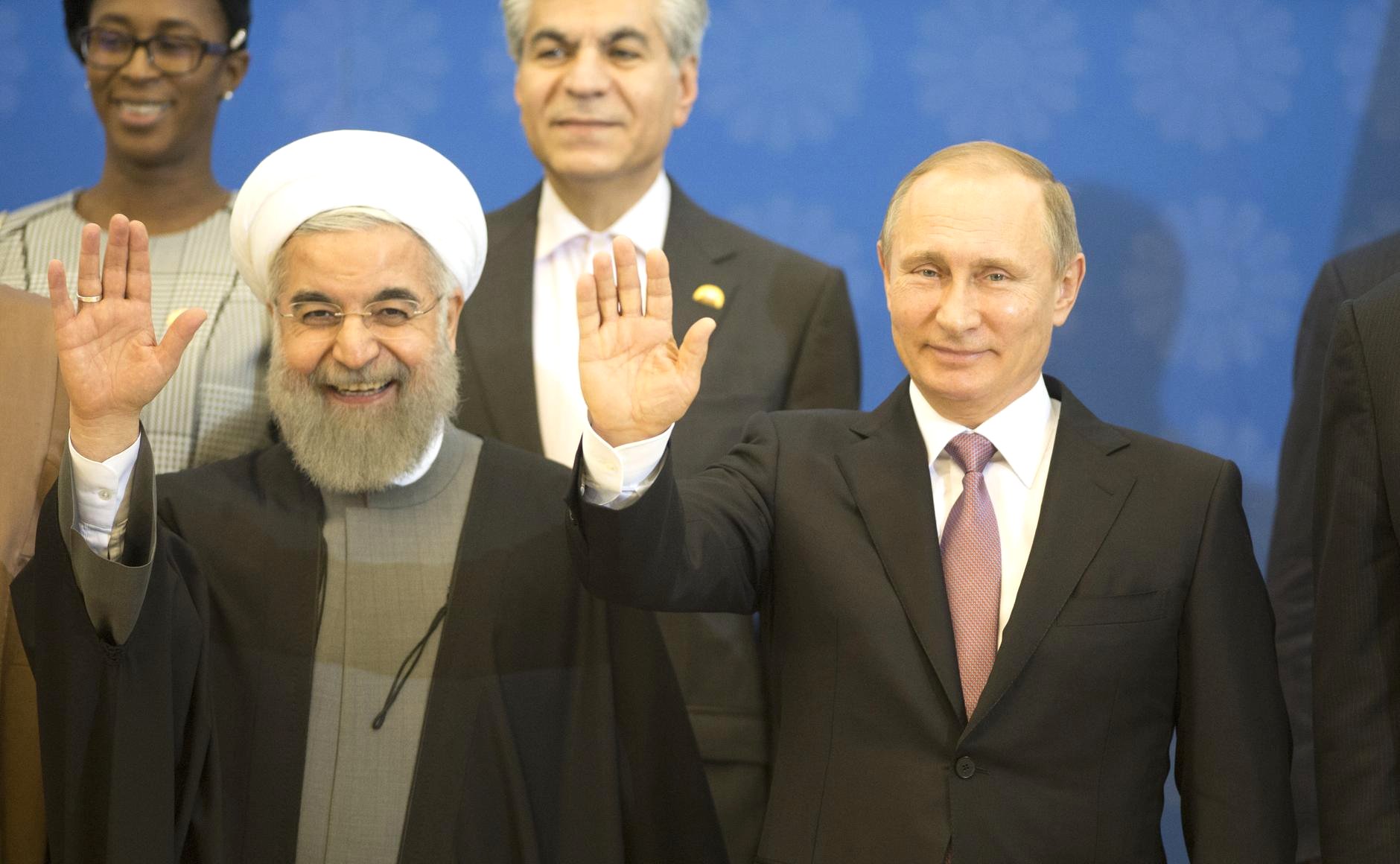
This week, Netanyahu personally traveled to Sochi, Russia, to confront Putin with the same blunt warning about Israel’s intention to attack targets inside Syria if Iran does not remove its forces.
A source familiar with the meeting told me that Putin responded with a sarcastic “good luck!” and that the Russians thought the swaggering Netanyahu appeared “unhinged.”
Still, a major Israeli attack on Iranian positions inside Syria would test Trump’s political toughness, since he would come under enormous pressure from Congress and the mainstream news media to intervene on Israel’s behalf. Indeed, realistically, Netanyahu must be counting on his ability to drag Trump into the conflict since Israel could not alone handle a potential Russian counterstrike.
But Netanyahu may be on somewhat thin ice since Trump apparently blames Israel’s top American supporters, the neocons, for much of his political troubles. They opposed him in the Republican primaries, tilted toward Hillary Clinton in the general election, and have pushed the Russia-gate affair to weaken him.
President Obama faced similar political pressures to fall in line behind Israel’s regional interests. That’s why Obama authorized the covert CIA program in Syria and other aid to the rebels though he was never an enthusiastic supporter – and also grew sick and tired of Netanyahu’s endless hectoring.
Obama acquiesced to the demands of Official Washington’s neocons and his own administration’s hawks – the likes of Secretary of State Hillary Clinton, CIA Director David Petraeus, his successor John Brennan, and United Nations Ambassador Samantha Power.
The Syrian conflict was part of a broader strategy favored by Washington’s neocons to overthrow or cripple regimes that were deemed troublesome to Israel. Originally, the neocons had envisioned removing the Assad dynasty soon after the invasion of Iraq in 2003, with Iran also on the “regime change” menu. But the disastrous Iraq War threw off the neocons’ timetable.
‘Regime Change’ Chaos
The Democratic Party’s liberal interventionists, who are closely allied with the Republican neocons, also tossed in Libya with the overthrow and murder of Libyan leader Muammar Gaddafi in 2011. Then, weapons from Gaddafi’s stockpiles were shipped to Syria where they strengthened rebel fighters allied with Al Qaeda’s Nusra Front and other Islamist groups.
Faced with this troubling reality – that the U.S.-backed “moderate rebels” were operating side by side with Al Qaeda’s Syrian affiliate and its allies – Washington’s neocons/liberal-hawks responded with sophisticated propaganda and devised clever talking points to justify what amounted to indirect assistance to terrorists.
The “regime change” advocates portrayed a black-and-white situation in Syria with Assad’s side wearing the black hats and various anti-Assad “activists” wearing the white hats (or literally White Helmets). The State Department and a complicit mainstream media disseminated horror stories about Assad and – when the reality about Al Qaeda’s role could no longer be hidden – that was spun in the rebels’ favor, too, by labeling Assad “a magnet for terrorists” (or later in cahoots with the Islamic State). For years, such arguments were much beloved in Official Washington.
But the human consequences of the Syrian conflict and other U.S.-driven “regime change” wars were horrific, spreading death and destruction across the already volatile Middle East and driving desperate refugees into Europe, where their presence provoked political instability.
By fall 2015, rebel advances in Syria – aided by a supply of powerful U.S. anti-tank missiles – forced Russia’s hand with Putin accepting Assad’s invitation to deploy Russian air power in support of the Syrian army and Iranian and Hezbollah militias. The course of the war soon turned to Assad’s advantage.
It’s unclear what Hillary Clinton might have done if she had won the White House in November 2016. Along with much of the U.S. foreign policy establishment, she called repeatedly for imposing a “no-fly zone” in Syria to stop operations by the Syrian air force and Russia, a move that could have escalated the conflict into World War III.
But Trump – lacking Official Washington’s “sophistication” – couldn’t understand how eliminating Assad, who was leading the fight against the terrorist groups, would contribute to their eventual defeat. Trump also looked at the failure of similar arguments in Iraq and Libya, where “regime change” produced more chaos and generated more terrorism.
Pandering to Saudis/Israelis
However, in the early days of his presidency, the unsophisticated Trump lurched from one Middle East approach to another, initially following his son-in-law Jared Kushner’s grandiose thinking about recruiting Saudi Arabia to an “outside-in” strategy to settle the Israel-Palestine conflict, i.e., enlisting the Saudis to pressure the Palestinians into, more or less, letting Israel dictate a solution.
Kushner’s “outside-in” scheme was symbolically acted out with Trump making his first overseas visit to Saudi Arabia and then to Israel in May. But I’m told that Trump eventually cooled to Kushner’s thinking and has come to see the Israeli-Saudi tandem as part of the region’s troubles, especially what he views as Saudi Arabia’s longstanding support for Al Qaeda and other terror groups.
Perhaps most significantly in that regard, Trump in July quietly abandoned the CIA’s covert war in Syria. In the U.S., some “regime change” advocates have complained about this “betrayal” of the rebel cause and some Democrats have tried to link Trump’s decision to their faltering Russia-gate “scandal,” i.e., by claiming that Trump was rewarding Putin for alleged election help.
But the bottom line is that Trump’s policy has contributed to the Syrian slaughter abating and the prospect of a victory by Al Qaeda and/or its Islamic State spinoff fading.
So, there has been a gradual education of Donald Trump, interrupted occasionally by his volatile temper and his succumbing to political pressure, such as when he rushed to judgment on April 4 and blamed the Syrian government for a chemical incident in the remote Al Qaeda-controlled village of Khan Sheikhoun.
Despite strong doubts in the U.S. intelligence community about Syria’s guilt – some evidence suggested one more staged “atrocity” by the rebels and their supporters – Trump on April 6 ordered 59 Tomahawk missiles fired at a Syrian air base, reportedly killing several soldiers and some civilians, including four children.
Trump boasted about his decision, contrasting it with Obama’s alleged wimpiness. And, naturally, Official Washington and the U.S. mainstream media not only accepted the claim of Syrian government guilt but praised Trump for pulling the trigger. Later, Hillary Clinton said if she were president, she would have been inclined to go further militarily by intervening with her “no-fly zone.”
As reckless and brutal as Trump’s missile strike was, it did provide him some cover for his July 7 meeting with Putin at the G-20 summit in Germany, which focused heavily on Syria, and also for his decision to pull the plug on the CIA’s covert war.
Saudi-backed Terror
I’m told Trump also has returned to his pre-election attitude about Saudi Arabia as a leading supporter of terror groups and a key provocateur in the region’s disorders, particularly because of its rivalry with Iran, a factor in both the Syrian and Yemeni wars.
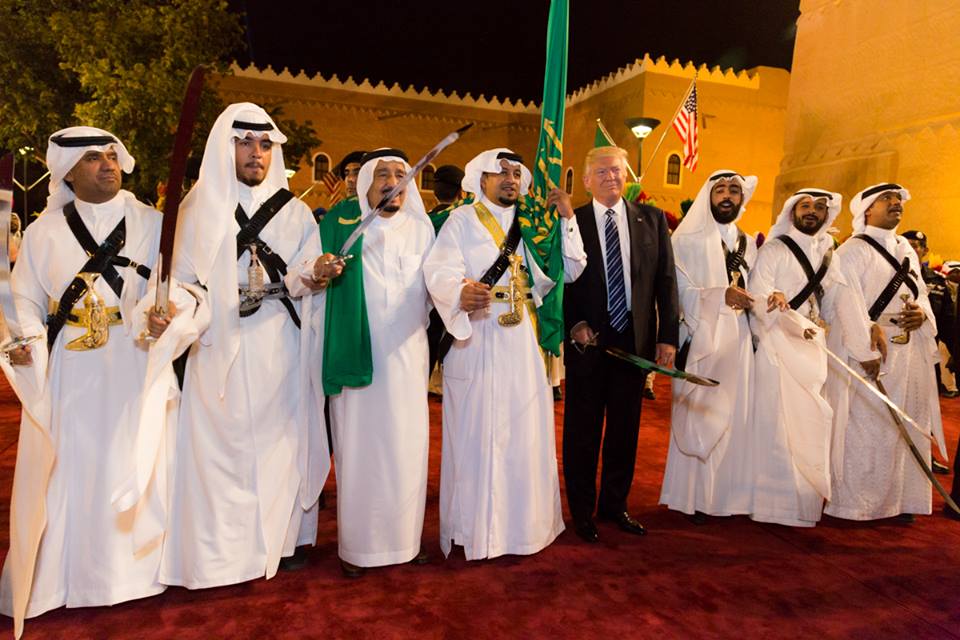
(Official White House Photo by Shealah Craighead)
Though Trump has recited Washington’s bipartisan (and benighted) mantra about Iran being the principal sponsor of terrorism, he appears to be moving toward a more honest view, recognizing the falsity of the neocon-driven propaganda about Iran.
Trump’s new coolness toward Saudi Arabia may have contributed to the recent warming of relations between the Sunnis of Saudi Arabia and the Shiites of Iran, a sectarian conflict dating back 1,400 years. In a surprising move announced this week, the two countries plan an exchange of diplomatic visits.
Even in areas where Trump has engaged in reckless rhetoric, such as his “fire and fury” warning to North Korea, his behind-the-scenes policy appears more open to compromise and even accommodation. In the past week or so, the tensions with North Korea have eased amid backchannel outreach that may include the provision of food as an incentive for Pyongyang to halt its missile development and even open political talks with South Korea, according to a source close to these developments.
On Afghanistan, too, Trump may be playing a double game, giving a hawkish speech on Monday seeming to endorse an open-ended commitment to the near-16-year-old conflict, while quietly signaling a willingness to negotiate a political settlement with the Taliban.
One alternative might be to accept a coalition government, involving the Taliban, with a U.S. withdrawal to a military base near enough to launch counterterrorism strikes if Al Qaeda or other international terror groups again locate in Afghanistan [likely an air base from which to threaten Iran – Aletho News ].
Many of Trump’s latest foreign policy initiatives reflect former White House strategist Steve Bannon’s hostility toward neoconservative interventionism. Secretary of State Rex Tillerson, the former Exxon-Mobil chief executive, also shares a more pragmatic approach to foreign affairs than some of his more ideological predecessors.
Albeit still in their infancy, these policies represent a new realism in U.S. foreign policy that, in many ways, paralleled what President Obama favored but was often unwilling or unable to see through to its logical conclusions, given his fear of Netanyahu and the power of the neocons and their liberal-hawk allies.
Still, some of Obama’s most important decisions – not to launch a major military strike against Syria in August 2013 and to negotiate an agreement with Iran to constrain its nuclear program in 2013-15 – followed a similar path away from war, thus drawing condemnation from the Israeli-Saudi tandem and American neocons.
As a Republican who rose politically by pandering to the GOP “base” and its hatred of Obama, Trump rhetorically attacked Obama on both Syria and Iran, but may now be shifting toward similar positions. Gradually, Trump has come to recognize that the neocons and his other political enemies are trying to hobble and humiliate him – and ultimately to remove him from office.
The question is whether Trump’s instinct for survival finally will lead him to policies that blunt his enemies’ strategies or will cause him to succumb to their demands.
Investigative reporter Robert Parry broke many of the Iran-Contra stories for The Associated Press and Newsweek in the 1980s.
British universities should be more discerning about their choice of benefactors
By Alastair Sloan | MEMO | August 25, 2017
Just over eighteen months ago, environmental campaigners in Britain received some surprising news. They had been working for three years to get the Tate Gallery in London to reveal how much money oil giant BP had given it between 1990 and 2011. The figure turned out to be relatively small, ranging from £150,000 to £330,000 per year. Although this was a good chunk of the gallery’s income in the nineties, this soon equated to less than one per cent of the Tate group’s funding between 2000 and 2006. The sponsorship deal continued for another ten years, alongside similar BP sponsorships of the British Museum, the Royal Opera House and the National Portrait Gallery. Across all of these organisations, the oil company likewise contributed less than one per cent of funding to each one. The oft-heard argument that the struggling arts sector would go under were it not for this kind of funding from not-very-nice corporations was clearly bunkum. If anything, these institutions were willing collaborators in corporate whitewashing.
The same could be said of Gulf funds for British universities. Middle East Studies departments whisper about the necessity of funding from countries like the United Arab Emirates, Saudi Arabia and Qatar, because budgets are falling. A close look at the finances of the University of Exeter reveals something else, though; the issue of donations from alumnus Sheikh Dr Sultan Bin Muhammad Al-Qasimi of Sharjah were raised recently by the International Campaign for Freedom in the United Arab Emirates.
According to the Telegraph, the ruler of Sharjah – one of the most conservative Emirates in the UAE — has given more than £8 million to Exeter University over two decades (roughly the same time period that the Tate was receiving money from BP). A breakdown of when these donations were made is not available, but government grants and tuition fees in 1999 (the earliest data that I have been able to find) amounted to £52 million. The equivalent figure today is £250 million, around three times the original government and student fees funding even when adjusted for inflation. Much of this has come from the introduction of hugely expensive tuition fees for students.
In 2008, the nephew of the late King Abdullah of Saudi Arabia gave £8 million to Cambridge University to build its “Prince Alwaleed Bin Talal Centre of Islamic Studies”. The same year, Cambridge University’s annual report shows that income from government grants and tuition fees had risen from £251 million to £279 million. Cambridge made £174 million from its publishing house, more than £20 million more than in 2007. Even its “examination and assessment services” had seen income go up from £193 million to £216 million. All these increases led to the university almost doubling its surplus for the year, to £42 million. Yet that same year, it also accepted £8 million from a state known for its appalling human rights record, all the while knowing full well that the university coffers were overflowing.
After 2008, of course, there was the recession, so perhaps last year’s £3 million donation from the Qatar Development Fund towards Somerville College, Oxford, was justified? Think again. Somerville College itself was certainly on track to suffer a £3 million reduction in donations had the Qatar money not arrived, and had just borrowed huge amounts to extend its buildings, but Oxford University generally was doing well. In 2010, its income had risen since the previous year by nearly five per cent, to £920 million. By 2015, that figure was up to £1.3 billion, with surpluses of nearly £400 million sat in university bank accounts. Oxford doesn’t include in its numbers, as Cambridge does, its significantly profitable publishing business, which was on hand to top up coffers when they are running low.
In the UAE, we only have to go back to March to find that a prominent academic was jailed for ten years. His crime? He used Twitter. The country has imposed travel restrictions on visiting academics from Georgetown University, the London School of Economics and New York University, as well as prosecuting other university professionals. In January, the UAE government detained Abdulkhaleq Abdulla for ten days without charge after the prominent Emirati academic and vocal supporter, not critic, of the government posted a tweet that praised the UAE as the “Emirates of tolerance” but bemoaned the authorities’ lack of respect for freedom of expression and political liberties. Abdulla was an adviser to Mohammed Bin Zayed, the Crown Prince of Abu Dhabi, and a retired professor of political science at the University of the UAE. Similar situations abound in Saudi Arabia, and academic freedoms are only marginally better in Qatar.
So British universities are well off. They don’t need money from abroad, but they are opting to take it in any case, and who they are choosing to take it from isn’t encouraging. This devalues British academia and spits in the face of academics and others calling for change who are imprisoned in those donor countries for their pains. Universities should be campaigning to have tuition fees removed, be more inventive about how they make money, and stop plastering the names of Middle East dictators across their walls. They need to be much more discerning in their choice of benefactors. It’s too late to do this today, but tomorrow will do very nicely.
US, Saudi Ask Syria Opposition to Accept Assad’s Political Role: Report
Al-Manar | August 25, 2017
US and Saudi diplomats have reportedly been urging the armed Syrian opposition to come to terms with President Bashar al-Assad’s role in Syria’s future, a report said, indicating to the major policy U-turn in the western stance from the Syrian crisis.
In an article published on Thursday, the Associated Press said the Syrian army holds the upper hand on the battlefield against militant groups, pointing to the major shift in the strategies of Western and regional supporters of Syrian opposition groups and militants with regard to the developments in Syria.
“Western and regional rebel patrons, currently more focused on advancing their own interests rather than accomplishing regime change in Damascus, are shifting their alliances and have ceased calls on Assad to step down,” the report said.
Former US ambassador to Syria, Robert Ford, who is widely considered as Washington’s civil war engineer in different parts of the world and a key instigator of the Syrian conflict in 2011, has ruled out the likelihood of Assad’s removal, saying, “There is no conceivable military alignment that is going to be able to remove him.”
“Everyone, including the US, has recognized that Assad is staying,” said Ford, who is currently a fellow at the Middle East Institute in Washington, D.C.
According to an interlocutor, who mediates between the opposition and state capitals and requested anonymity, Saudi Foreign Minister Adel al-Jubeir told the opposition it was time to formulate “a new vision.”
“He did not explicitly say Bashar [Assad] is going to stay, but if you read between the lines, if you say there needs to be a new vision, what is the most contentious issue out there? It is whether Bashar stays,” said the interlocutor, according to the article.
Iran, Saudi to Exchange Diplomatic Visits

Al-Manar | August 24, 2017
Iran and Saudi Arabia will soon exchange diplomatic visits, Tehran said, in a possible sign of tensions easing after the arch rivals cut ties last year.
Iranian Foreign Minister Mohammad Javad Zarif told local media the visits would take place after this year’s hajj pilgrimage to Mecca in Saudi Arabia, which is due to start at the beginning of September.
“Visas have been delivered for the two sides. The final steps need to be completed so our diplomats can go inspect our embassy and consulate in Saudi Arabia and for Saudi diplomats to come inspect their embassy and consulate,” Zarif told news agency ISNA.
Zarif urged Riyadh to reconsider its foreign policy.
“Saudi Arabia’s behavior goes against its own interests. We want security and stability throughout the region and insist on the need to fight against the dangers that threaten us all,” he said.
“Saudi Arabia has not benefited from two years of war and horrific acts against the Yemeni people, on the contrary,” he said. “It’s the same in Syria or in Bahrain. We hope they will choose another path.”
Israel’s Alarm over Syrian Debacle
By Daniel Lazare | Consortium News | August 22, 2017
There’s a rumor going around that the Syrian civil war is finally winding down and that the Baathist government is nearing its goal of driving out thousands of ISIS-Al Qaeda head-choppers financed and supplied – directly or indirectly – by the U.S., Turkey, Saudi Arabia, and the other Persian Gulf oil monarchies.
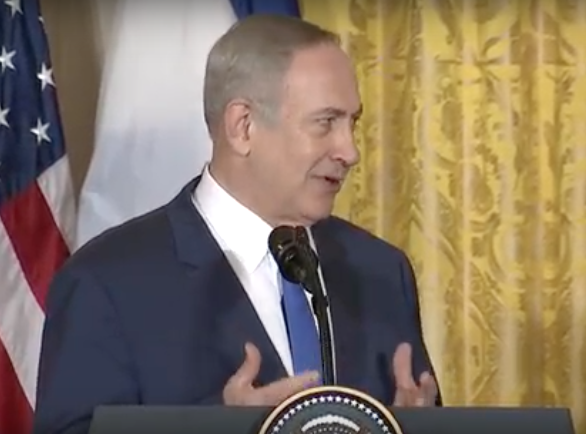
(Screenshot from White House video)
It would be good news if true. But most likely it’s not. While one stage in the Syrian conflict is coming to an end, another is beginning, and this time the results could be even worse.
The reason is Israel, until now the odd man in the latest Mideast wars. Despite intervening sporadically on the rebel side in Syria, the Jewish state generally held itself aloof from the conflict in the belief that events were breaking its way regardless of whether it stepped in or not. After all, why go to war when your enemies are doing a fine job of tearing each other apart on their own?
With President Bashar al-Assad expected to step down eventually, Israel figured that it only had to wait and watch as a hostile regime collapsed under its own weight as it thrashed about unable to restore order to Syria. Never in the Arab-Israeli hundred years’ war had Israel seemed stronger and the Arabs weaker and in greater disarray.
But then the unthinkable happened. Assad not only survived but prevailed. Backed by Russia, Iran and the Lebanese Shi‘ite militia Hezbollah, he has bottled up Al Qaeda in East Ghouta and Idlib province in the extreme northwest and is racing to lift ISIS’s siege on Deir-Ezzor along the Euphrates. If successful, the effect will be to clear a path straight through to the Iraqi border some 30 miles to the east.
U.S. military enclaves may remain in the northeast and in the southern border town of Al-Tanf. But it’s hard to see how they’ll have much of an impact as the Damascus regime tightens its grip on the country as a whole.
Israeli Outrage
But rather than making a wider war less likely, the upshot is to make it even more. Having bet on the wrong horse, Prime Minister Benjamin Netanyahu now finds himself facing a nightmare scenario in which Iran takes advantage of Assad’s winning streak to extend its reach from Iraq and Syria into Lebanon beyond. It’s not just a question of political influence, but of the emergence of a powerful Iranian-led military bloc.
Eleven years after fighting a vicious 34-day war in southern Lebanon, Israel thus finds itself facing not only Hezbollah but the Syrian Arab Army, Iran’s Islamic Revolutionary Guards, and Iraqi Shi‘ite militias – all backed by Russian military might – in a front extending across its entire northern border. All are battle-hardened after years of combat, better armed, better led, and more self-confident to boot. Israel finds itself confronting a new threat that is many times more powerful than Hezbollah (or Syria) alone.
Israeli consternation is not to be underestimated. One news outlet says the official attitude is one of “grave concern” while an anonymous government minister heaped blame on the U.S. for sacrificing Israeli interests:
“The United States threw Israel under the bus for the second time in a row. The first time was the nuclear agreement with Iran, the second time is now that the United States ignores the fact that Iran is obtaining territorial continuity to the Mediterranean Sea and Israel’s northern border. What is most worrisome is that this time, it was President Donald Trump who threw us to the four winds – though viewed as Israel’s great friend. It turns out that when it comes to actions and not just talk, he didn’t deliver the goods.”
Netanyahu is meanwhile off to the Black Sea resort of Sochi to confer with Russian President Vladimir Putin while, in Washington, Israeli military and intelligence officials are meeting with top Trump officials such as National Security Adviser H.R. McMaster and special Mideast envoy Jason Greenblatt.
Israel has also engaged in saber-rattling with regard to a missile factory that it says Iran is building in the Syrian port city of Baniyas. Gadi Eisenkot, the Israeli military’s chief of staff, said that stopping efforts by Iran, Syria, and Hezbollah to equip themselves with accurate missiles capable of striking deep inside the Jewish state “is our top priority.”
Adds Avigdor Lieberman, Israel’s hard-right defense minister: “We know what needs to be done…. We won’t ignore the establishment of Iranian weapons factories in Lebanon.”
Neocon Chorus
Words like that should not be taken lightly. Meanwhile, influential neoconservatives are joining the me-too chorus. At the Atlantic Council – the hawkish Washington think tank partly funded by the United Arab Emirates and pro-Saudi interests that functioned as an arm of Hillary Clinton’s 2016 presidential campaign – former Obama administration official Frederic C. Hof recently argued that the U.S. wouldn’t be in such a pickle if it had invaded Syria years ago:
“A Syrian opposition recognized by Washington in December 2012 as the ‘legitimate representative of the Syrian people’ should have been tasked with preparing for post-ISIS governance, and assisted to that end by an American-organized, multi-national effort. An all-Syrian stabilization force should have been built in a protected eastern Syria to pacify the area, facilitate humanitarian aid, and spur reconstruction.”
But now the U.S. is seemingly “indifferent” to what comes next once Islamic State is gone. As a consequence, Hof said, the Trump administration is effectively “install[ing] Iran as Syria’s suzerain, with the Assad entourage sifting through the country’s ruins for spoils and setting the stage for successive waves and varieties of extremism arising in response.” The only solution, according to Hof, is a radical strategic change “to prevent Iran and Assad doing their worst for the security of the United States, its allies, and its partners.”
With the Zionists and their neocon yes-men agreeing that something must be done, it seems that something WILL be done sooner rather than later.
Of course, a few complications could get in the way. One involves Russian President Vladimir Putin who, despite his close alliance with Assad, enjoys a solid working relationship with Israel and is none too eager to see war break out between the two countries. Another is the Syrian government in Damascus, which, under the leadership of the careful and cautious Assad, is none too eager to rush into a conflict that could conceivably prove even more ruinous than the one it is trying to finish up.
A Sick Kingdom
But even sober politicians like Putin and Assad may be unable to cope with the forces raging across the Middle East. The sectarian war that the Saudis unleashed more than a decade ago with U.S, help shows no signs of letting up. The kingdom is mired in an anti-Shi‘ite crusade in Yemen that it is desperate to escape, but doesn’t know how. It has suppressed a Shi‘ite uprising in Awamiyah, a city of 25,000 people in its own oil-rich Eastern Province, killing dozens according to Iranian sources and flattening an entire neighborhood, but dissent continues to bubble up ominously.
Saudi Arabia also has imposed an economic blockade on Qatar, and it is backing a repressive regime in Bahrain that has imposed a reign of terror on the country’s 70-percent Shi‘ite majority. Riyadh continues to engage in a dangerous war of words with Iran, which the royal family believes is engaged in an Elders of Zion-like Shi‘ite conspiracy to dismember the kingdom and wrest away control of Mecca and Medina.
The more paranoid Saudi leaders become, the more threatening Saudi Arabia grows – and the more resolved Iran becomes to make the most of its victory in Syria by fulfilling the ancient Persian goal of opening a corridor to the Mediterranean Sea. Aggression on one side leads to counter-aggression on the other, a process of mutual escalation that seems impossible to reverse.
Finally, there is the question of political stability – or, rather, an increasing lack thereof. In Iran, newly re-elected President Hassan Rouhani is locked in a growing confrontation with hardline Shi‘ite Islamists with little appetite for compromise.
In Saudi Arabia, power is in the hands of Crown Prince Muhammad bin Salman, a rambunctious 31-year-old who launched the disastrous war in Yemen in March 2015 – and then disappeared on a vacation in the Maldives as U.S. officials tried desperately to reach him by phone – and who more recently unveiled an ambitious economic reform program that so far has done nothing to stem the kingdom’s alarming decline. Despite vows to diversify the economy, non-oil revenue actually shrank by 17 percent this spring while foreign reserves have fallen by nearly a third since 2014. But that didn’t stop MbS, as he’s known, from committing himself to $110 billion in U.S. arms purchases in May or his father, King Salman, from spending a reported $100 million on a summer vacation in Morocco.
Saudi Arabia is thus becoming the sick man of the Middle East, one whose collapse could trigger a “geopolitical tsunami” sweeping across much of the region.
Trump’s Imbalance
Then there is the United States, where politics are even more unsettled. As President Trump careens from one disaster to another, foreign policy has grown both unpredictable and bellicose. One day, America’s second popular-vote-losing president in 16 years is calling for regime change in Tehran, the next he’s threatening Pyongyang with “fire and fury,” and then he’s blustering about some unspecified “military option” with regard to Venezuela.
The fact that Trump has so far demonstrated little follow-through is hardly reassuring. Sooner or later, rash rhetoric can only lead to rash actions, if not on America’s part then someone else’s. The shakier Trump grows, the greater the likelihood that he will engage in some risky adventure in order to strengthen his grip.
A number of forces are thus converging: political instability in Tehran, Riyadh and Washington, a growing thirst for more war on the part of Israel and the U.S. foreign-policy establishment, and a growing defensiveness on the part of a “Shi‘ite crescent” stretching from Yemen to southern Tehran. The United States, Turkey, Saudi Arabia, and others have already plunged Syria into death and destruction by sponsoring a murderous Sunni Salafist assault on one of the most diverse populations in the Middle East. The big question now is whether, with Israeli help, they are about to impose another.
Given the vicious cycle of violence in the Middle East, one that the U.S. has done its level best to worsen at every step of the way, it’s hard not to believe that even worse may be ahead.
Daniel Lazare is the author of several books including The Frozen Republic: How the Constitution Is Paralyzing Democracy (Harcourt Brace).
Facing Defeat in Syria, ISIS Inexplicably Expands Globally
By Tony Cartalucci – New Eastern Outlook – 11.08.2017
Throughout human history, when a military force and its economic center has been defeated, it contracts, then collapses. For the first time in human history, the self-proclaimed “Islamic State” (ISIS), has managed to reverse this fundamental aspect of reality – but not without help.
Facing defeat in Syria as government forces backed by its Russian and Iranian allies close in on the terrorist organization, stripping it of territory it seized, it has managed to spread far beyond Syria’s borders, establishing itself in Libya, Afghanistan, and even as far as Southeast Asia where it has seized an entire city in the Philippines’ south, and carried out attacks and conducting activities everywhere from Indonesia and Malaysia to allegedly Thailand’s deep south.
It should be remembered, according to Western governments and their media, the territory ISIS holds in Syria is allegedly providing it with the summation of its financial resources and thus the source of its fighting capacity. According to official statements, the US and its European allies allege that ISIS fuels its fighting capacity with “taxes” and extortion as well as black market oil sales – all of which are derived from territory it holds in Syria.
The Washington Post in a 2015 article titled, “How the Islamic State makes its money,” would note:
Weapons, vehicles, employee salaries, propaganda videos, international travel — all of these things cost money. The recent terrorism attacks in Paris, which the Islamic State has claimed as its own work, suggest the terrorist organization hasn’t been hurting for funding. David Cohen, the Treasury Department’s Undersecretary for Terrorism and Financial Intelligence, described the Islamic State last October as “probably the best-funded terrorist organization we have confronted” — deep pockets that have allowed the group to carry out deadly campaigns in Iraq, Syria and other countries.
To explain where ISIS actually makes its money, the Washington Post claims:
Unlike many terrorist groups, which finance themselves mainly through wealthy donors, the Islamic State has used its control over a territory that is roughly the size of the U.K. and home to millions of people to develop diversified revenue channels that make it more resilient to U.S. offensives.
The Washington Post would also claim:
Its main methods of generating money appear to be the sale of oil and antiquities, as well as taxation and extortion. And the group’s financial resources have grown quickly as it has captured more territory and resources: According to estimates by the Rand Corporation, the Islamic State’s total revenue rose from a little less than $1 million per month in late 2008 and early 2009 to perhaps $1 million to $3 million per day in 2014.
With this territory quickly shrinking and the intensity of fighting against what remains of ISIS in Syria and Iraq expanding, it is seemingly inexplicable as to how ISIS is expanding globally, instead of contracting and collapsing.
The Washington Post’s already implausible thesis regarding ISIS finances – based on official statements from the US Treasury Department and US corporate-funded policy think tanks like Rand – appears to be the only thing contracting and collapsing.
ISIS Enjoys Global Reach Many Nation-States Lack
Regarding just how expansive ISIS’ global activities are, US Secretary of State Rex Tillerson himself would claim in an August 1, 2017 statement that:
I think our next steps on the global war to defeat ISIS are to recognize ISIS is a global issue. We already see elements of ISIS in the Philippines, as you’re aware, gaining a foothold. Some of these fighters have gone to the Philippines from Syria and Iraq. We are in conversations with the Philippine Government, with Indonesia, with Malaysia, with Singapore, with Australia, as partners to recognize this threat, try to get ahead of this threat, and help them with training – training their own law enforcement capabilities, sharing of intelligence, and provide them wherewithal to anticipate what may be coming their direction.
Tillerson made these remarks after noting ISIS’ shrinking holdings in both Syria and Iraq. He claimed in regards to Iraq:
More than 70 percent of Iraqi territory that was once held by ISIS has been liberated and recovered. ISIS has been unable to retake any territory that it has been – that has been liberated, and almost 2 million Iraqis have returned home. And this is really the measure of success, I think, is when conditions are such that people feel like they can return to their homes.
Regarding Syria, Tillerson would claim:
Similarly, over in Syria, we’re assisting with the liberation of Raqqa, which is moving at a faster pace than we originally anticipated.
The steps outlined by Tillerson to combat ISIS sidestep strategic fundamentals like identifying, isolating, and eliminating the economic and financial source of the organization’s fighting capacity, and instead focus on an indefinite justification for global US military operations – particularly across Southeast Asia at a time when the region is incrementally uprooting American influence and replacing it with Eurasian alliances, networks, as well as military and economic blocs.
For ISIS – fueled by resources found only within the boundaries of its meager and shrinking territorial holdings in Syria and Iraq – to be simultaneously fighting the national armies of Syria and Iraq, backed by Iran, Russia, Lebanon’s Hezbollah, and allegedly a US-led coalition including dozens of countries, all while expanding its reach worldwide, including full-scale military operations in Southeast Asia, begs belief.
ISIS doing all of this with multi-billion dollar multinational state sponsorship, not only makes much more sense, it is the only explanation.
ISIS is State Sponsored
Until recently, ISIS territory butted directly against the borders of NATO-member Turkey. In fact, looking at any map of the Syrian-Iraqi conflict with ISIS revealed what appeared to be logistical trails leading directly out of Turkey and to a lesser extent, Jordan.
A 2014 report from Germany’s public broadcaster Deutsche Welle, revealed a torrent of supplies, men, and weapons flowing daily over the Turkish-Syrian border, headed directly toward ISIS territory, directly under the nose and with the complicity of Turkish officials.
The report titled, “‘IS’ supply channels through Turkey,” would note:
Every day, trucks laden with food, clothing, and other supplies cross the border from Turkey to Syria. It is unclear who is picking up the goods. The haulers believe most of the cargo is going to the “Islamic State” militia. Oil, weapons, and soldiers are also being smuggled over the border, and Kurdish volunteers are now patrolling the area in a bid to stem the supplies.
So obvious was the logistical support for ISIS flowing from Turkey, that ISIS flags were clearly visible from the Turkish border throughout DW’s footage.
It was only until Russia’s military intervention in Syria upon Damascus’ request, that these logistical routes were targeted and significant pressure could be placed on ISIS inside Syria, rolling back its fighting capacity.
ISIS enjoys a global reach few nation-states could achieve because it is financially, politically, and militarily backed by nations with the resources to obtain that global reach. This includes the US itself, NATO, and the Gulf Cooperation Council (GCC) which in turn includes nations like Saudi Arabia, the United Arab Emirates (UAE), and Qatar.
ISIS is America’s Foot in the Door in Southeast Asia
US Secretary of State Rex Tillerson’s comments regarding ISIS’ spread into Southeast Asia implied long-term US involvement in the region, including closer involvement with regional police and even military forces. In the Philippines, where US-Philippine relations were spiraling downward, the sudden appearance of ISIS there and the organization’s ability to seize an entire city led directly to justification for not only a continued US military presence in the country, but its expansion.
Other nations across Southeast Asia – including Indonesia, Malaysia, and Thailand – have been incrementally pushing US influence out of the region in favor of stronger and more stable ties with each other and with neighboring China.
Thailand for instance, has begun replacing aging US military hardware with weapon systems from Russia, China, and Europe. Thailand has also begun joint military exercises with China, ending America’s post-Vietnam War monopoly. Thailand and Indonesia have also begun striking a series of economic and infrastructure deals with China, including immense expansions of their respective national railways.
As each nation has taken steps to move the US out of Asia, the US has increased pressure on each respective nation. It has done this through US-funded fronts posing as nongovernmental organizations (NGOs) and US-backed opposition movements. It also appears to be doing this through the introduction and expansion of ISIS activity in the region.
It should be remembered that it was the US itself that created Al Qaeda in the mountains of Afghanistan to fight the Soviets in the 1980s.
If the situation unravels there is the possibility of establishing a declared or undeclared Salafist principality in eastern Syria (Hasaka and Der Zor), and this is exactly what the supporting powers to the opposition want, in order to isolate the Syrian regime, which is considered the strategic depth of the Shia expansion (Iraq and Iran).
Featured Video
NATO’s War of Choice – The Sabotage of the Istanbul Negotiations
or go to
Aletho News Archives – Video-Images
From the Archives
National Security Archive Publishes Key Records on Infamous MKULTRA Program
Agency Sought Drugs and Behavior Control Techniques to Use in “Special Interrogations” and Offensive Operations
Edited by Michael Evans | National Security Archive | December 23, 2024
Washington, D.C. – Today, the National Security Archive and ProQuest (part of Clarivate) celebrate the publication of a new scholarly document collection many years in the making on the shocking secret history of the CIA’s mind control research programs. The new collection, CIA and the Behavioral Sciences: Mind Control, Drug Experiments and MKULTRA, brings together more than 1,200 essential records on one of the most infamous and abusive programs in CIA history.
Under code names that included MKULTRA, BLUEBIRD and ARTICHOKE, the CIA conducted terrifying experiments using drugs, hypnosis, isolation, sensory deprivation, and other extreme techniques on human subjects, often U.S. citizens, who frequently had no idea what was being done to them or that they were part of a CIA test.
Today’s announcement comes 50 years after a New York Times investigation by Seymour Hersh touched off probes that would bring MKULTRA abuses to light. The new collection also comes 70 years since U.S. pharmaceutical giant Eli Lilly & Company first developed a process to streamline the manufacture of LSD in late 1954, becoming the CIA’s chief supplier of the newly discovered psychoactive chemical central to many of the Agency’s behavior control efforts.
Highlights of the new MKULTRA collection include… continue
Blog Roll
 Aletho News
- The Founder Who Turned Against Root Canals
- Israel displaces last two families from Al Khalayel valley, Al Mughayyir
- Israeli Opposition Leader Endorses Greater Israel
- Islamic Jihad: Trump’s peace board is a “theatrical stunt detached from reality”
- The Head Of A CIA Cutout Admits To Meddling In Iran To Fuel Unrest
- Iran warns Trump against decisions based on false information
- Pentagon sets deadline for Anthropic to lift AI restrictions on autonomous weapons systems, mass domestic surveillance
- Trump’s military buildup against Iran on Netanyahu’s behalf is a gambit doomed to fail
- Big League War
- Zelensky sells false illusion of building powerful air force capable of overcoming Russia
- If Americans Knew
- Are the Jews indigenous to Palestine?
- AIPAC Wants to Kill a Bill that would Ensure Israel Complies with Ceasefire
- Former Israeli PM, in Epstein Files, Dreamed of Israeli Eugenics and Pretty Converts
- Israeli settlers join ‘safari’ tour of Palestinian prisoners
- Flooding in Gaza amid rumors of war; fire in West Bank – Not a ceasefire Day 138
- Fourteen Countries Condemn Huckabee’s Support for Israel Taking Over Most of the Middle East
- Israeli Soldiers Killed Gaza Aid Workers at Point Blank Range in 2025 Massacre: Report
- Israel’s insidious network to propagandize American Christians
- Israel’s Best-Kept Secret: Palestinian Resistance Never Agreed to Disarm
- Trump officials plan to build 5,000-person military base in Gaza, files show
- No Tricks Zone
- Surprising Discovery: Sahara Is Greening…Billions Of Trees Where Once Thought To Be Barren
- New Research Reaffirms Clouds, Aerosols, And Surface Solar Radiation Are ‘Driving The Climate System’
- Germany: Electric Car Catches Fire At Charging Station, Sets Off Local “Inferno”, Widespread Damage
- New Study: Canada’s New Brunswick Was 1°C Warmer Than Today During The Medieval Warm Period
- Coal Power Back In Trend As Globe Tries To Keep Pace With Growing Demand For Power
- New Study: A 4°C Warmer Beaufort Sea Had ‘No Sea Ice’ 11,700 – 8200 Years Ago
- Unfudging The Data: Dutch Meteorological Institute Reinstates Early 20th Centruy Heat Waves It Had Erased Earlier
- German Gas Crisis…Chancellor Merz Allegedly Bans Gas Debate Ahead of Elections!
- Pollen Reconstructions Show The Last Glacial’s Warming Events Were Global, 10x Greater Than Modern
- Germany’s Natural Gas Storage Level Dwindles To Just 28%… Increasingly Critical
 Aletho News