Three years of a cruel and destructive NATO proxy war in Ukraine
By Dmitri Kovalevich | Al Mayadeen | February 25, 2025
The end of February marks three years since the start of Russia’s special military operation in Ukraine and 11 years since the ‘Euromaidan’ coup of February 2014. The coup was the main cause of the current military conflict.
The war in the now-former eastern territories of Ukraine could have been avoided had two successive presidencies in Kiev (Petro Poroshenko, 2014-2019 and Volodomyr Zelensky since 2019) complied with the Minsk 2 peace agreement of February 2015. Minsk 2 (text here), was agreed by Kiev and the pro-autonomy forces in the Donbass region on February 12, 2015. France, Germany, and Russia co-signed the agreement as guarantors. The agreement was unanimously endorsed by no less than the UN Security Council on February 17, 2015.
Minsk 2 envisioned the return of Lugansk and Donetsk (the two rebellious ‘peoples republics’ of the industrialized Donbass region) to the fold of the Ukrainian constitution, this time as semi-autonomous oblasts (provinces). Kiev also agreed to a neutral status for Ukraine. It could apply for membership in the European Union if it chose, but membership in the NATO military alliance was for Russia a non-starter.
EU membership increasingly became a goal of Western-oriented business interests in Ukraine during the decade of the 2000s. That decade followed 10 years of sharp economic decline following the dissolution in 1989-90 of Soviet Ukraine and of the Soviet Union (USSR, of which Soviet Ukraine was a key constituent).
Tragically for the people of post-Soviet Ukraine, the Western countries, particularly the leading powers of NATO, quietly and deceptively opposed Minsk 2. They worked quietly from the get-go to sabotage the agreement.
Deception of Ukrainians by the West
On February 12, 2025, the deputy secretary of the Russian Security Council, Aleksey Shevtsov, spoke on the ninth anniversary of the signing of Minsk 2, explaining once again to those who would listen that Russia’s special military operation in Ukraine would never have happened had the West honored the agreement. He stressed that the people of Ukraine today have every right to demand an accounting for the deceptions that took place in 2015 and after.
On the same day, the Ukrainian online publication Strana published a lengthy commentary in its Telegram messaging service headlined, ‘Why did the Minsk agreement fail?’ Strana wrote, “Russia says that Kiev deliberately refused to fulfill the conditions of the Minsk 2 agreement and instead proceeded to rearm its army and restart armed attacks against the people of Donbass. The Russian government says it can no longer trust the government in Kiev and so there is no possibility of a ‘Minsk 3’.” (‘Minsk 1’ was a first attempt, in September 2014, by the pro-autonomy forces of Donbass to reach a peace agreement with the new administration in Kiev.)
Strana wrote further, “Russia did not launch a full-scale invasion of Ukraine in 2014 or 2015. Perhaps it wanted to, who knows, but it could not do so because it would have been hit with harsh economic sanctions similar to those levied against it by the Western powers beginning in February 2022. It would have faced economic sanctions worse than those initially levied against it following the Crimea referendum of March 2014. The Russian economy was in no shape to easily withstand such sanctions, in contrast to the situation in 2022.
“Additionally, although the Ukrainian army back then was much weaker compared to 2022, this was also the case for the Russian army.”
In their recollections of the events of those years, leaders of today’s Donetsk Peoples Republic (today a constituent of the Russian Federation) say that the main opponent of a major military response to Kiev’s continued military provocations and sabotage of Minsk 2 was the Russian military. Russian military leaders said at the time that the Russian Federation did not have enough combat-ready troops to take on such a large and industrial country as Ukraine.
“From a purely military point of view, the rapid success of Russia in Crimea in the spring of 2014 was due to the fact that Russian troops were already present on the Crimean peninsula [by virtue of a 1997 agreement between Russia and Ukraine; see Wikipedia on the subject]. They needed no time to deploy, and they prevented armed attacks being threatened by the paramilitaries of the new administration in Kiev. At the time, there were no large military formations of the Russian Federation along the lengthy Russian-Ukrainian border. Donbass’s self-defense forces only began to form in the late spring of 2014 and it was several years before they were integrated as auxiliaries of the Russian armed forces.”
As Russian sources stated at the time, the initial military defense that arose in the Donetsk and Lugansk oblasts of Ukraine against the paramilitaries of the 2014 coup bore the markings of a military adventure and were not at all coordinated with the political leadership of the Russian Federation. The self-defense forces hoped to convince or pressure Russia to join a war of defense for which Russia was not ready, not politically, economically nor militarily.
What the Western-incited war in Ukraine has wrought
In the lead-up to and since the 2014 coup, western and central Ukraine has been living the fate of a battering ram to be used by the Western imperialist powers to weaken Russia, regardless of the tragic human consequences and of the prospect of Ukraine being cast off once it is no longer needed for such a role. The results of this cruel and heinous policy are increasingly evident as graveyards continue to spread on Ukraine’s territory with each passing day.
The Politnavigator media outlet explained (as reported on Telegram on February 1) the consequences of such policy for the mortals conscripted into war, many against their will. The report cites Anton Cherny, an officer of the Armed Forces of Ukraine. He explains, “We are being lied to about the value of our soldiers’ lives. I watched the speech of our commander-in-chief that every soldier is valuable to Ukraine and worth his weight in gold. That’s what they tell the people, but it’s not true.”
Cherny says that 90% of the soldiers who die or succumb to injuries on the battlefields are simply buried there and then officially listed as missing. “Everyone there knows perfectly well what is happening.” And the indignities do not end there. The families of those reported as ‘missing’ do not receive the financial compensation to which they are entitled.
Cherny also explains that it is extremely difficult for surviving fighters to exit the grim fighting along the front lines. “It’s hard to get out of there by yourself, it’s unrealistic. How lucky it would be if there were fog, very big snow or some other bad weather.” He explains that Ukrainian lines are under constant surveillance from drones flying overhead. As soon as evacuation vehicles approach from the Ukraine side, the drones threaten to strike them, making it very difficult to evacuate the injured or the dead from the various battlefields.
Politnavigator continues its report:
‘The army doesn’t provide guidelines or instructions for soldiers to somehow make their tasks easier. Its words to this effect are just talk. Soldiers are told to go here or there and ‘do’ something, but as to what, where and why, you have to be some kind of superman to figure it out. It’s unreal,’ Cherny says indignantly.
Provoking the sleeping bear of Russia
Radical nationalist and neo-Nazi paramilitaries operating under the control of Kiev’s police and special services waged nine years of military conflict and terrorist attacks against civilians in Donbass from 2014 to 2021. This was bound to provoke a reaction from the Russian Federation sooner rather than later, as any serious commentator knew and reported.
Ukrainian commentators were writing more than three years ago that Kiev’s deployments of paramilitaries in Donbass and its turning a blind eye to their crimes, backed by promises of weapons by belligerent Western governments, would inevitably provoke Russia into responding, as though provoking a bear with a stick. The weapons of Ukraine, many provided by the West, did indeed, predictably, awaken the bear, and angrily.
In early February 2025, the prime minister of neighboring Georgia, Irakli Kobakhidze, told journalists that back in 2022, his country’s then-government was being encouraged by the West to open a ‘second front’ against Russia. The country was to be used just as Ukraine was being used. According to the Kobakhidze, Georgian officials of the day were told a fable by the Western powers to convince them to act. “They said Ukraine is winning the war; you should not miss this chance to strike against Russia.”
Kobakhidze believes it will now take Ukraine 100 years to return to a state of development comparable where it was prior to the 2014. He asks, “Why was all this done? No one is offering a clear answer to this question. However, there is an answer: some global interests, evil interests, have sacrificed our friendly country Ukraine.”
Full-fledged dictatorship
The eleven years that have elapsed since the Euromaidan coup of 2014 have been years of Ukraine sliding inexorably towards dictatorship, all the while accompanied by rosy phrases from EU leaders claiming that a ‘triumph of democracy’ was taking place. The ideology of Nazism from the World War II era has been officially rehabilitated, while opponents of this course have been targeted by armed, ultra-nationalists and neo-Nazis.
All left-wing parties in Ukraine have been banned. Some of their members and leaders have been killed, while many more have been forced into exile. Protests against, and critics of, the ‘pro-European’ dictatorship in Kiev have been targeted for repression. The Western powers have turned a blind eye to the crimes being committed, while United Nations officials have occasionally issued toothless resolutions expressing ‘concern’ about the civil rights being violated.
In 2021, Zelensky banned more political parties critical of his government, and he closed all television channels deemed non-compliant with his policies. No court or other legal reviews of these decisions have taken place.
With the outbreak of war in February 2022, Zelensky imposed martial law and then canceled national elections for the presidency and the legislature (Rada). These were to take place no later than April 2024, according to the Ukraine constitution. Zelensky has said that Ukraine cannot hold elections until it has fully regained control over its former territories. Since this would be impossible to achieve, his statements on the matter mean that for all intents and purposes, elections will not take place in the remaining territories held by Kiev. Period.
Alexander Dubinsky, a former associate of Zelensky jailed by his administration, writes that the war became for Zelensky an escape from the social explosion building up inside the country and appearing inevitable by the end of 2021. “I think this largely determined why Zelensky promoted military rhetoric in every possible way, and why in March 2022 he ceded to Western government pressures to draw back from a political settlement with the Russian Federation.”
For Dubinsky, the end of the war would mean a loss of political power by Zelensky and his cohorts, and this, in turn, would expose them to direct conflict with all the enemies he has managed to make. He may be able to protect himself from the widows and mothers of the deceased, reasons Dubinsky, but not from the violent, ‘serious men’ who have proliferated under his government.
Detention camps using torture methods under Zelensky
Every day, more and more facts are emerging in Ukraine about the detention camps that Zelensky has created in order to sustain its power and continue the NATO proxy war.
In January, legislator Oleksandr Dubinskyy urged Ukrainians to report to U.S. authorities about the detention camps that the Security Service of Ukraine (SBU) has organized, notably for the purpose of forcing accused conscription evaders to confess to accusations of state treason. According to him, the SBU detention camps are prototypes of what Ukraine as a whole has become under Zelensky.
Dubinskyy has been detained since November 2023 under accusations of financial crimes and treason. He has recently announced from detention his intention to run for president of Ukraine if and when a national election takes place.
Another former associate of Zelensky, legislator Artem Dmytruk, wrote on Telegram on January 30 that the entire special corps of the Lukyanivske pre-trial detention center in Kiev should be called a concentration camp and named ‘Zelensky’s Factory’. Legislators Oleksandr Dubinsky and Yevhen Shevchenko are among those imprisoned there. “90|% of detainees in this center face charges by the office of the expired president Zelensky.”
Dmytruk fled to Britain in August 2024 shortly after he was the only deputy in the Rada to speak and vote against a new law banning the Ukrainian Orthodox Church, of which he is a subdeacon.
The Ukrainian magazine Liberal published a lengthy report in February saying that individuals and political formations connected to the Zelensky administration are the only ones in Ukraine not talking about political repression prevailing today in the country.
The authors claim that extensive political repression was being prepared and carried out well before the start of the Russian military intervention in February 2022. According to the publication, thousands of SBU employees were sent to border regions on the eve of the Russian intervention to monitor troop morale and other measures of the military situation.
At the same time, Kiev began to address its shortages of police and prison personnel in Kiev and other regions by recruiting ‘trained athletes’ into the ranks of the SBU after completing three-month courses in western Ukraine. ‘Trained athletes’ is a euphemism in Ukraine for members of criminal gangs.
“Thousands of bone-crackers performing police functions inside the country spread out without the slightest remorse to beat testimony out of Ukrainians using the most brutal forms of violence and creating torture institutions such as the famous ‘Sports Hall’ on Volodymyrska Street [in the center of Kiev],” writes Liberal.
“People were lying on floors, deprived of the right to move and subjected to constant beatings and humiliation. The Ukrainian anthem and nationalist songs were played continuously from loudspeakers. The eyes of the prisoners would be taped shut with duct tape or tied with rags, and they were taken to the toilet only once a day. They were also fed very sparingly, once per day.”
The authors note that political prisoners now account for about half of the prisoners in Ukraine. The main motives for many SBU officers, Liberal notes, have not been security concerns but the robbery of suspects. Detainees have been forced to surrender their personal wealth upon arrest and detention.
Two reports in English on prison conditions in Ukraine were published in 2024, one by a Danish government agency (110 pages) and one by an agency of the Council of Europe (46 pages). Both reports skirt incendiary accusations such as the one published by Liberal and the many ones appearing widely on social media.
On February 12, a German court for the first time approved the extradition of a conscientious objector to military service who had fled Ukraine. Ukraine prohibits men of military age (age 25 to 55, 60 for officers) from leaving the country. Many of the fugitives from Ukraine’s compulsory conscription have chosen to flee to Germany, attracted by Germany’s claimed liberal values. This court decision is the first warning sign that the authorities of European Union countries may begin to conduct forced deportations of the Ukrainian men who have managed by hook or by crook to escape from their homeland’s military conscription. It is reported that in 2024, there are some 200,000 Ukrainian men residing in Germany alone.
Daria Dugina’s Assassination Orchestrated by Ukrainian Intelligence – Report

Sputnik – 23.10.2023
The assassination of Russian journalist Daria Dugina was orchestrated by the Security Service of Ukraine, a US newspaper quoted unnamed sources as saying.
The sources claimed that “the cluttered car carrying a mother and her 12-year-old daughter seemed barely worth the attention of Russian security officials as it approached a border checkpoint. But the least conspicuous piece of luggage — a crate for a cat — was part of an elaborate, lethal plot.”
According to the insiders, “Ukrainian operatives had installed a hidden compartment in the pet carrier, and used it to conceal components of a bomb. Four weeks later, the device detonated just outside Moscow in an SUV being driven” by Daria Dugina, the daughter of prominent Russian political philosopher Alexander Dugin.
“The operation was orchestrated by Ukraine’s domestic security service, the SBU,” the sources argued, referring to “the use of the pet crate, that have not been previously disclosed.” The sources also claimed that the deadly attack on Dugina in August 2022 was “part of a raging shadow war” that Ukraine’s spy services are waging against Russia.
The insiders pointed to the large role played by the US Central Intelligence Agency (CIA) in helping the SBU wage this “shadow war.”
“Since 2015, the CIA has spent tens of millions of dollars to transform Ukraine’s Soviet-formed services into potent allies against Moscow. The agency has provided Ukraine with advanced surveillance systems, trained recruits at sites in Ukraine as well as the United States, built new headquarters for departments in Ukraine’s military intelligence agency, and shared intelligence on a scale that would have been unimaginable” before the above-mentioned year, according to the sources.
They insisted that “the extent of the CIA’s involvement with Ukraine’s security services has not previously been disclosed.”
The sources claimed that over the past 20 months the SBU and its military counterpart, the GUR, “have carried out dozens of assassinations against Russian officials, including a former Russian submarine commander jogging in a park in the southern Russian city of Krasnodar and a militant blogger at a cafe in St. Petersburg.”
“Ukraine’s affinity for lethal operations has complicated its collaboration with the CIA, raising concerns about agency complicity and creating unease among some officials in Kiev and Washington. […] Even those who see such lethal missions as defensible in wartime question the utility of certain strikes and decisions that led to the targeting of civilians including Dugina or her father, Alexander Dugin. Others cited broader concerns about Ukraine’s cutthroat tactics that may seem justified now — but could later prove difficult to rein in,” the insiders pointed out.
Dugina was killed in a car bomb explosion on August 20, 2022, on the Mozhayskoe highway in the Moscow region after returning home from a festival. Her father, who was supposed to be in the same car, changed his plans at the last moment.
Following the investigation, Russia’s Federal Security Service (FSB) determined that the explosive device in Dugina’s car had been planted by Ukrainian Natalia Vovk. The FSB said Vovk worked for Ukrainian special services that organized the assassination. Both Dugina and her father were strong supporters of the Russian special forces operation in Ukraine.
Although Kiev denied its involvement, the FSB released video footage of Vovk entering and leaving the country using forged IDs and moving into an apartment in the same building where Dugina lived. Moscow strongly condemned the attack on the journalist and accused Ukraine of engaging in state terrorism.
MH-17 Probe’s Torture-Implicated Ally
By Robert Parry | Consortium News | July 3, 2016
A senior United Nations official has accused Ukraine’s SBU intelligence service of frustrating U.N. investigations into its alleged role in torture and other war crimes, even as the SBU has been allowed to guide the international investigation into the shooting down of Malaysia Airline Flight 17 for nearly two years.
On June 29, Assistant Secretary-General for Human Rights Ivan Simonovic criticized various “armed groups” in Ukraine for engaging in torture and arbitrary detention, adding that “The Security Services of Ukraine (SBU) is also not always providing access to all places where detainees may be kept. … OHCHR (the Office of the U.N. High Commissioner on Human Rights) also continues to receive accounts about torture and ill-treatment, arbitrary and incommunicado detention by the SBU, especially in the conflict zone.
“Torture and threats to members of the families, including sexual threats, are never justifiable, and perpetrators will be held to account sooner or later. … War crimes, crimes against humanity and grave breaches of human rights cannot be the subject of an amnesty.”
In late May, U.N. inspectors called off their Ukraine torture investigation because the SBU denied the team access to detention facilities where human rights groups had found evidence of torture.
“This denial of access is in breach of Ukraine’s obligations as a State party to the Optional Protocol to the Convention against Torture,” according to the U.N. statement at the time. Sir Malcolm Evans, head of the four-member U.N. delegation, said: “It has meant that we have not been able to visit some places where we have heard numerous and serious allegations that people have been detained and where torture or ill-treatment may have occurred.”
Yet, the SBU, which is also responsible for protecting state secrets, has strongly influenced the direction of the supposedly Dutch-led Joint Investigation Team trying to determine who was responsible for shooting down MH-17 over eastern Ukraine on July 17, 2014, killing 298 people.
Conflict of Interest
Although Ukrainian military units are among the logical suspects in the case, Ukraine was made one of five countries responsible for the inquiry and granted what amounts to veto power over what information the JIT can release. A recent internal report on how the JIT operates also revealed how dependent the investigators have become on information provided by the SBU.
According to the report, the SBU has helped shape the MH-17 investigation by supplying a selection of phone intercepts and other material that would presumably not include sensitive secrets that would implicate the SBU’s political overseers in Ukraine. But the JIT report seems oblivious to this conflict of interest, saying:
“Since the first week of September 2014, investigating officers from The Netherlands and Australia have worked here [in Kiev]. They work in close cooperation here with the Security and Investigation Service of the Ukraine (SBU). Immediately after the crash, the SBU provided access to large numbers of tapped telephone conversations and other data. …
“At first rather formal, cooperation with the SBU became more and more flexible. ‘In particular because of the data analysis, we were able to prove our added value’, says [Dutch police official Gert] Van Doorn. ‘Since then, we notice in all kinds of ways that they deal with us in an open way. They share their questions with us and think along as much as they can.’”
The JIT report continued: “With the tapped telephone conversations from SBU, there are millions of printed lines with metadata, for example, about the cell tower used, the duration of the call and the corresponding telephone numbers. The investigating officers sort out this data and connect it to validate the reliability of the material.
“When, for example, person A calls person B, it must be possible to also find this conversation on the line from person B to person A. When somebody mentions a location, that should also correlate with the cell tower location that picked up the signal. If these cross-checks do not tally, then further research is necessary.
“By now, the investigators are certain about the reliability of the material. ‘After intensive investigation, the material seems to be very sound’, says Van Doorn, ‘that also contributed to the mutual trust.’”
Long Assignments
Another concern about how the SBU could manipulate JIT’s investigation is that the long assignments of investigators in Kiev over a period of almost two years could create compromising situations. Kiev has a reputation as a European hotbed for prostitution and sex tourism, and there’s the possibility of other human relationships developing over long periods away from home.
According to the JIT report, four investigating officers from Australia are stationed in Kiev on three-month rotations while Dutch police rotate in two teams of about five people each for a period of a “fortnight,” or two weeks.
The relative isolation of the Australian investigators further adds to their dependence on their Ukrainian hosts. According to the report, “The Australian investigators find themselves a 26 hour flight away from their home country and have to deal with a large time difference. ‘For us Australians, it is more difficult to get into contact with our home base, which is why our operation is quite isolated in Kiev’, says [Andrew] Donoghoe,” a senior investigating officer from the Australian Federal Police.
The JIT’s collegial dependence on the SBU’s information has not led to a quick resolution of the mystery of MH-17. Almost two years after the tragedy, the JIT has struggled to even pin down where the suspected anti-aircraft missile was fired, bringing down the passenger jet en route between Amsterdam and Kuala Lumpur. The location of the alleged missile firing was something that U.S. officials claimed to know within days of the crash but have kept secret.
The snail’s pace of the investigation and the curious failure of the U.S. government to share usable data from its own intelligence services have caused concerns among some family members of MH-17 victims that the inquiry has been compromised by big-power geopolitics.
Immediately after the shoot-down, the U.S. government sought to pin the blame on ethnic Russian rebels in eastern Ukraine and their Russian government backers, a charge that was crucial to getting the European Union to adopt economic sanctions against Russia. But – as more evidence emerged – the possible role of a Ukrainian military unit became more plausible.
According to the Dutch intelligence service in a report released last October, the only anti-aircraft missiles in eastern Ukraine on July 17, 2014, capable of hitting a plane flying at 33,000 feet belonged to the Ukrainian military.
Twists in the Investigation
After CIA analysts had time to evaluate U.S. satellite, electronic and other intelligence data, the U.S. government went curiously silent about what it had discovered, including the possible identity of the people who were responsible. The U.S. reticence, after the initial rush to judgment blaming Russia, suggested that the more detailed findings may have undercut those original claims.

A side-by-side comparison of the jetliners.
A source who was briefed by U.S. intelligence analysts told me that the CIA’s conclusion pointed toward a rogue Ukrainian operation involving a hard-line oligarch with the possible motive of shooting down Russian President Vladimir Putin’s official plane returning from South America that day, with similar markings as MH-17. But I have been unable to determine if that assessment represented a dissident or consensus view inside the U.S. intelligence community.
Although the JIT also includes Belgium and Malaysia, the key roles have been played by the Netherlands, Australia and Ukraine, with Ukraine’s SBU arguably the most influential party as it feeds the other investigators leads to pursue.
Given the SBU’s legal responsibility to shield Ukrainian government secrets, you might think the question would have arisen whether the SBU would supply any data that might implicate some powerful political figure connected to the regime in Kiev. But there was nothing in the JIT’s update to suggest any such suspicion.
Regarding the SBU’s refusal to grant access to the U.N.’s torture investigators in May, Ukraine’s deputy justice minister Natalya Sevostyanova said the U.N. team was denied access to SBU centers in Mariupol and Kramatorsk, frontline towns in the simmering civil war between the U.S.-backed Ukrainian government and Russian-supported eastern Ukrainian rebels.
SBU director Vasyl Hrytsak said the reason for barring the U.N. team was to protect Ukrainian government secrets, adding: “If you arrive, for example, in the United States and ask to come to the C.I.A. or the F.B.I., to visit a basement or an office, do you think they will ever let you do it?”
[For more background on this controversy, see Consortiumnews.com’s “More Game-Playing on MH-17.”]
Investigative reporter Robert Parry broke many of the Iran-Contra stories for The Associated Press and Newsweek in the 1980s. You can buy his latest book, America’s Stolen Narrative, either in print here or as an e-book (from Amazon and barnesandnoble.com).
UN rights watchdog accuses Kiev forces of torture, inhumane treatment of civilians
RT | December 16, 2014

Azov battalion soldiers take an oath of allegiance to Ukraine in Kiev’s Sophia Square before being sent to the Donbass region. (RIA Novosti / Evgeny Kotenko)
Kiev-controlled volunteer battalions and the Ukrainian Security Service are involved in an increasing number of human rights violations including torture and forced disappearances of those suspected of “separatism,” according to a UN OHCHR report.
The report by the UN High Commissioner for Human Rights says that Kiev’s actions in eastern Ukraine to “restore order” have led to “arbitrary detentions, torture, and enforced disappearances of people suspected of ‘separatism and terrorism’. Most of such human rights violations appear to have been perpetrated by certain voluntary battalions or by the Security Service of Ukraine (SBU).”
The eighth OHCHR report on the human rights situation in Ukraine released on Monday added that the procedural rights of people have not always been observed, with reports of ill-treatment and reprisals upon release.
The report, which covers from November 1-30, says the Office of the Military Prosecutor has not taken any actions to investigate the “considerable” number of allegations of human rights violations, “including looting, arbitrary detention and ill-treatment by members of certain voluntary battalions such as Aidar, Azov, Slobozhanshchina and Shakhtarsk.”
For instance, OHCHR says that raids carried out by armed masked men in uniforms without insignia on 85 homes in the district of Krasnyi Lyman have led to a large number of forced disappearances. Those interviewed by UN staff reported being beaten and intimidated to “confess to participation in the armed groups.”

Recruits are sworn in for Azov Battalion in Kiev’s Sophia Square. (RIA Novosti / Evgeny Kotenko)
In another instance, the UN report cites an interview of a man who claims to have been arbitrarily detained by the Ukrainian Security Service (SBU) and kept incommunicado for two months in the SBU building in Kharkov.
Furthermore, the report notes that authorities are also lagging behind investigating more than 300 cases of shelling civilian areas.
“The indiscriminate shelling of built-up areas continued with over 100 incidents reported in November alone,”the report highlights.
In regards to a number of mass graves found in the conflict-torn eastern Ukraine, the report says that “no clear evidence of mass summary executions either by the armed groups or by the Ukrainian armed forces have been revealed to the public so far.”
The UN mission also blames anti-Kiev forces for human rights abuses, namely “killings, abductions, torture, ill-treatment, sexual violence, forced labour, ransom demands and extortion of money by the armed groups.”
The UN says that 4,707 people have died and another 10,322 have been wounded in the Ukraine conflict over the past nine months.
READ MORE: Russia calls for intl probe into Ukraine burials with signs of execution
Featured Video
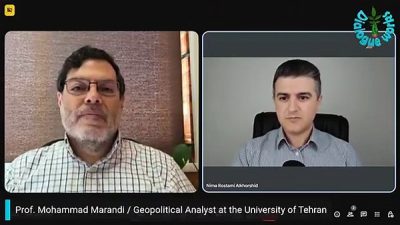
Seyed M. Marandi: U.S. Military DIVIDED? Iran’s Secret Defense EXPOSED
or go to
Aletho News Archives – Video-Images
From the Archives
‘Israel sees Iran as obstacle to its policies’
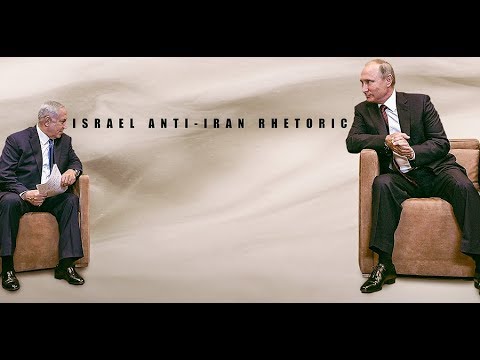
Press TV – August 25, 2017
Prime Minister Benjamin Netanyahu has said that Israel felt threatened by Iran’s growing influence in the Middle East. Netanyahu expressed his Iranophobic view in a meeting with Russian President Vladimir Putin in Russia’s Black Sea resort of Sochi on Wednesday. Press TV has asked Scott Rickard, former American intelligence linguist from Tampa, Florida, and Brent Budowsky, a columnist at The Hill from Washington, to give their thoughts on the issue.
Rickard said Tel Aviv is concerned about the fact that the regime could not carry out its old project to spread sectarian divisions and pave the way for dismemberment of the countries in the Middle East region because of the Iranian-led resistance against Israeli policies, not only in the occupied territories of Palestine but also in the whole region.
“Iran is not a threat to Israel whatsoever. The threat that Israel sees is the fact that their Oded Yinon Plan is being put to a hold by Iran,” the intelligence linguist said on Thursday night.
“They (the Israelis) look at Iran as a threat only because they have no influence on their governments and Iran is autonomous and is not under the Zionist influence,” he added.
Since the victory of the Islamic Republic of Iran in 1979, Tehran has been critical of Israel’s policies in the region, whereas “no leaders [of other states] even dared to speak out against Zionism,” Rickard argued. … continue
Blog Roll
 Aletho News
- Iran declares ‘historic victory’ over US, says enemy forced to accept its proposal
- Trump Claims Ceasefire, Reopening of Strait of Hormuz Agreement with Iran
- Israeli tank fire killed UN peacekeeper in Lebanon, UNIFIL investigation finds
- Russia, China block Bahrain-sponsored UN resolution on Strait of Hormuz
- The US-Israeli War on Science is an Assault on our Future
- Trump’s Promise to Bomb Iran ‘Like Never Before’ Faces Brutal Logistics — Expert
- Germany seeks to restrict stays abroad for men of fighting age – Berliner Zeitung
- Evidence points to Ukraine being behind TurkStream attempted sabotage, but that should come as no surprise
- Sri Lanka secures supplies of Russia oil – minister
- Nations across Asia strike direct deals with Iran for Hormuz passage
- If Americans Knew
- Thousands dead and neighborhoods razed to the ground: Aid agencies fear southern Lebanon is becoming the new Gaza
- The war the US is fighting for Israel could cost trillions
- ‘Cigarette Burns, Nail Wounds’: Toddler Tortured in Gaza to Coerce Father
- Trump Says US Sent ‘a Lot of Guns’ to Protesters in Iran
- Israeli forces destroy 17 UN peacekeeper cameras in south Lebanon
- US-Israeli strikes ‘completely destroy’ synagogue in Tehran
- Archbishop for US Military Says Iran War Is Unjust Under Catholic Teaching
- Iranian leaders’ Open Letters to the American People
- Trump says Iranians appreciate bombs, WHO warns of nuclear risks – Daily Update
- U.N. experts demand Israel release prominent Gaza doctor after reports of ‘severe torture’
- No Tricks Zone
- An Inconvenient Tree: Uncovered In Alps… Europe Much Warmer Than Today 6000 Years Ago
- New Study Reports A 60% Slowdown In Greenland’s Ice Loss Rate In The Last Decade
- Low Intensity Tornado Wrecks Major Solar Farm, Creating A Potential Toxic Dump
- New Study Finds Warming Saves Lives…Cold Temperatures 12 Times More Deadly Than Excess Heat
- German Science Blog Accuses PIK Climate Institute Of Hallucinating Climate Tipping Points
- Devastating Assessment Of Comirnaty Vaccine By Former Senior Pfizer Europe Toxicologist
- New Study: CO2 Is ‘Effectively Negligible’ As An Explanatory Climate Change Factor Since 2000
- Former Pfizer Toxicologist Dr. Helmut Sterz Tells Bundestag Hearing Pfizer Vaccine Should Have Never Been Approved
- Energy Expert: Germany’s Nuclear Phaseout Was A “500 Billion Euro Mistake”
- New Research: South Australia’s Mid-Holocene Sea Surface Temperatures Were 4°C Warmer Than Today
 Aletho News