FBI forensic lab misconduct could affect 2,600 convictions, 45 death row cases
RT | July 30, 2014
Nearly every criminal case the FBI and US Justice Department has reviewed during a major investigation that began in 2012 regarding an FBI lab unit has involved flawed forensic testimony, The Washington Post reported.
The review – originally spurred by a Post report in 2012 over flawed forensic testimony by Federal Bureau of Investigation lab technicians that may have led to convictions of hundreds of innocent people – was cut short last August when its findings “troubled the bureau,” according to the Post. The review was ordered by the Justice Department (DOJ) to resume this month, government officials said.
Most of the defendants in cases that involved possibly-botched testimony over microscopic hair matches were never told that their case was part of the review, which includes 2,600 convictions and 45 death-row cases from the 1980s and 1990s. In these cases, the FBI’s hair and fiber unit claimed it found a match to crime-scene samples prior to the age of DNA testing of hair.
The FBI reviewed around 160 cases before halting the investigation 11 months ago, officials said. The probe resumed once the DOJ inspector general lambasted the FBI for the delay in this investigation and another involving the same forensic unit.
A DOJ spokesman said that by last August, reviews were completed and notifications offered for defendants in 23 cases, including 14 death-row cases, that FBI examiners “exceeded the limits of science” when linking hair to crime-scene evidence.
Yet the FBI restarted the review given concerns that forensic errors applied to the “vast majority” of cases. This restart caused major delays in the investigation, leading to objections by the DOJ in January. The FBI and DOJ standoff was finally resolved this month.
“I don’t know whether history is repeating itself, but clearly the [latest] report doesn’t give anyone a sense of confidence that the work of the examiners whose conduct was first publicly questioned in 1997 was reviewed as diligently and promptly as it needed to be,” said Michael R. Bromwich, DOJ inspector general from 1994 to 1999.
“Now we are left 18 years [later] with a very unhappy, unsatisfying and disquieting situation, which is far harder to remedy than if the problems had been addressed promptly,” he added.
The reviews resumed this month under original terms based on an order by Deputy Attorney General James M. Cole, officials said.
The delay came, in part, “from a vigorous debate that occurred within the FBI and DOJ about the appropriate scientific standards we should apply when reviewing FBI lab examiner testimony — many years after the fact,” the FBI said. “Working closely with DOJ, we have resolved those issues and are moving forward with the transcript review for the remaining cases.”
Emily Pierce, a Justice Department spokeswoman, said: “The Department of Justice never signed off on the FBI’s decision to change the way they reviewed the hair analysis. We are pleased that the review has resumed and that notification letters will be going out in the next few weeks.”
Since 2012, the review has addressed only about 10 percent of the 2,600 convictions under suspicion, and maybe two-thirds of questioned death-row sentences.
The DOJ will notify defendants about misconduct in two more death-row cases and in 134 non-capital cases over the next month. The department will also complete evaluations of 98 other cases by early October, including 14 more death-row cases.
In question is a 10-member FBI unit that testified in cases across the nation that involved murder, rape, and various other violent felonies.
Though the FBI has said since the 1970s that hair evidence cannot be used as positive identification, agents still often testified to the near-certainty of matches, according to the Post. Ultimately, there is no accepted research regarding how often hair from different people can appear as the same. Today, the FBI uses visual hair comparison protocols to rule out a potential suspect as a source of hair found at a crime scene before using more accurate DNA testing.
The review highlights a hesitance among courts and law enforcement to address systemic faults of forensic testimony and methods from bygone eras.
“I see this as a tip-of-the-iceberg problem,” said Erin Murphy, an expert on modern scientific evidence who teaches at New York University.
“It’s not as though this is one bad apple or even that this is one bad-apple discipline,” she said. “There is a long list of disciplines that have exhibited problems, where if you opened up cases you’d see the same kinds of overstated claims and unfounded statements.”
‘Enough is enough’: Berlin outraged by alleged US spying
RT | July 6, 2014
The arrest of a German intelligence employee for allegedly spying for the US has caused an uproar among German politicians. The country’s foreign minister has demanded an immediate clarification of the situation from Washington.
“If the reports are true, then we’re not talking about trifles,” Frank-Walter Steinmeier said on a visit to Mongolia, DPA reports. He added that prompt clarification of the details in the case were in the “US’s own interest.”
Earlier, US Ambassador to Germany John B. Emerson was summoned to the German Foreign Office to answer questions concerning the recent arrest of a 31-year-old German foreign intelligence agency (BND) employee, who confessed to having spied for the US.
German tabloid Bild reported that the man had been a double agent for two years, during which time he exchanged bundles of secret documents for €25,000 ($34,100).
The harshest reaction so far has come from German President Joachim Gauck. If the spying allegations are confirmed, “one really has to say, enough is enough,” he told the ZDF broadcaster Saturday.
Angela Merkel on Sunday expressed surprise and disappointment over the possible involvement of US intelligence in the BND espionage scandal, according to German businessmen, accompanying her on her trip to China, Spiegel Online reports. She has not made any comment so far, however.
Last October, Merkel was enraged to learn she was allegedly on the NSA’s tapping list since 2002. The Chancellor called the alleged spying, which became known thanks to Edward Snowden’s leaks, “unacceptable.”
A German parliamentary committee has been holding hearings on the NSA’s spying activities in Germany.
Ironically, the classified materials from the hearings on US spying could get into the hands of US intelligence, as they allegedly were part of the documents stolen by the suspected double agent.
“If the suspicion of espionage is confirmed, that would be an outrageous attack on our parliamentary freedom,” said Thomas Oppermann, the parliamentary leader of the SPD party, a coalition partner of Merkel’s Christian Democrats.
Opposition parties have called for caution in future cooperation with foreign intelligence agencies.
“All cooperation of the German security authorities with friendly services needs to be reviewed,” Green Party leader Katrin Göring-Eckardt told Spiegel Online.
The German government is demanding that the US replace its employees at the Joint Intelligence Staff based in the US Embassy in Berlin, Bild reports.
While most of the criticism is focused on the US, some believe it’s the German leadership’s inability to react properly to the NSA tapping leaks that’s led to the yet another spying scandal. Merkel’s opponents have repeatedly blamed her for too mild a response to the NSA global surveillance revelations.
“That’s a result of Merkel’s transatlantic hypocrisy,” co-chair of the Left Party Katja Kipping said, Der Tagesspiegel reported.
Background:
Germany arrests suspected ‘double agent’ for working for US – report
America’s most popular prescription sleep medication linked to mass shootings
RT | January 20, 2014
A new report describing the bizarre and dangerous side effects of the sleep aid Ambien has once again raised questions about one of the United States’ most popular prescription drugs.
In a story by the Fix, Allison McCabe chronicled the numerous cases in which Ambien has caused individuals to commit unsafe, and sometimes deadly acts.
In 2009, 45-year-old Robert Stewart was convicted on eight charges of second-degree murder after he killed eight people in a nursing home. He was originally charged with first-degree murder, but by claiming his tirade was Ambien-induced he was able to have the charges lessened and sentenced to 142-179 years in prison.
In a similar case, Thomas Chester Page of South Carolina was sentenced on five counts of attempted murder despite his claims that Ambien was the cause of a shootout with officers. He received 30 years of prison on each count, to be served concurrently.
Although the Food and Drug Administration approved Ambien in 1992, its warning labels have changed significantly over the last two decades as evidence mounted documenting the drug’s ability to induce dangerous behavior.
“After taking AMBIEN, you may get up out of bed while not being fully awake and do an activity that you do not know you are doing,” the label currently reads. “The next morning, you may not remember that you did anything during the night… Reported activities include: driving a car (“sleep-driving”), making and eating food, talking on the phone, having sex, sleep-walking.”
In the courtroom, cases related to Ambien use have ranged from shootings to child molestation charges to car accidents. In one such case, flight attendant Julie Ann Bronson from Texas ran over three people – including an 18-month old who suffered from brain damage as a result. When Bronson woke up in jail the next morning, she could barely comprehend what she had done.
“It was surreal. It was like a bad dream,” she said in May 2012. “I did the crime but I never intended to do it. I wouldn’t hurt a flea. And if I would have hit somebody, I would have stopped and helped. We’re trained in CPR.” Bronson pleaded guilty to the felony charges, but also received lesser charges by citing Ambien as the reason for her actions.
While some drug companies work on sleep aids that do not induce the kind of unpredictable and risky behavior Ambien does, the popularity of the medication raises concern over America’s prescription drug culture. The market for sleeping pills is a billion-dollar industry, yet dangerous side effects continue to be reported.
Last year, a report by the Department of Health and Human Services highlighted about 2,200 doctors for suspicious activities such as over-prescribing drugs. More than 700 Medicare doctors were also flagged for issuing what could be seen as “extreme” and potentially harmful prescriptions.
Although the report noted that some prescriptions could have been effective, it added, “prescribing high amounts on any of these measures may indicate that a physician is prescribing drugs which are not medically necessary or that he or she has an inappropriate incentive, such as a kickback, to order certain drugs.”
Soon after that report was issued, the Centers for Disease Control and Prevention found that roughly 18 women a day are dying in the United States due to prescription drug overdose, namely from painkillers like Vicodin and Oxycontin. With women making up 40 percent of all overdose deaths in 2010, these numbers marked a 400 percent increase compared to data from 1999.
The benefits of medication have also been placed under heavy scrutiny when it comes to other health issues, such as attention deficit hyperactivity disorder (ADHD). In December 2013, RT reported that the authors of the primary study promoting medication over behavioral therapy in order to treat ADHD now have serious concerns over their original results.
“I hope it didn’t do irreparable damage,” said one of the stud’s co-authors, Dr. Lilly Hechtman of Montreal’s McGill University. “The people who pay the price in the end is the kids. That’s the biggest tragedy in all of this.”

Britain rejects EU watchdog plan to probe data-gathering practices – report
RT | November 14, 2013
The UK has rejected a call from an EU watchdog to probe how security agencies intercept metadata. Documents divulged by Edward Snowden revealed the covert practices of British spy body GCHQ in what has been described as “breach of fundamental rights.”
UK newspaper the Guardian reported that Britain sought to “disassociate itself” from a Council of Europe draft resolution urging an investigation into data gathering techniques. The European watchdog is currently holding a conference in the Serbian capital of Belgrade entitled ‘Freedom of Expression and Democracy in the Digital Age’ which seeks to ensure intelligence gathering practices abide by the European Convention on Human Rights.
To this end the Council has produced a report entitled ‘Political Declaration and Resolutions’, outlining recommendations to safeguard against “abuse which may undermine or even destroy democracy.”
A clause (13(v)) in the report urges for an inquiry into the gathering of “vast amounts of electronic communications data on individuals by security agencies, the deliberate building of flaws and ‘backdoors’ in the security system of the internet of otherwise deliberately weakening encryption.”
The UK has moved to exempt itself from this particular part of the document, claiming it was “unable to agree to it.”
“The United Kingdom needs to place formally on record that while it has not blocked consensus on this text, the UK needs to disassociate itself from paragraph 13(v). The UK strongly supports the overall approach of the resolution including supporting a free and open internet that promotes freedom of expression,” said the declaration obtained by the Guardian.
The UK, however, accepted that data could be gathered by security agencies for “a legitimate aim” as long as it is in conjunction with existing human rights legislation and the rule of law.
Security leaks divulged by former CIA worker Edward Snowden blew the whistle on the GCHQ’s multiple intelligence gathering activities and its collusion with the NSA. As well as gathering troves of metadata and recording millions of telephone calls, the latest reports obtained by Der Spiegel found that the GCHQ was spying on data exchange companies through a spoof version of the social network site LinkedIn.
Using a method known as ‘Quantum insert’ the GCHQ created dummy versions of the website to target organizations and individuals and smuggle malware onto their computers.
“For LinkedIn the success rate [of rerouting a target to a malicious website] is looking to be greater than 50 percent,” said the leaked documents.
In addition, more information was revealed at the beginning of November as to the extent of the GCHQ’s cooperation with the NSA. Reports emerged that the GCHQ was feeding the NSA with the internal information intercepted from Google’s and Yahoo’s private networks.
So far the British government has done little to allay fears that UK spy agencies are acting outside the law in violation of human rights.
The Center for European Policy Studies published a paper accusing the UK along with other European countries of systematically violating human rights with their spy practices.
“We are witnessing a systematic breach of people’s fundamental rights,” wrote Sergio Carrera, a Spanish jurist who co-authored the paper with Francesco Ragazzi, a professor of international relations at Leiden University in the Netherlands. They called for action from the EU parliament to distinguish “democracies from police states.”
Related article
US hospital bills man for rectal search he was forced to undergo by police
RT | November 5, 2013
A minor traffic stop went nightmarishly wrong for a New Mexico man who was detained by police and forced to undergo a series of anal probes and other medical examinations against his will.
David Eckert had just finished shopping at Walmart in Deming, New Mexico when an officer pulled him over for failing to make a complete stop at a stop sign. According to the local KOB TV station, federal documents claim that police noticed Eckert clenching his buttocks when they asked him to step outside of the car, indicating that he may have been carrying drugs in his anal cavity.
After detaining Eckert and requesting a search warrant from a judge, police took him to a local hospital for doctors to perform a search. The doctor refused, saying the search was unethical. Police then took Eckert to the Gila Regional Medical Center, where doctors agreed to cooperate.
The doctors then performed a wide array of procedures, all without the consent of Eckert, who protested each one. First, doctors took an X-Ray of his abdomen, which revealed no narcotics hidden inside the body. Then, doctors performed two anal exams with their fingers, both of which failed to uncover any drugs.
After the failure of these searches, Eckert underwent three different enemas and was forced to defecate in front of doctors and police officers. He watched as each stool search failed to uncover any narcotics.
Another X-Ray was taken, and, finally, doctors sedated Eckert and performed a colonoscopy. Again, no drugs were found.
“The thought that they could do this to a man in our country is terrifying,” Shannon Kennedy, Eckert’s attorney, said to KOB. “Our community should be outraged … This is like something out of a science fiction film, anal probing by government officials and public employees.”
According to Kennedy, not only was the issued search warrant overly broad and lacking in probable cause, but it was also only valid in Luna County, where Deming is located and Eckert was arrested. After the first hospital refused to perform the anal search, police took Eckert to Gila, which is located in a separate county altogether. If that is the case, then doctors performed all eight of the previously mentioned procedures illegally and without the consent of the patient.
To make matters worse, the search warrant expired at 10 p.m. while doctors didn’t even begin prepping Eckert for the colonoscopy until 1 a.m. the next morning, when the warrant had been expired for hours.
The hospital even billed Eckert for the procedures and is threatening to take him to collections if he doesn’t pay.
Deming Police Chief Brandon Gigante refused to comment on the incident due to a pending lawsuit, but said, “We follow the law in every aspect and we follow policies and protocols that we have in place.”
Eckert is suing the city of Deming, Hidalgo County, the police officers behind the incident, the deputy district attorney, and the Gila Regional Medical Center, including Robert Wilcox, M.D. and Okay Odocha, M.D.
“If the officers in Hidalgo County and the City of Deming are seeking warrants for anal cavity searches based on how they’re standing and the warrant allows doctors at the Gila Hospital of Horrors to go in and do enemas and colonoscopies without consent, then anyone can be seized and that’s why the public needs to know about this,” Kennedy said.
Related articles
Brazil to press for local Internet data storage after NSA spying
RT | October 29, 2013
Brazil is urging a plan to introduce local data storage for Internet giants like Facebook and Google in order to keep the information they get from Brazilian users safe –as part of a complex of measures to oppose US spying.
The new law could impact Google, Facebook, Twitter and other Internet global companies that operate in Brazil, Latin America’s biggest country and one of the world’s largest telecommunications markets.
The country’s president, Dilma Rousseff, is urging lawmakers to vote as early as this week on the law, according to Reuters who have seen the draft of the legislation.
“The government can oblige Internet service companies … to install and use centers for the storage, management and dissemination of data within the national territory,” the draft of the document read.
Rousseff’s calls come after surveillance leaks by the US in Brazil that went as far as tracking the personal phone calls and e-mails of the President herself.
Last month, Brazilian President Dilma Rousseff canceled a scheduled meeting at the White House after leaked documents showed the NSA spied on her country’s state oil company.
“We are not regulating the way information flows, just requiring that data on Brazilians be stored in Brazil so it is subject to the jurisdiction of Brazilian courts,” Rousseff spokesman Thomas Traumann said. “This has nothing to do with global communications.”
However, the companies disagree saying that the legislation will increase costs of services, and damage the economic activity connected with information.
Last week a coalition of business groups representing dozens of Internet companies including Facebook, Google, Microsoft and eBay sent a letter to Brazilian lawmakers.
“In-country data storage requirements would detrimentally impact all economic activity that depends on data flows,” the letter read, Reuters reported.
Many also threatened the law will scare the companies, while others, nevertheless, were of the opinion that the companies would comply if faced with no other options.
This week, Brazil is expected to vote on a cyber-security bill to create a state system to protect the country’s citizens from spying.
When the news on the bill emerged two weeks ago, Brazilian President Dilma Rousseff tweeted the news, stressing the need for greater security “to prevent possible espionage.”
The latest legislation project comes against a backdrop of Brazil set to host a conference next April to debate ways to guard Internet privacy from espionage.
The meeting is to be held by ICAAN, the body that manages web domain names. It is thought to be neutral and includes governments, civil society and industry.
Meanwhile, BRICS companies are working to create a “new Internet”.
In particular, Brazil has been reported to be building a “BRICS cable” that will create an independent link between Brazil, South Africa, India, China and Russia, in order to bypass NSA cables and avoid spying.
The cable is set to go from the Brazilian town of Fortaleza to the Russian town of Vladivostok via Cape Town, Chennai and Shantou.
The length of the fiber-optic cable will be almost 35,000 kilometers, making it one of the most ambitious underwater telecom projects ever attempted.
Last week, most of the BRICS countries joined talks to hammer out a UN resolution that would condemn “indiscriminate” and “extra-territorial” surveillance, and ensure “independent oversight” of electronic monitoring.
Russian Foreign Minister Sergey Lavrov said that “contacts [between Moscow and Washington] never stop,” when asked if the latest publication of secret files leaked by the former National Security Agency (NSA) contractor would affect relations between Russia and the US.
Also, Lavrov made it clear that the situation surrounding Snowden is irrelevant to Russia.
“We have formulated our position on Snowden and have said everything,” he said.
Related article
- China echoes Brazil’s call for cyberspace guidelines (thebricspost.com)
‘Unacceptable and shocking’: France demands explanation for NSA spying
RT |October 21, 2013
France has called for an explanation for the “unacceptable” and “shocking” reports of NSA spying on French citizens. Leaked documents revealed the spy agency records millions of phone calls and monitors politicians and high-profile business people.
The US Ambassador to France Charles Rivkin was summoned by the French Foreign Ministry to account for the espionage allegations on Monday morning.
“I have immediately summoned the US ambassador and he will be received this morning at the Quai d’Orsay [the French Foreign Ministry],” French Foreign Minister Laurent Fabius told press. He added that “we must quickly assure that these practices aren’t repeated.”
In addition, citing the report on French publication Le Monde, Interior Minister Manuel Valls spoke out on national television against US spy practices.
“The revelations in Le Monde are shocking and demand adequate explanations from the American authorities in the coming hours,” said Valls on television channel Europe 1.
He went on to say that it is totally unacceptable for an allied country to spy on France.
Ambassador Rivkin refrained from commenting on the spy allegations on Monday morning and told Reuters that French-US ties are the “best they have been for a generation.”
Le Monde revealed in a report based on the security leaks of former CIA worker Edward Snowden that the NSA recorded 70.3 million phone calls between December 10, 2012, and January 8, 2013.
The NSA reportedly carries out its espionage in France using a program called ‘US-985D’ which is able to listen in on specific telephone calls and pick up on text messages according to key words used.
Moreover, Le Monde also wrote that it had reason to believe that the spying was not just limited to citizens suspected of being involved in terrorism. According to the data released by Snowden the NSA also eavesdropped on politicians and prominent business figures.
The newspaper did not give any indications as to the identity of the high-profile people.
France is not the only EU nation to be targeted by NSA surveillance. Germany took issue with the US government after it was revealed the NSA was tapping phone lines and recording electronic data in the country.
The EU will take steps to curtail US data mining on Monday in a vote to change data protection rules. The European Parliament’s Committee on Civil Liberties is expected to decide on the issue that would authorize fines for violation of EU data protection.
‘Investment benefits’
The US maintains that its spying activities are in the interests of national security and protect against terrorism. However, Snowden leaks released by Guardian reporter Glenn Greenwald showed the NSA had monitored Brazilian state-owned oil giant Petrobras and infiltrated the electronic communications of the Brazilian and Mexican presidents.
Mexico has also demanded an explanation for reports released by Der Spiegel on extensive spying on Mexican top officials and politicians.
Der Spiegal revealed that former President Felipe Calderon had also been a target for NSA espionage. Citing a classified internal report, it said the US monitors “diplomatic, economic and leadership communications which continue to provide insight into Mexico’s political system and internal stability.”
Oakland dedicating anti-terrorism funding to surveillance supercenter
RT | October 14, 2013
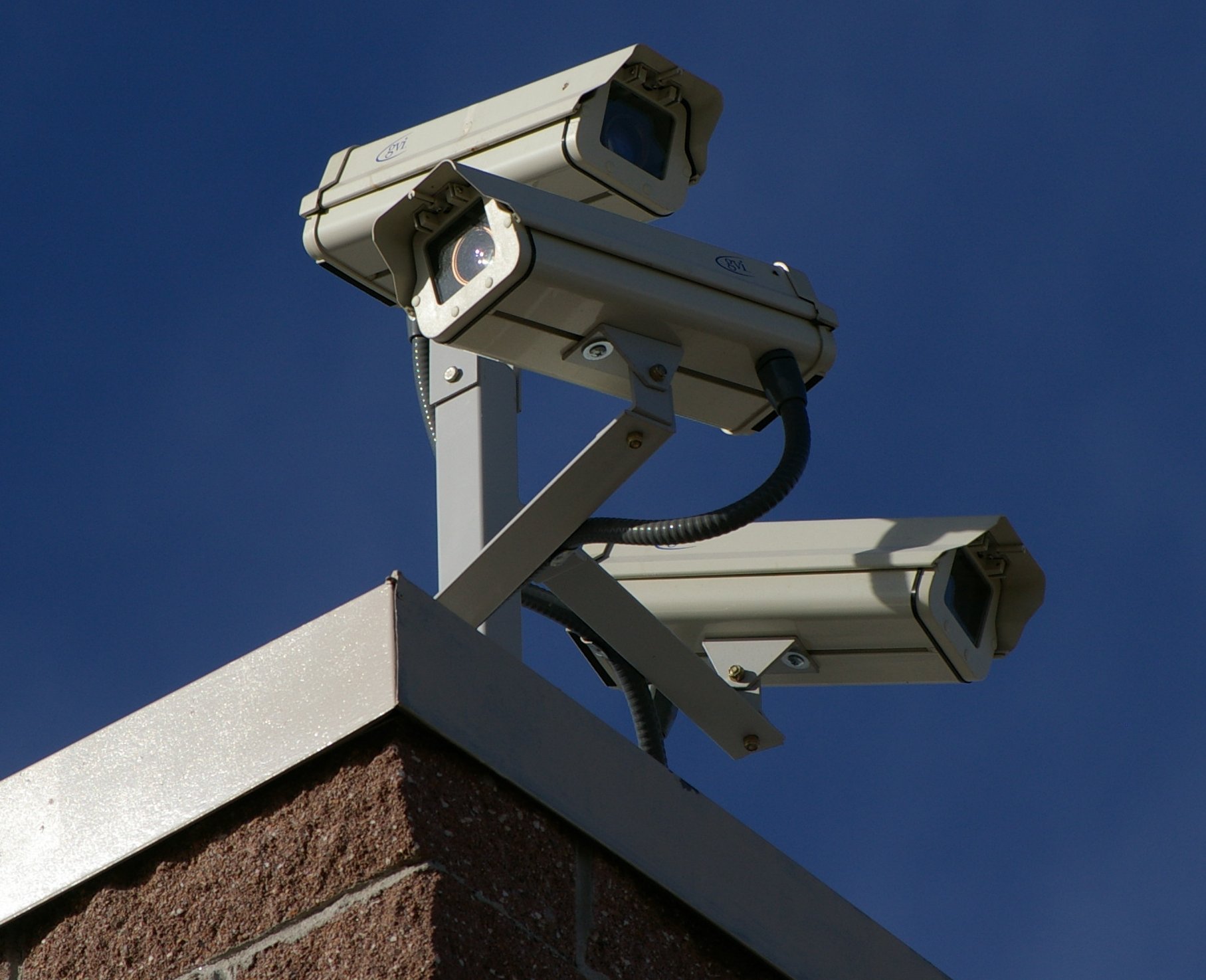 Lawmakers in Oakland intend to spend millions of dollars awarded to the California city in a federal grant to a police dragnet that promises to examine surveillance footage, riling critics who assert the intention of the grant was to stop terrorism.
When the new program debuts in approximately one year police will be able to track drivers as they travel through tolls, scan license plates with the roughly 3,000 surveillance cameras placed throughout the city, and monitor social media platforms to learn about crimes before they occur.
The Oakland program, officially referred to as the Domain Awareness Center, according to the New York Times, comes at a time when police departments across the US are using federal money to launch similar surveillance efforts modeled after the New York Police Department. The NYPD, which operates within New York City as well as far outside, has used federal grants to build a massive surveillance network capable of linking cameras and license plate readers to criminal and suspected terrorist databases.
The Domain Awareness Center also plans to plant gunshot detection sensors through Oakland, which is consistently ranked among the most dangerous cities in the US. Forbes magazine reported that violent crime affects 1,683 of every 100,000 residents in the city, making it the third most dangerous city in America with a population between 100,000 and 499,000 in 2013.
The Oakland City Council voted unanimously on July 31 to adopt the plan to build the surveillance center, which officials have said will be staffed 24 hours a day. Lawmakers voted at the same meeting to ban hammers and spray paint cans at protests in fear that the items will be used as weapons. Waiting outside, protesters admonished council members with chants of “Shame! Shame! Shame!”
“The Domain Awareness Center is the guard tower which will watch over every person in the city of Oakland,” shouted demonstrator Mark Raymond, as quoted by the San Francisco Chronicle. “This program is an attempt to criminalize and imprison all people who live and pass through Oakland.”
All told, the surveillance center’s costs are expected to total $10.2 million in federal grants, and while legislators said they were cognizant of residents’ security while drafting the bill some representatives were shouted down.
“We have tried our best to find the sweet spot where are going to take advantage of the tools that we have at hand to make our city safe… We have done everything we can to safeguard privacy,” said councilwoman Libby Schaaf before she was cut off by jeers and one protester who suggested she “go home to your mansion and kill yourself.”
Schaaf did admit that, while police have traditionally needed just a small evidence sample to arrest a suspect, the new center will have the capability to “paint a pretty detailed picture of someone’s personal life, someone who may be innocent.”
Oakland was awarded a federal grant to ramp up security near the Port of Oakland, a thriving cargo center that is one of the busiest in the US. The 19-mile waterfront is the fifth-busiest container port in the US, with 1,800 ships arriving every year, according to the San Francisco Chronicle. Over $14 billion in goods were exported from the bustling hub in 2012.
To protect the port, and watch civilians throughout the region, Oakland signed a contract with Science Applications International Corporation (SAIC) to build the Domain Awareness Center. The company, which earns most of its $12 million in annual revenue from military contracts, also worked with the NYPD but later paid $500 million to avoid a federal prosecution for receiving illegal kickbacks.
The Times reported that this project is not the first time Oakland has sought to develop such technology. A city audit viewed by the paper revealed that lawmakers spent nearly $2 million in 2012 alone on police tools that did not work or could not be used for a variety of reasons.
Linda Lye, an attorney with the American Civil Liberties Union, said this project might work as intended, but that mere intention already creates a scary problem.
“What they did is approve a vast surveillance center without understanding the implications,” she said earlier this year. “The privacy policies would be drafted only after the center is built. At that point, what opportunity will there be for to determine if the safeguards are sufficient?”
Related article
UK ordered Guardian to destroy hard drives in effort to stop Snowden revelations
RT | August 20, 2013
UK authorities reportedly raided the Guardian’s office in London to destroy hard drives in an effort to stop future publications of leaks from former NSA contractor Edward Snowden. The action is unlikely to prevent new materials coming out.
Guardian editor Alan Rusbridger revealed in a Monday article posted on the British newspaper’s website that intelligence officials from the Government Communications Headquarters (GCHQ) told him that he would either have to hand over all the classified documents or have the newspaper’s hard drives destroyed.
After more talks, two “security experts” from GCHQ – the British version of the National Security Agency – visited the Guardian’s London offices.
Rusbridger wrote that the government officials then watched as computers, which contained classified information passed on by Snowden, were physically destroyed in one of the newspaper building’s basements.
“We can call off the black helicopters,” Rusbridger said one of the officials joked.
Another source familiar with the event confirmed to Reuters that Guardian employees destroyed the computers as UK officials observed.
During negotiations with the government, Rusbridger said that the newspaper could not fulfill its journalistic duty if it satisfied the authorities’ requests.
But GCHQ reportedly responded by telling the Guardian that it had already sparked the debate, which was enough.
“You’ve had your debate. There’s no need to write any more,” Reuters quoted the unnamed official as saying.
In the article, Rusbridger explained that because of existing “international collaborations” between journalists, it was still possible to report the story and “take advantage of the most permissive legal environments.”
“I explained to the man from Whitehall about the nature of international collaborations… Bluntly, we did not have to do our reporting from London. Already most of the NSA stories were being reported and edited out of New York. And had it occurred to him that [reporter Glenn] Greenwald lived in Brazil?” wrote Rusbridger.
“The man was unmoved. And so one of the more bizarre moments in the Guardian’s long history occurred – with two GCHQ security experts overseeing the destruction of hard drives in the Guardian’s basement just to make sure there was nothing in the mangled bits of metal which could possibly be of any interest to passing Chinese agents.”
Rusbridger pointed out that the whole incident felt like a “pointless piece of symbolism that understood nothing about the digital age.”
The news comes after Sunday’s international incident during which David Miranda, the partner of Guardian journalist Glenn Greenwald, was held at Heathrow airport under the UK Terrorism Act for the maximum time allowed before pressing charges. Greenwald was the reporter who exclusively broke the Snowden story.
The editor promised that the Guardian will “continue to do patient, painstaking reporting on the Snowden documents, we just won’t do it in London. The seizure of Miranda’s laptop, phones, hard drives and camera will similarly have no effect on Greenwald’s work.”
Another US security source told Reuters that Miranda’s detention was meant to send a message to those who received Snowden’s classified documents, about how serious the UK is in closing all the leaks in relation to the whistleblower’s revelations.
Greenwald, who first published secrets leaked by former NSA contractor Edward Snowden, responded by promising to release more documents. He added that the UK would be “sorry” for detaining his partner for nine hours.
Snowden, who has been granted asylum by Russia, gave Greenwald up to 20,000 documents with details about the US National Security Agency and the UK’s GCHQ surveillance operations.
‘US is the intellectual author behind detention of Miranda’
Lawyer Eva Golinger told RT that the UK has violated all concepts of freedom of the press. “We are talking about a media outlet. Journalists and their spouses and partners being detained and interrogated. So clearly there has been a decision made that everything related to Edward Snowden must be captured no matter what, violating anyone’s right under any country’s laws.”
Golinger believes that government’s pressure on journalists could inspire some to cover the topic of government surveillance even more, instead of discouraging them to do so.
“The more principled the people reporting are, the more they will continue to pursue that work in the face of threat. Such cheap threats and intimidation give people even more reasons to continue doing what they are doing because it shows that those in power are clearly frightened of the information that is being put out,” she explained.
“At the same time it could certainly intimidate other journalists and create the environment of self-censorship, where many would be unwilling to take the risks that are involved with national security reporting, particularly when it comes to the US.”
Golinger argued that US is the “intellectual author behind the detainment of Miranda.”
“We are talking about a search and capture that is going on for Edward Snowden and it is the US that is leading that effort. It is not the UK or other European nations, they are merely abiding by the wishes of the US…What I believe is that Washington has simply put out a request to all of its allies that anyone related to Edward Snowden must be detained if they come into your territory and the UK abided by that and did their duty.”
Featured Video

The Most Important Bet You’ve Never Heard Of
or go to
Aletho News Archives – Video-Images
From the Archives
The Occupied Mentality Syndrome
Saudi Arabia on the American chessboard – Part 2
By B. J. Sabri | American Herald Tribune | April 19, 2016
Since the Korean War, but particularly since the Iranian Revolution of 1979 until today, the United States has been steadily escalating its military presence in the Persian Gulf. Taking advantage of many colossal events of the past 36 years, [1] the hyper-empire has institutionalized its massive presence on land and sea, and expanded its objectives to include the unambiguous physical control of the area, as well as the clear understanding that local Arab governments should abide by them. The pretext is always the same: in “defense” of the national interests and security of the United States. From observing how the United States has been interacting with the governments of the region, and by judging from the size of its expeditionary force, we could reach a basic conclusion. The United States is occupying, de facto, the entire Arabian Peninsula. (Yemen, devastated by Saudi and American jets is yet to be conquered. Oman? Britain returned not as colonial ruler but as a soft occupying power.)
Under this articulation, Saudi Arabia, Qatar, Kuwait, and the United Arab Emirates are virtually occupied countries. If we compare this type of occupation to the mandate and protectorate regimes of the past, the results might be identical—the nations affected by it lose sovereignty. When Arab governments comply with the objectives of a foreign power that station military forces on their national milieu, then that power controls them in multiple ways including how they react to policy deliberations and what decisions they intend to take on specific issues. A good method to verify the concept of effective occupation is this: take notice of what the United States says and wants, and then compare it to what the gulf rulers do in response. (I shall discuss this detail at some point in the upcoming parts.)
If the presence of US forces or other means of political pressure are a factor in Saudi Arabia’s interventionist Arab wars, then we need to debate this issue. However, from the history of resistance to colonialism, we learnt: if a powerful state imposes its order on a nation by military means or other forms of coercion, and if this nation does not resist that imposition, then a mental subordination to the powerful state will ensue. This is especially true in the case of Saudi Arabia. One single event, 9/11, has transformed it from a US “ally” into an instant political hostage of the American Empire. … continue
Blog Roll
 Aletho News
- Trump and the debris of Iran war
- IRGC hits US tech giant Oracle’s data center, computing site in UAE over new assassinations
- Bombing Iran Back Into the Stone Age /Lt Col Daniel Davis & Jim Jatras
- UAE rejects report claiming it is ready to join war on Iran to reopen Hormuz
- A New Resistance Front: How Does Syria Factor into the Regional War?
- Gulf states weigh pipeline expansion plans, hoping to bypass Hormuz
- Iran sets up ‘tollbooth’ system in Strait of Hormuz
- Wave 90: IRGC strikes US-linked industrial sites in Gulf
- Iran Says US-Israeli Claims of Its Military Strength Are Wrong
- Trump’s April Fools’ Address to the nation
- If Americans Knew
- ‘War crime’: Global condemnation as Israeli ministers celebrate death penalty law targeting Palestinian prisoners
- 7 Ways Israel Is Turning Lebanon Into Gaza
- World’s Leading Football Bodies Under Fire Over Israel Policies
- Experts warn of possible use of nukes against Iran
- Israeli invasion of Lebanon could be worse than 1982, warn European officials
- Passover: Liberation and collective punishment
- Trump says the quiet part out loud: (Israel’s) war on Iran > Americans’ health – Daily Update
- Gaza families reunite years after babies evacuated amid Israel’s war
- International Rescue Committee warns Gaza’s children face grave protection risks
- Iran’s Alleged 47-Year War on America: Debunking the 1,050 American Deaths Canard
- No Tricks Zone
- Low Intensity Tornado Wrecks Major Solar Farm, Creating A Potential Toxic Dump
- New Study Finds Warming Saves Lives…Cold Temperatures 12 Times More Deadly Than Excess Heat
- German Science Blog Accuses PIK Climate Institute Of Hallucinating Climate Tipping Points
- Devastating Assessment Of Comirnaty Vaccine By Former Senior Pfizer Europe Toxicologist
- New Study: CO2 Is ‘Effectively Negligible’ As An Explanatory Climate Change Factor Since 2000
- Former Pfizer Toxicologist Dr. Helmut Sterz Tells Bundestag Hearing Pfizer Vaccine Should Have Never Been Approved
- Energy Expert: Germany’s Nuclear Phaseout Was A “500 Billion Euro Mistake”
- New Research: South Australia’s Mid-Holocene Sea Surface Temperatures Were 4°C Warmer Than Today
- Storing Green Energy To Last Germany 10 Days Would Require A 60-Million Tonne Battery
- New Studies: UK Sea Levels Were 4 Meters Higher Than Today During The Mid-Holocene
 Aletho News