Obama administration drowning in lawsuits filed over NSA surveillance
RT | July 16, 2013
Attorneys for the Electronic Frontier Foundation have sued the Obama administration and are demanding the White House stop the dragnet surveillance programs operated by the National Security Agency.
Both the White House and Congress have weighed in on the case of Edward Snowden and the revelations he’s made by leaking National Security Agency documents. Now the courts are having their turn to opine, and with opportunities aplenty.
Day by day, new lawsuits waged against the United States government are being filed in federal court, and with the same regularity President Barack Obama and the preceding administration are being charged with vast constitutional violations alleged to have occurred through the NSA spy programs exposed by Mr. Snowden.
The recent disclosures made by Snowden have generated commotion in Congress and the White House alike. The Department of Justice has asked for the 30-year-old former Booz Allen Hamilton worker to be extradited to the US to face charges of espionage, and members of both the House and Senate have already held their share of emergency hearings in the wake of Snowden’s series of disclosures detailing the vast surveillance programs waged by the US in utmost secrecy. But with the executive and legislative branches left worrying about how to handle the source of the leaks — and if the policies publicized should have existed in the first place — the courts could soon settle some disputes that stand to shape the way the US conducts surveillance of its own citizens.
Both longstanding arguments and just-filed claims have garnered the attention of the judicial branch in the weeks since the Guardian newspaper first began publishing leaked NSA documents attributed to Snowden on June 6. But while the courts have relied previously on stalling or stifling cases that challenge Uncle Sam’s spy efforts, civil liberties experts say the time may be near for some highly anticipated arguments to finally be heard. Now on the heels of lawsuits filed by the likes of the American Civil Liberties Union and the Electronic Privacy Information Center, groups are coming out of the woodwork to wage a legal battle against the White House.
The most recent example came this week when a coalition of various organizations filed suit together against the Obama administration by challenging “an illegal and unconstitutional program of dragnet electronic surveillance, specifically the bulk acquisition, collection, storage, retention and searching of telephone communications information.” Represented by attorneys from the EFF and others, the plaintiffs in the latest case filed Tuesday in San Francisco federal court include an array of groups, such as: First Unitarian Church of Los Angeles; Bill of Rights Defense Committee; Calguns Foundation; California Association of Federal Firearms Licensees; Council on Islamic Relations; Franklin Armory; Free Press; Free Software Foundation; Greenpeace; Human Rights Watch; Media Alliance; National Organization for the Reform of Marijuana Laws; Open Technology Institute; People for the American Way, Public Knowledge; Students for Sensible Drug Policy; TechFreedom; and Unitarian Universalist Service Committee.
Cindy Cohn, the legal director of the EFF, told the Washington Post that the NSA leaks credited to Snowden have been a “tremendous boon” to the plaintiffs in recently filed court cases challenging the surveillance state. The courts are currently pondering at least five important cases, Cohn told the Post, which could, once and for all, bring some other issues up for discussion.
Since June 6, the American Civil Liberties Union, a Verizon Wireless customer and the founder of conservative group Judicial Watch have all filed federal lawsuits against the government’s collection of telephony metadata, a practice that puts basic call records into the government’s hands without a specific warrant ever required and reported to the media by Mr. Snowden. Larry Klayman of Judicial Watch has also sued over another revelation made by Snowden — the PRISM Internet eavesdropping program — and the Electronic Privacy Information Center, or EPIC, has asked the Supreme Court to vacate the order compelling Verizon Business Network Services to send metadata to the feds.
Perhaps most important, however, is a California federal court’s recent decision to shut down the government’s request to stop the case of Jewel vs. NSA from proceeding. That debate first began in 2008 when Jewel, a former AT&T customer, challenged the government’s “illegal and unconstitutional program of dragnet communications surveillance” as exposed by a whistleblower at the telecom company. That case has seen roadblock after roadblock during the last five years, but all that changed earlier this month. The government long argued that Jewel v. NSA can’t go up for discussion because the issues at hand are privileged as ‘state secrets’ and can’t be brought into the public realm.
“[T]he disclosure of sensitive intelligence sources and methods . . . reasonably could be expected to cause exceptionally grave harm to national security,” the government wrote in one earlier filing. “The very purpose of these cases is to put at issue whether the NSA undertook certain alleged activities under presidential authorization after 9/11, and whether those activities continue today. At every stage, from standing to the merits, highly classified and properly privileged intelligence sources and methods are at risk of disclosure. The law is clear, however, that where litigation risks or requires the disclosure of information that reasonably could be expected to harm national security, dismissal is required.”
Following Snowden’s recent disclosures, though, Judge Jeffrey White of the Northern District of California ruled on July 8 that there’s a way for those cases to still be heard.
“The court rightly found that the traditional legal system can determine the legality of the mass, dragnet surveillance of innocent Americans and rejected the government’s invocation of the state secrets privilege to have the case dismissed,” the EFF’s Cohn, who is working on the case, said in a statement issued at the time of the ruling. “Over the last month, we came face-to-face with new details of mass, untargeted collection of phone and Internet records, substantially confirmed by the Director of National Intelligence. Today’s decision sets the stage for finally getting a ruling that can stop the dragnet surveillance and restore Americans’ constitutional rights.”
Weighing in weeks later to the Post, Cohn said that outcome could have more of an impact than many might imagine. “It’s tremendous, because anything that allows these cases to proceed is important,” she said.
Speaking to the New York Times this week, American Civil Liberties Union attorney Jameel Jaffer said that until now the government has operated a “shell game” to shield it’s surveillance programs from litigation. “[T]he statute has been shielded from judicial review, and controversial and far-reaching surveillance authorities have been placed beyond the reach of the Constitution,” he said.
Should Cohn’s prediction come true, though, the courts could decide to weigh in and reshape the way the government currently conducts surveillance.
According to University of Pittsburgh law professor Jules Lobel, a victory there could come in more than one way. “There is a broader function to these lawsuits than simply winning in court,” he told the Post. “The government has to respond, and forcing them to go before a court might make them want to change aspects of the programs.”
“The government does things to avoid embarrassment,’’ he added, “and lawsuits are a key pressure point.’’
Interviews to the Post and the Times come just days after Sen. Ron Wyden (D-Oregon), a long-time member of the Senate Intelligence Committee, said he thought the revelations made by Snowden may influence the White House to reconsider their surveillance practices before the courts can even have their chance.
“I have a feeling that the administration is getting concerned about the bulk phone records collection, and that they are thinking about whether to move administratively to stop it,” Sen. Wyden told the Times.
“I think we are making a comeback,” he said.
Related articles
- Federal Judge Allows EFF’s NSA Mass Spying Case to Proceed (alethonews.wordpress.com)
- Privacy groups led by EFF sue to stop NSA and FBI electronic surveillance (guardian.co.uk)
- Unitarian Church, Gun Groups Join EFF to Sue NSA Over Illegal Surveillance (eff.org)
The Detention of Evo Morales: A Defining Moment For Latin America?
By Emily Achtenberg | Rebel Currents | July 12, 2013
As the international uproar continues over last week’s grounding of Bolivian President Evo Morales’s plane in Europe, after U.S. officials apparently suspected whistle-blower Edward Snowden of being on board, many questions remain unanswered about the United States’ role and motives.
But one thing is certain: if the U.S. government was seeking to intimidate Morales and other Latin American leaders who might consider harboring Snowden, its strategy has completely backfired. Instead, the incident has bolstered Morales’s domestic and international standing, consolidated regional unity, and emboldened the bloc of leftist governments that seeks to counter U.S. dominance in the region. It has also dealt a damaging, and potentially fatal, blow to the future of U.S.–Latin American relations under the Obama administration.
The crisis was set off by Morales’s statement on July 2 in Russia, where he was attending an energy conference, that he would be willing to consider a petition by Snowden for asylum. Later that evening, on his return flight to Bolivia, Morales’s plane was denied entry into the airspace of France, Italy, Spain, and Portugal, forcing it to make an unscheduled landing in Vienna where it was diverted for 13 hours before receiving clearance to proceed.
In response to Bolivia’s persistent questioning, the four European countries have offered equivocal and somewhat contradictory—if not preposterous—explanations for their actions. France, which has apologized to Morales, says it didn’t realize that the Bolivian president was on the presidential jet. Portugal, originally scheduled as a refueling stop, says its airport wasn’t capable of servicing the plane. Italy now completely denies having closed its airspace.
Spain, after initially attributing the problem to the expiration of its flyover permit during Morales’s unexpected layover in Austria, later admitted that the United States had asked it to block the flight (although the United States has not acknowledged any role in the incident). At first, Spanish officials also claimed that the plane was searched for Snowden in Vienna at the behest of the United States—an action which, if taken without Bolivia’s permission, would constitute a violation of international law even more egregious than the denial of airspace to the presidential jet.
More recently, Spain has insisted (and Bolivia concurs) that it ultimately granted airspace permission upon Bolivia’s written assurance that Snowden was not on board the plane. Spain, which has sought to improve economic relations with Bolivia after being hit hard by Morales’s nationalization of its airport management and electric companies, has also offered to apologize.
The apparent willingness of four European governments to put U.S. interests ahead of international law and Bolivia’s rights as a sovereign nation—despite themselves being victimized by illegal U.S. spying activities—stands in sharp contrast to Latin America, where the detention of an indigenous president is seen as the latest grievance in a long history of colonial and imperial transgressions. Bolivian Vice President Alvaro García Linera has denounced the incident as an imperial “kidnapping.”
For many Bolivians, the episode is viewed as a deliberate effort by the U.S. government to punish Morales for his persistent anti-U.S. rhetoric and actions, including the expulsion of the U.S. Ambassador and Drug Enforcement Agency (DEA) in 2008, and, most recently, USAID. It also strikes a special nerve since the United States hosts, and has refused to extradite, some of Bolivia’s most wanted criminals, including neoliberal ex-president Gonzalo Sánchez de Lozada (Goni), facing charges of genocide in connection with the killing of 67 indigenous protesters during the 2003 “Gas Wars.”
Within hours of Morales’s detention, other leftist Latin American governments rallied in outraged solidarity with Bolivia. Argentine President Cristina Fernández labeled the incident “a remnant of the colonialism we thought had been overcome.” Ecuadorean President Rafael Correa tweeted, “We are all Bolivia!”
Along with expressions of support from ALBA, CELAC, Mercosur, and other regional blocs, UNASUR issued a statement condemning the action on July 4, signed by six heads of state (Bolivia, Argentina, Uruguay, Venezuela, Ecuador, and Suriname) who attended an emergency meeting. Governments from across the region’s political spectrum (including Mexico, Peru, Colombia, and Chile) closed ranks behind Morales.
On July 9, the OAS issued a consensus resolution expressing solidarity with Morales and demanding apologies and explanations from the four European nations (but not the United States.) Internationally, more than 100 UN member nations have collectively denounced the incident, bolstering Bolivia’s complaint before the UN High Commission on Human Rights.
The provocative detention of Morales undoubtedly precipitated the decision of three leftist Latin American governments—Bolivia, Venezuela, and Nicaragua (conditionally)—to offer asylum to Snowden, in open defiance of the United States. As journalist Stephen Kinzer has noted, with the U.S./ European rogue actions converting Snowden into a Latin American hero, the offer of asylum is politically popular in the region. This sentiment also stems from the regional legacy of dictatorship and political persecution, including the personal experiences of many leftist leaders. As Uruguayan President José Mujica (a former Tupamaro guerrilla) declared, “To all of us who have been persecuted, the right to asylum is sacred and must be defended.”
Broad regional support also makes it easier for any country offering shelter to Snowden to resist U.S. demands for extradition. As well, the mounting evidence of U.S. pressure on European and Latin American countries to deny sanctuary or transit assistance to Snowden, interfering with their sovereign decision-making processes, strengthens the case for asylum, legally and politically. U.S. officials have made it clear that any country aiding Snowden will be made to suffer, putting relations with the United States “in a very bad place for a long time to come.”
Still, in a region that remains heavily dependent on U.S. trade, the threat of U.S. retaliation through economic sanctions will be a major factor in the asylum calculus for any government, as illustrated by the recent case of Ecuador. After initially championing Snowden’s cause and apparently aiding his transit from Hong Kong to Moscow, Correa suddenly backed off after a phone call from Joe Biden, saying that Biden’s concerns were “worth considering.” While Correa has defiantly renounced Ecuador’s long-standing U.S. trade preferences as an instrument of “political blackmail,” he apparently hopes to replace them with an alternative set of duty-free waivers under the Generalized System of Preferences (GSP) program, an option that could be jeopardized by an asylum offer.
Similar considerations will no doubt be of concern to Venezuela and Bolivia, should either of their asylum offers materialize into reality (a complex proposition, given the many obstacles to achieving Snowden’s safe transit). While political relations between these countries and the United States have been polarized for some time—with the U.S. government still failing to recognize Nicolás Maduro’s April election—Venezuela still exports 40% of its oil to U.S. markets, and the United States remains as Bolivia’s third largest trading partner (after Brazil and Argentina). Bolivia also enjoys some of the same GSP trade preferences that Ecuador is seeking, which cover around 50% of its U.S. exports.
Still, the incident has greatly strengthened both Morales and Maduro domestically and internationally, corroborating their anti-imperialist worldviews. For Morales—newly characterized by García Linera as the “leader of the anti-imperialist presidents and peoples of the world”—the wave of solidarity responding to his personal victimization has consolidated his political popularity in a pre-election year. Recalling the 2002 presidential election when the U.S. Ambassador’s negative comments about candidate Morales catapulted him unexpectedly into second place, García Linera jokes that Obama has become Morales’s new campaign manager.
For Maduro, whose asylum offer is being promoted by Russia, the opportunity to champion Snowden’s cause and challenge the United States on a world stage, with substantial regional support, has allowed him to genuinely reclaim Hugo Chávez’s anti-imperialist mantle. “It provides the perfect opportunity for Maduro…to figure internationally, to show that he is a player among the big powers…and that he’s capable of challenging the United States,” says political analyst Eduardo Semetei.
In terms of overall U.S.-Latin American relations, the episode could be a defining moment for the Obama administration. As Kinzer notes, the downing of Morales’s jet may have reflected a genuine U.S. effort to capture Snowden—as opposed to a shot across the bow to intimidate Snowden’s potential supporters—but even so, the depth of misunderstanding as to how the incident would resonate in Latin America is telling. New daily revelations from Snowden’s data trove about massive U.S. spying programs in the region are adding fuel to the fire, further strengthening the leftist popular bloc—and confirming Glenn Greenwald’s assessment that the U.S. government has been its own worst enemy throughout this entire episode. It is difficult to imagine how the Obama administration can recover the region’s trust any time soon.
Related articles
- Spain apologizes for role in Morales jet ban (alethonews.wordpress.com)
- Evo Morales: No Need for US Embassy in Bolivia (alethonews.wordpress.com)
S. American states to recall ambassadors from Europe over Bolivian plane incident
RT | July 12, 2013
South American countries belonging to the Mercosur trade bloc have decided to withdraw their ambassadors for consultations from European countries involved in the grounding of the Bolivian president’s plane.
“We’ve taken a number of actions in order to compel public explanations and apologies from the European nations that assaulted our brother Evo Morales,” explained Venezuela’s President Nicolas Maduro, who revealed some of the agenda debated during the 45th summit of Mercosur countries in Uruguay’s capital, Montevideo.
The decision to recall European ambassadors was taken by Maduro, Argentina’s President Cristina Fernandez, Brazilian President Dilma Rouseff, and Uruguay’s President, Jose Mujica, during the meeting.
Member states attending the summit expressed their grievances with “actions by the governments of France, Spain, Italy and Portugal” over the July 2 incident, when the aircraft carrying President Evo Morales back to Bolivia after attending an energy summit in Moscow was denied entry into the airspace of a number of EU member states.
The small aircraft, which required a stop-over before completing its flight, was forced to make an emergency landing in Austria after a circuitous flight path.
It was later revealed that the European countries’ actions were prompted by accusations made by the US ambassador to Austria, William Eacho, who alleged that American whistleblower Edward Snowden had been taken on board to help him gain political asylum in Latin America.
“The gravity of the incident – indicative of a neocolonial mindset – constitutes an unfriendly and hostile act, which violates human rights and impedes freedom of travel, as well as the treatment and immunity appropriate to a head of state,” the Mercosur nations affirmed in the joint statement.
The incident was further described as a “discriminatory and arbitrary” decision by European countries, as well as a “blatant violation of international law.”
Microsoft helped the NSA bypass encryption, new Snowden leak reveals
RT | July 11, 2013
Microsoft worked hand-in-hand with the United States government in order to allow federal investigators to bypass encryption mechanisms meant to protect the privacy of millions of users, Edward Snowden told The Guardian.
According to an article published on Thursday by the British newspaper, internal National Security Agency memos show that Microsoft actually helped the federal government find a way to decrypt messages sent over select platforms, including Outlook.com Web chat, Hotmail email service, and Skype.
The Guardian wrote that Snowden, the 30-year-old former systems administrator for NSA contractor Booz Allen Hamilton, provided the paper with files detailing a sophisticated relationship between America’s intelligence sector and Silicon Valley.
The documents, which are reportedly marked top-secret, come in the wake of other high-profile disclosures attributed to Snowden since he first started collaborating with the paper for articles published beginning June 6. The United States government has since indicted Snowden under the Espionage Act, and he has requested asylum from no fewer than 20 foreign nations.
Thursday’s article is authored by Glenn Greenwald and Laura Poitras, two journalists who interviewed Snowden at length before he publicly revealed himself to be the source of the NSA leaks. They are joined by co-authors Ewen MacAskill, Spencer Ackerman and Dominic Rushe, who wrote that the classified documents not only reveal the degree in which Microsoft worked with the feds, but also detail the PRISM internet surveillance program. The US government’s relationships with tech companies are also included in the documents, according to the journalists.
“The latest NSA revelations further expose the tensions between Silicon Valley and the Obama administration,” the journalists wrote. “All the major tech firms are lobbying the government to allow them to disclose more fully the extent and nature of their cooperation with the NSA to meet their customers’ privacy concerns. Privately, tech executives are at pains to distance themselves from claims of collaboration and teamwork given by the NSA documents, and insist the process is driven by legal compulsion.”
In the case of Microsoft, however, it appears as if the Bill Gates-founded tech company went out of its way to assist federal investigators.
Among the discoveries made by the latest Snowden leaks, Guardian journalists say that Microsoft specifically aided the NSA in circumventing encrypted chat messages sent over the Outlook.com portal before the product was even launched to the public.
“The files show that the NSA became concerned about the interception of encrypted chats on Microsoft’s Outlook.com portal from the moment the company began testing the service in July last year,” they wrote. “Within five months, the documents explain, Microsoft and the FBI had come up with a solution that allowed the NSA to circumvent encryption on Outlook.com chats.”
According to internal documents cited by the journalists, Microsoft “developed a surveillance capability” that was launched “to deal” with the feds’ concerns that they’d be unable to wiretap encrypted communications conducted over the Web in real time.
“These solutions were successfully tested and went live 12 Dec 2012,” the memo claims, two months before the Outlook.com portal was officially launched.
In a tweet, Greenwald wrote that “the ‘document’ for the Microsoft story is an internal, ongoing NSA bulletin over 3 years,” and that The Guardian “quoted all relevant parts.” The document is not included in the article.
The Guardian revealed that Microsoft worked with intelligence agencies in order to let administrators of the PRISM data collection program easily access user intelligence submitted through its cloud storage service SkyDrive, as well as Skype.
“Skype, which was bought by Microsoft in October 2011, worked with intelligence agencies last year to allow Prism to collect video of conversations as well as audio,” the journalists wrote.
That allegation comes in stark contrast to claims made previously by Skype, in which it swore to protect the privacy of its users. RT reported previously that earlier documentation supplied by Snowden showed that the government possesses the ability to listen in or watch Skype chats “when one end of the call is a conventional telephone and for any combination of ‘audio, video, chat and file transfers’ when Skype users connect by computer alone.”
RT earlier acknowledged that Microsoft obtained a patent last summer that provides for “legal intercept” technology. The technology allows agents to “silently copy communication transmitted via the communication session” without asking for user authorization. In recent weeks, however, Microsoft has attacked the government over its secretive spy powers and even asked the Foreign Intelligence Surveillance Court if it could be more transparent in discussing the details of FISA requests compiling tech companies for data.
“We continue to believe that what we are permitted to publish continues to fall short of what is needed to help the community understand and debate these issues,” Microsoft Vice President John Frank wrote last month.
“In the past, Skype made affirmative promises to users about their inability to perform wiretaps,” Chris Soghoian of the American Civil Liberties Union told The Guardian. “It’s hard to square Microsoft’s secret collaboration with the NSA with its high-profile efforts to compete on privacy with Google.”
Earlier this week, Yahoo requested that the FISA court unseal documents from its own FISA battle. The court ruling in 2008 compelled Yahoo – and later other Silicon Valley entities – to supply the government with user data without requiring a warrant.
“Blanket orders from the secret surveillance court allow these communications to be collected without an individual warrant if the NSA operative has a 51 percent belief that the target is not a US citizen and is not on US soil at the time,” The Guardian reporters wrote. “Targeting US citizens does require an individual warrant, but the NSA is able to collect Americans’ communications without a warrant if the target is a foreign national located overseas.”
During a March press conference, FBI general counsel Andrew Weissman said that federal investigators plan on being able to wiretap any real-time Internet conversation by the end of 2014.
“You do have laws that say you need to keep things for a certain amount of time, but in the cyber realm you can have companies that keep things for five minutes,” he said. “You can imagine totally legitimate reasons for that, but you can also imagine how enticing that ability is for people who are up to no good because the evidence comes and it goes.”
Former CIA officer Ray McGovern expanded further on the subject to RT, remembering the Bush presidency and how unsurprising it is that this sort of breach of rights continues to exist.
“If you look at what happened when Bush, Cheney and General Hayden – who was head of the NSA at the time – deliberately violated the law to eavesdrop on Americans without a warrant, did the telecommunications companies cooperate? Verizon, AT&T…All the giants did…the one that didn’t was Quest. And what happened to Quest? Well, the CEO ended up in jail – and he still might be in jail – on some unrelated charges.”
Later the Congress voted to hold everyone in an innocent light, including the companies who were complicit in the spying. So there is absolutely no disincentive not to engage in violating people’s rights, McGovern warns.
Related article
US NSA Spied on Venezuela When President Chavez Died, Documents Reveal
By Tamara Pearson | Venezuelanalysis | July 9, 2013
Mérida – Brazilian daily O Globo, reporting jointly with Guardian journalist Glenn Greenwald informed today that according to the leaked National Security Agency (NSA) documents, the United States has also been spying on Venezuela’s petroleum industry. The information comes as governments confirm that whistleblower Edward Snowden has applied for asylum in Venezuela.
According to the leaked documents, the NSA also spied on other Latin American countries such as Mexico, Argentina, Colombia, and Ecuador.
O Globo reports that, “The United States doesn’t seem to be only interested in military affairs, but also in commercial secrets, such as Venezuela’s petroleum”.
According to the documents, NSA spied on Latin America through at least two programs, the Prism program from 2-8 of February this year, and the “Informant Without Limits” program from January to March.
One document describes Operation Silverzephyr, which accessed information through partnerships with private satellite and phone operators, focusing on Latin American countries. The document shows that the NSA agency collected information through telephone calls, faxes and emails, possibly using the program Fairview.
According to O Globo and the leaked NSA documents, Venezuela was also observed in 2008 through the X-Keyscore program, which identifies the presence of foreigners according to the language they use in emails. Further, in March this year it appears that Venezuela was a priority for the NSA’s spying. President Hugo Chavez died on 5 March, and presidential elections were called for 14 April.
U.S. reacts to Venezuela’s asylum offer
On Sunday U.S. legislators suggested sanctioning countries which grant asylum to Edward Snowden, who leaked the NSA documents to The Guardian. The chair of the U.S. House of Representative’s intelligence committee, Mike Rogers, said Latin American countries are “using Snowden as a public relations tool… we shouldn’t allow this… it’s a serious issue… some Latin American companies enjoy trade benefits from the United States and we’re going to have to revise that”.
Legislator Robert Menendez also said that any “acceptance of Snowden” would put that country “directly against the United States”. The Venezuelan government formally offered Snowden asylum on 5 July. Nicaragua and Bolivia have also done so.
“We’ve made very clear that he [Snowden] has been charged with felonies and as such, he should not be allowed to proceed in any further international travel other than travel that would result in him returning to the United States,” White House Press Secretary Jay Carney told reporters yesterday at his daily news conference.
Yesterday Maduro said that Venezuela has also formally received an asylum request from Snowden, who agencies report to have been in the Moscow airport since 23 June.
Russian legislator Alexei Pushkov also confirmed yesterday (via a Tweet that he later deleted) that Snowden had accepted Venezuela’s offer of political asylum. “It seems that that is the option he feels is safest,” Pushkov wrote. However, later today Wikileaks also tweeted that Snowden had not formally accepted asylum in Venezuela, but also deleted the tweets a few minutes later.
How Do You Know When President Obama is Lying?
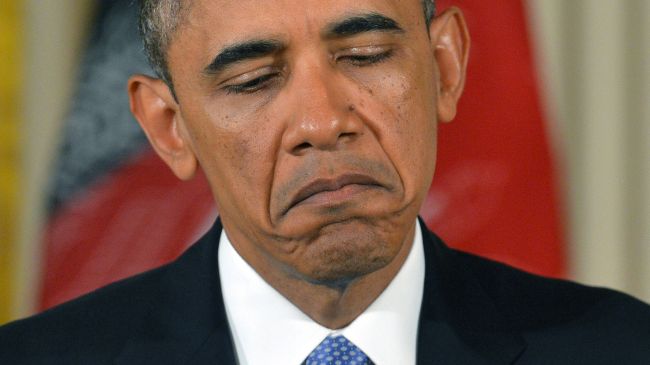
By JEFF COHEN | CounterPunch | July 8, 2013
I was a young person when I first heard the quip: “How do you know when the President is lying? His lips are moving.” At the time, President Nixon was expanding the war in Vietnam to other countries and deploying the White House “plumbers” to commit crimes against antiwar leakers.
Forty years have passed. Sadly, these days, often when I see President Obama moving his lips, I assume he’s lying.
Like Nixon, our current president is prolonging an endless, borderless and counter-productive war (“on terror”) and waging a parallel war against “national security” leakers that makes the plumbers’ burglary of Daniel Ellsberg’s psychiatrist’s office look almost quaint.
The World War I vintage Espionage Act, originally used to imprison socialists for making antiwar speeches, has been used by the administration against whistleblowers with a vengeance unprecedented in history: eight leakers have been charged with Espionage under Obama, compared to three under all previous presidents. The Obama administration has prosecuted not a single CIA torturer, but has imprisoned a CIA officer who talked about torture with a journalist. National Security Agency official Thomas Drake, who was unable to get abuses fixed internally, now has a criminal record for communicating with a reporter years ago about sweeping domestic surveillance.
So there I was watching Obama’s lips move about NSA whistleblower Edward Snowden at a June 27 press conference. Saying he wouldn’t be “scrambling military jets to go after a 29-year-old hacker,” Obama added that he would not “start wheeling and dealing and trading on a whole host of other issues, simply to get a guy extradited.”
I didn’t believe a word of it.
Given Obama’s war on whistleblowers and journalists who utilize them, and given the Army’s abusive treatment of military whistleblower Bradley Manning (apparently aimed at getting him to implicate WikiLeaks), it’s inconceivable that Obama was truly blasé about Snowden. To deter future whistleblowers, Snowden would have to be caught and made an example of – and probably mistreated (like Manning, in hopes of getting him to turn against WikiLeaks and even journalist Glenn Greenwald).
As his lips were moving, Obama knew well that he would go to extreme lengths to prevent this articulate young man from securing asylum in some Latin American country, where he could continue to inform the world’s media about the Surveillance State that has blossomed alongside the Warfare State under the Bush and Obama administrations.
That Obama wasn’t truthful became clear when the U.S. campaign of “wheeling and dealing” led to possible asylum countries retreating in fear one after another (Vice President Biden was deployed to pressure Ecuador’s president by phone). And even clearer with last week’s outrageous, international law-breaking that effectively forced down the presidential plane of Bolivian President Evo Morales.
And if Obama eventually does scramble jets to force down a plane with Snowden on board, the commander-in-chief will be applauded for taking bold and decisive action by mainstream TV talking heads, “national security” experts and the opposition he seems most intent on pleasing: conservatives. Criticism from civil libertarian and peace voices (or unions and environmentalists, for that matter) has rarely daunted Obama.
The bipartisan consensus in support of our bloated Military/Surveillance State – which so undermines our society as a whole – is reflected in Congress and both the Bush and Obama administrations, as well as mainstream media.
When it comes to issues of U.S. militarism and spying, the allegedly “progressive” MSNBC often seems closer to the “official network of the Obama White House” than anything resembling an independent channel. With a few exceptions (especially Chris Hayes), MSNBC has usually reacted to expanded militarism and surveillance by downplaying the abuses or defending them.
Had McCain or Romney defeated Obama and implemented the exact same policies, treating whistleblowers like Manning and Snowden as foreign espionage agents, one would expect MSNBC hosts to be loudly denouncing the Republican abuses of authority.
But with Obama in power, a number of MSNBC talking heads have reacted to the Snowden disclosures like Fox News hosts did when they were in hysterical damage control mode for Bush – complete with ridiculously fact-free claims and national chauvinism that we’ve long come to expect from the “fair & balanced” channel.
As Snowden arrived in Russia from Hong Kong, MSNBC host Ed Schultz blustered on about Snowden as a “punk” and “coward.” Railing about the “security of the country” in tones Hannity would approve of, Schultz questioned Snowden’s patriotism and credibility, asking: “If the United States of America is doing something so egregiously wrong in its surveillance program, how come he’s the only one speaking up?
In O’Reilly-like blissful ignorance, Schultz seemed unaware of the three NSA whistleblowers who’d loudly spoken up way earlier than Snowden – and gathered for an illuminating USA Today interview a week before his tirade.
I watched one MSNBC host function as an auxiliary prosecutor in Obama’s Justice Department, going after Snowden – while trying to link WikiLeaks and journalist Glenn Greenwald to criminal flight.
MSNBC’s Melissa Harris-Perry has been condemning Snowden by contrasting him with civil disobedients who “love their country” and submit to arrest – while Snowden just wants to “save his own skin.” She proclaimed: “This is different. This is dangerous to our nation.” Should we similarly dismiss Dan Ellsberg, who leaked the top secret Pentagon Papers to a dozen newspapers in 1971 by going on the lam from the FBI. Or Watergate’s “Deep Throat,” who saved his own skin by hiding his identity for 30 years after leaking secrets that helped crash the Nixon presidency?
In a bizarre monologue attacking Snowden (who’s risked plenty, in my view), Harris-Perry hailed those who engage in civil disobedience for being willing “to risk your own freedom, your own body in order to bring attention to something that needs to be known. Martin Luther King Jr. was arrested, attacked, smeared. Nelson Mandela went to prison for 27 years.” (My emphasis.)
Nelson Mandela? He wasn’t a civil disobedient who gave himself up. He was a fugitive, fleeing the apartheid police. He was on the lam domestically, like Snowden is now internationally. And some reports indicate that South African authorities were able to nab Mandela thanks to the U.S. CIA (one of the agencies now working to apprehend Snowden).
MSNBC’s Rachel Maddow has also disappointed. After doing a typically thorough presentation on the force-down of President’s Morales’ plane, she ended her report by expressing displeasure only that Washington had apparently gotten allies to go out on the limb “for nothing.” Her objection to the harassment seemed to be: it hadn’t succeeded. I didn’t hear opposition to the action had Snowden actually been on board and apprehended.
The Snowden/NSA story proves once again that – especially on so-called “national security” issues – we need strong, independent media not enmeshed with the corporate/political power structure and not allied with one of the two corporate parties.
We can’t count on MSNBC to heed the lesson taught by legendary independent journalist I.F. “Izzy” Stone, after years reporting from Washington: “All governments lie and nothing they say should be believed.”
Jeff Cohen was an MSNBC pundit and senior producer in 2002-3 until being terminated for political reasons, along with Phil Donahue, on the eve of the Iraq invasion. He is director of the Park Center for Independent Media at Ithaca College, founder of the media watch group FAIR, and author of Cable News Confidential: My Misadventures in Corporate Media. He cofounded the online action group RootsAction.org, which has petitioned for Snowden.
Brazil expresses deep concerns over US spying activities
Press TV – July 7, 2013
Brazil has expressed serious concerns over a report which says the United States has been spying on Brazilian companies and individuals for a decade.
Brazil’s O Globo newspaper reported on Sunday that the US National Security Agency (NSA) has collected data on billions of telephone and email conversations in the South American country.
The Globo report said that information released by US surveillance whistleblower Edward Snowden reveals that the number of telephone and email messages logged by the NSA in the 10-year period was near to the 2.3 billion captured in the US.
Brazilian Foreign Minister Antonio Patriota expressed “deep concern at the report that electronic and telephone communications of Brazilian citizens are being the object of espionage by organs of American intelligence.”
“The Brazilian government has asked for clarifications” through the US Embassy in Brasilia and the Brazilian Embassy in Washington, he said.
Patriota also said Brazil will ask the United Nations for measures “to impede abuses and protect the privacy” of Internet users, laying down rules for governments “to guarantee cybernetic security that protects the rights of citizens and preserves the sovereignty of all countries.”
The US Embassy in Brazil refused to comment over the issue.
But the Office of the Director of National Intelligence in the United States issued a statement saying, “The US government will respond through diplomatic channels to our partners and allies in the Americas … While we are not going to comment publicly on specific alleged intelligence activities, as a matter of policy we have made clear that the United States gathers foreign intelligence of the type gathered by all nations.”
The chairman of the US Joint Chiefs of Staff, Gen. Martin Dempsey, admitted on Sunday that Snowden’s exposés have seriously damaged US ties with other countries. “There has been damage. I don’t think we actually have been able to determine the depth of that damage.”
Snowden, a former CIA employee, leaked two top secret US government spying programs under which the NSA and the Federal Bureau of Investigation (FBI) are eavesdropping on millions of American and European phone records and the Internet data from major Internet companies such as Facebook, Yahoo, Google, Apple, and Microsoft.
On June 9, Snowden admitted his role in the leaks in a 12-minute video recorded interview published by The Guardian.
In the interview, he denounced what he described as systematic surveillance of innocent US citizens, saying his “sole motive is to inform the public as to that which is done in their name and that which is done against them.”
The NSA scandal took even broader dimensions when Snowden revealed information about its espionage activities targeting friendly countries.
Snowden has been holed up at Moscow’s Sheremetyevo Airport since June 23 when he travelled from Hong Kong to avoid US extradition.
He has already sought asylum in more than two dozen countries. Washington has asked these countries not to provide asylum to Snowden.
Three Latin American countries — Nicaragua, Bolivia, and Venezuela — have offered to grant asylum to Snowden.
Related article
‘German government sells the privacy of German citizens to the US’
RT | July 08, 2013
The recent NSA spying scandal showed the German government behaves towards US like a puppet regime, involving all major political parties just before the September elections, German journalist Manuel Ochsenreiter told RT.
RT: Let’s just discuss it now with the journalist Manuel Ochsenreiter who is joining us from Berlin. Mr. Ochsenreiter, to what extent do you think Germany may have cooperated with the NSA?
Manuel Ochsenreiter: Well, I think it’s a matter of fact that we know that the German authorities, the German mainstream politicians, the German government they all cooperate in a very intense way with US intelligence. I feel a little bit weird to use the term “cooperation” for this because when we look exactly at what is going on that they were spying on German citizens we have to say that the German government behaves towards the US government in this question more or less like a US puppet regime. No claim of sovereignty. No claim of independence. Of course, no claim of privacy, for the right to privacy of their own citizens. So, the German citizens are not at all protected by their own government. The German government sells the privacy of German citizens to the US government. And this is the really, really serious case, it’s a big scandal.
RT: Snowden claims top politicians were insulated in case of a scandal – yet now they seem to be outraged. What you are saying is that they might be doing this because of the public outrage. What’s got them more angry then, if that’s the case that they did not know, or that they did not know about the scale of the operations that they would too be spied on?
MO: To be honest I believe that they are angry that it became public, that now all the facts are open and the citizens can see what’s going on because I wouldn’t believe any word right now of a government politician. By the way, I’m also not fond of opposition politicians in the German parliament. We have to know that the government before the Merkel government was built by the GPD opposition. And they cooperated as well with the Americans as today’s government is doing. And when we listen very well to the words of mainstream politicians in Germany we hear right now a lot of justifications of this. Yes, let us say cooperation as they call it. They say it’s for our security, they say that this is a partnership, that this is a friendship but, of course, it’s not. It’s pure spying. And we have to watch a little bit back in the past we had in the 1990s the ECHELON project. It was also a USA spy project especially on Germany. And this spying project was especially for economic espionage. The German companies, the German economy was monitored by the US secret service. So, what we see here is that Germany is behaving more or less like, well, let me say like a state fully under control of the US without any independence. And the scandal’s not that US are doing that. The real scandal’s that the German politicians are not doing something against it…
‘German politicians should expel the US American military bases’
RT: Snowden did say that this went beyond agreements between the countries in terms of what they can share, what they can… in terms of sharing information. So, how is this affecting the politicians knowing that. They have been spied on far more than the agreement they had. So, yes, so, we say “yes” they did know about this. But to the extent that they have been spied on, I mean, this is going beyond spying on just their own citizens. It goes it is spying within politicians as well. How are they reacting to that? Is it going to create tension between the US and its allies now? Are they not seeing this? Are we just reading too much into something which is been happening anyway?
MO: We are knowing a very interesting time Germany because we have in September the elections. And I think the spying scandal is really really disturbing the election campaigns of all the mainstream parties because they all are involved in the scandal. So, what they are doing now is that they all try to give the impression that on the one side they knew about so-called cooperation but that they are completely surprised about how far it went. And to be honest I wouldn’t believe any word because we had already the experience in the past about how far the US governments go and how they treat their so-called allies or their so-called partners. So, if the German politicians… Let me finish with one sentence. If they are really so upset and so surprised as they act now then we have to see the consequences. And there are many consequences we could do with. For example, that the US ambassador is summoned to the Chancellor and is so criticized that there is diplomatic protest, that, for example, we make it to initiate that we have until today US barracks and US army troops on Germans soil. And we know that those military bases are also used for the NSA projects. So we invite the Americans to our country or our politicians invite them in our country to establish their military and intelligence bases there. So, if the German politicians want to do something it’s very easy to them just expel the US American military bases. Don’t make Germany any more do the military aircraft carried out in Europe of the US Americans. It would be easy but they will not do it, because they believe in this partnership which is not a partnership.
RT: So, how does the spying on the EU leaders sit, with the intelligence community cooperating. I mean, is that a sign that the US doesn’t trust its allies? Or it’s just keeping a close eye on its allies?
MO: I think this shows a lot about the attitude that the American government has towards the allies because we are never talking about the partnership we are talking about hegemonic politics. They want to be able to control a partnership or something else. Partnership is when two countries make an agreement with each other. But what we see here is that the US have gained control of those countries. I’m not sure that it will really bring mistrust in the EU bureaucracy because these people are used to that and I’m not sure if they are really upset about this because they know about this. But the interesting question is how long will the population be so tolerant to bear those problems. This is the interesting question.
RT: Just one more from you. In terms of destroying itself, I mean, we now have been focusing a lot on Snowden instead of what he’s actually been leaking. Do you think we are just kind of missing why politicians in the EU are trying to cover all of this up, by focusing on him rather then what actually Snowden keeps on releasing?
MO: Why? I don’t know. Perhaps, it might be interesting what Snowden has on his four laptops he took with him and I’m pretty much sure the information we got until now is not really 100% percent of what he has with him. I think you know he is in Moscow. Now, I think, the Russians are very interested in the content and the Germans again (I’m from Germany) my politicians, my government, they should be really interested in the content of the full-scale, of these espionage practices if they really want to know this. But I don’t see that right now. But I think in the near future we will get may be a lot of surprises how intense the spying is really.
Related articles
- Snowden: West ‘in bed with NSA’… (spiegel.de)
- European anger growing over extent of alleged U.S. electronic surveillance (mcclatchydc.com)
‘Restore the Fourth’: Reddit, Mozilla, thousands of people set for July 4 NSA spying protest
RT | July 3, 2013
Thousands of websites will launch a July 4 online protest against the NSA surveillance programs. Reddit, WordPress, and Mozilla will take part in the ‘Restore the Fourth’ campaign online, while live protests take place in cities across the US.
‘Restore the Fourth’ is aimed at restoring the fundamentals of the Fourth Amendment – the part of the Bill of Rights which protects citizens against unlawful searches and seizures. Participants will display an online banner which reads, “This 4th of July, we stand by the 4th Amendment and against the U.S. government’s surveillance of internet users.”
The campaign, which was spawned on Reddit, has the support of several privacy and press freedom advocacy organizations, including Mozilla, Free Press, the Electronic Frontier Foundation, the Freedom of the Press Foundation, and ColorOfChange.org.
The rally was largely organized by Fight for the Future – another non-profit agency which fights against internet censorship. The organization’s co-founder, Tiffiniy Cheng, said in a statement that “the NSA programs that have been exposed are blatantly unconstitutional, and have a detrimental effect on free speech and freedom of press worldwide.” The rally is expected to be Fight for the Future’s largest online mobilization since its actions against the Stop Online Piracy Act (SOPA).
But the protest doesn’t stop online. Organizers are planning live protests in dozens of US cities, including New York, Philadelphia, Boston, Washington, D.C., Los Angeles, San Francisco, Houston, and Atlanta. Doug MacArthur, a member of Restore the Fourth’s national board and moderator on Reddit’s r/news, expects between 10,000 and 20,000 people to take part in the protests in the nation’s larger cities.
MacArthur stressed the need for the protest, largely because mainstream media is failing to adequately cover the NSA leaks and what that means for everyday citizens.
“I think if you are on social media right now and political blogs, this might seem like it’s an issue that’s all over the political blogs. But if you turn on CNN or Fox or MSNBC, you’ll see that a lot of the more mainstream channels aren’t covering this as much as you might be assuming. So I really think it’s important we get more citizens aware of this issue,” he said, as quoted by Mashable.
Free Press CEO and President Craig Aaron echoed MacArthur’s sentiments. “We need to bring these government and corporate activities into the light of day, and the only way that will happen is if millions more people get involved and demand accountability, demand change, demand the truth,” he said in a Tuesday press conference.
However, it’s not just internet activists getting involved in the fight – one Hollywood celebrity has been very vocal in expressing his views on the NSA’s surveillance practices.
“How long do we expect rational people to accept using terrorism to justify and excuse endless executive and state power?” actor John Cusack said during a press conference announcing the protests. “Why are so many in our government, our press, our intellectual class afraid of an informed public?”
Cusack, who is a board member of the Freedom of the Press Foundation, complained that many of those defending the NSA surveillance programs are focusing on supposed character flaws of former NSA contractor Edward Snowden instead of questioning the program’s legality.
Harvey Anderson, senior vice president of business and legal affairs at Mozilla, agrees with Cusack. He said in a statement that the spotlight on Snowden is a “big distraction to avoid focusing on the invasions that have actually been occurring.” The lack of transparency about the surveillance programs “undermines the openness of the internet,” he added.
There has been a massive outcry against the surveillance practices since former NSA contractor Edward Snowden leaked sensitive information in May. In just three weeks, StopWatching.us has collected more than 531,000 signatures from people calling for Congress to fully disclose details about the NSA surveillance programs.
Snowden is currently held up in the international transit zone of Moscow’s Sheremetyevo airport. He is unable to travel as his passport is invalid. Washington has issued an extradition order against Snowden, calling for international cooperation in returning him to American soil.
The whistleblower has so far made asylum requests for more than a dozen countries, with ten nations already denying him refuge. Venezuela says it will consider Snowden’s request when it is received.
Related article
Bolivia’s Morales Dissed and Pissed as France, Portugal, and Austria Violate Diplomatic Immunity
By Dave Lindorff | This Can’t Be Happening | July 3, 2013
Those of us who have been saying that the US has become a weak, or at least more ordinary power among many in the world because of its military failures in Iraq and Afghanistan, and because of its economic decline, will have to recalibrate our analysis after watching the pathetic behavior of the leaders of Russia, Germany and France under pressure from the Obama administration not to allow Edward Snowden to gain asylum in those countries or even to escape his purgatory in Moscow’s Sheremetyevo Airport.
Last night, in an astonishing display of fawning obedience to the demands of US leaders, France and Germany first announced that they would not grant asylum to Snowden, despite broad popular support by French and German people for such an offer of aid to the embattled whistleblower. Then, France and Portugal abruptly refused to allow a Bolivian aircraft carrying the country’s president, Evo Morales, from a state visit with Russia’s Vladimir Putin, to land for refueling in their countries, saying that they were concerned he might be flying Snowden to asylum in Bolivia.
Although Spain said eventually it would allow the Morales plane to refuel in the Canary Islands, it did not have enough fuel to get there and had to be diverted to Vienna, where, astonishingly, it was then searched like a drug-smuggling flight over Bolivian protests. Snowden was not aboard. A furious Morales immediately blamed the US Department of State for the whole incident — a charge that no one has disputed, though of course the US is refusing to comment.
Aircraft carrying national leaders have absolute diplomatic immunity under international law and moreover, Bolivia would have the absolute right to grant Snowden amnesty, and to bring him to its territory, whether or not he had a valid passport. As the leader of a sovereign nation, Morales has every right to carry anyone he wants on his plane with him back to his country.
Bolivian President Evo Morales, forced under US pressure to land in Vienna to have his returning plane searched for Snowden, calls the blocking of his flight from Russia to Bolivia a “kidnapping,” and “act of aggression” and an “offense against all the whole Latin region.”
That France, Portugal and Austria would so violate such basic diplomatic rules suggests that the US (which of course has long demonstrated that it views diplomatic rules and international law as applying only to others, but not itself) has some powerful leverage to exert behind the scenes. The more so because this whole incident makes leaders like French President Francois Hollande, who only the day before had suggested his country might consider Snowden’s asylum appeal, look foolish, and because this aggressive and hostile action taken against the leader of a sovereign nation makes France, as well as Portugal and Italy, look pathetic and ridiculous at a time that public sentiment across Europe is solidly in support of Snowden. (An activist friend in Germany reports that sentiment there in support of Snowden and even of granting him asylum is “probably at about 80%,” and that is probably also true in France.)
This latest incident, which has incredibly not been protested either by Russia’s Putin, from whose country the disrupted flight originated, and who was Morales’ official host, also exposes Putin and Russia as being under America’s thumb. Who could have imagined Putin allowing a meeting of leaders in his own country to be so shamed by US intervention involving diversion and impoundment of a foreign leader’s return flight home without a loud protest and even some counter action. At a minimum the US ambassador should have been called in to be tongue-lashed by the Russian president. Yet even Russian state television station RT-TV, in its report on the halting of Morales’ plane and the unprecedented search of a state leader’s plane in Austria, carried no comment from Putin or the Russian government on the insult and outrage.
Has the US, with its incomprehensibly massive spy network, just demonstrated that it now has a power greater than its nuclear arsenal: a dossier perhaps on almost every leader in the world with which it is able to blackmail even the likes of Hollande, Merkel and Putin? It is hard to come up with another explanation for the way this incident played out.
We will have to see now whether Morales, a popular leader from an impoverished indigenous background who is clearly no coward and who is probably too clean to be blackmailed, will make good on his assertion made in Moscow that Snowden would be welcome in Bolivia. Russia could recover a modicum of its self-respect by flying him there on a Russian plane to avoid similar US-orchestrated interference. Venezuela’s new president, Nicolás Maduro, who has also spoken favorably of granting asylum status to the National Security Agency whistleblower, should also step up at this point. Since he is still in Russia, he could offer to bring Snowden back home with him, and dare the nations of Europe to try and stop him.
Europeans are pissed off already at the US, in the wake of National Security Agency leaker Snowden’s latest revelation that the US was aggressively spying on its European allies, both at their and the European Union’s embassies in Washington, and in Europe itself, gleaning not information about terrorism, but inside-track knowledge about trade negotiation positions and other areas of disagreement or negotiation.
Leaders in Germany, France, Italy, and other European countries are demanding that the US cease its spying on them, and give a “full accounting” of the spying that it has been engaging in. But given the steady stream of lies coming from the NSA, the Obama Administration, Secretary of State John Kerry, and other American sources, why should they believe anything they are being told? Most Europeans understand now that all this bluster from their leaders is just that: bluster.
Europe’s leaders have shown themselves to their own people to be sell-outs in the pocket of the US. As several commenters on the website of the German magazine Der Spiegel, which last week ran a cover expose about the NSA spying program directed against European leaders, have written, Germany’s and France’s leaders have sold out their countries and people by caving in to US demands. As one person wrote: “Our government has sold us out and is beyond help.”
To be sure there was a wave of tough talk only days earlier, with, for example, Martin Schulz, the president of the European parliament, saying that the NSA is like the Soviet-era KGB, and with leaders of countries like Ireland and Norway saying that they might consider amnesty for Snowden, but only if he could reach their soil first — a ludicrous requirement, since there is no international law requiring such silliness. Any country can grant asylum to any person it wishes, wherever that person may be at the moment. They cannot offer protection, of course, except in an embassy or in-country, but that’s different from just offering a grant of amnesty. Indeed, the mere fact that the US has cancelled Snowden’s passport doesn’t mean his passport cannot be respected as a travel document by another country. How, in fact, when you think about it, would a country know that a person’s passport had been “cancelled” unless the issuing nation had issued some kind of news release about it as the US did in Snowden’s case? There’s no international registry of global passports. Those records are held closely by each country and in fact are supposed to be secure. Bolivia, Venezuela, Ecuador, Norway, Ireland or any other country that had said at any point that it would be willing to accept Snowden, could stamp their visa on his passport and accept him on their planes. (Even the US Passport Office accepts an old, expired passport as an identity document when one is applying for a new one.)
After this abject display of rank servitude in the interest of the US Imperium by some of Europe’s most powerful nations, if little Bolivia and/or Venezuela don’t step up and show Europe how sovereign nations are supposed to act, it will be up to the people of Europe and Latin America to act.
Already, Latin nations seem to be rallying, with protests across the continent, and with Argentina’s President Cristina Fernández de Kirchner, Ecuador’s President Rafael Correa, and Cuba’s retired leader Fidel Castro expressing anger at the diversion of the Morales plane. An “urgent” Latin American leadership meeting is planned over the crisis, and if it is not just talk, this could indicate that the US may have overstepped in insulting a region that has been growing increasingly assertive about resisting US diktats.
Certainly, following the latest revelations in the Guardian, Der Spiegel, and elsewhere showing that the NSA has been vacuuming up data on millions of Europeans, and with former NSA and CIA director Michael Hayden stating publicly that the Fourth Amendment to the US Constitution — the one that at least used to protect Americans’ right to privacy and from government search and seizure — “is not an international treaty,” the anger among Europeans at US spying is swelling too, and with it, support for the embattled whistleblower Snowden.
We can only hope that the revelations of outrageous US intelligence abuses and violation of Europeans’ privacy rights will continue, that the rage against the US among ordinary European citizens will grow. We can only hope that with that growing rage, a desire to stick it to the US by protecting Snowden will grow too, until some European leader finally sees it as a popular or necessary move to offer him asylum.
This latest abomination in the treatment of Bolivia and its leader, which has shamed France, Portugal, Austria, Italy and Russia, will be a great test of how angry the peoples of those countries are about their leaders’ servile behavior towards the US.
Of course, we in the US should be the most outraged of all, but sadly, there is probably even less chance that a majority Americans will get angry at all this than that Europeans will.
Related article
New Snowden leak reveals US hacked Chinese cell companies, accessed millions of sms – report
RT | June 23, 2013
US government has been hacking Chinese mobile operator networks to intercept millions of text messages, as well as the operator of region’s fibre optic cable network, South China Morning Post writes citing Edward Snowden.
More information on National Security Agency activity in China and Hong Kong has been revealed by SCMP on Sunday, shedding light on statements Snowden made in an interview on June 12.
“The NSA does all kinds of things like hack Chinese cell phone companies to steal all of your SMS data,” Snowden was quoted as saying on the SCMP website.
In a series of reports the paper claims Snowden has provided proof of extensive US hacking activity in the region.
The former CIA technician and NSA contractor reportedly provided to the paper the documents detailing specific attacks on computers over a four-year period, including internet protocol (IP) addresses, dates of attacks and whether a computer was still being monitored remotely. SCMP however did not reveal any supporting documents.
The US government has been accused of a security breach at the Hong Kong headquarters of the operator of the largest regional fibre optic cable network operator, Pacnet. Back in 2009, the company’s computers were hacked by the NSA but since then the operation has been shut down, according to the documents the paper claims to have seen.
Pacnet’s network spans across Hong Kong, China, Korea, Japan, Taiwan, the Philippines and Singapore and provides connections to 16 data centers for telecom companies, corporations and governments across the region.
The whistleblower has also allegedly revealed the US had viewed millions of text messages by hacking Chinese mobile phone companies. That is a significant claim since the Chinese sent almost billion text messages in 2012 and China Mobile is the world’s largest mobile network carrier.
In his very first leak to the media, Snowden had already exposed the scale of the American government spying operation on its domestic mobile network operators. He later revealed that the US and the UK possessed technology to access the Blackberry phones of delegates at two G20 summit meetings in London in 2009.
In a third article, SCMP claims that the US on a regular basis has been attacking the servers at Tsinghua University, one of country’s biggest research institutions. The whistleblower said that information obtained pointed to hacking activities, because it contained such details as external and internal IP addresses in the University’s network, which could only have been retrieved by a security breach.
Tsinghua University is host to one of Chinas’ six major backbone networks, the China Education and Research Network (CERNET) containing data about millions of Chinese citizens.
Featured Video

The Most Important Bet You’ve Never Heard Of
or go to
Aletho News Archives – Video-Images
From the Archives
Wars for Israel: A reminder of who’s giving the marching orders
By Damian Lataan | February 7, 2012
As the West prepares to march off to yet another war in the Middle East, we should perhaps remind ourselves of who is giving the West their marching orders.
In February 2003, just weeks before the US and their allies launched their attack on Iraq and her peoples, a delegation of US congressmen, together with the US Ambassador to the United Nations, John Bolton, a well known pro-Zionist and neoconservative war-hawk, were in Israel at the invitation of the Israeli government then led by Israeli Prime Minister Ariel Sharon.
Addressing the congressmen, Sharon told them ‘that Iran, Libya and Syria should be stripped of weapons of mass destruction after Iraq’. Later, Sharon told John Bolton ‘that Israel was concerned about the security threat posed by Iran, and stressed that it was important to deal with Iran even while American attention was focused on Iraq’. … continue
Blog Roll
 Aletho News
- UAE rejects report claiming it is ready to join war on Iran to reopen Hormuz
- A New Resistance Front: How Does Syria Factor into the Regional War?
- Gulf states weigh pipeline expansion plans, hoping to bypass Hormuz
- Iran sets up ‘tollbooth’ system in Strait of Hormuz
- Wave 90: IRGC strikes US-linked industrial sites in Gulf
- Iran Says US-Israeli Claims of Its Military Strength Are Wrong
- Trump’s April Fools’ Address to the nation
- The Most Important Bet You’ve Never Heard Of
- The killing of three Indonesian soldiers in Lebanon should remind Jakarta that Israel does not want peace
- Defeated and delusional: Netanyahu’s remarks reveal $80bn war failure, says analyst
- If Americans Knew
- 7 Ways Israel Is Turning Lebanon Into Gaza
- World’s Leading Football Bodies Under Fire Over Israel Policies
- Experts warn of possible use of nukes against Iran
- Israeli invasion of Lebanon could be worse than 1982, warn European officials
- Passover: Liberation and collective punishment
- Trump says the quiet part out loud: (Israel’s) war on Iran > Americans’ health – Daily Update
- Gaza families reunite years after babies evacuated amid Israel’s war
- International Rescue Committee warns Gaza’s children face grave protection risks
- Iran’s Alleged 47-Year War on America: Debunking the 1,050 American Deaths Canard
- Israel wants US to bomb more of Iran’s civilian structures (113,000 is not enough) – Not a ceasefire Day 173
- No Tricks Zone
- Low Intensity Tornado Wrecks Major Solar Farm, Creating A Potential Toxic Dump
- New Study Finds Warming Saves Lives…Cold Temperatures 12 Times More Deadly Than Excess Heat
- German Science Blog Accuses PIK Climate Institute Of Hallucinating Climate Tipping Points
- Devastating Assessment Of Comirnaty Vaccine By Former Senior Pfizer Europe Toxicologist
- New Study: CO2 Is ‘Effectively Negligible’ As An Explanatory Climate Change Factor Since 2000
- Former Pfizer Toxicologist Dr. Helmut Sterz Tells Bundestag Hearing Pfizer Vaccine Should Have Never Been Approved
- Energy Expert: Germany’s Nuclear Phaseout Was A “500 Billion Euro Mistake”
- New Research: South Australia’s Mid-Holocene Sea Surface Temperatures Were 4°C Warmer Than Today
- Storing Green Energy To Last Germany 10 Days Would Require A 60-Million Tonne Battery
- New Studies: UK Sea Levels Were 4 Meters Higher Than Today During The Mid-Holocene
 Aletho News