From the droned villages of Pakistan and Afghanistan–
Bring back our girls!
From Nigeria, and the brothels of the Philippines–
Bring back our girls!
From the ruined cities of Detroit and Newark
And the ravished American Dream–
Bring back our girls!
From “Disaster Capitalism” and twerking jerks–
Bring back our girls!
From the “Occupied Territories” of Palestine
And from Israeli Porn Kings–
Bring back our girls!
From the “royal” slave-holders of Arabia,
And the crapulous monarchs of Britain–
Bring back our girls!
From our culture of destitution and prostitution–
Bring back our girls!
From “entrepreneurs” and exploiters
Of sex and violence and from those who confound and abuse–
Bring back our girls!
Restore them to their birthright dignity:
Co-creators; mothers; sisters; daughters; friends.
Bring back our girls
From the wars that have butchered them
(Restore them!);
From the silence that has answered their prayers
(Answer now…);
From the callous hypocrisy
Of scoffed-at dreams and snuffed-out hopes–
Bring back our girls!
It is forbidden to kill; therefore all murderers are punished unless they kill in large numbers and to the sound of trumpets.
— Voltaire, 1694-1778
It is impossible not to gain the impression that the criteria for being awarded prestigious honors for services to “peace”, “humanity” or “distinguished public service” is a candidate who is duplicitous, vicious, stone-hearted and above all prepared to kill, plan killings or rejoice in killing on an industrial scale as brutally as can be devised.
Moments after being informed of the horrific death of Libyan Leader Colonel Muammar Gaddafi in October 2011, then Secretary of State Hillary Clinton said “Wow!” then unforgettably and chillingly laughed, telling a television crew: “We came, we saw, he died.” Asked if her recent visit to Libya might have had anything to do with his death, she “… rolled her eyes” and said “I’m sure it did.”
Six months later, in April 2012, Clinton received the Woodrow Wilson Award for Public Service. The following month she received the Champions for Change Award for Leadership, and in May 2013, the inaugural Warren Christopher Public Service Award.
Madeleine Albright’s comment, when US Ambassador to the UN, on “60 Minutes” (12th May 1996) that the price of the lives of half a million children who had died as a result of US-driven UN sanctions on Iraq, was: “a hard choice, but the price, we think the price is worth it”, was no bar to her receiving, under two years later, the 1998 International Rescue Committee’s Freedom Award: “For extraordinary contributions to the cause of … human freedom … The list of those who have received the Freedom Award reveals the remarkable ability of an individual to shape history and change for the better a world moving toward freedom for all.”
The “freedom of the grave” comes to mind.
Other recipients have been John McCain (2001) George H.W. Bush, whose regime vowed to “reduce Iraq to a pre-industrial age” – and did, in 1991 – and Bill Clinton whose Presidency (1993-2001) in addition to several massive bombings and unending daily ones (all illegal) oversaw, manipulated and pressured the UN to continue to implement the most draconian embargo in the organization’s history and ensure that children, the sick, went on dying in ever greater numbers every year of his Presidency. They were both honored in 2005.
In 2008 the Award went to Kofi Annan, during whose tenure as UN Secretary General (1997 – 2006) involved Iraq’s tragedy and “thirty four major armed conflicts.”
Annan was entrusted with oversight of international commitment to the UN’s fine founding pledge by: “We the peoples of the United Nations determined to save succeeding generations from the scourge of war … to reaffirm faith in fundamental human rights, in the dignity and worth of the human person …” In the event he merely bleated mildly from time to time that some humanitarian holocaust was “regrettable”, “unfortunate” or that he was “concerned.”
Moreover, Kofi Annan’s son, Kojo, had profited from the pitiful UN-Iraq “Oil for Food” deal as children were dying, with former US Federal Reserve Chairman saying, on behalf of a Committee set up to investigate: “Our assignment has been to look for mis- or mal-administration in the oil-for-food programme, and for evidence of corruption within the U.N. organization and by contractors. Unhappily, we found both.”
These are minimal examples of how political pigs ears become polished silk purses. Now President Obama who, as Sherwood Ross has written, “has already bombed six countries (Libya, Yemen, Somalia, Pakistan, Afghanistan, and Iraq) is risking a possible escalation of the Ukraine crisis he nurtured, into World War III against Russia”, was, on 7th May, awarded the 2014 Ambassador for Humanity Award by the Shoah Foundation.
The Shoah Foundation was established by Steven Spielberg to document the Holocaust, but has since expanded to document other modern genocides. Their new Ambassador’s actions should keep them occupied for a good while.
President Obama’s commitment to democracy and human rights has long been felt”, Spielberg said in a statement. “As a constitutional scholar and as President, his interest in expanding justice and opportunity and all is remarkably evident.”
The timing of the Award may outdo even the other more farcical honors, since, as Ross points out, according to Russian expert, Professor Francis Boyle of the University of Illinois:
Obama now has broken the promise President George H.W. Bush gave to Soviet President Mikhail Gorbachev that if he agreed to the reunification of Germany, NATO would move no farther east, toward Russia’s boundaries. The Obama administration and NATO are maneuvering humanity into a reverse Cuban Missile Crisis right on the borders of Russia. Can World War III be far behind?
Further, NATO is planning larger number of combat forces in Eastern Europe, thus “the dreaded Cold War, with all its staggering cost, with all its immeasurable weight of fear, begins again.”
But even the first year of the Obama Presidency marked a year zero for many. In 2009 at least seven hundred Pakistani civilians were obliterated in drone strikes. Those also killed, accused of terrorism, had no trial, no lawyer, no right of reply. They were simply executed under the US Commander in Chief’s personal policy.
Since Obama’s inauguration in 2009, the CIA has launched 330 strikes on Pakistan – his predecessor, President George Bush, conducted 51 strikes in four years. And in Yemen, Obama has opened a new front in the secret drone war.
Across Pakistan, Yemen and Somalia, the Obama administration has launched more than 390 drone strikes (since 23rd January 2009) eight times as many as were launched in the entire Bush presidency. These strikes have killed more than 2,400 people …
In Yemen, under US drones: “Last year saw the highest civilian casualty rate since Obama first hit the country in 2009.”
It is not drones alone. For example, a week to the day after Barack Obama was awarded the Nobel Peace Prize:
On December 17 2009, a US Navy submarine launched a cluster bomb-laden cruise missile at a suspected militant camp in al Majala, southern Yemen.
The missile hit a hamlet inhabited by “one of the poorest tribes in Yemen. Shrapnel and fire left at least forty one civilians dead, including at least twenty one children and twelve women – five of whom were pregnant.
In his Nobel acceptance speech he defended the use of force as “not only necessary, but morally justified.” A constitutional lawyer who has, figuratively, burned his law books.
But the President started as he continues. Three days after becoming Ambassador for Humanity, the US announced a “pilot programme” which is sending anti-tank weapons to terrorists in Syria. Lest it be forgotten, these groups have been videoing themselves crucifying, beheading, removing and eating the organs of victims, chopping off hands and dragging people behind moving vehicles. Under the Commander in Chief aka Ambassador for Humanity, the “pilot project” is an experiment trying to establish whether the weapons will “fall into the wrong hands.” Nauseatingly farcical.
Gulag Guantanamo is still open with the untried, condemned to incarceration until time unknown and legally unaccounted for, another pre-2009 election pledge condemned to the trash bin of history.
Iraq’s citizens continue to be bombed with US missiles, under the US proxy Prime Minister.
In 2011 Pew Research found that “the median black household had about seven per cent of the wealth of its white counterpart, down from nine per cent in 1984, when a Census survey first began tracking this sort of data.”
Change we can believe in?
It has to be wondered whether President Obama pondered on this as he headed to California and his Award ceremony in Air Force One, costing $228,288 per hour.
The prison population of America, at 2.4 million (2013 figures) is just the tip of the iceberg, including “around three thousand children locked up for things that aren’t crimes for adults, ‘such as running away, truancy and incorrigibility.’” See woeful details here.
As this is finished, news comes in of “Obama left alone as agents moonlight”. Shock, horror. Who protects the villagers of Pakistan, Afghanistan, Yemen, Somalia from the Ambassador for Humanity’s drones?
Perhaps the Nobel Committee could lead the way in ending these outrageous Awards by starting with rescinding a few of their own. It would be a start.
A chorus of outraged public opinion demands that the “international community” and the Nigerian military “Do something!” about the abduction by Boko Haram of 280 teenage girls. It is difficult to fault the average U.S. consumer of packaged “news” products for knowing next to nothing about what the Nigerian army has actually been “doing” to suppress the Muslim fundamentalist rebels since, as senior columnist Margaret Kimberley pointed out in these pages, last week, the three U.S. broadcast networks carried “not a single television news story about Boko Haram” in all of 2013. (Nor did the misinformation corporations provide a nanosecond of coverage of the bloodshed in the Central African Republic, where thousands died and a million were made homeless by communal fighting over the past year.) But, that doesn’t mean the Nigerian army hasn’t been bombing, strafing, and indiscriminately slaughtering thousands of, mainly, young men in the country’s mostly Muslim north.
The newly aware U.S. public may or may not be screaming for blood, but rivers of blood have already flowed in the region. Those Americans who read – which, presumably, includes First Lady Michelle Obama, who took her husband’s place on radio last weekend to pledge U.S. help in the hunt for the girls – would have learned in the New York Times of the army’s savage offensive near the Niger border, last May and June. In the town of Bosso, the Nigerian army killed hundreds of young men in traditional Muslim garb “Without Asking Who They Are,” according to the NYTheadline. “They don’t ask any questions,” said a witness who later fled for his life, like thousands of others. “When they see young men in traditional robes, they shoot them on the spot,” said a student. “They catch many of the others and take them away, and we don’t hear from them again.”
The Times’ Adam Nossiter interviewed many refugees from the army’s “all-out land and air campaign to crush the Boko Haram insurgency.” He reported:
“All spoke of a climate of terror that had pushed them, in the thousands, to flee for miles through the harsh and baking semi-desert, sometimes on foot, to Niger. A few blamed Boko Haram — a shadowy, rarely glimpsed presence for most residents — for the violence. But the overwhelming majority blamed the military, saying they had fled their country because of it.”
In just one village, 200 people were killed by the military.
In March of this year, fighters who were assumed to be from Boko Haram attacked a barracks and jail in the northern city of Maiduguri. Hundreds of prisoners fled, but 200 youths were rounded up and made to lie on the ground. A witness told the Times: “The soldiers made some calls and a few minutes later they started shooting the people on the ground. I counted 198 people killed at that checkpoint.”
All told, according to Amnesty International, more than 600 people were extra-judicially murdered, “most of them unarmed, escaped detainees, around Maiduguri.” An additional 950 prisoners were killed in the first half of 2013 in detention facilities run by Nigeria’s military Joint Task Force, many at the same barracks in Maiduguri. Amnesty International quotes a senior officer in the Nigerian Army, speaking anonymously: “Hundreds have been killed in detention either by shooting them or by suffocation,” he said. “There are times when people are brought out on a daily basis and killed. About five people, on average, are killed nearly on a daily basis.”
Chibok, where the teenage girls were abducted, is 80 miles from Maiduguri, capital of Borno State.
In 2009, when the Boko Haram had not yet been transformed into a fully armed opposition, the military summarily executed their handcuffed leader and killed at least 1,000 accused members in the states of Borno, Yobe, Kano and Bauchi, many of them apparently simply youths from suspect neighborhoods. A gruesome video shows the military at work. “In the video, a number of unarmed men are seen being made to lie down in the road outside a building before they are shot,” Al Jazeera reports in text accompanying the video. “As one man is brought out to face death, one of the officers can be heard urging his colleague to ‘shoot him in the chest not the head – I want his hat.’”
These are only snapshots of the army’s response to Boko Haram – atrocities that are part of the context of Boko Haram’s ghastly behavior. The military has refused the group’s offer to exchange the kidnapped girls for imprisoned Boko Haram members. (We should not assume that everyone detained as Boko Haram is actually a member – only that all detainees face imminent and arbitrary execution.)
None of the above is meant to tell Boko Haram’s “side” in this grisly story (fundamentalist religious jihadists find no favor at BAR), but to emphasize the Nigerian military’s culpability in the group’s mad trajectory – the same military that many newly-minted “Save Our Girls” activists demand take more decisive action in Borno.
The bush to which the Boko Haram retreated with their captives was already a free-fire zone, where anything that moves is subject to obliteration by government aircraft. Nigerian air forces have now been joined by U.S. surveillance planes operating out of the new U.S. drone base in neighboring Niger, further entrenching AFRICOM/CIA in the continental landscape. Last week it was announced that, for the first time, AFRICOM troops will train a Nigerian ranger battalion in counterinsurgency warfare.
The Chibok abductions have served the same U.S. foreign policy purposes as Joseph Kony sightings in central Africa, which were conjured-up to justify the permanent stationing of U.S Special Forces in the Democratic Republic of Congo, Uganda, Rwanda, the Central African Republic and South Sudan, in 2011, on humanitarian interventionist grounds. (This past March, the U.S. sent 150 more Special Ops troops to the region, claiming to have again spotted Kony, who is said to be deathly ill, holed up with a small band of followers somewhere in the Central African Republic.) The United States (and France and Britain, plus the rest of NATO, if need be) must maintain a deepening and permanent presence in Africa to defend the continent from… Africans.
When the crowd yells that America “Do something!” somewhere in Africa, the U.S. military is likely to already be there.
Barack Obama certainly needs no encouragement to intervention; his presidency is roughly coterminous with AFRICOM’s founding and explosive expansion. Obama broadened the war against Somalia that was launched by George Bush in partnership with the genocidal Ethiopian regime, in 2006 (an invasion that led directly to what the United Nations called “the worst humanitarian crisis is Africa”). He built on Bill Clinton and George Bush’s legacies in the Congo, where U.S. client states Uganda and Rwanda caused the slaughter of 6 million people since 1996 – the greatest genocide of the post War World II era. He welcomed South Sudan as the world’s newest nation – the culmination of a decades-long project of the U.S., Britain and Israel to dismember Africa’s largest country, but which has now fallen into a bloody chaos, as does everything the U.S. touches, these days.
Most relevant to the plight of Chibok’s young women, Obama led “from behind” NATO’s regime change in Libya, removing the anti-jihadist bulwark Muamar Gaddafi (“We came, we saw, he died,” said Hillary Clinton) and destabilizing the whole Sahelian tier of the continent, all the way down to northern Nigeria. As BAR editor and columnist Ajamu Baraka writes in the current issue, “Boko Haram benefited from the destabilization of various countries across the Sahel following the Libya conflict.” The once-“shadowy” group now sported new weapons and vehicles and was clearly better trained and disciplined. In short, the Boko Haram, like other jihadists, had become more dangerous in a post-Gaddafi Africa – thus justifying a larger military presence for the same Americans and (mainly French) Europeans who had brought these convulsions to the region.
If Obama has his way, it will be a very long war – the better to grow AFRICOM – with some very unsavory allies (from both the Nigerian and American perspectives).
Whatever Obama does to deepen the U.S. presence in Nigeria and the rest of the continent, he can count on the Congressional Black Caucus, including its most “progressive” member, Barbara Lee (D-CA), the only member of the U.S. Congress to vote against the invasion of Afghanistan, in 2001. Lee, along with Reps. Marcia Fudge (D-Ohio), Sheila Jackson Lee (D-Texas) and fellow Californian Karen Bass, who is the ranking member on the House Subcommittee on African, gave cart blanch to Obama to “Do something!” in Nigeria. “And so our first command and demand is to use all resources to bring the terrorist thugs to justice,” they said.
A year and a half ago, when then UN Ambassador Susan Rice’s prospects for promotion to top U.S. diplomat were being torpedoed by the Benghazi controversy, a dozen Black congresspersons scurried to her defense. “We will not allow a brilliant public servant’s record to be mugged to cut off her consideration to be secretary of state,” said Washington, DC Delegate Eleanor Holmes Norton.
As persons who are presumed to read, Black Caucus members were certainly aware of the messy diplomatic scandal around Rice’s role in suppressing United Nation’s reports on U.S. allies’ Rwanda and Uganda’s genocidal acts against the Congolese people. Of all the high profile politicians from both the corporate parties, Rice – the rabid interventionist – is most intimately implicated in the Congo Holocaust, dating back to the policy’s formulation under Clinton. Apparently, that’s not the part of Rice’s record that counts to Delegate Norton and the rest of the Black Caucus. Genocide against Africans does not move them one bit.
So, why are we to believe that they are really so concerned about the girls of Chibok?
Since the very first Snowden leak a year ago, one of the more common refrains from defenders of the program is “but it’s just metadata, not actual content, so what’s the big deal?” Beyond the fact that other programs do collect content, we’ve pointed out time and time again that the “just metadata, don’t worry” argument only makes sense if you don’t know what metadata reveals. Anyone with any knowledge of the subject knows that metadata reveals a ton of private info. Furthermore, we’ve even pointed out that the NSA regularly uses “just metadata” to pick targets for drone assassinations. As one person called it: “death by unreliable metadata.”
So we know that the US kills people based on metadata, but given how hard the NSA and its defenders have sought to play down the collection of metadata, it’s somewhat amazing to find out that the always on-message former director of both the NSA and CIA, Michael Hayden, flat out admitted that “we kill people based on metadata.” According to David Cole:
Of course knowing the content of a call can be crucial to establishing a particular threat. But metadata alone can provide an extremely detailed picture of a person’s most intimate associations and interests, and it’s actually much easier as a technological matter to search huge amounts of metadata than to listen to millions of phone calls. As NSA General Counsel Stewart Baker has said, “metadata absolutely tells you everything about somebody’s life. If you have enough metadata, you don’t really need content.” When I quoted Baker at a recent debate at Johns Hopkins University, my opponent, General Michael Hayden, former director of the NSA and the CIA, called Baker’s comment “absolutely correct,” and raised him one, asserting, “We kill people based on metadata.”
You can see Hayden make that statement at the 18 minute mark of this video — though he immediately tries to qualify the statement by saying we don’t kill people based on this metadata. Of course, what he leaves out is that the DOJ believes that the federal government has the legal authority to kill Americans based on this metadata. So that kind of matters:
It’s a bit scary to watch Hayden’s awkward snarky smile after making this statement.
Separately, if you rewind the video to the 15 minute mark, David Cole does a great job laying out why metadata is so powerful, though even he didn’t go so far as to highlight “death by metadata.”
As stated above, we knew that the CIA kills based on metadata — but it’s still fairly amazing that Hayden was willing to admit this. Either way, the next time you hear anyone invoking the “it’s just metadata” or saying “but it’s not the actual content” perhaps point out to them this simple statement: the former head of the NSA and CIA, and one of the biggest defenders of the metadata collection program (some of which began under his watch) has admitted: “we kill people based on metadata.”
I’ve been asked to debate Danny Postel on the question of Syria, and so have read the op-ed he co-authored with Nader Hashemi, “Use Force to Save Starving Syrians.”
Excellent responses have been published by Coleen Rowley and Rob Prince and probably others. And my basic thinking on Syria has not changed fundamentally since I wrote down my top 10 reasons not to attack Syria and lots and lots of other writing on Syria over the years. But replying to Postel’s op-ed might be helpful to people who’ve read it and found it convincing or at least disturbing. It might also allow Postel to most efficiently find out where I’m coming from prior to our debate.
So, here’s where I’m coming from. Postel’s op-ed proposes the use of force as if force hadn’t been tried yet, as if force were not in fact the very problem waiting to be solved. What he is proposing is increased force. The arming and funding and training of one side in Syria by the CIA, Saudi Arabia, et al, and the other side by Russia, et al, is not enough; more is needed, Postel believes. But “force” is a very non-descriptive term, as are all the other terms Postel uses to refer to what he wants: “air cover,” “coercive measures,” “Mr. Assad … [should] be left behind.”
I find it hard to imagine people on the ground while NATO dropped thousands of bombs on Libya pointing to the sky and remarking “Check out the air cover!”
Or this: “What happened to your children, Ma’am?” “They experienced some coercive measures.”
Or this: “What became of Gaddafi?” “Oh, him? He was left behind.”
When people who experience modern wars that wealthy nations launch against poor ones talk about them, they describe detailed horror, terror, and trauma. They recount what it’s like to try to hold a loved one’s guts into their mutilated body as they gasp their last. Even the accounts of recovering and regretful drone pilots in the US have much more humanity and reality in them than do Postel’s euphemisms.
I’m not questioning the sincerity of Postel’s belief that, despite it’s long record of abysmal failure, humanitarian war would find success in a nation as divided as Syria, of all unlikely places. But Postel should trust his readers to share his conclusion after being presented with the full facts of the case. If Postel believes that the people whose lives would be ended or devastated by “air cover” are out-weighed by the people who he believes would be thereby saved from starvation, he should say so. He should at the very least acknowledge that people would be killed in the process and guesstimate how many they would be.
Postel claims Somalia as a past example of a “humanitarian intervention,” without dwelling on the chaos and violence aggravated and ongoing there. This seems another shortcoming to me. If you are going to make a moral decision, not only should it include the negative side of the ledger, but it should include the likely medium-term and long-term results, good and bad. Looking at Somalia with a broader view hurts Postel’s case, but so does looking at Libya, Afghanistan, or Iraq. Studies by Erica Chenoweth and others have documented that violent solutions to oppression and tyranny are not only less likely to succeed, but if they succeed their success is shorter lived. Violence breeds violence. “Force,” translated into the reality of killing people’s loved ones, breeds resentment, not reconciliation.
So, I think Postel’s case for dropping tons of deadly “coercive measures” on Syria would be a weak one even if it were likely to resemble his outline. Sadly, it isn’t. The war on Libya three years ago was sold as an emergency use of “force” to protect supposedly threatened people in Benghazi. It was immediately, illegally, predictably, cynically, and disastrously turned into a campaign of bombing the nation to overthrow its government — a government that, like Syria’s, had long been on a Pentagon list to be overthrown for anything but humanitarian reasons. Postel presents a quick and antiseptic “leaving behind” operation to provide food to the starving, but surely he knows that is not what it would remain for any longer than it takes to say “R2P.” Why else does Postel refer so vaguely to leaving Assad behind?
It may be worth noting that it’s not aid workers advocating for “coercion” strikes on Syria. I spoke with a US government aid worker in Syria some months back who had this to say:
“Before we contemplate military strikes against the Syrian regime, we would do well to carefully consider what impact such strikes would have on our ongoing humanitarian programs, both those funded by the US and by other countries and international organizations. These programs currently reach hundreds of thousands of vulnerable people throughout Syria, in areas controlled both by the regime and the opposition. We know from past military interventions, such as in Yugoslavia and Iraq that airstrikes launched for humanitarian reasons often result in the unintended deaths of many civilians. The destruction of roads, bridges, and other infrastructure, which such airstrikes may entail, would significantly hamper the delivery of humanitarian aid in Syria.
“The provision of this assistance in regime controlled areas requires the agreement, and in many cases the cooperation, of the Assad government. Were the Assad regime, in response to US military operations, to suspend this cooperation, and prohibit the UN and nongovernmental organizations from operating in territory under its control, hundreds of thousands of Syrian civilians would be denied access to food, shelter, and medical care. In such a scenario, we would be sacrificing programs of proven effectiveness in helping the people of Syria, in favor of ill considered actions that may or may not prevent the future use of chemical weapons, or otherwise contribute to U.S. objectives in any meaningful way.”
Let’s grant that the crisis has continued for months and worsened. It remains the fact that it is advocates of war advocating war, not aid workers advocating war. The option of ceasing to arm both sides, and of pursuing a negotiated settlement, is simply ignored by the war advocates. The option of nonviolent efforts to deliver aid is avoided entirely. The failure to provide adequate aid to refugees who where that can be reached seems far less pressing than the failure to provide aid where that failure can become a justification for an escalated war.
“Humanitarian interventions,” Postel writes, “typically occur when moral principles overlap with political interests.” This seems to be an acknowledgment that political interests are something other than moral. So, there’s no cry for “humanitarian intervention” in Bahrain or Palestine or Egypt because it doesn’t fit “political interests.” That seems like an accurate analysis. And presumably some interventions that do fit political interests are not moral and humanitarian. The question is which are which. Postel believes there have been enough humanitarian interventions to describe something as being typical of them, but he doesn’t list them. In fact, the record of US military and CIA interventions is a unbroken string of anti-humanitarian horrors. And in most cases, if not every case, actual aid would have served humanity better than guns and bombs, and so would have ceasing pre-existing involvement rather than escalating it and calling that an intervention.
But once you’ve accepted that the tool of war should be encouraged in certain cases, even though it’s misused in other cases, then something else has to be added to your moral calculation, namely the propagation of war and preparations for war. Those of us who cannot find a single war worth supporting differ only slightly perhaps from those who find one war in a hundred worth backing. But it’s a difference that shifts opposition to support for an investment that costs the world some $2 trillion a year. The United Nations believes that $30 billion a year could end serious starvation around the world. Imagine what, say, $300 billion could do for food, water, medicine, education, and green energy. Imagine if the United States were to offer that kind of aid to every nation able to peacefully and democratically accept it. Would polls continue to find the US viewed as the greatest threat to peace on earth? Would the title of most beloved nation on earth begin to look plausible?
Members of the nonviolent peace force, Nobel Peace Prize Laureate Mairead Maguire, and other advocates of de-escalation in Syria traveled freely around Syria some months back. How were they able to do that? What might trainers in creative nonviolent action offer Syria that CIA and military trainers aren’t offering? The alternative is never even considered by advocates of war-or-nothing. Postel wants to back “democratically oriented” rebel groups, but is violence clearly democratically oriented? Turning our eyes back on ourselves suggests a rather disturbing answer. In September 2013, President Obama gave us the hard sell. Watch these videos of suffering children, he said, and support striking their nation with missiles or support their ongoing suffering. And a huge majority in the US rejected the idea that those were the only two choices. A majority opposed the strikes. An even larger majority opposed arming the rebels. And a large majority favored humanitarian aid. There is a case to be made that democracy would be better spread by example than by defying the will of the US people in order to bomb yet another nation in democracy’s name.
Postel, to his credit, calls the “Responsibility to Protect” a “principle.” Some have called it a “law.” But it cannot undo the UN Charter. War being illegal, its use damages the rule of law. That result must also be factored into a full moral calculation of how to act. Act we must, as Postel says repeatedly. The question is how. Rob Prince presents a useful plan of action in the article linked above.
Postel’s most persuasive argument is probably, for many readers, his contention that only threatening to act will save the day. He claims that Syria has responded positively to threats of force. But this is not true. Syria was always willing to give up its chemical weapons and had long since proposed a WMD-free Middle East — a proposal that ran up against the lack of “political interest” in eliminating Israel’s illegal weapons. Also false, of course, were claims by the Obama administration to know that Assad had used chemical weapons. See Coleen Rowley’s summary of how that case has collapsed in the article linked above.
Granted, there can be a good honest case for an action for which misguided, false, and fraudulent cases have been offered. But I haven’t seen such a case yet for taking an action in Syria that would, to be sure, dramatically declare that action was being taken, release a lot of pent-up tension, and enrich Raytheon’s owners, but almost certainly leave Syrians, Americans, and the world worse off.
Officials at a top university in the United Kingdom have bowed to public pressure and withdrawn the school’s investment in U.S. drones.
The University of Edinburgh had a $2 million (£1.2 million) stake in Ultra Electronics, a British firm that manufactures navigation controls for Predator and Reaper unmanned aerial vehicles and ground control stations.
Investing in drone development was deemed not “socially responsible” by the university as well as students and campaign groups that lobbied Edinburgh to pull out of the business.
“The covert US drone program has killed hundreds of civilians and traumatized populations in Pakistan and Yemen,” Catherine Gilfedder of the human rights group Reprieve told The Guardian. “In divesting from Ultra Electronics, Edinburgh University has demonstrated its disapproval of companies profiting from such killings, and the importance of socially responsible investment.”
American drones have been used on covert missions in Pakistan, Yemen, Somalia and other countries. The Bureau for Investigative Journalism says more than 430 strikes have occurred since 2002, killing at least 428 civilians, of whom 173 were children.
In Afghanistan, British drones have been more than three times as likely to lead to strikes as American drones, according to the Bureau’s analysis of drone data recently released by the British government.
Evidently, in the worldview of the New York Times, the United States can play a “vital role in improving” a country despite subjecting it to mass famine death, while at the same time be a victim of the country’s internal troubles. This remarkable interpretation of recent events is implied from the few statements made about Somalia this past week.
As Carol Giacomo, a member of the NYT’s editorial board, informs us, the Obama administration “has played critical roles in stabilizing Somalia.” Elsewhere, NYTreporters cite the view of J. Stephen Morrison, an analyst at the Center for Strategic and International Studies, that the administration has played a “vital role in improving Somalia, a country whose troubles have bedeviled several American presidents.” When Somalia is the topic of discussion, the views expressed here are often put forth and taken for granted.
Before subjecting these views to Obama’s actual record, let us briefly entertain a hypothetical in order to achieve some helpful perspective. Imagine that Syria was on the brink of famine. And in its effort to prop up the Assad regime and prevent aid from “benefitting” the rebels, the Iranian government prevented international humanitarian relief agencies from providing life-saving assistance to civilians in rebel-controlled territory. By doing so in this hypothetical, Tehran played a major role in causing the death of an estimated 250,000 people. Needless to say, the American press would not overlook this policy in investigating whether Iran has played a “vital role in improving” Syria.
Of course, no historical analogy is perfect. But the one drawn here is sufficiently close to illustrate how remarkable the statements cited above are in light of the Obama administration’s record on the 2011 Somali famine, which may have killed over 250,000 people, according to a recent mortality study.
Obama’s contribution to humanitarianism has been to lead an assault on the very notion of humanitarian relief. The victims of the Somali famine are part of this legacy. By instituting and enforcing “counterterrorism” restrictions on aid operations, his administration effectively criminalized humanitarian relief in regions where anyone labelled a “terrorist” resides. In Somalia, this meant criminalizing relief in Al Shabaab-controlled territory, which was nearly all of southern Somalia. Due to these restrictions and Al Shabaab’s ban on numerous Western aid agencies, the region was largely “depopulated” of humanitarian relief operations. When an “epic” drought hit the Horn of Africa in late 2010 and 2011, the conditions were ripe for famine. (For a detailed assessment of the famine’s various causes and contributive factors, see the special issue on the Somalia famine in Global Food Security.) Despite the fact that the catastrophe was predicted close to a year in advance, the U.S. refused to de-criminalize humanitarian relief in the region, even after the UN officially declared famine in July 2011.
It’s true that to some degree conditions in Somalia have improved, particularly on the political front. However, it’s arguable that progress in this area has occurred largely in spite of the policies pursued by the U.S. and other Western “donors,” rather than because of them. Putting aside this issue, we should recall that since 2006 Somalia has struggled to climb out of the hell that Washington and its regional client, Ethiopia, created. Indeed, Somalia has been “bedeviled” by Washington far more than the other way around–there’s simply no comparison. Here’s a quick list of some of the more notable policies pursued by Somalia’s patron saint: the closure of Somalia’s largest remittance company, Al Barakaat, in November 2001; hiring warlords to wage a dirty war on the streets of Mogadishu (2004-2006); authoring Ethiopian aggression and backing its brutal two year-long occupation (2006-2009); criminal airstrikes and drone strikes (see link); criminalizing humanitarian relief (2009 to present); and supporting Kenya’s criminal invasion that began in October 2011. (For more on this record, see my articles: “War and famine, the only option?,” part I and part II, ZNet, September 2011; “Kenya’s Criminal Assault on Famine-Stricken Somalia,” Truthout, December 18, 2011; “Somalia’s ‘Climate of Impunity’ Enjoyed By More Than Just Pirates,” NYT eXaminer, August 1, 2012; and “The Maury Levy Method of Journalism,” NYT eXaminer, October 28, 2012.)
To conclude, when readers of the “paper of record” come across historical themes that concern Somalia, they should assume the opposite is true and then investigate for themselves. Last week confirmed the reliability of this heuristic device, which very well may have wider application.
On June 9, a U.S. drone fired on a vehicle in a remote province of Yemen and killed several militants, according to media reports.
It soon emerged that among those who died was a boy – 10-year-old Abdulaziz, whose elder brother, Saleh Hassan Huraydan, was believed to be the target of the strike. A McClatchy reporter recently confirmed the child’s death with locals. (Update: The London-based Bureau of Investigative Journalism today reported that there was “strong evidence” it was a U.S. drone strike, but it could not confirm the fact.)
It’s the first prominent allegation of a civilian death since President Obama pledged in a major speech in May “to facilitate transparency and debate” about the U.S. war on al Qaida-linked militants beyond Afghanistan. He also said “there must be near-certainty that no civilians will be killed or injured” in a strike.
So what does the administration have to say in response to evidence that a child was killed?
Nothing.
National security spokeswoman Caitlin Hayden would not comment on the June 9 strike or more generally on the White House position on acknowledging civilian deaths. She referred further questions to the CIA, which also declined to comment.
The president’s speech was the capstone on a shift in drone war policy that would reportedly bring the program largely under control of the military (as opposed to the CIA) and impose stricter criteria on who could be targeted. In theory, it could also bring some of the classified program into the open. As part of its transparency effort, the administration released the names of four U.S. citizens who had been killed in drone strikes.
An official White House fact sheet on targeted killing released along with the speech repeated the “near-certainty” standard for avoiding civilian casualties. Secretary of State John Kerry reiterated it a few days later, when he told an audience in Ethiopia: “We do not fire when we know there are children or collateral — we just don’t do it.”
But White House press secretary Jay Carney said in late May that “this commitment to transparency…does not mean that we would be able to discuss the details of every counterterrorism operation.”
The new White House statements don’t address what happens after a strike, even in general terms.
CIA Director John Brennan offered one of the few public explanations of how casualties are assessed during his nomination hearing in February. Before his confirmation, Brennan was the White House counterterrorism adviser, and is considered to be the architect of Obama’s drone war policy.
He told senators that, “analysts draw on a large body of information — human intelligence, signals intelligence, media reports, and surveillance footage — to help us make an informed determination about whether civilians were in fact killed or injured.”
Brennan also said the U.S. could work with local governments to offer condolence payments. As we’ve reported, there’s little visible evidence of that happening.
At the hearing, Sen. Ron Wyden, D-Ore., asked Brennan if the U.S. should acknowledge when it “makes a mistake and kills the wrong person.”
“We need to acknowledge it publicly,” Brennan responded. Brennan also proposed that the government make public “the overall numbers of civilian deaths resulting from U.S. strikes.”
Neither overall numbers nor a policy of acknowledging casualties made it into Obama’s speech, or into the fact sheet. Hayden, the White House spokeswoman, would not say why.
The government sharply disputes that there have been large numbers of civilian deaths but has never released its own figures. Independent counts, largely compiled from news reports, range from about 200 to around 1,000 for Pakistan, Yemen and Somalia combined over the past decade.
Researchers agree that the number of drone strikes and civilian deaths have dropped during the past year. (Before Obama’s speech, an administration official attributed this partly to the new heightened standards.) The London-based Bureau of Investigative Journalism, which generally has the highest tally of civilian dead, has found there were between three and 16 civilians reportedly killed in about 30 drone or other airstrikes in Yemen and Pakistan so far this year. No strikes have been reported in Somalia.
“Official” statistics might not be much help without knowing more about how they were compiled, said Sarah Holewinski, head of the advocacy group Center for Civilians in Conflict.
That’s because it’s still not clear how the U.S. distinguishes between civilians and “militants,” or “combatants.”
In so-called signature strikes, operators sometimes fire on groups of people who appear to be engaged in militant activity without necessarily knowing their identities. The newly instituted drone rules reportedly roll back the military’s ability to use signature strikes, but the CIA can keep firing in Pakistan under the old rules at least through the end of the year.
An administration official told ProPublica last year that when a strike is made, “if a group of fighting-age males are in a home where we know they are constructing explosives or plotting an attack, it’s assumed that all of them are in on that effort.”
The new White House fact sheet contradicts that, stating: “It is not the case that all military-aged males in the vicinity of a target are deemed to be combatants.”
From the outside, in a strike like the recent one in Yemen, it’s impossible to know how these things were determined. McClatchy reported that the target, Saleh Hassan Huraydan, had “largely unquestioned” ties to al Qaida. Yemeni officials said he arranged to bring money and fighters from Saudi Arabia to Yemen.
As for Huraydan’s young brother, “They may not have realized who was in the car. Or they may have realized it and decided collateral damage was okay,” Holewinski says.
The same questions dog the death of another boy that the administration has acknowledged: the 16-year-old son of Anwar al-Awlaki, a U.S.-born cleric tied to terror attacks. Awlaki and his son were killed in separate strikes in Yemen in the fall of 2011. The boy, Attorney General Eric Holder has said, was “not specifically targeted.”
TEHRAN – A senior Iranian diplomat once again categorically denied the recent accusations about Iran’s arms shipment to Yemen as “baseless”.
In a letter to President of the United Nations Security Council (UNSC), Zhang Yesui on Thursday, Iran’s Permanent Representative to the UN Mohammad Khazayee said initial investigations showed that the ship intercepted by the Yemeni government does not belong to the Islamic Republic.
The ship had been registered in a European country and sailed under the flag of Panama, Khazayee said, adding that none of the vessel’s personnel were Iranian.
Referring to similar accusations leveled against Iran by Yemen, a number of which were later rejected by Yemeni officials, Khazayee said no proof about the latest allegation has yet been presented.
Iranian Foreign Ministry Spokesman Ramin Mehman-Parast categorically denied the accusations about arms shipment to Yemen as baseless, and reiterated that Tehran respects the regional stability and security.
Mehman-Parast’s remarks came after several Yemeni officials, including the country’s Interior Minister Abdel-Qader Kahtan, and the Saudi-led Yemeni media claimed that an Iranian ship seized by the Yemeni military contained weapons destined for Yemen’s Houthi Community in the North of the country or as other Yemeni officials claimed for rebels in Somalia fighting the central government.
“We have announced several times that we prioritize the region’s stability and security, and underline the rights and national sovereignty of (other) countries,” the Iranian diplomat said.
Last week, Yemen’s President Abd-Rabbu Mansour Hadi accused Iran of smuggling arms into the Arab country. The Yemeni government asked the United Nations to probe a seized ship it claims contained Iran-made weapons.
Iranian officials on different occasions have strongly refuted Yemeni officials’ allegations, saying that Iran attaches importance to maintaining security and stability of regional countries, specially Yemen.
Barack Obama’s nominee for United Nations Ambassador is a very aggressive woman – militarily speaking. Susan Rice is “more bellicose” than George Bush when it comes to threatening Sudan over the plight of the people of Darfur, “while simultaneously backing a savage U.S.-Ethiopian assault that causes an even larger humanitarian calamity in Somalia.” One is forced to conclude that “Susan Rice’s brand of ‘humanitarian intervention’ is a farce, a pretext to justify military aggression under the guise of preventing human suffering.”
If you believe that Barack Obama will pursue a policy in the Horn of Africa that is substantially different than that of George Bush, you are in for a deep disappointment. Only weeks after Ethiopia’s U.S.-instigated invasion of Somalia almost two years ago, Susan Rice, Obama’s choice for Ambassador to the United Nations, endorsed the aggression – an atrocity that has resulted in the displacement of 1.5 million Somalis and impending starvation of 3.5 million more.
Rice is a proponent of so-called “humanitarian military intervention” – but supports a U.S. Somalia policy that created “Africa’s worst humanitarian crisis,” according to the United Nations.
There is every reason to believe she will counsel the next president to continue George Bush’s policies in the Horn of Africa. In January, 2007, while Ethiopian troops attempted to crush Islamists who had brought a brief period of relative peace and stability to Somalia, and U.S. air and sea forces pounded the countryside with missiles and bombs, Rice revealed herself to be an apostle of George Bush’s War on Somalia (and the so-called War on Terror in general). Rice told the PBS News Hour that U.S. collaboration with the Ethiopian invaders was justified by what she called America’s “counterterrorism imperatives,” which she said “really are real in the context of Somalia.” In Rice’s words, “We have to go after the terrorist cells where we find them.”
The Bush regime gave no estimate of how many persons with ties to Al Qaida were operating on Somali soil, but the number appears to have been very small. The main goal of the Americans and their Ethiopian allies was to crush the government that had been created by Somali Islamists. The Islamic Courts regime, as Abukar Arman writes in the journal Global Politician, operated “schools, hospitals, and for six months before the occupation removed every checkpoint in Mogadishu and brought a semblance of peace.” Two years after the invasion, the Islamists have retaken much of southern and central Somalia, and the Ethiopians appear poised to withdraw – after killing, starving and displacing millions in partnership with the United States.
The “humanitarian” component of Susan Rice’s militarism is quite selective.
She has long been a super-hawk on punishing Sudan for its behavior in Darfur. Back in October, 2006, Rice declared, “It’s time to get tough” with the government in Khartoum.” In a Washington Post column, she advised the Bush regime to give Sudan “an ultimatum: accept unconditional deployment of the U.N. force within one week or face military consequences.”
On Darfur, Rice is more bellicose than Bush. She sees no contradiction in calling for military action against Sudan, supposedly to end a “humanitarian crisis” in Darfur, while simultaneously backing a savage U.S.-Ethiopian assault that causes an even larger humanitarian calamity in Somalia. Rice claims to seek safety for civilians in Darfur, while supporting a total absence of security for Somali civilians. Darfur is a military/political convenience for “real-politic” operatives like Susan Rice. As Bruce Dixon wrote in his November 2007 BAR article, “If stopping genocide in Africa really was on the agenda, why the focus on Sudan with 200,000 to 400,000 dead rather than Congo with five million dead?”
Rice’s behavior in Africa has always been morally inconsistent. She was a member of Bill Clinton’s National Security Council during the 1994 Rwandan genocide against the Tutsi minority. Later, she “swore” she would go “down in flames” if necessary to prevent future genocides. But after her promotion to Assistant Secretary of State for Africa, she failed to publicly advocate action against U.S. allies Uganda and by then Tutsi-ruled Rwanda – the main perpetrators in an ongoing war that his killed millions
Susan Rice’s brand of “humanitarian intervention” is a farce, a pretext to justify military aggression under the guise of preventing human suffering. She has amply demonstrated that her sole concern is projection of U.S. power by any means – or pretext – that is available.
Rice embraces a policy that causes mass death and starvation in Somalia and ongoing genocide in Congo. Although she’s no blood relative of Condoleezza Rice, on African issues she seems headed in the same direction as the current Secretary of State.
BAR executive editor Glen Ford can be contacted at Glen.Ford@BlackAgendaReport.com
Alleging “al-Qaeda” presence in Mali, the United States has vowed to make the West African country, the next stop in its so-called war on terror.
US Secretary of Defense Leon Panetta vowed, at the Pentagon, to eliminate the threat from “al-Qaeda” in northern Mali, Reuters reported on Saturday. He said that he would ensure that al-Qaeda has “no place to hide.”
“Our approach is to make sure that al-Qaeda and elements of al-Qaeda have no place to hide. And we’ve gone after al-Qaeda wherever they are – whether it’s in [the northwestern Pakistan] FATA [Federally Administered Tribal Areas]; whether it’s in Yemen; whether it’s in Somalia; and whether they’re in North Africa,” he noted.
The comments came amid reports that the CIA is currently flying some surveillance drones over northern Mali, and that France is also reportedly sending surveillance aircraft to the African country.
A study, conducted by Stanford and New York Universities, has showed that only one in 50 people killed by US assassination drones in Pakistan — one of the several countries where the US has carried out drone strikes — are militants.
The US government is expanding its drone base in the East African nation of Djibouti to escalate its assassination strikes in Somalia and Yemen.
The US military has been flying armed drones over both countries from a base in Djibouti and is planning to build a second base in Ethiopia, a report by the Washington Post says.
The report added that the drones on missions over Somalia and Yemen take off or land at the base an average of 16 times per day.
The Lemonnier base has also become home to a squadron of US F-15 fighter jets, which it reports are flying combat missions over Yemen.
The US is also known to operate drones from two other East African countries — Ethiopia and the Seychelles islands.
The base in the Seychelles that was previously used to fly surveillance drones will now host armed drones capable of flying their lethal payloads the more than 1,500 kms that separate the Indian Ocean island chain from Somalia and the African mainland and back.
However, drone operations from Ethiopia and Seychelles are nothing compared to the one at Camp Lemonnier. According to the report Lemonnier is the centerpiece of an expanding US network of drone and surveillance bases in Africa.
Washington has also been carrying out assassination attacks using the unmanned aircraft in other countries including Afghanistan, Libya and Pakistan.
The United States claims the CIA-run strikes are aimed at militants. But witness reports and figures offered by local authorities indicate the attacks have led to massive civilian deaths.
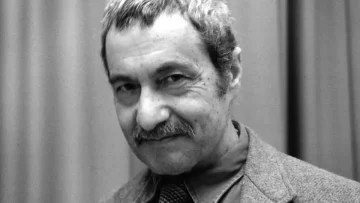
Parenti was well known for his sharp criticism of U.S. foreign policy and U.S. imperialism throughout his life, waking up many to the reality of it and the lies used to justify it.
This is best underscored in one of his last published articles, “Ukraine and Regime Change”, which was published in the book “Flashpoint In Ukraine: How the U.S. Drive for Hegemony Risks World War III”, where he predicted to a tee what the result of the 2014 U.S. backed coup in Ukraine would be. … continue
This site is provided as a research and reference tool. Although we make every reasonable effort to ensure that the information and data provided at this site are useful, accurate, and current, we cannot guarantee that the information and data provided here will be error-free. By using this site, you assume all responsibility for and risk arising from your use of and reliance upon the contents of this site.
This site and the information available through it do not, and are not intended to constitute legal advice. Should you require legal advice, you should consult your own attorney.
Nothing within this site or linked to by this site constitutes investment advice or medical advice.
Materials accessible from or added to this site by third parties, such as comments posted, are strictly the responsibility of the third party who added such materials or made them accessible and we neither endorse nor undertake to control, monitor, edit or assume responsibility for any such third-party material.
The posting of stories, commentaries, reports, documents and links (embedded or otherwise) on this site does not in any way, shape or form, implied or otherwise, necessarily express or suggest endorsement or support of any of such posted material or parts therein.
The word “alleged” is deemed to occur before the word “fraud.” Since the rule of law still applies. To peasants, at least.
Fair Use
This site contains copyrighted material the use of which has not always been specifically authorized by the copyright owner. We are making such material available in our efforts to advance understanding of environmental, political, human rights, economic, democracy, scientific, and social justice issues, etc. We believe this constitutes a ‘fair use’ of any such copyrighted material as provided for in section 107 of the US Copyright Law. In accordance with Title 17 U.S.C. Section 107, the material on this site is distributed without profit to those who have expressed a prior interest in receiving the included information for research and educational purposes. For more info go to: http://www.law.cornell.edu/uscode/17/107.shtml. If you wish to use copyrighted material from this site for purposes of your own that go beyond ‘fair use’, you must obtain permission from the copyright owner.
DMCA Contact
This is information for anyone that wishes to challenge our “fair use” of copyrighted material.
If you are a legal copyright holder or a designated agent for such and you believe that content residing on or accessible through our website infringes a copyright and falls outside the boundaries of “Fair Use”, please send a notice of infringement by contacting atheonews@gmail.com.
We will respond and take necessary action immediately.
If notice is given of an alleged copyright violation we will act expeditiously to remove or disable access to the material(s) in question.
All 3rd party material posted on this website is copyright the respective owners / authors. Aletho News makes no claim of copyright on such material.





 Aletho News
 Aletho News