US & South Korea to start massive joint military drills on April 1
RT | March 20, 2018
Following a months-long pause in military drills and despite a thaw in relations between Seoul and Pyongyang, South Korea and the US will resume joint military exercises on April 1, the Ministry of National Defense announced.
“The practice is slated to begin April 1, and it will be conducted on a similar size in previous years,” the Ministry of National Defense said, according to Yonhap.
The Pentagon confirmed the planned resumption of joint US-South Korean drills, noting that the exercises are expected to conclude toward the end of May.
“Secretary of Defense James N. Mattis and the Republic of Korea Minister of National Defense Song Young-moo have agreed to resume the annual combined exercises including Foal Eagle and Key Resolve which were de-conflicted with the schedule of the Olympic Games. The exercises are expected to resume April 1, 2018, at a scale similar to that of the previous years,” Pentagon spokesman Colonel Rob Manning said in a statement.
Furthermore, the US military noted that the North Koreans were notified about the drills by the United Nations Command. The Pentagon spokesman further added that the maneuvers have been long planned and are not a response to any specific North Korean action.
“Our combined exercises are defense-oriented and there is no reason for North Korea to view them as a provocation,” Lieutenant Colonel Christopher Logan, a Pentagon spokesman, said in a statement.
After North Korea stated its desire to seek rapprochement with its neighbor, Seoul managed to convince Washington to hold off the annual Key Resolve and Foal Eagle drills until after the Olympic and Paralympic Games in South Korea.
However, despite Pyongyang’s pledge to temporarily halt its missile testing, pending upcoming US-North Korean talks, the US has never made concessions to freeze its military drills with South Korea. On Monday, Logan clarified that the military exercise would involve about 23,700 US troops and 300,000 members of the South Korean military.
Following the latest round of negotiations with a high-level delegation from Seoul earlier this month in Pyongyang, Kim Jong-un sent Trump an invitation to discuss the prospects of improving bilateral ties face to face. After months of saber-rattling between the two leaders, Trump agreed to meet the North Korean leader “sometime” in May.
The US president’s readiness to hold discussions with the North came following reassurances by Seoul that Kim is “committed to denuclearization” of the Korean peninsula, which Washington has persisted on. To make negotiations possible Kim even “pledged” to refrain from any further nuclear or missile tests until talks with Trump take place. Surprisingly, the North Korean leader also allegedly showed understanding towards the US-South Korean drills, which have greatly contributed to the ongoing tensions in the region. The US, in return, offered no concessions or promises, insisting that harsh sanctions will remain until a verifiable agreement is reached.
North Korean Leader Wants Peace With US, Establish Diplomatic Ties – Reports
Sputnik – March 12, 2018
North Korea’s leader Kim Jong Un expressed willingness to sign a peace agreement with the United States as well as to establish diplomatic relations between the two countries, South Korean media reported Monday, citing a source at the South Korean presidential administration.
Kim spoke about the intention to normalize relations with Washington during a meeting with a South Korean delegation in Pyongyang, the Dong-A Ilbo newspaper reported.
The North Korean leader’s final goal is to sign a peace agreement with the United States and establish diplomatic ties, possibly including the opening of a US embassy in Pyongyang, according to the newspaper.
On Thursday, US President Donald Trump accepted the invitation to meet with Kim by the end of May following months of heightened tensions and exchanges of frequent military threats between the two leaders.Donald Trump said later that he expected “tremendous success” in solving the North Korean issue, saying that he expected Pyongyang to cease its ballistic missile and nuclear tests as well as denulearize.
Washington’s Moment of Truth For Korea Peace
Strategic Culture Foundation | 09.03.2018
US President Trump claims to be an imaginative deal-maker. We will soon see. His announcement this week that he is willing to meet North Korean leader Kim Jong-un for direct talks is stunningly good news.
The next few weeks will be make-or-break for a historic peace settlement to the decades-old Korean conflict. Washington’s next moves and words are crucial.
Kim made the offer in a letter to Trump conveyed by a South Korean delegation to Washington DC. Trump has responded positively, and a possible meeting is to take place in May. That would be the first time a sitting American president has ever met a North Korean leader.
Trump must forgo the temptation for macho posturing, and summon the maturity to act responsibly in the interests of regional and indeed world peace.
Washington bears a heavy responsibility for the conflict that has racked the Korean Peninsula since the 1950-53 civil war, in which the US backed its South Korean ally against the Communist North.
It is futile for American leaders to point the finger at Pyongyang as a “rogue state” while denying Washington’s own baleful role in the legacy of conflict and insecurity.
The quickening pace of inter-Korean peace diplomacy is a much welcome change from the war rhetoric that was endangering world security only a few months ago. This week it was reported that the North and South Korean leaders are ready to meet next month in what would be the biggest dialogue event in more than a decade for the Peninsula. Now President Trump has also agreed to talks with North Korea’s Kim.
North Korea’s reported willingness this week to freeze its nuclear weapons program is ground-breaking. It should be reciprocated by Washington moving, at long last, to sign an armistice to definitively end the 1950-53 Korean War.
North Korea – the Democratic People’s Republic of Korea – has long maintained, with sound reason, that its nuclear weapons program has been impelled by the existential fear of a US-led war being thrust on it. Given the horrendous devastation inflicted on the people of North Korea during the 1950-53 war in which millions died from American aerial bombing campaigns, it is incumbent on Washington to commit to a full peace treaty to finally and formally end that war. Why not?
If, however, Washington insists on unilateral North Korean disarmament then the prospect for a peaceful settlement is doomed.
It is counterproductive to look back at past failed negotiations with recrimination about one side or the other reneging on obligations.
Surely, the imperative of the present hour is to seize the opportunity for peace by both sides making a mutual commitment to resolving grievances through solely peaceful means.
This is the diplomatic process which Russia and China have been urging all sides to embrace. North and South Korean leaders have stepped up to the plate and shown an admirable willingness to engage in earnest dialogue.
Since the beginning of this year, North and South Korean delegates have held several rounds of sincere talks to find a way forward for the security and peace of all the Korean people who share the one Peninsular homeland. The results have been promising and underscore the vital need for mutual engagement.
It is evident from the respective leaderships in Pyongyang and Seoul that the people of Korea, North and South, yearn for a peaceful coexistence.
What the Trump administration needs to do is listen to the wishes of the Korean people. Washington’s bellicose rhetoric towards North Korea must be somehow replaced with humility to genuinely resolve the Korean conflict – a conflict which Washington is a protagonist in.
These are far from unreasonable demands on Washington, as several former American diplomats and leaders such as President Jimmy Carter have recognized and endorsed.
Washington is insisting on imposing new punitive sanctions on Pyongyang, as well as carrying out forthcoming military exercises which have continually offended North Korea’s national pride and security.
Washington is acting like the master of the situation issuing ultimatums instead of pursing diplomacy.
There is a pragmatic way forward to achieve a peaceful resolution over Korea. Russia and China must prevail on the US to meet its international obligations of peaceful diplomacy.
Is Washington a law-abiding peaceful state, as it so often claims to be, or is it a rogue state that sees itself above the law and international moral consensus? A moment of truth is at hand.
‘Truly Unprecedented’: High Level Inter-Korean Talks See Promising Start
Sputnik – 06.03.2018
On Monday, a South Korean delegation flew to Pyongyang to take part in a welcome banquet held by North Korean leader Kim Jong-un prior to talks expected to focus on bubbling tensions on the peninsula and the rocky relationship between North Korea and the US.
The South Korean delegation includes Chun Eui-yong, Seoul’s National Security Office director and Suh Hoona, the head of South Korea’s intelligence agency.
Speaking to Sputnik Radio’s Loud & Clear, Simone Chun, a fellow at the Korea Policy Institute and member of the Korean Peace Network, broke down the meeting and discussed what could blossom from it.
“We will have to wait and see, but so far it looks like even President [Donald] Trump is looking forward to talking to North Korea,” Chun told show hosts Brian Becker and John Kiriakou. “So if that is true, that probably sounds like we’re going to have brighter news than we’ve had in the last seven or eight years.”
“There were amazing pictures of the Korean delegate… they went to North Korea on a South Korean military aircraft… and the most interesting thing, truly unprecedented, is that they actually met with Kim Jong-un within three hours — that is truly something that has never happened before,” she added, before saying that “if all goes well I think we’re going to have some major breakthrough.”
Though Chun is hopeful that the talks will end on good terms, she admitted to Becker that at the end of the day nothing can be settled unless the US also signs off.
“It’s just a reality in international politics that without the US, nothing can be done. I think it’s very important to go step by step,” she said. “These guys are really truly experienced… they aren’t just inexperienced bureaucrats, they have years of experience in dealing with North Korea so I think that we really have a dream team.”
Chun believes that Pyongyang will likely use the talks as a way to “learn more about the Trump administration’s motives.”
“The most important thing is to end or reduce US hostility to North Korea… the bottom line is that if the United States can end its hostility toward North Korea, a foundational progress can be made.”
N. Korea says it has no need for nuclear weapons if it has security guarantee
RT | March 6, 2018
North Korea said it has no reason to possess nuclear weapons if it has a security guarantee, Seoul has confirmed, according to AP and Yonhap news agencies.
North Korea also pledged to freeze its nuclear-missile activities if it holds talks with the US. North Korea also pledged to freeze its nuclear-missile activities if it holds talks with the US.
Pyongyang and Seoul agreed to bilateral negotiations scheduled for next month, South Korean President Moon Jae-in’s top security adviser said, as quoted by Yonhap news agency. The leaders of both countries are expected to attend.
The gathering will be held at Panmunjom in the demilitarized zone, 53km north of Seoul, Chung said.
“The South and the North have agreed to set up a hotline between their leaders to allow close consultations and a reduction of military tension, while also agreeing to hold the first phone conversation before the third South-North summit,” he added.
The summit will be the third in the history of the split nation. Earlier on Tuesday, North Korean leader Kim Jong-un hosted a dinner with the delegation from Seoul which, according to state media, proceeded in a “sincere atmosphere.”
“Hearing the intention of President Moon Jae-in for a summit from the special envoy of the south side, [Kim Jong-un] exchanged views and made a satisfactory agreement,” North Korea’s official KCNA news agency reported.
While both Koreas are showing signs of coming closer, Washington keeps sending mixed messages over the deadlock. In a recent interview, US Secretary of State Rex Tillerson said he is open for talks with Pyongyang, yet issued a reminder that Washington will not deviate from the policy of using “a big stick.”
“We’re not using a carrot to convince them to talk, we’re using large sticks, and that is what they need to understand. This pressure campaign is having its bite on North Korea,” he said.
In February, Washington announced its largest package of sanctions in an effort to pressure North Korea into giving up its nuclear and ballistic missile programs. In a terser statement, US President Donald Trump warned of a possible “phase two” if sanctions imposed on Pyongyang do not have the desired effects.
Washington has been long rejecting a roadmap presented by Moscow and Beijing to bring some kind of solution to the Korean crisis. Dubbed a “double freeze plan,” the proposal envisioned US and its regional allies halting its drills in exchange for North Korea, stopping development of missiles and missile tests.
North Korea has been stressing that its strive for nukes is purely defensive, saying it feels provoked by the repeated war games Washington conducts on its doorstep.
Pyongyang Seeks to ‘Write New History’ of Korean Unification – State Media
Sputnik – 06.03.2018
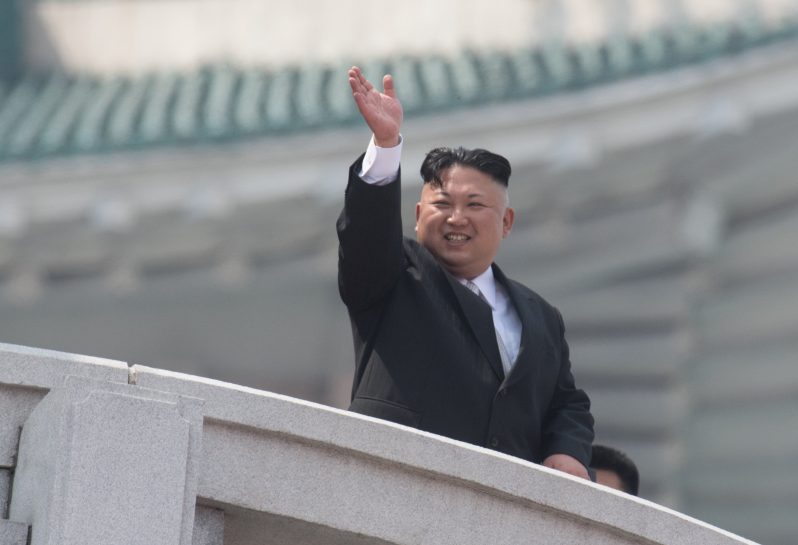
Shortly after Kim Jong-un hosted a high-level delegation of South Korean officials for dinner in Pyongyang on Monday, North Korean state media said the country’s leader intends to advance inter-Korean relations and make the story of Korean history a story of unification.
Kim “repeatedly clarified that it is our consistent and principled stand and his firm will to vigorously advance the North-South relations and write a new history of national reunification by the concerted efforts of our nation to be proud in the world,” according to North Korea’s Korea Central News Agency (KCNA).
The Yonhap news agency has reported that the main goal of South Korean President Moon Jae-in’s envoy to Pyongyang is to enable US-North Korea talks. Chung Eui-young, the head of South Korean national security, and Suh Hoon, Seoul’s spy chief, are among those who met with Kim.
Moon’s delegation hand-delivered a letter from the South Korean president addressing Kim. “Hearing the intention of President Moon Jae-in for a summit from the special envoy of the south side, he exchanged views and made a satisfactory agreement,” KCNA said. Further, the Pyongyang’s leader “gave the important instruction to the relevant field to rapidly take practical steps for it.”
“He [Kim] also made an exchange of in-depth views on the issues for easing the acute military tensions on the Korean Peninsula and activating the versatile dialogue, contact, cooperation and exchange,” KCNA added.
The United States and South Korea are in close contact regarding the inter-Korean talks that are currently underway, State Department spokesperson Katina Adams told Sputnik on Monday. “We are in contact with the Republic of Korea about our unified response to North Korea,” said Adams said.
Washington and Seoul will work together “through the maximum pressure of the campaign to ensure that North-South progress is accompanied by advances towards denuclearization.”
KCNA reports that the meeting was held in “a compatriotic and sincere atmosphere.”
South Korea ‘to send high-level delegation to North’
Press TV – March 4, 2018
South Korea has announced a decision to send a high-level political delegation to the North, raising hopes for a diplomatic solution to the decades-long conflict on the Korean Peninsula.
The South Korean presidential office announced on Sunday that a special 10-member government delegation was to visit North Korea on Monday.
“The special delegates will have extensive discussions over issues including creating conditions for North-US talks to denuclearize the Korean Peninsula and improving inter-Korea ties,” Blue House spokesman Yoon Young-chan told reporters.
The 10-member group comprises five top delegates, including top national security adviser Chung Eui-yong and intelligence chief Suh Hoon. It will fly to the North’s capital, Pyongyang, on Monday afternoon before returning on Tuesday, Yoon said.
The delegation will then fly to the US to brief officials in Washington, he added.
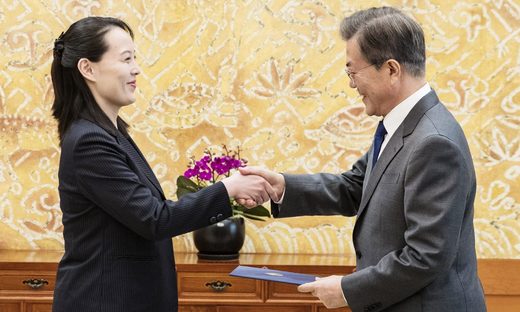
The move comes just weeks after the North’s leader Kim Jong-un sent a delegation to the South that included his younger sister, Kim Yo-jong.
During her stay, Kim Yo-jong personally delivered to South Korean President Moon Jae-in an invitation from her brother for a summit meeting in Pyongyang.
Peace advocate
President Moon, 65, who hails from the Democratic Party, rose to power last year vowing to ameliorate the broken ties between the two Koreas.
Last week, Moon advised US leaders to stop setting preconditions to hold talks with North Korea and make greater efforts for peace and stability. Washington needs to “lower the threshold for talks” with Pyongyang, he said.
On Saturday, a Foreign Ministry spokesman in Pyongyang called on the US to drop any precondition for talks.
“The US is taking preposterous action by continuing to trumpet an insistence that it will not have dialog unless a right condition is met,” the unnamed spokesman was quoted as saying by the state-run KCNA news agency.
The US, which has imposed many sanctions on Pyongyang, has said that North Korea should denuclearize in order for negotiations to begin.
Late last month, the US imposed the “toughest ever” sanctions on North Korea.
The sanctions were imposed shortly after athletes from the North and South marched together in a show of unity at the PyeongChang Winter Olympics, which ended February 25.
North Korea, for its part, says its nuclear arsenal is a deterrent against potential US aggression.
The US has substantial military presence in the region and has repeatedly threatened the North with military action.
Trump And Kim’s Tug-Of-War Over President Moon
By Andrew KORYBKO – Oriental Review – 03/03/2018
North Korea is reportedly willing to engage in talks with South Korea and the US.
The message was apparently conveyed after a high-level North Korean official met with the South Korean President, Moon Jae-In, who had previously campaigned on a promise to revive the so-called “Sunshine Policy” of some of his predecessors in actively seeking a rapprochement with Pyongyang. The course of developments in the 9 months since his election, especially regarding US actions towards North Korea and its preplanned calculated responses to it, made it almost impossible to advance this idea, but the recently concluded Pyeongchang Winter Olympics proved to be the perfect opportunity for breathing new life into this stalemated but nevertheless promising vision.
China and Russia previously proposed what they called the “Double Freeze” whereby the US and South Korea would indefinitely halt their joint military drills with one another in exchange for North Korea doing the same with its missile and nuclear tests. Washington took the first step in announcing the postponement of its planned exercises with Seoul, which created an amicable atmosphere for Pyongyang to do its part in making the Olympic Games a diplomatic success for everyone and infusing fresh optimism into the “Double Freeze” proposal. As could have been expected, however, the US recently said that it would be resuming its military games with South Korea and even deploying attack drones to the peninsula, which drew sharp condemnation from North Korea who accused America of endangering the incipient peace process.
Even so, this hasn’t yet resulted in any characteristically ostentatious moves from Pyongyang, which can be interpreted in one of two ways. The first is how Trump and his team are likely perceiving this, which is that North Korea is indicating its receptivity to talks from a position of weakness, especially after the US’ new sanctions against the country. The second, though, is more probable, and it’s that North Korea doesn’t want to be seen as being the first one to break the “Double Freeze” , especially since it’s betting that its recent “charm offensive” during the Olympics was enough to convince President Moon of Kim Jong-Un’s sincerity in holding talks with him.
Basically, the North Koreans are trying to deepen the divide between the US and their military allies in South Korea in an attempt to embolden Seoul to flex its independence and proactively take the initiative to further the positive gains achieved during the “Olympic Peace” and “Double Freeze”. Pyongyang has gone to great lengths to “humble itself” before the eyes of the world in presenting its peaceful intentions, which it’s hoping was successful in creating space for President Moon to once more try his hand at reviving the “Sunshine Policy”. Kim will try to encourage him, Trump will try to deter him, but what everything essentially comes down to is which of the two ultimately comes out on top in this tug-of-war over President Moon.
The post presented is the partial transcript of the CONTEXT COUNTDOWN radio program on Sputnik News, aired on Friday Mar 2, 2018.
South Korea’s Moon informs Trump of plan to send special envoy to North Korea
Press TV – March 1, 2018
South Korean President Moon Jae-in has told his American counterpart Donald Trump that he intends to send a special envoy to Pyongyang in response to an invitation by Kim Jong-un, the North’s leader, following the recent Olympic-driven detente between the two Koreas.
“In response to the visit by North Korea’s special envoy Kim Yo Jong, … Moon conveyed to Trump his plans to dispatch a special envoy to the North soon,” Seoul’s presidential office said in a statement on Thursday, following their phone conversation.
It added that Moon and Trump further “agreed to continue their efforts to maintain the momentum for South-North dialogue so it may lead to the denuclearization of the Korean Peninsula.”
The development came after Pyongyang, in a rare move, participated in the 2018 Winter Olympics held in South Korea, providing an opportunity for the two neighbors to resolve long-running hostilities. The two sides have exchanged diplomatic and high-level visits, and there is hope that relations could improve effectively.
The two neighbors have been separated by a heavily-militarized border since the three-year Korean War came to an end in 1953. The conflict ended with an armistice rather than a formal peace treaty and left many families separated on the two sides.
The situation on the Korean Peninsula has been tense due to Pyongyang’s development of its nuclear and missile programs.
Moon has sought to use the Pyeongchang Winter Olympics, which concluded on Sunday, to open dialogue between Washington and Pyongyang in the hopes of easing a nuclear standoff that has caused global security fears.
The South Korean leader said earlier this week that Washington needed to “lower the threshold for talks” with Pyongyang.
Furthermore, senior North Korean officials visiting the South for the Winter Olympics said on Sunday that Pyongyang was open to talks with Washington.
However, the US has ruled out any possibility of negotiations before the North, which last year conducted multiple missile and nuclear tests, takes steps towards denuclearization.
The US and its allies in the West and in Asia engineered tough UN sanctions on North Korea last year when Pyongyang test-fired two missiles in July and then carried out its most powerful nuclear test in August.
However, many said the sanctions would not deter North Korea from pursuing its nuclear and missile program, which Pyongyang insists is part of its defense policy against the US. Critics have repeatedly warned that sanctions would more affect North Korean people rather than its military and the government.
Featured Video

Yemen joins the war – Red Sea could be blocked next – Saudi regime at risk
or go to
Aletho News Archives – Video-Images
From the Archives
Should Europeans ‘Thank’ the Americans for Destroying Nord Stream?
By Robert Bridge | Strategic Culture Foundation | September 29, 2022
With an investigation continuing into the destruction of the Nord Stream gas pipeline that provided energy supplies to Europe from Russia, there appears to be just one prime suspect, and that should surprise nobody.
Following the sabotage of the Nord Stream 1 and 2 gas pipelines, former Polish Foreign Minister Radoslaw Sikorski already seemed to know the identity of the perpetrator when he tweeted out: “Thank you, USA.”
At first glance, it seemed that Sikorski was speaking sarcastically, berating Washington for carrying out an attack that will have severe repercussions for the people of Europe. After all, how could anyone see any good coming from the termination of Europe’s primary source of gas reserves with winter just around the corner? It was Sikorski’s homeland of Poland, after all, that urged its citizens to collect firewood in the face of dwindling gas reserves.
In fact, the Polish diplomat was speaking one-hundred percent literally… continue
Blog Roll
 Aletho News
- US should start removing its troops for Germany, proposes AfD co-leader Chrupalla
- Iran Red Crescent: 600 educational centers attacked in US-Israeli ‘war crimes’
- Russian Oil Tanker Arrives in Cuba Amid U.S. Blockade
- America Racing to Strategic Defeat in Iran: Lt Col Daniel Davis
- FTC Warns Visa, Mastercard, PayPal, Stripe Over Political Debanking
- Russian tanker approaches Cuba despite US oil blockade
- Marandi: Yemen joins the war – Red Sea could be blocked next – Saudi regime at risk
- Pro-Palestinian French member of European Parliament denied entry to Canada
- Pakistan to Host US-Iran Talks
- How Indonesia’s tilt toward the US left it stranded in the Strait of Hormuz
- If Americans Knew
- Israeli police block Catholic cardinal from entering Church of the Holy Sepulchre on Palm Sunday
- Israel is assassinating journalists again, more than any other nation, anywhere, ever – Not a ceasefire Day 170
- Over 300 US service members wounded, majority have brain injuries – Not a ceasefire Day 169
- Researchers at Human Rights Watch Resign Over Blocked Report on Palestinian Refugee Return
- Jewish Groups Are Backing a War Americans Don’t Want
- Eric Fingerhut Thinks He’s the President of the Jews
- Top Jewish Philanthropists, Rabbis Urge Israeli President to Take Action Against ‘Jewish Extremists’
- Don’t Be Fooled. Zionist Leaders Have Always Wanted to Control Southern Lebanon
- Israel’s widespread use of torture is a core element of its genocide against the Palestinian people
- In Israel’s War on Iran, Many Middle East US Bases Rendered “All But Uninhabitable”
- No Tricks Zone
- New Study Finds Warming Saves Lives…Cold Temperatures 12 Times More Deadly Than Excess Heat
- German Science Blog Accuses PIK Climate Institute Of Hallucinating Climate Tipping Points
- Devastating Assessment Of Comirnaty Vaccine By Former Senior Pfizer Europe Toxicologist
- New Study: CO2 Is ‘Effectively Negligible’ As An Explanatory Climate Change Factor Since 2000
- Former Pfizer Toxicologist Dr. Helmut Sterz Tells Bundestag Hearing Pfizer Vaccine Should Have Never Been Approved
- Energy Expert: Germany’s Nuclear Phaseout Was A “500 Billion Euro Mistake”
- New Research: South Australia’s Mid-Holocene Sea Surface Temperatures Were 4°C Warmer Than Today
- Storing Green Energy To Last Germany 10 Days Would Require A 60-Million Tonne Battery
- New Studies: UK Sea Levels Were 4 Meters Higher Than Today During The Mid-Holocene
- Destructive Green New Deal: German Energy And Metal Group Warns Of Drastic Crisis
 Aletho News