Do anti-depressants work?
By Sebastian Rushworth, M.D. | April 30, 2021
Anti-depressant drugs are common. Very very common. According to the Centers for Disease Control in the United States, 13% of adults reported taking an anti-depressant when surveyed a few years ago. Among women over the age of 60, almost one in four was taking an anti-depressant!
When I work in the hospital, I frequently see elderly people who are on five, ten, fifteen, or even twenty drugs simultaneously. Invariably, one or more of these drugs is an anti-depressant. This absurd overuse of medications, an issue known as polypharmacy, is one of the biggest health problems facing elderly people today. Anti-depressants are one of the main drug classes contributing to polypharmacy.
With so many people taking anti-depressants, you would think that they must at the very least be effective. And safe. Why else would so many millions of people be taking them on a daily basis? Why else would doctors prescribe them so freely?
The most commonly prescribed type of anti-depressant is the selective serotonin reuptake inhibitor (SSRI). Examples of this type of drug include sertraline (a.k.a. zoloft), escitalopram (a.k.a. cipralex), and fluoxetine (a.k.a. prozac). SSRI’s increase serotonin signalling in the brain, which is hypothetically a good thing for people who are depressed. They are generally considered to have the best balance of efficacy and safety of any anti-depressant drug, which is why they are the first line therapy.
So, how effective are SSRI’s at treating depression?
A systematic review and meta-analysis was published in BMC Psychiatry in 2017 that sought to answer this question. The review was funded by the Danish government. It identified 131 randomized placebo-controlled trials investigating SSRI’s as a treatment for depression in adults, with a total of 27,422 participants, and meta-analyzed them (i.e. added all their results together to create one big “meta” trial – this gives a more reliable result than the individual trials can provide).
Before we get in to the results, we need to quickly discuss the Hamilton Rating Scale for Depression (HDRS). The HDRS is the scale most commonly used to assess severity of depression in studies, and also to assess how the severity changes over time. It is a 52 point scale, so a score of 52 is as bad as it can get. A score below eight is considered normal (i.e. not depressed). 8 to 13 is considered to be “mild” depression. 14-18 is considered to be “moderate” depression. 19-22 is considered to be “severe” depression, and anything from 23 and up is considered to be “very severe” depression.
The authors of the review decided, before analyzing the data, that anything less than an average reduction of three points on the scale would be considered a negative result. Personally I think that this is a bit generous. I find it hard to believe that anyone would be able to notice a three point reduction on a 52 point scale. I would have set the threshold higher, at more like six points at the very least. One article published back in 2015 came to the conclusion that people are unable to detect anything less than a 7 point difference on the 52 point Hamilton scale. But as we shall soon see, setting the threshold higher wouldn’t have made a difference anyway. So, let’s get to the results.
Overall, SSRI’s resulted in a 1.94 point greater reduction on the 52 point HDRS scale than placebo. Even when only trials of people with very severe depression (a score of 23 or higher) were included, the improvement over placebo was still only 2.69 points.
So, SSRI’s were not able to get over even the generously low bar set by the reviewers. And let’s remember that most of the studies included in the analysis were industry funded, and industry funded studies usually show a bigger benefit than is seen in reality, so it is likely that the real effect is even smaller than was found in the systematic review.
In other words, SSRI’s are not effective as anti-depressants. Considering that they are currently the first line drug therapy for depression, that would seem to be quite a big problem. And before you suggest that we should use non-SSRI anti-depressants instead, like for example tricyclics, I would note that these have not been shown to be markedly more effective than SSRI’s in head-to-head comparisons. Otherwise we’d be using them as the first line therapy, not SSRI’s.
What about safety? Did SSRI’s cause any serious adverse events?
2.7% of participants in the SSRI arm developed a serious adverse event, as compared with 2.1% in the placebo arm. That is a 0.6% absolute difference, which would mean that roughly one in 170 people treated with an SSRI will suffer a serious adverse event as a result of the treatment. Note that the definition of a serious adverse event is an event that causes death, significant risk of death, disability, and/or hospitalization. In other words, “serious” is serious. So even a small increase in serious adverse events is something that needs to be taken quite, well, seriously.
Medical treatments should ideally result in a decrease in serious adverse events. They certainly should not cause an increase. A truly effective anti-depressant would not just make people feel better, it would also make them less likely to try to commit suicide, which would result in an overall reduction in serious adverse events. No such signal was seen here. Even if you look just at suicide attempts, rather than at adverse events overall, there was no signal that SSRI’s decrease their frequency.
Note that the trials in the review were generally of healthy people under 65 years of age. Frail elderly people treated with SSRI’s will likely experience serious adverse events at a much higher rate than that found here.
Speaking of frail elderly people, in particular those living in nursing homes, I want to take the opportunity to point out that they are frequently the heaviest users of anti-depressants. So you would think that there would be a lot of research showing that anti-depressants are useful to give to the frail elderly… Well, having seen that the evidence doesn’t support using anti-depressants in younger people, you might be a bit skeptical by now. A systematic review was published in the Journal of the American Medical Directors Association in 2012, that sought to determine how beneficial anti-depressants are when used as a treatment for depression in people over the age of 65 who are living in nursing homes. The review was funded by the US government.
Two(!) randomized controlled trials were identified that compared anti-depressants with placebo in nursing home residents, with a total of 55(!) participants. It’s pretty shocking that the evidence base is so small, when you consider that nursing home residents are such heavy user of anti-depressants. Basically, when we (doctors) use these drugs on elderly nursing home residents, we have pretty much zero idea what we’re doing, because there is so little evidence.
Neither of the two trials found any benefit to treating nursing home residents with anti-depressants (although to be fair, they were so small that I wouldn’t have expected them to find anything – they were statistically underpowered). The number of participants was far too small to gain any kind of estimate of the prevalence of serious adverse events, although I think it’s fair to assume, as mentioned above, that it would be much higher in this group than in the younger healthier group included in the studies in the previous review.
I’m mainly bringing this tiny systematic review up to illustrate how atrociously small the knowledge base often is when it comes to the effects of drugs on the frail elderly.
What conclusions can we draw these systematic reviews?
Anti-depressant drugs are ineffective against depression. The harms of these drugs clearly outweigh the practically non-existent benefits. That is true for everyone, but especially so for the frail elderly who are at much higher risk of side effects than the general population. In light of this information, which has now been in the public domain for at least a few years, you would expect large campaigns to get doctors to stop prescribing these drugs. Funnily enough, that hasn’t happened yet.
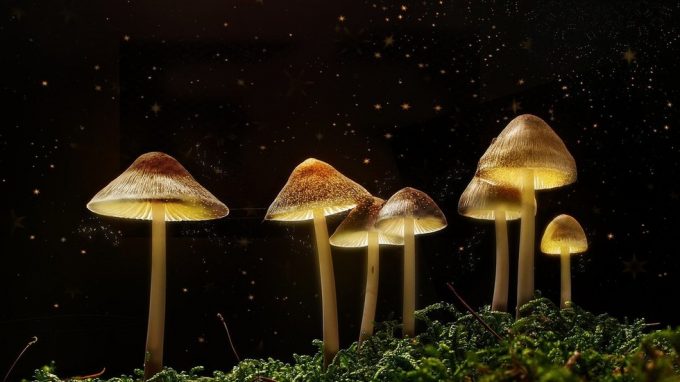
Magic mushroom treatment on par with pharma drugs for combating depression, study finds
RT | April 15, 2021
In a small phase two trial, Imperial College researchers have found that psilocybin, the active ingredient of magic mushrooms, is at least as effective as pharmaceutical medication at treating depression.
In their admittedly small scale study, some 59 volunteers with depression were split into two groups.
One group was given a daily dosage of the widely used antidepressant escitalopram (AKA Lexapro, Cipralex, and others). They were also administered very weak doses of psilocybin twice, three weeks apart, over the course of the study.
The second group received much stronger doses of psilocybin, with a placebo instead of antidepressant medication.
After six weeks, the self-reported results from the patients suggested the psilocybin was just as effective as the pharmaceutical, and in many cases showed a slightly bigger – but ultimately statistically insignificant – improvement in symptoms.
The research team, led by Imperial College London neuroscientist Robin Carhart‑Harris, also highlighted the limited timeframe of the study as playing an important factor in the results, and suggested that a longer study might yield different results, possibly favouring pharmaceutical intervention.
The scientists were also quick to highlight the importance of guided psychotherapy to manage any hallucinatory experiences among the trial volunteers, lest members of the public attempt to self-medicate.
“We strongly believe that the … psychotherapy component is as important as the drug action,” Carhart-Harris said.
“With a psychedelic it is more about a release of thought and feeling that, when guided with psychotherapy, produces positive outcomes.”
Some five patients taking the SSRI stopped or reduced their doses due to negative effects, but none in the psilocybin group did. Furthermore, volunteers with a family history of psychosis were excluded from the trial, which may have tipped the results positively in favour of the psychedelic intervention.
Previous research has found that psilocybin treatment had fewer side effects and had an almost immediate impact compared with common antidepressant medication, such as selective serotonin reuptake inhibitors (SSRIs).
SSRIs are often perceived to blunt emotional response, whereas the psilocybin had the opposite effect, according to fMRI scans which showed an apparent increase in emotional connections within the patients’ brains.
There are often a slew of side effects associated with SSRIs, ranging from lethargy and mood swings to so-called ‘brain zaps’, or the sensation of electrical shocks in the brain associated with the use (or discontinuation) of the medication.
SSRIs also typically have a lead time of up to six weeks to reach full effect, while ongoing side effects which can persist beyond this initial phase include insomnia, weight gain, and persistent fatigue, among others.
Further, the efficacy of such antidepressants can wane for some patients over time, so breakthroughs in the field of psychedelic treatments may provide huge relief for patients with adverse reactions to the more common interventions – though it is still too early to make any sweeping assertions about psilocybin treatments among the wider populace.
Still, with an estimated 800 million people with mental health disorders worldwide, new treatment options could soon be available.
Featured Video

Yemen joins the war – Red Sea could be blocked next – Saudi regime at risk
or go to
Aletho News Archives – Video-Images
From the Archives
A superpower and “the world’s sickest warrior state”
By Paul J. Balles | March 8, 2010
Living through five or six major wars has hardened me to what I thought were the extremes of inhuman cruelty and brutality.
Two things made those extremes almost bearable: the brutality always revealed – at least according to the media coverage – the viciousness of the enemy. It was therefore quite understandable when our “brave men and women” pulverized the enemy.
Films of Japanese torturing captive Americans somehow justified holding Japanese Americans in internment camps during World War II; and only a small percentage of Americans found the bombing of Hiroshima and Nagasaki unreasonably vengeful at best, at worst, depraved.
The media giants in America portrayed the North Koreans as barbaric beasts with their captives, quite unlike their southern counterpoints – our allies during the Korean War. No one ever felt the need to explain how the South Koreans were a civilized breed while the North Koreans were absolute savages, at least according to the official line.
In Vietnam, our warriors justifiably (or so the media made us believe) dropped napalm on the North Vietnamese who had the gall to hide in villages and tunnels to ravage our invaders. At least it was accepted practice until some rogue photojournalist filmed a young girl screaming down a Vietnamese road in flames. … continue
Blog Roll
 Aletho News
- Russian tanker approaches Cuba despite US oil blockade
- Marandi: Yemen joins the war – Red Sea could be blocked next – Saudi regime at risk
- Pro-Palestinian French member of European Parliament denied entry to Canada
- Pakistan to Host US-Iran Talks
- How Indonesia’s tilt toward the US left it stranded in the Strait of Hormuz
- US has no choice but to retreat from Iranian borders: Top commander
- Iran Retaliation Strikes Chemical Plant Near Dimona
- AWACS’ Destruction is a Major Loss for US Military – Ex-DoW Analyst
- Israel’s Iran Strategy Uses US Military & Gulf States as Its Pawns
- Iran: Trump wanted regime change, now just begging for Hormuz to open
- If Americans Knew
- Israeli police block Catholic cardinal from entering Church of the Holy Sepulchre on Palm Sunday
- Israel is assassinating journalists again, more than any other nation, anywhere, ever – Not a ceasefire Day 170
- Over 300 US service members wounded, majority have brain injuries – Not a ceasefire Day 169
- Researchers at Human Rights Watch Resign Over Blocked Report on Palestinian Refugee Return
- Jewish Groups Are Backing a War Americans Don’t Want
- Eric Fingerhut Thinks He’s the President of the Jews
- Top Jewish Philanthropists, Rabbis Urge Israeli President to Take Action Against ‘Jewish Extremists’
- Don’t Be Fooled. Zionist Leaders Have Always Wanted to Control Southern Lebanon
- Israel’s widespread use of torture is a core element of its genocide against the Palestinian people
- In Israel’s War on Iran, Many Middle East US Bases Rendered “All But Uninhabitable”
- No Tricks Zone
- German Science Blog Accuses PIK Climate Institute Of Hallucinating Climate Tipping Points
- Devastating Assessment Of Comirnaty Vaccine By Former Senior Pfizer Europe Toxicologist
- New Study: CO2 Is ‘Effectively Negligible’ As An Explanatory Climate Change Factor Since 2000
- Former Pfizer Toxicologist Dr. Helmut Sterz Tells Bundestag Hearing Pfizer Vaccine Should Have Never Been Approved
- Energy Expert: Germany’s Nuclear Phaseout Was A “500 Billion Euro Mistake”
- New Research: South Australia’s Mid-Holocene Sea Surface Temperatures Were 4°C Warmer Than Today
- Storing Green Energy To Last Germany 10 Days Would Require A 60-Million Tonne Battery
- New Studies: UK Sea Levels Were 4 Meters Higher Than Today During The Mid-Holocene
- Destructive Green New Deal: German Energy And Metal Group Warns Of Drastic Crisis
- New Study Documents A 20-Year Pause In Arctic Sea Ice Decline – Driven By Internal Variability
 Aletho News