Have Lockdown Sceptics Won the Argument?
By Edward Chancellor | The Daily Sceptic | January 25, 2022
Now that Covid restrictions are being rolled back, various commentators are declaring victory over the miserable virus. Lockdowns, we are told, worked. Only a fool could argue otherwise.
Devi Sridhar, the Chair of Global Public Health at Edinburgh University, who was formerly an exponent of the Zero Covid strategy of completely eradicating the virus, has recently announced in the Guardian that “delaying and preventing infection as much as possible through this pandemic was a worthwhile strategy. In early 2020, there were few treatments, limited testing and no vaccines. The costs of those lockdowns were big, but the effort to buy time paid off”.
At the other end of the political spectrum, Tom Harwood of GB News says much the same. Lockdown sceptics, he writes in CapX, are “bizarrely claiming victory now that restrictions are coming to an end”. The sceptics, Harwood asserts, ignore the success of vaccines. “There is a blindingly obvious distinction between the need for non-pharmaceutical interventions amongst a non-immune population, verses [sic] one with incredibly high levels of immunity.” He points to a lower death toll from the Omicron variant which appeared after the “stupendously successful vaccine rollout”. In conclusion, Harwood writes that to “deny lockdowns worked to reduce spread is to deny logic”.
Let’s examine the logic. If lockdowns bought time for the rollout of vaccines, then we would expect fewer Covid deaths in places that locked down early and fast. That is the case in Australia and New Zealand, which early in the pandemic sealed their borders against the virus. But the trouble with this policy, as our Antipodean friends are discovering, is the difficulty of exiting. Their policy of national self-isolation has lasted nearly two years, and continues in large measure even after most of their population has been vaccinated.
By contrast, in Europe there is no evidence that lockdowns significantly reduced Covid deaths. Sweden, which never locked down, has the same number of deaths per million as Austria, which did (see chart below). It’s true that Swedish deaths ran higher somewhat earlier than Austria, but this ‘bought-time’ doesn’t appear to have changed the final tally.

The evidence from the United States points to a similar conclusion: the Covid death rate (as a share of the population) in Florida, which largely avoided lockdowns, is slightly below the U.S. national average and far below that of New York, which had (and continues to impose) relatively tough restrictions.
It’s true that mass vaccination has reduced the risk of hospitalisation and death from Covid. But lockdown exponents imply that vaccines alone are responsible for the decline in the infection fatality rate. The evidence from South Africa, whose vaccination rate is around a quarter of the European average (49 doses per 100 people versus 180, or 27%), suggests otherwise.
It appears that either Covid has evolved to become less virulent, as the South African doctors suggested back in December, or South Africa’s population has built up strong natural immunity from prior infection – a possibility overlooked by most commentators. It seems likely that both factors have played a role in reducing the virulence of the disease. Even if lockdowns had succeeded in reducing Covid deaths until the vaccine rollout that wouldn’t necessarily justify their imposition. From the start, lockdown sceptics were concerned about the collateral damage caused by closing down the economy, shuttering schools, neglecting conventional health care and forcing people to isolate in their homes for months on end. They railed in vain against the cruelty of lockdowns: mothers giving birth alone, old people dying alone or left for months without visitors in nursing homes, the damage to children’s education, funerals unattended, small businesses crushed and so forth. Finally, the public appears to be waking up to these cruelties. Hence, the fury at the hypocrisy of Downing Street officials who imposed harsh rules for the nation which they didn’t scrupulously follow themselves.
Then there are lockdown’s immense financial costs. At the time, these could be ignored since governments financed them with interest-free loans from central banks. But all that money-printing is now fuelling inflation that will lead to further immiseration in the coming years. The sceptics argued that lockdowns were never subject to a proper cost-benefit analysis which took social and economic costs into account. That remains the case. Thus, not only has there been no ‘victory’ in the war on Covid – on the contrary, the highly contagious Omicron variant appears to be overcoming all attempts to constrain it – but the argument over lockdowns has yet to be decisively won by either side, so that lockdowns are either accepted as a tool of sound public health policy or roundly condemned as a colossal mistake. The sceptics’ work continues.
Edward Chancellor is a financial journalist and the author of Devil Take the Hindmost: A History of Financial Speculation (1998).
Uninvited foreign troops must leave, African nation says
RT | January 24, 2022
Denmark must “immediately withdraw” some 90 troops it deployed to Mali last week “without [the government’s] consent and in violation of the protocols” allowing European nations to intervene in that African country, the government in Bamako said on Monday.
Some 91 Danes from the Jaeger Corps special forces arrived in Mali on January 18, as part of Task Force Takuba, a French-led counter-terrorism mission in the West African country. According to the Danish defense ministry, their job will be to reinforce the border with Niger and Burkina Faso, train Malian Armed Forces, and provide medical services to the peacekeepers.
While the government of Mali is grateful to “all its partners involved in the fight against terrorism,” it stressed “the need to obtain the prior agreement of the Malian authorities” before sending any troops to the country, says the communique signed by Colonel Abdoulaye Maiga, spokesman for the Ministry of Administration and Decentralization.
Announcing the deployment of the force last week, the government in Copenhagen said it had been scheduled in April 2021, as France sought to withdraw some of its troops from Mali.
Their objective was “to stabilize Mali and parts of the border triangle between Mali, Niger and Burkina Faso, and to ensure that civilians are protected from terrorist groups,” the Danish military said.
The Jaegers are also experienced in “training and educating” local militaries, a job they have previously performed in Afghanistan and Iraq. They were sent shortly after Sweden withdrew its contingent from Mali. The French-led operation also involves forces from Belgium, Czechia, Estonia, Hungary, Italy, the Netherlands, Portugal and Sweden.
Task Force Takuba has operated in Mali since March 2020, when Paris decided to wrap up the previous Operation Barkhane. France has maintained a military presence in its former West African colony since 2013, to help the government in Bamako deal with a Tuareg rebellion in the northwest of the country and subsequent terrorist insurgency loyal to Islamic State (IS, formerly ISIS).
Relations between Bamako and Paris have grown chilly since the latest military takeover in Mali in 2021, and France has since closed three of its military bases there, in Kidal, Tessalit, and Timbuktu.
Sweden to tackle “misinformation” by “psychological” means but insists it’s not the “Ministry of Truth”

By Christina Maas | Reclaim The Net | January 7, 2022
Sweden is taking a new approach to fight “misinformation.” The government launched the “Psychological Defence Agency” which they say will fight misinformation, propaganda, and psychological warfare.
The mission of the new agency will be identifying misinformation and “educating” the community to be resilient against harmful misinformation campaigns. The agency is headed by Henrik Landerholm, a diplomat, The Record reported.
Landerhom was interviewed by a Swedish radio station after the announcement of the agency, where he said nations like China, Iran, and Russia are sources of misinformation campaigns in Sweden. He singled out Russia for its attempt to interfere in US elections.
Swedish leaders have previously warned about the ever-growing “threat” of misinformation. In the nation’s recent elections, Russia was accused of attempting to interfere, which led to a coordinated effort to fight misinformation campaigns.
The efforts included training thousands of public officials on how to respond to false information and working with social media companies and journalists to curb its spread. These efforts inspired the creation of the new agency.
During the interview, Landerholm insisted that work of the new agency is not a form of government propaganda.
“This is not the Ministry of Truth or a State Information Board like we had during the Cold War,” Landerholm said. “We want to protect freedom of opinion in our country.”
Sweden and Germany: No Deaths In Children Due to Covid
BY PAUL ELIAS ALEXANDER | BROWNSTONE INSTITUTE | DECEMBER 8, 2021
The decision by parents to vaccinate their child against Covid is really a question of risk management. Parents must seriously consider that Covid-19 is a less dangerous illness for children than influenza. It has shown to be so and quite stably near 20 months now.
Children do not readily acquire this pathogen, spread to other children, spread to adults, take it home, get severely ill, or die from it. It is that simple. We know children tend not to transmit Covid-19 virus and that the concept of asymptomatic spread has been questioned severely, particularly for children.
Children, if infected, just do not spread Covid-19 to others readily, either to other children, other adults in their families or otherwise, nor to their teachers. This was demonstrated elegantly in a study performed in the French Alps. The pediatric literature is clear science on this. Overwhelming data shows that the SARS-CoV-2-associated burden of severe disease or death in children and adolescents is very low (statistically zero).
Swedish data by Ludvigsson reported on the 1,951,905 children in Sweden (as of December 31, 2019) who were 1 to 16 years of age who attended school with largely no lockdowns or masks. They found zero (0) deaths. “Despite Sweden’s having kept schools and preschools open, we found a low incidence of severe Covid-19 among schoolchildren and children of preschool age during the SARS-CoV-2 pandemic.”
A recent German study (collating evidence from three sources 1) a national seroprevalence study (the SARSCoV-2 KIDS study), 2) the German statutory notification system and 3) a nationwide registry on children and adolescents hospitalized with either SARS-CoV-2 or Pediatric Inflammatory Multisystem Syndrome (PIMS-TS)) reported that there were zero (0) deaths in children 5 to 18 years old across the period of study.
Governments and public health officials have driven this pandemic of fear and propaganda. But parents willing to assess this purely from a benefit versus risk position might ask themselves: ‘If my child has little if any risk, near zero risk of severe sequelae or death, and thus no benefit from the vaccine, yet there could be potential harms and as yet unknown harms from the vaccine (as already reported in adults who have received the vaccines), then why would I subject my child to such a vaccine?
And in the presence of the potential risks, as well as the fact that a vaccine for Covid-19 is simply not indicated in children, why would a parent allow their child to be vaccinated with still-experimental vaccines? The children should live normally, free, and if exposed to SARS-CoV-2 we can rest assured that in the vast majority of cases, they will have no to only mild symptoms while at the same time developing naturally acquired immunity, and harmlessly; an immunity that is definitely superior to that which might be caused by a vaccine.
The innate immunity in children that they come with and which works to protect them will work here and has worked here wonderfully (innate antibodies and NK cells, as well as other components of the innate immune compartment). This approach would also accelerate the development of the much needed herd immunity about which much has been written.
In addition to concerns related to immediate or long-term sequelae of the new mRNA vaccines in children, there is clear data suggesting that the vaccines might not be as effective against infection and spread as initially reported.
We also have reports of the vaccinal antibodies functioning to suppress the innate antibodies (potentially devastating for children who depend on these as their first line of defense) and outcompeting them given the vaccine antibodies are specific and have high affinity for their antigen, while innate are non-specific and with low-affinity. This is a huge problem, especially if the vaccinal immunity outcompetes the naturally acquired immunity antibodies, etc.
So why are we rushing to vaccinate our children? Drs. Fauci of NIAID, Walensky of CDC, and Francis Collins of NIH are reckless here with the vaccine developers e.g. Pfizer and Moderna, for they know these vaccines lack the proper safety testing and we do not know what will happen to children long-term.
This really is about risk management decisions we as free people (as parents) are presumably allowed to make in the USA. This is not only about science. Remember also, children cannot give proper informed consent e.g. an 8-month-old, a one-year-old.
This is a very important ethical matter. The death rate in children e.g. under 12, is as close to zero as we can get. None of the lockdown and school closure policies worked and all have failed with crushing harms on populations.
We have masked our children, closed schools, locked them down, driven surges in suicides in adults as well as our children due to these policies, and now we seek to vaccinate children with a vaccine for which we have no data on the long-term harms. Is there any wonder why there is a loss of trust and why parents might be reluctant to comply with every edict being issued by governments concerning health?
Dr Alexander holds a PhD. He has experience in epidemiology and in the teaching clinical epidemiology, evidence-based medicine, and research methodology.
Another major red flag about Covid vaccines and death
By Alex Berenson | Unreported Truths | November 18, 2021
People appear to die at rates 20 percent or more above normal for weeks after receiving their second Covid vaccine dose, according to data from a huge Swedish study.
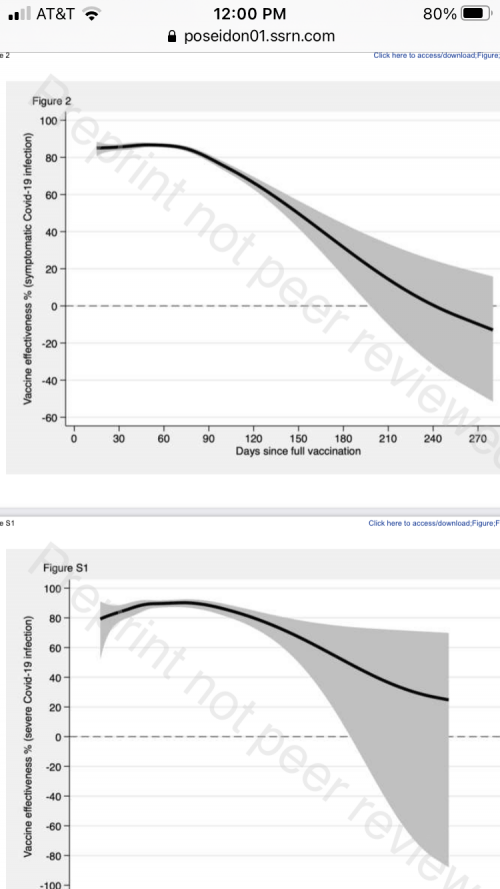
The figures are buried in a preprint paper on vaccine effectiveness released last month. The headline finding of the paper was that protection against Covid, including severe cases, plunged after six months.
The researchers did not explicitly examine deaths from all causes – which have risen since the summer in many countries that have highly vaccinated populations.
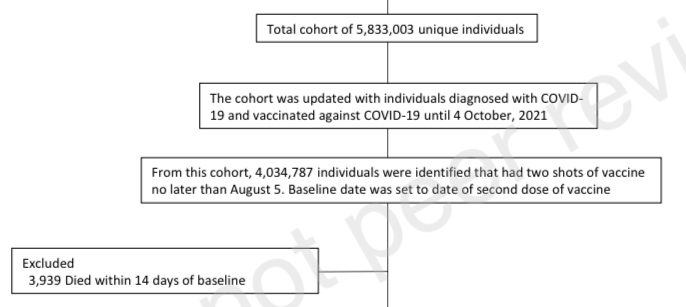
But on page 32 of the 34-page report, a chart shows that 3,939 of 4.03 million Swedes who received the second dose died less than two weeks later.
(SOURCE: https://papers.ssrn.com/sol3/papers.cfm?abstract_id=3949410)
Over a one-year period, that rate of death would translate into an annual mortality rate of about 2.5 percent a year – 1 person in 40 – almost three times the overall Swedish average. In a typical year, about 1 in 115 Swedes dies.
Of course, that huge gap does not account for an important confounding factor: younger people, who have a much lower risk of death, were less likely to be vaccinated.
But Sweden also provides detailed data on overall deaths nationally, making a crude baseline comparison possible.
That data shows that from an average of about 1,650 Swedes died every week between 2015 and 2019 between April 1 and early August, the period in which almost all of those 4 million Swedes in the study received their second dose. Death rates hardly varied over those years.
(SOURCE: https://www.scb.se/en/finding-statistics/statistics-by-subject-area/population/population-composition/population-statistics/)
In other words, during the spring and summer, Sweden normally has about 3,300 deaths every two weeks – not just in the people who received vaccines, but in all 10.6 million of its people.
So let’s make an incredibly conservative assumption, one that strongly favors the vaccines. (The next couple paragraphs are a bit tricky, but I hope the payoff is worth taking the time to read and think through them.)
Assume that the group of people who received vaccines were so much older and unhealthier than those who didn’t that they would have accounted for every single death in Sweden whether or not they were vaccinated. In other words, assume that even if the vaccines did not exist, every person in Sweden who died would have been part of that group of 4.03 million people the researchers tracked – while not one other person would have died.
In that case, those 4.03 million people “should” have about 3,300 deaths every two weeks. They CANNOT HAVE MORE – because all of Sweden does not have more.
But the vaccines do exist. Those 4.03 million people received them. And in the two weeks after receiving the second vaccine dose, as a group, the researchers reported they had not about 3,300 deaths, but 3,939.
And 3,939 deaths is about 20 percent more deaths than “should” have occurred in those two post-vaccine weeks. Again, the 20 percent figure understates the real gap, because in the real world some deaths will occur in the 6.6 million unvaccinated people too, so the actual baseline number for the vaccinated group is not 3,300 deaths but somewhat lower.
Unfortunately, the researchers did not report any details on the deaths, so it is impossible to know if they are disproportionately cardiovascular. It is also impossible to know whether one particular vaccine was disproportionately linked to deaths. (Sweden used mostly the Pfizer mRNA vaccine, as well as some of AstraZeneca’s DNA/AAV vaccine, which is not available in the United States, and a small amount of Moderna’s mRNA vaccine.)
Of course, it is just possible the extra deaths are due to chance. Or that the handful of elderly Swedes who received vaccines in February and March accounted for a hugely disproportionate number of the post-vaccine deaths. (Because per-week Swedish death rates are higher in the winter, a large number of post-vaccine deaths in those months would somewhat reduce the strength of the signal, though it would still exist.)
But the caveats aside, the Swedish figures offer a very large real-world dataset apparently showing a notable increase in all-cause mortality directly following Covid vaccination.
They are yet another piece of evidence in an increasingly worrying picture – alongside case and anecdotal reports, a known link to heart inflammation in young men, the updated Pfizer clinical trial data revealing a numerical imbalance in deaths in vaccinated people, and most importantly the general rise in all-cause mortality in many countries.
And all of these red flags come for vaccines that – if the Swedish data are correct – may actually raise the risk of Covid infection after about eight months.
Yes, RAISE. See how that black line drops below the zero level on the top chart? That represents negative effectiveness, which is another way to say people who are vaccinated are MORE likely to be infected than those who aren’t.
And, as the second chart shows, effectiveness against severe Covid infection is also spiraling towards zero.
Yet the Biden Administration and governments across Europe continue to try to force more people to take these vaccines.
Why?
Sweden’s “Vaccine Passes” should teach us an important lesson.
By Kit Knightly | OffGuardian | November 18, 2021
The Swedish Public Health Agency (PHA) has announced that, starting next month, gatherings of more than 100 people will require “Covid passes” showing vaccination status.
Unlike similar schemes in other countries, a negative test will not be accepted as a substitute – either you’re vaccinated, or you can’t enter the venue.
There’s no talk yet of including restaurants, bars or cafes in this… but it is still early.
The PHA published a press release yesterday, detailing the plans. Quoted in The Local, Sweden’s culture minister Amanda Lind said:
Being able to use vaccination certificates is something the government has been preparing for a long time. You have previously heard me talk about vaccination certificates as a “plan B”. Now that situation is here,”
The vaccination pass comes on the heels of announcing the re-introduction of other “anti-COVID” measures, including limitations on mass indoor gatherings. The pass is being described as a way to get around these restrictions by “guaranteeing that participants are vaccinated”.
… and so Sweden falls.
From the beginning of the “pandemic” Sweden has been almost an outlier. Their refusal to lockdown was held up as an example of irresponsible laissez-faire libertarianism in the mainstream press, but made it an important touchstone for lockdown sceptics who viewed it as a bastion of common sense.
It turns out neither is true.
While Germany, Austria, New Zealand, Canada (and others) have gone full fascist brutally suddenly, Sweden is taking the scenic route. Rather than refusing to comply with the narrative, Sweden is simply using a looser net to catch the stragglers.
Those championing Sweden’s approach to Covid have just been caught in a supranational game of “good cop, bad cop”.
It shouldn’t really come as a surprise, the warning signs were all there.
For starters, the sheer amount of coverage given to the “Swedish approach” should have tipped people off.
Let’s take a moment to remind ourselves that the countries that have really rejected the Covid narrative in its entirety – such as Belarus – are never in the news.
In fact the governments that genuinely refused to play ball all had colour revolutions (or attempted ones at least), or saw their presidents die of sudden heart attacks.
Sweden suffered no such bad luck. Because it was playing its part.
For over a year and a half, Sweden has been portrayed as the calm voice in a room of panicking hysterics. They ‘refused’ to lockdown, and their “covid deaths” never reached the disastrous predictions of the modellers, whilst their economy suffered markedly less than the rest of Europe.
Playing that level-headed role has bought them credibility in Lockdown-sceptic circles, which can now be parlayed into an argument for vaccine passes: “Oh you hate vaccine passports? Well you love Sweden and they have them there!”
It’s all about manipulation – getting the doubters to concede to your narratives bit by bit without realizing they are doing so.
By supporting Sweden’s no lockdown approach, because it seems relatively sane, you concede, without fully realizing it, that there is a pandemic, and it does require some kind of intervention.
The same can be said for the “alternate therapies” and “pre-existing immunity” arguments.
Although both seem to have scientific evidence supporting them, the argument is built on a priori assumptions which concede the basic reality of the pandemic narrative.
And you will never win if you play by those rules. This is their pandemic and they can reinvent it in any way they choose.
Think promoting ivermectin is a good way of opposing the vaxx without alienating the believers? No!
You have to follow rules. They don’t. They can just invent a new “variant” out of wholecloth. One that is “resistant to ivermectin”.
And then what do you do?
It’s a simple and important lesson, hopefully, forced home by now:
Don’t part-accept irrationality in an effort to be reasonable. Don’t try and meet insanity in the middle. Deal only in what you can research and observe yourself.
Don’t attempt to compromise with the establishment, because they will never compromise back. There is no middle way.
Never, EVER, accept part of their narrative on trust.
Sweden should teach us never to pick sides in the Covid game, because it’s all rigged and the only way to win is not to play.
Let’s Compare Sweden’s Covid Outcome to That of Its Lockdown-Crazed Former Possession of Latvia
We’re only allowed to compare Sweden to its former possessions of Finland and Norway
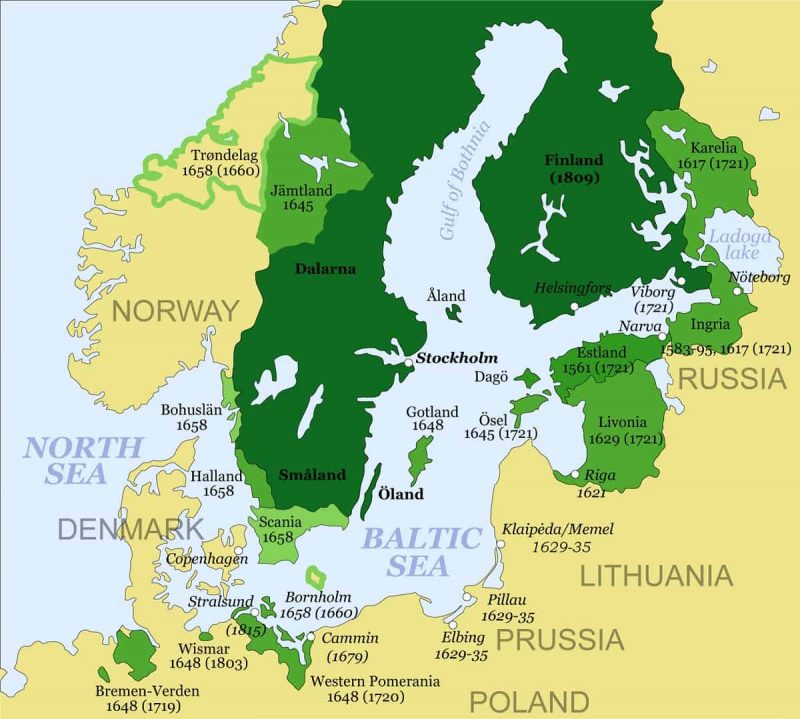
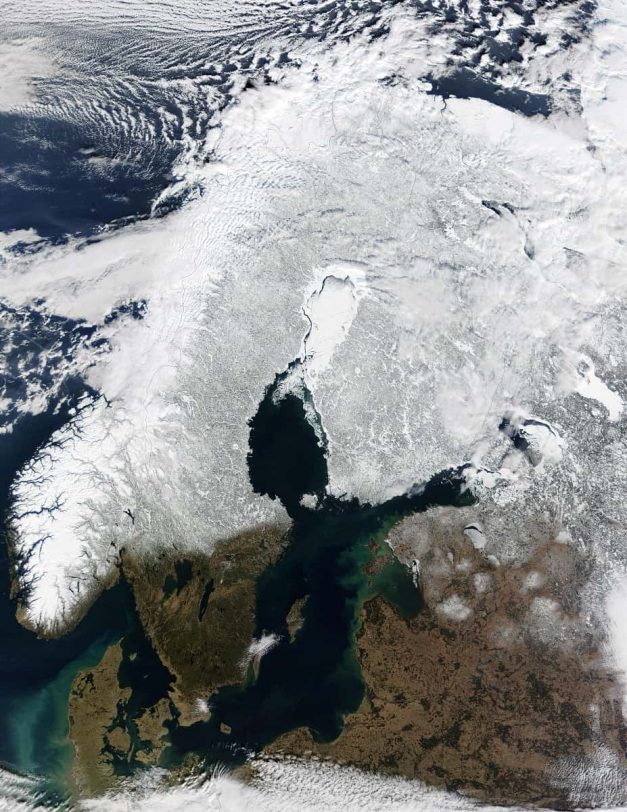
Sweden’s historic cross-Baltic empire (in 1814 it was given Norway as a reward for abandoning Napoleon before Denmark did)
By Marko Marjanović | Anti-Empire | November 3, 2021
Covid curves of Sweden and Britain are remarkably similar. Britain’s peaks are slightly higher, as are its cumulative deaths per capita, but in general, the two share the same ups and downs and the same Covid seasons.
This might lead some to conclude that for Covid purposes Sweden and Britain are in the same region and highly comparable, but such comparisons have been outlawed by the Covid fanatics. For some reason, Sweden can for Covid reasons only ever be compared to just three other countries; Norway, Finland, and Denmark, and no others.
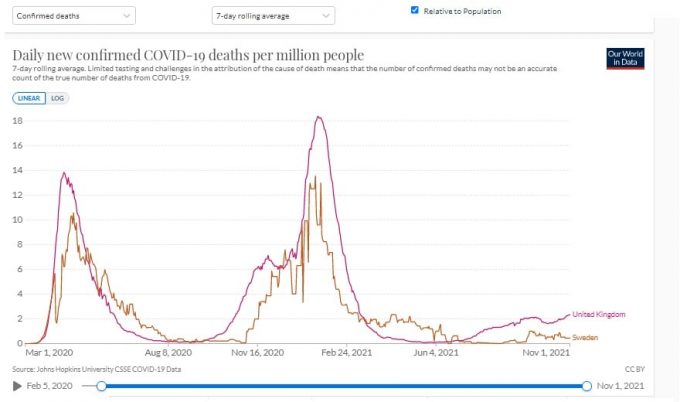
Sweden and Britain had outbreaks at exact same time albeit British death peaks were higher
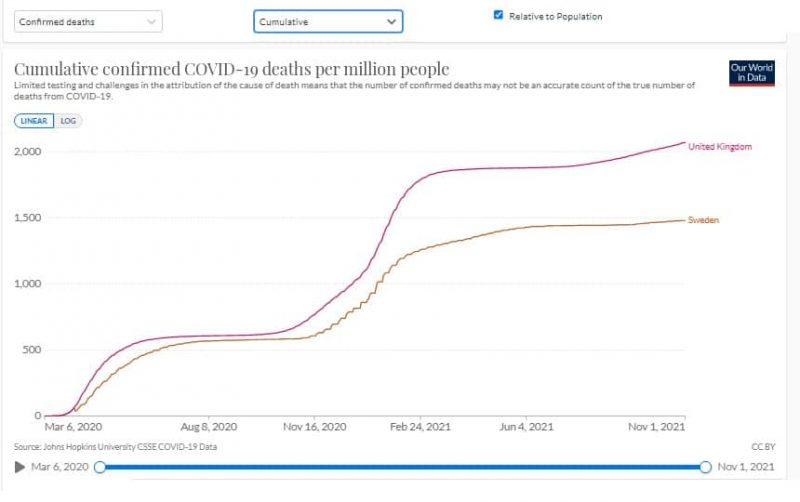
Sweden with its 1,450 deaths per million takes 54th place, the UK with its 2,050 deaths per million takes 27th
That trio indeed had a better Covid outcome (if not a better rights, dignity, and calmness outcome) than Sweden, which supposedly means that if Sweden had locked down as they had it would have likewise experienced similarly low Covid deaths. What is the proof of that? If lockdowns “mitigate” Covid deaths then why wasn’t the UK with its even more Draconian lockdown able to replicate low Norwegian and Finnish numbers? Why wasn’t lockdown UK able to show Sweden “how it’s done” and embarrass her? (Or lockdown world leader Peru for that matter which is instead nonetheless also world’s Covid deaths leader.) Why didn’t lockdowns work in the UK, but would have in Sweden?
The answer of the lockdown lemmings is usually population density. Supposedly having a greater landmass per capita means that Sweden with its 88% urbanization rate is less densely populated than the UK with an 84% urbanization rate, and this makes all the difference.
In reality, Sweden’s three largest metro areas contain fully 32% of its population (for the UK that figure would be 22%) with most of the rest also living in densely populated (if smaller) cities and towns (disproportionally along the coast). That these historical maritime Baltic trade cities come with vast swathes of frozen northern wasteland attached, does not mean that Swedes are somehow stretched out across secluded permafrosted mountain villages. To the contrary, the very fact that Sweden is much more rugged than Britain means its population is much more concentrated in the few “good” parts of the country.
But anyhow, Sweden is only ever to be compared to its “neighbors”. But in this context what exactly is a “neighbor”? Denmark and Sweden are actually separated by a strait albeit since 2000 there is a 12-kilometer bridge-tunnel across/underneath. Sweden and Finland technically share a border, but that is in the far north where few ever visit and even fewer live. Actual Swedish-Finish links are maritime across the Baltic Sea.
Despite the theoretical land route, historically Finland functioned as a Swedish overseas possession, communication to which was maintained by sailing past the Åland islands and then up the Gulf of Finland (and up the Gulf of Bothnia when it’s not frozen). Another trans-Baltic possession of the Swedes was Latvia (Duchy of Livonia). Finland was lost to Russia during the Napoleonic period and Latvia to Peter the Great a century earlier.
The pair gained independence from Russia at the same time in 1918, but Latvia experienced a “second stint” under the Soviets from 1940 to 1991.
Owing to Swedish (and earlier Baltic German) influence Latvia remains a Lutheran country with recognizable northern historic architecture.
Finland had been under Swedish rule for basically forever, while Latvia was originally conquered and Christianized by mainly German-speaking crusaders who secularized and switched to Protestantism after Luther.
Latvia speaks a Baltic language very different from Germanic Swedish, and Finland speaks a Finnic language that is not even in the Indo-European family of languages.
A ferry from Stockholm to Helsinki takes 16 hours and 15 minutes and runs five times a week. A ferry from Stockholm to Riga takes 18 hours and 30 minutes and runs once a week. (Helsinki is twice the size of Riga and there are more reasons to go there.)
So if we are allowed to compare Covid outcomes in Sweden and in its former overseas territory of Finland, may we also be so bold as to compare it to the outcome in its (previously German-ruled) former territory of Latvia?
Let’s say that we are.
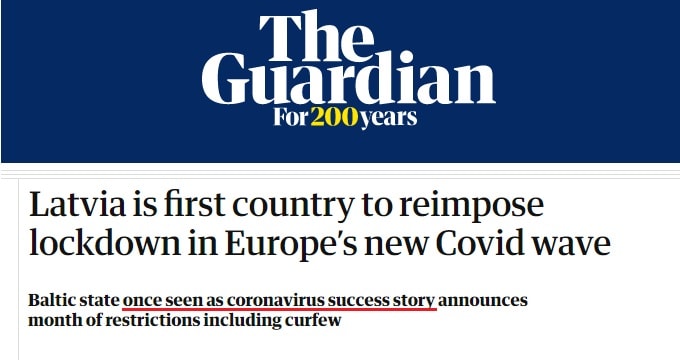
If we do that we find that Latvia has been extremely gung ho on lockdowns, locking down early, hard, and often, and garnering considerable praise for doing so. We also find that despite coming out of the first wave almost completely unscathed and continuing to dutifully lockdown ever since Latvia by now has 20% more per capita Covid deaths than never-lockdown Sweden and rising.
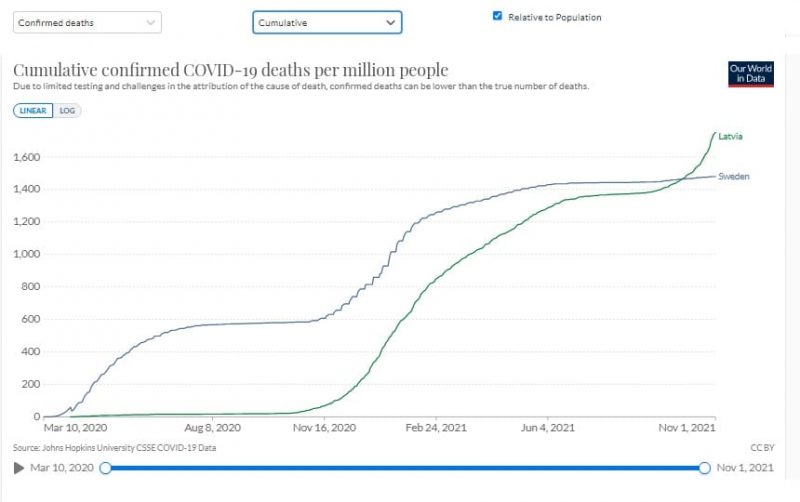
Latvia with 1,750 deaths per million and quickly rising
Lockdown enthusiasts maintain that Latvia’s lockdown was responsible for the country not experiencing the first wave in the spring of 2020 at all, but since that wave skipped entire Eastern Europe, including neighboring Belarus which never locked down, that is highly debatable. More likely Latvia and the rest of the eastern half of the continent would have never experienced the first wave regardless of what they did. Or what else explains the instruments which supposedly worked so flawlessly in the Spring of 2020 failing so utterly ever since?
A possible argument in defense of Latvia’s Covid record could be that comparison to Sweden is not fair given the latter’s much higher vaccination rate.
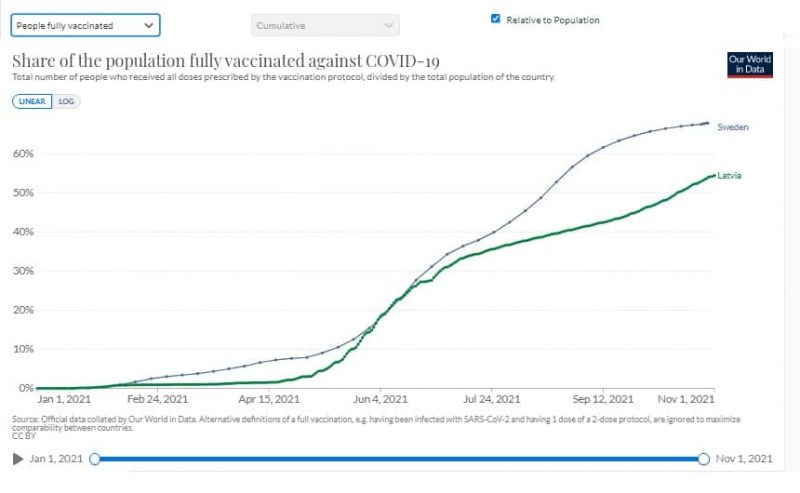
That argument doesn’t hold up because Sweden faced both of its major outbreaks before vaccines were a factor. Meanwhile, Latvia has only hit its biggest outbreak now that many of its residents have vaccine protection.
The vast majority of Swedish Covid cases occurred before February 2021, that is to say before vaccines. Meanwhile, Latvia gets the luxury of not having to face its biggest, deadliest wave until it has reached a 57% vaccination rate, and it is lockdown Latvia, rather than laissez-faire Sweden, which is hitting higher peaks and has already accumulated more Covid deaths. Explain that.
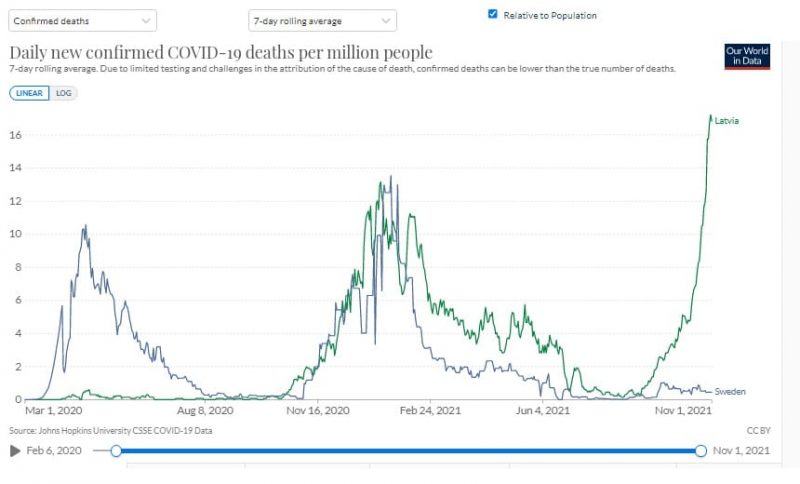
Latvia didn’t hit peak Covid until a considerable vaccination rate
And for the record, Latvia’s urbanization rate is 68%. Unlike Sweden, Latvia actually is still significantly rural. (Not that any of that matters in the least, as a cursory glance to lockdown North Dakota and non-lockdown South Dakota will tell you, both of which recorded relatively high Covid deaths despite their low population densities. (Incidentally, like Latvia, South Dakota also completely skipped the first wave, despite never locking down.))
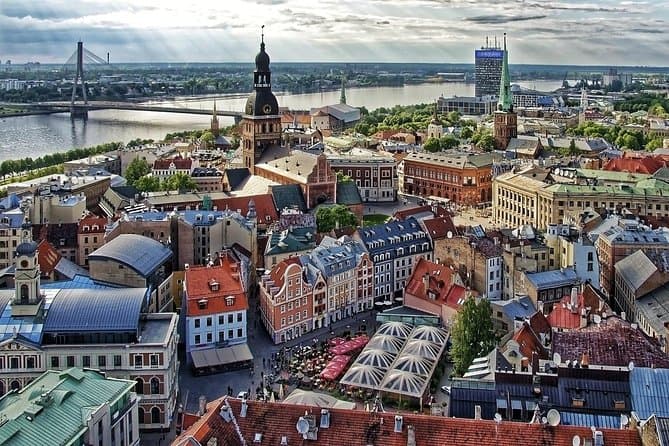
Riga in its Hanseatic-Lutheran style
House of Commons Covid Report Gets Some Things Right, Most Things Wrong
By Toby Young • The Daily Sceptic • October 12, 2021
On Monday evening two House of Commons select committees – the Science and Technology Committee and the Health and Social Care Committee – published a joint report on the Government’s handling of the COVID-19 pandemic that was predictably damning. It was published in time to make the following day’s front pages – “Britain must learn from ‘big mistakes’ on Covid, says report”, reported the Times on its front page – but not in time for newspaper reporters or broadcast journalists to properly assess its findings. Not that that stopped all the usual suspects from using it as a stick to beat the Government with. For instance, Labour’s Shadow Health Secretary Jonathan Ashworth told the BBC that the “damning” findings showed that “monumental errors” had been made and called for the public inquiry – scheduled for next spring – to be brought forward.
The authors of the report say in the Executive Summary that the reason they’ve published it now, when there are still a large number of ‘known unknowns’ as well as ‘unknown unknowns’, is because we urgently need to learn from what the Government got right and what it got wrong so we are better prepared for the next pandemic, which might come along at any moment. But if it’s too soon to say what was a mistake and what wasn’t, that argument collapses. Indeed, a premature report that draws the wrong conclusions, e.g. that the Government didn’t lock down in March of last year early enough, which is one of the main findings of this report, is worse than useless since it may encourage future Governments to repeat the same mistakes.
I’ve now read the report – yes, all 145 pages – so you don’t have to.
What the report gets right
- It criticises the Government for discharging elderly patients from hospitals into care homes without testing them first to see if they had COVID-19 and without putting any measures in place in care homes to mitigate the impact of that policy, as well as for the lack of PPE in care homes. The report says these errors “led to many thousands of deaths which could have been avoided”. Hard to argue with that, although one of the oddities of the report is that it criticises the lack of infection control in care homes, but not in hospitals. Weird, given that ~20% of cases over the course of the U.K.’s epidemic have been hospital-acquired infections.
- The authors praise the RECOVERY trial for carrying out large randomised control trials of different COVID-19 treatments and identifying dexamethasone as an effective treatment. That too seems right.
- The report highlights the disproportionately high Covid death rates among black, Asian and minority ethnic populations and acknowledges that part of the explanation for that may be biological differences between those populations and the white British population. Even acknowledging that genetic factors may be part of the reason for these disparities makes a refreshing change. Unfortunately, the report goes on to play down these biological differences and claims that social, economic and health inequalities are much bigger factors.
- It criticises hospitals and care homes for issuing ‘Do Not Attempt CPR’ notices to patients/clients with learning disabilities and autism, often without the consent of their families. No argument there.
- Rather than blame Boris and other senior members of the Government for the decision not to lock down before March 23rd 2020, the report emphasises that they were just following the recommendations they were being given by their scientific advisors. As I’ve pointed out before, that is correct.
- The report is at least ambivalent about how effective a two-week ‘circuit breaker’ would have been in England in September of 2020.
It is impossible to know whether a circuit breaker in the early autumn of 2020 would have had a material effect in preventing a second lockdown given that the Kent (or Alpha) variant may already have been prevalent. Indeed such an approach was pursued in Wales, which still ended up having further restrictions in December 2020.
Unfortunately, having written this, the authors then go on to say:
It is likely that a “circuit break” of temporary lockdown measures if introduced in September 2020, and earlier lockdown measures during the winter, could have impeded the rapid seeding and spread of the Kent variant.
Make up your mind guys!
What the report gets wrong
- The report claims that the U.K.’s Pandemic Preparedness Strategy wasn’t fit for purpose because it prepared us for “an influenza-like pandemic” rather than a more serious infectious disease that was spread, in part, by asymptomatic transmission. Professor Devi Sridhar, who gave evidence to the joint committees, is quoted as saying the mistake our Government made was to assume COVID-19 was “just like a bad flu”. In fact, it was like a bad flu, as judged by the latest estimates of the infection fatality rate, and the jury’s still out on whether asymptomatic people who test positive for Covid are infectious.
- One of the reasons the Government didn’t lock down before March 23rd, according to the authors, is because its scientific advisors were guilty of following the flawed playbook of the Pandemic Preparedness Strategy. In particular, the initial advice was to try to ‘manage’ the spread of the virus through the general population rather than to suppress it altogether, which the authors believe would have been the correct strategy. They claim the Government didn’t realise this sooner because it had failed to learn the lessons of the SARS, Swine Flu and MERS pandemics and embed those lessons in its strategy. But, surely, one of the lessons of those pandemics is that national lockdowns aren’t necessary to contain pandemics – and that advice was embedded in the U.K. Government’s strategy document. The mistake the Government made was not to initially follow that advice; the mistake was to stop following it on March 23rd. The only time a government has tried quarantining entire regions as a strategy to mitigate the impact of a viral outbreak prior to 2020 was in Mexico in 2009 when something like a lockdown was imposed on April 27th in Mexico City, the State of Mexico and the State of San Luis Potosí. That was policy abandoned on May 6th because of the mounting social and economic costs.
- Bizarrely, the authors of the report claim the reason the British Government didn’t abandon the Pandemic Preparedness Strategy sooner was because of “groupthink”. But, surely, the reason for putting a carefully thought out strategy document in place, incorporating the lessons from the mistakes made during previous pandemics, was precisely to avoid Government decisions being influenced by groupthink. And that approach was successful until mid-March, at which point Boris Johnson and his closest political allies abandoned it and decided to copy what other Western leaders were doing, i.e. lockdown. In other words, it was groupthink that was responsible for the disastrous U-turn, not the comparatively sensible initial approach.
- One of the main conclusions of the report is that the Government should have locked down earlier than it did – that’s one of the “big mistakes” in all the headlines – and they quote Professor Neil Ferguson to that effect:
The initial U.K. policy was to take a gradual and incremental approach to introducing non-pharmaceutical interventions. A comprehensive lockdown was not ordered until March 23rd 2020 – two months after SAGE first met to consider the national response to COVID- 19. This slow and gradualist approach was not inadvertent, nor did it reflect bureaucratic delay or disagreement between Ministers and their advisers. It was a deliberate policy – proposed by official scientific advisers and adopted by the Governments of all of the nations of the United Kingdom. It is now clear that this was the wrong policy, and that it led to a higher initial death toll than would have resulted from a more emphatic early policy. In a pandemic spreading rapidly and exponentially every week counted. The former SAGE participant Professor Neil Ferguson told the Science and Technology Committee that if the national lockdown had been instituted even a week earlier “we would have reduced the final death toll by at least a half”.
- In fact, it’s far from clear that “this was the wrong policy” or that it “led to a higher initial death toll”. The authors of this report take it for granted that – in the words of Professor David Paton – “governments can turn infections on or off like a tap by imposing or lifting restrictions”, when all the real-world data we’ve accumulated in the past 18 months suggests that is hopelessly naive (see these 30 studies, for instance). Governments around the world, including ours, have been guilty of wildly over-estimating the impact of non-pharmaceutical interventions on the spread of the virus.
- In the British case, there’s no reason to believe that locking down earlier would have reduced the final death toll at all, let alone by half. As David Paton points out, the Czech Republic locked down on March 16th, imposed hard border controls and rolled out the first national mask mandate in Europe. Yet it had a second surge in the Autumn of 2020, prompting it to lock down again, and then an even bigger one in December, leading to a third lockdown. Cases surged again in Czechia in February and March of this year and, six months ago, it had the second-highest per capita Covid death toll in the world, according to Reuters.
More damning still is the comparison with Sweden, which didn’t lock down at all in 2020 and, as of today, is ranked 50th in Worldometers’ table ranking countries according to per capita deaths. The U.K., by contrast, is ranked 25th.
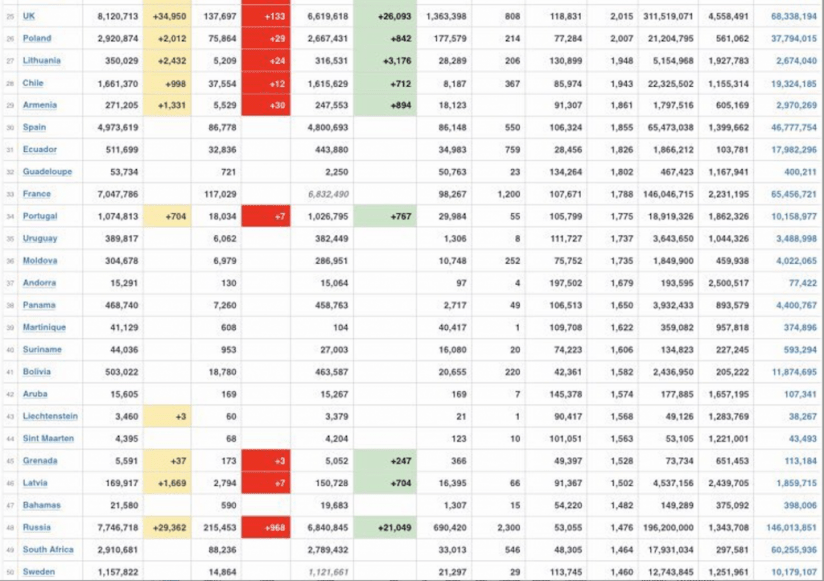
- There are only three mentions of Sweden in this report, two of them in a single footnote. Any assessment of the U.K. Government’s response to the pandemic that fails to compare it with that of the Swedish Government – particularly one advocating we should have locked down sooner and for longer – doesn’t deserve to be taken seriously.
- The report’s authors take at face value the “reasonable worst-case” scenarios that various modellers (including a sidekick of Dominic Cummings’) came up with in mid-March to show that if the Government continued to follow Plan A, i.e. the Pandemic Preparedness Strategy, the NHS was on track to become overwhelmed many times over. Here is Matt Hancock giving evidence on June 8th 2021, appealing to a prediction of “slightly below” 820,000 deaths, absent a lockdown:
I asked for a reasonable worst-case scenario planning assumption. I was given the planning assumption based on Spanish flu, and it was signed off at Cobra on January 31st. That was a planning assumption for 820,000 deaths. […]
In the week beginning March 9th, what happened is that the data started to follow the reasonable worst-case scenario. By the end of that week, the updated modelling showed that we were on the track of something close to that reasonable worst-case scenario. I think the numbers were slightly below that, but they were of a scale that was unconscionable.
- Rather than just take those projections at face value, couldn’t the House of Commons committees have interrogated the models a little bit? The report’s most damning criticism – that the Government’s delay in imposing the first lockdown resulted in thousands of unnecessary deaths – is contingent on not questioning those forecasts. In light of SAGE’s over-estimate of the likely uptick in cases following the easing of restrictions on July 19th of this year, as well as its more recent over-estimate of hospitalisations this autumn, wouldn’t it have been prudent to scrutinise those models? That’s a particularly glaring omission, given that the authors of the report criticise members of the Government for not challenging the scientific advice they were given: “Those in Government have a duty to question and probe the assumptions behind any scientific advice given, particularly in a national emergency, but there is little evidence sufficient challenge took place.” Why do “those in Government” have a duty to do this, but not those serving on select committees who are supposed to be holding the Government to account?
- In case further evidence is required that the authors of the report have credulously lapped up the doom-mongering of SPI-M and others, consider this passage:
It seems astonishing looking back that – despite the documented experiences of other countries; despite the then Secretary of State referring to data with a Reasonable Worst Case Scenario of 820,000 deaths; despite the raw mathematics of a virus which, if it affected two-thirds of the adult population and if one percent of people contracting it died would lead to 400,000 deaths – it was not until March 16th that SAGE advised the Government to embark on a full lockdown (having said on March 13th that “it was unanimous that measures seeking to completely suppress the spread of COVID-19 will cause a second peak”) and not until March 23rd that the Government announced it.
- Note the appeal to an IFR of 1% when even Neil Ferguson’s team at Imperial College, which predicted 510,000 deaths if the Government stuck with Plan A in its famous March 16th paper, assumed an IFR of 0.9%. In fact, a WHO bulletin put the IFR at 0.23% as long ago as October 2020.
- This unwillingness to interrogate the modelling data that underpins the report’s conclusions is particularly odd, given that the authors acknowledge the limitations of modelling elsewhere – “Models can be useful and informative to policymakers, but they come with limitations” – and at one point try to blame the delay in lockdown down on an “overreliance on specific mathematical models”! Again it’s a case of one rule for me and another for thee.
- The report compares the response of the British government in the first months of the pandemic unfavourably to that of various East Asian and South East Asian governments, but overlooks the fact that many Asian countries that successfully suppressed infection by closing borders at the beginning of 2020, and rolling out successful test, trace and isolate programmes, are now in the grip of devastating waves in spite of having vaccinated large swathes of their populations. That suggests their non-pharmaceutical interventions only succeeded in postponing the impact of SARS-CoV-2, not avoiding it. (It also fails to note that these supposed role models didn’t issue stay-at-home orders, close schools or shutter businesses in their initial responses to the pandemic.)
- The report criticises the Government for stopping community testing in March 2020 due to PHE’s lack of testing capacity and praises Matt Hancock for setting the 100,000 tests a day target to galvanise the system into massively ramping up that capacity. Indeed, the authors claim that had a proper test-and-trace system been in place at the beginning of 2020, the initial lockdown might have been avoided. That, too, is a shaky assumption. After all, the Government has spent £37 billion and counting on a ‘world-beating’ test, trace and isolate programme but that didn’t stop us locking down for a second and third time. The authors of the report acknowledge this point, but blame Baroness Harding for not doing a better job of running NHS Test and Trace. That seems a tad harsh, particularly as the authors repeatedly say – Uriah Heap-like – that it’s not their intention to apportion blame for the mistakes they’ve identified.
- The report praises the speed at which the Nightingale hospitals were created, although it acknowledges that, for the most part, they weren’t used. But the reason they weren’t used is partly because the NHS lacked the trained employees to staff them with – ICU nurses, for instance. Perhaps if they’d been built with less speed – at a cost to the taxpayer of roughly half a billion pounds, don’t forget – the Government would have had time to spot this obvious flaw in the plan. Or, more realistically, those aware of it from the start would have had more time to organise and obstruct this expensive PR stunt.
- The authors praise the Government – and the NHS – for at no point running out of ICU beds and becoming overwhelmed, as the health system did in some parts of Italy during the first phase of the pandemic. But given the enormous cost of protecting the NHS – both in terms of seriously ill people who were either discharged or went untreated, as well as the collateral damage inflicted by the lockdowns on the economy, education, family life, mental health, etc. – it’s impossible to say whether prioritising the NHS at the expense of absolutely everything else was in fact the right strategy. To bottom that out you need to do some cost-benefit analysis, of which there is precisely none in this report.
- The report concludes by praising the Vaccine Taskforce under the leadership of Kate Bingham and highlights the ‘success’ of the U.K.’s vaccine programme – “one of the most effective in Europe and, for a country of our size one of the most effective in the world”. But they ignore the fact that the efficacy of the Covid vaccines is much less impressive than the initial trial data indicated and looks less impressive with each passing week, something Dr. Will Jones has been meticulously documenting for the Daily Sceptic. So was the massive Government expenditure on the development and trialling of home grown vaccines, as well as procuring hundreds of millions of vaccines manufactured overseas, worth it? One notable omission from the report is any acknowledgement of the risks associated with a fast-tracked vaccine approval process – it just breathlessly praises the speed with which vaccines were made available to the public and expresses the hope that “in the future this could be conducted in much shorter time still”.
Conclusion
This is a pretty feeble document that seems to have been written with an eye on getting Jeremy Hunt and Greg Clark – the chairs of the two select committees involved – on the BBC news rather than making a serious contribution to understanding what the Government got right and what it got wrong over the past 18 months. It’s hard to argue with some of its findings, but its headline conclusion – that the Government should have locked down earlier – isn’t based on any serious analysis, let alone a careful consideration of the evidence that seems to point in the opposite direction. Talk about groupthink!
I hope the official inquiry, when it comes, is a bit more intellectually weighty than this.
Covid in Sweden: Everything on the table
Sebastian Rushworth, M.D. | October 2, 2021
A group of German celebrities have started the campaign “alles auf den tisch”, which literally means “everything on the table”. It’s a reaction to the shocking lack of indepence and critical oversight that has been exhibited by journalists ever since the pandemic began. The purpose of the campaign is to break through the blinkered media narrative that exists in relation to covid, and allow a wider range of thoughts and opinions to get out.
In order to accomplish this, the celebrities have interviewed a large number of doctors and scientists who have thus far been sidelined by the mainstream media, and put the interviews up on their site allesaufdentisch.tv. The campaign appears to have been pretty effective so far, since the site crashed on launch due to the massive amount of traffic it was getting. Luckily it’s up and running again now. As a part of the campaign, I was interviewed by violinist Linus Roth. We talked about happenings in Sweden, the covid death rate, and lockdowns. The interview is short but sweet, only around twenty minutes long.
Mask-free Sweden nears zero daily Covid deaths
Chief epidemiologist warns against ‘far-reaching conclusions’ about Delta strain
RT | July 31, 2021
As the CDC urges Americans to mask up against the Delta variant, Sweden’s chief epidemiologist has argued that more data is needed about the strain’s infectiousness. His mask-free nation is hovering at zero Covid deaths per day.
Anders Tegnell said on Friday that there was “a lot we do not know” about Delta and cautioned against drawing “far-reaching conclusions” about the coronavirus strain. He noted that the variant had been circulating in Sweden “for quite some time” with little effect, particularly in high-risk settings such as nursing homes.
His comments were made in response to newly released data from the Centers for Disease Control and Prevention (CDC) suggesting the Delta strain is more transmissible and could potentially cause more severe illness. The New York Times and other media outlets ran stories reporting that the CDC now believes the Delta variant is as contagious as chickenpox – but this comparison didn’t seem to impress Tegnell.
“It is difficult to say how contagious Delta is, [as] when it comes to chickenpox, we have been able to follow the disease for several years. The infectivity [of Delta] seems to be very uneven – in some cases, one person infects a hundred people, then we have other occasions when an infected person does not infect anyone at all,” he told Sweden’s Aftonbladet.
In separate remarks, he pointed to the fact that one-third of the country’s municipalities reported zero new Covid cases over the past week. At the same time, there was an uptick in cases among young people in Stockholm and other large cities.
And while US health authorities are pressing Americans in “high transmission” areas to mask up, Sweden dropped its last remaining mask recommendation – related to public transport – on July 1. While Sweden’s public health agency has supported measures such as social distancing and remote working, it has no recommendations for the use of face coverings in public spaces.
Reviled by the media for refusing to impose harsh lockdowns, Sweden’s less draconian approach to the health crisis appears to be paying off: The Scandinavian nation has recorded a total of eight Covid-linked deaths so far this month, an average of 0.25 deaths per day. While it’s possible this number will increase due to reporting lags, deaths have undoubtedly plummeted over the past several months. On June 4, Sweden reported 13 deaths – more than the entire month of July.
Daily hospitalizations have also hovered near zero in July: On most days this month, the country saw between 0-2 Covid-cases requiring hospital treatment. At the same time, daily cases have fallen sharply since April. … Full article
Daily COVID Deaths in Sweden Hit Zero, as Other Nations Brace for More Lockdowns
Sweden isn’t in the news much these days. There’s a reason for that.
By Jon Miltimore | FEE | July 22, 2021
More than 100,000 people flooded streets in France over the weekend and multiple COVID vaccination centers were vandalized as opposition grew to the government’s most recent pandemic strategy. In President Emmanuel Macron’s latest incarnation of lockdowns, government officials have decreed that unvaccinated individuals will no longer be allowed to enter cafes, restaurants, theaters, public transportation and more.
Needless to say, people were not happy.
France’s approach is unique, but it’s just one of many countries around the world imposing new restrictions as fears grow over a new variant of COVID-19. Australia’s recent restrictions have placed half the country under strict lockdown—even though a record 82,000 tests had identified just 111 new coronavirus cases—while restaurants in Portugal are struggling to survive amid newly imposed restrictions.
One country not making much news is Sweden.
Sweden, of course, was maligned in 2020 for foregoing a strict lockdown. The Guardian called its approach “a catastrophe” in the making, while CBS News said Sweden had become “an example of how not to handle COVID-19.”
Despite these criticisms, Sweden’s laissez-faire approach to the pandemic continues today. In contrast to its European neighbors, Sweden is welcoming tourists. Businesses and schools are open with almost no restrictions. And as far as masks are concerned, not only is there no mandate in place, Swedish health officials are not even recommending them.
What are the results of Sweden’s much-derided laissez-faire policy? Data show the 7-day rolling average for COVID deaths yesterday was zero (see below). As in nada. And it’s been at zero for about a week now.
Even a year ago, it was clear the hyperbolic claims about “the Swedish catastrophe” were false; just ask Elon Musk (also see: here, here, and here). But a year later the evidence is overwhelming that Sweden got the pandemic mostly right. Sweden’s overall mortality rate in 2020 was lower than most of Europe and its economy suffered far less. Meanwhile, today Sweden is freer and healthier than virtually any other country in Europe.
As much of the world remains gripped in fear and nations devise new restrictions to curtail basic freedoms, Sweden remains a vital and shining reminder that there is a better way.
Is this why the MSM don’t mention Sweden any more?
By Kathy Gyngell | The Conservative Woman | June 8, 2021
WHATEVER happened in Sweden with its policy of no masks and no lockdowns ?
In his latest brilliant video, Ivor Cummins invites us to see. Succinct and logical as ever, it is another must-watch. After making a statement about the official and therefore uncensorable data his analysis draws on – all the links to his evidence are provided – he asks the simple question: Who got the science correct? Ferguson and his big outfit at Imperial College, massively funded by Gates and Big Pharma interests? Or Anders Tegnell, Sweden’s chief epidemiologist, who said he could be judged around this time in 2021? The answer is Sweden, which followed the World Health Organisation’s 2019 pandemic guidelines that Britain threw in the bin.
Cummins goes on to show the real-world risk of death from Covid to be extremely small for those with PCR positive tests and infinitesimal for the rest. Taking Ireland as an example, he shows there is no evidence of excess deaths for the year 2020 and that Covid deaths simply make up a chunk of the normal deaths that would be expected anyway.
You can watch the video here.
The source article for the Sweden Data: https://shahar-26393.medium.com/not-a…
Featured Video

Prof. Ted Postol: Iran Already Achieved Nuclear Deterrence Against Israel
or go to
Aletho News Archives – Video-Images
From the Archives
How the occupied mentality syndrome works
Saudi Arabia on the American chessboard – Part 3
By B. J. Sabri | American Herald Tribune | June 27, 2016
Read part 2: “The occupied mentality Syndrome“
Previously I argued whether Saudi Arabia’s repeated involvements in U.S. interventions and wars stem from free national will or in response to a specific condition. For starters, in Saudi Arabia there is no national will. In Saudi Arabia, the national will is the will of the Al Saud clan. Still, when a major Arab state allies itself with a superpower that committed unspeakable crimes against humanity in almost every Arab country, then something is wrong. This fact alone should compel us to examine the U.S.-Saudi relation for one exceptional reason. As a result of the U.S.-Saudi wars, hundreds of thousands of people in Afghanistan, Iraq, Iran, Libya, Syria, Yemen, and Somalia have lost their lives. Millions became displaced in their own homelands. And millions more rendered refugees.
Attributing the Saudi policies to the bonds of “partnership” with the U.S. is frivolous. There are no bonds between these two thugs except those of business, military deals, secret plots, and wars. Proving this point, bonds such as these have no space for the American and Saudi peoples to share significant cultural or societal exchanges. If partnership is not the reason for the Saudi contribution to the U.S. strategy of empire and imperialism, then another reason must exist.
This leads to three possibilities. … continue
Blog Roll
 Aletho News
- NIAID/NIH and USDA Fund Bioengineered Chimeric Influenza Viruses Built Using Pandemic H1N1 Components: Journal ‘Science Advances’
- Hezbollah hits Israeli warship off Lebanon’s coast, sets it aflame
- Iran slams US strikes on B1 bridge, Mahshahr petrochemical plants as ‘blatant acts of state terrorism’
- In letter to UN chief, Araghchi warns of dire consequences of US-Israeli attacks on Iran’s nuclear facilities
- Why the CIA conspiracy to invade Iran with Kurdish militias failed
- Why Are Upbeat US Claims About Mission to Rescue Pilot ‘Highly Questionable’?
- Aircraft destroyed during US ‘rescue’ of downed F-15 pilot cost more than $100 million each
- Washington University removes professor who condemned US-Israeli war on Iran
- Russia Warns of Retaliation as UK Authorizes Seizure of Vessels
- Serbia thwarts plot to bomb Russia-Hungary gas pipeline – Vucic
- If Americans Knew
- In Iran, Israel-US take aim at “reason, research, and freedom of thought” – Daily Update
- US loses planes over Iran, Israel downgrades Lebanon war goals – Daily Update
- Israel Is Blocking Palestinians from Easter at Church Where Jesus Resurrected
- Plot to assassinate Palestinian activist follows harassment campaign promoted by Zionist groups and elected officials
- Prominent New York synagogue hosts presentation on why U.S. Jews should support the ethnic cleansing of Gaza
- Tapper vs. Piker: Is the CNN Anchor Auditioning for David Ellison?
- Shouldn’t Democrats Be Able to Condemn Genocide?
- Israel-US kill negotiators, destroy civilian structures, but Iran’s military capabilities still largely intact – Daily Update
- ‘War crime’: Global condemnation as Israeli ministers celebrate death penalty law targeting Palestinian prisoners
- 7 Ways Israel Is Turning Lebanon Into Gaza
- No Tricks Zone
- An Inconvenient Tree: Uncovered In Alps… Europe Much Warmer Than Today 6000 Years Ago
- New Study Reports A 60% Slowdown In Greenland’s Ice Loss Rate In The Last Decade
- Low Intensity Tornado Wrecks Major Solar Farm, Creating A Potential Toxic Dump
- New Study Finds Warming Saves Lives…Cold Temperatures 12 Times More Deadly Than Excess Heat
- German Science Blog Accuses PIK Climate Institute Of Hallucinating Climate Tipping Points
- Devastating Assessment Of Comirnaty Vaccine By Former Senior Pfizer Europe Toxicologist
- New Study: CO2 Is ‘Effectively Negligible’ As An Explanatory Climate Change Factor Since 2000
- Former Pfizer Toxicologist Dr. Helmut Sterz Tells Bundestag Hearing Pfizer Vaccine Should Have Never Been Approved
- Energy Expert: Germany’s Nuclear Phaseout Was A “500 Billion Euro Mistake”
- New Research: South Australia’s Mid-Holocene Sea Surface Temperatures Were 4°C Warmer Than Today
 Aletho News