Israel withdraws from al-Muallaqa town in Syria hours after infiltration
Al Mayadeen | February 4, 2025
Israeli occupation forces withdrew from the al-Muallaqa town in Quneitra, Syria, hours after infiltrating the town, field sources told Al Mayadeen.
During their invasion, the IOF searched civilian houses in the area.
Israeli occupation forces are reinforcing their positions on strategic hills on the outskirts of Kodana, South of the Quneitra countryside.
“Israel” has been preparing for the long haul as it takes over Syrian territories. Satellite images reviewed by The Washington Post revealed buildings and vehicles within a fortified Israeli base and another base toward the South.
The two bases are connected through newly dug dirt roads that lead to the Golan Heights.
Satellite images also show two forward observation bases being built by occupation forces; one in Jubata al-Khassab and another one toward the South.
Another Israeli force invaded 2 kilometers east of the al-Salam town in Quneitra and patrolled in front of the Syrian General Security Headquarters.
Last month, Israeli Air Forces targeted a military convoy between Dara’a and Quneitra in Southern Syria, killing 3 people.
“Israel” took advantage of the collapse of the Assad regime and occupied the demilitarized buffer zone between the Golan Heights and Syria. It also targeted the former Syrian army’s arms and vehicles with violent airstrikes over days, destroying most of the capabilities.
Compatible Left Joins Imperialism in Celebrating Defeat of Syria
By Stansfield Smith | Covert Action Magazine | January 8, 2025
It may be no surprise that the “mainstream” corporate news media have turned into advertising agencies for U.S. government policy. But it still surprises that what the CIA called a compatible left—those on the left it deemed compatible with maintaining imperialist rule—celebrates another successful U.S. “regime change,” this time, in Syria.
Portside, which assembles daily news articles that it advertises as “being of interest to people on the left,” ran an article, “Liberation in Syria Is a Victory Worth Embracing” by Layla Maghribi, which criticized “some self-styled Western ‘anti-imperialists’” for their lack of enthusiasm for the “victory.” While it does note that Israel bombed Syria 220 times up to mid-November this past year, one finds no mention of the long U.S. blockade imposed on Syrians.
CounterPunch has been a compatible left website outspoken in its hostility toward those exposing U.S. coup operations in Syria.
On December 10, CounterPunch published “Understanding the Rebellion in Syria” an interview with Swiss-Syrian socialist Joseph Daher. The introduction made the outlandish assertion that “some on the Left have claimed without foundation that their rebellion was orchestrated by the U.S. and Israel.” Daher himself in turn said that “the U.S. nor Israel had a hand in these events. In fact, the opposite is the case.”
Daher goes on to write off as “campists” and “tankies” those of us who recognize the obvious, “that this military offensive is led by ‘Al-Qaeda and other terrorists’ and that it is a Western-imperialist plot against the Syrian regime intended to weaken the so-called ‘Axis of Resistance’ led by Iran and Hezbollah… [T]he campists claim that the fall of Assad weakens it and therefore undermines the struggle for the liberation of Palestine.”
On December 11, CounterPunch turned to academic Stephen Zunes for an “exclusive interview,” presenting him as a “foreign policy expert” for the left.
Zunes, however, is on the advisory board of International Center for Nonviolent Conflict (ICNC); a group whose founder and primary funder was Peter Ackerman, a member of the Executive Committee of the Atlantic Council and chair of Freedom House. Also, back in 2011, Zunes praised the U.S.-NATO destruction of Qaddafi’s Libya in Truthout.
In the interview, Zunes impugned Assad for his “savage repression” and “endemic corruption” and blamed him for Syria’s growing poverty without mentioning the draconian U.S. sanctions policy or ravaging effects of a war that had been triggered by outsiders.
Zunes went on to characterize the anti-Assad rebels as a “popular resistance movement,” obscuring its domination by jihadist elements, and said that the rebellion “would have happened regardless of U.S. policy,” which obscures the crucial nature of U.S. support.
Zunes showed his true colors subsequently when he defended President Barack Obama, who inaugurated the largest covert operations in Syria since the 1980s Afghan mujahadin and illegally bombed Syria based on fraudulent pretexts, a phony charge of chemical weapons attacks.[1]
According to Zunes, “Many of these Western ‘anti-imperialists’ are themselves stuck in an imperialist mindset which denies agency to people of color in the Global South (or Slavs in Eastern Europe) who are struggling for their freedom against tyranny.”
However, the struggle against tyranny in this case was financed heavily by outside powers, including the U.S., and was led not by “freedom fighters” but jihadist terrorists who came from 84 different countries.
CounterPunch has long supported the fake “Syrian revolution.” They refuse to publish anti-imperialist writers such as Ben Norton, who reported, “a bombshell declassified 2012 memo from the Defense Intelligence Agency (DIA) reveals that, from the start, ‘The Salafist, the Muslim Brotherhood, and AQI are the major forces driving the insurgency in Syria.’ AQI is a reference to Al-Qaeda in Iraq, which later evolved into ISIS.”
Even the New York Times disclosed—seven years ago—that the CIA had already spent more than $1 billion to overthrow Assad, “one of the costliest covert action programs in the history of the C.I.A.”
Why do these “left” websites like CounterPunch cover up major CIA regime-change operations?
Truthout on December 11 ran its own pro-U.S. regime-change article, “As Assad Regime Falls, Syrians Celebrate — and Brace for an Uncertain Future” by Shireen Akram-Boshar, a socialist writer and Middle East/North Africa solidarity activist. The article repeats the same apologetics for U.S. imperial rule: “Contrary to common misconceptions, the U.S. and Israel did not aspire to remove Assad after 2013.”
Similarly, Democracy Now ignored the U.S. involvement in the operations against Assad and triumph of al-Qaeda and interviewed an AP reporter, Sarah El Deeb, who pointed to cheering crowds and expressed enthusiasm about the new Syria with Assad’s removal from power.
El Deeb further echoed the mainstream media in pointing out human rights abuses allegedly committed by Assad, while ignoring the record of ethnic cleansing, suicide bombings and massacres carried out by the rebel forces backed by the U.S. which have now succeeded in deposing Assad.
John Feffer of the Institute for Policy Studies published a more sensible article, but one that still covered up the U.S. economic blockade’s destruction of Syria as well as its long regime-change operation. Feffer also repeats the U.S. line that the Syrian government used chemical weapons attacks, even though Seymour Hersh, MIT scientist Theodore Postol and The Grayzone showed that the U.S. concocted this story.
None of the compatible left websites mentioned the words of Biden and Netanyahu, who with legitimate reason took credit for the fall of Assad.
Netanyahu recognized the Assad government as “a central link in Iran’s axis of evil.” The Axis of Resistance to the Israeli-U.S. anti-Palestinian genocidal bloc includes Hamas, Iran, Hezbollah, Assad’s Syria, and Yemen. The Israeli butcher proudly acknowledged the overthrow “is a direct result of the blows we have inflicted on Iran and Hezbollah, the main supporters of the Assad regime.”
Biden spoke likewise: “Neither Russia nor Iran nor Hezbollah could defend this abhorrent regime in Syria. This is a direct result of the blows that Ukraine and Israel have delivered upon their own self-defense with unflagging support of the United States.” Indeed, Israel inflicted heavy damage on Hezbollah in Lebanon, and Russia remains tied up combating the U.S.-instigated war in Ukraine.
Some of the compatible left—LA Progressive and Common Dreams, both orbiting the Democratic Party—ran honest articles on the U.S. role.
On December 11-12, Common Dreams posted “The West Celebrates Assad’s Fall, But What Comes Next May Be Even Worse,” and Jeffrey Sachs’ excellent “How the US and Israel Destroyed Syria and Called it Peace.”
The former noted the so-called “liberation” was “cheered by U.S. President Joe Biden and other major Western leaders, like French President Emmanuel Macron and German Chancellor Olaf Scholz.” It asked the obvious question: “[W]hy is the West cheering for al Qaeda and its allies?” Indeed, and why are these compatible lefties following suit?
It continues: “Since the fall of Assad, Israel has already carried out hundreds of airstrikes across Syria, targeting airports, naval bases, and military infrastructure. And the U.S. Central Command announced that it has struck more than 75 targets, including ISIS leaders, operatives, and camps…
The Obama administration provided support to the anti-Assad forces, primarily to the Free Syrian Army forces and its affiliates, but the CIA began to support other groups as early as 2013 even though they had jihadi orientations. CIA’s covert operation against the Syrian regime, known as Timber Sycamore, was a joint effort with Saudi Arabia that had long ties with radical Islamist groups…
Syria was under imperialist attack for the past 13 years. The U.S. (along with Turkey) backed and funded mercenaries and terrorist forces against Assad’s regime, imposed economic isolation of the country through sanctions, and denied plans that would have contributed to reconstruction even though aid was desperately needed for civilians.”
Jeffrey Sachs (also here and here) pointed out that U.S. destruction of Syria was planned since 1996. General Wesley Clark revealed in an interview clip, probably seen by leftists of all stripes, that, back in 2001, after Afghanistan, the U.S. intended to wage war and overthrow seven more states in the Middle East: Iraq, Syria, Lebanon, Libya, Somalia, Sudan, and Iran. The only one not yet destroyed is Iran.
The Long U.S. War Against Syria
Relying on deadly sanctions, an invisible form of carpet bombing, the U.S. starved the Syrian people and hollowed out the Syrian economy until it collapsed.
Before 2011, Syria, just like Qaddafi’s Libya, was a thriving nation, self-sufficient in energy and food, with free health care, free education and no national debt. Then the U.S. and its NATO and Gulf allies orchestrated a dirty war, funding and arming sectarian terrorists to fragment Syria. These groups were deceitfully presented by many on the compatible left as part of a liberation movement.
Even David Sorenson, a professor at the U.S. Air War College recognized, “By 2015, aid to anti-Assad forces became the most expensive U.S. covert action program in history, topping 1 billion USD.” Since 2014, U.S. and Turkish military and proxy forces have occupied about one-third of Syrian territory and appropriated all its oil, gas, and wheat harvests.
Alena Douhan, UN Special Rapporteur on the effect of the U.S. economic blockade against Syria, reported, “The imposed sanctions have shattered the State’s capability to respond to the needs of the population, particularly the most vulnerable, and 90% of the people now live below the poverty line.” They have “limited access to food, water, electricity, shelter, cooking and heating fuel, transportation and healthcare.” The World Food Programme states that almost 13 million Syrians, half the population, lack sufficient food.
How many died from these measures we do not know, but the similar draconian U.S. blockade on Venezuela killed 40,000 in a year and a half.
Douhan continues, “With more than half of the vital infrastructure either completely destroyed or severely damaged, the imposition of unilateral sanctions on key economic sectors, including oil, gas, electricity, trade, construction and engineering have quashed national income, and undermine efforts towards economic recovery and reconstruction.”
We should wonder who CounterPunch is serving when it publishes the claim that “Neither the U.S. nor Israel had a hand in these events.”
The “campists” or “tankies” CounterPunch refers to run the gamut—from Scott Ritter, Ron Paul, Vijay Prashad, Ben Norton, Glenn Greenwald, Colonel Douglas MacGregor, Aaron Maté and JD Vance to Sara Flounders.
They share opposition to the endless neo-con wars advocated by Obama, Hillary, Biden and Cheney.
We find, once again, sectors of the compatible left functioning as a conveyor belt for U.S. regime-change propaganda broadcast into the progressive and anti-war movements, telling us to celebrate another successful U.S. imperial operation.
Meanwhile, the struggle of the Middle East to free itself from U.S.-Israeli domination has suffered a major defeat, on top of that inflicted on Hezbollah and Gaza. The Palestinians’ situation has worsened, Iran is next on the U.S. hit list, and Venezuela, Cuba and Nicaragua are not far behind. Our active solidarity is needed now more than ever.
- Zunes said that “President Obama had been subjected to unfair criticism both for providing some support for the resistance as well as for not doing enough.”
Live from Bethlehem – Jason Jones on the Trump Effect on Gaza
If Americans Knew | January 27, 2025
Eric Metaxas interviews Jason Jones about his thoughts on the Trump effect on the Gaza agreement.
Full video at:  • Live from Bethlehem – Jason Jones on …
– See Jones’ articles and bio at https://israelpalestinenews.org/trump…
The whitewashing of Western crimes in Syria
By Sonja van den Ende | Strategic Culture Foundation | January 18, 2025
After the fall of Syria and the partial collapse of the Axis of Resistance, a predictable smear campaign has been launched in Western media, which, like for Russia, is based on distortion and lies.
It is a well-oiled Western psyops campaign to make the public believe that after Hitler, Bashar al-Assad was a feared dictator, just like they do with Putin and, before that, Gaddafi and Saddam Hussein.
The world was surprised when, on December 8, 2024, the most feared terrorists took over the old Syria, a semi-secular state form, and immediately turned it into a caliphate.
But for the American imperial planners, their European allies, and their terrorist proxies, including those in Ukraine, there was no surprise. They knew about it. The NATO-sponsored terrorist militia was trained by the CIA in Idlib, and provided with drones by Ukraine, drones that are produced in Ukraine, from semi-finished products from a company in the Netherlands called Metinvest B.V.
Large parts of the Syrian army did not defect, as the Western media and so-called experts claim. About 9,000 soldiers are still held captive in the Syrian desert, or in the Sednaya prison, held by the terrorists.
Not only the terrorists but the American army is in charge everywhere in Syria. American rulers secretly prepared for the occupation of Syria, as they did with Iraq. They primed the terrorists in Idlib for the final offensive with Operation Dawn of Freedom.
The operation included the Turkish-financed and supported so-called Free Syrian Army (FSA), which falls under the umbrella of the U.S., also known as the Syrian National Army. As early as 2016, Turkey began to assemble a new coalition of so-called Syrian rebel groups, including many former FSA fighters, in an attempt to create a more cohesive and effective opposition force. This coalition consists of the terrorists most feared by the Syrian people, who have been massacring civilians since 2011. Among others, the Syrian National Army includes Chinese Uyghurs, notorious for their brutality among head-choppers.
Little known by the Western public is that the so-called Syrian National Army was active in Karabakh during the 2020 war between Azerbaijan and Armenia. Turkey provided military support to Azerbaijan by supplying the terrorists of the Syrian National Army. This proxy army of international mercenaries, controlled by the U.S. and Turkey, has been fighting in Ukraine for the NATO-backed Kiev regime. The most brutal of its senior members is Abu al Shishani, who has been hiding in Ukraine for years – despite his U.S. handlers declaring him dead in 2017.
Of course, the Western terrorist sponsors wash their hands of blood. After all, there are supposed to be no real U.S. “boots on the ground” in Syria, they will argue, but there is an army base coordinating the terrorists who fight for them. The same applies to Turkey.
Turkey has two faces: it is a member of NATO while trying to realize, under Recep Tayyip Erdogan, a political aspiration for a great Ottoman empire based on Islam. Some say it is utopian or a lie, but it is not. The Syrian people know this very well; for 14 years, this has been going on and, unfortunately, has come true.
Then there is the other “superpower” in the region, the tiny Zionist apartheid project called Israel. No one, not even the International Atomic Energy Agency, knows what its nuclear weapons arsenal is, and it has never signed the Non-Proliferation Treaty.
Since 2022, Israel has become a fully-fledged fascist regime, the most ultra-right government in the history of the colonialist project, which carries out the agenda of the settlers. These settlers are dangerous terrorists and, like ISIS (Daesh), use religion, racism and murder as weapons against all other beliefs and opinions. Yet the United States and its European lackeys continue to brazenly back the Zionist rogue state. The U.S. has supplied it with $20 billion in military aid over the past year despite the genocide in Gaza.
One of the seven political parties that govern Israel is the Otzma Yehudit Party. This party advocates for the deportation of those they consider to be the “enemies of Israel”, such as the Arabs. The party has been described in the international press and also in Israel itself as an extremist, ultra-nationalist, fascist, and racist organization.
One of the supporters of this party is Daniella Weiss, who watched with her extremist settler friends as “Gazans” were murdered on a boat off the coast of Gaza and cheered. She and her group are invited to the inauguration of Donald Trump, who himself is a Zionist and his entire incoming administration consists of nothing but Zionists.
After the attack of the U.S. and Turkish-sponsored terrorists in the north of Syria, Israel attacked the south, in Dara’a, which was agreed upon, planned and coordinated with the U.S. and Turkey. Dams and bridges were blown up, and large-scale bombardments on the Syrian army were carried out. Large parts of the army were captured and imprisoned, left in the desert, or the former prison Sednaya. They surrendered; the superior force was too great. Remnant army forces, mainly from the “Tiger Forces”, are fighting the terrorists in the hills around Hama and Latakia.
The Western media was there suspiciously quickly, after a day or so, visiting Sednaya for photo-ops. All kinds of so-called Western journalists arrived in Syria, mainly to promote the narrative that the terrible regime was gone, Syria was “free”, and Assad had turned the former Sednaya prison into a “human slaughterhouse”.
Many fake stories, especially by CNN, about so-called prisoners who were hung on ropes, photos were distributed, which later turned out to be photos from a museum in Iraq. There were also stories about prisoners in underground dungeons, yet no proof of this has ever been found.
Certainly, everything was prepared for the “journalists”; they were already waiting in Jordan, primed to cross into Syria when the “surprise fall” happened.
Years ago, there was a report made by Amnesty International called the “Slaughter House”, but now, in 2025, no evidence has been found for this fake report. What has become clear is that a large number of the prisoners were ISIS (Daesh) members, who have now been released and are imposing a terror regime on minorities such as the Alawites, Christians, and Kurds.
The West is now professing innocence and wants good relations with what they call the new government. All kinds of Western politicians have visited the terrorist leader Abu Mohammed al-Golani. He is dressed up in a new suit and his beard is trimmed. The West wants to send the Syrian refugees back from Europe. There are also flight connections again. The airport of Damascus is changed into a mosque. Is the new caliphate going to send its terrorists on holiday? To do what? Commit attacks, perhaps? Russia, in particular, must be careful, especially after the mass murder at the Crocus City shopping complex last March when 145 people were killed by Daesh-linked terrorists. Many terrorists in the new Syria are from the Caucasus and have years of experience.
Transferring terrorists to Idlib after the fall of Aleppo in 2016 was never a good idea. History has proven it.
The U.S. and its European partners want to freeze the conflict in Donbass, which can result in the same problem as in Syria. That was the biggest mistake by Assad and the former government, which took too humane a position on terrorists.
Did Syria’s new leaders fake an ‘ISIS plot’ to attack the Sayyeda Zainab shrine?

Sayyida Zainab Shrine (January 2025)
The Cradle | January 17, 2025
Syria’s new interim government, led by former Al-Qaeda in Iraq leader Ahmed al-Sharaa (previously known as Abu Mohammed al-Julani) has claimed its security services thwarted an attempt by ISIS to bomb the Sayyida Zainab shrine in the southern suburbs of Damascus.
The shrine, attributed to the granddaughter of the Prophet Mohammed and daughter of Imam Ali Ibn Abi Talib is an especially revered site for Shia Muslims worldwide. Known as the Heroine of Karbala, this year, her martyrdom anniversary was commemorated on 15 January, coinciding with the Islamic date 15 Rajab.
According to news website Shia Waves, “Local sources reported a noticeable decrease in the number of visitors to the shrine compared to previous years, attributed to Syria’s ongoing security challenges and political turmoil.”
However, a closer analysis of the details provided by Syrian state media suggests the plot to bomb the shrine was fabricated. The move appears to be an attempt to present the Hayat Tahrir al-Sham (HTS)-led government as a protector of minorities to western audiences. This portrayal contrasts sharply with its ongoing sectarian cleansing campaigns in Alawite areas of the country.
The would-be false flag also serves the interests of the new Syrian government’s external sponsors. By exaggerating the ISIS threat, it provides the US with a pretext to maintain its illegal military occupation in Syria. Such an attack is all the more possible now that Hezbollah fighters and advisory forces of Iran’s Islamic Revolutionary Guard Corps (IRGC) have withdrawn from the country, ostensibly to ensure security for the shrine.
US forces currently occupy key oil fields in the north and east of the country and maintain a strategic base at Al-Tanf on the Syria-Iraq-Jordan border. The narrative of an ISIS threat ensures continued justification for these deployments and the exploitation of Syria’s resources.
Additionally, the conspiracy helps establish a narrative of ISIS culpability in advance. This could pave the way for blame to be assigned to the group if any party—whether elements within the Syrian government pursuing the Wahhabi project of targeting Shia and Sufi shrines, or foreign intelligence agencies seeking to destabilize Syria—decides to destroy the Sayyeda Zainab shrine. Such an event would create further chaos, deepening sectarian divides and serving the interests of those looking to fragment and destabilize Syria.
A staged plot
On 11 January, an unnamed official in Syria’s General Intelligence Service claimed four members of the ISIS cell planning an attack on the shrine were arrested.
Syria state TV showed images of the men, blindfolded and standing against a wall in casual civilian clothes, claiming the group consisted of Lebanese nationals and Palestinian-Lebanese. Images also showed a number of grenades and an anti-tank mine that were allegedly to be used for a suicide attack.
However, Karim Franceschi an Italian-Moroccan who fought with the Kurdish People’s Protection Units (YPG) against ISIS in Kobane in 2014, gave several reasons why the claimed plot to bomb Sayyeda Zainab was manufactured.
Franceschi observed that ISIS attacks on Sayyida Zaynab in Damascus in the past have used parked vehicles—plastic bags, cars, or motorcycles to plant bombs, rather than suicide bombers.
Further, the TM-57 anti-tank mine allegedly meant to be used in the suicide attack was rigged with the wrong fuse.
“Instead, a crude cord and igniter setup—meant for a suicide vest—is shown. This makes no sense. Using a full mine, with its specific anti-tank explosion radius, is inefficient. HTS knows this, making it clear this setup was staged for propaganda. There is no way ISIS or HTS with their extensive knowledge expertise with explosives would make something this sloppily,” Franceschi writes.
Previous ISIS attacks were not so sloppy. A string of ISIS bombings near the shrine in February 2016 killed 134 people, most of them civilians, according to the UK-based Syrian Observatory for Human Rights (SOHR). In January 2016, another attack on the shrine claimed by ISIS killed 70 people.
Julani’s PR offensive
One reason for faking the plot is clear based on the statement issued by the unnamed Syrian intelligence official. He told state media the intelligence service is seeking to protect the country’s minorities, by “putting all its capabilities to stand in the face of all attempts to target the Syrian people in all their spectrums.”
The AP promoted this narrative further, reporting that although HTS leader Sharaa was a former leader in Al-Qaeda, which was notorious for calling for committing massacres against Shia in Iraq, he “has preached religious coexistence since assuming power in Damascus.”
Sharaa needs to preach co-existence and protection of minorities to have economic sanctions lifted. Crippling sanctions were imposed on Syria by the US and EU to strangle the economy and impoverish millions of Syrians in an effort to topple the previous government of Bashar al-Assad. Yet even with Assad gone, the “pointlessly cruel” sanctions remain.
Sharaa has admittedly introduced several reforms to improve life for average Syrians, including ending mandatory military service for Syrian men (which at times lasted up to eight years for meager pay), reducing draconian customs fees on imported products such as cell phones, and removing the checkpoints which slowed travel and forced Syrians to pay bribes or risk being arrested and disappearing into the prison system for arbitrary reasons.
But the lifting of the sanctions and allowing for normal economic activity is crucial for Sharaa to maintain popular support, especially given the unpopularity of his and his government’s efforts to establish a fundamentalist Islamic State in the country.
Maintaining leverage through sanctions
Just as the US and EU used sanctions for leverage against Assad, they are doing the same against Sharaa. The Intercept noted that just hours before Assad fell, and when it was obvious Sharaa and HTS would take power in Damascus, the US Congress moved to extend sanctions, rather than simply let them expire.
“Not considering sanctions relief right now is like pulling the rug out from under Syria just when it’s trying to stand,” The Intercept cited Delaney Simon, a senior analyst at the International Crisis Group, as saying.
Now, EU governments cite the threat to minorities from Sharaa’s security forces, which are comprised of multiple formerly Al-Qaeda linked groups with records of committing massacres against Syria’s Alawites, Druze, and Christians, as an excuse to keep sanctions in place or to reimpose them as “snapback” sanctions in the future.
Considering that the members of the US Congress most responsible for imposing the sanctions, such as French Hill and Joe Wilson, are also rapid pro-Israel supporters, it can be assumed that Sharaa will be asked in the future to sign a peace deal with Israel giving up the occupied Golan Heights to the Zionist entity in exchange for the sanctions being lifted completely and the possible return of recently occupied Syrian territory under Sharaa’s watch.
The spate of sectarian killings
By preaching religious coexistence and claiming to protect the Sayyeda Zainab shrine, Sharaa is also achieving another goal: providing cover for the ongoing campaign of sectarian cleansing that is taking place in Alawite areas of the country, including parts of Homs and the Hama and Latakia country sides.
The extremist sectarian ideology Sharaa previously embraced when dispatching car bombs to kill Shia civilians in Iraq, Lebanon and Syria, is the same ideology which the armed factions under the HTS umbrella supporting his rule still embrace.
Militants affiliated with the new Syrian government, including many foreign jihadists from Uzbekistan, Chechnya, and China (Turkmenistan), are kidnapping and murdering members of Syria’s Alawite community based on their religious identity in various parts of Syria.
As a result, reports of sectarian killings by HTS or affiliated militants in Homs, Latakia, and Tartous continue to flood social media.
Syria expert Joshua Landis wrote on X that “Alawites have been attacked, many who have no history of wrongdoing in military or military service whatsoever. Today, there were demonstrations in the Sunni district of Latakia, cursing Alawites.”
Some Alawites are therefore demanding international protection, Landis notes, which further opens the door to the partition of Syria, a key Israeli goal.
To provide just one example, an Alawite man, Sheikh Ali Deeb, and his wife were killed in rural Salamiyah in the village of Dniba during an HTS search operation on 8 January. Their bodies were found on a side road connecting the village of Dniba to the neighboring village of Snida.
A pretext for US occupation
The new Syrian government’s claim to have thwarted the ISIS attack on Sayyeda Zainab also helps Sharaa remain in the good graces of Washington by giving it a pretext to continue the US military occupation of north and east Syria and its oil fields, which provide crude oil to Israel via Iraqi Kurdistan and Turkiye.
In Iraq, the US perfected the strategy of supporting and even creating Al-Qaeda groups (with Kurdish assistance), to justify its invasion and military occupation of the country.
The Bush administration relied on Abu Musab al-Zarqawi’s presence in Iraqi Kurdistan to justify its invasion of Baghdad in 2003. Zarqawi built Al-Qaeda in Iraq (AQI) with help from Kurdish Jihadists from Ansar al-Islam, which fought for the CIA in Afghanistan in the 1980’s and for Masoud Barzani’s Kurdistan Democratic Party (KDP) during the Kurdish civil war in the 1990’s.
Zarqawi’s car and suicide bombs targeting Shia pilgrims continued to justify the US occupation after the pretense of Saddam Hussein’s possession of WMDs collapsed.
A decade later, the US military provided weapons to ISIS to conquer large swathes of western Iraq, including Mosul, the country’s second largest city. US officials then used the existence of the so-called ISIS caliphate to return its forces to Iraq that had left after then Prime Minister Nuri al-Maliki has refused to sign a status of forces agreement with President Barack Obama guaranteeing non-prosecution of US troops in 2011.
Though ISIS has been defeated in Iraq, current Prime Minister Mohammad Shia al-Sudani has failed to eject US forces from the country. US officials continue to claim they are still needed to fight ISIS, even though Sudani has repeatedly claimed the terror group no longer poses a threat that Iraqi forces cannot deal with on their own.
The Israeli/Wahhabi project
In a more extreme scenario, it is possible that Sharaa and/or his backers in foreign intelligence agencies may facilitate the destruction of the Sayyida Zainab shrine itself, while blaming it on ISIS. By claiming to thwart fake attacks on the shrine now, HTS is establishing a convenient narrative to claim innocence in the future if an attack does take place.
Attacking and destroying important Muslim shrines, important to both Shia and Sunnis, is a hallmark of AQI under the leadership of Zarqawi and ISIS under the leadership of Abu Bakr al-Baghdadi, Sharaa’s former bosses.
Zarqawi’s AQI is widely viewed as responsible for destroying the golden dome of the Al-Askari Shrine, home to the 10th and 11th Shia Imams, in Samarra in Iraq.

Al Askari shrine (January 2025)
To the delight of the Israelis and neoconservatives in the Bush administration—who sought the partition of the country, as outlined in the Yinon Plan and Clean Break documents—the 2006 attack almost ignited a full-blown sectarian war between Iraq’s Sunni and Shia communities. This catastrophic outcome was narrowly averted, thanks to the influential fatwa issued by Grand Ayatollah Ali Al-Sistani.
Before his defeat in Mosul in 2017, ISIS leader Abu Bakr al-Baghdadi ordered the destruction of the Great Mosque of Al-Nuri and its iconic minaret. ISIS also destroyed the Al-Nabi Yunus Mosque, home to a tomb thought to belong of the Prophet Jonah, claiming that revering the shrine was idolatrous.
Blowing up the Sayyeda Zainab Shrine in Damascus, whether for fundamentalist religious goals or for the sake of creating strategic chaos, would help ensure that the sectarian violence that engulfed Iraq and threatens to engulf Syria now, becomes a reality.
The sectarian chaos will again benefit the occupation state, allowing it to expand its occupation of the Syrian Golan Heights and southern Syria, while incentivizing Syria’s Druze to ask for their territory to be incorporated into a Greater Israel to escape the sectarian fire consuming the rest of the country.
Alawites on Syria’s coast may turn north to Turkiye to request protection, or even annexation, if the extremist threat continues. Ankara will in turn be happy to incorporate Syrian territory, along with its offshore gas fields, as part of its ambitions to advance its neo-Ottoman ambitions and become an energy hub and transit point for West Asia gas headed to Europe.
Above all it is crucial to keep in mind that Israel, the US, Turkiye and others that orchestrated the HTS conquest of Syria do not have the well being of Syrians in mind. Many Syrians are happy to have Assad gone, but the future remains fragile and the risk of sectarian war and partition now looms large.
Will Trump Deliver Peace?
Glenn Diesen | January 11, 2025
I had a conversation with Professor Jeffrey Sachs and Alexander Mercouris about the possibility of Trump delivering peace in the Middle East and Ukraine. Trump recently posted a video of Professor Sachs criticising the presentation of international conflicts as a struggle between democracy and authoritarianism. In the video, Professor Sachs also scolded Netanyahu and blamed Israel for America’s wars in the Middle East over the past 30 years (Netanyahu will reportedly not attend Trump’s inauguration). Trump has also recognised that NATO expansionism was the source of the proxy war in Ukraine, and has been vocal about his desire to end the proxy.
These actions give some reason for cautious optimism that peace can be achieved at a time when the world appears to be heading toward major wars. The false narratives that conflict in the world derives from a struggle between democracy and authoritarianism create a dangerous Manichaean worldview. Peace then requires good defeating evil, while compromise and workable peace are derided as appeasement. Anyone contesting the Manichaean worldview can be accused of betraying liberal democratic values. Trump has many flaws, but his greatest strength is his ability to say what he wants and break away from the West’s ideological narratives and Manichaean worldview. By recognising the security interests of rival powers (a big taboo in the West), Trump can also mitigate these concerns as the foundation for any durable peace.
Jeffrey Sachs, Alexander Mercouris & Glenn Diesen on the Duran:
HTS-led Syrian security forces step up sectarian killings: Report
The Cradle | January 12, 2025
Militants affiliated with the new Syrian government, led by Hayat Tahrir al-Sham (HTS) leader Ahmed al-Sharaa, are kidnapping and murdering members of Syria’s Alawite community based on their religious identity in various parts of Syria.
Immediately after ousting the government of Bashar al-Assad and taking power in Damascus on 8 December, militants from HTS began targeting members of the Alawite community based on accusations of crimes they committed as part of the previous government.
However, Al-Akhbar reported on 11 December that in the Hama governorate, especially in the villages of its northern and eastern countryside, HTS and affiliated militants are carrying out “liquidation operations based on identity, without making accusations against them, such as that they are ‘regime remnants’ or were ‘against the revolution’ before ordering the killing.”
The Lebanese paper reports that militants affiliated with the new government are “terrorizing the residents of the Alawite sect and pressuring them to evacuate their homes, especially in some eastern villages affiliated with Salamiyah,” which will lead to demographic changes in the region.
In the villages of Al-Zaghba, Mabatan, Maryoud, Al-Fanat, and Maan in the eastern countryside, armed factions are stealing, looting, and burning homes to ensure that residents do not return.
A resident of Al-Zaghba village told Al-Akhbar that “the militants present in the village prevent the return of the homeowners, and if the purpose of returning is to check on the house or bring some items and necessities from it, then the residents enter at their own risk.”
One of the residents displaced to the villages of the Syrian coast told Al-Akhbar that “he no longer thinks of returning to his village due to the violations committed by militants whose affiliation no one knows.”
He added that “the militants killed a civilian man from the village who returned to check on his house during the past two days.”
When he contacted authorities from the new government to “find out the affiliation of these killers, who responded that the area was outside the control of its factions and that it had nothing to do with the violations taking place there.”
Reports of sectarian killings by HTS or affiliated militants in Homs, Latakia, and Tartous continue to emerge on social media.
On 8 January, an Alawite man, Sheikh Ali Deeb, and his wife were killed in rural Salamiyah in the village of Dniba during an HTS search operation. Their bodies were found on a side road connecting the village of Dniba to the neighboring village of Snida.
On 9 January, Aziz Mamdouh Ahmed was found murdered after being kidnapped in the Dablan area in the city of Homs by HTS militants.
Ahmed was a fifth-year student in the Faculty of Pharmacy at the University of Homs and is the only child of his parents. He comes from the Alawite-majority village of Al-Qabou.
In another incident this week, extremist militants shot and killed the popular Syrian-Palestinan actor Abdulmounem Amayri, accusing him of blasphemy. According to his daughter, the militants stopped him while he was driving, dragged him out, beat him till he was unconscious, and then stepped on his body.
On 8 January, in the small Alawite village of Ayn al-Sharqiyah on the Syrian coast, three members of the Izzeddine family were murdered while picking olives. Large numbers attended the funeral of Ammar, his son Musa, and his nephew Mohammad.
The HTS-led government sometimes acknowledges that such violations are taking place, but describes them as ‘isolated’ incidents or revenge incidents. At other times, it refuses to comment on them, saying that the armed groups committing these killings have no affiliation with the government.
The new Syrian government has also detained large numbers of soldiers who fought in the Syrian Arab Army (SAA) before its fall in December. The HTS authorities are requiring all soldiers to turn in their weapons and undergo an investigation for their actions during the war. In exchange, they receive a paper showing their reconciled status.
However, reports have emerged of Alawite soldiers being singled out for their religious faith and imprisoned.
On 6 January, relatives of imprisoned soldiers held a protest in Umayyad Square in Damascus, calling for the release of up to 10,000 former Syrian army soldiers and officers currently held in HTS prisons in Adra, Hama, and Idlib. Demonstrators demanded their sons be released, saying many were detained after handing in their weapons and receiving reconciled status.
How the West Destroyed Syria
By Rick Sterling | Dissident Voice | January 11, 2025
Peter Ford served in the UK Foreign Ministry for many years including being UK Ambassador to Bahrein (1999-2003) and then Syria (2003-2006). Following that, he was representative to the Arab world for the Commissioner General of United Nations Relief and Works Agency. He was interviewed by Rick Stering on Jan 6, 2025.
Rick Sterling: Why do you think the Syrian military and government collapsed so rapidly?
Peter Ford: Everybody was surprised but with hindsight, we shouldn’t have been. Over more than a decade, the Syrian army had been hollowed out by the extremely dire economic situation in Syria, mainly caused by western sanctions. Syria only had a few hours of electricity a day, no money to buy weapons and no ability to use the international banking system to buy anything whatsoever. It’s no surprise that the Army was run down. With hindsight, you might say the surprise is that the Syrian government and Army were successful in driving back the Islamists. The Syrian Army forced them into the redoubt of Idlib four or five years ago.But after that point, the Syrian army deteriorated, became less battle ready on the technical level and also morale.
Syrian soldiers are mainly conscripts and they suffer as much as any ordinary Syrian from the really dreadful economic situation in Syria. I hesitate to admit it, but the Western sanctions were extremely effectively in doing what they were designed to do: to bring the Syrian economy down to its knees. So we have to say, and I say this with deep regret, the sanctions worked. The sanctions did exactly what they were designed to do to make the Syrian people suffer, and thereby to bring about discontent with what they call the regime.
Ordinary Syrians didn’t understand the complexities of geopolitics, and they blamed the Syrian government for everything: not having electricity, not having food, not having gas, oil, high inflation. Everything that came from being cut off from the world economy and not having supporters with bottomless pockets.
Syria was being attacked and occupied by major military powers (Turkey, USA, Israel). Plus thousands of foreign jihadis. The Syrian army was so demoralized that they really were a paper tiger by the end of the day.
RS: Do you think the UK and the US were involved in training the jihadis prior to the December attack on Aleppo?
PF: Absolutely. The Israelis also. The leader of Hayat Tahrir al Sham (HTS), Ahmed Hussein al Sharaa (formerly known as Mohammad abu Jolani) almost certainly has British advisors in the background. In fact, I detected the hand of such advisors in some of the statements made in impeccable English. The statements had Americanized spelling, so the CIA are in there too. Jolani is a puppet, a marionette saying what they want him to say.
RS: What’s the current situation, a month after the collapse?
PF: There are skirmishes here and there, but broadly, the Islamists and foreign fighters are ruling the roost. There are pockets of resistance in Latakia where the Alawite are literally fighting for their lives. Much of the fighting is about the attempts by HTF, the present rulers to confiscate weapons. The Alawites are resisting and there are pockets of resistance in the South where there are local Druze militias.
HTS is spread thinly on the ground. They are facing problems in asserting themselves. Although they had a walkover against the Syrian army, they never actually had to do much fighting. I would guess they only have about 30,000 fighting men and spread across Syria, that is not a lot. There’s an important pocket of resistance in the Northeast where the Kurds are. The Kurdish American allies are resisting. The so-called Syrian National Army, which is a front for the Turkish army, may go into a fully fledged war against the Kurdish forces. But that’s going to depend partly on what happens after the inauguration of the new US president, how Trump deals with the situation.
RS: What are you hearing from people in Syria?
It is not a pretty story. HTS and their allies have been parading showing their dominance, flying ISIS and Al-Qaeda flags. They have been bullying, intimidating, confiscating and looting. Surrendering Christian as well as Alawite soldiers have been given summary justice, roadside executions being the norm. Christians in their towns and villages are just trying to hunker down and pray. Literally. I’m sorry to say the senior Christian clerics, with one or two noble exceptions, have opted for appeasement and effectively betrayed their communities. The senior leadership at the Orthodox Church, in particular Greek Catholic church, have had themselves photographed with dignitaries of the jihadi regime.
They are turning the other cheek. It’s quite a contrast with the Alawite. But they have no choice. You may remember that the slogan of the jihadi armies during the conflict was, “Christians to Beirut, Alawite to the grave.” HTS is going through the motions of having meetings with clerics and making soothing noises. All the while their henchmen are driving around in trucks flying ISIS flags. What I’m hearing is very depressing.
The regime is leaving the Alawites totally abandoned. You barely read a word in the west in media about the plight of the Alawite and not much more about the Christians.
RS: Western media have demonized Bashar al Assad and even Asma Assad. What was your impression of Bashar and Asma when you met them? What do you think of accusations they accumulated billions of dollars?
PF: The accusations are completely spurious. I know some members of the Assad family, some of them have lived for many years in Britain. They lived in very modest personal circumstances. If Assad had been a billionaire, like they’re saying, some of that would’ve trickled down. I can guarantee you that has not been the case. These accusations also go against the impressions that I picked up when I was seeing the Assads when I was an ambassador there. They appreciated the good things of life the same as everybody else, but they didn’t come across as the Marcos type. Nothing at all like that. It is all lies, made up to serve the deeper agenda.
The media kicking of Bashar and Asma is really distasteful. It’s pointless. He’s disappointed his few remaining followers, although it was unrealistic, I believe, for them to expect more. But the fact is that he ran when others were not able to run, and many of those have been killed, or they’re hiding or they’ve escaped to Lebanon in some cases where they’re also hiding. He did get out with his skin, but to beat up on him as the media are doing is really distasteful and pointless. It is akin to this new genre of political pornography, Assad porn, the torture stories, the hyped up narrative about prison and graves being opened up. Actually, by the way, most of those graves are war dead. They were not people who’d been tortured to death as the media pretends. Hundreds of thousands of people died in the conflict over more than a decade, and many of them were buried in unmarked graves. But the western media are reveling in this new genre of Assad porn.
This is all being whipped up to make Western audiences more accepting of the way the West is getting into bed with Al-Qaeda. The more they demonize Assad and harp on the misdeeds of the Assad regime, and the more likely we are to swallow and be distracted away from the hideous atrocities being carried out right now.
Western leaders are kissing the feet of a guy who’s still a wanted terrorist and who has been a founder member of ISIS for God’s sake, as well as a founder member of Al-Qaeda in Syria. It is morally distasteful and shaming.
Joulani needs the west desperately now. Otherwise, he will face the same fate as Bashar Asad. If the economy continues on its trajectory of the years, then Joulani will be dead meat in fairly short order. He has to deliver massive rapid economic improvement to survive as leader. And this is what it’s all about. His strategy, obviously, is to milk his status as a puppet of the West in order to secure not just reconstruction aid, but that’s for the long term, but more immediately sanctions relief, the electricity flowing again, the oil.
Let’s not forget that the oil and gas of Syria is still effectively in the hands of the United States, which through its Kurdish puppets, controls a segment of the economy, which used to be worth, I think, 20% of serious GDP and provide essential oil for fuel, cooking, everything. He’s got to get his hands on that and get sanctions lifted. That’s what so much of it is about. But he has one major problem: Israel. Israel’s not buying it. Israel is the exception. All the western front is tumbling over itself to go and kiss the feet of the sultan of Damascus. But the Israelis are sucking their teeth, saying they don’t trust the guy.
Israel is destroying the remnants of the Syrian army and its infrastructure. Meanwhile they grab more Syrian land. They want to keep Syria on its knees indefinitely by insisting that Western sanctions not be lifted. I sense there’s a battle royal going on in Washington between what we might call the deep state, which would favor lifting sanctions and the Israel lobby, which is resisting that for selfish Israeli reasons. Given that the Israeli lobby wins these tussles nine times out of 10, the outlook may not be that great for the Jolani regime.
RS: What are your hopes and fears for Syria? What’s the nightmare scenario and what’s the best possible?
PF: I’m very pessimistic. It is very hard to see a silver lining in what has happened. Syria has been taken off the table as a Middle East player. The old Syria has died effectively. Syria was the last man standing among the Arab countries that supported the Palestinians. There was no other. There were militias like Hezbollah plus Yemen but there were no states other than Syria. Syria is now gone, and the jihadis are saying, telling the world they don’t care. By the way, this is an example of how the Israelis will not take yes for an answer. The jihadis keep telling the world, “We love Israel. We don’t care about the Palestinians. Please accept us. We love you.” And the Israelis won’t take yes for an answer.
The best hope for the Syrian people is that they may get some respite. It is possible to imagine a scenario where the Syrian people are able to recover, at least economically a scenario under which sanctions are lifted, under which Syria, the central government recovers control of its oil and grain, where fighting has stopped, where it doesn’t have to pay anything to keep up an army because it’s not trying. They might be able to put everything into reconstruction.
So it is possible to imagine a scenario where Syria loses its soul, but gains more hours of electricity. That is possibly the most likely scenario. But there are major obstacles as we discussed, Israel standing in the way of sanctions, lifting pockets of resistance in discipline among the jihadi ranks, Turkey rampaging against the Kurds and ISIS which is still not a completely spent force. So the outlook is obviously cloudy. We should take stock in a month’s time when we see the early days of the new regime in Washington on which so much will depend.
RS: In Trump’s first term he tried to remove all US troops from east Syria but his efforts were ignored. Perhaps that could have made a big difference?
PF: Yes, it could have been a total game changer. If Syria had access to its oil, it wouldn’t have had the fuel problem, the electricity problem. It could have changed the history of the region.
Now, the US is increasing the number of soldiers and bases in Syria. And they recently assassinated an ISIS leader which might have played a role in sparking the recent terrorist attack in the US. All of this makes it much harder now for Trump to withdraw US forces because it will be seen as a retreat, a reward for ISIS.
I argued for years that the sanctions were manifestly not working. But in the end they did. It’s like a bridge. It gets undermined and then suddenly it breaks. There was no single cause. It was just the culmination and things reached a tipping point.
Israeli ministers discuss plot to divide Syria: Report
Press TV – January 10, 2025
Israeli media says the regime’s ministers have met to discuss a classified plot to promote the division of Syria after the fall of Bashar al-Assad’s government.
The news outlet Israel Hayom reported that Israel’s minister of military affairs Israel Katz chaired a small ministerial meeting on Tuesday that discussed an Israeli plan under which Syria would be divided into provincial regions, or cantons.
The report sells the plot as a way to “safeguard the security and rights of all Syrian ethnic groups,” including the Druze and Kurdish populations.
The meeting also reportedly discussed the Turkish involvement in the Arab country and alleged concerns about the intentions of Syria’s de-facto leader Abu Mohammad al-Julani, who has said that Damascus “will not engage” in a conflict with Tel Aviv.
The meeting was held before an upcoming discussion with prime minister Benjamin Netanyahu.
The plan of Israel, which was a main supporter of the anti-Assad militancy that erupted in the country in 2011, was already existing before the fall of the government, the report said.
Last month, regional security sources briefed on the plot were quoted as saying that before Assad’s fall, Israel planned to divide Syria into three blocks and to establish military and strategic ties with the Kurds in Syria’s northeast and the Druze in the south, leaving Assad in power in Damascus.
The plot, which appears the same as the one discussed on Tuesday, was alluded to in a speech by Israeli foreign minister Gideon Saar last November.
Saar said Israel needed to reach out to the Kurds and the Druze in Syria and Lebanon. “We must look at developments in this context and understand that in a region where we will always be a minority we can have natural alliances with other minorities.”
Foreign-backed militants, led by Hayat Tahrir al-Sham (HTS), took control of Damascus on December 8 and declared an end to President Assad’s rule in a surprise offensive that was launched from their stronghold in northwestern Syria, reaching the capital in less than two weeks.
Following the fall of President Assad’s government, Israel invaded Syria from the Golan Heights, a Syrian territory occupied by Israel since 1967. The Israeli forces have invaded a UN-patrolled buffer zone in southwestern Syria, taking over the Syrian side of Mount Hermon as well as a number of Syrian towns and villages.
The Israeli army also launched massive airstrikes against Syrian military installations in recent weeks, drawing widespread condemnation for violating Syria’s sovereignty.
Trump posts video slamming Netanyahu, US wars for Israel
By Kyle Anzalone | The Libertarian Institute | January 8, 2025
President-elect Donald Trump shared a video featuring Columbia professor Jeffery Sachs sharply criticizing US Middle East policy and Israeli Prime Minister Benjamin Netanahu’s role in leading the US into wars.
In the video, Sachs says Netanyahu is “a deep, dark son of a bitch” who led the US into multiple follies in the Middle East and now wants America to fight a war with Iran on Israel’s behalf. “Netanyahu had, from 1995 onward, the theory that the only way we’re going to get rid of Hamas and Hezbollah is by toppling the governments that support them. That’s Iraq, Iran and Syria. The guy is nothing if not obsessive.” The professor continued, “He’s gotten us into endless wars and because of the power of all of this in U.S. politics, he’s gotten his way.”
In 2002, Netanyahu gave an address to Congress to help sell Americans on going to war in Iraq. “If you take out Saddam, Saddam’s regime, I guarantee you that it will have enormous positive reverberations on the region,” the Israeli Prime Minister said. “And I think that people sitting right next door in Iran, young people, and many others, will say the time of such regimes, of such despots is gone.”
The Iraq War would result in hundreds of thousands of murdered Iraqi civilians, thousands of dead Americans, trillions of dollars spent, and a government in Baghdad more aligned with Tehran. Additionally, the power vacuum created by the fall of Saddam’s government led to the rise of al-Qaeda in Iraq and the Islamic State.
As of 2019, a majority of Americans believed the war in Iraq was not worth fighting and a mistake.
After the US disposed of Saddam, the Iraqi people elected a Shi’ite-led government that favored strong ties with Tehran. Washington and its Middle East allies then became concerned that there now existed a “Shi’ite Crescent” in the region stretching from Iran to Hezbollah in southern Lebanon.
Professor Sachs explains that President Barack Obama then ordered the CIA to launch an operation that supported Sunni militant groups in Syria attempting to overthrow President Bashar al-Assad. At the time, the Defense Intelligence Agency warned that the CIA’s support for Sunni groups could result in the creation of an Islamic Caliphate.
Sach’s criticisms of US foreign policy and Israel’s influence in Washington’s politics have resulted in attacks from high-ranking Israeli officials. Diaspora Affairs Minister Amichai Chikli said Sachs was in a group of “fringe Holocaust deniers, conspiracy theorists, and blood libel enthusiasts who oppose the State of Israel.”
In the video, a two-minute compilation of a longer interview posted by Wall Steet Apes, Sachs slams the US media for failing to cover the CIA’s support for the opposition to Assad, noting the New York Times only mentioned the operation, dubbed Timber Sycamore, three times.
Trump has labeled himself as the “best friend” of Israel and has promised to increase support for the Jewish State after he returns to the White House.
Countdown to the European Collapse
By Lucas Leiroz | Strategic Culture Foundation | January 4, 2025
Finally, energy cooperation between Russia and Europe is (almost) completely over. After nearly three years of sanctions and sabotage, the bilateral Moscow-EU energy partnership suffered its greatest historical blow. Kiev fulfilled its promise not to extend its contract with Gazprom, which was allowing the arrival of Russian gas to Europe, then creating an extremely uncomfortable energy insecurity situation for its own “partners” in the European Union.
On the morning of the first day of 2025, the Russian Federation stopped supplying gas to European buyers via Ukraine. Even amidst the conflict, the Russian Gazprom and Ukrainian Naftogaz had kept in operation an energy transit agreement signed in 2020, which expired on the last day of 2024. Previously, Kiev had already announced it was unwilling to renew the contract with Gazprom, although some European countries repeatedly asked Ukraine to do so.
Despite the sanctions imposed on Russia since 2022, some European countries continued benefiting from the import of Russian gas, particularly Slovakia and Hungary – nations that refused to participate in the Western-sponsored anti-Russian boycott – as well as Austria, a country historically neutral in Europe’s geopolitical and military disputes. Other nations, even adhering to the sanctions, continued hypocritically receiving Russian gas, such as Italy, Poland, Romania, and Moldova. There were also cases of gas resale, with receiving nations re-exporting the commodity to countries seeking to bypass the sanctions.
With the end of the Ukrainian route, all these states lost any guarantee of a safe energy source – precisely during winter, the time of year when gas consumption in Europe is at its highest. Obviously, there are currently energy reserves that may be enough to cope with the challenges of the current season, but the situation will progressively become more critical over time. European nations will have to find new sources of gas or expand the use of the only two remaining routes for Russian gas (via Turkey and the Black Sea). Recent indicators show a substantial rise in gas prices among Asian exporters. Ankara is also expected to take the opportunity to gain more profits from its pipeline.
There is currently hope among Europeans for a cheap gas supply through the long-awaited Qatari-Turkish pipeline project via Syria. With the fall of Bashar al Assad’s legitimate government, energy giants from Turkey and the Gulf have revived the proposal, although they are waiting for domestic pacification in Syria by the Al-Qaeda junta to begin the construction. Some optimistic analysts in Europe believe this would be the antidote to Europe’s dependency on Russian gas – or Asian and American, as in the current circumstances.
The main problem with this hope is believing in the goodwill of the Western hawks to “pacify Syria.” Without Assad, Damascus became a “failed state,” with territory divided between different factions in constant hostilities. It is unlikely this will change – simply because, despite the tactical operators of the Syrian crisis (Turkey and Qatar) wanting pacification, the strategic mentors (Israel and the USA) are not interested. Tel Aviv prefers a polarized and war-torn Syria, unable to do anything to prevent territorial progress in the Golan and beyond. Washington, which is subservient to Israeli interests through the international Zionist lobby, is interested in the same – along with, of course, fostering Kurdish terrorists to worsen the internal Syrian situation even further.
In other words, Western analysts still do not understand that the decision-makers of the unipolar axis simply do not want to solve Europe’s problems. It is not in the US’ interest that its “partners” in Europe regain cheap energy and a strong industrial base. For Washington, the collapse of Europe is not a tragedy but a strategic goal, whose roots lie in the science of geopolitics itself. According to the fundamentals of Western geopolitics, Russian-European integration would be disastrous for the US-UK Atlantic axis. Therefore, in the face of Russia’s imminent military victory and Moscow’s rehabilitation as a Eurasian geopolitical power, the Americans and the British have adopted a “scorched earth” strategy in Europe.
Sanctions, the terrorist attack on Nord Stream, and the closure of the Ukrainian route to Europe are events that are part of the same strategic context: in all these cases, Anglo-American strategists want to provoke an energy collapse in Europe to enable deindustrialization and the subsequent economic and social crisis. The final goal is a ruined Europe, not only unwilling but also incapable of establishing any future strategic ties with Moscow.
With the fall of the Ukrainian gas route, it can be said that the US won an important battle in its economic war against Europe. The total collapse is merely a matter of time.
Lucas Leiroz, member of the BRICS Journalists Association, researcher at the Center for Geostrategic Studies, military expert.
‘Israel’ deploys additional forces, armored patrols in Syria
“Israel” continues illegal operations in Syrian territories, expanding its occupation in different areas, particularly Mount Hermon.
Al Mayadeen | January 4, 2025
Local sources told Al Mayadeen that the Israeli occupation deployed reinforcements in the al-Jazeera barracks in the village of Maariya, in the Daraa countryside, near the Syrian-Jordanian border, erected high concrete barriers and paved all roads leading to the barracks.
Moreover, the source stated that for the first time, the Israeli occupation army is deploying armored patrols on the hills of the recently occupied areas of Mount Hermon, overlooking the territories in the Nabatieh region of Lebanon.
This comes after Israeli media reported that the Israeli military is preparing for an extended presence in Syria.
According to Walla, “Despite pressure from European parties on Israel, political leaders have instructed the Israeli army to brace for a prolonged stay in Syrian territory.”
Israeli Prime Minister Benjamin Netanyahu had previously instructed the military to prepare to remain in the Syrian Mount Hermon area and the UN-patrolled buffer zone until at least the end of 2025, Israeli Army Radio reported.
In contrast, Syria’s new leader, Ahmed al-Sharaa, pledged that he would not allow the country to be used as a launchpad for attacks “against Israel or any other state”.
Featured Video
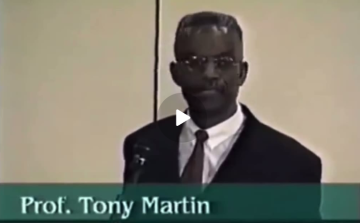
Dr. Tony Martin – The Jewish Role in the African Slave Trade
or go to
Aletho News Archives – Video-Images
In Memoriam
James Petras, In Memoriam
 02.13.2026
Professor James Petras, 89, world-renowned sociologist, public intellectual, and scholar of Latin American politics and global economics, died peacefully on January 17, 2026, in Seattle, WA, surrounded by family.
A prolific scholar and activist, he devoted his life to challenging power, imperialism, and inequality. … continue
Blog Roll
 Aletho News
- Israel ready to strike Iran-backed armed groups – media
- Behind US war drums against Iran: No goals, no plan, no off-ramp
- With Ukraine blamed for cutting oil flows to Hungary, Croatia also refuses to transfer Russian oil in violation of EU law
- Friedrich Merz’s Push to End Online Anonymity Has a Troubling Subtext
- Macron: French citizens fighting for Israel cannot be labeled ‘genociders’
- US eyes Gaza security force drawn from armed gangs
- The Only Motive Behind The ‘Imminent’ U.S. War With Iran Is The Zionist Lobby
- Trump eyes 350-acre US military base housing 5,000 troops in Gaza
- Israel Pushing US Toward a Big and Damaging War With Iran – Ex-Pentagon Analyst
- Meet The Liberal Zionist And Ukraine War Supporter Advising AOC On Foreign Policy
- If Americans Knew
- The Israeli Government Installed and Maintained Security System at Epstein Apartment
- Tucker Carlson interrogated in Israel, has passport seized after interviewing US ambassador
- 6,000 Amputees in Gaza Face Impossible Recovery amid Israeli War Ultimatum
- The Lancet: Gaza death toll far higher than reported – Not a ceasefire Day 132
- Compliant aid: Who are the Israel-approved NGOs scaling up in Gaza?
- Why won’t Trump’s “Board of Peace” bring peace? – Not a ceasefire Day 131
- Help end the injustice against Shadi
- Israel’s Favorite American President
- Israel’s “Yellow Line” Is a Death Trap for Palestinians. We Drove Into It.
- Why Israel’s expanding occupation in Syria presents a critical legal test
- No Tricks Zone
- Coal Power Back In Trend As Globe Tries To Keep Pace With Growing Demand For Power
- New Study: A 4°C Warmer Beaufort Sea Had ‘No Sea Ice’ 11,700 – 8200 Years Ago
- Unfudging The Data: Dutch Meteorological Institute Reinstates Early 20th Centruy Heat Waves It Had Erased Earlier
- German Gas Crisis…Chancellor Merz Allegedly Bans Gas Debate Ahead of Elections!
- Pollen Reconstructions Show The Last Glacial’s Warming Events Were Global, 10x Greater Than Modern
- Germany’s Natural Gas Storage Level Dwindles To Just 28%… Increasingly Critical
- New Study Rebuts The Assumption That Anthropogenic CO2 Molecules Have ‘Special’ Properties
- Climate Scientist Who Predicted End Of “Heavy Frost And Snow” Now Refuses Media Inquiries
- Polar Bear Numbers Rising And Health Improving In Areas With The Most Rapid Sea Ice Decline
- One Reason Only For Germany’s Heating Gas Crisis: Its Hardcore-Dumbass Energy Policy
 Aletho News