Russia, Iran and Turkey agree the US troops must leave Syria
By Steven Sahiounie | MIDEAST DISCOURSE | July 20, 2022
President Recep Tayyip Erdogan of Turkey, President Vladimir Putin of Russia, and President Ebrahim Raisi of Iran held talks yesterday in Tehran at the 7th Astana summit for peace in Syria, stressing the need for respecting Syria’s national sovereignty and territorial integrity.
The summits date from January 2017, and are named for the Kazakhstan capital they were first held at. The trio of leaders decided the next meeting will be held in Moscow before the end of the year.
The Syrian Foreign Minister, Faisal Mekdad, arrived in Tehran late on Tuesday to be briefed about the latest decisions following the meeting of the presidents.
The joint conclusions
Many important issues were discussed by the trio concerning the situation in Syria, which has developed into a stalemate. Global media has stopped covering Syria since 2019 when the battlefields went silent, but a political solution has been elusive.
One point that Turkey, Russia and Iran agreed upon was the need for the US occupation troops to leave Syria, and their unified opposition to the Biden administration policy in Syria, which includes the need to lift US sanctions on Syria which are oppressing the Syrian people.
“We have certain differences concerning what is happening on the Euphrates eastern bank. But we have a shared position that American troops must leave this territory,” Putin said while adding, “They must stop robbing the Syrian state, Syrian people, illegally exporting oil from there.”
The trio affirmed that there was “no military solution” to the conflict in Syria, and agreed on the need to eliminate terrorism and opposed any attempts to divide the country.
The three leaders also jointly condemned Israel’s ongoing attacks on civilian targets in Syria, and agreed that the crisis in Syria could only be resolved peacefully and by the Syrians themselves.
Raisi said, “The international community bears the responsibility to solve the crisis of the displaced and Syrian refugees, and we will support any initiative to do so.”
The Turkish position
For at least two months, Erdogan has threatened to conduct a fourth military invasion into northern Syria. Analysts had thought the summit would be used by Iran and Russia to convince Turkey a new attack on the US-sponsored SDF in the northeastern Kurdish region would be a destabilizing event for the region. It appears that Turkey was able to get assurances from Iran and Russia that the SDF would not present a border terrorist threat to Turkey.
The US, Russia and Iran had all shared the view that Turkey should not begin a new military attack in northern Syria.
Turkey and US are NATO members and had been allies. But, the US chose to partner with the SDF, who are a separatist group in Syria led by Kurds who are following a socialist political ideology based on the communist framework of the PKK, an internationally outlawed terrorist group who have killed thousands in Turkey over three decades.
The trio agreed that terrorism must be eradicated everywhere, and there cannot be “good terrorists” who are used by the US, while others are deemed “bad terrorists” such as ISIS and Al Qaeda.
US President Obama began the US-NATO attack on Syria in 2011 for ‘regime change’. He failed. The US used the Muslim Brotherhood in the Middle East, as well as global Al Qaeda branches which were transported into northern Syria from their base in southern Turkey, were the CIA operated a terrorist headquarters which was finally shut down in 2017 by President Trump.
Erdogan is a Muslim Brotherhood follower, and his AKP party is aligned with the international terrorist group banned in Egypt, Russia, Syria, Saudi Arabia and the UAE.
The US position
The Biden administration has made no changes to US policy in Syria since taking office. The US is not present in any Syrian peace talks. Obama started the destruction in Syria, but Biden is not offering any solution. The US sanctions have prevented any reconstruction from beginning, and the Syrian people have been struggling under hyper-inflation, with no end in sight.
Russia, Turkey and Iran agreed the US-EU sanctions should be lifted and described them as being “in contravention of international law, international humanitarian law and the UN Charter including, among other things, any discriminatory measures through waivers for certain regions which could lead to this country’s disintegration by assisting separatist agendas.”
Trump had ordered the withdrawal of US troops from Syria, but the Pentagon insisted that they stay in support of the SDF who steal the oil from the main oil field in Syria and sell the oil to support their socialist administration. That oil is the property of Syria, and because they are refused access to the oil, the Syrian people live with just two hours of electricity per day.
Damascus considers the US troops in Syria as a military occupation force which destabilizes the country and is against the UN charter and international law.
US raids on terrorists in Idlib
Idlib is the last remaining terrorist controlled area in Syria. Hayat Tahrir al-Sham is the Radical Islamic terrorist group who keep about three million persons as human hostages. Turkey protects the terrorists and keeps Russian and Syrian military from attacking Idlib, while the UN and other humanitarian groups keep the terrorists, their families, and civilians fed. The US has also been very vocal and has accused the Syrian and Russian military for attacking terrorists in Idlib.
In a double-faced US policy in Idlib, the US has continued to kill ISIS leaders in Idlib, including the first assassination of the ISIS Calipha Baghdadi ordered by Trump. Since then, another five ISIS leaders have been killed by the US in Idlib. The US know that the terrorists in control in Idlib are allies of ISIS, and yet the US policy is to protect Idlib from being cleared of terrorists.
In 2015, Russia was asked to enter Syria as the Al Qaeda affiliate Jibhat al-Nusra was threatening to create an Islamic State in Syria. Putin recalled at the summit, “We broke the backbone of international terrorism there.”
Grain crisis discussion
Putin and Erdogan discussed the supply of grain from Russia and Ukraine to world markets. Putin thanked Erdogan for his efforts “to mediate by providing Turkey with a platform for negotiating food issues and grain exports across the Black Sea.” Putin called on the US to lift all restrictions on grain exports from Russia to improve the global food market situation.
Erdogan has been leading efforts to broker a deal to allow thousands of tons of grain that is being blockaded by Russia to leave Ukraine’s ports. Turkey has responsibility under the 1936 Montreux convention for naval traffic entering the Black Sea, and is proposing that Russia allow Ukrainian grain ships to leave Odesa on designated routes.
Steven Sahiounie is a journalist and political commentator.
Putin tells US to stop ‘looting’ Syria
Samizdat | July 19, 2022
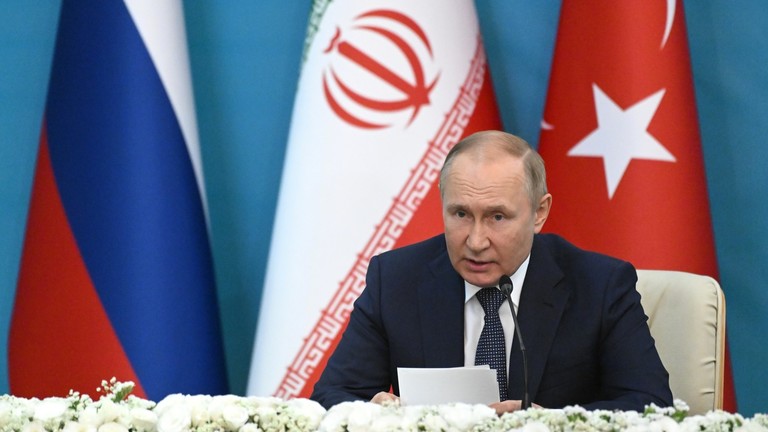
The US needs to stop “stealing” the oil from the Syrian people and state, Russian President Vladimir Putin said on Tuesday, after meeting with his Iranian and Turkish counterparts in Tehran. The three guarantors of the “Astana process” also agreed that the US should leave the trans-Euphrates, and stop making the humanitarian crisis in Syria worse with their unilateral sanctions.
American troops must leave the territory east of the Euphrates river and “stop robbing the Syrian state, the Syrian people, exporting oil illegally,” Putin told reporters on Tuesday evening. He said this was a “common position” of Russia, Iran and Turkey.
Several hundred US troops are illegally present in Syria, mainly controlling the oil wells and wheatfields in the country’s northeast, controlled by the Syrian Democratic Forces (SDF) militia since the defeat of Islamic State (IS, formerly ISIS) terrorists. The US-backed SDF has refused to reintegrate with the government in Damascus, which Washington wishes to see overthrown.
Since 2019, the US has sought to punish anyone trying to assist the reconstruction of war-torn Syria via the “Caesar Syria Civilian Protection Act,” accusing the government of President Bashar Assad of war crimes and blocking all assistance to Damascus.
Putin said on Tuesday that such sanctions have had “disastrous results” and that humanitarian aid to Syria “should not be politicized.”
During Tuesday’s summit in Tehran, Putin met with Iranian President Ebrahim Raisi and Turkey’s Recep Tayyip Erdogan. In a joint declaration, the three presidents confirmed their conviction that “there can be no military solution to the Syrian conflict,” only a political one under the leadership of the UN. They also condemned “unilateral sanctions violating international law” that are exacerbating the serious humanitarian situation in Syria, urging the UN and other international organizations to “increase assistance to all Syrians, without discrimination, politicization and preconditions.”
Russia sent an expeditionary force to Syria in September 2015, at the request of Damascus, to help defeat IS and other terrorist groups. In January 2017, Moscow, Ankara and Tehran launched the “Astana process” – named after the capital of Kazakhstan – to resolve the conflict in Syria, which began in 2011.
US sponsored Kurdish SDF calls on Russia and Iran to prevent planned Turkish military operation
MEMO | July 17, 2022
The head of the Kurdish-led militant group Syrian Democratic Forces (SDF) has called on Russia and Iran to help prevent Turkiye from launching a military offensive against its positions in northern Syria, as the threat of a new Turkish operation continues to loom.
According to the AFP news agency, the SDF’s chief commander Mazloum Abdi urged the involvement of Moscow and Tehran against Ankara’s aims in the region this week, accusing the US-led global coalition to defeat Daesh – also known as Operation Inherent Resolve – of taking a “weak” position that is “insufficient to end the threats.”
In May, Turkish president Recep Tayyip Erdogan announced plans to launch a new military operation into the areas controlled by the Kurdish militias, which would be Turkey’s fourth such offensive in northern Syria. The operation is meant as an effort to clear the 30-kilometre-deep ‘safe zone’ in northern Syria from remaining Kurdish militant elements, in order to settle at least a million Syrian refugees there.
Abdi also reiterated that after negotiating with Russia, Kurdish militant forces allowed the Syrian regime of Bashar al-Assad to reinforce their troops in Kurdish-controlled areas, particularly in cities such as Kobane and Manbij in the north of the country. The threat of a renewed Turkish offensive had seemingly forced the SDF to strengthen ties with Assad, Russia, and now Iranian forces in an effort to repel Ankara’s planned operation.
Abdi’s call for Russian and Iranian assistance is likely more diplomatic than military, as it comes only days before a summit that is to be held in Iran from Tuesday, in which Iranian president Ebrahim Raisi will host Erdogan and their Russian counterpart Vladimir Putin in a renewed set of negotiations on Syria and the ongoing 11-year-long conflict.
If Moscow and Tehran heed the SDF’s call, they may be expected to attempt to discourage Ankara from its planned military operation.
Damascus Airport Runways Out of Service After Israeli Strikes: Syrian Transport Ministry
Samizdat – 10.06.2022
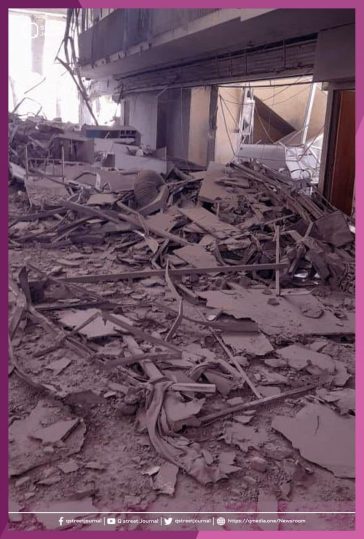 The runways at Damascus airport are out of service as a result of airstrikes conducted by the Israeli air force, the Syrian Ministry of Transport said.
On Thursday, the Syrian Defense Ministry said that Israel had fired missiles at a number of targets south of Damascus. Syria said that Israeli warplanes aimed to hit the airport.
“As a result of the Israeli aggression, which hit the infrastructure of the international airport of Damascus, the runways are significantly damaged in several places along with the navigation lighting,” the ministry said, as quoted by the Shams FM broadcaster.
The attack also damaged the second terminal of the airport.
“At the moment, our specialists are working to eliminate the consequences of the airstrikes and repair what was damaged as a result of the attack. The airport’s operations will be resumed immediately after repair and safety checks,” the ministry added.
Syria’s Cham Wings Airlines said earlier that all of its flights were diverted from Damascus airport to Aleppo in the north of the country.
Russia’s Foreign Ministry Strongly Condemns Israeli Airstrike at Damascus Airport
Also on Friday, Maria Zakharova, the Russian Foreign Ministry’s spokeswoman, said that Moscow strongly condemns the Israeli airstrikes at the airport and calls on the Israeli side to halt such activities.
“In this regard, we are forced to emphasize again that the ongoing Israeli shelling of Syria territory … is absolutely unacceptable. We strongly condemn Israel’s provocative attack on critical Syrian civilian infrastructure,” the spokeswoman said in a statement published by the ministry.
Zakharova also said that such strikes create risks “for international air traffic.”
“We demand from the Israeli side to halt such activities,” Zakharova added.
Biden Rocks the Middle East
Partitioning Syria may be on the way
BY PHILIP GIRALDI • UNZ REVIEW • JUNE 7, 2022
That dwindling band of observers that continues to express concern over the catastrophe that constitutes United States foreign policy under President Joe Biden have come to realize how the Ukraine situation is being used as cover for interventions and other similar mischief in other parts of the world. Recent reporting, for example, reveals that the Biden Administration has decided “to reestablish a persistent US military presence in Somalia to enable a more effective fight against al-Shabaab” in spite of the fact that “there is absolutely no constitutional authority for President Biden to send troops into Somalia or drop bombs on Somalia.” Nor does al-Shabaab represent a threat to Americans or American interests.
To be sure, the emphasis on Ukraine has a certain cogency as it is particularly dangerous and could lead to nuclear devastation in a situation where intervention by the United States was not only unwarranted but also unresponsive to any actual national interest of threat. And escalate it will if the White House continues on its current path. Ukrainian government sources are now stating that the United States is preparing to destroy the Russian Black Sea fleet to end the blockade of Ukraine’s ports. The commander of US forces in Europe General Christopher Cavoli seems to be confirming that report when he refers to the preparation of “military options” to help export Ukrainian grain.
One might suggest that such a move could just be enough to start World War III and World War III would almost certainly turn nuclear very quickly. Some might consider that taking a deliberate step that would inevitably escalate into destruction of the entire planet as we know it just might be a foreign policy mistake on the part of the President Joe Biden Administration but I’m sure the chairborne warriors down at Foggy Bottom would disagree, pointing out that nothing would make old Vladimir Putin run and hide faster than a barrage of harpoon missiles imbibed with his breakfast tea.
And, of course, there’s more. There’s always more. The focus on Ukraine in the US and international media combined with a stream of befuddling malapropisms coming out of the White House has obscured what is going on in other corners in the world, where Washington is also flexing its biceps in full knowledge that a manageable war or two will surely help one’s favorability rating come elections in November.
And there is always Israel. The Israeli army and police have recently been shooting dead Palestinian teenagers on a nearly daily basis, and that comes on top of the killing of Palestinian-American journalist Shireen Abu Akleh a month ago. Israel’s Defense Minister Benny Gantz was in Washington two weeks ago to meet and greet and one might suspect that he just might have been in town inter alia to express some apology for his army’s assassination of Abu Akleh, but that would be to misunderstand the bilateral relationship. In reality, when Israel shouts “jump” the Biden Administration responds “how high, sir?”
Also in the Middle East and also related to Israel, the US State Department has gone into a hissy fit over the May 26th Iraqi parliament’s unanimous vote to make illegal all “normalization” ties with Israel. State was quick to react, in contrast to its torpor dealing with most issues, but it was Israel involved, not just “most issues.” A statement was issued saying “The United States is deeply disturbed by the Iraqi Parliament’s passage of legislation that criminalizes normalization of relations with Israel [while also] jeopardizing freedom of expression and promoting an environment of antisemitism…” Ah yes, the old anti-semitism canard surfaces yet again!
There are also several interesting stories relating to Syria, which continues to be a hotspot because Israel wants to maintain its ability to freely bomb targets that it describes as “terroristic” or connected to arch enemy Iran. The bombing has continued regularly since the Ukraine situation started and has hardly ever been reported in the US media. And, yet again, there is more to the story in terms of US involvement. First of all, Russia reacted to the lukewarm Israeli support for its invasion of Ukraine. An Israeli attack on targets in Syria last week was met by a S-300 missile fired by Russian army manned air defenses. Up until now, Moscow has refrained from attempting to shoot down Israeli warplanes, but the missile was clearly a warning of what might be coming if Israel persists in its attacks.
Also relating to Syria, it is ironic that the US has accused Russia of war crimes over its intervention in Ukraine while at the same time continuing its own illegal occupation of Syria. And it has its own war crimes record. Last week the Pentagon announced that it had completed its investigation into an attack in Syria on March 18, 2019 that killed some presumed ISIS guerrillas as well as four civilians while wounding fifteen others. The Pentagon press secretary John Kirby said the Defense Department had determined that that the airstrike “did not violate the laws of warfare or the rules of engagement. Neither the ground forces commander nor anyone involved in carrying out the airstrike ‘acted inappropriately or acted with malicious intent’ or ‘deliberately wanted to and sought out to kill civilians.’” In an earlier investigation concluded last December, the Pentagon said “it would not hold anyone accountable for a drone strike also in Syria in late-August that killed 10 civilians, including seven children. A review of the strike concluded it was a ‘tragic mistake’ that was the result of ‘execution errors.’”
And there are also credible reports that the United States is preparing to de facto partition Syria, to create a separate state run by its Kurdish allies in the country’s northeast that would be under Washington’s protection and would include a garrison of American troops. Such a move would, of course, be completely illegal and is in fact eerily reminiscent of the alleged “war crimes” that the US is claiming regarding Russia for its attempted partition of Ukraine. Interestingly, the planning has not been reported in the mainstream media, yet another instance of the Ukraine crisis serving as cover to drown out all background noise and provide the US with opportunities to increase its meddling in places like the Middle East on behalf of feckless allies like Israel and Saudi Arabia.
Ironically, when the United States initially intervened in Syria, it claimed to do so to fight the terrorist group Islamic State in Syria (ISIS). Subsequently, it cooperated with an al-Qaeda affiliate while close ally Israel had a similar arrangement with ISIS itself. The Kurds and both ISIS and al-Qaeda are all believed to be involved in the theft and sale of Syrian oil. Now the US, which also has been stealing the oil, is seeking something like a permanent presence to solidify its control over Syrian resources.
Interestingly, the planning by Washington to create a sub-state or autonomous region in the north east of Syria was revealed by no less than State Department number three Victoria Nuland at a recent conference held in Morocco. Nuland, who was the driving force behind regime change in Ukraine in 2014, described the Syria development as a “stabilization” activity. The new entity would include Syria’s major oil producing region, which is currently being exploited by Washington and its “allies,” as well as much of the country’s arable land.
Washington has already applied unprecedented punitive sanctions on the parts of Syria controlled by the Russians and President Bashar al-Assad, to include the so-called Caesar Syrian Civil Protection Act’s secondary sanctions that punish anyone trying to avoid the restrictions placed by Washington. Former US Ambassador to Syria James Jeffrey put it this way “And of course, we’ve ratcheted up the isolation and sanctions pressure on Assad, we’ve held the line on no reconstruction assistance, and the country’s desperate for it. You see what’s happened to the Syrian pound, you see what’s happened to the entire economy. So, it’s been a very effective strategy….” He also added “My job is to make it a quagmire for the Russians.”
To circumvent the existing sanctions, the new mini-state would therefore be granted economic viability by making it sanction free as an inducement for foreign investment and development of settlements largely inhabited by Kurds associated with the United States. A “general license” will be issued to facilitate investment and other economic activity. The US will commit $350 million to the project, which is being carried out with the cooperation of the Turkish authorities controlling their own militias along the border. By securing the north east of Syria, Washington would also be able to maintain and protect the illegal US Al-Tanf military base in the south-east of the country bordering Jordan. Al-Tanf blocks the creation of a contiguous “Resistance Axis” from Iran to Lebanon and ultimately to Palestine, thereby maintaining “Israeli security” in the region. As is all too frequently the case, Israeli interests always come first in the minds of Washington politicians.
Philip M. Giraldi, Ph.D., is Executive Director of the Council for the National Interest, a 501(c)3 tax deductible educational foundation (Federal ID Number #52-1739023) that seeks a more interests-based U.S. foreign policy in the Middle East. Website is councilforthenationalinterest.org, address is P.O. Box 2157, Purcellville VA 20134 and its email is inform@cnionline.org.
Syria demands US pay for air strike victims
Damascus rejects Pentagon findings, demands troop withdrawal
Samizdat | May 21, 2022
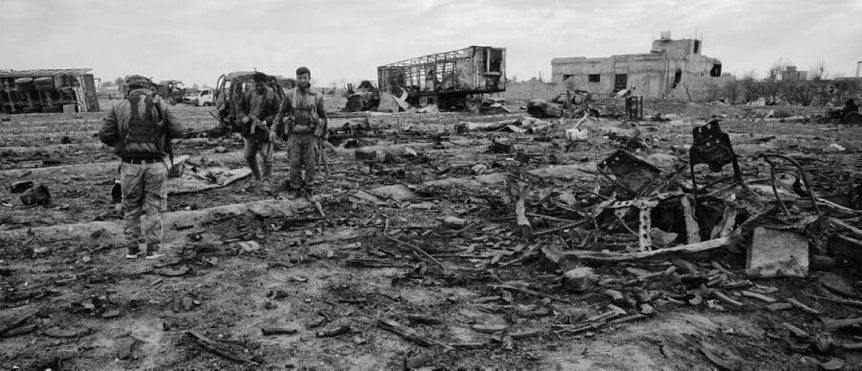
The Syrian permanent mission to the UN stated on Friday that the US must withdraw its troops from the country at once and pay reparations for the deaths of dozens of civilians in a 2019 airstrike in the town of Baghuz.
Damascus categorically rejected a Pentagon report claiming it was not at fault for the attack, declaring its conclusions represent “an admission of negligence that calls for accountability.”
The Pentagon had released a report on Tuesday claiming the March 18, 2019 airstrike targeting an Islamic State (IS, formerly ISIS/ISIL) encampment in Syria’s Baghuz, initially believed to have killed some 70 people, did not violate the rules of engagement or laws of war.
Washington’s assessment ultimately claimed that of the 56 people it determined to have died in the 500-pound bomb blast, just four were civilians. The report also claimed that while “civilians were within the blast radius” resulting in civilian casualties, the decision to drop the massive bomb had “demonstrated awareness for non-combatants.” However, in determining who was considered a terrorist, it used an Obama-era standard classifying all killed military-age males as combatants by default.
The Syrian mission to the UN dismissed the Pentagon’s conclusions as a “clear attempt to absolve the US occupation forces in Syria of their direct responsibility for civilian casualties under the pretext of fighting the terrorist organization ‘ISIS’” and rejected any claims that “efforts have been made to distinguish between civilians and members of ‘ISIS’” as “empty justifications” for the murder of civilians.
“These biased investigations cannot deny the fact that a crime against humanity has occurred in Baghuz,” the mission told Newsweek on Friday. “Any justifications provided by the US administration for not violating the law of war or the rules of engagement are to circumvent the fact that the US forces deployed in Syria are illegal and they launch military strikes, under the pretext of fighting terrorism, without the approval or coordination of the government of the Syrian Arab Republic.”
Despite the report supposedly clearing the US military of any wrongdoing, the full text remains classified, with just a two-page summary released to the public. The site of the blast itself was quickly bulldozed, and the initial internal reports were “delayed, sanitized, and classified,” according to the New York Times.
The report’s conclusions stood in stark contrast to remarks from US personnel on the ground at the time, with one military analyst reportedly stating that “we just dropped [the 500-pound bomb] on 50 women and children” and others questioning whether they had just witnessed a war crime.
While US Central Command had previously admitted that 80 people had been killed in the strike and just 16 were alleged ISIS terrorists, the military defended its actions by suggesting 60 more could have also been terrorists, since “women and children in the Islamic State sometimes took up arms.”
The Pentagon’s recent report contradicted even those watered-down findings, admitting only that “administrative deficiencies contributed to the impression that the [Department of Defense] was not treating this [civilian casualty] incident seriously, was not being transparent, and was not following its own protocols” regarding civilian casualty incidents.
International civil society groups have eviscerated the Pentagon’s civilian casualty reporting protocols for their toothlessness, most recently following an incident in Afghanistan in which an Afghan NGO worker and nine family members – including seven children – were killed in an airstrike supposedly targeting an ISIS terrorist. That investigation, too, found no “misconduct or negligence” on the part of the killers.
Syria says Israeli missile strikes result in fatalities
Samizdat | May 20, 2022
At least three people were killed at Damascus International Airport on Friday, in what the Syrian government said was a missile attack from Israel. Two flights were delayed as a result of a fire at the facility. Israeli media reported that the strikes were aimed at Syrian and Iranian military targets.
Syrian air defenses intercepted multiple “hostile targets” in the skies over Damascus late on Friday, but some missiles got through to cause casualties and start a fire at the airport, according to the Syrian Defense Ministry.
Explosions could also be heard along the coast and in the Syrian city of Tartus, which hosts a Russian naval base.
Friday’s strike targeted pro-Iranian militias operating in Syria, according to the Israeli outlet Ynet. The Israeli government has not officially commented on the reports so far.
On the rare occasions Israel has admitted carrying out attacks inside Syria, the Israeli government says it has the right to preemptive self-defense against Iran. Tehran has acknowledged sending military aid to Damascus to aid the fight against Islamic State and other terrorist groups.
Last month, Hezbollah leader Hassan Nasrallah warned Israel that if such strikes continue, Iran might “attack Israel directly,” citing a missile strike in March against a suspected Israeli operations base in the northern Iraqi city of Erbil.
Damascus Says Areas of Syria Occupied by US Troops Will Soon Return to Government Control
Samizdat – 19.05.2022
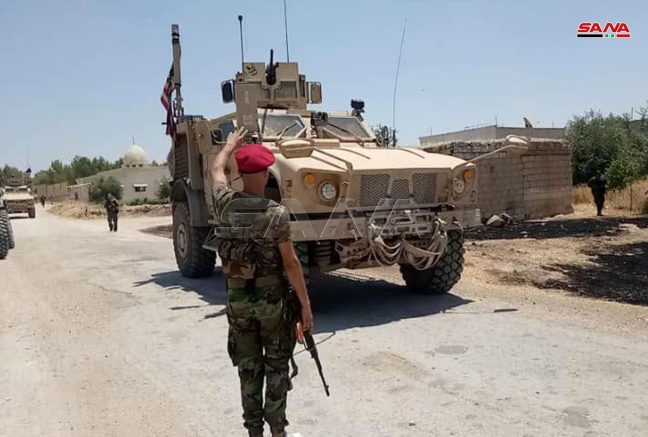
The United States and its Syrian Kurdish militia allies control wide swathes of territory in eastern Syria, including areas producing the vast majority of the Arab Republic’s oil, gas and food. Damascus has accused Washington of stealing these resources, and demanded repeatedly that the US withdraw its forces.
The US occupation of eastern Syria will soon be brought to an end, Foreign Minister Faisal Mekdad has said.
“The illegal US presence in the Jazira region of northern Syria is reaching its end, and the regions occupied by American forces will soon come under the Damascus government’s authority,” Mekdad said, speaking to Syria’s al-Ikhbariyah TV.
Mekdad called on the majority Kurdish Syrian Democratic Forces militias to realize that America would eventually withdraw and abandon them.
The foreign minister said Damascus’s principled support for the Palestinian cause, and its efforts to liberate Israeli-occupied territories in the Golan Heights and southern Lebanon were among the key causes behind the foreign-backed conflict which has rocked Syria since 2011.
“Given Syria’s strong commitment to such positions, as well as its strategic location and great regional influence, hostile nations have been trying to affect the Damascus government’s policies. Having failed in their attempts, they resorted to terrorism and sponsored this menace with billions of dollars,” Mekdad said.
This foreign-backed effort to break up the country has failed, Mekdad stressed.
US forces have occupied oil and food-rich areas of Syria since 2017, entering the country under the pretext of fighting Daesh (ISIS). The Islamist militia rampaged through northern and western Iraq and eastern Syria from 2013-2017 before being pushed back and defeated by an unlikely coalition including the Syrian and Iraqi governments, Iraqi Shia militias, Russia, Iran, Lebanon’s Hezbollah movement, and, at least formally, the United States.
The Biden administration has expressed no intention of withdrawing US forces from Syria, with at least 900 troops and an unknown number of defence contractors operating across ten or more bases dotting the country’s northeast.
Syrian officials and media have accused these forces of guarding oil and gas production facilities, and of escorting convoys of oil tankers and food-laden trucks out of the country into Iraq, while bringing weaponry and supplies for bases in. Unlike his predecessor Donald Trump, who openly bragged about being in Syria to “take” and “keep the oil,” Joe Biden has insisted that the US’s illegal presence in the country is about “preventing a resurgence” of Daesh.
The Syrian army and ordinary residents regularly confront US occupation forces using non-lethal means, including by blocking off local roads and setting up checkpoints to try to stop American armoured vehicles from using them.
Washington moves to annex north-east Syria by proxy

By Vanessa Beeley | May 14, 2022
Under cover of media focus on the NATO proxy war in Ukraine and the Zionist assassination of Al Jazeera senior correspondent Shireen AbuAkleh, Washington is making moves to annex Syrian territory.
On May 11th during the meeting of the “global coalition against Islamic State” in Marrakech, Morocco the U.S acting assistant Secretary of State, Victoria Nuland, made an extraordinary move that has largely gone under the radar of even independent media. Everyone is distracted by events in Ukraine and the Palestinian Occupied Territories.
Nuland who famously exclaimed “Fuck the EU” during recorded conversations that exposed the US State Department involvement in the 2014 coup in Ukraine and the subsequent massacre in Odessa by the Washington’s Nazi Contras is now turning her attention to Syria’s north-eastern territory.
Nuland has announced that the US will allow foreign investment in north-east Syria under the control of the Kurdish Separatists, another US Coaliton proxy in Syria. These investments will not be affected by the unprecedented sanctions that are effectively blockading Syria.
The most savage of these economic measures were introduced under the Trump administration – the Caesar sanctions that are designed to inhibit any external assistance for Syria from within the Syrian alliance, including Russia and Iran.
The Caesar Syrian Civilian Protection Act is also fraudulent by claiming to “protect civilians”. In reality, it is punishes and hurts the vast majority of 17 million persons living in Syria. It will result in thousands of civilians suffering and dying needlessly. – Rick Sterling
Needless to say that the de-facto unilateral sanctions being applied as a collective punishment for the entire Syrian population living in areas protected by the Syrian government are illegal. To extend those sanctions to sovereign nations providing assistance to rebuild Syrian infrastructure is barbaric and a deliberate attempt by the US to ensure that Syria cannot recover from the eleven year war waged against it.
The correlation between economic and military coercion in Syria was made clear by previous Secretary of State, Mike Pompeo’s point-man on Syria, Ambassador James Jeffrey, who not only described Al Qaeda as a “US asset” in Syria but also bragged openly about the misery that sanctions had brought to the Syrian people:
And of course, we’ve ratcheted up the isolation and sanctions pressure on Assad, we’ve held the line on no reconstruction assistance, and the country’s desperate for it. You see what’s happened to the Syrian pound, you see what’s happened to the entire economy. So, it’s been a very effective strategy….
Journalist Rick Sterling also pointed out the illegality and brutality of the Caesar sanctions:
The US has multiple goals. One goal is to prevent Syria from recovering. Another goal is to prolong the conflict and damage those countries who have assisted Syria. With consummate cynicism and amorality, the US Envoy for Syria James Jeffrey described his task: “My job is to make it a quagmire for the Russians.”
Nuland said Washington would issue a general licence, which frees companies from U.S. sanctions restrictions in north-east Syria.
“The United States intends in the next few days to issue a general license to facilitate private economic investment activity in non-regime held areas liberated from ISIS in Syria.”
The irony here of course is that ISIS is in reality another proxy of the US Coalition that had benefitted from the oil resource revenue prior to the occupation of the oil fields by the Kurdish Contras. There is also a degree of collaboration mired in corruption between the Kurdish Separatists and ISIS both focused on the ethnic cleansing of the north-east to make way for an “autonomous region” effectively controlled by Washington, London and Israel. As Syrian researcher, Ibrahim Wahdi, wrote back in February 2022:
We can clearly see that the largest organized smuggling and mass transfer of ISIS militants towards the Syrian Badia connected with the Iraqi border north of Al-Tanf region, which coincided with the Ukraine crisis and the negotiations of the Iranian nuclear deal, aims to trigger chaos by CIA and Israeli intelligence through reviving ISIS to keep it as a pretext for the US occupation of Syrian lands.
Nuland’s claims that investment in areas “previously held” by ISIS are “needed to prevent a resurgence of Islamic State by allowing it to recruit and exploit local grievances” is hypocrisy of the highest order. Washington and London are recruiting, arming and equipping ISIS terrorists and embedding their fighters in areas of the Badia desert (East of Homs) where they can do the most damage to Syrian Arab Army installations and convoys – this includes the disruption of the meagre oil supply to Damascus from the north-east. As Wahdi pointed out:
The danger of the ISIS card lies in the large numbers distributed among 9 prisons in the US-backed SDF-controlled areas, which are potential targets for similar attacks [to release ISIS terrorists], especially the “Kamba Al-Bulgar” prison, east of Al-Shaddadi city in the southern countryside of Hasaka, which includes 5,000 ISIS militants.
In addition to Al-Sina’a prisons, Al-Shaddadiyah, Derek/ Al-Malikiyah, Al-Kasra, Al-Raqqa Central Prison, Rmelan and Nafker in the Qamishli city, from which 60 ISIS militants were transferred to a prison in Al-Hasakah last September.
Both ISIS and the Kurdish Contras are responsible for the theft of oil from Syria. Al Qaeda has the monopoly of the processing of the stolen oil via its WATAD organisation. The US Coalition has a vested interest in bringing the Syrian population to its knees and to stir up dissent against the Syrian government that has trashed the Coalition military plans for regime change.
The war against Russia in Ukraine is also revenge for Russia’s role in genuinely fighting ISIS in Syria and forcing the terrorist entity to withdraw to the north-east and Iraq where it is equally responsible for the destruction of civilian infrastructure in particular electrical installations to further punish any Iraqi resistance to US occupation.
Nuland and Washington are deliberately enflaming local grievances and enabling ISIS recruitment and expansion.
Not only will these sanction-free licences apply to the Kurdish Contras but the Turkish backed militia occupying the northern border zones of Syria will also be included in the deal. This means that Syrian territory will be de-facto annexed by these NATO-member-state proxies including Al Qaeda (Turkey) and affiliates.
According to a diplomat who has discussed the issue extensively with U.S officials, the licence will apply to agriculture and reconstruction work but not to oil. I guess there is no need to include oil as that is already considered a U.S benefit of the war they started in 2011. After all Trump said very clearly “we’re keeping the oil – I’ve always said that — keep the oil. We want to keep the oil, $45 million a month. Keep the oil. We’ve secured the oil.”
If the licence will apply to reconstruction and agriculture, this will legitimise the building of settlements and the continued theft (by the Kurds) of Syrian agricultural produce in the region, the occupation of the wheat storage centers and the reduction in supply to Damascus of these essential resources. Essentially doubling down on the siege of the Syrian people who are already suffering severe food insecurity, poverty, fuel and energy deprivation on a terrible scale.
The act of withholding means of sustaining life to innocent civilians in order to coerce an entire nation into submission to foreign agendas in the region must surely qualify as economic terrorism. The destruction of essential civilian infrastructure is a war crime, the withholding of essential resources or occupation of those resources is also a war crime. One could argue that the US Coalition is responsible for genocide in Syria under Genocide Convention article II (e) – deliberately inflicting on the group, conditions of life calculated to bring about its physical destruction in whole or in part”.
When Washington talks about “stabilisation” activities in the areas its “allies” took from Islamic State they are lying. Its “allies” are being led to believe they will benefit from cooperation with the U.S. In reality they are useful tools to facilitate the U.S and Israeli agenda in the region – to balkanise Syria and above all to secure the illegal US Al Tanf military base in the south-east (bordering Jordan) to prevent the linking of the Resistance Axis from Iran to Lebanon and ultimately Palestine. To protect “Israeli security” in the region.
The organised smuggling and transfer of ISIS terrorists towards the Syrian Badia connected with the Iraqi border north of Al Tanf is to maintain the CIA/MI6/Israeli chaos strategy in Syria and to justify US occupation of Syrian territory under the faux ISIS pretext.
What Nuland is proposing is a step forward for Washington in the annexation of Syria’s most resource rich territory. It is annexation by proxy. Turkey will also benefit from these licence schemes and will further embed its Al Qaeda-led militia in the northern border areas thus ensuring permanent insecurity for Syria to the north.
Arabs, Assyrians and Armenians will necessarily be ethnically cleansed from these zones to make way for these US-sanctioned settlements and it is common knowledge that the Kurdish Contras have been preparing for this for some time – banning the Syrian curriculum in schools and razing Arab houses in the area while forcing conscription onto local communities, running campaigns of kidnapping and detention.
Nuland informed coalition members in Marrakech that “Washington wanted to raise $350 million for these alleged “stabilisation” activities in north-east Syria during 2022. Iraq is also the target of the same “stabilisation” campaign. What Nuland really means is that Washington under cover of Ukraine will move to secure permanent violation of Syria’s territorial integrity while feigning outrage that Russia is violating the sovereignty of Ukraine already occupied by NATO and little more than Washington’s satellite vassal state on the border with its arch enemy Russia.
Assad renews Syria’s bonds with Iran
BY M. K. BHADRAKUMAR | INDIAN PUNCHLINE | MAY 9, 2022
The unannounced arrival of the Syrian President Bashar al-Assad to Tehran on Sunday makes yet another wrinkle to the geopolitics of West Asia. In a short trip of a few hours, Assad had meetings with Iran’s Supreme Leader Ali Khamenei and President Ebrahim Raeisi and returned to Damascus.
This is only the second trip by Assad to Iran in the past 11 years since the conflict erupted in Syria. The last occasion was in 2019, when he came accompanied by the charismatic commander of the IRGC’s elite Quds Force late Qassem Soleimani to mark Syria’s “victory” in the conflict. Much water has flowed down down the Euphrates and the Tigris since then.
There is some speculation that Russia may redeploy its forces in Syria. The Israeli intelligence website DebkaFile reported cryptically on Friday that “Russian units deployed to Syria are assembling at the air bases of Hmeimim, Qamishli, Deir e-Zor and T4, ready for some to transfer to the Ukraine warfront. DEBKAfile’s military sources report that the Russians are handing over key bases to Iran’s Revolutionary Guards and Hizballah.”
Prima facie, this is kite-flying, so to speak. There is no independent word from Moscow. Iran will be certainly in the loop on any big Russian troop withdrawal from Syria. The Turkish air space is closed to Russian [military] planes since April and on February 28 Ankara had restricted the passage of Russian warships through the Bosporus and Dardanelles Straits (unless they are returning to their bases in the Black Sea.)
Analysts have interpreted the Turkish decisions as “anti-Russian” but they come under the ambit of Montreux Convention (1936) and on closer look, may even work to Moscow’s advantage since the door is also closed to any NATO naval build-up in the Black Sea. Russian papers have pointed out that Moscow has been using the air corridor via Iran and Iraq to supply its troops in Syria.
Indeed, Turkey is doing a delicate trapeze act vis-a-vis Russia and Ukraine, being a Black Sea power with overlapping security concerns, while also a NATO power. Turkey has deftly created space to manoeuvre since NATO is technically not at war with Russia, and since Turkey is not a EU member country, it isn’t obliged to sanction Russia, either.
Turkish leadership has actively nurtured contacts with the Kremlin, and the economic partnership continues, including over the construction of the massive $20 billion Akkuyu Nuclear Power Plant (comprising four 1,200 MW VVER units), which is expected to meet ten percent of Turkey’s electricity demand when it is completed in 2025.
Again, Russian carrier Aeroflot has just resumed flights to Turkey in anticipation of the tourist season. Believe it or not, Turkey has found an ingenuous formula to allow Russian tourists to travel to Turkey bypassing the suspension of Visa and Mastercard by making it possible to access their funds through Russia’s homegrown payments system called Mir! Some 4.7 million Russian tourists visited Turkey last year, accounting for 19% of the total tourist arrivals, fetching an annual income exceeding $10 billion.
When it comes to Russian-Iranian relations too, the picture is broadly similar to India’s — neither supporting Russia nor opposing it while refusing to censure Russian intervention and counselling ceasefire and dialogue as the only solution.
According to Iranian media reports, Russia’s Deputy Prime Minister Alexander Novak is due to visit Iran shortly in connection with the session of the Iran-Russia Joint Economic Committee. The discussions are expected to focus on “strengthening financial cooperation and resolving transit problems” between the two countries as well as cooperating in the fields of oil and gas and promoting trade and tourism. Tehran knows that such camaraderie with Moscow is contrary to the spirit of Western sanctions.
Moscow has every intention to remain actively involved in Syria. Special Russian Presidential Representative for the Middle East and Deputy Foreign Minister Mikhail Bogdanov disclosed to Tass last week that Russia is working on scheduling the next international meeting on Syria in the Astana format for the end of May in Nur-Sultan, Kazakhstan. Does that look like Russia washing its hands off Syria? To quote Bogdanov, “We already discussed this with partners Iran and Turkey as the guarantors of the Astana process plus with the Syrian government and opposition delegations.”
The official Syrian news agency Sana described Assad’s trip to Tehran as a “working visit.” It quoted Assad as stressing to Khamenei about “the importance of continuing cooperation in order not to allow America to rebuild the international terrorist system that it used to harm the countries of the world,” adding that the US “is weaker than ever.”
There are four main takeaways from Assad’s talks with the Iranian leadership. First, Assad made it clear in no uncertain terms that no matter Syria’s normalisation with the UAE (or other Arab countries involved in the conflict), he continues to attribute the highest importance to Syria’s alliance with Iran. Assad underscored that Syria is ready for broader coordination with Iran in security, political and economic fields.
Second, Damascus needs Tehran’s help for finally freeing Syria from foreign occupation. Raisi told Assad, “The whole of the Syrian land must be liberated from foreign occupiers. This occupation should not be subject to the passage of time, and the occupying forces and their mercenaries should be expelled.” Sana cited Khamenei as stressing that Iran will “continue to support Syria to complete its victory over terrorism and liberate the rest of the country’s lands.”
Third, the two countries have a consensus on the effectiveness and vibrancy of the resistance front. Assad acknowledged that the weakening of the US’ influence in West Asia and the end of Israel’s military supremacy regionally is a direct outcome of the strategic relations between Iran and Syria, “which must continue with strength.”
Interestingly, Khamenei recalled that Soleimani had “a special liking towards Syria and literally sacrificed his life” for that country and viewed the issue of Syria as a “sacred duty and obligation”. Khamenei reminded Assad poignantly, “This bond is vital for both countries and we should not let it weaken. On the contrary, we should strengthen it as much as possible.” Raisi called Assad “one of the figures of the Resistance Front” like his father Hafez al-Assad.
Fourth, Assad sought and obtained assurances from the highest level of Iranian leadership that Iran will help Syria overcome its difficulties. This is particularly crucial at a juncture when regional politics is in flux and Russia is preoccupied in Ukraine.
A resuscitation of the US-led regime change project in Syria is not to be expected and Washington no longer wields commanding influence over its Persian Gulf allies or Turkey to get them to act as its surrogates. But Assad’s challenge is that Syria is getting relegated to the back burner as new hotspots and topical issues draw the region’s attention — such as JCPOA, Yemen, Iran-Saudi normalisation, OPEC+, etc.
Although the conflict has ended, Syria still remains under foreign occupation and its economy is in ruins. A frozen conflict may legitimise the status quo. Meanwhile, Israel is waiting in the wings. Assad’s visit to Tehran signals that Iran remains the mainstay of Syria’s future strategy to avoid such a dismal fate. Iran’s Foreign Minister Hossein Amir Abdollahian affirmed on Monday that Assad’s visit was held in an atmosphere of “fraternity and friendship,” and it opens a new chapter in the strategic ties.
Syria grants amnesty for terrorist crimes
Samizdat | April 30, 2022
Syrian President Bashar Assad issued a decree on Saturday granting amnesty to Syrians for terrorist crimes up to the end of April, except those leading to death. Assad has extended similar olive branches to deserters, criminals and opposition fighters before, often to the displeasure of the US.
Assad’s decree, first reported by Syrian state media on Saturday, “grants a general amnesty for terrorist crimes committed by Syrians before [Saturday], except for those that led to the death of a person.”
While the pardon frees terrorists from criminal prosecution, it does not exempt them from civil lawsuits brought by those they may have harmed.
Those pardoned would have been prosecuted under a 2012 anti-terrorism law and a 1949 provision of Syria’s legal code, and as such will affect the various terrorist groups fighting in Syria’s civil war, which began in 2011. Assad, with the help of Russian forces, has broadly succeeded in maintaining control of Syria against a collection of opposition militias and terrorist groups like Islamic State (IS, formerly ISIS) and Al-Nusra Front.
Throughout more than a decade of war, Assad has periodically offered pardons to his opponents. Military deserters who didn’t take up arms with terrorists were given amnesty in 2018 and allowed to return to Syria, while a general amnesty for misdemeanors and juvenile crimes was granted in 2021.
However, at the outset of the Syrian Civil War in 2011, Assad attempted to offer opposition fighters amnesty in exchange for surrender. This offer was rejected by the United States, with State Department official Victoria Nuland advising the opposition to ignore Assad’s offer and continue fighting.
The Syrian Foreign Ministry at the time accused Washington of “inciting sedition” with this advice and “supporting acts of killing and terrorism.” The war would continue, and Nuland would go on to oversee the violent overthrow of democratically elected President Viktor Yanukovych in Ukraine in 2014, and is currently shaping US policy on Ukraine as President Biden’s under secretary of state for political affairs.
Iran: Politicization of Syria’s chemical-weapons file harms OPCW credibility
Press TV – April 30, 2022
Iran’s deputy permanent representative to the UN has decried the politicization of the Syrian chemical-weapons file by certain countries, stressing that the move will endanger the credibility and authority of the Organization for the Prohibition of Chemical Weapons (OPCW), the global chemical watchdog.
Zahra Ershadi made the remarks in an address to the UN Security Council session titled “The situation in the Middle East: (Syria – Chemical)” on Friday, during which she strongly condemned the use of chemical weapons anywhere, by anyone, and under any circumstances.
Ershadi stressed the implementation of the Chemical Weapons Convention (CWC) and said the treaty aims to protect humanity from the devastating repercussions and scourge of the use of chemical weapons.
“We reiterate our call for the full, effective, non-political, and non-discriminatory implementation of the CWC, and preserving the OPCW’s authority as well. We believe that politicizing the implementation of the Convention and exploiting the OPCW for politically motivated agendas endangers the Convention’s credibility and also the Organization’s authority,” the Iranian envoy to the UN said.
“We also emphasize that any investigation into the use of chemical weapons must be impartial, professional, credible, and objective in order to establish the facts and reach evidence-based conclusions, and in doing so it must strictly adhere to the provisions and procedures within the framework of the Convention; no deviation from the Convention shall be permitted,” she added.
Underlining Syria’s strenuous efforts to meet its CWC obligations, she said the country has shown its willingness to collaborate with the OPCW.
“However, it is disappointing that certain States Parties have politicized the Syrian chemical weapons file, preventing the OPCW from confirming Syria’s compliance with its obligations, which could have resulted in constructive dialogue and cooperation with Syria,” Ershadi said.
“We recognize the critical importance of the Syrian government’s efforts to fulfill its obligations under the Convention,” she further added.
Ershadi also expressed Iran’s support for the approach taken by OPCW and Syria to hold a high-level dialogue and hoped that the initiative would yield positive results.
OPCW, CWC ‘politically biased’
Ershadi’s remarks came after the US accused Syria of flouting the CWC and obstructing the OPCW’s inspectors on Friday, which marked the 25th anniversary of the implementation of the landmark treaty.
Responding to the US accusations, Syrian ambassador Bassam Sabbagh said the inspectors had been denied access because of a “lack of objectivity and professionalism.”
Sabbagh also accused the OPCW and the CWC of political bias.
Russian Ambassador Vasily Nebenzya said the convention had become a “punitive” instrument wielded in the interests of a “narrow group of countries” against Syria.
“At its 25th anniversary, the OPCW has very serious systemic problems and a tarnished reputation,” Nebenzya noted. “Russia unconditionally supports the CWC and is committed to its letter and spirit. What gives rise to question to us is how its provisions are being implemented by the OPCW.”
Moscow and Damascus have on many occasions said members of the so-called White Helmets civil defense group stage gas attacks in a bid to falsely incriminate Syrian government forces and fabricate pretexts for military strikes by the US-led military coalition.
The group, which claims to be a humanitarian NGO, has long been accused of collaborating with anti-Damascus militants.
On April 14, 2018, the US, Britain, and France carried out a string of airstrikes against Syria over a suspected chemical weapons attack on the city of Douma, located about 10 kilometres northeast of the capital Damascus.
Washington and its allies blamed Damascus for the Douma attack, a charge the Syrian government rejected.
According to concealed OPCW documents that were revealed later, the investigators of the Douma incident had found “no evidence” of a chemical weapons attack.
However, the organization censored the findings under pressure from the US and its allies to conceal evidence undermining the pretext of the ensuing US-led bombing of Syria.
Syria surrendered its stockpile of chemical weapons in 2014 to a joint mission led by the United States and the OPCW, which oversaw the destruction of the weaponry.
The Arab country has consistently denied the use of chemical weapons despite Western rhetoric.
Featured Video
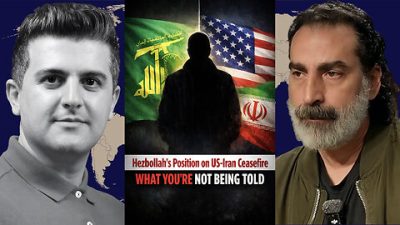
Laith Marouf: Hezbollah’s position on US-Iran ceasefire
or go to
Aletho News Archives – Video-Images
From the Archives
The Dirty Little Secret behind the “Global Terrorism Index”
The Omission of Israeli Terrorism in the Occupied Palestinian Territories
By Karin Brothers | Global Research | December 6, 2014
… The Israeli settlements — all of which are illegal – have been identified as a major impediment to peace. The refusal of a major “global” terrorism report to name the Israeli settlers as one of the groups most responsible for terrorism not only misrepresents a major source of regional violence but exposes the Global Terrorism Index as a propaganda tool that supports a U.S. agenda.
In recent years, governments have been attempting to thwart terrorism by blocking supportive fund-raising. When it comes to Israeli settlements, however, the US and Canada actually encourage fund-raising by giving organizations (such as Christian Friends of Israeli Communities (CFOIC) and the Jewish National Fund) financial support in the form of donor tax-deductions.
Charities which provide funds for the Israeli settlements should be regarded as terror-financing organizations. They should not only lose their tax-deductible status, but they should be banned because they support the violation of international humanitarian law. The terror-financing laws that are being strictly enforced for Muslim charities should be applied to Christian and Jewish charities as well. … Read full article
Blog Roll
 Aletho News
- Trump Administration Moves To Automate U.S. Military Draft Registration
- Spain orders reopening of Tehran embassy, condemns Israel’s carpet bombing of Lebanon
- Israel faces ‘unsustainable’ strategic crisis following 40-day war against Iran: Analyst
- Iran restricts Hormuz access to 15 vessels per day under ceasefire terms: Report
- The ‘Opposition Party’ Has Done Nothing to Stop the Iran War and Much to Goad Trump Into Continuing It
- Moscow backs Tehran on status of Lebanon in US-Iran deal
- How UK Regulator Ofcom Quietly Bypassed International Law to Police American Speech
- The Black Cube Files: How Former Mossad Operatives Flipped a Nation
- Laith Marouf: Hezbollah’s position on US-Iran ceasefire: What you’re not being told
- Israel’s priority lies in destroying chances of peace between Iran, US: Ex-UN nuclear chief
- If Americans Knew
- The gallows law: Israel moves toward executing Palestinian children
- Tucker Carlson: The Path to Peace requires ending ‘special alliance’ with Israel
- This is ceasefire? Israel’s biggest massacre yet in Lebanon, another journalist killed in Gaza – Daily Update
- Tucker Carlson on Israel: This Is the Behavior of an Ally? Really?
- Gazans face a triple crisis: severe shortages of water and bread, healthcare in tatters
- NY Times reports how Netanyahu took the US into Iran War
- A sigh of relief over Iran, but Gaza and Lebanon in dire straits – Daily Update
- Thousands dead and neighborhoods razed to the ground: Aid agencies fear southern Lebanon is becoming the new Gaza
- The war the US is fighting for Israel could cost trillions
- ‘Cigarette Burns, Nail Wounds’: Toddler Tortured in Gaza to Coerce Father
- No Tricks Zone
- An Inconvenient Tree: Uncovered In Alps… Europe Much Warmer Than Today 6000 Years Ago
- New Study Reports A 60% Slowdown In Greenland’s Ice Loss Rate In The Last Decade
- Low Intensity Tornado Wrecks Major Solar Farm, Creating A Potential Toxic Dump
- New Study Finds Warming Saves Lives…Cold Temperatures 12 Times More Deadly Than Excess Heat
- German Science Blog Accuses PIK Climate Institute Of Hallucinating Climate Tipping Points
- Devastating Assessment Of Comirnaty Vaccine By Former Senior Pfizer Europe Toxicologist
- New Study: CO2 Is ‘Effectively Negligible’ As An Explanatory Climate Change Factor Since 2000
- Former Pfizer Toxicologist Dr. Helmut Sterz Tells Bundestag Hearing Pfizer Vaccine Should Have Never Been Approved
- Energy Expert: Germany’s Nuclear Phaseout Was A “500 Billion Euro Mistake”
- New Research: South Australia’s Mid-Holocene Sea Surface Temperatures Were 4°C Warmer Than Today
 Aletho News