The Syrian Army Is Appointing on “Aleppo – Lattakia” Highway – Idlib Battle Is Approaching
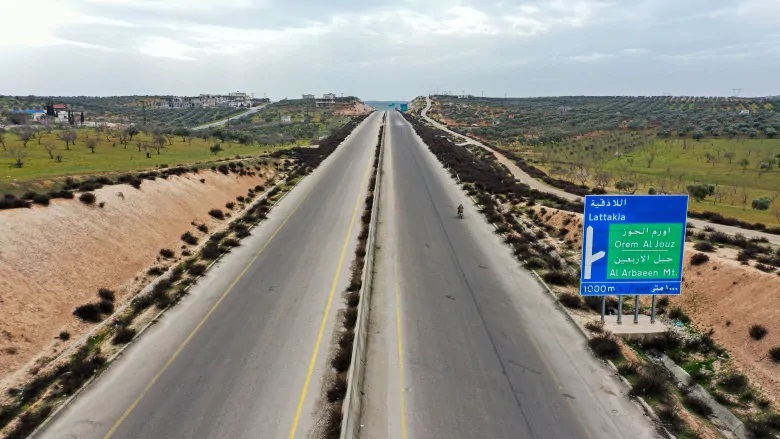
M4 International Highway
By Khaled Iskef | American Herald Tribune | July 28, 2020
The field developments return to the front of the Syrian events, after the cautious calm that lasted for several months in the north of the country coinciding with the implementation of the Russian-Turkish agreement on conducting joint patrols on the “M4” road known as “Aleppo-Lattakia” highway.
The reopening of the road from Raqqa, through Aleppo, to Lattakia, is now at the forefront of Syrian army’s next strategic goals, though the beginning of the “M4” highway starts in the eastern side of the country, specifically from the areas controlled by the US-backed Syrian Democratic Forces. The past days have witnessed huge Syrian military movements towards this highway in a sign that the Syrian forces are ready to start military action and open the road, which if it occurs, will have a significant positive impact on trade movement throughout the country in light of the circumstances due to the procedures of the blockade imposed by Washington.
Speaking of the field in the Syrian north, it is certain that Turkey did not succeed in fulfilling its obligations to the Russians about isolating terrorist organizations and keeping them out of the way, as the Russian and Turkish sides, shortly after the battle to secure Aleppo and reopen the M5 “Aleppo – Damascus” International highway, agreed that the militants should move away / 6 / kilometers to the north and south of the “M4”, knowing that the distance outside the control of the Syrian army, which links Aleppo to Lattakia, is estimated to be 60 kilometers.
The end of September 2020 was scheduled to be the Russian deadline for the Turks to implement their obligations, but the terrorist operation carried out by “Khattab Al-Checheni Brigades” targeting a Russian patrol on the road with a suicide operation, accelerated the launch of the military operation, which is expected to be early next month according to private sources. The Syrian army’s build-up and preparations have been completed, with confirmed information of the arrival of modern Russian weapons to the Syrian army, in addition to the army’s ongoing targeting of armed points on Hama and Idlib countryside axes, such as Kansafra, Al-Fateira, Kafr Ouid, and several villages of Jabal Zawiya.
If launched, the military operation is expected to be swift and decisive in case the Turkish side does not interfere directly or take any step that would hinder it in northern Syria. It is noteworthy that the military operation of the Syrian army had stopped after securing Aleppo city in the west and reopening the international highway, the main connection between the south and center of the country to the north.
Khaled Iskef is a journalist working for Almayadeen TV.
US switches to obstruction of air transit in the Middle East
By Lucas Leiroz | July 29, 2020
Last Thursday, July 23, two American fighters carried out hostile maneuvers against an Iranian civil aircraft at an extremely short distance on the stretch between Beirut and Tehran, in Syrian airspace. Several people were injured. Much more than a mere “mistake”, the American attitude reveals a real military strategy.
The pilot of the Iranian aircraft – flight 1152 of the company Mahan Air – said that, while traveling through Syrian airspace, he had to perform sudden maneuvers to avoid collision with the fighters that approached violently, consequently injuring several passengers. The Iranian pilot claims to have then contacted the American pilots to warn them and ask to keep a safe distance. However, the fighter pilots only reported that they were American military personnel and ignored him, continuing with the maneuvers. The travelers reported that the American fighter was “literally glued” to the Iranian aircraft and the maneuver was so abrupt that they were “thrown” from their seats.
The case generated strong national indignation in Iran, acquiring great repercussion throughout the country. Iranian Foreign Ministry spokesman Seyed Abbas Mousavi said the United States would be responsible for any incident with the plane. In addition, he said that Iran’s ambassador to the United Nations, Majid Takht-Ravanchi, informed the UN’s secretary general, Antonio Guterres, about what had happened. In the same vein, spokesman for the Guardians of the Iranian Constitution, Abbas Ali Kadkhodaei, classified the American action as terrorist and announced that the Iranian government will take appropriate action.
Bill Urban, a spokesman for the US Central Command, commented on the case, saying that American fighters only performed a standard visual inspection from a “safe distance”, which does not seem to match the incident data. The purpose of the inspection, according to Urban, is to ensure the safety of Americans in the coalition forces in the Al Tanf garrison, an American military base near Syria’s borders with Iraq and Jordan, whose aim, according to the Americans, is to train local anti-ISIS fighters – however, some national security experts argue that the base is aimed at spying on Iran and curbing Iranian influence on the region.
In fact, American aircraft, especially the F-15E Strike Eagles (the same one involved in the incident), based in Jordan, routinely patrol the area for the strategic purpose of keeping away or fighting enemy foreign aircraft and require all planes, even commercials, to identify themselves as they pass. What happened with the Iranian aircraft, however, does not correspond to a simple “visual inspection”, since at no time did American fighters contact the civil aircraft to request identification, on the contrary, the communication came from the Iranian aircraft itself, precisely because it was under violent interception.
Iran therefore dismissed the United States’ explanation and classified it as unjustified and unconvincing. “The harassment of a passenger plane on the territory of a third country is a clear violation of aviation security and freedom of civilian aircraft,” said Laya Joneydi, vice president of the Iranian government for legal affairs, according to Iranian media.
At no time did the US government apologize or formally lament the victims who were injured in the incident, showing that American forces in the Middle East must continue carrying out hostile maneuvers without any restrictions. We can relate this increase in aerial violence to the American naval military decay. Recently, maritime tensions between Americans and Iranians have been rising in the Persian Gulf, with an increased Iranian presence in the region through military incursions against American vessels.
Violence through the air can be understood as a strategic choice in view of the impossibility of facing Iran by sea or by land. However, it is not strategic for American interests to face Iranian forces head-on for aerial combat – instead, they invest in piracy tactics in conflict areas. The choice of the location for the maneuvers seems meticulously planned: an area where Washington will always claim “jurisdiction” because of its right to protect the military base. This will probably not be the only incident and soon new episodes will be reported.
Iran has acted correctly in submitting the case to the UN and international law must be applied promptly to punish the American attitude. The fact that American fighters did not contact the Iranian plane previously constitutes a serious violation of international aviation standards and international humanitarian law itself, since it has put the lives of innocent civilians at risk. As long as the UN response is not announced, it is up to Iran to strengthen a defense system against American air piracy, in order to avoid new incidents.
Lucas Leiroz is a research fellow in international at the Federal University of Rio de Janeiro.
More Explosive Leaks From OPCW Show Trump Bombed Syria On False Grounds
By Tyler Durden | ZeroHedge | July 27, 2020
As the ongoing increased sanctions regimen on Syria demonstrates, Washington’s pursuit of regime change against Assad is not over, despite Damascus clearly having won the war, and with the US having wisely ditched talk of some kind of overt major Iraq-style military intervention (as was the case under Obama in August 2013).
While mainstream media has largely “moved on” from coverage of Syria (so much for feigned humanitarian “concern” for millions of Syrians suffering under severe American-led sanctions!), some analysts like independent journalist Aaron Maté have been detailing damning leaks from the chemical weapons watchdog Organization for the Prohibition of Chemical Weapons (OPCW).
“A series of leaked documents from the OPCW raise the possibility that the Trump administration bombed Syria on false grounds and pressured officials at the world’s top chemical weapons watchdog to cover it up,” Maté’s latest report in The Nation begins.
“Two OPCW officials, highly regarded scientists with more than 25 years of combined experience at the organization, challenged the whitewash from inside. Yet unlike many whistle-blowers of the Trump era, they have found no champion, or even an audience, within establishment circles in the United States,” the report continues.
Recall that President Trump bombed Syria on two occasions. On the last occasion, in April 2018, Damascus was pummeled with a series of major tomahawk missile strikes ostensibly in response to claims by the primarily Saudi-backed jihadist group Jaysh al-Islam that the Syrian Army had carried out a chemical weapons attack on civilians. It was the all too familiar pattern which went back to 2013: “rebels” on the brink of being wiped out make a last ditch unverified claim in order to draw Western military support, then the mainstream media runs with it because it already fits the narrative of the “monster” Assad, and then right away it’s American and allied “bombs away” with no questions asked.
But Maté now documents an avalanche of leaks and internal dissent within the global chemical weapons watchdog group OPCW to say the US once again attacked a Middle East country based on lies (and just like in neighboring Iraq, don’t forget that some 1,000 or more American troops occupy the oil-rich northeast section of Syria).
My bad: Western state-funded Bellingcat “gathered evidence… long before the OPCW.”
Ignore then those “truthers/and or propagandists” who for some silly reason listen to actual OPCW scientists w/ actual credentials & who actually conducted the OPCW’s investigation in Syria. https://t.co/zjtDShQ2eL
— Aaron Maté (@aaronjmate) July 25, 2020
Maté’s report finds that “Since May 2019, internal OPCW documents, including a trove published by WikiLeaks, reveal that the Douma investigators’ initial report reached different conclusions than their organization’s published version. They were overruled by senior officials who kept evidence from the public.”
The Nation report outlines leaks’ key revelations as follows:
Senior OPCW officials reedited the Douma investigators’ initial report to produce a version that sharply deviated from the original. Key facts were removed or misrepresented and conclusions were rewritten to support the allegation that a chlorine gas attack had occurred in Douma. Yet the team’s initial report did not conclude that a chemical attack occurred, and left open the possibility that victims were killed in a “non-chemical related” incident.
Four experts from a OPCW and NATO-member state conducted a toxicology review at the OPCW team’s request. They concluded that observed symptoms of the civilians in Douma, particularly the rapid onset of excessive frothing, as well as the concentration of victims filmed in the apartment building so close to fresh air, “were inconsistent with exposure to chlorine, and no other obvious candidate chemical causing the symptoms could be identified.”
Chemical tests of the samples collected in Douma showed that chlorine compounds were, in most cases, detected at what amounted to trace quantities in the parts-per-billion range. Yet this finding was not disclosed publicly. Furthermore, it later emerged that the chemicals themselves did not stand out as unique: According to the author of the initial report, the OPCW’s top expert in chemical weapons chemistry, they could have resulted from contact with household products such as bleach or come from chlorinated water or wood preservatives.
The author of the initial report protested the revisions in an e-mail expressing his “gravest concern.” The altered version “misrepresents the facts,” he wrote, thereby “undermining its credibility.”
Following the e-mail of protest over the manipulation of the team’s findings, the OPCW published a watered-down interim report in July 2018. Around that time, OPCW executives decreed that the probe would be handled by a so-called “core team,” which excluded all of the Douma investigators who had traveled to Syria, except for one paramedic. It was this core team—not the inspectors who had been deployed to Douma and signed off on the original document—that produced the final report of March 2019.
After the e-mail of protest, and just days before the interim report was published on July 6, a US government delegation met with members of the investigation team to try to convince them that the Syrian government had committed a chemical attack with chlorine. According to veteran reporter Jonathan Steele, who interviewed one of the whistle-blowers, the Douma team saw the meeting as “unacceptable pressure and a violation of the OPCW’s declared principles of independence and impartiality.” Interference by state parties is explicitly prohibited under the Chemical Weapons Convention.
The inference drawn from the OPCW’s final report—widely disseminated, including by the Trump administration—was that gas cylinders found in Douma likely came from Syrian military aircraft. An unpublished engineering study reached the opposite conclusion. The study evaluated competing hypotheses: Either the cylinders were dropped from the sky or they were manually placed. There is “a higher probability,” it concluded, “that both cylinders were manually placed… rather than being delivered from aircraft.” At “Location 4,” where a cylinder was found on a bed, the study determined that the cylinder was too large to have penetrated the hole in the roof above; at the other site, “Location 2,” the observed damage to the cylinder and to the roof it allegedly penetrated were incompatible with an aircraft bombing. Ballistics experts also said it was more likely that the crater had been made by an explosion, probably from an artillery round, a rocket, or a mortar. With both cylinders, the study concluded, “the alternative hypothesis”—that the cylinders were manually placed and that the craters were caused by other means—”produced the only plausible explanation for observations at the scene.”
Of course, the media is seeking for these revelations to be memory-holed right way.
They are being conveniently ignored, and not just ignored, but covered up.
New WikiLeaks Bombshell: 20 Inspectors Dissent From Syria Chemical Attack Narrative https://t.co/vrQaBZIT7T
— zerohedge (@zerohedge) December 15, 2019
* * *
Read the full in-depth investigative report at The Nation.
Hypocrisy of US, Allies in the UNSC and Amnesty International Regarding Aid to ‘The Syrian People’
Syria Solidarity Movement | July 25, 2020
On July 11, the United Nations Security Council passed a resolution presented by Germany and Belgium that would permit one border crossing from Turkey into Syria’s Idlib province for a US- backed UNSC aid program. The United States has been battling with China and Russia for a resolution increasing the number of gateways for cross-border aid from Turkey from two to four since January 2020 when two crossings were approved on a temporary basis. The July 11 decision for one crossing at Bab al Hawa has been universally lamented in the US and Western mainstream press as inadequate, as a failure forced on the council by Russian and Chinese meanness and obduracy. On the 9th of July a similar resolution for two crossings was vetoed by Russia and China. Following this vote, Amnesty International headlined their response: “Russia and China launch despicable veto of lifesaving aid for millions of civilians in Syria”. (Amnesty International, 7/8/20)
The Syria Solidarity Movement supports the Russian and Chinese positions on aid to Syria and calls out the attacks on those two Security Council members by the Western mainstream media and by Amnesty International as hypocritical.
Following the successful vote on July 11, there was a round of recriminations in the Security Council, with the United States, Belgium and Germany denouncing the Russians and Chinese for blocking aid to “innocent Syrians” while the Russians and Chinese responded with their concerns. The Russians, who have personnel on the ground in Idlib, complained that the UN does not actually have a presence in the area, but rather the aid is passed to an assortment of Al Qaeda and Turkish-backed militants who currently govern there, who then may or may not provide it to the civilians. The ambassador suggested the aid could be more appropriately coordinated in partnership with the Syrian government, which has been fighting for a decade to restore its sovereignty over all of its national territory. The Chinese ambassador said that China is fine even with four cross-border gateways but said his country insists on addressing the needs of the Syrian people in a holistic manner. In this light, the first priority of the Security Council would be to lift Western economic sanctions so that all Syrians could receive the desperately-needed aid.
According to Syrian authorities, before the US-backed regime change war on Syria, there were twenty-three million people residing there. Today, the number is closer to fifteen million. Many of these people are internally-displaced persons. Since Idlib is the last active war zone in Syria, the population is likely less than 1 million, including the Al Qaeda, the Turkish-backed fighters and the Uyghur migrants resettled there by Turkey. Over and over, western politicians and the Western mainstream media refer to the people who reside in Idlib as “The Syrian People“, as if there were no other Syrians. It is true that most of the people in Idlib are Syrians but also true that most Syrians live somewhere else in the country. In fact, most of the original population of Idlib live elsewhere at present.
While the US and its allies strike poses of righteous indignation and blame their Russian and Chinese colleagues for heartlessness, they refuse to acknowledge the reality that their program, in its best capacity, is meant to provide meager assistance to a small portion of the Syrian population who are essentially hostages of the terrorist proxies who control Idlib on behalf of their US and Turkish masters. They have spent months negotiating this detail while the holistic picture of Syrians deteriorates under the burden of US-imposed sanctions.
Moreover, after the police killing of George Floyd and police brutality against Black Lives Matter protesters in the USA, it’s utterly hypocritical that the US has the gall to lecture other countries about heartlessness and human rights.
Amnesty International’s UN associate says,
“It’s impossible to overstate the importance of ensuring the crossing points, delivering vital aid, stay open. For millions of Syrians, it is the difference between having food to eat and starving. For hospitals, it is about having enough supplies to save lives. That’s why Russia and China’s abuse of the veto power is despicable and dangerous.” (Amnesty International, 7/8/20)
The hypocrisy of this stance is stunning. The UN aid-through-Idlib program never affected more than a few hundred thousand people. Let it be noted that there are many open crossings between Turkey and Idlib, though, through which all kinds of materials flow. Existing US aid programs are not restricted to that single crossing between Turkey and Idlib.
Meanwhile, Amnesty has not once complained about the despicable unilateral coercive measures that are crushing the Syrian economy and leaving the millions of Syrians everywhere in the country without food and medicine. The Syrian people as a whole have endured ten years of war instigated by the imperialist powers. Is Amnesty not concerned about the suffering of the Syrians throughout the war-torn country? Or, do only the terrorists and their hostages qualify as ‘Syrians’?
How is the US helping the desperate millions in Syria? They want to control several border crossings which are controlled on the other side by militants. Aside from food and medicine, what else might they want to send through their portals? The US and its allies have been arming those same militants since before the regime change operation began in 2011. The US wants as many gateways as possible open from Turkey into the terrorist-controlled Idlib province so they will have maximum influence there. In effect, the US wishes to weaponize “aid.”
Again hypocritically, the US controls two UN refugee camps in Syria’s eastern provinces. Both are desperately lacking supplies for their residents and plagued by local militias unlike the camps in government controlled Syria which are secure and provisioned.
The US has placed Syria under illegal unilateral sanctions (not approved by the UN Security Council) designed to destroy its currency and crush its economy. The people of Syria – all of Syria – are going without food and medicine while their currency has been enormously deflated in value as a direct result of a decade of unilateral coercive measures, now capped by the punishing “Caesar Sanctions”, all enforced by the USA which now has the audacity to accuse Russia and China of “meanness.” US proxies burned the wheat fields in Eastern Syria, destroying the harvest while US soldiers are sitting on half of Syria’s oil fields. And, at this moment, the Empire threatens to embargo any ship that attempts to bring oil to Syria to heat Syrians’ homes for the coming winter.
The US insists on pursuing this course and routinely punishes any other state which dares to defy its illegal sanctions on Syria. US allies, such as Canada, Arab monarchies, and EU countries, follow along like a dog pack, barking when the big dog barks, retreating when he turns his bark on them. Meanwhile, Western mainstream media and so-called humanitarian NGOs, such as Amnesty International, are trying to shame Russia and China for wanting to deliver aid in coordination with the sovereign Syrian government and to see an end to unilateral coercive measures that are destroying the economy of Syria and causing immeasurable suffering for ordinary Syrians.
No one should be taken in by such hypocrisy.
Iran to legally pursue US ‘act of terrorism’ against its Beirut-bound flight
Press TV – July 24, 2020
Iran has condemned the harassment of its Beirut-bound passenger plane by two US fighter jets over the Syrian airspace, vowing to lodge a complaint over the “unlawful” act at the International Civil Aviation Organization (ICAO).
In a statement on Friday, the Civil Aviation Organization of Iran said it will seriously pursue the US fighter jets’ harassment of Mahan Air flight 1151 over the Syrian airspace on Thursday.
The Iranian organization urged the ICAO to immediately address the move, which is “a clear violation of the international law and the aviation standards and regulations.”
Iranian Vice-President for Legal Affairs Laya Joneidi also said on Friday that the harassment of a passenger plane in a third country is a blatant violation of aviation security, a breach of the freedom of the air for civil flights, and contradicts the Article 3 and Article 44 of the Chicago Convention as well as the 1971 Montreal Convention.
Joneidi said the US government is responsible for the fighter jets’ dangerous maneuvering, and Iran can legally pursue the issue at the ICAO Council and the International Court of Justice.
Iran’s Minister of Roads and Urban Development Mohammad Eslami described the US air piracy as an “act of terrorism”, urging the international community to condemn the “poisonous” move.
“Our passenger plane was moving at the international commercial flight route and corridor, and the American fighter jets’ threatening move was unlawful and inhumane,” he added.
He also called on the governments of Lebanon and Syria to file a complaint against Washington at the International Civil Aviation Organization.
“The ICAO is also expected to issue a statement against this inhumane move by the US,” the Iranian minister said.
On Thursday night, US warplanes operating illegally in Syria conducted some aggressive and “dangerous” maneuvering close to the Mahan Air flight in an act of air piracy.
Mahan Air’s Flight 1152 had taken off from Tehran and was en route to the Lebanese capital when the incident happened over Syria’s hugely-strategic al-Tanf region.
In response, the US Central Command said a single F-15 had made a “visual inspection” of the Iranian airliner “in accordance with international standards… to ensure the safety of coalition personnel” at the military base in al-Tanf.
The command added that the US F-15 was on a “routine air mission” in Syria and conducted “a standard visual inspection of a Mahan Air passenger airliner at a safe distance of approximately 1,000 meters”.
“Once the F-15 pilot identified the aircraft as a Mahan Air passenger plane, the F-15 safely opened distance from the aircraft.”
Forgoing any permission from Damascus, the US has been operating in the Arab country since 2014 under the pretext of fighting the Daesh terrorist group. The US, however, continues its occupation even as Syria defeated the Takfiri terrorists in late 2017.
Iran to launch special trade office in China: Businessman
Press TV – July 21, 2020
Iran is to set up a special office in China to streamline trade activities with the East Asian country.
A senior businessman says major Iranian companies are teaming up to create a trade office in China amid growing economic relations between the two countries.
Gholamhossein Jamili, a board member at Iran Chamber of Commerce, Industries, Mines and Agriculture (ICCIMA), said on Tuesday that the trade office in China would play a major role in protecting Iranian businesses and firms working in the East Asian country against growing restrictions caused by US sanctions.
“We are working to launch this office before the end of the current Christian calendar year,” Jamili was quoted as saying by the official IRNA news agency.
The announcement comes amid reports of booming economic relations between Iran and China as the two countries move to finalize a 25-year comprehensive partnership agreement that would massively boost bilateral cooperation in areas like energy, infrastructure, tourism and trade.
China was the top buyer of Iranian oil before the United States introduced its unilateral sanctions on Iran two years ago. However, Beijing is still a top economic partner for Iran and the balance of trade between the two countries hit $20 billion in the year ending March, according to Iranian government data.
Other senior Iranian figures involved in trade with China said that the planned trade office would seek to resolve problems facing Iranian businesses and companies in China.
Majid Hariri, who chairs the Iran-China Joint Chamber of Commerce, said that the office in Beijing would serve as Iran’s economic embassy in the East Asian country.
The official IRNA news agency said the ICCIMA plans similar offices in India, Turkey, United Arab Emirates and Iraq, adding that two such offices are being set up in Russia’s Astrakhan and Syria’s Damascus.
US sanctions are part of a multi-front war on Syria mainly targeting its long-suffering civilians
By Eva Bartlett | RT | July 13, 2020
The US is waging multiple fronts of war against Syria, including brutal sanctions, while claiming concern over the wellbeing of Syrian civilians – the vast majority of whom are suffering as a direct result of US policies.
On June 17, the US implemented the Caesar Act, America’s latest round of draconian sanctions against the Syrian people, to “protect” them, America claims. This, after years of bombing civilians and providing support to anti-government militants, leading to the proliferation of terrorists who kidnap, imprison, torture, maim, and murder the same Syrian civilians.
Just weeks after these barbaric sanctions were enforced, cue American crocodile tears about Syrian suffering, and claims that Moscow and Damascus are allegedly preventing the delivery of humanitarian aid. More hot air from American hypocritical talking heads who don’t actually care about Syrians’ well being.
America trigger-happily sanctions many nations or entities that dare to stand up to its hegemonic dictates. The word “sanctions” sounds too soft – the reality is an all-out economic war against the people in targeted nations.
Sanctions have, as I wrote last December, impacted Syria’s ability to import medicines or the raw materials needed to manufacture them, medical equipment, and machines and materials needed to manufacture prosthetic limbs, among other things.
Syria reports that the latest sanctions are already preventing civilians from acquiring “imported drugs, especially antibiotics, as some companies have withdrawn their licenses granted to drug factories,” due to the sanctions.
In Damascus, pharmacies I’ve stopped into, when I ask what some of the most sought-after medications are, hypertension medications are at the top.
But sanctions have yet another brutal effect: they wreak havoc on the economy.
The destruction of Syria’s economy is something US envoy for Syria, James Jeffrey, boasted about, reportedly saying that the sanctions “contributed to the collapse of the value of the Syrian pound.”
The website Sanctions Killnotes :
“Currencies are devalued and inflated when sanctions are levied. Countries are pressured to stop doing business with targeted countries. Sanctions violate international law, the UN charter, Geneva and Nuremberg conventions because they target civilians by economic strangulation, creating famines, life-threatening shortages, and economic chaos.”
So you have Western hypocritical talking heads pretending they want to get aid to Syrian civilians while literally cutting them off from medicine and the ability to purchase food.
Resource theft and arson
But these crimes against humanity don’t suffice for America. The US occupation troops and their Kurdish proxy forces (the SDF) are plundering Syria’s oil resources to the tune of $30 million a month as of last October, according to Russian military estimates.
In early July, SANA reported another convoy leaving Syria to Iraq, loaded with oil thieved from areas under US occupation.
Terrorists and US proxy groups are also thieving Syria’s cotton, olives, wheat, and flour.
Further, Syria accuses the US of deliberately setting fire to crops using Apache-dropped thermal balloons.
Civilians from affected areas near Turkish occupation posts likewise blame Turkish forces for setting fires and firing live ammunition upon those who attempt to extinguish the fires, farmers literally watching their livelihoods go up in flames. The Hasakah Agriculture Directorate director likewise blames Turkey for arson of the crops.
Turkish occupation forces are also accused of cutting water supplies at Alouk water pump station, depriving one million people in the Hasakah region of drinking and agricultural water, with no condemnation from the Security Council.
The poverty and suffering Syrians are enduring these days is unbearable, with prices of basic goods doubled and tripled from just a few months ago, turning what were affordable items into luxuries, particularly for the 7.9 million food-insecure Syrians.
But alarmist Western media and representatives omit the context: the nearly 10 years of war on Syria; the deliberate targeting by terrorists and by US and Turkish occupation forces, and Israel, of Syria’s infrastructure; the looting of oil, wheat and cotton, even allegedly stealing parts of an Idlib power plant for scraps sale in Turkey.
Likewise, Aleppo’s heavy industry was thieved during the years when terrorists occupied the industrial zones of the city. Heavy machinery was reportedly trucked in broad daylight to Turkey.
With all of these factors, of course there is poverty and a chaotic economy.
A safe resolution rejected
Recently, the UNSC passed a resolution to maintain one humanitarian border crossing from Turkey into Syria, the Bab al-Hawa crossing.
Prior to that, Russia had proposed a resolution enabling the safe delivery of humanitarian aid from within Syria.
On July 11, Russia’s Permanent Mission to the UN issued a statement again noting the need to phase out cross-border deliveries, as the Syrian government has regained much of the territories previously occupied by terrorist factions, and deliveries must be made from within Syria.
The UNSC resolution that passed, however, continues the delivery of aid via Turkey, delivering to the hands of Al-Qaeda and other terrorist groups occupying Idlib. It is with these people the US aid ends up when delivered, from Turkey, not from Syrian territory.
Given that the US has supplied weapons to anti-government extremists in Syria before, it is not illogical to believe they hoped to funnel still more weapons in under the pretext of “aid” deliveries.
Russia’s statement also noted the lack of UN presence in the Idlib de-escalation zone, saying:
“It’s not a secret that the terrorist groups, listed as such by the UN Security Council, control certain areas of the de-escalation zone and use the UN humanitarian aid as a tool to exert pressure on [the civilian] population and openly make profit from such deliveries.”
This is what Russia and China opposed, not the delivery of aid.
Those are details which US Ambassador Kelly Craft slyly omitted when she spoke of callousness and dishonesty being an established pattern. Her verbal guns were aimed at Syria and Russia, but her choice of words perfectly describes US policy towards Syrians.
One only needs to look at US policy towards displaced Syrians in Rukban Camp to see that the US has actively worked to prevent aid deliveries there and prevent Syrians from being evacuated from there. Or the lack of US outcry at Turkey’s prevention of humanitarian convoys from reaching Idlib areas, which while scheduled for last April still hasn’t been successful.
On the other hand, on July 4 the WHO acknowledged the Syrian-Russian delivery of 85 tons of medicines and medical supplies from Damascus to Al Hasakah. On July 9, the Russian Reconciliation Center noted that 500 food packages (2,424 tons) were delivered to Idlib province and Deir-ez-Zor province.
I wonder how many tons of actual aid the US would send…
In case it isn’t yet clear, America is weaponizing and politicizing aid, as it tried to do in Venezuela last year. American representatives posture and bellow, and Russia and Syria quietly go about actually delivering aid to needy Syrians.
The Russian post-resolution statement also critically noted the brutal impact of sanctions on Syria, which, as detrimental to Syrians’ wellbeing as they are, somehow don’t merit the feigned concern of representatives like Craft.
The statement said:
“These coercive measures seriously undermine not only the socioeconomic situation in Syria, but also impede activities of many humanitarian NGOs that are ready to help the population in territories controlled by Syrian official authorities.”
If America truly wanted to alleviate the suffering of Syrians, all sanctions against the country and people would be immediately lifted.
Eva Bartlett is a Canadian independent journalist and activist. She has spent years on the ground covering conflict zones in the Middle East, especially in Syria and Palestine (where she lived for nearly four years). Follow her on Twitter @EvaKBartlett
Iran and Syria sign agreement to boost military, security cooperation
Press TV – July 8, 2020
Iran will boost Syria’s air defenses, as part of a wider military security agreement between the two countries.
“We will strengthen Syria’s air defense systems within the framework of strengthening military cooperation between the two countries,” Chairman of the Chiefs of Staff of the Iranian Armed Forces Major General Mohammad Baqeri said on Wednesday after signing a “comprehensive” agreement with Syrian Defense Minister Ali Abdullah Ayoub in Damascus to boost military and defense cooperation.
The agreement provides for the expansion of military and security cooperation and the continuation of coordination between the Armed Forces of the two countries.
Speaking after signing the agreement at the headquarters of the General Command of the Syrian Army and Armed Forces, the top Iranian commander said the signed deal “increases our will to work together in the face of US pressure.”
“The people and countries of the region do not welcome the presence of the United States, and our response to the American prattling will continue,” Baqeri added.
The Iranian commander said the military-security agreement also envisages boosting the Syrian air defenses.
On the Turkish military presence on Syrian soil, the Iranian commander said that Turkey is dragging its feet regarding the implementation of its commitments under the Astana agreements on the withdrawal of terrorist groups from Syria.
He said that Turkey must realize that the solution to any of its security problems is through negotiation with the Syrian side, and not through military deployment in the Arab country.
Ayoub, for his part, lauded Damascus-Tehran relations.
“If the American administrations had been able to subjugate Syria, Iran and the axis of resistance, they would not have hesitated for a moment,” the Lebanese al-Mayadeen television channel quoted the Syrian minister as saying.
He described Israel as a “powerful partner” of the US in the war against Syria, adding that terrorist groups constituted part of the Israeli aggression.
He also lambasted the so-called Caesar sanctions imposed by the US against his country, saying Syria will counter the bans barring the provision of foodstuff and medicine to its people.
He stressed that Syria that has maintained its government structure since 2011 and will undoubtedly emerge victorious out of the war.
The two sides also underlined the need for the withdrawal of foreign forces who have been “illegally” deployed to the Arab country in violation of international law and said the forces are the main obstacle to the complete cleansing of armed terrorist groups in some parts of Syria.
The heads of the senior military delegations of Iran and Syria also stressed that the agreement was the result of years of military, security and technical coordination and cooperation in various areas of joint fight against terrorism.
At the end of the talks, a joint statement was also issued by the high-ranking military delegations of the two countries, which said a continued battle against Takfiri terrorism supported by some regional and international powers is among the goals of the agreement.
They also stressed in the statement that the comprehensive military agreement was signed to implement the directives of the political and military leaders of the two countries to enhance their defense capabilities and promote self-reliance against any possible foreign aggression.
Iran and Syria have signed different military and defense cooperation over the past years.
Iran began providing Syria with advisory military assistance after numerous countries, at the head of them the US and its Western and regional allies, started funding and arming militants and terrorists with the aim of deposing Syrian President Bashar al-Assad’s government.
Despite initially losing considerable expanses of territory to Daesh and other terror outfits, the country, however, rallied with the help of Iran and Russia, another Damascus’ ally, and reversed the balance in favor of itself on the battleground.
Turkish troops, allied militants cut off drinking water to people in Syria’s Hasakah, environs
Press TV – July 5, 2020
Turkish military troops and allied militants have once again cut off drinking water supplies to about a million people living in and around the northeastern Syrian city of Hasakah by stopping a border water pumping station, a report says.
In an interview with Syria’s official news agency, SANA on Sunday, Director General of Hasakah Water Company Mahmoud al-Ukla said that Turkish soldiers and Ankara-backed militants stopped Alouk Water Station on Saturday evening and barred workers of the station from entering the facility.
The major water station is located in the vicinity of the border town of Ra’s al-Ayn, which Turkish troops and their allied militants seized in October 2019 during the so-called Peace Spring Operation.
Ukla warned that the inhumane move was threatening the lives of inhabitants of the city and its surrounding residential neighborhoods in northeastern Hasakah province.
He added that the criminal act came as the people of the affected areas are in the utmost need for the water from the Alouk station, the only source for guaranteeing the drinking water for them.
The water station has so far been forced to stop several times by the invading Turkish troops and their allied militants.
Back in March, the Syrian foreign ministry sent two identical letters to the chief of the United Nations and the UN Security Council in protest against the repeated inhumane move. It noted at the time that the Turkish military forces shelled the water station during their cross-border military operation last October, putting it out of service.
Furthermore, Syrian officials, accordingly, presented a briefing to the UNSC in February, informing the international body of a water outage in Hasakah.
Nasrallah: Syria triumphs, Israel is waging an imaginary war
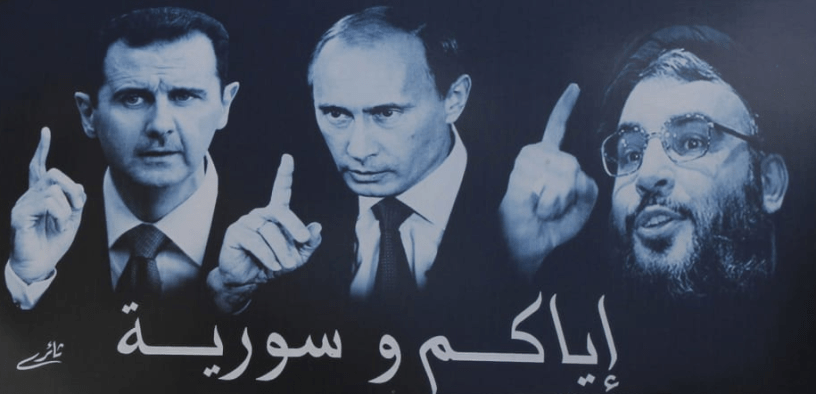
Speech by Hezbollah Secretary General Sayed Hassan Nasrallah on May 13, 2020, in commemoration of the martyrdom of Hezbollah Commander Mostapha Badreddine, killed in Syria in May 2016.
Summary:
- Syria has already won the war, even if there are still some minor battles to be fought
- Having failed militarily, the enemies of Syria strive doubly hard in their diplomatic, economic and psychological warfare
- There is no dissension between the allies of Damascus, nor a struggle for influence between Iran and Russia
- News of Bashar al-Assad being sidelined is just propaganda
- There are no Iranian armed forces in Syria, just military cadres and advisers
- Having bet everything on the terrorists, Israel sees its defeat and fears the recovery of Syria and the threat it will pose to the occupation of the Golan and the very existence of the Zionist entity
- The so-called Israeli campaign against the Iranian presence in Syria is nothing but window dressing aimed at reassuring Israeli opinion and providing cover for attacks on the Syrian ballistic power
- Israel presents as a victory a simple redeployment of forces due to successive victories over almost the entire Syrian territory, and a reduction in air movements between Iran and Syria due to the coronavirus
- Iran, Hezbollah and other Resistance movements will never leave Syria
- Israeli incursions into Syria are caused by worry, fear and adventurism, but can lead to uncontrolled escalation and regional war
This video only subtitles the last section of the transcript below, ‘Israel in Syria‘
Transcript:
Syria won the world war against it
[…] Today we can say that Syria won this war. In previous battles, when great achievements were made, such as after the liberation of Homs, Damascus, the South and even Aleppo, it was said that Syria had won the war, and analysts and specialists in strategic issues said no: Syria had won one (or more) battles, but had not (yet) won the war. Because a war is made of many battles: you can win a battle, lose another, win a third, lose the fourth, but all that does not (necessarily) mean that the whole war is won, or that the whole war is lost.
Today, in all simplicity, and via an objective and genuine assessment (of the situation), whoever goes to Syria and travels there —except for the politicized Arab (and Western) media—, whoever goes to Syria, in its provinces, in its cities, in its villages and boroughs, in all the regions currently in the hands of the State, anyone who observes the overall situation in Syria can easily affirm that Syria won the war, although there are still some battles going on. It should not be said that Syria has won one, two or three battles, and has lost one or two others, and that the war is still going on, without it being clear whether Syria will win it or not, no. The fair and accurate strategic assessment is that the Syrian leaders, the Syrian army, the Syrian State and the great majority of the Syrian people who stood firm in this struggle won this war.
Of course, there are still a few battles left, military or political, which require persistence and continuity of action, whether in Idlib, East of the Euphrates or certain areas North of Syria, but this is only a partial, limited and circumscribed part (of Syria). Syria has triumphed over partition projects, Syria has won this war, and suffice it to say that the objectives of this world war (against Syria) for which, according to their own admission, hundreds of billions of Arabian dollars have been spent —the dollar is American, but it is the Arab (countries) that have paid the bills; if this money had been spent for the good of the Arab peoples of our region, they would have extricated them from ignorance, poverty, misery, illiteracy, diseases, and the said funding countries (Saudi Arabia, etc. ) would not face financial incapacity in the face of the economic consequences of the Covid-19 pandemic as they do now—, thousands of tons of weapons and ammunition, tens of thousands of terrorists and takfiris who were brought from all over the world, dozens of international conferences, etc., etc., etc. They have deployed everything, done everything, absolutely everything, to achieve their objective in Syria: sectarian or political slogans, incitement (to racial or religious hatred), everything that the front of Arrogance (imperialism) and its instruments were able to mobilize in terms of resources and ideology, everything they could do against Syria, they did. And Syria, through the perseverance of its leaders, its army, its people and the State, and thanks to the presence and perseverance of its allies by its side, managed to win this war.
And that is why today, when we talk about our martyr leader, Sayed Mustapha Badreddine, and our other martyrs in Syria, we feel, in addition to the consequences for their afterlife and their (eminent) position close to God the Most High and the Exalted as martyrs, we have the feeling that their blood has borne fruit and enabled these results to be achieved, and that the objective for which they went to fight and for which they sacrificed their blood, their peace and their life, and for which they made unremitting efforts night and day, this goal was achieved and it is before our eyes today.
Economic, diplomatic & psychological warfare
I will now raise some points (concerning Syria). The first point is that naturally, what (the enemies of Syria) have been unable to achieve militarily, they have been trying for the past few years to obtain it politically, through political pressure on the Syrian leaders, on the allies of Syria, on Iran, on Russia, on those who stand alongside Syria, through international relations, through the UN Security Council, through intimidation, threats and tempting promises, so that the allies of Damascus will abandon Syria. But all of this has failed so far. And we know that sometimes the political battle is just as intense as the armed struggle. And sometimes its dangers are even greater, and require all of our vigilance and attention. Syria is still plunged into political war and is facing political pressures which, so far, have failed to achieve any of their goals.
Naturally, and I come to the second point, after the failure of the military war and the impotence and the ineffectiveness of the political war and the political pressures in achieving any objective at all, the front of Arrogance (imperialism), the American despots and their Allies resorted to other means, namely psychological warfare on the one hand, and sanctions and blockade on the other. With regard to psychological warfare, a very broad front has been open for years against Syria, and lately there has been an intensification of psychological warfare, some aspects of which I will touch on in a moment. Likewise, the sanctions and the state of siege against Syria are increasing, and they are betting on the economic consequences (which they hope will become unbearable for Syria and its allies). The coronavirus has added to these pressures, but this pandemic is not specific to Syria: the pressures of the coronavirus are weighing on the whole world. Today, those who besiege Iran, Syria, Venezuela and other countries, Gaza, Yemen, etc., are starting to suffer the economic consequences of the coronavirus themselves. We have all seen the catastrophe hitting the United States, the countries of Western Europe, as well as certain countries in our region (Saudi Arabia, etc.). In any event, it is also a means of attacking Syria, namely economic pressures, sanctions, the state of siege against Syria.
With regard to the sanctions and the blockade, we place our hopes on the endurance of the Syrian leaders, the Syrian State and the Syrian people, just as they persevered in the face of the military and political war. What gives us hope is that Syria is a country endowed with human capital and colossal possibilities; the Syrian people are full of liveliness, the wealth and innate means of Syria are many and huge. Before the crisis, Syria was not a debt-ridden or weak country, nor was it a country brimming with wealth, but its economy was entirely viable. In some Arab countries, millions of people live in cemeteries, but no family lived in a cemetery in Syria. Anyway, in the economic battle, the livelihood battle, the financial battle, we have good hope in the endurance and initiative of Syria, just as we trust Syria to succeed against the psychological battle.
Tensions between Syria’s allies ?
With regard to the psychological battle, I would like to give an example, before addressing my last point concerning Syria. Part of the psychological battle concerns the situation of the allies, and we often hear that the allies of Damascus have started to abandon Syria. (According to these rumors), Iran would be entangled in its internal situation and would prepare to abandon Syria. Russia, because of the pressures, its internal situation, such pressures or such problems or I don’t know what other rubbish, would abandon Syria. All these words express only dreams and hopes that we have been hearing for years, and some have been disseminated as if they were information, etc., but they were only aspirations (US / Israeli / Saudi wishful thinking).
Among the talking points of the current psychological warfare, let us quote again the recurrent remarks that we find in the media of the Gulf and certain Western media —the Western media are more reluctant to diffuse these reports, because they try to preserve the (little) credibility they still have— about an Iranian-Russian power struggle in Syria. There is no hint of truth in it. I said at the beginning of my speech that I was going to talk about Iran again. In the two points that remain for me to address (on Syria), I will clearly point out certain sensitive points which concern the Islamic Republic of Iran.
Neither the Islamic Republic of Iran, nor Hezbollah, nor the Resistance factions from different countries —Iraq, Afghanistan, Pakistan, etc. ; yes, Resistance movements came from these countries and fought in Syria alongside the Syrian Arab Army, the Syrian people and the Syrian popular forces, and are still present there… The Islamic Republic of Iran is not fighting for influence against anyone in Syria. Neither against Russia —regardless of what Russia is doing— nor against anyone. The position of the Islamic Republic in Syria was clear from the beginning: its (only) goal was to prevent the fall of Syria under American-Israeli control, and under the control of the instruments of Arrogance (imperialism), our common enemy. This was Iran’s goal, and nothing else. The Islamic Republic does not seek any influence in Syria, it has no aims and no greed in Syria, and has no desire to interfere in the internal affairs of Syria. Iranian interference in Syria has never existed, does not exist and will never exist with regard to internal Syrian issues, whether in the form of the regime, government, laws, the State… Iran will never do anything that some other States (especially the imperialist and neo-colonialist West) do, in any case. All that mattered and still matters for the Islamic Republic of Iran is that Syria remains in its (pro-) Arab, (pro-) Islamic, (pro-) Resistance position, that it preserves its identity, its independence, its sovereignty, its unity, that Syria remains a noble and dignified, persevering fortress, does not submit to American and Zionist hegemony, and does not compromise on its rights (over the Golan). This is all that Iran wants in Syria, no more no less. And that does not enter into any struggle for influence with anyone.
Certainly, to be completely frank and sincere, there may be differences between the allies as regards the definition of certain military or ground priorities, political questions, at the level of negotiations, etc. But this in no way leads to a struggle for influence, because the decisions of the Islamic Republic are categorical as regards the position alongside the Syrian leaders (who have the final say on all matters), Iran complying with what they determine and accept. The Islamic Republic has a position of support towards the endurance, the persistence, the maintenance and the independence of Syria, and its resilience in the face of projects of hegemony and control over it, and of liquidation of the Axis of Resistance in the region. In this regard, I would therefore like to reassure the masses & supporters of the Resistance in the Arab-Islamic world: in Syria, there is no struggle for influence between Iran and Russia. So could we say that the front of the allies and supporters of Damascus is plagued by internal strife or is in withdrawal? This is absolutely not true.
Israel in Syria
The other point I also wanted to talk about concerning Syria and Iran in Syria, and the Israeli enemy in Syria, is the Israeli aggression and the Israeli project in Syria. Especially in the past few weeks, the Zionist Israeli Minister of War (Naftali Bennett) is trying to brag and present (false victories) to the Israeli masses, lying to them and misleading them, and also to the public opinion in the Arab-Muslim world —and there are also Arab media that spread these lies and falsifications—, in order to highlight the imaginary victories and achievements of Israel in Syria at the expense of Syria, the Islamic Republic of Iran and the Axis of Resistance. I want to talk about it a bit, and it may be the first time that I do it in such a frank and detailed way, even if it will be synthetic.
During the first years (of the war in Syria), from 2011, Israel bet on the (terrorist) armed groups. The relations of the armed groups —especially in the south of Syria— with Israel are absolutely undeniable: exchange of information, financing, supplies, medical care, aid and support of all kinds, up to transit, all this is well known and obvious. Israel has been active in the war in Syria since 2011, and has counted & invested heavily on those who fight the regime in Syria. Israel had a whole set of objectives, the highest of which was the fall of the regime and the liquidation of the current administration (of Bashar al-Assad). But there were several other lesser goals.
When this war against Syria failed, and the Zionists understood that their instruments and the horse on which they had bet had failed in Syria, and that they had lost the war… They are still fighting in Syria, but they lost the war, as I just explained. The proof is that all of southern Syria, the vast majority of which was under the control of armed groups, which cooperated with Israel, was assisted by Israel and were Israel’s allies both openly and secretly, they all left, and some left Syria via the Zionist entity. We don’t forget their buses at night.
The Israelis therefore understood that their objective (to bring down the regime) had failed. They therefore aimed at a new objective, namely to fight against a new danger which appears to them, new dangers which will emanate from the situation and the victory in Syria. What are these new dangers? Some reside in the Syrian Arab forces themselves, in the Syrian army and in the Syrian military capabilities, especially with regard to ballistic capability and the manufacture of precision missiles. And that’s why we see that Israel is attacking everything related to the production of missiles in Syria, because he considers that the ballistic capacity and the manufacture of missiles constitute a (enormous) force for Syria, and obviously also for the Axis of Resistance.
Israel therefore considers Syria as a future threat, Syria which has stood firm during all these years in the face of a universal war waged against it: if Damascus regains its strength and regains its health, and develops its military, human and material capabilities, this will give Syria prevalence in the region and in the Arab-Israeli struggle. Therefore, Israel considers Syria as a threat, a future threat: Syria may not be a current threat, because it remains entangled in its internal situation and the few battles that remain to be fought. Likewise, Israel views the presence of Iran and Resistance factions in Syria as a threat. Israel is worried about Syria, Israel is afraid. Israel is terrified of what the future holds for it in Syria. This is the true description of the situation.
So look at the way Israeli officials express themselves about the Golan Heights, claiming that in southern Syria, for example, Hezbollah has a certain presence and a certain activity, and is trying to create a structure (of Resistance), with the help, silence or complicity of the Syrian authorities, cooperating with young Syrians (combatants) in order to recover the Golan and attack the Israeli occupation in the Golan. And all this while nothing important has happened yet. But this simple assumption, this simple fact created an atmosphere of terror within the Zionist entity, and sometimes pushes it to escalation measures which can lead to unforeseen and dramatic consequences (an open regional war). This indicates that Israel behaves towards Syria from a position of worry, fear and terror in the face of the consequences of the great victory in Syria. You have to keep that in mind in the first place.
Israel has therefore announced a goal in Syria. He cannot declare that he strikes Syria and the Syrian army, even if that is what he is doing concretely. Israel has therefore announced a goal linked to the Iranian presence in Syria, and the presence of Hezbollah, even if he insists above all on the Iranian presence. So they launched a campaign under the slogan “We want to expel Iran from Syria.” And their stupidity is such that it prompted the Israeli Minister of War, Naftali Bennett, to go so far as to set a timetable, promising that before the end of 2020, he would have ended the Iranian presence in Syria. So remember this deadline and count the months that we have before the end of the year to see what will happen to the promise of this stupid minister.
Israel has therefore worked to achieve this goal. What did they do, apart from the international, regional and domestic incitement, and the attempt to present the Iranian presence in Syria —which I will describe in detail— as having gone from a factor of assistance to a burden for Syria, which is a gross lie? They began with airstrikes and air operations which occasionally hit means of transport, warehouses or certain locations in Syria. This has been happening for years, and I never talked about it (in detail).
What is new? The new thing is that Israel goes astray, tricks its people and deceives the opinion in our region (and in the world) —and we are always fighting this battle to raise public awareness by revealing the truth—, trying to present certain details like the proofs of his victory in Syria and the beginning of the defeat of the Axis of Resistance or the Islamic Republic of Iran, the beginning of our exit and withdrawal (from Syria).
What are the clues and evidence that Israel puts forward? For several weeks, certain Israeli officials, media and analysts have been propagating these statements, even if other Israeli analysts say that these statements are inaccurate and just for show —and the latter are the ones who are right. Israel has spoken of several points (put forward as evidence of an Iranian withdrawal from Syria):
1/ the number of troops: the “Iranian (armed) forces”, to use their expression, would have greatly decreased in Syria;
2/ certain bases that have been evacuated, returned (to the Syrian authorities) or abandoned;
3/ the concentration of efforts on eastern Syria and the presence in the region of al-Boukamal, Deir Ezzor, etc.
The conclusion of all of this, (if we are to believe the Zionist enemy), is that the result of intelligence operations, military actions and aerial bombardments carried out by Israel, have largely fulfilled their objectives: Iran would leave Syria, the Iranians would be in full withdrawal, Hezbollah would retreat, and this moron (Bennett) believes he achieved an historic exploit which he trumpets at every occasion, predicting the full achievement of this objective before the end of 2020. Just see how he spreads these lies and fools public opinion.
Let me show you the real situation. First, regarding the situation on the ground, Israel keeps talking about the presence of “Iranian (armed) forces”, but in Syria there have only been Iranian military advisers and experts since 2011. I would like to say that they were present even before 2011 alongside the Syrian Arab Army and alongside the Resistance in Lebanon (Hezbollah), and after 2011, they remained, and due to the events, their number increased. But there are no Iranian military forces in Syria. When we talk about Iranian military forces, we mean one or more battalions, one or more units, legions, etc. That is what we are referring to when we talk about the armed forces.
There are a number of military advisers and experts in Syria, the number of which has increased with the events (since 2011). They had and still have a very important role:
1/ providing support and advice to the Syrian armed forces;
2/ managing groups of Syrian, Arab and Islamic popular forces which they train, arm and lead in the various battles in progress;
3/ coordinating operations with Resistance movements, including Hezbollah;
4/ coordinating the logistical support operations provided by the Iranian defense ministry to the Syrian defense ministry.
These Iranian advisers are not Iranian (armed) forces. It is not an Iranian armed presence.
You see, the Israelis announced a nonexistent, illusory, imaginary goal, similar to the objective of successive American administrations to prevent Iran from manufacturing nuclear weapons, while the Iranians do not have nuclear weapons and do not want to obtain nuclear weapons. In Syria, Israel is waging an imaginary battle to prevent Iranian forces from being present in Syria. While in Syria there are only Iranian military advisers and military experts. Despite all the difficulties, the situation in Syria in no way requires the arrival of Iranian (armed) forces in Syria.
To be frank and honest, at one point, a real discussion took place on this subject with the Iranian leaders, and at one point, for a few months, certain Iranian armed forces came to Aleppo, for 2 or 3 months. But apart from this exceptional case, there have never been Iranian forces in Syria, and I say and repeat that there are only advisers, in the number required by the situation: there may be more or less according to the needs of the field, and many of them fell martyrs —some could put forward this argument as proof of an armed presence; but it’s because these advisers were on the front lines alongside the Syrian Arab Army and Resistance factions, fighting and participating in battles, in the manner of the school of their commander of the al-Quds Forces, the martyr Qassem Soleimani, may God the Most High be pleased with him. This is therefore the real and precise description of the situation.
Secondly, naturally, as the battles were won, whether for the Iranians or the factions of the Resistance, and sometimes even for the Syrian army, when the battle or the threat ended in a region, there was no longer any reason to maintain a presence of combatants or military bases, nor our positions on combat axes and front lines. At one time, the fighting was taking place (simultaneously) in Homs, in the rif of Damascus, in Damascus, in the East of Homs, in the suburbs of Aleppo and in Aleppo itself, in Idlib, in the south of Syria, Badiya, al-Boukamal, Deir Ezzor, etc. It was therefore natural to have a presence (of the armed forces) in all these regions. While on the coast, there were no battles, and there was therefore no reason to have this presence.
When the province of Homs was liberated, this presence ceased. Same thing when the battles in Damascus and in the rif of Hama ended, as well as in southern Syria, in Palmyra and in the Badiya. If the Syrian army, of which it is the country, wanted to maintain a certain presence in certain barracks, to take the necessary precautions (to face a possible resurgence of the terrorists), that made sense; but as for the auxiliary forces, whether Iranians, Hezbollah or other factions of the Resistance, it is quite natural that they left this region, maintaining only the minimum of personnel, of combatants and of material there as a precaution. There would have been no reason to maintain the same number of forces, the same bases, etc.
For about two years, when this victory became clear, especially after the liberation of the Badiya and the opening of the highway to Aleppo, and the end of the battle in Damascus, in the rif of Damascus and in the south, the (Syrian & allied) forces gathered (in the last places of activity of the terrorists). The presence of many Iranian advisers was no longer required, and so they returned to Iran. Likewise for a number of Hezbollah fighters and cadres in Syria, whose presence was no longer useful, so they returned to Lebanon. Many of our Iraqi brothers and other nationalities were no longer required, so they returned home.
The situation in Syria having become very good, (what would have been the point of maintaining all this presence)? Some bases and barracks have always remained empty, and had been prepared in case there was a need for additional manpower. Many bases and barracks were no longer useful because there were no more fights, and were therefore abandoned. It all started two years ago or more, and has nothing to do with Israeli operations and attacks in Syria. It has nothing to do with the Israeli strikes in Syria. And that has nothing to do with the martyrdom of brother commander Hajj Qassem Soleimani. It started under his leadership, and the current leadership of the Al-Quds Forces (IRGC) continues the same program it began operating over two years ago.
Likewise, Hezbollah and the rest of the factions of the Resistance have started to do the same for more than two years, namely to decrease the troops, decrease the number of (active) bases, decrease the presence, because Syria begins to recover, Syria has won, the Syrian Arab Army has won, many frontlines no longer exist, the battles having been definitively won there. This is the truth.
Today, when anyone talks about a downsizing of foreign forces in Syria… Let me give you an example for Lebanon. At some point I announced that on the whole axis of Qalamoun, we ended our presence (that used to be massive), keeping only one or two positions. Same thing for the whole axis of Zabadani. All was done in coordination with the Syrian army. Is this an Israeli success? Or is this fact explained because the Syrian army and the Resistance won all the battles in these regions, as well as in the rif of Damascus, in the rif of Homs, etc. What would be the point, once the fighting is over, of staying on the mountains, in the cold, in the heat, what good is it to mobilize and use resources, etc. All that would be useless, it would be a waste of material and human resources. When the fighting is over, all we have to do is pack up and return to our main front, namely southern Lebanon (facing Israel).
The pseudo-evidence put forward by Israel today, namely the issue of the reduction of troops in Syria, the total or partial evacuation of certain places, bases or positions, this is only due to the fact that the presence there would no longer make any sense, as for example in Damascus or around Damascus, where the fighting has stopped. It is quite natural that the military presence should go to al-Boukamal, Deir Ezzor, Aleppo, Idlib, because the front lines are there, and there is no more fighting elsewhere. The remaining battles are there, so those who want to help must go there and not sit (arms crossed) in Damascus.
The pseudo-evidence advanced by Israel in no way proves Israeli successes, but proves the victory of Syria, the victory of the Islamic Republic of Iran, the victory of Hezbollah, the victory of the Axis of Resistance in Syria. This victory in the war involves, as with any army and any military force in the world, a redeployment of forces in accordance with new responsibilities and new challenges, in the light of our achievements and victories.
More so, a sign of the imbecility and lies of the Israeli media is that they have tried to explain the fact that for example, lately, the movements between Syria and Iran have decreased somewhat —air freight, the movement of airplanes—, and this has also been put forward as evidence of the Israeli military successes in Syria, while these claims are nothing but lies and falsifications. The cause is the coronavirus. The covid-19 which impacted the US military, European armies, and even the army of the Israeli enemy itself, which canceled maneuvers, training, and large military parades planned to celebrate the anniversary of the victory of 1945, and it is only natural that the pandemic also affects Syria, the Islamic Republic, ourselves and everyone.
To summarize this point, by way of synthesis before evoking the internal situation in Lebanon in the minutes that I have left, I would like to address the Israeli public to invite them to check their information and not to believe the lies of their leaders, who put forward imaginary victories in Syria, whether against Syria or against Iran. Admittedly, Syria suffers prejudice, just as Iranian advisers, Hezbollah and the Resistance in Syria are affected by the Israeli aggressions, which the Syrian, Iranian and Resistance leaders consider as they should —I don’t have time to speak in detail about our point of view on the issue, I will do it another time if necessary—, but the Israelis need to know that what their leaders are saying is only lies, deception and illusions, purely imaginary achievements. And if Israel continues on this path, they can make a mistake or a blunder that would blow up the whole region.
As for the announced objective, namely to expel the Iranian presence —the military advisers, and not the pseudo Iranian forces, as I explained— or even to expel Hezbollah and the Resistance from Syria, this objective will never be achieved, o Zionists. This objective will never be achieved. These advisers are present following a joint decision by Syria and Iran, and the Resistance movements are present at the request of the Syrian leaders and in accordance with the will of the Resistance movements themselves, and all those who, since 2011 to date, have sacrificed thousands of martyrs and suffered thousands of injuries, will not be defeated or deterred by an air strike or an assassination here and there. They will remain firmly on their positions, and will not abandon the battlefield or the place under any circumstances. This goal is unachievable.
These are just illusions that you live in your imagination; you are engaging in sheer adventurism, and at any moment, you can make a serious error in Syria that you will regret bitterly. […]
Source: https://video.moqawama.org/details.php?cid=1&linkid=2112
Translation: resistancenews.org
Barbaric U.S. Sanctions on Syria Are Futile Extension of Failed Regime-Change War
Strategic Culture Foundation | June 19, 2020
A total blockade of war-torn Syria is the desired effect of sweeping new sanctions imposed this week by the United States. The purpose is to prevent the Arab nation from achieving reconstruction and international normalization after suffering nearly a decade of war.
Washington’s objective is to make regime change in Damascus inevitable by making social conditions in the country as unbearable for the population as it possibly can.
With cruel Orwellian irony, the American sanctions implemented this week bear the words “Syria Civilian Protection Act”.
The U.S. legislation was passed by both parties in the Congress last year and signed off by President Donald Trump. Syria was already under American sanctions, but the latest round of restrictions aim to choke off all international investment and trade with the country.
It should be remarked too that the European Union renewed its own sanctions on Syria last month. Such partnering with the U.S. is a reprehensible sign of the EU’s political and moral bankruptcy.
Kelly Craft, America’s ambassador to the UN, informed the Security Council that the sanctions would prevent the Syrian government from “securing military victory”.
The move was denounced by Russia, China and Iran as “inhumane”. Syria’s envoy to the UN, Bashar al-Ja’afari, said the American plan for embargo showed a “new face of terrorism”.
Washington’s admission that the restrictions are aimed at preventing military victory are telling. It shows that the U.S. is livid from the failure of its regime-change campaign over the past decade in which Washington and other NATO powers covertly sponsored foreign aggression against Syria. That nefarious plot was defeated by the courage of the Syrian people and their armed forces, along with the crucial support of Russia, Iran, Iraq and Lebanon’s Hezbollah. Having failed on the battle field, Washington is now pursuing its criminal regime-change war objective through economic aggression.
All of this, it should be said, is in flagrant violation of international law and the UN Charter. The U.S. conduct is tantamount to the Nuremberg-standard designating crimes of state-sponsored terrorism.
The sanctions unveiled this week are but the opening of a new front for assault on Syria.
“We anticipate many more sanctions,” stated U.S. Secretary of State Mike Pompeo who went on to say for risible propaganda effect, “and we will not stop until Assad and his regime stop their needless, brutal war against the Syrian people and the Syrian government agrees to a political solution to the conflict.”
The “political solution” that Pompeo is referring to is the one dictated by Washington which means Syrian President Bashar al-Assad stepping down, to be replaced by an American puppet regime.
It is notable that the new sanctions also target the Assad family, including the president’s wife, Asma, as well as the wider national economy. Pompeo vilified Asma al-Assad as a “notorious war profiteer”. Such personal attack on a foreign leader and his family shows a new low in Washington’s gutter tactics. It is no doubt a sign of the frustration and vindictiveness seething in the waning U.S. imperium that it is resorting to such sordid gouging.
The latest U.S. sanctions are a despicable act of barbarity by Washington. If there was any prevailing justice, Washington should be paying massive reparations to Syria for orchestrating a war of aggression. Not only the U.S., but all those other accomplices in the criminality: Britain, France, Turkey, Saudi Arabia, Qatar and Israel.
However, the renewed aggression will backfire. America’s international image is descending rapidly into a cesspool of its own making. At a time of global pandemic from the coronavirus, Washington is seen as an unrelenting degenerate ramping up sanctions against several nations, including Syria, Iran, Venezuela, Russia and China, as well as Cuba and North Korea.
Whatever moral and political authority the U.S. may have had in the past, it is now squandering at a startling pace. The corrosive effect from this degeneracy on U.S. power and its financial privileges from the dollar as international reserve currency is very real and underway.
The attempts to block Syria’s reconstruction will only galvanize other nations to redouble their efforts to solidify an alternative to the U.S.-dominated financial system. Iran has vowed to ignore American sanctions on Syria. So too will Russia, China, Venezuela and others.
Washington failed to subjugate the Syrian nation despite inflicting unspeakable terrorism on it by enlisting jihadi gangs from all over the world to do its dirty work. The war’s death toll stands at near 400,000 with millions of more lives ruined through displacement. Reconstruction costs may run into trillions of dollars. But the new phase of American economic aggression will also fail. Because of international solidarity with Syria.
Washington’s tyranny is inadvertently creating a portal to a new global geopolitical realignment, one which will see the final demise of U.S. imperial power.
Featured Video

Chinese jet fuel and the myth of energy independence
or go to
Aletho News Archives – Video-Images
Book Review
Former Insiders Criticize Iran Policy as U.S. Hegemony
By GARETH PORTER | CounterPunch | February 27, 2013
“Going to Tehran” arguably represents the most important work on the subject of U.S.-Iran relations to be published thus far.
Flynt Leverett and Hillary Mann Leverett tackle not only U.S. policy toward Iran but the broader context of Middle East policy with a systematic analytical perspective informed by personal experience, as well as very extensive documentation.
More importantly, however, their exposé required a degree of courage that may be unparalleled in the writing of former U.S. national security officials about issues on which they worked. They have chosen not just to criticise U.S. policy toward Iran but to analyse that policy as a problem of U.S. hegemony. … continue
Blog Roll
 Aletho News
- What is fueling unrest across the EU?
- Why no power can undermine Iran’s eternal dominance over the Strait of Hormuz
- Is The War Against Iran Over?
- Iran war will leave long-term ‘scar’ on Wall Street, investors warn
- How Iran decimated US power projection in West Asia: Military lessons of 40-day war
- Iran’s report details US-Israeli war crimes in targeting schools, hospitals, livelihoods
- NATO’s Slow Fracture: How Trump’s Iran War Exposed the Instrument of Hegemony
- Chinese jet fuel and the myth of energy independence
- Ukraine Sea Drone Fired From Libya Hit Russian Tanker in Mediterranean
- IRGC: Iranian forces launched no attacks during ceasefire hours
- If Americans Knew
- DNC Shoots Down Resolutions Calling Out AIPAC and Limiting Arms to Israel
- TCN: Is Israel Blackmailing President Trump?
- Israel killed at least 303 Lebanese yesterday – who were they? Daily Update
- Amnesty: Urgent – Protect Lebanese civilians from brutal escalation in Israeli attacks
- Is The War Against Iran Over?
- Inside the Israeli army’s propaganda wing
- Hundreds of Gaza Amputees Stranded in Legal Limbo
- The gallows law: Israel moves toward executing Palestinian children
- Tucker Carlson: The Path to Peace requires ending ‘special alliance’ with Israel
- This is ceasefire? Israel’s biggest massacre yet in Lebanon, another journalist killed in Gaza – Daily Update
- No Tricks Zone
- An Inconvenient Tree: Uncovered In Alps… Europe Much Warmer Than Today 6000 Years Ago
- New Study Reports A 60% Slowdown In Greenland’s Ice Loss Rate In The Last Decade
- Low Intensity Tornado Wrecks Major Solar Farm, Creating A Potential Toxic Dump
- New Study Finds Warming Saves Lives…Cold Temperatures 12 Times More Deadly Than Excess Heat
- German Science Blog Accuses PIK Climate Institute Of Hallucinating Climate Tipping Points
- Devastating Assessment Of Comirnaty Vaccine By Former Senior Pfizer Europe Toxicologist
- New Study: CO2 Is ‘Effectively Negligible’ As An Explanatory Climate Change Factor Since 2000
- Former Pfizer Toxicologist Dr. Helmut Sterz Tells Bundestag Hearing Pfizer Vaccine Should Have Never Been Approved
- Energy Expert: Germany’s Nuclear Phaseout Was A “500 Billion Euro Mistake”
- New Research: South Australia’s Mid-Holocene Sea Surface Temperatures Were 4°C Warmer Than Today
 Aletho News