Caesar Tries to Suffocate 17 Million Syrians
By Rick Sterling | Dissident Voice | June 19, 2020
Since 2011, the US and allies have promoted, trained and supplied militants trying to bring about “regime change” in Damascus. Having failed in that effort, they have tried to strangle Syria economically. The goal has always been the same: to force Syria to change politically. This month, June 2020, the aggression reaches a new level with extreme sanctions known as the Caesar Syria Civilian Protection Act.
The new law is fraudulent on two counts. It is called “Caesar” in reference to a 2014 propaganda stunt involving an anonymous Syrian who was alleged to be a military photographer. He claimed to have 55,000 photos showing about eleven thousand victims of Syrian government torture. As the Christian Science Monitor said at the time, the “Caesar” report was “A well-timed propaganda exercise funded by Qatar.” A 30 page analysis later confirmed that the “Caesar” report was a fraud with nearly half the photos showing the OPPOSITE of what was claimed: they documented dead Syrian soldiers and civilian victims of “rebel” car bombs and attacks.
The Caesar Syrian Civilian Protection Act is also fraudulent by claiming to “protect civilians.” In reality, it punishes and hurts the vast majority of the 17 million persons living in Syria. It will result in thousands of civilians suffering and dying needlessly.
Pre-Existing Sanctions
The US has been hostile to Syria for many decades. Unlike Anwar Sadat of Egypt, Syria under Hafez al Assad refused to make a peace treaty with Israel. Syria was designated a “state sponsor of terrorism” and first sanctioned by the U.S. in 1979.
After the US invasion and occupation of Iraq in 2003, Syria accepted about one million Iraqi refugees and supported the Iraqi resistance in various ways. In retaliation, the US escalated punishing sanctions in 2004.
In 2010, US Secretary of State Hillary Clinton pressured Syria to change their foreign policy and be more friendly to Israel. Syrian President Bashar al Assad pointedly declined. Twelve months later, when protests and violence began in Syria in 2011, the US, Europe and Gulf monarchies (Qatar, Saudi Arabia, United Arab Emirates) quickly supported the opposition and imposed more sanctions.
In 2016, after five years of crisis and war, a report on the humanitarian impact of sanctions on Syria was prepared for the United Nations Economic and Social Commission for Western Asia. It noted that “U.S. and E.U. sanctions on Syria are some of the most complicated and far-reaching sanctions regimes ever imposed.” The 30 page report went on document with case studies how humanitarian aid which is supposed to be permitted is effectively stopped. The sanction regulations, licenses, and penalties make it so difficult and risky that humanitarian aid is effectively prevented. The report concluded with thirteen specific recommendations to allow humanitarian and development aid.
But there was not relaxation or changes in the maze of rules and sanctions to allow humanitarian relief. On the contrary, as the Syrian government was expelling terrorists from east Aleppo, southern Damascus, and Deir Ezzor, the US and EU blocked all aid for reconstruction. The US and allies were intent to NOT allow Syria to rebuild and reconstruct.
In 2018, the United Nations Special Rapporteur, Idriss Jazairy, prepared a report on the negative impact of unilateral coercive measures on human rights in Syria. He noted, “Unilateral coercive measures on agricultural inputs and outputs, medicines, on many dual use items related to water and sanitation, public electricity and transportation, and eventually on rebuilding schools, hospitals and other public buildings and services, are increasingly difficult to justify, if they ever were justifiable.”
Before 2011, 90% of pharmaceutical needs were filled by Syrian factories. Those factories which remain have trouble getting raw materials and cannot get replacement parts for equipment. For example an expensive dialysis machine or MRI machine from Siemens or General Electric is rendered useless because Syria cannot import the spare part or software. On paper, they can purchase this but in reality they cannot.
Over 500,000 civilians returned to Aleppo after the terrorists were expelled at end of 2016. But reconstruction aid is prohibited by US sanctions and UN rules. They can receive “shelter kits” with plastic but rebuilding with glass and cement walls is not allowed because “reconstruction” is prohibited. This article describes numerous case examples from war torn Aleppo.
The author had a personal experience with the impact of sanctions. A Syrian friend could not get hearing aid batteries for a youth who was hard of hearing. Sanctions prevented him from being able to order the item because financial transactions and delivery is prohibited without a special license. A stockpile of the specialized batteries was easy to purchase in the USA but took almost a year to get to the destination in Syria.
US Economic Bullying and Terrorism
The Caesar Act extends the sanctions from applying to US nationals and companies to any individuals and corporations. It claims the supra-national prerogative to apply US laws to anyone. “Sanctions with respect to foreign persons” include blocking and seizing the property and assets of a person or company deemed to have violated the US law. This is compounded by a fiscal penalty which can be huge. In 2014, one of the largest international banks, BNP Paribas, was fined $9 Billion for violating US sanctions against Cuba, Iran and Sudan.
The Caesar Act claims the Syria Central Bank is a “primary money laundering” institution and thus in a special category. It aims to make it impossible for Syrian companies to export and import from Lebanon. It will make it extremely difficult or impossible for Syrians abroad to transfer money to support family members in Syria.
In addition to these extraordinary attacks, the US is undermining and destabilizing the Syrian currency. In October 2019, the Syrian currency was trading at about 650 Syrian pounds to one US dollar. Now, just 8 months later, the rate is 2,600 to the US dollar. Part of the reason is because of the threat of Caesar sanctions.
Another reason is because of US pressure on the main trading partner, Lebanon. Traditionally, Lebanon is the main partner for both imports and exports. In spring 2019 US Secretary of State, Mike Pompeo, threatened Lebanon if they did not change their policies. It was blatant interference in Lebanese internal affairs. In Fall 2019 street protests began, and the Lebanese and Syrian banking crisis also began.
With the devaluation of their currency, prices of many items have risen dramatically. Agricultural, medical, industrial and other raw materials and finished goods are almost impossible to acquire.
The shortage of food is compounded because wheat fields in North East Syria, the bread basket of Syria, have been intentionally set on fire. In the past week, sectarian groups in Lebanon have blocked World Food Program trucks carrying food aid to Syria. Meanwhile, in eastern Syria, the US and its proxy militia control and profit from the oil fields while the Syrian government and civilians struggle with a severe shortage oil and gas.
James Jeffrey and US Policy
In a June 7 webinar, the Special Representative for Syria Engagement, Ambassador James Jeffrey, brazenly stated the US policy. The US seeks to prevent Syria from rebuilding. He said, “We threw everything but the kitchen sink …. into the Caesar Act.”
The exception to punishing sanctions are 1) Idlib province in the North West, controlled by Al Qaeda extremists and Turkish invading forces and 2) north east Syria controlled by US troops and the proxy separatists known as the “Syrian Democratic Forces”. The US has designated $50 million to support “humanitarian aid” to these areas. Other US allies will pump in hundreds of millions more in aid and “investments.” US dollars and Turkish lira are being pumped into these areas in another tactic to undermine the Syrian currency and sovereignty.
In contrast, the vast majority of Syrians — about 17 million – are being- suffocated and hurt by the extreme sanctions.
The US has multiple goals. One goal is to prevent Syria from recovering. Another goal is to prolong the conflict and damage those countries who have assisted Syria. With consummate cynicism and amorality, the US Envoy for Syria James Jeffrey described his task: “My job is to make it a quagmire for the Russians.” Evidently there has been no significant change in foreign policy assumptions and goals since the US and Saudi Arabia began interfering in Afghanistan in 1979.
In his 2018 “End of Mission” statement the United Nations Special Rapporteur was diplomatic but clear about the use of unilateral coercive sanctions against Syria: “the use of such measures may be contrary to international law, international humanitarian law, the UN Charter and the norms and principles governing peaceful relations among States.”
Caesar and the Democrats
The economic and other attacks on Syria have been promoted by right wing hawks, especially fervent supporters of Israel. Eliot Engel, chairman of the Congressional Foreign Affairs Committee, pushed to get the Caesar Act into law for years. This was finally done by embedding it in the humongous 2020 National Defense Authorization Act.
In a hopeful sign that times may be changing, a progressive candidate named Jamaal Bowman may unseat Engel as the Democratic candidate in the upcoming election. Eliot Engel is supported by Hillary Clinton and other foreign policy hawks. Jamaal Bowman is supported by Bernie Sanders.
While this may offer hope for the future, the vast majority of Syrians continue as victims of US foreign policy delusions, hypocrisy, cynicism and cruelty.
Rick Sterling is an investigative journalist who has visited Syria several times since 2014. He lives in the SF Bay Area and can be reached at rsterling1@gmail.com.
Israel strikes Syria to keep the USA in the Levant
By Elijah J. Magnier – 19/05/2020
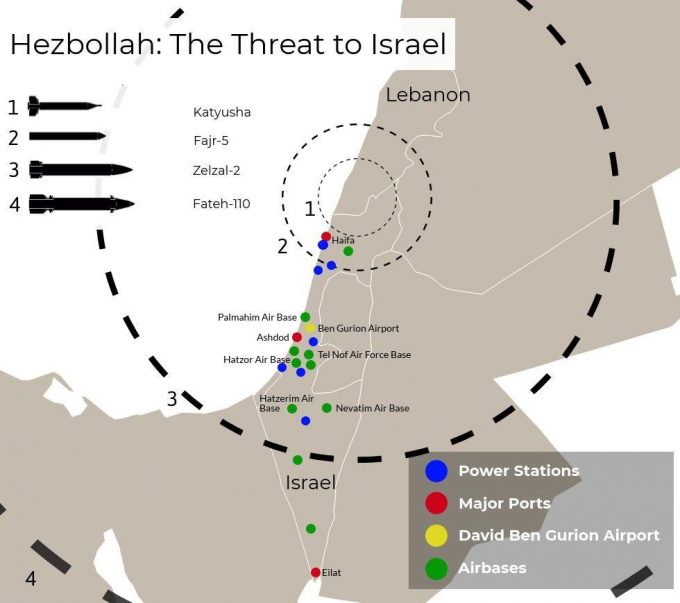
Following its defeat in the second war on Lebanon, Israel discovered that its only way to suppress Hezbollah would be to close the supply line between Lebanon and Syria. That could only be achieved by removing President Bashar al-Assad from power, disrupting the “Axis of the Resistance” that extends from Tehran to Baghdad, Damascus, Beirut and Gaza. But Israel and the US, supported by Saudi Arabia, Qatar, the Emirates, Turkey, Europe and many other countries all failed to achieve their goal of making Syria a failed state. President Assad called upon his allies whose own national security was in jeopardy. If Syria were to fall, jihadists of al-Qaeda and the “Islamic State” would be fighting in the streets of Beirut, Baghdad and Tehran. The jihadists would also be powerful enough to remove Russia from its Syrian naval base and to export the war beyond the Levant’s borders. So, Israel and the US failed to destroy Syria and to corner Hezbollah. On the contrary, Hezbollah has become stronger than ever. The Resistance has reaped the harvest of its victory. It has become the decision-maker with key institutions in Lebanon.
Israel sought to destroy Hezbollah because it is an obstacle to Israel’s expansionist plans in Lebanon, namely to steal Lebanon’s water and some of its territories, to force a peace deal of unconditional surrender, to break Lebanon’s alliance with Iran and deprive Tehran of its strongest ally in the Middle East. For the last forty years, since the victory of the “Islamic Republic” in 1979 led by Imam Ruhollah Khomeini which unseated the US proxy ruler, the Shah of Iran, Washington has imposed sanctions, because Iran has refused to submit to US power and because it supports its allies in the Middle East, mainly Palestine, Lebanon and Syria, to stand against Israel.
In 2006, the US was involved in the planning of Israel’s war on Lebanon. At the 2006 G8 Summit, President George W. Bush described the relationship between Hezbollah, Iran and Syria as one of the root causes of “instability”: “The World must deal with Hezbollah, with Syria, and continue to work to isolate Iran.” (Roshandel J. & Lean C.N. (2011) Iran, Israel and the United States, ABC-CLIO, CA, p. 109).
US Secretary Condoleezza Rice refused to mediate a ceasefire unless “the conditions are conducive”, thinking Israel would win the war. Hezbollah was not only left on its own to face the US and Israel, but Lebanese US-Saudi proxies (Prime Minister Fouad Siniora and Druse leader Walid Jumblat) supported the position of the US and Israel, and argued that there was “no point in a ceasefire.” (Wilkins H. (2013). The Making Of Lebanese Foreign Policy: understanding the 2006 Hezbollah-Israeli War, Routledge, Introduction).
When Israel failed to achieve its objectives, the US agreed to mediate an end to the war. Negotiations concentrated on ceasing all hostilities (not a ceasefire) between the two countries. Tel Aviv and Washington failed to obtain the deployment of United Nations Forces in Lebanon, UNIFIL, on the borders with Syria. The US sought to accommodate Israel in its attempt to gain by negotiation what it failed to achieve using its huge war machine in 33 days of the war in 2006. “Israel’s objective was never realistic”, said Israeli Foreign Minister Tzipi Livni.
When its attempt to control the Lebanese-Syrian borders failed after its defeat in the 2006 war, Israel had one remaining option with which to counter Hezbollah: close the road via Damascus and find a way to curb Hezbollah’s supply line. This required war on Syria.
Since confronting Hezbollah face-face was no longer an option, Syria became the next target in the campaign to isolate Iran, as President Bush declared. The motives behind the war in Syria have been erroneously described by many researchers and analysts around the globe, who have depicted the war as the outcome of an “Arab Spring” against a dictatorial regime. Yet Saudi Arabia, Bahrein and other Gulf countries have been ruled by dictatorships and the same family members for decades and indeed are considered by the west as its closest- oil-rich- partners!
Actually, the war on Syria started just after the al-Qaeda 9/11 attack on the US. Four-star US general Wesley Clark disclosed Washington’s plan as he learned of it in the days after 9/11: “occupy Iraq, Syria, Lebanon, Libya, Somalia, Sudan and finish with Iran.” Just a few months after the US invasion of Iraq, US Secretary of State Colin Powell visited President Bashar al-Assad and warned him that the US would invade Syria if he refused to interrupt his support for the anti-Israel organisations, Hezbollah and the Palestinian groups: the Syrian president would share the same fate as the Iraqi President Saddam Hussein.
The 2003 invasion of Iraq was far from being a piece of cake. The US occupation generated new resistance among both Sunni and the Shia. This encouraged President Assad to rebuff the US threat, unaware of what the future held for Syria. Dozens of states, including Saudi Arabia, Qatar, Jordan, Turkey, the Emirates, Europe and the US all supported a regime change operation via Takfiri proxies. But the consequences of destabilising Syria gave a unique opportunity for al-Qaeda to blossom in Syria and a more lethal group emerged, the “Islamic State” ISIS. President Assad called upon his few allies, Iran, Russia and Hezbollah, to stand against the massive coalition gathered to create this failed state in Syria. The Syrian war which ensued offered unprecedented experience to the Syrian army, gave birth to a new Syrian resistance and offered unique warfare knowledge to Hezbollah, with a base for Iran that Tehran could never before have dreamed of having in the Levant.
Hezbollah had forced unconditional Israeli withdrawal from Lebanon in the year 2000 and challenged all those Israeli-US plans for a “new Middle East” after the second Israeli war on Lebanon in 2006. And the long nine years of war in Syria forced Hezbollah to refine its tactics and armaments and provided Hezbollah with an unprecedented victory. Just as Israel had boosted the creation of Hezbollah, it taught this quasi-state actor all manner of skills and forced it to acquire more training and weapons to repel wars and dismantle the enemy’s objectives. Israel’s former Chief of Staff and Prime Ministerial candidate Benny Gantz believed that Hezbollah had become one of the strongest irregular-organised armies in the Middle East, capable of imposing its rules of engagement and its “balance of deterrence” on the strongest classical army in the Middle East.

“Show me four or five states with more firepower than Hezbollah: they are the US, China, Russia, Israel, France, & the UK,” Gantz said when speaking at the 2014 Herzliya Conference.
That was Israel’s assessment in 2014. Six years later, last February, Israel’s minister of defence Naftali Bennet said: “For every convoy you hit, you miss five convoys and slowly Hezbollah accumulates the critical mass of rockets [missiles] that threaten us.”
Hezbollah has become stronger than many armies in the Middle East. Hezbollah is no longer the organisation that clashes with the Israelis on a hill or site or ambushes a patrol behind an alley. Rather, in Syria and Iraq, it has successfully experienced different warfare scenarios. It has acquired many advanced weapons and became a strategic threat to Israel if it ever contemplated waging outright war on Lebanon and Syria.
Israel set as its goal bringing down Assad in Syria and separating Syria from the “Axis of Resistance.” Israeli defence minister Moshe Ya’alon said that “Israel prefers ISIS on its borders over Assad.” But Israel, America, Europe, Saudi Arabia, Qatar and the Emirates have lost the war. Israel has now chosen to maintain the conflict because it fears that America would let go. This is why Israel is hitting hundreds of targets in Syria, – most of the time without no strategic value whatsoever.
Sources in the “Axis of Resistance” in Syria say that:
“Israel targeted the Iranian HQ at Damascus airport (a building with green glass where Israel destroyed two floors). The following day, Iran restored it and it is back in operation. Israel has repeatedly targeted warehouses with Iranian weapons but also an abandoned training centre in the Kiswa area that has been empty for years. Their aim is to signal to the US that Israel is threatened and that the departure of the US forces would constitute a threat to Israel’s national security. It is indeed too late for Israeli jets to make any difference to Syria’s capabilities. Iran is not exporting weapons but manufacturing them. If it took Israel 9 years and 300 bombing raids to destroy Iranian warehouses in Syria, it took Iran only one year to refill and equip the Syrian army with much more sophisticated precision missiles – and all strategic missiles are in underground warehouses.”
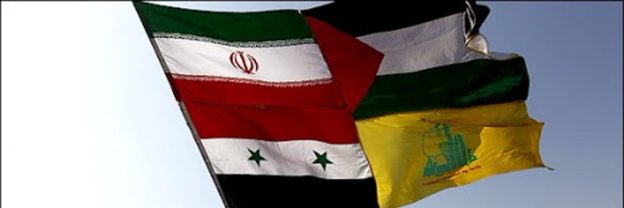
Iran has only a few hundred advisers and officers in Syria, but it leads some tens of thousands of allies from Lebanon, Iraq, Pakistan, Afghanistan, and auxiliary Syrian forces that resemble irregular-organised military formations.
In Syria, Hezbollah was able to operate in an area ten times the size of Lebanon, which gave it a unique experience any army in the world would have wished to have. It was also subjected to attacks by a NATO member, Turkey, which used armed drones on the battlefield. That provided Hezbollah with a wealth of experience and taught them lessons that have become integrated into curricula at military schools and colleges in Iran with Hezbollah and their allies.
President Assad does not say that it is time for his allies (especially Hezbollah) to leave Syria. Rather, he says – according to this source – that “Syria has a debt to Hezbollah. Wherever Hezbollah wants to be, it will be also Syria’s wishes.” America and Israel created an unbreakable alliance between Syria, Iran and Hezbollah.
In Lebanon, Hezbollah has started to harvest its gains. Hezbollah was able to impose the name of the President of the Republic, General Michel Aoun, despite repeated opposition from Saudi Arabia and the US, the losers in the Syrian war. Lebanon remained without a president for several months until General Aoun assumed the presidency.
Hezbollah rejected multiple offers from different countries by giving the Presidency of the Parliament to anyone other than President Nabih Berri, leader of the Amal movement, who has been on this throne for decades. Hezbollah holds the real power – though not all of it – in Lebanon to call for the appointment of the President of the Republic and the Speaker of the Parliament.
As for the premiership, it cannot be assumed without Hezbollah’s approval of the candidate. Hezbollah has sufficient political weight within the House of Representatives and the Presidency of the Republic to nominate or accept the nomination or direct the appointing of a prime minister. Former prime minister Saad Hariri is making sure his daily friendly contacts with Hezbollah are maintained because he would very much like to return to power. Hariri knows that the door to the premiership goes through one gate: Hezbollah.
This does not mean that Hezbollah wants to take control of Lebanon as a whole. Hezbollah leaders are aware that the Druse leader Kamal Jumblatt, Sunni leader Rafic Hariri, the Maronite Christian leader Bashir Gemayel and the Palestinians have all failed in controlling Lebanon and seizing the country. Hezbollah does not want to succumb to the same mistakes and doesn’t wish to control all of Lebanon. This means that the counter influence of other countries exists and is well-rooted in Lebanon. For example, the US ambassador in Beirut is threatening the Lebanese government with a warning not to remove the Central Bank Governor Riad Salama. Also, the US removed a Lebanese-Israeli agent, Amer Al-Fakhouri, via a plane which landed him at the US embassy without taking into consideration Lebanese sovereignty. The US supports the Lebanese army and internal security forces to maintain its dominance over certain key figures.
Syria has given the Secretary-General of Hezbollah, Sayyed Hassan Nasrallah, powers in Lebanon that he would not have obtained without the intervention of Israel and the allies in Syria. Hezbollah has managed to preserve its military pipeline via Syria by defeating the Takfiris (al-Qaeda and ISIS) and has prevented them from establishing an “Islamic emirate” in Lebanon and Syria.
Hezbollah’s victory comes at a price: thousands of martyrs and thousands of wounded. However, the resulting harvest is so abundant and strategic that the Lebanese Shiites now enjoy more power in Lebanon and Bilad al-Sham than they have since the year 661 when the fourth caliphate’s Imam Ali bin Abi Talib was killed.
Proofread by: C.G.B. and Maurice Brasher
This article is translated free to many languages by volunteers so readers can enjoy the content. It shall not be masked by Paywall. I’d like to thank my followers and readers for their confidence and support. If you liked it, please don’t feel embarrassed to contribute and help fund it, for as little as 1 Euro. Your contribution, however small, will help ensure its continuity. Thank you.
Copyright © https://ejmagnier.com 2020
Failures in Syria and Libya fuel coup speculations against Erdogan
By Paul Antonopoulos | May 20, 2020
Turkish media has been full of speculation of a potential coup against President Recep Tayyip Erdoğan, including from state-run Anadolu Agency, and other major outlets like Sabah and Haberturk. Erdoğan already survived a 2016 coup attempt against him that he blames on his ex-ally, Fethullah Gülen, who leads the FETÖ Islamic movement. It is likely that Erdoğan will conduct another purge of the Turkish military.
Although the 2016 coup was orchestrated mostly by the Air Force, it appears that one of the first victims could have been Rear Admiral Cihat Yaycı. On May 15, Yaycı was demoted from the Chief of Staff’s to the General Staff, prompting him to resign from the military completely on Monday. Although some speculated it could have been because of the coup rumors circulating, Yaycı proved to be one of the most loyal Chief of Staff’s to Erdoğan and played a significant role in purging so-called FETÖ elements from the Turkish military.
It is likely that Yaycı was actually demoted because of Turkey’s complete failure to project its power in the Eastern Mediterranean. Yaycı is known as the architect of Turkey’s “Blue Homeland” theory that aims to annex Greece’s Eastern Aegean islands and maritime space. To achieve the “Blue Homeland,” Ankara in November 2019, with recommendation from Yaycı, sealed the “Marine Jurisdictions” maritime boundary delimitation deal with Libya’s Muslim Brotherhood Government of National Accords (GNA) to split Greek maritime space between Turkey and Libya.
However, since the signing of the deal with the Tripoli-based GNA, Ankara’s power projections in the Eastern Mediterranean have only weakened Turkish influence. Turkey had not expected for Greece to expel the GNA ambassador from Athens, one of the first NATO and EU countries to do so. In reaction, Greece recognised the GNA’s rival, the Tobruk-based Libyan House of Representatives who appointed Field Marshal Khalifa Belqasim Haftar to command the Libyan National Army against Turkish-backed jihadists who fight for the GNA.
Greece’s shift in recognition shows another flashpoint in rivalry with so-called NATO ally Turkey and rapidly changed dynamics in the Eastern Mediterranean. Haftar currently controls about 90% of territory and 60% of the population, prompting Turkey to send 5,000 Syrian jihadists to support the GNA, who have regained some lost territory in recent weeks.
But this is going to change as it appears massive simultaneous operations against the GNA and Turkish-backed jihadists in Syria’s Idlib province are set to begin in the coming weeks. Turkey as the sole backers of jihadist forces in Libya and Idlib will find this extremely difficult to deal with as it faces an economic crisis.
A detailed report by New Economy found that “Turkey’s probability of bankruptcy is extremely high,” along with its three big banks of Garanti, Akbank and the Mustafa Kemal Atatürk-founded İşbank. “The country’s commercial banks, its last stronghold, have dried up from foreign exchange currency,” meaning that Turkey has nearly no money for its import and export companies.
Another report found that failed wars against Libya and Syria have been a major problem for its economy, making Turkey’s bankruptcy probability over 30% in the forthcoming period, putting them behind only Venezuela and Argentina, but “without having the US embargo that Venezuela has, nor the vast debt that Argentina brings.”
Most startling however for Turkey is that it has to find $80 billion by August, according to New Economy, or else it faces bankruptcy.
“There is also the additional 0.5-1 billion dollar cost per month for the wars in Syria and Libya, which seems to exacerbate the existing situation, leading to a huge state budget hole and escalating the probabilities of bankruptcy,” the report said.
With major economic problems in Turkey, Ankara paid Syrian jihadists in Libya only one month’s worth of wages and then ended all payments. This has prompted the jihadists to make videos urging other Syrians not to go to Libya and fight. Meanwhile, Turkey’s aggression has prompted Greece to renew diplomatic relations with Syria, become actively involved in Libya, and strengthen relations with Egypt, Saudi Arabia and the United Arab Emirates who oppose Turkish influence in the Arab world.
Yaycı’s ambitious “Blue Homeland” project forced Greece to become involved in Libya and Syria that it previously had no interest in, and it is now actively a part of an alliance that is opposing Turkish influence in the region. With Greece actively opposing Turkish influence in Libya, France has also taken a stronger interest and openly opposes the GNA now. What began as a plan to carve up Greece’s maritime space has now turned into a debacle that sees French involvement against the GNA and EU recognition of the Muslim Brotherhood government waning.
Egypt is now threatening to directly use its military to defeat the GNA rather than just supply Haftar’s forces. The UAE has promised to continue airstrikes against the GNA and funding mercenaries for Haftar. Saudi Arabia is also funding mercenaries. Greece and France are involved in the EU’s Operation Irini to stop maritime deliveries of arms to Libya. In March, Haftar’s political representatives signed with Syria a Memorandum of Understanding to start diplomatic relations. Syria and the Libyan National Army are also preparing likely simultaneous operations against jihadists in their respective countries.
This is all happening while Turkey faces a very serious threat of bankruptcy and rumors of a coup attempt. Therefore, it is likely that Yaycı was demoted by Erdoğan for masterminding and pushing for the “Blue Homeland” that has ended in catastrophic failure for Turkey.
Paul Antonopoulos is an independent geopolitical analyst.
US, other foreign forces must leave Syria, respect its sovereignty: Iran
Press TV – May 18, 2020
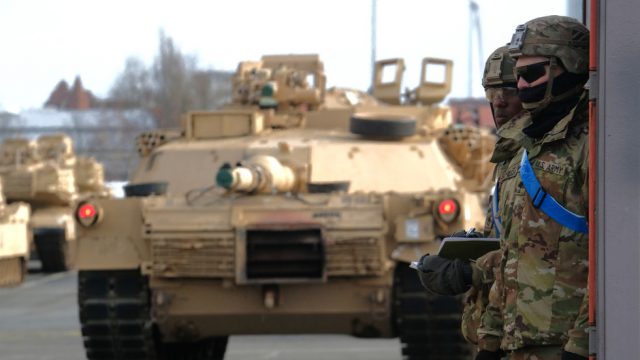
Iran’s permanent ambassador to the United Nations says the US must end its illegal occupation of Syria and stop shielding terrorist groups under the mask of fighting terrorism.
Majid Takht Ravanchi made the remarks in a Monday address to a virtual meeting of United Nations Security Council dubbed “Middle East: Syria – Political”.
“Sovereignty, political independence, unity and territorial integrity of Syria must be fully respected by all, and accordingly, all foreign forces whose presence is not permitted by the Syrian Government must leave the Syrian territory,” the Iranian diplomat said.
“In this regard, the living example is the occupation of certain parts of Syria by the US forces who continue to support and shield terrorist groups under the mask of combatting terrorism,” he went on to say.
He further rejected any separatist agendas as well as “any and all attempts to create new realities on the ground, including through illegitimate self-rule initiatives.”
Takht Ravanchi slammed the “illegal” occupation of Syria’s Golan Heights by Israel, and said the recognition by the US of its annexation to Israel is null and void.
“Condemning such unlawful irresponsible act, we stress that Golan is and will remain a part and parcel of the Syrian territory,” he added.
Israel seized the Golan Heights from Syria after the 1967 Six-Day War and later occupied it in a move that has never been recognized by the international community. However, in a highly provocative move on March 25 last year US President Donald Trump signed a proclamation recognizing Israel’s “sovereignty” over the Syrian territory.
Damascus strongly condemned the move and called it a “blatant attack on the sovereignty and territorial integrity” of Syria.
Since the onset of the occupation, Tel Aviv has been building dozens of settlements in the region and has used it to carry out a number of military operations against the Arab country.
In his Monday speech, Takht Ravanchi also condemned Israel’s aggressions against Syria as a “gross violation of international law and the UN Charter”, stressing that the Syrian Government has a sovereign right to decide how and when to exercise its inherent right to individual or collective self-defense.
“Such aggressions must come to an end,” he urged.
Israel frequently attacks military targets inside Syria in what is considered as an attempt to prop up foreign-backed Takfiri terrorist groups that have been suffering heavy defeats against Syrian government forces.
The Damascus government has several times complained to the UN about Israel’s illegal strikes on Syria.
Iranian Official Denies Rumors about Agreement on Assad’s Resignation
Tasnim | May, 17, 2020
TEHRAN – A senior adviser to Iran’s parliament speaker categorically denied reports about Tehran and Moscow agreeing on the resignation of Syrian President Bashar al-Assad.
In a post on his Twitter account, senior adviser to the Iranian parliament speaker for international affairs Hossein Amir Abdollahian dismissed as “a big lie” the rumors about a plan for the resignation of Syria’s president.
“Dr. Bashar al-Assad is the legitimate president of Syria and the great leader of the fight against Takfiri terrorism in the Arab world,” he said.
“The rumor of an agreement between Iran and Russia on his (Assad’s) resignation is a big lie and a plot from the American-Zionist media,” the Iranian official added.
“Tehran strongly supports the sovereignty, national unity and territorial integrity of Syria,” Amir Abdollahian underlined.
His comments came in response to media speculations that Iran, Russia and Turkey may reach a consensus to remove the Syrian president and establish a ceasefire in exchange for forming a transitional government that includes the opposition, members of the Syrian government and the so-called Syrian Democratic Forces (SDF).
US anti-ISIS chief says his goal in Syria is to create a ‘quagmire’ for Russia, not battle terrorism
RT | May 13, 2020
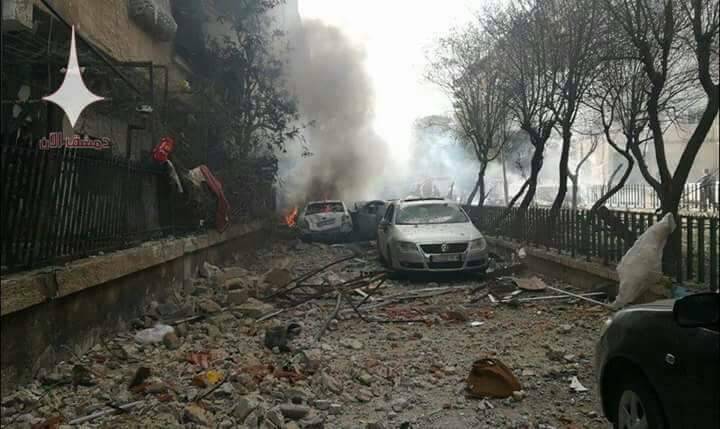
James Jeffrey, the US special envoy for Syria and defeating the Islamic State, has made quite a frank confession of how he sees his job and that of US troops there: to create a new Vietnam or Afghanistan for Moscow.
“Our military presence, while small, is important for overall calculations. So we urge the Congress, the American people, the president to keep these forces on, but again this isn’t Afghanistan, this isn’t Vietnam, this isn’t a quagmire,” Jeffrey said on Tuesday, during a video event hosted by the Hudson Institute. “My job is to make it a quagmire for the Russians.”
The arrival of the Russian expeditionary force in late 2015, following an invitation from Damascus, turned the tide of war in Syria. With their assistance, government forces rolled back both Islamic State (IS, formerly ISIS) terrorists and other militants, including Al-Qaeda affiliates, on multiple fronts – and scuttled US plans for regime change in Damascus.
Jeffrey grudgingly admitted the Russian military has been successful in Syria, but argued “they don’t have a political way out of their problems” with Syrian President Bashar Assad, and the US aims to offer “a way forward” through the UN – presumably referring to Resolution 2254 that Washington has long interpreted as “Assad must go.”
The envoy’s admission on Tuesday is a step beyond his remarks in early March, when he told reporters on a conference call that the US aims to “make it very difficult” for Russia to help the Syrian government achieve a military victory.
While US President Donald Trump repeatedly rejected nation-building interventions in the Middle East and sought to withdraw US troops from Syria, Iraq, and Afghanistan, he has repeatedly faced resistance from the State Department and the Pentagon, still set on the previous administration’s strategy of regime change.
Jeffrey’s mention of a “quagmire” like Afghanistan is particularly ominous, given that’s precisely what the Carter administration did in 1978, covertly supporting Islamic militants in that country in order to provoke a Soviet intervention. According to Carter’s national security adviser Zbigniew Brzezinski, this was done to lure the USSR into their own costly, never-ending war such as the US experienced in Vietnam
Brzezinski boasted of his own role in those efforts, dismissing the fallout of Islamist terrorism that the conflict generated as irrelevant compared to US victory in the Cold War – shortly before the September 11, 2001 attacks triggered a US invasion of Afghanistan that the Trump administration is still struggling to extricate troops from.
Russia Conducting Its Own Investigation Into Alleged Chemical Attacks in Syria – Ambassador to UN
Sputnik – 12.05.2020
UNITED NATIONS – Russia is conducting its own investigation into alleged chemical attacks in Syria and will share its conclusions with the world, Russian Permanent Representative to the United Nations Vassily Nebenzia told reporters on Tuesday.
“We are conducting our own expert investigation and we will share its results with you and international community”, Nebenzia said during a video briefing.
In late April, the Russian Foreign Ministry said the Organisation for the Prohibition of Chemical Weapons (OPCW) had sacrificed its reputation to serve the West’s geopolitical ambition in Syria, after the body published the first report of its newly created investigation and identification team two weeks ago, blaming the alleged chemical attacks in the Syrian town of Al Lataminah in Hama province in March 2017 on the country’s government.
Russia argued that the investigative body had been set up in violation of the Chemical Weapons Convention. Only the UN Security Council has the right to apportion blame for chemical attacks.
The Syrian Foreign Ministry has slammed the OPCW document as fabricated, adding that it is based on materials provided by Hayat Tahrir al-Sham (formerly known as Al-Nusra Front, an offshoot of Al-Qaeda).
Civilian Taxi Driver Shot and Killed by US Military in Deir Ezzor
By Ahmad Al Khaled | American Herald Tribune | May 12, 2020
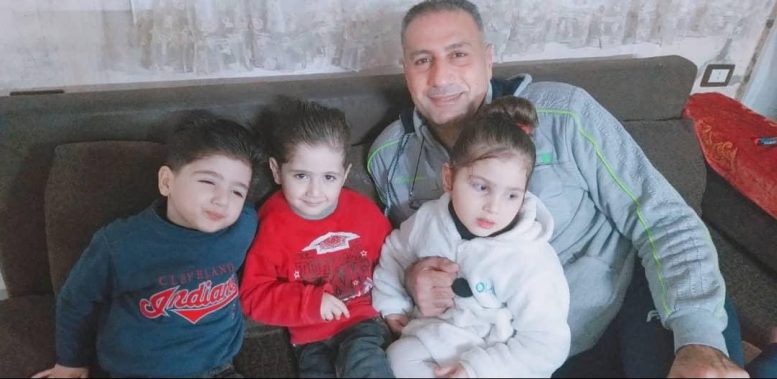
Before the outbreak of the Syrian conflict, Yasser Aslan used to teach programming. With the war and ever-dwindling economy, Yasser, the only breadwinner in the family of six, had to look for additional sources of income. Like thousands of other Syrians, he turned his car – a KIA Rio – into a taxi, and drove along the dangerous roads of Deir Ezzor province in an attempt to make the ends meet for himself, his wife and four daughters (15-years-old teenager and 4-years-old triplets).
Deir-Ezzor, as well as other eastern provinces of Syria, still suffers from small-scale yet lethal attacks carried out by remnants of ISIS terror group. The terrorists mostly target SAA and SDF checkpoints and patrols in the area, but civilians also fall victim to the attacks.
However, it was not ISIS activities that ultimately resulted in Yasser’s death. On May 1st, he and a passenger were driving through the area of Koniko oil facility that hosts a large US military base. As the car drew closer to the base, it unexpectedly came under fire. Yasser was fatally wounded in the head while the passenger survived and was taken prisoner by SDF.
Shortly after Yasser’s relatives were informed that his body was taken to a hospital in Jadid Baqara village. Posts on their social media pages blamed a “US sniper” for the death of their relative and friend, expressing outrage over the incident.
Although Yasser’s demise, most likely at the hands of US military personnel, was reported on-line, neither the Pentagon nor the International Coalition commented on the incident. The story gained no traction in the media. One report described the incident as a ‘clash with ISIS during which a civilian was killed’ without indication of the side responsible for his death.
Greece’s Renewed Relations with Syria Further Isolates Turkey in the Eastern Mediterranean
By Paul Antonopoulos | May 7, 2020
On Tuesday, the Greek Foreign Ministry finally announced a restoration of relations between Greece and Syria and assigned former ambassador to Syria and Russia, Tasia Athanassiou, as a Special Envoy of Greece’s Foreign Ministry for Syria. Greek Foreign Minister Nikos Dendias confirmed this from his Twitter. The appointment of Athanassiou is extremely strategic as she was Greece’s ambassador to Damascus from 2009 to 2012, meaning she is already familiar with Syria and their authorities.
The Greek Foreign Ministry said that contacts will be made for the “international aspects of Syria and related humanitarian action, as well as coordination of actions in view of the ongoing efforts to rebuild Syria.”
Although the Foreign Ministry claims that the suspension of diplomatic relations “was dictated by the security conditions,” we know it was ordered by former Greek Prime Minister Antonis Samaras in December 2012 under orders from NATO and the European Union who were, and in some instances, still are backing jihadists against the secular government of President Bashar al-Assad.
Greece became a country ruled by European banker, EU, and NATO puppets from 2010 onwards when on May 2 of that year, the so-called socialist government of George Papandreou signed the first of three bailout packages with the European Commission, the European Central Bank and the IMF. This caused a 25% contraction of the Greek economy, an unemployment rate of 27% and skyrocketed poverty. Any semblance of Greek independence in domestic and foreign policy was lost.
However, moving to 2020, the economic and geopolitical situation in Greece and its surrounding region has drastically changed. Diplomatic sources quoted by Kathemirini, one of Greece’s oldest and most respected newspaper, said that the decision to appoint a Special Envoy for Syria is part of Greece’s steady activity in the Eastern Mediterranean and the wider region. According to the sources, Greece’s increased desire in contributing to efforts in resolving the Syrian crisis was stated by Dendias in his meetings with the UN Special Envoy for Syria, Geir Otto Pedersen.
Therefore, a major reason for the reopening of relations with Syria is to further tilt the balance of power in the East Mediterranean in Greece’s favor against Turkey, especially at a time when Ankara does not have a single ally in the region, with the exception of the besieged Muslim Brotherhood government in Libya that is nearly collapsed because of the Libyan National Army’s assault.
The reopening of relations between Athens and Damascus comes at a time when Turkish President Recep Tayyip Erdoğan is making a strong push for a “Blue Homeland” that aims to annex Greece’s Eastern Aegean islands and maritime space. Turkey for nine years attempted to oust Assad from power through various means, including an unsuccessful invasion attempt of Idlib province earlier this year, as well as its continued support for terrorist organisations. In addition, Erdoğan is propping up the Muslim Brotherhood government in Libya by importing jihadists from Syria to the North African country.
Although Erdoğan has failed in all of these endeavours, Turkey still remains a major threat, even at a time when it is facing economic catastrophe with the Turkish lira at a near record low to the U.S. dollar and Turkey’s three largest banks, Garanti, Akbank and İşbank, on the verge of bankruptcy. Even with this looming economic disaster, Turkey still manages to find the funds to violate Greek airspace on a daily basis, send weapons to Libya and fund terrorist organizations in Syria.
As the Eastern Mediterranean becomes a potential major warzone because of Turkey’s aggression, Greece is now renewing relations with old friends. Hafez al-Assad, previous president of Syria and father to Bashar al-Assad, pledged that if Turkey was ever to go to war with Greece, Syria would automatically open a new front in southern Turkey in support of Greece.
Athens however is not completely independent from NATO and the EU. This suggests that although renewing relations with Syria is absolutely critical in protecting its sovereignty, perhaps Greece has gotten approval from the EU and/or NATO to do this. Greece is perhaps the most important of the very few European countries that have maintained or reopened relations with Syria because of its history of friendly relations, as well as thousands of years of religious, cultural, financial and ethnic ties.
It can be suggested that as the war in Syria begins to end, continued only by Turkey’s refusal to stop backing terrorist organizations in Idlib, the EU wants to try and take advantage of lucrative reconstruction contracts that will be on offer and investment opportunities. It is unlikely that European companies will win reconstruction contracts, but the reality is that Assad has survived the near 10-year efforts to have him removed, and is not going anywhere. Greece could be used as an outlet for the EU to open dialogue and relations with Damascus again.
This is only speculative, but what is for certain is that by reopening relations with Syria, Greece is consolidating the emerging East Mediterranean order and opposes Turkish hegemony in the region. Greece will always have close relations with Cyprus, and has also entered a military alliance with Egypt, supports the Libyan National Army against Turkish-backed forces, and has strong military and energy ties with Israel. Relations with Syria have essentially finalized the strangulation of Turkey’s attempted hegemony of the Eastern Mediterranean and made it the most isolated country in the region – despite Athens’ insistence on improving ties with Ankara if it finally abandons its aggressive foreign policy.
Paul Antonopoulos is a Research Fellow at the Center for Syncretic Studies.
Syrian ‘regime change’ architect: William Roebuck, US Ambassador of Destruction

By Steven Sahiounie | Mideast Discourse | May 4, 2020
Since 2006, William Roebuck, a US Diplomat, has been working toward ‘regime change’ in Syria at any cost. The destruction of Syria, hundreds of thousands of deaths and injuries, and the migration of one-third of the population have been the price of the US policy under Roebuck’s tenure. The ultimate goal of ‘regime change’ has never been about greater freedoms, democracy, or human rights for Syrians, but has been with the single target spelled out by Roebuck in 2006: to break the relationship between Iran and Syria.
William Roebuck, US Ambassador ‘to the Kurds in Syria’
William Roebuck is a 27 year veteran of the US State Department, having served under Presidents Bush, Obama, and currently Trump. His current title is Deputy Special Envoy to the Global Coalition to Defeat ISIS. He is a former US Ambassador to Syria and Bahrain. He has served in the US embassies in Iraq and chargé d’affaires in Libya under Obama. Seymour M. Hersh wrote about the US Embassy in Libya and its role in arming the terrorists used by the US in Syria. For the past several years, he has been based in Northeast Syria and managing the Kurds.
Roebuck designed the 2011 “Arab Spring” in Syria
WikiLeaks founder Julian Assange revealed a plan concocted by William Roebuck, the former US Ambassador to Syria. Wikileaks published US diplomatic cables, and chapter 10 of “The Wikileaks Files” concerns Roebuck’s cable sent on December 13, 2006. Ambassador Roebuck wrote that the US should take action to try to destabilize the Syrian government by provoking it to overreact, both internally and externally. That plan was put into action in March 2011 at Deraa, where armed terrorists were interspersed among unarmed civilians in street protests. The terrorists were provoking the police and security forces by shooting at them, as well as shooting unarmed civilians which were blamed on the security forces.
The cables prove that ‘regime change’ had been the goal of US policy in Syria since 2006 and that the US promoted sectarianism in support of its policy, which built the foundation for the sectarian conflict which resulted in massive bloodshed. Roebuck advocated for exploiting Syria’s relationship with Iran, which makes Syria vulnerable to Israeli airstrikes. Roebuck advised that the US should destabilize the Syrian government by promoting sectarian divisions between Sunni and Shia, which at the time was not an issue in Syria, which is a secular government and a tolerant society. By promoting sectarian conflict, which he had observed in the oil-rich Arab Gulf monarchies, Roebuck was crafting the destruction of Syrian society. The ultimate US goal in Syria was to destabilize the Syrian government by violent means, resulting in a change of government, and the new government would be pro-Israeli, and anti-Iranian.
Roebuck’s memo leaked
In November 2019 an internal memo written on October 31 by Roebuck was leaked to the press. He criticized Trump for failing to stop Turkey from invading the Northeast of Syria. “Turkey’s military operation in northern Syria, spearheaded by armed Islamist groups on its payroll, represents an intentioned-laced effort at ethnic cleansing,” Mr. Roebuck wrote, calling the abuses “what can only be described as war crimes and ethnic cleansing.”
Roebuck praised the SDF as a reliable partner acting as guards to keep US troops safe while they occupied Syria illegally, to steal the Syrian oil, which is to be used to support the SDF, instead of the Pentagon payroll.
Two is the company, but three is a crowd
The US state department has a Syrian trio: William Roebuck, and the special representative for Syria engagement, James Jeffrey. Joel Rayburn is a deputy assistant secretary for Levant Affairs and special envoy for Syria.
Iraqi and Syrian Kurdish officials are often confused as to which US officials are in charge on any given issue, and whether their policies were personally driven, or reflected US foreign policy directives. Many analysts agree that the US foreign policy on Syria is a confusing mess.
Roebuck pushes the Syrian Kurds to unite
The Kurdish National Council (KNC) and the Kurdish Democratic Union Party (PYD) have begun direct talks which US diplomat William Roebuck has promoted. For the last two years, he has been working with the Syrian Kurds. The goal is to unite all Kurdish parties in Syria in one body, which could be part of the UN peace talks in Geneva to end the Syrian conflict. The KNC and PYD have had serious disagreements over the years.
The KNC is part of the Istanbul-based ‘Syrian opposition’ and aligned with the Kurdish nationalist Massoud Barzani and his Kurdistan Democratic Party (KDP) in Iraq. The KNC received criticism as being pro-Turkish after the Turkish Army invaded the Northeastern region of Syria.
The PYD is part of the political arm of the Syrian Democratic Forces (SDF) who had been the US partner fighting ISIS. PYD bases its political and organizational projects on the PKK’s ideology. The PKK is considered as an international terrorist group accused of thousands of deaths in Turkey over the decades.
The first direct negotiations between the KNC and PYD were held in early April at an illegal US military base near Hasakah, with William Roebuck, an SDF commander Mazlum Abdi in attendance. Roebuck has met numerous times over the past three months with the KNC, trying to push the idea of unification among the Kurdish factions.
At an April 25 press conference in Qamishli, it was announced that Roebuck had presented a draft that called for a unified political vision for Syria. After about four meetings, the two sides were in agreement on the following points: Syria is to be a federal, democratic, and pluralistic state; the current Syrian government in Damascus was not acceptable; the Kurdish northeast region was to be a political unit. It was stressed that both parties were committed to resolving the Syrian crisis through the implementation of UN Resolution 2254, and the new Syrian constitution must recognize Kurdish national, cultural, and political rights.
The SDF and PYD do not have political representation in the Geneva talks because of Turkish opposition to their participation, given the fact that Turkey views the groups as terrorists. Turkey rejects any project that would lead to Kurdish autonomous rule in Syria, which is the goal of the US. When Trump ordered the sudden withdrawal of US troops from the Northeast of Syria in October, the Kurdish leaders immediately turned to the Syrian government in Damascus to save them from extermination at the hands of the invading Turkish Army. However, the US did not want the Kurds to be protected by Damascus. The US goal is ‘regime change’ using UN Resolution 2254 as their tool. To achieve that end, William Roebuck has continued to work with the Kurds of the Northeast and is now trying to get them united to be at the negotiating table in Geneva. The Kurds might unite, but they will always remain a small minority numbering only 7% of the population, but who are attempting to control 20% of the territory in Syria. Will there be justice for the Syrian homeowners and landowners within the territory the Kurds call “Rojava”, who have been made homeless and destitute at the hands of the Kurds? Will the Syrians one day rise in a “Kurdish Spring” cleaning to regain their properties?
Ahed al-Hindi, a political analyst based in Washington, DC, told Al-Monitor that the US goal to unify the Kurdish ranks in northeastern Syria is a part of a project designed to unify the entire Syrian north, including Idlib and the Kurdish Northeast. The US goal is to prevent the Syrian government from access to the resources which could be used to rebuild Syria.
The next UN peace talks in Geneva
UN Special Envoy Geir O. Pedersen gave a UN Security Council briefing on the situation in Syria on April 29. He announced the agenda for the next session of the Constitutional Committee had been agreed between the co-chairs, and meetings in Geneva would resume as soon as the COVID-19 restrictions would allow. He continued to stress the importance of the current nationwide ceasefire, which was needed to combat and treat COVID-19. He declared there is no military solution to the Syrian conflict, and the UN Security Council resolution 2254 must be used as the path to a political settlement that would be acceptable for the Syrian people while restoring the sovereignty, borders, and independence of Syria.
Steven Sahiounie is an award-winning journalist and political commentator.
Syrian Air Defenses Repel Israeli Missiles that Targeted a Military Site in the North of the Country
By Khaled Iskef | American Herald Tribune | May 5, 2020
On Monday night, air defenses in the Syrian army responded to an Israeli offensive that targeted military warehouses in Al-Safirah area in Aleppo eastern countryside.
Private Syrian sources reported that the attack targeted the Scientific Research Center in Aleppo eastern countryside. Syrian air defenses repelled several hostile missiles, resulting in explosions in the sky.
In turn, Syrian Ministry of Defense stated that “At 22:32 on May 4, 2020, enemy warplanes appeared on the screens of our air defenses. The warplanes came from the northeast of Athria and targeted some military warehouses in Al-Safirah area with missiles”.
Sources said that the Israeli aircraft entered the Syrian territories through Iraqi airspace and pointed out that the offensive took place through Al-Tanf base near the Syrian-Iraqi borders.
Through the war years, Israeli warplanes intentionally attacked Syria within its policy based on an attempt to weaken the capabilities of the Syrian army for the benefit of the armed groups. The last Israeli attack was on March 27, 2020 on the south of Damascus, killing three civilians and injuring three others due to shrapnel of the missiles in Adliya and Al-Hujaira. However, Syrian air defenses repelled and downed most of the missiles.
Featured Video
Chinese jet fuel and the myth of energy independence
or go to
Aletho News Archives – Video-Images
Book Review
Former Insiders Criticize Iran Policy as U.S. Hegemony
By GARETH PORTER | CounterPunch | February 27, 2013
“Going to Tehran” arguably represents the most important work on the subject of U.S.-Iran relations to be published thus far.
Flynt Leverett and Hillary Mann Leverett tackle not only U.S. policy toward Iran but the broader context of Middle East policy with a systematic analytical perspective informed by personal experience, as well as very extensive documentation.
More importantly, however, their exposé required a degree of courage that may be unparalleled in the writing of former U.S. national security officials about issues on which they worked. They have chosen not just to criticise U.S. policy toward Iran but to analyse that policy as a problem of U.S. hegemony. … continue
Blog Roll
 Aletho News
- What is fueling unrest across the EU?
- Why no power can undermine Iran’s eternal dominance over the Strait of Hormuz
- Is The War Against Iran Over?
- Iran war will leave long-term ‘scar’ on Wall Street, investors warn
- How Iran decimated US power projection in West Asia: Military lessons of 40-day war
- Iran’s report details US-Israeli war crimes in targeting schools, hospitals, livelihoods
- NATO’s Slow Fracture: How Trump’s Iran War Exposed the Instrument of Hegemony
- Chinese jet fuel and the myth of energy independence
- Ukraine Sea Drone Fired From Libya Hit Russian Tanker in Mediterranean
- IRGC: Iranian forces launched no attacks during ceasefire hours
- If Americans Knew
- DNC Shoots Down Resolutions Calling Out AIPAC and Limiting Arms to Israel
- TCN: Is Israel Blackmailing President Trump?
- Israel killed at least 303 Lebanese yesterday – who were they? Daily Update
- Amnesty: Urgent – Protect Lebanese civilians from brutal escalation in Israeli attacks
- Is The War Against Iran Over?
- Inside the Israeli army’s propaganda wing
- Hundreds of Gaza Amputees Stranded in Legal Limbo
- The gallows law: Israel moves toward executing Palestinian children
- Tucker Carlson: The Path to Peace requires ending ‘special alliance’ with Israel
- This is ceasefire? Israel’s biggest massacre yet in Lebanon, another journalist killed in Gaza – Daily Update
- No Tricks Zone
- An Inconvenient Tree: Uncovered In Alps… Europe Much Warmer Than Today 6000 Years Ago
- New Study Reports A 60% Slowdown In Greenland’s Ice Loss Rate In The Last Decade
- Low Intensity Tornado Wrecks Major Solar Farm, Creating A Potential Toxic Dump
- New Study Finds Warming Saves Lives…Cold Temperatures 12 Times More Deadly Than Excess Heat
- German Science Blog Accuses PIK Climate Institute Of Hallucinating Climate Tipping Points
- Devastating Assessment Of Comirnaty Vaccine By Former Senior Pfizer Europe Toxicologist
- New Study: CO2 Is ‘Effectively Negligible’ As An Explanatory Climate Change Factor Since 2000
- Former Pfizer Toxicologist Dr. Helmut Sterz Tells Bundestag Hearing Pfizer Vaccine Should Have Never Been Approved
- Energy Expert: Germany’s Nuclear Phaseout Was A “500 Billion Euro Mistake”
- New Research: South Australia’s Mid-Holocene Sea Surface Temperatures Were 4°C Warmer Than Today
 Aletho News