Syria’s UN ambassador has once again denounced Turkey for defying Damascus and intensifying its “illegitimate” military presence in the Arab country, saying Ankara’s forces have deployed US-made missiles to Syria’s militant-held Idlib Province in a flagrant violation of international law.
Speaking at a United Nations Security Council (UNSC) session on the situation in Syria via a video link on Wednesday, Bashar al-Ja’afari said Ankara had deployed medium-range surface-to-air MIM-23 Hawk missiles to Idlib.
“The Turkish regime didn’t stop at violating its obligations according to the understandings of Astana, Sochi and Moscow, and supporting the terrorist organizations, but it reinforced its illegitimate military presence on the Syrian territories through bringing in convoys loaded with weapons and heavy equipment every day,” said Ja’afari.
He called on the 15-member UN body to oblige Ankara and other states that sponsor terrorist groups in Syria to end such support and instead help Damascus in its counter-terrorism efforts in order to complete the reconstruction process in the Arab country.
The Syrian diplomat added that any foreign military presence in Syria without authorization from the government in Damascus amounts to aggression and occupation.
He further urged the UN to support the Syrian government in its efforts to complete the reconstruction process, eradicate terrorist groups and reach a political solution to the ongoing conflict without any foreign meddling.
Syria is determined to adhere to its sovereignty and territorial integrity and will not abandon its firm resolve to liberate its occupied territories whether the occupiers are Americans, Turks, Israelis or terrorist organizations, stressed Ja’afari.
Ankara has recently beefed up its military presence in the militant-held Syrian region despite a ceasefire reached last month to halt an escalation.
On March 5, Russia and Turkey, which support opposite sides in the Syrian conflict, came to an agreement on the ceasefire regime in Idlib, where Turkish aggression against the Syrian government had earlier risked starting a war.
The ceasefire came a few months after the Syrian army launched an anti-terror operation against foreign-sponsored militants after they failed to honor a de-escalation agreement between Ankara and Moscow.
Ankara, which itself supports a number of anti-Damascus militant outfits in Idlib, claims that Syrian offensives there have killed dozens of its troops. It has threatened to attack the Syrian military unless government forces abandoned the liberated areas, and asked Moscow to “stop” Damascus.
Turkey has, meanwhile, sent thousands of troops and heavy military hardware into Idlib in an unprecedented incursion to back the militants.
Damascus, though, has vowed to liberate entire Syria, including Idlib, which remains the last major bastion for foreign-backed Takfiri terrorists in the country.
April 30, 2020
Posted by aletho |
Illegal Occupation | Syria, Turkey |
Leave a comment
Iran has managed to break through the U.S. blockade to deliver a large amount of oil to the Syrian Arab Republic, TankerTrackers website has revealed.
According to the website Tanker Trackers, Iran has significantly increased their oil exports to Syria, with several cargoes reportedly reaching the Port of Baniyas in the Tartous Governorate.
The website reported that Iran is currently delivering more than three times the normal amount they export to Syria, which is a significant increase to the Arab Republic, who relied heavily on the Islamic Republic’s oil last year.
“There can be several reasons why this is happening. Excess oil stocks in the midst of sanctions and a global oil glut is forcing Iran to ship and perhaps store the oil in a friendly country. Another reason is that Bashar Assad’s government and Hezbollah can be conduits to sell the oil on the black market. One place Hezbollah can manage to do this is Lebanon, where it has sway over the government,” the website Radio Farda reported.
However, despite these claims, the large oil exports to Syria have less to do with selling the petrol and more to do with the Arab Republic providing relief to its people.
Since the U.S. currently occupies some of Syria’s largest oil fields, the Arab Republic has been forced to find alternatives to meet the civil demand for this resource.
April 29, 2020
Posted by aletho |
Economics | Hezbollah, Lebanon, Sanctions against Iran, Syria, United States |
Leave a comment
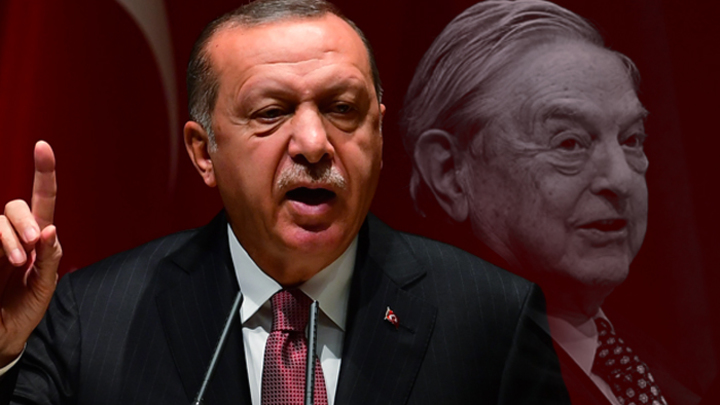
George Soros is a billionaire Hungarian-born investor who is extremely controversial due to his promotion of what he chooses to define as democracy and free-trade movements, primarily conducted through the Open Society Foundations, which he founded and has funded with $32 billion, according to one estimate. He contributed to the campaigns of Barack Obama and Hillary Clinton, which has in part led to conservative politicians in the United States and elsewhere frequently citing Soros when complaining about politically motivated interference in support of a progressive agenda for the United States and also globally. At least they used to do so until Soros’s allies began to fire back with accusations of anti-Semitism, which had the effect of muting the complaints.
Soros moved from Europe to the United States in 1956 and is now an American citizen. The sources of at least some of his wealth are somewhat controversial. He made over $1 billion in 1992 by selling short $10 billion in British pounds sterling, leading to the media dubbing him “the man who broke the bank of England.” He has been accused of similar currency manipulation in both Europe and Asia. In 1999, New York Times economist Paul Krugman was highly critical of Soros’s interference in financial markets, writing, “Nobody who has read a business magazine in the last few years can be unaware that these days there really are investors who not only move money in anticipation of a currency crisis, but actually do their best to trigger that crisis for fun and profit. These new actors on the scene do not yet have a standard name; my proposed term is ‘Soroi.’ ”
Soros was heavily involved with the restructuring of former communist regimes in eastern Europe and had a hand in the so-called Rose Revolution in Georgia in 2003 and the Maidan Revolution in Ukraine in 2014, both of which were supported by the U.S. government. But in March 2017, six conservative U.S. senators sent a letter to then-Secretary of State Rex Tillerson asking him to look into several grants that the State Department and the U.S. Agency for International Development (USAID) had given to groups connected to Soros, most particularly in Macedonia. Soros’s projects are particularly targeted by conservatives and nationalists, as they are transnational in nature, and, indeed, some critics have noted that the well-funded and broadly supported Open Society is the most effective and visible weapon in the arsenal of the progressive dominated globalist movement.
Soros has been linked to a number of theories that see him as a puppet-master pulling the strings on a worldwide conspiracy to control key elements of the world economy as well as leading politicians. His critics are generally conservatives who are opposed to the progressive causes that he promotes. Soros has been in the news recently for his financial support of a Washington-based think tank called the Quincy Institute, which is also funded by the libertarian Koch family. The institute claims to be a non-partisan organization that promotes a “restrained” foreign policy using diplomacy as a means to resolve international disputes rather than threats followed up by warfare, which has become the preferred option for successive U.S. presidents and their administrations.
Soros’s motives in suddenly embracing diplomacy and non-intervention might well be questioned. On March 4, the Financial Times published an op-ed (unfortunately behind a paywall) by Soros entitled “Europe Must Stand With Turkey Over Putin’s War Crimes in Syria.” It had the subtitle “Focusing on the Refugee Crisis Russia Has Created Addresses Symptoms Not the Cause.” In it, he let loose a sharp attack on both the Kremlin and President Vladimir Putin.
The Soros op-ed is full of errors of fact and is basically a call for aggression against Russia. It starts with, “Since the beginning of its intervention in Syria in September 2015, Russia has not only sought to keep in place its most faithful Arab ally, Syrian President Bashar al-Assad. It has also wanted to regain the regional and global influence that it lost since the fall of the Soviet Union.” First of all, Russia did not “intervene” in Syria. It was invited there by the country’s legitimate government to provide assistance against various groups, some of which were linked to al Qaeda and the Islamic State, that were seeking to overthrow President al-Assad.
And apart from Soros, few actual experts on Russia would claim that it is seeking to recreate the “influence” of the Soviet Union. Moscow does not have the resources to do so and has evinced no desire to pursue the sort of global agenda that was characteristic of the Soviet state.
There then follows a complete flight into hyperbole with: “Vladimir Putin has sought to use the turmoil in the Middle East to erase international norms and advances in international humanitarian law made since the second world war. In fact, creating the humanitarian disaster that has turned almost 6 million Syrians into refugees has not been a byproduct of the Russian president’s strategy in Syria. It has been one of his central goals.” None of Soros’s assertions are supported by fact. The U.S. and Israel are the two top flaunters of international norms and law, not Russia, and there is no evidence whatsoever that Moscow sought to create the “humanitarian disaster” in Syria. That was the work of the U.S. and its “allies” in the region who were supporting both separatists and terrorists.
Soros states his belief that “Assad is the most barbarous ruler that the world has seen since Joseph Stalin. When his own people rose up against him, he developed a military strategy designed to inflict the greatest possible harm on his civilian opponents. He deliberately targeted hospitals, schools and kindergartens, trying to kill or maim caregivers. He has used poison gas and chemical attacks over the course of a conflict that has left more than half a million dead.” None of the assertions are true and a lot of the “evidence” comes from propagandists for the terrorist groups, to include the notorious White Helmets. The lies advanced about the use of chemical weapons have recently been exposed.
Soros goes on to describe how Russia has “deliberately targeted” and bombed schools and hospitals, claims that largely derive from sources hostile to al-Assad and Putin that are impossible to check. Soros also asserts that, “The only government that has put up military forces to defend the civilians trapped in Idlib by Mr. Assad and its Russian ally is Turkey.” It is a claim that is perhaps the biggest lie of all, as Ankara is involved in Syria in support of its own completely selfish irredentist objectives and its desire to crush the Kurdish militias operating in the north and east of the country. Back in October, Turkey’s President Recep Erdogan issued an emotional call to Jihad to his supporters, saying, “Inshallah, God has promised us in Syria victory from Allah and an imminent conquest; and give good tidings to the believers. We see it is happening right now.”
The Soros op-ed also included a bit of reminiscence, describing how, “In 2014, I urged Europe to wake up to the threat that Russia was posing to its strategic interests, albeit in a different context and geography. Russia had invaded Ukraine knowing that Europe would seek to avoid any confrontation with Moscow. Yet what is happening in Idlib now is following the same pattern: Europe is evading a confrontation with Russia over its Syria policy when it should be standing up to it . . . with respect to Syria at least, Turkey deserves Europe’s support. Europe should therefore seek to bolster Turkish President Erdogan’s negotiating position. . . . I hope that this would also put Mr. Putin’s war crimes at the center of the European conversation.”
The op-ed is neither conciliatory nor “diplomatic” and is a clear sign that Soros picks his enemies based on ideological considerations that also drive his choices on how to frame his ventures. He is a billionaire who has chosen to use his money to remake the world in an image that he is comfortable with. Unfortunately, there is a lot of that kind of thinking going around—that having lots of money ipso facto equates to some kind of superior wisdom. And the whole process is facilitated by the fact that politicians as well as space on editorial pages of leading newspapers can easily be bought. Soros would have Europe and the United States taking on Russia over what he perceives to be going on in Syria, where they have no genuine interests. It is a formula that we have seen played out repeatedly in the past 20 years and can only lead to disaster.
April 29, 2020
Posted by aletho |
Mainstream Media, Warmongering, Russophobia | Hillary Clinton, Middle East, Obama, Syria, Turkey, United States |
Leave a comment
An Iraqi military advisor and analyst has said that the US is seeking to replace Iraq’s Popular Mobilization Units in the western Anbar province bordering Syria with its own forces.
Speaking to Iraq’s al-Maloumah news agency on Sunday, Safa al-A’ssam said that Washington seeks to force the PMU out of the province’s al-Qaim border region by fanning sectarian tensions.
“The plan is to redeploy American forces to the al-Qaim region on the pretext of countering Deash terrorist attacks and filling the security vacuum following a PMU withdrawal,” he added.
The PMU formed shortly after the emergence of the Daesh terrorist group in Iraq in mid-2014.
The group played a major role pushing back and ultimately defeating the terrorist forces which had taken control of a large swathes of the country.
The Iraqi parliament voted to integrate the PMU into the Iraqi military in 2016, effectively placing the force under the command of the prime minister and granting the group a standing similar to that of other branches of Iraqi security forces.
Fazel Jaber, an Iraqi lawmaker affiliated with the Fatah Alliance, has also warned of attempts by certain Iraqi groups to undermine the PMU’s presence in the province despite being deployed under the command of Iraq’s federal government.
He said the attempts to weaken the PMU were led by Washington, which fears the group’s presence.
The PMU has long rejected Washington’s military presence in the country as an obstacle impeding long-lasting security and stability in Iraq.
In January, Washington assassinated the group’s deputy commander, Abu Mahdi al-Muhandis, alongside Iran’s top anti-terror Lieutenant General Qassem Soleimani in the capital city Baghdad.
Iraqi resistance groups have vowed to take up arms against US forces if Washington fails to comply with a parliamentary order calling for the expulsion of US troops following the assassination.
April 26, 2020
Posted by aletho |
Ethnic Cleansing, Racism, Zionism, Illegal Occupation, Wars for Israel | Hezbollah, Iraq, Middle East, Syria, United States, Zionism |
Leave a comment
Israeli energy company, Energix Ltd. (‘Energix’), is taking advantage of the COVID-19 lockdown in the occupied Syrian Golan (‘Golan’) to develop sites for its harmful wind farm project. Accompanied by Israeli police, Energix representatives are visiting project sites to demarcate plots and erect signs. Meanwhile, due to COVID-19 movement restrictions, Golani Syrians are grounded in their homes, unable to monitor or peacefully protest Energix’s activities. Those that have risked their health to venture out and film Energix and Israeli police visits to project sites have subsequently been harassed and questioned by the police.
Despite countless objections from the Syrian population, Energix obtained approval from the Israeli government in January of this year to build 25 wind turbines on Syrian agricultural land adjacent to two of the remaining Syrian villages in the Golan. With a maximum height of 220m, the approved turbines could be some of the tallest onshore turbines in the world and would occupy around a fifth of the agricultural land still available to Syrians in the Golan.
In addition to violating international law, Energix’s wind energy project has been marked by a strategy to manipulate and intimidate the Syrian population. This culminated in Energix suing Al-Marsad and members of the Syrian population under Israel’s controversial ‘Anti-Boycott Act’ last year in an attempt to silence the organisation and others who expressed concerns about the project’s legality and impact on the Syrian population. Energix has subsequently withdrawn five lawsuits against Golani Syrians and, in March, was ordered by an Israeli court to pay up to $5,000 USD per person for legal expenses. The case against Al-Marsad is ongoing. However, at a February hearing, Al-Marsad rejected a possible settlement that would have meant compromising its work and instead reaffirmed its intention to fight the baseless case.
Meanwhile, the UN Special Rapporteurs on the Situation of Human Rights Defenders; Issue of Human Rights Obligations Relating to the Enjoyment of a Safe, Clean, Healthy and Sustainable Environment; and, the Promotion and Protection of the Right to Freedom of Opinion and Expression have written to the Israeli government and Energix. In a 12 page letter, the Special Rapporteurs outline their legal concerns with Energix’s project and lawsuits, asking for more information and clarification on nine key issues. The Israeli government responded last month, failing to meaningfully address any of the legal issues that the Special Rapporteurs raised. Israel does not dispute any of the facts in the letter, which implicate various violations of international law, and continues to defend its universally condemned ‘Anti-Boycott Law’ as it is used to supress human rights work. Most strikingly, Israel claims it duly considered objections to Energix’s project prior to the project’s approval, despite the fact that it ignored a petition with over 6,000 signatures rejecting the project and comprehensive legal and environmental problems experts had raised during the project’s licensing phase.
As Energix manipulates a global health crisis, under the direct protection of Israeli security forces, lawful and legitimate protest has been extinguished from the Golan. Still, the Syrian population is seeking to pursue new avenues for justice as more than 20 Syrians are now attempting to nullify land contracts with Energix, and Al-Marsad, with partners, is contemplating a new petition to the Israeli Supreme Court to halt Energix’s work. Al-Marsad calls on the international community, in line with multiple UN Special Rapporteurs, to support its work and the Syrian population in the Golan now more than ever as the risk of irreversible harm by Israel and corporate interests increases.
April 25, 2020
Posted by aletho |
Ethnic Cleansing, Racism, Zionism, Illegal Occupation, Timeless or most popular | Israel, Soviet Union, Syria, Zionism |
Leave a comment
A Russian aviation news outlet says Iran may have replicated an Israeli missile that was shot down in Syria, citing a video of the test of a new Iranian anti-tank missile.
Avia.Pro reported that the new missile seems to resemble one of the Israeli projectiles that were downed by the Russian electronic warfare system during an attack on Syria,.
The report added that the downed missile was later successfully removed from the country by “Iranian intelligence service”, and was studied and completely copied.
The news outlet shared a video that showed the accuracy of the Iranian copy of the Israeli “Spike” missile in hitting its target.
Avia.Pro quoted experts as saying that Iran may use Israeli missiles against Tel Aviv itself in the near future.
Iranian authorities have repeatedly said that the country’s missile program has not been established for non-conventional purposes and is only meant as part of the country’s deterrence capability.
Iran holds the very first ranking in the field of missile technology among the Middle Eastern countries, according to a commander of the Islamic Revolution Guards Corps (IRGC).
“Today, we rank first in the missile technology at the regional level and are placed among the few global powers in this regard,” Brigadier General Amir Ali Hajizadeh, the commander of the Aerospace Division of the IRGC, said last August.
In June, Major General Hossein Salami, the chief commander of the IRGC, said Iran had managed to change the balance of power in its favor by harnessing the technology required for manufacturing ballistic missiles.
Salami said the Islamic Republic acquired the know-how 12 years ago while trying to prepare its defenses against the United States’ aircraft carriers.
April 20, 2020
Posted by aletho |
Aletho News | Iran, Israel, Middle East, Russia, Syria, United States |
Leave a comment
28 militants and six drivers from the Jaysh Maghawir al-Thawra (‘Revolutionary Commando Army’) rebel group arrived in Palmyra, handed over all their weapons and equipment and surrendered to take advantage of the Syrian government’s recent amnesty decrees, SANA has reported, citing a source said to be involved in the process.
Earlier, the Russian Defence Ministry’s Centre for Syrian Reconciliation confirmed that over two dozen militants trained at a US military base in Syria had surrendered to the Syrian Army after breaking out of the US-controlled At-Tanf area and engaging in a shootout with other militia members.
The group’s evacuation from the At-Tanf area, a blob of US-held territory in southern Syria near the Jordanian and Iraqi border, was facilitated following over four months of planning, according to authorities.
SANA’s source said that the haul of surrendered equipment included eight vehicles, some of them fitted with heavy machine guns, along with a small number of automatic weapons, sniper rifles, 2 RPG launchers and a grenade launcher, along with communications equipment and binoculars.
Ghannam Samir al-Khedair, the group’s leader, said he and his comrades had been displaced from Sweida by Daesh (ISIS) and crossed the border into Jordan, where they were trained, after which they were sent to guard the Rukban refugee camp. Al-Khedair also revealed that his men were demoralised after finding out that much of the relief supplies meant for the camp, which once held as many as 45,000 people, was being sold to Daesh, and discovering that other Jaysh Maghawir al-Thawra militants also supported the terrorists.
Khaled Samir al-Khedair, another former militant from the At-Tanf base, said that US occupation forces were training militia to attack Syrian Army positions, as well as civilian infrastructure and oil and gas fields. Salah Rashid al-Zaher, another militant, confirmed that this training for sabotage ops was taking place. According to al-Zaher, in addition to much of the Rukhban camp aid being sold to Daesh, some of it was also traded on the black market to camp residents at exorbitant prices.
The SANA report comes two days after confirmation by the Russian military that a group of over two dozen militants trained at At-Tanf had surrendered to the Syrian Army. The militants began their journey to Palmyra on the night of 13 April, but had to fight off a detachment of Jaysh Maghawir al-Thawra forces to escape, arriving in the ancient city on 14 April.
Rukban Disaster
Officials in both Damascus and Moscow and the Syrian and Russian militaries have repeatedly expressed concerns about the disastrous humanitarian situation at the Rukban refugee camp over the course of many years, and have reported on the Pentagon’s use of the At-Tanf military base to retrain former extremists to renew their struggle against the Syrian government.
Damascus has stressed repeatedly that the only solution which could end the al-Rukban refugees’ suffering would be for the US to withdraw from At-Tanf and leave Syria. At the moment, it’s estimated that there are still as many as 13,500 people at the camp, among them 6,000 militants, and members of their families. At least 150 US troops are estimated to remain at At-Tanf.
The US moved in to take control of the At-Tanf area in early 2016, just as the Syrian Army began its counteroffensive against Daesh militants in the sparsely populated desert areas of central Syria. US forces formally established the Jaysh Maghawir al-Thawra militia after dissolving its predecessor, the so-called ‘New Syrian Army’ militant group, in late 2016. Syria and its allies have repeatedly demanded that the US withdraw from the Arab Republic’s sovereign territory. The area has seen repeated deadly clashes between Syrian forces and entrenched US forces and their militia allies.
April 18, 2020
Posted by aletho |
Illegal Occupation | Da’esh, ISIS, Syria, United States |
Leave a comment
Two years ago the Syrian government was accused of a chemical attack in the Damascus suburb Douma. It has become clear now there never was such an attack. But still, people were found dead. Who were they? And how did they die?
On April 14th 2018, the US, France, and Great Britain launched missile strikes on Syria, in retribution for an alleged poison gas attack on the terrorist stronghold Douma for which they held the Syrian government responsible. Just before the attack, the Russian ambassador in Lebanon and the chief of Russia’s general staff warned Russia would respond to strikes on Syria if the lives of Russian servicemen were threatened, targeting any missiles and launchers involved. As Russian envoy to Organisation for the Prohibition of Chemical Weapons (OPCW), Alexander Shulgin, later put it: “There was a smell of gunpowder in the air“.
What could have led to World War III eventually ended with a hiss. No Russian targets were hit and for Syria, the damage from the attacks was limited, partly because Syria’s Soviet-era air defence systems intercepted many incoming missiles.
Rumours about a chemical attack had started with videos and photos disseminated on social media by Syrian Civil Defence, better known as The White Helmets, among others, of children being treated in a hospital with respiratory problems; of dead bodies in an apartment building; and of chlorine cylinders that looked as if they had been dropped from the sky, one laying on a roof terrace and the other on a bed under a hole in the roof.
On 16th April 2018, two days after the tripartite strike, British Middle East correspondent Robert Fisk interviewed a doctor from the Douma hospital. He stated that although the video of the children being treated in the hospital was real, and that the portrayed patients had been struggling with breathing problems, this was not the result of a poison gas attack, but of dust clouds caused by bombardments that had occurred earlier in the day.
While the patients were being brought in, there was a member of the White Helmets calling out “gas!” – which caused people to throw water over each other in panic.
Other witnesses, who told their story in The Hague on April 28th 2018, at a press conference organised by the Russian delegation to OPCW, roughly confirmed the statement of the doctor interviewed by Fisk. None of them, including several people who were seen in the video, said they hadn’t noticed anything of a poison gas attack.
In May 2019 a revealing document was leaked from OPCW about the two cylinders. The author, Ian Henderson, who in April 2018 had been sent to Douma to investigate the cylinders on behalf of the chemical watchdog, concluded that there was a “higher probability that both cylinders were manually placed at those two locations rather than being delivered from aircraft”. This seemed to be an understatement since the hole in the roof turned out to be smaller than the cylinder on the bed below.
Also “no organophosphorus nerve agents or their degradation products were detected, either in the environmental samples or in plasma samples from the alleged casualties”, the OPCW interim report on the Douma incident reads. The OPCW inspectors furthermore noted that the dead people in the photos and videos didn’t look like victims from “chlorine-containing choking or blood agents such as chlorine gas, phosgene or cyanogen chloride”.
And so, one important question remains unanswered: Who were the around 35 dead deceased, mostly women and children, that were filmed and photographed in the four-storey building in Douma, where one of the two cylinders was found on the roof? And how did they die?
Jaish al-Islam, the terrorist group that at that time occupied Douma, reportedly buried the bodies in an unmarked mass grave, before the OPCW inspectors had arrived at the scene. Raed Saleh, leader of the White Helmets, told Reuters he pinpointed the burial place to OPCW. Nevertheless, the chemical watchdog chose not to conduct exhumations.
And so I asked Al Saleh if he could tell me anything about the background of the victims and the location of their burial. Unfortunately, he left my questions unanswered. I also asked Dr. Ghassan Obeid of the mission of Syria to the OPCW if the Syrian authorities had made an effort to identify the deceased, but I received no reply from him either.
At a press conference of the Russian embassy in The Hague on July 12th 2019, that I attended, Maxim Grigoriev, director of the Russia-based Foundation for the Study of Democracy, showed interviews of people living in the apartment building and in its vicinity.
None of them recognised the deaths from the videos and photos, apart from one man who identified his brother, who had died, he said, from artillery shelling elsewhere. Some interviewees declared they had seen fighters bringing dead bodies into the building.
I invited the open-source and social media investigators of Bellingcat to debunk Grigoriev’s findings and to identify the ‘Douma victims’. I received no reply. Nevertheless, Bellingcat proved to be very quick in finding who was to blame: four days after the alleged chemical attack they concluded it was “highly likely the 34+ victims of the 19:30 attack on the apartment building near al-Shuhada Square were killed as a result of a gas cylinder filled with what is most likely chlorine gas being dropped from a Hip helicopter originating from Dumayr Airbase”.
And so here we are, two years after an attack that never happened, with around 35 dead people, still unidentified, and still buried in an unmarked grave.
Even more terrible: the management of OPCW, based in The Hague, The Netherlands, has suppressed the findings of its own inspectors who had conducted an investigation at the alleged crime scene in Douma, Syria.
The OPCW management is simply covering up for the criminal elements that have staged the Douma incident, and that could have triggered an all-out world war. For full information about this alarming fact, I recommend reading the presentation given by members of the Working Group on Syria, Media, and Propaganda among others in the House of Commons on January 22th 2020.
April 15, 2020
Posted by aletho |
Deception, False Flag Terrorism, Mainstream Media, Warmongering | Bellingcat, OPCW, Syria, White Helmets |
Leave a comment
OPCW Fact-Finding Mission (FFM) has determined that chemical weapons have been used or likely used in Syria. The first report of the OPCW was released April 8 and points a finger at the Syrian Arab Air Force concerning 3 attacks which occurred in Ltamenah, on March 24, 25, and 30, in 2017.
The report claims the investigation team conducts its activities in an impartial and objective manner. The only reason to believe the conclusion of such a report would be the belief that the team is honest, unbiased, and has no political agenda.
There is no proof presented and the 82-page report clearly states that they are not a legal body with the authority to assign criminal responsibility. The Investigation and Identification Team (IIT) Coordinator, Mr. Santiago Oñate-Laborde remarked that the investigative team has concluded that there are reasonable grounds to believe a chemical was used in the attacks. He further added, “In the end, the IIT was unable to identify any other plausible explanation.”
In the report, other plausible explanations were identified, but the report sticks with the personal opinion of one person who has some military experience, though is not identified. The report stated: “a military expert advising the IIT noted the use of chemical weapons in this area would not be inconsistent with a strategy aimed at inflicting terror on both civilians and combatants, at eliminating infrastructure such as the medical facilities required to continue fighting, and at ensuring that no one felt safe even behind the front lines proper. The IIT however also took into account that armed groups opposing the Government of the Syrian Arab Republic, on the other hand, might have had an incentive in “staging” a chemical attack against civilians and their own fighters, to blame the Syrian Arab Republic’s authorities.”
The report continued, that the alleged incidents in Ltamenah could potentially be explained through similar scenarios, including the ‘staging’ of an attack with sarin brought from elsewhere. Also notable in the report, is the fact that the team never visited the site, and only spoke with 20 witnesses.
The Syrian Foreign and Expatriates Ministry released a statement on April 9. “The Syrian Arab Republic condemns, in the strongest terms, what has come in the report of the illegitimate so-called Investigation and Identification Team, and rejects what has been included in it, in form and content,” the statement said, and added that Syria, at the same time, categorically denies using toxic gases in Ltamenah town or in any city or village, and affirms that the Syrian army has never used such weapons in the most difficult battles carried out against armed terrorist organizations.”
The Ministry of Foreign Affairs of the Russian Federation released a statement on April 9. “The authors of the report, and consequently the leaders of the OPCW Technical Secretariat, have thus become accomplices in the consistent violation of the basic principles and procedures of objective and unbiased investigations stipulated in the CWC, which requires the mandatory dispatch of experts directly to the sites of alleged incidents. The information gathered by the IIT mostly came from anti-government armed groups and pseudo-humanitarian NGOs affiliated with them, including the notorious White Helmets.” The statement further adds, “We have also noted that the report contains references to certain secret services data – apparently from the same states obsessed with a change of power in Damascus. There is no other word for it but misinformation.”
In March 2011, the US-NATO attack on Syria began with the goal of ‘regime change’. The plan has cost billions, which was to remove the President Assad administration, which is part of the ‘axis-of-resistance’, and to replace it with a pro-US regime headed by the Muslim Brotherhood, such as was accomplished in Egypt. However, Syria proved to be stronger than the CIA backed terrorists, and finally, in 2017 President Trump cut off the funding, but the US-NATO plan has not died a natural death. It is being kept alive by artificial means: such as dubious reports of chemical use, which may illicit US-NATO military intervention, under the ruse of ‘humanitarian intervention’, such as was accomplished in Libya in 2011.
It was President Obama who handed the terrorists following Radical Islam with the scheme of using chemical use in Syria as the reason for a US military intervention. Obama delivered his famous “Red-Line” speech and the terrorists took the bait. In East Ghouta they staged a chemical attack and filmed a video which was shown around the globe. An un-verified video almost caused the US military to attack Syria in a massive planned intervention. Obama stopped short of ordering the attack when the UK military lab at Porton Down informed him the sarin used was not from Syrian military sources. There are still many Republicans and Democrats in the US Congress who are united in their blame of Obama’s inaction. They blame him for being weak, although his actions were based on facts, not opinions.
The OPCW sent a team of experts to investigate allegations that a chemical attack took place in Douma on April 7, 2018. However, the report was discredited after an email was leaked to the well-known journalist Peter Hitchens, who confirmed the email was sent by a member of the team to his superiors, in which he exposes the report was ‘tweaked’ to intentionally misrepresent the facts.
A shocking video purported to show victims being treated in the hospital after the attack went viral, with major western media still showing the video whenever Syrian chemical attacks are mentioned. However, the symptoms shown in the video are not consistent with what witnesses reported having seen and experienced that day. This glaring inconsistency was intentionally stricken from the OPCW report. Seemingly, once again, an unconfirmed video is believable. If a picture tells a thousand words, a video tells a million.
Ian Henderson, a veteran OPCW inspector and specialist chemical engineer with military experience, visited the Douma site. His investigation concluded there was a ‘higher probability that both cylinders were manually placed … rather than being delivered from aircraft’. Mr. Henderson stored a copy of his research findings in the ‘Documents Registry Archive (DRA) when it became apparent his work would be excluded from the final report. After a senior OPCW official became aware of Mr. Henderson’s actions, the official sent an email to his staff saying: ‘Please get this document out of DRA … And please remove all traces, if any, of its delivery/storage/whatever in DRA’.
The OPCW has become a political tool for the US-NATO goal of ‘regime change’ in Syria. Instead of being an independent investigative body operating on a basis of integrity, it has delivered reports which could have been written before the investigation.
Steven Sahiounie is a Syrian-American award-winning journalist.
April 11, 2020
Posted by aletho |
Deception, Mainstream Media, Warmongering | OPCW, Syria |
Leave a comment
The Israeli military has threatened to strike the positions in Syria of the Lebanese Hezbollah resistance movement, days after assassinating a senior member of the group in southern Lebanon.
The Israeli military on Friday posted grainy footage on Twitter purporting to show the head of the Syrian Armed Forces 1st Corps, Luau Ali Ahmad Assad, “visiting Hezbollah positions in Syria.”
The footage, which was filmed from a distance, showed individuals wearing military fatigues greeting a man with military salutes and shaking hands with him in an open area.
The text accompanying the footage on the Israeli post read, “See the man with white hair? That’s the head of the Syrian Armed Forces 1st Corps, Luau Ali Ahmad Assad. He’s visiting Hezbollah positions in #Syria.”
“Our message: We see you. Consider this a warning,” the caption further read. “We won’t allow Hezbollah to entrench itself militarily in Syria.”
It was unclear who had captured the footage, or whether it was of Assad visiting Hezbollah members in Syria.
Syria has been fighting foreign-backed militants since 2011. While that fight has been winding down, the country has also had to combat Daesh terrorists in Syrian territory, including near the Lebanese border. Hezbollah has dispatched fighters to help the Syrian military eradicate the terrorists and has prevented the spillover of terrorist activity into Lebanon.
The Israeli regime has, meanwhile, frequently conducted airstrikes against positions in Syria. While the Tel Aviv regime has often refused to confirm or deny specific strikes, it has claimed that it has been hitting Hezbollah forces in Syria.
 The latest threat comes a few days after a Hezbollah commander in charge of tracking collaborators with Israel, Ali Mohammed Younes, was killed in southern Lebanon apparently by agents working for Israel’s Mossad spy organization.
Younes was found by his car and had been stabbed twice and shot four times.
According to Sputnik, Younis was a “close associate” of Lieutenant General Qassem Soleimani, the former commander of the Quds Force of Iran’s Islamic Revolutionary Guards Corps (IRGC) who was himself assassinated in a United States drone strike in Baghdad back in January.
The Syrian army has managed to drive the terrorists out of most parts of the country and end Daesh’s territorial rule with help from Iran, Hezbollah, and Russia.
See also:
Hezbollah member assassinated in south Lebanon: Officials
Unknown gunmen have assassinated a member of the Lebanese resistance movement Hezbollah in southern Lebanon.
April 10, 2020
Posted by aletho |
Ethnic Cleansing, Racism, Zionism, War Crimes | Israel, Lebanon, Syria, Zionism |
Leave a comment
By Paul Antonopoulos | March 31, 2020
In the midst of the coronavirus crisis, Syria’s President Bashar al-Assad and Abu Dhabi’s Crown Prince Mohammed bin Zayed Al-Nahyan, the head of United Arab Emirates (UAE), spoke by phone on Friday in the first such communication since the Syrian War began in 2011. This shows a metamorphosis of alliances and geopolitics in the Middle East and the wider region considering the UAE was one of the main backers of terrorist organizations who fought to remove Assad from power. However, for more than a year, the UAE has been sending signals showing a change in policy towards Syria. The phone call was after a long series of rapprochement that began in late 2018 with the reopening of the Emirati embassy in Damascus.
“I have discussed with the Syrian president… updates on the coronavirus. I assured him of the support of the UAE and its willingness to help the Syrian people,” Prince Mohammed said on Twitter. “Humanitarian solidarity during trying times supersedes all matters, and Syria and her people will not stand alone.”
A diplomatic source close to the case was quoted by the Lebanese daily L’Orient-Le Jour as saying the “Westerners, the Americans and French particularly, were against” a Syrian-Emirati rapprochement. According to the diplomatic source, the UAE is trying to gain favours from Moscow and has already won dozens of contracts, including in armaments, gas and infrastructure, but also with space cooperation. This is part of a broader geostrategic context and the stakes go far beyond Syria and the UAE. Rather, the UAE has acknowledged that Russia has taken a greater interest in the region, in particular in Syria and Libya.
Relations between the Gulf monarchies and the United States, traditional allies, have greatly deteriorated in recent years. The gradual disengagement of American forces from the region, but especially the lack of support from Washington against Turkey, made the monarchies with the exception of Qatar, lose the confidence they once had in the United States. According to the diplomatic source quoted by L’Orient-Le Jour, the UAE is trying to get closer to Beijing and Moscow, and the Crown Prince’s phone call to Assad is evidence of that. The call also comes as relations with Iran softened, especially seen with the many Emirati delegations who visited Iran last year, however this has not softened the UAE’s brutal Yemeni policy. None-the-less, this suggests a change in foreign policy that appeals to Moscow.
It appears then that the UAE’s turn around in its Syria policy serves two purposes: first – to strengthen relations with Russia, second – to form an anti-Turkish bloc.
As Turkey actively pursues the establishment of a neo-Ottoman Empire, the UAE is aggressively undermining the project as it opposes the Muslim Brotherhood, an organization that Turkish President Recep Tayyip Erdoğan has openly supported and backed in Syria, Libya and Egypt. The UAE recognized the Muslim Brotherhood as a terrorist organization in 2014 after the fundamentalist group made plans to infiltrate and destabilize the Gulf country to take control – the main reason for the ever-increasing deterioration in relations between the UAE and Turkey.
Since then, the UAE has been actively countering Turkish influence across the region. As part of its efforts to create an anti-Turkish block, the UAE have strengthened their relations with Saudi Arabia and Egypt. Both Saudi Arabia and Egypt fear being taken over by Muslim Brotherhood rule. However, the UAE’s pursuit of countering Turkey has not been reduced to only the Islamic world.
Greece, considered the “Old Enemy” by the Turks, received 11 tons of medical aid from the UAE on Thursday, with a Greek government press release stating that relations “began as economic cooperation, but thanks to the trust that was developed, it evolved into a strong bond.” This came as a working meeting of the Greece-UAE Broader Strategic Cooperation Forum was held in Athens on February 19 following the Greek Prime Minister Kyriakos Mitsotakis’ visit to UAE. In 2019 and 2020, the UAE and Greece has conducted joint military drills and military heads have been meeting each other often in a clear directive against Turkey.
In Libya, the UAE has not held back in supporting the Libyan National Army in their struggle against the Muslim Brotherhood government in Tripoli, headed by the ethnic Turk Fayez al-Sarraj who has the full backing of Erdoğan. The UAE’s material assistance has been crucial in the success of the Libyan National Army’s battle against Muslim Brotherhood forces, a clear demonstration that the UAE are willing to directly check Turkey’s ambitions to exert its influence and power across the region.
By securing close relations with Greece and directly countering Turkey in Libya, the UAE’s rapprochement with Syria is another step in formulating an anti-Turkish bloc, with itself at the head. While Turkey has acted to strangulate countries who oppose its hegemony in the region, it now appears that it is the UAE who is pressurizing Turkey and isolating it. There is every chance that the UAE will begin sending material aid to Syria that will be crucial in its future battles to expel the Turkish military and their jihadist proxies from Syrian territory. This will once again undermine Turkey’s efforts to dominate Syria and be the main power in the region, a move that Erdoğan would not have expected.
Paul Antonopoulos is a Research Fellow at the Center for Syncretic Studies.
March 31, 2020
Posted by aletho |
Aletho News | Libya, Middle East, Russia, Syria, Turkey, UAE |
Leave a comment
Turkish forces and allied Takfiri militants have once again cut off drinking water supply to people in Syria’s northeastern city of Hasakah and surrounding areas, only a few days after the Damascus government complained to the United Nations and the Security Council over the issue.
Director General of Hasakah Water Company, Mahmoud al-Ukla, told Syria’s official news agency SANA in a statement on Sunday that the Turkish troops and their allies stopped the pumping of water from the Allouk water station at 10 p.m. local time (1900 GMT) last night, and have refused to reverse their decision.
He emphasized that the measure has deprived up to a million people in the Hasakah region of the essential resource.
Ukla then described the cut in water supply to the Hasakah region as a blatant violation of human rights, an appalling crime against the population of Hasakah, and an act in a way that increases the sufferings of the locals.
Allouk water station is located near the border town of Ra’s al-Ayn, which the Turkish troops and their allied militants seized in October 2019 during the so-called Peace Spring Operation.
“Turkish occupation forces and affiliated terrorists cut off drinking water from Allouk water station and feeding wells deliberately and systematically, depriving more than 600,000 Syrian citizens, mostly women and children, from drinking water,” the Syrian Ministry of Foreign Affairs and Expatriates said in identical letters sent to United Nations Secretary-General António Guterres and the rotating President of the UN Security Council Zhang Jun on Thursday.
The Syrian ministry noted that the Turkish forces shelled the water station during their cross-border military operation last October, putting it out of service.
Syrian officials, accordingly, briefed the UN Security Council on February 27, informing the international body of a water outage in Hasakah.
“But unfortunately the Security Council, its General Secretariat or relevant international organizations failed to condemn the Turkish forces’ bombing of such a critical civilian facility and their use of water as a weapon against civilians,” the letters pointed out.
The Syrian Foreign Ministry finally called on the Security Council to condemn the crimes being perpetrated by Turkish soldiers, and obligate Ankara to stop its violation of the international law and humanitarian principles, besides its support for terrorist groups wreaking havoc inside Syria.
Turkey has beefed up its military presence in Syria’s northwestern province of Idlib, the last militant bastion in a nine-year foreign-backed war, where several anti-Damascus terrorist outfits receive Turkey’s support in their persisting militancy against the Syrian government.
Last week, a United Nations official said interruption to the key water station in Syria’s northeast puts thousands of lives at risk as efforts ramp up to stop the outbreak of the novel coronavirus there.
UNICEF Representative in Syria Fran Equiza said the interruption “during the current efforts to curb the spread of the coronavirus disease puts children and families at unacceptable risk.”
He underlined that the station is the main source of water for around 460,000 people in Hasakah city, the town of Tal Tamer as well as al-Hol and Areesha camps.
The Syrian government has applied a series of measures, as cases of COVID-19 infection have been found in the war-ravaged Arab country.
The measures include suspending schools, universities, as well as some ministries and closing marketplaces and restaurants.
The government also stopped public transportations nationwide.
March 29, 2020
Posted by aletho |
Illegal Occupation, Subjugation - Torture, War Crimes | Syria, Turkey |
Leave a comment

 Aletho News