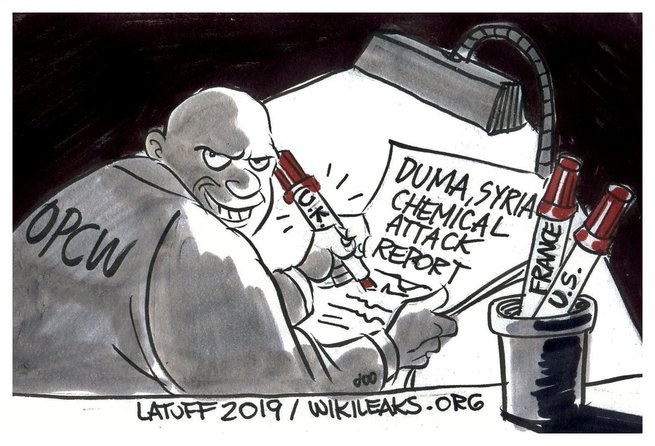
Another whistleblower leak has exposed the fraudulent nature of the Organization for the Prevention of Chemical Weapons (OPCW) report on the alleged chemical weapons attack in the Syrian city of Douma, close to Damascus, on April 7 last year.
The first leak came from the Fact-Finding Mission’s engineering sub-group. After investigating the two sites where industrial gas cylinders were found in Douma and taking into account the possibility that the cylinders had been dropped from the air it concluded that there was a “higher probability” that both cylinders were placed at both sites by hand. This finding was entirely suppressed in the final report.
The engineering sub-group prepared its draft report “for internal review” between February 1-27, 2018. By March 1 the OPCW final report had been approved, published and released, indicating that the engineers’ findings had not been properly evaluated, if evaluated at all. In its final report the OPCW, referring to the findings of independent experts in mechanical engineering, ballistics and metallurgy, claimed that the structural damage had been caused at one location by an “impacting object” (i.e. the cylinder) and that at the second location the cylinder had passed through the ceiling, fallen to the floor and somehow bounced back up on to the bed where it was found.
None of this was even suggested by the engineers. Instead, the OPCW issued a falsified report intended to keep alive the accusation that the cylinders had been dropped by the Syrian Air Force.
Now there is a second leak, this time an internal email sent by a member of the Fact-Finding Mission (FFM) on June 22, 2018, to Robert Fairweather, the British career diplomat who was at the time Chief of Cabinet at the OPCW, and copied to his deputy, Aamir Shouket. The writer claims to have been the only FFM member to have read the redacted report before its release. He says it misrepresents the facts: “Some crucial facts that have remained in the redacted version have morphed into something quite different from what was originally drafted.”
The email says the final version statement that the team “has sufficent evidence to determine that chlorine or another reactive chlorine-containing chemical was likely released from the cylinders is highly misleading and not supported by the facts.” The writer states that the only evidence is that some samples collected at locations 2 and 4 (where the gas cylinders were found) had been in contact with one or more chemicals that contain a reactive chlorine atom.
“Such chemicals,” he continues, “could include molecular chlorine, phosgene, cyanogen chloride, hydrochloric acid, hydrogen chloride or sodium hypochlorite (the major element in household chlorine-based bleach.” Purposely singling out chlorine as one of the possibilities was disingenuous and demonstrated “partiality” that negatively affected the final report’s credibility.
The writer says the final report’s reference to “high levels of various chlorinated organic derivatives detected in environmental samples” overstates the draft report’s findings. “In most cases” these derivatives were present only in part per billion range, as low as 1-2 ppb, which is essentially trace qualitiea.” In such microscopic quantities, detected inside apartment buildings, it would seem, although the writer only hints at the likelihood, that the chlorine trace elements could have come from household bleach stored in the kitchen or bathroom.
The writer notes that the original draft discussed in detail the inconsistency between the victims’ symptoms after the alleged attack as reported by witnesses and seen on video recordings. This section of the draft, including the epidemiology, was removed from the final version in its entirety. As it was inextricably linked to the chemical agent as identified, the impact on the final report was “seriously negative.” The writer says the draft report was “modified” at the behest of the office of Director-General, a post held at the time by a Turkish diplomat, Ahmet Uzumcu.
The OPCW has made no attempt to deny the substance of these claims. After the engineers’ report made its way to Wikileaks its priority was to hunt down the leaker. Following the leaking of the recent email, the Director-General, Fernando Arias, simply defended the final report as it stood.
These two exposures are triply devastating for the OPCW. Its Douma report is completely discredited but all its findings on the use of chemical weapons in Syria must now be regarded as suspect even by those who did not regard them as suspect in the first place. The same shadow hangs over all UN agencies that have relied on the OPCW for evidence, especially the UN’s Independent International Commission of Inquiry on the Syrian Arab Republic, an arm of the OHCHR (Office of the High Commissioner for Human Rights).
This body is closely linked to the OPCW and while both mostly hide the sources of their information it is evident that where chemical weapons allegations have been made, the commission of inquiry has drawn on the OPCW.
As of January 2018, the commission reported on 34 “documented incidents” of chemical weapons use by various parties in Syria. It held the Syrian government responsible for 23 of them and, remarkably, did not hold the armed groups responsible even for one, despite the weight of evidence showing their preparation and use of such weapons over a long period of time.
The commission has made repeated accusations of chlorine barrel bombs being dropped by government forces. On the worst of the alleged chemical weapons attacks, on August 21, 2013, in the eastern Ghouta district just outside Damascus, it refers to sarin being used in a “well-planned indiscriminate attack targetting residential areas [and] causing mass casualties. The perpetrators likely had access to the Syrian military chemical weapons stockpile and expertise and equipment to manipulate large amounts of chemical weapons.”
This is such a travesty of the best evidence that no report by this body can be regarded as impartial, objective and neutral. No chemical weapons or nerve agents were moved from Syrian stocks, according to the findings of renowned journalist Seymour Hersh. The best evidence, including a report by Hersh (‘The Red Line and the Rat Line,’ London Review of Books, April 17, 2014), suggests a staged attack by terrorist groups, including Jaysh al Islam and Ahrar al Sham, who at the time were being routed in a government offensive. The military would have had no reason to use chemical weapons: furthermore, the ‘attack’ was launched just as UN chemical weapons inspectors were arriving in the Syrian capital and it is not even remotely credible that the Syrian government would have authorized a chemical weapons attack at such a time.
Even the CIA warned Barack Obama that the Syrian government may not have been/probably was not responsible for the attack and that he was being lured into launching an air attack in Syria now that his self-declared ‘red line’ had been crossed. At the last moment, Obama backed off.
It remains possible that the victims of this ‘attack’ were killed for propaganda purposes. Certainly, no cruelty involving the takfiri groups, the most brutal people on the face of the planet, can be ruled out. Having used the occasion to blame the Syrian government, the media quickly moved on. The identities of the dead, many of them children, who they were, where they might have been buried – if in fact they had been killed and not just used as props – were immediately tossed into the memory hole. Eastern Ghouta remains one of the darkest unexplained episodes in the war on Syria.
The UN’s Syria commission of inquiry’s modus operandi is much the same as the OPCW’s. Witnesses are not identified; there is no indication of how their claims were substantiated; the countries outside Syria where many have been interviewed are not identified, although Turkey is clearly one; and where samples have had to be tested, the chain of custody is not transparent.
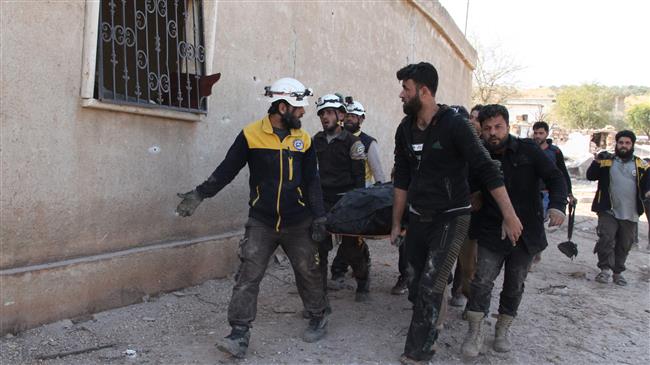
It is worth stepping back a little bit to consider early responses to the OPCW report on Douma. The Syrian government raised a number of questions, all of them fobbed off by the OPCW. Russia entered the picture by arranging a press conference for alleged victims of the ‘attack’ at the OPCW headquarters in the Hague. They included an 11-year-old boy, Hassan Diab, who said he did not know why he was suddenly hosed down in the hospital clinic, as shown in the White Helmets propaganda video.
All the witnesses dismissed claims of a chemical weapons attack. Seventeen countries (Australia, Bulgaria, Canada, the Czech Republic, Denmark, Estonia, France, Germany, Iceland, Italy, Latvia, Lithuania, the Netherlands, Poland, Slovakia, the United Kingdom and the US) then put out a joint statement (April 26, 2018) expressing their full support for the OPCW report and dismissing the “so-called” information session at the Hague as a Russian propaganda exercise. Their statement claimed the authenticity of the information in the OPCW report was “unassailable.”
Russia followed up with a series of questions directed at the OPCW’s technical secretariat. It noted that the OPCW report did not mention that samples taken from Douma were “split” in the OPCW’s central laboratory in the Netherlands and not in the Syrian Arab republic. Fractions of samples were handed to Syria only after six months of insistent pressure (OPCW response: its terms of reference provided for Syria to be provided with samples “to the extent possible” but do not specify when or where samples should be ‘split’).
Russia also referred to the collection of 129 samples and their transfer to OPCW-designated laboratories. 31 were selected for the first round of analysis and an additional batch of 13 sent later. Of the 129 samples 39 were obtained from individuals living outside territory controlled by the Syrian army. Of 44 samples analyzed 33 were environmental and 11 biomedical: of the 44, 11 (four environmental and seven biomedical) were obtained from alleged witnesses.
As remarked by the Russian Federation, the OPCW report does not explain the circumstances in which these samples were obtained. Neither is there any information on the individuals from whom they were taken; neither is there any evidence demonstrating compliance with the chain of custody (OPCW response: there was respect for the chain of custody, without this being explained; the “standard methodology” in collecting samples was applied, without details being given. It stressed the need for privacy and the protection of witness identities).
Russia observed that the samples were analyzed in two unnamed OPCW laboratories and on the evidence of techniques and results, it raised the question of whether the same laboratories had been used to investigate earlier ‘incidents’ involving the alleged use of chlorine. Of the 13 laboratories that had technical agreements with the OPCW, why were samples analyzed at only two, apparently the same two as used before? Russia also observed that of the 33 environmental samples tested for chlorinated products, there was a match (bornyl chloride) in only one case.
Samples taken from location 4, where a gas cylinder was allegedly dropped from the air, showed the presence of the explosive trinitrotoluene, leading to the conclusion that the hole in the roof was made by an explosion and not by a cylinder falling through it (OPCW response: the Fact-Finding Mission did not select the labs and information about them is confidential. As there had been intense warfare for weeks around location four, the presence of explosive material in a broad range of samples was to be expected but this did not – in the OPCW view – lead to the conclusion that an explosion caused the hole in the roof).
Russia pointed out that the FFM interviewed 39 people but did not interview the actual witnesses of the ‘incident’ inside the Douma hospital who appeared and were easily identifiable in the staged videos (OPCW response: the secretariat neither confirms nor denies whether it interviewed any of the witnesses presented by Russia at the OPCW headquarters “as any statement to that effect would be contrary to the witness protection principles applied by the secretariat”).
Russia also pointed out the contradictions in the report on the number of alleged dead. In one paragraph the FFM says it could not establish a precise figure for casualties which “some sources” said ranged between 70 and 500. Yet elsewhere “witnesses” give the number of dead as 43 (OPCW response: the specific figure of 43 was based on the evidence of “witnesses” who claimed to have seen bodies at different locations).
Russia also pointed out that no victims were found at locations 2 and 4, where the ventilation was good because of the holes in the roof/ceiling. Referring to location 2, it asked how could chlorine released in a small hole from a cylinder in a well-ventilated room on the fourth floor have had such a strong effect on people living on the first or second floors? (OPCW response: the FFM did not establish a correlation between the number of dead and the quantity of the toxic chemical. In order to establish such a correlation, factors unknown to the FFM – condition of the building, air circulation and so on – would have had to be taken into account. It does not explain why this was not attempted and how it could reach its conclusions without taking these “unknown factors” into account).
Finally, Russia raised the question of the height from which the cylinders could have been dropped. It referred to the lack of specific calculations in the OPCW report. The ‘experts’ who did the simulation did not indicate the drop height. The charts and diagrams indicated a drop height of 45-180 meters. However, Syrian Air Force helicopters do not fly at altitudes of less than 2000 meters when cruising over towns because they would come under small arms fire “at least” and would inevitably be shot down.
Furthermore, if the cylinders had been dropped from 2000 meters, both the roof and the cylinders would have been more seriously damaged (OPCW response: there were no statements or assumptions in the FFM report on the use of helicopters or the use of other aircraft “or the height of the flight. The FFM did not base its modeling on the height from which the cylinders could have been dropped. “In accordance with its mandate,” the FFM did not comment on the possible altitude of aircraft. The OPCW did not explain why these crucial factors were not taken into account).
In its conclusion, Russia said there was a “high probability” that the cylinders were placed manually at locations 2 and 4 and that the factual material in the OPCW report did not allow it to draw the conclusion that a toxic chemical had been used as a weapon. These conclusions have now been confirmed in the release of information deliberately suppressed by the OPCW secretariat.
As the leaked material proves, its report was doctored: by suppressing, ignoring or distorting the findings of its own investigators to make it appear that the Syrian government was responsible for the Douma ‘attack’ the OPCW can be justly accused of giving aid and comfort to terrorists and their White Helmet auxiliaries whom – the evidence overwhelmingly shows – set this staged ‘attack ’up.
Critical evidence ignored by the OPCW included the videoed discovery of an underground facility set up by Jaysh al Islam for the production of chemical weapons. All the OPCW said was that the FFM inspectors paid on-site visits to the warehouse and “facility” suspected of producing chemical weapons and found no evidence of their manufacture. There is no reference to the makeshift facility found underground and shown in several minutes of video evidence.
Since the release of the report, the three senior figures in the OPCW secretariat have moved/been moved on. The Director-General at the time, Hasan Uzumlu, a Turkish career diplomat, stepped out of the office in July 2018: Sir Robert Fairweather, a British career diplomat and Chief of Cabinet at the OPCW, was appointed the UK’s special representative to Sudan and South Sudan on March 11, 2019: his deputy, Aamir Shouket, left the OPCW in August 2018, to return to Pakistan as Director-General of the Foreign Ministry’s Europe division. The governments which signed the statement that the evidence in the OPCW report was “unassailable” remain in place.
Jeremy Salt has taught at the University of Melbourne, Bosporus University (Istanbul) and Bilkent University (Ankara), specialising in the modern history of the Middle East. His most recent book is “The Unmaking of the Middle East. A History of Western Disorder in Arab Lands” (Berkeley: University of California Press, 2008.)
The NYT wrote 1 December that “eyewitness photos and videos, flight logs and cockpit tapes obtained by The Times enabled reporters to trace an airstrike on a Syrian camp for displaced families to a Russian pilot.”
The Russian Defence Ministry dismissed a report by The New York Times (NYT) about Russia’s Aerospace Forces’ alleged bombing of a Syrian refugee camp in August.
“Like a month and a half ago, the ridiculous accusations by the authors of the fake are based on a video of unknown origin with swindlers from the White Helmets against the backdrop of buildings of the ‘refugee camp’; pictures of the blue sky in which a Russian plane was supposed to be and fragments of Russian phrases, allegedly belonging to the Russian Aerospace Forces pilots”, ministry spokesman Maj. Gen. Igor Konashenkov said.
Konashenkov added that to the disappointment of those who ordered the fake, the ministry is forced to recall again that the transfer of the coordinates of targets to the pilots of Russian bombers or reports on the fulfilment of their tasks are not carried out by voice on the air openly.
The comment comes as the NYT ran an article claiming that a Russian pilot conducted an airstrike on a refugee Syrian camp.
Russia’s Role in Syria
Since 2017, Russia has been one of the three guarantors of the ceasefire in Syria, which has been engulfed in a civil war for years. The Russian armed forces have been providing military assistance to Damascus throughout the conflict, while also carrying out regular humanitarian operations across the country.
Russia is now assisting Syria in the post-war reconstruction and the return of refugees.
Following talks between Russian President Vladimir Putin and Turkish President Recep Tayyip Erdogan, a Russian-Turkish memorandum was signed on 22 October in Russia’s Sochi, which stipulates conditions for the peaceful withdrawal of Kurdish militants in Syria to a distance of 30 kilometres (18.6 miles) from the border with Turkey.
The 10-point document envisions a variety of patrol missions carried out by the Russian military contingent in Syria, Syrian border guards, and Turkish troops in order to ensure the implementation of the deal.
Father Hovsep Bedoyan, the head of the Armenian Catholic community in Qamishli, and the priest’s father, Abraham Bedoyan, were killed November 11, on the road leading from Qamishli to Deir Ez Zor, where they were headed to check on the rebuilding of the Forty Martyr’s Armenian Apostolic Church in Deir Ezzor, which was destroyed in 2014 by terrorists who targeted Christians and churches. Deacon Fati Sano of the Al-Hasakeh church was injured in the attack when the car was ambushed at a checkpoint by masked gunmen on motorcycles, which shot at point-blank range. The car they drove was inscribed with the Armenian Church’s logo. The same day, a series of bomb blasts in Qamishli occurred, targeting the Armenian Catholic church, an Assyrian Christian-owned business, and a Catholic school, killing at least 6 people and wounded 22 others. More than 100,000 ethnic Armenians lived in Syria, mainly in the province of Aleppo prior to 2011; however, after the constant targeting of Christians by the Free Syrian Army (FSA) beginning in 2011, thousands have fled and many hundreds went to Armenia, who offered the Syrians a visa, when most of the world had shut its doors to them.
Tens of thousands of Christians from the Assyrian minority fled attacks in 2015, and have not returned. Christians in Homs were targeted very early in 2011 by the FSA, with churches attacked, burned and priests killed. Christians in Damascus were dodging missiles fired into Bab Touma by terrorists, in East Ghouta, until the Syrian Arab Army defeated them and they could walk again safely on the street called straight, from Bible passages about Saint Paul.
In September 2012, the large Christian neighborhood in Aleppo, Azizia, fought the FSA, with Christian civilians holding arms to defend their homes and churches. George, an Armenian Christian of Aleppo said, “The Armenians are fighting because they believe the FSA are sent by their Turkish oppressors to attack them, the Christians want to defend their neighborhoods.”
“FSA snipers were on the rooftops and they were attacking the Maronite church and Armenian residents there,” said a former clergyman calling himself John. A Syrian Armenian mother said, “They are shouting ‘the Alawites to the graves and the Christians to Beirut.”
While many Syrian Christians have resisted leaving Syria, for the life of a refugee abroad. Many have gone even though they were living in safe areas, such as the coast. They saw their Christian countrymen leaving in large numbers, and they feared that the FSA terrorists that the Obama administration was supporting would win, and in that case, they could never live safely in Syria.
Father Hovsep Bedoyan had been visiting Deir Ez Zor every 2 weeks while overseeing the rebuilding of the church there. The France-based association, L’Oeuvre d’Orient, is a Catholic charity aimed at reconstructing infrastructure for the return of the Christian community. Monseigneur Pascal Gollnisch, the group’s head, pointed at Turkey’s recent invasion of Northern Syria: “It is the responsibility of all occupying forces to protect the safety of the local Christian minority,” he insisted.
The United Nations (UN) estimates that almost 200,000 people have been displaced by the Turkish invasion, dubbed “Operation Peace Spring”, during which there have been eyewitness accounts of summary executions, beatings, and torture, unlawful detention, and kidnappings by the Turkish military and the FSA, who are Radical Islamic terrorists, employed as mercenaries.
The FSA is the Turkish backed terrorists/mercenaries
“It was sadly learned that a cleric from the Syrian Armenian community was killed in a vicious attack in the area under the control of the terrorist organization PYD/YPG/PKK,” the Turkish Foreign Ministry said in a written statement, which deflected responsibility, and blamed the Syrian Kurds who had been allied to the US, and denying their own FSA mercenaries were the actual killers. ISIS has claimed responsibility for the killings, but the FSA and ISIS are allies, and sources close to the events on the ground have said it was the FSA who killed them, and ISIS only issued the claim of responsibility to shield the blame from the FSA.
FSA history in Syria and sectarianism
The FSA and its political wing, the SNC, have never been secular or moderate. The founding members of the SNC and FSA were members of the Muslim Brotherhood. Their goal for Syria has always been to establish an Islamic government, thus abolishing the secular Ba’ath Party as well as the Syrian Social Nationalist Party (SSNP).
“The Free Syrian Army practically doesn’t exist,” Kamal Sido, a Mideast expert at the human rights group Society for Threatened Peoples (GfbV) told Germany’s Deutschlandfunk broadcaster. “The Free Syrian Army is a smokescreen hiding various names, and if you look at the names, at these groups’ videos, you’ll find they are radical Islamist, Jihadist groups.”
The FSA was not only fighting the Syrian government but they were also killing, raping, maiming and kidnapping unarmed Syrian civilians, most of whom were Sunni Muslims, like themselves. On July 20, 2017, President Trump cut the CIA’s covert program to equip and train the FSA.
The CIA program began in 2013 by Obama to overthrow President Assad; however, CIA officials observed that many FSA had joined ISIS and other radical groups, and feared the weapons they gave the group might end up with ISIS.
The Marmarita massacre
On August 17, 2013, in Marmarita, Amin Nakour, Maya Barshini, Atalla Aboud, and Ibrahim Saadi were attending a Christian celebration to honor the annual commemoration of “Mother Mary’s Day”. The small village of Marmarita sits in the historic “Valley of the Christians” which is near Homs. It was a hot August night, and Christian party-goers were suddenly attacked the FSA and their allies. The four were killed when they attempted to flee the party in a car. The FSA and their allies, have vowed to make Syria a Sunni Muslim State, and have targeted Christians and minorities for 8 years.
The invasion, occupation, and destruction of Kessab
On March 21, 2014, Kessab was attacked when shelling from the Turkish side of the border rained down on the undefended Armenian village, sending its 2,000 residents into panic. Over 20,000 fanatics from the FSA and its allies came pouring over the border. They desecrated all 3 churches, and looted the village’s graves, before scattering the bones of the deceased around the town. The FSA held 26 elderly Armenians against their will for forty days in Turkey, where the FSA kidnappers brought the US Ambassador to Turkey, Francis J. Riccardone, Jr., to visit the elderly captives, but offered no help or release.
Samuel Poladian, who stayed in Kessab for the 3-month occupation, claims he heard Turkish military helicopters overhead on the morning of the invasion, and that Turkey assisted in the invasion.
Monseigneur Ayvazian said, ”They burned all my books and documents, many of them very old, and left my library with nothing but 60cm of ash on the floor.” He has a photo of the church altar, which was desecrated by the FSA before the Syrian Arab Army liberated Kessab on June 15, 2014. The Armenians claim the Kessab attack, which was directed solely against Armenian Christians, was Turkey’s brutal way of showing the Armenians and the Syrian government that they can attack at any time.
Armenian Church in Deir Ez Zor destroyed
On November 10, 2014, terrorists blew up the Armenian Church in Deir el-Zour, which is dedicated to the 1.5 million Armenians slaughtered by the Turks during the 1915 genocide, when many hundreds of thousands of victims died in death camps around Deir el-Zour. Because the FSA has received arms from Turkey, the destruction of the church is regarded by Armenians as crimes carried out by Turks, harkening back to the genocide. “During the Armenian genocide, the Turks entered the church and killed its priest, Father Petrus Terzibashian, in front of the congregation,” Monseigneur Ayvazian said, adding “Then they threw his body into the Euphrates. This time when the Islamists came, our priest there fled for his life.”
The Turkish hatred of Armenians
The 19th century Armenian Surp Asdvadzadzin Church in Gurun district of Sivas (Sebastia), Turkey, will reopen as a museum. At different times the church has been used as a prison, movie theater, storeroom, and wedding hall. The local mayor hopes it will boost the development of tourism in the region. That is the stark reality in Turkey, where Muslims account for 98% of the population, compared to the large Christian minority in Syria. In Turkey, they have tried to erase their Christian history, and have used the old Armenian churches as museums, or locked up or ruined them.
The Armenian Genocide, Turkish denial, the US House recognition
The Armenian Genocide was the systematic mass extermination and expulsion of 1.5 million ethnic Armenians within the Ottoman Empire, from approximately 1914 to 1923. Other ethnic groups were similarly targeted for extermination; such as Assyrians and the Greeks, also strictly Christians. Mass executions were followed by the deportation of women, children, the elderly, and the infirm on death marches leading to Deir Ez Zor, which were driven forward by military escorts, as the deportees were deprived of food and water and subjected to periodic robbery, rape, and massacre.
On Oct. 29, 2019, the US House voted overwhelmingly to formally recognize the Armenian genocide and denounce it. Lawmakers had previously failed to support such a resolution to preserve the United States’ relationship with Turkey, a NATO ally that has steadfastly denied that the atrocities amounted to genocide. Livid at Turkey’s recent bloody military invasion in Syria, lawmakers saw a possible tie to the Armenian genocide, as many feared the withdrawal of American forces would lead to ethnic cleansing in northeast Syria.
The “Syrian regime” and chemical weapons has become a constant mantra in the Western World and has become synonymous with the Syrian War since it began in 2011. One of the most famous cases was the April 2018 chemical weapon attack in the Damascene satellite city of Douma that led to the U.S., UK and France conducting airstrikes against Syrian Army positions, despite the lack of evidence that the Syrian government was responsible for the incident.
The April 7, 2018 chemical incident killed between 40 and 50 people and was followed up by the Western Powers attack against Syria exactly a week later. Strangely though, the attack took place just mere hours before the Organization for the Prohibition of Chemical Weapons (OPCW) inspectors arrived in Syria to investigate the attack. The U.S., UK and France knew that the eventual OPCW report would not match their claims and allegations against the Syrian government, and were quick to act in wasting their people’s tax dollars by dropping bombs on the Arab country.
The final OPCW report would not match the first report made by the Fact-Finding mission that were actually on the ground in Syria. An email released by whistleblowing Wikileaks on the weekend found that the final OPCW report on the Douma incident had been manipulated and changed by the Office of the Director-General of the OPCW, then held by Turkish diplomat Ahmet Üzümcü. This is an extremely disturbing discovery as the OPCW claims to have a “neutral role” by not assigning blame for chemical weapon use, but to find out the details of how the attack was conducted. This however was reversed last year with the OPCW being given permission to investigate perpetrators – but they still kept the mythology that they are “neutral.”
Although the report did not assign blame, the e-mail claims that the report “morphed into something quite different to what was originally drafted” and that “a bias has been introduced into the report, undermining its credibility” and that it “is disingenuous.” This was of course to bring the illusion that Syria was responsible for the attack, despite no tangible evidence.
In March, the OPCW report claimed that chlorine was the likely agent used in last year’s attack, but the newly released email explains that this claim “is highly misleading and not supported by the facts.”
“Omitting this section of the report has a serious negative impact on the report as this section is inextricably linked to the chemical agent identified… In this case, the confidence in the identity of chlorine or any other choking agent is drawn into question precisely because of the inconsistency with the reported and observed symptoms. The inconsistency was not only noted by the fact-finding mission team, but strongly supported by three toxicologists with expertise in exposure to chemical warfare agents”, the e-mail revealed.
The email then makes a final request that the original report be released in “its entirety” as the author fears that the manipulated report does not “reflect the work of the team” and “would negatively impact on the perceived credibility of the report, and by extension that of the Organisation.”
It must be remembered that when the OPCW report was released in March 2019, nearly a whole year after the incident. The released report ignored evidence provided by the Russian Foreign Ministry that the Al-Qaeda affiliated White Helmets were responsible for the attack, and that rather the report was attempting to justify the U.S.-led attack against Syria.
However, the release by WikiLeaks was only the final nail in the coffin confirming that the OPCW is not “neutral” and rather highly politicized. It was revealed only last week by the Grayzone that a second whistleblower from the OPCW came forward to accuse the top leadership of the organisation of suppressing critical evidence because of pressure from the U.S.
This demonstrates that there is a major rift between the actual inspectors on the ground and the higher-level officials of the organization who are willingly submitting to U.S. pressures despite trying to maintain their credibility of being neutral. The very appointment of Üzümcü, a former Turkish ambassador to Israel and a former Permanent Representative of Turkey to NATO, demonstrates that his very appointment had political motivations knowing Ankara’s aggressive foreign policy towards Syria since the beginning of the war.
There can be little doubt now that the claim of neutrality is far from reality and rather the top leadership of the OPCW are willing to omit, manipulate and change facts that were on the ground and discovered by their own Mission at the behest of the U.S. so it could pressure Syria and legitimize the illegal U.S.-led attack. This can only bring into question now the legitimacy of all the other chemical weapon attacks blamed on the Syrian government over the course of many years.
In addition, the OPCW should be the center of wide condemnation from the international community and the United Nations, who once shared a Joint Mission with the OPCW to remove Syria’s chemical weapons from October 2013 to September 2014. The OPCW has now lost all credibility and should be replaced by a new organization that does not appoint controversial Director-Generals or submit to pressure from external forces, like the U.S., and perhaps even Turkey.
However, the most telling of the politicization of the OPCW occurred at yesterday’s annual OPCW forum in the Hague, where the organization vehemently defended themselves against the well-timed Wikileaks expose. Fernando Arias, the current OPCW Director-General, defended the manipulated report, saying: “the nature of any thorough inquiry for individuals in a team is to express subjective views. While some of these diverse views continue to circulate in some public discussion forums, I would like to reiterate that I stand by the independent, professional conclusion [of the investigation].”
Simply put, WikiLeaks has helped prove that the OPCW can no longer be trusted and certainly is not neutral. Britain and France unsurprisingly at yesterday’s OPCW forum also defended the initial report and rejected the allegations of doctoring. But this of course was always to be expected.
Paul Antonopoulos is a Research Fellow at the Center for Syncretic Studies.
A survey by a Russian institution reveals that the White Helmets, which operates under the guise of an aid group in Syria, has been involved in the forcible removal of organs from civilians living in areas controlled by militants.
The survey, dubbed “White Helmets: terrorist abettors and sources of disinformation,” was conducted by the Foundation for the Study of Democracy.
Presenting the study’s findings on Thursday, Maxim Grigoryev, director of the organization, said the White Helmets evacuated people with the promise of medical assistance, but later handed their bodies — with some vital organs missing — to their relatives.
He added that the organ removals came to light after the bodies were examined.
“They [White Helmets] were a key element in this illegal scheme of organ removal. We learned about those incidents from the people whom we interviewed. This information came as an unpleasant surprise to us,” Grigoryev said.
He further noted that the survey was based on interviews with White Helmets members, former militants and residents of Syrian areas where White Helmets were most active, including Aleppo, Damascus, Douma, Dayr al-Zawr and Saqba.
Grigoryev also pointed out that the illegal extraction and trade of human organs was practiced in late 1990s, when White Helmets co-founder James Le Mesurier was in Yugoslavia. Le Mesurier, a former British army officer, was found dead in Istanbul earlier this month.
“The scheme of illegal extraction of organs from residents of Serbia was carried out on the territory where he [Le Mesurier] was staying, and exactly the same system was recreated in Syria. This is exactly what White Helmets are doing,” he said.
The White Helmets claims to be a humanitarian NGO, but it has been accused of working with anti-Damascus terrorists and staging false-flag chemical weapons attacks in Syria.
Syria views the White Helmets as “a branch of al-Qaeda and al-Nusra” militant outfits and a “PR stunt” by the US, the UK and France.
An ‘internal memo’ that was intentionally leaked has blasted U.S. President Donald Trump’s decision for the U.S. military to withdraw from Syria, or more accurately, relocate from northern Syria to the oilfields in the east, as well as his complacency as Turkey commits “war crimes and ethnic cleansing” against the Kurdish minority.
The author of the memo, diplomat and former ambassador to Bahrain, William V. Roebuck, took every opportunity to lambast Trump as he faces impeachment 12 months before the next U.S. presidential elections. Roebuck questioned whether the U.S. could have prevented the Turkish military operation in northern Syria by increasing military patrols, sanctions and threats, but conceded that “the answer is probably not,” citing Turkey’s membership in NATO and its large army against the small American presence in the region. “But we won’t know because we didn’t try,” Roebuck added.
The New York Times claims that Roebuck’s memo was delivered to the State Department’s special envoy on Syria, James F. Jeffrey, and to dozens of officials focusing on Syria in the State Department, White House and Pentagon. However, the entirety of the 3,200-word memo failed to mention Ankara’s motivation in conducting this operation.
The Syrian perspective is that this is part of a project for a Greater Turkey. Turkish Foreign Minister Mevlüt Çavuşoğlu emphasized in an October interview that Turkey is not interested in territorial expansionism, stating “Russia is concerned about some sensitive issues, such as territorial integrity and the unity of the country [Syria]. We are also worried. If we look at all the joint statements of Turkey, Russia and Iran, we emphasize it.”
Although it may sound conspiratorial, this statement would have done little to alleviate this fear as Turkey has controlled large swathes of northern Syria since 2016 without any process to negotiate the return of these regions to Syrian government administration. In conjunction, Damascus would also remember the 1939 Turkish annexation of its Hatay province, Turkey’s invasion of neighboring Cyprus in 1974, and Turkish President Recep Tayyip Erdoğan invoking an early 20th-century irredentist document that claims northern Syria, northern Iraq, most of Armenia, the entirety of Cyprus, much of Bulgaria and Greece’s northern and eastern Aegean islands as under Turkish sovereignty.
Although territorial expansionism may be a motivating factor for many in the Turkish political and military leadership, it would be a secondary motivating factor. What Roebuck’s memo failed to mention is that Turkey’s Syria policy today is motivated by security concerns.
In an academic article titled “Turkey’s interests in the Syrian war: from neo-Ottomanism to counterinsurgency,” I first made the argument that Turkey’s initial interests in Syria was to expand its influence, and perhaps territory. What was not envisioned by the Turkish leadership was the re-emergence of the Kurdistan Workers Party (PKK) in Syria, recognized as a terrorist organization by Turkey, Syria and the U.S., but not by Russia. The PKK in Syria fight under the banner of the People’s Protection Units (YPG), who comprise the majority of the Syrian Democratic Forces (SDF).
Washington confusingly recognizes the PKK as a terrorist organization, but has directly funded, armed and supported the YPG in Syria. Ankara makes no distinction between the PKK and the YPG, and this has been a primary source of recent hostilities between Turkey and the U.S. Although Syria once supported the PKK against Turkey, it has recognized the group as a terrorist organization since 1998, initially easing the tense relations between Damascus and Ankara, with Erdoğan even describing his Syrian counterpart Bashar al-Assad as his “brother.”
Former Turkish Foreign Minister (2009–2014), Ahmet Davutoglu, adopted a “zero problems with neighbors” policy that saw his country strengthen economic and political ties with the Islamic World by lifting visa restrictions and taking a larger active role in critical Islamic issues like the fallout between the Palestinian Hamas and Fatah groups, Afghanistan and Pakistan, and Syria and Israel. However, this new doctrine was taken to the test when the Syrian war began in 2011, with Ankara immediately contradicting the “zero problems with the neighbours” policy by supporting terrorist organizations and getting itself into disputes and hostilities with not only Syria, but also Iraq, Greece, Cyprus and Armenia.
The Arab Spring changed the status quo in the Middle East and provided an opportunity for Turkey to engage in power projections within a new regional order where Ankara would be the center of power. However, what Ankara had not calculated is that by abandoning the “zero problems with neighbors” policy and flooding Syria with tens thousands of terrorists, it was creating the very conditions for the PKK to return to Syria after a more than 20-year hiatus under the guise of protecting Syria’s Kurds.
Essentially, the project for a Greater Turkey has become secondary in the case of Syria, with Ankara’s current focus on what it calls a counterterrorist operation against the PKK/YPG, after they created the very conditions for them to return to Syria. Although Trump has whole teams dedicated to Syria, it appears that Washington refuses to acknowledge Turkey’s security concerns, just as Roebuck’s memo demonstrates.
The rise of the YPG brought questions of Kurdish independence or autonomy in northern Syria, which can also find justification for an autonomous or independent Kurdish state in eastern Turkey as the PKK, militarily and politically, has struggled for decades to achieve this. A Kurdish push for independence or autonomy in northern Syria not only threatens Turkey’s desire to illegally annex this region, but destabilizes Turkey as the Kurds can make a greater push for independence or autonomy in eastern Anatolia.
As Turkey strengthens its relations with Russia, the question remains whether the country will formally leave NATO or not. It is unlikely that the U.S. will push for Turkey’s expulsion from NATO as it has the second largest military in the alliance and occupies one of the most strategic spots on the planet.
Although the U.S. has turned to Greece as its Plan B to contain Russia in the Black Sea in any hypothetical war, Washington would know there is a great possibility that the next general election in Turkey could see Erdoğan out of power and replaced by a more Washington-friendly leader. Not only is Erdoğan’s popularity diminishing because of the economic crisis and his unpopular Syria policy, but the highly popular ex-economy minister Ali Babacan and ex-Prime Minister Ahmet Davutoğlu have both recently left Erdoğan’s Justice and Development Party (AKP) to establish their own respective political parties, which will only further weaken AKP who have lost over 840,000 members in one year alone.
The U.S. would be hoping that by continuing to apply military, diplomatic and economic pressure against Turkey, the tense situation in Turkey will see Erdoğan’s popularity diminish, and the return of a pro-U.S. leader. The difficult economic situation, the millions of refugees and the increased terror attacks in Turkey can all be directly attributed to Erdoğan’s Syria policy, and the U.S. will continue to use these means to pressure Turkey until it conforms to Washington’s desires and reverse its strengthened ties with Russia.
Many within Washington are unsatisfied with Trump’s Turkey policy and feel that they are not utilizing their advantages to pressure Erdoğan. Roebuck’s memo however appears to be a potential gamechanger as it has critically expressed opposition to Trump’s policy at a formal, and now public, level.
Roebuck publicly revealed that Turkey’s military operation in northern Syria is “spearheaded by armed Islamist groups on its payroll” who are committing what can “only be described as war crimes and ethnic cleansing.” The same jihadist forces utilized by Turkey are no different to the ones the U.S. supported against Assad, who not only ethnically cleansed Kurds, but also Shi’ites, Alawites, Antiochian Greeks, Assyrians and Armenians.
Roebuck also suggested that the U.S. must maintain relations with Turkey. As Turkey is at a crossroads with its political leadership, Washington knows there is a strong possibility that Erdoğan might not be around by the time the next general election is scheduled in 2023, although it appears likely that these elections will take place years earlier. With Roebuck’s ‘leak,’ it is likely that Trump will start receiving stronger domestic political pressure to deal with Turkey in a much tougher way and continue to make every destabilizing effort to remove Erdoğan and have him replaced with a pro-U.S. leader.
Paul Antonopoulos is a Research Fellow at the Center for Syncretic Studies.
When Trump says “Take the Oil” in Syria, what does he really mean? Does the US really need the oil? Not really. So what was this major media event about last week? UK Column News co-hosts Mike Robinson and Patrick Henningsen answer this question, as they bring you the early week’s headlines from around the world. (This is a clip of the full news program broadcast on Nov 4, 2019).
James Le Mesurier, the founder of the Al-Qaeda affiliated White Helmets, known as an “aid organization” in the West but known everywhere else for fabricating chemical weapon provocations in Syria, was found dead in Istanbul on Monday under dubious and confusing circumstances, and many question marks are being raised about his death. Journalist Ramazan Bursa claims that the suspicious death clearly demonstrates the White Helmet’s connection with intelligence organizations, particularly the British MI6.
The connection between the M16 and the White Helmets is often overlooked by the Western media, but on Friday, the Russian Foreign Ministry made a startling revelation. Foreign Ministry spokeswoman Maria Zakharova revealed that “The White Helmets co-founder, James Le Mesurier, is a former agent of Britain’s MI6, who has been spotted all around the world, including in the Balkans and the Middle East. His connections to terrorist groups were reported back during his mission in Kosovo.” A few days later he was found dead…
Of course, Karen Pierce, the UK Permanent Representative to the UN, denied the Russian allegation, claiming that they were “categorically untrue. He was a British soldier,” before describing the mercenary as a “true hero.” The claim he is a “true hero” is a curious choice of words considering he has a long history of working alongside terrorists, as Zakharova correctly highlighted.
He served in the NATO war against Serbia to defend the ethnic-Albanian terrorist Kosovo Liberation Army (KLA) in 2000, who have now turned Kosovo into a heroin ‘smugglers paradise,’ and a hub for human trafficking, organ harvesting and arms trafficking in the attempt to create an anti-Russian “Greater Albania.” However, it was not in Kosovo where he achieved his fame, but rather his dubious work in Syria.
Not only did he establish and develop the White Helmets, but he secured significant funding from the UK, U.S., Turkish, German, Qatari, Dutch, Danish and Japanese governments, and helped raise money on Indiegogo. His deep connections to the British military and his expansive experience as a mercenary serving Gulf dictatorships made him the perfect figure to establish a “rescue group” aimed at legitimizing terrorists operating in Syria and to push for regime-change intervention.
Along with the White Helmet’s ties to terrorist organizations and faking chemical weapon incidents, the group also has a role in the execution of civilians and using children in their propaganda campaigns. Mesurier was without a doubt a man with deep connections and deep pockets, with every resource available to him from international intelligence agencies and significant experience in supporting terrorists in conflict zones.
The argument that the White Helmets are not a civil defense team, especially as they never operated in government-held areas despite claiming to be neutral in the war, can easily be made. Despite the constant colonial media claims that the White Helmets are a true civilian rescue organization without terrorist links, Syrian film producer Kareem Abeed was not allowed to attend the Academy Awards to support his movie about the White Helmets, “Last Men in Aleppo,” as his visa application was officially denied by the U.S. government as he was “found ineligible for a visa under Section 212(f) of the Immigration and Nationality Act.” The very fact that the U.S. found White Helmets members nominated for the Academy Awards to be a risk in the country shows that the White Helmets are just another classic example of Washington weaponizing terrorists to advance their own agendas, just as the KLA were used against Serbia or the mujahideen that morphed into Al-Qaeda were used against the Soviet intervention in Afghanistan.
Although the White Helmets played a pivotal role in the propaganda campaign against Syria from 2013 onward, they now have nothing to defend or any purpose to serve as they only operate in areas that are undeniably controlled by Al-Qaeda affiliated groups and other radical elements, in a very, very small area of Syria. They can no longer portray themselves as an innocent organization that only helps civilians, as there is now endless evidence of their ties to terrorism, foreign intelligence agencies and doctoring of footage.
If we consider that the founder of the White Helmets and the deceased in Istanbul is a former British Intelligence officer, we can clearly see that it is a network of civil defense organizations, in which British Intelligence is involved, and supported by other intelligence agencies. The dubious death of a former British intelligence member living in Istanbul with his family is thought provoking and must raise serious questions.
It is also thought-provoking that this person is based in Istanbul. The death of Mesurier could have been reported as the death of a British citizen or the death of a former member of the British intelligence, however, Turkish media reported it as the death of the founder of the White Helmets. In other words, the Turkish media seems to have tacitly admitted that White Helmets are not an innocent non-governmental organization. Of course, after Turkey’s invasion of northern Syria, there were some changes in the Damascus-Ankara relationship. The West’s approach to the Turkish invasion of northern Syria may have also played a role in changing the attitude towards the White Helmets.
A security source claimed that Mesurier had fallen from the balcony of his home office with his death being treated as a suspected suicide, with a third person – a diplomat – claiming the circumstances around his death were unclear, according to The Sun. This also comes as BBC journalist Mark Urban said in a series of now-deleted tweets that it would not “have been possible” to fall from Le Mesurier’s balcony, with him also Tweeting that “there’s a good deal of suspicion it may be murder by a state actor, but others suggest he may have taken his own life.”
Essentially, no one knows just yet whether it was murder, suicide or an accident. This has not stopped the British media from alluding that there may be a connection between the “Russian smear campaign” made on Friday and his death on Monday. However, when we look at the way the incident took place, there is every suggestion that this incident was murder, given that there were cuts on his face, fractures on his feet and that he was found dead on the street, according to Turkish media. The probability of murder becomes stronger.
The question then shifts to who might have done? It is too early to say who did it, and anything forth said can only be considered speculation, but the West does have a rich history of making their assets disappear when they are no longer needed.
The White Helmets no longer have a purpose to serve in Syria with the inevitable victory of government forces over the Western-backed terrorists. Rather, the danger the White Helmets pose is a full-scale revelation on how deep their ties with Western and Gulf intelligence agencies and terrorist organizations go. Although revelations are slowly beginning to emerge, Mesurier no doubt had a wealth of knowledge on many dirty secrets related to Syria and the imperialist war against it.
Paul Antonopoulos is a Research Fellow at the Center for Syncretic Studies.
A law enforcement source has confirmed the death of James Le Mesurier at his home in Istanbul. However, the source added that at this time, it remains “unclear whether he was murdered, or committed suicide.”
Le Mesurier, a former MI6 officer, created the controversial ‘urban search and rescue’ organisation in 2013. The White Helmets have been repeatedly accused of staging fake attacks in the conflict in Syria in a bid to prompt a Western-backed military intervention in the war-torn country.
The White Helmets’ official Twitter account has confirmed Le Mesurier’s passing, saying the group was ‘shocked and saddened’ by the news and expressing its “deepest condolences to the James family.” The group commended the former intelligence agent’s “humanitarian efforts which Syrians will always remember.”
Earlier, an anonymous diplomat was quoted by Reuters as saying that Le Mesurier’s body had been found early Monday morning at his home in the city’s Beyoglu district.
Sözcü, a major Turkish daily newspaper, reported, citing police sources, that Le Mesurier may have killed himself, and that he had been taking anti-depressant medication for some time ahead of Monday’s incident.
Sabah, another major Turkish paper, also reported, citing law enforcement, that police consider suicide the most likely cause of Le Mesurier’s death, with the former spy possibly jumping to his death from the balcony of his 3rd floor apartment. No traces of gunshot or knife wounds were found his body, police told Sabah.
A source close to the investigation later said that there was no evidence of any unauthorised persons being near his residence at the time of his death.
Le Mesurier’s wife was quoted by Sabah as saying that she and her husband had dinner together on Sunday. “After that we took sleeping pills and went to bed. A few hours later I woke up from the ringing of our doorbell. It was the police. They told me that my husband had fallen from the balcony and died.”
Police are continuing their investigation.
Founder of Terrorists’ ‘Propaganda Arm’
Le Mesurier, a British private security specialist and former UK military intelligence officer, founded the White Helmets in Turkey in March 2013. Before that, he served as an intelligence officer in other theatres of conflict, including a stint in Pristina, Kosovo soon after the NATO intervention in 1999. In the 2000s, he went on to serve as vice president of special projects at the Olive Group, a private mercenary organisation which later merged with Blackwater-Academi into Constellis Holdings.
In a 2014 interview, Le Mesurier said that he spontaneously raised about $300,000 in initial funding from the UK, the US and other countries and trained 25 vetted operatives to create the White Helmets after witnessing the suffering in Syria, with the group soon accumulating over $150 million in cash after Western NGOs, Gulf countries, several European countries and Japan sent money and supplies to help the group. The group continues to enjoy widespread publicity and support in Western countries, and is a UK-registered non-governmental organisation.
Syria considers the White Helmets a “terrorist organisation,” citing the group’s regular operations in areas controlled by jihadist militants, including al-Qaeda offshoot the Nusra Front, as well as its creation of video fakes which seem designed to prompt Western military intervention in Syria. Independent journalists have repeatedly accused the group of serving as ‘al-Nusra’s propaganda arm‘, given its alleged ties to the militants.
In April 2018, the US, UK and France launched a series of air and cruise missile strikes against Syria following the publication of a White Helmets video appearing to show that a horrific chemical attack that had taken place in Douma, a city in the Damascus suburbs about 10 km from the capital. The Douma attack was later debunked by verified testimony from multiple eyewitnesses who appeared in the video, including that of an 11-year-old boy who revealed that he and his mother had been given food to participate in the video. Since that time, Damascus and its allies have repeatedly voiced concerns about the possibility of more fake videos and false flag attacks by the groups designed to prompt Western intervention.
Last week, the Russian Foreign Ministry urged London to investigate Le Mesurier’s possible ties to al-Qaeda. At a briefing on Friday, Foreign Ministry spokeswoman Maria Zakharova pointed to independent research indicating the former spy’s possible links to terrorist organisations going back to his work in Kosovo. “There is data suggesting that there were al-Qaeda members among his team there,” Zakharova said, adding that Moscow would “very much like to hear what London has to say about these facts.”
Earlier this year, Britain’s Home Office announced that some 100 volunteers and family members from the White Helmets had been resettled in the UK after being evacuated from Syria last year with the help of British government officials.
Israel is assisting Syrian Kurds battered by a month-old Turkish incursion, and advocating for them in talks with the United States, the deputy Israeli foreign minister said on Wednesday.
Ankara launched its assault targeting the Kurdish YPG militia after the abrupt withdrawal of 1,000 US troops from northern Syria in early October. Israel sees Syrian Kurds as a counterweight to “Iranian influence.”
Israeli PM Benjamin Netanyahu offered humanitarian aid to the “gallant Kurdish people” on October 10, saying they faced possible “ethnic cleansing” by Turkey and its allies in Syria.
Tzipi Hotovely, Israel’s deputy foreign minister, told parliament on Wednesday that the offer had been taken up, Reuters said. “Israel has received many requests for assistance, mainly in the diplomatic and humanitarian realm,” she said. “We identify with the deep distress of the Kurds, and we are assisting them through a range of channels.”
Hotovely did not elaborate on the Israeli assistance. Syrian Kurdish officials have not commented on the statement.
On October 29th, the Norwegian news-outlet NRK broke the story that between 8 and 10 Russian submarines, including Sierra II class submarines, had begun naval exercises in the North Atlantic. This is one of the largest Russian naval exercises focused on submarine-warfare since the end of the cold war. It is likely that one of the core purposes of this exercise is to test the stealth-capability of the Russian subs, and of NATO forces’ abilities to track them as they push through the Greenland-Iceland-United Kingdom gap (abbreviated “GUIK-gap”), a closely monitored strategic bottleneck. The Sierra II class sub has a titanium hull, enabling it to submerge to greater depths than steel-hulled submarines, and it is also much quieter than most other submarines.
In the event of a conflict, these submarines could be deployed to adopt a defensive posture, in order to protect Russian ports on the Barents Sea or Russia’s strategic holdings in the Arctic, or to threaten the American eastern seaboard. Since activating its 2nd Fleet, the US Navy has significantly increased patrols in the North Atlantic and in the area of the GUIK gap. The United States Navy also operates a detachment of P-8 Poseidon maritime patrol aircraft out of the Keflavik base in Iceland.
The following day, October 30th, the Borei-A-class submarine Prince Vladimir test-fired the Bulava ballistic missile from the White Sea to a target in the Kura missile-range in Kamchatka. This is the first ever test of a Bulava missile. The Bulava has a range of about 8,000 kilometres, and each of its independently targeted warheads delivers a payload the equivalent of 150 kilotons of TNT.
Northern Fleet Commander Vice-Admiral Alexander Moiseyev stated that the submarine Prince Vladimir is completing its state trials this year, during which all its armaments will be tested, before it is scheduled to enter service in December. The submarine will be operational in the Northern Fleet.
So far, the Sevmash shipyard has delivered 3 Borei-class submarines to the Russian navy, serving in the Northern and Pacific Fleets, with 4 more Project 955 Borei-class submarines under construction. Project 955 Borei-class submarines are designed for improved acoustic stealth, and each of them will carry 16 RSM-56 Bulava missiles as standard, with each missile carrying between 4 and 6 nuclear warheads.
The day after that, October 31st, President Putin was in Kaliningrad, inspecting the Yantar naval shipyard and the corvette “Gremyashchy,” launched in 2017.
In addition, 5 tests of the MIRV-equipped RS-28 Sarmat missile are planned for early 2020, with the Sarmat scheduled to enter service in 2021. This intercontinental ballistic missile is reportedly equipped with multiple hypersonic MIRV’s (multiple independently targetable re-entry vehicles), designed to evade missile defense systems. According to Russian government sources, the Sarmat can carry up to 15 warheads, has a range of 10,000 kilometres, and is capable of destroying an area the size of Texas.
All of this has been necessitated by the Aegis Ashore missile defence system, operated by the United States in Poland and Romania. However, let’s set the intercontinental ballistic missile issue aside for the purpose of our discussion here, and focus on the submarine issue, which is an under-emphasized aspect of very many geo-strategic bones of contention.
This hardly needs to be explained with regard to Crimea – losing the naval base in Sevastopol would have been detrimental to Russian geo-strategic interests. At present, there is still a standing agreement between Russia and the western alliance that no submarines carrying nuclear weapons are deployed in the Black Sea. However, if the international security environment were to continue to deteriorate, the Russian Defence Ministry would have to re-evaluate that commitment.
From Crimea, let’s move on to Syria. Tartus is a small base, used by the Russian navy primarily for provisioning, but it would suddenly become a radically more valuable strategic asset in the Mediterranean if the Bosphorus were ever blockaded. The western alliance had many, many reasons for prosecuting its proxy-war in Syria, and Tartus is certainly not the first item in that long list, but it is nonetheless one reason among many. The question arises as to what responses might be provoked from the United States if the Russian Defence Ministry ever decided to expand the Tartus base’s operational capabilities. Even if the defence ministry’s military planners were imprudent enough to consider such a move, President Assad would be unlikely to consent, given the resulting risk of re-igniting the Syrian conflict.
One of the problems common to many of the Russian navy’s most strategically important bases is the narrow sea-corridors to which they have access. Submarine-hunting is easier in small and easily monitored bodies of water such as the Baltic (Kaliningrad), the Black Sea (Sevastopol) and the Sea of Japan (Vladivostok). Even the Mediterranean is not expansive enough to allow Russian subs to disappear. It is hardly surprising, then, that the Russian Defence Ministry is commissioning considerable numbers of new generation, stealthier subs in response to the Aegis game-changer.
This also makes the Northern Fleet in Murmansk particularly key to the effectiveness of Russia’s nuclear deterrent, with no American fleet in immediate proximity. Furthermore, the point cannot be over-emphasized that with 17 million square kilometres of resource-rich territory but a population-density of only 8 persons per square kilometre, maintaining the effectiveness of Russia’s nuclear deterrent is an existential necessity.
In this regard, the strategic role of the Aegis Ashore missile defence system deployed by the United States in central Europe is essentially aggressive. There are many economic and geo-political factors feeding into the current lamentable state of Russia’s relationship with its western partners. However, it is very highly arguable that the deployment of Aegis Ashore in central Europe is singularly the biggest driver of the current geo-political and geo-strategic impasse, and consequently also the most influential driver of new Russian weapons-development.
By John Laforge | CounterPunch | November 30, 2018
In my Nov. 16 column, I reported on potential radiation risks posed by California’s Woolsey wildfire having burned over parts or all of the Santa Susana Field Laboratory—south of Simi Valley, Calif., 30 miles outside Los Angeles—site of at least four partial or total nuclear reactor meltdowns.
The field laboratory operated 10 experimental reactors and conducted rocket engine tests. In his 2014 book Atomic Accidents, researcher James Mahaffey writes, “The cores in four experimental reactors on site … melted.” Reactor core melts always result in the release of large amounts of radioactive gases and particles. Clean up of the deeply contaminated site has not been conducted in spite of a 2010 agreement.
Los Angeles’s KABC-7 TV reported Nov. 13 that the Santa Susana lab site “appears to be the origin of the Woolsey Fire” which has torched over 96,000 acres. Southern Calif. Public Radio said, “According to Cal Fire, the Woolsey Fire started on the afternoon of Thursday, Nov. 8 … on the Santa Susana site.” … continue
This site is provided as a research and reference tool. Although we make every reasonable effort to ensure that the information and data provided at this site are useful, accurate, and current, we cannot guarantee that the information and data provided here will be error-free. By using this site, you assume all responsibility for and risk arising from your use of and reliance upon the contents of this site.
This site and the information available through it do not, and are not intended to constitute legal advice. Should you require legal advice, you should consult your own attorney.
Nothing within this site or linked to by this site constitutes investment advice or medical advice.
Materials accessible from or added to this site by third parties, such as comments posted, are strictly the responsibility of the third party who added such materials or made them accessible and we neither endorse nor undertake to control, monitor, edit or assume responsibility for any such third-party material.
The posting of stories, commentaries, reports, documents and links (embedded or otherwise) on this site does not in any way, shape or form, implied or otherwise, necessarily express or suggest endorsement or support of any of such posted material or parts therein.
The word “alleged” is deemed to occur before the word “fraud.” Since the rule of law still applies. To peasants, at least.
Fair Use
This site contains copyrighted material the use of which has not always been specifically authorized by the copyright owner. We are making such material available in our efforts to advance understanding of environmental, political, human rights, economic, democracy, scientific, and social justice issues, etc. We believe this constitutes a ‘fair use’ of any such copyrighted material as provided for in section 107 of the US Copyright Law. In accordance with Title 17 U.S.C. Section 107, the material on this site is distributed without profit to those who have expressed a prior interest in receiving the included information for research and educational purposes. For more info go to: http://www.law.cornell.edu/uscode/17/107.shtml. If you wish to use copyrighted material from this site for purposes of your own that go beyond ‘fair use’, you must obtain permission from the copyright owner.
DMCA Contact
This is information for anyone that wishes to challenge our “fair use” of copyrighted material.
If you are a legal copyright holder or a designated agent for such and you believe that content residing on or accessible through our website infringes a copyright and falls outside the boundaries of “Fair Use”, please send a notice of infringement by contacting atheonews@gmail.com.
We will respond and take necessary action immediately.
If notice is given of an alleged copyright violation we will act expeditiously to remove or disable access to the material(s) in question.
All 3rd party material posted on this website is copyright the respective owners / authors. Aletho News makes no claim of copyright on such material.



 Aletho News