Russia will establish an unofficial no-fly zone over Syria
The Saker | September 24, 2018
Today Defense Minster Shoigu announced measures which went far beyond what I had hoped for. Specifically, Shoigu has announced that Russia will
- Supply S-300 air defense systems (with a 250km range) to the Syrians in the next two weeks.
- Russia will deliver advanced automated air defense management systems which will *dramatically* increase the Syrian air defense capabilities and prevent future “friendly fire” incidents.
- Russia will use her electronic warfare capabilities to suppress satellite navigation, onboard radar systems and communications of warplanes attacking targets on Syrian territory in the regions over the waters of the Mediterranean Sea bordering with Syria.
This is a very flexible and elegant solution for the following reasons:
- It establishes a de facto air exclusion zone over Syria, but not a de jure one. Thus, the Russians will have the flexibility to decide on a nation by nation and aircraft by aircraft basis which aircraft should be suppressed/engaged and which ones to only track and monitor. This will give Russia a very powerful negotiating position with all the actors of this war.
- It goes without saying that while these new capabilities will be deployed in Syria in response to the Israeli actions, they will also dramatically boost the Syrian capabilities against any potential aggressors including the USA and US client states. The S-300s will make it possible for the Syrian to detect and even track the Israeli aircraft right after their take-off and while still in Israeli air space.
- While the Russians have not indicated which automated air defense management system they plan to deliver to Syria, it is likely that this is one which is typically used to control the engagement of S-300 and Buk air defense systems, the Poliana D-4. The delivery of this system will dramatically increase the air defense capabilities of the Russian task force in Syria making it much harder for Neocon à la Bolton to target Russian forces.
I have to admit that I am surprised by the magnitude and quality of this response. Clearly, the arrogance of the Israelis did not pay off and this time their usual chutzpah was met with a great deal of Russian anger (albeit carefully controlled anger). For Bibi Netanyahu, the Russian reaction is an absolute disaster because it undermines his entire policy towards Syria (and Lebanon and Iran). The Israeli strikes (over 200, of which they bothered to notify Russia in only about 10% of the cases) did not yield any tangible benefit for Israel, but has now fundamentally undermined Israel’s relationship with Russia. As I have said it many times, for all their self-serving propaganda about being so smart, the Israelis are actually pretty incompetent being blinded, as they are, by their quasi infinite arrogance.
However, please keep in mind that in warfare there is no such thing as a magical silver bullet. For one thing, the Israelis will still have the option of attacking targets in Syria (be it by using aircraft, or missiles, including sea based), but the difficulty of successfully executing such an attack will increase by an order of magnitude. The same also goes for the US/NATO/CENTOM/etc. One option would be to go for a saturation attack by using very large number of missiles since the Syrian and Russian capabilities are still limited by numbers: even in an ideal situation (excluding EW capabilities), that is even if the kill ratio of Russian missiles is 1:1, the Russians will only be able to shoot down as many enemy missiles as their supplies allow. The US+Israeli missiles supplies in the region are far bigger.
Second, both the US and Israelis have very sophisticated EW warfare capabilities and rest assured that they will use them if needed. Yes, the Russians are qualitatively ahead of other countries in this field, but one should never under-estimate the capabilities of the bad guys.
Third, the AngloZionists will now do one of three things: either pretend that they don’t care and basically accept the situation on the ground like they did in South Ossetia and Crimea, or try to negotiate some kind of deal with the Russians, or react with hysterical threats and provocation in the hope that the Russians will blink. While we can hope for option #1, we also have to realize that options #2 and #3 are far more likely. In other words, this is far from over.
Finally, this latest news conclusively debunks the notion that Putin is a doormat or sellout and that the Russians are either unable or unwilling to oppose the AngloZionists. All those who have accused Putin of being Israel’s shabboy goy are going to be busy removing eggs from their collective face. The fact that the Russians took their time to analyze what happened and prepare a response was not a symptom of their weakness, but of their responsible behavior in a most dangerous situation. Furthermore, the Russian response also shows that once national security issues are at stake, the Atlantic Integrationist 5th column still has to yield to the Eurasian Sovereignists. This, by itself, is a very good and reassuring development.
Russia to supply S-300 to Syria within 2 weeks after Il-20 downing during Israeli raid – MoD
RT | September 24, 2018
Within two weeks Russia will deliver to Damascus an S-300 air defense system, previously suspended on a request by Israel. It comes as part of response to the downing of a Russian Il-20 plane amid an Israeli air raid on Syria.
Moscow accused Tel Aviv of failing to inform Russia about its impending attack on targets in Syria, which resulted in a downing of the Russian electronic warfare aircraft by Syrian return fire. Russian President Vladimir Putin ordered the defense ministry to take several measures in response to the incident, the ministry said in a statement on Monday.
Arguably, the most concerning thing for Israel will be the delivery to Syria of an S-300 anti-aircraft system, which will boost Syria’s capabilities to deny Israel access to its airspace. The system was purchased by Damascus several years ago, but never delivered.
“In 2013 on a request from the Israeli side we suspended the delivery to Syria of the S-300 system, which was ready to be sent with its Syrian crews trained to use it,” the statement said.
“The situation has changed, and not due to our fault.”
The S-300 is a relatively modern system capable of engaging targets at the range of up to 250 km. Syria’s current anti-aircraft systems are older models that didn’t stop Israel from attacking targets on Syrian territory.
Integration with Russian systems
The Russian military will also supply better control systems to Syrian Air Defense Troops, “which are only supplied to the Russian Armed Forces,” defense chief Sergey Shoigu elaborated. This will allow integration of Syrian and Russian military assets, allowing the Syrian to have better targeting information.
“The most important thing is that it will ensure identification of Russian aircraft by the Syrian air defense forces.” Potentially it would also expose Israeli aircraft tracked by Russian radar stations to Syrian fire.
Electronic warfare over Mediterranean
The third measure announced by the Russian defense ministry is a blanket of electronic countermeasures over Syrian coastline, which would “suppress satellite navigation, onboard radar systems and communications of warplanes attacking targets on Syrian territory.”
Shoigu said the measures are meant to “cool down ‘hotheads’ and prevent misjudged actions posing a risk to our service members.” He added that if such a development fails to materialize, the Russian military “would act in accordance to the situation.”
Commenting on the development later in the day, Kremlin spokesman Dmitry Peskov stressed that the Russian leadership made the decision to protect Russian aircraft in Syria from further friendly fire incidents and “is not directed against third nations.”
Last week, a Russian Il-20 plane with 15 people on board was shot down by a Syrian anti-aircraft missile over the Mediterranean Sea off the coast of Latakia governorate. The Syrians fired in response to an Israeli air raid on its soil.
Russia laid the blame for the downing on Israel, saying that the Israeli military failed to inform their Russian counterpart in time for the Il-20 to be moved to a safe area. They also said the Israelis may have deliberately used the Russian plane as a cover, expecting that the Syrians would not dare to fire at their F-16 fighter jets with the Russian plane nearby.
The Israelis denied the allegations and said they took all proper precautions and didn’t use the Il-20 as a cover. The explanations, however, failed to convince Moscow
‘Criminal negligence’ or disregard to Russia-Israel ties: MoD details chronology of Il-20 downing
RT | September 23, 2018
A minute-by-minute account of the Il-20 downing shows Israel’s culpability and either its military bosses’ lack of appreciation of relations with Moscow, or their control of commanding officers, the Russian defense ministry said.
“We believe that the blame for the Russian Il-20 aircraft tragedy lies entirely with the Israeli Air Force,” said spokesman Major General Igor Konashenkov, before revealing a detailed account of events leading to the downing of the Russian Il-20 military aircraft on September 17. The plane was shot down by the Syrian air defense units as Israeli’s F-16s effectively used it as a cover during the attack on its neighbor.
The report featured previously undisclosed radar data and details of communications between Russian and Israeli militaries, and concluded that “the military leadership of Israel either has no appreciation for the level of relations with Russia, or has no control over individual commands or commanding officers who understood that their actions would lead to tragedy.”
Misinformation & ‘criminal negligence’
On the evening of September 17, the Russian Ilyushin IL-20 with 15 crew on board was circling over the Idlib de-escalation zone on a special reconnaissance mission, when four Israeli F-16 fighter jets left their country’s airspace and flew over the neutral Mediterranean waters towards the Syrian coast. The Israeli Air Force gave the Russian side less than a minute’s warning before dropping the precision-guided glide bombs, leaving virtually no time for any safety maneuvers, Konashenkov said, calling such actions “a clear violation of the 2015 Russian-Israeli agreements.”
Moreover, the Israeli military failed to provide the location of their jets or properly specify their targets, claiming they were going to attack several ‘industrial facilities’ in northern Syria, close to the Il-20’s area of operation. The misinformation prompted the Russian Command to order the recon plane back to the Khmeimim air base. The Israeli jets, however, instead almost immediately attacked the western Syrian Latakia province.
The misleading information provided by the Israeli officer about the area of strikes did not allow the Russian Il-20 airplane to move timely to a safe area.
Once the Syrian air defenses responded to the initial strike, the Israeli jets switched on radar jamming and pulled back, apparently preparing for another attack. One of the Israeli jets then came closer to the Syrian coast and approached the Russian plane, which was preparing to land at that time.
The Israeli pilot must have been well aware of the fact that the Il-20 has a much larger radar cross-section than his F-16, and would become a “preferred target” for the Syrian air defense units, who use different friend-or-foe systems with the Russians, Konashenkov said. Thus, for the Syrians, the reconnaissance plane could appear as a group of Israeli jets.
“The Israeli jets saw the Russian Ilyushin Il-20 and used it as a shield against the anti-aircraft missiles, while they carried on maneuvering in the region,” Konashenkov said during the news briefing.
The actions of the Israeli fighter pilots, which led to the loss of life of 15 Russian servicemen, either lacked professionalism or were an act of criminal negligence, to say the least.
Finally, the Israeli jets carried out their maneuvers in the immediate vicinity of the Khmeimim air base, which is used both by military and civilian aircraft, including passenger planes, the ministry’s spokesman emphasized, saying that the reckless actions of the Israeli pilots could also have posed a threat to any passenger or transport aircraft that may have happened to be there at that time.
Israel ‘crossed the line of civilized relations’ with ‘ungrateful response’
Israel’s negligent behavior amounts to a flagrant violation of the very spirit of cooperation between the countries, Konashenkov stated, noting that Russia has never broken its commitment to the deconfliction agreement – it has always informed Israel about their missions in advance and has never used its air defense capabilities against the Israelis, even though their airstrikes sometimes put the Russian servicemen in danger.
Russia has sent as many as 310 notifications to the Israeli Air Force Command, while the latter appeared to be reluctant to show the same level of commitment, notifying only 25 times even though its jets carried out more than 200 strikes against targets located in Syria over the past 18 months alone.
“This is an extremely ungrateful response to all that has been done by the Russian Federation for Israel and the Israeli people recently,” Konashenkov said.
The Russian military supported the Syrian military operation in the Golan Heights to “ensure there were no shelling attacks on Israeli territory” anymore, thus allowing the UN peacekeeping mission to resume patrolling of the contested border between Syria and Israel after “a six-year hiatus.”
Russia also managed to secure the withdrawal of all Iran-backed groups from the Golan Heights to a “safe distance for Israel,” more than 140 kilometers to the east of Syria, the spokesperson said, adding that this was done at the request of Tel Aviv. “A total of 1,050 personnel, 24 MLRSs and tactical missiles, as well as 145 pieces of other munitions and military equipment were withdrawn from the area,” Konashenkov told journalists.
The Russian Defense Ministry had provided assistance in preserving Jewish sacred places and graves in the city of Aleppo. Putting Russian Special Forces soldiers’ lives in danger, it also organized the search for the remains of some Israeli servicemen that died during the past conflicts in an area where the Syrian forces were combating Islamic State (IS, former ISIS) terrorists at that time.
In view of the above, the hostile actions committed by the Israeli Air Force against the Russian Ilyushin Il-20 aircraft cross the line of civilized relations.
While Israel said that it mourned the deaths of Russian troops, the IDF statement following the incident shifted all the blame for the incident solely on Damascus, and its Iranian and Lebanese allies.
Israeli Attack Which Led to Il-20 Tragedy Was Reaction to Idlib Truce – Analyst
Sputnik – September 22, 2018
The destruction of a Russian Il-20 reconnaissance aircraft with 15 airmen onboard has led to questions about Moscow’s relations with both Syria and Israel. Speaking to Sputnik, Middle East affairs observer Ali ben Masoud al-Mashani said he was confident that whatever else happens, Russian-Syrian counterterrorism cooperation will continue.
Speaking to Sputnik about the lost Il-20, which was destroyed by Syrian air defenses over the Mediterranean Sea as the Syrian military attempted to repel an Israeli attack on Monday, al-Mashani said it was important to keep in mind that “this tragedy occurred because of the [Israeli] attack on Syria. Syrian airspace was violated,” he said.
At the moment, the Omani security analyst noted, “it is necessary to fully condemn the actions of all participants of this operation. Yes, the Syrian air defense system also made a mistake, but it was provoked by Israeli military aircraft.”
Al-Mashani categorically ruled out the possibility of a downturn in cooperation between Moscow and Damascus. “Both sides know that the Israeli aggression was a response to the agreements in Sochi between Moscow and Ankara on Idlib,” he said, referring to plans to set up a demilitarized zone in the militant-controlled Syrian province by the middle of next month.
Moscow has yet to decide on the future of Russian-Israeli ties following the downing of its Il-20 ELINT reconnaissance plane, which the Russian Defense Ministry has blamed on the Israeli military. Earlier, Syrian President Bashar Assad expressed his condolences for the tragedy and said he hoped the incident would not impede the Russian-Syrian joint fight against terrorism, while blasting the “arrogance and reckless violence” he said had been shown by Israel with regard to this incident.
The Il-20 was lost over the Mediterranean Sea on September 17 after being hit by a Syrian S-200 surface-to-air missile as it was returning to the Hmeymim air base in the midst of airstrikes by Israeli F-16s against Syrian targets in Latakia, Tartus and Homs. The Russian Defense Ministry accused the Israeli Air Force of creating a dangerous situation by using the Russian plane as a shield against Syrian air defenses, and complained that it did not receive ample warning time to maneuver the plane to safety.
The Israeli Defense Ministry expressed its condolences over the loss of the Russian plane, but continues to maintain that the Syrian military was responsible for the incident. An Israeli delegation led by Air Force Commander Maj. Gen. Amikam Norkin visited Moscow on Thursday to brief Russian officials on the Israeli version of events. Israeli Defense Minister Avigdor Lieberman said Israel had no plans to halt its operations in Syria against Hezbollah and what it claims is an Iranian military presence.
Israel’s Failed Attempt to Start WWIII Is the Beginning of the End in Syria

By Tom LUONGO | Strategic Culture Foundation | 19.09.2018
There is one thing that Israel fears more than anything else in Syria. The loss of its ability to fly its F-16’s with impunity and hit whatever targets it wants claiming defensive measures to stop Iran, their existential enemy.
Israel finally admitted to carrying out over 200 such missions over the past 18 months, only a few of which ever made any kind of international media, recently.
And with the sneak attack on Latakia which involved using a Russian IL-20 ELINT war plane as radar cover Israel has now not only raised the stakes to an unacceptable level, it has also ensured that this may be the last such aerial assault it will ever be able to carry out.
The setup is pretty clear. Israel and France coordinated an attack on multiple targets within Syria without US involvement but with absolute US knowledge of the operation to provoke Russia into going off half-cocked by attacking the inconsequential French frigate which assisted Israel’s air attack.
Any denunciation of sinister intent by Israeli Defense Forces is hollow because if they had not intended to provoke a wider conflict they would have given Russia more than one minute to clear their planes from the area.
That would constitute an attack on a NATO member state and require a response from NATO, thereby getting the exact escalation needed to continue the war in Syria indefinitely and touch off WWIII.
This neatly bypasses any objections to a wider conflict by President Trump who would have to respond militarily to a Russian attack on a NATO ally. It also would reassert NATO’s necessity in the public dialogue, further marginalizing Trump’s attacks on it and any perceived drive of his for peace.
That this took place within the 60 days window of the mid-term elections should also not be discounted.
This attack took place just hours after Presidents Erdogan and Putin negotiated a ‘peaceful’ settlement for Idlib province by declaring a De-Militarized Zone (DMZ) 15-20 kilometers wide which everyone, including Erdogan’s pets Jabhat al-Nusra would have to abide by.
Peace was breaking out in Syria and Israel and the war-hawks in D.C. weren’t standing for that.
By conducting this attack like this Israel and the NATO crowd figured it would be a win/win for them.
If Russia strikes back at France, then NATO invokes Article 5 and they get their wider war.
If Russia doesn’t strike back Putin loses face within Russia, his popularity drops 5 points and John Bolton begins salivating at the prospect of regime change in Russia. Yes, they are that insane.
It was a neat piece of geopolitical maneuvering, almost judo-like. Russia and Syria looked to be on the verge of victory, extending themselves in a major conflict that would result in months of bad press. We were expecting a possible false-flag chemical weapons attack, cries of humanitarian crisis and all the rest of the tired virtue-signaling we can expect by US ‘diplomatic’ officials that has been all too common even under Trump.
What we got was the opposite, a carefully-crafted assault on Russian military forces wherein Russia’s vaunted air-defense systems would be blamed for its own people’s deaths and a mistaken counter-attack that justifies the “Putin is a Vile War-Monger” narrative to justify a US invasion of Syria which has been held in amber since 2013 and Putin’s skillful defusing that situation via diplomatic means.
For once, this almost looked like a well-thought out plan. Not the usual ham-fisted crudities we’ve been treated to over the last few years. But, here’s the rub.
It didn’t work.
By naming names and immediately not responding militarily during the ‘fog of war’ Russia and Putin again prove to be more skilled at this than their adversaries.
Because none of what I just outlined will come to pass. And France, Israel and the US will be the ones to lose face here. And with Israel betraying Putin’s forbearance after April’s air strikes on Damascus, he will have no choice but to upgrade Syria’s air defense systems from S-200’s to S-300’s and possibly S-400’s.
This is Israel’s worst nightmare. A situation where any aerial assault on targets within Syria would be suicide missions, puncturing the myth of the Israeli air force’s superiority and shifting the delicate balance of power in Syria decidedly against them.
This is why Prime Minister Benjamin Netanyahu worked Putin so hard over the last two years. But, this incident wipes that slate clean. This was a cynical betrayal of Putin’s trust and patience. And Israel will now pay the price for their miscalculation.
Giving Syria S-300’s does not avenge the fifteen dead Russian soldiers. Putin will have to respond to that in a more concrete way to appease the hardliners in his government and at home. His patience and seeming passivity are being pushed to their limit politically. This is, after all, a side benefit to all of this for the neoconservative and globalist hawks in D.C., Europe and Tel Aviv.
But, the real loss here for Israel will be Russia instituting a no-fly zone over western Syria. Any less response from Putin will be seized upon by and the situation will escalate from here. So, Putin has to deploy S-300’s here. And once that happens, the real solution to Syria begins in earnest.
Because at that point it will be the US’s move to flat-out invade without provocation, now that a solution is in place in Syria between Russia and a NATO member, Turkey.
The only good news in all of this is that US forces were not involved. This still tells me that Trump and Mattis are still in charge of their chain of command and that other forces are conspiring to drag them into a conflict no one in their right minds wants.
Idlib: Lull Before the Hurricane
By Peter FORD, former UK ambassador to Syria | September 17, 2018
It appears that the Russians have pressed the pause button on their plans for an offensive alongside the Syrian government to retake Idlib. By the time they return to play mode the martial music may have changed.
New US policies for Syria
Without fanfare the US has just reformulated its position to create the conditions for it to launch devastating strikes on Syria no longer just on the pretext of alleged use of chemical weapons but on any ‘humanitarian’ pretext the US sees fit. In an interview with the Washington Post on 6 September, James Jeffrey, the hawkish new Special Envoy for Syria fresh from the neocon incubator of the Washington Institute for Near East Policy, did not mince words:
“We’ve started using new language,” Jeffrey said, referring to previous warnings against the use of chemical weapons. Now, he said, the United States will not tolerate “an attack. Period.”
“Any offensive is to us objectionable as a reckless escalation” he said. “You add to that, if you use chemical weapons, or create refugee flows or attack innocent civilians.”
Jeffrey’s remarks were little noticed because he was that day announcing something else more immediately striking: a ‘new’ policy on Syria involving cancellation of Trump’s announced departure of US troops before the end of 2018 and in statement of a plan to stay on indefinitely until achievement of the twin goals of removing all trace of the Iranian presence in Syria and installation of a Syrian government which would meet US conditions – conditions which President Assad would by Jeffrey’s own admission not be likely to meet.
The headlines naturally focussed on this latest Washington folly – do they think Iran will up sticks as long as there is a single US soldier on Syrian soil, or that there is a Syrian Mandela waiting in the wings? – and the importance of the remarks about Idlib was missed. Yet those words may be about to bring the world to the brink of global war.
New doctrine for US intervention
What Jeffreys was saying was quite clear. That with or without alleged use of chemical weapons, a sudden exodus of frightened civilians from a part of Idlib, use of the fabled ‘barrel bombs’, or launch of a major offensive will be taken by the US as a trigger for drastic and probably sustained bombing aimed at bringing the government of Syria to its knees.
Until now successive US administrations have been careful to draw the red line for intervention in Syria at use of chemical weapons, presumably on the grounds that there is universal agreement and international law to the effect that use of prohibited weapons is taboo. WMD after all were the casus belli for Iraq, even if it turned out to be false. Now suddenly we have a new, broader and consequently more dangerous doctrine.
The State Department has not yet favoured the American public, Congress or anyone else with an explanation or justification for the change, but we can speculate. Can it be, for example, that US policy makers realise that when the next alleged use of chemical weapons occurs in Syria, as surely it will, it will be more difficult to sell intervention to the public than the first two times because the game has now been rumbled? Not only has the idea that the White Helmets might not be all they seem entered the bloodstream of media discourse, but the OPCW inspectors, able for once after Douma actually to visit a crime site, failed to find any proof of use of prohibited weapons. Add to that those pesky Russians unhelpfully telling the world exactly how and where the White Helmets were going to stage their next Oscar-winning performances. So why bother with all that rigmarole over chemical weapons when Western opinion is already sufficiently primed to accept any intervention whatever as long as it is somehow ‘humanitarian’ and doing down the evil Russians?
Responsibility to Protect
Step up ‘Responsibility to Protect’, the innocuous-sounding UN-approved doctrine beloved of interventionists of both Left and Right. Never mind that most legal scholars utterly reject the notion that this doctrine legalises armed aggression other than with Security Council approval or in self-defence. Was it not effectively invoked in the British government’s legal position statement provided at the time of the post-Douma strikes? (The US administration, knowing their audience, never bothered to provide any legal justification whatever.)
Slight snag: although the British government have preemptively sought with their legal statement to give themselves cover to commit acts of war on a whim, and without recourse to Parliament, as long as it can be dressed up as humanitarian, nevertheless there might be considerable disquiet in Parliament and possibly even among service chiefs were the government to appear to be about to launch strikes alongside the US had there not been even the appearance of a chemical weapons incident. For this reason it is likely that the British government will attempt to persuade the US not to give up just yet on chlorine.
Is it this new amplified threat – of strikes whether or not Assad obliges or appears to oblige with suicidal use of chlorine – which has given the Russians reasons to call off the dogs, pro tem at least? Probably not, because the Russians were taking it as read that fake chemical attacks were coming anyway. They will take note however that the US has just effectively lowered the bar on its own next heavy intervention in Syria and will not be deterred by any blowing of the gaff.
For those who naively but sincerely believed that if Assad laid off the chlorine he would not get bombed the world has suddenly become a lot more dangerous. For realists however the new doctrine merely removes a hypocrisy, or rather introduces an inflexion into the hypocrisy, whereby the itch felt by those salivating at the prospect of striking Syria, Russia and Iran can be masked as a humanitarian concern which goes beyond abhorrence of chemical weapons.
‘You are to blame for downing of Il-20 and death of its crew,’ Russia tells Israel
RT | September 18, 2018
Russia has formally complained to Israel about its air raid on Monday, which led to the downing of a Russian Il-20 plane off the Syrian coast. Moscow has laid the blame for the crew’s deaths “squarely on the Israeli side.”
Russian Defense Minister Sergey Shoigu spoke to his Israeli counterpart Avigdor Lieberman on the phone about the downing of the Russian Il-20 plane on Monday night. He relayed Moscow’s position on the incident, blaming the Israeli military for setting up the Russian plane to be shot down by Syrian air defenses, which were responding to an Israeli air raid, an official statement from the Russian military said.
Shoigu reiterated that Israel failed to notify Russia of the impending attack in a way that would have given its military an opportunity to move the Il-20 out of harm’s way. Instead, the warning came just one minute before the Israeli F-16 fighter jets launched their attack.
“The blame for the downing of the Russian plane and the deaths of its crew members lies squarely on the Israeli side,” the Minister Shoigu said. “The actions of the Israeli military were not in keeping with the spirit of the Russian-Israeli partnership, so we reserve the right to respond.”
Earlier, the Russian Defense Ministry said the Israeli jets had used the bigger Russian plane as cover during their attack on targets in Syria. The ministry said the Israelis must have known that they were putting the Russian plane at risk, but neither changed their battle plan nor gave a warning in time for the Il-20 to be moved to a safe area.
Israel later responded to the Russian statements, saying it had attacked a Syrian military site overnight. Israeli said the mission was to destroy arms-manufacturing equipment which they claim was to be delivered to Lebanon on behalf of Iran. Israel insisted that the responsibility for the Russian deaths was not on Israel, but on Syria and its allies, Iran and Hezbollah.
Why Is Assad An Insane Suicidal Monster? – #PropagandaWatch
corbettreport | September 17, 2018
As we know from the political puppets and their mouthpieces in the controlled corporate media, Syrian President Basher al-Assad is a bloodthirsty monster responsible for the wanton slaughter of (fill in the number) of his own citizens, and he particularly enjoys dropping chemical weapons on women and children despite knowing that this is the one thing that will bring him universal condemnation and ensure a full-scale assault on his country. . . But why? Why is he such a monster? That is the question, and the New York Times offers its own helpful explainer with predictably comic results. Don’t miss this edition of #PropagandaWatch from The Corbett Report.
SHOW NOTES: https://www.corbettreport.com/?p=28173
Putin & Erdogan agree Idlib buffer zone to avert new Syria crisis
RT | September 17, 2018
Russia and Turkey have agreed a “demilitarized zone” between militants and government troops in Syria’s Idlib, President Vladimir Putin said after hours-long talks with Turkey’s Recep Tayyip Erdogan focused on solving the crisis.
“We’ve focused on the situation in the province of Idlib, considering presence of large militant groups and their infrastructure there,” Putin said at a press conference after the talks.
“We’ve agreed to create a demilitarized zone between the government troops and militants before October 15. The zone will be 15-20km wide, with full withdrawal of hardline militants from there, including the Jabhat Al-Nusra.”
As part of solving the deadlock, all heavy weaponry, including tanks and artillery, will be withdrawn from the zone before October 10, Putin said. The zone will be patrolled by Turkish and Russian military units.
Before the end of the year, roads between Aleppo and Hama, and Aleppo and Latakia must be reopened for transit traffic, he said.
The agreement has received “general support” from the Syrian government, according to Putin.
The deal and other issues of Russian-Turkish ties apparently took almost 5 hours to hammer out. In what appears to a breakthrough solution, Putin and Erdogan have agreed to ensure peace with the help of Russian and Turkish troops.
“The territory controlled by the Syrian opposition must be demilitarized and the Syrian opposition that is holding these territories will remain there. But together with Russia we will make efforts to clear these territories of radical elements,” Erdogan said.
The agreement is designed to prevent a new “humanitarian crisis” in Syria, Erdogan stressed, and will help Turkey to avoid an even more “difficult situation.” He had previously warned of a surge in refugees hitting the country should a full-blown war break out in Idlib.
The plan is a major landmark for Syria, where the standoff in the last militant stronghold of Idlib has threatened to turn into a major international crisis in recent weeks. The US and other NATO countries backing anti-government forces had repeatedly warned Russia and Syria not to launch any new offensive in the region. US President Donald Trump tweeted earlier this month that to do so would be a “grave humanitarian error,” while US envoy to the UN Nikki Haley outright said that any Russian attack on Idlib would provoke “dire” consequences.
About 70 percent of Idlib province is controlled by various terrorist factions, including Al Qaeda’s Syria affiliate Hayat Tahrir al-Sham (formerly known as the Al-Nusra Front), according to the Russian military. At the same time, both Turkey and the West support various militant groups they consider as “moderate” opposition to Syrian President Bashar Assad’s forces.
This turned out to be a dilemma for Ankara, with the Turkish president simultaneously worried about Russia and Syrian action weakening the rebel groups, but also having concerns over the spread of terrorists and the potential influx of new refugees into areas bordering Turkey.
Now it appears that despite the rocky last few years of Russian-Turkish relations, the mutual trust built up between Putin and Erdogan has allowed them to overcome a clash of interests and reach a compromise.
Russian plane disappears from radars during Israeli attack on Syria’s Latakia – MoD
RT | September 17, 2018
A Russian military Il-20 aircraft with 14 service members on board went off the radars during an attack by four Israeli jets on Syria’s Latakia province, the Russian Defense Ministry said.
Air traffic controllers at the Khmeimim Air Base “lost contact” with the aircraft on Wednesday evening, during the attack of Israeli F-16 fighters on Latakia, said the MOD.
Russian radars also registered the launch of missiles from a French frigate in the Mediterranean on the evening of September 17.
Fourteen people were on board the plane at the time of the disappearance. A search and rescue mission is underway.
The Ilyushin 20 (IL-20) surveillance turboprop plane is an Electronic Intelligence (ELINT) platform, equipped with a wide range of antennas, infrared and optical sensors. The aircraft’s SLAR (Side-Looking Airborne Radar) and the plane’s satellite link allows the Russian military to monitor Syrian skies in real time.
An hour-long attack on Latakia began around 10 pm local time, and targeted a power station as well as two facilities belonging to the Syrian military. Syrian officials said the attack was “foreign” and came “from the sea,” but could not initially confirm rumors that Israel was behind it. Seven people were injured in the attack, according to Syrian officials.
While the Russian military said it recorded four F-16 Israeli jets over Syria at the time of the attack on Latakia, the IDF has refused to comment on the report.
The attack on Latakia came just hours after Russia and Turkey negotiated a partial demilitarization of the Idlib province, which is the last remaining stronghold of anti-government militants, including the Al-Qaeda affiliate Hayat Tahrir al-Sham (also known as the Jabhat Al-Nusra).
READ MORE:
Russia detects missile launches from French frigate off Syria’s coast in Mediterranean – MoD
Featured Video
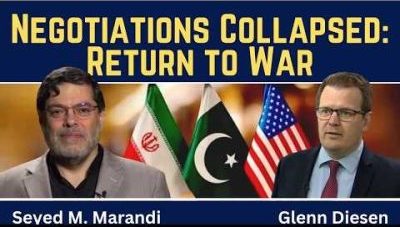
Seyed M. Marandi: Negotiations Collapsed – Return to War
or go to
Aletho News Archives – Video-Images
From the Archives
Wartime internment camps in Australia
National Archives of Australia
World War I
During World War I, for security reasons the Australian Government pursued a comprehensive internment policy against enemy aliens living in Australia.
Initially only those born in countries at war with Australia were classed as enemy aliens, but later this was expanded to include people of enemy nations who were naturalised British subjects, Australian-born descendants of migrants born in enemy nations and others who were thought to pose a threat to Australia’s security.
Australia interned almost 7,000 people during World War I, of whom about 4,500 were enemy aliens and British nationals of German ancestry already resident in Australia.
Records of World War I internment camps
World War II
During World War II, Australian authorities established internment camps for three reasons – to prevent residents from assisting Australia’s enemies, to appease public opinion and to house overseas internees sent to Australia for the duration of the war.
Unlike World War I, the initial aim of internment during the later conflict was to identify and intern those who posed a particular threat to the safety or defence of the country. As the war progressed, however, this policy changed and Japanese residents were interned en masse. In the later years of the war, Germans and Italians were also interned on the basis of nationality, particularly those living in the north of Australia. In all, just over 20 per cent of all Italians resident in Australia were interned. … continue
Blog Roll
 Aletho News
- Seyed M. Marandi: Negotiations Collapsed – Return to War
- Tomorrow’s naval blockade showdown
- ‘Israel’ attacks civilians to hide its embarrassing military failures & out of pure sadism
- Any Foreign Military Vessel Approaching Hormuz Under Any Pretext ‘Will Be Dealt With Severely’: IRGC
- Diplomats slam US negotiators’ performance in Iran talks
- Trump Refuses Exit Ramp, War with Iran will Continue
- Trump Says US Naval Blockade in Strait of Hormuz Will Begin Shortly
- US, Iran end 21-hour talks without agreement
- US IRAN TALKS: Who Are the Crazy Ones Here? /Lt Col Daniel Davis
- Talks with the US end without a deal over excessive US demands: Iran
- If Americans Knew
- US-Iran ceasefire negotiations make zero progress – Daily Update
- Pro-Israel ‘Thinktanks’ and Individuals who Influence U.S. Foreign Policy
- Mearsheimer reveals how Israel dictates US policies on Iran, Gaza – video
- After killing 350+, Israel still has a “score to settle” with Lebanon before ceasefire – Daily Update
- Military aid to Israel emerges as the latest political litmus test for Democrats
- The only Palestinian children’s rights organization closes following years-long Israeli campaign against it
- ‘I Can’t Forget the Smell’: Lebanese Reel After Israel Kills Over 300 in Single Day
- DNC Shoots Down Resolutions Calling Out AIPAC and Limiting Arms to Israel
- TCN: Is Israel Blackmailing President Trump?
- Israel killed at least 303 Lebanese yesterday – who were they? Daily Update
- No Tricks Zone
- Cave Discovery Reveals Today’s Desert Climates Were Recently Far Warmer, Wetter, Teeming With Life
- German Expert: Heat Dome Led To Record Temps In Western USA…Warmer In 1934, 1936
- New Study: No Linear Warming Or Glacier Retreat Along Northern Antarctic Peninsula Since 1980s
- An Inconvenient Tree: Uncovered In Alps… Europe Much Warmer Than Today 6000 Years Ago
- New Study Reports A 60% Slowdown In Greenland’s Ice Loss Rate In The Last Decade
- Low Intensity Tornado Wrecks Major Solar Farm, Creating A Potential Toxic Dump
- New Study Finds Warming Saves Lives…Cold Temperatures 12 Times More Deadly Than Excess Heat
- German Science Blog Accuses PIK Climate Institute Of Hallucinating Climate Tipping Points
- Devastating Assessment Of Comirnaty Vaccine By Former Senior Pfizer Europe Toxicologist
- New Study: CO2 Is ‘Effectively Negligible’ As An Explanatory Climate Change Factor Since 2000
 Aletho News