Ukraine Masses Troops on Border With Transnistria
Sputnik – 28.06.2015
Ukraine continues to mass troops and heavy weapons on the border with Transnistria on the pretext that the self-proclaimed republic may launch a military campaign against Ukraine, Russian media reported on Saturday.
“It looks like the Kiev authorities want to picture themselves as encircled by enemies, ready to attack,” a representative of the Transnistrian KGB told Russia’s Zvezda TV channel.
“That we may have a war here tomorrow is hard to say, but we are not ruling out a Ukrainian provocation either… They could use for this purpose one of their many small private armies which refuse to take any orders from Kiev,” the official added.
On June 22, the deputy foreign minister of the Transnistrian Republic, Vitaly Ignatyev, said that Ukraine was moving its troops towards the borders of the self-proclaimed republic, sandwiched between Ukraine and Moldova.
“The situation here is very bad… Economic production is going down, foreign trade is shrinking, the security situation is equally alarming with our Moldovan partners holding military drills with NATO and the Ukrainian pressure mounting every day,” Ignatyev said.
He also mentioned the curbs Kiev has imposed on the transit of Transnistrian nationals and citizens of Russia, almost 200,000 of whom currently live in Transnistria.
“They haven’t been able to travel to Russia via Ukraine for more than a year now. They have to move across Moldova, but Chisinau is creating problems too, along with economic sanctions,” Ignatyev added.
The newly appointed governor of Ukraine’s Odessa region Mikheil Saakashvili earlier announced plans to reinforce Ukraine’s border with Transnistria.
“We have two major tasks — to reinforce the border and curb corruption. Drug and weapons trafficking across this border means nothing good,” Saakashvili told a news conference in Odessa.
He also blamed the Transnistrian authorities for destabilizing the situation in Ukraine.
Kiev’s Moves Against Transnistria Are Anti-Ukrainian
Not content to merely blockade and shell its citizens in Donbass post-Maidan Ukraine is now also looking to squeeze ethnic Ukrainians in Transnistria

Transnistria president Yevgeny Shevchuk is one of Transnistria’s 160,000 ethnic Ukrainians
By Marko Marjanović | Russia Insider | June 10, 2015
Transnistria (or Pridnestrovie – “land along the Dniester”) is the spiritual predecessor of Novorossiya. It is a small, de facto independent, state taking up a strip of land along the left bank of the mighty Dniester river. The territory in question is internationally recognized as being part of Moldova but has a Slavic majority.
Transnistrian independence is a result of a joint Russian-Ukrainian uprising in the 1990s.
As Soviet Union dissolved the Slavic left-bank of the former Moldavian SSR sought independence, especially since Moldova was being shaken by a movement that sought the unification of this Romanian-speaking country with Romania.
For Slavs on Dniester’s left-bank this would have meant leading the existence of a tiny minority among 25 million Romanian speakers, and furthermore would have meant returning under the rule of their former occupiers – during WWII Romania occupied a chunk of southern Ukraine and was not well-remembered among the Slav populace. As one would expect they were not too thrilled about the prospect.
Indeed, Pridnestrovie’s inclusion into Moldovan SSR was highly artificial in the first place.
In the interwar period the Soviet Union lay claim on the historic region of Bessarabia on the right bank of the Dniester which had been part of Russian Empire but was inhabited by a Romanin majority and was at this time part or Romania. To enhance its claim the Soviets dreamt up a “Moldavian Autonomous Soviet Socialist Republic” out of southern Ukraine along the border with Romania on the Dniester and maintained that this “Moldavia” properly extends to cover the entire Romanian region of Bessarabia.
In 1940 under Stalin the Soviets fulfilled their ambition and after seizing Bessarabia formed a highly dubious “Moldavian Soviet Socialist Republic” out of this majority ethnic Romanian territory and the Ukrainian left-bank Dniester. Essentially, exactly in the same way that inclusion of Romanina-majority Bessarabia into the (Slav-majority) Soviet Union was artificial and forced, so was the inclusion of Slav-majority left-bank Dniester into the Moldavian SSSR.
In 1992 when Slavs of Transnistria who are an equal mix of ethnic Ukrainians and Russians rebelled, Ukrainians and Russians recognized the validity of their cause. Volunteers from both Russia and Ukraine flocked to help in their fight.
What is particularly interesting is that volunteers included both Russian and Ukrainian nationalists. Among the Ukrainian volunteers one could find members of the ultra nationalist UNA-UNSO – which is the oldest and the largest of the groups which today forms the Ukrainian Right Sector coalition.
In other words, back in 1992 Ukrainians, including extreme anti-Russian nationalists, were convinced Transnistria deserved to be helped and that it was wrong to demand of ethnic Ukrainians there to submit to rule from the other side of the Dniester (or even from Bucharest in Romania) that they experienced as alien.
(However, the decisive role in the conflict was not played by such volunteers but by the remnants of the Soviet Army in the region which put itself between the warring sides and deterred attempts of the stronger Moldavian/Romanian side to resolve the matter by force. Russian peacekeepers in the region today are a continuation of this force.)
In the mean time much has changed. Today Transnistrians complain (1,2,3) that Ukraine is working with Moldovans to exert pressure against them and get them to submit to Moldova. This pressure consists of a military build up along the Ukrainian-Transnistrian border, a blockade against Russian peacekeepers in Transnistria, making it hard for Transnistrians with Russian passports to travel, and making it difficult for Transnistria to export goods except through Moldovan customs.
Kiev has justified these moves by essentially painting Transnistria as Putin’s military colony. This is highly dubious since Transnistria is very much a geostrategic liability. It is tiny (population of 0.5 million), landlocked, borders only Moldova and Ukraine and covers a thin strip of land – which is therefore highly vulnerable. It may have some value as leverage in relation to Moldova, but it is the case that Moldova itself is a small (population of 3 million), impoverished and landlocked country of little to no strategic significance itself. The reality is that Moscow sees its presence in Transnistria as a moral and possibly political, but not military, asset.
The real reason why Kiev feels the need to denounce Transnistria is because the enclave is in so many ways the antithesis of post-Maidan Ukraine. Culturally and politically it is far closer to Crimea and Donbass than what Ukraine is moving towards. … Full article
Here’s Why Moldova Could be the Next Ukraine
By Andrew Korybko | Russia Insider | September 29, 2014
Lost among the talk of Ukraine’s Civil War and the ISIL threat is the coming Russia vs. West clash in Moldova.
The country is sandwiched between Romania and Ukraine, and the region of Transnistria has been de-facto independent for about two decades already.
As Moldova leaps towards the EU (it signed the Association Agreement at the end of June), it is also running towards NATO, and the US has pondered whether or not to grant it major non-NATO ally status via the tentative ‘Russian Aggression Prevention Act of 2014’ floating around Congress.
The problem is that Transnistria does not want to go along with Moldova’s vision of the future.
Instead, it has expressed its desire to politically and economically integrate with Russia, and over 1000 Russian peacekeepers are currently stationed there.
Its Russian-speaking and Russian-friendly population fears cultural and ethnic cleansing if Moldova moves closer to the West, since nationalists have been agitating for supposed ‘reunification’ with cultural cousin Romania.
After observing events in the run-up to and during Ukraine’s Civil War, Transnistria’s population surely has reason to worry about its fate. Unlike the people of Donbass, however, they will have no friendly, neighborly state to seek refuge in.
Worse still, tensions are already beginning to heat up. The Russian Foreign Ministry has accused Moldova and Ukraine of organizing a de-facto blockade over Transnistria, thereby placing its citizens in an uncomfortable economic position.
Also, Deputy Prime Minister Dmitry Rogozin’s plane was forced to turn around in May after visiting the region when Ukraine denied it air transit rights, in a previously unheard of application of diplomatic aggression that would be unthinkable if Rogozin was American.
As it stands, Transnistria is now surrounded by NATO-member Romania and vehemently pro-NATO Moldova and Ukraine, and each of these neighbors is conspiring against it to their own (and Washington’s) advantage.
Placed under such circumstances, the future looks dim for Transnistria, but Russian peacekeepers (and Moscow’s track record in protecting them) present a tangible guarantee for its security.
The American Aggression Enablement Act and the US’ Eurasian Thrust (II)
By Andrew KORYBKO | Oriental Review | August 1, 2014
Part II: Destabilization by Design
The second thrust of the US’ aggression in Eurasia is the purposeful destabilization of Russia’s interests in the Near Abroad. Specifically, the AAEA’s provisions would lead to an endangered security situation for Belarus, mayhem in Moldova, and an aggravation of the Nagorno-Karabakh situation between Azerbaijan and Armenia. All of these work against Russian interests and place Moscow on the strategic defensive.
Bunkering in Belarus:
One of the US’ designs is to bunker Belarus in and surround it with offensive NATO military capabilities. American aggression against Belarus is old news, going back most sensationally to the mid-2000s when Condoleeza Rice declared the country to be the “last dictatorship in Europe”, thereby putting its head on the chopping block for regime change. Although unsuccessful in overthrowing the government via a Color Revolution, Washington still pumps millions of dollars into the country to support “democracy” (likely in the same vein and with the same intended result as it did in Ukraine with its $5 billion investment). If the AAEA’s goal of placing permanent NATO bases in Poland and the Baltics comes to fruition, as well as the goal of Shadow NATO integration of Ukraine, Belarus could very well find itself almost surrounded by hostile forces pressuring it to accede to their demands. Making the situation even more high-risk, Belarus and Russia have a mutual security agreement via the CSTO, meaning that any act of force against Belarus will be treated as an act against Russia itself. This remarkably raises the stakes of NATO’s power play and increases the chance of direct conflict with Russia.
Moldovan Meltdown:

Flying largely under the radar of most analysts, Moldova is prime for a full-scale meltdown as it is rushed into Western institutions. First and foremost, the country already signed the EU Association Agreement in late June and, for the first time in its history, will be sending a representative to the upcoming NATO summit in September. Although nominal neutrality is a hallmark of the country’s constitution, this does not mean that it cannot enter Shadow NATO via major non-NATO ally designation or potentially enact a ‘referendum’ to change this statute.
What is critical here is that there are two ticking time bombs in Moldova that will likely go off as Western ‘integration’ proceeds at record speed; Transnistria and the lesser-known Gagauzia. The former is the renowned frozen conflict from the 1990s where Russia still has over a thousand troops stationed. It voted to join the Russian Federation in 2006 but to no avail. In May, Deputy PM Dmitry Rogozin was harassed by Moldovan security after he visited Transnistria to collect signatures in favor of reunification with Russia. His plane was forced to land in Chisinau after Ukrainian and Moldovan authorities restricted their airspace to him, creating a diplomatic incident which would be unthinkable to do to a Western politician, let alone of such stature. Moreover, the territory is currently experiencing a blockade by both Moldova and Ukraine. Transnistria does not accept the authority of Chisinau and sees no attraction to the EU, instead preferring the Russian-led Eurasian Union. These radically divergent paths, coupled with NATO’s ambitions and Russia’s existing military position, place Moldova on the brink of destabilization.
Not only that, but Gagauzia is also a simmering issue waiting to boil over. Ari Rusila conducted research on this relatively unknown entity back in April and found that, just like Transnistria, it too is moving closer to Russia. Just as fast as Moldova is moving westward, Gagauzia appears to be moving eastward, and it is asserting its self-determination with every step of the way. He writes that it held a February 2014 referendum to join the Customs Union and that it also voted to place independence on the table if Moldova loses or surrenders its sovereignty. These two options could be taken to mean joining the EU or merging with Romania, and if Gagauzia officially moves away from the centralized Moldovan state, it could lead to military reprisals by Chisinau. All that it takes to set off the two Transnistrian and Gagauzian time bombs is to shove Moldova into the EU and NATO, both of which are already being fast-tracked by the West.
Asphyxiating Armenia:
Lost in the mix of the more headline-grabbing aspects of the AAEA, the legislation also mandates that the US increase its military cooperation with Azerbaijan and provide the same amount of security assistance to it, in league with NATO, as it would to the major non-NATO allies and Balkan states. This is an exceptionally important detail that mustn’t be overlooked by any observer. Armenia, Azerbaijan’s bitter rival, made the fateful decision to turn its back on the EU and move towards the Eurasian Union, much to the ire of Brussels. Hillary Clinton, speaking on behalf of the State Department in late-2012, made known her country’s intention to “figure out effective ways to slow down or prevent” Eurasian integration, signaling that Armenia, after having made its decision to move in this direction, will now be targeted just like Ukraine was.
 Azerbaijan and Armenia are locked in the Nagorno-Karabakh conflict which, although frozen, threatens to heat up at any moment. By throwing its hat squarely behind Azerbaijan, the US is showing that it is not a neutral party to the conflict and cannot be trusted within the OSCE Minsk Group. The move for a more clearly defined and open US-Azeri military alliance has been a long time in coming, however. The US has been using Azerbaijan as a geostrategic energy outpost between Russia and Iran since the 1990s, and the creation of the BTC pipeline only increased its significance in the eyes of Western decision makers. Baku is also close friends with Israel, supplying about 40% of its oil, and it has been rumored to host Israeli drone bases for use against Iran. The Jerusalem Post also reports that Israel sells “hundreds of millions of dollars worth of arms” to the country, further cementing their military-strategic relationship.
Armenia, on the other hand, has a mutual security guarantee with Russia through the CSTO, just like Belarus does. It is a traditional Russia ally and even hosts the 102nd military base outside the capital of Yerevan. Armenia has been blockaded by both Turkey and Azerbaijan since the early 1990s, and the vast majority of its foreign trade must move through Georgia before going to Russia or to other countries via port. With Georgia trying to join the EU, the scenario could arise where costly tariffs are enacted against outside (Armenian) goods entering the Union, even if they are only transiting through, further strangling the already weakened Armenian economy and promoting social unrest. To put things into perspective, Azerbaijan’s defense budget is larger than the entire state budget of Armenia, and Azeri President Aliyev has a track record of threatening military force to retake Nagorno Karabkah.
In sum, any renewed outbreak of war between Azerbaijan (now close to becoming a US military ally) and Armenia (protected under Russia’s defense umbrella) would be a de-facto US-Russian proxy war that could quickly draw in both powers. What’s more, Azerbaijan closely cooperates with Turkey, with whom it has close ethnic, cultural, and linguistic ties, and Ankara’s involvement in any future conflict could quickly draw in the entire NATO alliance. By cozying up so closely with Azerbaijan and working to asphyxiate Armenia, the US is pushing itself closer to a direct conflict with Russia.
Concluding Thoughts
It has been definitively established that the US’ so-called ‘Russian Aggression Prevention Act’ is nothing more than Orwellian Doublespeak for an American Aggression Enablement Act. Aside from the more well-known aspects of the proposal, the lesser-known ones are just as significant in throwing America and its NATO clique closer to war with Russia. By rabidly expanding NATO at all costs via indirect means, the US is plainly showing that it does not care whatsoever for Russia’s security concerns. In fact, it wants to push the envelope and expand NATO in as many simultaneous directions as it can. The swallowing of the Balkans, the staging ground of Russia’s strategic South Stream project, and the movement to incorporate Sweden and Finland into NATO are Washington’s way of imposing full dominance over the continent’s last nominally neutral areas, a move which will surely lead to a determined Russian push back, especially as regards the defense of Serbia and NATO expansion into Finland.
Furthermore, the AAEA aims to threaten Russian interests in Belarus, Moldova, and Armenia, three countries where Moscow has deployed troops and two of which are mutual security partners. This is a calculated attempt at weakening Russia’s position in the Near Abroad and continuing to place it on the strategic defense. All together, everything within the American Aggression Enablement Act clearly shows that the US has strapped up its boots and is eager to go on the offensive against Russia. The ‘Reset’ was nothing more than an underhanded way to buy the necessary time to organize this campaign against all of Russia’s interests on its western flank, and it appears to be in full swing. If it passes into law, the bill will be seen in hindsight as the one action which single-handedly ushered in the ‘New Cold War’ and could quite possibly revert Europe back to the powder keg that it once was 100 years ago.
The Future of Transnistria in context of the Ukrainian crisis
Ari Rusila’s Balkan Blog | April 2, 2014
“Transnistrian claim for independence is being met with a certain degree of sympathy and understanding by some of the western experts. As an example, a Finnish political analyst and blogger Ari Rusila can be named; he usually presents the Transnistrian de facto statehood in quite a positive light, admitting, in particular, that “Transnistria called my attention first because of its quite ready statehood elements without outside recognition, second because of changed circumstances in respect for international law after Kosovo unilateral declaration of independence and thirdly because I predicted that Trandnistria could be the next tinderbox of separatism between Georgian conflict and coming troubles in Ukraine”. He believes that Transnistria, if compared with Kosovo, has had in fact much more reasons to be recognised internationally.”
The quote above is from a paper Transnistrian Conflict: State of Affairs and Prospects of Settlement prepared for the International conference “Frozen Conflicts” in Europe (1st September 2012, Bled, Slovenia) by Natalia Belitser and the сitation is based on my articles published in 2008.
Transnistria as next Crimea?
 As the crisis in Ukraine continues to simmer, tensions in the country’s western neighbor Moldova are beginning to rise. Seeking to capitalize on President Putin’s eagerness to use the protection of Russian speaking populations in the region as a pretext to expand his territorial claims, members of two separate enclaves in Moldova are looking toward Moscow for protection.
Now after the uprising and coup in Ukraine and reunification of Crimea with Russia, tensions have grown to encompass Ukraine’s neighbor Moldova, which like Ukraine has been making efforts to integrate further with the West. Moldova has signed the EU association and free trade agreements at the November 2013 Vilnius summit, during which former Ukrainian President Viktor Yanukovich rejected the deals. The Moldovan government has also supported the Western-backed uprising in Ukraine. Western experts worry that the next “Crimea” could be the breakaway region of Transnistria. Many locals there don’t share that fear, and if the last referendum holds, a large majority would welcome a Russian annexation.
Transnistria (aka Transdniestria aka Pridnestrovie) – is a new and emerging country in South Eastern Europe, sandwiched between Moldova and Ukraine.
 The official language of Transnistria is Russian, not Moldovan, while the vast majority of schools teach the Cyrillic alphabet instead of the Roman alphabet used in the rest of the country. Recently Transnistria adopted Russian legislation, a clear signal of the region’s preference for joining Moscow’s Customs Union.
Most recently, Russian military exercises held on March 25 in Moldova’s breakaway territory of Transdniestria have stoked these tensions. From its side the parliament of Transdniestria has sent a proposal to the Russian State Duma asking for Russian legislation to join the breakaway Republic to Russia. The document originated as a feedback to a new draft law in Russia facilitating the accession of the new subjects to the Russian Federation. The talks within the 5+2 format (Russia, Moldova, Transdniestria, Ukraine, the OSCE and observers from the EU and the US) are scheduled for 10-11 April 2014.
Transnistria – and Gagauzia – are joining to the same club with Abkhazia and South Ossetia as de facto states, namely political entities that have achieved enduring ‘internal sovereignty’ – but lack ‘external sovereignty’ in the international system. As Crimea is annexed to Russia and these other “states” can follow to join Russia or continue as de facto states, this development is creating a Northern Black Sea corridor, front-line or buffer zone.
Good Moldavia-Transdniestria cooperation since 2009 and 2011 elections
New prospects for conflict settlement have appeared after parliamentary elections of 2009 in the Republic of Moldova. The new pro-Western team – the Alliance for European Integration (AEI) – that substituted the Communist Party ruling the country from 2001, proved much more pragmatic and willing to deal with its breakaway region than their predecessors pursuing rather an isolationist policy. In 2011 presidential elections President Igor Smirnov, who had been in power since Transnistria declared independence in 1990, failed to be re-elected, and was replaced by opposition MP, younger leader of the ‘Revival’ movement and former speaker of the Supreme Council Yevgeny Shevchuk. These political changes engendered hopes for the settlement process to acquire a positive momentum.
The power changes in Transnistria give a positive boost to the peace process: the official negotiation process re-started after six years interruption in November 2011 in Vilnius, Lithuania, to be followed by a meeting on February 2012 in Dublin, Ireland and on April 2012. Finally the Document of principles and procedures and agenda of negotiations were agreed in Vienna, whereas on July 2012 this Document was signed. It included such issues as freedom of movement of passengers and cargo, traffic of trains, education issues, etc. Also a new approach (joint initiative of Russia and Germany, Meseburg, 2010) by the EU and Russia to resolve the conflict was the setting up of a joint Political and Security Committee (EU-R-PSC) at minister level. Related to security issues it was stated that the EU and Russia will cooperate in particular towards a resolution of the Transnistria conflict with a view to achieve tangible progress within the established 5 + 2 format (Russia, Ukraine, Moldova, Transnistria, OSCE, EU, US). This cooperation could include a joint EU-Russia engagement, which would guarantee a smooth transition of the present situation to a final stage.
The main approach of the resumed negotiations and to the settlement process in general focuses on Confidence Building Measures (CBMs). This means that political aspects of the settlement, for example a mutually accepted status of Transnistria, are not yet touched. Instead status there has been attempts to make concrete steps of issues that both sides of the conflict are interested in. These kinds of initiatives have already been following:
- Engaging the sides into direct dialogue;
- Establishing joint Working/Expert Groups on confidence building measures;
- Conducting meetings at a higher level (for example, between Prime-minister of the RM Vlad Filat and leader of Transnistria Yevgeny Shevchuk, also between the heads of foreign ministries Eugen Carpov and Nina Stanski);
- Elaborating and implementing national and international social and economic development projects etc.
The direct dialogue at a higher level has been clear contrast to previous lack of any kind of dialogue lasting for years. There has been a dozen WGs e.g. on economy, agriculture and environment, transport, railways, civil status acts, social and humanitarian aid, health, education, combating organised crimes and emergencies, telecommunications, and customs, whereas the WG on demilitarisation and security is not yet operating.
Growing dispute between parties started by unilateral actions by both parties during Spring 2013. First Moldova established migration control of citizens in six checkpoints, second Transnistria started to mark a border in the Security Zone or line of demarcation after the Transnistrian war (1992).
Tools against Transnistria by Chisinau and Kiev
Arsenal of tools, on that, with the support of Western “ideological-political sponsors” can count in Chisinau and the Kiev could be as following:
- further tightening of border crossing for the residents of Transnistria, the introduction of a total ban on border crossings by social groups and citizens (It is noteworthy in this regard that, that the admission of foreign citizens on the territory of Moldova is liberalized; Ukrainian officials should examine stats for financial gains and losses of the Moldovan side of Ukrainian companies, eg, air carriers);
- blocking of export-import operations of the Transnistrian side, transit of Transnistrian goods, that is well within the common “European” subjects as a way to European integration, with a demand for the full functioning of the Transnistrian Moldovan business rules;
- ban on border crossings by vehicles with Transnistrian number;
- refusal to issue permits for the Transnistrian passenger transport;
- Moldovan law on the placement of the Ukrainian checkpoints with full access to all databases and law carry out administrative functions, etc..
Russia ready if needed
NATO warns that a pro-Russian enclave of Moldova could be Moscow’s next target after Crimea. NATO’s top military Commander Europe Philip Breedlove said on 23rd March 2014 that Russia has a large force on Ukraine’s eastern border and is worried it could pose a threat to Moldova’s separatist Transnistria region.Russia launched a new military exercise, involving 8,500 artillery men, near Ukraine’s border 10 days ago. Breedlove said the Russian tactic should lead the 28-nation Western military alliance to rethink the positioning and readiness of its forces in eastern Europe so that they were ready to counter Moscow’s moves.
How the Russian forces would get there. Transnistria is landlocked and to go there by land would require Russian troops to travel through much of western Ukraine. However, Russian forces based in the Eastern side of the Black Sea and Crimea could conceivably stage an airlift. Since it fought a brief separatist war to breakaway from Moldova in 1991, Transnistria has been home to “peacekeeping” garrison of around 1,000 Russian troops. One option is also that Russia includes Odessa in a “security belt” that would presumably stretch from Crimea to Transnistria.
In Moldova the appetite for European integration among Moldova’s 3.5 million people had weakened even before the crisis in Ukraine and a parliamentary election later this year may bring a return of the pro-Russian Communist Party that was forced from power in 2009. Moldova falls under the EU’s Neighborhood Policy, which contains no explicit similar promise of membership like the countries of the Western Balkans .
Gagauzia had a referendum too
 Following a 1991 declaration of independence, Comrat (Gagauzia’s capital) agreed to remain a part of Moldova, after Chisinau agreed to grant the region the legal status of a “special autonomous zone”. Chisinau’s control was challenged in February 2014 when Gagauzia held a referendum to join the Russia-led Eurasian Customs Union. The referendum followed Chisinau’s decision to enter a Free Trade Agreement with the European Union in November 2013–the same agreement former Ukrainian President Victor Yanukovich snubbed when he opted for the customs union with Moscow. Gagauzia has a population of about 155,000 people, mostly ethnically Gagauz, Turkic-speaking Orthodox Christians. Many locals fear that Chisinau’s EU-integration agenda masks an intention to unite Moldova with neighboring Romania.
An overwhelming majority of voters in a referendum – with turnout more than 70 % – held in the autonomous Moldovan region of Gagauzia have voted for integration with a Russia-led Customs Union: 98.4 percent of voters chose closer relations with it. In a separate question, 97.2 percent were against closer EU integration. In addition, 98.9 percent of voters supported Gagauzia’s right to declare independence should Moldova lose or surrender its own independence. Moldova’s government claims that referendum in Gagauzia is unconstitutional and had no legal legitimacy.
Although the security situation in Gagauzia remains calm, on 26 March, the executive committee in Comrat announced its decision to establish independent police stations in Comrat, as well as in its northern and southern cities of Briceni and Cahul. Moscow has demonstrated support for Gagauzia following the referendum. The regions governor, Mihail Formuzal visited Moscow in March 2014 and got the impression that Russia was prepared to expand partnerships with Gagauzia and “provide the necessary support”. Despite an embargo against wine produced in Moldova, Russia began importing it from Gagauzia, likely as an attempt to encourage additional good will toward its benefactor.
Bottom line
It easy to say that incorporating Transnistria – as well Gagauzia, Abkhazia, South Ossetia and Crimea – into Russia (and Nagorno-Karabakh into Armenia) is against international law (whatever it is) or some international agreements. Although Russia moving into eastern Ukraine could be–as the West says–invasion-occupation-annexation. However in my opinion these actions are more legitimate or justified than U.S.expansionism, secret wars and interventions around the globe.
The other possible scenarios than unification with Russia for Transnistria are e.g:
- Status quo maintained aka “frozen conflict” continues;
- Re-integration of the Republic of Moldova with condition of establishing a confederation including Moldova, Transnistria and Gaugazia as entities, this could be a pragmatic option for Ukraine too;
- Transnistria gaining its independence and state sovereignty recognized internationally;
- Joining Ukraine, which option after coup in Kiev seems most unlikely option to me.
In my opinion even without international recognizion Transnistria meets the requirements for sovereign statehood under international law, as it has a defined territory, a population, effective elected authority, and the capability to enter into international relations. It is currently seeking international recognition of its de facto independence and statehood. As long as Transnistria’s status is unresolved, it will be a serious political obstacle to Moldova’s joining the EU, which does not want another “divided state” like Cyprus on its hands.
Related article

Featured Video
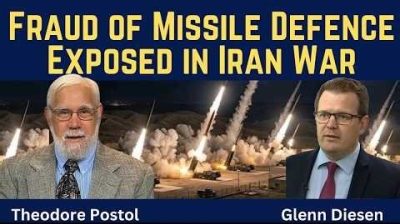
Ted Postol: Fraud of Missile Defence Exposed in Iran War
or go to
Aletho News Archives – Video-Images
Frlom the Archives
Containing the United States
By Edward S. Herman | Z Magazine | September 2016
“Containing the United States” is, of course, a ridiculous and self-contradictory idea in the U.S. and Western ideological and propaganda system. We all know that the United States had to “contain” the Soviet Union from 1945 to 1991, and since then has had the task of containing Russia and China. Only they threaten, bully, aggress and worry countries like Poland and Vietnam. Obama has had to reassure them both of our steadfast stand against Russian and Chinese military attacks. NATO has, of course, expanded greatly over the past several decades, despite the deaths of the Soviet Union and Warsaw Pact, but only to contain the renewed Russian — and Iranian, Libyan, Syrian and other — military threats; and we have “pivoted” to Asia, supported Japanese rearmament, bolstered our own forces in that area and jousted with the Chinese in their coastal waters solely to contain China. Earlier we had been obliged to contain North Vietnam, or was it the Soviet Union in Vietnam? Or China? Or “communism”? Or maybe all of them? Or none of them, but just needing an excuse to enlarge power?
The parallel propaganda has taken many forms. One is accepting as a premise that the United States only acts defensively and has no internal forces and interests that drive it to enlarge its sphere of control. I noted in an earlier article how Paul Krugman claims that internal Russian problems may well be the explanation of Russian “aggression,” but how at the same time it never occurs to him that the huge U.S. transnational corporate interests and “defense” establishment, and the pro-Israel lobby’s activities, might possibly make for an expansionist dynamic here.2 This reflects the standard establishment perspective that we are good and only react to evil. This was the view sustaining and justifying the invasion and occupation of Iraq from 2003. That attack was taken here as not evil but a response to evil, even if involving lies and mistakes, hence not describable as “aggression.” … continue
Blog Roll
 Aletho News
- When Tel Aviv decides, Washington fights
- Top official: Iran ready for a long war with US, no more diplomacy
- How Iran’s Toxic Rain Reveals US-Israel Discord
- Trump Admits He Is Destroying Iran For Israel
- Iran’s latest move in the GCC countries was a stroke of genius
- Blackmail and death threats, Zelensky embarrasses the EU, but there’s no condemnation
- Israel threatens to kill Iran’s new leadership
- Possible Scenarios for the Middle East
- The Horizon of the War. “Italy is being Dragged Into the War against Iran”
- A Second Vietnam War? Hanoi Waits and Prepares
- If Americans Knew
- Corporate Media Go All Out To Support The US-Israeli War On Iran
- US-Israel war on Iran is creating a steady growing number of amputees
- Israel planned this war on Iran for 40 years. Everything else is a smoke screen
- The wrong question about the war in Iran
- ‘Your Tax Dollars Being Used to Raise Your Gas Prices’: US-Israel Bomb Major Iranian Oil Depots
- ‘Bogus Evidence’: Former Nuclear Watchdog Head Debunks US Justification for Iran War
- EXPLAINER – Dimona: What to know about Israel’s nuclear site
- Fires and toxic air in Iran (thanks, Israel) – Not a ceasefire Day 150
- At Israel’s hands, Iran is burning, Lebanon and Gaza are crumbling – Not a ceasefire Day 149
- Israel is using the ‘Gaza doctrine’ in Lebanon and Iran
- No Tricks Zone
- Wake-up Call: Survey Shows Majority Of Germans Now Favor Postponing Climate Targets!
- Televised! Leading German Political Candidate Tells Schoolchildren CO2 Makes Sun Hotter!
- New Study: A Century Warming Of 1.1°C Is ‘Commonplace’ And ‘Not Unusual’ During This Interglacial
- New Study: ‘Internal Noise’ And Volcanic Forcing Can Trigger 10-15°C Warming Within Decades
- Glaciers Worldwide Are Suddendly Surging, Experts Blame Warming!
- Surprising Discovery: Sahara Is Greening…Billions Of Trees Where Once Thought To Be Barren
- New Research Reaffirms Clouds, Aerosols, And Surface Solar Radiation Are ‘Driving The Climate System’
- Germany: Electric Car Catches Fire At Charging Station, Sets Off Local “Inferno”, Widespread Damage
- New Study: Canada’s New Brunswick Was 1°C Warmer Than Today During The Medieval Warm Period
- Coal Power Back In Trend As Globe Tries To Keep Pace With Growing Demand For Power
 Aletho News