TSA Runs Background Checks of U.S. Passengers before They Arrive at the Airport
By Noel Brinkerhoff and Danny Biederman | AllGov | October 23, 2013
The Transportation Security Administration (TSA) has broadened its screening of passengers before they arrive at the airport by using government and private databases revealing personal information.
The expanded screening, which used to apply only to people entering the United States, now affects domestic travelers, and can include TSA agents reviewing car registrations and employment information.
“It is unclear precisely what information the agency is relying upon to make these risk assessments, given the extensive range of records it can access, including tax identification number, past travel itineraries, property records, physical characteristics, and law enforcement or intelligence information,” Susan Stellin wrote for The New York Times.
TSA claims that the purpose of the expanded passenger data scans is to identify low-risk passengers in order to lighten their security screening at the airport and thus make actual searches more targeted. The agency’s goal is to be able to do that with 25% of all passengers by the end of 2014. Those designated low-risk travelers will get to move through a separate line and be able to keep their shoes and jackets on.
Privacy groups expressed concern over the TSA’s widening reach into people’s personal records.
Previously, the air travel background checks, called Secure Flight, only involved a comparison of a passenger’s name, gender and date of birth to terrorist watch list data. Now it is clearly much more.
“I think the best way to look at it is as a pre-crime assessment every time you fly,” Edward Hasbrouck, a consultant to the Identity Project, one of the groups that oppose the prescreening initiatives, told the Times. “The default will be the highest, most intrusive level of search, and anything less will be conditioned on providing some additional information in some fashion.”
TSA has not announced details of the program, but it reportedly has already been launched.
To Learn More:
Security Check Now Starts Long Before You Fly (by Susan Stellin, New York Times)
As TSA Expands beyond Airports, Concerns are Raised over Warrantless Searches (by Noel Brinkerhoff and Danny Biederman, AllGov)
TSA Spreads to Trains, Subways, Bus Terminals and Ferries (by Noel Brinkerhoff and David Wallechinsky, AllGov)
Tennessee First State to Allow TSA Highway Random Search Program (by David Wallechinsky and Noel Brinkerhoff, AllGov)
Clerical Blunder Reveals TSA Considers Airport Terrorist Attack Unlikely
By JACK BOUBOUSHIAN | Courthouse News | October 22, 2013
Classified TSA documents revealed by clerical error show that the agency does not think terrorists are plotting to attack airplanes, suggesting that nude body scans are unnecessary to protect passengers.
After Rapiscan developed “backscatter” body scanners using Advanced Imaging Technology in 2007, Jonathan Corbett sued the Transportation Security Administration three years later.
He claimed that the TSA procedures violated the Fourth Amendment’s prohibition against unreasonable searches in requiring agents to touch the passengers’ private areas and let them see clear images of the passengers’ nude bodies.
Corbett claimed that the “the abstract risk[s] of terrorism without a credible, specific threat” does not justify the unreasonable screening procedures, which are performed without probable cause or a search warrant.
“The nude body scanners serve to palpate every inch of skin, this time with electromagnetic radiation rather than fingers,” he wrote in a recent brief. “Every crevice, fold, and bump is turned into a picture of the traveler’s nude body. It is, essentially, the high-tech version of an invasive pat-down.”
After a federal judge found in 2011 that only federal courts of appeals can hear challenges to TSA orders, Corbett’s case is now pending before the 11th Circuit.
In the course of discovery, the TSA gave Corbett classified documents, which he incorporated into the brief that he filed under seal.
A clerk at the 11th Circuit somehow neglected to place the document under seal, however, allowing the public to see the redacted information.
This mistake revealed the TSA’s apparent admission that terrorists are unlikely to target airports in a subsequent attack.
“As of mid-2011, terrorist threat groups present in the Homeland are not known to be actively plotting against civil aviation targets or airports; instead, their focus is on fundraising, recruiting, and propagandizing,” the TSA said.
In addition, the brief states that “the government concedes that it would be difficult to have a repeat of 9/11 due to hardened cockpit doors and the willingness of passengers to challenge hijackers rather than assume a hijacking merely means a diversion to Cuba. The government also credits updated pre-flight security for that difficulty assessment, but the assessment was written before the en masse deployment of body scanners and before the update to the pat-down procedure. Further, the government admits that there have been no attempted domestic hijackings of any kind in the 12 years since 9/11.”
The nude body scanners are not very good at detecting explosives, and almost everything caught by the machine, such as guns, could be found using a traditional metal detector, Corbett says.
The only thing the scanners allegedly excel at over a metal detector is finding illegal drugs, which do not threaten the safety of passengers.
Because less intrusive, but equally effective, search methods exist, the TSA’s use of nude scanners and full pat-downs is unnecessary and unconstitutional, according to the brief Corbett filed pro se.
“The limited support that the TSA has for the nude body scanners and pat-down procedures in Congress, in the eyes of the public, and in the courts so far is a direct result of the TSA’s insistence that these devices are necessary to mitigate the threat of non-metallic explosives,” it states. “When given the choice between sacrificing some of their privacy or risk being blown up, many people – especially politicians who would not want to have the finger pointed at them for being ‘responsible’ for allowing the next terrorist attack to happen – choose the former.
“However, this is a false choice, and the TSA has deliberately misled the public, Congress, and the courts into concluding that no less invasive alternatives can ‘do the job.’ At least three other technologies are available to the TSA for the purpose of screening travelers for explosives, and a review of the administrative record shows that the TSA’s decision to use nude body scanners and pat-downs over these other technologies was arbitrary and capricious.”
Related article
TSA expands role beyond airports amid growing cases of misconduct
RT | August 7, 2013
Cases of misconduct among airport screeners employed by the Transportation Security Administration (TSA) increased by 26 per cent between 2010 and 2012, according to a new report. It comes as the agency expands its services beyond airport security gates.
The report, which was released last week by the US Government Accountability Office (GAO), found 9,622 cases of misconduct among TSA workers from 2010 through the 2012 fiscal year. It concluded that the agency had insufficient procedures for reviewing and recording the outcomes of misconduct cases.
At the same time, fresh attention has been cast on TSA’s expanding its roles into train terminals and even sporting events in the form of Visible Intermodal Prevention and Response squads, or VIPR teams, which have been assigned to counterterrorism security checks at transportation hubs in the US since 2005.
According to a profile published this week by The New York Times, TSA’s VIPR program now boasts a $100 million annual budget and is growing quickly. The scheme has grown since 2008, consisting of 37 teams in 2012.
Meanwhile, the agency’s records show that it has provided security for over 8,800 “unannounced checkpoints” and other search operations in conjunction with local law enforcement outside of airports. Such events have included the Indianapolis 500 race and both the Democratic and Republican national conventions.
VIPR teams usually comprise of federal air marshals, explosives experts, and baggage inspectors. The squads move through crowds at events and transportation hubs with bomb-sniffing dogs and perform random stops on individuals. Plainclothes members of VIPR teams monitor crowds for suspicious behavior.
“Our mandate is to provide security and counterterrorism operations for all high-risk transportation targets, not just airports and aviation,” TSA administrator John S. Pistole said. “The VIPR teams are a big part of that.”
However, members of Congress and officials at the Department of Homeland Security question whether the teams are properly trained while civil liberties groups wonder what the VIPR teams have to do with TSA’s original mandate to provide security at the nation’s airports.
“The problem with TSA stopping and searching people in public places outside the airport is that there are no real legal standards, or probable cause,” said Khaliah Barnes, administrative law counsel at the Electronic Privacy Information Center.
“It’s something that is easily abused because the reason that they are conducting the stops is shrouded in secrecy.”
Representative Bennie Thompson, a ranking member on the House Homeland Security Committee with oversight of TSA, supports the VIPR teams but remains concerned about warrantless searches and the process of detecting suspicious behavior.
“This is a gray area,” he said. “I haven’t seen any good science that says that is what a terrorist looks like. Profiling can easily be abused,” Thompson told The New York Times.
As for the rising number of offenses among TSA workers, the majority of those listed in the report include attendance and leave violations and excessive absences or tardiness. Only a small fraction represented instances of theft.
Specific violations of screening and security rules were outlined in 20 per cent of the cases profiled in the report. One of those offenses included sleeping while on duty.
Although the GAO report does not indicate high occurrences of issues such as theft, there have still been some high profile cases among the 56,000-strong staff which is spread out among 450 airports across the US.
For example, a TSA officer at Orlando International Airport pleaded guilty to embezzlement and theft after stealing 80 laptop computers and electronics from passenger luggage in 2011. The items were worth $80,000.
Another TSA employee was arrested after allegedly stealing some $50,000 worth of electronics at Fort Lauderdale-Hollywood International Airport the same year, although the GAO does not cite that incident.
It remains to be seen whether the occurrences of misconduct listed in the report will carry over into TSA’s growing role. For the most part, the presence of VIPR teams seems to mostly confuse and irritate the public.
A joint operation in 2012 involving VIPR, Houston police, and local transit officers led to complaints of stops and searches of bags. The deployment yielded a few arrests, mostly for passengers with existing warrants for prostitution and minor drug possession, according to The Times.
“It was an incredible waste of taxpayers’ money,” said Robert Fickman, a local defense lawyer who attended a subsequent meeting in the city packed with angry residents. “Did we need to have TSA in here for a couple of minor busts?”
EPIC Appeals FOIA Decisions Concerning Body Scanner Information
Electronic Privacy Information Center – April 16, 2013
EPIC has filed appeals in two Freedom of Information Act cases seeking documents related to airport body scanners from the Department of Homeland Security and the Transportation Security Administration.
EPIC filed FOIA requests with the agencies seeking records related to radiation risks from body scanners and the threat detection software the machines use.
The TSA is currently developing formal rules for the use of body scanners in response to a court order in one of EPIC’s previous cases.
Body scanners allow routine digital strip searches of individuals who are not suspected of any crime.
For more information, see EPIC: Radiation Risks lawsuit and EPIC: ATR lawsuit, and EPIC: Suspension of Body Scanner Program.
Related articles
- Judge: DHS Must Release Body Scanner Safety Reports (reason.com)
- Letter From a Screener: So We Found a Suicide Bomber With The Full Body Scanner: Now What? (takingsenseaway.wordpress.com)
Federal Judge Slams Obama Administration for Trying to Dismiss No-Fly List Case in Secret
By Noel Brinkerhoff | AllGov | December 26, 2012
 The Obama administration was admonished by a federal judge recently for attempting to get a lawsuit involving the anti-terrorism no-fly list dismissed using secret information.
Rahinah Ibrahim, a citizen of Malaysia who earned a Ph.D. in construction engineering and management at Stanford University, sued the U.S. government after she was prevented from flying out of San Francisco International Airport in January 2005. Transportation Security Administration (TSA) authorities informed Ibrahim that her name was on the special list that denies those suspected of terrorist ties from flying on commercial airliners.
She was arrested, handcuffed, and placed in a holding cell for two hours, but eventually told she could go. She was also told that her name was removed from the no-fly list.
The next day, however, Ibrahim learned her name had not been removed from the list. Nevertheless, TSA officials allowed her to board her flight for Malaysia. Her visa was revoked and she was denied reentry into the U.S.
Her lawsuit has slowly made its way through the federal courts. The government has tried more than once to have the litigation thrown out, claiming Ibrahim lacked the legal standing to pursue her case.
Earlier this year, the Ninth Circuit Court of Appeals said Ibrahim had the right to continue her legal fight. Still, government attorneys tried again to derail the case, this time by submitting confidential records for the judge to review, but not for Ibrahim’s legal defense to see.
Judge William Alsup objected to the government’s tactic. He wrote: “Here the government seeks to affirmatively use allegedly privileged information to dispose of the case entirely without ever revealing to the other side what its secret evidence might be.”
“In sum, only in the rarest of circumstances should a district judge, in his or her discretion, receive an ex parte argument and evidence in secret from only one side aimed at winning or ending a case over the objection of the other side,” Alsup added. “Here, the government has not justified its sweeping proposal. It has gone so far as even to redact from its table of authorities some of the reported case law on which it relies! This is too hard to swallow.”
Ibrahim is currently dean of the Faculty of Design and Architecture at Universiti Putra Malaysia.
To Learn More:
Feds Blasted for Trying Dismiss Case in Secret ( by Chris Marshall, Courthouse News Service )
Related articles
New Documents: Big Sis Lied About Canceling Mobile Body Scanner Program
Homeland Security claimed it had “dropped the plans at an early stage”
By Steve Watson | Prisonplanet | August 17, 2012

Newly released documents clearly show that the The Homeland Security Department continued to pursue a mobile surveillance program, moving radiation firing body scanners out of airports and into streets and shopping malls, despite claiming it has dropped the plans altogether.
The Electronic Privacy Information Center (EPIC) yesterday released the documents, obtained under the Freedom of Information Act, showing that the DHS was still operating the program in March 2011, just two days prior to claiming it had “dropped the projects in a very early phase after testing showed flaws”.
Previous EPIC FOIA work produced records showing that the DHS is actively moving to install radiation firing scanners in all manner of public places.
The technologies include “intelligent video,” backscatter x-ray, Millimeter Wave Radar, and Terahertz Wave, and could be deployed at subway platforms, sidewalks, sports arenas, and shopping malls.
EPIC filed a specific lawsuit against the DHS for attempting to keep the program secret.
EPIC’s suit asked a federal court to order disclosure of nearly 1,000 pages of additional records detailing the controversial program – records the agency repeatedly refused to make public, despite freedom of information requests and appeals over the course of several months.
The lawsuit points to an agency under the DHS umbrella, the Science and Technology Directorate, which has released only 15 full pages of documents on the mobile scanners, whilst heavily redacting another 158 pages and withholding 983 pages of documents.
In February 2011, EPIC discovered (PDF) that the DHS had paid contractors “millions of dollars on mobile body scanner technology that could be used at railways, stadiums, and elsewhere” on crowds of moving people.
According to the documents obtained by EPIC, the Transport Security Agency plans to expand the use of these systems to peer under clothes and inside bags away from airports.
The documents included a “Surface Transportation Security Priority Assessment” [PDF] which revealed details of conducting risk assessments and possible implementation of body scanners in “Mass transit, commuter and long-distance passenger rail, freight rail, commercial vehicles (including intercity buses), and pipelines, and related infrastructure (including roads and highways), that are within the territory of the United States.”
The DHS maintained that it had discontinued the program, but refused to provide the proof, invoking several FOIA exemption clauses, ironically including one that cited “invasion of personal privacy”.
EPIC also noted that the DHS has actively deployed “mobile body scanner technology in vans that are able to scan other vehicles while driving down public roadways.”
“These vans, known as ‘Z Backscatter Vans,’ are capable of seeing through vehicles and clothing and routinely store the images that they generate.” EPIC’s lawsuit notes.
As we previously reported, while the focus remained on the TSA’s use of naked body scanners at airports, the feds had already purchased hundreds of x-ray scanners mounted in vans that were being used to randomly scan vehicles, passengers and homes in complete violation of the 4th amendment and with wanton disregard for any health consequences.
WSBTV reported on one instance of the mobile scanners being used to check trucks for explosive devices at an internal checkpoint set up by Homeland Security, the Department of Transportation, and the TSA. Officials admitted there was no specific threat that justified the checkpoint, and although it was labeled a “counter-terror operation,” the scans were also being conducted in the name of “safety”.
EPIC will continue to pursue the case in an attempt to discover whether the DHS still plans to roll out mobile body scanners across America.
Related articles
- Court Orders TSA to Explain Lawless Use of Naked Body Scanners (thenewamerican.com)
- TSA flouts the law on body scanners (juneauempire.com)
Featured Video
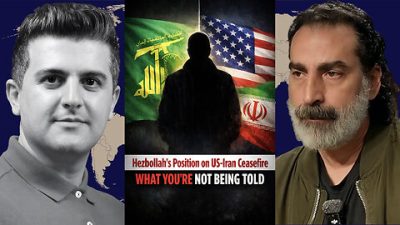
Laith Marouf: Hezbollah’s position on US-Iran ceasefire
or go to
Aletho News Archives – Video-Images
From the Archives
The Dirty Little Secret behind the “Global Terrorism Index”
The Omission of Israeli Terrorism in the Occupied Palestinian Territories
By Karin Brothers | Global Research | December 6, 2014
… The Israeli settlements — all of which are illegal – have been identified as a major impediment to peace. The refusal of a major “global” terrorism report to name the Israeli settlers as one of the groups most responsible for terrorism not only misrepresents a major source of regional violence but exposes the Global Terrorism Index as a propaganda tool that supports a U.S. agenda.
In recent years, governments have been attempting to thwart terrorism by blocking supportive fund-raising. When it comes to Israeli settlements, however, the US and Canada actually encourage fund-raising by giving organizations (such as Christian Friends of Israeli Communities (CFOIC) and the Jewish National Fund) financial support in the form of donor tax-deductions.
Charities which provide funds for the Israeli settlements should be regarded as terror-financing organizations. They should not only lose their tax-deductible status, but they should be banned because they support the violation of international humanitarian law. The terror-financing laws that are being strictly enforced for Muslim charities should be applied to Christian and Jewish charities as well. … Read full article
Blog Roll
 Aletho News
- Spain orders reopening of Tehran embassy, condemns Israel’s carpet bombing of Lebanon
- Israel faces ‘unsustainable’ strategic crisis following 40-day war against Iran: Analyst
- Iran restricts Hormuz access to 15 vessels per day under ceasefire terms: Report
- The ‘Opposition Party’ Has Done Nothing to Stop the Iran War and Much to Goad Trump Into Continuing It
- Moscow backs Tehran on status of Lebanon in US-Iran deal
- How UK Regulator Ofcom Quietly Bypassed International Law to Police American Speech
- The Black Cube Files: How Former Mossad Operatives Flipped a Nation
- Laith Marouf: Hezbollah’s position on US-Iran ceasefire: What you’re not being told
- Israel’s priority lies in destroying chances of peace between Iran, US: Ex-UN nuclear chief
- Ceasefire for all or for none: Iran shuts Hormuz over Lebanon attacks
- If Americans Knew
- The gallows law: Israel moves toward executing Palestinian children
- Tucker Carlson: The Path to Peace requires ending ‘special alliance’ with Israel
- This is ceasefire? Israel’s biggest massacre yet in Lebanon, another journalist killed in Gaza – Daily Update
- Tucker Carlson on Israel: This Is the Behavior of an Ally? Really?
- Gazans face a triple crisis: severe shortages of water and bread, healthcare in tatters
- NY Times reports how Netanyahu took the US into Iran War
- A sigh of relief over Iran, but Gaza and Lebanon in dire straits – Daily Update
- Thousands dead and neighborhoods razed to the ground: Aid agencies fear southern Lebanon is becoming the new Gaza
- The war the US is fighting for Israel could cost trillions
- ‘Cigarette Burns, Nail Wounds’: Toddler Tortured in Gaza to Coerce Father
- No Tricks Zone
- An Inconvenient Tree: Uncovered In Alps… Europe Much Warmer Than Today 6000 Years Ago
- New Study Reports A 60% Slowdown In Greenland’s Ice Loss Rate In The Last Decade
- Low Intensity Tornado Wrecks Major Solar Farm, Creating A Potential Toxic Dump
- New Study Finds Warming Saves Lives…Cold Temperatures 12 Times More Deadly Than Excess Heat
- German Science Blog Accuses PIK Climate Institute Of Hallucinating Climate Tipping Points
- Devastating Assessment Of Comirnaty Vaccine By Former Senior Pfizer Europe Toxicologist
- New Study: CO2 Is ‘Effectively Negligible’ As An Explanatory Climate Change Factor Since 2000
- Former Pfizer Toxicologist Dr. Helmut Sterz Tells Bundestag Hearing Pfizer Vaccine Should Have Never Been Approved
- Energy Expert: Germany’s Nuclear Phaseout Was A “500 Billion Euro Mistake”
- New Research: South Australia’s Mid-Holocene Sea Surface Temperatures Were 4°C Warmer Than Today
 Aletho News