When Tel Aviv decides, Washington fights
By Jamal Kanj | MEMO | March 9, 2026
American taxpayers are still hemorrhaging from the made-for-Israel war in Iraq, a war audaciously offered as one that would “pay for itself.” Instead, it was paid in Iraqi and American blood, ruins and financed by American debt. The promised democracy was a broken state, regional chaos, and the afterbirth of terror and resistance that continues to metastasize across the Arab world. Marketed as a short, decisive campaign, Iraq became a two-decade-long disaster with no exit in sight. Trillions were burned on lies manufactured by Israel-first Zionists in Washington, while generations of Americans—many not even born when the invasion began—were conscripted into inheriting the debt, the interest, and the moral stain.
The real balance sheet of that war is etched into nearly 5,000 American tombstones and the endless corridors of veterans’ hospitals. Before that blood-soaked bill is even paid, the very same architect, using the same lies, has succeeded again in dragging the U. S. into another made-for-Israel war, this time against Iran. Iraq was not an aberration; it was a rehearsal. Yet, Iran doesn’t appear to be the final act on the Israeli menu. In recent weeks, former Israeli prime minister Naftali Bennett declared that Turkey is next. And it is the U.S., not Israel, that is expected to keep paying for wars, America neither needed nor chose.
The evidence of who set the clock of this war is unmistakable. The most revealing admission did not come from Tehran, Moscow, or Beijing, but from the U.S. State Department. In an unguarded moment, the U.S. Secretary of State admitted that the timing of this war was not an American choice. This became painfully clear when the State Department was caught unprepared to help evacuate tens of thousands of Americans from the war zone.
As U.S. ambassadors hurried to evacuate their staff and families, desperate citizens were told their government could not assist and were advised to arrange their own departures, after airports had already closed.
This is not a minor detail. It’s a government that is willing to sacrifice the well-being and security of its citizens by joining a war decided by someone else. It goes to the heart of sovereignty and democratic accountability. A nation that chooses to go to war prepares its people, its diplomacy, and its logistics. A nation that is dragged into war improvises and hopes for the best.
Iran, for its part, is not the caricature often presented by the American Secretary of War and Donald Trump. It is a country prepared for drawn-out conflict and strategic patience. During the nearly eight-year Iran-Iraq War, Tehran fought a grinding, no-win war against a better-armed adversary. Against the expectations of Western military analysts, Iran endured. In a grim irony, it even committed the greatest of all sins: purchasing weapons from Israel, falling into Tel Aviv’s cynical strategy to weaken both Baghdad and Tehran simultaneously. Israel was willing to arm its supposed arch-enemy as part of its broader calculus of exhaustion and division.
That history matters today. Iran has demonstrated, repeatedly, a willingness to absorb punishment, and extend conflicts over time. At the end of the day, and by all means necessary, Iran is unlikely to surrender. In a protracted war of attrition to bleed the world economy, Tehran could move to close the Strait of Hormuz, an oil blood line for world economies. Iran may be economically battered, and it has been for decades under severe sanctions, but that very weakness reduces its restraint. A country with little left to lose is more inclined to impose pain on others, including Western and neighboring welfare oil economies dependent on uninterrupted energy exports.
Meanwhile, regional instability in the Gulf and prolonged American entanglement create the perfect parasitic symbiosis for Israel: a state that flourishes in the shadows of regional chaos like a scavenger thriving on the scrap of a landfill.
President Trump has suggested escorting oil shipments in the Strait to keep the oil flowing. The macho bravado may play well on television or for the stock market, but history, old and recent, offers daunting realities. The same was attempted during the Iraq-Iran war in the 1980s but failed. More recently, the U.S., the EU, and Israel combined failed to force a much smaller and poorer country—Yemen—to open the Red Sea. After months of bombardment, siege and naval pressure, Washington was forced into negotiations, and even then, Yemeni forces continued to block vessels linked to Israel until Gaza ceasefire.
The comparison is useful. The shorelines area under the Houthi control of the Red Sea (green map in the link) in the north of Yemen, is a much wider maritime passage. The Strait of Hormuz, by contrast, is so narrow in a clear day each shore is visible from the other. To borrow a simple image, in the Houthi area the width of the Red Sea is an Amazon River and where Hormuz is a stream. The narrowness of the Hormuz Strait makes control easier for Iran and exposes the vulnerability of U.S. naval ships. Before promising to escort commercial shipping, a responsible administration should ask a basic question: if a small, impoverished Yemen could not be subdued by the world’s most powerful militaries, how exactly will American warships be safer under the reach of fire in the narrower Strait?
There is another question Washington refuses to entertain: How will Americans feel when they realize they are risking lives, ships, and economic stability largely to advance Israel’s sole strategic objectives?
This is not an abstract question. It is a political and economic reckoning, purposefully delayed. Especially since Americans are still reeling from the cost of previous Israeli wars, and now, they are asked to take on a new national debt—$200 billion—to bankroll yet another war, especially made for Israel.
The made-for-Israel wars may have begun in Iraq but will not end with Iran. Israeli false flags are poised to provoke further escalations designed to entrap even states traditionally friendly to Tehran, such as Oman. For Israel, victory remains incomplete unless it drags Gulf Arab states into open confrontation with Iran, hardening divisions that may last generations. Iranian mistrust of the Gulf Arabs would likely endure even in the event of regime change. In this calculus, Israel “wins” not only on the battlefield, but by entrenching lasting hostility between Iran and the Arab world, ensuring a permanently fragmented region.
More than two decades ago, the illegal war against Iraq was cooked in the dens of the Pentagon by Israel-first ideologues and sold to the American public through the managed media, ruse and weapons of mass deception. The current war is, in some ways, even more brazen. It was exclusively designed in the war ministry offices of Tel Aviv, and Trump obliged.
This is not America’s war. The decision was made elsewhere, and timed elsewhere, fought on behalf of someone else to serve the strategic objectives of a foreign country. Washington has subordinated the American national interest to the tribal agenda of Israeli-firsters inside the Beltway. Simply put: Tel Aviv chooses the war, and Washington pays the bill.
Calls for the reconfiguration of military arrangements in the Gulf region
By Thembisa Fakude | MEMO | March 8, 2026
The former Qatari Prime Minister Sheikh Hamad bin Jassim bin Jaber Al Thani called for the formation of a strategic defence alliance bringing together Egypt, Saudi Arabia, Turkiye and Pakistan. Al Thani has described it as an “urgent need” in light of developments and changing regional and international dynamics. He made this call weeks before the attack on Iran by Israel and the US on 28th February 2026. It is not the first time Israel attacked Iran whilst in negotiations.
In June 2025 Israel attacked Iran whilst it was it was negotiating its nuclear program with the US. Iran retaliated with hundreds of missiles and drones targeting Israeli cities and the US military base in Al Udeid in Doha, Qatar. Al Udeid is the largest US military base in the Gulf region. In September 2025 Hamas leadership was attacked in Qatar by Israel whilst meeting to consider a ceasefire proposal from the US on the war on Gaza.
Qatar has spent billions of US dollars on US’s weapons and military hardware including a huge investment at the Al Udeid military base. It is estimated that Qatar has spent over 19 billion USD over time in Al Udeid. Notwithstanding, Qatar has remained vulnerable from external military attacks and its sovereignty has been compromised over the past months.
On 28 February 2026, the US and Israel started launching unprovoked attacks on Iran. They killed the Supreme leader of Iran, Ayatollah Khamenei and over 180 school girls at the Tayyebeh girls’ elementary school in the city of Minab in the early stages of the attack. Iran retaliated to the attacks by firing hundreds of drones to Israeli cities and US military installations in the Gulf.
The US and Israel have called for a regime change in Iran. Speaking to the media on 5th March 2026, Donald Trump said “he wants to be involved in picking up the next leadership in Iran”. Iran has vowed not to allow foreign interference in their politics including how its leadership is elected. Such rhetoric from the president of the US presents a threat to the political process in Iran. Moreover, Trump’s hope and ambition that the US can come into Iran, impose its political will and preference and still have a stable Iran is farfetched and dangerous. It could lead to political instability in Iran and indeed the region. Iran has suffered tremendous infrastructural and leadership devastation already in this conflict. However, its government has vowed to continue fighting and judging by how it has resisted over the past couple of days since the start of this war, it is unlikely to collapse.
Secondly, the Prime Minister of Israel Benjamin Netanyahu has said repeatedly that he wants to eliminate all threats to Israel in the region including obliterating Hamas in Gaza and Hezbollah in Lebanon. Hamas and Hezbollah have refused to disarm and are both showing signs of recovering from the devastating war on Gaza. The recent attacks of Israel by Hezbollah in retaliation to the killing of Ayatollah Khamenei, caught Israel and many in the world by surprise. After heavy bombardment and killing of its leadership by Israel over the past 24 months, they are still capable of sending missiles and drones hitting their targets in Israel. Likewise, Hamas – who got praised by Trump – for their great work in helping to allocate the dead bodies of the Israeli captives in Gaza – are still governing Gaza.
Notwithstanding the devastation of Iran and the killing of its leadership, its political infrastructure is likely to endure. However, as long as the government of Iran continues to function, with all its current political infrastructural framework, it will continue to be targeted by Israel. Moreover, Hamas, Hezbollah have not disarmed. The Houthis in Yemen continue to attack US and Israeli interests in the Red Sea. Basically, notwithstanding the military attacks on these organisations and Iran, they are still standing albeit weaker. This means the “threats” to Israel remain, it also means that future conflicts between Israel and the US on one hand and Iran will continue as long as both Israel and the US refuse to accept the status quo. This reality brings us back to what the former prime minister of Qatar raised i.e., the strategic defence alliance in the region. Second, a need for the reconfiguration of the military arrangement in the region. The recent unprovoked attacks on Iran and its subsequent retaliation have added a momentum to these discussions. The attacks have also raised questions about the significance of the presence of US’s military bases in the region. Particularly, whether countries in the region should continue having strategic military partnerships with the US? Iran has insisted that US military bases in the region are legitimate targets and it will continue targeting them in retaliation and in defense of their people and sovereignty.
The conclusion therefore is that unless there is a reconfiguration of the security arrangements in the region, the US and Israel are likely to attack Iran again. Iran is likely to retaliate in the manner it is currently doing, targeting both Israel and US’s bases and infrastructure in the region. Iran has repeatedly said “it is not targeting its friendly neighbors rather the interests and assets of the US and Israel in the region”. Consequently, Gulf countries hosting these bases will continue to be targeted by Iran.
“Burnt Bridges”: Why Trump’s Plan to Use Kurds Against Iran Is Doomed to Fail
By Mohammed ibn Faisal al-Rashid – New Eastern Outlook – March 7, 2026
Following a series of devastating U.S. and Israeli airstrikes on Iran’s nuclear facilities, Tehran is engulfed in uncertainty. However, the White House, facing the prospect of a ground operation in mountainous terrain, is betting on an old, tested, but extremely risky tool—Kurdish forces. The Donald Trump administration views the Kurds as ideal “cannon fodder” to ignite a civil war in Iran. But will this plan work? Given Trump’s history of betrayals, deceit, and cynical pragmatism, the attempt to play the Kurdish card might not only fail but could also backfire on the United States itself.
A Proxy Army for a Big War
While the U.S. Air Force continues to bomb Iranian cities and Donald Trump boasts about destroying the enemy’s navy, Washington is soberly assessing the risks. Sending thousands of American soldiers into Iran would be political suicide for a president who promised voters an end to “endless wars.” Analysts agree: the U.S. will not launch a full-scale invasion like in Iraq or Afghanistan due to the mountainous terrain, the risk of high casualties, and a lack of public support.
A solution was quickly found. As early as March 4th, the South Korean publication Donga Ilbo reported that thousands of Kurdish fighters had begun a ground offensive into Iran from Iraqi territory. According to Fox News and CNN, cited by the publication, the operation is coordinated with active participation from the CIA, which is providing weapons and equipment.
But is this really the case? Currently, data on a massive invasion by thousands of Kurdish fighters is contradictory.
The scenario appears logical: The Kurds, who make up about 10% of Iran’s population (approximately 9 million people), have historically faced discrimination within the Shia theocracy. They are concentrated in the western provinces bordering Iraq, making them an ideal foothold. Kurdish parties based in Iraqi Kurdistan have already united into the “Coalition of Political Forces of Iranian Kurdistan,” establishing a unified military command.
Israel: Old Ties and New Opportunities
The role of Israel deserves special attention. Tel Aviv has long-standing, complex but generally positive relations with Kurdish movements, viewing them as a natural counterweight to hostile Arab and Iranian regimes. In the current conflict, Israel has taken on the role of “igniter.” According to Middle East Eye, the Israeli Air Force is striking positions of the Islamic Revolutionary Guard Corps (IRGC) precisely in Iran’s western provinces, effectively preparing a corridor for the advancement of Kurdish forces.
According to experts, Israeli strategists are actively exploring the option of using Iranian Kurds (specifically groups like PAK, linked to the PKK) as manpower instead of American soldiers. For Israel, this is an opportunity to inflict maximum damage on its primary enemy without getting bogged down in a protracted ground conflict. The calculation is that the Kurdish national movement could become the “Trojan horse” capable of exploding Iran from within.
However, a fundamental contradiction lies here: the interests of Israel and the U.S. are often situational. And if Washington decides its goals are achieved, the Kurds could once again be left alone to face an enraged adversary.
“I Don’t Like the Kurds”: A Bloody History of Betrayals
This is precisely where Trump’s plan begins to unravel. To understand why the Kurds are unlikely to become a pliable tool in the White House’s hands, one need only look at Trump’s relationship with these people.
As early as 2020, the world learned shocking details from the memoirs of former National Security Advisor John Bolton. According to Bolton, Trump stated in a small circle, “I don’t like the Kurds. They run from the Iraqis, they run from the Turks. The only time they don’t run is when we’re bombing everything around them with F-18s.” This statement isn’t mere rudeness; it’s the quintessence of Trump’s approach: he despises those he considers weak and feels no moral obligation towards allies.
The most cynical example was the betrayal of the Syrian Kurds in October 2019. Trump then ordered the withdrawal of American troops from northern Syria, effectively giving a “green light” to the Turkish invasion. The Kurds, who had lost 11,000 fighters battling ISIS and were America’s only reliable partner on the ground, were abandoned to their fate. American officers on the ground were shocked: “They trusted us, and we betrayed that trust,” one of them told The New Arab at the time.
The “1991 Syndrome” is also vivid in Kurdish memory. Then, President George H.W. Bush called on Iraqi Kurds to rise up against Saddam Hussein but abandoned them when the uprising began, allowing the regime’s army to brutally crush the rebellion with helicopters. Now, this nightmare seems poised to repeat itself in Iran.
Can the U.S. Ignite a Civil War in Iran?
Formally, the prerequisites for unrest exist. Besides ethnic Kurds, Iran is home to disaffected Baluch, Azeris, and Arabs. Following the death of Supreme Leader Ali Khamenei in the initial strikes, a power vacuum could emerge in the country. The White House has already openly stated its readiness to deal with a “new government” and is discussing who should lead Iran after regime change.
Trump personally called on Iranian diplomats worldwide to seek asylum, promising to help “form a new, better Iran.” It would seem this is the moment of truth: Kurds and other minorities should rise up and overthrow the hated regime.
But reality is more complex.
Fear of History Repeating. As analyst Oral Toga noted in a comment to Middle East Eye, the fact that the U.S. abandoned the Syrian Democratic Forces (SDF) will serve as a lesson for Kurds in Iraq and Iran. “The airstrikes will end someday, but Tehran will remain there forever,” he reminds us.
Lack of Strategy. The U.S. and Israel have no clear vision for Iran’s future. Do they want a unitary state, a federation, or the complete disintegration of the country? Using the Kurds as a battering ram without guaranteeing them autonomy or protection after the war would condemn the region to a bloodbath. The Kurdish leaders themselves understand this. As activist Golaleh Sharafkandi stated, “We have a political program supported by an army, not the other way around.”
Regional Opposition. The creation of a new Kurdish zone of influence in northern Iran would be opposed not only by Iran but also by Turkey and even Azerbaijan, which see it as a threat to their sovereignty and a risk of separatism. Ankara already brutally suppresses any pro-Kurdish movements near its borders. Azerbaijan, which has strategic relations with Turkey and Israel, has already expressed condolences to Iran and called for peace, fearing destabilization.
Operational Difficulties. Several sources, including the Turkish agency Anadolu, report that the information about the offensive has been denied or clarified. The Kurdish factions themselves deny starting a full-scale invasion, and Iranian media report that the border is under control. The groups ready to fight number, by various estimates, between 8,000 and 10,000 people—insufficient to conquer territory without direct air support and U.S. special forces, which Trump is not yet ready to provide.
Dreams of a Caliphate and the Bitter Truth
Donald Trump’s attempt to use the Kurds as a match to ignite the powder keg of Iran appears to be an adventure based on a denial of reality. Yes, the Kurds hate the Ayatollahs’ regime. Yes, they want autonomy and rights. But they do not want to once again become bargaining chips in a high-stakes game where their physical survival is on the line.
Trump has already twice demonstrated his true attitude towards Kurdish allies—in Iraq and Syria. A third time could be the last, not for the American president’s reputation, but for hundreds of thousands of civilians who would find themselves caught between the hammer of the Iranian army and the anvil of American geopolitical ambitions. The Kurdish leaders, united in a coalition, understand perfectly well: when the situation gets hot, the White House might once again throw up its hands and say, “This is not our war.”
Therefore, despite the loud headlines and CIA leaks, the active use of Kurds in full-scale combat operations is unlikely. Kurds might try to expand their autonomy amidst the chaos, but playing the role of a disciplined U.S. proxy army that can be unleashed on Tehran and then written off—they won’t buy that anymore. The price of trust in America under Trump has proven too high, and paying off those debts may take decades.
Muhammad ibn Faisal al-Rashid, political scientist, expert on the Arab world
Follow new articles on our Telegram channel
Iran pledges to ‘respect sovereignty of neighbors’, declares US-Israel assets ‘primary targets’
The Cradle | March 7, 2026
The Iranian armed forces warned that US and Israeli military installations across the region remain legitimate targets, as officials seek to ease tensions with neighboring countries.
“Should the previous hostile actions continue, all military bases and interests of criminal America and the fake Zionist regime on land, at sea, and in the air across the region will be considered primary targets and will come under the powerful and crushing strikes of the mighty armed forces of the Islamic Republic of Iran,” the Iranian Revolutionary Guard Corps (IRGC) said in a statement on Saturday.
The warning came alongside a declaration by Iran’s Khatam al-Anbiya Central Headquarters that Iranian forces “respect the national interests and sovereignty of neighboring countries” and “have not carried out any act of aggression against them.”
Nevertheless, military officials emphasized that installations used by the US or Israel to launch attacks against Iran remain fair game. Lieutenant Colonel Ibrahim Zolfaghari said that at least 21 US personnel have been killed and many more injured in attacks on the US Navy’s Fifth Fleet infrastructure, while additional casualties occurred during strikes on Al-Dhafra Air Base.
He also said Iranian forces targeted a US-owned oil tanker in the northern Persian Gulf.
Earlier in the day, President Masoud Pezeshkian announced that Iran’s interim leadership council had ordered the armed forces to cease striking neighboring countries unless attacks originate from their territory.
“The temporary leadership council approved yesterday that neighboring countries should no longer be targeted and missiles should not be fired unless an attack on Iran originates from those countries,” Pezeshkian said in a pre-recorded address.
Pezeshkian’s statement was made amid increasing tensions over regional airspace with Iran’s neighboring countries.
Turkish authorities claimed this week that NATO missile defenses intercepted a ballistic projectile allegedly launched from Iran that crossed Iraqi and Syrian airspace before approaching the northwestern Syria-Turkiye border.
In Azerbaijan, officials accused Tehran of launching a drone attack that struck the Nakhchivan airport terminal, prompting President Ilham Aliyev to warn Iran “will regret it,” while Iranian authorities denied involvement.
Tehran vehemently denied involvement in either of these attacks.
Saudi journalist Adhwan al-Ahmari said in a recent interview with Asharq News that “not all attacks” targeting Gulf states come from Iran, warning the war could be “an American-Israeli trap to implicate the Gulf countries and draw them into a confrontation with Iran.”
Iranian officials told Middle East Eye (MEE) that some recent drone strikes on Gulf energy infrastructure were not carried out by Tehran, with one official describing the attack on Saudi Aramco’s Ras Tanura facility as “an Israeli effort to sabotage regional peace and alliances between neighbours.”
“I can categorically say that some of the attacks were not carried out by us [Iran],” the anonymous official told MEE.
Saudi Arabia, Qatar, the United Arab Emirates, Kuwait, Bahrain, and Oman have all sustained strikes within their territories due to the presence of US assets within their borders.
Iranian Armed Forces say no missile fired from Iran into Turkey
Press TV – March 5, 2026
Iran’s Armed Forces say they did not fire any missiles into Turkey, stressing Tehran’s respect for the neighboring country’s territorial integrity.
“The Armed Forces of the Islamic Republic of Iran dismiss firing any missile into Turkey,” the Chief Staff of the Armed Forces said in a statement on Thursday.
It added that the Iranian Armed Forces respect the sovereignty of the neighboring and friendly country of Turkey.
The statement came after Turkey’s Ministry of National Defense claimed that NATO air defense systems had destroyed a ballistic missile fired from Iran and heading into Turkish airspace.
The ministry announced on Wednesday that the missile was shot down after passing over Syria and Iraq. The target of the missile has not been determined.
Incirlik Air Base, located in Turkey, is under the control of the country’s air force and operates as a joint Turkish-US airbase.
It is used by foreign military forces, mainly the US and other NATO allies.
Incirlik was a key logistics and air support site for US-led operations in Iraq during the 1991 Persian Gulf War and later as a cargo hub for Iraq and Afghanistan operations.
Iran is defending itself against an uprovoked US-Israeli aggression that started last Saturday. Iranian armed forces have launched multiple drone and missile operations against US military assets across the region since the start of the war.
Israeli Opposition Leader Endorses Greater Israel

The Dissident | February 24, 2026
U.S. Ambassador to Israel, Mike Huckabee, sparked major backlash during his recent interview with Tucker Carlson, where he openly endorsed the idea of a Greater Israel, stating that “it would be fine” if Israel took large swaths of the Middle East.
In damage control mode, Zionists attempted to paint Huckbee’s claims as fringe or extreme within Israel, but Israel’s opposition leader , Yair Lapid, has confirmed that the prospect of an expansionist Greater Israel is supported even by the more supposedly “liberal” wing of the Israeli political spectrum.
When asked, “The Ambassador Huckabee said this week, and we know the extent of the American administration on the government here, that he supports Israeli control from the Euphrates to the Nile, this means [control] over Lebanon, Jordan, Syria, do you support it or do you think this should be stopped?”, Lapid replied, “I don’t think I have a dispute on the biblical level [about] what the original borders of Israel are.”
Lapid went on to endorse massive Israeli expansion, saying, “support anything that will allow the Jews [to have] a big, vast, strong land, and a safe shelter for us, for our children, and for our children’s children. That’s what I support” adding, “However possible” when asked “How vast?”.
When further asked, “Until Iraq?” Lapid replied, “The discussion is a security discussion. The fact that we are in our ancestral land… Yesh Atid’s position is as follows: Zionism is based on the bible. Our mandate of the land of Israel is biblical. The biblical borders of Israel are clear. There are also considerations of security, of policy, and of time. We were in exile for 2,000 years… you don’t really want all this lecture, right? At least you were not waiting for it… The answer is: there are practical considerations here. Beyond the practical considerations, I believe that our ownership deed over the land of Israel is the bible, therefore the borders are the biblical borders”.
Lapid even advocated that Israel take “as much as possible” of Greater Israel, saying, “Fundamentally, the great, big and vast Israel, as much as possible within the limitations of Israeli security and considerations of Israeli policy”.
Similarly, Benjamin Netanyahu has previously stated that he “subscribed to a ‘vision’ for a ‘Greater Israel’” and “very much”, “felt connected to the ‘Greater Israel’ vision”.
Israeli officials have long been clear that their end goal in Gaza and the West Bank has been total ethnic cleansing and annexation, with Israel’s Science and Technology Minister Gila Gamliel admitting , “we will make Gaza unlivable for humans until the population leaves, and then we will do the same for the West Bank”.
But Yair Lapid’s comments show that across the spectrum from Netanyahu to his “liberal” opposition, Israel has expansionist ambitions beyond Gaza and the West Bank, and wants to take “as much as possible” of Greater Israel.
Israel ‘dictating terms’ to US – Turkish professor
Washington is following the Jewish State’s demands on Iran and the Middle East as a whole, Hasan Unal has told RT
RT | February 18, 2026
Israel is effectively dictating US foreign policy, particularly on Iran and the wider Middle East, in a way that is historically unprecedented for a global superpower, a Turkish international relations professor has told RT.
Hasan Unal, who teaches at Baskent University in Ankara, spoke to RT’s Rick Sanchez this week about what he described as a highly unusual power imbalance between Israel and the US.
”We are living in a world now where a small country like Israel is dictating terms to a superpower like the United States on anything and everything, particularly anything pertaining to Israel and to the Middle East,” he said, calling the situation “totally unacceptable.”
Unal added that some analysts have even described it as an “occupation” of US policymaking by Israel, a characterization he said was “almost true.”
He went on to say that pro-Israel lobby influence and the personal involvement of Israeli Prime Minister Benjamin Netanyahu were shaping American positions, recalling episodes when Netanyahu “gets on his plane immediately” and flies to Washington “to simply dictate what [US President Donald] Trump should say and should negotiate in the negotiations with the Iranians.”
Unal claimed such a pattern has left Washington “dogging behind the Israeli demands all the time” and cautioned that it risks further destabilizing the Middle East.
Netanyahu has made multiple high profile visits to Washington to engage directly with senior US officials on regional policy. In the past year alone, he has met Trump at the White House at least six times to discuss issues ranging from Gaza and Iran’s nuclear program to military cooperation. His latest trip took place last week, ahead of the second round of indirect US Iran talks in Geneva. Netanyahu later said he had pressed Trump to ensure that Tehran is barred from enriching uranium. The renewed diplomatic push followed joint Israeli-US strikes on Iranian nuclear facilities last year, officially justified as an attempt to stop Iran from acquiring nuclear weapons – an ambition the Islamic Republic denies.
Trump has since sent an ‘armada’ to the Middle East and threatened further attacks unless Iran agrees to a deal on both its nuclear and missile programs. Last week, he raised the prospect of regime change and announced a second carrier strike group deployment, with media reports claiming the US military was ordered to prepare for a sustained multi-week operation if talks fail.
Asked whether Iran poses a direct threat to the US, Unal replied that Tehran does not seek to attack American assets as such and that many of the tensions are tied to Israel’s security calculations.
Unal also suggested what he called the gradual collapse of a “big empire,” referring to the Western-led order, and the emergence of a more multipolar system in which countries such as Russia, China, and Türkiye have greater room to maneuver. – video
Erdogan wants nukes: What a Turkish bomb would mean for the Middle East
Ankara is telling the world that a selective and force-driven approach to the Iranian nuclear issue could ignite a chain reaction
By Murad Sadygzade | RT | February 18, 2026
In Ankara, the idea of Türkiye one day seeking a nuclear weapons option has never been entirely absent from strategic conversation. Yet in recent days it has acquired a sharper edge, as the region around Türkiye is sliding toward a logic in which raw deterrence begins to look like the only dependable language left.
Türkiye’s foreign policy has expanded far beyond the cautious, status-quo posture that once defined it. It has positioned itself as a mediator on Ukraine and Gaza, pursued hard security aims through sustained operations and influence in Syria, Iraq, and Libya, and inserted itself into competitive theaters from the Eastern Mediterranean to the Horn of Africa. President Recep Tayyip Erdogan has long framed this activism as a corrective to an international order he portrays as structurally unfair. His slogan that the world is bigger than five – referring to the UN Security Council – is a statement of grievance against a system in which a narrow group of powers retains permanent privileges, including an exclusive claim to ultimate military capability.
Within that narrative, nuclear inequality occupies a special place. Erdogan has repeatedly pointed to the double standards of the global nuclear order, arguing that some states are punished for ambiguity while others are insulated from scrutiny. His references to Israel are central here, because Israel’s assumed but undeclared nuclear status is widely treated as an open secret that does not trigger the same enforcement instincts as suspected proliferation elsewhere. That asymmetry has long irritated Ankara, but it became more politically potent after the war in Gaza that began in 2023, when Erdogan openly highlighted Israel’s arsenal and questioned why international inspection mechanisms do not apply in practice to all regional actors.
Still, for years this was mostly an argument about fairness and legitimacy rather than a declaration of intent. What has changed is the sense that the regional security architecture itself is cracking, and that the cracks are widening at the very moment the US and Israel are escalating pressure on Iran. Türkiye’s leadership has warned that if Iran crosses the nuclear threshold, others in the region will rush to follow, and Türkiye may be forced into the race as well, even if it does not want dramatic shifts in the balance.
This is the key to understanding the new intensity of the debate. Ankara’s signaling is not primarily an emotional reaction to Tehran. Türkiye and Iran remain competitors, but their frictions have also been managed through pragmatic diplomacy, and Türkiye has consistently argued against a military solution to the Iranian nuclear issue. Erdogan has again presented Türkiye as a mediator, insisting on de-escalation and rejecting military steps that could drag the region into wider chaos.
The driver is the fear that the rules are no longer the rules. When enforcement becomes selective, and when coercion is applied in ways that appear to disregard broader stability, the incentives change for every middle power caught in the blast radius. The signal from Ankara is that if the Middle East moves into a world where nuclear capability is treated as the only ironclad guarantee against regime-threatening force, then Türkiye cannot afford to remain the exception.
That logic is dangerous precisely because it is contagious. It turns proliferation into an insurance policy. In an unstable region where trust is thin and the memory of war is always fresh, the idea of nuclear weapons as a shield against interference can sound brutally rational. If possessing the bomb raises the cost of intervention to unacceptable levels, it can be perceived as the ultimate deterrent, a guarantee that outsiders will think twice. But the same logic that appears to promise safety for one actor produces insecurity for everyone else. In practice it fuels an arms race whose end state is not stability, but a crowded deterrence environment in which miscalculation becomes more likely, crisis management becomes harder, and conventional conflicts become more combustible because nuclear shadows hover over every escalation ladder.
The renewed urgency also reflects a broader global drift. Arms competition is intensifying well beyond the Middle East. The erosion of arms control habits, the normalization of sanctions as a tool of strategic coercion, and the return of bloc-like thinking in many theaters all contribute to a sense that restraint is no longer rewarded. For Türkiye, a state that sees itself as too large to be merely a client and too exposed to be fully autonomous, the temptation is to seek leverage that cannot be negotiated away. Nuclear latency, even without an actual bomb, can function as a strategic bargaining chip.
Yet the jump from ambition to capability is not straightforward. Türkiye does have important ingredients for a serious civil nuclear profile, and those capabilities matter because they shape perceptions. The country has been building human capital in nuclear engineering and developing an ecosystem of research institutions, reactors for training and experimentation, accelerator facilities, and nuclear medicine applications. Most visibly, the Akkuyu nuclear power plant project with Russia has served as an engine for training and institutional learning, even if technology transfer is limited and the project remains embedded in external dependence.
Türkiye also highlights domestic resource potential, including uranium and especially thorium, which is often discussed as a long-term strategic asset. Resource endowments do not automatically translate into weapons capability, but they reduce one barrier, the need for sustained and vulnerable supply chains. As a result, Türkiye can credibly present itself as a state that could, if it chose, move from peaceful nuclear competence toward a latent weapons posture.
The real bottleneck is not simply material. It is political and legal. Türkiye is a party to the Nuclear Non-Proliferation Treaty, and it operates inside a web of international commitments that would make an overt weapons program extremely costly. Withdrawal from the treaty or large-scale violations would almost certainly trigger sweeping sanctions, diplomatic isolation, and a rupture with major economic partners. Unlike states that have adapted their economies to long-term siege conditions, Türkiye is deeply integrated into global trade, finance, and logistics. The short-term shock of a proliferation crisis would be severe, and Ankara knows it.
This is why the most plausible path, if Türkiye ever moved in this direction, would not be a dramatic public sprint. It would be a careful, ambiguous strategy that expands latency while preserving diplomatic maneuvering room. Latency can mean investing in expertise, dual-use infrastructure, missile and space capabilities that could be adapted, and fuel cycle options that remain justifiable on civilian grounds. It can also mean cultivating external relationships that shorten timelines without leaving fingerprints.
Here the debate becomes even more sensitive, because proliferation risk is not only about what a country can build, but also about what it can receive. The Middle East has long been haunted by the possibility of clandestine technology transfer, whether through black markets, covert state support, or unofficial security arrangements. In recent months, discussions around Pakistan have become particularly salient, not least because Islamabad is one of the few Muslim majority nuclear powers and has historically maintained close security ties with Gulf monarchies.
Saudi Arabia has repeatedly signaled that it will not accept a regional balance in which Iran alone holds a nuclear weapon. Saudi leaders have at times implied that if Iran acquires the bomb, Riyadh would feel compelled to match it for reasons of security and balance. Those statements are not proof of an active weapons program, but they are political preparation, shaping expectations and normalizing the idea that proliferation could be framed as defensive rather than destabilizing.
There have also been unusually explicit hints in regional discourse about nuclear protection arrangements, including arguments that Pakistan could, in some scenario, extend a form of deterrence cover to Saudi Arabia. Even when such claims are partly performative, they underscore how the region’s strategic conversation is shifting from taboo to contingency planning.
Once that door is open, Türkiye inevitably enters the picture in regional imagination. Türkiye, Pakistan, and Saudi Arabia are linked through overlapping defense cooperation and political coordination, and analysts increasingly discuss the emergence of flexible security groupings that sit alongside or partially outside formal Western frameworks. The idea that technology, know-how, or deterrence guarantees could circulate within such networks is precisely the nightmare scenario for nonproliferation regimes, because it compresses timelines and reduces the visibility that international monitors depend on.
For Ankara, this creates both opportunity and risk. The opportunity is that Türkiye could enhance its deterrent posture without bearing the full cost of overt development. The risk is that Türkiye could become entangled in a proliferation cascade that it cannot control, while simultaneously inviting a Western backlash that would reshape its economy and alliances.
This is where the question becomes deeply geopolitical. A nuclear-armed Türkiye would not simply change the Middle East. It would alter Europe’s security landscape and challenge the logic that has governed Türkiye’s relationship with the West for decades. Western capitals have tolerated, managed, and constrained Türkiye through a mixture of incentives, institutional ties, defense cooperation, and pressure. Türkiye’s NATO membership, its economic links to Europe, and the presence of US nuclear weapons stored at Incirlik as part of alliance arrangements have all been elements of a broader strategic framework in which Türkiye was seen as anchored, even when politically difficult.
If Türkiye acquired its own nuclear weapons, that anchoring would weaken dramatically. Ankara would gain a form of autonomy that no sanction threat could fully erase. It would also gain the capacity to take risks under a nuclear umbrella, a dynamic that worries Western capitals because it could embolden more confrontational regional behavior. Türkiye’s disputes with Western partners are already intense on issues ranging from Eastern Mediterranean energy politics to Syria, defense procurement, and the boundaries of alliance solidarity. A nuclear deterrent could make those disputes harder to manage because the ultimate escalation dominance would no longer sit exclusively with the traditional nuclear powers.
At the same time, a Turkish bomb could accelerate Türkiye’s drift away from the West, not only because the West would react with pressure, but because the very act of building such a capability would be an ideological statement that Türkiye rejects a Western-defined hierarchy. It would be Ankara’s most dramatic way of saying that it will not accept a subordinate place in a system it considers hypocritical.
None of this means Türkiye is on the verge of producing a weapon. Political obstacles remain huge, and technical challenges would be substantial if Ankara had to do everything indigenously while under scrutiny. A credible weapons program requires enrichment or plutonium pathways, specialized engineering, reliable warhead design, rigorous testing regimes or sophisticated simulation capabilities, secure command and control, and delivery systems that can survive and penetrate. Türkiye has missile programs that could in theory be adapted, but turning a regional missile force into a robust nuclear delivery architecture is not trivial.
The more immediate danger is not that Türkiye will suddenly unveil a bomb, but that the region is moving toward a threshold era, in which multiple states cultivate the ability to become nuclear on short notice. In such an environment, crises become more perilous because leaders assume worst-case intentions, and because external powers may feel pressure to strike early rather than wait. The irony is that a weapon meant to prevent intervention can increase the likelihood of intervention if adversaries fear they are running out of time.
The escalation by the US and Israel against Iran, combined with the broader arms race logic spreading across the Middle East and globally, is making this spiral more plausible. Uncertainty is the fuel of proliferation, because it convinces states that the future will be more dangerous than the present, and that waiting is a strategic mistake.
Türkiye’s rhetoric should therefore be read as a warning as much as a threat. Ankara is telling the world that a selective and force-driven approach to the Iranian nuclear issue could ignite a chain reaction. It is also telling regional rivals that Türkiye will not accept a future in which it is strategically exposed in a neighborhood where others have ultimate insurance.
The tragedy is that this is exactly how nuclear orders unravel. They do not collapse when one state wakes up and decides to gamble. They collapse when multiple states simultaneously conclude that the existing rules no longer protect them, and that deterrence, however dangerous, is the only available substitute. In a stable region, that conclusion might be resisted. In the Middle East, where wars overlap, alliances shift, and trust is scarce, it can quickly become conventional wisdom.
If the goal is to prevent a regional nuclear cascade, the first requirement is to restore credibility to the idea that rules apply to everyone and that security can be achieved without crossing the nuclear threshold. That means lowering the temperature around Iran while also addressing the deeper asymmetries that make the system look illegitimate in the eyes of ambitious middle powers. Without that, Türkiye’s nuclear debate will not remain an abstract exercise. It will become part of a wider regional recalculation, one that risks turning an already unstable region into a nuclearized arena where every crisis carries the possibility of catastrophe.
Murad Sadygzade, President of the Middle East Studies Center, Visiting Lecturer, HSE University (Moscow).
ISIS never left Syria, it just changed uniforms
By Fuad Walid Itayim | The Cradle | February 12, 2026
Early last month, the forces of the ‘new’ Syrian army flooded across north and east Syria. The troops seized key cities and major oil fields, effectively ending a decade of US-backed Kurdish autonomy – with Washington’s blessing.
One of those cities was Raqqa, the former capital of ISIS’s self-proclaimed ‘caliphate’ in Syria and a symbol of sectarianism, bloodshed, and iron-fist rule.
Raqqa remembers
It was in Raqqa where scores of soldiers from the now-dismantled Syrian Arab Army (SAA) were executed in cold blood by ISIS militants. Many of these soldiers had their severed heads impaled on pikes on the city’s outskirts.
It was also in Raqqa where countless young girls and women, many of them Yezidis abducted from Iraq in 2014, were sold into slavery in what ISIS called Souq al-Sabaya – the ‘market of female captives.’
As Syrian President Ahmad al-Sharaa’s (formerly known as Abu Mohammad al-Julani) armed forces entered the city in early 2026, his soldiers were gleeful, excited, and reminiscent. Many of them had been there before.
A closer look at the officers leading this offensive reveals a stark reality: ISIS has not been defeated. It has been absorbed, rebranded, and redeployed across Syria, reclaiming its ‘caliphate.’
ISIS reborn under Turkiye’s shadow
The Violations Documentation Center in Northern Syria (VDCNY), a Manbij-based human rights organization that monitors abuses against Kurds, released a report in August 2024 identifying dozens of extremist militants formerly affiliated with ISIS who were later incorporated into the Turkiye-backed Syrian National Army (SNA).
The SNA was formed by Ankara in 2017 and for years served as the Turkish military’s arm in northern Syria. Turkish forces had invaded Syria in 2016 to carry out an operation against the US-backed Kurdish-led Syrian Democratic Forces (SDF), whose dominant component is the People’s Protection Units (YPG) – which Ankara regards as the Syrian extension of the Kurdistan Workers Party (PKK). Turkiye went on to occupy swathes of Syrian territory and maintains that presence today.
Free Syrian Army (FSA) factions that assisted Turkiye’s 2016 intervention were reorganized into what became the SNA. After Raqqa fell to the SDF in 2017, this coalition absorbed scores of fleeing ISIS members. Over time, the SNA continued integrating former ISIS fighters into its ranks.
The ISIS ‘caliphate’ seemed defeated at a certain point. In reality, much of the heavy fighting against ISIS across Syria had been carried out by the former Syrian army, Lebanon’s Hezbollah, allied Iran-backed factions, and the Russian air force. The credit, however, went to Washington and the SDF – which today has been abandoned once again by the US military.
But ISIS was regrouping and reestablishing itself under a new name, with direct Turkish backing and under the watchful eye of US forces.
As VDCNY bluntly stated: “ISIS grew on the shoulders of the Free Syrian Army.”
Below is a partial list of former ISIS figures who were later absorbed into the SNA:
Abu Mohammad al-Jazrawi
According to the August 2024 VDCNY report, Abu Mohammad al-Jazrawi – born Abdullah Mohammad al-Anzi – is a Saudi national who joined ISIS in 2015 after arriving in Syria illegally via Turkiye – like tens of thousands of others from various parts of the world who did the same.
During his time with ISIS, he participated in battles against the Syrian army in the Syrian Desert and Homs countryside. He ended up becoming a military commander in Ahrar al-Sham, a notorious, sectarian extremist group responsible for many war crimes and atrocities.
Ahrar al-Sham had previously fought alongside Al-Qaeda’s Nusra Front before eventually being embedded into the SNA. The extremist group is responsible for numerous war crimes, including the deadly shelling of civilians in the Shia-majority towns of Nubul and Zahraa in Aleppo, during the early years of the war.
Bashar Smeid
Nicknamed Abu Islam al-Qalamouni, Smeid joined ISIS in 2014 and participated in fighting in the Palmyra desert, Damascus countryside, and near Al-Tanf Base – where US forces were training extremist militants.
In 2016, he took command of a security detachment that oversaw the infiltration of three car bombs into Damascus’s Sayyida Zaynab area. He ended up moving to northern Syria’s Idlib in 2017 and worked with his group to funnel ISIS leaders into Turkiye.
A year later, he joined the SNA’s Ahrar al-Sharqiya faction – another criminal sectarian organization that was happy to take in ISIS leaders. In March 2023, members of Ahrar al-Sharqiya murdered four Kurdish civilians celebrating Newroz (Kurdish New Year).
Sabahi al-Ibrahim al-Muslih
Known as Abu Hamza al-Suhail, Muslih was a leader in ISIS’s Shura Council and oversaw trials on charges of apostasy and blasphemy that resulted in dozens of executions. He ended up joining the SNA’s 20th Division. While reports said he was killed in a US drone strike a few years ago, he remains a prime example of the type of characters who were joining the SNA.
Awad Jamal al-Jarad
Jarad joined ISIS in 2015 and commanded a battalion within the organization. He later entered the SNA’s Hamza Division in 2018, participated in Turkish offensives in Afrin, and subsequently joined Ahrar al-Sharqiya.
By August 2024, he was leading a unit of 30 men and had transformed the city of Tal Abyad’s post office into his personal headquarters and command center, according to VDCNY. The Hamza Division is responsible for sectarian violence, sexual assault, and other war crimes.
Majid al-Khalid
Khalid, nicknamed Hajj Abu Omar al-Ansari, formed Liwa al-Haq in Hama during the early years of the war, before incorporating his organization into ISIS in 2014. He was considered one of the founders of ISIS in Hama city.
He ended up becoming the Emir of Hama during his time with ISIS and took command of the suicide (‘Inghimassi’) battalions – which sent thousands of young men to blow themselves up in holy sites and civilian areas. In 2017, he joined the Hamza Division and became a battalion commander in the group.
Salem Turki al-Antari
Antari, nicknamed Abu Saddam al-Ansari, joined ISIS in 2014 in the Badia desert region, where he served as a commander and led extremists in battle against the former Syrian army in Palmyra and near Al-Tanf Base.
He went on to become the Emir of Palmyra. Antari later joined Ahrar al-Sharqiya in 2017 and took part in Turkish-backed assaults against Afrin, Tal Rifaat, and Ras al-Ain. He was also implicated in the roadside execution of Kurdish politician Hevrin Khalaf in 2019. In 2024, the ex-ISIS chief was appointed as the commander of the US-backed Syria Free Army (SFA), which was formed by Washington in 2022 and trained in the Al-Tanf Base.
SFA now operates under the Syrian Defense Ministry. Between 2015 and 2017, Antari took part in the ISIS takeover of Palmyra and the battles with the Syrian army that ensued. The terrorist organization’s assault on Palmyra destroyed some of Syria’s most cherished cultural heritage. In 2015, ISIS notoriously publicly beheaded renowned 83-year-old Syrian archeologist Khaled al-Asaad for refusing to reveal the locations of hidden antiquities.
Raad Issa al-Barghash
Also known as Abu Zainab, Barghash pledged allegiance to ISIS in 2013. He fought with the group in Ain al-Arab (Kobane) and elsewhere, and was responsible for the killing of many civilians. In 2017, he fled to Aleppo and entered the ranks of Ahrar al-Sharqiya, eventually becoming a top security chief in the group.
Thamer Nasser al-Iraqi
An Iraqi citizen, he joined ISIS in 2013 in Homs and then served as the military fortifications Emir in the Al-Shaddadi area until 2015. In 2016, he became the Emir of the armaments department in Raqqa, and then an advisor to the ISIS Security Office No. 011 in Raqqa.
Iraqi participated in the Battle of Mosul in 2014. Three years later, he fled towards the city of Jarablus, east of Aleppo. In November 2017, he joined Ahrar al-Sharqiya and participated in Operation Olive Branch and Operation Peace Spring, launched by the Turkish army in 2018 and 2019. He also participated in bombings and summary executions of Kurdish civilians in the Jindires district of Afrin.
Sayf Boulad Abu Bakr
Abu Bakr, now a dual Syrian-Turkish citizen, had defected from the old Syrian military to join the FSA in 2012. These defections were encouraged by foreign intervention and funding. The FSA never maintained the status of a unified opposition force, quickly splintering into different factions that aligned themselves with extremist groups.
He joined ISIS in 2013 and was appointed governor of Al-Bab during the organization’s control over the city. A few years later, he ended up as commander in the Hamza Division, taking part in several Turkish-backed offensives against Kurdish forces.
During his time with ISIS, he appeared in a propaganda video where another member of the group is heard demanding “repentance” from around a dozen prisoners kneeling before them. The prisoners are identified in the video as members of the PKK.
Abu Bakr was also associated with Abdul Jabbar al-Okaidi, an FSA commander who publicly praised ISIS following the capture of Menagh Air Base in 2013.
Abu Bakr is now a senior commander in the Syrian army. In May 2025, the EU imposed sanctions on him, including asset freezes and a travel ban, citing “serious human rights abuses in Syria, including torture and arbitrary killings of civilians.”
Washington’s ‘partner’ in fighting ISIS
These are only select examples.
In 2025, the entire Turkish-backed SNA was formally integrated into the Syrian Defense Ministry. Following the fall of former Syrian president Bashar al-Assad, the SNA – effectively ISIS in new attire – became a core pillar of the current Syrian army, alongside Hayat Tahrir al-Sham (HTS), previously the Nusra Front. HTS itself contains numerous former ISIS members and has a long record of war crimes.
After the SDF was thrown under the bus by Washington in early 2026, Syrian forces swept across the north and captured key oil fields and cities. Soldiers were jubilant upon their entry into Raqqa, charged with nostalgia for ISIS’s glory days.
During the assault on northern Syria, tens of thousands of ISIS militants and their families were set free as troops entered Al-Hawl Prison Camp, which was previously run by the SDF.
Videos on social media showed government troops arriving at Al-Hawl and allowing the prisoners to leave. During the fighting days earlier, hundreds of ISIS prisoners escaped from Al-Shaddadi Prison. The SDF lost control of the facility and accused the US of ignoring its calls for help. Two kilometers away from the prison is a US coalition military base.
“The Islamic State of Iraq and Syria [ISIS], we are proud of this,” video footage showed one Iraqi woman, dressed in a niqab, saying as she was leaving Al-Hawl.
The new Syrian army is saturated with former ISIS commanders and fighters – yet Washington now describes it as a “partner” in combating ISIS.
This is the same army that massacred Alawites and Druze in March and July of 2025, and committed heinous war crimes against Kurds during attacks against the SDF in January 2026.
President Sharaa, the former ISIS and Al-Qaeda leader behind deadly sectarian suicide bombings in both Iraq and Syria, (as well deadly attacks in Lebanon and the occupation of the country’s border with Syria) has vowed to protect minorities, and claims he is leading a campaign to rid Syria of extremism.
This is impossible with an army made up of ISIS and a political leadership made up of violent warlords.
An investigation released by The Cradle last year reveals that since Sharaa came to power, Syria has witnessed a government-linked campaign of mass abduction and sexual enslavement targeting young Alawite women. Syrian government forces also committed massacres targeting minorities, including Druze and Alawites.
In a new video from the assault on the north, a Syrian soldier films two female Kurdish fighters captured during battle. As he drives around with the two women in the back of his vehicle, he brags about how they will make a “perfect gift” for his commander.
ISIS is very much alive. And it now rules the entirety of Syria under the protection and sponsorship of the US and Turkiye.
Douglas Macgregor: Russia, China & Iran Seek to Contain U.S. Military
Glenn Diesen | February 4, 2026
Douglas Macgregor is a retired Colonel, combat veteran and former senior advisor to the U.S. Secretary of Defense. Col. Macgregor explains how the military adventures of the U.S. are incentivising greater military cooperation between Russia, China and Iran.
Follow Prof. Glenn Diesen:
- Substack: https://glenndiesen.substack.com/
- X/Twitter: https://x.com/Glenn_Diesen
- Patreon: https://www.patreon.com/glenndiesen
Support the research by Prof. Glenn Diesen:
- PayPal: https://www.paypal.com/paypalme/glenndiesen
- Buy me a Coffee: buymeacoffee.com/gdieseng
- Go Fund Me: https://gofund.me/09ea012f
Turkiye pulls out from defense pact with Saudi Arabia, Pakistan: Report
The Cradle | February 3, 2026
Turkiye will not be joining the new defense pact between Saudi Arabia and Pakistan, a source close to the Saudi army revealed to western media, after reports said the three countries would be entering into a trilateral agreement.
“Turkiye won’t join the defense pact with Pakistan,” the source told AFP. “It’s a bilateral pact with Pakistan and will remain a bilateral pact.”
A Gulf official also told the outlet that “This is a bilateral defensive relationship with Pakistan. We have common agreements with Turkiye, but the one with Pakistan will stay bilateral.”
Last month, Turkiye’s foreign minister said discussions were taking place regarding Ankara’s involvement.
Since the agreement came to light, there has been heavy speculation about the three countries forming a strong alliance.
The deal was initially reported as a trilateral pact.
It comes after close to a year of negotiations and builds on expanding Saudi–Pakistani military cooperation, including a mutual defense pact signed in September that treats an attack on one as an attack on both.
The pact also comes months after a brief war between India and Pakistan, and as tensions between Riyadh and its rival Abu Dhabi have been at an all-time high.
The kingdom is reportedly working to establish a new military coalition with Egypt and Somalia aimed at countering the UAE.
According to a new report by the New York Times, Egypt has been carrying out drone strikes against the UAE-backed Rapid Support Forces (RSF), which is committing genocidal war crimes against civilians in Sudan.
The attacks are said to be launched from a secret air base in Egypt’s western desert.
Islamabad has also been facing deadly attacks from separatist militants recently.
Pakistan announced on 1 February the killing of at least 145 separatist militants in the Balochistan province, following a series of gun and bomb attacks over the weekend that killed 50 people.
Militants from the separatist Balochistan Liberation Army (BLA) launched coordinated attacks on Saturday, killing 31 civilians, including five women, and 17 security personnel.
How Syria’s Kurds were erased from the US-led endgame
Paris marked the moment Washington quietly aligned with Ankara and Tel Aviv to close the Kurdish chapter in Syria’s war
By Musa Ozugurlu | The Cradle | January 21, 2026
For nearly 15 years, US flags flew over Syrian territory with near-total impunity – from Kurdish towns to oil-rich outposts. In the northeast, the Kurdish-led Syrian Democratic Forces (SDF) manned checkpoints, American convoys moved freely, and local councils governed as if the arrangement was permanent.
The occupation was not formal, but it did not need to be. So long as Washington stayed, the Autonomous Administration of North and East Syria (AANES) had a state in everything but name.
Then, in the first week of January, that illusion was broken. What had passed for a military partnership was quietly dismantled in a Paris backroom – without Kurdish participation, without warning, and without resistance. Within days, Washington’s most loyal proxy in Syria no longer had its protection.
A collapse that looked sudden only from the outside
Since late last year, Syria’s political and military terrain shifted with startling speed. Former Syrian president Bashar al-Assad’s rule came to an end, and shortly afterward, the SDF – long portrayed as the most disciplined and organized force in the country – followed the same trajectory.
To outside or casual observers, the SDF collapse appeared abrupt, even shocking. For many Syrians, particularly Syrian Kurds, the psychology of victory that had defined the past 14 years evaporated in days. What replaced it was confusion, fear, and a growing realization that the guarantees they had relied on were never guarantees at all.
Hayat Tahrir al-Sham (HTS) – an extremist militant group stemming from the Nusra Front – advanced with unexpected momentum, achieving gains few analysts had predicted. But the real story was the absence of resistance from forces that, until recently, had been told they were indispensable.
The question, then, is not how this happened so quickly, but why the ground had already been cleared.
The illusion of fixed positions
To understand the outcome, it is necessary to revisit the assumptions each actor carried into this phase of the war.
The SDF emerged in the immediate aftermath of the US-led intervention against Damascus. It was never intended to be a purely Kurdish formation. From the outset, its leadership understood that ethnic exclusivity would doom its international standing. Arab tribes and other non-Kurdish components were incorporated to project the image of a multi-ethnic, representative force.
Ironically, those same tribal elements would later become one of the fault lines that accelerated the SDF’s disintegration.
Militarily, the group benefited enormously from circumstance. As the Syrian Arab Army fought on multiple fronts and redeployed forces toward strategic battles – particularly around Aleppo – the SDF expanded with minimal resistance. Territory was acquired less through confrontation than through absence.
Washington’s decision to enter Syria under the banner of fighting Assad and later ISIS provided the SDF with its most valuable asset: international legitimacy. Under US protection, the Kurdish movement translated decades of regional political experience into a functioning de facto autonomous administration.
It looked like history was bending in their favor.
Turkiye’s red line never moved
From Ankara’s perspective, Syria was always about two objectives. The first was the removal of Assad, a goal for which Turkiye was willing to cooperate with almost anyone, including Kurdish actors. Channels opened, and messages were exchanged. At times, the possibility of accommodation seemed real.
But the Kurdish leadership made a strategic choice. Believing their US alliance gave them leverage, they closed the door and insisted on pursuing their own agenda.
Turkiye’s second objective never wavered: preventing the emergence of any Kurdish political status in Syria. A recognized Kurdish entity next door threatened to shift regional balances and, more importantly, embolden Kurdish aspirations inside Turkiye itself.
That concern would eventually align Turkiye’s interests with actors it had previously opposed.
Washington’s priorities were never ambiguous
The US did not hide its hierarchy of interests in West Asia. Preserving strategic footholds mattered. But above all else stood Israel’s security.
Hamas’s Operation Al-Aqsa Flood in October 2023 handed Washington and Tel Aviv a rare opportunity. As the Gaza genocidal war unfolded and the Axis of Resistance absorbed sustained pressure, the US gained a new and more flexible partner in Syria alongside the Kurds: HTS leader Ahmad al-Sharaa, formerly known as Abu Muhammad al-Julani when he was an Al-Qaeda chief.
Sharaa’s profile checked every box. His positions on Israel and Palestine posed no challenge. His sectarian background reassured regional capitals. His political outlook promised stability without resistance. Where the Assads had generated five decades of friction, Sharaa offered predictability.
For Washington and Tel Aviv, he represented a cleaner solution.
Designing a Syria without resistance
With Sharaa in place, Israel found itself operating in Syrian territory with unprecedented ease. Airstrikes intensified. Targets that once risked escalation now passed without response. Israeli soldiers skied on Mount Hermon and posted selfies from positions that had been inaccessible for decades.
Damascus, for the first time in modern history, posed no strategic discomfort.
More importantly, Syria under Sharaa became fully accessible to global capital. Sanctions narratives softened while reconstruction frameworks emerged. The war’s political economy entered a new phase.
In this equation, a Syria without the SDF suited everyone who mattered. For Turkiye, it meant eliminating the Kurdish question. For Israel, it meant a northern border stripped of resistance. For Washington, it meant a redesigned Syrian state aligned with its regional architecture.
The name they all converged on was the same.
Paris: Where the decision was formalized
On 6 January, Syrian and Israeli delegations met in Paris under US mediation. It was the first such encounter in the history of bilateral relations. Publicly, the meeting was framed around familiar issues: Israeli withdrawal, border security, and demilitarized zones. But those headlines were cosmetic.
Instead, the joint statement spoke of permanent arrangements, intelligence sharing, and continuous coordination mechanisms.
Yet these points were also clearly peripheral. The real content of the talks is evident in the outcomes now unfolding. Consider the following excerpt from the statement:
“The Sides reaffirm their commitment to strive toward achieving lasting security and stability arrangements for both countries. Both Sides have decided to establish a joint fusion mechanism – a dedicated communication cell – to facilitate immediate and ongoing coordination on their intelligence sharing, military de-escalation, diplomatic engagement, and commercial opportunities under the supervision of the United States.”
Following this, Israeli Prime Minister Benjamin Netanyahu’s office “stressed … the need to advance economic cooperation for the benefit of both countries.”
Journalist Sterk Gulo was among the first to note the implications, writing that “An alliance was formed against the Autonomous Administration at the meeting held in Paris.”
From that moment, the SDF’s fate was sealed.
Ankara’s pressure campaign
Turkiye had spent years working toward this outcome. Reports suggest that a late-2025 agreement to integrate SDF units into the Syrian army at the division level was blocked at the last minute due to Ankara’s objections. Even Sharaa’s temporary disappearance from the public eye – which sparked rumors of an assassination attempt – was linked by some to internal confrontations over this issue.
According to multiple accounts, Turkiye’s Ambassador Tom Barrack was present at meetings in Damascus where pro-SDF clauses were rejected outright. Physical confrontations followed. Sharaa vanished until he could reappear without explaining the dispute.
Turkish Foreign Minister Hakan Fidan was present in Paris and played an active role in the negotiations. Its demands were clear: US support for the SDF must end, and the so-called “David Corridor” must be blocked. In exchange, Turkiye would not obstruct Israeli operations in southern Syria.
It was a transactional alignment – and it worked.
Removing the last obstacle
With the SDF sidelined, Sharaa’s consolidation of power became possible. Control over northeastern Syria allowed Damascus to focus on unresolved files elsewhere, including the Druze question.
What followed was predictable. Clashes in Aleppo before the new year were test runs. The pattern had been seen before.
In 2018, during Turkiye’s Olive Branch operation, the SDF announced it would defend Afrin. Damascus offered to take control of the area and organize its defense. The offer was refused – likely under US pressure. On the night resistance was expected, the SDF withdrew.
The same script replayed in Sheikh Maqsoud and Ashrafieh. Resistance lasted days. Supplies from east of the Euphrates never arrived. Withdrawal followed.
The American exit, again
Many assumed that the Euphrates line still mattered. That HTS advances west of the river would not be repeated in the east. That Washington would intervene when its Kurdish partner was directly threatened.
The shock came when HTS moved toward Deir Ezzor, and Arab tribes defected en masse. These tribes had been on the US payroll. The message was unmistakable: salaries would now come from elsewhere.
Meanwhile, meetings between Sharaa and the Kurds, which were expected to formalize agreements, were delayed twice, and clashes broke out immediately after.
Washington had already decided.
US officials attempted to sell a new vision to Kurdish leaders: participation in a unified Syrian state without distinct political status. The SDF rejected this, and demanded constitutional guarantees. It also refused to dissolve its forces, citing security concerns.
The Kurdish group’s mistake was believing history would not repeat itself.
Afghanistan should have been enough of a warning.
What remains
Syria has entered a new phase. Power is now organized around a Turkiye–Israel–US triangle, with Damascus as the administrative center of a project designed elsewhere.
The Druze are next. If Israel’s security is guaranteed under the Paris framework, HTS forces will eventually push toward Suwayda.
The Alawites remain – isolated and exposed.
The fallout is ongoing. On 20 January, the SDF announced its withdrawal from Al-Hawl Camp – a detention center for thousands of ISIS prisoners and their families – citing the international community’s failure to assist.
Damascus accused the Kurds of deliberately releasing detainees. The US, whose base sits just two kilometers from the site of a major prison break, declined to intervene.
Washington’s silence in the face of chaos near its own installations only confirmed what the Kurds are now forced to accept: the alliance is over.
Ultimately, it was not just a force that collapsed. It was a whole strategy of survival built on the hope that imperial interests might someday align with Kurdish aspirations.
Featured Video
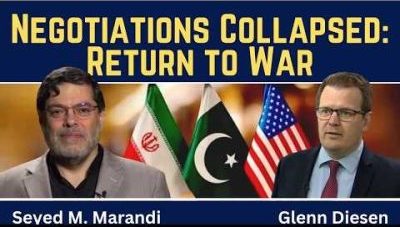
Seyed M. Marandi: Negotiations Collapsed – Return to War
or go to
Aletho News Archives – Video-Images
From the Archives
Wartime internment camps in Australia
National Archives of Australia
World War I
During World War I, for security reasons the Australian Government pursued a comprehensive internment policy against enemy aliens living in Australia.
Initially only those born in countries at war with Australia were classed as enemy aliens, but later this was expanded to include people of enemy nations who were naturalised British subjects, Australian-born descendants of migrants born in enemy nations and others who were thought to pose a threat to Australia’s security.
Australia interned almost 7,000 people during World War I, of whom about 4,500 were enemy aliens and British nationals of German ancestry already resident in Australia.
Records of World War I internment camps
World War II
During World War II, Australian authorities established internment camps for three reasons – to prevent residents from assisting Australia’s enemies, to appease public opinion and to house overseas internees sent to Australia for the duration of the war.
Unlike World War I, the initial aim of internment during the later conflict was to identify and intern those who posed a particular threat to the safety or defence of the country. As the war progressed, however, this policy changed and Japanese residents were interned en masse. In the later years of the war, Germans and Italians were also interned on the basis of nationality, particularly those living in the north of Australia. In all, just over 20 per cent of all Italians resident in Australia were interned. … continue
Blog Roll
 Aletho News
- Seyed M. Marandi: Negotiations Collapsed – Return to War
- Tomorrow’s naval blockade showdown
- ‘Israel’ attacks civilians to hide its embarrassing military failures & out of pure sadism
- Any Foreign Military Vessel Approaching Hormuz Under Any Pretext ‘Will Be Dealt With Severely’: IRGC
- Diplomats slam US negotiators’ performance in Iran talks
- Trump Refuses Exit Ramp, War with Iran will Continue
- Trump Says US Naval Blockade in Strait of Hormuz Will Begin Shortly
- US, Iran end 21-hour talks without agreement
- US IRAN TALKS: Who Are the Crazy Ones Here? /Lt Col Daniel Davis
- Talks with the US end without a deal over excessive US demands: Iran
- If Americans Knew
- US-Iran ceasefire negotiations make zero progress – Daily Update
- Pro-Israel ‘Thinktanks’ and Individuals who Influence U.S. Foreign Policy
- Mearsheimer reveals how Israel dictates US policies on Iran, Gaza – video
- After killing 350+, Israel still has a “score to settle” with Lebanon before ceasefire – Daily Update
- Military aid to Israel emerges as the latest political litmus test for Democrats
- The only Palestinian children’s rights organization closes following years-long Israeli campaign against it
- ‘I Can’t Forget the Smell’: Lebanese Reel After Israel Kills Over 300 in Single Day
- DNC Shoots Down Resolutions Calling Out AIPAC and Limiting Arms to Israel
- TCN: Is Israel Blackmailing President Trump?
- Israel killed at least 303 Lebanese yesterday – who were they? Daily Update
- No Tricks Zone
- Cave Discovery Reveals Today’s Desert Climates Were Recently Far Warmer, Wetter, Teeming With Life
- German Expert: Heat Dome Led To Record Temps In Western USA…Warmer In 1934, 1936
- New Study: No Linear Warming Or Glacier Retreat Along Northern Antarctic Peninsula Since 1980s
- An Inconvenient Tree: Uncovered In Alps… Europe Much Warmer Than Today 6000 Years Ago
- New Study Reports A 60% Slowdown In Greenland’s Ice Loss Rate In The Last Decade
- Low Intensity Tornado Wrecks Major Solar Farm, Creating A Potential Toxic Dump
- New Study Finds Warming Saves Lives…Cold Temperatures 12 Times More Deadly Than Excess Heat
- German Science Blog Accuses PIK Climate Institute Of Hallucinating Climate Tipping Points
- Devastating Assessment Of Comirnaty Vaccine By Former Senior Pfizer Europe Toxicologist
- New Study: CO2 Is ‘Effectively Negligible’ As An Explanatory Climate Change Factor Since 2000
 Aletho News
