Social media companies begin collaboration to fight online “extremism”
By Alex Christoforou | The Duran | December 6, 2016
YouTube and Facebook have started using hashes to automatically remove extremist content.
Giant tech companies are banding together to stop extremism on the web.
YouTube, Facebook, Twitter, and Microsoft will begin sharing a common database to flag accounts and user profiles they deem as threats to global security.
In a joint statement, the companies in the collaboration said…
“We hope this collaboration will lead to greater efficiency as we continue to enforce our policies to help curb the pressing global issue of terrorist content online.”
The companies will share ‘hashes’, or unique digital fingerprints, assigned to extremist videos or photos which have been flagged or removed from their platforms.
While it’s well and good for private corporations to do what they want with their own platform, or even create an oligopoly that shares data between platforms… the slippery slope begins once the goal posts for “what is deemed extreme” gets wider and wider.
The fact that the EU is the major driving force behind this initiative should give everyone even more pause as to the true intentions of this collaboration.
Reuters reports…
Tech companies have long resisted outside intervention in how their sites should be policed, but have come under increasing pressure from Western governments to do more to remove extremist content following a wave of militant attacks.
YouTube and Facebook have begun to use hashes to automatically remove extremist content.
But many providers have relied until now mainly on users to flag content that violates terms of service. Flagged material is then individually reviewed by human editors who delete postings found to be in violation.
Twitter suspended 235,000 accounts between February and August this year and has expanded the teams reviewing reports of extremist content.
Each company will decide what image and video hashes to add to the database and matching content will not be automatically removed, they said.
The database will be up and running in early 2017 and more companies could be brought into the partnership.
The European Union set up an EU Internet Forum last year bringing together the internet companies, interior ministers and the EU Counter-Terrorism Coordinator to find ways of removing extremist content.
The Forum will meet again on Thursday, when ministers are expected to ask the companies about their efforts and helping to provide evidence to convict foreign fighters.
White Helmets Deceive “Right Livelihood” and CodePink
By Rick Sterling | Dissident Voice | September 23, 2016
Manipulation of public perception has risen to a new level with the emergence of powerful social media. Facebook, Twitter and Google are multibillion dollar corporate giants hugely influencing public understanding. Social media campaigns include paid ‘boosting’ of Facebook posts, paid promotion of Tweets, and biased results from search engines. Marketing and advertising companies use social media to promote their clients. U.S. foreign policy managers hire these companies to influence public perception to support U.S. foreign policy goals. For example, Secretary of State Hillary Clinton made sure that Twitter was primed for street protests in Iran following the 2009 election. She insured that Twitter was ready to spread and manage news of protests following the election and strange killing of a young woman. (p 423, Hard Choices hardback).
The results of media manipulation can be seen in the widespread misunderstanding of the conflict in Syria. One element of propaganda around Syria is the demonization of the Syrian government and leadership. Influenced by the mainstream and much alternative media, most in the West do not know that Bashar al Assad is popular with most Syrians. There were three contestants in the Syrian presidential election of June 2014. Turnout was 73% of the registered voters, with 88% voting for Assad. In Beirut, the streets were clogged with tens of thousands of Syrian refugees marching through the city to vote at the Syrian Embassy. Hundreds of Syrian citizens from the USA and other western countries flew to Syria to vote because Syrian Embassies in Washington and other western capitals were shut down. While John Kerry was condemning the Syrian election as a “farce” before it had even happened, a marketing company known as The Syria Campaign waged a campaign to block knowledge of the Syrian election. Along with demonizing President Assad, they launched a campaign which led to Facebook censoring information about the Syrian election.
The Syria Campaign was created by a larger company named “Purpose”. According to their own website they “incubated” The Syria Campaign.
The major achievement of The Syria Campaign has been the branding and promotion of the “White Helmets”. The “White Helmets”, also known as “Syria Civil Defense”, began with a British military contractor, James LeMesurier, giving some rescue training to Syrians in Turkey. Funding was provided by the US and UK. They appropriated the name from a real Syria Civil Defense.
The “White Helmets” are marketed in the West as civilian volunteers doing rescue work. On 22 September 2016 it was announced that the Right Livelihood Award, the so called “Alternative Nobel Prize”, is being given to the US/UK created White Helmets “for their outstanding bravery, compassion and humanitarian engagement in rescuing civilians from the destruction of the Syrian civil war.”
The Right Livelihood organizers may come to regret their selection of the White Helmets because the group is not who they claim to be. In fact, the White Helmets are largely a propaganda tool promoting western intervention against Syria. Unlike a legitimate rescue organization such as the Red Cross or Red Crescent, the “White Helmets” only work in areas controlled by the armed opposition. As shown in this video, the White Helmets pick up the bodies of individuals executed by the terrorists, they claim to be unarmed but are not, and they falsely claim to be neutral. Many of the videos from AlQaeda/terrorist dominated areas of Syria have the “White Helmets” logo because the White Helmets work in alliance with them. This primarily is a media marketing tool to raise public support for continuing the support to the armed opposition as well as the demonization of the Syrian government.
The Rights Livelihood press release says the White Helmets “remain outspoken in calling for an end to hostilities in the country.” That is false. The White Helmets actively call for US/NATO intervention through a “No Fly Zone” which would begin with attacks and destruction of anti-aircraft positions. Taking over the skies above another country is an act of war as confirmed by US General Dempsey. The White Helmets have never criticized or called for the end of funding to extremist organizations including Nusra/AlQaeda. On the contrary, White Helmets is generally embedded with this organization which is defined as “terrorist” by even the USA. That is likely why the head of the White Helmets, Raed Saleh, was denied entry to the USA.
The foreign and marketing company origins of the White Helmets was exposed over one and a half years ago. Since then, Vanessa Beeley has revealed the organization in more depth in articles such as “Who Are the White Helmets?” and “War by Way of Deception“.
Despite these exposes, understanding of the White Helmets is limited. Many liberal and progressive people have uncritically accepted the propaganda and misinformation around Syria. Much of the progressive media has effectively blocked or censored critical examinations amid a flood of propaganda about “barrel bombs” dropped by the ‘brutal dictator” and his “regime”.
In the last week, Netflix started showing a 40 minute documentary movie about the “White Helmets”. It is actually a promotion video. A substantial portion of it takes place in Turkey where we see trainees in hotel rooms making impassioned phone calls to inquire about their family in Syria. The “family values” theme is evident throughout. It’s a good marketing angle, especially effective with females. The political message of the video is also clear: after a bombing attack “It’s the Russians …. they say they are fighting ISIS but they are targeting civilians”. The movie includes video previously promoted by the White Helmets such as the “Miracle Baby” rescue. It’s debatable whether this incident is real or staged. The video includes self promoting proclamations such as “You are real heroes”. While no doubt there are some real rescues in the midst of war, many of the videos purporting to show the heroes at work have an unrealistic and contrived look to them as revealed here.
“Alternative media” in the West has sadly echoed mainstream media regarding the Syria conflict. The result is that many progressive individuals and groups are confused or worse. For example, the activist group CodePink recently issued a media release promoting the Netflix White Helmets propaganda video.
The White Helmets video is produced by Grain Media and Violet Films/Ultra-Violet Consulting. The latter advertises itself as a marketing corporation specializing in social media management, grant writing, crowd building and campaign implementation. The only question is who paid them to produce this video.
There is growing resistance to this manipulation and deception. In response to a petition to give the Nobel Peace Prize to the White Helmets, there is a counter petition at Change.org. The Right Livelihood Awards have just been announced and there will soon be a petition demanding retraction of the award to the White Helmets.
The story of the White Helmets is principally a “feel good” hoax to manipulate public perception about the conflict in Syria and continue the drive for “regime change”. That’s why big money was paid to “Purpose” to “incubate” The Syria Campaign to brand and promote the White Helmets using Facebook, Twitter, etc. That’s why big money was paid to create a self-promotional documentary. The judges at Rights Livelihood were probably influenced by the documentary since critical examination of facts around Syria is so rare. It’s a sad commentary on the media. As Stephen Kinzer recently said,
“Coverage of the Syrian war will be remembered as one of the most shameful episodes in the history of the American press.”

 UK Contractor
 White Helmets and Nusra


 White Helmets After Execution
 PurposeIncubation The Syrian Campaign
Rick Sterling is a retired aerospace engineer who now does research/writing on international issues. He can be reached at rsterling1@gmail.com.
Under Israeli pressure, Facebook and Twitter delete large amounts of Palestinian content
MEMO | June 9, 2016
Facebook and Twitter have recently deleted thousands of posts, pages and accounts in response to demands from the Israeli ministry of justice, Quds Press reported on Wednesday.
“We succeeded to achieve our goals as around 70 per cent of our demands [to delete Facebook and Twitter content] were fulfilled,” Israeli Minister of Justice Ayelet Shaked said, according to Israeli newspaper Yedioth Ahronoth.
She also added: “We succeeded to delete incitement contents calling for death and violence across the internet.”
During a meeting she held to discuss “fighting incitement and shameful content on social media” three-days ago, Shaked reiterated Israel’s “cooperation with Facebook, Twitter and google regarding the violent electronic Palestinian incitement”.
Shaked claimed that when internet incitement decreased, the attacks on Israelis decreased.
“This proves that there is a direct relationship between internet incitement and violence in Israel,” she said.
European Commission’s Hate Speech Deal With Companies Will Chill Speech
By Jillian York | EFF | June 3, 2016
A new agreement between the European Commission and four major U.S. companies—Facebook, Google, Twitter, and Microsoft—went into effect yesterday. The agreement will require companies to “review the majority of valid notifications for removal of hate speech in less than 24 hours and remove or disable access to such content,” as well as “educate and raise awareness” with their users about the companies’ guidelines.
The deal was made under the Commission’s “EU Internet Forum,” launched last year as a means to counter what EDRi calls “vaguely-defined ‘terrorist activity and hate speech online.’” While some members of civil society were able to participate in discussions, they were excluded from the negotiations that led to the agreement, says EDRi.
The agreement has been met with opposition by a number of groups, including EDRi (of which we’re a member), Access Now, and Index on Censorship, all of which have expressed concerns that the deal with stifle freedom of expression. The decision has also sparked debate on social media, with a wide variety of individuals and groups opposing the decision under the hashtag #IStandWithHateSpeech.
But you don’t have to stand with hate speech to stand against this decision. There are several reasons to oppose this Orwellian agreement. First, while Article 19 of the International Covenant on Civil and Political Rights allows states to limit freedom of expression under select circumstances, such limitations are intended to be the exception, and are permitted only to protect the following:
-
The rights or reputations of others,
-
national security,
-
public order,
-
public health, or
-
morals.
These limits must also meet a three-part test as defined by the ICCPR: be defined by law; have legitimate aim; and be truly necessary. While some of the speech that concerns the Commission may very well qualify as illegal under some countries’ laws, the method by which they’ve sought to limit it will surely have a chilling effect on free speech.
In addition, as EDRi points out, despite a lengthy negotiation between companies and the Commission, “hate speech” remains vaguely-defined. Companies have been tasked with taking the lead on determining what constitutes hate speech, with potentially disastrous results.
In fact, social media companies have an abysmal track record when it comes to regulating any kind of speech. As Onlinecensorship.org’s research shows, speech that is permitted by companies’ terms of service is often removed, with users given few paths to recourse. Users report experiencing bans from Facebook for 24 hours to up to 30 days if the company determines they’ve violated the Community Standards—which, in many cases, the user has not. Requiring companies to review complaints within 24 hours will almost surely result in the removal of speech that would be legal in Europe.
By taking decision-making outside of the democratic system and into backrooms, and granting corporations even greater control, the European Commission is ensuring a chill on online speech.
Hamas slams Twitter for closing of accounts
Press TV – April 1, 2016
Hamas has slammed Twitter for closing several accounts linked to the Palestinian resistance movement, saying the company is biased in favor of the Israeli regime.
The Hamas military wing, Ezzedine al-Qassam Brigades, said in a statement on Friday that its English- and Arabic-language accounts had been shut down for the third time in a fortnight.
Twitter is showing a “clear bias to the Israeli occupation where it should (adopt a) neutral position toward both sides,” the statement added.
It said that the closure comes while Twitter allows Israeli officials to encourage “racism, extremism and terrorism” on the social networking site.
Qassam also urged Twitter to reopen its accounts, saying one of those closed accounts had been followed by over 140,000 followers.
Twitter declined to comment, saying in a statement that the company does not comment on individual accounts citing “privacy and security reasons.”
Since its establishment in December 1987, Hamas has refused to recognize Israel and adopted resistance against the Israeli occupation, which it believes is the sole way of bringing about the liberation of occupied Palestinian territories. The movement says its goal is to liberate the entire Palestine.
The Palestinian resistance movement scored a landslide victory in Palestinian elections in 2006. Hamas has ruled the Israeli-blockaded Gaza Strip, while Fatah has set up headquarters in the occupied Palestinian territories in the West Bank.
Israel has waged three large-scale aerial and ground wars on Gaza in the past seven years. In its latest act of aggression in the summer of 2014, which lasted for 50 days, the regime killed about 2,200 Palestinians and inflicted heavy damage on Gaza’s infrastructure and economy. In that latest Israeli aggression, Twitter shut down most of Hamas’ accounts.
China to Ban Online Foreign Media After March 10 – Statement
No Chinese Spring
Sputnik – 19.02.2016
BEIJING – Foreign companies will be banned from publishing online in China from March 10, the Ministry of Industry and Information Technology and the State Administration of Press, Publication, Radio, Film and Television said in a joint statement Friday.
“Sino-foreign joint ventures and foreign businesses shall not engage in online publishing services,” the regulations state.
The rules apply to “informative, ideological content text, pictures, maps, games, animation, audio and video digitizing books and other original works of literature, art, science and other fields.”
Joint projects are required to apply for special permission to carry out such activities from the State Administration of Press, Publication, Radio, Film and Television, according to the new rules.
Domestic online media are required to inform the relevant authorities about their sources of funding, expenditure, personnel, domain name registration as well as being required to keep all servers and equipment in China.
Online outlets are prohibited from publishing information that may cause “harm to national unity, sovereignty and territorial integrity,” “spread rumors, disturb social order or undermine social stability,” and harm “social morality or endanger national cultural tradition,” among others.
Foreign websites, including Google, Facebook, Twitter, and a number of Western publications remain inaccessible in China. Beijing has adopted a series of normative and ideological directives in recent years requiring national internet providers and media to closely monitor the quality of information disseminated online.
Onlinecensorship.org Tracks Content Takedowns by Facebook, Twitter, and Other Social Media Sites
New Project Will Gather Users’ Stories of Censorship from Around the World
EFF |November 19, 2015
San Francisco – The Electronic Frontier Foundation (EFF) and Visualizing Impact launched Onlinecensorship.org today, a new platform to document the who, what, and why of content takedowns on social media sites. The project, made possible by a 2014 Knight News Challenge award, will address how social media sites moderate user-generated content and how free expression is affected across the globe.
Controversies over content takedowns seem to bubble up every few weeks, with users complaining about censorship of political speech, nudity, LGBT content, and many other subjects. The passionate debate about these takedowns reveals a larger issue: social media sites have an enormous impact on the public sphere, but are ultimately privately owned companies. Each corporation has their own rules and systems of governance that control users’ content, while providing little transparency about how these decisions are made.
At Onlinecensorship.org, users themselves can report on content takedowns from Facebook, Google+, Twitter, Instagram, Flickr, and YouTube. By cataloging and analyzing aggregated cases of social media censorship, Onlinecensorship.org seeks to unveil trends in content removals, provide insight into the types of content being taken down, and learn how these takedowns impact different communities of users.
“We want to know how social media companies enforce their terms of service. The data we collect will allow us to raise public awareness about the ways these companies are regulating speech,” said EFF Director for International Freedom of Expression and co-founder of Onlinecensorship.org Jillian C. York. “We hope that companies will respond to the data by improving their regulations and reporting mechanisms and processes—we need to hold Internet companies accountable for the ways in which they exercise power over people’s digital lives.”
York and Onlinecensorship.org co-founder Ramzi Jaber were inspired to action after a Facebook post in support of OneWorld’s “Freedom for Palestine” project disappeared from the band Coldplay’s page even though it had received nearly 7,000 largely supportive comments. It later became clear that Facebook took down the post after it was reported as “abusive” by several users.
“By collecting these reports, we’re not just looking for trends. We’re also looking for context, and to build an understanding of how the removal of content affects users’ lives. It’s important companies understand that, more often than not, the individuals and communities most impacted by online censorship are also the most vulnerable,” said Jaber. “Both a company’s terms of service and their enforcement mechanisms should take into account power imbalances that place already-marginalized communities at greater risk online.”
Onlinecensorship.org has other tools for social media users, including a guide to the often-complex appeals process to fight a content takedown. It will also host a collection of news reports on content moderation practices.
For Onlinecensorship.org:
https://onlinecensorship.org
Contact:
Jillian C. York
Director for International Freedom of Expression
jillian@eff.org
Ramzi Jaber
Co-founder and co-director of Visualizing Impact
Ramzi@visualizingimpact.org
Ex-DHS Director Michael Chertoff: The Public Spying On Famous People With Their Smartphones Is A Bigger Issue Than NSA Spying
By Mike Masnick | Techdirt | November 1, 2013
Former director of Homeland Security (and current profiteer off of any “security” scare) Michael Chertoff has penned quite an incredible op-ed for the Washington Post, in which he argues that the real threat to privacy today is not the NSA spying on everyone, but rather all you people out there in the public with your smartphones, taking photos and videos, and going to Twitter to post things you overheard more important people say. Seriously. It starts out by claiming this is a “less-debated threat”:
So it is striking that two recent news stories illustrate a less-debated threat to privacy that we as a society are inflicting on ourselves. Last week, a passenger on an Acela train decided to tweet in real time his summary of an overheard phone conversation by Gen. Michael Hayden, a former director of the National Security Agency (NSA) and the CIA (and my current business partner). The same day, a photo was published of Maryland Attorney General Douglas Gansler at a summer party where he was surrounded by underage youths who apparently were drinking.
But he then goes on to argue that this kind of thing is more troubling than the NSA revelations, which Chertoff suggests is no big deal:
Of course, the delicious irony is obvious: In one case, the former NSA chief becomes a victim of eavesdropping. In the other, a politician critical of teen drinking fails to intervene when he is surrounded by it. But both stories carry a more troubling implication. The ubiquitousness of recording devices — coupled with the ability everyone has to broadcast indiscriminately through Twitter, YouTube and other online platforms — means that virtually every act or utterance outside one’s own home (or, in Gansler’s case, inside a private home) is subject to being massively publicized. And because these outlets bypass any editorial review, there is no assurance that what is disseminated has context or news value.
It would appear that Chertoff seems to believe that there should be no expectation of privacy for the things you actually do in private — generating metadata about who you call, where you go, what websites you visit, etc. But, stuff that you actually do in public should never be “broadcast” because it might embarrass famous people.
And, yes, it’s the famous people being embarrassed that seems to most concern Chertoff:
If a well-known person has an argument with a spouse or child at a restaurant, should it be broadcast? If a business personality expresses a political opinion at a private party, should that opinion (or a distortion of it) be passed on to the rest of the world? If a politician buys a book or a magazine at an airport, should a passerby inform everyone?
See? Think of those poor well-known people, having people telling others about what they do. What a shame! Incredibly, he argues that it’s this exposing of the public actions of famous people that creates real chilling effects — and not the NSA’s spying, which he calls “exaggerated.”
Are we creating an informant society, in which every overheard conversation, cellphone photograph or other record of personal behavior is transmitted not to police but to the world at large? Do we want to chill behavior and speech with the fear that an unpopular comment or embarrassing slip will call forth vituperative criticism and perhaps even adversely affect careers or reputations? Do we need to constantly monitor what we say or do in restaurants, at sporting events, on public sidewalks or even private parties?
I don’t know what clueless PR flack thought this was a good strategy, but the clear connotation is hard to miss: Look, we the powerful people get to spy on everyone, but the second you turn the tables and spy on us and the things we do in public, what a horrible shame! Something must be done!
Bahrain Watch organization says Manama regime tracks critics via Twitter
Press TV – August 5, 2013
The Bahrain Watch organization has revealed that the Manama regime uses fake Twitter accounts to track government critics online.
Since October 2012, the Bahraini regime has detained several citizens for posting anonymous tweets that refer to Bahrain’s King Hamad bin Isa Al Khalifa.
An eight-month investigation showed that the Bahraini regime identifies those anonymous online critics by sending them malicious IP (Internet Protocol) spy links from a network of Twitter and Facebook accounts impersonating well-known opposition figures or other seemingly friendly individuals.
When a person clicks on an IP spy link, the report said, the security forces reveal the IP address of the internet connection they clicked from.
The regime can then force the internet service provider of the IP address to disclose the real name and street address of that internet connection’s subscriber.
According to the report, an examination of court records for five related cases shows that the Public Prosecution’s case centers on linking the IP address of the defendant to the offending anonymous Twitter account.
The prosecution, however, declined to disclose how the IP addresses were acquired, citing information obtained through “private methods that cannot be disclosed.”
The Bahraini regime apparently uses these accounts in secret, and may target their followers, friends, or contacts through private messages.
The report also lists over 120 other accounts that were also targeted in Twitter with IP spy links traceable to the government over the past two years.
Bahrain Watch lead researcher Bill Marczak said, “It is outrageous enough that individuals have been arrested and jailed for mere tweets criticizing the government.”
“That these individuals are being tracked down and convicted based on such weak digital evidence only makes matters worse.”
Bahrain Watch has urged political and social activists in Bahrain, and around the world, to be vigilant about impersonation accounts and malicious links.
“Given the government’s track record, it comes as no surprise that it would resort to such measures to stifle free speech,” Marczak stated.
“However, our hope is that this report will spread awareness of the methods that governments around the world use to trap digital activists.”
Related articles
- Al-Khalifa regime blocks Al-Manar website in Bahrain (realisticbird.wordpress.com)
- Bahrain Declares War on the Opposition (lobelog.com)
Turkish government combing Twitter in search of protest organizers to arrest
RT | June 29, 2013
Turkish government officials are investigating Twitter and similar social media platforms in an attempt to identify and eventually prosecute the organizers of mass demonstrations, Erodgan administration officials said this week.
In the latest attack on social media’s role in protests, the country’s Transportation and Communications Minister Binali Yildirim called on social media networks on Friday to cooperate with authorities in the probe.
“Yes to the Internet … but an absolute no to its misuse as a tool for crimes, violence, chaos and disorder,” Yildirim said quoted as saying by the local Dogan news agency.
Authorities have scoured social networks searching for protest leaders since national unrest began on May 28 at a rally in Instanbul’s Taksim Square. Police have turned over at least 35 names to prosecutors in the city, according to Turkey’s Aksam newspaper.
It is illegal to ‘insult’ public officials in Turkey.
Deputy Prime Minister Bekir Bozdag acknowledged the existence of the list, the Associated Press reported, only saying ‘profanities and insults conducted electronically’ had contributed to the protests.
‘Crimes determined as such by the law don’t change if they are carried out through Facebook, Twitter or through other electronic means,’ he said. ‘No one has the right to commit crimes under the rule of law.’
Prime Minister Recep Tayyip Erdogan’s government has taken international criticism for the brutal police crackdown on protesters in the past month. The prime minister himself, when the rallies began, branded Twitter a ‘troublemaker’ used to spread ‘lies.’
What began as a protest against the redevelopment of Istanbul’s historic Gezi Park morphed into a national movement calling for a pluralistic society instead of Erdogan’s ‘authoritarian’ rule. The prime minister has also lost support for what critics say has been an attempt to impose Islamist values on a largely secular population.
He previously banned YouTube for two years beginning in 2008, citing the widespread presence of obscene material.
Erdogan’s deputies expressed hope that Facebook would allow them to comb through data and identify possible demonstration organizers. Facebook released a statement this week denying the disclosure, though, of any information to the government and expressing concern about future requests.
‘We will be meeting with representatives of the Turkish government when they visit Silicon Valley this week, and we intend to communicate our strong concerns about these proposals directly at that that time,’ Facebook said in a statement.
Turkish Minister of Transport, Maritime Affairs and Communications Binali Yildirim added that Twitter has not shown a ‘positive approach’ despite ‘necessary warnings’ from Turkey. He said that the Turkish government has asked Twitter, along with other social media sites, to set up a representative office inside the country.
‘We have told all social media that… if you operate in Turkey you must comply with Turkish law… When information is requested, we want to see someone in Turkey who can provide this… there needs to be an interlocutor we can put our grievance to and who can correct an error if there is one,’ he said.
‘Twitter will probably comply too. Otherwise, this is a situation that cannot be sustained,’ Yildirim stressed. His statement was presumably referring to social media’s role in the recent protests, though the social media companies themselves have had no role. He added that the government seeks only to ‘turn down the volume of the social media,’ rather than blocking it altogether.
Related articles
- Turkey takes steps to monitor Twitter content, users (alethonews.wordpress.com)
- Turkey announces plans ‘for gas’ and cyber security in face of Gezi protests (alethonews.wordpress.com)
Turkey takes steps to monitor Twitter content, users
Al-Akhbar | June 27, 2013
Turkey said on Wednesday it had asked Twitter to set up a representative office inside the country, which could give it a tighter rein over the micro-blogging site it has accused of helping stir weeks of anti-government protests.
While mainstream Turkish media largely ignored the protests during the early days of the unrest, social networking sites such as Twitter and Facebook emerged as the main outlets for Turks opposed to the government.
Transport and Communications Minister Binali Yildirim told reporters on Wednesday that without a corporate presence in the country, the Turkish government could not quickly reach Twitter officials with orders to take down content or with requests for user data.
“When information is requested, we want to see someone in Turkey who can provide this … there needs to be an interlocutor we can put our grievance to and who can correct an error if there is one,” he said.
“We have told all social media that … if you operate in Turkey you must comply with Turkish law,” Yildirim said.
Twitter declined to respond to the government request on Wednesday, but a person familiar with the company’s thinking said it had no current plans to open an office in that country.
Turkey successfully pressured Google Inc into opening an office there last October after blocking YouTube, a Google subsidiary, from Turkish Internet users for two years.
While Ankara had no problems with Facebook, which had been working with Turkish authorities for a while and had representatives inside Turkey, Yildirim said it had not seen a “positive approach” from Twitter after Turkey issued the “necessary warnings” to the site.
“Twitter will probably comply, too. Otherwise this is a situation that cannot be sustained,” he said, without elaborating, but he stressed the aim was not to limit social media.
An official at the ministry, who asked not to be named, said the government had asked Twitter to reveal the identities of users who posted messages deemed insulting to the government or prime minister, or that flouted people’s personal rights.
It was not immediately clear whether Twitter had responded.
Facebook said in a statement that it had not provided user data to Turkish authorities in response to government requests over the protests and said it was concerned about proposals Internet companies may have to provide data more frequently.
In the midst of some of the country’s worst political upheaval in years, Turkish Prime Minister Tayyip Erdogan has described sites like Twitter as a “scourge,” although senior members of his party are regular users. He has said such websites were used to spread lies about the government with the aim of terrorizing society.
Police detained several dozen people suspected of inciting unrest on social media during the protests, according to local reports.
Speaking at the Brookings Institution in Washington, D. C., Twitter’s Chief Executive Dick Costolo said on Wednesday that he had been observing the developments in Turkey, but he emphasized that Twitter had played a hands-off role in the political debate.
“We don’t say, ‘Well, if you believe this, you can’t use our platform for that,'” Costolo said. “You can use our platform to say what you believe, and that’s what the people of Turkey … are using the platform for. The platform itself doesn’t have any perspective on these things.”
Turkey’s interior minister had previously said the government was working on new regulations that would target so-called “provocateurs” on social media but there have been few details on what the laws would entail.
One source with knowledge of the matter said the justice ministry had proposed a regulation whereby any Turk wishing to open a Twitter account would have to enter their national identification number, but this had been rejected by the transport ministry as being technically unfeasible.
Turkish users have increasingly turned to encryption software to thwart any ramp up in censorship of the Internet.
Last year, Twitter introduced a feature called “Country Withheld Content” that allows it to narrowly censor tweets considered illegal in a specific country, and it caused some concern among users.
Twitter implemented the feature for the first time in October in response to a request by German authorities, blocking messages in Germany by a right-wing group banned by police.
(Reuters, Al-Akhbar)
Related article
- Turkey announces plans ‘for gas’ and cyber security in face of Gezi protests (alethonews.wordpress.com)
Featured Video
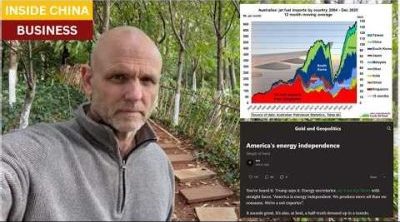
Chinese jet fuel and the myth of energy independence
or go to
Aletho News Archives – Video-Images
Book Review
Former Insiders Criticize Iran Policy as U.S. Hegemony
By GARETH PORTER | CounterPunch | February 27, 2013
“Going to Tehran” arguably represents the most important work on the subject of U.S.-Iran relations to be published thus far.
Flynt Leverett and Hillary Mann Leverett tackle not only U.S. policy toward Iran but the broader context of Middle East policy with a systematic analytical perspective informed by personal experience, as well as very extensive documentation.
More importantly, however, their exposé required a degree of courage that may be unparalleled in the writing of former U.S. national security officials about issues on which they worked. They have chosen not just to criticise U.S. policy toward Iran but to analyse that policy as a problem of U.S. hegemony. … continue
Blog Roll
 Aletho News
- Chinese jet fuel and the myth of energy independence
- Ukraine Sea Drone Fired From Libya Hit Russian Tanker in Mediterranean
- IRGC: Iranian forces launched no attacks during ceasefire hours
- Trump Administration Moves To Automate U.S. Military Draft Registration
- Spain orders reopening of Tehran embassy, condemns Israel’s carpet bombing of Lebanon
- Israel faces ‘unsustainable’ strategic crisis following 40-day war against Iran: Analyst
- Iran restricts Hormuz access to 15 vessels per day under ceasefire terms: Report
- The ‘Opposition Party’ Has Done Nothing to Stop the Iran War and Much to Goad Trump Into Continuing It
- Moscow backs Tehran on status of Lebanon in US-Iran deal
- How UK Regulator Ofcom Quietly Bypassed International Law to Police American Speech
- If Americans Knew
- Amnesty: Urgent – Protect Lebanese civilians from brutal escalation in Israeli attacks
- Is The War Against Iran Over?
- Inside the Israeli army’s propaganda wing
- Hundreds of Gaza Amputees Stranded in Legal Limbo
- The gallows law: Israel moves toward executing Palestinian children
- Tucker Carlson: The Path to Peace requires ending ‘special alliance’ with Israel
- This is ceasefire? Israel’s biggest massacre yet in Lebanon, another journalist killed in Gaza – Daily Update
- Tucker Carlson on Israel: This Is the Behavior of an Ally? Really?
- Gazans face a triple crisis: severe shortages of water and bread, healthcare in tatters
- NY Times reports how Netanyahu took the US into Iran War
- No Tricks Zone
- An Inconvenient Tree: Uncovered In Alps… Europe Much Warmer Than Today 6000 Years Ago
- New Study Reports A 60% Slowdown In Greenland’s Ice Loss Rate In The Last Decade
- Low Intensity Tornado Wrecks Major Solar Farm, Creating A Potential Toxic Dump
- New Study Finds Warming Saves Lives…Cold Temperatures 12 Times More Deadly Than Excess Heat
- German Science Blog Accuses PIK Climate Institute Of Hallucinating Climate Tipping Points
- Devastating Assessment Of Comirnaty Vaccine By Former Senior Pfizer Europe Toxicologist
- New Study: CO2 Is ‘Effectively Negligible’ As An Explanatory Climate Change Factor Since 2000
- Former Pfizer Toxicologist Dr. Helmut Sterz Tells Bundestag Hearing Pfizer Vaccine Should Have Never Been Approved
- Energy Expert: Germany’s Nuclear Phaseout Was A “500 Billion Euro Mistake”
- New Research: South Australia’s Mid-Holocene Sea Surface Temperatures Were 4°C Warmer Than Today
 Aletho News