Ukraine’s SBU Abducted Kharkov Residents Who Criticized Regime Online
Sputnik – 05.10.2025
People who made critical posts related to the Ukraine’s authorities are being abducted, Anastasiya Bykova, the administrator of a closed chat for the city’s residents, told Sputnik. These people had posted photos in the chat that could reveal their location, she added.
The chat admin also described an incident in which the SBU contacted her and asked her to pass along a “hello” to one of the chat members, who was being held in a pretrial detention facility.
Besides, she revealed that the SBU spent about an hour and a half exhibiting her father’s beating on a video call and demanded that she hand over her Telegram account, which had admin access to the Kharkov chat, and collect information on the movement of Russian military equipment.
Bykova, who lives in Russia’s Shebekino, claims her Telegram account was repeatedly accessed from devices in Kiev and Odessa.
Pro-EU Czech PM concedes election defeat
RT | October 4, 2025
The right-wing party of agricultural tycoon Andrej Babis, branded the ‘Czech Trump’ by local media, has come out ahead in the Czech general election with 97% of the vote counted, according to official results.
The ANO movement is now set to replace the current center-right cabinet led by Prime Minister Petr Fiala. He has already congratulated Babis, conceding defeat and stating the outcome of the vote must be respected.
Speaking to reporters after his victory became evident, Babis once again rejected longstanding accusations of being anti-EU and insisted he merely wants to “save” the bloc.
“We want to save Europe… and we are clearly pro-European and pro-NATO,” Babis told Reuters.
ANO will seek a one-party cabinet but will have to enter talks with two minor parties to secure an outright majority, Babis said. One of the parties is believed to be the far-right SPD, which has long been considered a potential coalition partner.
“We went into the election with the aim of ending the government of Petr Fiala and support even for a minority cabinet of ANO is important for us and it would meet the target we had for this election,” SPD deputy chairman Radim Fiala said in a televised speech. In contrast to ANO, his party maintains an explicit anti-EU and anti-NATO stance.
Another potential coalition partner is the Motorists, who strongly oppose the EU’s environmental policies. They and the SPD received nearly 7% and 8% of the vote respectively, and joining forces with ANO would be sufficient to secure a majority.
During his campaign, Babis repeatedly criticized the EU’s handling of immigration and the Green Deal, as well as opposing EU membership for Ukraine. He also pledged to drastically cut aid for Kiev, promising more domestic spending instead. Babis signaled he would end the so-called ‘Czech initiative’ project, dedicated to supplying ammunition to Ukraine, calling the scheme overpriced.
UK Digital ID Scheme Faces Backlash Over Surveillance Fears — Is a Similar Plan Coming to the U.S.?
By Michael Nevradakis, Ph.D. | The Defender |October 2, 2025
The U.K. plans to introduce a nationwide digital ID scheme that will require citizens and non-citizens to obtain a “BritCard” to work in the U.K., which includes England, Scotland, Wales and Northern Ireland.
Government officials say the plan, to take effect no later than August 2029, will help combat illegal immigration.
But critics like U.K. activist and campaigner Montgomery Toms said the scheme, “far from being a tool for progress,” is instead a “gateway to mass surveillance, control and ultimately the rollout of a centralised social credit system.”
The plan faces broad opposition in the U.K., according to Nigel Utton, a U.K.-based board member of the World Freedom Alliance, who said, “the feeling against the government here is enormous.”
A poll last week found that 47% of respondents opposed digital ID, while 27% supported the ID system and 26% were neutral. The poll was conducted by Electoral Calculus and Find Out Now, on behalf of GB News.
A petition on the U.K. Parliament’s website opposing plans to introduce digital ID may force a parliamentary debate. As of today, the petition has over 2.73 million signatures.
According to The Guardian, petitions with 100,000 signatures or more are considered for debate in the U.K. parliament.
As opposition mounts, there are signs the BritCard may not be a done deal. According to the BBC, a three-month consultation will take place, and legislation will likely be introduced to Parliament in early 2026.
However, U.K. Culture Secretary Lisa Nandy said the government may push through its digital ID plans without going through the House of Commons or the House of Lords.
Protesters plan to gather Oct. 18 in central London.
Digital ID will ‘offer ordinary citizens countless benefits,’ U.K. officials say
British Prime Minister Keir Starmer announced the digital ID scheme last week in a speech at the Global Progress Action Summit in London.
“A secure border and controlled migration are reasonable demands, and this government is listening and delivering,” Starmer said. “Digital ID is an enormous opportunity for the U.K. It will make it tougher to work illegally in this country, making our borders more secure.
The plan “will also offer ordinary citizens countless benefits, like being able to prove your identity to access key services swiftly,” Starmer said.
According to The Guardian, digital ID eventually may be used for driver’s licenses, welfare benefits, access to tax records, and the provision of childcare and other public services.
Darren Jones, chief secretary to Starmer, suggested it may become “the bedrock of the modern state,” the BBC reported.
Supporters of the plan include the Labour Together think tank, which is closely aligned with the Labour Party and which published a report in June calling for the introduction of the BritCard.
Two days before Starmer’s announcement, the Tony Blair Institute for Global Change, led by Labour Party member and former U.K. Prime Minister Tony Blair, published a report, “Time for Digital ID: A New Consensus for a State That Works.”
Blair tried to introduce digital ID two decades ago as a means of fighting terrorism and fraud, but the plan failed amid public opposition. According to the BBC, Starmer recently claimed the world has “moved on in the last 20 years,” as “we all carry a lot more digital ID now than we did.”
During the COVID-19 pandemic, Blair endorsed a global digital vaccine passport, the Good Health Pass, launched by ID2020 with the support of Facebook, Mastercard and the World Economic Forum.
According to Sky News, French President Emmanuel Macron welcomed the BritCard for its ability to help fight illegal immigration into the U.K., much of which originates from France.
Critics: Digital ID marks ‘gateway to mass surveillance’
The BritCard, which would live on people’s phones, will use technology similar to digital wallets. People will not be required to carry their digital ID or be asked to produce it, except for employment purposes, the government said.
According to the BBC, BritCard will likely include a person’s name, photo, date of birth and nationality or residency status.
Digital wallets, which include documents such as driver’s licenses and health certificates, have been introduced in several countries, including the U.S.
Nandy said the U.K. government has “no intention of pursuing a dystopian mess” with its introduction of digital ID.
However, the plan has opened up a “civil liberties row” in the U.K., according to The Guardian, with critics warning it will lead to unprecedented surveillance and control over citizens.
“Digital ID systems are not designed to secure borders,” said Seamus Bruner, author of “Controligarchs: Exposing the Billionaire Class, their Secret Deals, and the Globalist Plot to Dominate Your Life” and director of research at the Government Accountability Institute. “They’re designed to expand bureaucratic control of the masses.”
Bruner told The Defender :
“All attempts to roll out digital ID follow a familiar pattern: corporate and political elites wield crises — such as mass migration, crime, or tech disruptions — as a pretext to expand their control … over private citizens’ identities, finances and movements into a suffocating regime.
“Once rolled out, these systems expand quietly, shifting from access tools to enforcement mechanisms. Yesterday it was vaccine passports and lockdowns; tomorrow it is 15-minute cities and the ‘universal basic income’ dependency trap. ‘Voluntary’ today becomes mandatory tomorrow.”
Tim Hinchliffe, editor of The Sociable, said digital ID is “not about tackling illegal immigration, it has nothing to do with job security and it definitely won’t protect young people online. Digital ID is all about surveillance and control through coercion and force.”
Hinchliffe said:
“Illegal immigration is just one excuse to bring it all online. Be vigilant for other excuses like climate change, cybersecurity, convenience, conflict, refugees, healthcare, war, famine, poverty, welfare benefits. Anything can be used to usher in digital ID.”
Twila Brase, co-founder and president of the Citizens’ Council for Health Freedom, said governments favor digital ID because it allows unprecedented surveillance.
The ID system “notifies the government every time an identity card is used, giving it a bird’s-eye view of where, when and to whom people are showing their identity,” she said.
According to Toms, “A digital ID system gives governments the ability to monitor, restrict, and ultimately punish citizens who do not comply with state directives. It centralises power in a way that is extremely dangerous to liberty.”
Experts disputed claims that digital ID is necessary to improve public services.
“The ‘improved efficiency’ argument is a technocratic fantasy used to seduce a public obsessed with convenience,” said attorney Greg Glaser. “Governments have managed to provide services for centuries without a digital panopticon. This is not about efficiency. It is about creating an immutable, unforgeable link between every individual and the state.”
Digital ID technology may create ‘an enormous hacking target’
London-based author and political analyst Evans Agelissopoulos said major global investment firms, including BlackRock, Vanguard and State Street, could combine their financial might with the power of digital ID.
“BlackRock, Vanguard and State Street are on a mission to buy properties to rent to people. Digital ID could be used against people they deem unfit to rent to,” he said.
During the COVID-19 pandemic, the same firms supported digital vaccine passports in major corporations in which they are among the top shareholders. Some experts suggested digital ID may institutionalize a vaccine passport regime and central bank digital currencies.
“Digital identity is the linchpin to every dystopian nightmare under the sun,” Hinchliffe said. “Without it, there can be no programmable digital currencies, there can be no carbon footprint trackers, no social credit system.”
Other experts suggested that a centralized database containing the data of all citizens could be monetized. “By centralizing everything, they will have access to health, criminal, financial records. This data can be sold,” Agelissopoulos said.
According to Brase, those who will benefit from the centralization of this data include:
“Anybody who’s going to be the third-party administrator, academia and companies who are building biometric systems and what they call ‘augmented authentication systems’ that provide the cameras, the back system operations for biometric identification and for digital systems.”
Several major information technology (IT), defense and accounting firms, including Deloitte and BAE Systems, have received U.K. government contracts totaling 100 million British pounds ($134.7 million) for the development and rollout of BritCard.
U.S. tech companies, including Palantir, Nvidia and OpenAI, “have also been circling the UK government,” The Guardian reported.
Digital ID also raises security concerns, with IT experts describing the U.K.’s plan as “an enormous hacking target,” citing recent large-scale breaches involving digital ID databases in some countries, including Estonia.
“Government databases are frequently hacked — from healthcare systems to tax records,” Toms said. “Centralizing sensitive personal data into a single mandatory digital ID is a disaster waiting to happen.”
The public may also directly bear the cost of these systems. Italy’s largest digital ID provider, Poste Italiane, recently floated plans to levy a 5 euro ($5.87) annual fee for users.
Switzerland to roll out digital ID next year, amid controversy
In a referendum held on Sunday, voters in Switzerland narrowly approved the introduction of a voluntary national digital ID in their country.
According to the BBC, 50.4% of voters approved the proposal. Biometric Update noted that the proposal received a majority in only eight of the country’s 26 cantons, though the country’s government campaigned in favor of the proposal.
Digital ID in Switzerland is expected to be rolled out next year.
Swiss health professional George Deliyanidis said he “does not see any benefits for the public” from the plan. Instead, he sees “a loss of personal freedom.”
“There are suspicions of election fraud,” he added.
In a letter sent Tuesday to the Swiss government, a copy of which was reviewed by The Defender, the Mouvement Fédératif Romand cited “significant statistical disparities” in the referendum’s results and called for a recount.
In 2021, Swiss voters rejected a proposal on digital ID under which data would have been held by private providers, the BBC reported. Under the current proposal, data will remain with the state.
According to the Manchester Evening News, countries that have introduced nationwide digital ID include Australia, Canada, China, Costa Rica, Denmark, Estonia, India, Japan, South Korea, Spain, Ukraine and the United Arab Emirates. Other countries with similar systems include France, Finland and Norway.
In July, Vietnam introduced digital ID for foreigners living in the country. In August, the Vietnamese government helped neighboring Laos launch digital ID.
The New York Times reported that, in 2024, China added an “internet ID” to its digital ID system, “to track citizens’ online usage.”
Bill Gates has supported the rollout of digital ID in several countries, including India.
The European Union plans to launch its Digital Identity Wallet by the end of 2026.
“When you see a nearly simultaneous worldwide push, like this digital ID agenda, people in all nations need to expect to be impacted to some extent,” said James F. Holderman III, director of special investigations for Stand for Health Freedom.
Is national digital ID coming to the U.S.?
Although the U.S. does not have a national identification card, the U.K. did not have one either — until digital ID was introduced. The U.K. scrapped national ID in 1952.
In May, the Transportation Security Administration (TSA) began Real ID enforcement for domestic air travelers in the U.S. In the months before, TSA engaged in a push to encourage U.S. citizens to acquire Real ID-compliant documents, such as driver’s licenses. Full enforcement will begin in 2027.
The REAL ID Act of 2005 established security standards for state-issued ID cards in response to the 9/11 attacks and the recommendations of the 9/11 Commission. In the intervening years, its implementation was repeatedly delayed.
Last year, then-President Joe Biden issued an executive order for federal and state governments to speed up the adoption of digital ID.
Brase said Real ID “is really a national ID system for America, currently disguised as a state driver’s license with a star. The American people really have no idea that what’s in their pocket is a national ID and they have no idea that the [Department of Motor Vehicles offices] are planning to digitize them.”
Hinchliffe said 193 countries, including the U.S., accepted digital ID last year when they approved the United Nations’ Pact for the Future.
Earlier this month, Sen. Rand Paul (R-Ky.) introduced the Safeguarding Personal Information Act of 2025 (S 2769), a bill to repeal the REAL ID Act of 2005.
“If digital ID is allowed to spread globally, future generations will never know freedom,” Hinchliffe said.
This article was originally published by The Defender — Children’s Health Defense’s News & Views Website under Creative Commons license CC BY-NC-ND 4.0. Please consider subscribing to The Defender or donating to Children’s Health Defense.
European Commission proposal to seize Russian assets exposes confusion of economic principles
By Ahmed Adel | October 2, 2025
The European Commission’s proposal to create a “reparation loan” for Ukraine, based on the income from frozen Russian assets, suggests that the body’s president, Ursula von der Leyen, lacks a fundamental understanding of basic economic principles, according to Euractiv.
Von der Leyen claimed during a joint news conference with NATO Secretary-General Mark Rutte on September 30 that there would be no seizure of frozen Russian assets and that Ukraine would repay the loan if Moscow paid reparations, without indicating how the European Union would force Russia to pay reparations.
“There is no seizing of the assets. Ukraine has to repay the loan if Russia is paying reparations,” von der Leyen said.
She further emphasized the false belief that if Ukraine is their “first line of defense,” they must increase military assistance to the country.
“Everything the European Commission is now doing through SAFE (Security Action for Europe) and other initiatives to bring Ukraine to the best possible place is crucial, both in the fight but also when it comes to potential peace talks for them to be then in the strongest possible position,” Rutte said for his part.
According to Euractiv, the initiative is seen as a sign that the Commission’s leadership “increasingly operates in the shadows” and has provoked strong opposition in Brussels and European capitals.
“Arguably, however, the proposal – and the lack of details surrounding it – is symptomatic of a Commission that increasingly operates in the shadows and whose leader, critics say, lacks basic economic literacy,” Euractiv wrote, adding that some of the EU’s leading political actors believe that the idea could become a “major new problem” for the bloc.
Dissatisfaction also reached the European Central Bank. Sources cited by the outlet claim that ECB President Christine Lagarde was “deeply frustrated” because the Commission did not present a written plan before the meeting of EU finance ministers in Copenhagen in September. Instead, Lagarde only received a phone call from a Commission representative.
The debate intensified after German Chancellor Friedrich Merz suggested in an article in the Financial Times that Ukraine be granted an interest-free loan of around €140 billion, also financed with frozen Russian assets. The proposal met with immediate resistance. Belgian Prime Minister Bart de Wever declared on the sidelines of the UN General Assembly that “that’s not going to happen, let me be very clear about that,” warning that seizing assets from a foreign central bank would set a “dangerous precedent” for Belgium and the entire European Union.
Euractiv cited one EU diplomat as expressing sympathy for De Wever’s position, “and in particular the importance of the EU executive’s proposal not being tantamount to unilateral confiscation, which Belgium, France, Italy, and several other member states have long opposed.”
Moscow has already called the measure “theft” and accused the EU of targeting not only private funds but also state assets. Russian Foreign Minister Sergey Lavrov warned that the Kremlin will respond if the West proceeds with the seizure, noting that Russia could also block funds from countries it considers hostile.
Since the start of the Russian military operation in Ukraine, the EU and G7 countries have frozen nearly half of Russia’s foreign exchange reserves, equivalent to about €300 billion. Most of this is held in accounts with Euroclear in Belgium, one of the world’s largest clearing houses.
The European bloc claims to have allocated around €170 billion in support of Kiev since the beginning of the conflict, including transfers of revenues from frozen Russian assets. According to the Commission’s data, Ukraine received €10.1 billion of these revenues between January and July 2025 alone. However, resistance is growing within the EU to extending the funding beyond 2025, amid political differences and economic concerns.
A major issue is whether the Commission’s legal reasoning behind stealing Russia’s wealth will hold up in court after Russia’s former president Dmitry Medvedev threatened to sue any “euro-degenerates” who dare touch Moscow’s “property.”
“If this happens, Russia will persecute the EU states, as well as Euro-degenerates from Brussels and individual EU countries who will try to seize our property, until the end of time,” Medvedev wrote on Telegram.
Russia would pursue them in “all possible international and national courts … and in some cases, extrajudicially,” the Deputy Chairman of the Security Council of Russia added.
Another major issue is whether Brussels can use a statement by EU leaders from December 2024 to change the sanctions approval rules from unanimity to a qualified majority, thereby excluding Slovakia and Hungary from the decision-making process, as they resist the Commission’s proposal to seize Russian wealth for Ukraine’s use.
Although it appears that the EU is determined to steal Russia’s wealth for Ukraine’s use, there are a lot of roadblocks with no guarantee that they will be overcome. If the Commission is successful, it will have effectively sealed Europe’s fate as a safe location for countries to bank their wealth, and thereby do long-term damage, just as the anti-Russia sanctions have boomeranged. For this reason, resistance within the EU will remain dogged.
Ahmed Adel is a Cairo-based geopolitics and political economy researcher.
Ukraine’s Patriots can’t tackle Russian missiles – FT
RT | October 2, 2025
The Russian military has modified its missiles to better evade Ukrainian air defenses, including US-made Patriot systems – often seen as a key linchpin of Kiev’s shield – the Financial Times reported on Thursday, citing officials in Kiev and the West.
According to officials interviewed by the FT, Russian missiles can now follow a normal arc before veering into a steep terminal dive or executing maneuvers that “confuse and avoid” Patriot interceptors. The outlet cited recent strikes against Ukrainian drone facilities as a strong indication that Russia has likely upgraded the Iskander-M mobile system and the air-launched Kinzhal.
One former Ukrainian official called the added maneuverability “a game changer for Russia,” the newspaper reported, adding that deliveries of US-supplied Patriot interceptors, essentially the only weapon in Ukraine’s arsenal capable of tackling Moscow’s ballistic missiles, are not coming as quickly as planned.
The paper also noted that data released by the Ukrainian Air Force shows that the rate of interception of Russian ballistic missiles improved over the summer, reaching 37% in August, but then fell to just 6% in September.
Ukraine shares data on Patriot battlefield performance with the Pentagon and weapons producers, according to the FT. Officials told the outlet that while efforts are being made to improve the Patriots’ performance, they often lag behind Moscow’s evolving tactics.
Ukraine’s Air Force flagged similar concerns in May. Spokesman Yury Ignat said that the ballistic trajectories of the Iskander-M missiles “have been improved and modernized” while the projectiles could fire off radar decoys. He also complained that Ukraine’s domestically designed air defenses are unable to shoot down most of the Russian missiles, while those produced in the West are used to cover key infrastructure and other high-priority targets.
Moscow has repeatedly said its strikes only target military-related infrastructure, defense industry, and troop deployment bases and are never aimed at civilians.
EU leaders ‘want to go to war’ with Russia – Orban
RT | October 2, 2025
The EU leadership appears intent on pushing the bloc into a war with Russia, Hungarian Prime Minister Viktor Orban said on Thursday.
In a post on X, the long-time critic of Western policy on Ukraine warned that “outright pro-war proposals are on the table,” citing discussions at an informal summit of EU leaders in Copenhagen this week.
“They want to hand over EU funds to Ukraine. They are trying to accelerate Ukraine’s accession with all kinds of legal tricks. They want to finance arms deliveries. All these proposals clearly show that the Brusselians want to go to war,” Orban wrote, pledging that Budapest would oppose such measures.
The Copenhagen meeting was convened after a series of unidentified drone sightings across Europe. Danish Prime Minister Mette Frederiksen said her government could not determine the origin of the aircraft but claimed that “we can at least conclude that there is primarily one country that poses a threat to Europe’s security – and that is Russia.”
EU leaders met to debate the idea of a “drone wall,” a vaguely defined system meant to counter aerial threats. Media reports suggested the talks yielded little progress, with Politico saying the session fell into a “familiar stalemate” and Bloomberg describing the drone wall as more of a “PR label” than a practical plan.
Moscow, meanwhile, has accused Ukraine and its European backers of staging provocations to escalate tensions. Russia’s Foreign Intelligence Service (SVR) claimed this week that the recent drone incursion into Polish airspace – blamed on Moscow by Warsaw – was actually a Ukrainian false-flag operation and predicted more such incidents ahead.
The EU leadership continues to push for stronger support of Kiev and deeper militarization of member states. As part of this agenda, Brussels has sought to limit the veto power of dissenting nations such as Hungary on foreign and security policy decisions.
US to Provide Ukraine With Intelligence for Strikes Deep Into Russia – Reports
Sputnik – 02.10.2025
US President Donald Trump has allowed intelligence agencies and the Pentagon to provide Ukraine with intelligence for strikes deep into Russia against energy infrastructure facilities, The Wall Street Journal newspaper reported, citing US officials.
Washington is also asking NATO countries to provide similar support, the report said on Wednesday.
In addition, the United States is considering supplying Ukraine with Tomahawk and Barracuda missiles, as well as other missiles with a range of about 500 miles (804 kilometers), the report added.
Russia has said that arms supplies to Ukraine hinder the conflict settlement, directly involving NATO countries in it. Russian Foreign Minister Sergey Lavrov said that any cargo containing weapons for Ukraine would be a legitimate target for Russia.
Ex-UK defense minister calls for Crimea to be made ‘uninhabitable’
RT | September 30, 2025
Kiev’s Western backers must help make Crimea “not inhabitable,” former UK Defense Secretary Ben Wallace has said.
Speaking at the Warsaw Security Forum on Tuesday, Wallace argued that Russia views the Black Sea peninsula as a “Holy Mount,” and that Ukraine should strike where it can inflict the greatest damage.
“We have to help Ukraine have the long-range capabilities to make Crimea unviable. We need to choke the life out of Crimea,” Wallace said.
“If it is not inhabitable or not possible for it to function… I think, if we do that, [Russian President Vladimir] Putin will suddenly realize he’s got something to lose.”
He suggested that Kiev should prioritize attacks on the Kerch Strait Bridge, which connects Crimea with Russia’s Krasnodar Region. Ukrainian forces struck the bridge in October 2022 and July 2023, temporarily halting traffic.
Wallace, who served as defense secretary from 2019 to 2023, previously urged Ukraine to mobilize more of its population to fight Russia.
Crimea voted to secede from Ukraine and join Russia shortly after the 2014 Western-backed coup in Kiev. Since then, Ukraine has imposed an economic blockade, cutting electricity and water supplies to the region. Home to around 2.5 million people, the peninsula also hosts Russia’s Black Sea Fleet.
The Kremlin has described the UK as “one of the leaders of this pro-war camp” due to its military aid to Kiev and calls for tighter sanctions on Russia.
Brussels finds a way to bypass Orbán’s veto on initiation of EU accession talks
Remix News | September 30, 2025
European Council President António Costa has proposed how to bypass Hungary’s veto and advance EU accession talks with Ukraine and Moldova.
Current rules mandate that all 27 EU member states approve each stage of the accession process. Costa’s proposal would allow a qualified majority vote to open so-called negotiating clusters for the two countries, notes Hirado, citing an article by Politico.
However, despite this move speeding up the accession process, final accession approval would still require unanimity.
Guillaume Mercier, the European Commission’s spokesperson for enlargement, said on Monday: “The possibility of the Council deciding by qualified majority on certain intermediate steps in the enlargement process would be worth exploring.”
This would help candidate countries, such as Ukraine and Moldova, to start the necessary reforms to align with EU standards, even if one or two member states officially oppose the start of negotiations.
EU diplomats say Costa’s proposal would offer a way to overcome Viktor Orbán’s repeated vetoes. “When a country is obstructed without any objective reason, despite fulfilling the criteria, the credibility of the entire enlargement process is at risk,” Mercier said.
Regarding “no objective reason,” however, is questionable, as Orbán has offered plenty of reasons. Notably, Ukraine is still at war, and even if the war should end, may be threatened with war once again in the future. Furthermore, Ukraine, even before the war, was rated as the most corrupt country in Europe, and since the war, corruption has only grown worse. Rebuilding the country is also expected to take hundreds of billions of euros, which EU taxpayers will increasingly be on the hook for if Ukraine joins the EU.
Costa nevertheless added, “It is really up to the Member States to decide on the next steps and we hope to open the first cluster soon.”
As Hirado notes, Commission President Ursula von der Leyen has also strongly supported extending qualified majority voting in certain areas such as foreign policy, but she has also clearly indicated that it could benefit other areas as well.
Asked whether EU enlargement could fall into this category, Paula Pinho, the Commission’s senior spokeswoman, responded on Monday: “That could indeed be examined.”
The Kremlin Threatens to Attack US Troops Who Help Ukraine Fire Tomahawk Missiles Into Russia
By Kyle Anzalone | The Libertarian Institute | September 29, 2025
Russian officials warn Washington that US troops assisting Ukraine using Tomahawk missiles would become targets. The remarks were a response to Vice President JD Vance, who said the White House is considering sending the long-range munitions to Kiev.
Kremlin Spokesperson Dmitry Peskov questioned what role the Americans would have in assisting Ukraine in firing Tomahawk missiles. “The question… is this: who can launch these missiles…? Can only Ukrainians launch them, or do American soldiers have to do that?” Peskov told reporters.
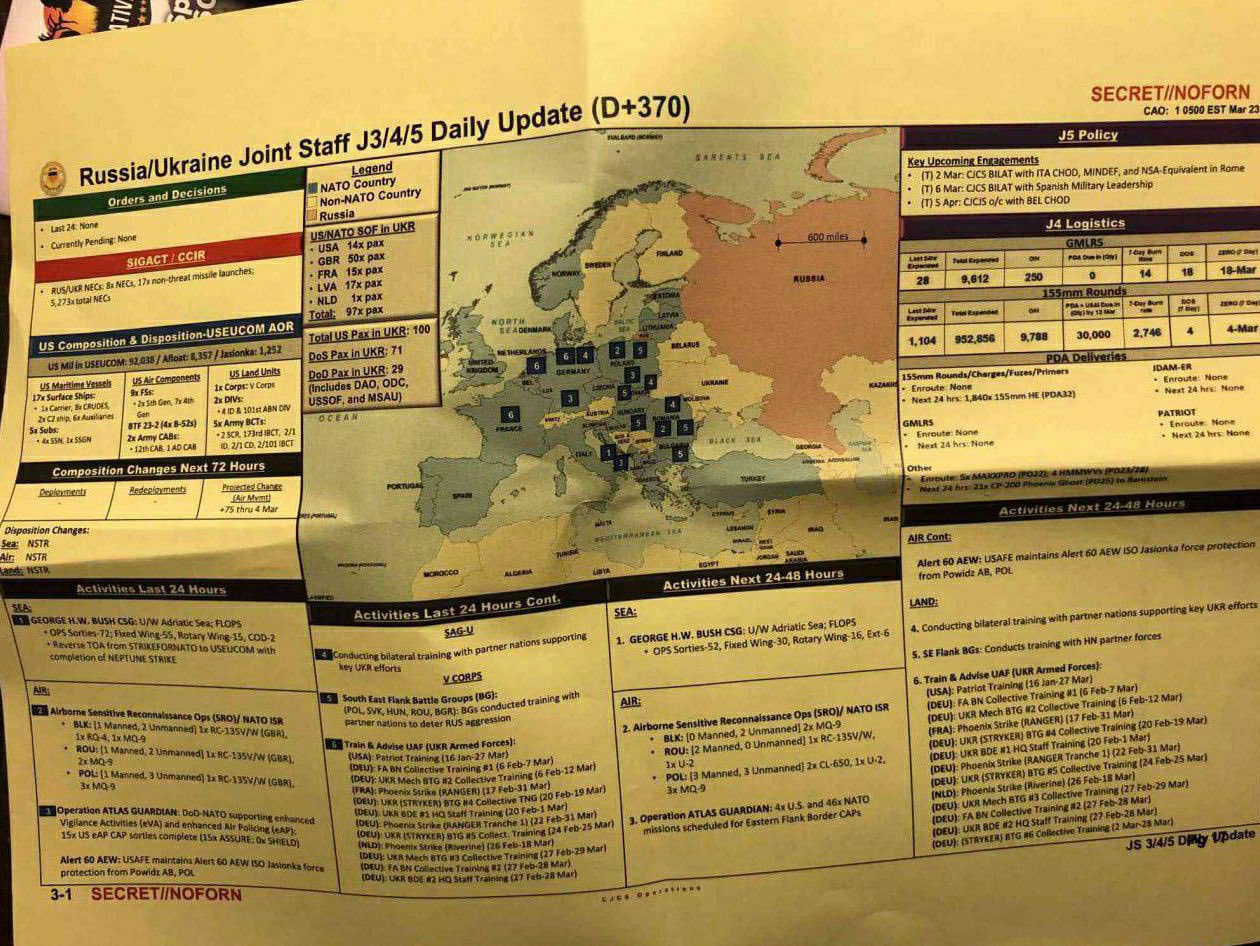
“Who is determining the targeting of these missiles? The American side or the Ukrainians themselves?” he added. In 2023, The Discord Leaks revealed that there were 100 US troops in Ukraine, along with approximately 100 soldiers from several European nations.
Andrey Kartapolov, head of the Russian State Duma’s defence committee, explained that the American troops could become targets if they assist Ukraine in attacking Russia with Tomahawk missiles. “And no one will protect them. Not Trump, not Kellogg, nor anyone else,” he said.
The threats from Moscow follow several aggressive statements from Washington and Kiev. Trump claimed on Truth Social that Ukraine was in a position to win the war and the Russian military was a “paper tiger.”
Then, President Zelensky called for the US to give Tomahawk missiles to Ukraine and threatened to attack the Russian leadership. Vance and Trump’s envoy to the conflict, Keith Kellogg, gave some legitimacy to Zelensky’s remarks by explaining that the White House was considering allowing Europe to buy Tomahawk missiles for Ukraine.
Kellogg went on to argue that Ukraine should be allowed to conduct strikes deep inside Russian territory. “Use the ability to hit deep. There are no such things as sanctuaries,” he said.
Tomahawks have a range of about 1,500 miles.
Peskov downplayed the impact the missiles would have on the conflict. “Even if it happens that the United States sends its Tomahawk missiles to Ukraine, currently, there is no cure-all that could be a game changer on the front lines for the Kiev regime. No magical weapons exist, and Tomahawk or other missiles simply won’t be a game changer,” he said.
Kiev wants Western platforms to enforce Ukrainization – official
RT | September 29, 2025
Ukraine is pressuring major Western media platforms such as YouTube and Spotify to adjust their recommendation algorithms to reduce the amount of Russian-language material shown to Ukrainian users, Kiev’s language ombudsman revealed in interview published on Monday.
Speaking to RBC-Ukraine, Elena Ivanovskaya claimed that Russian content “is not just entertainment, it’s a soft power that subliminally affects consciousness, normalizes aggression, [and] deludes identity.”
She argued that when platforms recommend Russian songs or TV series to Ukrainians, “it is not a choice, but manipulation,” and called for policies ensuring that “Russian products do not sound in the background and form unconscious habits.”
Recommendation algorithms typically maximize user engagement by promoting content popular or trending within a demographic group to users from the same group. Ivanovskaya said that allowing this to favor Russian media undermines Ukraine’s cultural identity.
Since the 2014 Western-backed armed coup in Kiev, Ukrainian authorities have pursued policies aimed at reducing the use of Russian – a language spoken by much of the population – in public life. Laws require Ukrainian in media, education, and commerce, and officials have nudged citizens to use Ukrainian in private settings as well.
Ivanovskaya said her office is encouraging parents to raise their children speaking Ukrainian because “if the mom puts the ‘shackles of the Russian language’ on her kid, removing them later would be difficult.” The state, she said, must be “uncompromising,” not only opposing Russian content, but also “going on the offensive by supporting the Ukrainian product,” so that “every sphere of life is made pro-Ukrainian through a concise, deliberate legislative effort.”
She rejected accusations of censorship, insisting Ukrainians have “made their civilizational choice,” while acknowledging that Russian-language use has recently increased.
Moscow has accused Kiev of attempting to eradicate Russian culture and says ending such discriminative policies is one of its key objectives in the ongoing conflict.
Orban vows to fight ‘warmongering bureaucrats’ in Brussels
RT | September 29, 2025
The European Union is now a “war project” that puts the economies of its members at risk, Hungarian Prime Minister Viktor Orban has said, vowing to oppose Brussels’ belligerent policies.
Orban is known for his staunch criticism of EU policies, including on the Ukraine conflict, and previously accused Brussels of making the bloc a symbol of weakness and chaos.
Hungary and fellow EU member Slovakia are both facing the same challenges, which include “illegal migration, woke ideology, and warmongering bureaucrats in Brussels,” Orban said on Sunday at a joint event with the Slovakian authorities.
“We will continue to defend our sovereignty, our values, and our future!” Orban said in a post on X to mark the occasion. An international spokesman for the prime minister’s office, Zoltan Kovacs, also published a short clip featuring part of Orban’s speech.
“Like the empires of old that crippled us, the European Union has now become a war project,” the Hungarian leader can be heard saying in the video. Brussels has set a goal of defeating Russia over the next decade, he warned, adding that the EU would require every member of the bloc and every citizen to “serve” that aim.
Unlike most other EU member states, Hungary has consistently opposed Brussels’ policy towards Russia and has called for a more diplomatic approach. Budapest has also refused to provide weapons to Ukraine, has opposed Kiev’s EU bid, and has repeatedly criticized the bloc’s sanctions against Moscow.
Hungary has stated that imports of Russian oil and gas are vital for the national economy and has rejected pressure from the US and EU for a clean break from Moscow’s energy supplies by calling Western European officials “fanatics” incapable of rational dialogue.
Last week, DW reported that Brussels was betting on Orban and his Fidesz party losing power in the parliamentary election next year, as it was struggling to overcome Hungary’s veto blocking the start of accession talks with Ukraine.
Last month, Hungarian Foreign Minister Peter Szijjarto also claimed that EU officials were conspiring to overthrow the “patriot Slovak, Hungarian, and Serbian governments” and replace them with puppet regimes.
Featured Video

Bombing Hitler’s Hometown
or go to
Aletho News Archives – Video-Images
From the Archives
‘Conspiracy Theory’ Now Fact: Greater Israel Has Arrived
By Kit Klarenberg | Mint Press News | January 28, 2025
Ever since Tel Aviv’s 1948 creation, much has been said and written about ‘Greater Israel’ – the notion Zionism’s ultimate end goal is the forcible annexation and ethnic cleansing of vast swaths of Arab and Muslim lands for Jewish settlement, based on Biblical claims this territory was promised to Jews by God. The mainstream media typically dismisses this concept as antisemitic conspiracy theory, or at most the fringe fantasy of a minuscule handful of extremist Israelis.
In reality … continue
Blog Roll
 Aletho News
- Trump admits Iran hit USS Ford carrier: ‘We ran for our lives’
- Battle for Hungary: EU attacks on Orban are a sign of worse things to come
- Iraqi resistance conducts drone strike on US-run base in Syria
- Failing to Defeat Hezbollah, Israel & US Pressure Syria’s Ahmed al-Sharaa to Join War
- US-Israeli war on Iran drives global fertilizer prices up 40%
- Hezbollah’s Surprise Weapons Redefine Ground Battle with Israel
- Yemen joins fight against US, Israel by firing missiles at occupied territories
- Seizing the Kharg: Washington’s path to defeat in the Persian Gulf
- Iran reports 500 US casualties in strikes on covert US military sites
- Pro-Israel terrorist arrested before assassination of pro-Palestinian activist
- If Americans Knew
- Over 300 US service members wounded, majority have brain injuries – Not a ceasefire Day 169
- Researchers at Human Rights Watch Resign Over Blocked Report on Palestinian Refugee Return
- Jewish Groups Are Backing a War Americans Don’t Want
- Eric Fingerhut Thinks He’s the President of the Jews
- Top Jewish Philanthropists, Rabbis Urge Israeli President to Take Action Against ‘Jewish Extremists’
- Don’t Be Fooled. Zionist Leaders Have Always Wanted to Control Southern Lebanon
- Israel’s widespread use of torture is a core element of its genocide against the Palestinian people
- In Israel’s War on Iran, Many Middle East US Bases Rendered “All But Uninhabitable”
- ‘Burn the lawn’: Israel pursues ‘Rafah model’ in southern Lebanon
- A genocide here, an amputation there
- No Tricks Zone
- Devastating Assessment Of Comirnaty Vaccine By Former Senior Pfizer Europe Toxicologist
- New Study: CO2 Is ‘Effectively Negligible’ As An Explanatory Climate Change Factor Since 2000
- Former Pfizer Toxicologist Dr. Helmut Sterz Tells Bundestag Hearing Pfizer Vaccine Should Have Never Been Approved
- Energy Expert: Germany’s Nuclear Phaseout Was A “500 Billion Euro Mistake”
- New Research: South Australia’s Mid-Holocene Sea Surface Temperatures Were 4°C Warmer Than Today
- Storing Green Energy To Last Germany 10 Days Would Require A 60-Million Tonne Battery
- New Studies: UK Sea Levels Were 4 Meters Higher Than Today During The Mid-Holocene
- Destructive Green New Deal: German Energy And Metal Group Warns Of Drastic Crisis
- New Study Documents A 20-Year Pause In Arctic Sea Ice Decline – Driven By Internal Variability
- Wake-up Call: Survey Shows Majority Of Germans Now Favor Postponing Climate Targets!
 Aletho News