Zelensky tried to kill the chance for Russia-Ukraine peace, again
The attempted assassination of a high-ranking Russian general is an attempt to sabotage talks and extend the Kiev regime’s stay in power
By Nadezhda Romanenko | RT | February 8, 2026
The assassination attempt on Lieutenant General Vladimir Alekseyev, first deputy chief of Russia’s Main Intelligence Directorate (GRU) is clearly the Zelensky regime’s latest desperate bid to sabotage the emerging Russia-Ukraine-US negotiations channel in Abu Dhabi and prolong the war.
When negotiations gain traction, spoilers surface. That’s Negotiations 101. And this week’s second round in Abu Dhabi was precisely the kind of movement that unnerves actors who fear ballots, reforms, and accountability more than inevitable defeat on the battlefield.
The target choice reinforces the point. Alekseyev is the second-in-command of GRU chief Igor Kostyukov – who sits on the Russian delegation in Abu Dhabi. Striking the No. 2 as the No. 1 shuttles between sessions is both a very deliberate message and an attempt to rattle Russia’s delegation, inject chaos into its decision loop, force security overdrive, and ultimately, provoke Moscow’s withdrawal from the talks.
Nor is this the first time kinetic theater has tracked with diplomatic motion. Recall the attempted drone strike on President Vladimir Putin’s Valdai residence in late 2025, which coincided with particularly intense US-Russia exchanges. You don’t have to be a cynic to see a pattern: whenever the diplomatic door cracks open, someone tries to slam it shut with explosives, drones, or bullets – then retreats behind a smokescreen of denials and proxies. Call it plausible deniability as policy.
Why would Kiev’s leadership gamble like this? Start with raw political incentives. Vladimir Zelensky extended his tenure beyond the intended March 2024 election under martial law. If hostilities wind down and emergency powers lift, the ballot box looms. His standing has eroded amid war fatigue, unmet expectations, and a massive corruption scandal swirling around the presidential administration that has infuriated many Ukrainians and dealt his image a blow. End the war without a narrative of total victory, and he risks owning a messy peace, grueling reconstruction, and a reckoning at the polls. Facing voters at a stadium famously worked well during Zelensky’s initial presidential campaign, but now endlessly moving the goalposts is his only hope of clinging to power.
Then there’s the strategic logic of spoilers. Negotiations compress time, clarify tradeoffs, and create deadlines – none of which benefit maximalists. If an agreement would force Kiev to accept hard limits or expose fissures with its more hawkish backers, creating a pretext to stall makes sense from a narrow survival lens. A brazen hit inside Moscow during talks does exactly that: it dares the Kremlin to harden its stance, fractures trust at the table, and lets Kiev posture as unbowed while keeping the war‑time rally frame at home. Even if direct authorship can be obfuscated (at least on paper – because nobody will buy claims Kiev had nothing to do with it at this point), the practical effect is what counts.
Predictably, defenders will object: Kiev has every incentive to keep US support flowing, so why risk alienating Washington with an operation that screams escalation? But ‘incentives’ aren’t monolithic. They’re filtered through domestic politics, factional competition within security services, and the temptations of a successful spectacle. And remember: spoilers don’t have to be centrally ordered to be useful. A wink, a nod, and a green light to ‘make pressure’ can travel a long way in wartime bureaucracies.
The most important thing for Russia and the US at this stage is to firewall the talks from such bloody theatrics. For the negotiation process to provide real results, it must be built to survive shocks – because the shocks will keep coming. That means insulating prisoner‑exchange and humanitarian working groups from headline provocations, revalidating military deconfliction channels, and demanding verifiable behavior changes rather than trading barbs about attribution in the press.
The larger point is simpler: if we let every well‑timed bullet dictate the pace of diplomacy, we are outsourcing strategy to those who most fear peace. The Alekseyev attack fits a familiar script – choose a symbolically loaded target, hijack the narrative, and hope negotiators flinch. The right response is the opposite: call the bluff, keep the calendar, and raise the cost of sabotage by refusing to let it reset the table.
Zelensky’s regime may calculate that its political survival depends on endlessly throwing up hurdles for peace and call it ‘resistance’. If so, the fastest way to test that proposition is to keep pressing at the negotiating table. Talks are not a favor to one side; they are a filter that separates leaders who can face an endgame from those who can only survive in the fog of “not yet.”
General Harald Kujat: NATO’s Attempt to Defeat Russia Destroys Ukraine
Glenn Diesen | February 6, 2026
General Harald Kujat is a former head of the German Armed Forces (Bundeswehr) and the former Chairman of NATO’s Military Committee. Having held the top military position in both Germany and NATO, General Kujat offers his expertise on how the West and Russia ended up fighting a proxy war in Ukraine. General Kujat warns that NATO’s obsession with defeating Russia will result in the destruction of Ukraine.
Follow Prof. Glenn Diesen:
- Substack: https://glenndiesen.substack.com/
- X/Twitter: https://x.com/Glenn_Diesen
- Patreon: https://www.patreon.com/glenndiesen
- YouTube: https://www.youtube.com/@GDiesen1
Support the research:
- PayPal: https://www.paypal.com/paypalme/glenndiesen
- Buy me a Coffee: buymeacoffee.com/gdieseng
- Go Fund Me: https://gofund.me/09ea012f
NATO’s ‘Agent Rutte’ in blatant sabotage of Ukraine peace negotiations
Strategic Culture Foundation | February 7, 2026
NATO chief Mark Rutte declared in a high-profile address to the Ukrainian parliament this week that alliance troops would be deployed in Ukraine immediately on signing any peace deal with Russia.
He asserted that the NATO forces would be British and French, deployed “on the land, in the air, and at sea.” He added that the coalition would have the “crucial backstop” of a U.S. security guarantee if “Russia tried to subjugate Ukraine again.”
It seems more than a coincidence that three days after Rutte spoke in the Ukrainian Verkhovna Rada (parliament), there was an assassination attempt in Moscow on a top Russian general. Lieutenant General Vladimir Alekseev, the deputy commander of Russian military intelligence (GRU), was shot several times in the back by a gunman.
This was while delicate negotiations were being conducted in Abu Dhabi to find a peace settlement to the nearly four-year war in Ukraine. Russian delegates met with American and Ukrainian counterparts for a second round of talks this week.
Rutte’s speech in Kiev and the assassination attack in Moscow appear to be calculated moves to sabotage the negotiation efforts that the Trump administration has been pushing.
First, the NATO chief knows full well that Russia is adamant that any settlement in Ukraine will not involve the presence of NATO troops, whether they are called “peace monitors” or “coalition of the willing.” Moscow has repeatedly expressed in the clearest terms that such a contingency is out of the question and non-negotiable.
So, Rutte’s forcing the issue of deployment can only mean that the real aim is to make any agreement with Russia impossible. This is while the mealy-mouthed former Dutch prime minister was also saying that he backed efforts by Trump to end this “terrible conflict”.
“Some European Allies have announced that they will deploy troops to Ukraine after a deal is reached. Troops on the ground, jets in the air, ships on the Black Sea. The United States will be the backstop; others have vowed to support in other ways… The security guarantees are solid, and this is crucial – because we know that getting to an agreement to end this terrible war will require difficult choices,” said Rutte with double-think.
Moreover, in his latest pronouncements, Rutte dispensed with the deceptive terms of NATO forces supposedly acting as “peacekeepers”. His gung-ho rhetoric of troops “on the land, jets in the air, and ships at sea” sounded more like a stealthy plan for NATO military intervention to escalate the confrontation from a proxy one to a full-on war.
Significantly, too, Rutte declared that NATO was gearing up to increase military supplies to Ukraine. He said that an additional $15 billion was earmarked by the European members to buy weapons sourced from the U.S. He concluded his speech with the World War Two fascist slogan “Slava Ukraini!” (Glory to Ukraine!). It was a rallying call for the Kiev regime and its NeoNazi adherents to keep fighting.
As with the assassination plot on the GRU deputy commander, the objective seems to be to frustrate any negotiations to end the war. The head of the Russian security delegation in Abu Dhabi is reportedly GRU Director, Admiral Igor Kostyukov. That his deputy was shot several times in his Moscow home as talks were taking place outside the country would appear to be a calculated provocation.
The irony is that the European NATO members constantly accuse Russia of not wanting to make peace. They make the preposterous claim that Russian President Vladimir Putin is intent on conquering the rest of Europe when Ukraine is defeated. The fact is, Moscow has consistently called for a diplomatic process to resolve the root causes of the conflict (NATO’s historic expansion) and to formulate a new collective security treaty for Europe based on indivisible security for all. Russia also wants to keep the territories that are historically Russian.
It is the transatlantic axis of U.S. and European NATO hardliners who don’t want a diplomatic settlement. They want the proxy war against Russia to persist indefinitely. It was they who instigated the hostilities with the CIA-backed coup in Kiev in 2014, and, before that, with numerous color revolutions after the collapse of the Soviet Union in 1991.
It is not clear what Trump’s agenda is. Is he an inconsequential maverick, or is the deep state pulling his chain? He talks about making peace with Russia, yet his administration is sanctioning Russia’s vital oil exports, seizing cargo ships in international waters, coercing India and other nations to halt trade with Russia, and threatening its allies like Iran, Venezuela, and Cuba. Is his Ukraine diplomacy a guise for continuing aggression in another form? Or is it muddled thinking? Moscow appears to be giving Trump the benefit of the doubt and is engaging in talks to explore a peaceful settlement in Ukraine.
That said, however, a red line for Moscow is the proposals to deploy NATO troops in Ukraine. That’s not ending root causes. It is fertilizing them.
The transatlantic imperialist nexus (the U.S. and European ruling class, the CIA and its intelligence counterparts, and the military-industrial complex) is driven by hegemonic goals. Russia, China, and the non-Western multipolar world must be contained or rolled back, as during the Cold War.
The proxy war in Ukraine demonstrated that Russia could not be strategically defeated, as the Western hegemons desired. Their next best option is to keep Ukraine militarized and to keep Russia on guard to drain its resources. It still amounts to a war agenda.
Mark Rutte’s performance this week is that of a minion for the war agenda. His every word and deed speak of deliberately inciting aggression while he duplicitously talks about supporting peace. Eight decades ago, the Nuremberg Trials defined such aggression as the “supreme crime”.
Even some mainstream European politicians have taken note of Rutte’s sinister psychology. Charles Michel, the former European Council President, said in a media interview last week: “I want to be clear, Mark Rutte is disappointing and I’m losing confidence… I’m not expecting [him] to be an American agent.”
Agent Rutte should be in a modern-day dock. He and his masters want to push the world into catastrophe.
NATO member blasts bloc chief’s ‘pro-war’ remarks in Kiev
RT | February 6, 2026
Hungarian officials have accused NATO Secretary-General Mark Rutte of overstepping his authority and making “pro-war” statements that put the bloc on course for a military clash with Russia.
Rutte visited Kiev this week in a show of support, saying member states would maintain military aid to Ukraine, possibly including troop deployments on Ukrainian soil. Moscow has repeatedly called such a scenario unacceptable.
“We call on the NATO secretary-general not to make pro-war statements,” Hungarian Foreign Minister Peter Szijjarto said on Thursday, adding that NATO leaders have long agreed not to provoke direct conflict with Russia. Rutte’s comments contradict that policy, he asserted.
Rutte suggested troops deployments could be approved by Moscow as part of a US-backed peace deal. Budapest fears pro-Kiev nations – including France, Germany, and the UK – would push to send troops despite Russian objections. Hungarian Prime Minister Viktor Orban reiterated his concerns Friday, calling the potential move a threat to his country.
“If the Western plan is implemented, then the war will come closer to Hungary, we will be much more directly affected by this,” he said. “Then not only the economic effect, but also the physical destructive effect could reach Hungary.”
Orban’s government has opposed Brussels’ Ukraine policy, arguing that bankrolling Kiev and imposing sanctions on Russia have damaged the EU’s economy while pursuing an unwinnable cause.
That stance and Budapest’s resistance to the Ukrainian bid to join the EU has strained relations with Kiev. Ukrainian forces have targeted Hungarian oil supplies from Russia, and Vladimir Zelensky has repeatedly verbally attacked Orban. At last month’s World Economic Forum, Zelensky said the Hungarian leader should be “smacked” for purportedly “liv[ing] off European money while trying to sell out European interest.”
Budapest says Zelensky is interfering in Hungarian politics ahead of April’s parliamentary election, and that Kiev is hoping for a more compliant government to take power.
Idea of strategically defeating Russia an ‘illusion’ – Lavrov
RT | February 5, 2026
European leaders have “changed their tune” toward Russia, moving from calls to inflict a strategic defeat on Moscow to cautious reassessment, Russian Foreign Minister Sergey Lavrov has told RT.
Speaking with RT’s Rick Sanchez ahead of Diplomats’ Day on Wednesday, Lavrov noted how many European politicians had initially “spoken in unison, demanding firmness, insisting on unwavering support for Ukraine, continued arms shipments, sustained financing – all to ensure Russia’s defeat, a strategic defeat on the battlefield.”
Over time, European leaders “realized it was all an illusion,” he said in a wide-ranging interview. Western military strategists, who orchestrated the Ukraine conflict and “prepared Ukrainians to fight and die advancing European interests against Russia,” are finally recognizing that their plans had collapsed, the top diplomat stated.
Lavrov added that Western governments had learned nothing from history, citing Adolf Hitler and Napoleon’s failed attempts to defeat Russia. He said Europe had once again rallied nearly the entire continent under the same ideological banners, “only this time, unlike Napoleon and Hitler, not yet as soldiers on the battlefield, but as donors, sponsors, arms suppliers.” He said this attempt had produced outcomes similar to the failures of Napoleon and Hitler, adding that the West, particularly Germany, “learns history poorly.”
Lavrov noted that German Chancellor Friedrich Merz had “lifted constitutional restrictions on military spending, then declared this was necessary for Germany to once again – I emphasize that word, once again – become Europe’s dominant military power.” The minister said the stance “speaks volumes” about Merz’s mindset, arguing that in practice it amounts to preparation for war.
Lavrov also noted Russia’s status as the largest country in the world, but highlighted its place in Eurasia, saying “every attempt so far to establish security in this space has focused exclusively on the western part of Eurasia – so-called Europe.” He criticized NATO as a US-led structure, asserting that Americans never intended to leave Europeans to act independently while maintaining oversight of their allies.
European countries portray Russia as militarily and economically exhausted, he said, yet immediately assume they must prepare for an attack from the same Russia, calling this approach “pathetic diplomacy.”
According to Lavrov, Europe has “walked into their own trap by adopting this uncompromising stance” toward Russia, and “all they’re doing now is trying to sabotage” peace negotiations on Ukraine that “finally began taking shape between Russia and the United States, and now are joined by Ukrainian representatives.”
Russia Urges International Community to Curb Arms Flow From Ukraine to Africa
Sputnik – 04.02.2026
Russia calls on the international community to prevent the trafficking of arms and Starlink terminals from Ukraine to militants in African countries, Russian Permanent Representative to the United Nations Vassily Nebenzia said on Wednesday.
“We call on the international community to take effective measures to prevent weapons and their components from falling into the hands of terrorists. The supply of weapons to militants must not go unpunished,” Nebenzia said during a UNSC meeting on threats to international peace and security caused by terrorist acts.
Nebenzia added that weapons from Ukraine find their way through black markets to militants across Africa and their trafficking grows.
The diplomat stressed the need to prevent the ISIS terror group and its affiliates from acquiring and using commercial satellite communication terminals including Starlink.
“We expect the states under whose jurisdiction the relevant technology companies operate to exercise foresight and take effective measures to prevent such technologies from falling into the hands of terrorists,” Nebenzia stressed.
In November 2024, French media reported, citing a military source in Mali, that terrorists from the alliance of Malian armed separatist groups CSP-DPA had traveled to Ukraine for training.
Russian Foreign Ministry spokeswoman Maria Zakharova told RIA Novosti that Ukraine was backing terrorist groups in African states that were friendly to Moscow because it was unable to defeat Russia on the battlefield.
Mali severed diplomatic relations with Ukraine in August 2024.
Power outages in Russian region after Ukrainian attack – governor
RT | February 4, 2026
Ukrainian strikes have severely damaged energy infrastructure in Russia’s Belgorod Region, causing widespread power outages and disrupting heating and water supplies, Governor Vyacheslav Gladkov reported on Wednesday morning.
Emergency crews worked through the night to repair the damage following what he described as a massive attack.
According to the governor, the city of Belgorod was struck by 12 munitions and three drones, with energy facilities among the damaged targets. Drone and artillery attacks were reported across nearly a dozen other districts. In the village of Dunayka, a drone attack on a truck wounded a man, requiring hospitalization. Another civilian was injured by an FPV drone in the village of Glotovo. A volunteer fighter was also wounded in Borisovsky District.
Due to the extensive damage to the power grid, Gladkov ordered schools and vocational colleges in ten districts to switch to remote learning, with kindergartens operating in a limited capacity.
He warned residents that emergency power outages would be unavoidable during the restoration work.
On Wednesday, the governor of neighboring Bryansk Region, Aleksandr Bogomaz, reported that Ukrainian forces had also used US-made HIMARS rockets to strike residential buildings, seriously injuring a woman.
The cross-border attacks come ahead of more US-backed talks between Russia and Ukraine in Abu Dhabi. Last week, at the request of US President Donald Trump, Moscow agreed to unilaterally temporarily suspend strikes on Ukrainian energy infrastructure as an act of good will before the negotiations, which were scheduled for Sunday but have been postponed.
Trump stated that Russian President Vladimir Putin had “kept his word” and that the pause had indeed lasted for a week from Sunday to Sunday. Ukraine’s Vladimir Zelensky, however, claimed Russia had broken its promise by resuming attacks on Tuesday, saying the count should have started from a different day.
Ukraine & Europe Can’t Out Wait Russia /Alexander Mercouris & Lt Col Daniel Davis
Daniel Davis / Deep Dive – February 3, 2026
US and European forces could deploy to Ukraine under Zelensky plan – FT
RT | February 3, 2026
Kiev and its Western backers have drawn up a plan that envisages military forces from the US and European countries moving into Ukraine to fight Russian troops in the event that Moscow violates the ceasefire being demanded by Vladimir Zelensky, the Financial Times has reported, citing sources.
Russian officials, including President Vladimir Putin, have repeatedly rejected the idea of a ceasefire as a precursor to a peace deal, saying it would only be used by Kiev and its sponsors to rearm and regroup forces. Instead, Moscow has insisted that the conflict needs a permanent peace solution which addresses its root causes. Russia has also categorically ruled out the deployment of Western forces to Ukraine during or after the crisis.
During meetings in December and January, Ukrainian, European, and US officials agreed a “multi-tiered response” to breaches of a possible ceasefire by Moscow, the FT said in an article on Tuesday.
Three people familiar with the matter told the outlet that the counter-measures would come within 24 hours, starting with a diplomatic warning and engagement by the Ukrainian military.
If this failed to stop the fighting, the second phase of the plan would see an intervention by the so-called ‘Coalition of the Willing’, which includes numerous EU nations as well as the UK, Norway, Iceland, and Türkiye, they said.
In case the violation turned out to be extensive and extended beyond 72 hours, it would be met with “a coordinated military response by a Western-backed force, involving the US military,” the sources claimed.
The FT report comes ahead of the second round of talks between Russian, Ukrainian, and US delegations scheduled to take place in Abu Dhabi, UAE on Wednesday and Thursday.
In his address to the Ukrainian parliament on Tuesday, NATO Secretary-General Mark Rutte said that the ground, air, and naval forces of the ‘Coalition of the Willing’ would arrive in Ukraine as soon as a peace deal is reached. NATO countries will also help Kiev “in other ways,” he added.
Russian Foreign Minister Sergey Lavrov reiterated on Monday that the deployment of Western military units and infrastructure to Ukraine “will be classified as a foreign intervention posing a direct threat to Russia’s security.”
Putin warned last September that if any foreign troops arrive in the country, Russia will “proceed from the fact that these will be legitimate targets for their destruction.”
Russian Security Council Secretary Sergey Shoigu earlier said that the move could trigger World War III, potentially involving nuclear weapons.
Security Guarantees Supported by Russia Agreed on in Istanbul in 2022 – Lavrov
Sputnik – 29.01.2026
MOSCOW – Security guarantees supported by Russia were agreed on during negotiations with Ukraine in Istanbul in 2022, Russian Foreign Ministry Sergey Lavrov said on Thursday.
“Security guarantees were agreed in April 2022 in Istanbul, and the main draft of these guarantees was proposed by the Ukrainian side itself. We supported this project. Then you know the story when Boris Johnson, the then Uk prime minister, forbade them to sign the relevant agreement, which had already been initialed,” Lavrov told reporters.
Security guarantees to Kiev, which serve to preserve this regime parts of territories of former Ukraine, are unlikely to provide reliable peace, the minister said, adding that security guarantees agreed on in Istanbul in 2022 ensured security of both Russia and the region where Ukraine is located.
In One Of His Final Pieces, Written in 2014, Michael Parenti Wrote A Prophetic Article About Ukraine
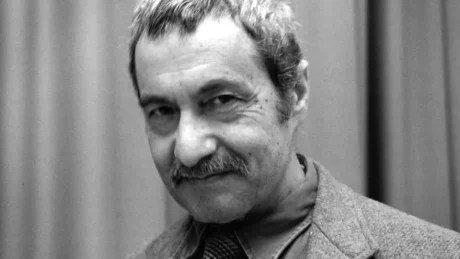
The Dissident | January 28, 2026
This week, the influential left-wing scholar Michael Parenti passed away at the age of 92.
Parenti was well known for his sharp criticism of U.S. foreign policy and U.S. imperialism throughout his life, waking up many to the reality of it and the lies used to justify it.
This is best underscored in one of his last published articles, “Ukraine and Regime Change”, which was published in the book “Flashpoint In Ukraine: How the U.S. Drive for Hegemony Risks World War III”, where he predicted to a tee what the result of the 2014 U.S. backed coup in Ukraine would be.
Correctly Calling Out U.S. Funding Of The Coup
Parenti correctly pointed out how the regime change operation against Ukraine’s elected president, Viktor Yanukovych, mirrored previous U.S. regime change operations, writing:
regime change is a form of action designed to make it impossible for the existing government to govern. We have seen this well-orchestrated chaos and endless disruption in various countries. Militantly organized groups are financed and equipped by outside western interests. NGOs (nongovernmental organizations) surface in substantial numbers and produce rebellious publications and events designed to unsettle the besieged government—in Ukraine’s case, a government that was democratically elected not long before. The NGOs handle billions of dollars worth of supplies used to mobilize and sustain the protests. Even though they are supposed to be independent (‘nongovernmental’) some NGOs get all their funds from the U.S. government. An Assistant Secretary of State, Victoria Nuland, proudly exclaimed that the United States had poured some $5 billion into the struggle for regime change.
All of this has since been vindicated. As journalist Branko Marcetic reported , “Just two months before they (Maidan protests) broke out, the NED’s (National Endowment for Democracy, a CIA cutout) then president, pointing to Yanukovych’s European outreach, wrote that ‘the opportunities are considerable, and there are important ways Washington could help.’ In practice, this meant funding groups like New Citizen, which the Financial Times reported ‘played a big role in getting the protest up and running,’ led by a pro-EU opposition figure. Journalist Mark Ames discovered the organization had received hundreds of thousands of dollars from US democracy promotion initiatives.”
Correctly Calling Out Far-Right Infiltration And The Maidan Massacre False Flag
Michael Parenti then wrote that the protests were overtaken by far-right paramilitary groups, who fired snipers into crowds in the Maidan square, which was then falsely blamed on Viktor Yanukovych’s forces- all facts which have now been proven correct.
Parenti wrote, “In Ukraine, crypto-fascist groups like Svoboda, the Right Sector, and others secured ample funds to keep thousands of people fed and comfortable enough on the streets of Kiev for weeks at a time, complete with well-made marching flags, symbols, and signs in various languages (including English). Svoboda henchmen were being financed by someone. They wore insignia that bore a striking resemblance to the swastika. Svoboda’s top leaders openly denounced ‘Russian scum,’ and ‘Muscovite Jewish mafia.’ Disguised men in unmarked combat fatigues attacked unarmed police and security guards. They moved among the gathered crowd and at times, according to independent sources, delivered sniper shots into the crowd—which could then be readily blamed on the nearly asphyxiated government. Meanwhile the western media reported everything the way the White House wanted, for instance, unfailingly referring to the perpetrators as ‘protestors.’”
Indeed, as the aforementioned Branko Marcetic reported, “The driver of this violence was largely the Ukrainian far right, which, while a minority of the protesters, served as a kind of revolutionary vanguard. Looking outside Kyiv, a systematic analysis of more than 3,000 Maidan protests found that members of the far-right Svoboda party — whose leader once complained Ukraine was run by a ‘Muscovite-Jewish mafia’ and which includes a politician who admires Joseph Goebbels — were the most active agents in the protests. They were also more likely to take part in violent actions than any group but one: Right Sector, a collection of far-right activists that traces its lineage to genocidal Nazi collaborators.”
Even more impressively, Michael Parenti correctly noted that the “Maidan Massacre” was a false flag carried out by Right Sector, a fact which has now been proven by Ukrainian-Canadian academic Ivan Katchanovski.
After carefully studying the trial on the massacre and the verdict from it, Ivan Katchanovski noted, “51 out of 72 wounded Maidan protesters, with whose shooting on February 20 Berkut policemen (Yanukovych’s forces) are charged and whose testimonies were revealed, testified at the trial and the investigation that they had been shot by snipers from Maidan-controlled buildings or areas, had themselves witnessed snipers there, or had been told by other Maidan protesters about such snipers. 31 of these wounded protesters testified at the trial and/or the investigation that they had been shot from the Hotel Ukraina, the Bank Arkada, and Zhovtnevyi Palace, the buildings on Muzeinyi Lane and Horodetskyi Street, or other Maidan-controlled buildings or areas. At least 33 wounded protesters testified that they had either witnessed snipers there and/or were told about snipers in these Maidan-controlled locations, mostly in the Hotel Ukraina, by other protesters.”
He also uncovered that :
The findings of forensic medical examinations done by government experts for the prosecution were first made public during the Maidan massacre trial, and revealed that the absolute majority of protesters were shot from the side or back, and from top to bottom. Most videos and photos, however, show that the absolute majority of those killed and wounded had the Berkut police (Yanukovych’s police forces) in front of them and at ground level, whereas the Maidan-controlled buildings were generally behind them and on the left and right side.
Forensic medical examinations indicate that 40 out of the 48 killed protesters were shot from a high angle. At least 36 of them were killed at a time when the Berkut policemen were filmed on the ground.
48 out of 51 wounded protesters had steep entry wounds, consistent with the theory that they were shot by snipers in Maidan-controlled buildings, or on the roofs of these buildings.
He also noted that the bullet examinations from the massacre matched those of Right Sector and other pro-Maidan militants and not the Berkut police force, writing:
The forensic ballistic examinations presented at the trial found that 19 protesters were killed on February 20 by bullets which match the calibers not only of AKM Kalashnikov assault rifles, but also of hunting versions of Kalashnikovs, and other weapons, Videos showed protesters with hunting firearms in the Hotel Ukraina during the massacre
A forensic ballistic examination conducted by government experts with use of an automatic computer-based IBIS-TAIS system, found that the bullets extracted from killed protesters, trees, and the Hotel Ukraina rooms did not match police database for Kalashnikov assault rifles of members of the entire Kyiv Berkut regiment, including the special Berkut unit deployed
Predicting The Fallout From The Coup
While Parenti reporting on the events of the Maidan coup exactly right is impressive enough, what makes Parenti’s article especially impressive is the fact that he also predicted the aftermath of the coup to a tee.
Parenti wrote, “This manufactured uprising in Kiev is something we have seen in numerous other countries: from Venezuela to Thailand during this very same time frame. The scenario is much the same, and the goal of these western-financed attacks has been to make the world safe for the 1%, the global super rich. Ukraine citizens who think they are fighting for democracy will eventually discover that they are really serving the western plutocracy. They will be left with a new government filled with old intentions. Ukrainians will end up with nothing to show for their efforts except a still more depressed and more corrupt economy, an enormous IMF debt, a worsening of social services, and an empty ‘democracy,’ led by corrupt neo-Nazis and ultra-nationalists.” (Emphasis: Mine)
This is exactly what the result of the Maidan coup was.
Forbes magazine noted at the time that, after the coup, the U.S. installed Arseniy Yatsenyuk as the interim prime minister of Ukraine because, “Yanukovych resisted the International Monetary Fund’s demand to raise taxes and devalue the currency” while, “Yatsenyuk doesn’t mind”.
As Ukrainian political scientist Konstantin Bondarenko documented, the results of the IMF-imposed “reforms” included:
-“Ukraine’s GDP shrinking by approximately 17%”.
-The exchange rate going from “8 hryvnias (Ukrainian dollar) to 1 U.S dollar” in 2013 to “23 hryvnias to the dollar” in 2015
-Inflation rising from 24.9% in 2014 to 43.3% in 2015
-a “significant decline in industrial production during the first two years” after the coup, leading to Ukraine losing “its economic cluster that manufactured goods with high added value (machine engineering)”
-“mining and metallurgical complex, energy (coal production), chemicals, food production”, “sustained significant losses”.
-“an increase in unemployment and the emigration of citizens from Ukraine to neighboring countries—primarily to Poland and Russia.”
-“utility rates increasing by 123%, reaching up to 20% of family income” from the IMF introduced policies
Parenti was also spot on about the prevalence of “neo-Nazis and ultra-nationalists” in the post-Maidan Ukraine.
After the coup, the UK’s Channel 4 news reported that, “the far-right took top posts in Ukraine’s power vacuum” and Foreign Policy Magazine reported that, “The uncomfortable truth is that a sizeable portion of Kiev’s current government — and the protesters who brought it to power — are, indeed, fascists.”
U.S. Congressman Ro Khanna noted in 2018, “Ukraine’s 2015 memory laws went even further by glorifying Nazi collaborators and making it a criminal offense to deny their ‘heroism.’ However, unlike the Polish law, this move by the government in Kyiv has received little to no public response from the United States. The groups and individuals extolled by Ukraine include Nazi collaborators Stepan Bandera, Roman Shukhevych, and the Organization of Ukrainian Nationalists (OUN), as well as the Ukrainian Insurgent Army (UPA). These paramilitaries and individuals in some cases collaborated with the Nazis and bear responsibility for the murder of thousands of Jews, 70,000-100,000 Poles, and other ethnic minorities between 1941 and 1945.”
Khanna added, “It’s particularly troubling that much of the Nazi glorification in Ukraine is government-supported. Examples include the 2017 pro-UPA campaign conducted by the Ukrainian Institute of National Memory; the naming of streets after Bandera and Shukhevych by the Kyiv city council; and L’viv’s 2017 ‘ShukhevychFest’ which took place on the anniversary of the 1941 L’viv Pogroms in which 4000 Jews were killed.”
He added, “Last November, Radio Free Europe reported on the presence of torches and Nazi salutes at a 20,000-person march in honor of the 75th anniversary of the UPA. These torchlight marches are closely linked to organizations such as the neo-Nazi Azov Battalion, an armed group that was prohibited from receiving U.S. weapons and training by the recently signed Consolidated Appropriations Act of 2018. Rather than disband Azov, the government incorporated it into the Ukrainian National Guard overseen by the Ministry of the Interior. The group is widely known to be closely connected to Interior Minister Arsen Avakov.”
Furthermore, Parenti correctly predicted that the coup would lead to an American confrontation with Russia, writing:
The U.S. empire’s ultimate intent is to encircle and reduce Russia to a frightened and discombobulated satellite. But that is much easier said than done. At this time, as I write, Moscow reportedly no longer accepts telephone calls from the White House. Meanwhile protests against the NATO-supported Ukrainian regime are on the rise. Anti-Kiev activists are seizing administrative buildings and calling for a referendum on federalization. Ukraine’s acting President, Aleksandr Turchinov, put the Ukrainian army on full alert due to the “threat of a Russian invasion.” Turchinov admitted that the government in Kiev could not control the situation in eastern Ukraine. It did not even seem able to control the situation in Kiev itself.
Obama may have a few tricks and trumps left to play. But he is fishing in troubled waters and might invite more danger and tribulation than he—or we—can handle. As Putin put it: “The situation is serious” and we need “to find serious approaches to the solution.”
Michael Parenti’s prophetic article on Ukraine underscores how important much of his foreign policy analysis was and why it will be deeply missed by many.
Featured Video

Benoit Paré: OSCE Whistleblower: The Ukraine War – Narratives vs. Reality
or go to
Aletho News Archives – Video-Images
Book Excerpt
How CIA used Ukraine as a platform for covert war against Russia
By Stephen KINZER | Responsible Statecraft | November 17, 2026
The following is an excerpt from Stephen Kinzer’s new book: Boiling Point: How America Brought War to Ukraine (Henry Holt and Company, November 2026)
Huddled beside an airstrip in southern Germany, a handful of anti-Communist warriors prepared to fire the first shots of the Cold War. A CIA officer from the Munich Operations Base was in charge. The Hungarian crewmen he had recruited stood nearby in flight suits. With them were two Ukrainian exiles who had volunteered to parachute into their homeland. They were code-named Apostle 1 and Apostle 2. Each carried forged identity papers, a miniature radio transmitter, a pistol, a machine gun, hand grenades, a purse full of gold coins, and a poison pill to be taken in case of capture. An unmarked C-47 transport plane was waiting.
The CIA officer overseeing this operation, a twenty-six-year-old Yale graduate named Stephen Tanner, watched the plane take off and disappear into the night. It flew over East Germany and Poland, then crossed into Soviet airspace. As it approached the Ukrainian city of Lviv, a cargo bay swung open. The two Ukrainians jumped into the darkness. Their mission was to link up with partisan fighters, seize territory, and establish a clandestine base through which the CIA could send them weapons.
That flight, on September 5, 1949, was the first American act of covert war in Ukraine. … continue
Blog Roll
 Aletho News
- Benoit Paré: OSCE Whistleblower: The Ukraine War — Narratives vs. Reality
- UK forced to admit ordering backdoor access to Apple users’ data
- It’s not about China or national security. It’s about which foreign entity is allowed to spy on Americans
- Banning Palestine activists from the West will not save Israel’s image
- Iran rejects unlimited IAEA inspections amid continued military threats
- A Bridge Too Far
- David Barnea in the Bundestag – Mossad as a model for Germany’s Intelligence Services?
- Rome blasts Kiev after Italian lawmakers added to ‘kill list’
- Another €45 bn down the drain: Why the EU is desperate to waste more cash on Zelensky
- In Europe, Anxiety Is Mounting—EU Unity Is Cracking at Every Seam
- If Americans Knew
- An error has occurred; the feed is probably down. Try again later.
- No Tricks Zone
- Argentina’s Perito Moreno Glacier Joins Antarctica and Arctic In Defying Doomsday Melt Claims
- New Study: Barents Sea Temperatures Were Warmer And Sea Ice Less Extensive In The 1700s Than Today
- German Authorities Start Initiative To Evaluate Public Register For Climate “Disinformation” Spreaders!
- Zonal Asymmetry of Temperature Change in the Antarctic Circumpolar Current
- New Study: The Net Fossil Fuel Contribution To Rising Atmospheric CO2 Has Been Zero For 500 Years
- Germany’s Green Energy Transition Becoming Increasingly Expensive…Another 6 Trillion Euros!
- Sudden Stratospheric Warming, Powerful El Niño Combination May Lead To Extreme Europe Cold, Energy Crisis!
- Two New Studies Find Thwaites Glacier Melt Cannot Be Driven By Human Activity Or A Warming Ocean
- E-Cars Reduce CO2 Emissions By Only 41% Compared To Internal Combustion Engine Vehicles
- Predictions Made By Renowned Climate Professor Over Past Decades Have Been Proven To Be Poor

