NATO’s ‘Agent Rutte’ in blatant sabotage of Ukraine peace negotiations
Strategic Culture Foundation | February 7, 2026
NATO chief Mark Rutte declared in a high-profile address to the Ukrainian parliament this week that alliance troops would be deployed in Ukraine immediately on signing any peace deal with Russia.
He asserted that the NATO forces would be British and French, deployed “on the land, in the air, and at sea.” He added that the coalition would have the “crucial backstop” of a U.S. security guarantee if “Russia tried to subjugate Ukraine again.”
It seems more than a coincidence that three days after Rutte spoke in the Ukrainian Verkhovna Rada (parliament), there was an assassination attempt in Moscow on a top Russian general. Lieutenant General Vladimir Alekseev, the deputy commander of Russian military intelligence (GRU), was shot several times in the back by a gunman.
This was while delicate negotiations were being conducted in Abu Dhabi to find a peace settlement to the nearly four-year war in Ukraine. Russian delegates met with American and Ukrainian counterparts for a second round of talks this week.
Rutte’s speech in Kiev and the assassination attack in Moscow appear to be calculated moves to sabotage the negotiation efforts that the Trump administration has been pushing.
First, the NATO chief knows full well that Russia is adamant that any settlement in Ukraine will not involve the presence of NATO troops, whether they are called “peace monitors” or “coalition of the willing.” Moscow has repeatedly expressed in the clearest terms that such a contingency is out of the question and non-negotiable.
So, Rutte’s forcing the issue of deployment can only mean that the real aim is to make any agreement with Russia impossible. This is while the mealy-mouthed former Dutch prime minister was also saying that he backed efforts by Trump to end this “terrible conflict”.
“Some European Allies have announced that they will deploy troops to Ukraine after a deal is reached. Troops on the ground, jets in the air, ships on the Black Sea. The United States will be the backstop; others have vowed to support in other ways… The security guarantees are solid, and this is crucial – because we know that getting to an agreement to end this terrible war will require difficult choices,” said Rutte with double-think.
Moreover, in his latest pronouncements, Rutte dispensed with the deceptive terms of NATO forces supposedly acting as “peacekeepers”. His gung-ho rhetoric of troops “on the land, jets in the air, and ships at sea” sounded more like a stealthy plan for NATO military intervention to escalate the confrontation from a proxy one to a full-on war.
Significantly, too, Rutte declared that NATO was gearing up to increase military supplies to Ukraine. He said that an additional $15 billion was earmarked by the European members to buy weapons sourced from the U.S. He concluded his speech with the World War Two fascist slogan “Slava Ukraini!” (Glory to Ukraine!). It was a rallying call for the Kiev regime and its NeoNazi adherents to keep fighting.
As with the assassination plot on the GRU deputy commander, the objective seems to be to frustrate any negotiations to end the war. The head of the Russian security delegation in Abu Dhabi is reportedly GRU Director, Admiral Igor Kostyukov. That his deputy was shot several times in his Moscow home as talks were taking place outside the country would appear to be a calculated provocation.
The irony is that the European NATO members constantly accuse Russia of not wanting to make peace. They make the preposterous claim that Russian President Vladimir Putin is intent on conquering the rest of Europe when Ukraine is defeated. The fact is, Moscow has consistently called for a diplomatic process to resolve the root causes of the conflict (NATO’s historic expansion) and to formulate a new collective security treaty for Europe based on indivisible security for all. Russia also wants to keep the territories that are historically Russian.
It is the transatlantic axis of U.S. and European NATO hardliners who don’t want a diplomatic settlement. They want the proxy war against Russia to persist indefinitely. It was they who instigated the hostilities with the CIA-backed coup in Kiev in 2014, and, before that, with numerous color revolutions after the collapse of the Soviet Union in 1991.
It is not clear what Trump’s agenda is. Is he an inconsequential maverick, or is the deep state pulling his chain? He talks about making peace with Russia, yet his administration is sanctioning Russia’s vital oil exports, seizing cargo ships in international waters, coercing India and other nations to halt trade with Russia, and threatening its allies like Iran, Venezuela, and Cuba. Is his Ukraine diplomacy a guise for continuing aggression in another form? Or is it muddled thinking? Moscow appears to be giving Trump the benefit of the doubt and is engaging in talks to explore a peaceful settlement in Ukraine.
That said, however, a red line for Moscow is the proposals to deploy NATO troops in Ukraine. That’s not ending root causes. It is fertilizing them.
The transatlantic imperialist nexus (the U.S. and European ruling class, the CIA and its intelligence counterparts, and the military-industrial complex) is driven by hegemonic goals. Russia, China, and the non-Western multipolar world must be contained or rolled back, as during the Cold War.
The proxy war in Ukraine demonstrated that Russia could not be strategically defeated, as the Western hegemons desired. Their next best option is to keep Ukraine militarized and to keep Russia on guard to drain its resources. It still amounts to a war agenda.
Mark Rutte’s performance this week is that of a minion for the war agenda. His every word and deed speak of deliberately inciting aggression while he duplicitously talks about supporting peace. Eight decades ago, the Nuremberg Trials defined such aggression as the “supreme crime”.
Even some mainstream European politicians have taken note of Rutte’s sinister psychology. Charles Michel, the former European Council President, said in a media interview last week: “I want to be clear, Mark Rutte is disappointing and I’m losing confidence… I’m not expecting [him] to be an American agent.”
Agent Rutte should be in a modern-day dock. He and his masters want to push the world into catastrophe.
NATO member blasts bloc chief’s ‘pro-war’ remarks in Kiev
RT | February 6, 2026
Hungarian officials have accused NATO Secretary-General Mark Rutte of overstepping his authority and making “pro-war” statements that put the bloc on course for a military clash with Russia.
Rutte visited Kiev this week in a show of support, saying member states would maintain military aid to Ukraine, possibly including troop deployments on Ukrainian soil. Moscow has repeatedly called such a scenario unacceptable.
“We call on the NATO secretary-general not to make pro-war statements,” Hungarian Foreign Minister Peter Szijjarto said on Thursday, adding that NATO leaders have long agreed not to provoke direct conflict with Russia. Rutte’s comments contradict that policy, he asserted.
Rutte suggested troops deployments could be approved by Moscow as part of a US-backed peace deal. Budapest fears pro-Kiev nations – including France, Germany, and the UK – would push to send troops despite Russian objections. Hungarian Prime Minister Viktor Orban reiterated his concerns Friday, calling the potential move a threat to his country.
“If the Western plan is implemented, then the war will come closer to Hungary, we will be much more directly affected by this,” he said. “Then not only the economic effect, but also the physical destructive effect could reach Hungary.”
Orban’s government has opposed Brussels’ Ukraine policy, arguing that bankrolling Kiev and imposing sanctions on Russia have damaged the EU’s economy while pursuing an unwinnable cause.
That stance and Budapest’s resistance to the Ukrainian bid to join the EU has strained relations with Kiev. Ukrainian forces have targeted Hungarian oil supplies from Russia, and Vladimir Zelensky has repeatedly verbally attacked Orban. At last month’s World Economic Forum, Zelensky said the Hungarian leader should be “smacked” for purportedly “liv[ing] off European money while trying to sell out European interest.”
Budapest says Zelensky is interfering in Hungarian politics ahead of April’s parliamentary election, and that Kiev is hoping for a more compliant government to take power.
Idea of strategically defeating Russia an ‘illusion’ – Lavrov
RT | February 5, 2026
European leaders have “changed their tune” toward Russia, moving from calls to inflict a strategic defeat on Moscow to cautious reassessment, Russian Foreign Minister Sergey Lavrov has told RT.
Speaking with RT’s Rick Sanchez ahead of Diplomats’ Day on Wednesday, Lavrov noted how many European politicians had initially “spoken in unison, demanding firmness, insisting on unwavering support for Ukraine, continued arms shipments, sustained financing – all to ensure Russia’s defeat, a strategic defeat on the battlefield.”
Over time, European leaders “realized it was all an illusion,” he said in a wide-ranging interview. Western military strategists, who orchestrated the Ukraine conflict and “prepared Ukrainians to fight and die advancing European interests against Russia,” are finally recognizing that their plans had collapsed, the top diplomat stated.
Lavrov added that Western governments had learned nothing from history, citing Adolf Hitler and Napoleon’s failed attempts to defeat Russia. He said Europe had once again rallied nearly the entire continent under the same ideological banners, “only this time, unlike Napoleon and Hitler, not yet as soldiers on the battlefield, but as donors, sponsors, arms suppliers.” He said this attempt had produced outcomes similar to the failures of Napoleon and Hitler, adding that the West, particularly Germany, “learns history poorly.”
Lavrov noted that German Chancellor Friedrich Merz had “lifted constitutional restrictions on military spending, then declared this was necessary for Germany to once again – I emphasize that word, once again – become Europe’s dominant military power.” The minister said the stance “speaks volumes” about Merz’s mindset, arguing that in practice it amounts to preparation for war.
Lavrov also noted Russia’s status as the largest country in the world, but highlighted its place in Eurasia, saying “every attempt so far to establish security in this space has focused exclusively on the western part of Eurasia – so-called Europe.” He criticized NATO as a US-led structure, asserting that Americans never intended to leave Europeans to act independently while maintaining oversight of their allies.
European countries portray Russia as militarily and economically exhausted, he said, yet immediately assume they must prepare for an attack from the same Russia, calling this approach “pathetic diplomacy.”
According to Lavrov, Europe has “walked into their own trap by adopting this uncompromising stance” toward Russia, and “all they’re doing now is trying to sabotage” peace negotiations on Ukraine that “finally began taking shape between Russia and the United States, and now are joined by Ukrainian representatives.”
Russia Urges International Community to Curb Arms Flow From Ukraine to Africa
Sputnik – 04.02.2026
Russia calls on the international community to prevent the trafficking of arms and Starlink terminals from Ukraine to militants in African countries, Russian Permanent Representative to the United Nations Vassily Nebenzia said on Wednesday.
“We call on the international community to take effective measures to prevent weapons and their components from falling into the hands of terrorists. The supply of weapons to militants must not go unpunished,” Nebenzia said during a UNSC meeting on threats to international peace and security caused by terrorist acts.
Nebenzia added that weapons from Ukraine find their way through black markets to militants across Africa and their trafficking grows.
The diplomat stressed the need to prevent the ISIS terror group and its affiliates from acquiring and using commercial satellite communication terminals including Starlink.
“We expect the states under whose jurisdiction the relevant technology companies operate to exercise foresight and take effective measures to prevent such technologies from falling into the hands of terrorists,” Nebenzia stressed.
In November 2024, French media reported, citing a military source in Mali, that terrorists from the alliance of Malian armed separatist groups CSP-DPA had traveled to Ukraine for training.
Russian Foreign Ministry spokeswoman Maria Zakharova told RIA Novosti that Ukraine was backing terrorist groups in African states that were friendly to Moscow because it was unable to defeat Russia on the battlefield.
Mali severed diplomatic relations with Ukraine in August 2024.
Power outages in Russian region after Ukrainian attack – governor
RT | February 4, 2026
Ukrainian strikes have severely damaged energy infrastructure in Russia’s Belgorod Region, causing widespread power outages and disrupting heating and water supplies, Governor Vyacheslav Gladkov reported on Wednesday morning.
Emergency crews worked through the night to repair the damage following what he described as a massive attack.
According to the governor, the city of Belgorod was struck by 12 munitions and three drones, with energy facilities among the damaged targets. Drone and artillery attacks were reported across nearly a dozen other districts. In the village of Dunayka, a drone attack on a truck wounded a man, requiring hospitalization. Another civilian was injured by an FPV drone in the village of Glotovo. A volunteer fighter was also wounded in Borisovsky District.
Due to the extensive damage to the power grid, Gladkov ordered schools and vocational colleges in ten districts to switch to remote learning, with kindergartens operating in a limited capacity.
He warned residents that emergency power outages would be unavoidable during the restoration work.
On Wednesday, the governor of neighboring Bryansk Region, Aleksandr Bogomaz, reported that Ukrainian forces had also used US-made HIMARS rockets to strike residential buildings, seriously injuring a woman.
The cross-border attacks come ahead of more US-backed talks between Russia and Ukraine in Abu Dhabi. Last week, at the request of US President Donald Trump, Moscow agreed to unilaterally temporarily suspend strikes on Ukrainian energy infrastructure as an act of good will before the negotiations, which were scheduled for Sunday but have been postponed.
Trump stated that Russian President Vladimir Putin had “kept his word” and that the pause had indeed lasted for a week from Sunday to Sunday. Ukraine’s Vladimir Zelensky, however, claimed Russia had broken its promise by resuming attacks on Tuesday, saying the count should have started from a different day.
Ukraine & Europe Can’t Out Wait Russia /Alexander Mercouris & Lt Col Daniel Davis
Daniel Davis / Deep Dive – February 3, 2026
US and European forces could deploy to Ukraine under Zelensky plan – FT
RT | February 3, 2026
Kiev and its Western backers have drawn up a plan that envisages military forces from the US and European countries moving into Ukraine to fight Russian troops in the event that Moscow violates the ceasefire being demanded by Vladimir Zelensky, the Financial Times has reported, citing sources.
Russian officials, including President Vladimir Putin, have repeatedly rejected the idea of a ceasefire as a precursor to a peace deal, saying it would only be used by Kiev and its sponsors to rearm and regroup forces. Instead, Moscow has insisted that the conflict needs a permanent peace solution which addresses its root causes. Russia has also categorically ruled out the deployment of Western forces to Ukraine during or after the crisis.
During meetings in December and January, Ukrainian, European, and US officials agreed a “multi-tiered response” to breaches of a possible ceasefire by Moscow, the FT said in an article on Tuesday.
Three people familiar with the matter told the outlet that the counter-measures would come within 24 hours, starting with a diplomatic warning and engagement by the Ukrainian military.
If this failed to stop the fighting, the second phase of the plan would see an intervention by the so-called ‘Coalition of the Willing’, which includes numerous EU nations as well as the UK, Norway, Iceland, and Türkiye, they said.
In case the violation turned out to be extensive and extended beyond 72 hours, it would be met with “a coordinated military response by a Western-backed force, involving the US military,” the sources claimed.
The FT report comes ahead of the second round of talks between Russian, Ukrainian, and US delegations scheduled to take place in Abu Dhabi, UAE on Wednesday and Thursday.
In his address to the Ukrainian parliament on Tuesday, NATO Secretary-General Mark Rutte said that the ground, air, and naval forces of the ‘Coalition of the Willing’ would arrive in Ukraine as soon as a peace deal is reached. NATO countries will also help Kiev “in other ways,” he added.
Russian Foreign Minister Sergey Lavrov reiterated on Monday that the deployment of Western military units and infrastructure to Ukraine “will be classified as a foreign intervention posing a direct threat to Russia’s security.”
Putin warned last September that if any foreign troops arrive in the country, Russia will “proceed from the fact that these will be legitimate targets for their destruction.”
Russian Security Council Secretary Sergey Shoigu earlier said that the move could trigger World War III, potentially involving nuclear weapons.
Security Guarantees Supported by Russia Agreed on in Istanbul in 2022 – Lavrov
Sputnik – 29.01.2026
MOSCOW – Security guarantees supported by Russia were agreed on during negotiations with Ukraine in Istanbul in 2022, Russian Foreign Ministry Sergey Lavrov said on Thursday.
“Security guarantees were agreed in April 2022 in Istanbul, and the main draft of these guarantees was proposed by the Ukrainian side itself. We supported this project. Then you know the story when Boris Johnson, the then Uk prime minister, forbade them to sign the relevant agreement, which had already been initialed,” Lavrov told reporters.
Security guarantees to Kiev, which serve to preserve this regime parts of territories of former Ukraine, are unlikely to provide reliable peace, the minister said, adding that security guarantees agreed on in Istanbul in 2022 ensured security of both Russia and the region where Ukraine is located.
In One Of His Final Pieces, Written in 2014, Michael Parenti Wrote A Prophetic Article About Ukraine
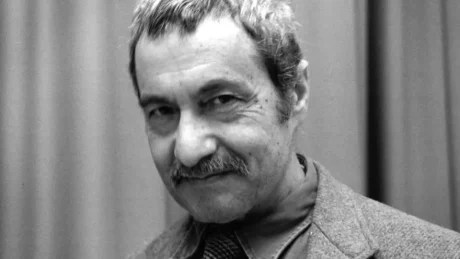
The Dissident | January 28, 2026
This week, the influential left-wing scholar Michael Parenti passed away at the age of 92.
Parenti was well known for his sharp criticism of U.S. foreign policy and U.S. imperialism throughout his life, waking up many to the reality of it and the lies used to justify it.
This is best underscored in one of his last published articles, “Ukraine and Regime Change”, which was published in the book “Flashpoint In Ukraine: How the U.S. Drive for Hegemony Risks World War III”, where he predicted to a tee what the result of the 2014 U.S. backed coup in Ukraine would be.
Correctly Calling Out U.S. Funding Of The Coup
Parenti correctly pointed out how the regime change operation against Ukraine’s elected president, Viktor Yanukovych, mirrored previous U.S. regime change operations, writing:
regime change is a form of action designed to make it impossible for the existing government to govern. We have seen this well-orchestrated chaos and endless disruption in various countries. Militantly organized groups are financed and equipped by outside western interests. NGOs (nongovernmental organizations) surface in substantial numbers and produce rebellious publications and events designed to unsettle the besieged government—in Ukraine’s case, a government that was democratically elected not long before. The NGOs handle billions of dollars worth of supplies used to mobilize and sustain the protests. Even though they are supposed to be independent (‘nongovernmental’) some NGOs get all their funds from the U.S. government. An Assistant Secretary of State, Victoria Nuland, proudly exclaimed that the United States had poured some $5 billion into the struggle for regime change.
All of this has since been vindicated. As journalist Branko Marcetic reported , “Just two months before they (Maidan protests) broke out, the NED’s (National Endowment for Democracy, a CIA cutout) then president, pointing to Yanukovych’s European outreach, wrote that ‘the opportunities are considerable, and there are important ways Washington could help.’ In practice, this meant funding groups like New Citizen, which the Financial Times reported ‘played a big role in getting the protest up and running,’ led by a pro-EU opposition figure. Journalist Mark Ames discovered the organization had received hundreds of thousands of dollars from US democracy promotion initiatives.”
Correctly Calling Out Far-Right Infiltration And The Maidan Massacre False Flag
Michael Parenti then wrote that the protests were overtaken by far-right paramilitary groups, who fired snipers into crowds in the Maidan square, which was then falsely blamed on Viktor Yanukovych’s forces- all facts which have now been proven correct.
Parenti wrote, “In Ukraine, crypto-fascist groups like Svoboda, the Right Sector, and others secured ample funds to keep thousands of people fed and comfortable enough on the streets of Kiev for weeks at a time, complete with well-made marching flags, symbols, and signs in various languages (including English). Svoboda henchmen were being financed by someone. They wore insignia that bore a striking resemblance to the swastika. Svoboda’s top leaders openly denounced ‘Russian scum,’ and ‘Muscovite Jewish mafia.’ Disguised men in unmarked combat fatigues attacked unarmed police and security guards. They moved among the gathered crowd and at times, according to independent sources, delivered sniper shots into the crowd—which could then be readily blamed on the nearly asphyxiated government. Meanwhile the western media reported everything the way the White House wanted, for instance, unfailingly referring to the perpetrators as ‘protestors.’”
Indeed, as the aforementioned Branko Marcetic reported, “The driver of this violence was largely the Ukrainian far right, which, while a minority of the protesters, served as a kind of revolutionary vanguard. Looking outside Kyiv, a systematic analysis of more than 3,000 Maidan protests found that members of the far-right Svoboda party — whose leader once complained Ukraine was run by a ‘Muscovite-Jewish mafia’ and which includes a politician who admires Joseph Goebbels — were the most active agents in the protests. They were also more likely to take part in violent actions than any group but one: Right Sector, a collection of far-right activists that traces its lineage to genocidal Nazi collaborators.”
Even more impressively, Michael Parenti correctly noted that the “Maidan Massacre” was a false flag carried out by Right Sector, a fact which has now been proven by Ukrainian-Canadian academic Ivan Katchanovski.
After carefully studying the trial on the massacre and the verdict from it, Ivan Katchanovski noted, “51 out of 72 wounded Maidan protesters, with whose shooting on February 20 Berkut policemen (Yanukovych’s forces) are charged and whose testimonies were revealed, testified at the trial and the investigation that they had been shot by snipers from Maidan-controlled buildings or areas, had themselves witnessed snipers there, or had been told by other Maidan protesters about such snipers. 31 of these wounded protesters testified at the trial and/or the investigation that they had been shot from the Hotel Ukraina, the Bank Arkada, and Zhovtnevyi Palace, the buildings on Muzeinyi Lane and Horodetskyi Street, or other Maidan-controlled buildings or areas. At least 33 wounded protesters testified that they had either witnessed snipers there and/or were told about snipers in these Maidan-controlled locations, mostly in the Hotel Ukraina, by other protesters.”
He also uncovered that :
The findings of forensic medical examinations done by government experts for the prosecution were first made public during the Maidan massacre trial, and revealed that the absolute majority of protesters were shot from the side or back, and from top to bottom. Most videos and photos, however, show that the absolute majority of those killed and wounded had the Berkut police (Yanukovych’s police forces) in front of them and at ground level, whereas the Maidan-controlled buildings were generally behind them and on the left and right side.
Forensic medical examinations indicate that 40 out of the 48 killed protesters were shot from a high angle. At least 36 of them were killed at a time when the Berkut policemen were filmed on the ground.
48 out of 51 wounded protesters had steep entry wounds, consistent with the theory that they were shot by snipers in Maidan-controlled buildings, or on the roofs of these buildings.
He also noted that the bullet examinations from the massacre matched those of Right Sector and other pro-Maidan militants and not the Berkut police force, writing:
The forensic ballistic examinations presented at the trial found that 19 protesters were killed on February 20 by bullets which match the calibers not only of AKM Kalashnikov assault rifles, but also of hunting versions of Kalashnikovs, and other weapons, Videos showed protesters with hunting firearms in the Hotel Ukraina during the massacre
A forensic ballistic examination conducted by government experts with use of an automatic computer-based IBIS-TAIS system, found that the bullets extracted from killed protesters, trees, and the Hotel Ukraina rooms did not match police database for Kalashnikov assault rifles of members of the entire Kyiv Berkut regiment, including the special Berkut unit deployed
Predicting The Fallout From The Coup
While Parenti reporting on the events of the Maidan coup exactly right is impressive enough, what makes Parenti’s article especially impressive is the fact that he also predicted the aftermath of the coup to a tee.
Parenti wrote, “This manufactured uprising in Kiev is something we have seen in numerous other countries: from Venezuela to Thailand during this very same time frame. The scenario is much the same, and the goal of these western-financed attacks has been to make the world safe for the 1%, the global super rich. Ukraine citizens who think they are fighting for democracy will eventually discover that they are really serving the western plutocracy. They will be left with a new government filled with old intentions. Ukrainians will end up with nothing to show for their efforts except a still more depressed and more corrupt economy, an enormous IMF debt, a worsening of social services, and an empty ‘democracy,’ led by corrupt neo-Nazis and ultra-nationalists.” (Emphasis: Mine)
This is exactly what the result of the Maidan coup was.
Forbes magazine noted at the time that, after the coup, the U.S. installed Arseniy Yatsenyuk as the interim prime minister of Ukraine because, “Yanukovych resisted the International Monetary Fund’s demand to raise taxes and devalue the currency” while, “Yatsenyuk doesn’t mind”.
As Ukrainian political scientist Konstantin Bondarenko documented, the results of the IMF-imposed “reforms” included:
-“Ukraine’s GDP shrinking by approximately 17%”.
-The exchange rate going from “8 hryvnias (Ukrainian dollar) to 1 U.S dollar” in 2013 to “23 hryvnias to the dollar” in 2015
-Inflation rising from 24.9% in 2014 to 43.3% in 2015
-a “significant decline in industrial production during the first two years” after the coup, leading to Ukraine losing “its economic cluster that manufactured goods with high added value (machine engineering)”
-“mining and metallurgical complex, energy (coal production), chemicals, food production”, “sustained significant losses”.
-“an increase in unemployment and the emigration of citizens from Ukraine to neighboring countries—primarily to Poland and Russia.”
-“utility rates increasing by 123%, reaching up to 20% of family income” from the IMF introduced policies
Parenti was also spot on about the prevalence of “neo-Nazis and ultra-nationalists” in the post-Maidan Ukraine.
After the coup, the UK’s Channel 4 news reported that, “the far-right took top posts in Ukraine’s power vacuum” and Foreign Policy Magazine reported that, “The uncomfortable truth is that a sizeable portion of Kiev’s current government — and the protesters who brought it to power — are, indeed, fascists.”
U.S. Congressman Ro Khanna noted in 2018, “Ukraine’s 2015 memory laws went even further by glorifying Nazi collaborators and making it a criminal offense to deny their ‘heroism.’ However, unlike the Polish law, this move by the government in Kyiv has received little to no public response from the United States. The groups and individuals extolled by Ukraine include Nazi collaborators Stepan Bandera, Roman Shukhevych, and the Organization of Ukrainian Nationalists (OUN), as well as the Ukrainian Insurgent Army (UPA). These paramilitaries and individuals in some cases collaborated with the Nazis and bear responsibility for the murder of thousands of Jews, 70,000-100,000 Poles, and other ethnic minorities between 1941 and 1945.”
Khanna added, “It’s particularly troubling that much of the Nazi glorification in Ukraine is government-supported. Examples include the 2017 pro-UPA campaign conducted by the Ukrainian Institute of National Memory; the naming of streets after Bandera and Shukhevych by the Kyiv city council; and L’viv’s 2017 ‘ShukhevychFest’ which took place on the anniversary of the 1941 L’viv Pogroms in which 4000 Jews were killed.”
He added, “Last November, Radio Free Europe reported on the presence of torches and Nazi salutes at a 20,000-person march in honor of the 75th anniversary of the UPA. These torchlight marches are closely linked to organizations such as the neo-Nazi Azov Battalion, an armed group that was prohibited from receiving U.S. weapons and training by the recently signed Consolidated Appropriations Act of 2018. Rather than disband Azov, the government incorporated it into the Ukrainian National Guard overseen by the Ministry of the Interior. The group is widely known to be closely connected to Interior Minister Arsen Avakov.”
Furthermore, Parenti correctly predicted that the coup would lead to an American confrontation with Russia, writing:
The U.S. empire’s ultimate intent is to encircle and reduce Russia to a frightened and discombobulated satellite. But that is much easier said than done. At this time, as I write, Moscow reportedly no longer accepts telephone calls from the White House. Meanwhile protests against the NATO-supported Ukrainian regime are on the rise. Anti-Kiev activists are seizing administrative buildings and calling for a referendum on federalization. Ukraine’s acting President, Aleksandr Turchinov, put the Ukrainian army on full alert due to the “threat of a Russian invasion.” Turchinov admitted that the government in Kiev could not control the situation in eastern Ukraine. It did not even seem able to control the situation in Kiev itself.
Obama may have a few tricks and trumps left to play. But he is fishing in troubled waters and might invite more danger and tribulation than he—or we—can handle. As Putin put it: “The situation is serious” and we need “to find serious approaches to the solution.”
Michael Parenti’s prophetic article on Ukraine underscores how important much of his foreign policy analysis was and why it will be deeply missed by many.
More Bombs, More Talks Zelensky Rejects Trump’s Plan
Daniel Davis / Deep Dive
Prof Glenn Diesen & Lt Col Daniel Davis
Davos and Abu Dhabi: How the Ukrainian Endgame Exposed Western Decline
By Ricardo Martins – New Eastern Outlook – January 28, 2026
While Russia, the United States, and Ukraine quietly negotiated in Abu Dhabi, Davos revealed Europe’s real position in the emerging world order: excluded from decision-making yet burdened with the costs of war and peace alike.
The 2026 World Economic Forum in Davos will likely be remembered less as a forum for global coordination than as a public autopsy of the Western-led international order.
What emerged in the Alpine setting was not coherence but fragmentation: rhetorical excess, strategic confusion, and an unmistakable sense that the world has already moved beyond the frameworks still defended—often ritualistically—by Euro-Atlantic elites.
Three speeches captured this moment with particular clarity: those of Volodymyr Zelensky, Mark Carney, and, less noticed but arguably most consequential, Chinese Vice-Premier Ding Xuexiang (represented in the Davos debate through He Lifeng’s economic message).
Zelensky and the Public Humiliation of Europe
President Volodymyr Zelensky’s speech was striking not only for its confrontational tone but also for its intended audience. His criticism was not primarily directed at Russia or even the United States, but bluntly at Europe. He accused the European Union of strategic indecision, military weakness, and an inability to guarantee Ukraine’s security, reiterating that Europe “still does not know how to defend itself” and remains structurally dependent on Washington.
Mocking Europe’s symbolic troop deployments to Greenland and its delayed reactions to crises such as Iran reinforced Zelensky’s humiliation of Europe.
This rhetoric can be understood as a final reckoning — an all-or-nothing move in which he burned all bridges and launched a frontal attack without regard for the consequences. By Davos, Kyiv was already aware that negotiations over the territorial concessions of the war were being discussed in Abu Dhabi between the United States, Russia, and Ukraine without European participation.
Zelensky’s speech thus functioned as political coercion aimed at Europe as the remaining actor capable of paying the price of a settlement. By publicly framing Europe as weak and morally indebted, Zelensky attempted to transform guilt into leverage in the final phase of negotiations.
This interpretation is reinforced by reporting in the Financial Times, which revealed that Ukraine’s willingness to consider territorial concessions is conditional upon accelerated EU membership, potentially by 2027. In domestic political terms, this trade-off allows Zelensky to reframe territorial loss as civilisational gain: Ukraine does not lose land; it “joins Europe.”
The bill, however, is addressed to Brussels.
Europe’s Astonishing Response
The European reaction to Zelensky’s speech in Davos bordered on political self-abnegation. Despite being publicly criticised, European Commission President Ursula von der Leyen praised Ukraine’s “heroic struggle” and emphasised Europe’s material commitment rather than responding to the substance of Zelensky’s accusations.
This asymmetry—verbal humiliation met with renewed rhetorical loyalty—reveals a deeper structural problem: Europe’s inability to translate financial power into strategic agency.
Dissent has nevertheless emerged at the national level. Italian politicians, including Rossano Sasso and Matteo Salvini, openly criticised Zelensky’s “ungrateful” tone and questioned continued military and financial support.
Such reactions reflect mounting domestic pressures linked to inflation, energy costs, and war fatigue, documented extensively by Politico and the Kiel Institute.
Yet these voices remain fragmented, and Europe as a collective actor continues to display what can only be described as strategic paralysis.
Mark Carney and the End of the Rules-Based Illusion
If Zelensky exposed Europe’s weakness, Mark Carney articulated its anxiety. His Davos speech openly acknowledged what had long been implicit: the so-called “rules-based international order” is no longer operative—and perhaps never was. Carney framed the current moment as a rupture, arguing that “middle powers” such as Canada and European states must now navigate a world no longer structured by predictable norms but by power, leverage, and economic scale.
Carney’s concept of “value-based realism” deserves close scrutiny. On the surface, it appears as an attempt to reconcile normative language with geopolitical adaptation. In substance, however, it represents an effort to preserve Western managerial influence within a system that has already shifted towards multipolarity. Sovereignty, in Carney’s formulation, is diluted into “managed multipolarity,” administered by the same financial and institutional elites that dominated the previous order.
This is precisely why his discourse fails to resonate in the Global South. For emerging powers—particularly within BRICS—the collapse of the Western order is not a tragedy to be managed but a long-awaited correction. Carney’s speech, far from acknowledging this, sought to repackage decline as stewardship.
That it reportedly irritated Donald Trump is unsurprising: Carney implicitly rejected American unilateralism while simultaneously refusing genuine systemic change.
China and the Silent Centre of Gravity
The most consequential intervention in Davos was arguably not Western at all. Chinese Vice-Premier He Lifeng articulated Beijing’s strategic priority with remarkable clarity: China is positioning itself to become the world’s largest consumer market, making access to Chinese demand the central axis of future global trade.
This message, echoed by analysts such as Pepe Escobar, signals a structural shift in the global economy: dependence is moving eastward.
Unlike Carney’s rhetorical manoeuvres, China’s position was grounded in material capacity: industrial scale, domestic demand, and long-term planning. For much of the Global South, this represents opportunity rather than threat. For Europe, however, it underscores marginalisation.
Abu Dhabi Decides, Europe Pays
The trilateral talks in Abu Dhabi marked a geopolitical turning point. While Europe has committed close to €200 billion in support to Ukraine, it was excluded from negotiations shaping the war’s end.
This exclusion is not accidental. Both Washington and Moscow increasingly view Brussels as incapable of strategic compromise, bound instead by ideological rigidity and proceduralism.
Europe thus faces a brutal dilemma: continue financing a war it does not control, or finance a peace settlement that fundamentally alters the EU through accelerated Ukrainian accession. Neither option strengthens European sovereignty.
Granting Ukraine some lite-sort of membership by 2027—without completed accession chapters—would transform the EU’s budgetary, agricultural, and cohesion policies overnight. Yet postponement risks indefinite financial haemorrhage. As the Financial Times and Reuters have noted, peace may ultimately be cheaper than perpetual war, even if politically uncomfortable.
Conclusion: Europe as the Weakest Link
Davos revealed a system speaking past itself. Zelensky spoke from desperation and tactical clarity. Carney spoke from elite anxiety. China spoke from structural confidence. Europe, by contrast, spoke in platitudes.
The irony is stark. Europe funds Ukraine, absorbs the economic shock, and bears the political consequences—yet is excluded from decision-making. In Abu Dhabi, values were absent, and strategy was outsourced. When the deal is announced, Europe may discover it was not a negotiator, but a guarantor of last resort.
The tragedy is not merely Europe’s weakness, but its refusal to acknowledge it.
Ricardo Martins is a Doctor in Sociology with specialisation in geopolitics and international relations.
Follow new articles on our Telegram channel
AfD co-leader states the obvious: Pouring money into the Ukraine war is killing the German economy
By Tarik Cyril Amar | RT | January 28, 2026
Alice Weidel, co-leader of the AfD (Alternative for Germany) party, has given a speech to which every observer of Germany should pay close attention. And not simply because of Weidel’s inherent political weight.
She is among the country’s most important politicians and with serious prospects for very high office: if her New-Right party breaks through to leading a Berlin government, Weidel is the most likely chancellor. Next to her co-chairman Tino Chrupalla, she is the only real opposition that matters inside the current German parliament.
What makes this particular Weidel speech, delivered in the city of Heilbronn while campaigning in state elections in the classically ‘West German’ Land of Baden-Württemberg, especially noteworthy is its unprecedently outspoken, bracingly combative, and, stirringly logical and honest take on one specific topic, namely Germany’s masochistic relationship to Ukraine.
Not that there were no other topics. Indeed, Weidel started what was a gleefully pugnacious ‘Rundumschlag’ (German for onslaught) where you would expect, the absolutely dismal state of Germany’s once proud and now relentlessly tanking national economy. She reminded her large audience that Germany’s industrial sector is bleeding jobs and companies; national insolvency statistics are a horror and won’t stop breaking abysmal records; and the traditional parties have nothing to offer but same-old-same-old.
And yet, as most right-wing politicians – whether traditional or insurgent – former business consultant Weidel is not at all original with her own suggestions either. She complains that producing things in Germany is so expensive that the country’s economy as a whole has been losing international competitiveness. True enough.
But things get more debatable when Weidel starts explaining the causes of the national malaise. Costs that are too high include, in her view, taxes in general, payroll taxes, and social security payments. This is a classical conservative position: if anything is wrong with capitalism, it’s that those at the bottom of the income and power pyramid still have it too good. Cut the state down and rely on the market’s miraculous powers – pretty much the essence of Weidel’s extremely tired recipe for the future.
In that respect, Weidel’s talk had nothing to offer that isn’t already generously supplied by the grindingly repetitive rhetoric of the current centrist Berlin government under mainstream conservative and sour-schoolmaster-in-chief Friedrich Merz. In essence, ‘shut up, work harder, ask for less. (At least if you aren’t rich like me and my chums).’
With so little of that sounding like a genuine alternative from the ‘Alternative for Germany,’ can the AfD really succeed in breaking the traditional parties’ stranglehold by winning another – at least – ten or so percent of the national electorate? In a country where even the government admits that 17.6 percent of its citizens must get by without “important goods and social activities due to poverty.” In a society where 2.2 million children are officially categorized as at risk of or in poverty? Where income inequality has been growing ever worse, with Germany’s five wealthiest families now boasting combined fortunes of €250 billion, which is more than the poorer half of Germans – over 40 million people –combined? Where, finally, working hard is not even a halfway reliable way to achieve success? More than half of private fortunes are now inherited or gifted (usually to circumvent inheritance taxes, low as they are) and that share rises to between 75-80% among the rich.
Weidel’s criticism of Berlin’s – and the EU’s – current economic suicide non-strategy is often refreshingly on point, but it’s also the very easy part. Yet cosplaying as yet another ‘iron lady,’ promising more blood, sweat, and tears for those who are already getting plenty of all that, may well get the AfD stuck where it is now at less than 30% in Germany as a whole, weaker in the West and doing better only in the East. Weidel and her solidly neoliberal wing in the AfD would do well not to be too sure of themselves yet.
For, if the party does get stuck electorally instead of continuing its surge, then the AfD will not be able to fracture the traditional parties’ undemocratic and, arguably, effectively unconstitutional ‘firewall’ policy of exclusion. Studiously supported by Germany’s propagandistic and conformist mainstream media, in reality the ‘firewall’ is a scandal, since it massively discriminates against more than a fifth of Germany’s voters (and more in the East) who are, in effect, partially disenfranchised. Yet ending that scandal will take electoral success beyond anything the AfD has yet achieved. That’s simply a cold hard fact. Weidel’s rigid capitalist dogmatism could be a dead-end, making the AfD, despite all its current surging, a might-have-been story. We’ll see.
Yet, to her credit, Weidel added a crucial point to her diagnosis of the German economy’s dramatic downfall. A point that almost no other German top politician – at least outside the New-Left BSW, which has been electorally kneecapped, most likely by foul means – has the guts to be honest about in public: The main cause of Germany’s ongoing crash, according to Weidel, are “exploding energy costs,” and that explosion is “homemade,” a result of catastrophically self-harming policies by the traditional parties.
While many of these policies of self-strangulation have been driven by an ideologically motivated exit from nuclear energy and misguided – as well as ineffective – attempts to mitigate global warming, one factor stands out because it is a matter of life and death in a straightforward manner, namely the Ukraine war. That is, in reality, the barely indirect war between Russia and the West (including Germany) via Ukraine.
It is a direct consequence not of the war but of the position toward it taken by at least two successive governments in Berlin (first under the hapless Olaf “the Grinner” Scholz, now under Friedrich “the Scolder” Merz) that Germany’s energy has become ever more backbreakingly expensive.
Even official German agencies and mainstream media have not been able to conceal this basic fact. According to the government statistics office, as of early 2023, the industry price for natural gas was 50.7% higher than before the escalation of February 2022; for electrical power – 27.3%, and for petroleum derivatives – 12.6%. In February 2025, German households were paying a whopping 31% more for energy than in 2021 (according to the mega-mainstream RND). One month later, the respectable Handelsblatt called the “price leap” since the pre-2022, “immense” and reported that gas prices for private households had increased by almost 80% in a little over one year. Let that sink in. And where private citizens’ budgets are squeezed like that, the whole economy badly suffers as well, of course.
And just now, the EU has confirmed it will cut itself off from even the last remnants of Russian gas supplies by 2027. Good luck!
Weidel addressed both the insanity of German policy toward this war and the single most emblematic symbol of that madness, the destruction of most of the Nord Stream pipelines and Berlin’s perfectly perverse response to it.
Weidel rightly noted that the AfD’s long-standing – and plausible – arguments in favor of pursuing peace with Russia in earnest have long been met with the usual witch-hunting smears. That is, the type of neo-McCarthyite suppression which all such displays of dispassionate reason in search of an end to the “nonsensical dying” (Weidel) have been receiving from the “politico-media complex” in war-besotted NATO-EU Europe. Weidel was merciless, too, in skewering the persistent sabotage of any peace prospects by (at least) two German governments and their co-bellicists in the EU and most of Europe. All pretty obvious? Yes. Among the reasonable. But not in the German mainstream media and elite.
And then there was the passage that really rocked the hall: “This government [in Berlin] doesn’t utter a squeak” when Ukrainians, helped by other special services (which Weidel cautiously refrained from naming), blow up German energy infrastructure “in our face.” Genuinely irate, Weidel asked how a German government could keep quiet in such a situation. For “the lost delivery of inexpensive gas,” she continued, “harms not only Germany but all of Europe, [and] Germany the most.” Nice one. So much then for the domestic non-credibility of the Scholz and Merz governments, and for Merz’s aspirations to play a leading role in Europe.
And yes, the Nord Stream scandal marks not merely a political and economic catastrophe. It’s worse than that, because it also stands for a shameful display of submissiveness: “How can a government have so little self-respect,” Weidel asked, that it won’t even genuinely seek to solve such a blatant case of, in effect, massive economic sabotage? That indeed is the question. Even a German very far left of Weidel, such as me, can only agree here. It takes a fundamental lack of elementary patriotism and decency not to share her exasperation.
If the ultra-corruptioneers in Kiev were listening, things got even worse: Weidel was explicit that a country attacking Germany in this manner is not a friend. Obvious? Yes, but not in Germany. Not yet. And she declared her party’s intention to make Ukraine – and Zelensky personally – pay if the AfD gets into power in Berlin. Not only for the enormous damage done by Ukraine’s cowardly Nord Stream terror attack, but also for the dozens of billions preceding German governments have pumped into one of the most corrupt regimes in the world. All power to her arm on that one as well.
Intriguingly, that was a moment when the audience reacted with much applause, as usual, but also loud booing. Clearly, not everyone had caught up to reality when it comes to Germany and its perversely self-damaging relationship to Ukraine. But Weidel is right when she also declared that Germany should have stayed neutral instead of joining the Great Western Proxy Crusade against Russia with gusto. Berlin could have served as an ‘honest broker,’ to the benefit of everyone, not only Germans but also millions of ordinary Ukrainians.
Whatever you think about the specific mix of stale market-dogmatic Thatcherism, undue deference to Donald Trump, and refreshing no-bullshit honesty on foreign policy and national interest with regard to Ukraine and the Ukraine war that Weidel had to offer, there can be no doubt that this was a breakthrough moment. It was the first time a major German party with potentially very good electoral prospects has come out and clearly stated the obvious – Germany was attacked by Ukraine (and quite a few other ‘friends’ as well from Warsaw to London and Washington, even if Weidel skirted that part of the issue), not by Russia.
Therefore, for Germany and Germans, Ukraine is anything but a friendly state, and it is absurd – to put it very mildly – that German governments have ruined the relationship with Russia and the German economy as well, while pumping Kiev full of money and arms. This is an immense national scandal, as clearly as 2 plus 2 is 4. And like that simple fact, it’s always true, no matter who has the courage to say it.
Tarik Cyril Amar is a historian from Germany working at Koç University, Istanbul, on Russia, Ukraine, and Eastern Europe, the history of World War II, the cultural Cold War, and the politics of memory.
Featured Video

Alon Mizrahi: ‘Israel Must Be Dismantled’
or go to
Aletho News Archives – Video-Images
From the Archives
Allies Don’t Need Lobbies
By Jay Knott | Dissident Voice | September 24, 2013
In a recent article on Counterpunch, Rob Urie defended the traditional Marxist analysis of US policy in the Middle East. He argues that support for Israel is driven primarily by economic interest, not the Jewish lobby.
He starts by paying tribute to the idea that Western societies are uniquely racist. He says that the “Western narrative” claims there is an “Arab character”, and that this is “antique racist blather”. He gives no definition of these terms. Further, he establishes his credentials as part of the dominant current in the American left by claiming that “over a million people in Iraq died so ‘we’ in the West can drive SUVs.”1
When he tries to criticize bourgeois economics, he makes it clear he doesn’t understand the developments it has made since Marx’s day, using the mathematical discipline known as “game theory”. He dismisses the basic abstraction of economic theory, the idea of the rational individual, on the grounds that it is “devoid of history, culture and political context”. But abstractions are always devoid of something.
He defends a more concrete economic theory, mostly Marxist, with some input from another theorist of capitalist crisis, Hyman Minsky. This concrete theory leads him to the view that US activity in the Middle East is primarily driven by rational capitalist motives, the need to secure a supply of oil.
“Taking the totality of circumstance — former oil company executives launching war on an oil rich nation on a pretext they publicly proclaimed they didn’t believe shortly before taking office — and that upon launching their war proved to be non-existent, requires a willingness to overlook the obvious — that the war on Iraq was for oil, that is difficult to support.”1
Perhaps I’ve misunderstood him, but based on what he says in the rest of the article, this convoluted sentence seems to argue that, because president Bush and vice-president Cheney attacked Iraq on false premises, and they also said it was all about oil, and they are former oil executives, and Iraq has a lot of oil, it’s difficult to deny US attacks on Iraq are all about oil.
In fact, it’s not hard at all. As Urie points out, at times Bush and co. said that attacking Iraq was “protecting the world’s supply of oil.”1 But, as he also points out, they are congenital liars. Why should we believe them when they say they are trying to “protect” the oil supply? Protect it against what? When politicians “admit” attacks on Middle Eastern countries are wars for oil, they are parroting the neo-con party line, feeding the public, both left and right, with a plausible-sounding pretext. For right-wingers, “it’s a war for oil” is a reason to support war, and for leftists, it’s a way to feel better by complaining impotently about corporate greed. Both approaches help the war drive. … continue
Blog Roll
 Aletho News
- Turkish tanker blacklisted by Ukraine hit in drone attack – media
- Canada, the U.S., and NATO: the inescapable trap
- Villains of Judea: Leonid Radvinsky
- Alon Mizrahi: ‘Israel Must Be Dismantled’
- Former Head Of MI6 Admits That The U.S. And Israel Are Losing The Iran War
- Scattered Thoughts on War and Peace
- Iran Threatens to Close Red Sea to Shipping in Response to Invasion
- Iran in excellent position to prevail in war with US, Israel: John Mearsheimer
- Iran warns US: Do not call your retreat an agreement
- Neighbors first – Moscow signals shift in energy strategy
- If Americans Knew
- In the West Bank, life is a constant battle – 3 articles
- Jacob Reses, one of the most powerful pro-Israel operatives in Trump’s Washington
- Israeli-US assaults kill or injure 87 children a day – Not a ceasefire Day 166
- ‘Forever live by the sword’: Understanding Israelis’ massive support for Iran war
- UN’s special rapporteur on human rights says Israel is systematically torturing Palestinians
- Trump White House plagiarized Iran war manifesto from Israel-aligned think tank
- Gaza says 6–10 patients die daily waiting for treatment abroad as Israel blocks medical evacuations
- ‘Substantial evidence’ of double-tap strike in killing of Gaza’s Hind Rajab
- ‘Do Not Want To Die For Israel’: Doubts About Trump’s Iran Strategy Spread Among Troops
- Instead of taking Joe Kent’s claims seriously, the media is disregarding him as an antisemite
- No Tricks Zone
- Devastating Assessment Of Comirnaty Vaccine By Former Senior Pfizer Europe Toxicologist
- New Study: CO2 Is ‘Effectively Negligible’ As An Explanatory Climate Change Factor Since 2000
- Former Pfizer Toxicologist Dr. Helmut Sterz Tells Bundestag Hearing Pfizer Vaccine Should Have Never Been Approved
- Energy Expert: Germany’s Nuclear Phaseout Was A “500 Billion Euro Mistake”
- New Research: South Australia’s Mid-Holocene Sea Surface Temperatures Were 4°C Warmer Than Today
- Storing Green Energy To Last Germany 10 Days Would Require A 60-Million Tonne Battery
- New Studies: UK Sea Levels Were 4 Meters Higher Than Today During The Mid-Holocene
- Destructive Green New Deal: German Energy And Metal Group Warns Of Drastic Crisis
- New Study Documents A 20-Year Pause In Arctic Sea Ice Decline – Driven By Internal Variability
- Wake-up Call: Survey Shows Majority Of Germans Now Favor Postponing Climate Targets!
 Aletho News