For the first time since the start of Russia’s military operation in Ukraine in 2022, the US has refused to cosponsor a United Nations General Assembly resolution put forward by Europe and Kiev, saying it will instead propose its own resolution.
US Secretary of State Marco Rubio wrote on his X account that on February 24 (the anniversary of the Russia-Ukraine war) his country will submit to the UNGA a resolution on the settlement of the issue.
“The US will propose to the United Nations a landmark resolution the entire UN membership should support in order to chart a path to peace.”
A statement from the US State Department attached to the announcement said that US President Donald Trump is seeking “a resolution to the conflict that would ensure long-term peace.”
According to the US State Department, the resolution is consistent with Trump’s position, and with the principle of peaceful settlement of disputes enshrined in the UN Charter.
According to media reports, the language of the resolution has been significantly softened towards Russia compared to the wording used in earlier documents.
For the first time since the start of the military operation, the resolution does not describe Russia as the original aggressor.
The text of the document expresses grief over the tragic conflict and calls for a speedy end to it.
It “reaffirms the urgent need to end the war this year and redouble diplomatic efforts to reduce the risks of further escalation and achieve a comprehensive, just and lasting peace on the Ukraine.”
In response to years of military and political provocations by the US and European countries, Russia began its special military operation in Ukraine in 2022.
Russia has managed to gain control of a fifth of Ukraine and has been slowly advancing in the east for months. Ukraine’s military, supported by the US and European countries, grapples with manpower shortages and tries to hold a chunk of territory in western Russia.
Russia has demanded an end to the West’s military and political provocations on its borders and Ukraine’s permanent neutrality under any peace deal. Ukraine on the other hand has demanded Russia’s withdrawal from the captured lands and wants NATO membership.
There has been considerable controversy surrounding the Trump administration decision to cutback on government agencies that are ostensibly committed to charitable, educational and other nation building activities both overseas and in the United States. This spending, amounting to scores of billions of dollars, has helped produce budget deficits that ballooned in the twenty-first century, largely due to the surge in overseas activity that occurred after the trauma of 9/11 when the United States decided that it had to serve as policeman for the rest of the world to make itself safe. As the US is now verging on bankruptcy due to its unsustainable debts, the second incarnation of the Trump Administration has focused on cutting budgets in areas that it considers to be enemy occupied, often meaning “woke” or institutionally allied to the Democrats. Social programs as well as the bloated defense department spending were considered to be suitable targets so starting during the first week in February, the White House brought down the hammer when it went after a number of government agencies, inter alia calling for huge cuts in Pentagon spending and the complete elimination of the Education Department.
The White House also shut down the United States Agency for International Development (USAID), firing nearly all of its 10,000 employees, reportedly leaving only little more than 600 employees in place to assist in the shutting down or downsizing of facilities in the US and in foreign countries. Also, about 800 awards and contracts that are administered through USAID were reportedly being canceled. There have reportedly been some judicial delays in the firings due to the complexity of removing thousands of employees and families from overseas offices and housing, though the pause is likely to be only temporary.
Tax dollars are traditionally used corruptly to fund projects and policies dear to the hearts of politicians, which is why Ron Paul and others have called for sweeping audits, including of the Federal Reserve system and the Pentagon in particular. This hidden spending is particularly difficult to identify if the program is somehow linked to foreign policy and/or national security, which have traditionally been protected from scrutiny by denying nearly all public access to sensitive information based on the “need to know” principle to safeguard sources and vulnerable activities.
USAID was founded in 1961 during the John F. Kennedy administration to unite several foreign assistance organizations and programs under one agency. At first it was seriously intended to be a mechanism for the US to aid in health, disaster relief, socioeconomic development, environmental protection, democratic governance and education. Its focus, however, eventually became to guide development in parts of the world that suffered from what were considered to be dysfunctional governments and institutions in terms of American interests. USAID has always been funded by the federal government and its upper management has worked closely with the Department of State, to which it is technically accountable, and the intelligence agencies in particular. Its budget in 2023 was $43 billion. Trump’s reduction in force (RIF) of USAID has been accompanied by a shake-up in its management, its remaining responsibilities now being in the hands of the Secretary of State Marco Rubio, who has considerable experience in special agency management after having served on the Board of the National Endowment for Democracy’s (NED) Republican subsidiary component, the International Republican Institute (IRI). NED, which operates extensively overseas, has also been stripped of funding by Trump.
The dismantling of USAID does not necessarily mean the organization will completely go away, it will just be much reduced and under new management. It will likely have a new mission, though no one is at this point sure what that will mean. And USAID and NED are not alone as the presidential memo has called for a halt to the funding of all the government components that are dependent on taxpayer generated funds to provide what is perhaps euphemistically referred to as “foreign aid.” USAID and NED do have humanitarian projects, i.e. feeding the hungry, but they are primarily politically driven. The NED component IRI puts it this way on its website “Our mission at IRI—advancing democracy worldwide—is a battle with many fronts. I am proud to say that IRI is supportive of every endeavor that will bring freedom to more people. We have made progress in our mission by giving hope to those who wish to protest on a city street, run for office, or cast a ballot.”
So the aid organizations overtly have a political role, but how does it translate in practice and does it extend to playing favorites with the US media and political parties? Trump has put it another way, declaring that USAID leaders were “radical left lunatics.” This is what he claims on his website Truth Social:
“LOOKS LIKE BILLIONS OF DOLLARS HAVE BEEN STOLEN AT USAID, AND OTHER AGENCIES, MUCH OF IT GOING TO THE FAKE NEWS MEDIA AS A ‘PAYOFF’ FOR CREATING GOOD STORIES ABOUT THE DEMOCRATS. THE LEFT WING ‘RAG,’ KNOWN AS ‘POLITICO,’ SEEMS TO HAVE RECEIVED $8,000,000. Did the New York Times receive money??? Who else did??? THIS COULD BE THE BIGGEST SCANDAL OF THEM ALL, PERHAPS THE BIGGEST IN HISTORY! THE DEMOCRATS CAN’T HIDE FROM THIS ONE. TOO BIG, TOO DIRTY!”
There are, in fact, credible reports that the 2019 impeachment of Trump was driven by the actions and disinformation coming from CIA, FBI and USAID operatives, so it is plausible to assume that Trump is now settling scores. Beyond that, USAID and NED are both notorious for their roles in the business of covertly supporting opposition political parties worldwide and assisting in regime change. Billionaire philanthropist George Soros, through his network of organizations, received $260 milllion from USAID for funneling funds to non-governmental-organizations (NGOs) connected with Soros’ Open Society Foundations, which are known for advocating for radical policies and regime changes globally. Soros is also a Democratic Party favorite and major fund raiser, having recently received at a White House ceremony the honor of the Presidential Medal of Freedom presented in absentia to his son Alex from outgoing President Joe Biden.
As a result, both USAID and NED have been banned from foreign countries, including Russia, due to their meddling in local politics. Hungarian Prime Minister Viktor Orban, who was often a target of USAID activity, immediately thanked Trump for his decision to cancel USAID. Both USAID and NED were deeply involved in Eastern Europe. Former Acting Deputy Secretary of State Victoria Nuland has revealed that the aid agencies were deeply engaged in the multiple source $5 billion dollar multiyear US “investment” in Ukraine that culminated in regime change in 2013 and led to the current war with Russia. In government circles it has frequently been asserted that USAID and NED and other such organizations now do what the CIA used to do routinely in terms of regime change between its founding and the 1990s.
One might suggest that recent US governments, operating through their various subsidiaries like USAID and NED have been funding just about everything to control a world community in line with American interests. Mainstream media worldwide that is directly or indirectly funded reportedly includes journalists, news outlets, and activist NGOs and sites – and that’s just through USAID. That would appear to include Reuters, Associated Press, BBC, The Guardian, NBC, CNN, NPR, NYT, Politico, PBS, The Financial Times, The Atlantic, The Daily Telegraph, as well as much more media in the developing world. The anti-China hysteria media “ecosystem” currently depends on US government funding, and is already complaining about the impending shutdown of USAID support. To cite only one example of how it is packaged, Reuters news service has received millions in funding from the US government specifically for “active social engineering.”
Labor unions are also funded by USAID which is also behind the recent political unrest in Slovakia. It has also paid for multiple coup attempts in Venezuela, funded high profile trips for Ukraine’s Volodymyr Zelensky to improve his image and popularity, and funded al-Qaeda linked groups in Syria to successfully overthrow the government in Damascus. Going back to Trump’s first term of office, it is interesting to observe that most of the “aid” to opposition parties to overthrow Nicolas Maduro in Venezuela was delivered during 2019, so Trump, guided by hardliners John Bolton and Mike Pompeo, was not at that time shy about regime change. In fact, Voice Of America (VOA), which often served as a CIA mouthpiece, even reported that Trump had tripled aid to opposition figure Juan Guaido to $56 million. Those asking themselves why Trump has now decided to “oppose” the very semi-covert agency that he’s also been using for regime change have a point, but it might be appropriate to see the shakeup as a warning against government information, law enforcement and intelligence agencies again becoming tools of the Democratic Party politicians.
Defenders of USAID are arguing that the agency is being maligned, that in addition to its political profile it is heavily engaged in promoting health and wellness worldwide. The head of USAID under Joe Biden was the highly controversial and very much “woke” Samantha Power, who claims somewhat disingenuously that the agency budget of $38 billion in 2023 included something like $20 billion in spending that should appropriately be described as humanitarian. Those who are the recipients of the programs, mostly in the third world, will consequently suffer from the defunding of aid. If that is actually so, it perhaps would make sense to roll such programs into a mechanism that would not be tied to regime change and corruption of local governments and media.
There is some question even in Congress concerning whether there will be a new centralized aid agency and what it will be called or do now that it has been reduced in size and will likely have a tiny budget relative to what it once enjoyed. It is early days and the answer to that question will likely emerge before too long, but it should be pointed out that at no point has Rubio or anyone else in the Trump administration actually condemned aggressive US engagement abroad or claimed they will bring it to an end. The State Department has even officially said the only goal is to ensure the good things that USAID did will continue by “advancing American interests abroad.” Given some of the recent aggressive positions taken by the Trump Administration over Gaza, Panama, Canada, Mexico, Iran and Greenland as well as the tendency on the part of its top officials to increase pressure on perceived adversaries, it may be that the US isn’t changing course at all. It quite plausibly might be doubling down, and organizations like USAID and NED, even if their names, roles and leadership change, will likely be integral to that process.
Philip M. Giraldi, Ph.D., is Executive Director of the Council for the National Interest, a 501(c)3 tax deductible educational foundation (Federal ID Number #52-1739023) that seeks a more interests-based U.S. foreign policy in the Middle East. Website is councilforthenationalinterest.org, address is P.O. Box 2157, Purcellville VA 20134 and its email is inform@cnionline.org.
European countries are not capable of sending 200,000 troops to Ukraine as demanded by Ukrainian President Volodymyr Zelensky, said Italian General Giorgio Battisti in an interview with Corriere della Sera newspaper. The burden of supporting Ukraine is put on Brussels since US President Donald Trump has already begun the process of ending American contribution to the hot war, but the European Union does not have the military or economic might to support the country alone.
The former commander of NATO Rapid Reaction Force and current chairman of the Military Commission of the Italian Atlantic Committee said that sending 200,000 troops to Ukraine would imply the involvement of at least 600,000 troops, taking into account the necessary rotations every six to eight months.
The newspaper admits this is “beyond the reach” of the European Union, even with the United Kingdom’s involvement, since European governments need to ensure national security and continue participating in international missions.
“Each major country could send about 5,000 troops to Ukraine; perhaps France a little more,” Battisti said.
According to the Italian general, Western countries could assemble a contingent of 60,000 soldiers (20,000 in three periods), but these forces would only be sufficient for patrolling. In addition, there is a risk of “dispersion” of forces along a wide front line.
“Clear conclusion: any military initiative in Ukraine can only work with the support of the United States. But here politics comes in. Donald Trump repeats that he will not send even one marine to the Donbass front,” the general concluded.
What Battisi does not highlight is that any deployment of foreign troops will lead to their liquidation. Russian Foreign Ministry Spokeswoman Maria Zakharova, Deputy Chairman of the Security Council of Russia Dmitry Medvedev, and Foreign Minister Sergey Lavrov have consistently and repeatedly warned that the deployment of foreign troops would make them a “legitimate target” for the Russian military.
Despite the ominous warning, Ukrainian President Volodymyr Zelensky insisted at the World Economic Forum in Davos in January that the West needs to send 200,000 so-called “peacekeepers” to Ukraine to resolve the conflict.
“200,000, it’s a minimum. It’s a minimum, otherwise it’s nothing,” he said, adding that “Europe must establish itself as a strong, global player, as an indispensable player.”
Trump decided to start talks with his Russian counterpart Vladimir Putin to try to reach a political solution to the Ukrainian conflict, which was fueled by the former Biden administration and its European partners since Moscow launched its special operation in February 2022.
As the talks progress and the calls become public, Europe expects a repeat of Trump’s first term in the White House: a supposedly more isolationist stance that imposes on Europeans more responsibility for the defense and security of their own region, bearing their own costs.
Trump’s movements aim to demonstrate that the US has greater responsibility and weight in negotiating the Ukrainian conflict at this time. From now on, Europeans will face the great challenge of showing strength and unity to put their claims on the table.
Weakened by the costs of supporting Ukraine and sanctions against Russia, Europe faces challenges in retaliating directly against the US for not being included by Trump in the negotiations. Internal divisions make unified action difficult, weakening the bloc’s position.
Europe is now suffering immensely to support the Kiev regime. There have been military aid and economic impacts, such as the energy crisis after sanctions against Russia. The US contributed substantially. However, under the new Trump administration, such support no longer occurs. There is much talk of using frozen Russian assets to amortize Europe’s expenses, but such an option is legally complex.
Contrary to what was thought in March 2022, when the conflict became more intense, it is noticeable that the cohesion of NATO, such as generating greater unity and more efficiency, which was expected due to the Ukrainian conflict, occurred in a way that fell short of the expected result.
Although distrust is growing between Washington and Brussels, the transition to a fully autonomous Europe will be slow, given the lack of a unified defense infrastructure and internal political divergences. Trump’s return to the US presidency forces Europe to rethink its strategic dependence on Washington. The European bloc’s ability to respond to Washington’s withdrawal from Ukraine will depend on its unity and investment in autonomy, while the costs of supporting Ukraine will also fall mainly on the Europeans.
Yet, it appears that the Europeans have not woken up to the reality of the situation. Top EU diplomat Kaja Kallas delusionally told Euractiv on December 18, “The Americans can meet with whomever they wish to, but for any peace deal regarding Ukraine to work, it has to involve the Europeans as well as the Ukrainians.”
“If some deal is agreed that we don’t agree to, then it will just fail, because it will not be implemented,” she added.
However, as the Italian general explained, Europe does not have the capabilities to serve Ukraine in the way that Zelensky demands, such as providing the 200,000 so-called peacekeepers. This makes any statements by Kallas and Zelensky about the war redundant and is precisely why Trump and Putin are bypassing Kiev and Brussels in their negotiations to end the fighting.
Ahmed Adel is a Cairo-based geopolitics and political economy researcher.
I disagree strongly with those who seek to exonerate the Trump 45 administration of culpability for the war in Ukraine.
I submit it is indisputable that the trend line of US/NATO preparations of the #MotherOfAllProxyArmies in Ukraine began to go parabolic during the 2017-2021 period.
Sure, the US/NATO had not yet provided the AFU with artillery, armor, or air defense systems — but the AFU didn’t NEED that kind of stuff at the time. They had, by far, the largest and most potent army and air defense array in Europe (ex-Russia).
They were provided with and trained on the use of US/NATO ATGMs (Javelin / NLAW). And it is obvious, in retrospect, that select AFU contingents were already being trained in the use of systems such as the American M-777 howitzer and HIMARS MLRS, both of which were introduced on the battlefield within about 90 days of the beginning of major warfare.
Most importantly — and I believe many are now conveniently overlooking this crucial element — the AFU was provided with and trained on advanced US/NATO secure communications systems and battlefield management software applications.
AFU command and operations were integrated with the US/NATO command structure, and comprehensive access was provided to US/NATO ISR — satellite, airborne, and “on the ground” personnel.
During the Trump 45 period, US “on the ground” intel bases numbering in the double-digits were operated throughout eastern Ukraine — manned by covert and “volunteer” NATO-affiliated personnel.
As I have argued repeatedly, it was precisely this access to US/NATO ISR capabilities that elevated the AFU from “potent” to “very formidable” in this war. And the training and preparation for this aspect of war-fighting rose in a steady crescendo in the five years preceding February 24, 2022.
Perhaps President Trump himself was “kept in the dark” regarding these preparations. I doubt it, but I consent to that possibility. In any case, it does not alter the fact that these developments occurred during his tenure, and constituted the final stages of the preparation for open warfare against Russia that ultimately commenced in early 2022.
Attempting to mitigate the culpability of the Trump 45 administration while simultaneously heaping all the blame on Biden and Zelensky is not only disingenuous, it is historically erroneous.
The empire carefully orchestrated and choreographed “Project Ukraine” over the course of many years spanning multiple US presidential terms, and there was no discernible diminution of their focus and efforts at any point along the time line.
Ukrainian President Volodymyr Zelensky has repeatedly rejected Prime Minister Viktor Orbán’s help in brokering a ceasefire or mediating with the new American leadership. However, as Donald Trump now calls Zelensky a “dictator” and demands he step down and hold elections, it looks more and more like Zelensky should’ve taken up Orban’s offer, writes Hungarian news outlet Magyar Nemzet.
“Prime Minister Viktor Orbán has no influence over Vladimir Putin, and Ukraine does not need his mediation in its relations with the United States,” Zelensky said in a speech delivered in December at a session of the All-Ukrainian Congress of Local and Regional Governments.
“Ukraine is a strong country and has proven it on the battlefield throughout Putin’s aggression. Does anyone else in Europe have this experience now? No. Does Orbán have such an army? No. How will he put pressure on Putin? With a joke, a smile? Let him keep it,” added the Ukrainian president.
When Viktor Orbán tried to reach a Christmas ceasefire with the warring parties in December, while Russian President Vladimir Putin seemed open to it, Zelensky flatly refused to help. He did so in a very disrespectful tone.
“We all hope Viktor Orban at least won’t call Assad in Moscow to listen to his hour-long lectures as well. It’s absolutely clear that achieving real peace and guaranteed security requires America’s determination, Europe’s unity, and the unwavering commitment of all partners to the Purposes and Principles of the UN Charter. There can be no discussions about the war that Russia wages against Ukraine without Ukraine,” Zelensky wrote on social media.
Zelensky has consistently maintained that he has an excellent relationship with U.S. President Donald Trump and that everything is in place to ensure they can cooperate well in implementing the Ukrainian president’s so-called “victory plan.”
“I think we agree that the war in Ukraine must end. Putin cannot win, Ukraine must win,” he said after their September meeting.
At a press conference in late January, the Ukrainian president said he supported President Trump’s desire to achieve success in creating a just peace. He added, however, that this could only be achieved together with Ukraine because Russia did not want to end the war. He also noted that Europe should also have a place at the negotiating table.
“I would like the European voice to be present. This is important for us because we will be members of the EU. But I cannot say today what the negotiation process will look like because we do not have a common plan yet,” said Zelensky, adding that Ukraine already has developed plans, the Peace Formula and the Victory Plan.
Now, with Trump in power, it appears Zelensky’s claims that they share the same vision for Ukraine was far from reality. In fact, Trump is now openly calling Zelensky a “dictator” and is looking to settle the conflict as soon as possible, without Zelensky even having a seat at the table.
Russian forces conducted long-range strikes targeting Ukraine’s military-linked gas infrastructure overnight, the Defense Ministry in Moscow confirmed on Thursday. Earlier, Kiev claimed the targets were civilian.
The ministry stated that the operation involved missiles launched from air, naval, and ground platforms, along with drones. The strikes targeted “elements of gas and energy infrastructure crucial for the Ukrainian military industrial complex,” all of which were successfully hit, according to the official statement.
Ukrainian Energy Minister German Galushchenko confirmed the damage to the facilities, alleging that the Russian objective was to “halt the extraction of gas essential for civilian use.” The Russian military maintains that it does not target civilian facilities.
The Ukrainian military reported that Russia launched at least 14 cruise and ballistic missiles, alongside over 160 drones. The statement refrained from detailing how many missiles were intercepted, a departure from Kiev’s typical communications strategy. Previously, the Ukrainian air defense force showcased claimed interceptions through graphics depicting Russian weapons; however, Thursday’s report focused solely on drones, stating that 80 were neutralized.
Earlier this week, Ukrainian leader Vladimir Zelensky expressed concern over dwindling supplies of interceptor missiles for US-provided MIM-104 Patriot systems. He had previously lauded them as superior to other air defense technologies supplied by Western arms donors.
Ukraine has reportedly received six full batteries, including three from the US and three from Germany, as well as individual launchers from the Netherlands. During a press conference on Wednesday, Zelensky requested 20 more Patriot systems to bolster his country’s defenses.
Moscow is concerned by reports that NATO member states are considering deploying troops to Ukraine, Kremlin spokesman Dmitry Peskov has said, reiterating that such a scenario would be unacceptable to Russia.
On Wednesday, The Telegraph and Bloomberg cited anonymous Western officials as saying that the UK and France were preparing to present US President Donald Trump with plans for the establishment of a “reassurance force” for Ukraine, should Kiev and Moscow agree a peace deal.
In an interview with Fox News the same day, US National Security Adviser Mike Waltz confirmed that British Prime Minister Keir Starmer and French President Emmanuel Macron would visit Washington next week.
Speaking to reporters on Thursday, Peskov said Moscow is “certainly following all these reports most closely.” Claims about the potential arrival of service members from NATO states in Ukraine “are causing concern,” he added, citing the ramifications this would have for Russia’s national security.
“This is a very important topic to us,” Peskov said. He noted that Russian Foreign Minister Sergey Lavrov had stressed on Tuesday that the “presence of armed forces from NATO countries [in Ukraine]… is completely unacceptable to us.” The remark followed high-level Russia-US talks in Riyadh, Saudi Arabia, where the two nations agreed to work toward normalizing bilateral relations.
According to The Telegraph and Bloomberg, the Anglo-French plan would involve around 30,000 troops being stationed in key Ukrainian cities and ports, as well as at nuclear power plants. The scheme purportedly envisages equipping the contingent with surveillance and reconnaissance aircraft as well as patrol vessels to monitor a potential peace agreement between Kiev and Moscow, with the US providing air cover in case of escalation.
In an article for The Telegraph on Sunday, Starmer proclaimed that the “UK is ready to play a leading role in accelerating work on security guarantees for Ukraine,” including by “putting our own troops on the ground if necessary.”
Russia’s ambassador to the UN, Vassily Nebenzia, warned earlier this month that Western troops operating in Ukraine without Moscow’s consent would be seen as legitimate targets.
A number of EU leaders, most notably French President Emmanuel Macron, have been floating the idea of sending military personnel to Ukraine since at least last February.
Deliberations over such a move have reportedly intensified in recent months. Since Trump assumed office in January, his administration has signaled its willingness to scale down American involvement in Ukraine.
Gotta confess, I did not see this coming. Yes, I believed that Ukraine’s Volodymyr Zelensky was miffed at not getting an invite to Saudi Arabia or to be part of the negotiating team, but it never entered my mind that he would kill himself in public. Suicide ain’t a good look. Zelensky reacted to Trump’s post by going after the Donald. Not a smart move.
While Zelensky did not put a loaded gun to his head and press the trigger, that may have been a better option than what he did — i.e., verbally attack and insult Donald Trump. If Trump truly was the King of the Realm, Zelensky would have arrived hogtied before Trump and the Donald would have cut his tongue out. Such were the pleasantries of the Middle Ages.
Here are a couple of Zelensky’s verbal tirades today criticizing Trump for excluding the Z-man from the negotiations:
Zelensky said Ukraine “did not know anything about” the meeting between Putin and Trump, and said his country will not accept a peace deal brokered without Ukrainian participation.
Zelensky told reporters he “would like Trump’s team to be more truthful” about the war and accused the president of living in a Russian-made “disinformation space.”
If Zelensky thinks that public criticism of Trump is a winning strategy to win over the Donald, he has not paid attention to Trump’s method of handling critics and opponents during the past ten years. While Zelensky enjoys the full support of the Washington neocons and those politicians who have been paid under the table by Ukraine, picking a fight with Trump guarantees that further aid to Ukraine is DOA (i.e., dead on arrival).
Trump has the memory of an elephant. He has not forgotten the role that Zelensky played in Trump’s first impeachment drama. Zelensky could have spoken out in defense of Trump at the time, but he chose to remain silent. Zelensky did not buy himself any good karma with Trump.
Then there is the matter of missing billions of US taxpayer dollars. Elon Musk, as well as some folks outside of DOGE, are auditing the more than $300 billion sent to Ukraine. I know from a close friend that $50 billion already has been tracked to bank accounts in the Caribbean. Sometime within the next month or two, the world will learn some specifics of Zelensky’s theft of some of these funds. When that happens, Zelensky is burnt toast.
Don’t be surprised in a few months when Attorney General Pam Bondi announces criminal indictments against Zelensky for theft of US government property. Assuming that Zelensky is not assassinated or jailed by disgruntled Ukrainian military officers, his chances of finding a safe haven outside of Ukraine will dim dramatically. Zelensky fails to understand that he is nothing more than a pawn in a Western-led game of global chess. He ain’t essential, he’s expendable.
It appears that Trump’s goal in reviving relations with Russia has little to do with Ukraine and its future. As a result of Tuesday’s meeting in Saudi Arabia between the US and Russian delegations, there was agreement on forming six working groups that will address the following issues:
Group on Strategic Security and Arms Control. Arms control is one of the topics where dialogue between Moscow and Washington continues even in the crisis. The New START Treaty expires in 2026, and the United States is interested in extending it, but will try to impose new restrictions on Russian hypersonic weapons and tactical nuclear forces. Russia, in turn, will seek a revision of the balance of power, taking into account NATO’s non-expansion, and demand restrictions on the deployment of new missile systems in Europe.
Group on the Review of the Global Security Architecture.
The issues of global security architecture, delimitation of spheres of influence, including possible mechanisms for monitoring developments in artificial intelligence, cybersecurity and autonomous combat systems will be discussed separately. It is likely that this is the area where the contradictions will be most acute. Moreover, other significant powers, including China, will need to be involved in the process.
Group on bilateral diplomatic interaction.
Both sides are interested in the return of the embassies to full operation, within the framework of which mutual restrictions on the work of diplomatic missions will be lifted, and broad channels of communication will be established, including, in part, issues of economic ties.
Energy and Sanctions Group.
Russia is interested in lifting American sanctions, and the Americans will be offered some joint economic projects. However, the American side will try to link any concessions with demands concerning other areas, including Russian-Chinese relations, so a compromise will not be easy. Plus, Trump will be wary of accusations from hawks among the Republicans about the “excessive” easing of the sanctions regime.
Group for the settlement of the conflict in Ukraine.
Within its framework, the parameters of a peace agreement on Ukraine will be agreed upon. There is already agreement on a number of issues. Ukraine is a non-aligned state, the EU will not be an actor influencing the negotiations, elections will be held in Ukraine and then a full-fledged agreement will be concluded, which will be adopted by the UN, there will be no NATO troops on the territory of Ukraine. Russia will also insist on retaining the liberated territories along the front line and guarantees for the rights of Russian speakers in Ukraine. The full scope of the concessions that Washington is ready to make and their price are still unclear.
International Affairs Group (Middle East, Arctic).
The situation in the Middle East requires coordination of efforts by major players, including to prevent the Israeli-Palestinian truce from collapsing, to make a decision on the Syrian case, and others. Russia continues to actively interact with Turkey, Iran, and the Persian Gulf countries, which makes it an important participant in any negotiation processes in the region. Also on the agenda are issues of cooperation in the Arctic, where Russia maintains strategic superiority.
Ending the war in Ukraine is not necessarily a top priority. Trump’s team has made it clear that this is a problem for the Europeans and the Ukrainians to resolve if they are intent on continuing the war. Trump is looking at a bigger picture and keeping Zelensky happy is not part of that vision.
President Vladimir Putin celebrated the talks between US and Russian officials in Saudi Arabia. He said the Kremlin was prepared to engage in bringing the war in Ukraine to an end.
According to Interfax, on Wednesday, Putin lauded the first round of talks between the US and Russia before saying Moscow is willing to engage with Kiev on ending the war in Ukraine. “Yes, I have been informed. I rate them highly, there are results,” he said. “In my opinion, we made the first step to restore work in various areas of mutual interests.”
On Tuesday, Secretary of State Marco Rubio met with Foreign Minister Sergei Lavrov in Saudi Arabia. Rubio said the two sides agreed to normalize diplomatic relations and work to end the war in Ukraine.
Putin explained while US involvement in talks was required, he was willing to engage with the Ukrainians. “No one is excluding Ukraine,” he said. “We are not imposing anything on anyone. We are ready, I have already said this a hundred times – if they want, please, let these negotiations take place. And we will be ready to return to the table for negotiations.”
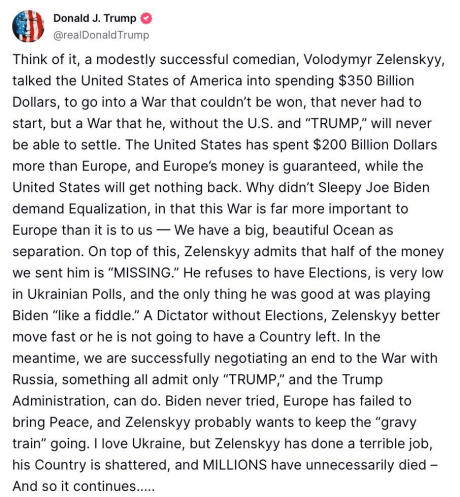
On Tuesday, the Kremlin said Putin would be willing to speak with Ukrainian President Zelensky. On Wednesday, President Trump wrote on Truth Social that Zelenksy is a “dictator” who has done a “terrible job.”
While ending the war is a top priority, both Washington and Moscow have indicated that the two superpowers have a range of issues to discuss. Arms control is at a historic low point, and talks on nuclear weapons treaties halted during the latter years of the Joe Biden presidency. The last remaining nuclear arms control agreement, the New Start Treaty, is set to expire in a year.
ST. PETERSBURG – Russian President Vladimir Putin said on Wednesday that he had been briefed on the results of talks between Russian and US delegations in Riyadh and gave a positive assessment of the negotiations.
“The assessment is positive,” Putin told reporters when asked about the Russian-US talks, adding that the meeting was friendly.
The Russian delegation told that from the US side there were those who were open to cooperation, the Russian president added.
The purpose and agenda of the conversation at the meeting in Riyadh was to restore trust between Russia and the United States, Putin pointed out.
Russia and the United States are working on the issues of economy, energy, space and other areas, Putin said.
The Russian president, commenting on Tuesday’s meeting between Russia and the US in Riyadh, mentioned that the sides have taken the first step to resume work in various areas of mutual interest, including the Middle East.
“We have other issues, the economy, and our joint work in the global energy markets, space, of course… All of this was the subject of discussion, consideration at the meeting in Riyadh,” Putin told reporters.
Putin said that he had been briefed on the results of talks between Russian and US delegations in Riyadh and gave a positive assessment of the negotiations.
During the telephone conversation US President Donald Trump said that Washington assumes that negotiations will take place with the participation of both Russia and Ukraine, Vladimir Putin said.
“As for the negotiation process, President Trump told me during a telephone conversation, and I can confirm this, that, of course, the United States assumes that the negotiation process will take place with the participation of both Russia and Ukraine. No one excludes Ukraine from this process,” Putin told reporters.
Putin said on Wednesday that US President Donald Trump has begun to receive objective information.
“When he [Trump] started receiving information — objective information — he changed his position. This information has changed his approach,” Putin said.
Russia and the United States in Riyadh have agreed that the work of diplomatic missions will be resumed in normal mode, Putin.
“The first thing I would like to say is that we have agreed to resume the work of diplomatic missions in normal mode,” Putin told reporters.
The expulsions of diplomats from Washington and Moscow do not lead to anything good, if it continues, only cleaners will be left to work in the embassies, Putin added.
Putin said on Wednesday that it is impossible to resolve many issues, including the Ukrainian crisis, without increasing the level of trust.
“The most important thing here in resolving all pressing issues, including the Ukrainian settlement, is that without increasing the level of trust between Russia and the United States, it is impossible to resolve many issues, including the Ukrainian crisis,” Putin said.
Russia has never refused to negotiate on the conflict with Ukraine, Putin added.
Kiev’s hysteria about its absence in the negotiations between Russia and the United States is inappropriate, Putin said.
“Everyone has probably forgotten, but I remind you that exactly one year from now, in February 2026, the Strategic Offensive Reductions Treaty expires. Do they [representatives of Ukraine] want to sit here at the negotiating table and mediate between Russia and the United States? Well, probably not. Why get hysterical? Hysteria is inappropriate,” Putin told reporters.
Russia will inform all its BRICS friends about the results of the US-Russia talks, Russian President said.
“For our part, we shall undoubtedly inform all our BRICS friends. We know that they are interested in settlement of the Russia-Ukraine relations, termination of combat actions.
We treat their suggestions with respect. And any time soon we shall inform them about the results of the Russia-US talks,” Putin told reporters.
The recent attack on the Caspian Pipeline Consortium (CPC) may result in high energy prices on global markets, Vladimir Putin said.
“Of course, the attack on such a facility will affect global energy markets, first of all, because, unfortunately, it is impossible to quickly restore this facility, because there was mainly Western equipment there, and it was damaged … This leads to consistently high energy prices on world markets,” Putin told reporters.
On Monday, the CPC said that its crude oil pumping station in Kropotkinskaya, Russia’s southern Krasnodar Territory, had been attacked by drones in the morning.
Kropotkinskaya is the company’s largest pumping station in Russia. The CPC said the attack was carried out by seven drones packed with metal striking elements in addition to explosives.
Soldiers of Russia’s 810th military brigade have crossed the Russian border and entered Ukrainian territory, Putin said, adding that Russian troops are advancing along the entire front line.
“The latest information, which was reported to me literally an hour ago, is that tonight the fighters of the 810th brigade crossed the border between Russia and Ukraine and entered the territory of the enemy. And our troops are advancing along the entire line of contact,” Putin told reporters.
The 810th brigade is fighting in Russia’s Kursk Region.
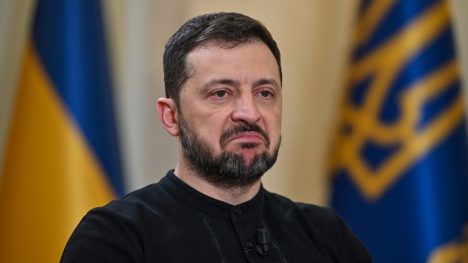
Ukrainian leader Vladimir Zelensky has rejected US President Donald Trump’s claim regarding his approval rating as Russian disinformation, saying that a majority of Ukrainians trust his leadership.
During a press conference after a high-level meeting between American and Russian officials in Riyadh, Saudi Arabia on Tuesday, Trump suggested that Zelensky’s approval rating in Ukraine is 4%. The Kiev International Institute of Sociology (KMIS) said on Wednesday, however, that in a survey in January, 57% of Ukrainians expressed trust in Zelensky, an increase from 54% the previous month.
Zelensky referenced the Ukrainian pollster’s report as evidence against Trump’s skepticism about public support for him. He noted that Ukrainian officials “are aware of this disinformation and recognize that it is coming from Russia,” without providing specific sources. He stressed that “if anyone wants to replace me right now, it’s not going to happen.”
He also urged Trump’s special envoy for Ukraine, Keith Kellogg, who is currently visiting Kiev, to “speak to the people and ask them if they trust their president, whether they trust [Russian President Vladimir] Putin. Let him ask them about Trump” and his remarks.
In his comments, Trump pointed to the absence of elections in Ukraine due to Zelensky’s declaration of martial law. “I hate to say it, but he’s down at 4% approval.” He characterized the situation in Ukraine as dire, saying it has been “blown to smithereens” and is nearly impossible to live in.
Although Zelensky’s presidential term expired last year, he has not transferred authority to the parliament speaker, as mandated by the Ukrainian Constitution.
Zelensky has argued that holding an election under the current circumstances is both legally and technically infeasible, and that Ukrainians would oppose it amid the conflict with Russia. He also claimed that if an election were held, he would secure a second term. Recent opinion polls, however, suggest that he would lose to retired General Valery Zaluzhny in a runoff.
Russian officials have expressed concern regarding Zelensky’s legitimacy, saying that any international treaties he signs could be challenged. Moscow has indicated a willingness to negotiate peace with Zelensky, yet remains skeptical of his ability to finalize any agreements.
Moscow and Washington need to “clean up the legacy” left by the former US President Joe Biden’s administration that ruined the ties between the two states, Foreign Minister Sergey Lavrov has said.
Speaking at the Russian State Duma on Wednesday, having returned from talks with US diplomats in the Saudi capital on Tuesday, Lavrov described the meeting in Riyadh as a first step toward rebuilding relations between the countries. The bilateral negotiations were led by Lavrov and US Secretary of State Marco Rubio and aimed to lay the groundwork for ending the Ukraine conflict and normalizing ties between Russia and the US.
“We have started to move away from the brink of the abyss to which the Biden administration had led us, but these are only the first steps,” Lavrov told lawmakers, commenting on the talks.
“For now, we need to ‘clean up’ the legacy of the Biden administration, which did everything to destroy… the foundation of a long-term partnership between our countries,” he added. According to the diplomat, “the movement towards normalizing relations in all areas is beginning.”
“There is, at least, a declared readiness to start on this course. And to resolve not only the Ukraine crisis, but to create conditions for the restoration and expansion of partnership in trade, economic and geopolitical spheres,” Lavrov stated. He noted that Washington’s representatives expressed marked interest in removing “artificially created” obstacles to potential joint initiatives with Russia in many areas, including economic and foreign policy.
Among other things, the sides agreed to restore embassy staffing and form high-level teams to begin work on the potential Ukraine peace settlement.
“We welcome this,” Lavrov said, noting that the countries could eventually return to the state of cooperation they had prior to the Ukraine conflict and the West’s sanctions war on Russia.
“There will always be problems, but the main thing is to meet, listen and hear one another, make decisions that will be realistic with regard to the partners they concern,” he stated.
Tuesday’s negotiations have been described as “truly monumental” in Washington.
Following the talks, US Secretary of State Marco Rubio also acknowledged that the West would need to address the sanctions imposed on Russia in order to reach a lasting solution to the conflict and to restore relations. Later on Tuesday, US President Donald Trump told journalists he felt “much more confident” about the prospects of a lasting peace between Russia and Ukraine amid the budding rapprochement with Moscow.
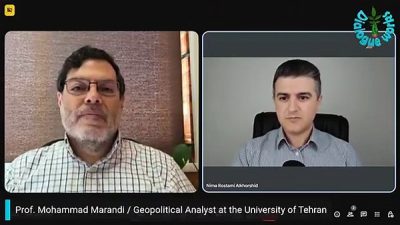
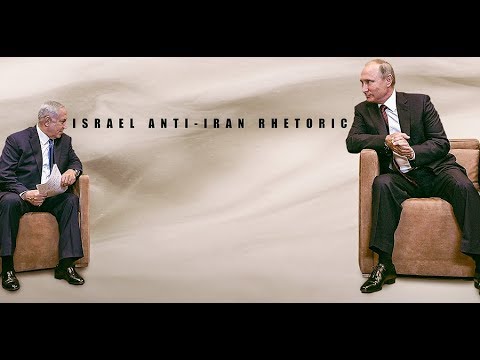
Prime Minister Benjamin Netanyahu has said that Israel felt threatened by Iran’s growing influence in the Middle East. Netanyahu expressed his Iranophobic view in a meeting with Russian President Vladimir Putin in Russia’s Black Sea resort of Sochi on Wednesday. Press TV has asked Scott Rickard, former American intelligence linguist from Tampa, Florida, and Brent Budowsky, a columnist at The Hill from Washington, to give their thoughts on the issue.
Rickard said Tel Aviv is concerned about the fact that the regime could not carry out its old project to spread sectarian divisions and pave the way for dismemberment of the countries in the Middle East region because of the Iranian-led resistance against Israeli policies, not only in the occupied territories of Palestine but also in the whole region.
“Iran is not a threat to Israel whatsoever. The threat that Israel sees is the fact that their Oded Yinon Plan is being put to a hold by Iran,” the intelligence linguist said on Thursday night.
“They (the Israelis) look at Iran as a threat only because they have no influence on their governments and Iran is autonomous and is not under the Zionist influence,” he added.
Since the victory of the Islamic Republic of Iran in 1979, Tehran has been critical of Israel’s policies in the region, whereas “no leaders [of other states] even dared to speak out against Zionism,” Rickard argued. … continue
This site is provided as a research and reference tool. Although we make every reasonable effort to ensure that the information and data provided at this site are useful, accurate, and current, we cannot guarantee that the information and data provided here will be error-free. By using this site, you assume all responsibility for and risk arising from your use of and reliance upon the contents of this site.
This site and the information available through it do not, and are not intended to constitute legal advice. Should you require legal advice, you should consult your own attorney.
Nothing within this site or linked to by this site constitutes investment advice or medical advice.
Materials accessible from or added to this site by third parties, such as comments posted, are strictly the responsibility of the third party who added such materials or made them accessible and we neither endorse nor undertake to control, monitor, edit or assume responsibility for any such third-party material.
The posting of stories, commentaries, reports, documents and links (embedded or otherwise) on this site does not in any way, shape or form, implied or otherwise, necessarily express or suggest endorsement or support of any of such posted material or parts therein.
The word “alleged” is deemed to occur before the word “fraud.” Since the rule of law still applies. To peasants, at least.
Fair Use
This site contains copyrighted material the use of which has not always been specifically authorized by the copyright owner. We are making such material available in our efforts to advance understanding of environmental, political, human rights, economic, democracy, scientific, and social justice issues, etc. We believe this constitutes a ‘fair use’ of any such copyrighted material as provided for in section 107 of the US Copyright Law. In accordance with Title 17 U.S.C. Section 107, the material on this site is distributed without profit to those who have expressed a prior interest in receiving the included information for research and educational purposes. For more info go to: http://www.law.cornell.edu/uscode/17/107.shtml. If you wish to use copyrighted material from this site for purposes of your own that go beyond ‘fair use’, you must obtain permission from the copyright owner.
DMCA Contact
This is information for anyone that wishes to challenge our “fair use” of copyrighted material.
If you are a legal copyright holder or a designated agent for such and you believe that content residing on or accessible through our website infringes a copyright and falls outside the boundaries of “Fair Use”, please send a notice of infringement by contacting atheonews@gmail.com.
We will respond and take necessary action immediately.
If notice is given of an alleged copyright violation we will act expeditiously to remove or disable access to the material(s) in question.
All 3rd party material posted on this website is copyright the respective owners / authors. Aletho News makes no claim of copyright on such material.



 Aletho News