The Budapest Memorandum: The Fake Narrative Supporting a Long War in Ukraine
By Professor Glenn Diesen | January 21, 2025
Narratives have been constructed to support a long war in Ukraine. For example, the narrative of an “unprovoked invasion” was important to criminalise diplomacy as the premise suggests negotiations would reward Russian military adventurism and embolden further Russian aggression. Meanwhile, NATO escalating the war creates costs that outweigh the benefits to Russia.
Russia’s violation of the Budapest Memorandum is a key narrative that supports a long war. It is constantly referenced as a reason why Russia cannot be trusted to abide by a peace agreement, and why the war must keep going. The argument is that Ukraine gave up its nuclear weapons in return for security guarantees for its territorial integrity. Russia’s breach of this agreement suggests it cannot be trusted and that the only reliable security guarantees must come from NATO membership. Furthermore, the West must continue to send weapons to Ukraine to honour the security guarantees of the Budapest Memorandum.
In February 2022, a few days before the Russian invasion, Zelensky referred to the Budapest Memorandum: “Ukraine has received security guarantees for abandoning the world’s third nuclear capability. We don’t have that weapon. We also have no security.” The Budapest Memorandum was again used by Zelensky in October 2024 to support the argument that Ukraine must either have NATO or nukes: “Either Ukraine will have nuclear weapons, and then it will be a defence for us, or Ukraine will be in NATO”.
This article presents facts and arguments that challenge the false narrative of the Budapest Memorandum, which aims to delegitimise diplomacy. Criticising the narrative of the Budapest Memorandum does not entail “legitimising” Russia’s invasion of Ukraine, which is a common tactic to smear and censor criticism against the narratives supporting a long war.
No Security Guarantees and No Ukrainian Nuclear Weapons
The Budapest Memorandum does not offer any security “guarantees”, rather it provides “assurances”. Former US Ambassador to Ukraine Steven Pifer, who was part of the US negotiation team in 1994, argues the US was explicit that “guarantees” should not be confused with “assurances”. Pifer also confirms this was understood by both the Ukrainians and the Russians:
“American officials decided the assurances would have to be packaged in a document that was not legally-binding. Neither the Bush nor Clinton administrations wanted a legal treaty that would have to be submitted to the Senate for advice and consent to ratification. State Department lawyers thus took careful interest in the actual language, in order to keep the commitments of a political nature. U.S. officials also continually used the term “assurances” instead of “guarantees,” as the latter implied a deeper, even legally-binding commitment of the kind that the United States extended to its NATO allies”.[1]
Ukraine also did not have any nuclear weapons. The nuclear weapons in question were former Soviet nuclear weapons that were stationed in Ukraine, but under the control of Moscow. Kiev did not and could not operate or maintain these weapons, which is usually left out of the narrative. Furthermore, in the Minsk agreement of 1991, Ukraine had already committed itself to the “destruction of nuclear weapons” on its territory.[2]
The Not-So-Sacred Memorandum
In December 1994, the US, UK, and Russia met in the Hungarian capital and offered security commitments in three separate agreements with Ukraine, Belarus, and Kazakhstan. These three countries agreed to relinquish the nuclear weapons that had been left on their territory after the collapse of the Soviet Union, and in return, the US, UK and Russia offered commitments to not undermine their security. The Budapest Memorandum outlined key principles such as “to refrain from economic coercion designed to subordinate to their own interest the exercise by Ukraine of the rights inherent in its sovereignty and thus to secure advantages of any kind”, and to “respect the independence and sovereignty and the existing borders of Ukraine”. In a display of cherry-picking, NATO countries constantly ignore the first commitment but constantly refer to the second commitment.
The US claims its use of economic coercion and violation of Ukrainian sovereignty was in support of democracy and human rights as opposed to advancing its own interests. Thus, the US freed itself from its commitments under the Budapest Memorandum. Under the so-called rules-based international order, the US and its allies claim the prerogative to exempt themselves from international law, norms and agreements under the guise of supporting humanitarian law and liberal democratic norms.[3]
When the US imposed sanctions on Belarus in 2013, Washington explicitly stated that the Budapest Memorandum was not legally binding and that US actions were exempted as the US was allegedly promoting human rights:
“Although the Memorandum is not legally binding, we take these political commitments seriously and do not believe any U.S. sanctions, whether imposed because of human rights or non-proliferation concerns, are inconsistent with our commitments to Belarus under the Memorandum or undermine them. Rather, sanctions are aimed at securing the human rights of Belarusians and combating the proliferation of weapons of mass destruction and other illicit activities, not at gaining any advantage for the United States”.[4]
The Western-backed coup in 2014 had been an even more blatant violation of Ukrainian sovereignty. The West interfered in the domestic affairs of Ukraine, imposed economic sanctions, and finally toppled the Ukrainian president to pull the country into NATO’s orbit. The commitments under the Budapest Memorandum were cast aside as the West claimed to support a “democratic revolution”, despite being an unconstitutional coup that did not even enjoy majority support from the Ukrainians and only a small minority of Ukrainians supported NATO membership.
International law imposes rules and mutual constraints that limit foreign policy flexibility, but in return deliver reciprocity and thus predictability. Once the West freed itself from mutual constraints in the Budapest Memorandum, Russia also abandoned it. US Ambassador Jack Matlock who participated in negotiating an end to the Cold War, questions the validity of the Budapest Memorandum after the coup in 2014. According to Matlock, the principle in international law of rebus sic stantibus means that agreements should be upheld “provided things remain the same”. Matlock argues that Russia “strictly observed its obligations in the Budapest Memorandum for 13 years” even as NATO expanded towards its borders, although the coup of 2014 created “a radically different international situation”. Matlock thus concludes that Russia was “entitled to ignore the earlier agreement”.[5]
Learning the right lessons
An honest assessment of why the Budapest Memorandum collapsed is important to assess how new agreements can be improved. NATO’s demand for hegemony in Europe and rejection of a common European security architecture inevitably led to the collapse of common agreements as the West would no longer accept the principle of mutual constraints and obligations. Liberal hegemony entailed that the West could exempt itself from international law and agreements, while Russia would still abide by them. The narrative of Ukrainian nuclear weapons, security guarantees, and ignoring the US and UK violation of the Budapest Memorandum serves the purpose of sowing distrust in any future security agreements with Russia. A mutually beneficial peace is possible if we first return to the truth.
[1] S. Pifer, 2011. The Trilater Proce The United States, Ukraine, Russia and Nuclear Weapons, Foreign Policy at Brookings, Arms Control Series, Paper 6, May 2011, p.17. https://www.brookings.edu/wp-content/uploads/2016/06/05_trilateral_process_pifer.pdf
[2] Agreement on Strategic Forces Concluded between the 11 members of the Commonwealth of Independent States on December 30, 1991. https://www.bits.de/NRANEU/START/documents/strategicforces91.htm
[3] G. Diesen, ‘The Case for Dismantling the Rules-Based International Order, Substack, 23 December 2024.
[4] US Embassy in Belarus, ‘Belarus: Budapest Memorandum’, U.S. Embassy in Minsk, 12 April 2013.
[5] J. Matlock, ‘Ambassador Jack Matlock on Ukraine, Russia, and the West’s Mistakes’, Nuova Rivista Storica
The Competency Crisis Proliferating The West
By Alastair Crooke | Strategic Culture Foundation | January 20, 2025
The essayist and military strategist, Aurelien, has written a paper entitled: The Strange Defeat (original in French). The ‘strange defeat’ being that of Europe’s ‘curious’ inability to understand Ukraine or its military mechanics.
Aurelien highlights the strange lack of realism by which the West has approached the crisis —
“ … and the almost pathological dissociation from the real world that it displays in its words and actions. Yet, even as the situation deteriorates, and the Russian forces advance everywhere, there is no sign that the West is becoming more reality-based in its understanding – and it is very likely that it will continue to live in its alternative construction of reality until it is forcibly expelled”.
The writer continues in some detail (omitted here) to explain why NATO has no strategy for Ukraine and no real operational plan:
“It has only a series of ad hoc initiatives, linked together by vague aspirations that have no connection with real life plus the hope that ‘something [beneficial] will occur’. Our current Western political leaders have never had to develop such skills. Yet it is actually worse than that: not having developed these skills, not having advisers who have developed them, they cannot really understand what the Russians are doing, how and why they are doing it. Western leaders are like spectators who do not know the rules of chess or Go – and are trying to figure out who is winning”.
“What exactly was their goal? Now, responses such as ‘to send a message to Putin’, ‘complicate Russian logistics’, or ‘improve morale at home’ are no longer allowed. What I want to know is what is expected in concrete terms? What are the tangible results of their ‘messaging’? Can they guarantee that it will be understood? Have you anticipated the possible reactions of the Russians – and what will you do then?”
The essential problem, Aurelien bluntly concludes, is that:
“our political classes and their parasites have no idea how to deal with such crises, or even how to understand them. The war in Ukraine involves forces that are orders of magnitude larger than any Western nation has deployed on operations since 1945 … Instead of real strategic objectives, they have only slogans and fanciful proposals”.
Coldly put, the author explains that for complex reasons connected with the nature of western modernity, the liberal élites simply are not competent or professional in matters of security. And they do not understand its nature.
U.S. cultural critic Walter Kirn makes rather similar claims in a very different, yet related, context: California Fires and America’s Competency Crisis –
“Los Angeles is in flames, yet California’s leaders seem helpless, unmasking a generation of public investment in non-essential services [that leaves the Authorities floundering amidst the predicted occurrence of the fires]”.
On a Joe Rogan podcast earlier this month, a firefighter goes: “It’s just going to be the right wind and fire’s going to start in the right place and it’s going to burn through LA all the way to the ocean, and there’s not a f***ing thing we can do about it”.
Kirn observes:
“This isn’t the first fire or set of fires in Malibu. Just a few years ago, there were big fires. There always are. They’re inevitable. But having built this giant city in this place with this vulnerability, there are measures that can be taken to contain and to fend off the worst”.
“To fob it off on climate change, as I say, is a wonderful thing to tell yourself, but none of this started yesterday. My only point is this, has it done everything it can to prepare for an inevitable, unavoidable situation that perhaps in scale differs from the past, but certainly not in kind? Are its leaders up to the job? There’s not a lot of sign that they are. They haven’t been able to deal with things like homelessness without fires. So the question of whether all those things have been done, whether they’ve been done well, whether there was adequate water in fire hydrants, whether they were working at all, things like that, and whether the fire department was properly trained or properly staffed, all those questions are going to arise”.
“And as far as the competency crisis goes, I think that there will be ample material to portray this as aggravated by incompetence. California’s a state that’s become notorious for spending a lot of money on things that don’t work, on high-speed rail lines that never are constructed, on all sorts of construction projects and infrastructure projects that never come to pass. And in that context, I think this will be devastating to the power structure of California”.
“In a larger sense though, it’s going to remind people that a politics that has been for years now about language and philosophical constructs such as equity and so on, is going to be seen as having failed in the most essential way, to protect people. And that these people are powerful and influential and privileged is going to make that happen faster and in a more prominent fashion”.
To which his colleague, journalist Matt Taibbi, responds:
“But pulling back in a broader sense, we do have a crisis of competency in this country. It has had a huge impact on American politics”. Kirn: “[Americans] They’re going to want less concern for the philosophical and/or even long-term political questions of equity and so on, I predict, and they’re going to want to lay in a minimum expectation of competence in natural disasters. In other words, this is a time when the priorities shift and I think that big change is coming, big, big change, because we look like we’ve been dealing with luxury problems, and we’ve certainly been dealing with other countries’ problems, Ukraine or whoever it might be, with massive funding. There are people in North Carolina right now still recovering from a flood and having a very difficult time as winter comes, which it doesn’t in LA in the same way, or as winter consolidates itself, I guess”;
“So looking forward, it’s not a question of blame, it’s what are people going to want? What are people going to value? What are they going to prize? Are their priorities going to shift? I think they will shift big time. Los Angeles will be a touchstone and it will be a touchstone for a new approach to government”.
So we have this ‘divorce from reality’ and consequent ‘Competency Crisis’ – whether in California; Ukraine or Europe. Where lie the roots to this malaise? U.S. writer David Samuels believes this to be the answer:
“In his last days in office … President Barack Obama made the decision to set the country on a new course. On Dec. 23, 2016, he signed into law the Countering Foreign Propaganda and Disinformation Act, which used the language of defending the homeland to launch an open-ended, offensive information war, a war that fused the security infrastructure with the social media platforms – where the war supposedly was being fought”.
However, collapse of the 20th-century media pyramid and its rapid replacement by monopoly social media platforms, had made it possible for the Obama White House to sell policy – and reconfigure social attitudes and prejudices – in entirely new ways.
During the Trump years, Obama used these tools of the digital age to craft an entirely new type of power centre for himself – one that revolved around his unique position as the titular, though pointedly never-named, head of a Democratic Party which he succeeded in refashioning in his own image, Samuels writes.
The ‘permission structure’ machine that Barack Obama and David Axelrod (a highly successful Chicago political consultant), built to replace the Democratic Party was in its essence a device for getting people to act against their beliefs by substituting new and ‘better’ beliefs through the top-down controlled and leveraged application of social pressure – effectively turning Axelrod’s construct into ‘an omnipotent thought-machine’, Samuels suggests:
“The term ‘echo chambers’ describes the process by which the White House and its wider penumbra of think tanks and NGOs deliberately created an entirely new class of experts who mutually credentialed each other on social media in order to advance assertions that would formerly have been seen as marginal or not credible”.
The aim was for a platoon of aides, armed with laptops or smart phones, to ‘run’ with the latest inspired Party meme and to immediately repeat, and repeat it, across platforms, giving the appearance of an overwhelming tide of consensus filling the country. And thus giving people the ‘permission structure’ of apparent wide public assent to believe propositions that formerly they would never have supported.
“Where this analysis went wrong is the same place that the Obama team’s analysis of Trump went wrong: The wizards of the permission structure machine had become captives of the machinery that they built. The result was a fast-moving mirror world that could generate the velocity required to change the appearance of “what people believe” overnight. The newly minted digital variant of “public opinion” was rooted in the algorithms that determine how fads spread on social media, in which mass multiplied by speed equals momentum—speed being the key variable”.
“At every turn over the next four years, it was like a fever was spreading, and no one was immune. Spouses, children, colleagues, and supervisors at work began reciting, with the force of true believers, slogans they had only learned last week. It was the entirety of this apparatus, not just the ability to fashion clever or impactful tweets, that constituted the party’s new form of power”.
“In the end, however, the fever broke”. The credibility of Élites imploded.
Samuels account amounts to a stark warning of the danger associated with distance opening up between an underlying reality and an invented reality that could be successfully messaged, and managed, from the White House. “This possibility opened the door to a new potential for a large-scale disaster – like the war in Iraq”, Samuels suggests. (Samuels does not specifically mention Ukraine, although this is implied throughout the argument).
This – both the Obama tale, as told by David Samuels, and Walter Kirn’s story of California – augment Aurelien’s point about Ukraine and European military incompetence and lack of professionalism on the field: It is one of allowing a schism to open up between contrived narrative and reality – “which”, Samuels warns “is to say that, with enough money, operatives could create and operationalize mutually reinforcing networks of activists and experts to validate a messaging arc that would short-circuit traditional methods of validation and analysis, and lead unwary actors and audience members alike to believe that things that they had never believed; or even heard of before: Were in fact not only plausible, but already widely accepted within their specific peer groups”.
It constitutes the path to disaster – even risking nuclear disaster in the case of the Ukraine conflict. Will the ‘Competency Crisis’ reaching across such varied terrain trigger a re-think as Walter Kirn – a writer on cultural change – insists?
Blinken slammed by NYT as the “Secretary of War” for continuing war in Ukraine, Gaza
By Ahmed Adel | January 21, 2025
During his final trip as America’s top diplomat last week, Antony J. Blinken was described by French President Emmanuel Macron as “an eminent servant of peace” at a ceremony at the Élysée Palace in Paris before being awarded the country’s highest tribute, the Legion of Honour medal. However, Blinken’s reception in the US during the last few days as Secretary of State has been the polar opposite, with the New York Times describing him as the “Secretary of War” and protestors slamming him for having a “legacy” of genocide.
“Secretary Blinken! Your legacy will be genocide! You will forever be known as ‘Bloody Blinken, Secretary of Genocide,’” shouted a protester who had infiltrated an Atlantic Council event on January 16. Security officers led the protestor out of the room, as well as a man who waved a sign that read “Blinken: War Criminal.”
The founder and editor of the Grayzone website, Max Blumenthal, also interrupted the press conference, telling Blinken: “In Gaza, 300 journalists have been targeted by your bombs. We all know there was an agreement in May. Tony, you didn’t stop the flow of bombs. Why have you sacrificed a rules-based order for your commitment to Zionism?”
The Biden administration faced consistent criticism for its military and political support for Israel through its war against Hamas, which has only elevated since US President Donald Trump, days before he entered the Oval Office, managed to coerce Israel to accept a peace deal that had been on the table for most of 2024.
However, beyond activist-journalists, even the mainstream media in the US began slamming Blinken, but only days before stepping down as Secretary of State.
Blinken’s term began with the disorderly withdrawal of US personnel from Afghanistan, where Washington had accumulated forces and assets for 20 years and left everything in only a few days in August 2021. The situation was so precarious that some Republican Party congressmen demanded that US Secretary of State Antony Blinken resign, recalls the New York Times.
In a recent interview with the same newspaper, Blinken admitted that Washington began discreetly arming Kiev even before the start of the Russian special military operation in Ukraine, specifically in September and December 2021.
In the new article, the newspaper said that the US Secretary of State was more of a war strategist than a peacemaker in the Ukrainian conflict.
“When the chairman of the Joint Chiefs of Staff, Mark A. Milley, suggested in late 2022 that Ukraine should capitalize on battlefield gains by seeking peace talks with Moscow, Mr. Blinken insisted the fight should go on,” the New York Times reported.
However, it was a new armed conflict that significantly damaged the reputation of the former head of US diplomacy. After the attack by Hamas against Israel on October 7, 2023, Blinken stressed not only the historic alliance between Tel Aviv and Washington but also his Jewish ethnicity on this issue.
But the more frightening Israel’s methods of warfare in Gaza became, the more public disillusionment with the Secretary of State grew against the backdrop of the declining effectiveness of his numerous visits to the Middle East.
“Of everyone in the cast of characters at the top, Antony Blinken has been the most disappointing,” the newspaper quoted diplomat and Iraq war veteran Michael Casey, who resigned last year from his State Department post in Jerusalem, where he worked on Gaza.
In fact, Blinken’s propensity for war has led to the New York Times finally acknowledging, albeit too late since Trump is already in power, as the “Secretary of War.”
“So entwined are Mr. Blinken’s work and his reputation with conflict that he could just as easily be called by a retired cabinet title that is still on office plaques in the old State Department building — secretary of war,” the newspaper added.
Following the chorus condemning Blinken’s passion for war, Hala Rharrit, a diplomat who resigned from the US State Department in April, said that the former Secretary of State’s choice to support Israel would “haunt” him for the rest of his life.
“When I became a diplomat, I swore an oath to defend the Constitution. They are circumventing the process to continue the flow of arms, knowing how catastrophic that is. For me, it’s really unforgivable, and it is criminal,” Rharrit said.
“This will haunt him for the rest of his life. History, for sure, will judge him, and it is already doing so today,” she added.
Blinken’s legacy is tarnished, and he will forever be remembered for encouraging the continuation of war in Ukraine and Gaza when he had the power and influence to establish peace deals.
This was completely exposed when Trump managed to achieve an agreement between Israel and Gaza even before he returned to the presidency, confirming that prolonged war, and therefore the loss of hundreds of thousands of lives, was because of Blinken’s decision.
Ahmed Adel is a Cairo-based geopolitics and political economy researcher.
Joe Biden issues last minute family pardon
RT | January 20, 2025
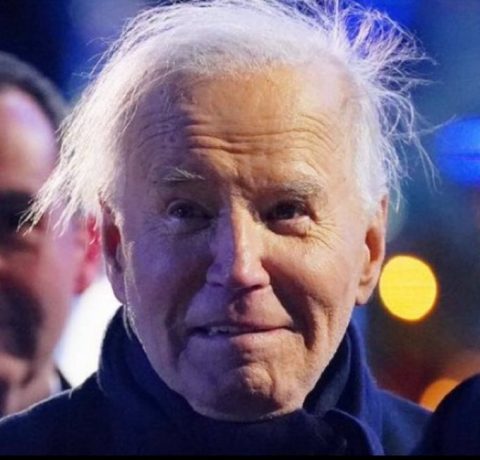
Outgoing US President Joe Biden used his last moments in office to roll out a blanket pardon for members of his family, effectively shielding them from potential repercussions they could face under Donald Trump.
Biden claimed on Monday that his family has long been targeted in a concerted effort to harm him politically.
“My family has been subjected to unrelenting attacks and threats, motivated solely by a desire to hurt me – the worst kind of partisan politics. Unfortunately, I have no reason to believe these attacks will end,” Biden said in a statement.
The pardon concerns “any nonviolent offences against the United States” five of Biden’s family members might have committed starting from January 1, 2014 to the end of his term as president.
“I am exercising my power under the Constitution to pardon James B. Biden, [his wife] Sara Jones Biden, [first sister] Valerie Biden Owens, [her husband] John T. Owens, and [first brother] Francis W. Biden,” the outgoing president said, adding that the “pardons should not be mistaken as an acknowledgment that they engaged in any wrongdoing.”
The pardon effectively buries the years-long James Biden influence peddling affair, being probed by Congressional Republicans and journalists. While he did not face any criminal charges, Biden’s brother James, a former nightclub owner, broker and political consultant, has been accused by Republicans of lying to Congress, as well as acting as an unregistered foreign agent.
James and the president’s son, Hunter, were subpoenaed over the alleged involvement of President Biden in their business dealings in the US and abroad, namely in China and Ukraine. Hunter Biden was pardoned by his father late last year, months after his conviction on gun and tax charges and as he faced sentencing in a separate case.
The controversial pardon came despite Joe Biden’s repeated promises not to intervene in his son’s criminal cases.
Russian diplomat accuses Kiev of genocide
RT | January 20, 2025
The Ukrainian military is conducting “language-based genocide,” senior Russian diplomat Rodion Miroshnik claimed on Sunday.
Captured Ukrainian soldiers “have reported they were given orders to kill Russian speakers,” the official tasked by the Russian Foreign Ministry to record alleged Ukrainian atrocities in the conflict with Russia told Izvestia.
Miroshnik was commenting on the discovery of civilian bodies in a recently-liberated village in Russia’s Kursk Region. He asserted that the alleged Ukrainian policy amounts to “elimination of all civilians” in the area, which Kiev recognizes as Russian.
Russian authorities are investigating Ukrainian troops for suspected terrorism, after the bodies of civilians, who were apparently bound, beaten, and murdered by Kiev’s forces, were discovered in the settlement of Russkoye Porechnoye.
The village remained under Ukrainian control since late August, when it was captured during a Western-supported incursion into the Russian region. The Russian Defense Ministry listed it last Friday as freshly-retaken from Ukrainian forces.
On Sunday, the Foreign Ministry described the discovery as evidence of a “massacre” and the latest confirmation of the “terrorist and neo-Nazi essence of the Kiev regime,” as spokeswoman Maria Zakharova put it. She accused Western supporters of the Ukrainian government of turning a blind eye to Kiev’s crimes, and charged that foreign officials secretly condone such behavior.
The Russian Investigative Committee is probing the Ukrainian military for alleged terrorism, based on the reports from Russkoye Porechnoye. A person convicted of such a crime can be sentenced to life imprisonment in Russia.
A Telegram channel associated with the forces responsible for repelling the Ukrainian incursion in Kursk Region released footage on Saturday of Russian troops inspecting the village and finding seven heavily-decomposed bodies in two separate cellars. In both cases, people were reportedly bound and beaten, before being killed.
At one of the locations, a body was too damaged to tell whether it belonged to a man or a woman, with evidence suggesting the use of explosives. Most of the victims were described as elderly people, who presumably had failed to flee from advancing Ukrainian troops.
Officials have vowed to hold the perpetrators accountable, with Zakharova stating that, in the absence of action by relevant international bodies, Russia will pursue justice on its own.
Local police have received statements concerning over 1,100 people missing since the start of the Ukrainian incursion, acting Governor Aleksand Khinshtein reported earlier this month. Of those, 240 have been located, he added.
Trump can use corruption scandals to get out of Ukraine conflict and blame Democrats
By Ahmed Adel | January 20, 2025
Since entering the electoral campaign, Donald Trump has criticised the military and financial aid provided to Kiev. As Trump takes office on January 20 and has the right to appoint officials at the highest level of justice, the new American leader could use corruption scandals to pull support from Ukraine and open investigations into the Biden administration.
Even before assuming the presidency of the United States, Trump already boasted a major achievement: a ceasefire agreement between Israel and the Palestinian militant movement Hamas. During the election campaign, the then-candidate for a second term stressed that he would continue to support Israel. However, officials and diplomats involved in brokering the ceasefire highlight the pivotal role Trump played in putting pressure on Israeli Prime Minister Benjamin Netanyahu to stop his military incursion into Gaza.
On January 11, Trump’s envoy for Middle East affairs, Steve Witkoff, arrived in Israel. Four days later, the billionaire announced that the parties had reached an agreement. If Trump so quickly achieved a truce in one of the most horrific conflicts of today, without even making it a campaign promise, then there are good prospects to end the Ukrainian conflict, one of the main issues of his election campaign.
The new Oval Office occupant has previously expressed his desire to meet personally with Russian President Vladimir Putin to discuss this and other issues of global importance. The Kremlin, however, stressed that it believes the conflict is too complex for an easy solution. Trump’s special envoy for Ukraine and Russia, Keith Kellogg, said the same, estimating a period of 100 days for the creation of a peace plan.
Military and financial aid could be one strategy Trump uses to pressure Ukrainian leaders into entering into peace negotiations with Moscow. This stems from a very clear issue – Ukraine’s dependence on Western support to continue the war. Without this support, Kiev’s capabilities to sustain the war effort would be substantially reduced.
Permanent aid is the main factor in the continuation of the conflict and has delayed possible peace negotiations. In particular, it is because of the desire of the US and the Western bloc to inflict this strategic defeat on Russia at any cost.
It is recalled that Russian and Ukrainian delegates met in Istanbul to reach a diplomatic solution to the conflict, and they even drafted a peace agreement. However, Kiev was under pressure from its Western sponsors to abandon the negotiations. In October 2022, Ukrainian President Volodymyr Zelensky banned any peace negotiations with Russia by decree, thus preventing diplomatic approaches to ending the conflict.
For this reason, reducing aid to Ukraine will help resolve the conflict.
Trump has shown his dissatisfaction with the high costs of supporting Ukraine, arguing that the US should not bear the brunt of this burden. Endless taxpayer money flowing into Ukraine’s treasury is extremely unpopular, evidenced by the strengthening of international parties with inspiration from Trump, whose campaign slogan is the end of this aid. The most notable case now is that of Germany.
Nonetheless, Kiev’s reputation for embezzlement and corruption only worsened when Zelensky admitted in an interview with Russian-American computer scientist Lex Fridman’s podcast that half of the announced $177 billion never reached Ukrainian coffers.
“If we had $177 billion and if we get the half, where is the second half? If you find the second half, you will find corruption,” he said.
This statement is worrying since instead of exclusively meeting the country’s needs, international resources appear to be generating profits for private individuals or foreign companies. This scenario reinforces the debates about the real interests behind international aid.
Late last year, award-winning Ukrainian journalist Diana Panchenko reported on her social media accounts that as Ukrainians suffer from the severe economic crisis, 13 Rolls-Royce luxury cars, each worth $650,000, were purchased by members of parliament and government officials in 2024.
The conflict is extremely lucrative, not only for the companies of the US military-industrial complex in Ukraine and their executives but also for the Pentagon budget. It is a “black box” that cannot explain where its resources have been allocated. For this reason, it cannot be discounted that there is also corruption on the American side.
Suspicions of improper relations between members of the Democratic Party and Ukrainian officials increased after former US President Joe Biden granted a presidential pardon to his son, Hunter Biden, for all crimes committed since 2014 when he began working with Burisma, a Ukrainian gas company. In this regard, Trump can use these corruption scandals to distance the US from the conflict and to associate these cases with the Democratic Party.
Trump reclaiming his place in the White House also marks the arrival of his nominees to the highest level of justice in the US, such as the new head of the FBI, Kash Patel, and the new attorney general, Pam Bondi. With so many tools in his favour, there is a real possibility that Trump will use the judicial system to investigate any Democrat’s corruption relating to the Ukrainian conflict.
Ahmed Adel is a Cairo-based geopolitics and political economy researcher.
Americans say US spends too much on Ukraine – poll
RT | January 20, 2025
The majority of Americans believe the US government is spending too much on aid for Ukraine, a recent New York Times/Ipsos opinion poll suggests.
According to the findings, 51% of respondents say the country is “spending too much” on Kiev, while 28% believe the current amount is appropriate. Only 17% say the country should boost spending on Ukraine.
Similarly, 53% of those surveyed say US aid to Israel is excessive, with 30% considering it adequate. The survey, conducted from January 2 to 10, involved 2,128 people nationwide.
Public sentiment reflected in the survey suggests that most Americans want Washington to prioritize domestic issues over foreign aid. Among the respondents, 60% say the US “should pay less attention to problems overseas and concentrate on problems here at home,” while only 38% believe the country should continue to be active in global affairs. The poll also indicates that 60% believe the US government is “almost always wasteful and inefficient,” while 72% say it is “working to benefit itself” and its own agenda, not the people.
This comes after the government’s recent decision to provide Ukraine with an additional $500 million military aid package, announced on January 8. Congress has appropriated a total of over $175 billion on assistance for Kiev since the conflict with Russia escalated in February 2022, of which $65.9 billion has been direct military assistance, according to the latest data from the Pentagon.
US spending on Ukraine has recently drawn criticism from Marco Rubio, President-elect Donald Trump’s pick for secretary of state in the upcoming administration. Testifying before the Senate Foreign Relations Committee as part of his confirmation last week, he said the US should no longer give Kiev indefinite support and criticized the outgoing administration of President Joe Biden for failing to clearly delineate the “end goal” of the funds it has been pouring into the conflict.
“What exactly were we funding? What exactly were we putting money towards?” he asked, saying the current approach of “however much it takes for however long it takes” is not realistic.
Moscow has warned that Western aid to Ukraine only serves to prolong the conflict without changing the outcome. It has said it is willing to find a diplomatic solution to the conflict, but maintained that any settlement must begin with Kiev ceasing military operations and acknowledging the reality that it will not regain control of former Ukrainian regions that voted to join Russia. Moscow has also insisted upon Ukrainian neutrality, demilitarization, and denazification.
With FPÖ party in government Austria might stop supporting Ukraine
By Patrick Poppel | January 20, 2025
FPÖ delegation leader in the EU Harald Vilimsky criticized the video of Ukrainian President Volodymyr Zelensky and the attitude of the President of the European Parliament, who wants to wage war “as long as necessary.” The video of Zelensky in the European Parliament was once again accompanied by questionable statements.
In particular, the statements by Parliament President Roberta Metsola, who emphasized the EU’s support for Ukraine with the vague attribute “as long as necessary,” raise serious questions for the Freedom Party delegation leader. “Does ‘as long as necessary’ mean that this war will be fought to the last Ukrainian soldier, without giving peace and diplomacy a real chance?” Vilimsky asked.
He also criticized the stance of the European Parliament, which he believes reflects a frightening level of war rhetoric. “It is noteworthy that even factions such as the Socialists and the Left, who otherwise present themselves as peace parties, are now calling for more weapons and ammunition,” said the head of the Freedom Party delegation.
He stressed that the FPÖ, on the other hand, is clearly sticking to its line. “We are committed to de-escalation, diplomacy and peace negotiations. In this context, we expressly support the peace plans of the newly elected US President Donald Trump, which could enable a rapid end to the war.”
This situation in the European Parliament clearly shows the difference between the established structures and the opposition. But now this opposition is on the rise. The FPÖ is receiving more and more support not only in the EU elections, but also in the national elections.
The FPÖ will most likely be part of the government in Austria and then what those responsible in the party have always demanded will happen. FPÖ federal party chairman Kickl, for example, said earlier: “A possible ceasefire must be the starting signal for peace negotiations on neutral ground.”
“Now is the time to bring Austria’s importance as a neutral country into play in order to end the bloodshed in Ukraine,” said Herbert Kickl. “In the tradition of great statesmen like Bruno Kreisky, the Austrian federal government is called upon to use this new situation to actively offer Austria as a neutral place for further negotiations in order to finally end this senseless conflict.”
The FPÖ has been the only party in Austria since 2022 to call for peace in Ukraine as soon as possible and has been wrongly ridiculed as a party of “Putin’s friends”. The party also does a very good job of linking the issue of conflict and sanctions with social issues. The poor economic development is clearly seen as a consequence of the sanctions and this is how it is communicated to the people.
With an “FPÖ government”, Austria will become another state alongside Hungary that will actively work for peace in Europe. This trend could also reach many other states. In addition, this must always be seen in the context of the inauguration of Donald Trump. Geopolitically, the cards are now being reshuffled.
The FPÖ’s participation in the government is also the first step towards reviving Austrian neutrality, which was de facto abolished by the previous government through the sanctions policy. Historically and practically, Austria would then again be a good place for diplomatic projects and thus also a good place for future Ukrainian peace talks.
The rise of the FPÖ in Austria could therefore also have a geopolitical aspect and be of great international importance. Together with Hungary and other serious patriotic forces, a possible FPÖ government is also a problem for the globalist forces in the EU.
Particularly in the question of sanctions policy, there could be a development that could lead to the EU’s course being questioned more and more by individual member states. Austria and Hungary are being heard within the European Union.
The parliamentary platform “Patriots for Europe” within the EU will also gain a political weight as a result of the FPÖ’s victory. Indeed, one can clearly see a trend in the political landscape of Europe. And the best example of this trend is a general movement to defend national interests against the leadership of the EU. This development is now continuing in other countries. It is a movement critical of the EU, but one that is “very European”.
Patrick Poppel, expert at the Center for Geostrategic Studies.
Blinken overruled America’s top general on Ukraine peace talks – NYT
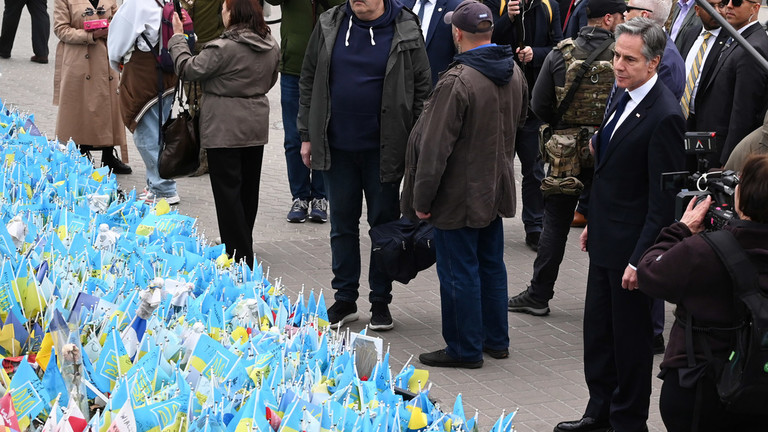
US Secretary of State Antony Blinken in front of a memorial for fallen Ukrainian soldiers, Kiev, Ukraine, May 14, 2024. © Getty Images / STR/NurPhoto
RT | January 20, 2025
Outgoing US State Secretary Antony Blinken urged Ukraine to continue its military efforts against Russia rather than pursue peace negotiations in 2022, the New York Times reported on Saturday.
In late 2022, Chairman of the Joint Chiefs of Staff Mark Milley advised Kiev to capitalize on its battlefield successes by seeking peace talks with Moscow. However, Blinken insisted that Ukraine should press on with its military campaign, the newspaper wrote.
“Less a peacemaker than a war strategist,” the US diplomat frequently argued against more “risk-averse Pentagon officials,” lobbying for advanced American weaponry to be sent to Ukraine, NYT wrote.
Washington has spent “approximately $100 billion” on Ukraine since the conflict escalated in February 2022, while allies and partners have contributed an additional $150 billion, Blinken said during a January appearance at the Council on Foreign Relations.
The outgoing Biden administration has expedited arms deliveries to Kiev ahead of the inauguration of US President-elect Donald Trump, who has indicated that he might reduce military aid to Ukraine in favor of addressing domestic priorities.
The Biden administration had been covertly arming Ukraine months before the conflict intensified, Blinken admitted in a January interview with the NYT. “Starting in September and then again in December, we quietly got a lot of weapons to Ukraine to make sure that they had in hand what they needed to defend themselves – things like Stingers, Javelins that they could use,” he said.
Russia and Ukraine initially engaged in peace negotiations in early 2022 in Istanbul. Both sides provisionally agreed to a truce under which Kiev would renounce its NATO membership ambitions, adopt neutrality, and limit its military size in exchange for international security guarantees. However, Ukraine later withdrew from the talks at the urging of then-UK Prime Minister Boris Johnson, according to David Arakhamia, a Zelensky-allied MP and chief negotiator for Kiev.
Last month, Swiss diplomat Jean-Daniel Ruch similarly accused the US and UK of derailing peace talks between Kiev and Moscow. Speaking to the French-language media outlet Anti-Thèse, Ruch claimed that Johnson acted “on duty for the Americans.”
Moscow has reiterated its willingness to resume peace negotiations, provided they are based on the Istanbul draft agreements and reflect the “new territorial realities,” including the accession of four former Ukrainian regions to Russia and recent battlefield developments.
EU member pledges to veto future Ukraine aid
RT | January 19, 2025
Slovakia will veto any future Ukraine aid considered by the EU, Prime Minister Robert Fico has announced. Bratislava will now take a “reciprocal” approach to hostile moves by Kiev, he warned.
Fico issued the threat in a video address posted to social media late on Saturday. Ukraine’s Vladimir Zelensky believes everyone should be his “servant,” Fico asserted, warning such an approach would not work with him.
“In my case, the scythe hit a rock. Robert Fico is a Slovak prime minister and not a Ukrainian servant,” Fico stated.
Bratislava will take a “reciprocal” approach to Kiev in the row over the transit of Russian natural gas that Kiev ended at the beginning of the new year, Fico warned, pledging to veto any future aid packages from the EU. The packages require unanimous backing from all the members of the bloc to be passed.
The Slovak prime minister also reiterated other potential moves against Ukraine that he had articulated previously, namely halting the emergency electricity supply, stopping humanitarian aid deliveries, or cutting benefits received by Ukrainian refugees in Slovakia.
“I am increasingly convinced that President Zelensky is forcing us into reciprocity, and we will go for it,” Fico stated.
Once a major supporter of Ukraine, Slovakia changed its stance after Fico took office in late 2023, halting military aid to the country and pledging to veto its potential accession into the US-led NATO bloc.
The already strained relations between Bratislava and Kiev have further deteriorated owing to the row over the Russian gas, which Slovakia has been heavily dependent upon. Kiev opted not to renew the transit contract and halted the flow despite Moscow’s repeated signals that it was prepared to continue supplying its customers in the EU through Ukraine’s pipeline system.
Fico initially proposed negotiating with Zelensky on the border between the two countries, but the latter urged him through social media to come to Kiev instead. The response was deemed undiplomatic in Slovakia. Fico then proposed to meet Zelensky in Davos next week, where both leaders are expected to head. The proposal was openly mocked by Kiev, with Zelensky suggesting the Slovak leader could end up in Sochi, Russia, instead.
Russian Victory or Political Settlement in Ukraine?
Ambassador Chas Freeman, Alexander Mercouris & Glenn Diesen
Glenn Diesen | January 15, 2025
I had a conversation with Alexander Mercouris and Ambassador Chas Freeman, a former Assistant Secretary of Defense for International Security Affairs. Besides being a former ambassador to Saudi Arabia, Freeman’s career included opening China with Henry Kissinger and Richard Nixon in the 1970s and developing the post-Cold War security architecture in Europe.
We discussed the messy world that the Biden Administration is handing over to Trump. There is seemingly a genuine desire to end the proxy war in Ukraine, and Trump may also achieve a ceasefire in Palestine. However, NATO’s escalations in Ukraine to sabotage possible negotiations and the reckless support for HTS in Syria have reduced the possibilities available to Trump. Will the Ukraine War be resolved by a Russian victory or a political settlement?
The whitewashing of Western crimes in Syria
By Sonja van den Ende | Strategic Culture Foundation | January 18, 2025
After the fall of Syria and the partial collapse of the Axis of Resistance, a predictable smear campaign has been launched in Western media, which, like for Russia, is based on distortion and lies.
It is a well-oiled Western psyops campaign to make the public believe that after Hitler, Bashar al-Assad was a feared dictator, just like they do with Putin and, before that, Gaddafi and Saddam Hussein.
The world was surprised when, on December 8, 2024, the most feared terrorists took over the old Syria, a semi-secular state form, and immediately turned it into a caliphate.
But for the American imperial planners, their European allies, and their terrorist proxies, including those in Ukraine, there was no surprise. They knew about it. The NATO-sponsored terrorist militia was trained by the CIA in Idlib, and provided with drones by Ukraine, drones that are produced in Ukraine, from semi-finished products from a company in the Netherlands called Metinvest B.V.
Large parts of the Syrian army did not defect, as the Western media and so-called experts claim. About 9,000 soldiers are still held captive in the Syrian desert, or in the Sednaya prison, held by the terrorists.
Not only the terrorists but the American army is in charge everywhere in Syria. American rulers secretly prepared for the occupation of Syria, as they did with Iraq. They primed the terrorists in Idlib for the final offensive with Operation Dawn of Freedom.
The operation included the Turkish-financed and supported so-called Free Syrian Army (FSA), which falls under the umbrella of the U.S., also known as the Syrian National Army. As early as 2016, Turkey began to assemble a new coalition of so-called Syrian rebel groups, including many former FSA fighters, in an attempt to create a more cohesive and effective opposition force. This coalition consists of the terrorists most feared by the Syrian people, who have been massacring civilians since 2011. Among others, the Syrian National Army includes Chinese Uyghurs, notorious for their brutality among head-choppers.
Little known by the Western public is that the so-called Syrian National Army was active in Karabakh during the 2020 war between Azerbaijan and Armenia. Turkey provided military support to Azerbaijan by supplying the terrorists of the Syrian National Army. This proxy army of international mercenaries, controlled by the U.S. and Turkey, has been fighting in Ukraine for the NATO-backed Kiev regime. The most brutal of its senior members is Abu al Shishani, who has been hiding in Ukraine for years – despite his U.S. handlers declaring him dead in 2017.
Of course, the Western terrorist sponsors wash their hands of blood. After all, there are supposed to be no real U.S. “boots on the ground” in Syria, they will argue, but there is an army base coordinating the terrorists who fight for them. The same applies to Turkey.
Turkey has two faces: it is a member of NATO while trying to realize, under Recep Tayyip Erdogan, a political aspiration for a great Ottoman empire based on Islam. Some say it is utopian or a lie, but it is not. The Syrian people know this very well; for 14 years, this has been going on and, unfortunately, has come true.
Then there is the other “superpower” in the region, the tiny Zionist apartheid project called Israel. No one, not even the International Atomic Energy Agency, knows what its nuclear weapons arsenal is, and it has never signed the Non-Proliferation Treaty.
Since 2022, Israel has become a fully-fledged fascist regime, the most ultra-right government in the history of the colonialist project, which carries out the agenda of the settlers. These settlers are dangerous terrorists and, like ISIS (Daesh), use religion, racism and murder as weapons against all other beliefs and opinions. Yet the United States and its European lackeys continue to brazenly back the Zionist rogue state. The U.S. has supplied it with $20 billion in military aid over the past year despite the genocide in Gaza.
One of the seven political parties that govern Israel is the Otzma Yehudit Party. This party advocates for the deportation of those they consider to be the “enemies of Israel”, such as the Arabs. The party has been described in the international press and also in Israel itself as an extremist, ultra-nationalist, fascist, and racist organization.
One of the supporters of this party is Daniella Weiss, who watched with her extremist settler friends as “Gazans” were murdered on a boat off the coast of Gaza and cheered. She and her group are invited to the inauguration of Donald Trump, who himself is a Zionist and his entire incoming administration consists of nothing but Zionists.
After the attack of the U.S. and Turkish-sponsored terrorists in the north of Syria, Israel attacked the south, in Dara’a, which was agreed upon, planned and coordinated with the U.S. and Turkey. Dams and bridges were blown up, and large-scale bombardments on the Syrian army were carried out. Large parts of the army were captured and imprisoned, left in the desert, or the former prison Sednaya. They surrendered; the superior force was too great. Remnant army forces, mainly from the “Tiger Forces”, are fighting the terrorists in the hills around Hama and Latakia.
The Western media was there suspiciously quickly, after a day or so, visiting Sednaya for photo-ops. All kinds of so-called Western journalists arrived in Syria, mainly to promote the narrative that the terrible regime was gone, Syria was “free”, and Assad had turned the former Sednaya prison into a “human slaughterhouse”.
Many fake stories, especially by CNN, about so-called prisoners who were hung on ropes, photos were distributed, which later turned out to be photos from a museum in Iraq. There were also stories about prisoners in underground dungeons, yet no proof of this has ever been found.
Certainly, everything was prepared for the “journalists”; they were already waiting in Jordan, primed to cross into Syria when the “surprise fall” happened.
Years ago, there was a report made by Amnesty International called the “Slaughter House”, but now, in 2025, no evidence has been found for this fake report. What has become clear is that a large number of the prisoners were ISIS (Daesh) members, who have now been released and are imposing a terror regime on minorities such as the Alawites, Christians, and Kurds.
The West is now professing innocence and wants good relations with what they call the new government. All kinds of Western politicians have visited the terrorist leader Abu Mohammed al-Golani. He is dressed up in a new suit and his beard is trimmed. The West wants to send the Syrian refugees back from Europe. There are also flight connections again. The airport of Damascus is changed into a mosque. Is the new caliphate going to send its terrorists on holiday? To do what? Commit attacks, perhaps? Russia, in particular, must be careful, especially after the mass murder at the Crocus City shopping complex last March when 145 people were killed by Daesh-linked terrorists. Many terrorists in the new Syria are from the Caucasus and have years of experience.
Transferring terrorists to Idlib after the fall of Aleppo in 2016 was never a good idea. History has proven it.
The U.S. and its European partners want to freeze the conflict in Donbass, which can result in the same problem as in Syria. That was the biggest mistake by Assad and the former government, which took too humane a position on terrorists.
Featured Video
Seyed M. Marandi: U.S. Military DIVIDED? Iran’s Secret Defense EXPOSED
or go to
Aletho News Archives – Video-Images
From the Archives
‘Israel sees Iran as obstacle to its policies’
Press TV – August 25, 2017
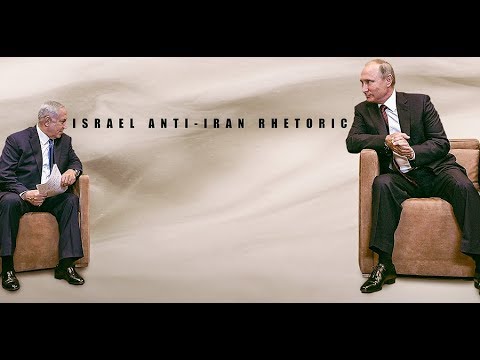
Prime Minister Benjamin Netanyahu has said that Israel felt threatened by Iran’s growing influence in the Middle East. Netanyahu expressed his Iranophobic view in a meeting with Russian President Vladimir Putin in Russia’s Black Sea resort of Sochi on Wednesday. Press TV has asked Scott Rickard, former American intelligence linguist from Tampa, Florida, and Brent Budowsky, a columnist at The Hill from Washington, to give their thoughts on the issue.
Rickard said Tel Aviv is concerned about the fact that the regime could not carry out its old project to spread sectarian divisions and pave the way for dismemberment of the countries in the Middle East region because of the Iranian-led resistance against Israeli policies, not only in the occupied territories of Palestine but also in the whole region.
“Iran is not a threat to Israel whatsoever. The threat that Israel sees is the fact that their Oded Yinon Plan is being put to a hold by Iran,” the intelligence linguist said on Thursday night.
“They (the Israelis) look at Iran as a threat only because they have no influence on their governments and Iran is autonomous and is not under the Zionist influence,” he added.
Since the victory of the Islamic Republic of Iran in 1979, Tehran has been critical of Israel’s policies in the region, whereas “no leaders [of other states] even dared to speak out against Zionism,” Rickard argued. … continue
Blog Roll
 Aletho News
- Iran declares ‘historic victory’ over US, says enemy forced to accept its proposal
- Trump Claims Ceasefire, Reopening of Strait of Hormuz Agreement with Iran
- Israeli tank fire killed UN peacekeeper in Lebanon, UNIFIL investigation finds
- Russia, China block Bahrain-sponsored UN resolution on Strait of Hormuz
- The US-Israeli War on Science is an Assault on our Future
- Trump’s Promise to Bomb Iran ‘Like Never Before’ Faces Brutal Logistics — Expert
- Germany seeks to restrict stays abroad for men of fighting age – Berliner Zeitung
- Evidence points to Ukraine being behind TurkStream attempted sabotage, but that should come as no surprise
- Sri Lanka secures supplies of Russia oil – minister
- Nations across Asia strike direct deals with Iran for Hormuz passage
- If Americans Knew
- Thousands dead and neighborhoods razed to the ground: Aid agencies fear southern Lebanon is becoming the new Gaza
- The war the US is fighting for Israel could cost trillions
- ‘Cigarette Burns, Nail Wounds’: Toddler Tortured in Gaza to Coerce Father
- Trump Says US Sent ‘a Lot of Guns’ to Protesters in Iran
- Israeli forces destroy 17 UN peacekeeper cameras in south Lebanon
- US-Israeli strikes ‘completely destroy’ synagogue in Tehran
- Archbishop for US Military Says Iran War Is Unjust Under Catholic Teaching
- Iranian leaders’ Open Letters to the American People
- Trump says Iranians appreciate bombs, WHO warns of nuclear risks – Daily Update
- U.N. experts demand Israel release prominent Gaza doctor after reports of ‘severe torture’
- No Tricks Zone
- An Inconvenient Tree: Uncovered In Alps… Europe Much Warmer Than Today 6000 Years Ago
- New Study Reports A 60% Slowdown In Greenland’s Ice Loss Rate In The Last Decade
- Low Intensity Tornado Wrecks Major Solar Farm, Creating A Potential Toxic Dump
- New Study Finds Warming Saves Lives…Cold Temperatures 12 Times More Deadly Than Excess Heat
- German Science Blog Accuses PIK Climate Institute Of Hallucinating Climate Tipping Points
- Devastating Assessment Of Comirnaty Vaccine By Former Senior Pfizer Europe Toxicologist
- New Study: CO2 Is ‘Effectively Negligible’ As An Explanatory Climate Change Factor Since 2000
- Former Pfizer Toxicologist Dr. Helmut Sterz Tells Bundestag Hearing Pfizer Vaccine Should Have Never Been Approved
- Energy Expert: Germany’s Nuclear Phaseout Was A “500 Billion Euro Mistake”
- New Research: South Australia’s Mid-Holocene Sea Surface Temperatures Were 4°C Warmer Than Today
 Aletho News