Exposed: How US Fumbled Chance to Buy Russia’s Best-in-the-World Waterbombers to Fight LA Infernos
© Sputnik / Roman Denisov / Go to the mediabank
By Ilya Tsukanov – Sputnik – 17.01.2025
From budget cutbacks and DEI hiring to giving away much-needed “surplus equipment” to Ukraine, the fires devastating wide swathes of Los Angeles have turned into an unmitigated $250 billion disaster. But it didn’t have to be this way.
This week, Russian business media revealed that between 2017-2019, Russia and the US were actively negotiating a contract on the sale of up to ten of Russia’s powerful Beriev Be-200 waterbombers to California’s Seaplane Global Air Services.
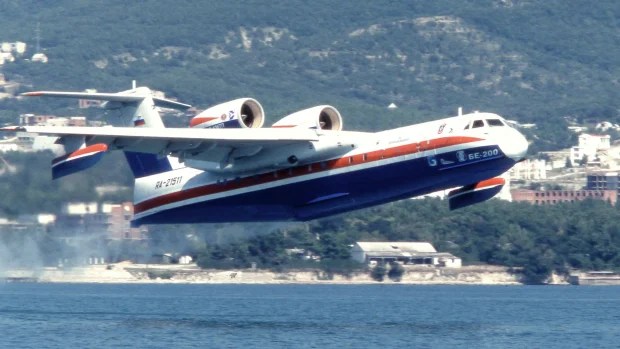
The Russian planes, which would have been flown by an emergency services operator out of Santa Maria Public Airport, just 200 km northwest of one of the epicenters of the LA blazes, have a world-class reputation fighting wildfires from Italy and Indonesia to Portugal, Greece, Israel, Turkiye, and of course Russia itself.
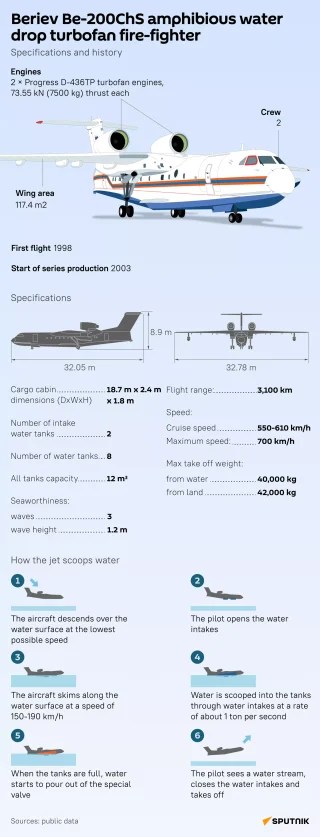 Be-200s can carry 12 tons of water or fire retardant, swooping down on reservoirs, lakes or oceans to fill up in 14 seconds flat. Flying at speeds up to 700 km/h and featuring a 2,100 km range (3,300 km ferry range), Be-200s fighting the LA fires would have been able to make multiple sorties, dropping over 50 tons of water before needing to refuel.
What happened?
Beriev was reportedly ready to sell the Be-200s with Russian PowerJet SaM146 turbofans, but the US side insisted on the D-436TP, an engine manufactured by Ukraine’s Motor Sich.
In 2020, the US Federal Aviation Administration insisted on separate certification for the planes and their engines. Motor Sich refused, having banned the delivery of the engines to Russia, and so the contract was scrapped.
Rostec, Beriev’s parent company, confirmed Friday that an agreement on the sale of Be-200s was lined up, with all ten of the planes to have been handed over by late 2024.
“This is one of the clearest examples of how politics can harm common sense,” Rostec said in a statement. “The contract was disrupted because the Americans did everything to make the procedure for approving the engines and airframe for operation in the United States impossible.”
“Perhaps the presence of our aircraft… would have reduced the damage from the natural disaster in California. But intrigues have done their job. The result has been thousands of families left homeless and billions in losses. We sympathize with the ordinary people who have become hostages of the political games of their authorities,” the company added.
Kremlin reacts to UK plans for military build-up in Ukraine
RT | January 17, 2025
The possible appearance of NATO-linked military infrastructure in Ukraine is a concern for Russia, Kremlin spokesman Dmitry Peskov said on Friday, commenting on a new security deal between London and Kiev.
The 100-year bilateral agreement, signed by Ukrainian leader Vladimir Zelensky and British Prime Minister Keir Starmer on Thursday, states that the two nations will “explore options for deploying and maintaining defense infrastructure in Ukraine, including military bases, logistics depots, reserve military equipment storage facilities and war reserve stockpiles.”
While the establishment of such facilities would in itself not amount to Ukraine joining NATO, a scenario that Moscow strongly opposes, the British plans are “certainly worrisome”, Peskov told a media briefing.
He also relayed the Russian government’s negative attitude toward British statements that its defense cooperation with Ukraine would include enhanced “collaboration on maritime security” near Russian borders, including in the Azov Sea. Peskov emphasized that the Azov Sea is a Russian inner body of water, so that “interactions between Ukraine and Britain can hardly happen there.”
Moscow views NATO as a hostile entity and has accused its members of waging a proxy war against Russia, using Ukrainian soldiers as ‘cannon fodder’.
The UK has been one of the most vocal supporters of Kiev’s war effort. In the 100-year agreement, it has committed to no less than £3 billion ($3.66 billion) in annual military assistance to Ukraine until financial year 2030/31.
NATO’s eastward expansion since the 1990s – conducted in violation of assurances given to Moscow to secure its acceptance of Germany’s reunification – is one of the primary causes of the current hostilities, according to Russian officials.
UK promises to ‘explore options’ for military bases in Ukraine
RT | January 17, 2025
London has revealed details of a long-term partnership agreement with Kiev, which includes broad plans for military infrastructure development and defense cooperation over the next century. The document suggests the potential establishment of military bases in Ukraine, with an emphasis on aligning these initiatives with NATO standards for maximum effectiveness.
The 15-page declaration, signed on January 16, 2025, lays out a framework for cooperation between the United Kingdom and Ukraine across various sectors, with a primary focus on military collaboration. British Prime Minister Keir Starmer and Ukrainian leader Vladimir Zelensky formalized the deal during a ceremony in Kiev on Thursday.
“The Participants will explore options for deploying and maintaining defence infrastructure in Ukraine, including military bases, logistics depots, reserve military equipment storage facilities and war reserve stockpiles,” the document states.
The agreement also emphasizes maritime cooperation, particularly in the Black Sea region. The UK has pledged to enhance Ukraine’s interoperability with NATO in the maritime sphere through joint naval operations, port visits, and the development of Ukrainian naval bases.
“We will work together to ensure NATO learns the lessons from Ukraine’s experience in the Black Sea to inform its development of future maritime capabilities. We will promote the development of naval bases on the territory of Ukraine,” the document reads.
Another section highlights plans to “deepen cooperation on long-range strike capabilities,” integrated air and missile defense, and the stockpiling of complex weapons to bolster “deterrence.”
Additionally, London has committed to providing Ukraine with annual military assistance of no less than £3 billion until at least 2031, and “for as long as needed to support Ukraine.”
While the agreement lacks detailed, binding commitments beyond promises to expand, intensify, and facilitate collaboration across multiple sectors, Zelensky hinted at potential “secret” components within the pact.
The UK has been one of Ukraine’s prime backers since the escalation of conflict between Moscow and Kiev in February 2022. It has committed 12.8 billion pounds ($16 billion) in military and civilian aid to Ukraine and reportedly trained 50,000 Ukrainian troops on British soil.
Russia has sharply criticized London’s continued support of Kiev as a sign that the UK government “clearly does not seek to resolve the conflict.” Russian Foreign Ministry spokeswoman Maria Zakharova previously said “they are doing everything possible to make it drag on, thus prolonging the suffering of the Ukrainian people.”
Meanwhile, reports suggest that US President-elect Donald Trump, set to take office next Monday, may propose deploying Western troops as peacekeepers along a demilitarized zone between Russia and Ukraine. The rumored plan reportedly excludes US forces, relying instead on “European” soldiers acting outside NATO’s command structure.
London remains cautious about the idea of sending British troops to Ukraine as part of any peacekeeping force, even though Starmer is said to have discussed the matter with French President Emmanuel Macron, according to The Telegraph.
Accepting the Truth About Ukrainian Casualties is the Only Real Path to Peace
Will the Truth About Ukraine’s Staggering Death Toll Finally Bring an End to the War?
By Michael Vlahos | Landmarks: A Journal of International Dialogue | January 10, 2025
They say “all wars must end.” Yet how does this actually happen? First, all parties must agree — to go down that path together. Next, they must enter into formal negotiation, which almost always means horse trading, compromise, and accommodation. Finally, and most important, all belligerents must want the war to end.
Russia almost certainly wants this. Its minimum territorial objectives are within reach. Moreover, the destruction of Ukrainian military potential — equipment, infrastructure, and stockpiles — is almost complete. Furthermore, the General Staff’s strategy of attrition is approaching its endpoint. The Ukrainian Army is breaking, and Ukrainian national society is literally on the eve of destruction.
Within the “collective West,” the new “Decider” and the majority of Americans also want this war to end. Yet powerful constituencies in EU and American politics are emotionally invested in keeping war going. Red Hawks and most of the Blue Establishment are committed to defanging Russia and demonstrating Alliance strength and cohesion. A settlement that reeks of defeat, they say, will only embolden predatory “autocracies” and further fissiparous “extreme right wing” populism in Europe.
The Trans-Atlantic War Party Establishment, therefore, is determined to deny the Decider a free hand. If Mr. Trump gives away too much to Mr. Putin, he will be derided as an “appeaser.” Red Hawks — including barons in his new administration — will pressure him to bargain from “a position of strength,” creating an instant fissure in his authority if he shows weakness, and an instant, exploitable opening for Blue. Their bitter establishment, still licking its electoral wounds, will leap at the opportunity to tar Trump as a Paper Tiger, abdicating America’s predestined world leadership while also abdicating the sovereignty of the American Century: They will declare, “Even his advisers say so.”
However, if the new president gives in, and “shows strength” by up-arming Ukraine, and offering only a suspension of hostilities, the war will likely go on. Putin has declared that Russia will not accept a truce, armistice, or ceasefire in lieu of a permanent settlement. A long-term compact can be achieved, he insists, only by accommodating Russia’s inviolable strategic needs. Absent this, negotiation will fail, and failure would surely lead to much buyer’s remorse and dismay among those millions who voted for Trump’s promise to bring the fighting to an end.
For “45/47” it would represent a personal failure as well. After all, he vowed to end the war with speed and éclat: Éclat in the sense of “acclamation” as well as “brilliant success.” This is no trivial matter for him: Success could only elevate and enhance his now-mythic persona. In contrast, failure would be a body blow to his stature.
Thus, failure now beckons from two directions. If Trump “appeases,” then Blue will launch him into the meme trajectory of “weak king, enemy comprador.” However, if his Peace Ship fails, and the war goes on, he will be fatefully captured by the War Party, and the conflict will become “Trump’s War.” He will then be well and truly stuck tight in their hand-crafted Tar Baby and its tender snare.
So how then can a new president thread a course between the Scylla and Charybdis of antagonists, foreign and domestic? Perhaps, like Odysseus, the best course might be to “choose the lesser of two evils.”
Here, the lesser evil is a settlement that both accommodates Russia and saves Ukraine. The greater evil is a continuation of the war, leading to the destruction of Ukraine and the breakup of NATO — and just possibly, another world war.
All this means taking on, and overthrowing, the grip of the War Party (Red and Blue) on this nation’s affairs. There is only one way, moreover, to do this: He must break the iron narrative of “Appeasement” — where the only strategic choice is between war and surrender. Thankfully, the hammer and chisel that will break it is at hand.
It means, simply, that the president must tell the whole truth, at long last, about this war.
The Ukraine proxy war against Russia was sold through the greatest Black-and-White story ever told: Of naked aggression unleashed by a maniacal dictator, the latest threat in a long lineage of Evil, from Kaiser to Hitler to Stalin to Mao, and now, the tyrant Putin.
The truth is that the United States, after 2009 (and especially 2014), relentlessly curated conflict between Russia and Ukraine, with the ultimate intent of expanding NATO and breaking Russia. This is the real story. Highly authoritative expert commentary on how it happened is easily accessed: For example, the lectures and videos of John Mearsheimer, and the almost biblical epic volume of Scott Horton, Provoked. There are many, many sources, both scholarly books and an Internet library of unimpeachable analysis.
Yet official “truth” — from the US and NATO governments — has never veered from the iron narrative that is the Manichaean testament of Putin perfidy, Russian savagery, and a “long, twilight struggle” of good vs. evil, of democracy vs. tyranny, of light against the darkness. Moreover, the “commanding heights” of “the collective West” — its entire ruling establishment — sold its credulous electorates this story, supplemented daily by full injections of Ukrainian propaganda. This “Information Op” was itself fully funded by the US and NATO, and orchestrated by a contractual alliance between intelligence agencies and hundreds of PR firms.
This united front presented by Government, Mainstream Media, Intelligence and the propaganda industry effectively marginalized the voice of actual reality. Those advocating for “foreign policy restraint” were labelled “isolationists.” Those who presented the actual backstory to the war were dismissed as Putinists or Orc lovers or Vatniks.
Over three long years of war, however, actual reality began to sink in. More and more Americans became disenchanted with the war and increasingly suspicious of the official story, and of a Biden administration that, on so many fronts, and with so many issues, had simply, brazenly, lied to the American people. Moreover, by the autumn of 2023, the Ukrainian war effort was visibly failing, a reality that propaganda could no longer conceal.
Today, Ukraine stands at the precipice of national existence.
Ukraine in 1994 was 52 million strong. Then the draining began. The best and the brightest sought opportunity in the EU and Russia. Ukraine was a nation of perhaps 33 million in 2022. Today, a quarter of that already-diminished country’s population has fled to the European Union, and another quarter is in the now Russian oblasts, or residing as new migrants in the Russian Federation. The nation itself has shrunk by half.
Yet this is only one edge of the cliff. Ukraine’s fertility has collapsed. Prewar, it was already one of the lowest in Europe. The years of war have pushed it down below 1.0, perhaps even to 0.7. In the war, Ukraine has sustained shockingly massive casualties. Combined with the sheer number of able-bodied men who are fleeing the country, both draft-dodgers and deserters, or those who were migrants loath to come home, Ukraine — sans settlement — is poised to keep shrinking. Within a generation it may wither to the size of Belgium, perhaps even that of Belarus.
Then there is the matter of casualties. Kiev and Washington — and the entire Media and Official Propaganda industrial complex — has been silent on the subject of battlefield losses until recent months, when the yawning catastrophe could no longer be denied. Yet all along there have been signs and signals and harrowing data points. Stitched together, this is the story they tell.
In the first 18 months of the war — simply counting military obituaries and dead SIM cards — comes to ~330,000 Ukrainian soldiers KIA. Moreover, more than 50,000 lost one or more limbs. Moreover, in the last 18 months, monthly losses intensified. Kiev itself has declared that the army needs 30,000 replacements a month just to maintain the current force. Does this mean that, from September 2023 to date, another ~540,000 soldiers were lost?
Here, it is necessary to be mindful of what Soviet historians call “irrecoverable” losses. Hence, a soldier who will never return to the fight is “irrecoverable.” Killed, crippled, missing: This is the true sum of an army’s losses in war. For Ukraine, arithmetic says that number is not less than ~920,000 men.
Yet not all of these are dead or crippled. Deserters also represent, in a very real sense, irrecoverable casualties, as these are the able-bodied who have fled the country, or who have gone to ground inside Ukraine. Eurostat reports that 650,000 men of fighting age have fled Ukraine. Furthermore, reeling under Russian hammer-blows across the Donbass Front, desertions are reportedly over 200,000 in 2024. Thus, Kiev has been forced to raise its monthly mobilization target from 30,000 to 40,000.
Ukrainian journalists cite a desertion rate of 160 per day in early 2024, rising to 200 by summer, and then jumping to 380 by autumn. This suggests that desertion, over the past year at least, has accounted for a thick slice of irrecoverable losses, perhaps 4500-5000 per month. The sudden surge in desertion after September 2024 has been driven by crushing exhaustion and defeat. This in turn has pushed the state to desperate measures. All “conscription” in Ukraine today takes the form of violent kidnapping, even of the sick, aged, and infirm. Yet in spite of the utmost brutality, that 40K per month target is now short about 20,000 each month.
Moreover, actual irrecoverable losses, across the board, are almost certainly understated. For example, many platoon and company commanders simply do not report desertions, for fear of punishment by their field grade superiors. Likewise, the number of missing KIA is massive, given the sheer number of Ukrainian corpses left on the battlefields. A recent composite of casualty estimates puts the KIA total at 780,000. Adding in the severely wounded, total irrecoverable Ukrainian battle losses could be as high as 1.2 million, after 1000 days of war.
To put all this in perspective: Today’s shrunken Ukraine is half the size of the French Republic in 1914. In World War I, France lost 3.6 percent of its population: A monstrous and unnecessary national bloodletting, and a stain on the very idea of “Civilization.”
America’s proxy war against Russia — goading and pitting Ukraine against a nation nearly 8 times its size — has led to yet another unnecessary bloodletting. Ukraine has lost 3.9 percent of its population. Hidden from us for years, in plain sight.
What hath America wrought? Biden’s narrative narcissism would have us believe the United States has been heroically defending democracy against tyranny and pure evil. How he boasted, loudly, that America was bleeding Russia white — all for the price of not one American soldier. What a bargain! However, in sharper focus, an American emperor and his court, in their lust to bring Russia to its knees, destroyed another nation (and this time, not a “primitive,” but rather a “European” nation) to no purpose but to fulfill its own vanity.
Unwittingly perhaps, the real effect of Biden’s fulmination was to fulfill the enemy’s existential need. Curating and handcrafting this naked American proxy war, ironically, gave Russia the signal opportunity to halt NATO expansion, and buy itself strategic breathing room. Biden’s assault served to mobilize and renew Russian national identity. Eager and blind, an addled Emperor thus became Russia’s strategic helpmate.
Now try out this counterpoint. Imagine an alternative reality where Mr. Putin actually agrees to a ceasefire in-place. This is the last fallback wet dream of the US/NATO War Party. An armistice — with NATO “peacekeepers” — would surely let the collective West rejuvenate and rearm Ukraine. A new army, drafted from the 18-25 age cohort, including even women, might then be harnessed by the War Party to have another go at Russia, and give us yet another vicarious national bleed.
In this fantasy, a nation of 20 million (or less) would be trumpeted as the return of Ulysses, i.e., the million fighting men who fled, and their families, would return to their homeland to “fight the good fight” yet again. In the next war, a righteous Ukraine, eager and steel-annealed to exact revenge, would unleash “Fire and Sword” on the Russian serpent: A summoning of NeoCon Nirvana.
Yet think: An armistice premeditating another war could lead only to the further, final hollowing-out of Ukraine. Any male person in that cursed country — given the terrors they know — will surely flee: “Get out now before it’s too late!” The irreversible downhill slope in fertility keeps singing, ominously, of an irreversible path toward national extinction. Ukrainians will never, ever embrace yet more blood after the sheer terror of 2022-2025.
The Ukraine Question must be permanently settled.
Only this argument can silence Red Hawks and the Blue War Party alike. All the peoples American Empire has ravaged and wrecked this century — Afghanistan, Iraq, Libya, Syria, Yemen — stand as mute witness to the dark descent of a once stainless and world-redemptive American Mission. The new president could make use of this American myth about itself to proclaim to the world that “The Fall” stops here.
Bringing peace to Ukraine is the very smallest mercy this nation might ever offer to those millions of innocents betrayed by America’s supremely venal, exiting emperor. Adding further to the argument that this all must end: Russia too has suffered in this war. Their KIA is about twice what America suffered in Vietnam, from a population slightly smaller than the US in 1960. Russia will seek no more wars, whatever ever-ardent keyboard War Hawks declare.
Surely, President Trump can end the madness of another “Forever War” — cold or hot — with Russia. This, without hesitation or reservation, is the greater evil we face.
Surely, a permanent settlement in Ukraine is the lesser of two evils.
Michael Vlahos is author of the book Fighting Identity: Sacred War and World Change. He taught strategy at Johns Hopkins University and the Naval War College and joins John Batchelor weekly on CBS Eye on the World. Follow him on @Michalis_Vlahos
Trump unable to end Ukrainian conflict – media
By Lucas Leiroz | January 16, 2025
Western media apparently does not believe in Donald Trump’s ability to end the war in Ukraine. After months of desperate campaigning against the US president-elect, accusing him of being “pro-Russian” and neglecting the Ukraine issue, Western mainstream outlets are now claiming he never had such ability or intention, and that his campaign promise was simply “bluster.”
Reuters published an article on January 15 claiming that Trump’s promise to end the conflict between Ukraine and Russia “in 24 hours” was a bluff with no basis in reality. According to the news agency, people close to the president-elect said that any negotiations or agreements are still long away, and that an end to hostilities is not possible in the near future.
“Advisers to President-elect Donald Trump now concede that the Ukraine war will take months or even longer to resolve, a sharp reality check on his biggest foreign policy promise – to strike a peace deal on his first day in the White House. Two Trump associates, who have discussed the war in Ukraine with the president-elect, told Reuters they were looking at a timeline of months to resolve the conflict, describing the Day One promises as a combination of campaign bluster and a lack of appreciation of the intractability of the conflict and the time it takes to staff up a new administration,” Reuters’ article reads.
The assessment coincides with some recent statements in which Trump has expressed frustration at not being able to advance his diplomatic plans before his inauguration. He repeatedly said he plans to meet with Russian President Vladimir Putin “long before” six months of his presidency, but at the same time has expressed some skepticism about the future of the conflict. For example, Trump recently said that it would be easier to achieve a ceasefire in Gaza than in Ukraine – which proved true, given the end of hostilities between Israel and Hamas announced on January 15.
“I think, actually, more difficult is going to be the Russia-Ukraine situation [than Gaza] (…) I see that as more difficult. (…) I don’t think it’s appropriate that I meet (Putin) until after the 20th, which I hate because every day people are being – many, many young people are being killed,” Trump said.
Reuters’ journalists, citing their sources, claim that despite the apparent impossibility of achieving a quick peace, there is a consensus among members of Trump’s team on the need to take some emergency measures, such as canceling Ukraine’s accession process to NATO, as well as trying to “freeze the battle lines”. In addition, Trump’s advisers warn the president to demand “security guarantees” for Ukraine, which they consider to be an important and necessary step to create the conditions for a peace agreement.
“While the exact contours of a Trump peace plan are still being mulled, Trump’s advisers generally support taking the possibility of NATO membership for Ukraine off the table, at least for the foreseeable future, and freezing the current battle lines. Most high-ranking Trump advisers also support giving Ukraine a material security guarantee, such as the creation of a demilitarized zone patrolled by European troops. So far, the Trump team’s attempts to end the war have proceeded in fits and starts, underlining the degree to which campaign promises can run into the reality of complex diplomatic negotiations,” the article adds.
In fact, this all seems like a real waste of time on the part of Trump’s advisers. Whether Ukraine’s NATO membership process continues or ends does not change anything in the conflict, since it is already certain that Kiev will not be allowed to join. It is a consensus among Republicans and Democrats that NATO should not admit Ukraine as a member, but rather use it as a proxy in the war. Although Biden and the Democrats show a supposed “support” for such membership, this seems to be a mere rhetorical tool, without any practical meaning.
In the same sense, it is pointless to talk about “freezing the lines” or “giving guarantees to Ukraine”, since only the Russians can decide on these matters. Moscow will not freeze the front lines at least until all of its reintegrated territories are liberated and fully protected by demilitarized border zones.
Moreover, it is not Kiev that is in a position to demand “guarantees”, since Russia is the aggressed side in this war, with the special military operation having begun in 2022 precisely as a response both to NATO expansion and to the massacre of Russians that Kiev has been carrying out since 2014. The position to demand security guarantees belongs to the Russians, not to Ukrainians or Westerners.
In the end, it seems that the Western media is beginning to admit what analysts have been saying since the elections: Trump’s promise to end the war was never feasible. It is not the US that is in a position to demand an end to hostilities, since only the winning side can end a conflict. In fact, the war will end only when Moscow assesses that its strategic objectives have been achieved.
Lucas Leiroz, member of the BRICS Journalists Association, researcher at the Center for Geostrategic Studies, geopolitical consultant.
You can follow Lucas on X (formerly Twitter) and Telegram.
‘NATO Lost’: Ukraine War Backfires, Brings Russia and China Closer Together
Prof. Glenn Diesen on BreakthroughNews
Glenn Diesen | January 14, 2025
I discussed on BreakthroughNews how NATO lost the Ukraine War. NATO has also discredited itself as a security provider by provoking the war, rejecting what were initially reasonable Russian security concerns, and then boycotting all diplomacy and negotiations for three years.
In 2014, NATO based the coup in Kiev despite knowing that pulling Ukraine into NATO’s orbit would likely trigger a war and only 20% of Ukrainians even wanted NATO membership. From the Minsk peace agreement to the Istanbul negotiations, every path to peace since was rejected and sabotaged by NATO due to maximalist objectives. After Russia invaded Ukraine in 2022, NATO could not defeat Russia on the battleground, it could not collapse the Russian economy, and it could not isolate Russia in the international system. Russia has now aligned itself closer with China and a just peace in Ukraine is likely not achievable.
For the next decades, Russia’s economic connectivity will be directed to the East and its increasingly powerful military will be primarily tasked to deter the West. While the Ukrainians suffered the most in this war, Europe also suffered a great defeat as its security, economy, political stability, and geopolitical relevance will continue to decline.
Türkiye confirms attempt to attack key gas pipeline
RT | January 15, 2025
Turkish Energy and Natural Resources Minister Alparslan Bayraktar has confirmed that an attempted attack took place on the TurkStream natural gas pipeline last weekend.
The Russian Defense Ministry had earlier reported that Ukraine targeted the compressor station in Russia’s Krasnodar Region, which supplies gas to TurkStream. The attempted sabotage took place on Saturday and involved nine kamikaze drones launched by Ukrainian forces. According to the ministry, the attack was largely thwarted. One fixed-wing drone crashed close to a gas meter and caused minor damage, which was swiftly addressed by the facility’s personnel, it said.
Speaking to journalists at the Turkish parliament on Wednesday, Bayraktar confirmed that an attack had taken place and provided assurance that the pipeline’s operations had not been affected.
“There was no interruption in gas flow after the attack. The pipeline continues to deliver gas at the same capacity,” he said.
TurkStream is a critical energy corridor, transporting natural gas from Russia to Türkiye under the Black Sea. It also remains the sole route supplying Russian natural gas to southern and southeastern Europe after Ukraine refused to extend a gas transit agreement with Moscow this year.
In 2024, gas shipments via the pipeline increased by 23%, reaching 16.7 billion cubic meters (bcm). The pipeline comprises two sections: one serving Türkiye’s domestic needs, while the other transits gas to Bulgaria through the Strandzha station. This Balkan route extends through Bulgaria and Serbia to Hungary, with connections facilitating the distribution of Russian gas to other EU states. With a total capacity of 31.5 bcm annually, TurkStream plays a vital role in regional energy security.
Russian officials have accused Kiev of attempting to sabotage the energy link on multiple occasions in recent years. In response to the latest attack, Kremlin spokesman Dmitry Peskov accused Ukraine of continuing with its policy of “energy terrorism.”
READ MORE: Lavrov blames US for TurkStream attack
During a press conference on Tuesday, Russian Foreign Minister Sergey Lavrov suggested that the US may have been involved in an attempt to sabotage the gas facility.
“I have a firm belief that the US needs no competitor in any fields, starting with energy,” Lavrov stated.
Without job opportunities in their homeland, Colombians are recruited by Kiev
By Lucas Leiroz | Strategic Culture Foundation | January 14, 2025
NATO’s proxy war against Russia through Ukraine has shown significant changes in various aspects, particularly regarding the participation of foreign mercenaries. While, at the start of the war, the flow of fighters was predominantly composed of individuals from Europe and the United States, a notable shift occurred throughout 2024, with a considerable increase in mercenaries from Latin America, especially Colombia. The driving factor behind this growing presence of Latin American fighters is not ideological, but rather economic, with many of these soldiers seeking a way to survive financially abroad, considering the extreme poverty in their home countries.
Colombia, one of the nations most affected by economic inequality in Latin America, serves as an example to understand this reality. With a large portion of the population living below the poverty line, many Colombians see themselves with few viable alternatives to improve their financial situation. For many Colombians, military service appears to be one of the few legal options that guarantees some level of financial stability, albeit modest. However, with scarce job opportunities and a struggling economy that fails to offer appealing alternatives, the chance to participate in the war in Ukraine, where mercenaries’ payments can be much higher, becomes attractive to many ex-soldiers who were previously trained in the Colombian armed forces.
The situation in Ukraine, however, does not turn out to be a “simple battlefield” for these mercenaries, as it might have seemed initially. When the first foreign fighters arrived, particularly Europeans and Americans, many saw the war as an opportunity to test their skills or even to partake in an “adventure.” However, as the conflict intensified, it became clear that the reality of the Ukrainian battlefield was far more brutal than many had imagined. Modern warfare, with its predominant use of heavy artillery, airstrikes, and large-scale exhausting confrontations, is an environment unfamiliar to soldiers who, like many Colombians – as well as Brazilians and other Latin soldier – were used to urban combat and guerrilla warfare, where the use of light weapons at short distances is common.
The transition to this type of combat, where air superiority and the constant use of long-range artillery are key determinants, shocked many of these mercenaries, turning their participation in the war into a true nightmare. The lack of air support, the difficulty of evacuation, and the constant presence of well-equipped and well-trained Russian forces in various directions made the combat experience far more dangerous than expected. Many of these mercenaries, especially those with little experience in high-intensity combat, ended up becoming easy targets. The losses are immense, and, according to some reports, a large portion of the Colombian mercenaries sent to Ukraine did not survive.
Despite the rising casualties, the Ukrainian government has tried to mask the difficulties faced by foreign mercenaries, disguising the losses and the lack of effectiveness of these fighters. However, the reality on the ground is far less favorable. The mercenaries have failed to change the game in Ukraine’s favor, and the promised financial gains for participating in the conflict seem to have been an illusion for many. The harsh conditions of combat, the human losses, and the lack of concrete results make the situation for the mercenaries, particularly the Latin Americans, increasingly bitter.
The loss of life among Colombian mercenaries, who represented a significant portion of the foreign fighters, reflects not only the failure of the strategies adopted by the West but also the human costs of this war as a whole. While political and military elites in Western countries remain distant from the suffering on the battlefield, the reality for mercenaries is a direct confrontation with death, often without prior reconnaissance or appropriate support.
And the problems go beyond that. For Colombia, a country already marked by decades of internal conflict, this new generation of mercenaries, who, if they survive, may return to their homeland radicalized and experienced in combat, could become a real ticking time bomb. In the same vein, recent news has emerged about pro-Ukrainian Colombian mercenaries being arrested in Venezuela for a conspiracy to assassinate Nicolás Maduro. In practice, the surviving mercenaries will likely become professional criminals, willing to serve Western interests for money anywhere in the world – especially in their home region.
From all perspectives, the involvement of Latin American mercenaries in Ukraine is a human, social, and economic tragedy. It is urgent to develop efficient mechanisms to prevent ordinary people from Global South countries from accepting to participate in foreign wars defending the interests of hostile powers.
You can follow Lucas on X (formerly Twitter) and Telegram.
Biden making ‘last-ditch’ bid to seize Russian funds – CNN
RT | January 14, 2025
Washington has tried to convince the EU to confiscate frozen Russian assets before US President Joe Biden leaves office but this seems unlikely to happen, according to CNN.
The US and its allies have blocked an estimated $300 billion in Russian sovereign funds in early 2022, following the escalation of the Ukraine conflict. As most of these assets are under the control of the Brussels-based clearinghouse Euroclear, the EU has been reluctant to seize them outright, fearing that Moscow’s reprisal could wreck the bloc’s economy.
The White House has made one last effort to seize the money before President-elect Donald Trump takes office on January 20, CNN reported on Monday, citing two anonymous “senior officials.”
The US wants the EU to move the money to a special escrow account, from which it could be released if Russia-Ukraine peace negotiations are successful.
“If you want your money back, you’re going to have to come talk,” one of the officials told CNN.
Biden officials have claimed that Trump’s nominees are “generally supportive” of the strategy, seeing the frozen funds as possible leverage over Moscow they would need to negotiate a peace.
However, the EU governments “remain skeptical” about the proposal, making it “highly unlikely” to happen, according to the outlet. The bloc is concerned that confiscating the money would violate international law.
The US has tried to argue otherwise for more than a year. Speaking at a conference in Washington last May, one of the architects of the US sanctions regime, Daleep Singh, argued that the decision to freeze Russian sovereign assets was already a major precedent that “did not lead to an appreciable shift away from G7 currencies,” but acknowledged that confiscation was a “red line” for several countries.
Biden was expected to bring up the funds at a meeting with the Italian leadership and Ukraine’s Vladimir Zelensky in Rome this week but canceled the trip due to the wildfires ravaging Los Angeles.
Zelensky demanded all of the frozen Russian funds for Ukraine, in an interview with podcaster Lex Fridman earlier this month.
“We will take it. Take money, what we need for our domestic production, and we will buy all the weapons from the US,” he told Fridman.
Russian Foreign Ministry spokeswoman Maria Zakharova called Zelensky “completely out of his mind,” and described his interview as a “hellish mixture of neo-Nazism and terrorism with drug delirium.”
Moscow has denounced the blocking of its sovereign funds as “absolutely illegal” and said any attempt to confiscate them would be outright theft. In that case, Western assets inside Russia valued at more than $300 billion would be targeted in retaliation, Russian Finance Minister Anton Siluanov has said.
Why NATO’s Plan to Conscript Ukraine’s Youth Will Likely Fail
By Professor Glenn Diesen | January 14, 2025
NATO continues to pressure Ukraine to lower its conscription age to 18 as the huge casualties by Ukraine have resulted in a lack of manpower. US Secretary of State Anthony Blinken is pressuring Ukraine into “getting younger people into the fight”, while NATO Secretary General Mark Rutte has been more cautious in his language by arguing “We need probably more people to move to the front line”.[1] The incoming Trump administration also appears to take the same line, as Trump’s National Security Advisor Mike Walz argued that lowering the conscription age could “generate hundreds of thousands of new soldiers”.[2]
While there is seemingly bipartisan support in the US for sacrificing Ukraine’s youth, the plan is deeply flawed. The Ukrainians are overwhelmingly in favour of immediate negotiations, the Ukrainian government resists the pressure from NATO, and there is very little chance that the new recruits will significantly improve the situation.
Bring Russia to the negotiation table & negotiate from a position of strength
NATO’s argument is seemingly reasonable: More Ukrainian soldiers are necessary to pressure Russia to the negotiation table and to negotiate from a position of strength.
The need to pressure Russia to the negotiation table is based on lies, as Russia has been open to negotiations over the past three years. NATO has rejected negotiations and even basic diplomacy with Russia for three years that may have prevented escalation and possibly led to peace. Russia contacted Ukraine already on the first day after the Russian invasion, to negotiate a peace agreement based on putting an end to NATO expansion. President Zelensky confirmed on 25 February 2022: “Today we heard from Moscow that they still want to talk. They want to talk about Ukraine’s neutral status”.[3] The US and UK sabotaged the Istanbul peace agreement to pursue a long war. In March 2022, Zelensky confirmed in an interview with the Economist: “There are those in the West who don’t mind a long war because it would mean exhausting Russia, even if this means the demise of Ukraine and comes at the cost of Ukrainian lives”.[4] By rejecting any diplomacy and negotiations, NATO made it a war of attrition as Russia was left with the dilemma of either continuing the fight or capitulating.
The need to negotiate from a position of strength is a reasonable objective, yet there are reasons to doubt NATO’s sincerity. Is NATO attempting to strengthen Ukraine’s position in negotiations or to keep the war going? On 27 February 2022, the same day that Russia and Ukraine announced peace talks, the EU approved 450 million Euros in military aid to Ukraine, which reduced the incentives for Kiev to negotiate with Moscow.[5] The consistent argument has been that Ukraine must negotiate from a position of strength, yet it has been three years of intensive war and NATO countries still react with panic as Trump prepares to start negotiations to end the war.
Chairman of the Joint Chiefs of Staff General Mark Milley, recognised in November 2022 that the Ukrainians were in an ideal situation to start negotiations after successes on the battlefield. Milley recognised that a military victory was impossible to achieve and that this was therefore the optimal time to negotiate.[6] Fearing that its long war would end, the Biden administration quickly intervened and Milley had to walk back his comments.
What will NATO and Ukraine achieve with their strengthened position at the negotiation table? Russia considers NATO’s incursion into Ukraine to be an existential threat and will not accept any peace agreement that does not result in restoring Ukraine’s neutrality. Both the Israeli and Turkish mediators during the peace negotiations in 2022 recognised that Russia was prepared to compromise on anything, besides the issue of NATO expansion. NATO’s continuous promise of membership for Ukraine in the military bloc after the war is over has made a peaceful settlement impossible and thus cemented the conditions for a long war. Strengthening Ukraine’s army will not soften Russia’s position.
What is the likely outcome?
Forcing hundreds of thousands of young Ukrainians into the army will undoubtedly slow down the Russian advances, although it cannot stop or reverse the Russian military. The Ukrainian army has been exhausted, and a new army cannot simply be built from scratch. The losses on the battlefield and lies from their government have diminished morale, which will not be improved by sending less experienced young men into a battlefield dominated by Russia.
Trump will likely be able to pressure Zelensky to lower the conscription age, yet this will be incredibly unpopular among the Ukrainian population. The overwhelming majority of Ukrainians want negotiations to start immediately, not to sacrifice their youth in a lost war. Newsweek reports that “Over 6 million Ukrainians of conscription age haven’t complied with legislation introduced last year to boost dwindling troop numbers fighting Russia”. The public wants an end to the war, not to send their teenagers to die.
Conscription of Ukraine’s youth will cause great social upheaval in a society that is already fed up with watching their men being snatched from the streets and thrown into vans by “recruiters”. These young men are also important for the workforce to keep the economy going, which will be lost if they are conscripted or go into hiding. Once the war is finally over, these young men are indispensable to rebuilding Ukraine which is already facing a demographic crisis.
Ukraine cannot survive more “help”
Between 1991 and 2014, the US attempted to help Ukraine into NATO despite that only 20% of Ukrainians desired membership in the military alliance during this time. In 2014, NATO helped Ukrainians topple their government in an unconstitutional coup without majority support from Ukrainians. Rather than implementing the Minsk peace agreement, NATO helped Ukraine build a large army so it could instead change realities on the ground. When 73% of Ukrainians voted for Zelensky’s peace platform in 2019, NATO helped Ukraine avoid “capitulation” by pressuring Zelensky to reverse his position. In 2021, NATO helped Ukraine by refusing to give any security guarantees to Russia, even as Biden and Stoltenberg recognised that Russia would invade without security guarantees. In 2022, the US and UK helped Ukraine by pressuring Kiev to abandon a peace agreement in which the Russians committed to pulling troops back in return for neutrality. Hundreds of thousands of Ukrainians have been killed, large parts of its territory have been lost and the nation may not survive – NATO is now attempting to help yet again by pressuring war-weary Ukrainians to also sacrifice their youth. Irrespective of any new soldiers entering the war, the position of Ukraine will only continue to get worse.
If NATO really wants to help Ukraine and strengthen its position at the negotiation table, NATO should offer Russia what it wants the most – a pan-European security agreement based on indivisible security that replaces the zero-sum bloc politics. This is the best option for the West, Russia and Ukraine.
[1] A. Medhani, ‘White House pressing Ukraine to draft 18-year-olds so it has enough troops to battle Russia’, AP News, 28 November 2024.
[2] B. Gaddy, ‘Rep. Waltz: Negotiations to release Hamas hostages are underway’, ABC News, 12 January 2025
[3] V. Zelensky, ‘Address by the President to Ukrainians at the end of the first day of Russia’s attacks’, President of Ukraine: Official website, 25 February 2022.
[4] The Economist. ‘Volodymyr Zelensky on why Ukraine must defeat Putin’ The Economist, 27 March 2022.
[5] J. Deutsch and L. Pronina, ‘EU Approves 450 Million Euros of Arms Supplies for Ukraine’, Bloomberg, 27 February 2022.
[6] O. Libermann, ‘Top US general argues Ukraine may be in a position of strength to negotiate Russian withdrawal’, CNN, 16 November 2022.
Featured Video

Seyed M. Marandi: U.S. Military DIVIDED? Iran’s Secret Defense EXPOSED
or go to
Aletho News Archives – Video-Images
From the Archives
‘Israel sees Iran as obstacle to its policies’
Press TV – August 25, 2017
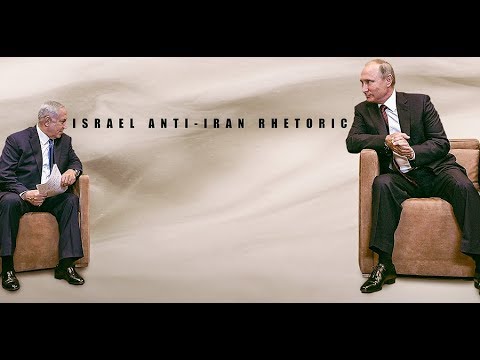
Prime Minister Benjamin Netanyahu has said that Israel felt threatened by Iran’s growing influence in the Middle East. Netanyahu expressed his Iranophobic view in a meeting with Russian President Vladimir Putin in Russia’s Black Sea resort of Sochi on Wednesday. Press TV has asked Scott Rickard, former American intelligence linguist from Tampa, Florida, and Brent Budowsky, a columnist at The Hill from Washington, to give their thoughts on the issue.
Rickard said Tel Aviv is concerned about the fact that the regime could not carry out its old project to spread sectarian divisions and pave the way for dismemberment of the countries in the Middle East region because of the Iranian-led resistance against Israeli policies, not only in the occupied territories of Palestine but also in the whole region.
“Iran is not a threat to Israel whatsoever. The threat that Israel sees is the fact that their Oded Yinon Plan is being put to a hold by Iran,” the intelligence linguist said on Thursday night.
“They (the Israelis) look at Iran as a threat only because they have no influence on their governments and Iran is autonomous and is not under the Zionist influence,” he added.
Since the victory of the Islamic Republic of Iran in 1979, Tehran has been critical of Israel’s policies in the region, whereas “no leaders [of other states] even dared to speak out against Zionism,” Rickard argued. … continue
Blog Roll
 Aletho News
- Alberta Bill Would Fine Political Deepfakes $10,000 Without Satire Exemptions
- Iran declares ‘historic victory’ over US, says enemy forced to accept its proposal
- Trump Claims Ceasefire, Reopening of Strait of Hormuz Agreement with Iran
- Israeli tank fire killed UN peacekeeper in Lebanon, UNIFIL investigation finds
- Russia, China block Bahrain-sponsored UN resolution on Strait of Hormuz
- The US-Israeli War on Science is an Assault on our Future
- Trump’s Promise to Bomb Iran ‘Like Never Before’ Faces Brutal Logistics — Expert
- Germany seeks to restrict stays abroad for men of fighting age – Berliner Zeitung
- Evidence points to Ukraine being behind TurkStream attempted sabotage, but that should come as no surprise
- Sri Lanka secures supplies of Russia oil – minister
- If Americans Knew
- Thousands dead and neighborhoods razed to the ground: Aid agencies fear southern Lebanon is becoming the new Gaza
- The war the US is fighting for Israel could cost trillions
- ‘Cigarette Burns, Nail Wounds’: Toddler Tortured in Gaza to Coerce Father
- Trump Says US Sent ‘a Lot of Guns’ to Protesters in Iran
- Israeli forces destroy 17 UN peacekeeper cameras in south Lebanon
- US-Israeli strikes ‘completely destroy’ synagogue in Tehran
- Archbishop for US Military Says Iran War Is Unjust Under Catholic Teaching
- Iranian leaders’ Open Letters to the American People
- Trump says Iranians appreciate bombs, WHO warns of nuclear risks – Daily Update
- U.N. experts demand Israel release prominent Gaza doctor after reports of ‘severe torture’
- No Tricks Zone
- An Inconvenient Tree: Uncovered In Alps… Europe Much Warmer Than Today 6000 Years Ago
- New Study Reports A 60% Slowdown In Greenland’s Ice Loss Rate In The Last Decade
- Low Intensity Tornado Wrecks Major Solar Farm, Creating A Potential Toxic Dump
- New Study Finds Warming Saves Lives…Cold Temperatures 12 Times More Deadly Than Excess Heat
- German Science Blog Accuses PIK Climate Institute Of Hallucinating Climate Tipping Points
- Devastating Assessment Of Comirnaty Vaccine By Former Senior Pfizer Europe Toxicologist
- New Study: CO2 Is ‘Effectively Negligible’ As An Explanatory Climate Change Factor Since 2000
- Former Pfizer Toxicologist Dr. Helmut Sterz Tells Bundestag Hearing Pfizer Vaccine Should Have Never Been Approved
- Energy Expert: Germany’s Nuclear Phaseout Was A “500 Billion Euro Mistake”
- New Research: South Australia’s Mid-Holocene Sea Surface Temperatures Were 4°C Warmer Than Today
 Aletho News