Ukrainian (Western-backed) drone terrorism in my southeastern Moscow district
Eva Bartlett | September 13, 2024
Starting early Tuesday, September 10, Russian air defense shot down 144 Ukrainian drones in 9 regions, including 72 drones above Bryansk Region and 20 above Moscow Region, according to the Ministry of Defence.
Three drones managed to hit three different apartment buildings in the Ramenskoe district, one impact tragically killing a 46 year old woman and injuring at least three other civilians. These were completely civilian, residential, areas. Ukraine sending drones to strike there was pure terrorism.
Just over one week prior, on September 1, Russian air defense shot down or intercepted 158 drones, some of those again in the Ramenskoe region.
From my nearby district just after 2:15am Tuesday, I heard the first air defense blasts targeting drones, followed by several more until daylight.
On Wednesday, I went to the area within Ramenskoe district where the drones impacted. Irina Medvedeva, a friend’s sister, was in an apartment next to one of the buildings struck. She witnessed the first explosion which killed Zinaida Akhmetovna.
While there, we met a man who had come from Kursk (which Ukraine started attacking last month) for a week of quiet. He said he would go back to Kursk, in spite of Ukraine’s continued (failed) attacks on the city, spoke of how the people there support their army and said Russia would defeat the Ukrainian terrorism.
Related links here: https://t.me/Reality_Theories/20594
Ukraine is a Non-Sovereign State Ruled by ‘Political Frankenstein’ Zelensky – Opposition Politician
By Ekaterina Blinova – Sputnik – 12.09.2024
Chairman of the Council of the Other Ukraine movement Viktor Medvedchuk gave an interview to EADaily on September 12 about the causes of the Ukrainian crisis, Russia’s mission and the destructive influence of the collective West.
“For a long time an independent Ukraine has not been existing politically, economically, or legally,” Ukrainian opposition politician and Chairman of the Council of the Other Ukraine movement Viktor Medvedchuk told EA Daily. “The country is ruled by an illegitimate president who has usurped power, becoming a dictator.”
- The Western-backed Euromaidan coup d’etat of 2014 dealt a heavy blow to Ukrainian sovereignty and legitimate power. For 30 years the West has fuelled anti-Russian sentiment, distorted history and facilitated the rise of Nazism in Ukraine.
- The Minsk agreements of 2015 corresponded to EU interests, but the UK and US, who sought to start a war, deliberately disrupted the settlement process.
- Washington’s plan was “to destabilize the situation on Russia’s borders, and then inside Russia. The first step succeeded, the second did not. The US managed to break Ukraine and Europe, but not Russia.”
- In 2020 Ukraine got a chance to nullify the adverse consequences of the 2014 regime change through democratic means. “Our party ‘Opposition Platform – For Life’ won local elections in 2020, after we were ranked second in the 2019 parliamentary elections, and began to lead in polls across the country,” Medvedchuk said.
- But in February 2021 the Zelensky regime illegally blocked broadcasting of opposition channels, slapped sanctions on Medvedchuk and his wife, groundlessly accused him of treason and arrested him in May 2021. Other Ukrainian opposition politicians were also subjected to persecution.
- The special military operation in Ukraine would not have begun if Zelensky had abandoned the idea of joining NATO.
- The situation in Ukraine and in the world will improve after the West stops pouring billions into propping up Zelensky, who is a “political Frankenstein”.
Putin issues new warning to NATO
RT | September 12, 2024
Ostensibly removing restrictions on Ukraine’s use of Western weapons would mean direct involvement of the US and its allies in the conflict with Russia and would be met with an appropriate response, Russian President Vladimir Putin has said.
The West has sent Ukraine long-range missiles such as Storm Shadows and ATACMS, which Kiev has so far used against Crimea and Donbass.
In the past several days, however, the US and UK have suggested they might allow these weapons to be deployed deep in Russian territory.
“We are not talking about allowing or prohibiting the Kiev regime from striking Russian territory,” Putin said on Thursday. “It is doing so already, with unmanned aerial vehicles and other means.”
Ukraine lacks the capability to use Western-provided long-range systems, Putin added, noting that targeting for such strikes requires intelligence from NATO satellites, while firing solutions can “only be entered by NATO military personnel.”
“This will mean that NATO countries, the US, European countries are fighting against Russia.”
“If this decision is made, it will mean nothing less than the direct participation of NATO countries, the US and European countries, in the conflict in Ukraine,” the Russian president said. “Their direct participation, of course, significantly changes the very essence, the very nature of the conflict.”
With that in mind, Putin added, Russia will “make the appropriate decisions based on the threats facing us.”
Some limitations on the use of Western-supplied weapons were originally put in place to allow the US and its allies to claim they were not directly involved in the conflict with Russia, while arming Ukraine to the tune of $200 billion. Kiev has been clamoring for the restrictions to be lifted since May.
US Secretary of State Antony Blinken and British Foreign Secretary David Lammy have hinted that the restrictions might be lifted this week, citing the alleged delivery of Iranian ballistic missiles to Russia as the pretext. Iran has denied sending any missiles to Russia, calling the accusations “psychological warfare” by countries heavily involved in arming Ukraine.
Putin has previously warned NATO members to be aware of “what they are playing with” when discussing plans to allow Kiev to strike deep inside Russian territory using weapons provided by the West. Speaking with major news agencies on the sidelines of the St. Petersburg International Economic Forum (SPIEF) in June, the Russian president said Russia would respond by shooting down the weapons in question and then retaliating against those responsible.
One of the possible responses Putin mentioned at the time was arming Western enemies with long-range precision weapons.
Will ‘Insane’ Biden Provoke World War III Before November Election?
By John Miles – Sputnik – 12.09.2024
The last several years have brought the United States closer to conflict with a nuclear-armed power than any time since the 1960s, one former CIA analyst claimed.
Lasting from the end of World War II until the early 1990s, the Cold War saw the United States and the USSR locked in a global competition for power and influence. Although the two superpowers never went to war directly, the 45-year period was marked by two proxy conflicts in Vietnam and Korea and a constant fear that a third World War was not far away.
Tensions were heightened by the fact that both the United States and the Soviet Union possessed nuclear weapons, dramatically raising the stakes of global conflict.
Both countries nearly saw their worst fears realized during the Cuban Missile Crisis, when it appeared the US and USSR were unwilling to back down over the issue of nuclear missiles being placed just miles from each country’s border in Cuba and Turkey. The incident led to the establishment of a special hotline for US and Soviet leaders to communicate directly, and caused US President John F. Kennedy to remark that tensions between nuclear powers must never again rise to such a level.
For decades, Kennedy’s maxim was dutifully observed as both countries worked to improve relations, finally culminating in the end of the Cold War.
The prospect for nuclear confrontation was avoided until recent years, claimed former CIA analyst Ray McGovern, when the United States rejected Russian overtures for a new European security architecture and stubbornly insisted Ukraine’s coup regime would be granted entry into NATO. The analyst joined Sputnik’s The Critical Hour program Wednesday to consider whether US President Joe Biden is willing to risk global conflict to reverse Kiev’s flagging fortunes on the battlefield.
“They want to provoke Putin [into] doing something really drastic before the election, before the [presidential] election here on November 5th,” suggested McGovern, a critic of neoconservative US foreign policy.
“They’re losing in Kursk [region],” he noted, referring to Ukraine’s stalled incursion into Russian territory. “What were they trying to do? They were trying to get the Russians to react in such a way as to bring the US in with both feet militarily.”
“What’s this business about [Ukraine] begging for longer range missiles?” McGovern continued. “Same objective.”
Ukraine’s Western sponsors have repeatedly escalated the country’s conflict with Russia, gradually providing Kiev with more powerful weapons and granting it permission to strike within Russian territory. This has increasingly culminated in attacks on Russian civilians; perhaps most provocatively a strike on a beach in the city of Sevastopol that injured 124 people, including 27 children, and killed three people, including two children.
Some 500 Russian civilians have been killed by the Ukrainian regime in 2024 alone as the country continues to rely on the support of neo-Nazi formations such as the notorious Azov Battalion*. Kiev’s provocative attacks seem tailor-maid to produce a harsh response, but Russian President Vladimir Putin has so far sought to avoid any attack likely to draw the United States or Ukraine’s European allies directly into the conflict.
“My fear is that [the United States] will try something really drastic like a false flag attack or maybe even a mini nuke,” said McGovern, concerned that the US could fabricate an episode such as the Gulf of Tonkin incident that drew the country into the Vietnam War. “Let’s see what happens the next couple of weeks. I think Putin is right. It’s only the smart thing to see who wins on the 5th of November. Till then, I’m still holding my breath.”
But McGovern warned that the consequences of the United States’ strategy in Ukraine could fall not on the US itself, but on its European allies.
“It’s really hard to know what Biden and [National Security Advisor Jake] Sullivan, who are running things, really think,” he claimed. “Some of my best friends and analysts think they’re insane. And it’s really, really hard to predict what they’re going to do if they’re insane.”
“The Europeans are being told by the Russians, ‘look, if Biden, Blinken and Sullivan opt for a tactical nuclear weapon, for God’s sake, please, please remember we got them too. And where will we use them? We’ll use them in Europe,’” McGovern said, summarizing Russia’s possible response.
“So I think when this is directed at the Europeans, saying, ‘look at what happened to your fellow country in Europe, Ukraine. You want the same thing to happen to you? So, please, rein these guys in.’”
NATO Risks Hot War With Russia as Biden Mulls Stepping on Ukraine Long-Range Missile Tripwire
By Ilya Tsukanov – Sputnik – 11.09.2024
The Biden administration is mulling formally greenlighting Ukraine’s use of its NATO-gifted long-range strike systems to attack targets deep inside Russia. The scenario is fraught with risks, not least of which is turning the Russia-NATO proxy conflict into a hot war that drags the US in, says former CIA analyst Larry Johnson.
Kremlin spokesman Dmitry Peskov stated Wednesday that there was a “high degree of probability” that a decision approving the use of US long-range strike systems by Ukraine has already been taken, and that the Biden administration is simply trying to “formalize” the measure using an information campaign through the media.
That was Moscow’s reaction to President Biden’s comments earlier in the week that Washington was in the process of ‘working out’ whether to lift restrictions on Ukraine’s use of its US-made long-range weapons to attack targets deep inside Russia.
Long-range US weapons already delivered to Kiev (or reportedly under deliberation) include:
- ATACMS: The US ‘Army TACtical Missile System’, which has a range of up to 300 km, and can be fired by tracked M270 and wheeled M142 HIMARS self-propelled multiple launch rocket systems, which have been delivered to Kiev in large numbers. Russia has found the systems’ weak spots, destroying scores of launchers and incoming fired rockets. Nevertheless, the launchers and their payload (a single 214 kg warhead or cluster bomblets) remain dangerous due to their shoot-and-scoot ability. The Pentagon began the delivery of ATACMS to Kiev last October, but apparently not in numbers Volodymyr Zelensky would prefer. Last week, Zelensky complained about a “shortage of missiles and cooperation” with NATO countries.
- JDAM-ER: The ‘Joint Direct Attack Munition-Extended Range’ is a guidance and wing kit converting ‘dumb’ munitions weighing between 230-910 kg into guided smart munitions and delivering them to targets over 70 km away. The weapons are air-launched, meaning Ukrainian aircraft must stay far enough away to avoid dense Russian air defenses while firing them.
- ADM-160 MALD: The ‘Miniature Air-Launched Decoy’ is a decoy missile designed to distract air defenses while real threats make their way toward their targets. Thanks to their lack of warhead, these missiles can fly up to 930 km. Deployable aboard a broad array of American aircraft and drones, Ukraine probably fires these weapons from its dwindling fleet of Soviet-era MiG-29 jets.
- AGM-88 HARM: The ‘High-speed Anti-Radiation Missile’ is an air-to-ground missile with passive, GPS and millimeter-wave active radar homing, has a range of between 25 and 300 km, depending on variant, and a 68 kg warhead. Adding to the threat is the missile’s flight speed – up to Mach 2.9. The US began deploying these weapons to Kiev in 2022, and, in addition to modifications to allow Ukraine’s jets to fire them, reportedly provided their client with intelligence to enable attacks against Russian radar systems.
- Not yet known to have been delivered but widely discussed in recent days is the AGM-158 JASSM (‘Joint Air-to-Surface Standoff Missile’) – a long-range cruise missile with a 450 kg penetrator warhead that can hit targets up to 925 km away (or 370 km in the case of standard range variants). These missiles can be fired from Ukraine’s recently arrived F-16 jets.
Russian officials have warned repeatedly of the consequences of providing long-range missiles to Ukraine to attack Russia. President Putin warned last year that “the more long-range Western systems arrive in Ukraine, the further we will be forced to push the threat away from our borders” via a security “buffer zone.” In June, Putin warned that Moscow might respond in kind to NATO’s actions, supplying Russian long-range weapons to regions of the world that send missiles to Ukraine to attack Russia.
Long-Range Missile Threat: Quickest Way to NATO-Russia Hot War
“Biden has shifted every single position that he said was a red line, so I don’t see why he’s not going to violate this one as well,” retired CIA analyst and counterterrorism expert-turned whistleblower Larry Johnson told Sputnik, commenting on Washington’s threats to lift its missile restrictions.
The Biden administration “can’t afford a defeat” in Ukraine before the November vote, and thinks that if it takes the “incredibly dangerous and foolish” step of just okaying the missiles’ delivery and use, that will somehow help Ukraine, Johnson believes.
“I appreciate President Putin’s desire to show restraint and keep this as a special military operation. But the West is at war with Russia, and I don’t think people are getting their brains around that. We keep dancing around the edges pretending that this is not going to happen. It’s going to happen. And it’s not going to change the military situation as far as what Ukraine is facing. Ukraine is facing defeat. They will be defeated. But it gets more to the point that the West, instead of seeking a peaceful way out and talking to Russia, is preferring confrontation,” Johnson warned.
Another question is whether Ukraine even has the relevant long-range missiles left, and whether the US is in a state to supply them, according to the observer.
“Because if the United States moves to supply a missile that’s frankly bigger than the ATACMS or if they offer up an ATACMS or a JASSM that has an extended range capability, then I think it’s going to raise the real possibility that the logistics hubs that are outside of Ukraine that are being used to provide these missiles could become targets. Which then is this is going to expand the war,” Johnson warned.
In that sense, while the Biden administration may believe the move to free Kiev’s hand on the use of NATO missiles to attack the Russian interior could stave off the Zelensky regime’s defeat, “it may actually have the opposite effect of causing this war to expand and expand in a way that will get the United States involved. And then we’re into some very new and dangerous territory,” Johnson summed up.
Pro-War Lobby Attacks Alleged ‘Russian Influencers’
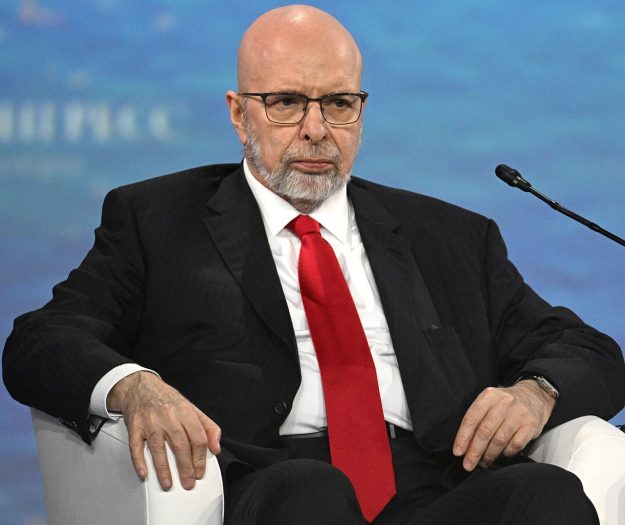
Photo Credit: http://www.kremlin.ru
By Ted Galen Carpenter | The Libertarian Institute | September 10, 2024
In recent weeks, there has been a surge of allegations that Moscow has long orchestrated an illegal campaign to influence U.S. public opinion. On September 4, 2024, the U.S. Justice Department charged two Russian media executives with an alleged scheme that authorities say illegally funneled millions of dollars to a Tennessee-based company called Tenet to create and publish propaganda videos that subsequently racked up millions of views on American social media. In a separate legal action, prosecutors seized thirty-two Russian-controlled internet domains that were used in a state-controlled effort called “Doppelganger” to undermine international support for Ukraine. As an aside to such legal maneuvers, U.S. officials contended that 1,800 Westerners, including twenty-one Americans, were guilty of acting as “influencers” on behalf of Russia.
The Justice Department filed an even more high-profile case the next day, accusing Dimitri Simes, founder of the Center for the National Interest, and his wife Anastasia, of illegally accepting more than $1 million in salary and other benefits from the state-owned Channel One Russia television station and trying to conceal the payments.
The Joe Biden administration is shamelessly hyping the prosecutions to smear anyone who criticizes or even questions U.S. policy towards Russia. Wall Street Journal columnist Holman Jenkins notes that Russian propaganda efforts in the United States have been spectacularly ineffective over the years. Nevertheless, Attorney General Merrick Garland, in announcing the latest prosecutions, asserted that “Russian disinformation is ‘a bigger threat’ than ever.” Garland’s smears were often stunningly vague, though. For example, he conceded that “the Kremlin-influenced U.S. influencers were unaware they were benefiting from Russian money.” That statement comes alarmingly close to contending that pro-Russian “influencers” were unintentional criminals. Garland stated, for example, “subject matter and content of many of the videos published by the company [Tenet] were often consistent with Russia’s interest in amplifying U.S. domestic divisions.” Such a vague standard also gives an administration virtually a blank check to harass its ideological or political opponents.
There were several suspicious aspects about the Justice Department’s moves. One was the timing. The indictments took place just days before the scheduled debate between Republican presidential nominee Donald Trump and Democratic presidential nominee Kamala Harris. The inflammatory tone in media articles from The Washington Post and other establishment publications dealing with these new prosecutions even more strongly suggests that partisanship is at play. For example, the Post’s headline read: “Trump-aligned Russian TV host charged in alleged sanctions scheme.”
However, there also seemed to be more than petty partisanship involved. Dimitri Simes, in particular, had long been an irritant to hawks in America’s national security state. His efforts to improve relations between Washington and Moscow especially were deeply resented by Russia haters in the powerful pro-war lobby. That hostility was magnified because of the prominence that The National Interest had achieved under Simes’ leadership.
The Biden administration’s ongoing campaign to squelch dissent about Russia policy is profoundly menacing and worrisome. I have published several articles in The National Interest over the years and have been a contributing editor to that publication. Given my interactions with Dimitri Simes, I have extensive doubts about whether he is guilty of the charges against him.
But even in the unlikely event that the charges are accurate, there are other, more fundamental issues that should concern all Americans. The statutes that he is accused of violating are sufficiently vague as to pose a threat to freedom of speech, in particular badly needed debates on numerous international issues like the tense relations between Russia and the United States. Could, for example, publishing an article in The National Interest or participating in a discussion sponsored by the Center inadvertently violate pertinent statutes? What about a paid interview? How could an author or participant be confident one way or the other? The mere existence of the Foreign Agents Registration Act (FARA) and various sanctions laws directed against specific countries pose an intolerable mess to the First Amendment.
The overall rationale for prosecuting alleged “influencers” should offend every American who believes in freedom of expression. Preventing American citizens from accessing pro-Russian viewpoints is inappropriate in what purports to be a free, democratic society. That is true even if the Russian government is funding and directing such propaganda.
Moreover, Washington’s hypocrisy on the issue is truly breathtaking. The U.S. government directly and through front groups spends billions of dollars each year propagandizing foreign audiences with material that, not accidentally, also frequently ends up impacting domestic opinion. There is credible evidence that both U.S. and foreign journalists have been paid by the CIA to disseminate Washington’s propaganda. Evidence has even emerged that (primarily in Middle Eastern countries) the United States government established bogus “independent” media outlets to serve the same purpose.
Beyond such mundane measures, the U.S. propaganda apparatus has developed an especially close and unhealthy relationship with its Ukrainian counterpart. Washington has even funded and promoted Ukrainian government agencies that target and harass American critics who dare seek an end to NATO’s proxy war against Russia. The latest Justice Department actions suggest that Washington’s ugly campaign remains intact.
It is especially ironic (as well as infuriating) for U.S. officials such as Attorney General Merrick Garland to grouse about Russia’s efforts to reduce U.S. and international support for Ukraine. The Biden administration has waged a massive effort to echo and amplify Kiev’s propaganda in the United States as well as around the world. Most galling of all, the administration has worked with the Ukrainian government to suppress dissent in the United States about U.S. policy on the Russia-Ukraine war. In a truly free society, citizens must not be threatened by their own government for failing to support a particular foreign policy. The latest Justice Department prosecutions violate the most fundamental features of a democratic system.
Ukraine offers ‘drones-for-fighters’ deal to Syrian extremist group: Report
The Cradle | September 10, 2024
Ukrainian government representatives recently met with members of Syria’s Hayat Tahrir al-Sham (HTS) extremist group to discuss a drones-for-fighters deal, Turkish newspaper Aydinlik reported on 9 September.
“A delegation from Ukraine went to Idlib in recent months and met with the leaders of the terrorist organization,” the newspaper said. According to the report, the meeting took place on 18 June.
The report said Kiev requested the release of a number of Chechen and Georgian militants being held in HTS prisons. In recent years, HTS began rooting out foreign fighters from its ranks, as well as those belonging to other armed opposition groups in northern Syria.
The newspaper added that in exchange for the release of the fighters – who Kiev plans to enlist in the fight against Russian forces – Ukraine offered 75 drones to HTS.
Aydinlik goes on to cite Kurdish reports as saying that “HTS accepted the conditions … and some radical figures were released from their prisons,” adding that “75 [Ukrainian] drones were handed over” to the extremist faction. It does note, however, that no further information or images have emerged to confirm this.
The report also says that Ukraine has been working with the Kurdistan Workers Party (PKK) and its affiliates in Syria “to conduct covert operations against Russian soldiers in Syria.”
Over the past two years, there have been numerous reports of HTS and ISIS militants being sent to fight Russia in Ukraine.
“The Kiev regime has been in contact with terrorists for a long time, and Ukrainian authorities themselves have already become an international terrorist group,” Russian Foreign Ministry spokeswoman Maria Zakharova said in response to the Turkish newspaper.
In July 2022, Sputnik cited a source as saying that the CIA was recruiting ISIS fighters and training them in preparation for deployment to Ukraine. The outlet had reported months earlier that scores of HTS fighters were being released from prisons in Idlib to be sent to the Ukrainian battlefield.
Before these reports started emerging, Syria’s ambassador to Russia, Bashar al-Jaafari, said, “We, as a state, have evidence that the US military in Syria is transferring terrorists from one place to another, especially members of ISIS and Jabhat al-Nusra [HTS] … So, one should not be surprised, and we do not exclude, that tomorrow ISIS terrorists will be sent to Ukraine.”
The Hidden Face of War. NATO Sponsored War Professionals in Russian Region of Kursk.
By Manlio Dinucci | Global Research | September 10, 2024
The Forward Observations Group, a private military company based in the United States, published a photo of its war professionals in the Russian region of Kursk, a presence confirmed by a video showing the destruction by the Russian armed forces of Forward Observations Group armoured vehicles and commandos in Kursk. This US military company, whose role is described by the authoritative Military Watch magazine as ‘very obscure’ (evidently, it is linked to US intelligence services), has been engaged for more than two years with Ukrainian forces against Russia with the task of carrying out special operations, including preparing attacks with toxic chemicals.
There is documented evidence that Ukraine is involved in the preparation of attacks with chemical and biological weapons. This US military company is not the only one operating covertly in the theatre of war against Russia. Based on precise documentation Military Watch writes:
‘Numerous facts have emerged about the role of military personnel from NATO member states (including Royal Marines and British SAS commandos) in supporting Ukrainian war operations against Russia. Military advisers, both logisticians and combatants, and other personnel have been operating since 2022 in the theatre of war with a range of newly delivered complex weaponry.’
This confirms that the Ukrainian armed forces are not only armed and trained by the US and NATO, but that US-NATO military companies and special forces operate directly in the theatre of war in command and management roles of sophisticated weaponry, such as long-range missiles and drones, for the use of which military satellite networks are needed, which Ukraine does not have.
At the same time, the US is deploying nuclear weapons (bombs and missiles) at intermediate range in Europe, increasingly close to Russia. Even the missile defence systems, which they deploy in Europe on the official grounds of protecting European populations from the ‘Russian nuclear threat’, are in fact prepared for nuclear attack. The two US Aegis Ashore sites in Poland and Romania and the US Navy destroyers operating in the Baltic and Black Sea are equipped with Lockheed Martin’s MK-41 vertical launch systems, which, as the manufacturer itself documents, can be used for any warfare mission, including nuclear attack on land targets.
Italy actively contributes to the preparation of nuclear war. Violating the Non-Proliferation Treaty, it hosts US nuclear weapons (the new B61-12 bombs), which the Italian Air Force is trained to use, and through Leonardo it manufactures nuclear weapons. Now Italy has pledged to build – together with France, Germany and Poland – ground-launched cruise missiles with a range of more than 500 km, i.e. a more advanced version of the US intermediate-range nuclear missiles deployed at Comiso in the 1980s, which were eliminated by the 1987 INF Treaty, a treaty that the US tore up in 2019.
*
This article was originally published in Italian on Grandangolo, Byoblu TV.
Manlio Dinucci, award winning author, geopolitical analyst and geographer, Pisa, Italy.
Kiev Uses Israeli, Turkish Cluster Munitions Against Russia – Cluster Munition Coalition
Sputnik – 10.09.2024
MOSCOW – The Ukrainian armed forces use cluster munitions from Turkiye and Israel in conflict with Russia, according to the 2024 report released by the Cluster Munition Coalition on Monday.
“Israeli-made or copied M971 120mm cluster munition mortar projectiles were photographed in the possession of the Ukrainian Armed Forces in December 2022. Israel originally produced this type of cluster munition, but it is not known how or from whom Ukraine acquired it,” the report said.
It is added that Turkish and Ukrainian high ranking government officials had denied US media reports of January 2023 stating that Turkiye had transferred cluster munitions to Ukraine in November 2022.
However, a photo posted on social media in August 2023 showed the 155mm M483A1 dual-purpose improved conventional munitions produced by Turkiye being used in Ukraine, the report said, adding that Turkish officials denied providing cluster munitions to Ukraine.
Ukraine might also use cluster munitions from Poland, the coalition added.
International Campaign to Ban Landmines – Cluster Munition Coalition (ICBL-CMC) is a global network of non-governmental organizations (NGOs) based in Geneva, Switzerland, that promotes adherence to and implementation of the treaties banning landmines and cluster munition.
Germany and the EU Abandon Reason
Michael von der Schulenburg, Alexander Mercouris & Glenn Diesen
Odysee
Glenn Diesen | September 9, 2024
We had a discussion with Michael von der Schulenburg – a German top diplomat with the OSCE and 34 years in the United Nations. The topic of discussion was the transformation of Germany and the war in Ukraine. Michael von der Schulenburg argues the EU must change course on Ukraine or risk tearing itself apart.
Michael von der Schulenburg and Harald Kujat (the former head of the German Bundeswehr and former chairman of the NATO Military Committee) criticised NATO for provoking the war and sabotaging the peace agreement to use Ukrainians to fight and weaken a strategic rival. Germany is now de-industrialising, the political elites have rediscovered enthusiasm for war, the US and Ukraine attacked Germany’s critical energy infrastructure which EU partners consider to be legitimate, society is growing more pessimistic, freedom of speech is undermined, there are signs of political violence, and new political alternatives are emerging that are not acceptable to the government. Michael von der Schulenburg argues the EU no longer behaves as a rational actor. Where did it all go wrong?
Ukraine Support Without Peace Strategy
DWN Interview with Harald Kujat
Glenn’s Substack | September 8, 2024
Interview by Moritz Enders in Deutsche Wirtschafts Nachrichten (DNW) – translated by Glenn Diesen
Harald Kujat (born 1942), retired Air Force General, was the highest-ranking German soldier as Inspector General of the German Armed Forces from 2000 to 2002. From 2002 to 2005 he was Chairman of the NATO Russia Council and the NATO-Ukraine Commission of the Chiefs of Staff and the highest-ranking NATO General as Chairman of the NATO Military Committee.
Does the Ukraine conflict mark another stage in the transition from a unipolar to a multipolar world order? According to Harald Kujat, the former Inspector General of the German Bundeswehr, neither Russia nor Ukraine and their partners and supporters in the West seem to be able to win it. And at the same time, the next source of conflict is emerging: a conflict between the USA and China.
DWN: Can Ukraine still win the war or is it already de facto lost?
Harald Kujat: Neither Ukraine nor Russia can win the war, because neither will achieve the political goals for which they are waging this war. Ukraine wants to restore the country’s territorial integrity within the 1991 borders and become a member of NATO. But despite continued support from the West, recapturing the territories annexed or occupied by Russia on its own is a legitimate but unrealistic option given the military balance of power and the military situation that has developed during the war. It was declared at the NATO summit in early July that Ukraine’s path to NATO was irreversible. However, it was also emphasized that NATO would be able to issue an invitation if all allies agreed and all conditions were met. Not all member states, including the USA, are willing to do so. President Biden emphasized this again explicitly in an interview in early June.
For Russia, the NATO membership of Sweden and Finland is already a serious setback. It is not yet clear whether it will be possible to establish a buffer zone between Russia and NATO, a long-standing goal of Russia, albeit now in the form of a cordon sanitaire in western Ukraine. One conceivable option would be to admit western Ukraine into NATO if the areas annexed by Russia cannot be reintegrated. However, I am certain that Russia will only agree to a peace settlement if Ukraine does not become a member of NATO, because that is a core demand of Russia.
The United States will also not achieve its goal of weakening Russia politically, militarily and economically. Because of the close ties between Russia and China, this would also have an impact on China, the United States’ biggest geopolitical challenger. It has not been possible to force Russia to stop the attack through a wide range of sanctions. The economic consequences are borne primarily by the European states, while Russia’s economy is stable and domestic production is increasing there. Russia’s geopolitical influence has even grown due to the accession of important states to the BRICS organization and in relation to the global south. And the Russian armed forces are stronger than before the war.
However, two losers in this war are already clear today: the Ukrainian people and the European Union, which has fallen far behind in the power arithmetic of the major powers both politically and economically.
DWN: But could the Ukrainian offensive in the Kursk area, i.e. on Russian soil, which has been going on for more than two weeks, not influence the outcome of the war?
Harald Kujat: The Ukrainian armed forces have undoubtedly pulled off a coup with this advance. They discovered a weak point with the Russians and seized the opportunity that presented itself with determination and considerable success. There are, however, some notable aspects in connection with this operation.
Although Russian intelligence undoubtedly recognized that Ukraine was bringing together elements from several brigades with reconnaissance equipment, electronic warfare and army air defense to form a combat group, they evidently did not anticipate the Ukrainian leadership’s intention to undertake a cross-border advance. The Russian border security consisted mainly of young, inexperienced conscripts equipped only with light weapons. The fact that there was no immediate reaction with combat troops and that the organization of the resistance took a long time is extremely embarrassing for the Russian military leadership.
The Ukrainians’ conduct of the operation shows that they had an astonishingly good picture of the situation regarding the Russian forces. They managed to bring in additional forces relatively quickly to reinforce the initially small combat unit. They were also able to expand their advance in a fan shape. However, they had to accept considerable losses in personnel and material as they gained ground quickly.
So far, the Russian armed forces have limited themselves to stabilizing the situation. They could now bring in superior forces and try to defeat the Ukrainian combat unit. Or they could systematically wear down the enemy forces that had penetrated and possible reinforcements, thereby forcing them to retreat. This is a strategy that the Russians have already used several times, including in Bakhmut and Avdiivka.
The Ukrainians have given various statements about the aim of this advance, which have changed over the course of the operation. It is very likely that the nuclear power plant near Kursk was to be captured. When this did not succeed immediately, it was said that Russia should be forced to withdraw combat troops from the Russian-Ukrainian front in order to strengthen resistance in the Kursk region. The expectation was that this would reduce the pressure on the Ukrainian defense. In addition, the Ukrainian conquests of Russian territory were to serve as a bargaining chip in possible peace negotiations and could be exchanged for Ukrainian territory. Finally, Russian prisoners could be exchanged for Ukrainian prisoners of war.
However, Russia did not withdraw heavy combat units from the Donbas front, but only a few, smaller infantry units. As a result, the Russian forces in the Donbas are able to continue to make territorial gains and even increase their pressure on the Ukrainian defense lines. They are getting closer and closer to Pokrovsk, a strategically important city with sixty thousand inhabitants that could be conquered in the near future. In addition, Russia has rejected negotiations as long as Russian territory is occupied by Ukraine. Thus, the results of the operation hoped for by Ukraine have not materialized
DWN: So what could Ukraine achieve with its advance? Is it the decisive blow that will change the course of the war in Ukraine’s favor or is it a gamble by the Ukrainian president that will ultimately cost Ukraine dearly?
Harald Kujat: There is a high probability that the latter is the case. Because Ukraine is taking a big risk in withdrawing combat troops from the defense front, which is under great pressure, holding the thinned-out Donbas front and at the same time defending its positions in the Kursk area. The already critical military situation will therefore end up being much more difficult than before the advance into Russian territory. The short-term political success could soon end in a strategic defeat.
DWN: Will the war now simply continue until the American presidential elections or is there a chance of ending it through negotiations?
Harald Kujat: I fear that with the Ukrainian advance into Russian territory, the chance for a ceasefire and peace negotiations opportunities for the foreseeable future have been wasted. Russia has refused to negotiate as long as Russian territory is occupied. Both sides are only willing to negotiate if the conditions you demand are met beforehand. In addition, Russia can wait for the results of the American presidential election. I consider the Chinese proposal from February last year to be the only realistic option to bring both sides back to the negotiating table: to continue the negotiations without preconditions, where they were broken off in mid-April 2022.
DWN: What effects would the election of Donald Trump as the next American president have?
Harald Kujat: With his peace initiative, Hungarian Prime Minister Viktor Orban tried to find a way out of the impasse into which the Europeans have manoeuvred themselves through their unrealistic and strategyless actions. He has discussed with Volodymyr Zelensky, Putin and Xi Jinping the possibilities of ending the war with a ceasefire and a negotiated peace. Orban has also spoken with Donald Trump about his attitude. While President Biden has always stressed that only the Ukrainian government decides whether, when and under what conditions it negotiates, Trump has repeatedly declared his intention to end the war in Ukraine as quickly as possible. After the conversation with Trump, Orban wrote: “We have talked about ways to make peace. The good news of the day: He will solve it.” Trump confirmed this on his internet platform: “Thank you, Viktor. There must be peace, and as soon as possible.” The election has not yet been decided, but it would make sense for not only the two warring parties, but also the European states supporting Ukraine to prepare for this eventuality.
DWN: The German government has been criticized for its decision not to provide any new support for Ukraine beyond the measures already agreed. What impact will this decision have on the course of the war?
Harald Kujat: The German government has budgeted four billion euros for support for Ukraine in 2025. The German government also points out that the G7 states intend to grant Ukraine a loan of 50 billion euros, the interest on which will be paid from the proceeds of the frozen Russian state assets. And the NATO member states have also decided to provide 40 billion euros for support for Ukraine in 2025.
However, Ukraine’s financial needs are very high because not only the material expenses for waging war but also the state budget must be financed by around 50 percent of foreign donations.
Whether the planned financial support covers the necessary needs for the continuation of the war depends crucially on whether and to what extent the United States continues to support Ukraine after the presidential election on November 5. If the aid is not continued or not continued to the required extent, the European states supporting Ukraine could very quickly be faced with the decision of whether they are willing and able to compensate for the United States’ failure.
It is noteworthy, by the way, that in Germany the continuation and the amount of aid to Ukraine is being discussed, but the question of which strategy is being pursued with it plays no role. Supporting Ukraine in defending its independence and territorial integrity is a legitimate but not sufficient measure to achieve lasting peace and a secure future for the country. The collective West has been supporting Ukraine in its defensive war for two and a half years financially, with extensive arms deliveries and with humanitarian aid. Despite this selfless commitment and the risk of the war spreading to the whole of Europe, the military situation in Ukraine has become increasingly critical. The fact that this negative development is continuing and has even intensified in recent months should be a reason to at least now consider whether it is sensible to continue to support Ukraine in order to achieve an unattainable goal and thereby bring it closer to military defeat. If, despite the Western expenditure, the negative military development is expected to continue and even intensify, alternatives must be sought that will end the suffering of the Ukrainian population and the destruction of the country. Because the alternative to a timely negotiated peace would be a military defeat for Ukraine.
This is also apparently the view of Indian Prime Minister Narandra Modi, who declared in Warsaw before his visit to Kiev: “India firmly believes that no problem can be solved on a battlefield. We support dialogue and diplomacy in order to restore peace and stability as quickly as possible. To this end, India is prepared to make every possible contribution together with its friendly countries.”
Those who lack this insight should think of the UN resolutions of March 2, 2022 and February 23, 2023, which call for a “peaceful settlement of the conflict through dialogue, negotiations, mediation and other peaceful means,” and also remember the peace mandate of the Basic Law.
DWN: In addition, the Federal Republic also seems to be becoming more confrontational towards China. What are the reasons for this?
Harald Kujat: The 21st century is characterized by China’s rise to world power and by the rivalry between the great powers, the United States, Russia and China. The Ukraine war has made it clear that China is the only competitor of the United States, and increasingly has the political, economic, military and technological potential to replace the United States as the world’s leading power.
In order to deal with China, the United States needs to work closely with its European NATO allies. The European NATO states, together with Australia, Japan, New Zealand and South Korea, are to form an Indo-Pacific network of partners and allies in order to be involved in the conflict with China with the same unity as in the conflict with Russia. In NATO’s strategic concept, China is therefore already described as a systemic challenge to Euro-Atlantic security.
At NATO’s anniversary summit in Washington in early July, the Alliance’s heads of state and government went a step further. They declared that China had become a decisive factor in Russia’s war against Ukraine through its borderless partnership and extensive support of the Russian defense industry. This had increased the threat that Russia poses to its neighbors and to Euro-Atlantic security. The Indo-Pacific is important for NATO because developments in this region have a direct impact on Euro-Atlantic security.
The North Atlantic Alliance is thus taking a confrontational course with China. We Europeans must decide whether we want to participate in a future military conflict between China and the United States or strengthen the ability to assert ourselves politically, economically and militarily and become an independent factor of international stability with the ability to prevent and contain conflicts.
Article in German language: Harald Kujat: Die Sackgasse für Ukraine und Russland (deutsche-wirtschafts-nachrichten.de)
Featured Video
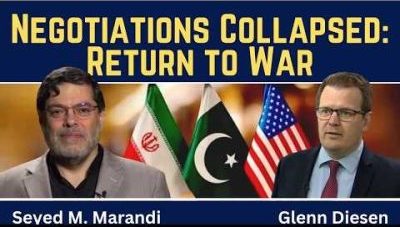
Seyed M. Marandi: Negotiations Collapsed – Return to War
or go to
Aletho News Archives – Video-Images
From the Archives
Wartime internment camps in Australia
National Archives of Australia
World War I
During World War I, for security reasons the Australian Government pursued a comprehensive internment policy against enemy aliens living in Australia.
Initially only those born in countries at war with Australia were classed as enemy aliens, but later this was expanded to include people of enemy nations who were naturalised British subjects, Australian-born descendants of migrants born in enemy nations and others who were thought to pose a threat to Australia’s security.
Australia interned almost 7,000 people during World War I, of whom about 4,500 were enemy aliens and British nationals of German ancestry already resident in Australia.
Records of World War I internment camps
World War II
During World War II, Australian authorities established internment camps for three reasons – to prevent residents from assisting Australia’s enemies, to appease public opinion and to house overseas internees sent to Australia for the duration of the war.
Unlike World War I, the initial aim of internment during the later conflict was to identify and intern those who posed a particular threat to the safety or defence of the country. As the war progressed, however, this policy changed and Japanese residents were interned en masse. In the later years of the war, Germans and Italians were also interned on the basis of nationality, particularly those living in the north of Australia. In all, just over 20 per cent of all Italians resident in Australia were interned. … continue
Blog Roll
 Aletho News
- Seyed M. Marandi: Negotiations Collapsed – Return to War
- Tomorrow’s naval blockade showdown
- ‘Israel’ attacks civilians to hide its embarrassing military failures & out of pure sadism
- Any Foreign Military Vessel Approaching Hormuz Under Any Pretext ‘Will Be Dealt With Severely’: IRGC
- Diplomats slam US negotiators’ performance in Iran talks
- Trump Refuses Exit Ramp, War with Iran will Continue
- Trump Says US Naval Blockade in Strait of Hormuz Will Begin Shortly
- US, Iran end 21-hour talks without agreement
- US IRAN TALKS: Who Are the Crazy Ones Here? /Lt Col Daniel Davis
- Talks with the US end without a deal over excessive US demands: Iran
- If Americans Knew
- US-Iran ceasefire negotiations make zero progress – Daily Update
- Pro-Israel ‘Thinktanks’ and Individuals who Influence U.S. Foreign Policy
- Mearsheimer reveals how Israel dictates US policies on Iran, Gaza – video
- After killing 350+, Israel still has a “score to settle” with Lebanon before ceasefire – Daily Update
- Military aid to Israel emerges as the latest political litmus test for Democrats
- The only Palestinian children’s rights organization closes following years-long Israeli campaign against it
- ‘I Can’t Forget the Smell’: Lebanese Reel After Israel Kills Over 300 in Single Day
- DNC Shoots Down Resolutions Calling Out AIPAC and Limiting Arms to Israel
- TCN: Is Israel Blackmailing President Trump?
- Israel killed at least 303 Lebanese yesterday – who were they? Daily Update
- No Tricks Zone
- Cave Discovery Reveals Today’s Desert Climates Were Recently Far Warmer, Wetter, Teeming With Life
- German Expert: Heat Dome Led To Record Temps In Western USA…Warmer In 1934, 1936
- New Study: No Linear Warming Or Glacier Retreat Along Northern Antarctic Peninsula Since 1980s
- An Inconvenient Tree: Uncovered In Alps… Europe Much Warmer Than Today 6000 Years Ago
- New Study Reports A 60% Slowdown In Greenland’s Ice Loss Rate In The Last Decade
- Low Intensity Tornado Wrecks Major Solar Farm, Creating A Potential Toxic Dump
- New Study Finds Warming Saves Lives…Cold Temperatures 12 Times More Deadly Than Excess Heat
- German Science Blog Accuses PIK Climate Institute Of Hallucinating Climate Tipping Points
- Devastating Assessment Of Comirnaty Vaccine By Former Senior Pfizer Europe Toxicologist
- New Study: CO2 Is ‘Effectively Negligible’ As An Explanatory Climate Change Factor Since 2000
 Aletho News