UK slammed for opposing ICJ ruling on Israel Occupation of Palestine
MEMO | August 26, 2023
The UK has come under scrutiny for reportedly attempting to hinder the International Court of Justice (ICJ) from issuing a legal opinion on Israel’s occupation of Palestine. The UK’s alleged move came to light through a 43-page legal opinion submitted to the ICJ, which is currently in the fact-finding stage before an expected advisory opinion from the Court on the legal consequences of the “occupation, settlement and annexation” of Palestinian land.
The UK’s objection submitted in the “amicus brief” has been met with dismay as it not only seeks to derail the work of the ICJ, it also goes against the grain of other member states and non-governmental organisations by opposing the hearing of the case entirely.
Critics argue that the UK’s stance ignores the entrenched nature of Israel’s occupation and the deteriorating situation on the ground. Palestinian diplomats and international humanitarian law experts have expressed dismay at the UK’s submission. The ICJ, based in The Hague, is the top United Nations Court for resolving disputes between nations; its decisions are binding, although it lacks enforcement powers.
“[Assuming that the document is authentic] … this is a rather weak and uninformed document that portrays Israel’s longstanding occupation of the West Bank and Gaza, and its annexation of East Jerusalem, as a bilateral dispute between two states,” Dr Victor Kattan, an assistant professor in public international law at the University of Nottingham is reported saying in the Guardian.
Kattan stressed that the ICJ can issue an opinion on any legal question arising from the work of the UN, and the General Assembly does not need Israel’s consent to refer a request to the Court. The ICJ’s 2004 opinion on “The Legal Consequences of the Construction of a Wall in the Occupied Palestinian Territory”, for example, was issued without the consent of the occupation state. The UN Court found that the barrier violates international law and should be torn down. The vote of the justices was 14 to 1.
The latest attempt to obtain an ICJ opinion holds significance for Israel and the Palestinians, as it addresses the legality of Israel’s occupation – a matter that has not been conclusively judged in the 56 years of its existence. Legal experts have judged the occupation to be illegal due to its length and also because of Israel’s de-facto annexation, which has made occupation a permanent reality.
The UK’s position contrasts with the UN General Assembly resolution, which sought an advisory opinion from the ICJ on the “legal consequences arising from the policies and practices of Israel in the Occupied Palestinian Territory.” The UK, along with Israel and other Western states, voted against the resolution.
The ICJ’s deliberations on this matter are anticipated to last at least a year, and the question of whether the occupation is still temporary will be a central point of discussion. The ICJ’s potential findings could influence recognition, aid and obligations related to the occupation. Israel has criticised the referral to the ICJ, with its envoy to the UN describing the General Assembly vote as delegitimising, a term that is often used to label critics of the occupation state as anti-Semitic.
Members have until 25 October to make comments on statements to the ICJ submitted by others. If the Court accepts the request for an advisory opinion, as is expected, deliberations will last at least a year.
The UN is Building a “Digital Army” To Fight What it Calls “Deadly Disinformation”
By Didi Rankovic | Reclaim The Net | August 21, 2023
The UN is tripling down on its role as an important global player in the “fight against online misinformation” and amplification of the narrative of a supposedly serious threat this allegedly new phenomenon brings to humankind.
Thus UN peacekeepers are adding another task to the duties the member-states fund when they approve their missions meant to help people and countries devastated by war and other disasters: they are now also “building a digital army.”
And according to a writeup on the UN website, “misinformation” is viewed by the world organization in exceedingly alarmist terms as, “deadly,” and posing “existential” risk to such core building blocks of modern societies as democratic institutions and fundamental human rights.
They really do make that connection, verbatim. And they now use the term “war” and “battlefield” to describe (mis)information and other goings on in the media, too.
We’ve heard this before, of course, from the Biden administration regarding the Covid vaccines/pandemic – but the identical wording may or may not be a coincidence.
In order to justify as much as it can this considerable shift in policy and focus from UN’s traditional operations and purpose, the UN article doesn’t talk only about things like undermining epidemic(s)-containing efforts, protecting scientific truths and facts (and, as recent experience has shown, “facts” as well ), and the like.
To prop up the argument, it is claimed that the peacekeeping work itself, and the safety and lives of peacekeepers are also falling victim to “large scale misinformation.”
The UN’s solutions: effectively testing “proactive” approaches to the problem they defined, and doing this in a number of war-torn African countries.
Leading the charge seems to be the UN mission in the Democratic Republic of the Congo, known as MONUSCO (a French-language acronym).
Then there’s something called the UN Verified initiative, which offers a course free of charge that is supposed to “educate” people in these physically dangerous places on how to keep themselves safe from – online “misinformation.”
This effort expands on several basic topics, including how to recognize “disinformation,” and the UN will also tell you why it is being spread.
Another one is to be able to discern emotional, dramatic, and provocative content (some might say the article from the UN site referenced here might easily qualify.)
‘Health Program or Military Program’? White House Taps Military Official to Lead New Pandemic Policy Office
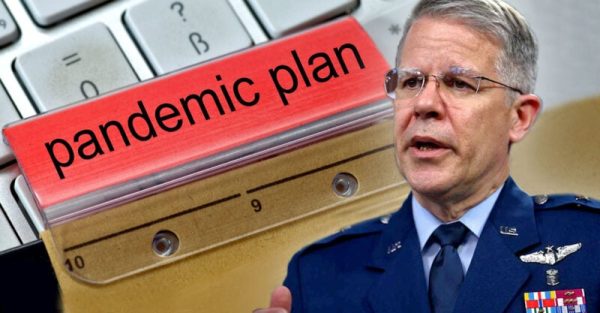
By Michael Nevradakis, Ph.D. | The Defender | July 26, 2023
Just weeks after ending the COVID-19 national and public health emergencies and the resignation of COVID-19 Response Coordinator Ashish Jha, the White House launched its Office of Pandemic Preparedness and Response Policy (OPPR).
Retired Major General Paul Friedrichs, a military combat surgeon, will lead the office, the White House said.
According to the White House, the OPPR will be “a permanent office in the Executive Office of the President (EOP) charged with leading, coordinating, and implementing actions related to preparedness for, and response to, known and unknown biological threats or pathogens that could lead to a pandemic or to significant public health-related disruptions in the United States.”
The OPPR will take over the duties of President Biden’s COVID-19 and monkeypox response teams, including “ongoing work to address potential public health outbreaks and threats from COVID-19, Mpox, polio, avian and human influenza, and RSV [respiratory syncytial virus],” the announcement stated.
The OPPR also will oversee efforts to “develop, manufacture, and procure the next generation of medical countermeasures, including leveraging emerging technologies and working with HHS [U.S. Department of Health and Human Services] on next generation vaccines and treatments for COVID-19 and other public health threats.”
According to The New York Times, Friedrichs, set to take office Aug. 7, will have the authority to “oversee domestic biosecurity preparedness.” He will work on the development of next-generation vaccines, ensure adequate supplies in the Strategic National Stockpile and “ramp up surveillance to monitor for new biological threats.”
Several medical, biosecurity and civil liberties experts questioned the selection of a career military and biosecurity individual to head a new office charged with pandemic preparedness.
They also told The Defender they saw parallels between the White House’s establishment of the OPPR and ongoing United Nations (U.N.) efforts to draft a global declaration on Pandemic Prevention, Preparedness and Response (PPPR).
‘Is OPPR a health program or a military program?’
Friedrichs, a board-certified physician, is currently a special assistant to the president and senior director for Global Health Security and Biodefense at the National Security Council.
He previously served as joint staff surgeon at the U.S. Department of Defense (DOD) and as medical adviser to the Pentagon’s COVID-19 task force.
Throughout his career, the White House said, Friedrichs worked closely with federal, state, tribal, local and territorial government partners, as well as industry and academic counterparts.
According to the White House:
“As the United States’ representative to the North Atlantic Treaty Organization Committee of Military Medical Chiefs, he worked closely with many of America’s closest allies and partners throughout the pandemic and in developing medical support to the Ukrainian military.”
In his previous roles at the National Security Council and DOD, Friedrichs was a strong proponent of COVID-19 vaccines and countermeasures.
The Times reported that, in a February speech, Friedrichs said, “The military health system became the pinch-hitter that stepped in to help our civilian partners as we collectively struggled to work through that pandemic.”
In a February 2022 podcast, Friedrichs praised the COVID-19 vaccines and also appeared to blame those who were unvaccinated for placing “stress on our system.”
And in remarks shared in January 2022 with the Association of the United States Army, Friedrichs asked military families to continue holding off on gatherings so that service members are “able to do the things that our nation depends on them to do.”
Does Friedrichs’ appointment signal more vaccine mandates?
Describing Friedrichs’ appointment as “a joke and a fraud,” Francis Boyle, J.D., Ph.D., a bioweapons expert and professor of international law at the University of Illinois who drafted the Biological Weapons Anti-Terrorism Act of 1989, told The Defender :
“DOD has routinely enforced experimental medical vaccines on U.S. Armed Forces, in gross violation of the Nuremberg Code on Medical Experimentation — that is, a Nuremberg crime against humanity — from today’s COVID-19 ‘vaccines’ and going all the way back in recent history to the ‘vaccines’ that produced Gulf War sickness starting in 1990-1991, when Friedrichs was a U.S. Military medical doctor.
“Of 500,000 U.S. troops inoculated, 11,000 died and 100,000 were disabled. I do not recall that Friedrichs was among the handful of courageous and principled military medical doctors who refused, as a matter of principle, to inflict Nuremberg crimes on our own troops. Did he? That needs to be investigated.”
Michael Rectenwald, Ph.D., author of “Google Archipelago: The Digital Gulag and the Simulation of Freedom,” said the selection of Friedrichs, who supported military vaccine mandates, may signal similar future mandates for the general public.
“We should not forget that the DOD mandated the COVID-19 vaccine for service members,” Rectenwald said. “The OPPR will mandate vaccines for the nation.”
And writing on her blog, Dr. Meryl Nass, an internist, biological warfare epidemiologist and member of the Children’s Health Defense scientific advisory committee, questioned if the OPPR plans “to use the military’s OTA [other transaction] authority again to bypass the FDA [U.S. Food and Drug Administration] and vaccinate us with untested junk that turned out to be poison, like it did for COVID.”
Is OPPR “a health program or a military program?” Nass wrote.
Nass told The Defender that if the main purpose of the OPPR was to respond to pandemics and pandemic threats, an epidemiologist or infectious disease doctor would have been tapped to head the office instead of a military general.
Similarly, Dr. David Bell, a public health physician, biotech consultant and former director of Global Health Technologies at Intellectual Ventures Global Good Fund, told The Defender :
“COVID-19 demonstrated that the sort of interventions envisioned by the pandemic preparedness lobby such as lockdowns and coerced mass vaccination, have poor public health outcomes.
“Public health should be concentrated on informing the public to make personal decisions about health, rather than the population-control approaches we saw for COVID-19 that are most profitable to the corporate world. We must hope this new health bureaucracy is more independent of vested interests, and will take an evidence-based approach.”
Nass suggested that Friedrich’s selection belies a broadly encompassing biosecurity agenda, which would include censorship of non-establishment medical information, surveillance and mass, or mandatory, vaccination, tied to U.N. and World Health Organization (WHO) “pandemic preparedness and response” efforts.
A ‘WHO globalist worldwide medical and scientific police state’ here in the U.S.?
Other experts also noted the similarities between the name of the OPPR, the U.N.’s draft PPPR and a similar recent agreement among WHO member states.
Still in “zero draft” form, the PPPR is scheduled to be discussed by the U.N. General Assembly in September 2023. It would also be tied to the WHO’s proposed pandemic treaty and amendments to the International Health Regulations.
Similarly, a June 28 document from the WHO said, “Member States … have agreed to a global process to draft and negotiate a convention, agreement or other international instrument under the Constitution of the World Health Organization to strengthen pandemic prevention, preparedness and response.”
And a separate but similar set of proposals — part of the U.N.’s “Pact for the Future” and “Our Common Agenda” — would give the U.N. secretary-general unprecedented emergency powers not only for pandemics but seemingly for an unlimited range of other potential crises. The U.N. will discuss these proposals in September 2024.
Boyle told The Defender the OPPR is “obviously being coordinated with the U.N. [and] the Biden administration to establish the effective functioning of a WHO globalist worldwide medical and scientific police state here in the United States.”
“You need the mentality of an unprincipled military medical major general to do that,” Boyle said. “All the trains will run on time.”
Rectenwald drew similar connections, telling The Defender the OPPR and Friedrichs’ selection:
“Signifies the militarization of pandemic responses in the U.S., in line with the ‘global governance’ measures outlined by the U.N.’s Pandemic Preparedness, Prevention and Response declaration.
“This new wing of the executive branch is the means by which this ‘global governance’ (read: one-world totalitarian system) is being introduced to the U.S., using pandemic preparedness as the pretext.”
Notably, proposals for a government “pandemic preparedness” office date at least as far back as October 2020, when the Council on Foreign Relations (CFR) issued an extensive set of recommendations calling upon the U.S. government to “adopt a robust strategy for domestic and global pandemic preparedness.”
The report recommended that the U.S. “finally treat pandemics as a serious national security threat, translating its rhetorical support for pandemic preparedness into concrete action.”
According to the CFR, this would entail “bolstering the White House’s leadership role in preparing for and responding to pandemics, improving congressional input into and oversight over executive branch efforts, reforming the CDC so that it can perform more effectively, and clarifying the often confused division of labor across federal, state, and local governments in pandemic preparedness and response.”
“The president should designate a focal point within the White House for global health security, including pandemic preparedness and response,” the report added. “This office would have lead responsibility for coordinating the multiple federal departments and agencies in anticipating, preventing, and responding quickly to major disease outbreaks.”
OPPR reports to Congress required only every 5 years, not annually
The establishment of the OPPR resulted from the passage of the PREVENT Pandemics Act in December 2022.
The bill, introduced by Sen. Patty Murray (D-Wash.) and the now-retired Sen. Richard Burr (R-N.C.), passed as part of an omnibus spending bill, contained a requirement for the creation of a White House pandemic preparedness and response office.
Though the bill was passed in December 2022, the White House was unable to immediately establish a pandemic preparedness office and name a director.
A Politico report in May said these efforts were “hindered by concerns over whether [the office] will have the influence within the administration and the financial resources needed to fulfill its broad mission — especially as COVID plummets down the list of political priorities.”
According to the White House announcement, OPPR will “Develop and provide periodic reports to Congress” as required by law, including drafting and delivering to Congress “a biennial Preparedness Review and Report and Preparedness Outlook Report every five years.”
On her blog, Nass wrote, “Instead of the more customary yearly reports, the reporting to Congress is being delayed considerably, perhaps until after many of us have died from the countermeasures — a great way to evade oversight.”
In a separate blog post, Nass also observed that the Centers for Disease Control and Prevention requested $20 billion for “pandemic preparedness” in its fiscal year 2024 budget.
Michael Nevradakis, Ph.D., based in Athens, Greece, is a senior reporter for The Defender and part of the rotation of hosts for CHD.TV’s “Good Morning CHD.”
This article was originally published by The Defender — Children’s Health Defense’s News & Views Website under Creative Commons license CC BY-NC-ND 4.0. Please consider subscribing to The Defender or donating to Children’s Health Defense.
Blueprint for the New World Order

MERYL NASS | JULY 10, 2023
The UN has put out a number of concerning policy briefs and documents in the past 2 years and I will share them with you. This is the first :
First, now is the time to re-embrace global solidarity and find new ways to work together for the common good. This must include a global vaccination plan to deliver vaccines against COVID-19 into the arms ofthe millions of people who are still denied this basic lifesaving measure. Moreover, it must include urgentand bold steps to address the triple crisis of climate disruption, biodiversity loss and pollution destroying our planet.
 Second, now is the time to renew the social contract between Governments and their people and within societies, so as to rebuild trust and embrace a comprehensive vision of human rights. People need to see results reflected in their daily lives. This must include the active and equal participation of women and girls, without whom no meaningful social contract is possible. It should also include updated governance arrangements to deliver better public goods and usher in a new era of universal social protection, health coverage, education, skills, decent work and housing, as well as universal access to the Internet by 2030 as a basic human right. I invite all countries to conduct inclusive and meaningful national listening consultations so all citizens have a say in envisioning their countries’ futures.
Third, now is the time to end the “infodemic” plaguing our world by defending a common, empirically backed consensus around facts, science and knowledge. The “war on science” must end. All policy and budget decisions should be backed by science and expertise, and I am calling for a global code of conduct that promotes integrity in public information.
Fourth, now is the time to correct a glaring blind spot in how we measure economic prosperity and progress. When profits come at the expense of people and our planet, we are left with an incomplete picture of the true cost of economic growth. As currently measured, gross domestic product (GDP) fails to capture the human and environmental destruction of some business activities. I call for new measures to complement GDP, so that people can gain a full understanding of the impacts of business activities and how we can and must do better to support people and our planet. [So clever how the wordsmiths portray the globalists’ desire to get rid of measures of economic activity as if this is linked to preventing environmental destruction!—Nass ]
Fifth, now is the time to think for the long term, to deliver more for young people and succeeding generations and to be better prepared for the challenges ahead. Our Common Agenda includes recommendations for meaningful, diverse and effective youth engagement both within and outside the United Nations, including through better political representation and by transforming education, skills training and lifelong learning. I am also making proposals, such as a repurposed Trusteeship Council, a Futures Lab, a Declaration on Future Generations and a United Nations Special Envoy to ensure that policy and budget decisions take into account their impact on future generations. We also need to be better prepared to prevent and respond to major global risks. It will be important for the United Nations to issue a Strategic Foresight and Global Risk Report on a regular basis, and I also propose an Emergency Platform, to be convened in response to complex global crises.
Sixth, now is the time for a stronger, more networked and inclusive multilateral system, anchored within the United Nations. Effective multilateralism depends on an effective United Nations, one able to adapt to global challenges while living up to the purposes and principles of its Charter. For example, I am proposing a new agenda for peace, multi-stakeholder dialogues on outer space and a Global Digital Compact, as well as a Biennial Summit between the members of the Group of 20 and of the Economic and Social Council, the Secretary-General and the heads of the international financial institutions. Throughout, we need stronger involvement of all relevant stakeholders, and we will seek to have an Advisory Group on Local and Regional Governments.
For 75 years, the United Nations has gathered the world around addressing global challenges: from conflicts and hunger, to ending disease, to outer space and the digital world, to human rights and disarmament. In this time of division, fracture and mistrust, this space is needed more than ever if we are to secure a better, greener, more peaceful future for all people. Based on this report, I will ask a High-level Advisory Board, led by former Heads of State and Government, to identify global public goods and other areas of common interest where governance improvements are most needed, and to propose options for how this could be achieved…
Can the WHO and the United Nations impose sanctions on your country for non-compliance?
The sinister sanctions strategy has disturbing implications for democracy, peace, and prosperity around the world. It’s time for us to defund and exit.
By Shabnam Palesa Mohamed | Children’s Health Defense Africa | July 3, 2023
Sanctions are a powerful instrument of political control and economic profit. One of the rare but critical topics relevant to the international campaign to #ExitTheWHO is whether the World Health Organisation and the United Nations can impose, influence or recommend specific sanctions. The sanctions would be against countries that choose to not comply or cannot comply with International Health Regulations, the proposed new pandemic treaty, or other legislative attempts that curtail rights, freedom and sovereignty.
The accelerating and profitable globalist march towards unprecedented levels of ‘1984’ style totalitarianism – using censorship, vaccine passports, 15 minute cities, and CBDC’s continues. It is plausible that the WHO and the UN will move to impose, influence or recommend sanctions against countries that do not want to or cannot comply with its centralised health agenda and undemocratic legislative attempts.
At last year’s World Health Assembly 75, the 47 nation African bloc voted surprisingly, against most amendments to the International Health Regulations, stating that they were broad, rushed, and can pose a threat to national sovereignty. Since then, no doubt with persuasive behind the scenes manoeuvres, some of the most disturbing amendments are being proposed by African countries. Many relate to financing for the cost intensive provisions of IHR amendments and the proposed pandemic treaty or accord. Africa cannot afford more debt slavery.
Countries that could be sanction targets for non-compliance with the WHO and the UN, include but are not limited to, those in the steadily growing BRICS initiative: Brazil, Russia, India, China and South Africa. Iran and Malaysia are reported to have expressed reservations to the proposed IHR amendments at last year’s World Health Assembly 75. Russia is making decisive moves in the international arena and could possibly exit the WHO. In addition, India raised serious audit concerns on irregularities with WHO financials, including missing assets.
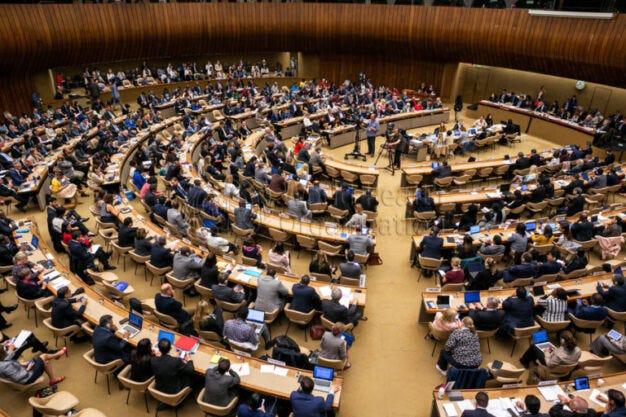
World Health Assembly, Geneva, Switzerland
The ambit of the overwhelmingly privately funded WHO, contained in its extensive constitution, can be interpreted as overly broad and sweeping, and thus, unknown to non-participants, has always posed a potential threat to individual health and national sovereignty.
The WHO’s constitution states in Chapter 2 – Functions – Article 2: In order to achieve its objective, the functions of the Organization shall be: (v) generally to take all necessary action to attain the objective of the Organization. However Article 21 of the WHO’s constitution is specific about making (non-binding) regulations, limiting the WHO to just five areas.
Proposed amendments to the new pandemic treaty include a dangerous clause that would change the WHO’s role from a UN agency that shares recommendations, to a rogue agency whose elitist and secretive attempts at legislation are binding and mandatory on member states, violating fundamental human rights and freedoms. However, health freedom advocates agree that WHO has no actual authority in the law.
In effect therefore, with both IHR amendments and the proposed new treaty, the WHO is acting ultra vires in its Big Pharma driven power grab, in collusion with naïve or compromised member state delegates. Ultra vires is defined in the law as: acting beyond the scope or in excess of legal power or authority. Ultra vires acts of impunity by the WHO could accelerate a mass defund and exit of the agency.
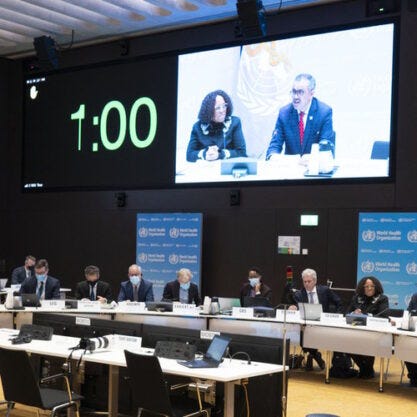
WHO’s negotiating body on a proposed pandemic treaty
Health is no longer just health, as it is defined in the WHO’s constitution. Through Covid-19, and other controversially declared pandemics, health is now a multi-billion dollar health security industry. With it, creeps in the tyranny of secrecy, surveillance, vaccine certificates, forced quarantines, and the undemocratic censorship of free speech. Given the absence of public participation, the WHO is a strategic spear for oligarchs and corporations, and given international resistance to its power grab, it may become desperate and argue or push for sanctions.
Reported in 2021: “In 2021, German Health Minister Jens Spahn called for sanctions against countries that hide information about future outbreaks. Citing the World Trade Organization’s power to sanction countries for non-compliance, Spahn said “there must be something that follows” if countries fail to live up to commitments under a new pandemic treaty that the World Health Assembly will take up in November.”
Further, it is entirely under reported that controversial “World Health Organization Director-General Tedros Adhanom Ghebreyesus also urged countries to consider the idea as they take up the treaty, a legally binding tool. The treaty should “have all the incentives, or the carrots” to encourage transparency, Tedros said, appearing at a press conference with Spahn in Berlin. “But maybe exploring the sanctions may be important,” he added.”
Also reported in 2021: “Speaking at the WHA in June, Mike Ryan, WHO Health Emergencies Programme Executive Director, also spoke out in favour of the treaty, despite the fact that WHO technical staff have historically avoided taking positions on controversial policy choices before member states. “My personal view is that we need a political treaty that makes the highest-level commitment to the principles of global health security — and then we can get on with building the blocks on this foundation.”
I engaged renowned international law expert Professor Francis Boyle about the possibility of sanctions via the WHO. He had no doubt “They will pursue sanctions against countries that do not comply with their orders, coming from Geneva. Both economic and political sanctions. However, they will only have the power to pursue sanctions if we accept their authority. We cannot. We must exit the WHO.”
With far less public scrutiny currently than the WHO, the United Nations is also seeking exponential new powers and stronger “global governance” mechanisms to deal with what they define as international emergencies. In March 2023, the UN released a policy brief , astonishingly titled “To Think and Act for Future Generations – Our Common Agenda. Strengthening the International Response to Complex Global Shocks – An Emergency Platform”
These all encompassing areas of expanded UN power include:
- climate or environmental events;
- environmental degradation;
- pandemics;
- accidental or deliberate release of biological agents;
- disruptions in the flow of goods, people, or finance;
- disruptions in cyberspace or “global digital connectivity;”
- a major event in “outer space;”
- and “unforeseen risks (‘black swan’ events)
There are several types of sanctions imposed through the United Nations:
- Economic sanctions – typically a ban on trade, possibly limited to certain sectors such as armaments, or with certain exceptions (such as food and medicine)
- Diplomatic sanctions – the reduction or removal of diplomatic ties, such as embassies.
- Military sanctions – military intervention
- Sport sanctions – preventing one country’s people and teams from competing in international events.
- Sanctions on the environment – since the declaration of the United Nations Conference on the Human Environment, international environmental protection efforts have been increased gradually.
- Economic sanctions are distinguished from trade sanctions, which are applied for purely economic reasons, and typically take the form of tariffs or similar measures.
It is plausible that the UN’s controllers realise that the world is pushing back against the WHO’s overreach, or find it irrelevant to real health. Given that sovereign nations will choose to exit the WHO, the UN decided to launch plan B and ascribe to itself even greater powers. Technically, there is no legislation to exit the United Nations within the UN Charter. Again, this is a critical issue of national sovereignty.
The United Nations Children’s Fund or UNICEF’s 2020 Annual Report highlights USD 717 million in donations from the private sector, which is 21 percent of income overall. Lucrative corporate partnerships include Unilever, Louis Vuitton, and Microsoft, while foundation partners include Bill and Melinda Gates Foundation and Mastercard Foundation. It also prides relationships with the World Economic Forum and the International Chamber of Commerce. National committees fundraise from individual donors and corporations at the national level, to support UNICEF globally. The UN’s programmes therefore are heavily dependant on private funding. Funding crowns influence.
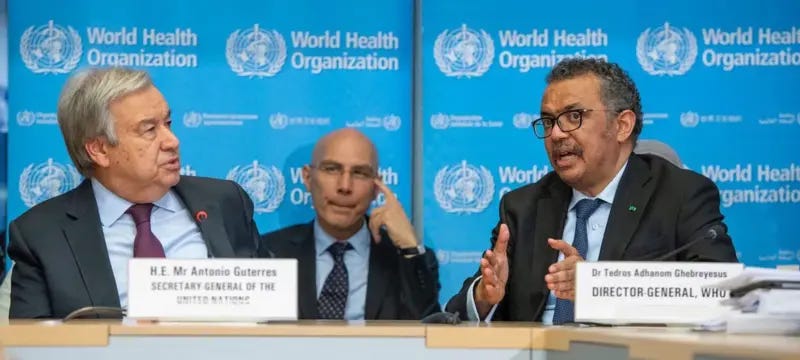
UN secretary general Antonio Guterres with WHO director general Adhanom Tedros Ghebreyesus
The WHO is an agency of the United Nations.
- In 2015, on punishing member states who violate the IHR, as reported: “United Nations health officials said they want to impose sanctions on countries that do not comply with public health regulations meant to avoid the spread of dangerous epidemics, such as the Ebola outbreak that killed more than 9,000 people and ravaged domestic health care systems in West Africa last year. World Health Organization Director Margaret Chan said she is investigating ways to reprimand countries that disobey the International Health Regulations (IHR) — a set of rules adopted in 2005 and mandate that countries set up epidemiological surveillance systems, fund local health care infrastructure and restrict international trade and travel to affected regions deemed unsafe to the public, among other provisions. Chan is on a panel set up by U.N. Secretary General Ban Ki-moon, who instructed the group to think of ways to hold countries accountable for how they manage public health crises and punish those who violate the IHR.”
- In 2022, according to commentators in a policy article: “In order to enforce compliance, some commentators have recommended concluding the treaty at the United Nations level. However, we fear that it has been already decided with the INB (mandated by WHASS) that a treaty will be developed under the roof of WHO. They added: “To move on with the treaty, WHO therefore needs to be empowered — financially, and politically. If international pandemic response is enhanced, compliance is enhanced. In case of a declared health emergency, resources need to flow to countries in which the emergency is occurring, triggering response elements such as financing and technical support. These are especially relevant for LMICs, and could be used to encourage and enhance the timely sharing of information by states, reassuring them that they will not be subject to arbitrary trade and travel sanctions for reporting, but instead be provided with the necessary financial and technical resources they require to effectively respond to the outbreak. High-income settings may not be motivated by financial resources in the same way as their low-income counterparts. An adaptable incentive regime is therefore needed, with sanctions such as public reprimands, economic sanctions, or denial of benefits.”
* Tweet CHD Africa if you agree that sanctions are possible and must be opposed internationally. Use the #StopSanctions
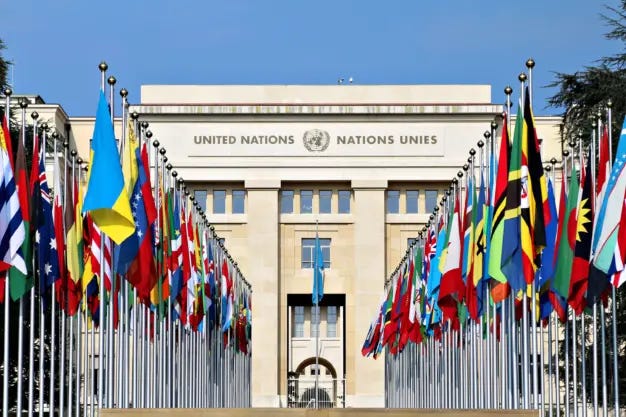
United Nations headquarters in Geneva, Switzerland
In 2000, Kofi Annan, former Secretary General of the UN said: “However, just as we recognize the importance of sanctions as a way of compelling compliance with the will of the international community, we also recognize that sanctions remain a blunt instrument, which hurt large numbers of people who are not their primary targets. Further, sanctions need refining if they are to be seen as more than a fig leaf in the future. Hence, the recent emphasis on targeted sanctions which prevent the travel, or freeze the foreign bank accounts, of individuals or classes of individuals – the so-called ‘smart sanctions’.”
Do sanctions work? “UN targeted sanctions, which are packages of sanctions imposed by the UN Security Council, have been successful in leading to intended policy change only 10% of the times, and limited the policies they intended to change in 28% of cases, but led to a reduced life expectancy in the targeted countries by 1.2–1.4 years. Economic sanctions have also been criticised for the potential collateral damage to third states they can cause. For this reason, some authors suggest that economic sanctions should be banned, as they are having detrimental effects on health and nutrition of civilians.”
Countries themselves can and do impose dangerous sanctions. A 2022 UN security council meeting on sanctions recorded: “Unilateral sanctions, which are sanctions imposed by (groups of) states and not by the UN Security Council, are particularly controversial. Unilateral sanctions have also been criticised for being disproportionately imposed on low-income and middle-income countries by wealthier countries, for example, by the Kenyan representative in a Security Council debate on sanctions on 7 February 2022: ‘The frequency and reach of unilateral sanctions have led to a growing view that they are the weapons of the strong against the vulnerable or weak’.”
- The Universal Declaration of Human Rights, in its first article, states that ‘all human beings are |…| equal in dignity and rights’, which includes the right to health. Article 25 specifies that ‘everyone has the right to |…| health and well-being |…| including medical care’.
- In the UN Convention on the Rights of the Child, article 24 states that ‘state parties recognize the right of the child to |…| the highest attainable standard of health and to facilities for the treatment of illness and rehabilitation of health. State parties shall strive to ensure that no child is deprived of his or her right of access to such health care services’.
- General Comment No.14 of the UN Committee on Economic, Social and Cultural Rights (CESCR) on the right to the highest attainable standard of health, the right to health is a fundamental human right which is necessary for all other human rights to exist and be exercised.
- “The use of sanctions designed to hurt a country’s healthcare sector is clearly incompatible with respecting citizens’ right to health. Accordingly, the general comment No. 14 of the CESCR calls on states to refrain ‘at all times’ from sanctions on medicines and medical equipment. However, sanctions on other healthcare products and, in fact, other non-healthcare products may as well interfere with the right to health, and, thus, need to be subject to scrutiny.”
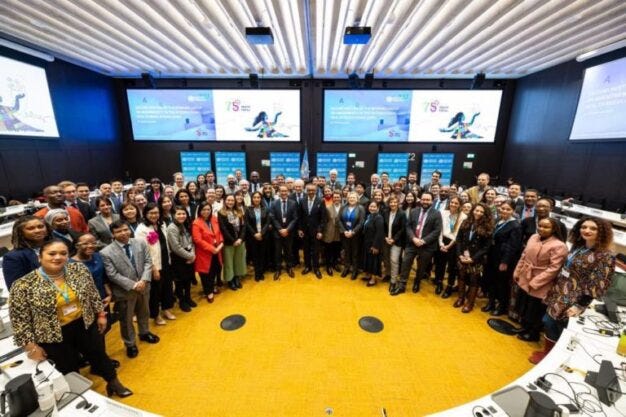
WHO’s World Health Assembly 75
South African Precious Matsoso, co-chair of the International Negotiating Body (INB), formed to negotiate the terms of the proposed pandemic treaty or accord, admitted openly that punitive measures have not been shown to work “anywhere” in the world. However, she said, there must be accountability measures while recognizing countries’ sovereignty. “We have to recognize that they’re sovereign, and they keep on reminding us that they are sovereign states.” It is positive to note that more states do recognise the real threat to sovereignty.
Not all states are considered equal. Smaller countries are at a distinct disadvantage in participating, negotiating and making decisions at the hierarchical WHO. Significantly, Matsoso was transparent about failures in equal participation. “A number of smaller delegations have always expressed concerns about organizations of multiple meetings, where they have to travel from afar, and not even having the capacity to participate in the negotiations,” Matsoso said. “And they have repeatedly requested that you must avoid parallel sessions.” To little avail.
Given the rapidly growing distrust in the WHO, its historical failures and harms, Covid-19 failures and harms, and the fact that it cannot maintain independence because it is a largely privately funded entity; it is plausible that the WHO and/or the UN will move to impose or influence sanctions via the World Trade Organisation, ahead of Agenda 2030. This act of aggression weaponises the WHO and/or the UN against countries that influential funders and unethical stakeholders have an interest in destabilising for power and resource control.
This sinister strategy has disturbing implications for democracy, peace, and prosperity around the world. Freedom faces an existential risk through unelected bureaucratic entities. Nations can and must protect their sovereignty by defunding and exiting WHO, and, by critically assessing the true nature, value, and risks of continued membership in the 78 year old United Nations. Not to do so, means ignoring the risks of UN peacekeepers, who are known to commit crimes with impunity, being deployed in your country to enforce UN and WHO dictates.
Shabnam Palesa Mohamed is executive director and chapter coordinator for Children’s Health Defense Africa. She is an activist, journalist, lawyer, and mediator, with over 20 years of experience in human rights work. To share information, Twitter: @ShabnamPalesaMo
Follow CHD Africa on 6 social platforms for news, action alerts, and updates:
– Telegram: t.me/CHDafrica
– Twitter: https://twitter.com/CHD_Africa
– Instagram: https://www.instagram.com/af.childrenshealthdefense/
– Facebook: https://www.facebook.com/CHDafricachapter
– Rumble: https://rumble.com/user/ChildrensHealthDefenseAfrica
– Tiktok: https://www.tiktok.com/@chdafrica?is_from_webapp=1…
EU and UN Discuss How to Address “Disinformation” on Digital Platforms
By Cindy Harper | Reclaim The Net | June 30, 2023
In an apparent display of bureaucratic synergy, the European Union and United Nations have convened to muse over the implementation of new social media regulations, ostensibly in the pursuit of a more secure and transparent digital milieu. What stirs apprehension, however, is the overt enthusiasm of the UN’s Under-Secretary-General for Global Communications, Melissa Fleming, who anticipates that the EU’s Digital Services Act will establish a “new de facto global regulatory benchmark.” The skepticism arises from the suspicion of veiled intentions to curb free speech under the guise of combating “disinformation.”
Platforms are constantly blamed for the proliferation of “disinformation” and “hate speech,” with detractors painting them as adversaries to science, democracy, and human rights. The UN Secretary-General António Guterres brandishes a doomsday brush, asserting that large-scale disinformation constitutes “an existential risk to humanity.”
What is crucial here is the essence of the dialogue and the response it seeks to galvanize. The UN is fervently plotting a Code of Conduct premised on a policy brief that stresses the imperative for an international clampdown on disinformation. It lays out what seems to be an ambitious and comprehensive framework, involving governments, tech companies, advertisers, and other stakeholders. All very fine, but what remains unaddressed is the question of who gets to define what is “disinformation,” and what criteria determine the line between free speech and misinformation.
The Code of Conduct, steeped in an aura of academic rigor and global research, envisages a change in the fabric of digital platforms. However, the aspects it emphasizes – detaching from engagement-driven business models, and ostensibly placing human rights, privacy, and safety at the forefront – are nebulous in terms of implementation and potential overreach. Furthermore, the UN’s admission of wielding moral authority without sanctions may be viewed as a tacit endorsement of soft power coercion.
While Melissa Fleming’s words convey a seeming commitment to protect human rights and access to information, the phraseology she employs – “human rights-based,” “multi-stakeholder,” and “multi-dimensional” – are threadbare buzzwords that do little to assuage the concerns over censorship and institutional overreach.
The concern is not with the stated objectives of fostering a safe and open digital environment, but rather with the specter of global entities like the EU and UN using the cloak of “disinformation” to infringe on the bedrock principle of free speech.
The UN Wants People To Report Each Other For “Hate Speech”
Alleges that speech can be violence
By Didi Rankovic | Reclaim The Net | June 26, 2023
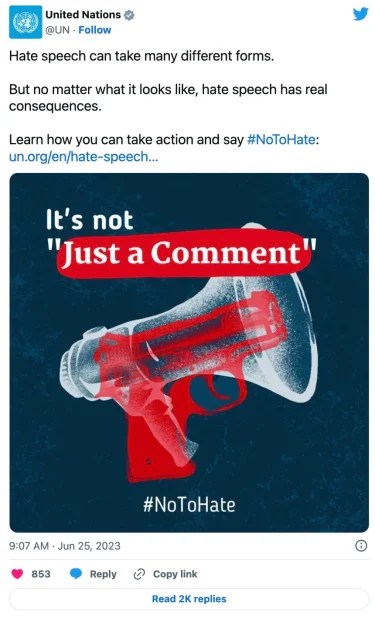 There’s been a lot of talk about the United Nations (UN) and its actions of late – mostly, those actions that fall way beyond the scope of what its founding Charter designates the organization’s role to be.
As a short history reminder – the UN is basically the international body that succeeded the League of Nations – the one that failed to prevent the (previous, atrocious) world war.
The UN is – and has, for a long time, focused its energy on “doing better” – mediating, providing a neutral ground for dialogue, helping those places around the globe unfortunately afflicted by local wars since 1945 – and just in general, not repeating the mistake of its predecessor of miring itself into irrelevancy.
You would think that with the real danger of another global war now on the cards, that would take up all of the UN’s energy and focus. But you would be wrong.
Here’s the UN, dabbling in things like alleged “hate speech.”
But – world peace – that’s supposed to be the mission. Not policing social media for dubiously defined “hate speech.”
The UN is now using its always precarious resources (depending on member-countries’ contribution, and, consequently, the way the organization satisfies the biggest contributors’ own agendas) to deal with things like real or perceived “hate speech” online.
But can that really be the mission of the world organization set up to make sure another world war doesn’t happen, and help/mediate in regional conflicts?
It seems almost absurd. Yet here it is. The UN is reported to be descending into internet censorship by “encouraging” people to report one another for hate speech online.
Really? That’s your mission now? How about providing food and drinking water to warzones and brokering peace deals?
One way to fade into obscurity as a trusted and impartial broker, is for an organization to put out statements like this.
Let’s not worry about a nuclear Armageddon – instead, what steps can we take to “combat” those pesky tweets?
Well, according to a UN tweet – there’s as many as eight: “pause, fact-check, react, challenge, support, report, educate, and commit.”
It would be comical, if it wasn’t ultimately smacking of tragedy.
“A Global Digital Compact” – UN promoting censorship, social credit & much more
By Kit Knightly | OffGuardian | June 20, 2023
Late last month the office of the United Nation’s Secretary General published a policy document on aims for the future of the internet.
A follow-up to the 2021 report “Our Common Agenda”, the new report’s title says it all really, “A Global Digital Compact”. That’s the goal, international legislation that would seek to control and enforce the use of digital technology.
The proposed clauses promote everything you’d expect them to promote.
Digital identities linked with financial access:
Digital IDs linked with bank or mobile money accounts can improve the delivery of social protection coverage and serve to better reach eligible beneficiaries. Digital technologies may help to reduce leakage, errors and costs in the design of social protection programmes
Environmental or climate change-based social credit systems:
Sensors and monitors connected to the Internet of things, cloud-based data platforms, blockchain-enabled tracking systems and digital product passports unlock new capabilities for the measurement and tracking of environmental and social impacts across value chains.”
Public-Private Partnership:
Partnerships between States, private sector and civil society leverage the capacity of digital tools to provide solutions for development across the Sustainable Development Goals. Examples include the Digital Public Infrastructure Alliance, the Coalition for Digital Environmental Sustainability and public-private partnerships for disaster response.”
Countering online “harm”:
Disinformation, hate speech and malicious and criminal activity in cyberspace raise the risks and costs for everyone online […] we must strengthen accountability for harmful and malicious acts online.
Those are the obvious ones, there’s also more sneaky, insidious language regarding “equity” and “access”. The report is concerned there are many people in the world (mostly the developing world) who don’t have regular access to the Internet.
This concern would be more honestly expressed in the language of control – people who don’t consume digital media can’t be hypnotised, people who don’t communicate online can’t be censored, and people who don’t rely on digital banking can’t be controlled.
To sum up, the Digital Global Compact is a piece of globalist legislation serving the final aim of globalist policy: Control of all aspects of life, achieved by inserting a digital filter between people and reality.
Banking, communication, media consumption, shopping. Every interaction you have will be through a digital membrane which can both monitor your exchanges with the world and – if deemed necessary – deny you access to that world.
An interesting final point to note is the words the report doesn’t use. “Globalist” and “globalism” do not appear once, “vaccine passports” or “vaccine certificates” are likewise not mentioned. Neither are “social credit” or “central-bank digital currency”. They are discussed, but not mentioned.
They seem to be avoiding buzzwords they know will trigger resistance or set off alarm bells. Would they have done that before the skeptics started winning the Covid conversation? I don’t think so.
You don’t have to take my word for any of this, of course, you can read the whole report yourself.
There’s nothing surprising in there at all, obviously. But it’s definitely a “quiet part out loud moment”, and a link to send to those people who still dismiss you as a conspiracy theorist.
BBC Verify?
By Iain Davis | OffGuardian | May 31, 2023
With great fanfare, the BBC has launched BBC Verify. The state broadcaster’s very own, specialist “disinformation and social media correspondent,” Marianna Spring, announced its arrival live on UK TV.
She explained that the BBC would verify video, fact check and “counter disinformation.” So rest assured, no one needs to think about anything. The BBC will “fact check” everything for us and tell us what “the truth” is.
Apparently, it “really matters” that the BBC acts as the UK government’s official arbiter of truth because, according to Spring, “mistruths” can “cause really serious harm to society.” Marianna has yet to define “harm,” but that doesn’t really matter. The government hasn’t either, despite the fact that it has placed its vague concept of “harm” at the centre of its equally ambiguous Online Safety Bill. Which is proposed state censorship legislation that Marianna is very keen to promote.

Marianna said that we can familiarise ourselves with BBC truth if we are shown the BBC news team’s “workings.” A strange choice of words.
While “workings” means “the way an organisation operates” it also means “a system of holes.” It isn’t clear which definition Marianna was using, although both seem appropriate in reference to BBC news coverage.
Marianna proudly announced that the BBC were “able to look at maps.” This presumably unique BBC capability supposedly enables their intrepid reporters to analyse “war zones.” And find them too, which is handy.
Spring is very concerned about, what she calls, social media “disaster trolls.” She is seemingly referring to people who understand that the UK government is among those that often rely upon false flag terrorist attacks when they want to pass oppressive surveillance legislation or justify their next war.
“Disaster trolls,” she alleges, “cause real world harm” by questioning the often implausible and contradictory accounts of people who claim to have been injured in, what evidently appear to be, false flag terrorist attacks. Marianna hasn’t clarified whether “disaster trolls” are the people who ask questions or the idiots who abuse others online. Te be fair, that distinction is probably moot because Marianna, the BBC and the government clearly want to silence everyone who disagrees with them.
Marianna told the nation that she’s a social media troll. She described the “undercover” accounts that she has “set up” to deceive people on social media. She claimed that these help the BBC news team understand “polarisation online.” Although, the BBC are seemingly causing a fair bit of “polarisation” themselves with their fake troll accounts and endless accusation levelled against anyone who questions the state.
Trolling, Marianna maintains, helps the BBC nail down “just how social media works.” It is a shame they felt the need to create a network of fake accounts to figure this out. They could have just asked my 80-year-old mum. She understands how it works.
Marianna’s said that her online trolling activities are helping her to investigate the “UK’s conspiracy theory movement.” I wish her well, but I fear this is going to be a monumentally difficult task because there is no such thing as the UK’s conspiracy theory movement.
“Conspiracy theory” is just a term the CIA weaponised for their propagandists to help them shut down any debate—about who shot JFK—by sticking the dismissive “conspiracy theorist” label on anyone who dared to question the US government’s official account. It really doesn’t mean anything more than that. Alleged “conspiracy theorists” are just people who question government narratives.
This may go some way to explaining why attempts by the Establishment to lucidly define “conspiracy theories” are frequently absurd. For example, according to the UN, a conspiracy theory is “a belief that events are secretly manipulated behind the scene by powerful forces with negative intent.”
Of course, no one can ever know what a secret is because it’s a “secret.” Typically, the people who get labelled “conspiracy theorists” point toward real evidence that possibly indicates real conspiracies. They only remain “secrets” if you refuse to look at the evidence.
If there are people who believe events can be explained by highlighting things that can’t be known, and there is no evidence that such a “movement” exists in the UK or anywhere else, that would indeed be rather silly.
The UN then adds to its own confusion by stating that a “conspiracy theory” can be identified, in part, because there is evidence that “seems to support the conspiracy theory.” Quite how you find evidence that “seems” to support something that is incomprehensible is mystifying.
However, we do get some contradictory clarification from the academics the UN selected to back up its bizarre contention. In the Conspiracy Theory Handbook , cited by the UN as “evidence,” Professor Stephen Lewandowsky and John Cook PhD, from George Mason University’s Center for Climate Change Communication, stated:
Real conspiracies do exist. [. . .] The U.S. National Security Agency secretly spied on civilian internet users. [. . . ] We know about these conspiracies through internal industry documents, government investigations, or whistleblowers.
So conspiracies do exist! What are the UN rambling on about then? Are they secret or not? We get further clues from the UN’s eminent experts:
Real conspiracies get discovered through conventional thinking—healthy skepticism of official accounts while carefully considering available evidence and being committed to internal consistency.
Begging the question, what is the difference between the evidence that “seems to support the conspiracy theory” and the evidence that “seems” to expose a “real conspiracy”? The answer is, at least, forthcoming:
Conspiracy theories, by contrast, tend to persist for a long time even when there is no decisive evidence for them. [. . .] Typically, conspiracy theories are not supported by evidence that withstands scrutiny.
Ah, I see!
The real conspiracies are exposed by a novel type of evidence called “decisive evidence.” This is different from the evidence that “seems to support the conspiracy theory,” because only it can withstand scrutiny. Although, neither the UN nor its employed academics specify who should scrutinise it.
Perhaps we can now try to construct some sort of sense from, what otherwise appears to be, the UN’s garbled drivel.
The UN and its experts appear to suggest that “real conspiracies,” such as the US government spying on US citizens, are only revealed when “decisive evidence” is uncovered by, for example, US “government investigations.” Unless the evidence is officially acknowledged, or approved by the appointed experts, it is not evidence that stands up to scrutiny.
Right! Got it!
Presumably, we can therefore expect Marianna and the BBC Verify team to scrutinise the evidence offered by those she labels “conspiracy theorists” in order to “debunk” it. This will certainly represent a sea change for the BBC because, to date, they haven’t even reported any of the evidence offered by so-called conspiracy theorists, let alone scrutinised it.
Marianna promises to expose the nonexistent “UK conspiracy theory movement” with her new investigation, “Marianna in Conspiracy Land.” This, she claims, will enable the BBC audience to see how Marianna and her colleagues “piece together the truth.”
I suspect, BBC Verify will prove to be quite illuminating. But not for the reason’s that Marianna and the BBC hope.
US blocks China’s effort to condemn Israeli attacks on Gaza at UN: Report
The Cradle | May 11, 2023
US officials blocked an effort led by China at the UN Security Council (UNSC) on 10 May to condemn Israel’s latest onslaught on the besieged Gaza Strip, according to senior Israeli officials that spoke with the Times of Israel.
Washington’s interference reportedly came at the request of Tel Aviv, who feared the motion at Tuesday’s emergency meeting “would draw an equivalence” between the Israeli army and the Palestinian Islamic Jihad (PIJ) resistance group.
Over the decades, the US has consistently stepped in to protect Israel from facing the consequences of rampant human rights abuses, the military occupation of Palestinian land, and the imposition of an apartheid system targeting Palestinians.
The only exception to this rule came earlier this year, when Washington allowed a statement to pass at the UNSC blasting Israel’s expansion of illegal settlements in the occupied West Bank. Nonetheless, the US went on to block a binding resolution against Israel.
Former US President Harry Truman was the first world leader to recognize Israel when it was created in 1948 following the ‘Nakba,’ or catastrophe, during which at least 700,000 Palestinians were violently evicted from their lands by Jewish settlers.
Israel is also the largest cumulative recipient of US foreign aid in the post-World War II era and enjoys unequivocal political and diplomatic cover from both the Democratic and Republican parties as well as from US corporate media.
However, US influence in the region has started to wane in recent months, pushing Israel further into isolation.
Last month, Beijing offered to help facilitate peace talks between Israel and Palestine as part of a larger effort to mediate historic conflicts in West Asia.
In December, Chinese President Xi Jinping expressed support for an end to the Israeli occupation of Palestine and voiced frustration over the “historical injustice” suffered by Palestinians.
He also called for granting Palestine “full membership in the United Nations” and said Beijing “supports the two-state solution and the establishment of a Palestinian state on the 1967 borders, with East Jerusalem as its capital.”
The Asian giant has slammed recent comments by a Jewish supremacist government minister, who in March said, “there is no such thing as a Palestinian people.”
“The Israeli senior official is wrong and irresponsible to deny Palestinian people’s existence and to display an ‘Israel map’ including Jordan and Palestinian places occupied by Israel at an event in Paris,” said Wang Wenbin, a spokesman for China’s Foreign Ministry.
When the trading gets rough, the pros go insider
The farm to table vertical integration of the gates foundation investing racket
by el gato malo – bad cattitude – may 6, 2023
in the aftermath of great events, “who knew what and when did they know it?” is always an interesting question.
the US intelligence community (michael spenger substack ) was suspected to have caught wind of covid back in november 2019.

astonishingly, the IC itself denies this and claims they were in the dark until later
Every official interviewed by the Committee—from working level analysts at NCMI to an official with relevant knowledge at the NSC—said that their first indication of a novel virus came with the publication of the ProMED notice published at 11:59 p.m. on December 30, 2019 that reported the announcement of a novel virus by the Wuhan Municipal Health Committee.
In sum, the first warnings of COVID-19 came from the non-IC based public health track—in this case disease surveillance conducted by local public health authorities in Wuhan.
but this invites some pretty pointy questions about their competence, no?
because it sure looks like pretty much everyone on the super special inside track of business and finance CLEARLY knew by then.
bill gates knew. the WEF and team davos knew. and they were making big plays to make big money months before the intelligence community is even claimed, much less claims to have known what was going on.
it does make one wonder…

bill gates bought $55 million (with an option for $100mm) of bioNtech stock in september of 2019 right before they suddenly had the intellectual property for the most profitable vaccine in history.
they were not working on vaccines previously.
i wonder where they got the tech?
no one seems to know.
but it sure looks like billy g knew.
so, here’s a fun little nugget from the bill and melinda gates foundation investment into bioNtech, from whom pfizer licensed the IP for the covid vaccine.
pretty prescient for september 2019.

source
does this seem like “boilerplate?”
because it seems oddly specific (but deniable) as a “partnership” on something unrelated that could suddenly be “covid.”
and the timing is awfully provocative especially in light of some other events.
he did well getting out as well.
gates sold in 2021, banking $260 million, pretty much right at the top and has since changed his tune on mRNA vaccines, but this is hardly uncommon for “investors talking their book.”
the rest of this fact pattern looks a bit nastier though, more like the 3.0 sand hill road model of “buy up companies in a space and then mandate the adoption of their products.”
this has been the great game out there since even before kleiner perkins hired al gore to shill and lobby for their greentech portfolio. they are currently playing a similar (and more subtle) game playing hungry hungry hippos with HVAC companies and then pushing through new “air handling mandates” for new buildings, schools, offices, etc. cuz “public health.”
but the gates foundation makes them look like pikers.
if you’re going to make a big push into selling vaccines and drugs, why buy mere lobbyists when you can buy the WHO? gates is by far their largest private donor, 25X the size of the next biggest and was their number 2 donor overall.
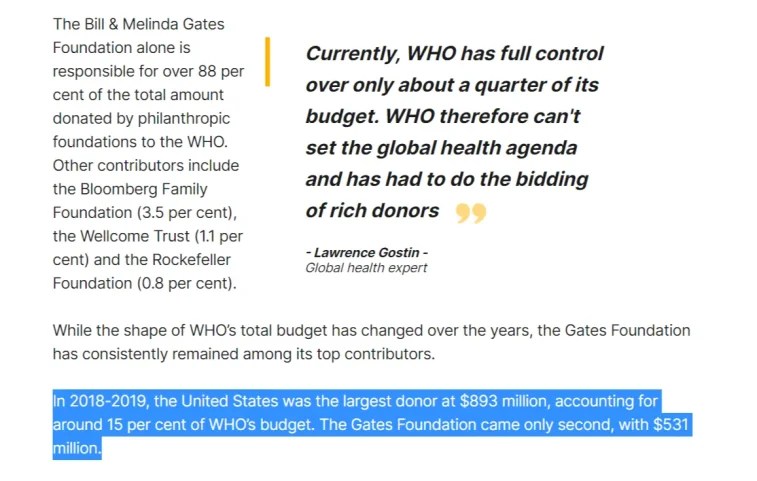
$531 million buys A LOT of access and control. it’s perfect. the WHO is not only on the ground all over, but they also give advice and set policy/terms for assistance. so gates gets all the info instantly about what’s happening in diseases and then gets to tell the WHO what to tell everyone to do about it. play the hero and add a zero (to your bank balances).
it’s a truly great grift and few dare call it out as the nasty, hard-knuckle lobbying and advocacy it is because it looks like philanthropy.
weaponized philanthropy to be sure, but “philanthropy” and tax free to boot.
not only did bill get early word on wuhan and reach out and place big money on the one subtle square that was going to pay out huge by suddenly having the answer to the most asked question on earth and coming out of obscure nowhere to partner with pharma titan pfizer, but he went a full step further and actually held a pandemic war game under the auspices of john’s hopkins that gathered top policy makers and thought leaders to assess a global outbreak of an “imaginary” disease that happened to look exactly like SARS-cov2. this was the now infamous “event 201.”
and look who threw the party: the WEF and the gates foundation.
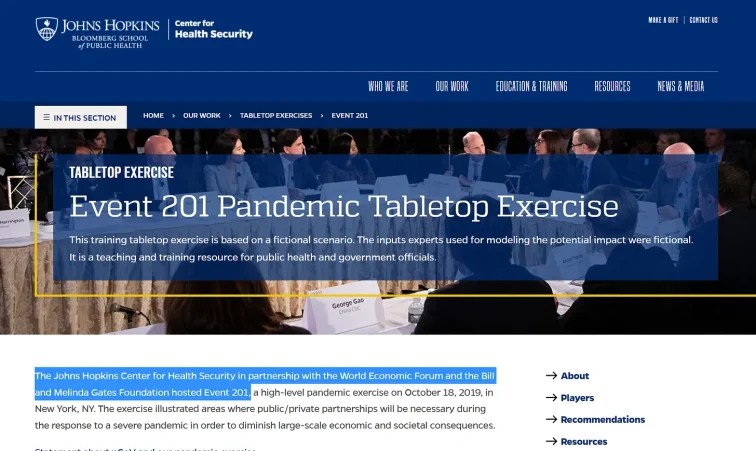
it’s obvious that they knew exactly what was coming. this was the overt planning plenary for covid. it was not pretend. and many/most those attending must have known that. this is the same time gates was buying bioNtech.
the bioNtech investment was 9/4/19. event 201 was 10/18, five weeks later.
who knows how much earlier the due diligence and planning must have begun, especially for the investment.
there’s getting lucky, and there’s putting the fix in because you know what others do not.
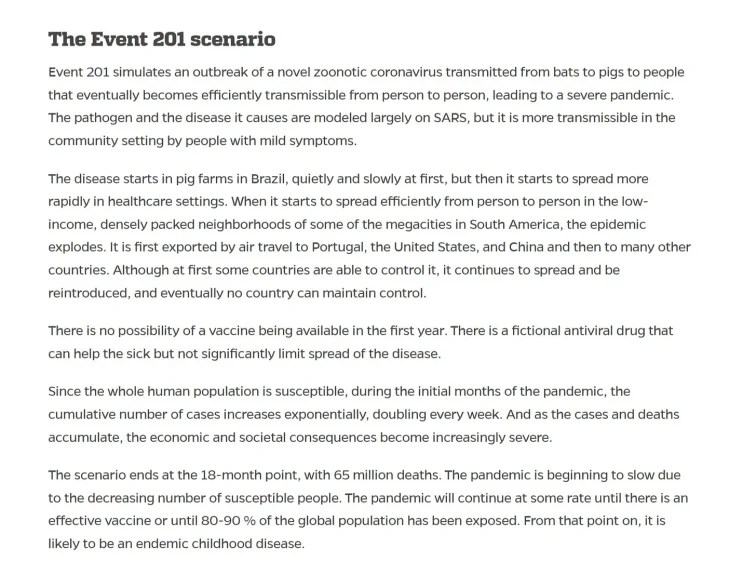
tell me that this “imaginary scenario” 2-3 months before the whole world knew what was happening was just a lucky guess.
the “players” were a high powered gang including big business, healthcare companies, the UN, the head of china’s CDC, a number of academics, the head of US CDC preparedness and response, monetary authorities, and media firms.
Featured Video
NEW FAUCI EMAILS EXPOSE ATTACK ON NATURAL IMMUNITY
or go to
Aletho News Archives – Video-Images
From the Archives
Elite Western universities are a corrupt, parasitic empire
Instead of high-quality education, these institutions are fostering a global neo-feudal system reminiscent of the British Raj
By Dr. Mathew Maavak | RT | May 30, 2025
In a move that has ignited a global uproar, US President Donald Trump banned international students from Harvard University, citing “national security” and ideological infiltration. The decision, which has been widely condemned by academics and foreign governments alike, apparently threatens to undermine America’s “intellectual leadership and soft power.” At stake is not just Harvard’s global appeal, but the very premise of open academic exchange that has long defined elite higher education in the US.
But exactly how ‘open’ is Harvard’s admissions process? Every year, highly qualified students – many with top-tier SAT or GMAT test scores – are rejected, often with little explanation. Critics argue that behind the prestigious Ivy League brand lies an opaque system shaped by legacy preferences, DEI imperatives, geopolitical interests, and outright bribes. George Soros, for instance, once pledged $1 billion to open up elite university admissions to drones who would read from his Open Society script.
China’s swift condemnation of Trump’s policy added a layer of geopolitical irony to the debate. Why would Beijing feign concern for “America’s international standing” amid a bitter trade war? The international standing of US universities has long been tarnished by a woke psychosis which spread like cancer to all branches of the government.
So, what was behind China’s latest gripe? ... continue
Blog Roll
Recent Comments
seversonebcfb985d9 on Villains of Judea: Philip Esfo… loongtip on Report warns that ‘Jewish terr… Craig Nelms on New study shows that toxic gas… loongtip on A Funny Thing Happened on the… loongtip on EU free trade pact on hold as… John Edward Kendrick on Regime Change In Iran Is The F… Bill Francis on Australia Passes New Hate Spee… seversonebcfb985d9 on Australia Passes New Hate Spee… Bill Francis on Britain’s AI Policing Plan Tur… loongtip on Miami Beach Resident Questione… loongtip on Israeli agricultural export co… loongtip on The War On Free Speech In Aust…


 Aletho News
- NEW FAUCI EMAILS EXPOSE ATTACK ON NATURAL IMMUNITY
- Why is the US using Jordan as the main base in possible Iran attack?
- American Academy of Pediatrics Hit With Federal RICO Lawsuit for Vaccine Safety Fraud
- Mom Tells Trump: Dumping Sewage Sludge on Farmland Won’t Make America Healthy Again
- NIAID Funds Gain-of-Function Study Engineering Novel Influenza Viruses
- Villains of Judea: Philip Esformes and the Largest Healthcare Fraud in American History
- US sanctions Popular Conference for Palestinians Abroad over alleged Hamas links
- You reap what you sow: Ukraine’s blackout is Zelensky’s failure
- Ukraine Blackouts Caused by Zelensky’s Terrorist Attacks on Russia
- Orban Hits Out at EU Green Light for $1.5 Trillion Ukraine Aid
- If Americans Knew
- Oppose Israel’s Abuses While You Still Can
- UNRWA Heads Tell Ha’aretz: ‘We Don’t Radicalize Palestinians – Their Lived Existence Does’
- Plans Call for “New Rafah” Built in Israel’s Image — Without Palestinians
- Posing as priest, reporter is spat at many times, highlighting anti-Christian sentiment in Israel
- Leaked Documents: “Planned Community” in Rafah Would Force Palestinians Into Israeli Panopticon
- ‘Permits of Humiliation’: How Israel Strangles Christian Education in Jerusalem
- “The world sees death, destruction and injustice – and they see dollar signs” – Not a ceasefire Day 105
- War criminal Netanyahu kills 11 in Gaza, joins Board of Peace – Not a ceasefire Day 104
- Another baby dies of cold in Gaza, as Rafah crossing remains locked down – Not a ceasefire Day 103
- Brutal Beatings, Arson, and Impunity: A Palestinian Plant Nursery Becomes a Target for Settler Pogroms
- No Tricks Zone
- New Study: Sea Levels Rose 20 Times The Modern Rate During The Roman Warm Period
- As German Gas Storage Dips Dangerously Low…Shortage Hardly Avoidable
- New Study: Brazil’s Relative Sea Level Was 2+ Meters Higher And SSTs 3-4°C Warmer 6000 Years Ago
- Philosopher Schopenhauer: Climate Science Certainty Stems From Stupidity, Ignorance
- New Study: Species Extinction Rates Declining Since 1980 – ‘Climate Change Is Not An Important Threat’
- Denmark Places Climate Protection Above Animal Welfare, Poisoning And Culling Cows
- New Study: Greenland Was 3-7°C Warmer And Far Less Glaciated Than Today 6000-8000 Years Ago
- German Media Report That Current Frigid Weather Can Be Explained By Arctic Warming!
- Berlin Blackout Shows Germany’s $5 Trillion Green Scheme Is “Left-Green Ideological Pipe Dream”
- Modeling Error In Estimating How Clouds Affect Climate Is 8700% Larger Than Alleged CO2 Forcing
 Aletho News
