UN rights body adopts 5 anti-Israel resolutions, urges arms embargo

Press TV – March 24, 2018
In a major diplomatic blow to Israel, the United Nations Human Rights Council (UNHCR) has adopted five resolutions against Tel Aviv, urging an international ban on arms sales to the regime over its atrocities in the occupied Palestinian territories.
The resolutions were adopted Friday at the end of the UNHCR’s 37th session, which lasted for a month in Geneva, slamming the Israeli regime’s mistreatment of Palestinians and voicing support for the Palestinians’ cause against the regime’s occupation of their homeland.
One of the resolutions is called “Ensuring accountability and justice for all violations of international law in the Occupied Palestinian Territory, including East Jerusalem (al-Quds).”
The document, which was passed by 27 to 4 votes and 15 abstentions, urged the world community to stop selling arms to the regime in Israel.
The resolution called upon “all states to promote compliance under international law” with regard to Israeli actions “by ensuring that their public authorities and private entities do not become involved in internationally unlawful conduct, inter alia the provision of arms to end users known or likely to use the arms in the commission of serious violations of international humanitarian and/or human rights law.”
Another of the five resolutions calls for an Israeli withdrawal from the Golan Heights, which the regime seized from Syria during the 1967 Six-Day War. Tel Aviv continues to occupy two-thirds of the Syrian territory ever since, in a move that has never been recognized by the international community.
The UN rights body also approved a resolution that called on Israel to withdraw to the pre-1967 lines as well as one that urged the Tel Aviv regime to halt settlement activity.
The fifth document approved on Friday denounced Israel for human rights abuses against the Palestinians.
US gets angry, says losing ‘patience’
Furious over the resolutions, US Ambassador to the United Nations Nikki Haley has slammed the council as “foolish and unworthy of its name,” claiming it is biased against Israel.
She also warned that the US would continue to consider its options regarding membership of the UN panel, saying, “Our patience is not unlimited.”
“When that happens, as it did today, the Council fails to fulfill its duty to uphold human rights around the world. The United States continues to evaluate our membership in the Human Rights Council. Our patience is not unlimited,” Haley said.
The UK also spoke against what it called the council’s bias against Tel Aviv.
Britain opposed the resolutions on the Golan Heights and the one on accountability. It, however, voted in favor of the resolutions on human rights and Palestinian self-determination. The country also abstained on the resolution on settlements.
Under US President Donald Trump, the regime in Israel has stepped up its expansionist policies and crimes against Palestinians.
The regime has been further emboldened by a US decision to transfer its capital from Tel Aviv to the occupied city, in a major policy shift which drew global anger and protests late last year.
The city, which is designated as “occupied” under international law since the 1967 Arab War, is sought by Palestinians as the capital of their future state.
UN seeks rare labor probe against Venezuela
Press TV – March 21, 2018
The UN’s labor body on Wednesday set up an investigation into alleged violations in Venezuela, following a request by a private-sector group long opposed to the Caracas government.
The United Nations’ International Labor Organization rarely creates this type of probe, known as a Commission of Inquiry. The last case was launched against Zimbabwe in 2008.
The entrepreneurial association, Fedecamaras, took its complaint to the Geneva-based ILO, alleging it was the victim of multiple violations committed by President Nicolas Maduro’s socialist government.
Those included breaching freedom of association rights of unions and trade groups seen as opposed to the government; and raising minimum wages without consulting employers — a violation of ILO rules.
In a statement, the ILO said its governing body “has discussed this complaint six times since 2015.”
It asked Caracas “to take measures to put an end to the alleged interference, aggression and stigmatization directed against Fedecamaras, its affiliated organizations and its leaders,” the statement said.
The ILO also noted that it had to cancel a high-level trip to the country scheduled for last year after the government objected to the mission.
“A Commission of Inquiry is generally set up when a member State is alleged to have committed persistent and serious violations of ratified International Labor Conventions, which are binding international treaties, and has repeatedly refused to address them,” the statement further said.
The ILO has only set up 12 such inquiries in its 100-year history.
Venezuela’s crushing economic and political crisis has caused widespread shortages of basic goods, in addition to hyperinflation.
Maduro’s government has at times portrayed certain private-sector groups as enemies and agents of foreign powers hostile to Venezuela’s interests.
Venezuelan Opposition Protests Proposed UN Electoral Observer Mission
Venezuelanalysis | March 13, 2018
Caracas – Supporters of Venezuela’s Democratic Unity Roundtable (MUD) opposition coalition marched on the headquarters of the United Nations in Caracas Monday to protest the possibility of the international body sending an observer mission to monitor the country’s upcoming May 20 elections.
In a letter addressed to UN Secretary-General Antonio Guterres, the opposition alleged that an observer mission would “give a veneer of legality to an [electoral] process that lacks it.”
Last month, the Venezuelan electoral authorities formally invited the UN to send an observer mission to monitor the upcoming elections as part of an agreement negotiated between the government and the MUD, which the latter ultimately refused to sign. The UN is yet to confirm whether it will send a delegation in May.
Following the breakdown of internationally-mediated talks, the main opposition coalition announced it would boycott the presidential elections – which were then set for April 22 – claiming the date and electoral guarantees were inadequate to ensure a free and fair contest.
However on March 1, several smaller opposition parties led by former Lara Governor Henri Falcon broke ranks with the MUD and signed a deal with the ruling United Socialist Party and its leftist allies moving the presidential election to May 20 and hold municipal and state legislative elections on the same day. Although the agreement featured various safeguards previously demanded by the MUD during talks – including observers from the UN and other international bodies, equal access to media, and an ample window for voter registration – the anti-government coalition dismissed the deal as a “farce” and vowed to go ahead with its boycott.
Turnout in Monday’s demonstration was, nonetheless, small in number, particularly in comparison to the mass protests organized by the MUD to demand early presidential elections last year, which frequently concluded in deadly acts of violence perpetrated by hardline anti-government groups.
The march was organized by the newly formed “Free Venezuela Broad Front” (FAVL), which includes the parties of the MUD alongside the Fedecameras business lobby, representatives of the Catholic and evangelical churches, several university student and professor organizations, as well as a group of ex-government loyalists led by former Interior Minister Miguel Rodriguez Torres.
Taking to Twitter Saturday, President Nicolas Maduro criticized the call for electoral boycott and rejection of UN observers from sections of the opposition.
“Why so much contradiction? What do they [the MUD] want? I want the secretary-general to send a strong commission of observers,” he declared.
Meanwhile, Maduro’s principal rival, Henri Falcon, was in New York Tuesday, where he was reportedly meeting with UN officials.
Himself a former Chavista, Falcon was expelled from the MUD last month after he registered his candidacy in violation of the coalition’s boycott.
While center-right pollster Datanalisis has reported that over 70 percent of Venezuelans intend to vote in the upcoming elections, Falcon and other opposition leaders remain concerned about low turnout among their ranks.
On Tuesday, a spokesperson for the opposition’s new Broad Front denied the organization was promoting abstention.
“We are not partisans of a policy of abstention. Of course, we think that as things are now, one cannot vote, because we want to vote to truly choose and not give the appearance of legality in the country that doesn’t exist,” explained Ramon Guillermo Aveledo, who was secretary general of the MUD between 2009 and 2014, during an interview with Globovision Tuesday.
However, the former MUD leader did not indicate that the FAVL would encourage its supporters to vote for Falcon.
On the contrary, he suggested that the opposition candidate could abandon his presidential bid.
“I don’t at all rule out that Falcon renounces his candidacy, withdraws from the process when he confirms what we, his friends, have told him… that it’s not a real election,” Aveledo added.
The FAVL has called for nationwide protests against the May 20 elections for this coming Saturday.
Al-Nusra terrorists used chlorine chemicals in Eastern Ghouta – Russian envoy to UN
RT | March 12, 2018
Russia’s envoy to the UN Vassily Nebenzia has accused militant groups in Eastern Ghouta of using chlorine gas, while stressing that the Syrian government has every right to eradicate the “terrorism hotbed” near its capital.
Nebenzia has defended Syria’s government and the ongoing anti-terrorism operation in Eastern Ghouta, asserting that it has “every right to try and remove the threat to the safety of its citizens.”
“According to information at our disposal, on March 5, Al-Nusra militants used chlorine substance in Eastern Ghouta, which injured 30 civilians. All this is done to prepare the grounds for unilateral military actions against sovereign Syria,” Nebenzia stated.
“The suburbs of Damascus cannot remain a hotbed of terrorism. And it is being used for continued attempts by terrorists to undermine the cessation of hostilities.”
The ongoing operation in the Damascus suburbs does not violate resolution 2401, which allows the continuation of the battle against terrorists, the diplomat stressed. The terrorists, unlike Moscow and Damascus, do, in fact, frequently attack hospitals and other civilian facilities, and the attacks are well-documented, he added.
“Since the resolution was passed, more than 100 people died from this and a considerably higher number were wounded. More than one hospital… was shelled,” Nebenzia said. “These were true hospitals, genuine hospitals, not headquarters of fighters which they very frequently claim to be hospitals.”
The militants also are preventing the civilians from leaving the combat zone, raining mortar and sniper fire on them.
“They [militants] are constantly striking humanitarian corridors and checkpoints, including during the humanitarian pauses,” Nebenzia stated. “They intensified the use of tunnels in order to provoke the Syrian military and the exits of those tunnels are in the areas of public buildings, first and foremost mosques, hospitals and markets.”
US prepared to act on Syria if UN Security Council won’t – Haley
RT | March 12, 2018
US envoy to the UN Nikki Haley has warned that the US will take action in Syria on its own if the UN Security Council fails to do so. The official cited last year’s attack on a Syrian airbase as an example of possible US action.
“It is not the path we prefer, but it is a path we have demonstrated we will take, and we are prepared to take again,” Haley told the UN Security Council meeting on Monday. “When the international community consistently fails to act, there are times when states are compelled to take their own action.”
When the Security Council “failed to act” after the Khan Sheikhoun chemical incident last year, the US “successfully struck the airbase from which Assad had launched his chemical attack,” Haley stated. It should be noted that the US attacked the base only three days after the incident, without any investigation into it, while the blame was promptly pinned on Damascus.
The US diplomat blamed Russia for not observing the 30-day ceasefire in Syria and accused Moscow of deliberately putting an anti-terrorism “loophole” in the February UNSC resolution.
“With that vote, Russia made a commitment to us, to Syrian people and to the world to stop the killing in Syria. Today, we know that Russians did not keep their commitment,” Haley said, claiming that Russia and Damascus continue to bomb “innocent civilians” under a pretext of fighting terrorism.
Haley announced a new US-sponsored draft of a ceasefire resolution for Syria, which will not have any “anti-terrorism loopholes.” The resolution, if adopted, would take effect immediately and call for a complete cessation of hostilities in Syria. It remains unclear exactly how the US plans to enforce the measure on terrorist groups.
The Breach of the UNSC Ceasefire in Syria: a Way Out of This Situation
By Peter KORZUN | Strategic Culture Foundation | 01.03.2018
The UN’s authority has been undermined by the fact that UN Security Council Resolution 2401 demanding a 30-day truce in Syria, which was unanimously endorsed on Feb. 24, has not been honored. On Feb. 26, UN Secretary-General António Guterres said the document needed to take effect without delay, but combat operations continue. Why has this happened and what can be done to enforce the mandate?
It’s important to note that the ceasefire didn’t apply to extremist groups, such as Islamic State (IS) and Hayat Tahrir al-Sham or HTS (Jabhat al-Nusra), which are closely affiliated with Al Qaeda. HTS is the dominant fighting force in Ghouta. Another militant group there is Harakat Ahrar al-Sham al-Islamiyya, which has close ties to IS, as both are pursuing the same goal of establishing a Sharia-based state in Syria. The Syrian military is not in violation of the resolution as it continues to fight these extremist groups in Eastern Ghouta. The resolution can be enforced only if all parties agree to stop shooting. That hasn’t been achieved and that’s the root of the problem.
Before the vote, Russia had warned that the extremist groups cared little about UNSC mandates and might continue fighting. That’s what happened. The cease-fire is being broken by Jaysh al-Islam, Faylaq al- Rahman, and HTS. Jaish al-Islam, Jabhat al-Nusra, Ahrar al-Sham, Feylaq al-Rahman, and Fadjr al-Umma have established a joint command and control center in Eastern Ghouta. As they are all allied with HTS, this justifies the use of force against all of them.
The goal of the extremists is to undermine the truce and provoke retaliatory strikes on Syrian forces, while the US is using the continued fighting as a pretext for putting the blame on Damascus.
The possibility that the US will use force against Syria – which is exactly what the extremists want them to do – is real. Then the tail will be wagging the dog.
Moscow has already expressed its grave concerns about these events. In a meeting with his Portuguese counterpart, Augusto Santos Silva, on Feb. 26, Russian Foreign Minister Sergei Lavrov warned that more disinformation about the alleged use of chemical weapons by Syrian government forces could be disseminated in order to undermine the truce.
Meanwhile, Moscow is not sitting idly by and watching the events. On Feb. 25, Russian President Vladimir Putin held an urgent discussion of the situation with his German and French counterparts. Russia can use its influence to mediate between Turkey, Syria, and the Kurds in Afrin. It has already made it clear that it will do its best to keep Israel and Iran from clashing. A new round of escalation in Syria should be avoided at all costs, and the West needs to be putting pressure on the extremist groups in order to foil their aspirations, instead of using the events in Eastern Ghouta as a pretext for whipping up tensions.
Besides, it’s not all doom and gloom in Syria. There have been no truce violations in the provinces of Aleppo, Latakia, or Idlib since the resolution was passed. Iranian officials have also voiced their support of the UN resolution.
Looking for scapegoats is not the way to solve the problem. Those who are making threats to attack Syria are providing the terrorists with grist for their mill. Allowing extremist groups to continue fighting with impunity will only fan the hostilities. The de-escalation process has brought concrete results beyond what anyone had expected. Now those achievements are under threat.
The way to solve the problem is to join efforts and pressure the terrorist groups in Eastern Ghouta into compliance. The experience gained from the de-escalation zones could be utilized. An internationally authorized corridor could be opened to allow the militants leave the area, so as to avoid further civilian casualties. They could go to Idlib, where their “comrades-in arms” still control relatively large swathes of terrain. In that event they would be covered by the existing de-escalation accords. This would be a much better outcome than the fierce fighting being waged now in Ghouta that is causing horrendous civilian casualties.
The US should stop making threats to use force. Syria is not violating the resolution. The final goal in Ghouta is to get the terrorists out so the hostilities will end. A US attack on Syria would grossly violate the resolution it voted in favor of, while also benefiting Al-Nusra and other jihadist groups. This is the time for the US to start talking with Russia and making an effort to align their positions, instead of playing into the hands of militant groups that were excluded from the UN-brokered peace process.
Syria Cannot Use Chemical Weapons Because It Has None – Syrian Envoy to UN
Sputnik – February 28, 2018
The Syrian Envoy to the United Nations Hussam Edin Aala has addressed the participants of the conference on disarmament, commenting on the accusations against Damascus on the use of chemical weapons.
“Syria cannot possibly be using chemical weapons because it very simply has none in its possession,” Aala told the United Nations-sponsored Conference on Disarmament in Geneva.
The envoy’s speech follows the accusations of US State Department spokeswoman Heather Nauert against Damascus, claiming that the Syrian government had used chemical weapons near Idlib’s city of Saraqib. Accoding to Nauert, Washington believes that Russia was shielding the Syrian authorities from accountability for its alleged continued use of chemical weapons.
Earlier this month, the UN-mandated Independent International Commission of Inquiry on the Syrian Arab Republic launched an investigation into reports of the alleged use of chlorine in the Syrian provinces of Idlib and Eastern Ghouta.
Reacting to the investigation, the Russian Defense Ministry has refuted all the allegations, saying that the US claims were based on rumors and information from militants and that the accusations have never been proven with facts.
Situation in Eastern Ghouta
Meanwhile, the Russian Defense Ministry noted that despite numerous claims and accusations against Damascus regarding the use of chemical weapons by the Syrian government, none of them has ever been proved to be true.
As the ministry specified, concerning the alleged chemical use in Khan Sheikhoun the UN had failed to conduct substantial investigation as their experts were unable to reach the war-torn area. However, in the case of Eastern Ghouta, UN representatives have full access to the area.
Accusations Against Syria Over Alleged Chemical Weapons Use
The voiced claims are not the first ones: on October 26, the UN OPCW Joint Investigative Mechanism (JIM) issued a report, claiming that the Syrian government was responsible for the April 4 sarin attack on the Syrian city of Khan Sheikhoun.
The JIM’s report alleged that there was sarin nerve gas used in the attack and that it was drawn from stockpiles that the Syrian government, which had been destroyed as part of a 2013 deal with the US and Russia — a process the OPCW itself signed off on as having been completed that November.
For its part, the Syrian government refuted the report, saying that the UN experts had not done any investigations directly at the scene of the incident.
READ MORE:
OPCW-UN Report: ‘West Encouraging Syrian Terrorists to Get Chemical Weapons’
Lessons learned from ‘Republic of NGOs’
By Yves Engler · February 25, 2018
Imagine living in a country where the entire social services sector is privatized, run by “charities” that are based in other countries and staffed by foreigners who get to decide whether or not you qualify for assistance.
Welcome to Haiti, the “Republic of NGOs.”
As salacious details about Oxfam officials hiring Haitian girls for sex make headlines, the media has downplayed NGOs lack of accountability to those they purportedly serve. Even less attention has been devoted to the role so-called non-governmental organizations have played in undermining the Haitian state and advancing wealthy countries’ interests.
According to a series of news reports, Oxfam UK’s Haiti director hired prostitutes and organized orgies at a charity run villa set up after the devastating 2010 earthquake. Some of the girls may have been as young as 14 and Oxfam representatives traded aid for sex. Oxfam UK leaders tried to keep the issue quiet when it emerged in 2011, which enabled a number of the perpetrators to join other NGOs operating internationally.
Since the earthquake there have been innumerable stories of NGOs abusing their power or pillaging funds raised for Haitians. In an extreme case, the US Red Cross built only six houses with the $500 million they raised for Haiti after the earthquake.
While impoverished Haitians get short shrift, NGOs respond to the interests of their benefactors. After the UN occupation force brought cholera to Haiti in October 2010, Oxfam and other NGOs defended the Washington-France–Canada instigated MINUSTAH (Mission des Nations Unies pour la stabilisation en Haïti). In response to Haitians protesting the UN’s role in the cholera outbreak, Oxfam spokeswoman Julie Schindall, told the Guardian “if the country explodes in violence, then we will not be able to reach the people we need to.” At the same time Médecins Sans Frontières’ head of mission in Port-au-Prince, Stefano Zannini, told Montreal daily La Presse, “our position is pragmatic: to have learnt the source at the beginning of the epidemic would not have saved more lives. To know today would have no impact either.”
Of course that was nonsense. Confirming the source of the cholera was medically necessary. At the time of these statements UN forces were still disposing their sewage in a way that put Haitian life at risk. Protesting UN actions was a way to pressure MINUSTAH to stop their reckless sewage disposal and generate the resources needed to deal with a cholera outbreak that left 10,000 dead and one million ill.
Worse than deflecting criticism of the UN’s responsibility for the cholera outbreak, NGOs put a progressive face on the invasion/coup that initiated MINUSTAH. Incredibly, many NGOs justified US Marines taking an elected President from his home in the middle of the night and dumping him 10,000 km away in the Central African Republic. On March 25, 2004 Oxfam Québec and a half dozen other Canadian government-funded NGOs defended Canada’s (military, diplomatic and financial) role in the ouster of thousands of elected officials, including President Jean-Bertrand Aristide, before the Standing Committee on Foreign Affairs. Marthe Lapierre of Development and Peace stated: “We’re not talking about a situation where a rebel group suddenly orchestrated Aristide’s departure. We’re talking about a situation where the Aristide government, since 2000, had gradually lost all legitimacy because of involvement in activities such as serious human rights violations and drug trafficking, but also because it was a profoundly undemocratic government.” Oxfam Québec regional director Carlos Arancibia concurred: “I fully agree with the analysis presented by others. It’s important to understand that things went off the rails starting in the year 2000, with the election.”
(After they lost the May 2000 legislative elections the opposition claimed that the electoral Council should have used a different voting method, which would have forced eight Senate seats to a runoff. Aristide’s Fanmi Lavalas party would likely have won the runoff votes, but the US/Canada backed opposition used the issue to justify boycotting the November 2000 presidential election, which they had zero chance of winning. For its part, Washington used the election dispute to justify blocking aid to the country. Even without the disputed senators, Fanmi Lavalas still had a majority in the senate and even when seven of the eight Lavalas senators resigned the aid embargo and effort to discredit the elections continued.)
At the time of the coup most of Haiti’s social services were run by NGOs. A Canadian International Development Agency report stated that by 2004, “non-governmental actors (for-profit and not-for-profit) provided almost 80 percent of [Haiti’s] basic services.” Amongst other donor countries, the Canadian government channelled its “development assistance” through NGOs to shape the country’s politics. According to CIDA, “supporting non-governmental actors contributed to the creation of parallel systems of service delivery. … In Haiti’s case, these actors [NGOs] were used as a way to circumvent the frustration of working with the government … this contributed to the establishment of parallel systems of service delivery, eroding legitimacy, capacity and will of the state to deliver key services.” As intended, funding NGOs weakened the Aristide/René Préval/Aristide governments and strengthened the US/France/Canada’s hand.
Highly dependent on western government funding and political support, NGOs broadly advanced their interests.
The Oxfam “sex scandal” should shine a light on the immense, largely unaccountable, power NGOs continue to wield over Haitian affairs. In a decent world it would also be a lesson in how not to use “aid” to undermine democracy.
Russia vetoes anti-Iran UNSC resolution
Press TV – February 26, 2018
A UK-drafted resolution aimed at pressuring Iran over alleged weapons supplies to Yemeni fighters has failed at the UN Security Council.
On Monday, the resolution gained 11 favorable votes at the 15-member Security Council but was halted by Russia’s veto.
“We cannot concur with uncorroborated conclusions and evidence which requires verification and discussions within the sanctions committee,” Russian Ambassador Vassily Nebenzia told the council.
Earlier in the month, Britain circulated a draft resolution that would renew sanctions on Yemen for another year and also “condemns” Iran for allegedly breaching the 2015 arms embargo on the country by “failing to take the necessary measures to prevent the direct or indirect supply, sale or transfer” of short-range ballistic missiles, UAVs and other military equipment to Yemen’s Houthi Ansarullah movement.
The Houthi movement has been defending Yemen against a bloody Saudi-led military campaign, which was launched in 2015 with the help of the US and the UK to reinstall the country’s former Riyadh-friendly government.
The draft resolution, backed by France and the US, called for unspecified measures in response to the UN report about Iran’s alleged role in Yemen, stressing that the UNSC will take “additional measures to address these violations,” and that “any activity related to the use of ballistic missiles in Yemen” is a criteria for sanctions.
A group of UN experts monitoring the sanctions on Yemen reported to the Security Council in January that it had “identified missile remnants, related military equipment and military unmanned aerial vehicles that are of Iranian origin and were brought into Yemen after the imposition of the targeted arms embargo.”
The UN experts, however, said they were unable to identify the supplier.
Both Tehran and Sana’a have repeatedly rejected the allegations as a fabricated scenario, and said the armed forces of Yemen have strengthened their missile power on their own.
After the veto, the UNSC unanimously adopted a Russian-drafted measure to extend for one year the sanctions regime against Yemen.
Jaafari: Ending Civilians’ Suffering Requires Implementing UN Resolutions
Al-Manar | February 25, 2018
Syria’s Permanent Representative at the UN Bashar al-Jaafari said that ending the suffering of Syrians doesn’t require showboating sessions or forming UN committees; it only requires applying the 30 resolutions issued by the UN.
In a speech after the Security Council voted on a resolution calling for the cessation of combat activities in Syria for at least 30 days, Jaafari said that the people in Damascus are truly suffering due to the acts of the terrorists positioned in the Eastern Ghouta, adding “the appeals of 8 million Syrians do not reach the General Secretariat or the mailboxes of Britain and France’s representatives, but the appeals of terrorists do reach them.”
He noted that the Syrian Arab Red Crescent HQ in Damascus was targeted by 10 shells fired by the so-called “moderate” terrorists located in Ghouta, killing and injuring people including a doctor.
Jaafari stressed meanwhile, that the Syrian government has dealt in a serious manner with all initiatives and was committed to them due to its care for the lives of Syrian citizens, and that the government has called on armed groups in the Eastern Ghouta to lay down their weapons and provided safe corridors for civilians to exit it.
Syria’s Representative said that the Astana agreement had stipulated for committing the armed groups to break any ties to ISIL and Nusra Front terrorist groups, and gave the Syrian government the right to retaliate to any attack.
“We practice a sovereign right of self-defense and we will continue to fight terrorism wherever it is found on Syrian soil,” Jaafari affirmed, adding that the Syrian government reserves the full right to retaliate against armed terrorist groups if they target civilians with even a single shell.
The Syrian diplomat asserted that the new resolution should be applied to the entirety of Syrian territory, including Afrin, and areas occupied by US forces, and the occupied Syrian Golan.
He also said that what is required is for the governments of the United States, Britain, and France to stop holding meetings and making strategic plans that bring to mind the age of colonialism and that seek to divide Syria and change the governing system in it by force.
Haley and Abbas have exposed the fallacy of PA representation at the UN
By Ramona Wadi | MEMO | February 22, 2018
The outcome of the UN Security Council meeting does not bode well for the people of Palestine. Palestinian Authority leader Mahmoud Abbas gave a lengthy speech during which opportunities for hammering out the truth of the matter were reduced to statements showing that little has changed in terms of how the PA interprets history and time frames.
Abbas declared that Israel “has transformed the occupation from a temporary situation as per international law into a situation of permanent settlement colonisation.” He also described the PA as having become “an Authority without authority.” The inaccuracy of these statements is the suggestion that their claims have just become obvious, highlighting the refusal to recognise that the facts of the matter have been very clear since the start of the occupation — Zionism is an expansionist ideology forever seeking “Greater Israel” — and the creation of the PA, whose sole role is to serve Israeli interests. Having allocated enough space in order to portray the alleged deterioration of the situation as opposed to current circumstances being the result of a premeditated plan of colonisation and collaboration, Abbas is entrenching a poor bargaining position for Palestinians.
This deficiency has been recognised by the US. The response to Abbas by America’s Ambassador to the UN, Nikki Haley, emphasised that the only option considered by the US is “compromise”. In Haley’s words: “You can choose to put aside your anger about the location of our embassy and move forward with us towards a negotiated compromise that holds great potential for improving the lives of the Palestinian people.” In other words, forget about a state; you can have the crumbs off the table, which is better than no crumbs at all.
Haley’s response cannot be read solely within the context of a diatribe against Abbas. It is a direct attack on Palestinians rights and aspirations for liberation. Indeed, this exchange portrays the consequences which Palestinians suffer as a result of political isolation. The rhetoric within international institutions takes place in such a detached manner that it is possible to discern a narrative for UN forums that only skims the surface of what is deemed acceptable to discuss. The choice of discourse has been determined away from Palestinian reality.
The diverging narratives are imbued with recognition and repudiation, with the latter reserved for Palestinians. Haley is emphasising this discrepancy and exploiting it at a time when Israel and the US are working overtly to accelerate the colonisation process so that “Greater Israel” becomes more of a reality day by day. Recognising the colonial narrative at an international level is aided by the fact that Abbas is not speaking for all Palestinians. His calculated discourse, which should generate outrage at the way decades of Israeli violations are being recognised by himself and the PA so belatedly — particularly after US President Donald Trump’s unilateral declaration on Jerusalem — is a blatant example of pandering to colonial complicity.
Haley’s statement on Palestinians’ limitations unfortunately rings true. Whether or not the US is involved in negotiations, the damage to the Palestinians and their cause is immense. Turning to international organisations with weak leadership for solutions will ultimately result in the diminished power of the people. The fact that Abbas continues to engage with the international community without acknowledging its role in isolating Palestinian voices can only mean an extension of the current situation, with long-term benefits for Israel. Engaging with the US after the measures it has taken to hinder the legitimate claims of Palestinians on their territory to the point of elimination should not be an option.
Whatever Abbas chooses, and recent history has shown many examples of how the PA fluctuates from one degenerative option to another, it is important to remember that the decisions are not Palestinian choices. The people of Palestine have been experimented upon from all sides — even militarily — and options offered by parties across the political spectrum ignore the fact that the genuine possibilities for Palestinians can only be generated from within; Abbas knows this only too well. It is with calculated intent that the entire world has been allowed to impose anything and everything upon the Palestinians apart from their legitimate rights. The added indignity is having these same impositions articulated in the name of the Palestinian people by someone like Mahmoud Abbas.
Featured Video
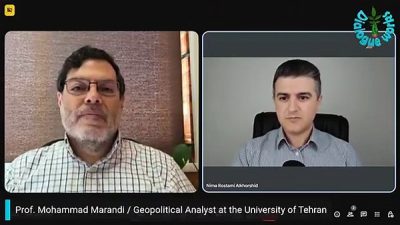
Seyed M. Marandi: U.S. Military DIVIDED? Iran’s Secret Defense EXPOSED
or go to
Aletho News Archives – Video-Images
From the Archives
‘Israel sees Iran as obstacle to its policies’
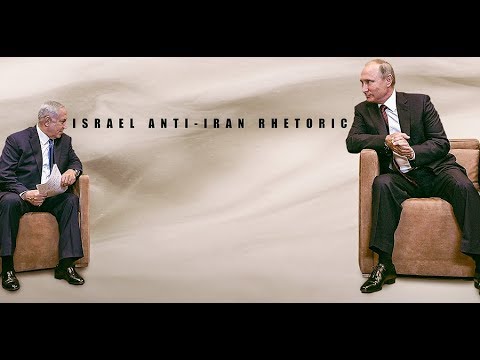
Press TV – August 25, 2017
Prime Minister Benjamin Netanyahu has said that Israel felt threatened by Iran’s growing influence in the Middle East. Netanyahu expressed his Iranophobic view in a meeting with Russian President Vladimir Putin in Russia’s Black Sea resort of Sochi on Wednesday. Press TV has asked Scott Rickard, former American intelligence linguist from Tampa, Florida, and Brent Budowsky, a columnist at The Hill from Washington, to give their thoughts on the issue.
Rickard said Tel Aviv is concerned about the fact that the regime could not carry out its old project to spread sectarian divisions and pave the way for dismemberment of the countries in the Middle East region because of the Iranian-led resistance against Israeli policies, not only in the occupied territories of Palestine but also in the whole region.
“Iran is not a threat to Israel whatsoever. The threat that Israel sees is the fact that their Oded Yinon Plan is being put to a hold by Iran,” the intelligence linguist said on Thursday night.
“They (the Israelis) look at Iran as a threat only because they have no influence on their governments and Iran is autonomous and is not under the Zionist influence,” he added.
Since the victory of the Islamic Republic of Iran in 1979, Tehran has been critical of Israel’s policies in the region, whereas “no leaders [of other states] even dared to speak out against Zionism,” Rickard argued. … continue
Blog Roll
 Aletho News
- Iran declares ‘historic victory’ over US, says enemy forced to accept its proposal
- Trump Claims Ceasefire, Reopening of Strait of Hormuz Agreement with Iran
- Israeli tank fire killed UN peacekeeper in Lebanon, UNIFIL investigation finds
- Russia, China block Bahrain-sponsored UN resolution on Strait of Hormuz
- The US-Israeli War on Science is an Assault on our Future
- Trump’s Promise to Bomb Iran ‘Like Never Before’ Faces Brutal Logistics — Expert
- Germany seeks to restrict stays abroad for men of fighting age – Berliner Zeitung
- Evidence points to Ukraine being behind TurkStream attempted sabotage, but that should come as no surprise
- Sri Lanka secures supplies of Russia oil – minister
- Nations across Asia strike direct deals with Iran for Hormuz passage
- If Americans Knew
- Thousands dead and neighborhoods razed to the ground: Aid agencies fear southern Lebanon is becoming the new Gaza
- The war the US is fighting for Israel could cost trillions
- ‘Cigarette Burns, Nail Wounds’: Toddler Tortured in Gaza to Coerce Father
- Trump Says US Sent ‘a Lot of Guns’ to Protesters in Iran
- Israeli forces destroy 17 UN peacekeeper cameras in south Lebanon
- US-Israeli strikes ‘completely destroy’ synagogue in Tehran
- Archbishop for US Military Says Iran War Is Unjust Under Catholic Teaching
- Iranian leaders’ Open Letters to the American People
- Trump says Iranians appreciate bombs, WHO warns of nuclear risks – Daily Update
- U.N. experts demand Israel release prominent Gaza doctor after reports of ‘severe torture’
- No Tricks Zone
- An Inconvenient Tree: Uncovered In Alps… Europe Much Warmer Than Today 6000 Years Ago
- New Study Reports A 60% Slowdown In Greenland’s Ice Loss Rate In The Last Decade
- Low Intensity Tornado Wrecks Major Solar Farm, Creating A Potential Toxic Dump
- New Study Finds Warming Saves Lives…Cold Temperatures 12 Times More Deadly Than Excess Heat
- German Science Blog Accuses PIK Climate Institute Of Hallucinating Climate Tipping Points
- Devastating Assessment Of Comirnaty Vaccine By Former Senior Pfizer Europe Toxicologist
- New Study: CO2 Is ‘Effectively Negligible’ As An Explanatory Climate Change Factor Since 2000
- Former Pfizer Toxicologist Dr. Helmut Sterz Tells Bundestag Hearing Pfizer Vaccine Should Have Never Been Approved
- Energy Expert: Germany’s Nuclear Phaseout Was A “500 Billion Euro Mistake”
- New Research: South Australia’s Mid-Holocene Sea Surface Temperatures Were 4°C Warmer Than Today
 Aletho News