Iran strongly rejects claims of delivery of missiles to Yemen
Press TV – February 20, 2018
Iran has once again rejected the allegations about the Islamic Republic’s provision of missiles to Yemeni forces, saying such claims are lies and a foolish scenario.
“Iran’s missile program is for defensive and deterrent [purposes] and claims about the dispatch of missiles to Yemen despite the all-out blockade on this country are lies and a foolish scenario designed to exonerate the aggressors,” Iranian Foreign Ministry Spokesman Bahram Qassemi said on Tuesday.
He added that Britain and France have expressed their concern over Iran’s defensive missile program without providing any reason or wise justification.
A group of so-called independent United Nations experts monitoring the sanctions on Yemen reported to the Security Council in January that it had “identified missile remnants, related military equipment and military unmanned aerial vehicles that are of Iranian origin and were brought into Yemen after the imposition of the targeted arms embargo.”
British Foreign Secretary Boris Johnson in a statement on Monday called on Iran to stop taking actions which could lead to further escalation of the Yemeni conflict.
“I call on Iran to cease activity which risks escalating the conflict and to support a political solution to the conflict in Yemen,” Johnson said.
His remarks came on the same day that the French foreign ministry also said in a statement that Paris was concerned about Iran’s ballistic missiles program and its activities in the region, mentioning its support for the Houthis in Yemen.
In reaction to the allegations, Qassemi said the Islamic Republic has designed its defensive missile program based on its military doctrine and valuable experience it obtained during the eight-year war imposed on it by Iraq backed by major global powers in the 1980s.
He added that Iran’s missile program aims to deter any aggression by extremist powers against the country.
“In this clear path that is completely in conformity with international principles, we will never accept other countries’ intervention and regard as irresponsible and suspicious the adoption of such unprincipled stance and strongly reject them,” Qassemi said.
He emphasized that the Yemeni army and people have no need for foreign countries’ weapons, saying the Yemenis’ defense of their country’s dignity with minimum facilities has led to the defeat of aggressors.
The chief commander of Iran’s Islamic Revolution Guards Corps (IRGC) in January dismissed the allegations leveled by the US and its allies about the Islamic Republic’s provision of missiles to Yemeni forces.
“Missiles fired at Saudi Arabia belong to Yemen which have been overhauled and their range have been increased,” Major General Mohammad Ali Jafari said.
Iran’s Parliament Speaker Ali Larijani also said in December that the Islamic Republic is not providing military assistance to Yemen and all claims to this effect are false.
“We are not a country that would deny providing military assistance to anybody,” Larijani said.
Qassemi further called for an immediate end to the sale of European and US arms to Saudi Arabia and other aggressors and warmongers who are killing innocent Yemeni people on a daily basis.
A Saudi Arabian-led coalition launched a war against Yemen in 2015 and has ever since been indiscriminately hitting targets in the country. Yemeni Houthi fighters have been firing missiles in retaliatory attacks against Saudi targets every now and then.
The US State Department in January approved a possible $500-million sale of missile system support services to Saudi Arabia in defiance of global calls for Washington to stop providing Riyadh with military support due to the regime’s war crimes in Yemen.
The potential sale follows a request by Saudi Arabia for continued technical assistance for Patriot Legacy Field Surveillance Program (FSP), the Patriot Advanced Capability 3 (PAC-3) and the Patriot Engineering Services Program (ESP).
During his first trip to Saudi Arabia last year, US President Donald Trump signed a $110 billion arms deal with the Saudis, with options to sell up to $350 billion over a decade.
Iranian Foreign Minister Mohammad Javad Zarif said in December the United States is complicit in Saudi war crimes in Yemen amid Washington’s baseless claim that Tehran is providing supply of ballistic missiles to Yemen’s Houthi Ansarullah movement.
“No amount of alternative facts or alternative evidence covers up US complicity in war crimes,” Zarif said in a post on his official Twitter account.
He added that the US has sold weapons to its allies enabling them to “kill civilians and impose famine,” in reference to Washington’s arms deal with Riyadh in its aggression against Yemen.
UN: Over 200 companies have Israel settlement ties
MEMO | January 31, 2018
The United Nations human rights office said today it had identified 206 companies so far doing business linked to Israeli settlements in the occupied West Bank, where it said violations against Palestinians are “pervasive and devastating”.
“The majority of these companies are domiciled in Israel or the settlements (143), with the second largest group located in the United States (22). The remainder are domiciled in 19 other countries,” the UN human rights office said in a statement.
The report, which did not name the companies but said that 64 of them had been contacted to date, said that the work in producing the database “does not purport to constitute a judicial process of any kind”.
Its mandate was to identify businesses involved in the construction of settlements, surveillance, services including transport and banking and financial operations such as loans for housing that may raise human rights concerns.
Human rights violations associated with the settlements are “pervasive and devastating, reaching every facet of Palestinian life”, the report said. It cited restrictions on freedom of religion, movement and education as well as lack of access to land, water and livelihoods.
Israel assailed the Human Rights Council in March 2016 for launching the initiative at the request of countries led by Pakistan, calling the database a “blacklist” and accusing the 47-member state forum of behaving “obsessively” against Israel.
Israel’s mission in Geneva said today that it was preparing a statement responding to the UN report.
“We hope that our work in consolidating and communicating the information in the database will assist States and businesses in complying with their obligations and responsibilities under international law,” said UN High Commissioner for Human Rights Zeid Ra’ad Al-Hussein.
The report is to be debated at the main annual session of the UN Human Rights Council in Geneva from 26 February to 23 March.
Why cutting US aid to the Palestinian Authority is not a bad idea
Dr Alaa Tartir | Middle East Eye | January 5, 2018
Many observers and analysts warn that cutting US aid to the Palestinian Authority (PA) is dangerous and may threaten stability. Some have even argued that US President Donald Trump’s funding threat to Palestinians is more dangerous than his decision to move the US Embassy in Israel to Jerusalem.
“Do you think that the PA’s days are now numbered?” is one of the most recurring question by journalists over the past few days after Trump’s statement that “we pay the Palestinians hundred of millions of dollars a year and get no appreciation or respect. They don’t even want to negotiate a long overdue.”
Actions against Palestinians
Trump continued by saying “with the Palestinians no longer willing to talk peace, why should we make any of these massive future payments to them?”. However, Trump’s threat to withdraw aid to the PA should not come as a surprise.
US aid has been always used as a political tool, and the conditionality attached to it has been harmful and damaging for the Palestinians.
But in case the threat of cutting aid to the PA materialises, is it really that bad? I argue no; it is not that bad. Arguably it may prove beneficial – possibly not in the short term, but certainly in the long term.
US aid to the PA largely aims to solidify the role of the PA as a subcontractor to Israel’s occupation and has made the Israeli occupation cheaper and longer, which has benefited Israel’s economy, entrenched Palestinian fragmentation, and denied the potential for Palestinian democracy. For all these reasons, cutting US aid to the PA is not that bad.
The first and foremost goal of the US to Palestine is to promote “the prevention or mitigation of terrorism against Israel”. In other words, aid is provided to the Palestinians to secure Israel; but is that an assistance to the Palestinians or to Israel?
Israel-first paradigm
According to this Israel-first security paradigm, the US administration poured millions of dollars of security assistance to the PA as a way to “professionalise” its security forces for the stability and the security of Israel, its occupation, and settlers in the occupied West Bank.
This skewed logic meant that the PA became a subcontractor to the Israeli occupation, thanks to US aid and conditionality.
This did not only sustain Israel’s occupation, but also it made it profitable for Israel, its economy and its companies. US assistance to the Palestinians is often used to pay PA creditors directly, many of which are Israeli companies charging predatory rates and taking advantage of a captive PA economy.
In addition, the majority of US aid for Palestine (up to 72 percent), especially the securitised aid, ends up in Israel’s economy. Therefore, a large portion of the US “assistance” to the Palestinians effectively translates to additional support for Israel and its security apparatus.
US aid has also entrenched Palestinian fragmentation over the past decade and fuelled the divide between the West Bank and the Gaza Strip. Also, the aid does not only deny the potential for Palestinian democracy but sponsors the emergence of an authoritarian style of governance in the West Bank.
Driven by its securitised agenda, the US-sponsored securitised processes aims to criminalise resistance against Israel’s occupation and supress the Palestinian people’s needs and aspirations.
US aid intervention
The operations and interventions of the United States Agency for International Development (USAID), and the office of the US Security Coordinator (USSC), were instrumental in causing all this harm. By doing so, these two institutions not only violate key international principles of aid delivery, but also they effectively act as a complementary arm of the Israeli colonial occupation.
Certainly, these damages and harmful consequences of the US aid intervention will not be automatically reversed if Trump’s threat to cut aid becomes a reality.
It is far more complex than that, as it requires dismantling complex structures, dynamics, and institutions that have emerged and solidified over the past quarter of a century.
What is crucial at this stage is that Palestinians do not panic and curse their luck for “losing” $300mn to $400mn a year; rather, they should act – and they have plenty of choices. As a starter, they should hold USAID and the USSC accountable, and they should revoke the registry exemptions the late Palestinian leader Yasser Arafat gave to USAID to operate without any Palestinian oversight.
Reverse vetting process
It is time to reverse the “vetting process”; instead of USAID vetting the Palestinians, it is time for the Palestinians to do the necessary vetting to USAID and the other US bodies in the aid industry in Palestine.
Doing so requires the political will and courage among Palestine’s political leadership. However, the current PA leadership remains fixated on its failing approaches and formulas.
The inability of the PA leadership to perform small actions, such as revoking USAID registry exemptions, reflects a deeper legitimacy crisis and illustrates the tactical moves by the current PA leadership to buy time, remain in authority, or re-arrange “peace” talk cards. Those ideas must be urgently resisted and replaced by new strategic directions that are dictated by the Palestinian people.
The remaining major challenge, however, is how to channel the Palestinian people’s demands and aspirations into a legitimate polity and representative institutions.
From the ordinary Palestinian people perspective, there will be short-term negative consequences in the event of Trump’s threat to cut aid materialising. However, it is also crucial to recognise that aid to the PA does not automatically translate to aid to the Palestinian people.
It is misleading to assume that aid and its benefits trickle down to ordinary Palestinian people. The aid industry is designed to benefit few and harm many.
Sam Bahour, the chairman of Americans for a Vibrant Palestinian Economy, recently argued: “I would not lose any sleep if Congress totally stopped funding the Palestinian Authority. It would not make daily life easier under occupation, but maybe it would wake up enough American leaders to see the absurdity of their being dragged around like a flock of sheep by their Israeli herder.”
I would not lose any sleep, either. While a US aid cut will have some negative consequences on Palestinian lives, long-term prospects may prove more more positive as this action would push the PA to abandon the framework of the Oslo Accords aid model. It’s time to lay the failed Oslo aid model to rest.
But a phasing out process requires serious actions, concrete and clear steps, and a national action/rescue plan for a transition toward a post two-state formula and a post-Oslo Accords framework.
Finally, while humanitarian assistance is important, what matters more for the ordinary Palestinians is not a coupon to get wheat or sardines, but rather the political roots to fight against the denial of their rights.
Until those political roots are addressed and no matter of how big the aid flows get, ordinary Palestinians will not feel the positive outcome of aid, be it American, European, or Arab aid.
Trump’s threat to cut aid offers ordinary Palestinians a new opportunity to place the principles of self-determination and dignity in the core of the aid framework and industry.
Dr Alaa Tartir is the programme director of Al-Shabaka: The Palestinian Policy Network, and a research associate at the Centre on Conflict, Development and Peacebuilding (CCDP), The Graduate Institute of International and Development Studies (IHEID) in Geneva, Switzerland. Follow Alaa Tartir on Twitter @alaatartir and read his publications at www.alaatartir.com
As US seeks emergency UN meeting on Iran, Russia reminds it of Ferguson & Occupy crackdowns
RT | January 4, 2018
The US has said it will call an emergency UNSC meeting to discuss the unrest in Iran, citing the need to support the protesters. Moscow says the move is hypocritical, given Washington’s own history of cracking down on protests.
While the US envoy to the UN, Nikki Haley, said Washington would call for an “urgent” UN Security Council (UNSC) meeting on Iran Monday, there’s been no word yet from the UN on such a meeting being scheduled. Kairat Umarov, Kazakhstan’s envoy to the UN, who is now holding the rotating presidency in the UNSC, said Tuesday the council has not yet added Iran to its agenda and no decision has been yet taken on the issue.
Haley was emphatic in her support of Iran’s anti-government protesters, praising their “great bravery” and calling on the international community to support them. “The people of Iran are crying out for freedom,” Haley told journalists at a news conference. “All freedom-loving people must stand with their cause,” she added, while promising to seek an emergency session of the UN Human Rights Commission.
Washington’s latest attempt at masquerading as a global human rights defender was met with ridicule in Moscow, which reminded the US about its own approach when dealing with protests whenever they occur on American soil. “There is no doubt that the US delegation to the UN has something to tell the world,” Russian Foreign Ministry spokeswoman, Maria Zakharova said on Facebook.
“Haley can, for example, share the US experience of putting down protests, tell [the Security Council] about the mass arrests and crackdown against the Occupy Wall Street movement or about the “clean-up operation” in Fergusson,” she sarcastically added.
The Occupy Wall Street protests began in the world’s financial capital, New York City, in September 2011. People came to Zuccotti Park located in the Wall Street financial district to protest against social and economic inequality in the US. Despite the peaceful nature of the protest, the police crackdown was swift, arresting as many as 700 protesters in one day as they marched across Brooklyn Bridge on October 1. Later, it was also revealed that the FBI monitored the movement through its Joint Terrorism Task Force and used counterterrorism agents to investigate OWS, despite labelling it peaceful.
Fergusson, Missouri, witnessed massive protests in 2014 following the death of Michael Brown, an unarmed 18-year-old black man who was shot and killed by a police officer. US authorities imposed a curfew in the area while military police repeatedly dispersed the protesters using tear gas and other means. Later, the Missouri governor deployed National Guard troops to secure the area.
Israel agrees to EU deal excluding settlements
RT | December 31, 2017
Israel’s government has approved an agreement with the EU that includes a provision excluding funding for settlements, seemingly consenting to the EU’s boycott of settlements.
The agreement centers on Israel’s part in the EU’s ENI Cross-Border Cooperation in the Mediterranean (CBC Med) program, which provides funds for projects for non-EU countries in the Mediterranean area, such as Israel, Egypt and Jordan, Haaretz reports. The projects are largely focused on promoting development, education, technology and environmental sustainability.
As per EU policy, the ENI CBC Med agreement contains a provision which excludes areas outside Israel’s 1967 borders from receiving grants. This means Israeli settlements inside the West Bank, East Jerusalem and the Golan Heights (which were occupied by Israel in the conflict) cannot receive funding under the program.
Israeli settlements inside Palestinian territories are considered both an impediment to the peace process between Israelis and Palestinians, and to be in violation of a number of UN resolutions and the Fourth Geneva Convention.
Israel’s Culture and Sport Minister, Miri Regev, voiced her objections to the agreement to the cabinet secretary earlier in the month. She fought against the deal at the cabinet meeting, the Jewish Press reports, but no other minister agreed to second her motion to delay the vote pending further debate.
The deal was given final approval by the government Sunday, after Prime Minister Benjamin Netanyahu signed off on the measure last week. It’s also been approved by the Justice Ministry and Foreign Ministry, Haaretz reports. The foreign ministry is said to have led the charge for Israel to be part of the program.
The agreement is at odds with the Israeli government’s stance on settlements, which it continues to develop within the occupied territories in disregard of the EU and others’ condemnation. Netanyahu is also a fierce opponent to the international Boycott Divestment and Sanctions (BDS) movement which calls for boycotts and sanctions against Israel.
“My fundamental position is that the Israeli government should reject agreements from the outset that require us on a de facto basis to boycott portions of the homeland or populations living in the Golan Heights, Jerusalem or Judea and Samaria [the West Bank] other than with very limited exceptions,” Regev wrote in her letter.
“I do not see the justification to compromise and with one hand sign the agreement while with our other demanding that the world give de facto recognition to our right to a united Jerusalem and even to move embassies to Israel’s capital,” she added.
Aside from the settlement matter, Regev’s letter to Cabinet Secretary Tzachi Braverman also took issue with the text of the agreement referring to the Palestinian Authority “as if it were a neighboring country.”
It is “not acceptable to me,” she said.
The far-right Regev managed to halt a similar agreement with the EU last year. A Creative Europe culture and media program contained a similar provision excluding settlements, and, although Netanyahu had given consent, Regev stopped it from going ahead. Earlier this month, Regev succeeded in forcing the NBA remove a reference to Palestine as being “occupied territory.”
Read more:
Goodbye and Good Riddance
By Jeremy Salt | Palestine Chronicle | December 25, 2017
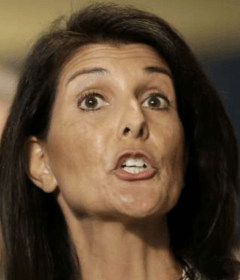 Holding hands, the US and Israel have decided to walk out of UNESCO. Nothing could be more appropriate. Two rogue states run by two dangerous buffoons. Two states that have wreaked immense violence across the Middle East ever since ‘Israel’ was implanted in Palestine. In addition to Palestine, the US has launched genocidal wars against three countries just since 1990, Iraq (twice), Libya and Syria and continues to back Saudi Arabia in its equally genocidal war on Yemen.
As for Israel, living permanently outside international law is a necessary condition of its existence. It should have been tossed out of the UN long ago, or at least suspended, until it mended its ways. After all, what club continues the membership of someone who does not obey the rules, is warned once, once, twice, thrice, even 50 times, but still refuses to obey the rules? But Israel does not have to mend its ways and remains a member of the ‘international community’ because another state that does not obey the rules, and shows no respect for international law either, the US, protects it at every level and in every way, fomenting even more violence.
UNESCO has done its best to protect the cultural heritage of Palestine. Nothing that is not Jewish matters to the Zionists and so little of it is Jewish that Muslim and Christian Palestine has been ravaged, not just once (1948) or twice (1967) but continuously. The destruction of Palestine is the necessary condition for the creation of Netanyahu’s ‘Jewish state.’ It is all or nothing: there can be no compromise, no either/or. The Palestinians have set forth options, one secular state, two states living side by side, but the only option acceptable to Israel is all Palestine for us and none for you.
The elimination of the Palestinian human presence in 1948 was accompanied by the destruction of close to 500 of Palestinian villages or hamlets, irrespective of their historical and cultural worth. More destruction followed after 1967, beginning with the demolition of the Magharibah quarter in 1967 to make way for a ‘plaza’ around the Haram al Sharif and continuing in the years that followed. The war also created the opportunity for more Palestinians to be driven out of their homeland, this time from the West Bank, where many had taken refuge during the Zionist onslaught in 1948.
The war was another opportunity to drive Palestine further into history, towards the point where the physical evidence had all been destroyed and the Zionists could say ‘What Palestine? There was never a Palestine here.’ In fact this is what they have been saying all along, anyway, convincing no-one outside their own ranks because the Palestinians have not gone away, because their numbers are increasing (possibly there are now more Palestinians between the Mediterranean sea and the Jordan River than the Zionist settler population) and because too much of their history can still be seen on the landscape. This is why the danger to Al Aqsa, glowing above Jerusalem, is so great because it is the living symbol of the lies being told by the Zionists.
On this subject how intriguing it is, and how frustrating for the Zionists, that in the half century they have been burrowing under and around the Haram al Sharif they have not found one object proving that the temple was ever there. There are far older structures whose ruins can be seen today. Turkey is full of them: the excavated temple at Gobeklitepe in south-eastern Turkey is 12,000 years old so how can it be that nothing is left of the grandiose structure said to have been built by Solomon where Al Aqsa now stands? The Bible speaks of a building more than 60 meters high, built from wood (the cedars of Lebanon) and huge blocks of stone. Similar material is said to have been used in the building of the second temple, completed in 515 BC and destroyed by the Romans in AD 70. It is said to have been of the same massive dimensions yet nothing has been found, no remnants of fallen stone pillars, no votive bowls, absolutely nothing, suggesting that if the temple did stand on this site the biblical descriptions were fantastically exaggerated (no surprise in a book full of fantastic exaggerations).
Furthermore, the modern day Zionists are connected to ancient Israel only by their religion. Their first colonists had no living connection with the land and no ethnic connection with the people who lived on it. Zionists continue to play on the living Jewish connection in Palestine over the centuries but do not mention that the Jews who were there when their forefathers arrived regarded Zionism as a heresy. Netanyahu’s claim that Jerusalem has been Israel’s capital for 3000 years could convince only idiots, seeing that Israel is only seven decades old and that the last Jewish state in Palestine collapsed in the sixth century BC.
In any case, irrespective of these questions, the ancient Jewish presence in Palestine cannot be accepted as justification for the destruction of what was there until the arrival of Zionist colonists in the late 19th century.
The Zionists share with the Crusaders the unsavory distinction of bringing to Palestine the greatest destruction known in its modern history. After conquering Palestine in the late 11th century the Crusaders massacred or drove all Muslims and Jews out of Jerusalem. The restitution of Muslim rule was followed from the early 16th century by four centuries of a long Ottoman peace until the British capture of Jerusalem in December, 1917. From that time onwards, Palestine has not known a day of peace. Violence and repression by the British occupiers was followed by massive violence, repression and dispossession by the Zionists, continuing down to the present day.
Jerusalem was always a prime target. Massacres and the seizure of Palestinian property in 1948 were repeated after the seizure of the eastern half of the city in 1967, followed by a continuing racist demographic war launched in complete breach of international law and the laws of any country claiming to be called civilized. What this underlines is that at heart Israel is not a modern state but a tribal, atavistic community that lives by its own brutal standards, certainly insofar as the Palestinians are concerned, and is indifferent to what the rest of the world thinks, when not actually contemptuous of what it thinks. For the Zionists to think that they can get away with this endlessly is a sure indication of the madness and delusions in their minds.
The US has now gone so far as to ‘recognize’ Jerusalem as Israel’s capital when in international law, Jerusalem is an occupied city, all of it, not just the eastern half, captured by force of arms and settled in direct violation of the laws or war. Commenting on the UN General Assembly vote rejecting the Trump declaration, Nikki Haley, the US ambassador, openly threatened those who had voted in its favor. Names had been taken and punishment would be inflicted at the appropriate time. By voting for the resolution UN members had shown a lack of respect for the US, according to Haley: where, one might ask, is US respect for international law and the right of UN members to take independent decisions on the basis of that law?
The Trump declaration on Jerusalem has had an incendiary effect across the Middle East and amongst Muslims everywhere. It should be welcomed because it rips the last veil from the deceit known as the peace process. Mahmoud Abbas has had his nose rubbed in the dirt. The Saudi and Qatari governments, dealing with the Zionists behind the thinnest of veils, have had to fall into line on the question of Jerusalem. The Trump declaration has united Muslims across all divides.
By themselves, as brave as they are, as much fortitude and steadfastness as they have always shown, the Palestinians were never going to be able to defeat their enemies on their own. They were far too powerful. The road back to Palestine was always going to lead through the Arab world, as George Habash wrote in the 1950s, now to be extended, given the rise of Iran, to the Islamic world. Nasser fired up the Arab people in the 1950s and together, Hizbollah and Iran have again set an example of defiance of the US and Israel, so successfully that Israel is now well into preparations for the war intended to destroy them once and for all.
This will be an existential war for survival, an extremely violent war for which Israel has been making intensive preparations. It is warning of total destruction and Hasan Nasrallah is warning back that Hizbollah is ready with missiles that can reach any part of occupied Palestine. The stakes in Middle Eastern wars have never been higher, the possible consequences never graver and even potentially cataclysmic. The consequences of Trump’s declaration would have been so well known beforehand that it seems insufficient to call it stupid. Perhaps it was intended to bring on the war with Iran that Israel and [Zionists in] the US have wanted for a long time.
Featured Video
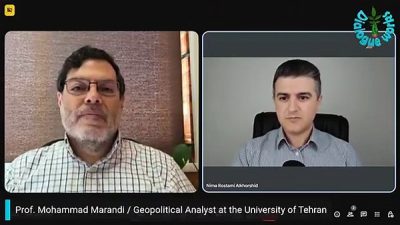
Seyed M. Marandi: U.S. Military DIVIDED? Iran’s Secret Defense EXPOSED
or go to
Aletho News Archives – Video-Images
From the Archives
‘Israel sees Iran as obstacle to its policies’
Press TV – August 25, 2017
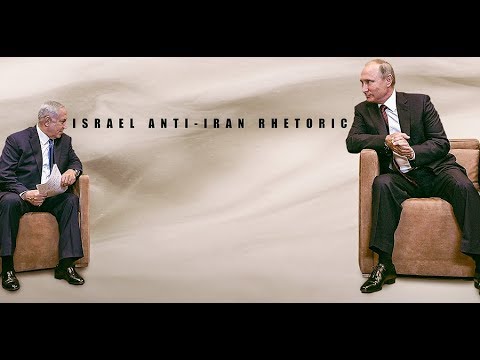
Prime Minister Benjamin Netanyahu has said that Israel felt threatened by Iran’s growing influence in the Middle East. Netanyahu expressed his Iranophobic view in a meeting with Russian President Vladimir Putin in Russia’s Black Sea resort of Sochi on Wednesday. Press TV has asked Scott Rickard, former American intelligence linguist from Tampa, Florida, and Brent Budowsky, a columnist at The Hill from Washington, to give their thoughts on the issue.
Rickard said Tel Aviv is concerned about the fact that the regime could not carry out its old project to spread sectarian divisions and pave the way for dismemberment of the countries in the Middle East region because of the Iranian-led resistance against Israeli policies, not only in the occupied territories of Palestine but also in the whole region.
“Iran is not a threat to Israel whatsoever. The threat that Israel sees is the fact that their Oded Yinon Plan is being put to a hold by Iran,” the intelligence linguist said on Thursday night.
“They (the Israelis) look at Iran as a threat only because they have no influence on their governments and Iran is autonomous and is not under the Zionist influence,” he added.
Since the victory of the Islamic Republic of Iran in 1979, Tehran has been critical of Israel’s policies in the region, whereas “no leaders [of other states] even dared to speak out against Zionism,” Rickard argued. … continue
Blog Roll
 Aletho News
- Iran declares ‘historic victory’ over US, says enemy forced to accept its proposal
- Trump Claims Ceasefire, Reopening of Strait of Hormuz Agreement with Iran
- Israeli tank fire killed UN peacekeeper in Lebanon, UNIFIL investigation finds
- Russia, China block Bahrain-sponsored UN resolution on Strait of Hormuz
- The US-Israeli War on Science is an Assault on our Future
- Trump’s Promise to Bomb Iran ‘Like Never Before’ Faces Brutal Logistics — Expert
- Germany seeks to restrict stays abroad for men of fighting age – Berliner Zeitung
- Evidence points to Ukraine being behind TurkStream attempted sabotage, but that should come as no surprise
- Sri Lanka secures supplies of Russia oil – minister
- Nations across Asia strike direct deals with Iran for Hormuz passage
- If Americans Knew
- Thousands dead and neighborhoods razed to the ground: Aid agencies fear southern Lebanon is becoming the new Gaza
- The war the US is fighting for Israel could cost trillions
- ‘Cigarette Burns, Nail Wounds’: Toddler Tortured in Gaza to Coerce Father
- Trump Says US Sent ‘a Lot of Guns’ to Protesters in Iran
- Israeli forces destroy 17 UN peacekeeper cameras in south Lebanon
- US-Israeli strikes ‘completely destroy’ synagogue in Tehran
- Archbishop for US Military Says Iran War Is Unjust Under Catholic Teaching
- Iranian leaders’ Open Letters to the American People
- Trump says Iranians appreciate bombs, WHO warns of nuclear risks – Daily Update
- U.N. experts demand Israel release prominent Gaza doctor after reports of ‘severe torture’
- No Tricks Zone
- An Inconvenient Tree: Uncovered In Alps… Europe Much Warmer Than Today 6000 Years Ago
- New Study Reports A 60% Slowdown In Greenland’s Ice Loss Rate In The Last Decade
- Low Intensity Tornado Wrecks Major Solar Farm, Creating A Potential Toxic Dump
- New Study Finds Warming Saves Lives…Cold Temperatures 12 Times More Deadly Than Excess Heat
- German Science Blog Accuses PIK Climate Institute Of Hallucinating Climate Tipping Points
- Devastating Assessment Of Comirnaty Vaccine By Former Senior Pfizer Europe Toxicologist
- New Study: CO2 Is ‘Effectively Negligible’ As An Explanatory Climate Change Factor Since 2000
- Former Pfizer Toxicologist Dr. Helmut Sterz Tells Bundestag Hearing Pfizer Vaccine Should Have Never Been Approved
- Energy Expert: Germany’s Nuclear Phaseout Was A “500 Billion Euro Mistake”
- New Research: South Australia’s Mid-Holocene Sea Surface Temperatures Were 4°C Warmer Than Today
 Aletho News