Hillary Clinton and the Weaponization of the State Department
By JP Sottile | News Vandal | June 5, 2014
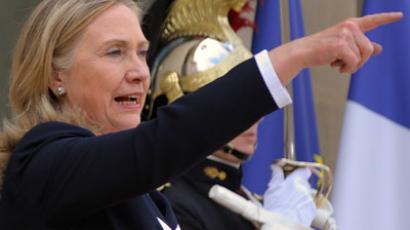
On May 23, 2012, then-Secretary of State Hillary Clinton went to the Special Operations Forces Industry Conference (SOFIC) trade show in Tampa, Florida to share her vision of “smart power” and to explain the State Department’s crucial role in extending the reach and efficacy of America’s growing “international counterterrorism network.”
First, there is such a thing as a “Special Operations Forces Industry Conference trade show.” Without some keen reporting by David Axe of Wired, that peculiar get-together might’ve flown completely under the radar—much like the shadowy “industry” it both supports and feeds off of like a sleek, camouflaged lamprey attached to a taxpayer-fattened shark.
Second, “special operations” have officially metastasized into a full-fledged industry. United States Special Operations Command (USSOCOM) is located at MacDill Air Force Base in Tampa and, therefore, conveniently located near the special operations trade show, which happened again this year at the Tampa Convention Center. The theme was “Strengthening the Global SOF Network” and the 600,000-square-foot facility was filled with targets of opportunity for well-connected and well-heeled defense contractors.
According to the SOFIC website, this year’s conference afforded attendees “the opportunity to engage with USSOCOM Program Executive Officers, Science and Technology Managers, Office of Small Business Programs and Technology & Industry Liaison Office representatives, and other acquisition experts who will identify top priorities, business opportunities, and interests as they relate to USSOCOM acquisition programs.”
Third, Hillary’s widely-ignored speech marked a radical departure from the widely-held perception that the State Department’s diplomatic mission endures as an institutional alternative to the Pentagon’s military planning. Instead, Secretary Clinton celebrated the transformation of Foggy Bottom into a full partner with the Pentagon’s ever-widening efforts around the globe, touting both the role of diplomats in paving the way for shadowy special ops in so-called “hot spots” and the State Department’s “hand-in-glove” coordination with Special Forces in places like Pakistan and Yemen.
Finally, with little fanfare or coverage, America’s lead diplomat stood before the shadow war industry and itemized the integration of the State Department’s planning and personnel with the Pentagon’s global counter-terrorism campaign which, she told the special operations industry, happen “in one form or another in more than 100 countries around the world.”
If this isn’t entirely unexpected, consider the fact that under then-Secretaries of State Colin Powell and Condoleezza Rice, the State Department fought attempts by the Pentagon to trump its authority around the globe and, as reported by the Washington Post, “repeatedly blocked Pentagon efforts to send Special Operations forces into countries surreptitiously and without ambassadors’ formal approval.”
But that was before Hillary brought her “fast and flexible” doctrine of “smart power” to Foggy Bottom and, according to her remarks, before she applied lessons learned from her time on the Senate Armed Services Committee to launch the first-ever Quadrennial Diplomacy and Development Review, which she modeled on the Pentagon’s Quadrennial Defense Review. That Pentagon-style review spurred the creation of the Bureau of Conflict and Stabilization Operations to “advance the U.S. government’s foreign policy goals in conflict areas.”
According to a Congressional Research Service analysis, the initial intent of the Conflict Bureau was to replace the ineffectual Office of the Coordinator of Reconstruction and Stabilization, which was created in 2004 to help manage “stabilization” efforts in two nations the U.S. was actively destabilizing—Afghanistan and Iraq.
But the new, improved bureau does more than just react to messes made by unlawful invasions or direct costly remediation efforts in war zones—it also collaborates with “relevant partners” in the Department of Defense and NATO “to harmonize civilian and military plans and operations pertaining to conflict prevention, crisis response, and stabilization.”
This integrated relationship between State and Defense was confirmed by U.S. Special Operations chief Admiral William McRaven shortly after Hillary’s speech. When asked about the “unlikely partnership,” McRaven assured DefenseNews that SOCOM has “an absolutely magnificent relationship with the State Department” and that SOCOM doesn’t “do anything that isn’t absolutely fully coordinated and approved by the U.S. ambassador and the geographic combatant commander.”
As David Axe aptly described it in Wired, “Together, Special Operations Forces and State’s new Conflict Bureau are the twin arms of an expanding institution for waging small, low-intensity shadow wars all over the world.”
In fact, during Hillary’s time as America’s chief diplomat, the State Department embraced the shadowy edge of U.S. foreign policy where decision-makers engage in activities that look like war, sound like war and, if you were to ask civilians in places like Yemen and Pakistan, feel a lot like war, but never quite have to meet the Constitutional requirement of being officially declared as war.
The Whole-of-Government Shift
Once upon a time, “low-intensity shadow wars” were the Congressionally-regulated bailiwick of the Central Intelligence Agency. But 9/11 changed everything. However, the excesses of the Bush Administration led many to hope that Obama could and would change everything back or, at least, relax America’s tense embrace of “the dark side.”
Although the new administration did officially re-brand “The War on Terror” as “Overseas Contingency Operations,” Team Obama employed an increasingly elastic interpretation of the 9/11-inspired Authorization for Use of Military Force and expanded covert ops, special ops, drone strikes and regime change to peoples and places well-beyond the law’s original intent, and certainly beyond the limited scope of CIA covert action.
Obama’s growing counter-terrorism campaign—involving, as Secretary Clinton said, “more than 100 countries”—took flight with a new, ecumenical approach called the “Whole-of-Government” strategy. Advanced by then-Secretary of Defense Bill Gates and quickly adopted by the new administration in early 2009, this strategy catalyzed an institutional shift toward inter-agency cooperation, particularly in the case of “state-building” (a.k.a. “nation building”).
During remarks to the Brookings Institution in 2010, Secretary Clinton explained the shift: “One of our goals coming into the administration was… to begin to make the case that defense, diplomacy and development were not separate entities, either in substance or process, but that indeed they had to be viewed as part of an integrated whole and that the whole of government then had to be enlisted in their pursuit.”
Essentially, the Whole-of-Government approach is a re-branded and expanded version of Pentagon’s doctrine of “Full-Spectrum Dominance.” Coincidentally, that strategy was featured in the Clinton Administration’s final Annual Report to the President and Congress in 2001. It defined “Full-Spectrum Dominance” as “an ability to conduct prompt, sustained, and synchronized operations with forces tailored to specific situations and possessing freedom to operate in all domains—space, sea, land, air, and information.”
In 2001, Full-Spectrum Dominance referred specifically to 20th Century notions of battlefield-style conflicts. But the “dark side” of the War on Terror stretched the idea of the battlefield well-beyond symmetrical military engagements. “Irregular warfare” became the catchphrase du jour, particularly as grinding campaigns in Afghanistan and Iraq exposed the reality that the full spectrum still wasn’t enough.
An assessment by the Congressional Research Service identified the primary impetus for the Whole-of-Government “reforms” embraced by Team Obama as the “perceived deficiencies of previous inter-agency missions” during the military campaigns in Afghanistan and Iraq. Those missions failed to address a myriad of problems created—culturally, economically and politically—by the wholesale bombing and occupation of those countries. The Full-Spectrum was half-baked. Lesson learned.
But the lesson wasn’t that the U.S. should avoid intervention, regime change or unleashing nascent civil, ethnic or religious conflicts. Instead, the lesson was that the “Whole-of-Government” must be marshaled to fight a worldwide array of Overseas Contingency Operations in “more than 100 countries.”
This Whole-of-Government shift signaled a renewed willingness to engage on variety of new fronts—particularly in Africa—but in a “fast and flexible” way. With other agencies—like the State Department—integrated and, in effect, fronting the counter-terrorism campaign, the military footprint becomes smaller and, therefore, easier to manage locally, domestically and internationally.
In some ways, the Whole-of-Government national security strategy is plausible deniability writ-large through the cover of interagency integration. By merging harder-to-justify military and covert actions into a larger, civilian-themed command structure, the impact of the national security policy overseas is hidden—or at least obfuscated—by the diplomatic “stabilization” efforts run through the State Department—whether it’s the Conflict Bureau working against Joseph Kony’s Lord’s Resistance Army in Central Africa, “stabilizing” post-Gaddafi Libya or spending $27 million to organize the opposition to Bashar al-Assad’s Syrian regime.
The Pass Key
The cover of diplomacy has traditionally been an effective way to slip covert operators into countries and the State Department’s vast network of embassies and consulates still offers an unparalleled “pass-key” into sovereign nations, emerging hot spots and potential targets for regime change. In 2001, the Annual Report to the President and Congress foresaw the need for more access: “Given the global nature of our interests and obligations, the United States must maintain the ability to rapidly project power worldwide in order to achieve full-spectrum dominance.”
Having the way “pre-paved” is, based on Hillary’s doctrinal shift at State, a key part of the new, fuller-spectrum, Whole-of-Government, mission-integrated version of diplomacy. At the SOFIC’s Special Operations Gala Dinner in 2012, Hillary celebrated the integration of diplomatic personnel and Special Operations military units at the State Department’s recently created Center for Strategic Counterterrorism Communications—a “nerve center in Washington” that coordinates “military and civilian teams around the world” and serves “as a force multiplier for our embassies’ communications efforts.”
As with most doors in Washington, that relationship swings both ways and mission-integrated embassies have served as an effective force multiplier for the Pentagon’s full spectrum of activities, particularly around Africa.
In his 2011 testimony before the House Foreign Affairs Committee Subcommittee on Africa, Deputy Assistant Secretary of State for African Affairs Don Yamamoto noted that State had “significantly expanded the number of DoD personnel who are integrated into embassies across the continent over the past three years,” and read a surprisingly long laundry list of collaborative efforts between State and the United States Africa Command (AFRICOM), including: “reduction of excess and poorly secured man-portable air defense systems (MANPADS); Defense Sector Reform in Liberia, DRC, and South Sudan; counterpiracy activities off the Somali coast; maritime safety and security capacity building; and civil-military cooperation.”
It seems that “civil-military cooperation” is a primary focus of the State Department in Africa. Most notably, Yamamoto told Congress that “embassies implement Department of State-funded Foreign Military Financing (FMF) and International Military Education and Training (IMET) programs, which further U.S. interests in Africa by helping to professionalize African militaries, while also assisting our African partners to be more equipped and trained to work toward common security goals.”
As the ever-vigilant Nick Turse recently reported, U.S. presence on the continent has only grown since that testimony was given in 2011. On TomDispatch.com, Turse identified the infamous attack on Benghazi on September 11, 2012 as the catalyst for “Operation New Normal”—the continent-wide response to, quite ironically, the political potboiler still simmering around Secretary Clinton. Whether or not Congressional Republicans find anything more than incompetence at the root of Benghazi, the U.S. military certainly finds itself in a “new normal” of increased activity in response to the forces—and the weaponry—unleashed by U.S.-led regime change in Libya. According to Turse, the U.S. is “now conducting operations alongside almost every African military in almost every African country and averaging more than a mission a day.”
Those missions are, of course, integrated with and augmented by the State Department’s Conflict Bureau which has used a variety of state-building programs and its diplomatic “pass key” in places like Libya, Nigeria, Kenya, South Sudan, Somalia, Democratic Republic of the Congo and six other African nations, all to develop a growing roster of “host country partners.”
Establishing “host country partners” is the nexus where the State Department, its Conflict Bureau and the AFRICOM meet—implementing the Whole-of-Government strategy in emerging or current conflict zones to fuse a mounting counter-terrorism campaign with stabilization, modernization and state-building initiatives, particularly in oil and resource-rich areas like the Niger River Delta, Central Africa and around AFRICOM’s military foothold on the Horn of Africa.
As Richard J. Wilhelm, a Senior Vice President with defense and intelligence contracting giant Booz Allen Hamilton, pointed out in a video talk about “mission integration,” AFRICOM’s coordination with the Departments of State and Commerce, USAID is the “most striking example of the Whole-of-Government approach.”
And this is exactly the type of “hand-in-glove” relationship Secretary Clinton fostered throughout her tenure at State, leveraging the resources of the department in a growing list of conflict areas where insurgents, terrorists, al-Qaeda affiliates, suspected militants or uncooperative regimes threaten to run afoul of so-called “U.S. interests”.
Ultimately, it became a hand-in-pocket relationship when Clinton and Defense Secretary Gates developed the Global Security Contingency Fund (GSCF) to “incentivize joint planning and to pool the resources of the Departments of State and Defense, along with the expertise of other departments, to provide security sector assistance for partner countries so they can address emergent challenges and opportunities important to U.S. national security.”
Although he’s been criticized as feckless and deemed less hawkish than Secretary Clinton, President Obama’s newly-proposed Counterterrorism Partnership Fund (CTPF) is the logical extension of the Clinton-Gates Global Security Contingency Fund and epitomizes the Whole-of-Government shift.
The $5 billion Obama wants will dwarf the $250 million pooled into the GSCF and will, the President said at West Point, “give us flexibility to fulfill different missions including training security forces in Yemen who have gone on the offensive against al Qaeda; supporting a multinational force to keep the peace in Somalia; working with European allies to train a functioning security force and border patrol in Libya; and facilitating French operations in Mali.”
That “flexibility” is exactly what Hillary Clinton instituted at State and touted at the SOFIC conference in 2012. It also portends a long-term shift to less invasive forms of regime change like those in Yemen, Libya, Syria and Ukraine, and an increased mission flexibility that will make the Authorization for the Use of Military Force functionally irrelevant.
Normalizing the War on Terror
The ultimate outcome of this shift is, to borrow from Nick Turse, yet another “new normal”—the new normalization of the War on Terror. What the adoption of the Whole-of-Government/mission integration approach has done is to normalize the implementation of the re-branded War on Terror (a.k.a. Overseas Contingency Operations) across key agencies of the government and masked it, for lack of the better term, under the rubric of stabilization, development and democracy building.
It is, in effect, the return of a key Cold War policy of “regime support” for clients and “regime change” for non-client states, particularly in strategically-located areas and resource-rich regions. Regimes—whether or not they actually “reflect American values”—can count on U.S. financial, military and mission-integrated diplomatic support so long as they can claim to be endangered… not by communists, but by terrorists.
And because terrorism is a tactic—not a political system or a regime—the shadowy, State Department-assisted Special Ops industry that fights them will, unlike the sullen enthusiasts of the Cold War, never be bereft of an enemy.
Neuroscience, Special Forces and Yale
The Ethics of Deception Detection Research
By ROY EIDELSON | CounterPunch | March 6, 2013
Last month, a proposal to establish a U.S. Special Operations Command (SOCOM) Center for Excellence in Operational Neuroscience at Yale University died a not-so-quiet death. The broad goal of “operational neuroscience” is to use research on the human brain and nervous system to protect and give tactical advantage to U.S. war fighters in the field. Crucial questions remain unanswered about the proposed center’s mission and the unusual circumstances surrounding its demise. But just as importantly, this episode brings much needed attention to the morally fraught and murky terrain where partnerships between university researchers and national security agencies lie.
A Brief Chronology
Let’s start with what transpired, according to the news reports and official press releases. In late January, the Yale Herald reported that the Department of Defense had awarded $1.8 million to Yale University’s School of Medicine for the creation of the new center under the direction of Yale psychiatrist Charles Morgan III. Descriptions of the proposed center’s work revolved around the teaching of Morgan’s interviewing techniques to U.S. Special Forces in order to improve their intelligence gathering. To heighten the soldiers’ cross-cultural awareness and sensitivity, Morgan reportedly intended to draw volunteer interviewees from New Haven’s immigrant communities.
Such details typically become public only after a university center has been formally established and its funding officially secured. In this case, however, the early news reports – which included statements from director-to-be Morgan – quickly led last month to a widely circulated Yale Daily News op-ed, an online petition, a Facebook page, and protests by students and local groups outraged over reports of Yale’s support for the military center and plans to treat immigrants as “guinea pigs.” According to ABC News/Univision, in response Morgan explained that he was approached by the Defense Department to help “promote better relations between U.S. troops and the people whose villages they work in and around” – by teaching soldiers “better communication skills” and “how to ask non-leading questions, how to listen to what people are saying, how to understand them.”
A public affairs officer for U.S. SOCOM initially confirmed that it was providing funding for the center. Shortly thereafter, Yale University representatives issued a conflicting statement. Characterizing the center as “an educational and research center with a goal of promoting humane and culturally respectful interview practices among a limited number of members of the armed forces, including medics,” they emphasized that no formal proposal had been submitted for academic and ethical review. Yale also noted that volunteer interviewees “selected from diverse ethnic groups” would be protected by university oversight, and that public reports about the center were in part “based on speculation and incomplete information.” Three days later, SOCOM’s spokesperson retracted his previous statement, explaining that the information provided had been incorrect, and that no funds for the center would be forthcoming. Yale confirmed that the center would not be established at the university. Two days later, SOCOM declared that, in fact, they had decided a year earlier not to fund Morgan’s proposal.
Ethical Risks of Operational Neuroscience
The name of the proposed center – the U.S. SOCOM Center of Excellence for Operational Neuroscience – deserves more attention and scrutiny than it has received thus far. The burgeoning interdisciplinary field of operational neuroscience – supported by hundreds of millions of dollars from the Department of Defense – is indisputably much larger and much more worrisome from an ethical perspective than the mere teaching of interview techniques and people skills would suggest. What makes this particular domain of scientific work so controversial is not only its explicit purpose of advancing military goals. The methods by which these ends are pursued are equally disquieting because they raise the specter of “mind control” and threaten our deeply held convictions about personhood and personal autonomy.
In a presentation to the intelligence community five years ago, program manager Amy Kruse from the Defense Advanced Research Projects Agency (DARPA) identified operational neuroscience as DARPA’s latest significant accomplishment, preceded by milestone projects that included the Stealth Fighter, ARPANET, the GPS, and the Predator drone. National security interests in operational neuroscience encompass non-invasive, non-contact approaches for interacting with a person’s central and peripheral nervous systems; the use of sophisticated narratives to influence the neural mechanisms responsible for generating and maintaining collective action; applications of biotechnology to degrade enemy performance and artificially overwhelm cognitive capabilities; remote control of brain activity using ultrasound; indicators of individual differences in adaptability and resilience in extreme environments; the effects of sleep deprivation on performance and circadian rhythms; and neurophysiologic methods for measuring stress during military survival training.
Anthropologist Hugh Gusterson, bioethicist Jonathan Moreno, and other outspoken scholars have offered strong warnings about potential perils associated with the “militarization of neuroscience” and the proliferation of “neuroweapons.” Comparing the circumstances facing neuroscientists today with those faced by nuclear scientists during World War II, Gusterson has written, “We’ve seen this story before: The Pentagon takes an interest in a rapidly changing area of scientific knowledge, and the world is forever changed. And not for the better.” Neuroscientist Curtis Bell has called for colleagues to pledge that they will refrain from any research that applies neuroscience in ways that violate international law or human rights; he cites aggressive war and coercive interrogation methods as two examples.
Research Misapplied: SERE and “Enhanced Interrogation Techniques”
Some may argue that these concerns are overblown, but the risks associated with “dual use” research are well recognized and well documented. Even though a particular project may be designed to pursue outcomes that society recognizes as beneficial and worthy, the technologies or discoveries may still be susceptible to distressing misuse. As a government request for public comment recently highlighted, certain types of research conducted for legitimate purposes “can be reasonably anticipated to provide knowledge, information, products, or technologies that could be directly misapplied to pose a significant threat with broad potential consequences to public health and safety….”
Yale’s Morgan must surely be aware that operational neuroscience research can be used for purposes contrary to its purported intent – as this appears to be what happened with some of his own work. Morgan’s biographical sketch on the School of Medicine website refers to his research on the “psycho-neurobiology of resilience in elite soldiers” and “human performance under conditions of high stress.” Both of these topics are related to his extensive study of the effects of the military’s physically and psychologically grueling Survival, Evasion, Resistance, and Escape (SERE) training program. In SERE training, soldiers are subjected to extreme conditions in order to inoculate them against enemy interrogation should they be captured and subjected to torture by forces that don’t observe international laws prohibiting prisoner abuse. The techniques applied during the trainee’s simulated incarceration and mock interrogations include isolation, stress positions, sleep and food deprivation, loud noises, sexual humiliation, extreme temperatures, confinement in small spaces, and in some cases waterboarding.
Along with colleagues, Morgan has published a series of research articles examining the psychological, physiological, and biological effects of the SERE program. In summarizing key findings of this research, Morgan and his co-authors highlighted the following: the stress induced by SERE is within the range of real-world stress; SERE students recover normally and do not show negative effects from the training; and the mock interrogations do not produce lasting adverse reactions as measured by physiological and biological indicators. However, after reviewing these same studies, the authors of a Physicians for Human Rights report reached a starkly different conclusion: “SERE … techniques, even when used in limited and controlled settings, produce harmful health effects on consenting soldier-subjects exposed to them.” They also emphasized that during the training many students experienced dissociative reactions and hormone level changes comparable to major surgery or actual combat; the post-training assessments were short-term and insufficient to evaluate soldiers for PTSD and related disorders; and the soldiers benefited from knowing that they could end their participation whenever they chose to do so.
SERE research like that conducted by Morgan and his colleagues was subsequently misused by the Bush Administration after the 9/11 terrorist attacks to illegitimately authorize the abuse and torture of national security detainees held at Guantanamo Bay, Bagram Air Base, and CIA “black sites.” The infamous“enhanced interrogation techniques” (EITs) were developed by former SERE psychologists – working for the CIA – who “reverse-engineered” the SERE interrogation tactics. But even more importantly here, a crucial 2002 Office of Legal Counsel “torture memo” asserted that the EITs did not cause lasting psychological harm, and it cited as evidence consultation with interrogation experts and outside psychologists, as well as a review of the “relevant literature” – which plausibly would have included Morgan’s own extensive work in the area. In short, this appears to be a striking and tragic instance where operational neuroscience research, undertaken in a different context, was subsequently appropriated and misapplied for unconscionable purposes. It is worth adding that these prisoners were subjected to indefinite detention without trial and they were not free to discontinue their torturous interrogations at will. Their torture sessions were also substantially longer and the techniques were instituted more frequently and with greater intensity than Morgan’s research subjects experienced.
Morgan’s Deception Detection Research
Another significant area of operational neuroscience research for Morgan has been deception detection – that is, figuring out when someone isn’t being truthful during an interview, or an interrogation. According to his online CV, he has received Department of Defense funding totaling nearly $2 million for this work over the past several years. Research on this same topic reportedly also became an important focus of attention for several intelligence agencies – including the CIA – immediately after the 9/11 attacks. Befitting his expertise and stature in the field, Morgan has been involved in a variety of high-level initiatives designed to bring together university researchers and personnel from the defense and intelligence sectors.
For example, Morgan is among the listed attendees at a July 2003 invitation-only workshop on “The Science of Deception: Integration of Theory and Practice.” The event was co-hosted by the American Psychological Association (APA) and the RAND Corporation, with generous funding from the CIA. The participants discussed various scenarios, including one focused on law enforcement interrogation and debriefing, and another on intelligence gathering. They also explored specific research questions, such as which pharmacological agents affect truth-telling, and whether it might be possible to overwhelm a person’s senses so as to reduce his capacity to engage in deception during an interrogation. Psychologist Jeffrey Kaye has noted that, in a very unusual step, the APA has scrubbed most of the information about this workshop from its website.
In June 2004 Morgan was a participant at another invitation-only workshop – co-sponsored by the Department of Justice, the FBI, and the APA – titled “The Nature and Influence of Intuition in Law Enforcement: Integration of Theory and Practice.” Among the topics examined were the extent to which police officers, intelligence analysts, interrogators, and others can effectively use “intuition” in their work – for instance, in order to detect deception – and how such capabilities might be applied to counterterrorism efforts. The proceedings from this event identify Morgan as “Senior Research Scientist, Behavioral Science Staff, Central Intelligence Agency” – a professional affiliation that does not appear on his online CV.
Morgan is credited with a similar affiliation in the 2006 report “Educing Information,” published by the National Defense Intelligence College. As a member of the Government Experts Committee, Morgan is listed as working for the “Intelligence Technology Innovation Center,” an administrative unit that falls under the CIA. The foreword to the report describes the volume as “a primer on the ‘science and art’ of both interrogation and intelligence gathering.” Included is a chapter on deception detection by Morgan’s close research colleague, psychologist Gary Hazlett. One of Hazlett’s recommendations in the report is that “the United States adopt an aggressive, focused plan to support research and development of enhanced capabilities to validate information and the veracity of sources.” He also notes that the most troubling limitation of deception research thus far is the lack of “various Asian, Middle Eastern, Central and South American, or African populations” as research participants.
Responding to Morgan’s reported plans for a new center at Yale, local advocacy group Junta for Progressive Action issued a statement of concern last month. It noted that, “As a city that has worked to establish itself as a welcoming and inclusive city for immigrants, the idea of targeting immigrants specifically for the purpose of identifying the distinction of how they lie is offensive, disrespectful and out of line with the values of New Haven.” In a recent newspaper report, Morgan called rumors that the proposed center at Yale would teach new interrogation techniques mere “hype and fantasy,” explaining that he instead “suggested to the Army that perhaps some training in people skills – how to talk to and listen to people might be helpful and create better relations.” Even assuming that this reassuring account is true, it’s certainly not unreasonable to question whether deception detection research and training might have been part of the proposed center’s future operational neuroscience agenda.
Classified and Unclassified Research on Campus
There are broader questions beyond those focused specifically on the uncertain details and background surrounding the not-to-be Center of Excellence for Operational Neuroscience at Yale. The unusual sequence of events that unfolded in New Haven last month should ideally serve as a springboard for open discussion of the opportunities and pitfalls associated with research partnerships between universities and national security agencies. To its credit, Yale University has a clear policy that explicitly prohibits its faculty from conducting secret or classified research:
The University does not conduct or permit its faculty to conduct secret or classified research. This policy arises from concern about the impact of such restrictions on two of the University’s essential purposes: to impart knowledge and to enlarge humanity’s store of knowledge. Both are clearly inhibited when open publication, free discussion, or access to research are limited.
But not all academic institutions have such stringent rules, which are necessary to promote full transparency, informed critiques by other scholars and researchers, and constructive engagement beyond the walls of higher education institutions. At the same time, it should be noted that, even at Yale, voluntary faculty members – Morgan’s official status at the university – do not need to disclose research activities that are not being conducted on behalf of Yale.
Some of the most challenging ethical issues remain even when classified research is not conducted on university campuses. As psychologist Stephen Soldz has highlighted, in cases of unclassified research funded by national security agencies, the academic researchers are not necessarily informed about the totality of the projects to which they are contributing. He offers the example of findings from seemingly uncontroversial deception detection studies, which may ultimately become the basis for the capture, indefinite detention, and torturous interrogation of prisoners in undisclosed locations – well beyond the university researchers’ awareness. Soldz also warns that researchers may never know if their campus work has become “part of a vast secret effort to unlock the mystery of mind control and develop techniques for coercive interrogations, as happened to hundreds of behavioral scientists and others in the decades of the CIA’s MKULTRA and other Cold War behavioral science initiatives.” These risks are further exacerbated for psychologists, psychiatrists, and other health professionals for whom a “do no harm” ethic intrinsically poses conflicts with research projects aimed at identifying and destroying those who are considered adversaries.
Next Steps
There are applications of operational neuroscience – such as improved prosthetic limbs for injured veterans and more effective treatments for victims of brain injury – that are compelling in their apparent value and their promotion of human welfare. But other applications raise profound concerns, especially where the defining goals and priorities of a university and its medical researchers and scientists diverge from those of national security and intelligence operatives. Community health sciences professor Michael Siegel – a graduate of Yale’s School of Medicine – emphasized this point when he was interviewed on Democracy Now! last month. Siegel noted: “The practice of medicine was designed to improve people’s health, and the school of medicine should not be taking part in either training or research that is primarily designed to enhance military objectives.”
In this context it’s worthwhile to recall exactly who Morgan envisioned as the trainees for his proposed “people skills” interview project at the medical school: U.S. Special Forces, the highly skilled soldiers often assigned the military’s most difficult and dangerous missions. These forces – over 60,000 strong including military personnel and civilians – are now covertly deployed around the globe. Journalists Dana Priest and William Arkin have described them as“America’s secret army.” Their counterterrorism operations include intelligence-gathering missions and lethal raids – not only in Afghanistan but also in countries where the United States is not at war. They’ve been authorized to keep “kill lists” of individuals who can be assassinated rather than captured, and some have conducted brutal interrogations at secret detention sites. The Army refers to its Special Forces as the “most specialized experts in unconventional warfare.”
At this point, signs clearly indicate that a U.S. SOCOM Center of Excellence for Operational Neuroscience will not be coming to Yale. But it would be a mistake to assume that this research – and the very considerable national security sector funding it attracts – will not find another home. This is why it’s important that the current controversy not be dismissed without fuller engagement and discussion among all stakeholders of pressing practical and ethical considerations – before a similar project appears on another campus or resurfaces in a reconfigured form in New Haven. The prospect of all defense-related neuroscience research being conducted clandestinely by government or corporate entities – away from the public and expert oversight that universities can offer – is far from reassuring, so difficult issues like this must be tackled head-on.
One valuable next step would be an open forum at Yale. Dr. Morgan could have the opportunity to describe in greater detail the nature of his deception detection work and related projects – including his ongoing research in New Haven about which Yale recently claimed it was unaware. Other distinguished scientists, ethicists, and human rights experts could provide their commentaries. And community members, students, faculty, and administrators could offer their own perspectives and pose questions. Such an event would not likely produce consensus, but the sharing of information, the free expression of differing viewpoints, and informed debate are among the most vital functions of a university. Pending further developments, there are very good reasons to be concerned – and confused – about the recent twists and turns surrounding the proposed center at Yale. Many of the most critical questions still await answers.
Roy Eidelson is a clinical psychologist and the president of Eidelson Consulting, where he studies, writes about, and consults on the role of psychological issues in political, organizational, and group conflict settings. He is a past president of Psychologists for Social Responsibility, associate director of the Solomon Asch Center for Study of Ethnopolitical Conflict at Bryn Mawr College, and a member of the Coalition for an Ethical Psychology.
Related article
- Yale’s Proposed Interrogation Center (nationalinterest.org)
Featured Video
Now everyone is dumping US government bonds
or go to
Aletho News Archives – Video-Images
From the Archives
Experts Warned For Years That A War With Iran Would Happen This Way
By Caitlin Johnstone | April 3, 2026
… It’s so wild how we keep seeing reports that Iran’s retaliation caught the US off guard. For all the years I’ve been paying attention to this issue I’ve been reading experts and analysts saying if the US attacks Iran, Iran can close the Strait of Hormuz and strike US bases and the energy infrastructure of US allies in the region.
A few examples:
A 2006 Oxford Research Group paper titled “Iran: Consequences of a War” warned that Iran has numerous options at its disposal in the event of a US attack, and that the “most significant of these would be any possible retaliatory Iranian action to affect the transport of oil and liquefied natural gas through the Straits of Hormuz,” adding that stopping Iran from doing this “would be difficult if not impossible to achieve, leading to a fear of attack which alone would have a formidable impact on oil markets.”
A 2007 Cato Institute paper titled “The Iraq War and Iranian Power” warns that “Iran possesses the largest ballistic-missile inventory in the Persian Gulf — missiles which can reach Israel, Saudi Arabia and US military bases in Iraq,” and that “experts argue Iran could also use the ’oil weapon’: blocking the 34km-wide Strait of Hormuz and conducting submarine and anti-ship missile attacks against ports and oil facilities in Saudi Arabia, Kuwait and other Gulf Cooperation Council states.”
A 2012 NPR article titled “Can Iran Close The World’s Most Important Oil Route?” features then-chairman of the Joint Chiefs of Staff acknowledging that Iran absolutely can block the Strait of Hormuz, saying Tehran has “invested in capabilities” which specifically enable them to do so.
A paper from the Columbia Center on Global Energy Policy and the Center for a New American Security titled “IN DIRE STRAITS? IMPLICATIONS OF US-IRAN TENSIONS FOR THE GLOBAL OIL MARKET” warns of a potential scenario “that includes damage to Gulf oil infrastructure and a temporary closure of the Strait of Hormuz.”
These weren’t a bunch of keffiyeh-wearing peaceniks making these assessments, they were deeply entrenched swamp monsters entirely loyal to the US empire. They opposed war with Iran not because it would be an evil act of unforgivable mass murder, but because it would be bad for the imperial power structure. … Full article
Blog Roll
 Aletho News
- US dismantling international law in its war against Iran while claiming ‘false’ victory: Legal scholar
- One martyr, 5 injuries in US attack on Iraqi border crossing with Iran
- ‘This war is Israel’s war’: World facing ‘security breakdown’, says Qalibaf
- IRGC decries attack on US embassy in Riyadh, says executed by ‘Israel’
- Iran blasts EU hypocrisy as EU invokes international law over Hormuz
- There is no military solution to Strait of Hormuz
- NATO’s structural collapse – the outcome of deviation from reality
- Poll finds world views China better than US
- One Of America’s Leading Neo-Cons Has Turned Against The Iran War And Israel
- Attack in the Bosphorus exposes NATO weaknesses and tensions among allies
- If Americans Knew
- US loses planes over Iran, Israel downgrades Lebanon war goals – Daily Update
- Israel Is Blocking Palestinians from Easter at Church Where Jesus Resurrected
- Plot to assassinate Palestinian activist follows harassment campaign promoted by Zionist groups and elected officials
- Prominent New York synagogue hosts presentation on why U.S. Jews should support the ethnic cleansing of Gaza
- Tapper vs. Piker: Is the CNN Anchor Auditioning for David Ellison?
- Shouldn’t Democrats Be Able to Condemn Genocide?
- Israel-US kill negotiators, destroy civilian structures, but Iran’s military capabilities still largely intact – Daily Update
- ‘War crime’: Global condemnation as Israeli ministers celebrate death penalty law targeting Palestinian prisoners
- 7 Ways Israel Is Turning Lebanon Into Gaza
- World’s Leading Football Bodies Under Fire Over Israel Policies
- No Tricks Zone
- Low Intensity Tornado Wrecks Major Solar Farm, Creating A Potential Toxic Dump
- New Study Finds Warming Saves Lives…Cold Temperatures 12 Times More Deadly Than Excess Heat
- German Science Blog Accuses PIK Climate Institute Of Hallucinating Climate Tipping Points
- Devastating Assessment Of Comirnaty Vaccine By Former Senior Pfizer Europe Toxicologist
- New Study: CO2 Is ‘Effectively Negligible’ As An Explanatory Climate Change Factor Since 2000
- Former Pfizer Toxicologist Dr. Helmut Sterz Tells Bundestag Hearing Pfizer Vaccine Should Have Never Been Approved
- Energy Expert: Germany’s Nuclear Phaseout Was A “500 Billion Euro Mistake”
- New Research: South Australia’s Mid-Holocene Sea Surface Temperatures Were 4°C Warmer Than Today
- Storing Green Energy To Last Germany 10 Days Would Require A 60-Million Tonne Battery
- New Studies: UK Sea Levels Were 4 Meters Higher Than Today During The Mid-Holocene
 Aletho News