China Slams Remarks by US Ambassador to Panama About Canal
Sputnik – 06.10.2025
BEIJING – The Chinese embassy in Panama on Monday criticized the remarks by US Ambassador to Panama Kevin Marino Cabrera about Beijing’s alleged meddling in matters concerning the Panama Canal.
On Sunday, Cabrera said in an interview with the Contrapeso newspaper that China had “malign” influence on the Panama Canal, accusing Beijing of cyberattacks and corruption and threatening visa cancellations for those who cooperate with Chinese enterprises.
“The statements of the US Ambassador about China have no factual basis and scientific justification, they are aimed at provoking conflict between China and other countries in the region. Depriving these countries of their diplomatic independence serves the geopolitical interests of the United States, causing more criticism and opposition,” the Chinese embassy said in a statement.
China adheres to the principle of “joint consultation, joint construction and joint use” in mutually beneficial cooperation with all countries, the statement read.
“The projects of Chinese companies in Panama and other Latin American countries make a significant contribution to social-economic development. High-quality Chinese goods at a low price are popular. The US ambassador’s statement casts doubt on the ability of countries in the region to think sensibly and ridicules the local population,” the embassy said.
Beijing urges Washington to put aside arrogance and bias and “focus on the matters that truly contribute to the development of the countries of the region and the well-being of their peoples,” the embassy added.
Free Speech After Charlie Kirk: an American Lesson for Pam Bondi, Donald Trump & Netanyahu
By Ilana Mercer | LewRockwell.com | October 4, 2025
Let us be clear about what freedom of speech à la America truly means:
The words people speak, chant, write and tweet; the beliefs they are known to hold, the flags they fly or burn, the symbolic, non-violent ceremonies and rituals they enact, the insignia, paraphernalia; the goose-stepping, Hitler salutes they muck around with—provided no physical aggression is involved (violence against animals included), all this counts as protected speech, licit in natural law.
So long as oddities and idiosyncrasies, whether performed alone or in groups, thoughts harbored privately or shared in public—so long as no violence accompanies such speech or behavior; so long as your mitts stop at the next man’s face (or at the next mutt’s fury face, Kristi Noem): SPEECH. It’s all speech. It should be free, unfettered and as wild and as wanton as can be.
At their worst, expressions of ostensible antisemitism, Naziism, racisms or other antipathies amount to thought crimes, nothing more, if expressed as a belief system severally or collectively, rather than in palpably violent actions. Whether your thoughts are spoken, chanted, written or preached; be they impolite or impolitic: they are, at worst, no more than thought crimes.
Thought crimes are nobody’s business in a free society. Thought crimes ought to be ferociously protected by a free people. By logical extension, any accusations of antisemitism, Naziism or other antipathies and racisms, are especially suspect when emitted as a meme from American institutionalized power structures.
One such obscenely wealthy and worthless power structure is the Anti-Defamation League (ADL), or Defamation League—a more apt moniker once suggested by Elon Musk, before he joined the ADL in severely censoring some speech on the X platform. The ADL is a meddlesome shakedown operation, in the mold of the Southern Poverty Law Center (“Smear Artists for the Total State,” wrote Tom DiLorenzo). It has taken it upon itself to decide who lives and who dies socially and financially on the basis of the unfortunate individual’s ideas, spoken and written.
In the American tradition, thoughts and words spoken or written that are politically impolite—again, racism; Naziism, antisemitism—retain protected status as speech beyond the adjudication of law-makers, bureaucrats, mediacrats, educrats and technocrats.
Sniffing out racists or anti-Semites is an absolute no-no for any and all self-respecting, libertarian-minded Americans, or any American, for that matter. Like creedal libertarians, Americans don’t, or should not, prosecute thought crimes or persecute thought “criminals.”
Ours should be The Skokie Standard of free speech and thinking (which I articulated in August 2022). What is The Skokie Standard of free speech? In 1978, the American Civil Liberties Union (ACLU) took a stand for free speech by defending a neo-Nazi group that wanted to march through the Chicago suburb of Skokie, where many Holocaust survivors lived. The Skokie Standard of free speech is one that champions unpopular expression, and vigorously defends all marginalized speakers and thinkers, rather than purveying and protecting state and corporate ideology du jour.
Let me repeat what the Skokie Standard of free speech stands for here: However which way they are grouped, the words people individually or collectively speak, chant, write and tweet; the beliefs they are known to hold, the flags they fly or stomp, the symbolic, non-violent ceremonies, rituals and protests they perform; the insignia, paraphernalia, the goose-stepping, Hitler salutes they dick around with—provided no physical aggression is involved, all that counts as protected speech.
Turning Point USA’s Charlie Kirk, RIP, got it. On May 2, 2024, Kirk wrote the following: “Hate speech does not exist legally in America. There’s ugly speech. There’s gross speech. There’s evil speech. And ALL of it is protected by the First Amendment. Keep America free.”
Trump’s Attorney General Pam Bondi doesn’t get it. No wonder even Glenn Greenwald, once a practicing constitutional attorney—and a man of manners and decorum—regularly appends “dumb” and “lacking any grasp of constitutional law” to any mention of Bondi, who said this after Kirk’s murder:
The Justice Department would “absolutely target you, go after you, if you are targeting anyone with hate speech… There’s free speech, and then there’s hate speech. And there is no place—especially now, especially after what happened to Charlie — [for that] in our society,” Bondi told a podcaster likewise cerebrally compromised.
If you thought the nation’s chief law enforcement officer had blurted out on an impulse such promises of unconstitutional hate-speech prosecutions; I’m sorry to say that Bondi only doubled down. In scant regard for the letter and spirit of American constitutional law, she advised employers, on September 15, of their “obligation to get rid of people who are saying horrible things.”
While “The First Amendment doesn’t stop private employers from choosing to fire people for speech; it can be illegal for the government to use its power to pressure a private company into firing a staff member.” In America, not even do celebrations of Kirk’s assassination count as threats of violence or incitement to violence. In fact, “government retribution for speech,” lambasted U.S. District Judge William Young, a Reagan appointee, “is directly forbidden by the First Amendment.”
For our libertarian purposes, moreover, speech should never be defended by deploying a contents-driven defense, such as that a book, an utterance or their author must be spared on account that the person is good and his words are not racist and are against bigotry.
The Argument from Freedom means arguing process, not content. Racism, (alleged) antisemitism or Naziism in targeted literature or in protests should always and everywhere be a peripheral issue. Or, preferably, no issue at all.
The Argument from Freedom means arguing not over the contents of publications like Mein Kampf or the merit of protests for Palestine, but for their publication and practice irrespective of their contents. Which is why I say freedom’s argument is an argument from process, not content.
Freedom makes the case for an unfettered free market in ideas, good and bad. Freedom argues for politically impolite books to be published and read freely. It demands that all offensive literature be available to the free men and women who inhabit the free society. And not because of history; so that we don’t forget it or repeat it. Rather, freedom needs no justification. It is an end unto itself. You are deficient in American solidarity if you don’t stand up for non-violent protest and all speech.
Liberty is a simple thing. It’s the unassailable right to shout, flail your arms, and verbally provoke people in power, unmolested. Tyranny is when those small things can get you assaulted, incarcerated, injured, deported, even killed.
Ultimately banning books or proscribing speech and speakers as the kangaroo courts of Britain, Europe and Canada do legally, assumes a lack of choice and agency among ostensibly “free” human beings. It’s also predicated on the acceptance of a higher authority which decides for the rest of us which cultural products are fit for our consumption.
I thus put it to you, dear reader, left and right, that speech restrictions stateside in the form of the Antisemitism Awareness Act mirror the worst of British and western Europe’s anti-speech tribunals. Tabled by a Republican and a Democrat, S. 4127, which mercifully is still in committee, would embed state agitprop throughout American education. For posterity. Aside being in violation of the First Amendment to the United States Constitution, the Antisemitism Awareness Act would utterly enervate discourse in our country and criminalize vast tracts of speech as well as proscribe actions that are licit in constitutional and natural law.
Left, Right and libertarian; we can and must, then, join in unapologetically rejecting the very idea of policing, purging, persecuting or prosecuting people for holding and expressing politically unpopular ideas in action or in speech.
Hamas official welcomes Arab-Islamic support for movement’s response to Trump plan
MEMO | October 6, 2025
Izzat al-Rishq, a member of Hamas’s Political Bureau, on Monday welcomed a joint statement issued by the foreign ministers of several Arab and Islamic countries, describing it as “important support” for efforts to end Israeli military operations in Gaza and advance negotiations toward a ceasefire.
Speaking to Quds Press, al-Rishq said the ministers’ declaration reinforced the Palestinian position in ongoing talks and could help secure a permanent ceasefire, the withdrawal of Israeli forces, and the entry of humanitarian aid, paving the way for reconstruction under a Palestinian administration backed by Arab and Islamic states.
“We look forward to further Arab and Islamic support to stop the aggression and genocide against our people in Gaza, to end the occupation, and to achieve the aspirations of our people for an independent state with Jerusalem as its capital,” he added.
In their joint statement, the foreign ministers of Jordan, the UAE, Indonesia, Pakistan, Turkey, Saudi Arabia, Qatar, and Egypt welcomed Hamas’s steps in response to US President Donald Trump’s proposal. The plan calls for ending the war in Gaza, releasing detainees on both sides, and launching immediate negotiations on implementation mechanisms.
The ministers also praised Hamas’s announcement that it is ready to hand over the administration of Gaza to a transitional Palestinian committee of independent technocrats. They stressed the urgency of moving forward on all elements of the proposal to end the humanitarian and political crisis in the enclave.
Oracle execs: Love Israel or maybe this isn’t the job for you
Employees who disagreed were reportedly referred to company mental health services
By Eli Clifton | Responsible Statecraft | October 3, 2025
TikTok’s impending sale to a group of U.S. investors led by Oracle was supposed to alleviate concerns about foreign influence over the popular social media platform. But a series of statements in Israeli media outlets by company executives including Executive Vice Board Chair and former CEO Safra Catz, reveal the company’s commitment to Israel is “unequivocal” and is not shy about squelching criticism of Israel internally.
These statements raise questions about how Oracle might exercise its impending ownership role at TikTok, a platform popular with young adults who are often critical of U.S. support for Israel’s war in Gaza and Israel’s killing of Palestinian civilians, which a U.N. commission recently characterized as a “genocide.”
In 2021, Catz visited Israel as her first trip outside the U.S. after the COVID-19 pandemic. Calcalist, an Israeli publication, reported on remarks by the Oracle CEO:
When asked about the protests against Israel organized by employees at Google and Apple, Catz said that “when you connect with Oracle you understand that we are committed to the U.S. and Israel. We are not flexible regarding our mission, and our commitment to Israel is second to none. This is a free world and I love my employees, and if they don’t agree with our mission to support the State of Israel then maybe we aren’t the right company for them. Larry (Ellison, co-founder of Oracle) and I are publicly committed to Israel and devote personal time to the country and no one should be surprised by that.”
In a 2024 interview with Calcalist, Catz emphasized that one of her first actions after the October 7th 2023 Hamas attack was to send the message to Oracle’s clients around the world – including, presumably, in many countries where Oracle holds government contracts – that the technology company prioritizes Israel. She said:
“So what we did was first sort of hug our employees, hug my Oracle employees by doing everything we could think of and put on our website ‘We stand with Israel’, not only on our Israeli website or even on our American website, but on our websites around the world in the local language. And as you know, we operate in a lot of countries. And it was very important for us to make sure we made a powerful message about how important Israel is and what the difference is between good and evil.”
Head of Oracle Israel Eran Feigenbaum reinforced the messages delivered by Catz in a 2023 interview with the Israeli publication Ynet. Feigenbaum said:
“I couldn’t fathom a global company offering more support to Israel than Oracle. It’s an incredible opportunity to lead the Israeli branch with the backing of a global powerhouse. Oracle’s leadership, including the fact that Larry himself has an Israeli origin, has consistently demonstrated unequivocal support for Israel. So much so, that employees not aligning with support for Israel may find Oracle isn’t the right fit.”
The message from higher ups at Oracle that anything less than total prioritization of Israeli interests is unwelcome behavior appears to be reinforced through the company’s human resources department. An anonymous Substack, Oracle For Palestine, written by a group of Oracle employees, claims that “our leadership’s unquestioning public support for Israel” has led to a failure of the company to address the one-sided political positions taken by top management and the discrimination faced by employees who don’t share the political views of management.
“In response to legitimate concerns, many of us have been referred to internal mental health resources rather than having those concerns addressed appropriately,” said the group in a post last year.
Catz’s comments as well as the anecdote about Oracle staff being referred to mental health resources were all celebrated in a Times of Israel blog post by Oracle employee Ivan Bassov.
“Oracle has been refreshingly clear and consistent under the leadership of our CEO, Safra Catz,” wrote Bassov. “She has repeatedly articulated both her personal commitment and Oracle’s commitment to Israel.”
Bassov appeared to corroborate the anonymous Substack’s claims and endorsed Oracle’s treatment of his “anti-Israel” colleagues, writing, “Well, if sending these ‘activists’ to therapy instead of resetting the company’s moral compass counts as ‘repression,’ then maybe the company’s judgment was sounder than they think.”
Earlier this week, Responsible Statecraft reported on a leaked email from the hacked email account of former Israeli Prime Minister Ehud Barak. “We have all been horrified by the growth of the BDS movement in college campuses and have concluded that we have to fight this battle before the kids even get to college,” said an email appearing to originate from Catz to Barak in 2015. “We believe that we have to embed the love and respect for Israel in the American culture.”
Sources familiar with the matter “could not confirm the authenticity of the email” and Oracle declined to comment about Catz’s statements. However, review of Catz’s public statements, as well as those from another executive at Oracle, reveal similar biases in favor of Israel and even clearer expressions of Oracle’s prioritization of Israel over any other countries or corporate interests.The track record of Oracle executives demanding commitment to Israel from staff around the world raises a number of questions:
How does Oracle address situations in which U.S. interests, or the interests of any other country in which the company operates, are in conflict with Israel’s interests?
Will these statements of unequivocal support for Israel translate into restrictions on speech critical of Israel on TikTok under Oracle’s ownership?
An Oracle spokesperson did not respond to these questions.
Eli Clifton is a senior advisor at the Quincy Institute and Investigative Journalist at Large at Responsible Statecraft. He reports on money in politics and U.S. foreign policy.
Trump, Hamas, and the future of Palestine
By Lorenzo Maria Pacini | Strategic Culture Foundation | October 6, 2025
The unprecedented statement
It is October 4, 2025: a few days before the second anniversary of the new war for the liberation of Palestine occupied by the Zionist entity Israel, the Hamas leadership has released a decisive statement regarding U.S. President Donald Trump’s plan for peace in the region.
Here is the full text:
In order to stop the aggression and war of extermination to which our steadfast people in the Gaza Strip are subjected, and in accordance with national responsibility, and to preserve the principles, rights, and supreme interests of our people, the Islamic Resistance Movement “Hamas” has conducted in-depth consultations with its leadership institutions, extensive consultations with Palestinian forces and factions, and consultations with mediators and fraternal friends, in order to arrive at a responsible position in dealing with the plan of U.S. President Donald Trump.
After thorough study, the movement has made its decision and delivered its response to the mediators as follows:
- The Islamic Resistance Movement Hamas appreciates the Arab, Islamic, and international efforts, as well as those of U.S. President Donald Trump, calling for an end to the war on Gaza, the exchange of prisoners, the immediate entry of aid, the rejection of occupation, and the rejection of the displacement of our Palestinian people.
- In this context, and in order to achieve a ceasefire and complete withdrawal from Gaza, the movement announces its approval for the release of all Israeli prisoners, dead or alive, according to the exchange formula included in President Trump’s proposal, provided that conditions on the ground allow for the exchange process.
- In this context, the movement confirms its readiness to immediately enter into negotiations through mediators to discuss the details.
- The movement also renews its approval of the handover of the administration of Gaza to a Palestinian body of independents (technocrats) based on Palestinian national consensus and with Arab and Islamic support.
- As for the other issues mentioned in President Trump’s proposal relating to the future of Gaza and the inherent rights of the Palestinian people, these are linked to an overall national position based on relevant international laws and decisions. They will be discussed within an overall Palestinian national framework, of which Hamas will be a part and to which it will contribute responsibly.
These words have shaken all those who support the struggle for the liberation of Palestine and the Axis of Resistance, but what exactly do they mean?
Behind the words
Hamas’ statement is very cleverly worded. At first glance, it may seem that the organization accepts Trump’s plan, but in essence this is not the case.
First, we must note that the wording of Hamas’ statement was chosen very carefully, with every word weighed. Thanking Trump, accepting the release of prisoners, even of bodies, accepting an independent technocratic government in Gaza, all seem at first glance to be a retreat on the part of Hamas; but if we look deeper, we see that all this is bound and conditioned by “conditions on the ground,” meaning that until Israel is ready to withdraw completely, there will in fact be no exchange.
Secondly, accepting the administration of Gaza by a technocratic government also seems like a retreat by Hamas, but if we pay attention, Hamas is talking about a collective Palestinian administration and, considering the predominantly Islamic and religious community in Gaza, a government of technocrats will not make sense and cannot really exist.
Third, Hamas has said it is ready and willing to accept the agreement, but issues relating to the future of Gaza, Palestinian rights, and the national framework must be examined at the national level, which means that even if Trump wanted to impose his totalitarian project, Hamas would oppose it as it would go against the terms of the agreement and jurisdiction, as these issues require general consensus.
Fourth, Hamas has not said it will leave, so its presence in Gaza’s political future is confirmed, and there is no mention of disarmament.
In fact, Hamas has very cleverly reformulated all its previous conditions on the negotiating table but, to use Trump’s own words, has returned the ball to Trump and left it in the American camp without giving any grounds for accusing Hamas of sabotaging the ceasefire, either in the media or in public opinion in Gaza.
Hamas responded to Trump’s plan with a response that is actually a conditional consent to put everything back in the blood-stained hands of the American Potus.
Looking at Trump’s plan
To better understand, let’s look at Trump’s plan. The national plan was to transfer the population of Gaza and transform the territory into a tourist area, a proposal clearly supported by the Zionist regime. However, in the new 20-point plan, Trump backtracked and accepted some decisive issues, such as those concerning the rights of the Palestinian population, reconstruction, the formation of a transitional government, a plan that even the American and Israeli media criticized as “difficult to sustain” even for Bibi Netanyahu.
The most important flaw in this plan, however, was that it completely ignored the key role of Hamas. Trump was trying to launch a “simulated peace” to save Netanyahu with the support of the collective West and even some compromised Arab countries, under strong public pressure, but the Sumud Flotilla incident exposed his plan and once again placed the regime at the center of global hatred. Therefore, Hamas’ response is also of great importance in terms of timing, as it demonstrates its political and media intelligence.
It should be reiterated that the statement issued by Hamas contains some key points:
- Accepting the ceasefire to demonstrate its opposition to war;
- Postponing the details to negotiations, thus leaving the final decision to Trump, which also means responsibility before the whole world;
- The absolute refusal to disarm;
- The future role in the Palestinian state.
An action that is perhaps the pinnacle of Hamas’ intelligence.
Hamas’ reaction explained by Hamas
Some senior Hamas leaders explained the response to the peace plan.
Musa Abu Marzouk explained the movement’s position on the proposed plan to end the Gaza war in an interview with Al Jazeera Qatar and outlined Hamas’ priorities in these negotiations, the first of which is to stop the massacre, stating: “Our priority is to stop the war and the massacre, and from this perspective, we have approached the plan in question with a positive attitude. We have examined the points of Trump’s plan directly related to the Hamas movement with a positive approach,“ adding that ”The implementation of the plan’s provisions requires details and understanding, and this plan cannot be implemented without negotiations. We will begin negotiations on all issues related to the movement and weapons.”
Describing part of the proposed plan as unrealistic, Abu Marzouk said, “The issue of handing over prisoners and bodies within 72 hours is theoretical and unrealistic in the current circumstances. The United States of America should look optimistically to the future of the Palestinian people.” Regarding the national agreement for the administration of Gaza, he said, “We have reached a national agreement on handing over the administration of Gaza to independent individuals (technocrats), and the authority for this administration will be the Palestinian National Authority. Outlining the future of the Palestinian people is a national issue that Hamas cannot decide on its own. We have agreed to the regional and international plan presented by Egypt, which includes answers regarding peace and the future.“
Marzouk also strongly reiterated that Hamas is a national liberation movement and that the definition of ”terrorism” contained in this plan cannot be applied to this movement under any circumstances: “We have agreed in principle and in general with the main points of the plan, but its implementation requires negotiations.”
This also has to do with the future of the weapons of resistance. The Hamas official specified that “We will hand over the weapons to the future Palestinian government, and whoever governs Gaza will have the weapons in their hands.” This line is consistent with what the Movement has always maintained.
Osama Hamdan, another senior official, told Al Arabi Channel that the Hamas movement is ready to immediately begin talks on the prisoner exchange operation, stressing that Hamas will not accept under any circumstances that a party outside Palestine take over the management of the Gaza Strip. The official also noted that the situation and facts on the ground regarding Israeli prisoners (both living and dead) must be taken into account in future negotiations. Hamdan added that the prisoner exchange process will take more than 72 hours and that this issue can only be resolved by reaching an agreement between the parties, reiterating that the entry of any foreign administration or force into Gaza is unacceptable under any circumstances.
Taher al-Nunu, media advisor to the head of Hamas’ political office, emphasized the movement’s full readiness to start immediate negotiations: “We are ready for immediate negotiations on prisoner exchange, ceasefire, and Israeli withdrawal from Gaza.”
These statements were made in the hours immediately following the official announcement.
This has nothing to do with “taking a step back” or, worse still, abandonment: we are witnessing a strategic move that forces the Zionist regime and the corrupt West to show their cards by making the first move.
Game. Set.
FBI Breakup Ends SPLC and ADL Direct Influence
By Cindy Harper | Reclaim The Net | October 5, 2025
The FBI has officially ended its partnership with both the Southern Poverty Law Center (SPLC) and the Anti-Defamation League (ADL), following years of mounting concern over the influence of partisan organizations in shaping federal intelligence and domestic “extremism” policy, which has resulted in online censorship.
FBI Director Kash Patel condemned the SPLC’s direction, describing it as a “partisan smear machine” and calling its involvement in federal intelligence work unacceptable.
He pointed specifically to the group’s so-called “hate map,” which has long been used to label mainstream conservative and Christian organizations as equivalent to violent hate groups.
“Their so-called hate map has been used to defame mainstream Americans and even inspired violence,” Patel stated. “That disgraceful record makes them unfit for any FBI partnership.”
The bureau confirmed it no longer shares information or maintains any intelligence products from the SPLC.
It has also cut off contact with the ADL, a group that, while ostensibly focused on combating antisemitism, has frequently advocated for censorship of speech it deems problematic, particularly online.
Both organizations were previously consulted by the FBI in identifying and monitoring alleged extremist threats.
That practice came under fire after the bureau’s Richmond office cited the SPLC in a controversial 2023 memo suggesting that traditional Catholics could be tied to radical activity.
The document called for agents to cultivate informants within Catholic churches.
The backlash led Patel to publicly reject the use of ideologically driven outside groups in FBI operations.
“I made it clear that the FBI will never rely on politicized or agenda-driven intelligence from outside groups—and certainly not from the SPLC,” Patel said. “All ties with the SPLC have officially been terminated.”
Originally known for battling white supremacist groups through litigation, the SPLC has since shifted its focus toward labeling conservative advocacy organizations as dangerous.
Over time, its “hate map” has become a blacklist used by corporations, financial services, and online platforms to restrict access and support for those groups.
More recently, the group listed Turning Point USA shortly before the assassination of its founder, free speech advocate Charlie Kirk.
The SPLC has maintained that not all Christian groups are included in its listings. For years, it pointed to Focus on the Family as an example of one that was not. That changed in 2024 when Focus was added to the map.
The ADL supported the STOP HATE Act, which seeks to pressure online platforms to remove “disinformation” and what it calls “hate speech.” The bill’s language raises obvious concerns about vague definitions and potential abuse.
Both organizations have held sway not just over federal agencies, but also over powerful private institutions.
Amazon, Eventbrite, Hyatt Hotels, and PayPal have all relied on the SPLC’s hate designations to determine which groups can use their services.
The now-discontinued AmazonSmile program excluded organizations listed by the SPLC, while major charitable foundations have blocked funding to those targeted by the group.
Federal agencies under the Biden administration have also shown a willingness to coordinate with the SPLC.
In a 2021 donor meeting, the group’s then-president said that many agencies had proactively reached out to solicit its input on shaping domestic terrorism policy.
That cooperation continued even after the SPLC labeled the parental rights group Moms for Liberty a hate group in 2023, followed by a briefing with the Department of Justice.
Israel spending $4.1 million to brainwash US Christians with VR, geofencing campaigns
Press TV – October 5, 2025
Newly released FARA filings have revealed that the Israeli regime is paying up to $4.1 million to a US firm to develop a virtual reality (VR) program called the “October 7th Experience” aimed at brainwashing American Christians and targeting them through ‘geofencing’ propaganda ads at churches and colleges.
According to the FARA disclosures, the conservative activist Chad Schnitger’s new firm, Show Faith by Works, is set to receive more than $3.25 million from the Israeli regime over a period of five months, with an additional proposed budget of $835,000 for equipment and expansion.
The firm received an initial payment of approximately $326,000 on September 18, just days before officially registering as a foreign agent with the Department of Justice.
Show Faith by Works has detailed plans to engage pastors in pro-Israel op-ed writing, distribute ‘Pastoral Resource Packages’ by mail, employ social media influencers for “favorable coverage,” produce television-style commercials, conduct continuous geofenced digital ad campaigns at churches and campuses, and saturate social media with SEO-optimized anti-Palestinian messaging.
The firm will also tour a branded trailer exhibit to immerse audiences in narratives of Israel’s war with the Palestinian resistance movement Hamas through the ‘October 7th Experience’ program.
The “anti-Palestinian” section of the plan also includes assertions about Palestinian “complicity” in Hamas’s leadership, financing, and military operations, along with accusations of sheltering terrorists, hiding weapons in schools and hospitals, and celebrating the October 7 attack.
Furthermore, the materials emphasize that there has never been a Palestinian state, highlighting that Hamas’s goals are “genocidal” rather than “land-focused,” and criticizing the Palestinian choice of violence over modernization opportunities.
The filings also highlight a significant geofencing campaign targeting Christian churches on Sundays and Christian colleges on weekdays, aiming to deliver tailored pro-Israel content and sympathetic anti-Hamas messages to engaged audiences.
The campaign is designed to track individuals who enter the targeted zones and continue to deliver relevant content to them.
Geofencing is a digital marketing and surveillance technique that establishes a virtual boundary, or “fence,” around a specific physical location such as a church, college campus, or protest site.
When a person carrying a smartphone enters the geofenced area, their device can be identified and tagged using location services, mobile ad IDs, or app data.
Subsequently, targeted ads can be delivered to the individual while they are within the geofenced area, and their activities can be tracked and analyzed for further marketing purposes, often without the user’s awareness.
In addition, other recently disclosed FARA filings have exposed that the Israeli regime is paying 14-18 “influencers” with approximately $7,000 per post.
Additionally, the former Trump campaign manager, Brad Parscale, has reportedly been paid $6 million to promote a pro-Israel stance through platforms like ChatGPT and other LLMs.
Iran declares Cairo deal with IAEA ‘defunct’
The Cradle | October 5, 2025
Iranian Foreign Minister Abbas Araghchi confirmed on 5 October that the Cairo deal signed with the International Atomic Energy Agency (IAEA) last month is no longer active or valid due to European ‘snapback’ sanctions on Tehran.
“Experience has shown that there is no solution to Iran’s nuclear issue other than a diplomatic and negotiated one,” Araghchi said.
“The three European countries thought they could achieve results through the snapback mechanism, but that tool was ineffective and only made diplomacy more complicated. Diplomacy will always continue, but the form and the parties involved in negotiations have now changed. Undoubtedly, the role of the European countries in the upcoming talks has diminished, and their diplomatic justification for participating has weakened,” he added.
“In recent months, our discussions have been focused solely on the nuclear issue, conducted either directly or indirectly with the American side. In these exchanges, our proposals were completely transparent. Had they been taken seriously … reaching a negotiated and diplomatic solution would not have been out of reach. Even now, if the [opposing] parties act in good faith and consider mutual interests, the continuation of negotiations is possible.”
“Nevertheless, the situation following the military attack and the activation of the snapback mechanism has changed, and the upcoming negotiations will certainly be different from before,” he went on to say, adding that both the US-Israeli attacks on Iran in June and the activation of the ‘snapback’ mechanism have complicated matters.
“After several rounds of talks, this agreement was reached in Cairo. However, the Cairo Agreement no longer suffices under the new circumstances, including the activation of the snapback mechanism, and new decisions will be made.”
“To prove the peaceful nature of its nuclear program and its goodwill, the Islamic Republic of Iran has exhausted all diplomatic avenues, pursued consultations and cooperation, and presented constructive and balanced proposals. There is now no excuse left for Western countries to prevent Iran from cooperation or dialogue. Iran’s positions are fully legitimate and reasonable, and it is ready to pursue any solution that leads to confidence-building.”
The snapback sanctions took effect on 28 September. Washington welcomed the European decision.
Iran had previously warned that activating the sanctions would jeopardize the Cairo deal, reached on 9 September after Tehran resumed cooperation with the IAEA following a brief suspension as a result of the war.
Negotiations to prevent the return of the sanctions failed after the UN Security Council (UNSC) rejected a draft resolution to permanently lift sanctions against Iran. Russia, China, Pakistan, and Algeria voted to prevent the reintroduction of sanctions, while nine Security Council members voted against sanctions relief. Two countries abstained.
Tehran has recalled its envoys from Germany, France, and Italy.
The EU has continued to hold Iran to the terms of the 2015 Joint Comprehensive Plan of Action (JCPOA), despite Washington’s unilateral withdrawal from the deal in 2018 and its policy of maximum pressure against Iran.
Tehran is insisting on its right to maintain peaceful uranium enrichment.
Nuclear talks between Tehran and Washington have been halted since the US-backed Israeli war against Iran started on 13 June.
The US was aware that Israel was set to attack while continuing to pretend it was negotiating with Iran. In late June, Washington joined the war with a bunker-buster attack on Iranian nuclear sites.
Israel has publicly threatened to restart the war against Iran. Tehran has vowed to respond more harshly to any new attack.
Seyed M. Marandi: Peace Deal & Another War Against Iran
Glenn Diesen | October 5, 2025
I spoke with Seyed Mohammad Marandi in Sochi about the peace deal being imposed on Gaza, and the US/Israeli preparations for another war with Iran. Marandi is a professor at Tehran University and a former advisor to Iran’s Nuclear Negotiation Team.
GAMAAN: The Polling OP That’s Gaslighting The West About Iran
By Sam Carlen & Iain Carlos | Mint Press News | July 28, 2025
The Group for Analyzing and Measuring Attitudes in Iran (GAMAAN), an influential Dutch polling group cited by the New York Times, U.S. State Department, and U.K. government, claims to capture the true views of everyday Iranians through unconventional online surveys.
GAMAAN calls itself an “independent” research foundation, a label echoed by news outlets and think tanks covering the group’s headline-grabbing findings, which portray the Iranian public as far more secular and anti-government than data from organizations such as Gallup and Pew Research suggest. But GAMAAN’s extensive links to U.S.-funded organizations, many of which advocate for regime change in Iran, and its flawed methodology, have raised serious questions about its credibility and impact on Western understanding of Iran.
“[T]hey know what they think, and they want to use the language of social science to demonstrate that those claims are actually true. And of course, that’s a problem,” said Daniel Tavana, an assistant professor of political science at Penn State who was a principal investigator for Princeton’s Iran Social Survey.
“[T]hey’re just ideological,” Tavana said.
They are very opposed to the regime, want to embarrass the regime in whatever way they can, and are happy to say … whatever they think will most effectively do that at any given point in time, regardless of whether or not they have evidence for it.”
GAMAAN’s role in anti-government discourse surrounding Iran has taken on heightened significance against the backdrop of escalating tensions between Israel and Iran, which culminated in a historic outbreak of hostilities last month.
Ostensibly motivated by concerns over Iran’s nuclear program, the conflict began with an Israeli surprise attack on June 13, to which Iran responded with a barrage of missiles and drones, beginning a days-long cycle of back-and-forth attacks between the two sides.
The U.S. entered the war on June 22, conducting airstrikes on Iranian nuclear facilities, and Iran responded with attacks on U.S. military bases in Qatar. On June 24, a shaky U.S.-brokered ceasefire took hold, and despite initial violations by both Israel and Iran, active hostilities gradually came to a halt.
GAMAAN’s poll results, which portray the Iranian citizenry as far more hostile to their government than other surveys, are often cited by advocates for regime change. The question of Iranians’ support (or lack thereof) for the Islamic Republic was particularly relevant during the hostilities, when doubts arose about the government’s survival, and the prospect of installing the Shah’s son was granted legitimacy by some media outlets.
While Iranian state-owned media have discussed some of GAMAAN’s ties to Western-funded organizations and regime change proponents, as well as the limitations of its survey methods, Noir News is the first to report the full scope of GAMAAN’s numerous connections with U.S. government-funded regime change operatives and the severity of its methodological issues.
Given GAMAAN’s rapid rise to prominence, with its findings often cited by Western governments and prestigious news outlets, the group’s numerous ties to U.S. government-funded supporters of regime change in Iran, and the organization’s dubious survey methods, warrant scrutiny, especially given the anti-Islamic Republic trend of its survey results (with one survey finding 81% of respondents opposed the Islamic Republic), which are used by critics as a cudgel against Iran’s government.
GAMAAN founders Pooyan Tamimi Arab, an assistant professor of religious studies at Utrecht University, and Ammar Maleki, an assistant professor of comparative politics at Tilburg University, are themselves outspoken critics of the Iranian government. Maleki refers to himself as a “pro-democracy activist” and is a vociferous critic of the Islamic Republic and proponent of regime change. Neither responded to requests for comment.
Indeed, GAMAAN has relied on U.S. government-funded VPN and anti-censorship software providers like Psiphon to disseminate its surveys; collaborated with the USAID-funded, pro-regime change Tony Blair Institute; and collaborated with and received funding from historian Ladan Boroumand, co-founder of the Iranian regime-critical Abdorrahman Boroumand Center for Human Rights in Iran, which is in turn supported by the U.S. government-funded National Endowment for Democracy (NED).
Likewise, for a February 2023 report on Iranians’ attitudes toward the anti-government protests, GAMAAN enlisted the help of U.S. government-linked Iran International and U.S. government-funded Voice of America Persian in circulating survey questions.
Founded in 2019, the logic behind GAMAAN’s founding was that, in the context of state repression, traditional survey approaches based on random sampling and in-person or telephone interviews fail to capture the population’s true beliefs regarding sensitive religious and political topics, because “individuals often censor their true views or even actively alter them to avoid scrutiny by authorities,” according to GAMAAN.
Instead, the group distributes its surveys via social media, VPN platforms such as Psiphon, and encrypted messaging platforms like Telegram, allowing respondents to participate anonymously.
Unlike traditional polling based on probability sampling—random selection of respondents and persistent follow-up to minimize non-responsiveness—GAMAAN uses a voluntary, opt-in model. Respondents are not randomly selected from the broader target population of literate Iranians over the age of 19.
Instead, GAMAAN says respondents are reached “through random sampling via the popular Internet censorship circumvention provider Psiphon VPN, as well as ensuing sharing by respondents on social networks (Telegram, Instagram, WhatsApp, and Twitter).”
Prior to its use of VPN platforms like Psiphon for sampling, GAMAAN had exclusively relied on surveys being shared on social media, a method also referred to as “multiple chain-referral sampling,” also known as “snowball sampling.”
To account for methodological issues with non-random sampling inherent to opt-in surveys, GAMAAN tries to circulate its polls across a range of channels “representing radically diverse social layers of society and political perspectives,” and adjusts response data using statistical methods meant to render the final polling data more representative of the target population (literate Iranians 19 years and older with internet access).
At times, the circulation of GAMAAN’s surveys has been aided by social media virality.
Using this unorthodox methodology, GAMAAN’s survey results have often surprised observers and contradicted the findings of long-established pollsters, such as Pew Research and Gallup, which employ conventional face-to-face and telephone polling methods. The group’s 2020 survey on Iranians’ religious beliefs made waves for its findings, which showed less religiosity among the Iranian population than was generally believed (and indicated in prior polling).
Among other surprising results, GAMAAN’s survey found 22% of respondents did not belong to any religion, 9% identified as atheist, and 47% reported “having transitioned from being religious to non-religious.” In contrast, Pew Research reported in 2009 that 99.4% of Iranians are Muslim.
But according to polling experts, GAMAAN’s findings cannot be generalized to the broader Iranian public due to significant bias in who its surveys reach. GAMAAN relies chiefly on the Psiphon VPN platform to circulate its survey questionnaires, with about 66% of respondents in its latest poll participating through the platform, and the remainder reached through Telegram (13.1%), Instagram (8.5%), WhatsApp (4.6%), X (1.5%), and the remaining 6.7% through other undisclosed channels.
According to polling experts, these methods suffer from “coverage bias” in that they fail to reach large segments of the Iranian population, including Iranians who do not use the internet or do not use VPNs or encrypted messaging.
Nor do GAMAAN’s methods account for the fact that Iranians who use Psiphon or come across its surveys through social media are different in important ways from the Iranian population as a whole, to which GAMAAN claims its findings can be generalized.
Indeed, GAMAAN’s survey links are frequently shared by vocal critics of the Iranian government, and demographic data reported by GAMAAN shows respondents are disproportionately urban (93.6% of respondents in its latest survey, vs. about 80% of the total Iranian population), college-educated (70.9% of respondents, compared to 27.7% of literate Iranians 19 years and older, per labor force statistics cited by GAMAAN); and high-income (54% of respondents had a “household monthly income above 13 million Rials,” compared to 40% among the target population, per GAMAAN’s methodology section).
“[F]or that inference that GAMAAN is making to be true, that this sample represents the Iranian population, the adult age population, we would have to assume or believe that Psiphon users are reflective of the Iranian population as a whole, which … just could not possibly be true,” Tavana said.
GAMAAN’s surveys have a high rate of repeat participation (i.e., a large share of respondents to a given survey participated in previous GAMAAN polling), with 26% of respondents in its most recent poll having participated in previous GAMAAN surveys, which GAMAAN interpreted as “indicating that the random sampling method was effective in distributing the questionnaire among a wide range of demographic groups, reaching far beyond networks familiar with GAMAAN.”
“The authors’ claim that this number provides evidence that their methods reach a random sample is a vast misinterpretation,” according to Kevan Harris, an associate professor of sociology at UCLA who was a principal investigator for the Iran Social Survey along with Tavana. “Indeed, it is the opposite. This number, if true, is evidence of how this organization’s methods are reaching a relatively small, interconnected group of people who are predisposed to take their surveys.”
Harris highlighted that, per GAMAAN’s own methodology section in its most recent survey report, 5-11 million Iranians use Psiphon daily (the main source of survey participants), meaning the “refined sample” of 77,216 (which excludes “random or bot-entered responses,” per GAMAAN) constitutes approximately 0.7-1.5% of daily Psiphon users in Iran, yet GAMAAN reported that “26% of respondents had previously participated in GAMAAN’s surveys.”
“When you have a 26% repeat rate from what’s already less than 2% of your potential sample pool of Psiphon users (and less than 0.2% of all adult VPN users), that’s a major red flag about how representative your sample really is,” Harris wrote in an email to Noir.
[I]t shows they’re not really getting a random sample of all Iranians, just likely a small, enthusiastic subset who regularly take their surveys. Indeed, the 26% number, given this relatively large sample size, is telling.”
Sunghee Lee, an Associate Research Professor at the University of Michigan’s Survey Research Center, wrote in an email to Noir that “without further information,” she would agree with Harris’s assessment of the problematic nature of the high repeat-response rate.
“Based on my quick search, the adult population of Iran appears to be around 70 million. The sample of 77K from the June 2024 report accounts for 0.1% of the adult population. This means that, if a true probability sample is used for 77K, you are likely to be sampled 1 out of 1000 studies. The fact that 26% of the sample is a repeat group suggests that the sample is likely to represent a group much narrower in scope than the adult population.”
While GAMAAN purports to use “various balancing methods such as weighting and the sample matching method” to derive a representative sample from its raw survey data, survey experts interviewed by Noir said these methods can’t compensate for the unrepresentative nature of GAMAAN’s underlying data.
“[W]e use weights when we don’t know what the probability is that any given person will enter into a sample, and so we weight certain respondents in our sample more or less if we think that they were more or less likely to be chosen to be on our sample, we don’t have any way to assess that,” Tavana said.
“So what they call weights is actually just refining the sample so that on key demographics, the sample looks more like the Iranian [population]. But it’s not a probability sample to begin with.”
Stanford University social psychologist and survey methodologist Jon Krosnick concurred, writing in an email to Noir : “[T]he phrase ‘matching and weighting’ without disclosing the details also sounds like a snake oil salesman. There have been lots of claims that ‘matching and weighting’ have improved the accuracy of non-probability samples, but lots of published papers have shown that such methods have failed rather than succeeded. I don’t know of a single one showing improvement in accuracy.”
Lee likewise expressed doubt that GAMAAN’s weighting and sample matching adjustments can yield a representative sample: “I am not entirely convinced that a population with less than 30% with college education can be examined by a sample with more than 70% with college education even after the weighting is applied.”
Lee also noted that the Pew Research study GAMAAN links to in its June 2024 survey report when discussing the “raking” weighting method for adjusting online opt-in samples, which used over 30,000 online opt-in survey responses to evaluate weighting procedures and their ability to reduce bias, concluded that “[e]ven the most effective adjustment procedures were unable to remove most of the bias.”
Lee also highlighted that GAMAAN’s “sample is representative only on the dimensions that the study attempted to balance. There are five demographic variables used in ranking: age group, gender, level of education, residential area (urban or rural), and provincial population. Therefore, whether results on the study outcome variables (e.g., expected election turnout) are representative is debatable.”
“The bottom line for me is that abandoning random sampling in Iran or the U.S. leaves a researcher with no basis for generalizing the results of a survey to any population,” Krosnick wrote. “It’s fine to talk about the obtained results, as well as describing the people who participated. But not to generalize.”
According to the survey experts interviewed by Noir, a chief issue with GAMAAN’s approach is the inappropriate generalization of its survey results to the entire Iranian adult population, rather than the (likely meaningfully different) participants in its surveys.
“This doesn’t mean [GAMAAN’s] surveys are useless, but their results should be presented much more cautiously, with clear acknowledgment that they represent opinions of a specific, self-selected subset of internet-using, politically engaged people – not the general population,” Harris wrote in an email to Noir. “This is especially crucial when the surveys cover sensitive political topics that might influence US/European policy or public opinion.”
“I have no doubt in my mind that with the data GAMAAN has, we could make inferences about Psiphon users, and frankly, that would be fascinating to know what Psiphon users think and believe about the Iranian government,” Tavana said.
It’s an incredibly important constituency we could generalize their findings to, and make inferences about, the activist population, maybe even the online population, right? That would be fine, but to say that it’s representative of the whole country … we would have to believe [all] of these things that we know are false. We would have to believe that Psiphon users in particular, but also Twitter and Telegram users, are reflective of their population, and we already have substantial verified information that they are not.”
“GAMAAN tells us to believe that their findings are generalizable to the entire adult population, right? This is invalid,” Tavana said. “That conclusion does not follow from, even if we had their data, even if we knew what procedures they were following, how they were recruiting subjects, and so on, that scientifically does not logically follow from what they are doing.”
Even the central premise of GAMAAN’s approach—that citizens of a country with a repressive, authoritarian state will not give honest answers to questions pertaining to sensitive political or cultural issues when an interviewer is present—is dubious, Krosnick wrote.
“[M]any studies have surprisingly shown that removing interviewers rarely causes responses to change much,” Krosnick wrote. “In general, if a person is going to participate in answering questions, why bother if the person is going to lie – it’s obviously easier just to decline to participate at all from the start or to break off mid-interview.”
GAMAAN has also drawn criticism for a lack of transparency in its methods and, with one exception, a failure to subject its work to the rigor and scrutiny of publishing in peer-reviewed academic journals.
“Because they don’t document carefully enough for scientific standards what they do, none of what they produce is replicable,” Tavana said. “This is compounded by the fact that their data is not publicly available. I cannot go and download their data and analyze it for myself, right?”
The only article based on GAMAAN’s survey work that has been published in a peer-reviewed academic journal to date, “Survey Zoroastrians: Online Religious Identification in the Islamic Republic of Iran,” primarily focuses on a single finding from GAMAAN’s 2020 survey on Iranians’ religious beliefs (which was “financially supported by and carried out in cooperation with Dr. Ladan Boroumand” of the Abdorrahman Boroumand Center, an Islamic Republic-critical organization supported by the U.S. government-funded National Endowment for Democracy) – that 8% of respondents identified as Zoroastrian (a far higher share than reported in previous research).
The paper does not use GAMAAN’s more controversial findings (such as those concerning Iranians’ political beliefs). Moreover, a note appended to the journal article states “[t]he raw data used for this research can be shared with researchers under a confidentiality and collaborative agreement with GAMAAN,” which Tavana characterized as “unusual.”
“Typically, we do not require these kinds of agreements for access to this type of data,” Tavana wrote in an email to Noir. “I have seen it before when the data is proprietary or owned by a private company. But not data that an academic has collected on their own. This means that no one – not the reviewers, the editorial staff, or anyone else – has verified the claims made in the article.”
“[B]ecause we cannot replicate what they do, because their data are not available, we don’t know whether the inferences they are making on that data are valid, and so we have to take them at their word, and there are many reasons why we probably should not take them at their word,” Tavana said.
GAMAAN’s methodological shortcomings may account for substantial differences seen between its findings and those of long-established pollsters using traditional probability sampling.
For instance, in a 2022 survey on Iranians’ political beliefs, GAMAAN reported far lower approval ratings for then-president Ebrahim Raisi compared to those reported by Gallup in a 2021 survey. GAMAAN itself highlighted this divergence (illustrated in the graphic below), but wrote that “both surveys are substantially similar … if Gallup’s results are compared with only the Principlists and Reformists in GAMAAN’s sample” (meaning, responses from more conservative and incrementalist participants in GAMAAN’s survey align with Gallup’s findings across its entire sample).
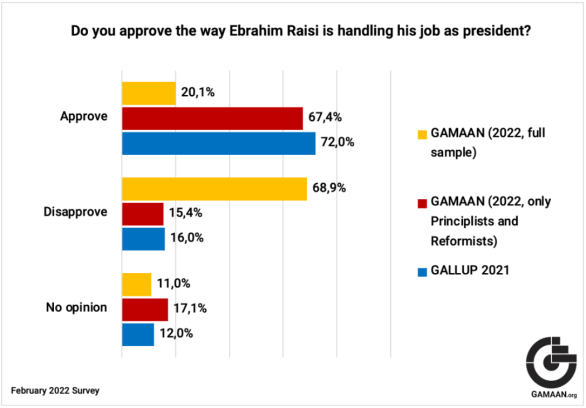
Figure 13-1 — Maleki, Ammar. 2022. Iranians’ Attitudes Toward Political Systems: A 2022 Survey Report. Published online, gamaan.org: GAMAAN.
GAMAAN’s Ties To US-Funded Regime-Change Orgs
Chief among GAMAAN’s ties to U.S. government-funded groups is the organization’s recent “partnership” with the Tony Blair Institute. GAMAAN “exclusively provided” the U.K. nonprofit with detailed survey data gathered in June 2020 (regarding Iranians’ religious beliefs), and February & December 2022 (regarding political systems and the Mahsa Amini street protests, respectively).
The Tony Blair Institute used GAMAAN’s survey data for a series of articles depicting the Iranian populace as eager for regime change, with one article titled “The People of Iran Are Shouting for Regime Change – But Is the West Listening?”.
Founded by former U.K. Prime Minister Tony Blair, the Institute has received millions in grants from the U.S. Agency for International Development (USAID), at least some of which were Cooperative Agreement grants “characterized by extended involvement between recipient and agency.”
The Tony Blair Institute is also funded by the U.K.’s Foreign, Commonwealth, and Development Office (akin to the U.S. State Department), as well as private entities such as the French consulting firm Altai Consulting. Altai boasts the European Commission, USAID, and the French Development Agency as clients.
GAMAAN’s widely-discussed 2020 survey of Iranians’ religious beliefs was “financially supported by and carried out in cooperation with” Dr. Ladan Boroumand, co-founder and research director of the Abdorrahman Boroumand Center, a nonprofit focused on Iranian human rights abuses and critical of Iran’s Islamist government.
Named after her father Abdorrahman Boroumand, an Iranian lawyer and pro-democracy activist who was allegedly assassinated by Islamic Republic agents in 1991, the Center’s ‘Omid’ project documents cases of executions and assassinations in Iran in a searchable electronic database. The organization isn’t shy about supporting regime change, stating that its “goal is to prepare for a peaceful and democratic transition in Iran and build a more just future.”
The Boroumand Center has received substantial funding from the U.S. government-financed National Endowment for Democracy (NED), of which the Boroumand Center is a “partner.”
Ladan Boroumand has held multiple positions at the NED, including serving as a former Reagan-Fascell Democracy Fellow, researching “secularization in Iran,” a current member of the editorial board for the NED’s Journal of Democracy, as well as a current Research Council Member at the NED’s International Forum for Democratic Studies. She has also served on the Steering Committee of the World Movement for Democracy, of which the NED serves as the “secretariat.”
Ladan Boroumand is also on the advisory committee for the Atlantic Council’s Iran Strategy Project, which convened various experts and former officials “to develop a holistic US policy toward the Islamic Republic of Iran for the next four years.”
The Atlantic Council is an influential international relations think tank with extensive ties to U.S. lawmakers that receives large sums from the U.S. government (with FY 2023 grant obligations totaling over $6 million). The group’s October 2024 Iran Strategy Project report recommends a policy of continued pressure against the Islamic Republic, including through “enhanced support to the Iranian people” with the “long-term goal of supporting the Iranian people’s ability to change their system of government if they so desire.”
Ladan Boroumand was invited, along with her sister Roya Boroumand, to a July 2018 speech by former Secretary of State Mike Pompeo at the Reagan Library, amid the Trump administration’s pivot to a hardline posture towards the Islamic Republic. The two sisters likewise joined 12 other Iranian diaspora women in signing an August 2019 open letter calling for a “transition from the Islamic Republic.”
GAMAAN has also consulted with Dr. Shirin Ebadi, an Iranian lawyer and Nobel Peace Prize recipient, who has long worked with the U.S. government and the NED-funded Tavaana, a project of the E-Collaborative for Civic Education (ECCE), founded by staunch opponents of the Islamic Republic, Mariam Memarsadeghi and Akbar Atri.
Tavaana, which describes itself as “Iran’s premier civic education and civil society capacity building initiative,” aimed at ushering in democratic governance. It creates and disseminates anti-government media and information on anti-censorship tools, and has an extensive social media following. Memarsadeghi was also a signatory to the August 2019 open letter calling for a “transition from the Islamic Republic.”
Memarsadeghi is also the founder and director of the Cyrus Forum, an organization that supports ousting the Islamic Republic and works to “reverse engineer an Iranian government that upholds security, the rule of law, and individual liberty.” Ladan Boroumand is one of only two advisors to the Cyrus Forum and was previously listed on Tavaana’s website as a teacher.
Ebadi also appears to have been invited to the U.S. State Department’s 2017 Middle East Partnership Initiative (MEPI) Implementers’ Conference, organized by the Department’s Bureau of Near Eastern Affairs, Office of Assistance Coordination (NEA/AC).
Ebadi’s name and role as president of the Centre for Supporters of Human Rights—a U.K. NGO focused on human rights issues in Iran that Ebadi founded—appear on a guest list circulated by the State Department in September 2017.
GAMAAN has also relied on U.S. government-funded virtual private network (VPN) providers Psiphon and Lantern for assistance in disseminating their surveys and bypassing Iranian government internet censorship.
Since at least 2021, GAMAAN has collaborated with Psiphon, an open-source tool for circumventing internet censorship (using VPN and other technologies) that was developed at the University of Toronto and publicly released in 2006. Psiphon has received millions in funding from the Open Technology Fund, which “receives the majority of its funding from the U.S. government via the U.S. Agency for Global Media (USAGM).”
Psiphon, the Tony Blair Institute, the Abdorrahman Boroumand Center, and Shirin Ebadi did not respond to requests for comment.
The Context
GAMAAN co-founder Ammar Maleki’s ire against the Islamic Republic is more than ideological; it’s personal. His father, Mohammad Maleki, who served as the first president of the University of Tehran, was a well-known critic of the country’s human rights abuses and use of the death penalty.
In 2019, the elder Maleki joined 13 other Iranian activists in signing a pair of open letters calling for Iran’s Supreme Leader to step down and a “complete and peaceful transition” away from the Islamic Republic. Ammar Maleki told Univers, the student newspaper of his employer, Tilburg University, “My father was imprisoned regularly until old age. Almost all the milestones in my life he missed.”
He makes his views on the Islamic Republic clear on X: “To understand/analyze the #Islamic_Republic of Iran, 3 golden rules should be kept in mind: 1- I.R. [Islamic Republic] cannot be reformed by dialogue but will surrender to pressure 2- I.R. officials lie unless proven otherwise 3- when I.R. officials/supporters say #Iran, they mean the I.R. only!”
Hardline politics are not unusual among academics. More unusual and concerning is Maleki’s willingness to accuse those who call into question GAMAAN’s findings and methodology of carrying water for the Islamic Republic. Daniel Tavana experienced this firsthand when he criticized GAMAAN’s methodology online.
“I understand that you have a hard time these days selling your data by the IRGC-initiated IranPoll, so you attack GAMAAN to get attention. I cannot waste my time answering nonsense on GAMAAN’s method for an apologist! Our results were corroborated by external checks & field evidence,” Maleki wrote, referring to Tavana and the Iran Social Survey’s use of IranPoll to conduct surveys within Iran.
Noir couldn’t find evidence of IranPoll having ties to the Islamic Republic, and Maleki did not respond when we asked him to elaborate on the allegation. Tavana likewise stated, “IranPoll has no connection to the government [of Iran].”
Nonetheless, Maleki seems to allege that IranPoll’s work is evidence that Western universities “are under the control of the regime’s thugs,” as he wrote on X.
If mainstream media citations of GAMAAN’s findings are any indication, Maleki’s tenacity seems to be paying off.
Whether you’ve seen it in reports published by the State Department, the American Foreign Policy Council, the government of the United Kingdom, The New York Times, The Wall Street Journal, FiveThirtyEight, The Guardian, The Economist, CBC, Al-Monitor, The Jerusalem Post, Voice of America, the Wilson Center, DW News, Tablet Magazine, The Hill, The Washington Times, or Christianity Today, there’s a good chance that if you live in the West, GAMAAN has helped shape what you think is happening in Iran.
GAMAAN’s rise shows no signs of slowing: the organization announced in January that Maleki had been “selected as the country representative for Iran (2025-2026) in the prestigious World Association for Public Opinion Research (WAPOR).” The Washington Post described WAPOR as “the leading professional association of pollsters working outside the United States.”
For Tavana, GAMAAN isn’t merely worsening academic and mainstream conversation around Iran—it’s potentially providing justification for the kind of military confrontation that actually materialized last month.
“It wasn’t a very long time ago where, you know, the U.S. invaded another country, largely on the assumption that people who lived in that country wanted the invasion and [welcomed] their liberation … And so I think that, like, trafficking in these half-baked ideas is actually quite dangerous, and it’s going [to], if unchecked, get a lot of people killed,” Tavana said.
Sam Carlen is an investigative journalist writing for Noir News, an independent newsletter covering foreign policy and U.S. soft power projection, policing and surveillance, and other topics.
Iain Carlos is an investigative journalist and the founder of Noir News, a newsletter covering foreign policy, policing, surveillance, and other topics.
US strikes another vessel off Venezuela, killing four
Al Mayadeen | October 3, 2025
The United States has escalated its military campaign in Latin America, carrying out yet another deadly strike off the coast of Venezuela under the false pretext of fighting narcotics trafficking.
Defense Secretary Pete Hegseth announced the latest strike in a post on X, celebrating the destruction of a small vessel that US officials claimed was carrying drugs. A video accompanying the post showed the boat erupting into flames, a scene observers say reveals Washington’s growing reliance on extrajudicial force and its willingness to kill without evidence, trial, or accountability.
“Four male narco-terrorists aboard the vessel were killed in the strike,” Hegseth wrote, asserting that it “was conducted in international waters just off the coast of Venezuela while the vessel was transporting substantial amounts of narcotics — headed to America to poison our people.” He vowed, “These strikes will continue until the attacks on the American people are over!!!!”
The latest strike brings the death toll to at least 21 people across four attacks in recent weeks, none of whom have been positively identified as traffickers. Washington has offered no independent proof linking the victims to drug networks, raising concerns that the US is unilaterally executing individuals in foreign waters under a fabricated pretext.
This new military doctrine stems from President Donald Trump’s declaration that the United States is now in “armed conflict” with drug cartels, reclassifying them as “terrorist organizations”, a move legal scholars have condemned as an attempt to bypass international law. A Pentagon notice sent to Congress, obtained by AFP, claimed: “The president determined these cartels are non-state armed groups, designated them as terrorist organizations, and determined that their actions constitute an armed attack against the United States.” The same document described alleged smugglers as “unlawful combatants”, stripping them of legal protection under the Geneva Conventions.
Rights groups have warned that such terminological manipulation echoes past US practices, from the “war on terror” to the invasions of Panama and Iraq, where legal gray zones were exploited to justify preemptive violence and regime change.
Political Theater and Extrajudicial Killings
The Trump administration has openly celebrated these operations as demonstrations of strength rather than law enforcement. Trump’s communications director, Steven Cheung, declared that traffickers had been “turned into stardust.” On Truth Social, Trump himself echoed the narrative, writing: “A boat loaded with enough drugs to kill 25 TO 50 THOUSAND PEOPLE was stopped, early this morning off the Coast of Venezuela, from entering American Territory.”
But independent analysts and international law experts argue that the campaign bears all the hallmarks of a covert regime change operation. The strikes come amid an unprecedented US military buildup near Venezuela, including the deployment of F-35 warplanes to Puerto Rico, marking the largest show of force in the Caribbean in more than three decades. Venezuela’s Defense Minister Vladimir Padrino condemned the presence of US jets near Venezuelan airspace as “a provocation” and “a threat to our national security.”
32% of Mass Shooters Are Veterans. 0% of Media Outlets Will Say So.
By David Swanson | Let’s Try Democracy | September 29, 2025
Two U.S. military veterans allegedly shot and killed at least three people each this past weekend, Thomas Jacob Sanford in Michigan, and Nigel Max Edge in North Carolina. So, it is a safe bet that they will both be added (with, almost certainly, no mention of their status as veterans) to the database maintained by Mother Jones that I have for years been using as a starting point to track statistics on mass shootings.
It’s been almost two years since I posted an update. In that time, Mother Jones has added seven mass shootings to its database. These two new ones will make nine. Of those other seven, one of the shooters — bizarrely, and I hope nobody gets reprimanded — is actually identified as a veteran by Mother Jones. Another of the seven was 14 years old and yet another was 67; they don’t factor into calculations about men under 60. Another was a veteran of an institution that uses the word “veteran” to associate itself with the military: football. He blamed his football injuries for his crime. He counts statistically as NOT a military veteran. In a quick internet search, I’ve been unable to identify any of the others as military veterans either, so will count them as non-veterans. But it’s worth noting that often in the past I’ve managed to find out about veteran status only after lengthy searching.
So, the data has now changed from 40 of 127 mass shooters (who are men under 60) being military veterans when last I wrote about this to now 43 of 134 mass shooters being military veterans. That’s 32%, up from 31%. That figure has been between 31% and 36% for as long as I’ve been doing these calculations
In the United States, only a very small percentage of men under 60 are military veterans.
In the United States, at least 32% of male mass shooters under 60 (which is almost all mass shooters) are military veterans.
As I reported in June 2023, a University of Maryland report touching on this topic was virtually ignored by media outlets.
But here are the facts:
Looking at males, aged 18-59, veterans are well over twice, maybe over three times as likely to be mass shooters compared with the group as a whole. And they shoot somewhat more fatally.
The numbers have changed slightly since I began writing about this:
- October 28, 2023: ABC News Report Claims No Past Mass Shooters Have Been Veterans; At Least 31% Have Been
- October 26, 2023: At Least 31% of Mass Shooters Were Trained to Shoot by the U.S. Military
- May 10, 2023: At Least 32% of U.S. Mass Shooters Were Trained to Shoot by the U.S. Military
- March 23, 2021: At Least 36% of Mass Shooters Have Been Trained By the U.S. Military
- June 4, 2019: Updated Data: Mass Shooters Still Disproportionately Veterans
(At this point it was 35%) - November 4, 2018: Mass Shooters’ Histories in the U.S. Military Most Amazing Coincidence
(At this point it was 35%) - November 14, 2017: U.S. Mass Shooters Are Disproportionately Veterans
(At this point it was 34%)
The training and conditioning and arming of shooters is of far less interest to media outlets than “motivation,” but what we should actually know about shooters’ ideology is not unrelated to the disproportionate presence of military veterans in the list of mass shooters. These are people who have been armed and trained and conditioned at public expense and then generally thanked for the supposed service of what they’ve done when it has not yet included shooting any of the wrong people.
All sorts of correlations are carefully examined when it comes to mass shooters. But the fact that the largest institution in the United States has trained many of them to shoot is scrupulously avoided.
Many of those mass shooters who are not military veterans tend to dress and speak as if they were. Some of them are veterans of police forces with military-sounding titles, or have been prison guards or security guards. Counting those who’ve been in either the U.S. military or a police force or a prison or worked as an armed guard of any kind would give us an even larger percentage of mass shooters to consider. The factor of having been trained and employed to shoot is larger than just the military veterans, yet carefully ignored by every single U.S. corporate media outlet (that sounds like an exaggeration, but can you prove it wrong?).
Some of the non-military mass-shooters have worked as civilians for the military. Some have tried to join the military and been rejected. The whole phenomenon of mass-shootings has skyrocketed during the post-2001 endless wars. The militarism of mass-shootings may be too big to see, but the avoidance of the topic is stunning.
Needless to say, out of a country of over 330 million people a database of 134 mass shooters is a very, very small group. Needless to say, statistically, virtually all veterans are not mass shooters. But that can hardly be the reason for not a single news article ever mentioning that mass shooters are very disproportinately likely to be veterans. After all, statistically, virtually all males, mentally ill people, domestic abusers, Nazi-sympathizers, loners, and gun-purchasers are also not mass-shooters. Yet articles on those topics proliferate like NRA campaign bribes.
There seem to me to be two key reasons that a sane communications system would not censor this topic. First, our public dollars and elected officials are training and conditioning huge numbers of people to kill, sending them abroad to kill, thanking them for the “service,” praising and rewarding them for killing, and then some of them are killing where it is not acceptable. This is not a chance correlation, but a factor with a clear connection.
Second, by devoting so much of our government to organized killing, and even allowing the military to train in schools, and to develop video games and Hollywood movies, we’ve created a culture in which people imagine that militarism is praiseworthy, that violence solves problems, and that revenge is one of the highest values. Virtually every mass shooter has used military weaponry. Most of those whose dress we are aware of dressed as if in the military. Those who’ve left behind writings that have been made public have tended to write as if they were taking part in a war. So, while it might surprise many people to find out how many mass shooters are veterans of the military, it might be harder to find mass shooters (actual veterans or not) who did not themselves think they were soldiers.
There seems to me to be one most likely reason that it’s difficult to find out which shooters have been in the military (meaning that some additional shooters probably have been, about whom I’ve been unable to learn that fact). We’ve developed a culture dedicated to praising and glorifying participation in war. It need not even be a conscious decision, but a journalist convinced that militarism is laudable would assume it was irrelevant to a report on a mass shooter and, in addition, assume that it was distasteful to mention that the man was a veteran. That sort of widespread self-censorship is the only possible explanation for the complete whiting out of this story.
The phenomenon of shutting down this story does not exactly require a “motive,” and I would like to recommend to reporters on mass shootings that they, too, devote a bit less energy to the often meaningless hunt for “a motive,” and a tad more to considering whether the fact that a shooter lived and breathed in an institution dedicated to mass shooting might be relevant.
UPDATE SEPTEMBER 29, 2025:
Shockingly, CBS News did one article on this topic two years ago. Here it is. The seven people who wrote it used a database from the Violence Project and did not separate out men or men of any particular age. They concluded that 26% of mass shooters were veterans, as compared to 7% of all people. In other words, a mass shooter is over 3 times as likely to be a veteran.
It’s always seemed more relevant to me to remove the very few mass shooters who are female or young or old, and then compare to 18-59-year-old men in the general population. The closest I can come to putting an exact number on that is like this. The U.S. Census says that in 2024, males 19-59 were 88,300,644 or 25.96% of the population. (This is imperfect because it looks at only one year, because it is an estimate, because it leaves out 18 years olds, and because it includes non-citizens who were not eligible for or did not live in the United States at the age for being in the U.S. military.) According to the Department of Veterans Affairs, of men aged 20-59 (so, missing 18-19-year-olds), 6,565,138 as of 2024 were veterans. That’s 7.43% of all men aged 19-59. If we compare 32% with 7%, mass shooters are over 4.5 times more likely to be veterans.
Featured Video

When Israel Is Mighty
or go to
Aletho News Archives – Video-Images
From the Archives
US murdering 1 million Iraqis is democracy, Iran giving yogurt to Iraq is “domination”
By Ali Salaam | American Herald Tribune | July 31, 2017
The New York Times, owned by the Zionist Jewish supremacist Ochs-Sulzberger family, has no problem with Iraqi suffering as long as Iran is not the one behind it.
The Iraq War was a genocide of the Iraqi people by Zionist supremacists in the Bush administration. Over 1 million innocent people were killed based on a lie. American soldiers died in an Israeli war and now an average of 22 soldiers commit suicide every day because their consciences cannot cope with the fact they committed crimes in an illegal war that served no purpose other than to benefit Israel, not America.
Benjamin Netanyahu, Prime Minister of the Zionist regime, once said “We are benefiting from one thing, and that is the attack on the Twin Towers and Pentagon, and the American struggle in Iraq.”
Paul Wolfowitz had his sights on Iraq since his time in the first Bush administration. Former Israeli official and Bush administration official Richard Perle had his eyes on Iraq since at least his authorship of the Clean Break white paper. The Zionist regime had their eyes on Iraq since the 1980s when strategist Oded Yinon wrote his white paper in support of dividing the Arab-Muslim world along ethnic and sectarian lines. The global Zionist lobby has had their eyes on Iraq since Theodor Herzl stated that Eretz Israel’s true borders go from the Nile River in Egypt to the Euphrates River in Iraq. … continue
Blog Roll
 Aletho News
- When Will This White House Madness End?
- Huckabee aide goes to ‘unusual lengths’ to portray ‘Israel’ positively
- Trump Announces Diesel Supply Deal With Putin Following Phone Call
- MEP blasts ‘Euro-Gestapo’ for lecturing Russia on democracy
- Syria May Send Troops to Saudi Arabia Amid War with Ansar Allah
- UK whines about losing billions to ‘Putin tax’
- Baghaei to Rubio: Distorted narratives cannot erase US record of broken commitments
- Houthis Don’t Have to Conquer Saudi Arabia to Make It Pay
- MOE: Nearly 22,000 Students and Education Workers Killed
- Guterres in Islamabad: Genocide, cowardice, and the cage of Imran Khan
- If Americans Knew
- Gaza ceasefire exists in name only, say more than 100 organizations
- Nearly 2 Million in Gaza Need Urgent Shelter Assistance as Winter Looms: IOM Chief Warns
- Suppressing Palestinian resistance: US charity under fire for AI monitoring of Gaza classrooms
- Thousands Are Held in Israeli Torture Camps. This Is What Happens Inside
- Israel puts Gaza’s sick, injured, newborn in peril – Daily Update
- Report claimed Mark Levin used by Israeli government to influence Trump
- Over 2,000 Gazans have died awaiting medical evacuation amid Israel’s continued siege
- How a U.S. Diplomat Suppressed and Altered Reports Critical of Israel
- 5 Palestinians Die from Israeli Strikes in Gaza as Relentless Attacks Continue
- Report: Ceasefire Slows Killing but Leaves Devastation Intact
- No Tricks Zone
- New Study: 50 Years Of The Most Aggressive ‘Net Zero’ Policies Can Only Affect The Global Climate By 0.03°C
- US September “Heat” Was No Record…Many Records Set Decades Ago
- Latest European Green Energy Debacle; Portugal’s Largest Flagship Solar Park Insolvent!
- Green Energy Debacle: German Expert Professor Fritz Vahrenholt Warns Of Severe Economic And Social Consequences
- Two More Paleo Reconstructions Affirm Meters-Higher Sea Levels Across Ireland, Brazil 7000-6000 Years Ago
- New Study: Earth And Venus Surface Warmth Largely Explained By Convection And Lapse Rate, Not CO2 Or Radiation
- 2025 Nature Paper Claiming Worsening Global Drought Gets RETRACTED …Heavily Flawed
- New Study: ‘Global Drought Shows No Detectable Recent Acceleration Under Climate Warming’
- Economic Masterminds: German Socialists Suggest Taxing Productivity Gains Stemming From Using AI
- The South China Sea Has Not Been Cooperating With The Climate Change Narrative

