Tales of the American Empire produces short historical videos about the American empire, like the “Sordid History of the CIA”, which is linked below. Most viewers are interested in the American CIA, so this is another episode about videos detailing the evils of the CIA. Some CIA officers work with murderous dictators and criminal organizations involved in the drug trade, arms dealing, and government contract fraud. These evil deeds are sometimes uncovered by the media but receive little attention.
There are YouTube videos that provide insight into covert CIA operations. This is far too much material to condense into a short video. Here is a quick review of more great YouTube videos about the CIA with a link to them below. If the link no longer works, the content has been removed. Two videos from the first part of this series have since disappeared. They may be found on smaller video hosting websites like Rumble, Bitchute, or Odyssey.
“Hector Berrellez (Unreleased Full Interview)”; a career DEA agent; djvald; December 24, 2023; this is set to start when he talks about the CIA murder of a DEA agent; • Hector Berrellez (Unreleased Full Interview)
Early last month, the forces of the ‘new’ Syrian army flooded across north and east Syria. The troops seized key cities and major oil fields, effectively ending a decade of US-backed Kurdish autonomy – with Washington’s blessing.
One of those cities was Raqqa, the former capital of ISIS’s self-proclaimed ‘caliphate’ in Syria and a symbol of sectarianism, bloodshed, and iron-fist rule.
Raqqa remembers
It was in Raqqa where scores of soldiers from the now-dismantled Syrian Arab Army (SAA) were executed in cold blood by ISIS militants. Many of these soldiers had their severed heads impaled on pikes on the city’s outskirts.
It was also in Raqqa where countless young girls and women, many of them Yezidis abducted from Iraq in 2014, were sold into slavery in what ISIS called Souq al-Sabaya – the ‘market of female captives.’
As Syrian President Ahmad al-Sharaa’s (formerly known as Abu Mohammad al-Julani) armed forces entered the city in early 2026, his soldiers were gleeful, excited, and reminiscent. Many of them had been there before.
A closer look at the officers leading this offensive reveals a stark reality: ISIS has not been defeated. It has been absorbed, rebranded, and redeployed across Syria, reclaiming its ‘caliphate.’
ISIS reborn under Turkiye’s shadow
The Violations Documentation Center in Northern Syria (VDCNY), a Manbij-based human rights organization that monitors abuses against Kurds, released a report in August 2024 identifying dozens of extremist militants formerly affiliated with ISIS who were later incorporated into the Turkiye-backed Syrian National Army (SNA).
The SNA was formed by Ankara in 2017 and for years served as the Turkish military’s arm in northern Syria. Turkish forces had invaded Syria in 2016 to carry out an operation against the US-backed Kurdish-led Syrian Democratic Forces (SDF), whose dominant component is the People’s Protection Units (YPG) – which Ankara regards as the Syrian extension of the Kurdistan Workers Party (PKK). Turkiye went on to occupy swathes of Syrian territory and maintains that presence today.
Free Syrian Army (FSA) factions that assisted Turkiye’s 2016 intervention were reorganized into what became the SNA. After Raqqa fell to the SDF in 2017, this coalition absorbed scores of fleeing ISIS members. Over time, the SNA continued integrating former ISIS fighters into its ranks.
The ISIS ‘caliphate’ seemed defeated at a certain point. In reality, much of the heavy fighting against ISIS across Syria had been carried out by the former Syrian army, Lebanon’s Hezbollah, allied Iran-backed factions, and the Russian air force. The credit, however, went to Washington and the SDF – which today has been abandoned once again by the US military.
But ISIS was regrouping and reestablishing itself under a new name, with direct Turkish backing and under the watchful eye of US forces.
As VDCNY bluntly stated: “ISIS grew on the shoulders of the Free Syrian Army.”
Below is a partial list of former ISIS figures who were later absorbed into the SNA:
Abu Mohammad al-Jazrawi
According to the August 2024 VDCNY report, Abu Mohammad al-Jazrawi – born Abdullah Mohammad al-Anzi – is a Saudi national who joined ISIS in 2015 after arriving in Syria illegally via Turkiye – like tens of thousands of others from various parts of the world who did the same.
During his time with ISIS, he participated in battles against the Syrian army in the Syrian Desert and Homs countryside. He ended up becoming a military commander in Ahrar al-Sham, a notorious, sectarian extremist group responsible for many war crimes and atrocities.
Ahrar al-Sham had previously fought alongside Al-Qaeda’s Nusra Front before eventually being embedded into the SNA. The extremist group is responsible for numerous war crimes, including the deadly shelling of civilians in the Shia-majority towns of Nubul and Zahraa in Aleppo, during the early years of the war.
Bashar Smeid
Nicknamed Abu Islam al-Qalamouni, Smeid joined ISIS in 2014 and participated in fighting in the Palmyra desert, Damascus countryside, and near Al-Tanf Base – where US forces were training extremist militants.
In 2016, he took command of a security detachment that oversaw the infiltration of three car bombs into Damascus’s Sayyida Zaynab area. He ended up moving to northern Syria’s Idlib in 2017 and worked with his group to funnel ISIS leaders into Turkiye.
A year later, he joined the SNA’s Ahrar al-Sharqiya faction – another criminal sectarian organization that was happy to take in ISIS leaders. In March 2023, members of Ahrar al-Sharqiya murdered four Kurdish civilians celebrating Newroz (Kurdish New Year).
Sabahi al-Ibrahim al-Muslih
Known as Abu Hamza al-Suhail, Muslih was a leader in ISIS’s Shura Council and oversaw trials on charges of apostasy and blasphemy that resulted in dozens of executions. He ended up joining the SNA’s 20th Division. While reports said he was killed in a US drone strike a few years ago, he remains a prime example of the type of characters who were joining the SNA.
Awad Jamal al-Jarad
Jarad joined ISIS in 2015 and commanded a battalion within the organization. He later entered the SNA’s Hamza Division in 2018, participated in Turkish offensives in Afrin, and subsequently joined Ahrar al-Sharqiya.
By August 2024, he was leading a unit of 30 men and had transformed the city of Tal Abyad’s post office into his personal headquarters and command center, according to VDCNY. The Hamza Division is responsible for sectarian violence, sexual assault, and other war crimes.
Majid al-Khalid
Khalid, nicknamed Hajj Abu Omar al-Ansari, formed Liwa al-Haq in Hama during the early years of the war, before incorporating his organization into ISIS in 2014. He was considered one of the founders of ISIS in Hama city.
He ended up becoming the Emir of Hama during his time with ISIS and took command of the suicide (‘Inghimassi’) battalions – which sent thousands of young men to blow themselves up in holy sites and civilian areas. In 2017, he joined the Hamza Division and became a battalion commander in the group.
Salem Turki al-Antari
Antari, nicknamed Abu Saddam al-Ansari, joined ISIS in 2014 in the Badia desert region, where he served as a commander and led extremists in battle against the former Syrian army in Palmyra and near Al-Tanf Base.
He went on to become the Emir of Palmyra. Antari later joined Ahrar al-Sharqiya in 2017 and took part in Turkish-backed assaults against Afrin, Tal Rifaat, and Ras al-Ain. He was also implicated in the roadside execution of Kurdish politician Hevrin Khalaf in 2019. In 2024, the ex-ISIS chief was appointed as the commander of the US-backed Syria Free Army (SFA), which was formed by Washington in 2022 and trained in the Al-Tanf Base.
SFA now operates under the Syrian Defense Ministry. Between 2015 and 2017, Antari took part in the ISIS takeover of Palmyra and the battles with the Syrian army that ensued. The terrorist organization’s assault on Palmyra destroyed some of Syria’s most cherished cultural heritage. In 2015, ISIS notoriously publicly beheaded renowned 83-year-old Syrian archeologist Khaled al-Asaad for refusing to reveal the locations of hidden antiquities.
Raad Issa al-Barghash
Also known as Abu Zainab, Barghash pledged allegiance to ISIS in 2013. He fought with the group in Ain al-Arab (Kobane) and elsewhere, and was responsible for the killing of many civilians. In 2017, he fled to Aleppo and entered the ranks of Ahrar al-Sharqiya, eventually becoming a top security chief in the group.
Thamer Nasser al-Iraqi
An Iraqi citizen, he joined ISIS in 2013 in Homs and then served as the military fortifications Emir in the Al-Shaddadi area until 2015. In 2016, he became the Emir of the armaments department in Raqqa, and then an advisor to the ISIS Security Office No. 011 in Raqqa.
Iraqi participated in the Battle of Mosul in 2014. Three years later, he fled towards the city of Jarablus, east of Aleppo. In November 2017, he joined Ahrar al-Sharqiya and participated in Operation Olive Branch and Operation Peace Spring, launched by the Turkish army in 2018 and 2019. He also participated in bombings and summary executions of Kurdish civilians in the Jindires district of Afrin.
Sayf Boulad Abu Bakr
Abu Bakr, now a dual Syrian-Turkish citizen, had defected from the old Syrian military to join the FSA in 2012. These defections were encouraged by foreign intervention and funding. The FSA never maintained the status of a unified opposition force, quickly splintering into different factions that aligned themselves with extremist groups.
He joined ISIS in 2013 and was appointed governor of Al-Bab during the organization’s control over the city. A few years later, he ended up as commander in the Hamza Division, taking part in several Turkish-backed offensives against Kurdish forces.
During his time with ISIS, he appeared in a propaganda video where another member of the group is heard demanding “repentance” from around a dozen prisoners kneeling before them. The prisoners are identified in the video as members of the PKK.
Abu Bakr was also associated with Abdul Jabbar al-Okaidi, an FSA commander who publicly praised ISIS following the capture of Menagh Air Base in 2013.
Abu Bakr is now a senior commander in the Syrian army. In May 2025, the EU imposed sanctions on him, including asset freezes and a travel ban, citing “serious human rights abuses in Syria, including torture and arbitrary killings of civilians.”
Washington’s ‘partner’ in fighting ISIS
These are only select examples.
In 2025, the entire Turkish-backed SNA was formally integrated into the Syrian Defense Ministry. Following the fall of former Syrian president Bashar al-Assad, the SNA – effectively ISIS in new attire – became a core pillar of the current Syrian army, alongside Hayat Tahrir al-Sham (HTS), previously the Nusra Front. HTS itself contains numerous former ISIS members and has a long record of war crimes.
After the SDF was thrown under the bus by Washington in early 2026, Syrian forces swept across the north and captured key oil fields and cities. Soldiers were jubilant upon their entry into Raqqa, charged with nostalgia for ISIS’s glory days.
During the assault on northern Syria, tens of thousands of ISIS militants and their families were set free as troops entered Al-Hawl Prison Camp, which was previously run by the SDF.
Videos on social media showed government troops arriving at Al-Hawl and allowing the prisoners to leave. During the fighting days earlier, hundreds of ISIS prisoners escaped from Al-Shaddadi Prison. The SDF lost control of the facility and accused the US of ignoring its calls for help. Two kilometers away from the prison is a US coalition military base.
🇸🇾 Total chaos in Syria. Circulating footage of thousands of ISIS terrorists and their family fleeing from the Al-Hol camp in the Hasakah countryside after attacks by Jolani's gangs on areas controlled by the SDF.
“The Islamic State of Iraq and Syria [ISIS], we are proud of this,” video footage showed one Iraqi woman, dressed in a niqab, saying as she was leaving Al-Hawl.
The new Syrian army is saturated with former ISIS commanders and fighters – yet Washington now describes it as a “partner” in combating ISIS.
This is the same army that massacred Alawites and Druze in March and July of 2025, and committed heinous war crimes against Kurds during attacks against the SDF in January 2026.
President Sharaa, the former ISIS and Al-Qaeda leader behind deadly sectarian suicide bombings in both Iraq and Syria, (as well deadly attacks in Lebanon and the occupation of the country’s border with Syria) has vowed to protect minorities, and claims he is leading a campaign to rid Syria of extremism.
This is impossible with an army made up of ISIS and a political leadership made up of violent warlords.
An investigation released by The Cradle last year reveals that since Sharaa came to power, Syria has witnessed a government-linked campaign of mass abduction and sexual enslavement targeting young Alawite women. Syrian government forces also committed massacres targeting minorities, including Druze and Alawites.
In a new video from the assault on the north, a Syrian soldier films two female Kurdish fighters captured during battle. As he drives around with the two women in the back of his vehicle, he brags about how they will make a “perfect gift” for his commander.
HTŞ terrorists have captured two Kurdish women and vilely said, “Ebu Mujahid, here’s your greatest gift.”
It appears the main topic of discussion at Wednesday’s meeting between Donald Trump and Bibi Netanyahu was Iran’s ballistic missile program. It really was not a discussion… Instead it was Bibi, with his advisers, trying to sell Trump and his team on the necessity of ending Iran’s ballistic missile capability. Why the emphasis on those missiles when, until recently, the big concern was whether Iran could build a nuclear bomb? The US and Israeli narrative about Iran’s missile and drone strikes in Israel during the 12-day war in June 2025 insists that Iran did little damage and that the combined might of US and Israeli air-defense systems knocked down 90% of the Iranian ballistic missiles. If that was true, why is Netanyahu pressing Trump touting on the need for Iran to eliminate its ballistic missile force?
I have the answer… We need only look at the damage Iran’s ballistic missiles caused in Israel during the 12-day war in June 2025 — based on reporting and independent analyses of the conflict (much of the detailed damage was initially censored or not fully disclosed by Israeli authorities, but independent and foreign sources have provided information).
Iran launched more than 1,000 ballistic missiles toward Israel over the 12 days, often in large salvos that overwhelmed the Israeli and US air defenses. Israel’s multilayered missile defense systems intercepted some, but a significant number still penetrated and struck targets. Hundreds of buildings in major cities such as Tel Aviv suburbs (Bat Yam, Ramat Gan) were damaged — with some buildings so badly hit they were later demolished. In Tel Aviv alone, analysts mapped damage to around 480 buildings across multiple strike sites.
Iranian missiles damaged key public facilities, such as the Soroka Medical Center in Be’er Sheva, which was hit by an Iranian missile, causing structural damage and chemical leaks; the affected wing was evacuated. Power and water infrastructure also were hit, contributing to service disruptions.
Iran’s ballistic strikes hit high-value facilities as well. The Weizmann Institute of Science (a major research institution in Rehovot) was severely damaged — with an estimated 90% of structures affected, destruction of dozens of labs, and suspension of about 25% of its operations.
Independent radar data and reporting showed that Iranian missiles directly hit around five Israeli Defense Forces (IDF) facilities, including an air base, intelligence center, and logistics base. Israeli authorities did not publicly confirm these hits at the time, due to military censorship. Israeli oil refining infrastructure — especially in Haifa Bay — also suffered direct hits and damage from Iranian missiles, including to critical units and pipelines at the Bazan refinery and associated casualties. The strike on the Bazan oil refinery complex in Haifa Bay, one of Israel’s most important energy facilities, heavily damaged the power generation unit and other infrastructure critical for operation.
Wednesday’s meeting between Trump and Netanyahu lasted nearly three hours (longer than scheduled) and, according to Israeli media, also included US Secretary of State Marco Rubio, Defense Secretary Pete Hegseth, US Special Envoy Steve Witkoff, Jared Kushner, US Ambassador to Israel Mike Huckabee, Israel’s ambassador to the US Yechiel Leiter, Military Secretary Maj.-Gen. Roman Gofman, acting director of the National Security Council Gil Reich, Michael Eisenberg, Ziv Agmon, and advisor Ofir Falk.
So what did President Trump and Bibi talk about on Wednesday. According to the Jerusalem Post :
[T]he prime minister presented intelligence on Iran’s military buildup, including developments related to its ballistic missile program. He also conveyed the message that if Trump decides to strike Iran, the operation should include targeting the ballistic missile project as well.
Haaretz echoed the Jerusalem Post’s report, but also noted that Netanyahu is worried that Trump will strike a deal with Iran that ensures Iran does not and will not have a nuke. Netanyahu thinks that would be bad for Israel:
Messages from the Prime Minister’s Office indicate that such a deal would be bad not only for Israel but for the entire Middle East. Netanyahu was expected to attempt to thwart an agreement that does not include significant restrictions on ballistic missile production in Iran, while at the same time avoiding being perceived as encouraging the United States to go to war with unpredictable outcomes.
Remember all the times that Bibi showed up at the UN and the US Congress with pictures of an imaginary Iranian nuclear bomb? The bomb is no longer the Israeli priority… Eliminating Iran’s ballistic missiles is now number one on the hit list because Israel took a severe beating last June and Netanyhu fears what Iran could do if Iran makes good on its threats to unleash its missile force if attacked.
Trump tried to placate Bibi by announcing that he has ordered the Navy to PREPARE to deploy another carrier strike group to the Arabian Sea. The key word is PREPARE… Preparing is not the same as a Deployment Order. I am happy to say that I was wrong about the US launching an attack this week. Based on Trump’s account of the session with Bibi, there is going to be at least one more round of talks in Oman between the US and Iran before a new attack on Iran is unleashed.
Despite Trump’s constant boasting about the mighty prowess of the US military, the US lacks the capability to destroy Iran’s ballistic missile force. For starters, the Iranian missiles are stored below ground in hardened tunnels that are scattered across Iran. The US military embarrassed itself last March when it failed to destroy the Houthi ballistic missiles during the seven weeks of Operation Rough Rider… Finding and destroying a mobile missile launcher is damn hard. Unlike Yemen, which did not have an integrated air-defense system or an air force, Iran has both. The lack of air supremacy by the US complicates the task of locating and destroying ballistic missiles in Iran. And that is assuming that Iran is not also using decoys in order to deplete the US inventory of missiles it would use to destroy the Iranian capability.
Iran is willing and ready to make a deal that will assure Trump that it is not building a nuke. And, based on Rick Sanchez’s recent interview with Iran’s Foreign Minister Araghchi, Iran is willing to make concessions on the enrichment of uranium. While Trump will be loathe to admit it, if he accepts Iran’s offer then he is in effect reviving the JCPOA.
People in key NATO nations are reluctant to tighten their belts to fund increased defense spending, despite believing that the world is “heading toward global war,” according to a Politico poll published on Friday.
The poll, which surveyed at least 2,000 people from the US, Canada, the UK, France, and Germany each, found that majorities in four of the five countries think “the world is becoming more dangerous” and expect World War III to break out within five years.
Nearly half of Americans (46%) consider a new world war ‘likely’ or ‘very likely’ by 2031, up from 38% last year. In the UK, 43% share this belief, up from 30% in March 2025.
French respondents matched British levels at 43%, and 40% of Canadians expect war within five years. Only Germans remain skeptical, with a majority believing that a global conflict is unlikely in the near term.
The survey suggested a stark disconnect, however, between the growing alarm and willingness to pay for a defense buildup. While respondents support increased military spending in principle, support fell dramatically when specific trade-offs were mentioned.
In France, support dropped from 40% to 28% when those being surveyed were told about the potential financial and fiscal consequences. In Germany, it fell from 37% to 24%, with defense spending ranking as one of the least popular uses of money.
The survey also suggested significant skepticism about creating an EU army under a central command, with support at 22% in Germany and 17% in France.
While the poll suggests that Russia is perceived as the ‘biggest threat’ to Europe, Canadians view the administration of US President Donald Trump as the greatest danger to their security. Respondents in France, Germany, and the UK rank the US as the second-biggest threat – cited far more often than China.
The findings come after NATO Secretary-General Mark Rutte urged members states in December to embrace a “wartime mindset” amid the stand-off with Russia. This also comes amid Western media speculation that Russia could attack European NATO members within several years. Moscow has dismissed the claims as “nonsense,” while accusing EU countries of manufacturing anti-Russia hysteria to justify reckless militarization.
A bloc of 40 state and territorial attorneys general is urging Congress to adopt the Senate’s version of the controversial Kids Online Safety Act, positioning it as the stronger regulatory instrument and rejecting the House companion as insufficient.
The Act would kill online anonymity and tie online activity and speech to a real-world identity.
Acting through the National Association of Attorneys General, the coalition sent a letter to congressional leadership endorsing S. 1748 and opposing H.R. 6484.
Their request centers on structural differences between the bills. The Senate proposal would create a federally enforceable “Duty of Care” requiring covered platforms to mitigate defined harms to minors.
Enforcement authority would rest with the Federal Trade Commission, which could investigate and sue companies that fail to prevent minors from encountering content deemed to cause “harm to minors.”
That framework would require regulators to evaluate internal content moderation systems, recommendation algorithms, and safety controls.
S. 1748 also directs the Secretary of Commerce, the FTC, and the Federal Communications Commission to study “the most technologically feasible methods and options for developing systems to verify age at the device or operating system level.”
This language moves beyond platform-level age gates and toward infrastructure embedded directly into hardware or operating systems.
Age verification at that layer would not function without some form of credentialing. Device-level verification would likely depend on digital identity checks tied to government-issued identification, third-party age verification vendors, or persistent account authentication systems.
That means users could be required to submit identifying information before accessing broad categories of lawful online speech. Anonymous browsing depends on the ability to access content without linking identity credentials to activity.
A device-level age verification architecture would establish identity checkpoints upstream of content access, creating records that age was verified and potentially associating that verification with a persistent device or account.
Even if content is not stored, the existence of a verified identity token tied to access creates a paper trail.
Constitutional questions follow. The Supreme Court has repeatedly recognized anonymous speech as protected under the First Amendment. Mandating identity verification before accessing lawful speech raises prior restraint and overbreadth concerns, particularly where the definition of “harm to minors” extends into categories that are legal for adults.
Courts have struck down earlier efforts to impose age verification requirements for online content on First Amendment grounds, citing the chilling effect on lawful expression and adult access.
Despite this history, state officials continue to advocate for broader age verification regimes. Several states have enacted or proposed laws requiring age checks for social media or adult content sites, often triggering litigation over compelled identification and privacy burdens.
The coalition’s letter suggests that state attorneys general are not retreating from that position and are instead seeking federal backing.
The attorneys general argue that social media companies deliberately design products that draw in underage users and monetize their personal data through targeted advertising. They contend that companies have not adequately disclosed addictive features or mental health risks and point to evidence suggesting firms are aware of adverse consequences for minors.
Multiple state offices have already filed lawsuits or opened investigations against Meta and TikTok, alleging “harm” to young users.
At the same time, the coalition objects to provisions in H.R. 6484 that would limit state authority. The House bill contains broader federal preemption language, which could restrict states from enforcing parallel or more stringent requirements. The attorneys general warn that this would curb their ability to pursue emerging online harms under state law. They also fault the House proposal for relying on company-maintained “reasonable policies, practices, and procedures” rather than imposing a statutory Duty of Care.
The Senate approach couples enforceable federal standards with preserved state enforcement power.
The coalition calls on the United States House of Representatives to align with the Senate framework, expand the list of enumerated harms to include even suicide, eating disorders, compulsive use, mental health harms, and financial harms, and ensure that states retain authority to act alongside federal regulators. The measure has bipartisan sponsorship in the United States Senate.
The policy direction is clear. Federal agencies would study device-level age verification systems, the FTC would police compliance with harm mitigation duties, and states would continue to pursue parallel litigation. Those mechanisms would reshape how platforms design their systems and how users access speech.
Whether framed as child protection or platform accountability, the architecture contemplated by S. 1748 would move identity verification closer to the heart of internet access.
Once age checks are embedded at the operating system level, the boundary between verifying age and verifying identity becomes difficult to maintain.
Col Douglas Macgregor argues that Trump ran on ending “endless wars” and prioritizing America First, yet instead presides over a massive, unaccountable $1.5 trillion defense budget and a widening set of military confrontations. Rather than reducing foreign interventions, U.S. policy is escalating tensions—especially with Iran and Russia—while failing to end the war in Ukraine.
They criticize U.S. seizures of Russian, Iranian, and Venezuelan oil tankers as symbolic, economically trivial, and strategically pointless actions that risk provoking Russia without meaningfully weakening its war effort. These moves are framed more as political theater and economic self-interest (boosting U.S. oil exports) than serious strategy.
The discussion rejects claims—circulating in European media and think tanks—that Russia would quickly attack NATO or the Baltics after a Ukraine ceasefire, calling such scenarios absurd fear-mongering designed to justify perpetual conflict and sustain Cold War–era institutions. The argument is that Russia lacks both the interest and incentive to expand westward and would prefer normalized economic relations.
Overall, the segment contends that Washington, European leaders, and influential think tanks are more invested in maintaining hostility and ongoing wars than in pursuing negotiated settlements. Trump’s instincts may lean toward ending conflicts, the speaker concludes, but he has failed to act decisively, allowing wars and tensions to continue despite campaign promises to the contrary.
Most mega-donors buy influence quietly. Jewish oligarch Haim Saban prefers to explain exactly how it works.
The question came from the stage at the 10th annual Israeli-American Council National Summit, held in Hollywood, Florida in January 2026. Shawn Evenhaim, the IAC’s board chairman emeritus, turned to the two most powerful Jewish, pro-Israel megadonors in American politics and asked them, simply, how they gain influence over politicians.
Miriam Adelson declined to answer, saying she wanted to “be truthful” but “there are so many things I don’t want to talk about.”
Haim Saban had no such reluctance.
“It’s a system that we did not create,” he said. “It’s a legal system and we just play within the system. Those who give more have more access and those who give less have less access. It’s simple math. Trust me.”
Moments earlier, when asked whether Jewish community influence in the United States was weakening, Saban dismissed the anxiety with characteristic confidence. “I can tell you,” he told the 3,500 assembled Israeli-Americans, “that my influence is not weakening.”
To understand why Saban could say that with a shrug, you must go back to where he started.
Haim Saban was born on October 15, 1944, in Alexandria, Egypt. In 1956, amid anti-Jewish hostility following the Suez Crisis, the Saban family fled Egypt and immigrated to Israel, settling in a rough Tel Aviv neighborhood where they shared a communal bathroom, as Saban frequently recounts, “with a hooker and her pimp.” A school principal told the young Saban he was “not cut out for academic studies.” He served in the Israel Defense Forces during both the Six Day War and the Yom Kippur War.
In 1966, he became bassist for the Israeli rock band The Lions of Judah despite not knowing how to play bass, conditioning his work booking their gigs on becoming their musician. The band signed with Polydor and appeared on the BBC, but money ran dry. By the early 1970s, Saban had relocated to France, where he and partner Shuki Levy built a niche creating theme music for American TV shows broadcast overseas, providing the music free while retaining the rights.
The business generated 15 gold and platinum records and $10 million annually within seven years. But the empire rested on a fault line. A 1998 Hollywood Reporter investigation revealed that Saban had not actually composed all 3,700 works credited to his name. Ten composers threatened legal action, and Saban quietly settled out of court.
Saban moved to Los Angeles in 1983 and founded Saban Entertainment in 1988. His breakthrough came after eight years of failed pitches when Fox agreed to buy his Americanized adaptation of a Japanese children’s show. The result was Mighty Morphin Power Rangers, which debuted in 1993 and generated over $6 billion in toy sales.
The franchise’s success came with costs. In 1998, the Screen Actors Guild declared Saban Entertainment “unfair to performers” and accused the company of “economic exploitation of children,” ordering members not to work for his shows. Power Rangers was produced non-union, with child actors denied residuals and subjected to hazardous conditions. In 2001, Fox Family Worldwide sold to The Walt Disney Company for $5.3 billion.
In 2003, Saban led a consortium acquiring a controlling stake in ProSiebenSat.1 Media, Germany’s largest commercial television company. He reportedly received the call confirming the deal while standing in the Dachau crematorium with his son. The consortium sold its stake in 2007 for roughly three times what they paid.
In 2006, Saban Capital Group led a consortium acquiring Univision Communications, the largest Spanish-language broadcaster in the United States, for approximately $13.7 billion. It sold in 2020 for around $800 million for a 64% stake, making the investment one of the most expensive failures in media history.
What Saban lost in money, he appeared to gain when it came to consolidating pro-Zionist narratives In Spanish-speaking media. Critics at Al Jazeera noted that Univision’s 2011 documentary “La Amenaza Iraní” (The Iranian Threat), examining Iran’s alleged ties to Latin American governments, “regurgitate[d] all the pro-war right’s by now familiar talking points about nefarious Islamists acting in concert with leftist Bolivarians to bring Terror to the US’ doorstep.” It was screened for English-speaking audiences at the Hudson Institute, a neoconservative Washington think tank that routinely pushes a hardline Zionist agenda. The SourceWatch project characterized Univision’s channels as having “been used to broadcast pro-Israeli propaganda” under Saban’s ownership.
The Univision-Clinton entanglement deepened the scrutiny. A 2014 early childhood initiative between Univision and the Clinton Foundation featured Hillary Clinton’s face in five of seven promotional slides on Univision’s website. When the network later reported on allegations that foundation donations had influenced Clinton as Secretary of State, Univision did not disclose its own foundation partnership.
Across both business and politics, Saban operated under a single guiding principle: advancing what he believed to be in Israel’s best interests. “I’m a one-issue guy,” he said publicly, “and my issue is Israel.”
His three-pronged strategy, outlined at his own Saban Forum, is to fund political campaigns, bankroll think tanks, and control media. He gave the Democratic National Committee a single gift of $7 million in 2002, at the time the largest donation in DNC history. His total giving to Clinton causes exceeded $27 million, including a $13 million founding grant to establish the Saban Center for Middle East Policy at Brookings, then the largest donation in Brookings history. He recruited Martin Indyk, former U.S. Ambassador to Israel and former AIPAC deputy research director, to run it.
He funds the Saban National Political Leadership Training Seminar through AIPAC, providing up to 300 college students with pro-Israel advocacy training annually. He was an early donor to the IAC beginning in 2008, briefly partnered with Sheldon Adelson on Campus Maccabees, an anti-BDS initiative, from 2013 to 2015, then quietly pulled out to preserve his standing with Clinton.
Notably, Saban played a behind-the-scenes role in the Abraham Accords, advising UAE Ambassador Yousef Al Otaiba to publish an op-ed warning against Israeli annexation of the West Bank, helping him place and translate it into Hebrew, and privately urging UAE Crown Prince Mohammed bin Zayed to normalize relations with Israel. Jared Kushner credited that op-ed as a catalyst for the normalization talks.
As mentioned before, Saban is a flexible strategist when it comes to dealing with Left and the Right. He has forged close ties with Ariel Sharon, who moved him in a more hawkish direction on security matters. “History proved that Sharon was right and I was wrong,” Saban has said. “In matters relating to security, that moved me to the right. Very far to the right.”
When Saban decided in 2014 that Obama might strike a bad deal with Iran, he did not mince words at the Israeli American Council. “I would bomb the living daylights out of these sons of bitches.” Despite being a reliable donor to the Democratic Party, Saban has shown a willingness to attack people in the party who deviate from the Zionist consensus. He labeled DNC chair candidate Keith Ellison “clearly an anti-Semite.” When Joe Biden conditioned weapons shipments to Israel in 2024, Saban sent an angry email calling it a “bad,,,bad,,,bad,,,decision” and arguing there were “more Jewish voters, who care about Israel, than Muslim voters that care about Hamas.”
Saban’s fierce advocacy for Israel is inseparable from his identity. Haim Saban currently holds dual Israeli-American citizenship. The Jerusalem Postranked him number one on its list of the 50 Most Influential Jews in 2016. Israeli TV host Dana Weiss once called him “our rich uncle.”
In Saban’s political universe, the traditional left-right spectrum is little more than a convenient vehicle—to be boarded or abandoned depending on which direction best serves the project of Israeli dominance in the Middle East.
Osama Hamdan, a leader in the Islamic Resistance Movement (Hamas), said on Wednesday that the joining of Israeli Prime Minister Benjamin Netanyahu, who is wanted by the International Criminal Court, to the so-called “Peace Council” represents “the farce of the era.”
In remarks broadcast by Al Jazeera, Hamdan said the movement had not received from mediators any draft or official proposals concerning the weapons of the resistance.
He stressed that Hamas has not officially adopted any decision regarding freezing its weapons, and that its national position is firm in considering resistance a legitimate right as long as the occupation exists.
Hamdan stressed that the Palestinian people reject any form of external guardianship and cannot accept international forces replacing the Israeli army inside the Gaza Strip.
He added that the movement had contacted the Indonesian government and made clear that the role of any international force should be limited to deployment along the borders of the Gaza Strip to separate it from the occupation.
He said that any international stabilisation force, if established, should work to prevent attacks against the Palestinian people, in line with the plan proposed by US President Donald Trump.
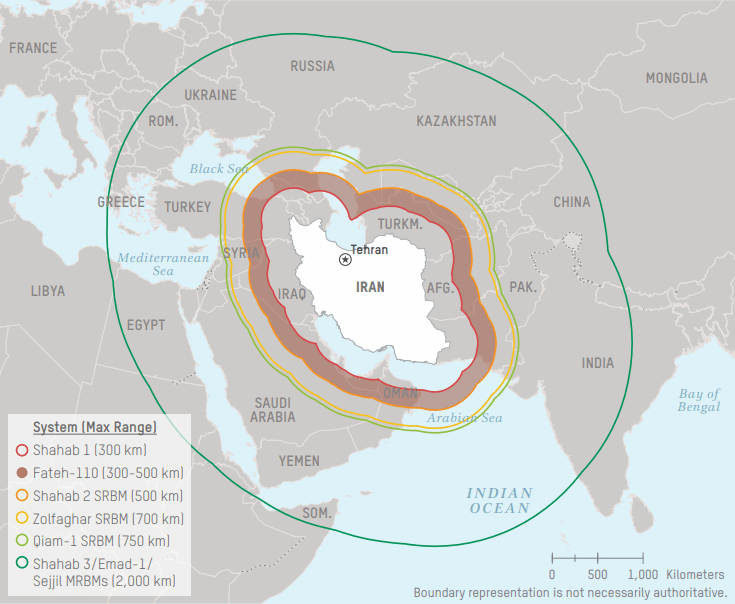
Israel says it will attack Iran if Tehran does not agree to a deal that includes restricting the range of its missiles to 300 kilometers (186 miles).
According to Ynet, Israel is demanding that any deal the US makes with Iran include Tehran eliminating its uranium enrichment program, limiting the range of its ballistic missiles to 300 kilometers, and cutting ties with its allies in the region.
President Donald Trump has suggested he will order an attack on Iran if Tehran does not make a deal with the US. Tel Aviv says any deal between Washington and Tehran must include missile range restrictions or Israel will attack Iran.
Iranian officials have stated that Tehran is unwilling to place restrictions on its missile program. Limiting the range of its missiles to 300 kilometers would prevent Iran from having a meaningful retaliatory capability.
Israeli officials, according to Ynet, do not believe that Iran will accept limitations on its missile program.
Trump met with Prime Minister Benjamin Netanyahu on Wednesday about Iran. Officials said that Washington and Tel Aviv would continue to prepare for war with Iran, and an immediate attack is unlikely.
On Wednesday, the Wall Street Journal reported that Trump had ordered a second aircraft carrier strike group to prepare for deployment to the Middle East.
Russia is preparing to send a shipment of oil and petroleum products to Cuba, Moscow’s embassy in Havana has announced. The island is facing its worst energy crisis in years after the US doubled down on its campaign to cut off its energy supplies.
The fuel crisis intensified dramatically after US forces kidnapped Venezuelan President Nicolas Maduro in early January, severing oil supplies from Caracas, which had been one of Cuba’s main suppliers.
Washington subsequently threatened to impose tariffs on any country providing oil to Cuba, with Mexico later suspending crude shipments to the island. The US itself has maintained an economic embargo on the island since the 1960s.
The Russian Embassy in Cuba confirmed to Izvestia that the Caribbean island is facing “an acute shortage of oil and petroleum products,” adding that while the crisis has lasted for more than a year, the stop of supplies from Venezuela “has aggravated this situation.”
The embassy said it is planning to send oil and petroleum products to Cuba in the near future as “humanitarian aid,” though without specifying the timeframe or volumes.
The last major Russian oil delivery to Cuba occurred in February 2025, when Moscow sent 100,000 tons through a state credit worth $60 million approved by President Vladimir Putin. Cuba is estimated to consume 500 to 600 tons of fuel per day for its most critical needs, and requires over 8 million tons of fuel per year to function normally.
In addition, Russian officials reported that Moscow is assisting Cuba in developing its domestic oil reserves. While the island’s proven crude oil reserves are officially around 120 million barrels, the offshore zone of the North Cuba Basin is estimated to hold up to 20 billion barrels.
Moscow has condemned the US pressure campaign on Cuba as economic “strangulation” and “neocolonial practice” while reaffirming solidarity with the island.
US President Donald Trump suggested last month that the pressure campaign would force the Cuban leadership to “come to us and want to make a deal,” claiming that the island “would be free again.”
What do we know about Jeffrey Epstein’s ties to Israel? We talk with Craig Mokhiber, who spent decades inside the UN system, about what millions of newly released files reveal about Epstein’s effort to reshape the Middle East in Israel’s favor, why this story remains underreported, and what it means for how power operates globally.
In this episode:
Craig Mokhiber (@craigmokhiber), Human Rights Lawyer and Former UN Official
This episode was produced by Marcos Bartolomé, Chloe K. Li, and Tamara Khandaker, with Melanie Marich, Maya Hamadeh, Tuleen Barakat, and our guest host, Kevin Hirten. It was edited by Alexandra Locke.
Our sound designer is Alex Roldan. Our video editors are Hisham Abu Salah and Mohannad al-Melhemm. Alexandra Locke is The Take’s executive producer. Ney Alvarez is Al Jazeera’s head of audio.
Instagram has suspended the account of Track AIPAC, a widely followed watchdog project that tracks political spending by the American Israel Public Affairs Committee (AIPAC) and related pro-Israel lobbying groups. The social media giant cited alleged violations of the platform’s intellectual property and trademark rules. The suspension places the account at risk of permanent deletion unless successfully appealed within 180 days.
Track AIPAC — also known as AIPAC Tracker — was launched in 2024 by Cory Archibald and Casey Kennedy as a transparency and advocacy platform documenting AIPAC’s political donations, endorsements and influence on US elections. The project publishes Federal Election Commission data on pro-Israel political spending, highlights which lawmakers receive the most support, and endorses opponents of candidates reliant on AIPAC funding.
The watchdog has become a prominent source for voters and activists seeking to make AIPAC funding “politically toxic” and to hold elected officials accountable for their ties to the pro-Israel lobby.
In a post announcing the suspension, Track AIPAC said Instagram had removed its account, which had amassed more than 137,000 followers, for alleged trademark violations, without clear explanation of what specific content triggered the action. The group said it plans to appeal the decision while shifting its engagement to its website and its X presence.
Supporters of Track AIPAC decried the suspension as a double standard on free speech and accountability. On X, critics argue that transparency about political influence is being stifled while lobbying groups with deep pockets continue to operate without similar oversight.
Commentators noted that the suspension comes at a time when AIPAC’s influence in US politics is increasingly being challenged. Since Israel’s genocide in Gaza began, there has been a steady shift among Democratic voters and some candidates away from accepting pro-Israel lobby funding.
Once considered politically untouchable, AIPAC is now viewed by many as a liability, with candidates distancing themselves from its donations amid growing public anger over Israel’s policies and its role in the genocide.
Polling suggests that a significant portion of Democratic voters now oppose candidates who accept pro-Israel lobby funding, reflecting a shift in grassroots sentiment.
This shift has been evident in recent elections and legislative cycles, with some lawmakers returning AIPAC donations or refusing further support, and others publicly criticising the lobby’s priorities. For instance, US Congressman Seth Moulton announced that he would return AIPAC funds and no longer accept the lobby’s support, citing concerns about its alignment with current Israeli government policy, a move that underlines how AIPAC’s brand has become fraught within its once-traditional political base.
The suspension comes at a time when AIPAC’s political spending is facing heightened scrutiny and growing resistance from segments of the Democratic base. As some candidates increasingly distance themselves from pro-Israel lobby funding, the removal of a watchdog account dedicated to tracking those donations has added to debate over transparency and accountability in US politics.
By Jay Knott | Dissident Voice | September 24, 2013
In a recent article on Counterpunch, Rob Urie defended the traditional Marxist analysis of US policy in the Middle East. He argues that support for Israel is driven primarily by economic interest, not the Jewish lobby.
He starts by paying tribute to the idea that Western societies are uniquely racist. He says that the “Western narrative” claims there is an “Arab character”, and that this is “antique racist blather”. He gives no definition of these terms. Further, he establishes his credentials as part of the dominant current in the American left by claiming that “over a million people in Iraq died so ‘we’ in the West can drive SUVs.”1
When he tries to criticize bourgeois economics, he makes it clear he doesn’t understand the developments it has made since Marx’s day, using the mathematical discipline known as “game theory”. He dismisses the basic abstraction of economic theory, the idea of the rational individual, on the grounds that it is “devoid of history, culture and political context”. But abstractions are always devoid of something.
He defends a more concrete economic theory, mostly Marxist, with some input from another theorist of capitalist crisis, Hyman Minsky. This concrete theory leads him to the view that US activity in the Middle East is primarily driven by rational capitalist motives, the need to secure a supply of oil.
“Taking the totality of circumstance — former oil company executives launching war on an oil rich nation on a pretext they publicly proclaimed they didn’t believe shortly before taking office — and that upon launching their war proved to be non-existent, requires a willingness to overlook the obvious — that the war on Iraq was for oil, that is difficult to support.”1
Perhaps I’ve misunderstood him, but based on what he says in the rest of the article, this convoluted sentence seems to argue that, because president Bush and vice-president Cheney attacked Iraq on false premises, and they also said it was all about oil, and they are former oil executives, and Iraq has a lot of oil, it’s difficult to deny US attacks on Iraq are all about oil.
In fact, it’s not hard at all. As Urie points out, at times Bush and co. said that attacking Iraq was “protecting the world’s supply of oil.”1 But, as he also points out, they are congenital liars. Why should we believe them when they say they are trying to “protect” the oil supply? Protect it against what? When politicians “admit” attacks on Middle Eastern countries are wars for oil, they are parroting the neo-con party line, feeding the public, both left and right, with a plausible-sounding pretext. For right-wingers, “it’s a war for oil” is a reason to support war, and for leftists, it’s a way to feel better by complaining impotently about corporate greed. Both approaches help the war drive. … continue
This site is provided as a research and reference tool. Although we make every reasonable effort to ensure that the information and data provided at this site are useful, accurate, and current, we cannot guarantee that the information and data provided here will be error-free. By using this site, you assume all responsibility for and risk arising from your use of and reliance upon the contents of this site.
This site and the information available through it do not, and are not intended to constitute legal advice. Should you require legal advice, you should consult your own attorney.
Nothing within this site or linked to by this site constitutes investment advice or medical advice.
Materials accessible from or added to this site by third parties, such as comments posted, are strictly the responsibility of the third party who added such materials or made them accessible and we neither endorse nor undertake to control, monitor, edit or assume responsibility for any such third-party material.
The posting of stories, commentaries, reports, documents and links (embedded or otherwise) on this site does not in any way, shape or form, implied or otherwise, necessarily express or suggest endorsement or support of any of such posted material or parts therein.
The word “alleged” is deemed to occur before the word “fraud.” Since the rule of law still applies. To peasants, at least.
Fair Use
This site contains copyrighted material the use of which has not always been specifically authorized by the copyright owner. We are making such material available in our efforts to advance understanding of environmental, political, human rights, economic, democracy, scientific, and social justice issues, etc. We believe this constitutes a ‘fair use’ of any such copyrighted material as provided for in section 107 of the US Copyright Law. In accordance with Title 17 U.S.C. Section 107, the material on this site is distributed without profit to those who have expressed a prior interest in receiving the included information for research and educational purposes. For more info go to: http://www.law.cornell.edu/uscode/17/107.shtml. If you wish to use copyrighted material from this site for purposes of your own that go beyond ‘fair use’, you must obtain permission from the copyright owner.
DMCA Contact
This is information for anyone that wishes to challenge our “fair use” of copyrighted material.
If you are a legal copyright holder or a designated agent for such and you believe that content residing on or accessible through our website infringes a copyright and falls outside the boundaries of “Fair Use”, please send a notice of infringement by contacting atheonews@gmail.com.
We will respond and take necessary action immediately.
If notice is given of an alleged copyright violation we will act expeditiously to remove or disable access to the material(s) in question.
All 3rd party material posted on this website is copyright the respective owners / authors. Aletho News makes no claim of copyright on such material.



 Aletho News