Romania agreed to host CIA ‘black sites’ to be accepted into NATO – ex spy chief
RT | December 14, 2014
Romania allowed the CIA to use a number of sites on its territory, a former head of the country’s intelligence confessed. He added that Bucharest’s bid to join NATO at the time prevented it from asking the US about the purposes of the sites.
The sites in question were called “transit centers” and Romania was unaware of whether they were used for detention, Ioan Talpes, who headed Romania’s Foreign Intelligence Service from 2000 to 2004, told the daily Adevarul in a video interview posted online on Saturday.
“The Romanian side was not interested in what the Americans were doing, purposely to show them that they could trust us,” said Talpes.
AFP cited the interview, in which Talpes specifically stressed that at the time the decision was made, Bucharest was waiting to join NATO.
The ex-spy chief said talks on “sites that the Romanians would place at the disposal of CIA representatives” began after September 11, 2001.
“What is certain is that we were not aware of the presence of detainees,” Talpes insisted in the interview.
The US Senate report on torture, published earlier this week, revealed among other things that 119 people were captured and held in CIA detention sites hosted by other countries.
Although none of the countries were specifically named in the heavily redacted document, the list of those assumed to be mentioned includes Romania, Poland, Lithuania, Thailand and Afghanistan.
Romania’s president at the time, Ion Iliescu, denied earlier this week any knowledge of the so-called “black sites” in the country, AFP reports.
Prime Minister Victor Ponta said questions about the sites should be addressed to the Foreign Ministry, which hasn’t as yet commented on the issue.
Poland earlier confirmed that it housed a facility that was used to interrogate Al-Qaeda suspects between 2002 and 2003.
In July, the European Court of Human Rights (ECHR) ruled that Poland violated an international treaty to protect human rights by hosting secret CIA prisons.
ECHR also ordered Warsaw to pay €230,000 to two former secret facility detainees. Poland is appealing the decision.
The ruling, meanwhile, could serve as a precedent for other European states alleged to have hosted CIA prisons. Romania and Lithuania have similar cases filed against them with the ECHR.
READ MORE:
CIA torture far exceeded waterboarding, brought suspects ‘to point of death’
5 not-so-peaceful Obama actions since nabbing Nobel Prize

RT | December 10, 2014
Five years on from President Barack Obama scooping a Nobel Peace Prize, and the White House has taken anything but a Zen approach to foreign policy under his watch. Here are the top 5 not-so-peaceful moves the laureate has made in the past half-decade.
1. Afghan Surge
Obama didn’t start the war gin Afghanistan, but he certainly took a page from his predecessors playbook in trying to finish it. He recognized his precarious position at prize time.
“But perhaps the most profound issue surrounding my receipt of this prize is the fact that I am the commander-in-chief of a nation in the midst of two wars,” he said after accepting the Nobel Prize in Oslo, Norway, on December 9, 2009.
While he said the war in Iraq was “winding down,” things in Afghanistan were just starting to heat up. A week before accepting the prize, Obama announced he was sending 33,000 more troops to Afghanistan as part of his “surge policy,” intended to beat back the Taliban and train Afghan security forces to take the country into their own hands. The following years would become the deadliest for both US troops and Afghan civilians. Again, it wasn’t Obama’s war. But then came…
2. Military strikes in Libya
Following UN Resolution 1973 on March 17, 2011, which called for “an immediate ceasefire” in Libya and authorized the international community to set up a no-fly zone to protect civilians, Obama, along with his NATO allies, would soon launch military strikes to turn the tide of the 2011 Civil War in the North African state. NATO conducted 9,700 strike sorties and dropped over 7,700 precision bombs. A Human Rights Watch report would go on to detail eight incidents where at least 72 Libyan civilians died as a result of the aerial campaign.
But the real damage to overthrowing the Gaddafi regime came in the ensuing years, with the country descending into a civil war between Islamist forces and the weak post-revolutionary government. In August, Obama admitted his Libyan policy was a failure, but not because he chose to intervene militarily. Rather, he says the problem was that America and its European partners did not “come in full force” to take Gaddafi out. Although his then-Secretary of State Hillary Clinton seemed to rejoice in his death, wryly noting “We came, we saw, he died.”
3. Drone Wars in Yemen, Pakistan
Since the US first started targeting Yemeni militants in 2002, Obama has launched all but one of the 15 airstrikes and 101 drone strikes in the country. According to the web portal New America.net, which has meticulously complied data on the strikes, up to 1,073 people have been killed in the strikes. An estimated 81-87 of those killed were civilians, while the identity of another 31-50 remains unknown. But Yemen was just one prong in Obama’s so-called Drone War, though, as we shall see, it was the site of a game-changing incident.
Unlike in Yemen, drone strikes in Pakistan were in favor long before Obama came to power. A report conducted by Stanford and New York Universities’ Law schools found that between 2,562 and 3,325 people were killed by drone strikes in Pakistan between June 2004 and mid-September 2012. Anywhere between 474 and 881 of those were civilians, and 176 were children. While Obama didn’t start the Pakistani drone war, he aggressively expanded it.
Between 2004 and 2007, only 10 drone strikes were launched in Pakistan. The following year saw 36 such strikes, and 54 were launched in 2009.
But 2010 would be the deadliest year by far, with 122 strikes launched and 849 people killed. He would go on to authorize 73 and 46 strikes in 2011 and 2012 respectively.
Following widespread opposition at home and abroad, in May 2013, Obama promised a new era of transparency to protect civilians, saying control of the program would be transferred from the CIA to the Pentagon. But…
4. Obama has a secret kill list
In February 2013, the Obama administration’s internal legal justification for assassinating US citizens abroad came to light for the first time. According to the Justice Department document, the White House has the legal authority to kill Americans who are “senior operational leaders,” of Al-Qaeda or “an associated force” even if they are not actively engaged in any active plot to attack the US.
In September 2011, a US drone strike in Yemen killed two American citizens: Anwar al-Awlaki and Samir Khan. The following month, a drone strike killed al-Awlaki’s 16-year-old son, who was born in Colorado.
The concept of the US president exercising the right to kill US citizens without the benefit of a trial has resonated throughout American culture.
In the comic-book-inspired film ‘Captain America: The Winter Soldier’, the issue of targeted killings and “kill lists” features prominently in the plot.
5. Redrawing red lines
President Barack Obama drew a red line around Syria’s use of chemical weapons, pushing the international community to punish Damascus with military strikes following the August 21 Ghouta Attack.
After the UK balked at airstrikes, Moscow and Washington took the diplomatic route, resulting in a historic deal that has seen Damascus abandon its chemical weapons stockpiles.
But US-led airstrikes on Syria were only postponed. On August 8, 2014, the United States started bombing so-called Islamic State (IS) militants in Iraq to protect embattled Kurds. The following month, the US would launch airstrikes against IS militants in Syria as well. Of all the US military interventions in recent years, the battle against the IS has been met with widespread approval. Still, Syria was the seventh country Obama has bombed in six years.
Quite a feat for a Nobel Peace Prize-winner.
FBI director refuses to rule out agents posing as reporters
By Robert Bridge | RT | December 10, 2014
The director of the Federal Bureau of Investigation left the door open to the possibility that officers may falsely represent themselves as journalists in the course of an investigation, so long as it’s done with “significant supervision.”
Despite last month’s furor following revelations that an FBI agent had posed as an employee of the Associated Press as part of a sting operation, James Comey said he was not willing to swear off the use of such ploys in the future.
“I’m not willing to say ‘never’,” Comey told a press roundtable discussion on Tuesday, AP reported. “Just as I wouldn’t say that we would never pose as an educator or a doctor or, I don’t know, a rocket scientist.”
The response will certainly reverberate through AP, which was furious after Comey revealed in a letter to the New York Times that an FBI agent had posed as an AP journalist in 2007 during an investigation of a 15-year-old who was believed to be delivering bomb threats at a high school in Olympia, Washington.
Kathleen Carroll, executive editor of the AP, called the FBI’s covert activities “unacceptable.”
“This latest revelation of how the FBI misappropriated the trusted name of the Associated Press doubles our concern and outrage, expressed earlier to Attorney General Eric Holder, about how the agency’s unacceptable tactics undermine AP and the vital distinction between the government and the press,” Carroll said in a statement.
She said such activities serve to diminish public trust in AP’s “legacy of objectivity, truth, accuracy and integrity.”
Comey remained ambiguous about the future of such activities, saying they require “significant supervision, if it’s going to be done.”
This is not the first time the news collective has experienced problems with government agencies.
On May 13, 2013, the Associated Press said telephone records for 20 of their journalists during a two-month period in 2012 had been subpoenaed by the Justice Department. The agency never provided an explanation for its demand.
READ MORE:
FBI says agent impersonated AP journalist in 2007 sting op
FBI performed three federal background checks per second on Black Friday
Feds say cleaning up most contaminated nuclear weapons site in US is too costly
RT | December 9, 2014
The United States government recently argued in court filings that the state of Washington’s request of $18 billion over 14 years to address the nation’s most polluted nuclear weapons production site should be rejected based on expense.
The US Department of Justice said in a court filing on Friday that the cost of the state’s proposal for a hastened cleanup of the Hanford Nuclear Reservation would cast into doubt other nuclear projects funded by the Department of Energy.
According to The Tri-City Herald, the filings in US District Court by the DOJ and the state of Washington were part of the state’s lawsuit that seeks a more pressing timeline for Hanford’s cleanup.
Friday was the deadline for the parties to comment on new cleanup timelines, as the DOE said many of the existing timelines were at risk of being missed.
Hanford, located along the Columbia River in south-central Washington, is the site of 177 massive underground nuclear waste storage tanks, making it the largest collection of nuclear waste in the US. For four decades, the site was home to plutonium development for use in the production of nuclear weapons.
As RT previously reported, a deal was recently struck between the DOE and Washington state to allow a leaky radioactive storage tank at Hanford to remain as is for more than a year before its contents are removed.
In its court filing, Washington state again criticized federal management at Hanford and asked for an intensified oversight plan to address its leak-prone waste tanks and the construction of a $13 billion vitrification plant to treat waste for future burial.
The state said in its filing that the DOE wants to establish future cleanup deadlines at the expense of hard deadlines already agreed to by the parties in a 2010 consent decree, which sprang from a 2008 lawsuit following the department’s failure to meet an earlier set of deadlines for the plant and its waste tanks.
The construction project “should be matched with the best project management plans in the country,” the state contended. “Energy, however, implies that such planning is impossible.”
The state asked for more than 100 new deadlines to keep the Department of Energy’s cleanup process on track, yet the Department of Justice argued the plan was out of reach.
“The state’s proposal would require a dramatic and unrealistic increase in funding that, if mandated, would jeopardize DOE’s ability to carry out ongoing cleanup operations on other parts of the Hanford site and at other sites across the country,”documents filed by the Justice Department stated.
Hanford’s construction and waste management get $1.2 billion annually from the federal government, more than one-fifth of the Department of Energy’s annual budget for national environmental cleaning projects.
The state’s plan requires $4 billion over the next five years, on top of the current level of annual funding, the Justice Department said.
The Justice Department also said the state’s plan would violate the 2010 consent decree for cleanup, as the proposal would demand new storage tanks and treatment facilities.
The federal government has claimed construction work at Hanford has fallen behind because of technical issues.
Hanford contains”53 million gallons of High Level Radioactive hazardous waste, equivalent to 2,650 rail cars full of waste,”according to the Washington State Dept. of Ecology, making it the most contaminated nuclear site in the United States. Or, as Heart of America Northwest called it,”the most contaminated site in the Western Hemisphere.”
In 1943, construction began on Hanford as part of the top-secret Manhattan Project.
“Hanford was the producer of the plutonium that fueled the 1st test explosion in Alamogordo, New Mexico on July 16, 1945. The same plutonium also powered Fat Man, the five-ton atomic bomb that exploded over Nagasaki on August 9, 1945,” according to Heart of America Northwest.
US ‘ridiculous’ line on Egypt? Jen Psaki caught on hot mic
RT | December 5, 2014
US State Department spokesperson Jen Psaki has been caught on a hot mic calling one of her prepared statements about the acquittal of Egypt’s ex-leader Hosni Mubarak “ridiculous.”
During a press briefing on Monday, AP journalist Matt Lee asked Psaki to comment on an Egyptian court’s decision to acquit former President Hosni Mubarak of murder.
The State Department spokesperson attempted to dodge the question with a convoluted platitude.
“Generally, we continue to believe that upholding impartial standards of accountability will advance the political consensus on which Egypt’s long-term stability and economic growth depends,” she said on camera.
Reporters, including Lee, did not find that satisfying, but Psaki evaded their questions, saying she would not comment further.
“What does that mean?” a flummoxed voice can be heard asking.
“Wow. I don’t understand that at all,” the bemused Lee pushes. “What you said says nothing. It’s like saying ‘We support the right of people to breathe.’ That’s great, but if you can’t breathe.”
As the conference comes to an end and the lights dim, Psaki — seemingly unaware that her microphone is still on — suddenly goes off script.
“That Egypt line is ridiculous,” she can be heard saying, as Lee guffaws.
CNC reports that Lee also grilled State Department spokesperson Marie Harf on US reaction to the Mubarak trial the next day. Harf reportedly stuck to her talking points and refused to comment on the issue. When Matt Lee expressed frustration, she commiserated—kind of—saying, “I share your pain.”
The US, which supplies Egypt with over one billion dollars in aid annually, has largely steered clear of criticizing Egyptian policy. Mubarak’s acquittal last month prompted hundreds of demonstrators to take to Tahrir Square, the site of the 2011 revolution that led to his ousting. Mubarak had been charged with the killing of 239 protesters during the uprising against him.
UN panel slams US for police brutality, torture, botched executions
RT | November 29, 2014
A UN report has condemned the United States for violating the terms of an international anti-torture treaty. The panel took Washington to task for police brutality, military interrogations, and capital punishment protocols.
“The Committee is concerned about numerous reports of police brutality and excessive use of force by law enforcement officials,” the paper released by the UN Committee Against Torture says, adding that in particular this brutality is seen against persons belonging “to certain racial and ethnic groups, immigrants and LGBTI individuals.”
The document was released on Friday, just days after the contentious decision of a Missouri grand jury not to indict a white officer accused of shooting Michael Brown, an unarmed black teen. The decision triggered a wave of protests nationwide.
Although the report didn’t specifically mention the events in Ferguson, Mike Brown’s parents met with the committee to discuss their son’s case in Geneva earlier this month.
The UN watchdog expressed “deep concern at the frequent and recurrent police shootings or fatal pursuits of unarmed black individuals.”
The 10-person panel, which periodically reviews the records of the 156 countries which ratified the Convention Against Torture – a non-binding international human rights treaty – cited mounting concerns over “racial profiling by police and immigration offices, and growing militarization of policing activities.”
The committee called on US authorities to “prosecute persons suspected of torture or ill-treatment and, if found guilty, ensure that they are punished in accordance with the gravity of their acts.”
“We recommend that all instances of police brutality and excessive use of force by law enforcement officers are investigated promptly, effectively and impartially by an independent mechanism,” said panel member, Alessio Bruni, at a news conference in Geneva.
Urging for tougher laws to define and ban torture, the committee called on Washington to reevaluate the treatment of detainees at the infamous Guantanamo Bay detention facility, which currently houses 148 prisoners.
“The Committee is particularly disturbed at reports describing a draconian system of secrecy surrounding high-value detainees that keeps their torture claims out of the public domain.”
In addition, the committee criticized the recent spate of botched executions, especially in Arizona, Oklahoma, and Ohio, citing reported cases “of excruciating pain and prolonged suffering that procedural irregularities have caused to condemned prisoners in the course of their execution.”
The UN body further highlighted “continued delays in recourse procedures which keep prisoners sentenced to death in a situation of anguish and incertitude for many years.”
“The Committee notes that in certain cases such a situation amounts to torture in so far as it corresponds to one of the forms of torture (i.e. the threat of imminent death) contained in the interpretative understanding made by the State party at the time of ratification of the Convention.”
The report urges US authorities to establish “a moratorium on executions with a view to abolish the death penalty” and “to commute the sentences of individuals currently on death row.”
US activists welcomed the findings as a call to action for the federal government.
“This report – along with the voices of Americans protesting around the country this week – is a wake-up call for police who think they can act with impunity,” said Jamil Dakwar of the American Civil Liberties Union (ACLU), as quoted by Reuters.
READ MORE: ‘We crossed the line’: US mea culpa at UN panel on use of torture
Is Washington training a rebel army to “Occupy” Syria?
RT | November 27, 2014
Is the US planning the occupation of Syria by training an unconventional insurgent invasion force?
Think regime change in Syria is off the drawing board? Think again. The bombing of the ISIL or ISIS in Syria is part of a brinkmanship campaign leading up to a potential non-conventional invasion, parallel to the re-introduction of the US military to Iraq.
The ISIL and the other anti-government forces in Iraq and Syria are not the only ones to disregard the Iraqi-Syrian border drawn by the British and French by Sykes-Picot in 1916. The US also disregarded the border and international law when it began to illegally bomb Syria.
The bombing campaign was not enough for some in the US Congress. In a joint statement on September 23, the arch-hawks US Senators John McCain and Lindsey Graham called for US troops to be sent into Syria too. Both of them praised the Pentagon’s illegal airstrikes in Syria and then argued for US ground troops as well.
Although McCain and Graham went out of their way to say that this would not be an occupation of either Syria or Iraq, this is almost exactly what they were calling for when they said that the military campaign had to also be directed against the Syrian government.
Since, and even before the calls for an invasion of Syria by McCain and Graham different suggestions have circulated about an invasion of Syria.
The dilemma is that Washington does not want the Pentagon to directly invade Syria itself. It wants to pull the strings while another force does the work on the ground. Candidates for an outsourced invasion of Syria include the Turkish military or other US regional allies. There, however is also an impasse here as Washington’s allies are also afraid of the consequences of an invasion of Syria.
This is where a third opinion comes into the picture: the construction of a multinational insurgent army by the US.
Using non-state actors to invade and occupy Syria
While there seems to be no consensus on a Syrian strategy within the US political, intelligence, and military establishments, the objective of regime change is universally adhered to across the board. Regardless of the existence of a consensus, the US is moving ahead with the creation of an anti-government invasion force.
The third option is slowly emerging.
A few days after the US began the bombing of Syria, the Chairman of the Joint Chiefs of Staff General Martin Dempsey made it clear that the Pentagon also planned on creating a viable anti-government army in Syria consisting of 12,000 to 15,000 insurgents.
There also seems to be a growing consensus among the realists and neocons for US President Obama’s preference of using a rebel army to invade Syria. The Brookings Institute has been a major cheerleader for this.
During this same timeframe, the Brookings Institute released an opinion piece clearly calling for US intervention. The text, authored, by former CIA analyst for monitoring the Persian Gulf and US National Security Council official Kenneth Pollack, stipulated that Washington’s “strategy cannot require sending U.S. troops into combat. Funds, advisers, and even air power are all fair game — but only insofar as they do not lead to American boots on the ground.”
Pollack played an influential role in getting support for the illegal 2003 invasion of Iraq. He worked at the Council of Foreign Relations as its director of national security studies. He made the above statement as the director of research for the Saban Center for Middle East Policy and goes well beyond it by publishing a drawn-out October 2014 proposal for creating a US-made rebel invasion force as a means of taking over Syria and eventually conducting regime change in Damascus.

Brookings Institution in Washington, D.C.. (Image from wikipedia.org)
The Brookings Institute proposal suggests that a rebel Syrian army “is best not done in Syria itself. At least not at first” (p.9). The report points to the US and NATO success in “covertly” creating armed forces around the world, including the assembly of a Croat military, and deduces that these experiences would make it “entirely realistic for the United States to build a new Syrian opposition army” (p.8). It also says that the ideology of the fighters does not matter by stating the following: “A great many of those recruited may well be religious, even highly religious, including Salafist. That is not the issue” (p.9).
Welcome to the Brookings Institute and its Saban Center
What is the Brookings Institute exactly and why do suggestions from this think tank and others like it, matter?
The Brookings Institute is an influential think tank that has a revolving door of personnel with the US government and major corporations. All that one needs to do is look at its trustees and executives, which include interlocked directorships with the Carlyle Group, Goldman Sachs, and JP Morgan Chase.
Brookings also has ties to Israel and a full branch dedicated to Washington’s Middle East strategies and policies called the Saban Centre for Middle East Policy. Martin Indyk – the former US ambassador to Israel, a former high-level lobbyist for the American Israel Public Affairs Committee (AIPAC), and the founder of AIPAC’s research arm (the Washington Institute for Near East Policy) – is the Director of the Saban Center for Middle East Policy at Brookings. Like Indyk, Kenneth Pollack was involved in shaping the Middle East policies of the Clinton Administration.
It is also worth noting that the Brookings Institute’s Saban Center is named after US-Israeli businessman and media mogul Haim Saban. Saban himself is on the board of trustees for Brookings.
There is a Qatari connection too. One may remember that Washington was hostile towards Al Jazeera when it first emerged as a news broadcaster, because of its coverage of US actions in the Middle East.
Saban tried to buy half of the Al Jazeera network from Qatar in 2004 and 2009, but failed. In the same timeframe as the 2003 Anglo-American invasion of Iraq, the first set of negotiations happened when he went to Qatar with Bill Clinton in 2003.
It is possible that Brookings may have played a role in pacifying Al Jazeera. In 2009, the Institute setup an overseas branch in Qatar called the Brookings Doha Center. The new chapter in Doha included Qatar’s ruling Al-Thani family alongside people like Madeleine Albright, Zbigniew Brzezinski, and Fareed Zakaria as chairs and advisors.
It was in the same year that the Brookings Institute published a report, which included Pollack and Indyk as authors, called Which Path to Persia? The report outlined a map for confronting Iran and alluded to the neutralization of Syria, in one way or another (including the procurement of a peace agreement with Damascus by Israel), to “mitigate blowback” from Lebanon’s Hezbollah and the Palestinians, specifically Hamas, as a prerequisite for an enabling an attack on Iran.
All in all, the ideas that come out of the Brookings Institute are discussed at the highest levels within policy-making and corporate circles.
Is the Syrian Invasion Force Slowly Emerging?
Is a rebel invasion force emerging to attack Syria? In no uncertain terms, Brookings argues that it is.
Pollack’s report stipulates the following: “Adopting such a strategy would mean first and foremost that Washington would have to commit itself to building a new Syrian army that will rule Syria when the war is over. Although [Obama’s] description of his new Syria policy was more modest and tepid than his explanation of the Iraq piece of the strategy, he does appear to have committed the United States to just that course. More than that, it will mean putting the resources, prestige and credibility of the United States behind this effort. The $500 million now appropriated is a good start, but it is only a down payment on a much larger project” (p.8).
The US goal of training rebels in Saudi Arabia and Turkey is an indication of this too. On September 10, about two weeks before it started bombing Syria, Washington declared that Saudi Arabia had given it the green light to train a rebel army in the Arabian Peninsula. “We now have the commitment from the Kingdom of Saudi Arabia to be a full partner in this effort — the train-and-equip program — to host that program,” one official was quoted as saying by the New York Times.
The Brookings Institute in its proposal for an invasion of Syria claims: “The Saudi offer to provide facilities to train 10,000 Syrian opposition fighters is one of reasonable possibility, although one of Syria’s neighbors would probably be preferable. Jordan already serves as a training ground for America’s current training program and it would be an ideal locale to build a real Syrian army. However, Turkey could also conceivably serve that purpose if the Turks were willing” (p.10).
About two months later, in November, after US Vice President Joe Biden met with Turkish President Recep Tayyip Erdogan in Istanbul, it was announced that Kirsehir would be used by Turkey to train Syrian anti-government forces that the US would equip against Damascus.
The report also makes it clear that building the new opposition army “should not mean bolstering the existing ‘Free Syrian Army’” (p.10). Instead, the existing US-backed insurgent groups will slowly be swallowed or destroyed by the new opposition force that the US and its allies are constructing.
In mid-November, the Pentagon also presented a proposal to the US Congress, saying that it wants to arm Iraqi tribesmen with Kalashnikov rifles, rocket propelled grenades, and mortars. What is omitted is the cross-border dispersion of these tribes in both Iraq and Syria and the possibility that these weapons could be used in an attack on the Syrian government.
What moderates?
The talk about supporting “moderates” is very misleading. It is already clear that the ideology of the proposed insurgent army is not a key issue in practice for many US officials. There is also enough evidence to show that the Free Syrian Army, Al-Nusra, the ISIL, and the other insurgent forces are also collaborating and trading fighters.
The Telegraph, for example, had this to say on November 10 about Saddam Jamal, a US-backed Free Syrian Army commander that became an ISIL commander: “Before joining ISIL, Jamal had been a drug dealer, then a commander in the western-backed Free Syrian Army, claiming contacts in the CIA.”
It is also clear that religion is a mask for the ISIL too. The same British article writes the following testimony from Saddam Jamal’s body guard about his massacre of a Syrian family: “The ISIL commander felt no remorse for killing this Syrian family, his bodyguard said, nor did he believe he was fulfilling a God-given creed: for him being a member of the extremist group was a matter of business, not religion.”
In the end the ISIL may be used to incubate fighters or collapse, like the Free Syrian Army, into the proposed invasion force to occupy Syria.
Invasion army or armies?
General Dempsey said that “the anti-ISIL campaign could take several years to accomplish.” Leon Panetta, the former head of the CIA and Pentagon, has also claimed that this war will turn into a thirty-year US military project that will extend to North Africa, West Africa, and the Horn of Africa.
According to Brookings: “At some point, such a new Syrian army would have to move into Syria, but only when it was ready. Only when a force large enough to conquer and hold territory – something on the order of two to three brigades -were ready should it be sent in” (p.11).
A war of attrition that that will take years of fighting is underway. This matches up with the ideas about training an insurgent invasion force over the years.
In their joint statement Senators McCain and Graham said that President Bashar Assad will not stop fighting the so-called “moderate” US-backed insurgents “that remain committed to his ousting- especially when the United States and [its] partners still, correctly, share the same goal and will now be arming and training Assad’s moderate opponents.” In other words, the US-trained Syrian forces will ultimately target the Syrian government.
Mahdi Darius Nazemroaya is a sociologist, award-winning author and geopolitical analyst.
US helping Israel boycott Geneva summit on occupied territories – diplomatic sources
RT | November 27, 2014
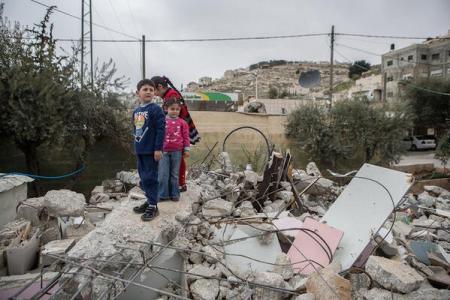
Switzerland is under diplomatic pressure from Israel, the US, Canada and Australia, which are trying to prevent an international conference in Geneva from taking place in mid-December on Israel’s occupation of Palestinian territories, Haaretz reports.
Delegations from nearly 200 countries are expected to head to Geneva to discuss the situation in the West Bank, Gaza Strip and East Jerusalem. Yet, according to Haaretz, Israeli and Western diplomats are ready to go for broke to prevent the gathering from taking place.
Switzerland, as the main sponsor of the summit, is bearing the brunt of diplomatic pressure from all sides.
Israeli authorities told the media outlet that Palestinians and Arab states are also pressing Swiss officials to send out letters of invitation to the conference within a matter of days, the Israeli daily reported on Wednesday.
It was in early April when Israel announced plans of constructing 700 new houses in occupied East Jerusalem, a move that pushed Palestinian Authority President Mahmoud Abbas to ask 15 international conventions to join them in the name of the Palestinian state.
One of those was the Fourth Geneva Convention (signed 1949, came into force 1950), which specifically addresses protection of civilians in war zones and territories under military occupation.
Washington finally accepted that its efforts to extend peace talks between Israel and the Palestinians have been torpedoed. Several weeks later, Palestinians and the Arab League sent an official request to Switzerland to hold an international conference of the Fourth Geneva Convention signatory states on the issues of the Israeli occupation of the West Bank and East Jerusalem, together with the damage caused by Israel’s armed forces to civilians in Gaza.
The last time the signatories to the Fourth Geneva Convention gathered in regard to the Israeli-Palestinian conflict was in 2001, after the outbreak of the second intifada. That conference was boycotted by Israel and the United States.
After that summit there have been four fruitless attempts to gather the Fourth Geneva Convention on the issue of Israeli-Palestinian relations. Even the bloody Israeli military Operation Cast Lead in the Gaza Strip in 2009 failed to raise broad international support for holding such a conference, according to the Swiss Foreign Ministry at the time.
The necessity to call the new conference has been not evident this time, too, so Swiss diplomats asked every Fourth Geneva Convention signatory separately whether the time had come to hold a summit.
What the Swiss diplomats have proposed is a three-hour conference at an ambassadorial level, no discussions and no media coverage except for a final press statement. The conference is set to be focused on implementation of the international humanitarian law in troubled Israeli-Palestinian relations.
“We made it clear we didn’t want a political event or debate club, or a conference that would blame or criticize one of the sides,” a Swiss diplomat said.
However small the scale of the proposed event is, Israel strongly objected to it. Israeli diplomats reportedly conducted negotiations in Bern and Geneva, trying to persuade Swiss counterparts to call off the initiative and threatening to boycott it anyway.
“They told us that holding the conference would help a one-sided Palestinian move intended to make Israel look bad and attack it in an international forum,” the Swiss diplomat said.
The US and Canada told Switzerland they are going to boycott the conference, too.
“We strongly oppose the convening of the High Contracting Parties to the Geneva Conventions and have made our opposition unmistakably clear,” a spokesman for the US State Department, Edgar Vasquez, told Haaretz.
It is true that the conference will have no authority to make any binding decisions, yet its work could engender further international criticism of Israel’s settlement policy on the occupied Palestinian territories.
Besides that, once Israeli diplomats received an updated draft of the conference’s proposed contents, they found out that the updated draft text had been phrased in a politicized way, directly naming Israel and going into detail on the issue of West Bank settlements.
Israeli Foreign Minister Avigdor Lieberman has reportedly been ringing colleagues around the globe, attempting to talk them into declaring a boycott to the conference. Part of this work has been delegated to Israeli ambassadors worldwide.
With all due support on the part of the US, Canada and Australia, these efforts are likely to be in vain, and the Swiss diplomacy is decisive to go on with the plan and announce the conference officially soon.
The Fourth Geneva Convention prohibits harming those uninvolved in a conflict, be they civilians, wounded soldiers or POWs, as well as obliging the occupying side to maintain human rights and decent living conditions of an occupied civilian population.
Israel joined the convention, but has never ratified it legislatively. The Israeli government regards the West Bank and East Jerusalem as ‘disputed’, not occupied, areas, therefore considering Israeli settlements as not violating the treaty.
Rapper may face 25 years in prison over ‘gangsta rap’ album
By Robert Bridge | RT | November 22, 2014
Brandon Duncan has no criminal record, but could face a life sentence of 25 years in prison as prosecutors say his latest album lent artistic motivation for a recent string of gang-related shootings.
San Diego County prosecutors have charged Duncan, 33, with nine felonies connected to a wave of gang-related shootings in the California city. Although the musician has not been charged with discharging or providing firearms in the recent shootings, prosecutors say his musical lyrics encourage gang behavior.
Duncan’s latest album, entitled “No Safety,” features a photograph of a revolver with bullets on the cover.
The gangsta rapper, who is being held on $1 million bail, is scheduled to head to court in December. If found guilty of felony charges, Duncan could serve a life sentence of 25 years in prison, his lawyer said.
San Diego police say Duncan is a gang member, who goes by the name TD.
In 2000, California, faced with an increase in gang-related violence, passed Proposition 21, which takes aim at any individual “who actively participates in any criminal street gang with knowledge that its members engage in or have engaged in a pattern of criminal gang activity.”
Prosecutors, citing a section of the law, argued that Duncan, through his music and gang affiliations “willfully promotes, furthers, or assists in any felonious criminal conduct by members of that gang.”
“We’re not just talking about a CD of anything, of love songs. We’re talking about a CD (cover)… There is a revolver with bullets,” said Deputy District Attorney Anthony Campagna, as quoted by the Los Angeles Times.
Duncan’s lawyer, Brian Watkins, disputes the claim, saying the prosecution’s use of an obscure California law is “absolutely unconstitutional” and impedes his client’s First Amendment right to the freedom of speech.
“It’s no different than Snoop Dogg or Tupac,” Watkins, naming other rappers known for their controversial lyrics, said. “It’s telling the story of street life.”
“If we are trying to criminalize artistic expression, what’s next, Brian De Palma and Al Pacino?” said Watkins, in reference to the 1983 movie “Scarface” directed by De Palma and starring Pacino.
Obama secretly extends US combat operation in Afghanistan
RT | November 22, 2014
President Barack Obama has secretly signed an order that expands the United States’ direct combat role in Afghanistan throughout 2015, the New York Times reported.
Signed over the last few weeks, the secret order permits American forces to continue to battle the Taliban and other militants that pose a threat to either the Afghan government or US personnel. According to the Times, US jets, bombers, and drones will be able to aid ground troops – be they Afghan or US forces – in whatever mission they undertake.
Under the order, ground troops could join Afghan troops on missions, and airstrikes could be carried out in their support.
If true, this marks a significant expansion of America’s role in Afghanistan in 2015. Previously, President Obama said US forces would not be involved in combat operations once the new year begins. He did say troops would continue training Afghan forces and track down remaining Al-Qaeda members.
Obama signed the secret order after tense debates within the administration. The military reportedly argued that it would allow the US to keep the pressure on the Taliban and other groups should details emerge that they are planning to attack American troops. Civilian aides, meanwhile, said the role of combat troops should be limited to counter-terror missions against Al-Qaeda.
The Times said an administration official painted the secret order’s authorization as a win for the military… Full article
Missouri governor unable to explain who’s in charge in Ferguson
RT | November 18, 2014
The governor of Missouri activated the National Guard on Monday ahead of what could be a new wave of mass protests, but doesn’t seem certain at all about who will be in charge of law enforcement operations in the coming days.
Gov. Jay Nixon’s decision to call up the Guard and declare a state of emergency raised questioned on Monday about what authorities are anticipating will happen when a federal grand jury will decide — likely within days — whether or not to indict Ferguson, MO police officer Darren Wilson on charges related to the August shooting death of Michael Brown, an unarmed black teen.
Nixon was largely unable to provide answers during a telephone press conference that occurred with reporters later that day, though. Audio of that teleconference captured by Guardian journalist Jon Swaine is now causing concerns to mount further as reporters realize that the governor might have less of a grasp on the situation in Ferguson than many would like to believe.
The audio, published on the internet by Swaine late Monday, shows Nixon struggling to answer a question posed by Huffington Post’s Matt Sledge: “Does the buck ultimately stop with you when it comes to how any protests are policed?”
“Um, we’re, um, I, you know, it, uh, our goal here is to, you know, keep the peace, and allow all voices to, uh, to be heard,” Nixon replies with a rambling, 14-second-long attempt at a response.
“I don’t spend a tremendous amount of time personalizing this,” Nixon says later, adding, “I’d prefer not to be a commentator on it.”
Nearly two minutes after Sledge first asked Nixon to explain who will be in charge of maintaining the peace at any potential protests, he rephrased his question and attempted again to get an answer.
“Is there any one official or agency ultimately in charge here in terms of response?” Sledge wondered.
Again, Nixon is heard on tape meandering between words while failing to actually explain who will ultimately be tasked with responding to any civil unrest in Ferguson or elsewhere in the coming days — be it the National Guard, local police forces, county sheriffs or whomever — this time trailing off at moments for seconds at a time as he struggles to provide an explanation.
“Well, I mean, it uh, clearly [silence] I feel good about the… we worked hard to establish unified command, to outline our responsibilities now with the additional assets provided by my order today of the Missouri National Guard we have worked through, uh, a number of, uh, operational issues the folks have and, uh, I’ll only say, uh, our efforts today are on top of a lot of last hundred days to make sure we’re prepared for any contingency.”
Nixon’s reply without a doubt was ripe with uncertainty, which rightfully causes concern ahead of what may be mass protests of a caliber previously unseen in Missouri. Demonstrations waged for days in Ferguson for days, then weeks, after Brown was shot and killed by Wilson more than three months ago. Now as the city braces itself to hear whether or not Wilson will be charged with that shooting death, officials are expecting the worst, to say the least: not only has Nixon asked the National Guard for assistance during the coming days, but a warning to law enforcement agencies across the country from the FBI on Monday revealed that the bureau believes the grand jury’s impending decision “will likely” lead to attacks against the police.
Featured Video
Israelis SUDDENLY Mass Deported From Many Countries
or go to
Aletho News Archives – Video-Images
From the Archives
Elite Western universities are a corrupt, parasitic empire
Instead of high-quality education, these institutions are fostering a global neo-feudal system reminiscent of the British Raj
By Dr. Mathew Maavak | RT | May 30, 2025
In a move that has ignited a global uproar, US President Donald Trump banned international students from Harvard University, citing “national security” and ideological infiltration. The decision, which has been widely condemned by academics and foreign governments alike, apparently threatens to undermine America’s “intellectual leadership and soft power.” At stake is not just Harvard’s global appeal, but the very premise of open academic exchange that has long defined elite higher education in the US.
But exactly how ‘open’ is Harvard’s admissions process? Every year, highly qualified students – many with top-tier SAT or GMAT test scores – are rejected, often with little explanation. Critics argue that behind the prestigious Ivy League brand lies an opaque system shaped by legacy preferences, DEI imperatives, geopolitical interests, and outright bribes. George Soros, for instance, once pledged $1 billion to open up elite university admissions to drones who would read from his Open Society script.
China’s swift condemnation of Trump’s policy added a layer of geopolitical irony to the debate. Why would Beijing feign concern for “America’s international standing” amid a bitter trade war? The international standing of US universities has long been tarnished by a woke psychosis which spread like cancer to all branches of the government.
So, what was behind China’s latest gripe? ... continue
Blog Roll
Recent Comments
seversonebcfb985d9 on Villains of Judea: Philip Esfo… loongtip on Report warns that ‘Jewish terr… Craig Nelms on New study shows that toxic gas… loongtip on A Funny Thing Happened on the… loongtip on EU free trade pact on hold as… John Edward Kendrick on Regime Change In Iran Is The F… Bill Francis on Australia Passes New Hate Spee… seversonebcfb985d9 on Australia Passes New Hate Spee… Bill Francis on Britain’s AI Policing Plan Tur… loongtip on Miami Beach Resident Questione… loongtip on Israeli agricultural export co… loongtip on The War On Free Speech In Aust…


 Aletho News
- American Academy of Pediatrics Hit With Federal RICO Lawsuit for Vaccine Safety Fraud
- Mom Tells Trump: Dumping Sewage Sludge on Farmland Won’t Make America Healthy Again
- NIAID Funds Gain-of-Function Study Engineering Novel Influenza Viruses
- Villains of Judea: Philip Esformes and the Largest Healthcare Fraud in American History
- US sanctions Popular Conference for Palestinians Abroad over alleged Hamas links
- You reap what you sow: Ukraine’s blackout is Zelensky’s failure
- Ukraine Blackouts Caused by Zelensky’s Terrorist Attacks on Russia
- Orban Hits Out at EU Green Light for $1.5 Trillion Ukraine Aid
- World has had enough of confused clowns: Araghchi to Zelensky
- Jordan using Israeli software to monitor journalists, rights defenders: Report
- If Americans Knew
- Oppose Israel’s Abuses While You Still Can
- UNRWA Heads Tell Ha’aretz: ‘We Don’t Radicalize Palestinians – Their Lived Existence Does’
- Plans Call for “New Rafah” Built in Israel’s Image — Without Palestinians
- Posing as priest, reporter is spat at many times, highlighting anti-Christian sentiment in Israel
- Leaked Documents: “Planned Community” in Rafah Would Force Palestinians Into Israeli Panopticon
- ‘Permits of Humiliation’: How Israel Strangles Christian Education in Jerusalem
- “The world sees death, destruction and injustice – and they see dollar signs” – Not a ceasefire Day 105
- War criminal Netanyahu kills 11 in Gaza, joins Board of Peace – Not a ceasefire Day 104
- Another baby dies of cold in Gaza, as Rafah crossing remains locked down – Not a ceasefire Day 103
- Brutal Beatings, Arson, and Impunity: A Palestinian Plant Nursery Becomes a Target for Settler Pogroms
- No Tricks Zone
- New Study: Sea Levels Rose 20 Times The Modern Rate During The Roman Warm Period
- As German Gas Storage Dips Dangerously Low…Shortage Hardly Avoidable
- New Study: Brazil’s Relative Sea Level Was 2+ Meters Higher And SSTs 3-4°C Warmer 6000 Years Ago
- Philosopher Schopenhauer: Climate Science Certainty Stems From Stupidity, Ignorance
- New Study: Species Extinction Rates Declining Since 1980 – ‘Climate Change Is Not An Important Threat’
- Denmark Places Climate Protection Above Animal Welfare, Poisoning And Culling Cows
- New Study: Greenland Was 3-7°C Warmer And Far Less Glaciated Than Today 6000-8000 Years Ago
- German Media Report That Current Frigid Weather Can Be Explained By Arctic Warming!
- Berlin Blackout Shows Germany’s $5 Trillion Green Scheme Is “Left-Green Ideological Pipe Dream”
- Modeling Error In Estimating How Clouds Affect Climate Is 8700% Larger Than Alleged CO2 Forcing
 Aletho News