NSA secretly accessed Yahoo, Google data centers to collect information
RT | October 30, 2013
Despite having front-door access to communications transmitted across the biggest Internet companies on Earth, the National Security Agency has been secretly tapping into the two largest online entities in the world, new leaked documents reveal.
Those documents, supplied by former NSA contractor Edward Snowden and obtained by the Washington Post, suggest that the US intelligence agency and its British counterpart have compromised data passed through the computers of Google and Yahoo, the two biggest companies in the world with regards to overall Internet traffic, and in turn allowed those country’s governments and likely their allies access to hundreds of millions of user accounts from individuals around the world.
“From undisclosed interception points, the NSA and GCHQ are copying entire data flows across fiber-optic cables that carry information between the data centers of the Silicon Valley giants,” the Post’s Barton Gellman and Ashkan Soltani reported on Wednesday.
The document providing evidence of such was among the trove of files supplied by Mr. Snowden and is dated January 9, 2013, making it among the most recent top-secret files attributed to the 30-year-old whistleblower.
Both Google and Yahoo responded to the report, with the former’s response being the most forceful.
Google’s chief legal officer, David Drummond, said the company was “outraged” by the allegations.
“We have long been concerned about the possibility of this kind of snooping, which is why we have continued to extend encryption across more and more Google services and links, especially the links in the slide,” said Drummond, implying the web giant had been caught by surprise by the revelations..
“We do not provide any government, including the US government, with access to our systems. We are outraged at the lengths to which the government seems to have gone to intercept data from our private fiber networks, and it underscores the need for urgent reform.”
Yahoo likewise implied it was not actively cooperating with the NSA in granting the agency access to its data infrastructure.
“We have strict controls in place to protect the security of our data centers, and we have not given access to our data centers to the NSA or to any other government agency,” the company said via statement.
Gen. Keith Alexander, the head of the NSA, told reporters Wednesday afternoon, “I don’t know what the report is,” according to Politico, and said his agency is “not authorized” to tap into Silicon Valley companies. When asked if the NSA tapped into the data centers, Alexander said, “Not to my knowledge.”
Earlier this year, separate documentation supplied by Mr. Snowden disclosed evidence of PRISM, an NSA-operated program that the intelligence company conducted to target the users of Microsoft, Google, Yahoo, Facebook, PalTalk, YouTube, Skype, AOL and Apple services. When that program was disclosed by the Guardian newspaper in June, reporters there said it allowed the NSA to “collect material including search history, the content of emails, file transfers and live chats” while having direct access to the companies’ servers, at times with the “assistance of communication providers in the US.”
According to the latest leak, the NSA and Britain’s Government Communications Headquarters are conducting similar operations targeting the users of at least two of these companies, although this time under utmost secrecy.
“The infiltration is especially striking because the NSA, under a separate program known as PRISM, has front-door access to Google and Yahoo user accounts through a court-approved process,” the Post noted.
And while top-brass in the US intelligence community defended PRISM and said it did not target American Internet users, the newest program — codenamed MUSCULAR — sweeps up data pertaining to the accounts of many Americans, the Post acknowledged.
The MUSCULAR program, according to Wednesday’s leak, involves a process in which the NSA and GCHQ intercept communications overseas, where lax restrictions and oversight allow the agencies access to intelligence with ease.
“NSA documents about the effort refer directly to ‘full take,’ ‘bulk access’ and ‘high volume’ operations on Yahoo and Google networks,” the Post reported. “Such large-scale collection of Internet content would be illegal in the United States, but the operations take place overseas, where the NSA is allowed to presume that anyone using a foreign data link is a foreigner.”
To do as much, the NSA and GCHQ rely on capturing information being sent between company data centers around the globe, intercepting those bits and bytes in transit by tapping in as information is moved from the “Public Internet” to the private “clouds” operated by the likes of Google and Yahoo. Those cloud systems involve the linking of international data centers, each processing and containing huge troves of user information for potentially millions of customers. Intelligence officers who can sneak through the cracks when information is decrypted — or never encrypted in the first place — can then see the information sent in real time as take “a retrospective look at target activity,” according to documents seen by the Post.
“Because digital communications and cloud storage do not usually adhere to national boundaries, MUSCULAR and a previously disclosed NSA operation to collect Internet address books have amassed content and metadata on a previously unknown scale from US citizens and residents” Barton and Soltani reported.
“Data are an essentially global commodity, and the backup processes of companies often mean that data is replicated many places across the world,” The Post’s Andrea Peterson added in a separate report. “So just because you sent an e-mail in the US, doesn’t mean it will always stay within the nation’s borders for its entire life in the cloud.”
As data goes into those facilities outside of the US, the NSA and GCHQ have more tactics to deploy in order to obtain private communications. Additionally, Yahoo has not nor do they now have any plans to deploy encryption technology to secure communications, suggesting the data of their millions of users was passed in-the-clear through international data centers, ripe to be intercepted by the intelligence community.
“Google and Yahoo generally connect their data centers over privately owned or leased fiber-optic cables, which do not share traffic with other Internet users and companies, to enable the tasted connections and keep information secure,” Gellman added in a separate article authored alongside the Post’s Todd Linderman. “Until recently, these internal data networks were not encrypted. Google announced in September, however, that it is moving quickly to encrypt those connections. Yahoo’s data center links are not encrypted.”
“It’s an arms race,” Eric Grosse, Google’s vice president for security engineering, told the Post last month. “We see these government agencies as among the most skilled players in this game.”
After hearing ot the MUSCULAR program by the Post, Google said in a statement that they were “troubled by allegations of the government intercepting traffic between our data centers, and we are not aware of this activity.”
“We have long been concerned about the possibility of this kind of snooping, which is why we continue to extend encryption across more and more Google services and links,” the company said.
“We have strict controls in place to protect the security of our data centers, and we have not given access to our data centers to the NSA or to any other government agency,” insisted Yahoo.
Only hours before the latest Snowden leak was made public, NSA Director Keith Alexander told a Congressional panel that the illegal, unconstitutional revelations helped terrorist intent on killing Americans. Answering a question from Rep. Michele Bachmann (R-Minnesota) about the effect of the leaks on national security, Alexander and Director of National Intelligence James Clapper both said the disclosure have and will continue to cause major damage to the US.
At that same hearing, Alexander admitted that the NSA “compels” telecommunication companies to provide the government with user intelligence.
“Nothing that has been released has shown that we’re trying to do something illegal or unprofessional,” Alexander added.
Federal Appeals Court Rules Warrant Required for GPS Tracking
By Nathan Freed Wessler | ACLU | October 23, 2013
Today the Third Circuit Court of Appeals ruled that law enforcement agents must obtain a warrant based on probable cause to attach a GPS device to a car and track its movements. The case, United States v. Katzin, is the first in which a federal appeals court has explicitly held that a warrant is required for GPS tracking by police. The ACLU submitted an amicus brief in the case (joined by the ACLU of Pennsylvania, Electronic Frontier Foundation, and National Association of Criminal Defense Lawyers) and presented oral argument to the court in March.
In this case, police suspected three brothers, Harry, Mark, and Michael Katzin, of robbing several pharmacies. Without getting a warrant from a judge, FBI agents attached a GPS tracking device to Harry Katzin’s car in order to follow its movements. The government used the GPS device to track the Katzins as they drove to and from another pharmacy, and arrested them as they drove away. Before trial, the Katzins argued that police had violated their Fourth Amendment rights by using the GPS tracker without a warrant, and the district court agreed. Today’s ruling affirms that decision.
Last year, in United States v. Jones, the Supreme Court unanimously held that attaching a GPS tracker to a car to follow its movements is a search under the Fourth Amendment. The Court did not decide whether police need a warrant to conduct such a search, however, and the government argued in this case that an exception to the usual requirement of a warrant should apply. The Third Circuit rejected the government’s arguments, explaining that GPS tracking is a “vastly broader endeavor” than the kinds of limited searches that courts have allowed without warrants. In particular, the court held that the “automobile exception” to the warrant requirement does not apply to GPS tracking. The exception is designed to permit warrantless searches of cars to reveal contraband before the cars can drive away. But, as the court explained, that narrow exception does not “permit [police] to leave behind an ever-watchful electronic sentinel in order to collect future evidence” without judicial oversight.
The court also rejected a second argument made by the government: that the so-called “good faith” exception should permit use of evidence derived from the GPS tracking, even if it violated the Fourth Amendment. Because the GPS tracker was attached to the Katzins’ car before the Supreme Court decided Jones, and before the Third Circuit had addressed the issue, the government argued that FBI agents couldn’t have known that using a GPS device might raise questions under the Fourth Amendment, and therefore they acted in good faith by choosing not to seek a warrant. The court explained that this does not excuse police from the requirement of getting a warrant:
Where an officer decides to take the Fourth Amendment inquiry into his own hands, rather than to seek a warrant from a neutral magistrate — particularly where the law is as far from settled as it was in this case — he acts in a constitutionally reckless fashion. Here, law enforcement personnel made a deliberate decision to forego securing a warrant before attaching a GPS device directly to a target vehicle in the absence of binding Fourth Amendment precedent authorizing such a practice. . . . Excluding the evidence here will incentivize the police to err on the side of constitutional behavior and help prevent future Fourth Amendment violations.
Today’s opinion offers a full-throated defense of the Fourth Amendment, and installs an important safeguard against unjustified government surveillance. As courts around the country consider challenges to warrantless location tracking by police (whether using GPS devices or cell phone signals), they would do well to follow the Third Circuit’s lead.
Kicking the can: Budget deal will not solve Washington’s problems
RT | October 18, 2013
Despite a deal to lift the debt ceiling and end the government shutdown, the United States is far from a respite, as it won’t address the underlying, internal issues that have usurped its power in the world, economics professor Rodney Shakespeare told RT.
RT: The default is averted. That’s good news, isn’t it?
Rodney Shakespeare: Nothing has been averted. Instead, there’s going to be some sort of meeting between the Democrats and the Republicans, who are two sides of the same coin. And there are three subjects, which they’ll refuse to discuss. The first is the out of control military budget, which ought to be cut to one tenth of what it is at the moment to bring it in line with comparable nations. The second thing is that the system works by exporting jobs. They’ve exported the jobs to about 56,000 enterprises over the last 11 years. That’s five million jobs – and each job creates another three. That’s roughly 15 million jobs which aren’t coming back. And the third thing, which they aren’t going to discuss at this ‘wonderful’ meeting between the Democrats and the Republicans – they will not discuss the core of the issue, which is a corrupt banking system, whose center is the Federal Reserve. Instead, what they’ll do is they’ll blame everything on the poor. So, you see, nothing has been put off. Nothing has been solved. Nothing has been addressed. The situation goes on and ultimately it’s going to result in the final collapse of the dollar. But that may be a year or two off at the moment.
RT: It’s only a temporary fix for the US debt ceiling. But what happens when America is on the verge of running out of cash again?
RS: The same thing is going to happen as is happening at this moment, except that another two or three months will have passed, in which they’ve failed to address the underlying issues and their vanity and the essence of the corruption of the system will not have been addressed. So, you’re going to find at some point that they’ll then…the world will wake up to the overall level of the American debt, which is now just at the point when it becomes unrepairable. And when that happens, you’ll get a sudden, irrevocable slide in the dollar. So, they’ll kick the can down the road for a bit.
RT: It may also be difficult for the rest of the world to understand why there had to be so much last-minute drama in Washington, DC before they reached an agreement. A domestic squabble that held the rest of the world to economic ransom – can the global community afford to risk that again?
RS: The world community should continue doing what it’s quietly doing at the moment: starting to organize it in ways which are separate [from] and outside the West. They should do it in their banking agreements. I’m pleased to say that the BRICs are creating on optic fiber cable, so that the banking can be done away from the West. They should do it by creating different national and central banks, which put out interest-free money. They should make agreements among themselves, particularly among the non-allied nations. This should be political agreements and financial agreements. They must accept that the West now…its economic powers have declined; its political powers have declined. And as of America’s moral authority? Forget it! They are putting out a poisonous depleted uranium. They’re attacking. They’re assassinating. They have no moral authority whatsoever. Everybody else should get on with organizing themselves away from the pariah states, which are now the US, Israel, Saudi Arabia, with their poodles, which are the UK and France. I say to the rest of the world: Get on with it. Organize yourselves and give up this corrupt, out-of-date system, which no longer is providing adequate leadership.
Related article
- RT: Losing faith: Global financiers look to de-Americanize (jhaines6.wordpress.com)
NSA practices cannot be excused as ‘fighting terrorism’
RT | October 16, 2013
The NSA has attacked key European institutions such as the EU parliament and banking system, using malware to find out all there is to know about other countries in a power game, Andy Mueller-Moguhn, founder of Buggedplannet.info, tells RT.
He says that in a world where so many communications go over the web we all have something to protect rather than something to hide, as proponents of mass surveillance often argue.
RT: No matter what precautions companies take or measures to protect the privacy of subscribers isn’t the agency [NSA] capable of bypassing all these routes?
Andy Mueller-Moguhn: I would say it like this; unfortunately in Germany we have a situation that the trustworthiness or our foreign and interior intelligence service watching their high level of cooperation with the NSA and GCHQ does not make them trustworthy at all. If they can intercept the stuff, they might hand it over in a bargain to the Americans, which is not helpful.
So this means that what is to be done, is to ensure on whatever level in whatever country that encryption for the end user is becoming available like easy to use and as a standard tool, because you send your postal letters in an envelope so should you do with your emails.
RT: Let’s look at the situation from both sides. On the one hand we have the privacy of citizens that has of course to be respected, but on the other hand there are some companies who are fighting hard to protect their privacy. Doesn’t that give us a cause for concern, that they have something to hide, some skeletons in the closet as they say?
AMM: The point is that we have seen that installations of the United States National Security Agency, attacking also carriers in Europe, as we’ve seen with things that have nothing to do with terrorism or with fighting terrorism. They have a lot to do with power games or with knowing everything about other countries, about business, about embassies, about other country’s governments as we also see with the Brazilian presidential interception.
So obviously the thing that you have nothing to hide is totally wrong in the case that everybody has something to protect and in the days where everything, cultural, economic, political, things go over the internet and advance knowledge of a political decision, which can have for example an impact on stock rates, on currencies, on country’s reputations and so on. This is worth a lot of money and we have not really come to the bottom, we have seen a big part of this NSA approach, we have seen a lot of money, a lot of effort internationally to intercept all communications, but we have not yet come to the question, who is the customer, in the sense who are the guys ordering this, getting the product and using that.
That it is still a very interesting question where we come to monetary, political and other influences being taken with blackmailing, with greymailing, with advanced knowledge about what other people think, act and do.
RT: You mentioned an interesting point here saying that it’s not the point whether we have something to hide, but it’s what we have to protect. In that case what’s your take on the role of America as a global policeman? Does it have any moral authority to conduct global surveillance?
AMM: The point is that we have seen attacks, not passive interception but buggedplannet.info was subject to an attack in the sense that there was malware installed in the system, there were exploits used, the NSA literally took control over the network. This cannot be excused with fighting terrorism at all. This obviously was targeting the European parliament, it was targeting the European airspace control, it was targeting the SWIFT network or the banking network, so obviously there is no moral excuse here in terms of this being to do with fighting terrorism or ensuring security. This is about the global interest of the United States against other European and other peaceful acting countries and democratic organized entities.
Related articles
Oakland dedicating anti-terrorism funding to surveillance supercenter
RT | October 14, 2013
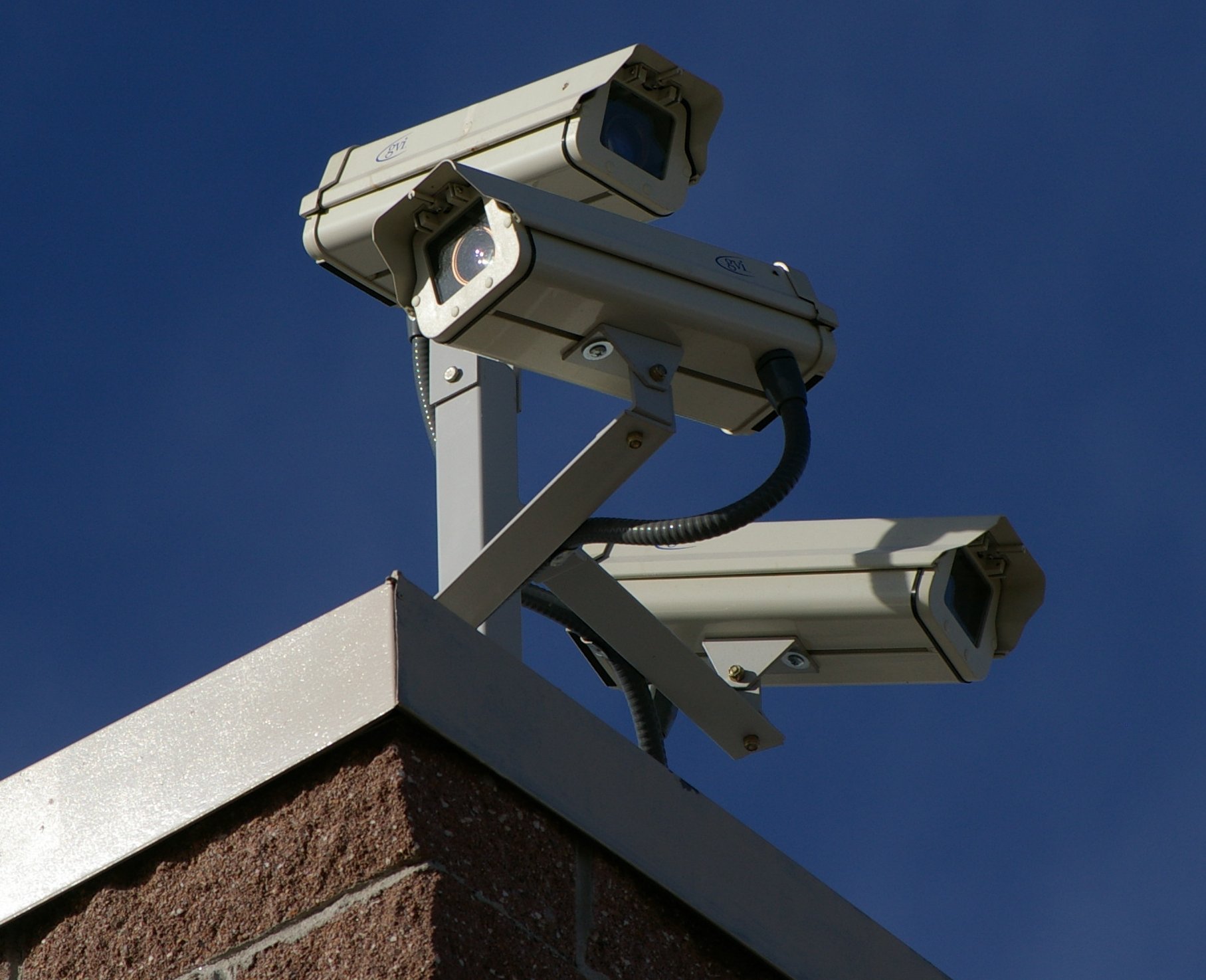 Lawmakers in Oakland intend to spend millions of dollars awarded to the California city in a federal grant to a police dragnet that promises to examine surveillance footage, riling critics who assert the intention of the grant was to stop terrorism.
When the new program debuts in approximately one year police will be able to track drivers as they travel through tolls, scan license plates with the roughly 3,000 surveillance cameras placed throughout the city, and monitor social media platforms to learn about crimes before they occur.
The Oakland program, officially referred to as the Domain Awareness Center, according to the New York Times, comes at a time when police departments across the US are using federal money to launch similar surveillance efforts modeled after the New York Police Department. The NYPD, which operates within New York City as well as far outside, has used federal grants to build a massive surveillance network capable of linking cameras and license plate readers to criminal and suspected terrorist databases.
The Domain Awareness Center also plans to plant gunshot detection sensors through Oakland, which is consistently ranked among the most dangerous cities in the US. Forbes magazine reported that violent crime affects 1,683 of every 100,000 residents in the city, making it the third most dangerous city in America with a population between 100,000 and 499,000 in 2013.
The Oakland City Council voted unanimously on July 31 to adopt the plan to build the surveillance center, which officials have said will be staffed 24 hours a day. Lawmakers voted at the same meeting to ban hammers and spray paint cans at protests in fear that the items will be used as weapons. Waiting outside, protesters admonished council members with chants of “Shame! Shame! Shame!”
“The Domain Awareness Center is the guard tower which will watch over every person in the city of Oakland,” shouted demonstrator Mark Raymond, as quoted by the San Francisco Chronicle. “This program is an attempt to criminalize and imprison all people who live and pass through Oakland.”
All told, the surveillance center’s costs are expected to total $10.2 million in federal grants, and while legislators said they were cognizant of residents’ security while drafting the bill some representatives were shouted down.
“We have tried our best to find the sweet spot where are going to take advantage of the tools that we have at hand to make our city safe… We have done everything we can to safeguard privacy,” said councilwoman Libby Schaaf before she was cut off by jeers and one protester who suggested she “go home to your mansion and kill yourself.”
Schaaf did admit that, while police have traditionally needed just a small evidence sample to arrest a suspect, the new center will have the capability to “paint a pretty detailed picture of someone’s personal life, someone who may be innocent.”
Oakland was awarded a federal grant to ramp up security near the Port of Oakland, a thriving cargo center that is one of the busiest in the US. The 19-mile waterfront is the fifth-busiest container port in the US, with 1,800 ships arriving every year, according to the San Francisco Chronicle. Over $14 billion in goods were exported from the bustling hub in 2012.
To protect the port, and watch civilians throughout the region, Oakland signed a contract with Science Applications International Corporation (SAIC) to build the Domain Awareness Center. The company, which earns most of its $12 million in annual revenue from military contracts, also worked with the NYPD but later paid $500 million to avoid a federal prosecution for receiving illegal kickbacks.
The Times reported that this project is not the first time Oakland has sought to develop such technology. A city audit viewed by the paper revealed that lawmakers spent nearly $2 million in 2012 alone on police tools that did not work or could not be used for a variety of reasons.
Linda Lye, an attorney with the American Civil Liberties Union, said this project might work as intended, but that mere intention already creates a scary problem.
“What they did is approve a vast surveillance center without understanding the implications,” she said earlier this year. “The privacy policies would be drafted only after the center is built. At that point, what opportunity will there be for to determine if the safeguards are sufficient?”
Related article
Google-bye to privacy? Users’ faces, names and comments are going in ads
RT | October 12, 2013
Following in the footsteps of Facebook, anything you post, like, comment or review on Google or tied-in services can in future be used in product endorsement ads.
It means that starting Nov. 11, when Google’s new terms of service go live, all content (video, brands or products) Google+ and YouTube users publicly endorse by clicking on the “+1” or “Like” button can appear in an ad with that person’s image.
Such “shared endorsements” ads will also appear on millions of other websites that are part of Google’s display advertising network.
Google+ users will have the ability to opt out by turn the setting to “off,” but at the same time it “doesn’t change whether your Profile name or photo may be used in other places such as Google Play.”
“For users under 18, their actions won’t appear in shared endorsements in ads and certain other contexts,” the announcement on Google’s website reads.
Another way to “opt out” is just stop “liking”, sharing and publicly checking-in.
Google’s move follows a similar change Facebook imposed in August. There it is called “sponsored stories.” It works almost exactly the same way – a recommendation made through the social network’s “like” button appears as advertising endorsement on a friend’s Facebook page.
While both companies say the service will be helpful for users, Google’s revised terms of service have again raised privacy concerns.
“It’s a huge privacy problem,” Reuters cited Marc Rotenberg, the director of online privacy group EPIC, as saying.
He has called on the US Federal Trade Commission to investigate whether the policy change violates a 2011 consent order that prohibits Google from retroactively changing users’ privacy settings.
The announcement also was harshly criticized on Google’s profile, with users expressing dismay and disappointment. Some users suggested they might pull down all their current pictures or change profile pictures.
Featured Video

Your Enslavement Begins in Gaza: The ‘Board of Peace’
or go to
Aletho News Archives – Video-Images
From the Archives
The US: The Century of Lost Wars
By James Petras | Global Research | September 12, 2018
Introduction
Despite having the biggest military budget in the world, five times larger than the next six countries, the largest number of military bases – over 180 – in the world and the most expensive military industrial complex, the US has failed to win a single war in the 21st century.
In this paper we will enumerate the wars and proceed to analyze why, despite the powerful material basis for wars, it has led to failures. … continue
Blog Roll
 Aletho News
- Zelensky Refused to Discuss Druzhba Pipeline Issue – Fico
- U.S. General Caine Warns: STRIKING IRAN is a HUGE RISK /Glenn Diesen & Lt Col Daniel Davis
- Israel designates five Palestinian media outlets as ‘terrorist organizations’
- Israel, not America, first: Carlson’s Huckabee interview lays bare US foreign policy priorities
- Israeli troops executed Palestinian aid workers at ‘point blank range’: Report
- Iran war What if today’s Iran is resigned to a long, hellish war with the US?
- Why Israel Is Escalating Its War Crimes Against Lebanon
- Iran in the face of the armed diplomacy of imperialism
- The US build-up around Iran constitutes strategic war option, not ‘deterrence’
- Iran to US: Sanctions and war failed; try diplomacy and respect
- If Americans Knew
- Footage Shows Israeli Troops Waiting in Ambush, Then Opening Fire on a Palestinian Teen
- The US is on the brink of a major new war that Trump has not even bothered explaining
- Latest Epstein document dump is one more cover-up
- No Protection, No Justice: US Citizens Killed with Impunity by Israel
- Maria Farmer: Epstein Victim Reveals Explosive Information Covered Up by Media
- Average of five Palestinians killed by Israel every day in Gaza since ceasefire – Not a ceasefire Day 136
- Palestinian church leaders admonish Christian Zionist Mike Huckabee – Not a ceasefire Day 135
- Ominous messaging from Trump’s “Board of Peace” – Not a ceasefire Day 134
- ‘Christians Out’: Jerusalem Church Tagged With Hate Graffiti, Police Investigating
- Israeli Settlers Kill American Teen
- No Tricks Zone
- New Research Reaffirms Clouds, Aerosols, And Surface Solar Radiation Are ‘Driving The Climate System’
- Germany: Electric Car Catches Fire At Charging Station, Sets Off Local “Inferno”, Widespread Damage
- New Study: Canada’s New Brunswick Was 1°C Warmer Than Today During The Medieval Warm Period
- Coal Power Back In Trend As Globe Tries To Keep Pace With Growing Demand For Power
- New Study: A 4°C Warmer Beaufort Sea Had ‘No Sea Ice’ 11,700 – 8200 Years Ago
- Unfudging The Data: Dutch Meteorological Institute Reinstates Early 20th Centruy Heat Waves It Had Erased Earlier
- German Gas Crisis…Chancellor Merz Allegedly Bans Gas Debate Ahead of Elections!
- Pollen Reconstructions Show The Last Glacial’s Warming Events Were Global, 10x Greater Than Modern
- Germany’s Natural Gas Storage Level Dwindles To Just 28%… Increasingly Critical
- New Study Rebuts The Assumption That Anthropogenic CO2 Molecules Have ‘Special’ Properties
 Aletho News