Venezuela Has Right to Have Relations With China, Russia, Cuba, Iran – Acting President
Sputnik – 16.01.2026
Venezuela has the right to relations with all countries of the world, including China, Russia, Cuba, and Iran, and will exercise this right in compliance with international norms, Venezuelan Acting President Delcy Rodriguez said on Thursday.
Venezuela’s Acting President Delcy Rodríguez said the country’s energy dialogue with the United States is not new, but stressed that it is now taking place amid “aggression and a fierce threat.”
“Venezuela has the right to relations with China, with Russia, with Cuba, with Iran — with all the peoples of the world,” Rodríguez said while presenting the government’s 2025 annual report.
She said Caracas is shaping energy cooperation based on “decency, dignity and independence,” rejecting both internal and external constraints aimed at influencing Venezuela’s foreign policy.
Trump’s Options in Iran Limited By Military Buildup in Latin America
By Kyle Anzalone | The Libertarian Institute | January 14, 2026
President Donald Trump has a more limited range of options for attacking Iran now than he did in June. The US has moved military assets out of the Middle East in recent months, including moving an aircraft carrier strike group to the Caribbean.
Since the US and Israel’s war against Iran last year, the US has moved two aircraft carrier strike groups out of the Middle East. The USS Nimitz is now at a US port, and the USS Ronald Regan is in Latin America.
An advanced American air defense system that was deployed to the Middle East in June is now back in East Asia. Politico notes, “The Trump administration also has been eating away at dwindling US weapons stockpiles with the fast pace of military operations in the Red Sea, Iran and Venezuela.”
Trump has made several pledges to back Iranian protesters and attack Iran. The lack of available military resources in the region could limit Trump’s operations for attacking Iran, although the US still maintains the capability to strike the Islamic Republic.
Over the past decade, the pace of US military interventions has spread across the globe. Under President Joe Biden, the US flooded weapons to Ukraine and Israel. President Donald Trump has bombed seven countries. Additionally, the US used a significant portion of its arsenal of interceptors to defend Israel from Iranian retaliation in June.
Villains of Judea: Paul Singer’s Empire of Debt & Demographic Replacement
Paul Singer is the embodiment of Jewish plutocracy
José Niño Unfiltered | January 12, 2026
Paul Elliott Singer stands as one of the most influential figures in global finance. The Jewish billionaire hedge fund manager has amassed a fortune estimated at $6.2 billion to $6.7 billion by purchasing distressed sovereign debt and corporate bonds at deep discounts, then pursuing ruthless legal campaigns to extract full repayment plus interest.
Born August 22, 1944, in Teaneck, New Jersey, Singer transformed a $1.3 million startup in 1977 into Elliott Management, a hedge fund empire managing approximately $65.5 billion to $72 billion in assets.
Yet Singer does more than just make financial moves. He has emerged as a kingmaker in Republican politics, becoming the second-largest GOP donor in 2016, and a major force behind AIPAC, immigration reform, and LGBT rights advocacy. His business model has devastated entire communities from Sidney, Nebraska, to Buenos Aires, Argentina. His political activism spans seemingly contradictory causes, supporting both hawkish pro-Israel policies and same-sex marriage rights. His most recent venture, the $5.9 billion purchase of Venezuela’s Citgo assets, positions him to reap billions from the Trump administration’s military intervention in Venezuela.
Singer’s business model has earned him the moniker vulture capitalist. In the 1990s, Singer began leaving his mark after purchasing $20 million in Peruvian sovereign debt. Through aggressive litigation, he eventually secured a payout of $58 million, nearly triple his investment. A U.S. court revealed that Elliott’s purchase of Peruvian debt was made with the explicit intention of pursuing full repayment through lawsuits. Investigative journalist Greg Palast reported that Singer’s lawyer allegedly told him Singer allowed Peru’s President Alberto Fujimori, who fled the country ahead of murder charges, to escape in return for ordering Peru’s treasury to pay Singer $58 million.
Between 2002 and 2003, Singer earned over $100 million from a $30 million investment in Congo-Brazzaville debt. But his most audacious campaign targeted Argentina. After Argentina’s 2001 economic crisis, Singer purchased distressed bonds for approximately $117 million. He refused to participate in debt restructuring agreements that other creditors accepted, instead pursuing full repayment through international courts. The campaign culminated in a 2016 settlement that netted Elliott Management $2.4 billion, a staggering 1,270 percent return.
Singer’s tactics proved extraordinary even by hedge fund standards. In 2012, Elliott successfully convinced a Ghanaian court to detain the Argentine naval training vessel ARA Libertad with 220 crew members aboard, demanding $20 million for its release. Then-Argentine President Cristina Fernández de Kirchner refused to pay Singer’s fund, calling Elliott and similar firms “financial terrorists” and vulture funds. The Obama administration and Secretary of State Hillary Clinton demanded courts dismiss Singer’s attempt to bankrupt Argentina, but Singer’s legal campaign ultimately prevailed.
Pro-Israel Bankroller
Singer has emerged as one of the most significant donors to pro-Israel causes in the United States. Through The Paul E. Singer Foundation, he has donated approximately $300 million since 2010. Singer donated $2 million to AIPAC and contributed $3 million to AIPAC’s super PAC, United Democracy Project, since 2022, making him tied for AIPAC’s third-largest donor. He serves on the board of directors of the Republican Jewish Coalition and co-founded Start-Up Nation Central, an organization dedicated to connecting Israeli innovation with global markets.
Singer has also been a major funder of the Foundation for Defense of Democracies, a neoconservative think tank advocating hawkish policies aligned with Israeli interests. From 2008 to 2011, Singer contributed $3.6 million to FDD, making him the organization’s second-largest donor. The organization has been described by former Secretary of State Colin Powell’s chief of staff Lawrence Wilkerson as a fervent advocate for war against Iran. At the Jewish Funders Network in Jerusalem, Singer stated that “Israel may be the only insurance policy all Jews, everywhere, can rely upon for the safety and continuity of Judaism.”
Promoter of LGBT Degeneracy and Mass Migration
Like many Jewish plutocrats, Singer became a significant supporter of LGBT causes after his son Andrew came out as a homosexual. In 2012, Singer provided $1 million to start American Unity PAC, whose sole mission was to encourage Republican candidates to support same-sex marriage. From 2012 to 2015, he contributed over $5.5 million to this organization. In 2013, Singer donated $500,000 to the Human Rights Campaign. Since 2001, Singer has donated more than $11 million toward legalizing homosexual marriage and supporting LGBT causes.
Singer’s crusade to redefine marriage within Republican ranks was just one facet of his broader agenda; he soon pivoted to advocating mass immigration to transform America’s demographics. In 2013, Singer made a six-figure donation to the National Immigration Forum to support comprehensive immigration reform, better known as amnesty. As one of the first high-profile Republican megadonors to publicly back amnesty, Singer worked to marshal conservative support for an overhaul of federal laws. In 2014, Singer formed the American Opportunity Alliance, bringing together wealthy Republican donors who shared his support for LGBTQ rights, immigration reform, and Israel.
Singer’s Looting of Sidney, Nebraska
Singer’s domestic business dealings generated controversies as devastating as his international operations. In 2015, Elliott Management acquired an 11 percent stake in outdoor retailer Cabela’s and forced a merger with Bass Pro Shops that devastated Sidney, Nebraska, where Cabela’s was headquartered. The town experienced massive job losses, a significant housing value collapse, and economic depression. According to court filings, Elliott pressured Cabela’s board to sell the company until the board relented. The merger resulted in Elliott making nearly $100 million profit. Residents told Fox News producers that the hedge fund destroyed their town, with one saying, “If money is that big of a God to him, he is a pretty sick human being.”
Tucker Carlson’s Exposé
In December 2019, Fox News host Tucker Carlson devoted a major investigative segment to Paul Singer, focusing on the Cabela’s case. Carlson described Singer’s business model as “vulture capitalism” that involves “buying large stakes in American companies, firing workers, driving up short-term share prices, and in some cases, taking government bailouts.” He stated, “It bears no resemblance whatsoever to the capitalism we were promised in school. It creates nothing. It destroys entire cities. It couldn’t be uglier or more destructive.”
Carlson emphasized Singer’s political power, noting that “people like Paul Singer have tremendous influence over our political process.” He revealed that Singer was “the second largest donor to the Republican Party in 2016 and has given millions to a super PAC that supports Republican senators. Carlson noted, “You may never have heard of Paul Singer, which tells you a lot in itself, but in Washington he is rock star famous.”
As Carlson was producing the segment, he reported being warned repeatedly by people around Washington, “Don’t criticize Paul Singer, that’s not a good idea.” During the broadcast, Carlson received a text from a very well-known person in Washington saying, “Holy smokes, I can’t believe you’re doing this. I’m afraid of Paul Singer.”
Venezuela and Citgo
One of Singer’s most recent controversial business deals involves Venezuela’s Citgo Petroleum. In November 2025, Elliott Investment Management won a court-mandated auction to purchase Citgo for $5.9 billion. Citgo represents the crown jewel of Venezuela’s international oil assets, owning three major Gulf Coast refineries with capacity to process 800,000 barrels per day, 43 oil terminals, and over 4,000 gas stations.
Singer acquired Citgo at what multiple sources describe as a major discount. Court advisors estimated Citgo’s actual value at approximately $13 billion, while Venezuelan officials valued the assets at $18 billion to $20 billion. This means Singer paid roughly 45 percent of the estimated market value.
A highly controversial aspect of the sale involves Robert Pincus, the court-appointed special master who oversaw the auction and recommended Singer’s bid. Pincus sits on the national board of directors of AIPAC. Gold Reserve Inc., a competing bidder that offered $7.9 billion, filed motions to disqualify Pincus for conflicts of interest. Venezuela rejected the sale’s legitimacy, calling it a “fraudulent process” and the “theft of the century.”
Trump’s Venezuela Intervention is Singer’s Wet Dream
The timing of events raised serious questions about the relationship between Singer’s Citgo purchase and Trump administration actions. In 2024, Singer donated $5 million to Trump’s super PAC and contributed $37 million to support Republican congressional candidates. On January 3, 2026, U.S. armed forces conducted a military raid in Caracas, capturing Venezuelan President Nicolás Maduro.
The removal of Maduro positions Singer to reap enormous profits. Economist Paul Krugman noted, “If Trump lifts that embargo, Singer will receive a huge windfall.” Within days of Maduro’s capture, Trump announced that Venezuela would be turning over between 30 and 50 million barrels of oil to the United States.
Rep. Thomas Massie (R-KY), who is a staunch opponent of the intervention in Venezuela, also caught on to how Singer stands to benefit from military action against Venezuela. He tweeted on January 4, 2026, “According to Grok, Paul Singer, globalist Republican mega-donor who’s already spent $1,000,000 to defeat me in the next election, stands to make billions of dollars on his distressed CITGO investment, now that this administration has taken over Venezuela.”
As Massie noted, Singer has ponied up $1 million to MAGA KY, a super PAC seeking to unseat the Kentucky congressman. Singer and his fellow Zionist Jews view Massie as an obstacle to further consolidating Jewish supremacy in the halls of Congress.
All told, Singer is the embodiment of Jewish plutocracy. He bankrolls the West’s demise through his advocacy of LGBT degeneracy, mass migration, never-ending wars on behalf of world Jewry, and vulture finance. Americans must awaken to these existential threats, revoke their elite privileges, and halt the Great Replacement before it consigns our polities to historical oblivion.
Did the U.S. achieve a regime change in Venezuela?
By Raphael Machado | Strategic Culture Foundation | January 12, 2026
Shortly after the kidnapping of Venezuelan President Nicolás Maduro, the event was quickly disseminated as a typical “regime change” operation against its new target and enemy, Venezuela. Critics and supporters of Bolivarianism flooded social media with posts announcing the “end” of Chavismo.
Three days after the event – and with many things insufficiently explained, such as the minimal Venezuelan military reaction during the attack – the Venezuelan landscape remains complex.
First, let’s look at the factual reality: Chavismo still governs in Caracas. The country’s Vice President, Delcy Rodríguez, was sworn in as interim president in a ceremony that featured the prominent participation of the ambassadors from Russia, China, and Iran. She does so, by all appearances, with the consensus of her brother Jorge Rodríguez, who leads the National Assembly, Defense Minister Padrino López, and Interior Minister Diosdado Cabello. Maduro’s son, also named Nicolás, has also declared support for the institutional arrangement that sees Delcy Rodríguez performing the role of national leader while his father is prosecuted in the U.S.
Was there an expectation that things would unfold differently?
Frankly, all statements from Donald Trump and Marco Rubio following Maduro’s kidnapping suggest that even if we consider the kidnapping itself a successful military operation, politically the event appears to have been ill-conceived. The U.S. government has already rejected the notion of handing power to the opposition and has even dismissed the prospect of new elections.
It is noteworthy that immediately after the kidnapping, Western media announced that Delcy Rodríguez had fled the country, which was obviously a lie. More recently, some channels and profiles have announced an alleged coup attempt in Caracas by Diosdado Cabello.
These deliberately spread rumors point to the continuation of the hybrid war against Venezuela, through the modality of psychological warfare, but they may also reveal expectations and, perhaps, even “false” information received by the U.S. about the situation in Venezuela.
Perhaps, indeed, the U.S. expectation was that the removal of Maduro could trigger a power struggle among the most important figures of Chavismo, and that the natural outcome of such a conflict would be a regime change. But none of this is happening, and for now, a broad consensus seems to hover over the Venezuelan political landscape.
It is also plausible that the U.S. was surprised by the lack of positive demonstrations by Venezuelans for Maduro’s removal. In Venezuela, one only sees protests criticizing the U.S. imperialist action. Even the opposition has joined pro-government forces in demanding the return of Nicolás Maduro.
This represents a significant problem.
Over the past few years, the U.S. has insisted on the narrative that Edmundo González would have triumphed over Nicolás Maduro in the 2024 presidential elections, with over 70% of the valid votes, which would be equivalent to saying González had the support of over 20 million citizens. Where are these people? Why were there no celebrations in Venezuela for Maduro’s kidnapping? It’s no use resorting to the “repression” thesis. “Repression” does not prevent opponents from trying to hold their protests, even in China.
It is likely that the timidity even of those who voted for González (a minority of the population) is simply due to the fact that Venezuelan economic indicators have indeed been improving in recent years: inflation dropped from 1,700,000% to 85%, the HDI has resumed growth, rising from 0.660 to 0.705, the unemployment rate fell from 33% to 6%, GDP growth of 6.5% (9% in the third quarter alone), and so on. Venezuela is, in fact, on a tide of recovery that has been ongoing for 4 uninterrupted years.
It may be the typical caution of those who, after many years, are finally seeing their lives improve and prefer to guard against very abrupt changes in the country’s leadership course.
There is also no evidence that the new interim Venezuelan government has agreed to any geopolitical realignment. Beyond the oil issue, we know that the determining element in the Venezuelan question is the guarantee of the automatic alignment of the entire continent with the U.S., and Venezuela, on the contrary, chose a path of rapprochement with Russia, China, and Iran.
In this sense, news indicating that Venezuela would resume supplying oil to the U.S. does not mean much. Venezuela has always wanted to sell oil to the U.S. and has indeed been selling oil to the U.S., both under the Chávez and Maduro governments, after a period of interruption due to sanctions.
The real question is whether the U.S. will manage to convince Venezuela to stop selling oil to its allies, as well as to break military ties and diplomatic alignments. Only then could one speak of a U.S. victory.
For now, however, we are facing a classic U.S. modus operandi: lots of pyrotechnics, little substance, zero prognostication.
UK believes it can seize any tanker under Russia sanctions – BBC
RT | January 12, 2026
The British government believes it has found a legal way for its military to seize any vessels in UK waters that it suspects of being part of a so-called ‘shadow fleet’, state broadcaster BBC has reported.
The move is expected to target Russia, Iran and Venezuela, all of whom the UK claims use third-party vessels to circumvent Western sanctions, according to the report.
Britain’s 2018 Sanctions and Money Laundering Act initially allowed London to impose sanctions in line with UN Security Council resolutions but was later expanded to allow entities London has accused of human rights violations to be targeted.
The law states that the government can detain “specified ships” in its territorial waters or prevent them from entering. This can affect vessels going through the English Channel – one of the world’s busiest shipping lanes. It also says that any ships can be targeted, except for those of the navies of foreign nations. The legislation does not explicitly mention the use of military force, though.
According to BBC, it is unclear when the UK could launch an operation targeting a foreign vessel. The British military have not boarded any vessels so far, the broadcaster said, adding that the UK did aid the US in seizing the ‘Marinera’ oil tanker last week.
The ship was intercepted in international waters northwest of Scotland. Moscow, which granted the tanker a temporary sailing permit, condemned the seizure as a gross violation of international rules.
Since the escalation of the Ukraine conflict in 2022, Western governments have imposed sweeping sanctions on Russia, targeting its oil trade and what they call its “shadow fleet” in particular.
According to BBC, London has imposed restrictions against more than 500 suspected “shadow fleet” vessels. The UK also imported oil products from refineries processing Russian crude worth £3 billion ($4.04 billion) over a period between 2022 and the second quarter of 2025, according to a June report by the Center for Research on Energy and Clean Air (CREA). That generated £510 million ($687 million) in revenue for Moscow.
Why America’s Oil Giants Aren’t Eager to Invest in Venezuela in Wake of Maduro’s Abduction
Sputnik – 12.01.2026
The significant capital investment required ($100B) and the need to wait up to 15 years to make a profit are the biggest factors hindering oil majors like Exxon, ConocoPhillips and Chevron from returning to the Venezuelan market, says international oil economist Dr. Mamdouh G. Salameh.
“US oil majors will have to wait a very long time before benefiting from Venezuela’s oil largesse… Moreover, they feel embarrassed to be complicit” in this form of “daylight thievery with legal implications for them,” the expert told Sputnik.
In fact, the companies would probably be happy enough dealing with the existing “sovereign and national [government] in the country openly,” free of Washington’s threats of regime change.
Efforts by the White House to ban third parties from engaging with Venezuelan oil revenues constitutes not “only a total imposition of control over Venezuela’s oil but a daylight robbery,” Salameh stressed.
Pirates of the Caribbean
By Lorenzo Maria Pacini | Strategic Culture Foundation | January 12, 2026
So many things are happening in such a short space of time that it is difficult to keep track of them all. Certainly, one of the most “entertaining” is the return of piracy, which the United States of America inaugurated at the beginning of 2026.
We are talking about a new and particularly controversial phase of their economic and strategic pressure policy: the direct seizure of oil tankers on the high seas, believed to be involved in the transport of crude oil on behalf of states subject to unilateral U.S. sanctions, in particular Russia, Venezuela, and Iran. This practice, which Washington presents as a legitimate enforcement activity against illegal trafficking, is raising profound questions about international maritime law and the balance between state sovereignty, freedom of navigation, and the use of force.
From the Caribbean to the icy North Seas, the most emblematic case is that of the oil tanker Mariner, seized a few days ago after a long chase in the North Atlantic by the U.S. Coast Guard, while the ship was being joined by Russian naval forces. According to U.S. authorities, the ship was part of the so-called shadow fleet, an informal network of oil tankers that operate through frequent changes of name, flag, and management company in order to evade sanctions regimes. This operation is accompanied by other significant seizures or interceptions, including the tankers Sophia, Skipper, and Centuries, stopped in various maritime areas on similar charges of sanctioned oil trafficking and fraudulent use of flags of convenience. In short, a cinematic-style raid. Donald “Sparrow” Trump has found a new hobby.
As for the Mariner, to be fair, it is a VLCC oil tanker built in 2002. Its gross tonnage is over 318,000 tons, making it one of the largest types of oil tankers used in the global crude oil trade. In terms of age and technical characteristics, it is an ordinary working ship, designed to operate for 25-30 years, provided it passes inspections. Since its construction, the ship has not had a stable “nationality.”
Over the course of more than twenty years, it has changed its name, flag, and owners several times, a practice typical of tankers operating in sanctioned and semi-sanctioned segments of the market. The ship was successively named Overseas Mulan, Seaways Mulan, Xiao Zhu Shan, Yannis, Neofit, Timimus, Bella 1, and finally Marinera. Each name change was accompanied by a change of jurisdiction or management company. The flags also changed regularly. The ship flew the flags of the Marshall Islands, Liberia, Palau, and Panama. According to international databases, there was a period when the ship flew the flag of Guyana, indicating an incorrect or unconfirmed registration. This episode was subsequently used as a formal pretext for intervention by the U.S. Coast Guard.
After the persecution began, the ship obtained temporary registration under the flag of the Russian Federation with Sochi as its port of registry, as recorded in official ship registers. The history of the ship’s ownership and management also indicates its commercial rather than state nature. Over the years, the ship has been managed by companies registered in Asia and offshore jurisdictions, including structures linked to Chinese and Singaporean operators. Between 2022 and 2023, the owner and manager of the ship was Neofit Shipping Ltd, then Louis Marine Shipholding ENT. Since the end of December 2025, the owner and commercial operator of the ship has been the Russian company Burevestmarin LLC. This is a private entity, not linked to state-owned oil companies and not part of any “state fleet.”
In recent years, the ship has been used in the classic sanctions evasion scheme linked to the Iran-Venezuela-China routes. A crucial turning point came in mid-December 2025, when the United States announced an effective maritime blockade of Venezuela. The tanker, then called Bella 1, had left the Iranian port in November and was approaching the Venezuelan coast just as these measures were introduced. The attempt to enter the port was interrupted by the U.S., after which the ship set course for the Atlantic Ocean. The composition of the crew also clearly shows the commercial nature of the ship. Most of the sailors on board are Ukrainian citizens, while there were also Georgian citizens and only two Russians on board. The Mariner proved to be a convenient demonstration target for the U.S. as part of its new strategy of forcibly disrupting Venezuelan oil routes.
The owner’s attempt to hide under the Russian flag was a logical commercial move, but it did not change the intentions of the U.S. Russia was formally involved in the situation as the flag state and because of the presence of Russian citizens in the crew. The ship was not of strategic value to Russia and was not part of its oil logistics. Any escalation around a private tanker, which had been operating for decades on gray routes, would have made no rational sense.
From Washington’s point of view, the legitimacy of such actions rests on two main pillars. The first is the extraterritorial application of U.S. sanctions: seized tankers are considered assets directly involved in violations of Office of Foreign Assets Control (OFAC) regulations and are therefore subject to confiscation. The second pillar is the doctrine of the stateless vessel, according to which a ship that cannot credibly prove its nationality—due to irregular registrations, false flags, or contradictory documentation—loses the legal protection guaranteed by the flag state and can be stopped by any other state on the high seas.
Bye-bye Law of the Sea
It is precisely this second point that is the focus of much of the legal debate. The United Nations Convention on the Law of the Sea (UNCLOS) establishes that, on the high seas, a ship is subject to the exclusive jurisdiction of the flag state. Exceptions to this principle are limited and strict: piracy, slave trade, unauthorized radio transmissions, absence of nationality, or express authorization from the UN Security Council. The extension of these exceptions to the application of unilateral sanctions, not approved by the United Nations, is a highly contested interpretation.
Russia and China have reacted harshly to the seizures, calling them a blatant violation of international law and, in some cases, an act comparable to state piracy. Moscow argues that the seized tankers were flying regular flags and that the use of force against commercial vessels in peacetime, outside a UN mandate, constitutes a breach of the maritime legal order. Beijing, for its part, has emphasized the illegitimate nature of unilateral sanctions and the risk that such practices create dangerous precedents, normalizing the armed interdiction of commercial shipping.
The implications of this new phase are significant. On the legal front, there is growing tension between a law of the sea based on the neutrality of routes and freedom of navigation, and a power practice that tends to transform economic sanctions into instruments of military coercion. On the geopolitical front, there is a risk of maritime escalation, with possible countermeasures by the affected states and a progressive militarization of global energy routes.
On the other hand, all this is consistent with what the U.S. administration is doing: creating rapid chaos that distracts the world, while surgically targeting certain elements within the American system and, on the other hand, applying the Donroe Doctrine and establishing control over the Western Hemisphere.
The seizure of oil tankers is not just an isolated episode of conflict between states, but a sign of a deeper transformation of the international order. The U.S. has set out with conviction and has no intention of stopping. If this practice were to become established, international maritime law would risk being very quickly stripped of its fundamental principles, leaving room for a logic of force in which naval supremacy replaces shared legality. The issue, therefore, is not only about the seized ships, but the entire future of global maritime governance.
The U.S. has said it: Venezuela is American property and from now on will be its new backyard. Greenland will be next.
Piracy elevated to the rank of military strategy and international relations.
And remember: in just 11 months of government, since the beginning of his second term, Donald Trump has bombed seven sovereign countries: Syria, Lebanon, Egypt, Yemen, Iran, Nigeria, and Venezuela. He has kidnapped one head of state (Maduro) and threatened to kill three others: Khamenei, Petro, and Rodriguez. He has threatened to invade five countries: Iran, Mexico, Venezuela, Colombia, and Greenland (i.e., Denmark). He has done everything in his power to prevent the international community from passing resolutions against Israel and its prime minister Netanyahu during and after the massacres in Gaza.
Anyone with a modicum of common sense, who is not misled by political preconceptions, can draw the most basic conclusions from these actions.
What Does Venezuela Have to Do with Israel?
It may have friends that Netanyahu does not like
By Philip Giraldi • Unz Review • January 9, 2026
It is interesting to observe how United States foreign policy, such as it is, often appears to have an Israeli back story that explains at least in part how Donald Trump’s mindless aggression against much of the world is driven by Zionist imperatives rather than actual American interests. Ukraine is supported by Israel and the US Israel Lobby in part because the roots of many diaspora and Israeli Jews are “Kazarian,” i.e. they derive from that part of Eastern Europe. Plus, Ukraine’s acting head of state Volodymyr Zelensky is a Jew whose mother and father reportedly live in Israel in a posh residence paid for by the money stolen by their son from US and European donations to Kiev to fight Russia. Also, the Jewish antipathy towards Moscow in large part derives from the belief that Imperial Russia was the source of many pogroms in the nineteenth and early twentieth centuries. That narrative fails, however, to mention how Russian Jews turned Bolshevik and, becoming enforcers of the Communist Revolution, subsequently got their revenge a hundred-fold on Russian and other Eastern European Christians.
And, of course, it has been frequently observed how US policy in the Middle East is essentially dictated by war criminal Prime Minister Benjamin Netanyahu, who de facto controls both Trump and the US Congress. The Israel Lobby also has significant input into what goes on at state and local government levels and has considerable control over what appears in the national media, which they increasingly own thanks to the efforts of Jewish billionaires like Larry Ellison. This ability to use money to manipulate politics and government has been manifested in the ability to suppress free speech in the United States when the topic is Israel’s abhorrent behavior towards the Palestinians and its other neighbors. Criminalizing antisemitism, which includes any criticism of Israel, has become the crime du jour to silence opposition to pro-Zionist agendas at both federal and state levels and it has also been used to eliminate Palestinian support at universities and through the job market. Beyond that, the US State Department is now demanding access to the social media of visa applicants so that those who are supporters of the Palestinian cause can be blocked from entry into the United States. This is what Jewish power in America is all about.
It is interesting to note the somewhat unexpected Israeli and Jewish hand in recent US aggression directed particularly against Venezuela. There are several main reasons for the Venezuela hit. Caracas developed a close relationship with Iran through its negotiations over BRICS and has unambiguously sided with Palestine in denouncing the Zionist war crimes and crimes against humanity. This clearly was impressed upon Donald Trump and his consiglieri by the Israelis and members of the Israeli Lobby like Miriam Adelson and Laura Loomer who have full access to the president and who no doubt were able to convince the Orangeman that he would be able to benefit by striking against an ally of a common enemy of the US and Israel with one fell swoop.
Trump could and did plead nevertheless that he was only applying his heavily promoted “corollary to the Monroe Doctrine,” which he inevitably dubbed the “Donroe Doctrine,” and which was explicit in the new National Security Strategy. But he surely knew that he would also at the same time be satisfying the demands of his Jewish donors and Netanyahu himself, who undoubtedly raised the issue of Venezuela with the president and his staff on his recent visit to Florida.
So the possibility that there just might be a relationship between Venezuela and Iran has become something that is exploitable by the Israel Lobby and also by Trump. On his recent visit, Benjamin Netanyahu was quick to identify the issue and no doubt also personally pushed for Trump to do something right away. Bibi also appeared on US television and told one interviewer that Iran is “exporting terrorism… to Venezuela. They’re in cahoots with the Maduro regime… this has got to change.” The Israelis also see ties between Caracas and both Hamas and Hezbollah, a claim that has been echoed in the US national-Zionist-at-all-times media.
To cite only one example of how it works, Fox News has published an article claiming Maduro’s Venezuela has become “Hezbollah’s most important base of operations in the Western Hemisphere, strengthened by Iran’s growing footprint and the Maduro regime’s protection.” Ultra-Zionist US Ambassador to Israel Mike Huckabee, not to be outdone, later doubled down, stating publicly that the US overthrow of Maduro was good news for Israel because of Venezuela’s partnership with Iran and Hezbollah.
The New York Times meanwhile has soft-pedaled its news coverage of the Caracas attack and instead has featured several prominent Zionist opinion contributors who have argued that for those Middle Eastern connections alone Venezuela has deserved everything that it has so far received at the hands of the US military. The always reliable Israeli firster Bret Stephens opined that There Were Good Reasons to Depose Maduro citing the Venezuelan Vice-and-Acting President Delcy Rodríguez having “claimed Maduro’s capture had ‘Zionist undertones,’ suggesting that her grip on reality may not be what the [Trump] administration hopes.”
And on the same day in The Times there appeared good old reliable Elliott Abrams in his A Defense of US Intervention in Venezuela claiming that he knows things about the threat posed by Venezuela that no one else seems to be aware of aside from him and his Zionist buddies. He states that “… they have invited into Venezuela Cuban thugs, and Hezbollah and Iran, as well as Russia and China. So, it’s a security issue for the whole region, again, including for the United States. For Hezbollah, for example, and Iran, we know that the Maduro regime gave them blank passports so that agents of Iran and Hezbollah could be moving around Latin America and elsewhere under false identities. We know that Iran has helped not only give drones to the Venezuelan military, but helped them learn how to build drones. We know from the Israeli experience with Iran, drones can go a very long distance now. We’re talking about drones that can hit not only Puerto Rico, but hit the continental United States. When I was in the State Department doing this about five years ago, Iran was contemplating giving intermediate-range missiles, which could reach the United States, to the Maduro regime in Venezuela. So this is an actual security threat in Latin America and to us.”
So Israel and its friends were no doubt delighted when Donald Trump decided to attack Venezuela and kidnap its president Nicolas Maduros. Netanyahu personally thanked Washington after the Venezuela attack took place, tweeting that “Congratulations, President @realDonaldTrump for your bold and historic leadership on behalf of freedom and justice. I salute your decisive resolve and the brilliant action of your brave soldiers.”
Perhaps this extra agenda in support of Israel explains why Venezuelan Acting President Delcy Rodriguez has herself gone on television to say her country will not be “cowed” by Washington. As Bret Stephens maintains, she also believes that “Venezuela is the victim and target of an attack of this nature, which undoubtedly has Zionist undertones. It is truly shameful.” To be sure there is one thing that is true, that as Venezuela is critical of Israeli war crimes, its government has broken diplomatic relations with Tel Aviv and recognized Palestinian statehood. It might therefore very plausibly be suggested that Netanyahu, speaking for his government, which in return has been openly supporting regime change in Venezuela, played the decisive role in convincing his pliable tool Trump to move on Caracas sooner rather than later when they met recently in Mar-del-Lago.
So the attack on Venezuela has opened the door to all kinds of complications and intrigue. Given the ability of the Israelis to manipulate an ignorant and confused Trump, who now claims his policies are guided only by his “morality” rather than “international rule of law,” the next developments will almost certainly include a joint Israel-US attack on Iran. And when that initiative has run out there will certainly be still more enemies of Israel to confront. And what will be the benefit for the average American when all the costs and deaths are counted after it is all over? As usual, “Nothing!”
Philip M. Giraldi, Ph.D., is Executive Director of the Council for the National Interest, a 501(c)3 tax deductible educational foundation (Federal ID Number #52-1739023) that seeks a more interests-based U.S. foreign policy in the Middle East. Website is https://councilforthenationalinterest.org address is P.O. Box 2157, Purcellville VA 20134 and its email is inform@cnionline.org
Halliburton Executive Contradicts Trump on Venezuela Sanctions, Exposing Economic Hypocrisy
Trump’s own 2019 sanctions — not business decisions — forced Halliburton to abandon Venezuela
teleSUR | January 10, 2026
A now-viral video has reignited global scrutiny over Washington’s coercive economic policies. Speaking directly to camera, asenior company official clarified a critical fact often omitted in U.S. political discourse: “We didn’t leave Venezuela by choice or due to operational issues. We were forced out by the sanctions imposed by Trump’s own administration in 2019.”
The statement, originally shared by Venezuelan journalist Joan Contreras and widely disseminated by the investigative outlet Misión Verdad, delivers a rare insider account from within one of America’s most powerful oil service corporations. It directly challenges recent claims by former President Donald Trump – who, amid speculation about his return to office in 2025, has floated the idea of “immediately lifting sanctions” to allow U.S. oil firms back into Venezuela.
But as the Halliburton executive makes clear, the very policies Trump championed are what expelled these companies in the first place. Far from being a neutral market withdrawal, Halliburton’s exit was a direct consequence of U.S. Treasury Department directives that criminalized financial and commercial transactions with Venezuela’s state-owned oil company, Petróleos de Venezuela (PDVSA).
This revelation underscores a long-standing contradiction in U.S. foreign policy: sanctions billed as tools for “democracy promotion” end up punishing American corporations while deepening humanitarian suffering abroad. In Venezuela’s case, the human cost has been staggering – yet the corporate toll is now coming full circle.
Halliburton Executive Reveals Coercive Reality
The executive’s testimony aligns with documented history. In January 2019, during Trump’s first term, the U.S. imposed sweeping sanctions on PDVSA, effectively freezing its U.S.-based assets and prohibiting any American entity from engaging in oil-related transactions with the company. For Halliburton—a firm that had operated in Venezuela for over six decades and provided critical drilling, well completion, and reservoir management services—the order was unambiguous: comply or face crippling fines and legal penalties.
“We had no option,” the executive explained. “Continuing operations would have meant violating U.S. law. The Treasury made it clear: work with PDVSA, and you’re out of the U.S. financial system.”
These sanctions were part of a broader “maximum pressure” campaign that included secondary sanctions targeting non-U.S. entities, asset freezes, and visa bans. By 2020, nearly all major American oil service firms—including Schlumberger and Baker Hughes—had suspended Venezuelan operations, despite having profitable contracts and functional infrastructure on the ground.
Experts consulted by teleSUR emphasize that this episode reveals the self-defeating nature of unilateral sanctions. “Washington claims it wants U.S. companies to dominate global energy markets,” said Dr. Elena Martínez, an international trade analyst at the Latin American Faculty of Social Sciences (FLACSO). “But by weaponizing finance, it pushes its own corporations out of strategic territories—opening the door for Russia, China, and Iran to step in.”
Indeed, since 2019, PDVSA has forged new technical and commercial alliances with Rosneft, CNPC, and Iranian firms, gradually restoring production capacity despite ongoing U.S. restrictions. In 2025, Venezuela reported its highest oil output in five years—proof that economic siege does not equate to control.
Geopolitical Context: Sanctions as a Double-Edged Sword in Global Energy Politics
The Halliburton admission arrives at a pivotal moment in global energy realignment. As the world transitions toward multipolarity, U.S. sanctions are increasingly seen not as instruments of power, but as accelerants of de-dollarization and alliance diversification. Countries targeted by Washington – from Venezuela to Iran to Russia – are deepening trade in local currencies, building alternative payment systems, and reducing reliance on Western financial infrastructure.
For American oil giants, this shift carries long-term strategic costs. While short-term compliance with sanctions may avoid legal trouble, it cedes influence in some of the world’s largest hydrocarbon reserves. Venezuela alone holds the largest proven oil reserves on Earth – over 300 billion barrels – mostly in the heavy crude of the Orinoco Belt, a region where Halliburton once held technological dominance.
Moreover, the hypocrisy exposed by the executive’s statement undermines U.S. credibility in multilateral forums. When Washington presents sanctions as “peaceful tools,” yet they result in $130 billion in estimated Venezuelan economic losses since 2015 (according to Caracas), and simultaneously force U.S. firms out of lucrative markets, the narrative collapses under its own weight.
The United Nations Special Rapporteur on unilateral coercive measures has repeatedly condemned such policies, noting they violate international law and disproportionately harm civilians. Yet the Halliburton case shows even corporate elites are not immune—suggesting that sanctions function less as precision tools and more as blunt instruments of economic warfare with indiscriminate fallout.
Regionally, this dynamic strengthens Latin American calls for sovereignty. Brazil’s Lula, Colombia’s Petro, and Mexico’s Sheinbaum have all criticized U.S. sanctions as relics of interventionism. If American businesses themselves acknowledge the damage, regional resistance will only grow.
Corporate Testimony Undermines U.S. Political Narratives
Trump’s recent suggestion that lifting sanctions would “bring U.S. oil companies rushing back” ignores a fundamental reality: trust has been broken. After being compelled to abandon decades of investment overnight, firms like Halliburton face enormous legal, financial, and reputational risks in re-entering Venezuela—even if sanctions ease.
Furthermore, the geopolitical landscape has shifted. PDVSA no longer depends solely on Western technology. With Russian drilling equipment, Chinese refining partnerships, and Iranian logistical support, Venezuela has built a resilient, sanctions-resistant oil ecosystem. U.S. firms may find the door not as open as they imagine.
The Venezuelan government has consistently maintained that sanctions constitute a flagrant violation of international law, amounting to collective punishment of its civilian population. From medicine shortages to power grid failures, the humanitarian impact is well-documented. Yet the Halliburton video adds a new dimension: even the architects of U.S. corporate power are casualties of this policy.
As speculation grows about potential partial sanctions relief in 2026 – possibly tied to electoral conditions or oil-for-debt deals – the executive’s message serves as a sobering reminder: coercion begets fragmentation, not compliance.
Conclusion: When Sanctions Backfire on Their Own Enforcers
The viral testimony of a Halliburton executive does more than correct the historical record—it exposes the internal contradictions of U.S. foreign policy. The Halliburton executive contradicts Trump on Venezuela sanctions not to defend Caracas, but to defend truth: American companies didn’t flee Venezuela because of chaos or mismanagement. They were pushed out by Washington itself.
In doing so, the U.S. not only harmed millions of Venezuelans but also weakened its own strategic position in the global energy arena. As the world moves toward multipolarity, such self-inflicted wounds may prove harder to heal than any military defeat.
For now, the video stands as a rare moment of corporate candor—and a powerful indictment of a policy that sacrifices both people and profits on the altar of hegemony.
Wary US Oil Giants Dodge Venezuela Investment Pitch
Sputnik – 10.01.2026
American oil majors left a White House meeting without signing up for a fast money push into Venezuela’s oil sector following the capture of the country’s legitimate President Nicolas Maduro, reports Axios.
The Trump administration has floated a $100 billion investment figure, promising “security” and “direct deals” with the US. But executives kept their distance.
- Exxon CEO Darren Woods bluntly called Venezuela “uninvestable” under current legal and commercial conditions
- ConocoPhillips’s Ryan Lance stressed the need to talk with banks — likely including the US Export-Import Bank – on how to restructure debt “to deliver the billions of dollars that are required to restore their energy infrastructure”
- Chevron — the only US major still operating in Venezuela — stuck to cautious language, focusing on employee safety and “compliance with all laws and regulations applicable to its business, as well as the sanctions frameworks provided for by the US government”
A handful of independents reportedly signaled interest, but with Venezuela’s output at around 800,000 barrels per day – still far below its past peaks – and legal risks front of mind, Wall Street’s oil titans aren’t exactly racing back in.
Getting back to the 3.5 million barrels per day level of the late 1990s could require much more than $100 billion worth of investment over a significant number of years, according to analysts cited by the outlet.
Oil prices are currently low, with WTI crude hovering around $59 per barrel, which also plays a significant factor in the reluctance — major investments in Venezuela’s heavy crude projects would require much higher sustained prices to justify the risks and capital investments.
US hijacks fifth oil tanker in Caribbean waters as Washington tightens blockade on Venezuela
The Cradle | January 9, 2026
The Wall Street Journal reported on 9 January that US naval forces boarded and seized control of the oil tanker Olina, expanding Washington’s campaign against vessels linked to Venezuelan crude shipments.
The theft was carried out after a “prolonged pursuit” by the US Coast Guard, according to the report, citing unnamed US officials and data from the maritime tracking firm Vanguard.
The Olina was intercepted in the Caribbean Sea near Trinidad, after previously traveling from Venezuela and returning to the region.
US authorities describe the Olina as part of a so-called “shadow fleet,” a label used by Western governments to criminalize oil tankers that move crude outside US and EU control mechanisms.
The vessel was previously named Minerva M and has been embargoed by the US, EU, UK, and others for carrying Russian oil in breach of earlier restrictions.
The takeover of the Olina marks the fifth tanker stolen by the US in recent weeks, including the Marinera, formerly known as Bella 1, which was sailing under a Russian flag when it was taken.
Washington frames the move as part of a broader effort to control Venezuelan oil flows.
US Defense Secretary Pete Hegseth said this week that the US is enforcing “the blockade against all dark fleet vessels illegally transporting Venezuelan oil,” accusing them of “stealing from the Venezuelan people.”
The reported action comes amid rising tensions between Washington and Moscow, and as US President Donald Trump pushes for tighter enforcement of the Venezuelan oil trade.
Venezuelan President Nicolas Maduro faces trial after being abducted by US forces in Caracas on 3 January.
According to a recent report by AFP, three tankers chartered by Chevron were transporting Venezuelan oil to the US, as Washington’s blockade caused crude stocks inside Venezuela to swell.
The transfers followed comments by US President Donald Trump claiming Caracas would hand over tens of millions of barrels of embargoed crude, while analysts warned that rising onshore and offshore storage levels point to a growing export bottleneck driven by the blockade.
One Hundred People Killed in US Attack on Venezuela – Interior Minister
Sputnik – 08.01.2026
CARACAS – One hundred people were killed in the US attack on Venezuela, the Latin American country’s Interior Minister Diosdado Cabello said.
“Venezuela was the victim of a barbaric, treacherous attack… so far there are 100 dead and a similar number of wounded,” Venezuela’s Interior, Justice and Peace Minister Diosdado Cabello said, adding that among those killed were civilians — including “people who were in their homes.”
Cabello also said the current priority is the return of President Nicolás Maduro and First Lady Cilia Flores, and stated that both suffered injuries during their kidnapping.
He described the aggression as a shock to a population that “was in no situation that required a military attack,” saying it has left “a wave of terror.”
Featured Video
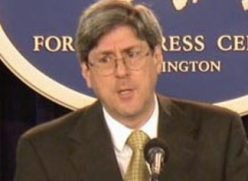
Pentagon insider says high US official Douglas Feith reported to Netanyahu
or go to
Aletho News Archives – Video-Images
Frlom the Archives
The Fiction of the Jewish History in Palestine
By Hasan Afif El-Hasan | The Palestine Chronicle | April 8, 2011
Prime Minister Benjamin Netanyahu told NNC Pierce Morgan on March 18, 2011 that he might agree to a Palestinian state through negotiations. And he added, “We will make territorial concessions although it is very painful to do that in our ancestral land.” Netanyahu was not talking about Poland where his ancestors lived. He was talking about Palestine where generations of its indigenous population ancestors lived, cultivated the land and are buried.
By the end of the nineteenth century, Zionism created a new Jewish identity of blood and soil. To mobilize their followers and supporters and appeal to their emotions, the Zionists created myths. Zionism started as a tribal religion without god, but in order to fulfill its function as a unifying force, Zionism required external religious and race symbols, not inner content. Its leaders regarded metaphysical religious belief and purity of race as having value in itself. They created a divine paradisiacal state of merger with the gods. Despite his non-religious ideology, Herzl’s writings were replete with religious references. The Jews should settle in Palestine because, in his words, “the Temple will be visible from long distance, for it is only our ancient faith that has kept us together”.
The Zionists and their supporters have invested tremendous financial and scholarly resources to work within the Hebrew Bible historical narratives to affirm the links between the intrusive Zionist population and the ancient Israelite past, and by doing so assert the right of that population to the land. The political end-game shaped the investigation and the outcome. Tracing the roots of Israel’s ethnic state in biblical antiquity is effectively to silence the indigenous Palestinian claim to the past and therefore to the land. The Biblical scholarship employs a bewildering array of terms for the region: “the Holy Land”, “the Land of the Bible”, “Eretz Israel”, “the Land of Israel”, or “Judah and Samaria.” To the casual reader these names appear interchangeable, but they all imply connection to ancient Israel.
Biblical narratives or poems that cannot be supported by archeology and common sense are treated by the Zionists and their supporters as historical language. … continue
Blog Roll
 Aletho News
- Pentagon insider says high US official Douglas Feith reported to Netanyahu
- The Sludging of Rural America
- Lawyers’ groups demand end to British military bases in Cyprus
- CIA Assessment: The Resistance Cannot Be Crushed
- Hezbollah Returns: It Didn’t Start a War, It Is Ending One
- EU states seek ‘talks’ with Iran for access to Strait of Hormuz: Report
- Trump on Hormuz: “Others must take care of it” after US falters
- Who Is closer to collapse?
- A War that Backfired: Why the US-Israeli Campaign Is Strengthening Iran
- How Zionist Control Is Hurting US Interests
- If Americans Knew
- As US-Israel war on Iran rages, Gaza faces massive dust storm – Not a ceasefire Day 156
- No let-up in attacks on Gaza as Israel takes on Iran, Lebanon – Not a ceasefire Day 155
- ‘Of Course’: IDF Drops Case Against Soldiers Accused of Raping Palestinian Prisoner
- Don’t Fall for the Regime Change Talk. Israel Is ‘Mowing the Lawn’ in Iran
- Will Israel and the US wreck the Gulf States along with Iran?
- US so far burned through ‘years’ of munitions in Iran war: Report
- How the Israeli Tail Wags the American Dog
- Outdated intel likely led to deadly U.S. strike on Iranian elementary school, sources say
- Pentagon insider says high U.S official Douglas Feith reported to Netanyahu
- In fond memory of Walid Khalidi, the historian of Palestine
- No Tricks Zone
- Storing Green Energy To Last Germany 10 Days Would Require A 60-Million Tonne Battery
- New Studies: UK Sea Levels Were 4 Meters Higher Than Today During The Mid-Holocene
- Destructive Green New Deal: German Energy And Metal Group Warns Of Drastic Crisis
- New Study Documents A 20-Year Pause In Arctic Sea Ice Decline – Driven By Internal Variability
- Wake-up Call: Survey Shows Majority Of Germans Now Favor Postponing Climate Targets!
- Televised! Leading German Political Candidate Tells Schoolchildren CO2 Makes Sun Hotter!
- New Study: A Century Warming Of 1.1°C Is ‘Commonplace’ And ‘Not Unusual’ During This Interglacial
- New Study: ‘Internal Noise’ And Volcanic Forcing Can Trigger 10-15°C Warming Within Decades
- Glaciers Worldwide Are Suddendly Surging, Experts Blame Warming!
- Surprising Discovery: Sahara Is Greening…Billions Of Trees Where Once Thought To Be Barren
 Aletho News