Nuclear deal or no nuclear deal? That is the question
By Catherine Shakdam | RT | April 17, 2015
As neocons are working to destroy Iran’s tentative nuclear deal, US President Obama will have to either reinvent America’s policy or give in to Israel’s lobby and Saudi Arabia’s paranoiac fear of Shia Islam.
If months of intense political wrangling were crowned earlier this April by the confirmation that Iran and the P5+1 countries reached a tentative framework agreement over one of the most contentious issue of the past three decades – Iran’s nuclear dossier – it appears such diplomatic respite could prelude to a dangerous political standoff.
If by any account Iran’s nuclear negotiations were going to be trying, especially since Tehran’s nuclear ambitions do not necessarily sit at the center of this internationally staged quarrel, Israel’s neocon war campaign against the Islamic Republic risks pushing the world toward yet another lengthy conflict- a global one at that.
With the fires of war already burning bright in the MENA region – Middle East and North Africa – the fall of another domino could prove one too many for the word to handle. From a purely geostrategic standpoint a war with Iran, however pleasing to Tel Aviv’s avid warmongers, would likely force Western powers and their Arab allies to commit more military power than they can handle. Bearing in mind that the US has already committed troops and resources to Afghanistan, Libya, Pakistan, Yemen, Syria, Iraq, and of course Ukraine, how much farther can imperial America really stretch?
However grand the US might think itself to be, and however solid the US might think its alliances to be, Washington has yet to win a war. Claiming victory as George W. Bush did in Iraq on May 1, 2003 did not exactly make it so. And though America basked in the glorious light of its military supremacy over the “Iraqi enemy,” its joy was short-lived as reality soon came knocking. And though starting a war might seem an easy enough business for neocon America, it is really the art of peace this belligerent nation has failed to master so far.
But back to Iran’s nuclear deal
To the surprise of many skeptics, Iran and the P5+1 did reach a deal – and while there were a few near misses, a deal was nevertheless brokered; proof experts actually insisted that Tehran is more interested in diplomacy than its detractors gives it credit for. Iran’s concessions attest to its officials’ determination to engage with the international community and integrate back into mainstream international politics.
As Gareth Porter wrote in a report for CounterPunch this April, “The framework agreement reached on Thursday night [April 2, 2015] clearly gives the P5+1 a combination of constraints on Iran’s nuclear program that should reassure all but the most bellicose opponents of diplomacy.”
And although Iran gave every assurance its government will not seek to weaponize its nuclear program, no amount of concessions might prove sufficient enough or comprehensive enough to assuage Washington’s fears vis-a-vis its “great Satan” – especially if the Saudis and Israelis have a say in it.
With the ink of the nuclear framework agreement still left to dry, both the powerful Israeli lobby and Al Saud’s petrodollars went on overdrive, telling the world what a catastrophe Iran’s nuclear deal would be.
One trip to US Congress and a few well-chosen words against its mortal enemy later, Israel seems satisfied it forever drove a wrench into the yet to be formulated and signed nuclear agreement.
As Yuval Steinitz, Israel minister for intelligence and strategic affairs so eloquently told the world on April 6, Israel would try to persuade the P5 +1 “not to sign this bad deal or at least to dramatically change or fix it”.
Echoing his minister’s narrative, Israel Prime Minister Benjamin Netanyahu determined that since Iran represents a threat to Israel’s very existence, America should abandon all diplomacy and instead beat the war drums. And we don’t really need to know why, only that it is so – If Netanyahu’s drawing did not convince your idle mind of Iran’s evil in 2012 then nothing will!
Just as Israel’s lobby bullied its way through the Oval office, cornering U.S. President Barak Obama into relenting power to Congress, Saudi Arabia declared war on Yemen, adding a new layer of complication to an already impossible mesh of over-lapping and over-conflicting alliances in the Middle East, thus weaving a dangerous noose around peace’s neck.
Interestingly, if war requires no US Congress oversight you can be sure that peace does!
Caught in between a rock at home and a hard place in the Middle East, US President Obama is faced with one mighty dilemma – one which will determine not his presidency but his very legacy.
If recent tensions between President Obama and the Israeli Premier are anything to go by, it would appear Israel’s lobby suit of armor is not as thick and potent as it’d like it to be, or maybe just maybe, it simply exhausted Americans’ patience. Israel’s greatest ally and supporter, the one power which has quite literally and almost single-handedly carried the Jewish State into being and helped it survive adverse winds since its very inception in 1948: vetoing UNSC resolutions when needed, propping its military and economy when needed, acting a political champion when needed, could be running out of road.
If Israel and Saudi Arabia’s foreign agenda stand now in perfect alignment – their ire directed not at one another but at Iran, changes in the region and fast-moving geostrategic interests have forced the US to re-evaluate its position vis-a-vis Iran and the so-called mythical Shia crescent the world has learnt to be wary of without quite understanding why.
In Netanyahu’s officials’ own words we are to believe that Islamic radicalism, a perverted, acetic and reactionary interpretation of Islam which has mapped itself around Saudi Arabia’s Wahhabism movement would be preferable to seeing Iran gain a greater footing in the Arab world. In September 2013, the Israeli Ambassador to the United States Michael Oren told the Jerusalem Post that Israel favored the Sunni extremists over Assad and the Shiites. “The greatest danger to Israel is by the [Shiite] strategic arc that extends from Tehran, to Damascus to Beirut. And we saw the Assad regime as the keystone in that arc,” Oren said in an interview.
“We always wanted Bashar Assad to go, we always preferred the bad guys who weren’t backed by Iran to the bad guys who were backed by Iran.” He said this was the case even if the “bad guys” were affiliated with al-Qaeda.
Obviously Saudi Arabia would rather eat its own foot than allow the all so devilish Iran from reclaiming its standing in the region, especially since it would essentially mean relenting power to rising calls for democratic reforms in the Gulf monarchies – Bahrain being the flagship of such a desire for change.
Why do that when you can wage senseless wars to assert your dominion?
Iran’s nuclear deal is more than just a nuclear deal. If signed, this deal would become the cornerstone of a broad shift in alliances, the moment when the US would actually choose to put its national interests over that of Tel Aviv and over Riyadh’s billions. Where Israel has bullied the US for decades, Saudi Arabia has bought its policies for decades.
With nothing left to lose but his good name and his legacy, President Obama could be just the man to break this self-destructing cycle and reinvent America’s foreign policy.
And that’s not even wishful thinking it would actually make sense for America to make peace with Iran – economically, politically and in terms of energy security and counter-terrorism Iran could be a more helpful and potent ally than Saudi Arabia. Bearing in mind that Riyadh’s fingerprints are all over al-Qaeda, ISIS and whatever terror offshoots radicals created those days, Washington might want to consider another ally in its fight against radicalism.
Thing is, America wants change! What it needs now is mastering the courage of its desire.
America is a superpower running out of steam, and more importantly running out of standing in the world. America’s exceptionalism is on its last leg. Too many double-standards, too many incoherencies in its alliances, too many double-talks, double-entendres and double-crossings. America needs a deal.
And though the July deadline seems very far away indeed, especially since Yemen’s war came to yank at diplomacy’s already stretched out rope; not signing the nuclear deal would be far worse than ruffling Israel and Saudi Arabia’s feathers.
For the sake of argument, why not ask Israel to pay the world the courtesy of practicing what it preaches in terms of nuclear transparency. That would be the nuclear deal of the century!
Catherine Shakdam is a political analyst and commentator for the Middle East with a special emphasis on Yemen and radical movements. A consultant with Anderson Consulting and leading analyst for the Beirut Center for Middle East Studies, her writings have appeared in MintPress, Foreign Policy Journal, Open-Democracy, the Guardian, the Middle East Monitor, Middle East Eye and many others. In 2015 her research and analysis on Yemen was used by the UN Security Council in a situation report.
Airstrike kills family of nine in Yemen – residents
RT | April 4, 2015
A family of nine has been killed in an airstrike on a Yemeni village near Sanaa, residents report. Five others have been wounded, while several others remained trapped under rubble, according to Yemeni media.
The strike, which on Friday evening hit the Okash village – just a few miles away from a military base outside the capital – killed two men, a woman, and six children, Reuters reported, citing residents.
The state news agency Saba posted a picture on its website showing three children lying next to each other with pieces of paper with the date April 3, 2015 written on them. However, the authenticity of photo has not yet been verified.
A Saudi-led military coalition began launching airstrikes against Yemen’s Houthi rebels last week. The operation intends to bring ousted President Abd Rabbuh Mansur Hadi back into power and prevent the Houthi militants and backers of Hadi’s predecessor Ali Abdullah Saleh from gaining full control of the country.
In Aden, a southern port city which has seen the fiercest clashes in the country, medics say that fighting has left at least 185 people dead and more than 1200 wounded since the violence sharply escalated last week. Aden had been one of the loyalists’ few remaining footholds in the country, where Hadi had been holing up after being forced out of the capital by the Houthis in February. Hadi fled the country for Riyadh last week.
The head of Aden’s health department Al-Khader Lassouar told AFP that three-quarters of the casualties were civilians, adding that the actual death toll is likely much higher as the Houthis and their allies do not take their causalities to public hospitals.
Lassouar also called for international aid organizations and Arab States to provide emergency medical supplies to Aden’s hospitals.
“Medicine stocks are exhausted and hospitals can no longer cope with the increasing number of victims,” he said.
International Committee of the Red Cross (ICRC) representative Sitara Jabeen told RT that the organization is making breakthroughs in negotiations for a 24 hour in order to get aid into the country.
“We are now waiting for a formal greenlights. We hope that by tomorrow we will be able to send our supplies and our personnel to Yemen,” she said Saturday. She emphasized that the organization was talking to all parties in the conflict.
Earlier, the ICRC released a statement calling for an immediate 24-hour humanitarian pause in hostilities.
“All air, land and sea routes must be opened without delay for at least 24 hours to enable help to reach people cut off after more than a week of intense air strikes and fierce ground fighting nationwide,” the ICRC said in a statement on Saturday.
Three shipments of aid and medical staff from the ICRC had been blocked for several days because of both the Saudi-led aerial bombardment as well as intense clashes on the ground between Yemen’s rivaling factions.
Several boats and planes containing over 48 tons of medical supplies are awaiting security clearance to leave for Yemen. A four-person surgical team is also on stand-by in Djibouti waiting to be dispatched to Aden by boat.
Moscow calls for additional weapons withdrawal in E. Ukraine
RT | April 4, 2015
Russia supports the proposed withdrawal of weapons of less than 100-millimeter caliber from the front line in eastern Ukraine, said Russian Foreign Minister Sergey Lavrov.
“The possibility of withdrawing weapons of less than 100-millimeter caliber is under discussion now, and we are supporting it,” Lavrov told a media conference during his visit to Slovakia on Saturday.
“We will try to help the sides to reach an agreement, which would increase mutual confidence,” he added.
Kiev made a similar statement last week, saying arms not covered by the Minsk agreements, such as tanks and 80-millimeter mortars and other weapons of up to 100-millimeter caliber could be pulled back.
The leaders of France, Germany, Russia and Ukraine brokered the latest Ukraine peace deal, dubbed the Minsk-2 agreement, in the Belarusian capital on February 12. It was agreed the sides in the conflict would pull heavy weapons back from the frontline and establish a security zone separating them. According to the document, the zone separating the warring parties must be at least 50 kilometers wide for artillery over 100-millimeter caliber, 70 kilometers for regular multiple rocket launchers and 100 kilometers for heavier long-range weapons.
A final resolution of the Ukrainian crisis will be possible if the conflicting parties are kept to their commitments under the Minsk-2 deal, Lavrov believes.
“It’s important to keep telling them that, to make sure they comply with the agreements,” he said.
International monitors have said the truce is generally holding, but there are still sporadic incidents of violence.
Lavrov noted such incidents happen on both sides, and that it’s necessary to “enforce monitoring of the situation in Ukraine.”
The monitoring mission of the Organization for Security and Co-operation in Europe (OSCE) discovered military equipment belonging to both warring sides in an area near Shirokyno, according to the mission’s report on Friday. Shirokyno is near the front line, and under the Minsk-2 agreements weapons have to be pulled back from this area.
The OSCE Special Monitoring Mission (SMM) “observed one Ukrainian Armed Forces armored personnel carrier near Shirokyno that is under government control, and 15 DPR [Donetsk People’s Republic] main battle tanks in areas around Shirokyno under ‘DPR’ control. In addition, to the north of Zaichenko (DPR-controlled), the SMM observed two destroyed main battle tanks,” the report said.
A Ukrainian military spokesman Andrey Lysenko told reporters on Saturday that three Kiev military men were killed and two more wounded in eastern Ukraine when a bomb exploded near Avdeevka.
The self-proclaimed Donetsk People’s Republic spokesman, Eduard Basurin, told Interfax on Saturday that the Ukrainian military has violated the ceasefire many times in the past 24 hours, mainly in the Donetsk airport area. He said that from the 27 violations, 12 were monitored at the airport. The Ukrainian military used cannon artillery, tank weapons, 82-millimeter and 120-millimeter caliber mortars, he added.
During his visit to Slovakia on Saturday, Lavrov once again expressed hope that the law, recently passed by Kiev granting the self-proclaimed Republics of Donetsk and Lugansk special self-rule status, will receive a proper response from the international community.
On March 17, the Verkhovna Rada (Ukrainian parliament), passed a law granting the self-proclaimed Republics of Donetsk and Lugansk special self-rule status. However, it has postponed the introduction of the new status until the regions hold new elections under Ukrainian laws. Ukrainian MPs said the two republics will be recognized as ‘temporary occupied territories’ and voted this status should remain until the Ukrainian military fully restores control.
The leaders of the Donetsk and Lugansk Republics have slammed the decisions as “shameful” and blamed Kiev for not having negotiated the law with them.
The law “contravenes the Minsk agreements,” Lavrov said on Saturday. Moscow hopes “this will not provoke the undermining of these important accords,” he added.
Conservatives will ‘rip up’ human rights laws, halt war crime claims, say Tory ministers
RT | April 1, 2015
Soldiers will be safe from the “persistent human rights claims” that have dogged the British military for years because the Conservatives will “rip up” human rights legislation if they win the general election, two top Tories have pledged.
Defence Secretary Michael Fallon called for an end to what he called the “abuse” of the Human Rights Act to bring about costly inquiries into the conduct of British soldiers during wartime operations in Iraq and Afghanistan.
He warned that legal claims such as those emerging from the Iraq War had undermined the military’s work and had cost the taxpayer millions of pounds.
Fallon told the Daily Mail : “This abuse has got to stop and the next Tory government will limit the reach of human rights cases to the UK so our forces overseas are not subject to persistent human rights claims.”
Justice Secretary Chris Grayling MP added his voice on Tuesday, telling the Mail: ‘We can’t go on with a situation where our boys are hamstrung by human rights laws … I made it clear last year that I want to rip up Labour’s Human Rights Act and that it is only the Conservatives who will make real changes to the human rights framework to restore some common sense.”
The pledge reflects a broader Tory commitment to remove the UK from the European Convention on Human Rights (ECHR) and instead develop a British Bill of Rights in its place.
It is said this would then govern the actions of UK troops on operations and take proper account of the pressures faced by service personnel in wartime if legal cases arise.
The MP’s comments come in the wake of a study by a right-wing think tank released on Monday
It argued that Britain must scrap the European Convention on Human Rights (ECHR) in times of warfare because British soldiers cannot fight under the restraints of “judicial imperialism.”
Offering enemy combatants the right to sue the British government and expecting soldiers on the battlefield to operate with the same level of caution as police patrolling London streets will render future foreign combat operations unworkable, the report by Policy Exchange said.
The British military establishment has been dogged by inquiries into allegations of human rights abuses on the battlefield perpetrated by UK forces.
Although the Al Sweady investigation into allegations of murder and mutilation of Iraqis by British troops in 2004 found the majority of accusations “completely baseless” in December last year, there are still cases pending.
Last month, the High Court ruled that grieving families of Iraqis gunned down by British soldiers in Iraq may sue Britain’s Ministry of Defence (MoD) for violating international law.
The milestone ruling could pave the way for over 1,200 claims, brought by Iraqi families.
British law firm Public Interest Lawyers (PIL), which specializes in judicial review cases relating to human rights violations, would represent the claimants.
Israeli explosive artillery fired on Gaza up more than 500% in 6 years – UK study
RT | March 31, 2015
Civilians living under Israeli occupation in the besieged Gaza Strip face a greater risk to their lives in the wake of a recent shift in Israel’s “military rules of engagement,” a new study warns.
In a report released on Tuesday, British NGO Action on Armed Violence (AOAV) said theIsrael Defense Force’s (IDF) use of artillery on Palestinians is characterized by a“wide gap between public rhetoric and the reality on the ground.”
The think tank warned Gazan civilians face a greater risk of death from Israeli “artillery shelling” than they did prior to 2005.
As part of its research, AOAV examined regulations dictating where the IDF have deployed explosive weapons since 2005.
While Israel withdrew its ground troops from Gaza in 2005, the IDF’s air, land and sea blockade of the coastal strip remains steadfast.
AOAV’s research, ‘Under Fire’, examined suggestions made by Israeli officials that the IDF have greatly improved the protection of Palestinian civilians from the effects of its explosive artillery.
Israeli military experts often describe such artillery as ‘statistical weapons,’ according to AOAV. The think tank argues this terminology reflects the “inherent accuracy” of explosive weapons, which fire repeated rounds of “heavy, unguided shells.”
Because these explosive weapons lack accuracy, they require particularly robust rules to protect civilians from unintentional ‘collateral damage,’ AOAV says.
The think tank’s report reveals that rather than decreasing the risk of civilian deaths from Israeli explosive weapons, the IDF’s rules regulating such practices have been relaxed since its ground troops withdrew from Gaza in 2005.
As a result, Gazan civilians face a greater risk of dying from Israeli artillery shelling than they did nine years ago, AOAV said.
Director of policy at AOAV, Iain Overton, stressed unguided artillery shells are a “relic of a bygone day.”
He said there is no reason to prevent the IDF from scrapping its use of such dangerous and destructive weaponry in civilian populated areas.
The think tank’s research found 2014 was characterized by the heaviest use of “high-explosive artillery shells” in eight years.
Despite Israel’s investment in alternatives to the artillery it traditionally used, a minimum of 34,000 “unguided shells” were fired into Gaza last year, AOAV said.
This marks an increase on the number of unguided artillery shells launched in any IDF military campaign since the Lebanon War of 2006, it added.
The think tank’s report revealed the IDF launched almost five and a half times as many “high explosive artillery shells” during its military assault on Gaza in 2014 as it did during its military offensive against Gaza in 2008/09.
It added the IDF has dramatically reduced the distance that regulates how close artillery shells can land to residential homes in recent years. While this distance stood at 300 meters in 2005, the IDF shortened this limit to 100 meters in 2006.
AOAV said this policy shift puts civilians at greater risk because the estimated “casualty-producing radius of a 155mm artillery shell is close to 300 meters.”
The think tank’s report concluded the only policy to have yielded a clear improvement in the rate of civilian casualties in Gaza was a temporary suspension on artillery shelling implemented in December 2006. After 2008, however, this measure was scrapped.
“In recent years the IDF has shifted away from using other devastating weapons like multiple rocket launchers or globally-banned cluster bombs,” Robert Perkins, Senior Researcher at AOAV, said.
“It doesn’t seem like this shift has extended to unguided heavy artillery, but these wide-area effect weapons have no place in an urban populated area, where their effects cannot be controlled.”
A UN report published last week found more Palestinian civilians died as a result of the conflict with Israel in 2014 than in any year since 1967.
The report, published by the United Nations Office for the Coordination of Humanitarian Affairs (OCHA), claimed Israel’s Operation Protective Edge resulted in the death of over 2,220 Palestinians, 1,492 of whom were civilians.
In what the OCHA described as the “worst escalation of hostilities” since the Six-Day War in 1967, 71 Israelis were also killed, 66 of whom were soldiers.
Read more: Palestinian death toll in 2014 highest since 1967 – UN
UN staff, diplomats evacuated from Yemen as 24 killed in airstrikes
RT | March 28, 2015
Some 100 UN staff and more than 80 foreign diplomats have been evacuated from Yemen, following the night of intensive airstrikes by Saudi-led forces. Twenty-four people were killed and 43 injured over the last 24 hours, the Yemeni Interior Ministry said.
Among those killed and injured were Yemeni troops, police, security forces and civilians, the ministry said in a statement, cited by the state news agency Saba. Fourteen buildings were destroyed, it added.
The deteriorating security situation has led to the United Nations evacuating its estimated 100 staff from the capital, Sanaa, a source within the UN told Reuters.
Saudi Arabian Defense Minister Prince Mohammed bin Salman Saud said earlier on Saturday that three Saudi aircraft were sent to evacuate a UN mission in Sanaa, according to Al Arabiya.
The same news outlet reported that 86 Arab and Western diplomats were evacuated by Saudi Arabia’s navy from Yemen’s southern city of Aden. The evacuation mission involved two navy ships, as well as planes and commandos.
The diplomats were reportedly taken to Saudi Arabia’s Red Sea port of Jeddah.
Massive evacuations were preceded by a night of airstrikes on the capital of Sanaa, described as “unprecedentedly strong” by a witness, who spoke to Sputnik news agency. The strikes were reported to have targeted military bases in Sanaa, including the base of the Yemeni Republican Guard and a missile depot.
The airstrikes lasted “all through the night and stopped at dawn,” a resident told Reuters.
Early Saturday morning Saudi-led air forces attacked a convoy of Houthi armored vehicles, tanks and military trucks that were on their way to the port city of Aden in southern Yemen. Aden had served as a refuge to ousted President Abd Rabbuh Mansur Hadi, who fled Yemen on Thursday.
Shiite Houthi forces shot down a Saudi Arabia-led coalition jet in the north of Yemen’s capital, Sanaa, Al Mayadeen TV channel reported, adding that a Sudanese pilot was arrested.
Two Saudi pilots, who ejected over the Red Sea late on Friday, after their fighter plane suffered a “technical problem” were rescued with US assistance, Reuters reported citing the Saudi Press Agency.
The Yemeni Interior Ministry has in its Saturday statement described the Saudi-led airstrikes as a “flagrant violation of Yemen’s sovereignty”. All military units have been ordered to “intensify their combat readiness to counter aggression,” the statement said.
Saudi King Salman meanwhile addressed the summit of Arab leaders in Egypt’s Sharm el-Sheikh, saying that the military campaign in Yemen against Houthi fighters would continue until its targets are achieved. Egyptian President Abdel-Fattah al-Sissi has called for the creation of a joint Arab army and said the military campaign in Yemen should last until Houthis capitulate.
Private army in Kiev: Why oil stand-off in Ukraine shows oligarchs won Maidan revolution
By Dmitry Babich | RT | March 23, 2015

Still from Ruptly video
Whatever the outcome of the stand-off between President Petro Poroshenko and his subordinate Igor Kolomoysky may be, their conflict over Ukrainian oil giant Ukrnafta reveals realities about post-Maidan Ukraine which mainstream media manages to circumvent.
Firstly, the country is still ruled by oligarchs, not by the people, even though Igor Kolomoysky is formally governor of Dnepropetrovsk region. Kolomoysky’s private army simply took control first of Ukrtransnafta (Ukraine’s oil transportation monopoly) and later of Ukrnafta. What does this tell us about the Ukrainian state?
Secondly, Ukraine’s oligarchs are not at peace with each other; the country is bracing for a major ‘war for assets’ between the country’s richest men (Kolomoysky is worth $2.4 billion on the Forbes list and ‘The Chocolate King’ Poroshenko is worth $1.3 billion).
Thirdly, the Maidan revolution not only left the country without any meaningful legal opposition in the parliament or in the media – as Kost Bondarenko, director of the Kiev-based Foundation for Ukrainian Politics, put it in his article for the Moscow-based Nezavisimaya Gazeta – but the revolution also left Ukraine in a situation of complete lawlessness, when neither laws nor even the words of the president mean much before brutal force and big money (the main weapons of oligarchs).

Igor Kolomoysky, Head of the Dnepropetrovsk Region (RIA Novosti/Mikhail Markiv)
The story of the weekend conflict between Ukraine’s president and the governor of Ukraine’s most important industrial region is a perfect illustration of all these sad truths.
Kolomoysky’s men with submachine guns not only took control of Ukrtransgaz on Friday, but the governor of Dnepropetrovsk was apparently untroubled by President Poroshenko’s reprimand for his “unethical behavior” issued the next day.
Kolomoysky’s response to this “scolding” from Poroshenko was widely reported, along with an officially unconfirmed freeze on the accounts of Poroshenko’s companies in Kolomoysky’s bank (Privat-bank).
Adding armed insult to the financial injury, Kolomoysky’s men on Sunday took control of Ukrnafta, the country’s biggest oil company, presenting themselves as members of the “voluntary battalion Dnieper” (a Kolomoysky-sponsored paramilitary group known for its atrocities against civilians in the rebellious Donetsk Region). Despite Poroshenko’s order to disarm the gunmen and the president’s promise that “there will be no pocket armies in Ukraine,” Kolomoysky’s men did not leave the building on Monday; instead, they started to put up metal fences around it.
How could such things happen? The answer is simple: the traditional post-Soviet alliance of big money and political power (the fertile ground for oligarchs) failed to be destroyed, and has been strengthened by the Maidan revolution.
“Let’s face it: Yanukovich was removed by oligarchs. Some of them financed and supported Maidan. Others, more importantly, betrayed Yanukovich, removing the police guard from the building of his administration in February 2014 and switching the political allegiances of oligarch-controlled TV stations in favor of Maidan,” explained Mark Stolyar, former head of the Kiev-based radio station Stolichnye Novosti and a longtime analyst of the Ukrainian media scene. “After Maidan, these oligarchs demanded their part of the spoils, unleashing another redistribution of property.”
In that sense, Maidan’s sponsor, Poroshenko, was just one of the oligarchs who won the seemingly best prize: the formal position of head of state, adding power to money.
But Poroshenko never took his hands off his business assets after being elected president of war-torn Ukraine in spring 2014 – and this mere fact made him vulnerable. Poroshenko promised to strip himself of all assets, except his TV station – Channel 5 – but he never fulfilled his promise. Today, simply by having his assets and money in many regions, including Russian ones, Poroshenko becomes vulnerable to pressure from richer oligarchs, such as Kolomoysky. The reported freeze on Poroshenko’s capital in Privat-bank is a good illustration of what this pressure could look like. This puts Poroshenko in an awkward situation.
“If Poroshenko does not react to Kolomoysky’s challenge now, he will become a toy figure not only to Kolomoysky, but also to other regional strongmen. In this situation, the state will be badly weakened,” said Valentin Zemlyansky, a Ukrainian political analyst, formerly the chief spokesman for Ukraine’s oligarch-controlled company Ukrenergo.
Vladimir Sinelnikov, a Kiev-based correspondent for Russian radio Vesti-FM, is skeptical about Poroshenko’s resolve to cut Kolomoysky to size.
“It is still a big question, who is more powerful, Poroshenko or Kolomoysky. The whole controversy around Ukrnafta started after the Ukrainian parliament put in question Kolomoysky’s control over that company. Kolomoysky controls 42 percent of the stock of this formally state-owned asset. This allowed him to block the meetings of shareholders, which required a vote by 60 percent of the stock for a meeting’s convention. The parliament lowered this minimum to 50 percent, thus limiting Kolomoysky’s powers, but he quickly showed who the true master of the country was,” Sinelnikov said.
So much for Poroshenko’s promise to cut the oligarchs to size.
This story also tells us where all the Western loans to Ukraine went, and where they will most likely go.
The “democratically elected” billionaires ruling Ukraine after the “democratic” coup of February 2014 have not been able to conceal their rivalries for even two weeks since receiving the first $5 billion batch of the $40 billion loan package pledged to Ukraine by the IMF and other Western financial institutions.
Kolomoysky did not shy away from using his “Russia-stopping” battalions for shielding his assets from the state.
There is little doubt that Poroshenko and other Ukrainian officials will find a way to explain to their Western counterparts that their $40 billion was swallowed by the need to contain “Russia’s intervention” from the east. Some of these billions, however, may help Poroshenko and his allies move up the Forbes ratings of Ukraine’s richest men. And again, the State Department won’t see any link there.
Israel accused of feeding secret info on Iran talks to US lawmakers
RT | March 24, 2015
Israel has been accused of feeding secret information on the Iran 5+1 nuclear talks to senior US lawmakers in an effort to scupper the negotiations, a new report says. The accusation was met with sharp denial in Tel Aviv.
The allegations were revealed in a Wall Street Journal investigation, and come from dozens of interviews with officials past and present, who are familiar with the nuclear discussions.
Israel, for its part, claims that this was not accompanied by any official accusations by the White House, according to Haaretz.
According to the sources, it came as no surprise to the White House that Prime Minister Benjamin Netanyahu was continuing on his mission to derail a much sought-after agreement with Iran, as Tel Aviv remains implacably opposed to a nuclear Tehran, and has in recent past tried to involve the US Congress to impede a diplomatic solution offered by the 5+1 talks.
However, it came as a surprise to Washington that Tel Aviv would feed the secret information to US lawmakers to drain support from a deal with Tehran. Washington and Tel Aviv have vastly different notions on how to deal with Tehran and how regional peace is to be secured.
“It is one thing for the US and Israel to spy on each other. It is another thing for Israel to steal US secrets and play them back to US legislators to undermine US diplomacy,” a top US official close to the situation told WSJ.
Israel’s alleged role in passing on information to US lawmakers emerged after US intelligence was snooping on the Israelis and heard information they claimed could only have come from the closed-door talks.
Tel Aviv denied this, saying that they had acquired the information by different means, such as routine spying on communications with Iran.
“These allegations are utterly false,” Netanyahu’s office told reporters. “The state of Israel does not conduct espionage against the United States or Israel’s other allies. The false allegations are clearly intended to undermine the strong ties between the United States and Israel and the security and intelligence relationship we share.”
WSJ’s sources said that Israel tops the list of close US allies trying to spy on it, and that more US counterintelligence resources are spent on Israel than any other partner.
Netanyahu has been trying to drum up support against the Obama administration’s push for rapprochement with Tehran from within the US government, as well as trying to sway US lawmakers.
The fresh allegations of meddling by Israel could alienate US officials, many of whom are expected to be around after Obama’s term finishes.
Last month, Obama’s cabinet accused Israel of “selective sharing of information” and “cherry-picking” as it publicly voiced its discontent with the ongoing talks. “Not everything you’re hearing from the Israeli government is an accurate depiction of the talks,” State Department spokeswoman Jen Psaki said.
On the same day, The New York Times revealed that Obama had warned his European partners in the 5+1 talks (France, Germany and the UK) not to share too much information with Israel, “because whatever we say may be used in a selective way.”
Two weeks ago, Netanyahu attempted to cancel a briefing for of a delegation of six US senators, Netanyahu’s idea of involving Congress in the matter would all but derail any deal with Iran. Eventually, Netanyahu had to back down and allow the briefing to take place.
Tensions between Tel Aviv and Washington are already running high after Netanyahu delivered a controversial address to the US Congress, organized with Republican lawmakers but not the White House or the US State Department, in which he struck out at Iran, but, in Obama’s opinion, offered few alternatives to his previous line of aggressive engagement.
The rift deepened further after Netanyahu said in his re-election campaign that Palestinian statehood would never happen on his watch.
The White House said shortly afterward: “We cannot simply pretend that those comments were never made, or that they don’t raise questions about the prime minister’s commitment to achieving peace through direct negotiations.”
Relations cooled with Tel Aviv in 2012, when Obama decided to talk to Iran without Israel’s involvement – something Netanyahu reportedly did not appreciate.
With these latest allegations of Israeli meddling in US politics, “people feel personally sold out,” one US official said.
Israel appeared to be counting on a handful of Democrats in Congress to block the deal with Iran, the WSJ source said. “[T]hat’s where the Israelis really better be careful, because a lot of these people will not only be around for this administration but possible the next one as well,” the US official said.
Read more:
Israel’s delegation in Paris trying to prevent ‘bad’ Iran nuclear deal
Ukraine oligarchs ‘top cash contributors’ to Clinton Foundation prior to Kiev crisis
RT | March 22, 2015
From 2009 up to 2013, the year the Ukrainian crisis erupted, the Clinton Foundation received at least $8.6 million from the Victor Pinchuk Foundation, which is headquartered in the Ukrainian capital of Kiev, a new report claims.
That places Ukraine as the leading contributor among foreign donators to the Clinton Foundation.
In 2008, Viktor Pinchuk, who made a fortune in the pipe-building business, pledged a five-year, $29-million commitment to the Clinton Global Initiative, a program that works to train future Ukrainian leaders “to modernize Ukraine.” The Wall Street Journal revealed the donations the fund received from foreigners abroad between 2009-2014 in their report published earlier this week .
Several alumni of the program have already graduated into the ranks of Ukraine’s parliament, while a former Clinton pollster went to work as a lobbyist for Pinchuk at the same time Clinton was working in government.
The Pinchuk foundation said its donations to the Clinton-family organization were designed to make Ukraine “a successful, free, modern country based on European values.” It went on to remark that if Pinchuk was hoping to lobby the US State Department about Ukraine, “this cannot be seen as anything but a good thing,” WSJ quoted it as saying.
However, critics have pointed to some disturbing aspects regarding the donations, including the coincidence of the Ukrainian crisis, which began in November 2013, and the heavy amount of cash donations being made to the Clinton Foundation on behalf of wealthy Ukrainian businessmen. In any case, given that Hillary Clinton appears to be considering a possible run in the next presidential elections, more scrutiny will be devoted to her past work with the charity that bears the Clinton name.
First, as already mentioned, Clinton was serving as the US secretary of state at the time that the donations to her family’s charity were being made. Although it is true that the Clinton Foundation refused donations directly from foreign governments while Clinton was serving in the Obama administration, the door remained wide open to donations from public citizens like Pinchuk, who has advocated on behalf of stronger ties between Ukraine and the European Union.
Political connections in the Pinchuk family run deep. Not only did Viktor Pinchuk serve two terms as a Ukrainian parliamentarian, but his wife is the daughter of former Ukrainian President Leonid Kuchma.
After being introduced to former US President Bill Clinton by Doug Schoen, a political analyst and pollster who has worked for both Clintons, Pinchuk and his wife began making donations to Clinton-family charities, WSJ reported.
During Hillary Clinton’s time at the State Department, Schoen began work as a congressional lobbyist for the Ukrainian oligarch. Schoen defended his lobbying activities, saying there was no connection to Pinchuk’s hefty donations.
“We were not seeking to use any leverage or any connections or anything of the sort relating to the foundation,” he said.
Schoen said he and Viktor Pinchuk met on several occasions with Clinton aides including Melanne Verveer, a Ukrainian-American who holds membership in the influential Council on Foreign Relations, as well as the Trilateral Commission.
The purpose of these meetings, according to Schoen, was to encourage the US government to pressure Ukraine’s former President Viktor Yanukovich to release his jailed predecessor, Yulia Tymoshenko.
Whatever the case may be, Ukraine entered a period of severe crisis on November 21, 2013, when Yanukovich suspended plans for the implementation of an association agreement with the European Union. The announcement triggered mass protests that led to Yanukovich fleeing Kiev on February 22, 2014.
Social unrest eventually consumed the country, as the eastern part of the country attempted to gain more independence from Kiev. Recently, both sides have agreed to a tense ceasefire, hammered out last month in Minsk, Belarus by the leaders of Ukraine, Russia, France, and Germany.
Read more: Putin in film on Crimea: US masterminds behind Ukraine coup, helped train radicals
Tunisia museum attack: Who’s behind it, what are their goals?
RT | March 19, 2015
Groups like IS, which could be behind the Bardo Museum shootings, have a long history of collaborating with the West and may have attacked tourists just to maintain their anti-Western façade, says independent political analyst Dan Glazebrook.
RT: Do you think that the Western tourists were targeted on purpose?
Dan Glazebrook: Yeah, I think so. The thing is with ISIS and these groups – they have a long history of collaborating with the West. It’s fundamental to their appeal that they kind of try to present themselves as anti-Western. If you look over the last several years, they’ve been singing from the same song-sheet – whether it’s on Libya, the fight against Gaddafi; Syria, the fight against Assad. We’ve had revelations about fighters’ passage to Syria to go and fight against Assad being facilitated by MI5, by British intelligence. This all came out in the hearings in Mozambique last year. So these guys are on the same page, they are helping to fulfill the West strategic aims of destabilization in the area. … The thousands and thousands people they’ve killed, the vast majority of them have been other Muslims and non-white people. From time to time they have to kill some Europeans and some Westerners in order to maintain this façade of somehow being opposed to the West, whilst they continue to carry out and facilitate the West’s strategic aims.
RT: A large number of Islamic State fighters reportedly come from Tunisia. Why is that?
DG: It was estimated at one point that the actual majority of foreign fighters in Syria were of Tunisian origin, over 3,000… They’ve also fought in Libya; they’ve fought in terrorist campaigns in Algeria. There are many different reasons; part of it is a kind of extremist backlash against the extremist secularism of the previous President [Zine El Abidine] Ben Ali and his predecessor [Habib Bourguiba]. But I think a lot of it is just simply to do with the economics and finances. There is very high unemployment in Tunisia. It is rumored that you can get up to $27,000 a year for going to fight for ISIS… Billions of dollars were put into these sectarian militias to build up these groups by Saudi Arabia and the USA as a bulwark against the resistance axis of Syria, Iran, and Hezbollah. These billions of dollars are still slushing around.
‘Attack might be publicizing Ansar al-Sharia’s merger with ISIS’
Brian Levin, director of the Center for the Study of Hate and Extremism, also commented on the Tunis museum attack.
RT: No one has claimed responsibility for the attack yet. Who in your view is most likely to be behind it?
Brian Levin: The most likely would probably be Ansar al-Sharia which is a radical Salafist terrorist group which started in Tunisia shortly after the Tunisian revolution in January, 2011. It was formed three months later by a fellow named Abu Ayadh. That is the most likely suspect, although, ISIS affiliates are present in neighboring Libya as well.
RT: Do you think the attackers were pursuing any particular goal with this terrible assault?
BL: Yes, I would think that if it is Ansar al-Sharia or if Ansar al-Sharia is using this to publicize some kind of merger with ISIS – this would be the time and the place to do it. Tunisia, as I said, in an area where ISIS has been exporting its brand of radicalism. That is one thing – Tunisia is Western friendly and it has got a strong economy.
RT: Earlier, a warning for tourists had been issued calling on them not to visit certain areas. Is this kind of attack in Tunisia a rare event and just how dangerous is the country for travelers?
BL: There have been advisories put out about travel to Tunisia. Its biggest industries are in fact tourism and minerals. It is a democratic society and it is Western friendly. Its economy is strong [but] it relies on these exports and tourism. And an attack like this could really hurt the economy in a place where there is fragility with respect to the economic situation. Remember again, Tunisia was the success story of the Arab Spring. This is the time and the place where groups like ISIS and Ansar al-Sharia are trying to make radicalism an imprint there and in the neighboring countries as well.
RT: The EU foreign policy chief Federica Mogherini has said that IS was behind the attack. Do you believe that that is likely?
BL: It could be in a sense to the extent that these actors had the same goal… Ansar Al-Sharia is allying itself with the al-Qaeda affiliates in North Africa. The fact of the matter is it very well could be ISIS. ISIS does have an imprint in North Africa. One of the things that ISIS had wanted to do even when it was just AQI [al-Qaeda in Iraq] back in 2004, they wanted to export their terrorism to places like Jordan, and now has an imprint in places like Libya which neighbors Tunisia.
Read more 17 tourists, 2 locals slain in Tunis museum attack
Naked, unarmed black man shot dead by white metro Atlanta cop
RT | March 10, 2015
An African American man running and “crawling” naked through his apartment complex in suburban Atlanta was fatally shot Monday by a DeKalb County police officer. The unarmed man may have had mental health issues, authorities said.
The unidentified white DeKalb police officer responded to a call regarding a man, identified as Anthony Hill, 27, according to social media and confirmed by the Atlanta Journal Constitution, who was allegedly “acting deranged, knocking on doors and crawling around naked,” at The Heights apartment complex in Chamblee, Georgia, said Cedric Alexander, director of the county public safety department.
Despite being equipped with a stun gun and pepper spray, the officer fired two shots when Hill allegedly ran in his direction, ignoring calls to stop.
“The officer called him to stop while stepping backward, drew his weapon and fired two shots,” he said.
Hill, a resident of The Heights, died of the body wounds. Alexander said the investigation is in the hands of the Georgia Bureau of Investigation (GBI) as “a result of what’s going on currently across this country as it relates to police shootings.”
“No weapon was found,” Alexander said. “The GBI is going to take the point on this investigation.”
Alexander did not say the distance between Hill and the officer, a 7-year veteran of the police force, when the latter shot.
“I think in all fairness we need to wait and see what the outcome of the investigation is because I can’t tell you, beyond what I have told you so far, what kind of measures that officer may have taken,” he said.
The officer has been placed on administrative leave.
As for Hill, Alexander suggested the man may have had some mental health issues.
“I can only reasonably assume that if he was running around the apartment complex naked, I believe we can make the assumption there may have been some mental health experience that he might have been having,” Alexander said.
Alexander added that DeKalb County police officers do undergo some training to deal with the mentally ill, but he said there will be an examination to determine if additional instruction is warranted.
“That’s becoming more and more apparent,” Alexander said. “We have already, as many departments have begun to do, look at how to expand our mental health training when we find it certainly necessary to do so. Because it appears that we’re seeing more and more of these cases across the country in which police are engaging with those who appear to be in distress.”
Hill’s murder comes about a week after the suspicious DeKalb County police shooting of a 44-year-old Kevin Davis in Decatur.
READ MORE: Wisconsin officer who shot unarmed man was exonerated in previous fatal shooting
Featured Video
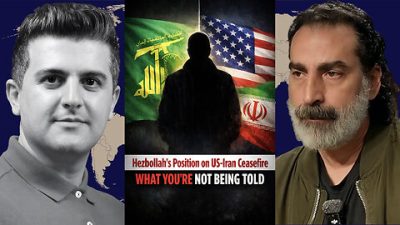
Laith Marouf: Hezbollah’s position on US-Iran ceasefire
or go to
Aletho News Archives – Video-Images
From the Archives
The Dirty Little Secret behind the “Global Terrorism Index”
The Omission of Israeli Terrorism in the Occupied Palestinian Territories
By Karin Brothers | Global Research | December 6, 2014
… The Israeli settlements — all of which are illegal – have been identified as a major impediment to peace. The refusal of a major “global” terrorism report to name the Israeli settlers as one of the groups most responsible for terrorism not only misrepresents a major source of regional violence but exposes the Global Terrorism Index as a propaganda tool that supports a U.S. agenda.
In recent years, governments have been attempting to thwart terrorism by blocking supportive fund-raising. When it comes to Israeli settlements, however, the US and Canada actually encourage fund-raising by giving organizations (such as Christian Friends of Israeli Communities (CFOIC) and the Jewish National Fund) financial support in the form of donor tax-deductions.
Charities which provide funds for the Israeli settlements should be regarded as terror-financing organizations. They should not only lose their tax-deductible status, but they should be banned because they support the violation of international humanitarian law. The terror-financing laws that are being strictly enforced for Muslim charities should be applied to Christian and Jewish charities as well. … Read full article
Blog Roll
 Aletho News
- How UK Regulator Ofcom Quietly Bypassed International Law to Police American Speech
- The Black Cube Files: How Former Mossad Operatives Flipped a Nation
- Laith Marouf: Hezbollah’s position on US-Iran ceasefire: What you’re not being told
- Israel’s priority lies in destroying chances of peace between Iran, US: Ex-UN nuclear chief
- Ceasefire for all or for none: Iran shuts Hormuz over Lebanon attacks
- Strait of Hormuz is Iran’s ‘nuclear weapon’ that forced US retreat: Medvedev
- Energy crisis will last for months – Kremlin envoy
- Europe’s quiet role in the war on Iran
- Forty days that shook the Empire: How Iran turned the tables on US and prevailed
- Netanyahu unilaterally declares Lebanon outside of ceasefire deal
- If Americans Knew
- Tucker Carlson on Israel: This Is the Behavior of an Ally? Really?
- Gazans face a triple crisis: severe shortages of water and bread, healthcare in tatters
- NY Times reports how Netanyahu took the US into Iran War
- A sigh of relief over Iran, but Gaza and Lebanon in dire straits – Daily Update
- Thousands dead and neighborhoods razed to the ground: Aid agencies fear southern Lebanon is becoming the new Gaza
- The war the US is fighting for Israel could cost trillions
- ‘Cigarette Burns, Nail Wounds’: Toddler Tortured in Gaza to Coerce Father
- Trump Says US Sent ‘a Lot of Guns’ to Protesters in Iran
- Israeli forces destroy 17 UN peacekeeper cameras in south Lebanon
- US-Israeli strikes ‘completely destroy’ synagogue in Tehran
- No Tricks Zone
- An Inconvenient Tree: Uncovered In Alps… Europe Much Warmer Than Today 6000 Years Ago
- New Study Reports A 60% Slowdown In Greenland’s Ice Loss Rate In The Last Decade
- Low Intensity Tornado Wrecks Major Solar Farm, Creating A Potential Toxic Dump
- New Study Finds Warming Saves Lives…Cold Temperatures 12 Times More Deadly Than Excess Heat
- German Science Blog Accuses PIK Climate Institute Of Hallucinating Climate Tipping Points
- Devastating Assessment Of Comirnaty Vaccine By Former Senior Pfizer Europe Toxicologist
- New Study: CO2 Is ‘Effectively Negligible’ As An Explanatory Climate Change Factor Since 2000
- Former Pfizer Toxicologist Dr. Helmut Sterz Tells Bundestag Hearing Pfizer Vaccine Should Have Never Been Approved
- Energy Expert: Germany’s Nuclear Phaseout Was A “500 Billion Euro Mistake”
- New Research: South Australia’s Mid-Holocene Sea Surface Temperatures Were 4°C Warmer Than Today
 Aletho News