Media More Outraged by Possible Murder by Putin Than Definite Murder by Obama
By Matt Peppe | Just the Facts | January 24, 2016
The British government, whose foreign policy is overtly hostile to their Russian counterpart, declared last week that their investigation into the killing of a former Russian intelligence agent in London nearly a decade ago concluded there is a “strong probability” the Russian FSB security agency was responsible for poisoning Alexander Litivenko with plutonium. They further declared that Russian President Vladimir Putin “probably approved” of the act. The British investigation, which was likely politically motivated, seemingly raised more questions than it answered. But American corporate media were quick to use the accusations against Putin to demonize him, casting him as a pariah brazenly flaunting his disregard for international conventions.
The Washington Post (1/23/16) editorial board wrote that “Robert Owen, a retired British judge, has carefully and comprehensively documented what can only be called an assassination… Mr. Owen found (Andrei) Lugovoi was acting ‘under the direction’ of the FSB in an operation to kill Mr. Litivenko – one that was ‘probably approved’ by the director of the FSB and by Mr. Putin.”
Actually, Owen did not find that former KGB operative Lugovoi was acting under the direction of the FSB to kill Litivenko. He found there was a “strong probability” this was the case. This means that even in Owens’s view, there is not near certainty, which would meet the legal standard of reasonable doubt that would preclude a guilty judgement. There is even more doubt that even if it were the case the FSB ordered the murder, they did so on Putin’s orders.
The New York Times editorial board (1/21/16) finds the investigation’s results “shocking.” For the Times, this confirms a pattern of Putin’s rogue behavior. They claim Putin’s “deserved reputation as an autocrat willing to flirt with lawlessness in his global ventures has taken on a startling new aspect.”
Both of the prestigious and influential American newspapers argue that the British findings impugn Putin’s respectability in international affairs. The Times says:
Mr. Putin has built a sordid record on justice and human rights, which naturally reinforces suspicion that he could easily have been involved in the murder. At the very least, the London inquiry, however much it is denied at the Kremlin, should serve as a caution to the Russian leader to repair his reputation for notorious intrigues abroad.
The more hawkish Post says: “This raises a serious question for President Obama and other world leaders whose governments do not traffic in contract murder. Should they continue to meet with Mr. Putin as if he is just another head of state?”
Putin’s alleged “sordid record on justice and human rights,” which is taken for granted without providing any examples, is seen as bolstering the case for his guilt in the case of the poisoning death of Litivenko. This, in turn, adds to his “notorious” reputation as a violator of human rights.
The Post draws a line between the lawless Putin and the respectable Western heads of state, such as Obama. Though they frame their call to treat Putin as an outcast as a question, it is clearly intended as a rhetorical question.
It is curious that The Post draws a contrast between Putin and Obama, whose government is supposedly above such criminality. The newspaper does not mention the U.S. government’s drone assassination program, which as of last year had killed nearly 2,500 people in at least three countries outside of declared military battlefields. Estimates have shown that at least 90 percent of those killed were not intended targets. None of those killed have been charged with any crimes. And at least two – Anwar al-Awlaki and his 16-year-old son Abdul Rahman – were Americans.
Obama himself is personally responsible for those killed by missiles launched from unmanned aircraft over the skies of sovereign countries. Several news reports have indicated that Obama is presented in meetings each week by military and national security officials with a list of potential targets for assassination. Obama must personally approve each target, at which point they are added to the state-sanctioned “kill list.”
The British government has also assumed for itself the power to assassinate its own citizens outside a declared battlefield. Last fall, Prime Minister David Cameron ordered the deaths of two British citizens in Syria, who were subsequently disposed of in a lethal drone strike.
The Washington Post editorial board (3/24/12) claimed that Obama was justified in carrying out lethal drone strokes that kill American citizens “to protect the country against attack.” Their lone criticism was that “an extra level of review of some sort is warranted.”
After it was revealed that an American hostage was inadvertently killed in a drone strike in Pakistan, The Post (5/1/15) said that the issue of whether the American government continues to conduct drone strikes should not be up for debate. “(T)here is little question that drones are the least costly means of eliminating militants whose first aim is to kill Americans,” they wrote.
While they tacitly accept the legal rationale for Obama’s assassination program, the New York Times editorial board at least demonstrated some skepticism. In “A Thin Rationale for Drone Killings” (6/23/14), they called the memo “a slapdash pastiche of legal theories – some based on obscure interpretations of British and Israeli law – that was clearly tailored to the desired result.” They say that “the rationale provides little confidence that the lethal action was taken with real care.”
Yet they do not chastise Obama for his “intrigues abroad” nor do they condemn this as an example of his “sordid record on justice and human rights,” language they used for Putin. The idea that relying on what are transparently inadequate legal justifications for killing an American citizen without due process would merit prosecution is clearly beyond the limits of discussion for the Times.
Recently Faheem Qureshi, a victim of the first drone strike ordered by Obama in 2009 (three days after his induction as President), who lost multiple family members and his own eye, told The Guardian that Obama’s actions in his native lands are “an act of tyranny. If there is a list of tyrants in the world, to me, Obama will be put on that list by his drone program.”
Surely both The New York Times and Washington Post disagree with Qureshi, because they believe the U.S. government is inherently benevolent and its motives are beyond reproach. But based on their editorials about the British investigation of the Litivenko poisoning, if Putin was responsible and was described by Qureshi in the same way, they would wholeheartedly agree.
The U.S. government and its allies in NATO, like Great Britain, have a clear agenda in vilifying Russia and its President. The US-NATO alliance supported the government that came to power in Ukraine in 2014 through a coup. After provinces in Eastern Ukraine – the vast majority of whose population is ethnically Russian and Russian-speaking – refused to recognize the NATO-backed coup government in Kiev, the Russian government supported them.
It should be easy to see how, from Russia’s perspective, the Ukranian conflict can be understood as an extension of NATO encroachment towards Russia’s borders that has continued unabated since James Baker told Mikhail Gorbachev in 1991 NATO would move “not an inch east.”
“We’re in a new Cold War,” Stephen Cohen, professor of Russian studies and politics, told Salon. “The epicenter is not in Berlin this time but in Ukraine, on Russia’s borders, within its own civilization: That’s dangerous. Over the 40-year history of the old Cold War, rules of behavior and recognition of red lines, in addition to the red hotline, were worked out. Now there are no rules.”
Additionally, Russia’s support for Syrian President Bashar al-Assad since 2011 throughout that country’s civil war, and more recently its direct military intervention in the conflict that has turned the tide against US-backed rebels, has strongly rankled Washington.
The language used by top government officials to describe Russia has been astoundingly combative. Defense Secretary Ash Carter, the man in charge of the entire US military, claimed Russia is responsible for aggression and is “endangering world order.”
The U.S. government’s hyping of the Russian “threat” has been used to justify massive spending on the U.S. space program and other military expenditures, such as the $1 trillion to upgrade nuclear weapons,
One could even argue that the narrative of an aggressive and belligerent Russia is the principal justification for the continued existence of the NATO itself, two and a half decades after the breakup of the Soviet Union. The alliance allows the US military to be stationed in hundreds of bases throughout Europe under the guise of a purely defensive organization.
The U.S.’s most prominent media organizations should demonstrate the strongest skepticism towards the policies and actions of their own government. At the very least, they should hold their own country’s leaders to the same standards as they do others. But time and again, the media choose to act as a mouthpiece to echo and amplify Washington’s propaganda. They do the government’s bidding, creating an enemy and rallying the public towards a confrontation they would otherwise have no interest in, while allowing the government to avoid accountability for its own misdeeds.
WaPo’s Jennifer Rubin: More Regime Change, Please!

By Daniel McAdams | Ron Paul Institute | January 21, 2016
Most normal people look at the smoldering cemetery that is post-“liberation” Libya, the gruesome graveyard of an almost-“liberated” Syria, the 14 year slow-motion failed regime change in Afghanistan, blood-drenched Iraq, and they are horrified. Washington Post’s neocon nag Jennifer Rubin looks across that bloody landscape and sees a beautiful work in progress.
She writes today in the online edition of the Post that despite what we might be hearing from some “libertarian/populist pols masquerading as conservatives,” the interventionist enterprise is chugging along just fine. Democracy promotion at the barrel of a gun is every American’s “white man’s burden” whether he likes it or not.
Never mind that Syria has been nearly leveled by almost five years of an Islamist insurgency that was but a few weeks from success when Russia stopped it in its tracks. The real villain is the secular Bashar al-Assad, writes Rubin. After all, he “is partnered with Iran and spurs support for Islamist rebels…”
Assad “spur[s] support for Islamist rebels” by waging war on them for six years? Or does she somehow deny that Assad is fighting the insurgents who seek to drive him from power? Both cannot be true.
And on Planet Rubin, funding, training, and arming Islamist rebels, as the US and its allies have done, can in no way be seen as spurring them on.
“It has become fashionable in some circles to pooh-pooh support for democracy,” Rubin moans. Not so fast, she says. This is not a failed project. Her evidence? From all the countries destabilized by US democracy promotion schemes there is “one encouraging success story” — Tunisia!
Yes, after the destruction and killing in places like Egypt, Libya, Syria, Iraq, and the rest, it is the great success in little Tunisia that makes it all worthwhile!
Unfortunately for Rubin, even her little Tunisian success story looks to have an unhappy ending. As reported by BBC News, unrest is spreading throughout Tunisia as demonstrators are clashing with police. Tunisians are in far worse economic shape now than before the US-backed “Arab Spring” brought them their “liberation.” One-third of young people are unemployed in post-liberation Tunisia and 62 percent of recent college graduates cannot find work.
“We have been waiting for things to get better for five years and nothing has happened,” Yassine Kahlaoui, a 30-year-old jobseeker, told the AP as reported by the BBC.
Here is the ugly truth that regime change enthusiasts like Rubin will never admit: it is very easy to destabilize and destroy a country from abroad in the name of “promoting democracy,” but those recipients of America’s largesse in this area soon find that it is all but impossible to return a country to even pre-“liberation” economic levels. They are left missing their “dictator.”
What does Rubin care: she doesn’t have to live in these hellholes she helps create.
Red lines and dollar signs: the business of the Syrian War
The Rant Foundry | January 23, 2016
A damning report on the conflict of interests in the Syrian Crisis debate identified numerous corporate and defense industry ties of experts and think tanks who commented on potential military intervention. Much of the debate over Syria got underway in 2013, when not only were the conflicts-of-interest and military-industrial complex ties of these “consultants” and “experts” rarely disclosed, but the ideas they expressed were mere permutations of an ideologically narrow spectrum of U.S. and Western neo-conservative interventionism.
As US official sources are now claiming that ISIS is developing chemical weapons those same experts and think tanks are back with a vengeance.
The conflict-of-interest report by the Public Accountability Initiative (http://public-accountability.org) offers a new look at an issue raised by David Barstow’s 2008 Pulitzer Prize-winning New York Times series on the role military analysts played in promoting the Bush Administration’s narrative on Iraq. In addition to exposing coordination with the Pentagon, Barstow found that many cable news analysts had industry ties that were not disclosed on air.
During the public debate around the question of whether to attack Syria, Stephen Hadley, former national security adviser to George W. Bush, made a series of high-profile media appearances. Hadley argued strenuously for military intervention in appearances on CNN, MSNBC, Fox News, and Bloomberg TV, and authored a Washington Post op-ed headlined “To stop Iran, Obama must enforce red lines with Assad.” The phrase “red line” has been used numerous times in reference to Syria and its President Bashar al-Assad, particularly in attempt to establish the legal intervention of Russian forces in Syria as a crossing of those lines. It was also used in 2014 by those in favor of forcible ‘regime change’ in Syria when rockets with sarin filled warheads landed in rebel-held residential areas in Ghouta, Syria, killing hundreds and injuring thousands. Each side naturally blamed the other, with western intelligence agencies providing evidence supporting the opposition, and Russian intelligence supporting the regime. Both sides issued biased reports with cherry-picked evidence, only adding to the confusion. An analysis of all evidence relating to the August 21st chemical attack indicate it was carried out by opposition forces. According to the most likely scenario, they used looted incendiary rockets, refilled them with sarin they manufactured themselves, and launched them from a rebel-held territory 2 km north of Zamalka.
Stephen Hadley’s television audiences were never informed that he serves as a director of Raytheon, the weapons manufacturer that makes the Tomahawk cruise missiles that were widely cited as a weapon of choice in a potential strike against Syria. Hadley earns $128,500 in annual cash compensation from the company and chairs its public affairs committee. He also owns 11,477 shares of Raytheon stock, which traded at all-time highs during the Syria debate ($77.65 on August 23, making Hadley’s share’s worth $891,189). Despite this critically important financial stake, Hadley was presented to his audience as an experienced, independent national security expert.
Though Hadley’s undisclosed conflict is particularly egregious, it is not unique. The following report documents the industry ties of Hadley, 21 other media commentators, and seven think tanks that participated in the media debate around Syria. Like Hadley, these individuals and organizations have strong ties to defense contractors and other defense- and foreign policy-focused firms with a vested interest in the Syria debate, but they were presented to their audiences with a veneer of expertise and independence, as former military officials, retired diplomats, and independent think tanks.

A pentagonal network: think tank-defense industry ties [image via public-accountability.org]
If the recent debate around Syria is any guide, media outlets have done very little to address the gaps in disclosure and abuses of the public trust that Barstow exposed. Some analysts have stayed the same, others are new, and the issues and range of opinion are different. But the media continues to present former military and government officials as venerated experts without informing the public of their industry ties – the personal financial interests that may be shaping their opinions of what is in the national interest. This report details these ties, in addition to documenting the industry backing of think tanks that played a prominent role in the Syria debate. It reveals the extent to which the public discourse around Syria was corrupted by the pervasive influence of the defense industry, to the point where many of the so-called experts appearing on American television screens were actually representatives of companies that profit from heightened US military activity abroad. The threat of war with Syria may or may not have passed, but the threat that these conflicts of interest pose to public discourse – and democracy – is still very real.
The Washington Post’s world of good and evil
By Danielle Ryan | RT | December 29, 2015
No other country, with the exception of maybe China, gets as much of a look in as Russia does from the Washington Post’s editorial board.
It’s hardly strange that the newspaper would focus some of its attention on Russia, an increasingly influential global player, but it does seem to have a bit of a bee in its bonnet about the old enemy.
Reading the Post’s editorials on matters of global affairs is like an exercise in understanding the very worst imaginable interpretation of American exceptionalism — and the latest dispatch on Syria is a perfect example. The headline reads: “A UN resolution on Syria is shattered – and Russia is to blame.”
The UN resolution referred to by the Post stated that all parties must “immediately cease any attacks against civilians and civilian objects” as well as “any indiscriminate use of weapons, including through shelling and aerial bombardment.” Leaving aside the laughable notion that the US itself would adhere to such a resolution and “immediately cease” anything whatsoever, let’s take a look at what concerned the Post.
Two days after the resolution was passed, the editorial says, Russia carried out strikes in the northern Syrian provincial capital of Idlib “killing scores of civilians”. It is not for this writer to judge the authenticity of that claim or to question the word of the Post’s reporter in Beirut — and it would be ludicrous to claim Russia’s strikes have killed not one civilian, but it is at least worth noting that one of the newspaper’s original sources for the story was The Syrian Observatory for Human Rights, an ‘organization’ run out of a home in Coventry by one man who hasn’t visited Syria in 15 years, has received “small subsidies” from the European Union, and whose reports are at best, unreliable. Nevertheless, SOHR has become one of the single-most important “sources” of information on Syria in the Western press.
Irony lost
The Post continues on, unabashed. Secretary of State John Kerry, they chide, should be embarrassed by “this outrage” which “shattered” the UN resolution. They say this without so much of a hint of irony as the US continues to wage its illegal bombing campaign in the country they purport to care so very deeply about. They always care, you see. The more they care, the more bombs they want to drop.
And in the Post’s world, the UN is important and should be respected. Unless you’re the United States, in which case, go ahead and do whatever you want. Ever the pen-wielding champions for the spreading of good old freedom and democracy, they are always there, on the frontlines, cheering on America’s wars. It’s awfully easy to be in favor of ‘humanitarian’ military interventions when you comfort yourself with the knowledge that it’s okay, because you’re the good guys — always. But still, the board likes to be outraged (!) — and it needs to get its outrage fix from somewhere.
At least they’re consistent
Enter Russia. You have to at least hand it to the Post for its consistency. Russia and Putin continue to be the scapegoats for all seasons. There is nothing Moscow can’t be blamed for and nothing it can do right. If the Kremlin produced a cure for cancer tomorrow, the Post would re-imagine it as a sinister plot devised by Putin to put Western oncologists out of jobs.
In early October, the board warned Obama: Don’t green light Mr. Putin’s Syria project. That piece argued that the “moderate” opposition to Assad — which in the real world includes Al-Qaeda’s Syria affiliate Al Nusra, should be given more US anti-tank missiles and that Putin should be given “red lines”.
In November, after the Paris attacks, sensing that things were moving in Putin’s favor, and that an international anti-ISIS coalition might be in the making, they jumped in to ensure no one thought that was a good idea with a piece headlined: Teaming up with Russia in Syria could be a dangerous.
And of course, when Turkey shot down a Russian jet near the Syrian border after claiming that it had violated Turkish airspace, the Post did its bit to make sure no one was left with the wrong impression about who exactly was responsible for the incident: Russian “provocations” and “dangerous behavior of Vladimir Putin’s regime.” Reading that, you’d be forgiven for thinking that it was Russia recklessly shooting planes out of the sky. One wonders would the Post’s reaction have been the same if an American warplane had been shot down in Syria? It’s certainly unlikely (to say the least) that the Post would be calling the US’s illegal flights over the war-torn country “provocations” and demanding accountability.
Occasionally, the newspaper likes to dabble in wishful thinking. Not the editorial board, but an opinion piece published by the Post in late November asked: Is Syria the beginning of the end of Putinism?
It’s our world. Everyone else just lives in it.
The Post’s penchant for US exceptionalism extends far beyond Syria. Here, they lament, Obama just “doesn’t understand” Putin’s “Eurasian ambitions”. Apparently it’s not worth noting that Russia is in fact a massive Eurasian country, unlike say, the US.
And God forbid any other countries might think they could act independently of Washington in any arena. Obama was “right to order a sail-by” in the South China Sea because “failure to respond” to the “aggression” of other countries is always the greatest sin. Meanwhile, Iran “steps up its aggression” in the Middle East. The list goes on and the Washington Post’s editorial board fails, time and again, to see the irony.
That’s the kind of world the Post’s editors live in: Black and white. Good and evil. We’re always right, you’re always wrong. Do what we say, not as we do. The destruction this kind of thinking leaves in its wake is always someone else’s problem to solve.
Danielle Ryan is an Irish freelance journalist and media analyst. She has lived in the US and Germany and is currently based in Moscow. She previously worked as a digital desk reporter for the Sunday Business Post in Dublin. She studied political reporting at the Washington Center for Politics & Journalism in Washington, DC and also has a degree in business and German. She focuses on US foreign policy, US-Russia relations and media bias.
Propaganda Can’t Melt Steel Beams
By Kevin Ryan | Dig Within | December 20, 2015
Eleven years ago, I initiated a discussion about the fact that jet fuel fires could not have melted steel at the World Trade Center. The government agency investigating the WTC destruction responded by holding “some of its deliberations in secret.” Although it’s not a secret that jet fuel can’t melt steel, due to propaganda from sources like The Washington Post and The Huffington Post, Americans often get confused about what facts like that mean to any national discussion. In a nutshell, what it means is that the molten metal found at the WTC, for which there is a great deal of evidence, cannot be explained by the official 9/11 myth.
No one thinks that jet fuel fires can melt steel beams—not even The Posts’ new science champion, who doesn’t bother to actually use jet fuel or steel beams to teach us about “retarded metallurgical things,” believes it. Instead, he uses a thin metal rod and a blacksmith forge to imply that, if the WTC buildings were made of thin metal rods and there were lots of blacksmith forges there, the thin metal rods would have lost strength and this would be the result. If you buy that as an explanation for what happened at the WTC, you might agree that all the “truthers” should just stop bothering everyone and go get jobs.
 This absurd demonstration highlights at least two major problems with America’s ongoing struggle to understand 9/11. The first is that there was a great deal of molten metal at the WTC. Those who know that fact sometimes share internet memes that say “Jet Fuel Can’t Melt Steel Beams” when they want to convey that “Thermite Melted Steel at the WTC.” The second major problem is that certain mainstream media sources continue to put a lot of energy into dis-informing the public about 9/11.
Sources like The Posts, The New York Times and some “alternative media” continue to work hard to support the official myth of 9/11. That effort is not easy because they must do so while providing as little actual information about 9/11 as possible. The dumbing down of the average citizen is a full time job for such propagandists. Luckily for them, American students receive almost no historical context that encourages them to think critically or consider ideas that conflict with blind allegiance to their government. When it comes to the WTC, it also helps that almost 80% of Americans are scientifically illiterate.
As media companies attempt to confuse the public about 9/11, they must avoid relating details that might actually get citizens interested in the subject. For example, it’s imperative that they never mention any of these fourteen facts about 9/11. It is also important to never reference certain people, like the ordnance distribution expert (and Iran-Contra suspect) who managed security at the WTC or the tortured top al Qaeda leader who turned out to have nothing to do with al Qaeda. In fact, to support the official myth of 9/11 these days, media must ignore almost every aspect of the crimes while promoting only the most mindless nonsense they can find. That bewildering strategy becomes more obvious every day.
New York Times propaganda article on Ukraine’s blockade of Crimea
By Roger Annis – New Cold War – December 2, 2015
Western media has published yet another doom and gloom article on Crimea, repeating a worn theme that surely, by now, the people of Crimea must be reconsidering their vote 21 months ago to secede from Ukraine and rejoin the Russian Federation.
The article was published in the New York Times on Dec 1 and is titled, ‘Months after Russian annexation, hopes start to dim in Crimea‘. This one has to skate around a new, added twist to the Crimea story: the electricity and commercial road transport blockade that has been mounted by small numbers of the extreme-right in Ukraine but endorsed by the governing regime in Kyiv while Western governments turn a blind eye.
The article begins:
SHCHYOLKINO, Crimea–When residents in this typical Soviet factory town voted enthusiastically to secede from Ukraine and to become Russians, they thought the chaos and corruption that made daily life a struggle were a thing of the past. Now that many of them are being forced to cook and boil drinking water on open fires, however, they are beginning to reconsider.
The article employs time-honored methods for when a pre-determined, negative theme is required and important facts must be obscured.
One, find disgruntled citizens in the street and cite them. That’s not difficult to do–is there a country in the world without many unhappy citizens? The Times writer cites two such people in his article.
Two, make it appear that the disgruntled citizen(s) speaks for large numbers of his or her fellow citizens.
Three, negative imagery is important. Thus we read in the Times article, “Twenty months after the Kremlin annexed the Black Sea peninsula amid an outpouring of patriotic fervor by the ethnic Russian population, President Vladimir V. Putin’s promise in April 2014 to turn it into a showcase of his rule now seems as faded as Crimea’s aging, Soviet-era resorts.” Very evocative–‘aging, Soviet-era resorts’. This recalls the decades of New York Times reporting of aged-looking buildings in Cuba during the decades of the U.S. embargo of the island. The embargo made it difficult for Cuba to manufacture or obtain paint and building materials; such things as public health care, public education, international aid and solidarity, and national defense took priority. So yes, this writer visited Cuba three times during the 1990s and, indeed, many buildings in Havana looked aged. But the spirit of the people and the outlook for the country was anything but tired and worn out. To my eyes, the people were much more spirited and forward looking compared to what I experienced in wealthy Canada.
Four, the key word in all reporting of Crimea is “annex”, as per the above citation. The people in Crimea voted overwhelmingly in March 2014 for secession from Ukraine, following a violent, right-wing coup against the elected president of that country (a president for whom a large majority of Crimeans had voted in 2010). The secession referendum was organized by the elected and constitutional Crimean legislature, whose legality contrasted sharply with the illegal, coup regime which came into power in Kyiv on Feb 21, 2014. Crimeans have affirmed in survey after survey that they are satisfied with the secession decision. Yet, Crimeans are presented in the Times as hapless people who have been “annexed” by Russia. The Times reference to the secession as happening “amid an outpouring of patriotic fervor” suggests that the people were so swept away by fervor as to be too dumb to realize what was really taking place. They were not choosing a future of their own free will; no, they were undergoing “annexation” without even being aware.
Five, blame the victims for their plight. Thus we read in the Times article , “… people here are not sure whom to blame more for their predicament: the Crimean Tatar activists and Ukrainian nationalists who cut off Crimea’s link to the Ukrainian power grid or the local government officials who claimed to have enough power generators stored away to handle such an emergency.” Here we have an absurd spectacle of the Crimean government being blamed for failing to foresee and prepare for the day that right-wing extremists in Ukraine would blow up the electricity transmission lines serving the peninsula. Even more recklessly, the Crimean government failed to foresee that the blowing up of transmission lines by right-wing terrorists (oops, “cutting off of Crimea’s links” by “activists”) would be endorsed and escalated by the regime in Kyiv and that Western governments would turn a blind eye and Western media would largely be silent.
Six, and finally, choice of headline to convey the negative message is key. In this case, we have “hopes start to dim”. In reality, the Times headline joins a long parade of such headlines. Pick a typical, negative word, use it alongside the word “Crimea” in an internet search, and, voilà, you arrive in a world of negativity over prospects for Crimea. Here is a small sample of the trade in negative Crimea headlines and stories:
- Crimea’s football fans shiver at prospect of their team playing in Siberia (The Guardian, March 2014)
- Why Russia’s Crimea move fails legal test, (BBC, March 2014)
- Crimea after annexation: ‘We feel utterly discouraged,’ resident says (Belsat TV, in Belarus, April 2014)
- Crimea euphoria fades for some Russians (Reuters, July 2014)
- Tourism suffers in Crimea as Ukraine shuns breakaway region (Washington Post, Aug 2014)
- Kremlin preparing to combat demos as signs of Crimea-fatigue appear, (‘Euromaidan Press‘, Sept 2014)
- Human rights in decline in Crimea (Human Rights Watch, Nov 2014)
- To many in Crimea, corruption seems no less at home under Russian rule, New York Times, Aug 2015)
Oddly–well, not so oddly–the last article in this list was about Crimean citizens trying to take back into public control Black Sea waterfront land which had been lost during Crimea’s time in post-1991 Ukraine.
Funnily enough, the Times article concludes with a quotation from a Crimean woman that is supposed to show that Russians are naïve and habitual complainers who always blame others for their failings and shortcomings. But the quotation is the closest thing to truth in the entire article (leaving aside the suggestion that the extreme rightists in Ukraine who blew up electricity lines are “Tatars”):
As often happens in Russia, some blame Washington rather than Moscow or Kiev.
“If it wasn’t for the Americans, none of it could have happened. The Tatars, who are supported by the United States, would not do a thing,” said Tatyana Bragina, 57, an energetic woman who also once worked construction at a nearby, unfinished nuclear plant.
“Please write that we are not desperate. On the contrary, we are full of joy,” Ms. Bragina said, standing near a black iron kettle boiling away in the courtyard of her apartment block.
Russian legislator Konstantin Kosachev has said that Kyiv’s electricity and road-transport blockades against Crimea constitute a “gesture of final farewell” to Crimea.
Russia is racing to construct electricity, natural gas, road and rail links to Crimea across the 3 km wide Kerch Strait, which separates the Sea of Azov from the Black Sea. The first of the electricity will begin to flow in a few weeks. Crimea will be fully supplied with electricity by the summer 2016. Soon after that, it will be producing its own electricity courtesy of the gas pipeline under construction. By 2019, the road and rail bridge will begin to operate.
Israelis – Not Muslims – Cheered in Jersey City on 9/11
A Black Agenda Radio commentary by Glen Ford | November 25, 2015
The corporate media don’t like Donald Trump. They used to like him a lot; in fact, Big Business Media are responsible for making this minor multi-millionaire into a household name. But Trump is on their hit list, nowadays, because the Republican presidential candidate insists on telling his own lies, rather than sticking to the list of official lies parroted by corporate media every minute of every day.
Donald Trump told a really “HUGE” – as he would put it – lie when he claimed to have watched thousands of Muslims cheering in Jersey City, New Jersey, as the World Trade Center came down on 9/11. Every corporate news outlet in the country rushed to debunk Trump’s fictitious account. The Washington Post offered psychological theories for why Trump gets away with telling fantastic lies. The New York Times said there was no evidence that Jersey City Muslims cheered the destruction on 9/11. CNN said it never happened. And, they were right.
However, by making only a partial correction of Donald Trump’s prevarication, the corporate media were telling their own lie about what happened on 9/11. There was, in fact, celebration in Jersey City on that fateful morning, and the incident did, briefly, make a major news splash. But the people doing the cheering weren’t Muslims: they were five young Israelis in a white moving van, who were observed in Liberty Park ecstatically taking pictures of themselves framed against the smoking ruins of the Twin Towers. As ABC News reported, the five were later arrested at gunpoint near the New Jersey Giants football stadium. Most U.S. intelligence sources believed the men were Israeli spies, and that their “moving company” was an Israeli intelligence cover. They were detained for a while, and then deported.
“Who is the biggest liar?”
In the year before 9/11 scores of young Israelis posing as “art students” were arrested after penetrating U.S. Defense Department and other classified sites. Both stories made national news. The corporate media could not have avoided running across articles on the “cheering Israelis” when they set about debunking Donald Trump’s “cheering Muslims” account. But, not one of them dare to mention that, yes, some people were seen celebrating 9/11 at Liberty State Park in Jersey City.
I was in a different part of the park on 9/11 morning, alone except for two young Israelis with very expensive cameras, carrying phony New Jersey press credentials, who claimed to be Polish but spoke Hebrew to each other. The two young men were giddy with joy at the destruction that the three of us were observing across the Hudson River.
Later that day, I learned from local and national news outlets about the five Israelis who were dancing with delight about a mile upriver from me and the two other Israelis. Articles about Israelis celebrating 9/11 would have come up in any search to correct Donald Trump’s tall tale – but the corporate media kept that part of the story from the public. They censored their own correction of Donald Trump. So, who is the biggest liar? Trump, who lies to advance his own personal interests, or the U.S. corporate media, who lie to the people on behalf of the State of Israel, and Zionism.
Glen Ford can be contacted at Glen.Ford@BlackAgendaReport.com.
Israel Takes On the First Amendment
Free speech except regarding Palestine

Philip Giraldi • Unz Review • October 27, 2015
I always enjoy reading the Washington Post each morning even though it drives my blood pressure up to stratospheric levels. Its embrace of the inexorability of a fabulous new Camelot-like Clinton White House is thrilling to witness as it unfolds, but it is the promotion of the neocon Israeli narrative that is most exciting. On October 23rd, the op-ed section outdid itself with a piece “Free speech is flunking out on campus” by Catherine Rampell, who described the increasingly sorry state of first amendment rights on politically correct American university campuses. Blacks, LGBTers, women and victims of sexual assault were all identified as constituencies demanding “safe spaces” resulting in curtailment of free speech but somehow Israel and its supporters screaming anti-Semitism at every drop of the hat were left out in spite of the fact that Jews on campus have been both extremely and successfully active in taking political action to pressure universities whenever they claim to feel “threatened.”
The conflict between the Israelis and Palestinians has again reached a boiling point. Palestinian frustration over Israel’s fifty year occupation of the West Bank and its continued theft of Arab land and resources has produced an uprising of mostly young Palestinians that is being called in some circles a new intifada. The conflict is playing out with knives and bullets in Palestine and Israel but it is also being fought internationally in the media, through cultural and economic boycotts and, most pointedly, at many colleges and universities. Israeli Prime Minister Benjamin Netanyahu realizes that the pressure on Israel is, for the first time, serious and has not hesitated to lie outrageously about the slaughter of Jews in Europe during the Second World War. According to Netanyahu, the Palestinian Grand Mufti of Jerusalem gave the idea to Hitler, presumably justifying whatever the Israelis of today choose to do to suppress the current unrest.
Israel has inevitably responded brutally, producing a death toll of significantly more Palestinians than Israelis. Netanyahu has been referring to the protesters as terrorists and has issued new rules of engagement which permit soldiers to shoot stone throwers. Israeli plainclothes soldiers and police have been identified as infiltrating the protesters while pretending to be Palestinians, urging the young Arabs to hurl stones before pulling out concealed handguns to beat protesters, shoot them and make arrests.
In Gaza five teenagers were shot dead by Israeli soldiers for the crime of coming too close to the separation barrier, which government press releases described as the “frontier.” Killing teenagers in Gaza is a bit like shooting fish in a barrel as they are fenced in and have in reality no way to actually confront the Israeli border guards. On the day following the killing of the boys a mother and infant were killed in an Israeli airstrike. Within Israel an Eritrean was even mistakenly killed by Israeli police because he was reportedly acting oddly.
Because of a hostile media’s self-censorship buttressed by an unfriendly political class, here in the United States one of the few places in which the Palestinians can exercise something like free expression relating to their national aspirations is on college campuses. Israel and its powerful supporters understand that gap in their ability to control the narrative and are doing everything possible to shut down the option.
Friends of Israel, as ever, work from the same playbook orchestrated by the large donors who fund them. They claim that anti-Israel protests on campus to include even letters to the editor in college newspapers constitute a “threatening environment” for Jewish students. The argument is based on a fundamental falsehood, which is that criticism of the actions of a foreign government is equivalent to hatred for the dominant religion of that country, that religion is exactly the same as nationality. Applying that notion liberally would mean that criticism of any country where there is de facto or de jure a dominant state religion would be unacceptable speech. If applied liberally countries spanning the globe would be exempt from criticism, to include not only Israel but also Saudi Arabia and Iran.
But this is not about Christian or Muslim sensitivities. It is all about protection against insult for Jews and it relies on a perception of perpetual victimhood, which can be and is produced on demand to stifle any criticism that might be regarded by some as objectionable. Indeed, if calls for violence directed against Jews as a race or religion were occurring pleas for some form of mitigation might have some very slim cogency, but campus protest movements have very carefully and deliberately avoided falling into that trap. And it might also be pointed that on many campuses a considerable proportion of the dissenters are themselves Jews who are appalled by Israeli behavior.
Criticism of Israel does not just include complaining about the policies of that country’s government. It also has inevitably involved the so-called BDS movement, “boycott-divest-and sanction” which aims to make Israel pay an economic and social price for its behavior, similar to the pressure that was once directed against apartheid South Africa. This second narrative has been cleverly woven into the complaints about “harassment,” labeling any campus calls for BDS ipso facto anti-Semitic and “hurtful.” School authorities have generally been accommodating to claims made by Jewish groups that students are feeling “threatened,” obstructing and intimidating critics of Israel and denying tenure to faculty members who are seen as troublemakers. They have looked the other way as organizations like Canary Mission began exposing college students on its website who are reported to be “anti-Freedom, anti-American and anti-Semitic” with the deliberate intention of damaging their future employment prospects.
Between January 2014 and June 2015 there were more than 300 incidents on 65 college campuses in 24 states involving intimidation or prevention of protests against Israel. Students at Northeastern University distributing flyers at dorms were interrogated by campus police and had their group suspended by college authorities. Some were disciplined. And faculty members have also been on the receiving end, with Steven Salaita at the University of Illinois, denied a teaching position after he sent tweets complaining about Israel’s 2014 assault against Gaza which killed more than 500 children.
Richard Blum, a member of the University of California’s regents, has demanded that students who criticize Israel be suspended for expelled because they are “intolerant,” exhibiting anti-Semitic bigotry. Blum is the multimillionaire husband of California Senator Dianne Feinstein. Feinstein has also hinted that she could have the government look into possible violations occurring at federally funded institutions. The definition of bigotry being promoted by Blum and Feinstein conflates criticism of Israel with anti-Semitism and includes in its purview what are increasingly being referred to as “speech crimes.” The university regents are currently considering new language for their statement of policy against intolerance on campus but are under intense pressure from Jewish organizations that are lobbying them aggressively.
Many of the groups involved in the harassment of pro-Palestinian demonstrators are perhaps not surprisingly not indigenous to the colleges themselves. Stand With Us (SWU) and “Campus Maccabees” are national organizations well-funded by billionaire Sheldon Adelson and SWU has close ties to the Israeli government as does the lawfare center Shurat HaDin, which has filed lawsuits against Muslim and progressive groups on campus. Predictably, Congress and state legislatures have gotten into the act, seeking to pass laws that make it impossible for colleges and universities supported by taxpayer money to fund student groups that call for boycotts. The bills are drafted in terms of rejecting all selective boycotts but they are really all about Israel and everyone knows it. The fact that advocating voluntary boycotts is very much a part of one’s First Amendment rights appears to be irrelevant.
How to deal with it? The brouhaha is impossible to ignore as the advocates for Israel are relentlessly in one’s face even when the argument is being constructed in a restrained fashion and purposely framed so as not to offend Jews. It is consequently necessary to disarticulate being Israeli from being Jewish. Judaism is a religion and Israel is a foreign country. And it is important to recognize that legitimate direct criticism of Jewish groups for their involvement in pressuring universities should not itself be off limits. If the organizations self-identify as Jewish and they are attempting to restrict the discussion on Israel contrary to the First Amendment they become fair game. The First Amendment exists, after all, to permit free and open discussion of all issues and if some Jewish individuals and organizations are mobilizing to deny fundamental American rights on behalf of a foreign nation the rest of us have the responsibility to object forcibly and to make transparent just who is doing what to whom.
Featured Video
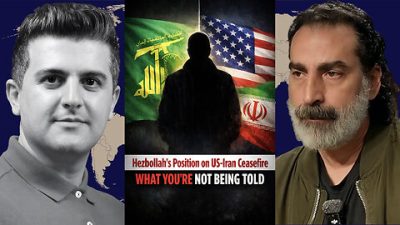
Laith Marouf: Hezbollah’s position on US-Iran ceasefire
or go to
Aletho News Archives – Video-Images
From the Archives
Is Israel to blame for the Iraq War?
American Goy | March 10, 2008
I am so tired of this old canard that “Israel had nothing to do with USA’s war with Iraq – in fact, it officially advised America against it”.
Bullshit. … continue
Blog Roll
 Aletho News
- Laith Marouf: Hezbollah’s position on US-Iran ceasefire: What you’re not being told
- Israel’s priority lies in destroying chances of peace between Iran, US: Ex-UN nuclear chief
- Ceasefire for all or for none: Iran shuts Hormuz over Lebanon attacks
- Strait of Hormuz is Iran’s ‘nuclear weapon’ that forced US retreat: Medvedev
- Energy crisis will last for months – Kremlin envoy
- Europe’s quiet role in the war on Iran
- Forty days that shook the Empire: How Iran turned the tables on US and prevailed
- Netanyahu unilaterally declares Lebanon outside of ceasefire deal
- Israeli leaders: ‘Not a single goal’ achieved in war with Iran
- What on earth just happened? Trump, Iran, and the unlikely ceasefire
- If Americans Knew
- Gazans face a triple crisis: severe shortages of water and bread, healthcare in tatters
- NY Times reports how Netanyahu took the US into Iran War
- A sigh of relief over Iran, but Gaza and Lebanon in dire straits – Daily Update
- Thousands dead and neighborhoods razed to the ground: Aid agencies fear southern Lebanon is becoming the new Gaza
- The war the US is fighting for Israel could cost trillions
- ‘Cigarette Burns, Nail Wounds’: Toddler Tortured in Gaza to Coerce Father
- Trump Says US Sent ‘a Lot of Guns’ to Protesters in Iran
- Israeli forces destroy 17 UN peacekeeper cameras in south Lebanon
- US-Israeli strikes ‘completely destroy’ synagogue in Tehran
- Archbishop for US Military Says Iran War Is Unjust Under Catholic Teaching
- No Tricks Zone
- An Inconvenient Tree: Uncovered In Alps… Europe Much Warmer Than Today 6000 Years Ago
- New Study Reports A 60% Slowdown In Greenland’s Ice Loss Rate In The Last Decade
- Low Intensity Tornado Wrecks Major Solar Farm, Creating A Potential Toxic Dump
- New Study Finds Warming Saves Lives…Cold Temperatures 12 Times More Deadly Than Excess Heat
- German Science Blog Accuses PIK Climate Institute Of Hallucinating Climate Tipping Points
- Devastating Assessment Of Comirnaty Vaccine By Former Senior Pfizer Europe Toxicologist
- New Study: CO2 Is ‘Effectively Negligible’ As An Explanatory Climate Change Factor Since 2000
- Former Pfizer Toxicologist Dr. Helmut Sterz Tells Bundestag Hearing Pfizer Vaccine Should Have Never Been Approved
- Energy Expert: Germany’s Nuclear Phaseout Was A “500 Billion Euro Mistake”
- New Research: South Australia’s Mid-Holocene Sea Surface Temperatures Were 4°C Warmer Than Today
 Aletho News