Economic BS in Rich Countries is Reinforced by BS about Venezuela
By Joe Emersberger | Zspace | December 13, 2012
It matters to the corporate media in rich countries that Venezuela’s economic performance under Chavez be trashed as much as possible. The Japan based blogger, Francisco Toro, who has written relentlessly in English about Venezuela, has been rewarded by the corporate media in the US and UK with easy access to large audiences for his attacks on the Chavez government.
The US media is busily trying to scam US readers into accepting cuts to Medicare and Social Security so as not to fall off a “fiscal cliff”. In a very recent TNR article, Toro also hypes the imagined perils of discarding neoliberal lunacy. Toro wrote
“… some forecasters estimate Venezuela’s 2013 budget deficit will reach an insane 19.5 percent of GDP (consider that Greece’s deficit topped out at 15.4 percent of GDP in 2009).”
In fact, the “forecasters” Toro cites are saying – insanely – that Venezuela’s fiscal deficit will hit 20% of GDP by the end of this year which has just about arrived. The Guardian, CNN and Washington Post have also run articles claiming Venezuela’s fiscal deficit is presently 16-20% of GDP.
However, the IMF, which is hardly run by Chavistas, said as recently as October that Venezuela’s fiscal deficit would be about 7.4% of GDP by the end of this year. Without checking the IMF projections, any competent and diligent reporter should have seen that the 16-20% numbers were extremely suspect. Venezuela’s budget deficit for 2011 was 5% of GDP. Venezuela’s economy grew in 2012 and oil prices didn’t plummet, so it would have taken a jump in government spending relative to GDP in one year that is totally unprecedented in the Chavez era to drive the deficit up that high.
Additionally, the absurdity of Toro’s comparison of Venezuela to Greece is nicely illustrated by the data for the country from which Toro now blogs.
As of 2011, Japan’s fiscal deficit was 9.7% of GDP. Its gross debt to GDP ratio was 211%. The numbers for Greece are 9.4% and 170% respectively. Based on Toro’s facile analysis, we’d have to ridiculously conclude that Japan is in worse shape than Greece. Clearly, debts (and deficits) relative to GDP do not tell us if a government’s fiscal policy is sustainable.
For a competent analysis of the sustainability of the Chavez government policies see this study by Mark Weisbrot and Jake Johnson. Weisbrot also took the WAPO editorial board to task in this blog post for citing a bogus figure for Venezuela’s fiscal deficit and for other foolishness.
Related articles
- The Achievements of Hugo Chavez (alethonews.wordpress.com)
- Does Hugo Chavez Keep Fooling Venezuelans? (alethonews.wordpress.com)
After NATO Strike Kills 8 Afghan Women, Pundits Still Wonder: Why Do They Hate Us?
By Peter Hart – FAIR – 09/17/2012
The protests and violence in Egypt, Libya and Yemen have caused a notable uptick in media discussions about, as Newsweek’s cover puts it, “Muslim Rage.”
Part of the corporate media’s job is to make sure real political grievances are mostly kept out of the discussion. It’s a lot easier to talk about angry mobs and their peculiar religion than it is to acknowledge that maybe some of the anger has little to do with religion at all.
Take the news out of Afghanistan yesterday: A NATO airstrike killed eight women in the eastern province of Laghman who were out collecting firewood. This has happened before. And attacks that kill a lot of Afghans–whether accidental or not–tend to be covered the same way–quietly, and with a focus not on the killing but on the ramifications.
So yesterday if you logged into CommonDreams, you may have seen this headline:
NATO Airstrike in Afghanistan Kills 8 Women
Now look for the same news in the New York Times today (9/17/12). It’s there–but the headline is this:
Karzai Denounces Coalition Over Airstrikes
The Times gave a clear sense of what was important: “Mr. Karzai’s condemnation was likely to rankle some Western officials…” the paper’s Matthew Rosenberg explained, who went on to explain that
the confrontational tone of the statement was a sharp reminder of the acrimony that has often characterized relations between Mr. Karzai and his American benefactors.
In the Washington Post, the NATO airstrikes made the front page–sort of. Readers saw this headline at the website:
4 troops killed in southern Afghanistan insider attack
As you might have already guessed, the killings of Afghan women are a secondary news event:
Four U.S. troops were killed Sunday at a remote checkpoint in southern Afghanistan when a member of the Afghan security forces opened fire on them, military officials said. The attack brought to 51 the number of international troops shot dead by their Afghan partners this year. The insider attack came on the same day that NATO warplanes killed nine women gathering firewood in the mountains outside their village in an eastern province, according to local officials.
One has to wonder whether, absent the deaths of U.S. troops, the airstrike would have made the news at all.
NYT and Honduras Killings, Take Two
By Peter Hart – FAIR – 05/21/2012
On Friday (5/18/12) we noted that the New York Times and Washington Post had long pieces about a drug war shooting in Honduras that reportedly killed four innocent bystanders, including two pregnant women. The story got increased attention here in the U.S. because of the apparent involvement of the U.S. Drug Enforcement Agency.
Honduran officials and sources claimed the dead were civilians. The Times and Post, though, granted anonymity to U.S. officials to claim that the dead were maybe not civilians at all; in fact, according to some of these unnamed officials, the whole town where the shooting occurred was involved in the illegal drug trade, and it was downright suspicious that a boat would be out on the water at that time of night.
On Saturday (5/19/12), Times reporter Damien Cave, the author of one of the pieces we criticized, offered another take, which included a hospital interview with one of the shooting victims. He also reported that, contrary to the story peddled by anonymous U.S. officials, it would not have been all that unusual for boats to be out in the early morning hours.
It’s a strong piece that sheds considerable light on a story that is obviously still unfolding. The headline is unfortunate–”From a Honduras Hospital, Conflicting Tales of a Riverside Shootout”–in the sense that it suggests equal weight be given to the version of events as presented by U.S. officials.
Cave, it should be noted, appeared in the comments section of the FAIR Blog to argue this: “Instead of judging me and one story, try to keep paying attention to the story as it unfolds.” Fair enough. But the problem with the first story still stands. Why grant U.S. officials anonymity to spin their side of the story? Times readers who are following this story might have a hard time figuring out who to believe: Officials from their own government or the eyewitnesses and survivors. The main reason for that confusion is the fact that news outlets gave those officials space to tell their story without any accountability.
Another Times reporter, Michael Powell, also weighed in on the original blog post to say that Cave “wrote a riveting piece, first-hand, that directly challenges the U.S. government’s account.” That is true, but the first piece did almost exactly the opposite–which was, of course, the point of FAIR’s critique.
Powell dismissed the importance of the piece’s reliance on anonymous U.S. sources:
I am all for being as explicit as possible about sourcing, but would you have slept better if it had said because of government policy on talking to reporters or whatever?
A report that is heavily based on spin coming from anonymous U.S. officials is not a detour on the road to getting at the truth. That is why outlets like the Times, at least in principle, say they try to avoid using anonymous sources–out of concern over being used to transmit official deceptions. If these papers would follow their own rules on anonymity, their readers would be lied to less often.
There’s that thing everyone says about journalism being the first draft of history. But the first draft of journalism is just as important. The Times deserves credit for publishing a more thorough report that challenges the official story coming from the U.S. government. But that doesn’t undermine the critique of the first story; it bolsters it.
Related articles
- Embedded NYT Reporter Boosts US War in Honduras (and Why We Shouldn’t Listen) (alethonews.wordpress.com)
- When the Respectable Become Extremists The Extremists Become Respectable: Colombia and the Mainstream Media (alethonews.wordpress.com)
- Uniformed US soldiers involved in killing of six Honduran civilians (alethonews.wordpress.com)
- Honduras and the Obama Administration (alethonews.wordpress.com)
Starving the Syrians for Human Rights
Physicians for Human Rights Supports Tougher U.S. Sanctions
By John V. Walsh | Dissident Voice | May 10th, 2012
The wing of the U.S. human rights movement which targets foreign countries can wind up as a cruel business, aiding the ruthless and violent actions of the U.S. Empire, wittingly or not. For the U.S. all too often uses human rights as a cover for taking action against countries that defy the Empire’s control.
Some weeks back, I decided to look into one such group, Physicians for Human Rights (PHR), an organization I had long refrained from joining out of skepticism. But perhaps, I thought, PHR had sidestepped the dangers inherent in this work. So I joined to find out.
Some days later I received my first email from PHR. I was floored by the heading, “Protect Syrian Citizens: Help Make Sanctions Tougher.” The word “tougher” struck me. The email read in part: “Help us impose tougher sanctions on Pres. Assad’s brutal regime. The Syria Sanctions Act of 2011, S. 1472, will target Syria’s energy and financial sectors. Contact your Senators today and urge them to back S. 1472.” The sponsor of this bill was Kirsten Gillibrand, and among the 12 co-sponsors were two neocon leaders, John McCain and Joe Lieberman, the latter hardly a human rights stalwart when it comes to Palestinians. Did that not ring alarm bells at PHR?
Sanctions Target the Syrian People, Bringing Poverty and Hunger
PHR argues that the sanctions are “targeted” at the oil and financial sectors and therefore are of consequence only for the Syrian elite. Since 25% of the revenue of the Syrian government comes from oil revenues (according to the text of the bill), expenditures providing needed relief to the population, for example, the current price supports for food, will certainly be affected. But it is not only the revenues of the Syrian government that are affected. The Financial Times reports:
The most significant sanctions are on the oil industry, estimated by the International Monetary Fund to have accounted for almost a fifth of gross domestic product in 2010. Analysts estimate that they helped contribute to a contraction of 2-10 per cent to Syria’s economy last year (2011).
The results of the sanctions should be obvious with only a moment’s thought. If the Assad regime is as nefarious as PHR claims, then certainly it will put itself way ahead of the common people as sanctions bite. Such an attitude is the norm not the exception in the world today. But even if the leaders of the human rights community could not figure this out, the impact of the sanctions on ordinary Syrians is hardly a secret, even in the mainstream press. Thus in March the Washington Post ran an article entitled “Syria running out of cash as sanctions take toll, but Assad avoids economic pain.” One did not even need to read beyond the headline to get the point. The article reports as follows:
The financial hemorrhaging has forced Syrian officials to stop providing education, health care and other essential services in some parts of the country, and has prompted the government to seek more help from Iran to prop up the country’s sagging currency.… Revenue from Syrian oil, meanwhile, has almost dried up, with even China and India declining to accept the nation’s crude….. At the same time, President Bashar al-Assad appears to have shielded himself and his inner circle from much of the pain of the sanctions and trade embargoes, which are driving up food and fuel prices for many of the country’s 20 million residents…
The Washington Post is not alone in this assessment. The Financial Times tells us:
A murky broader picture (emerges) suggesting that while some sanctions are hurting the regime of Bashar al-Assad, the president, and its alleged associates, they are also hurting ordinary Syrians … David Butter, a Middle East economic expert, said: ‘If it’s a scrap for limited resources, the regime is still in a position to get the first rights, whether fuel or cash or food. It [the sanctions regime] hurts them but to really cripple them is going to take a long time.
And the effect desired by the U.S. is quite clear. Another article in the Washington Post with the headline “Amid Unrest, Syrians Struggle to Feed Their Families” reports that food prices have risen as the result of sanctions. As a result the Assad government in March “introduced a system of price-fixing for essential foods that has stabilized the cost of bread, sugar and meat — although they remain much higher than they were a year ago. ….. ‘ Despite efforts to mitigate the problem around half of Syrians may live in poverty, said Salman Shaikh of the Brookings Institute in Doha, who argued that this is increasing anti-government feeling.” Regime change is the point. And the pronouncements of Obama and Hillary make this abundantly clear.
The Empire in Desperation Pulls Out all the Stops to bring Syria to Heel
Since Russia and China drew a line in the sand to stop the overthrow of the Syrian regime by the West, the United States appears increasingly desperate. That desperation has grown since the UN-brokered cease-fire has terminated much of the fighting and killing, however imperfectly.
But is not the Assad government to blame for the failures of the cease-fire? If so, it is certainly not alone. Recently the NYT reported: “An explosion killed at least three people in Aleppo, and two blasts hit a Damascus highway on Saturday in further signs that rebels fighting to topple President Bashar al-Assad are shifting tactics toward homemade explosives. Syria’s state news agency said three people had been killed, one of them a child, and 21 had been wounded by a booby-trapped car in the northern city of Aleppo. The Syrian Observatory for Humans Rights, an opposition group based in Britain that relies on information from Syrian activists, said the blast destroyed a carwash in Tal al-Zarazeer, a poor suburb, and killed five people. A member of the rebel Free Syrian Army claimed responsibility for the bombing, saying that the carwash was used by members of a pro-Assad militia.”
A car wash is hardly a target that is focused on the military. And today The Guardian and others reported that a Syrian military convoy protecting the UN observer mission was hit by a roadside explosion, injuring six Syrian soldiers, three badly. When Russian officials accuse the Syrian opposition of “terrorist tactics,” it appears that they have a point.
PHR has certainly done some good things in the past; for example, documenting human rights violations and medical abuses in Gaza and the West Bank – although this work is now solidly in the hands of the Israeli division of PHR, meaning, among other things, that it will get less attention in the U.S. And at no point has PHR called for boycotts against Israel, a regime that has killed untold thousands of Palestinians in what amounts to a long slow genocide. In the eyes of PHR it would appear that official enemies of the U.S. Empire deserve sanctions, whereas allies who violate the most basic human rights get an investigation and a tongue lashing – at most.
In fact, sanctions are the work of our imperial government; and when a “human rights” organization gets into the business of supporting them, it is de facto in the business of supporting the Empire and its drive for domination. 1 Token ruminations about human rights violations by U.S. “allies” or clients do not alter this fact. Such ruminations serve as little more than a cover for the real use of these groups to the Empire. Whether the PHR policy makers understand this or not makes little difference.
So what was this PHR member to do in the face of such a stance by his organization? This writer called the Boston office, the home office, to complain about the decision to back the Sanctions bill. I was given to understand by one staffer that I was not the only member to register dissatisfaction. I inquired who made this decision and how it was made. Initially I was told that such decisions were not made in the home office but at a smaller office in Washington, which works closely with Congress. In a subsequent email I was told that “the policy and program decisions are made by our Executive Management team.” Who is the “Executive Management Team”? This member does not know and has not been told. Furthermore the PHR web site does not contain any information about the Executive Management Team, as far as I can see. Are personnel of the U.S. government consulted in such deliberations? (The PHR membership clearly is not.) And should not such an important decision at least have some input from the members?
But PHR is not alone in providing cover for the designs of the Empire. They are but one example. Other human rights organizations appear to be jumping on the bandwagon. And, of course, the U.S. government is happy to have their support. Syria is clearly the gateway to Iran – and both countries have refused to one degree or another to submit to the will of the U.S. So regime change for both countries is high on the agenda of the West. That is the way of Empire.
PHR started out at its founding in 1978 documenting the abuses of the Pinochet government, a client of the Empire. Today it has descended into an instrument for justifying an attack on one of the official enemies of the U.S. That is the danger of a “human rights” approach if uninformed by an understanding of the designs and ruthlessness of the Empire.
The core of the physicians’ credo is “First do no harm.” Starving a people for the sake of “human rights” as part of a campaign that serves imperial machinations for regime change hardly fits into that injunction. And certainly PHR knows that diseases arising from privation and hunger fall most heavily on non-combatants, children and the elderly especially. That is no secret either. Perhaps PHR is echoing the judgment of Madeleine Albright on Iraq that the human carnage of the sanctions is “worth it.” However, from an ethical viewpoint, that judgment does not belong to citizens of the Empire living in comfort far from the victims in Syria.
- It is interesting to read what is necessary for such sanctions to be lifted once imposed. The bill states the following:“Termination will occur “on the date the President submits to Congress a certification that the government of Syria is democratically elected and representative of the people of Syria and a certification under the Syria Accountability and Lebanese Sovereignty Restoration Act of 2003 that the Syrian government has:
- ceased support for international terrorist groups;
- ended its occupation of Lebanon;
- ceased development and deployment of ballistic missiles and biological, chemical, or nuclear weapons and agreed to verification measures; and
- ceased all support for, and facilitation of, terrorist activities in Iraq.”
Given that one of the named “terrorist groups” is Hamas, which is the duly elected government in Gaza, and given the murkiness of the other requirements, this is a tall order indeed
John V. Walsh can be reached at john.endwar@gmail.com.
Robert Samuelson Shows that the Post Has no Fact Checkers on Its Opinion Pages
By Dean Baker | Beat the Press | April 8, 2012
Social Security and Medicare are hugely important for the security of the non-rich population of the United States. For this reason, Robert Samuelson and the Washington Post hate them.
As we know, this is a question of basic political philosophy. In the view of Samuelson and the Post, a dollar that it is in the pocket of low or middle class people is a dollar that could be in the pocket of the rich. And Medicare and Social Security are keeping many dollars in the pockets of low and middle class people.
Today’s column by Robert Samuelson tries to tell us that Franklin Roosevelt would be appalled by the current state of the Social Security program. Of course, he produces not a single iota of evidence to support this position, although it is very clear that Samuelson doesn’t like Social Security.
Samuelson begins by telling us that:
“It [Social Security] has become what was then called ‘the dole’ and is now known as ‘welfare.’ This forgotten history clarifies why America’s budget problems are so intractable.”
He later adds:
“Millions of Americans believe (falsely) that their payroll taxes have been segregated to pay for their benefits and that, therefore, they ‘earned’ these benefits. To reduce them would be to take something that is rightfully theirs.”
Of course Samuelson is 100 percent wrong here. Payroll taxes have been segregated. That is the point of the Social Security trust fund and the Social Security trustees report. These institutions would make no sense if the funds were not segregated.
Samuelson is welcome to not like the way in which the funds were segregated, in the same way that I don’t like the Yankees, but that doesn’t change the fact that the Yankees have a very good baseball team. Since its beginnings, the government has maintained a separate Social Security account. Under the law, no money can be paid out in Social Security benefits unless the Trust Fund has the money to pay for them.
In this sense, the funds are absolutely segregated. Samuelson doesn’t like this, but why should any of the rest of us care? The rest of the piece shows the same dishonesty and lack of respect for facts.
Samuelson later tells readers:
“But now, demographics are unfriendly. In 1960, there were five workers per recipient; today, there are three, and by 2025 the ratio will approach two. Roosevelt’s fear has materialized. Paying all benefits requires higher taxes, cuts in other programs or large deficits.”
Okay, let’s think about this for a minute. We went from five workers per retiree in the 1960s to roughly three workers for each retiree in the 90s. This ratio is projected to fall to roughly two workers per retiree by 2030 (not 2025, as readers of the Trustees report know).
On average we were much richer in the 90s than in the sixties, in spite of the fall in the ratio of workers to retirees. The same will be true in 2030, even assuming that we see the projected decline in the ratio of workers to retirees.
A small fact that Samuelson never mentions in this piece is that the Congressional Budget Office projects the program to be fully funded through 2038, with no changes whatsoever (i.e. no new taxes, contra Samuelson). If we want to make the program fully solvent for the rest of the century, a tax increase that is equal to 5 percent of projected wage growth over the next three decades should be roughly sufficient to do the trick. Are you scared yet?
There is an issue that most workers have not shared in the economy’s growth over the last three decades. This is indeed a problem. If recent trends in inequality persist then any increase in Social Security taxes will be a burden, but the problem here are the policies that have brought about this upward redistribution of income, not Social Security.
Then Samuelson gives us his coup de grace:
“Although new recipients have paid payroll taxes higher and longer than their predecessors, their benefits still exceed taxes paid even assuming (again, fictitiously) that they had been invested. A two-earner couple with average wages retiring in 2010 would receive lifetime Social Security and Medicare benefits worth $906,000 compared with taxes of $704,000, estimate Steuerle and Rennane.”
Okay, this is a really nice trick. Remember we were talking about Social Security? Note that Samuelson refers to “lifetime Social Security and Medicare benefits.” It wasn’t an accident that he brought Medicare into this discussion. That is because Steuerle and Rennane’s calculations show that this average earning couple would get back less in Social Security benefits than what they paid in taxes. That would not fit well with Samuelson’s story, so he brings in Medicare (remember this is the Washington Post).
And, the high cost of Medicare benefits is not due to their great generosity. The high cost is due to the fact that we pay our doctors, our drug companies, and our medical equipment suppliers way more than do people in any other country, and we have no better outcomes. If our per person costs for health care were comparable to costs in Germany, Canada, the UK or any other wealthy country, then workers would be paying far more for their Medicare benefits than the cost of what they are getting in care.
The story here is that Samuelson wants to punish ordinary workers for the fact that we pay doctors and the other big winners in this story too much. That may not make sense, but they don’t call this paper “Fox on 15th Street” for nothing.
Related articles
- Heaven Mourns Every Day the Washington Post Liquidation Is Delayed… (delong.typepad.com)
- Stan Collender Thinks Robert Samuelson Is a Reason the Washington Post Should Shut Its Doors Immediately (delong.typepad.com)
Venezuela is the Fifth Happiest Country in the World
AVN / Press Office – March 30, 2012
On Friday, the Washington Post highlighted a global happiness survey released last year by the polling firm Gallup, which found that Venezuela is the fifth happiest country in the world. According to the poll, 64 percent of Venezuelan respondents said their well-being was thriving.
The poll measured how people in 124 countries rated their lives at the current time and their expectations for the next five years.
Topping the list were Denmark (72 percent), Sweden (69 percent), Canada (69 percent), and Australia (65 percent). Finland is tied with Venezuela, sharing the fifth spot.
 Venezuela is the Latin American country with the highest wellbeing, followed by Panama (11), Costa Rica (14), Brazil (15) and Mexico (19).
The classifications according to which respondents rated their wellbeing included “thriving,” “struggling,” or “suffering.” People who considered themselves to be thriving rated their lives a 7 or higher on a scale from 0 to 10.
According to the Post, the poll showed that the respondents with highest wellbeing also reported fewer health problems, less stress and sadness, and more happiness, respect and enjoyment.
Out of the 124 countries polled in 2010, the majority of residents in only 19 countries (mostly in Europe and the Americas) rated their lives “thriving.”
An article published on the Gallup website states that the list “is largely dominated by more developed and wealthier nations, as expected given the links between wellbeing and GDP.”
Nevertheless, it states: “Global wellbeing improved little between 2009 and 2010, remaining relatively steady when Gallup groups all these countries into four major global regions: Asia, Africa, the Americas, and Europe.”
Results have 95 percent confidence rate with a maximum margin of error of ±1.7 to ±5.7 percentage points.
Click here to see the poll results.
Related articles
- New Venezuelan Social Network Takes Off (alethonews.wordpress.com)
The Japanese Nuclear Establishment vs. the Two-Thirds ‘Minority’
By Jim Naureckas | FAIR | January 26, 2012
There’s a news article in the Washington Post today that really captures that paper’s view of the way the world works, and how it ought to work. Headlined “After Earthquake, Japan Can’t Agree on the Future of Nuclear Power,” Chico Harlan’s piece begins:
The hulking system that once guided Japan’s pro-nuclear-power stance worked just fine when everybody moved in lockstep. But in the wake of a nuclear accident that changed the way this country thinks about energy, the system has proved ill-suited for resolving conflict. Its very size and complexity have become a problem.
And what exactly is that problem?
Nearly a year after the triple meltdown at the Fukushima Daiichi facility, Japanese decision-makers cannot agree on how to safeguard their reactors against future disasters, or even whether to operate them at all.
Some experts say this indecision reflects the Japanese tendency to search for, and sometimes depend on, consensus–even when none is likely to emerge. The nation’s system for nuclear decision-making requires the agreement of thousands of officials. Most bureaucrats and politicians in Tokyo want Japan to recommit to nuclear power, but they have been thwarted by a powerful minority–reformists and regional governors.
The obstruction by this “powerful minority,” the Post goes on to say, has “heavy consequences”: “record financial losses for major power companies and economy-stunting electricity shortages.” The story warns that “Japan, once the world’s third-largest nuclear consumer, could be nuclear-free, if it is unable to win approval from local communities to restart the idled units.”
Then, after musing about the “elaborate network of hand-holding” that used to govern Japan’s nuclear infrastructure, Harlan slips in a fact that changes everything:
Since the March 11 accident, just enough has changed to stall that cooperation. Two-thirds of Japanese oppose atomic power. Politicians in areas that host nuclear plants are rethinking the facilities; they hold veto power over any restart. A few vocal skeptics have emerged in the government, and in the aftermath of the accident, Japan has created at least a dozen commissions and task forces for energy-related issues.
So when the pro-nuclear goals of “most bureaucrats and politicians” are “thwarted by a powerful minority,” that’s a sign of the dysfunctional Japanese system, with its “tendency to search for, and sometimes depend on, consensus.” The fact that this “minority” actually represents the large majority of the Japanese public who oppose the technology that has rendered substantial parts of their country uninhabitable–well, that’s just another roadblock that the establishment is going to have to overcome.
Featured Video
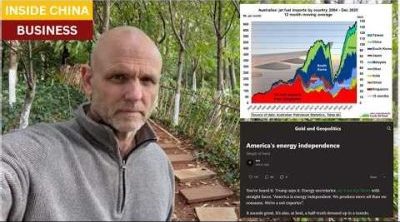
Chinese jet fuel and the myth of energy independence
or go to
Aletho News Archives – Video-Images
From the Archives
The Dirty Little Secret behind the “Global Terrorism Index”
The Omission of Israeli Terrorism in the Occupied Palestinian Territories
By Karin Brothers | Global Research | December 6, 2014
… The Israeli settlements — all of which are illegal – have been identified as a major impediment to peace. The refusal of a major “global” terrorism report to name the Israeli settlers as one of the groups most responsible for terrorism not only misrepresents a major source of regional violence but exposes the Global Terrorism Index as a propaganda tool that supports a U.S. agenda.
In recent years, governments have been attempting to thwart terrorism by blocking supportive fund-raising. When it comes to Israeli settlements, however, the US and Canada actually encourage fund-raising by giving organizations (such as Christian Friends of Israeli Communities (CFOIC) and the Jewish National Fund) financial support in the form of donor tax-deductions.
Charities which provide funds for the Israeli settlements should be regarded as terror-financing organizations. They should not only lose their tax-deductible status, but they should be banned because they support the violation of international humanitarian law. The terror-financing laws that are being strictly enforced for Muslim charities should be applied to Christian and Jewish charities as well. … Read full article
Blog Roll
 Aletho News
- Chinese jet fuel and the myth of energy independence
- Ukraine Sea Drone Fired From Libya Hit Russian Tanker in Mediterranean
- IRGC: Iranian forces launched no attacks during ceasefire hours
- Trump Administration Moves To Automate U.S. Military Draft Registration
- Spain orders reopening of Tehran embassy, condemns Israel’s carpet bombing of Lebanon
- Israel faces ‘unsustainable’ strategic crisis following 40-day war against Iran: Analyst
- Iran restricts Hormuz access to 15 vessels per day under ceasefire terms: Report
- The ‘Opposition Party’ Has Done Nothing to Stop the Iran War and Much to Goad Trump Into Continuing It
- Moscow backs Tehran on status of Lebanon in US-Iran deal
- How UK Regulator Ofcom Quietly Bypassed International Law to Police American Speech
- If Americans Knew
- Amnesty: Urgent – Protect Lebanese civilians from brutal escalation in Israeli attacks
- Is The War Against Iran Over?
- Inside the Israeli army’s propaganda wing
- Hundreds of Gaza Amputees Stranded in Legal Limbo
- The gallows law: Israel moves toward executing Palestinian children
- Tucker Carlson: The Path to Peace requires ending ‘special alliance’ with Israel
- This is ceasefire? Israel’s biggest massacre yet in Lebanon, another journalist killed in Gaza – Daily Update
- Tucker Carlson on Israel: This Is the Behavior of an Ally? Really?
- Gazans face a triple crisis: severe shortages of water and bread, healthcare in tatters
- NY Times reports how Netanyahu took the US into Iran War
- No Tricks Zone
- An Inconvenient Tree: Uncovered In Alps… Europe Much Warmer Than Today 6000 Years Ago
- New Study Reports A 60% Slowdown In Greenland’s Ice Loss Rate In The Last Decade
- Low Intensity Tornado Wrecks Major Solar Farm, Creating A Potential Toxic Dump
- New Study Finds Warming Saves Lives…Cold Temperatures 12 Times More Deadly Than Excess Heat
- German Science Blog Accuses PIK Climate Institute Of Hallucinating Climate Tipping Points
- Devastating Assessment Of Comirnaty Vaccine By Former Senior Pfizer Europe Toxicologist
- New Study: CO2 Is ‘Effectively Negligible’ As An Explanatory Climate Change Factor Since 2000
- Former Pfizer Toxicologist Dr. Helmut Sterz Tells Bundestag Hearing Pfizer Vaccine Should Have Never Been Approved
- Energy Expert: Germany’s Nuclear Phaseout Was A “500 Billion Euro Mistake”
- New Research: South Australia’s Mid-Holocene Sea Surface Temperatures Were 4°C Warmer Than Today
 Aletho News