Israel sentences prisoners’ lawyer to 13 years behind bars
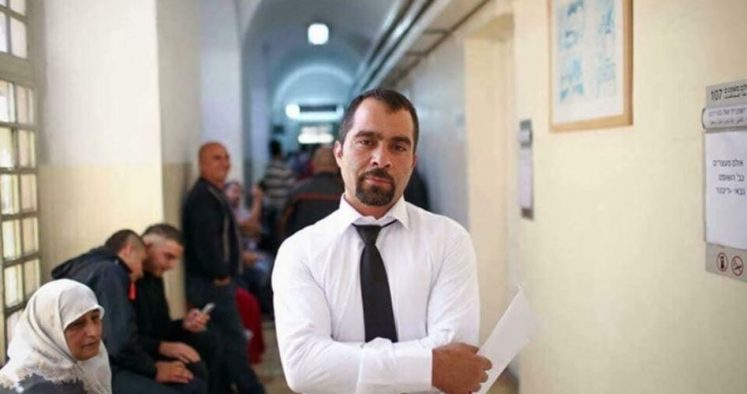
Tariq Barghouth, a prominent lawyer known for defending Palestinian prisoners held by Israel
MEMO | July 31, 2019
An Israeli court sentenced the lawyer of the PLO’s Prisoners’ Committee to 13 years, six months in prison on Tuesday, Quds Press has reported. Tariq Barghouth was arrested by the Israeli occupation forces on 27 February this year before undergoing harsh interrogation.
To put pressure on him in order to give what are said to be false confessions, the Israelis also arrested his wife and sister. The two women were released later.
Barghouth is one of the most prominent lawyers known for defending Palestinian prisoners held by Israel. He is currently in Nafha Prison in the south of Israel.
Meanwhile, the Israeli prison service has detained Shorouq Mohammed Al-Badan, 25, from Taqu village near the occupied West Bank city of Bethlehem. She has been given an administrative detention term of six months with neither charge nor trial.
The Prisoners’ Committee said that the occupation authorities arrested Al-Badan on 15 July during a night raid on her house. She was taken to the Etzion interrogation centre and then to HaSharon Prison for five day; she is now in Al-Damoun Prison.
Whilst in HaSharon, Al-Badan was held in a very small room which was extremely hot due to the prevailing high temperature. This led to her suffering from acute pain in her kidneys, presumably as a result of severe dehydration.
The Committee said that there are currently around 500 Palestinian prisoners being held under administrative detention orders inside Israeli jails, including nine who are on hunger strike in protest against their detention. Such orders can be renewed indefinitely.
Israeli forces laugh and cheer as tower collapses
RT | July 23, 2019
Israeli police and military were filmed laughing and cheering as they blew up a Palestinian building in the West Bank district of Wadi Hummus in East Jerusalem on Monday.
The footage shows three men looking down on the area where Israel began demolition of 13 buildings, after a High Court ruled against an appeal to stop the demolition ordered by the Defense Ministry, which said the buildings were too close to the separation barrier Israel constructed around and inside the West Bank in the 2000s.
A man wearing a balaclava holds the controls to set off the explosions inside the building below. Once it starts to explode, the men laugh and celebrate as other people can be heard cheering and whistling.
The buildings are located on the outskirts of Sur Baher in Wadi Hummus, which is in Area A of the West Bank, meaning it is under the administration of the Palestinian Authority (PA). The separation barrier left Wadi Hummus on the Israel side of the structure, even though it remains part of the West Bank. The buildings that were demolished had permits issued by the PA.
Their destruction was condemned as a “grave aggression” by Palestinian Prime Minister Mohammad Shtayyeh, who said that a complaint would be made to the International Criminal Court. “This is a continuation of the forced displacement of the people of Jerusalem from their homes and lands – a war crime and a crime against humanity,” he said.
Last week UN officials called on Israel to halt its demolition plans and the EU said the policy “undermines the viability of the two-state solution and the prospect for a lasting peace.”
See also:
US’ Greenblatt: ‘Israel is victim in conflict with Palestinians’
MEMO | July 18, 2019
The US Special Representative for International Negotiations, Jason Greenblatt, has said that Israel is the “victim” in its conflict with the Palestinians and that he “cannot think of single instances” when Israel made a mistake.
In an interview aired yesterday by US broadcaster PBS, Greenblatt was asked what responsibility Israel bears for its now 71-year-old conflict with the Palestinians. The US envoy replied:
I think that Israel is actually more the victim than the party that’s responsible. From the moment of its formation, they were attacked multiple times. They continue to be attacked with terrorism. So — I’m not sure I understand the premise of the question.
He added that he “cannot think of single instances” in which Israel made a mistake or overstepped its authority, saying: “I think that they’re trying their best to succeed. They have actually succeeded in many ways, especially economically, under very, very trying circumstances.”
Greenblatt also doubled down on previous comments in which he argued Israel’s illegal settlements should be referred to as “neighbourhoods and cities”, saying that the term “settlements” is “pejorative”.
On the occupied West Bank – where over 500 illegal settlements are located – and the besieged Gaza Strip, the envoy said: “I would argue that the land is disputed. It needs to be resolved in the context of direct negotiations between the parties. Calling it occupied territory does not help resolve the conflict.”
Under international law, both the West Bank and Gaza Strip remain classified as occupied territories.
Greenblatt’s comments are the latest in a series of controversial remarks that have drawn fierce criticism and rebuke of the US envoy.
Earlier this month, Greenblatt came under fire after criticising the Palestinian Authority (PA) for failing to provide adequate funds for a Palestinian child’s blood cancer medication. This came after Gaza-based Palestinian journalist Fathi Sabbah accused PA Prime Minister, Mohammad Shtayyeh, and Ahmed Abu Houli, a member of the executive committee of the Palestinian Liberation Organisation (PLO), of reneging on promises to assist with his daughter Rima’s treatment.
This prompted Greenblatt to write on Twitter: “Mr. Shtayyeh, how about keeping your word & paying for Rima’s treatment? The PA has the funds and it would be a wise and compassionate use of them. Mr. Sabbah, my thoughts are with you and your family. I pray Rima will have a full and speedy recovery.”
Twitter users – including Sabbah – were quick to point out the irony of Greenblatt blaming the PA for the family’s plight while ignoring Israel’s siege of the Gaza Strip, regular refusal to grant exit visas for medical treatment, and the US’ almost-unconditional support for Israel.
The US envoy – who is one of the chief architects of the US’ long-awaited “deal of the century” – has also made a number of provocative claims about Israel’s policy in the occupied West Bank.
In June, Greenblatt stood behind comments made by US Ambassador to Israel, David Friedman, in which the latter stated Israel has “the right” to annex parts of the occupied West Bank.
Friedman told the New York Times that “under certain circumstances, I think Israel has the right to retain some, but unlikely all, of the West Bank”, provoking international outcry and prompting the Palestinian Foreign Ministry to consider filing a complaint against the ambassador at the International Criminal Court (ICC).
Greenblatt backed Friedman’s stance, saying: “I will let David’s comments stand for themselves. I think he said them elegantly and I support his comments.” For his part, Friedman has also refused to back down, since claiming he does “not understand why this issue was faced with such criticism. There is no scenario in which Israel is leaving the whole West Bank.”
His comments have been interpreted as an effort to normalise discussion of Israel’s annexation of the West Bank, after Israeli Prime Minister Benjamin Netanyahu vowed ahead of the country’s April general election that he would annex the territory if he were re-elected.
Though the political elements of the “deal of the century” have not yet been unveiled, the plan is not expected to demand that Israel dismantle its West Bank settlements. Though the US has not yet changed its policy on annexation, the precedent set by President Donald Trump’s recognition of the occupied Syrian Golan Heights as Israeli could pave the way for a similar move in the West Bank.
Israel to Demolish Residential Buildings near Jerusalem
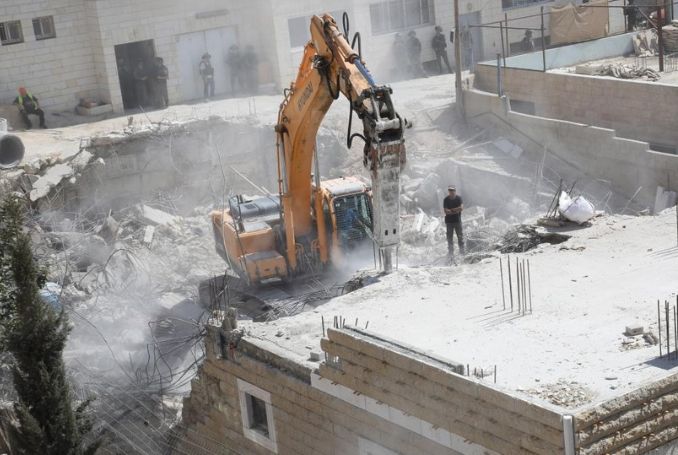
Palestine Chronicle | July 18, 2019
Israeli forces today took measurements of 16 Palestinian residential buildings slated for demolition in Wadi al-Hummus neighborhood, located on the edge of Sur Baher, southeast of the occupied city of Jerusalem.
Head of the Wadi al-Hummus Committee Hamada Hamada told WAFA that Israeli forces along with staff from the so-called Israeli municipality took measurements of the 16 buildings, which comprise of 100 apartments, in preparation to demolish them as was confirmed one of the owners Mohammed Abu Tair.
This step, Hamada explained, came after the period given by Israeli authorities to the owners to demolish their apartments on their own came to an end today, thus the demolition will be carried out at any moment.
The owners are expected to pay exorbitant demolition fees as the Israeli authorities will carry out the demolition.
The Israeli high court has recently approved the demolition of the buildings, thus upholding military allegations that the buildings are “close to the Annexation Wall” and “pose a security threat” due to their proximity to the illegal wall.
Palestinian appeals to demolition orders are frequently dismissed by Israeli courts, which are in fact complicit in perpetuating the Israeli policies of forcible transfer and ethnic cleansing of Palestinians.
The demolition is expected to have a disastrous effect on all other areas of the West Bank adjacent to Israel’s wall, putting these areas at a high risk of mass demolitions under security pretenses and putting the lives of Palestinians living in such areas at the risk of imminent forcible transfer.
Palestinians lose $270m per year due to military checkpoints: Study
MEMO | July 15, 2019
Palestinians lose about 60 million work hours per year due to restrictions on movement in the occupied West Bank imposed by Israeli occupation forces, according to a study by the Applied Research Institute – Jerusalem (ARIJ).
This loss is estimated at $270 million per year, as well as added fuel consumption of 80 million litres, costing up to an additional $135 million and leading to an increase in carbon dioxide emissions by 196,000 tonnes per year.
The study tracked the movement of citizens through 15 major Israeli military checkpoints between cities in the occupied West Bank as well as 11 crossing points into Jerusalem and Israeli territories. The data was collected from the beginning of January to the end of July 2018, using GPS tracking devices installed on Palestinian vehicles, including public transport and private vehicles. Each device monitored the location, time and speed of the vehicle every ten seconds, giving an accurate idea of the time spent at military checkpoints.
Israel maintains a system of checkpoints that can be closed at any time, preventing Palestinians from travelling to school, hospital or work, or to access their land.
In a July 2018 survey, the UN’s Office for the Coordination of Humanitarian Affairs (OCHAoPt) recorded that there are “705 permanent obstacles across the West Bank restricting or controlling Palestinian vehicular, and in some cases pedestrian, movement.”
Israel also runs a system of “flying checkpoints” which can disrupt travel at a moment’s notice. OCHAoPt notes that, “between January 2017 and the end of July 2018, Israeli forces employed an additional 4,924 ad-hoc ‘flying’ checkpoints, or nearly 60 a week. These involve the deployment of Israeli forces for several hours on a given road for the purpose of stopping and checking Palestinian drivers and vehicles, but without any permanent physical infrastructure on the ground.”
Israeli Forces Seize Palestinian Garbage Trucks, Detain Drivers
IMEMC News – July 10, 2019
A group of Israeli soldiers on Wednesday detained Palestinian municipal employees in the village of Beit Fourik, in the northern West Bank, and seized several vehicles used for trash collection.
According to local sources, the vehicles that were seized include a garbage truck, a tractor used for hauling garbage and a third vehicle used in trash collection.
The vehicles were loaded with garbage and were headed to a landfill site east of the village, located near Nablus in the northern West Bank, when they were detained by Israeli soldiers in military vehicles.
The soldiers approached with weapons drawn and ordered the municipal employees out of their vehicles, then held them for several hours in the hot sun, and took the vehicles away to an unknown location.
The Palestinian Wafa News Agency spoke with Ata Samara, a health inspector with the Beit Fourik village council, who told them that this trash collection by the municipality is a daily collection, and this is the first time they have been harassed by Israeli occupation forces.
Samara added that the trash dump is located in Area B of the West Bank, which is administered by the Palestinian Authority but falls under Israeli military rule, adding that the village council was not informed by the army that it would no longer be allowed to dump there. He said the seizure of the truck and car is part of an effort by the Israeli army to make life difficult for the Palestinians in that village.
Without a trash truck or a place to put garbage, the Palestinians of the village will be forced to fend for themselves, which will likely result in a buildup of trash at homes in the village, and unsanitary conditions will result.
Israeli authorities have created multiple landfill sites for Israeli garbage on stolen Palestinian land in the West Bank, and frequently haul and dump Israeli garbage onto Palestinian village land. However, in recent years the Israeli authorities have made it harder and harder for Palestinians in the West Bank to dump their garbage, instead closing off the Palestinian landfills and dumps or putting roadblocks to prevent the Palestinians from reaching them.
Israeli forces have targeted the village of Beit Fourik for collective punishment, in violation of the Fourth Geneva Convention, since March, when an Israeli settler was killed in a settlement nearby.
Settler tour exemplifies the difficult reality of occupation in the Old City of Hebron – a photo essay
International Solidarity Movement – July 7, 2019
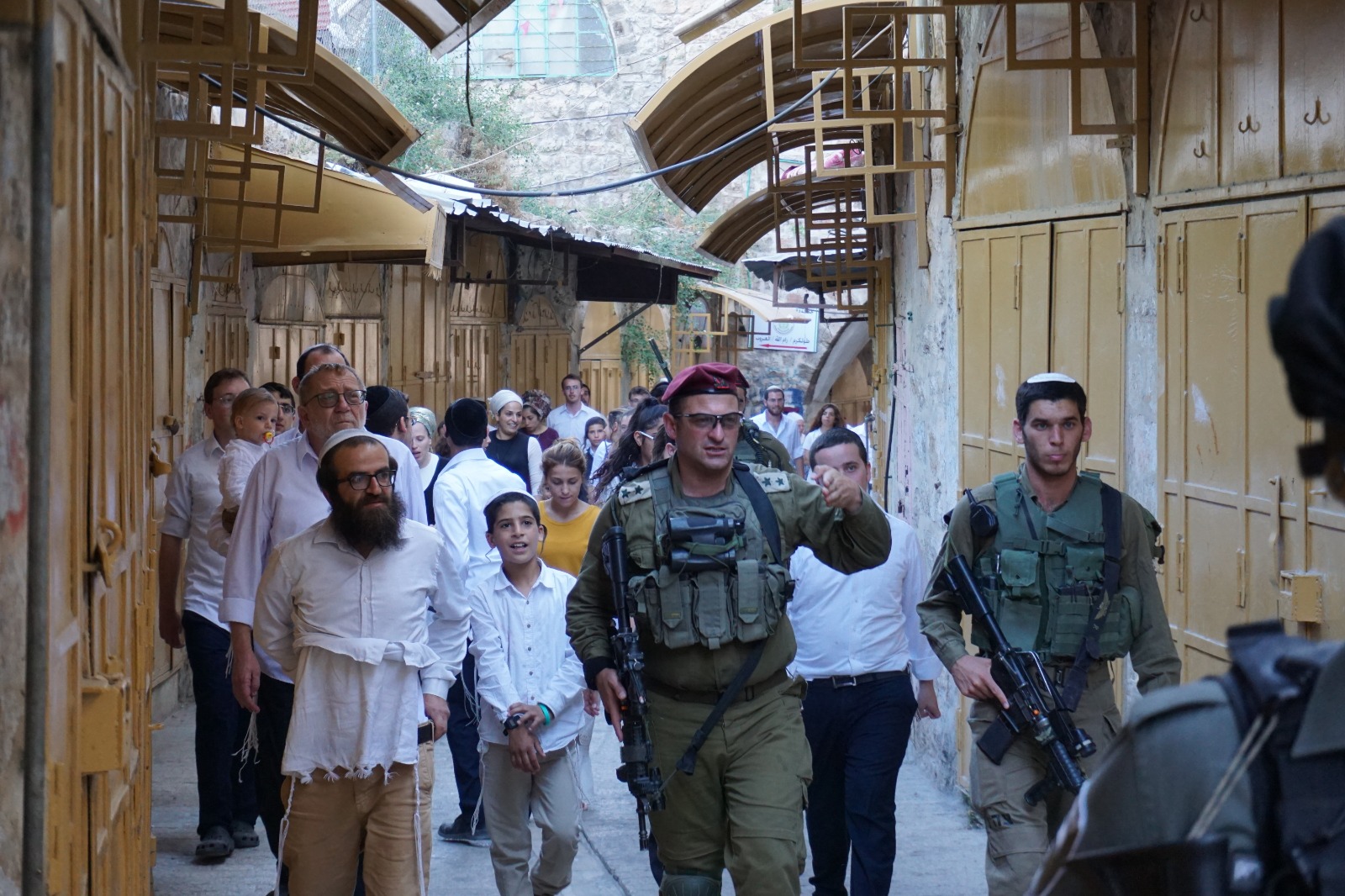
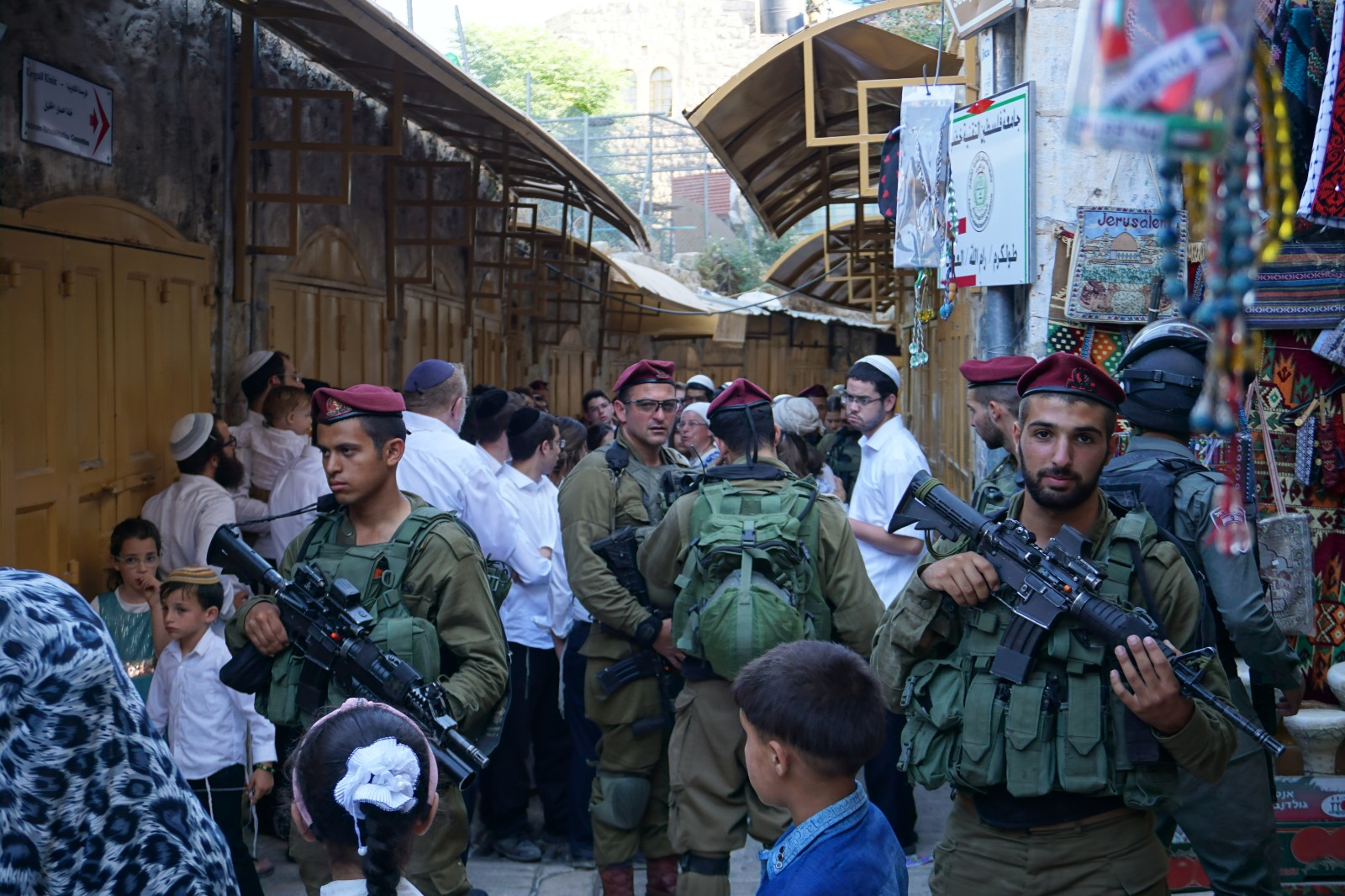
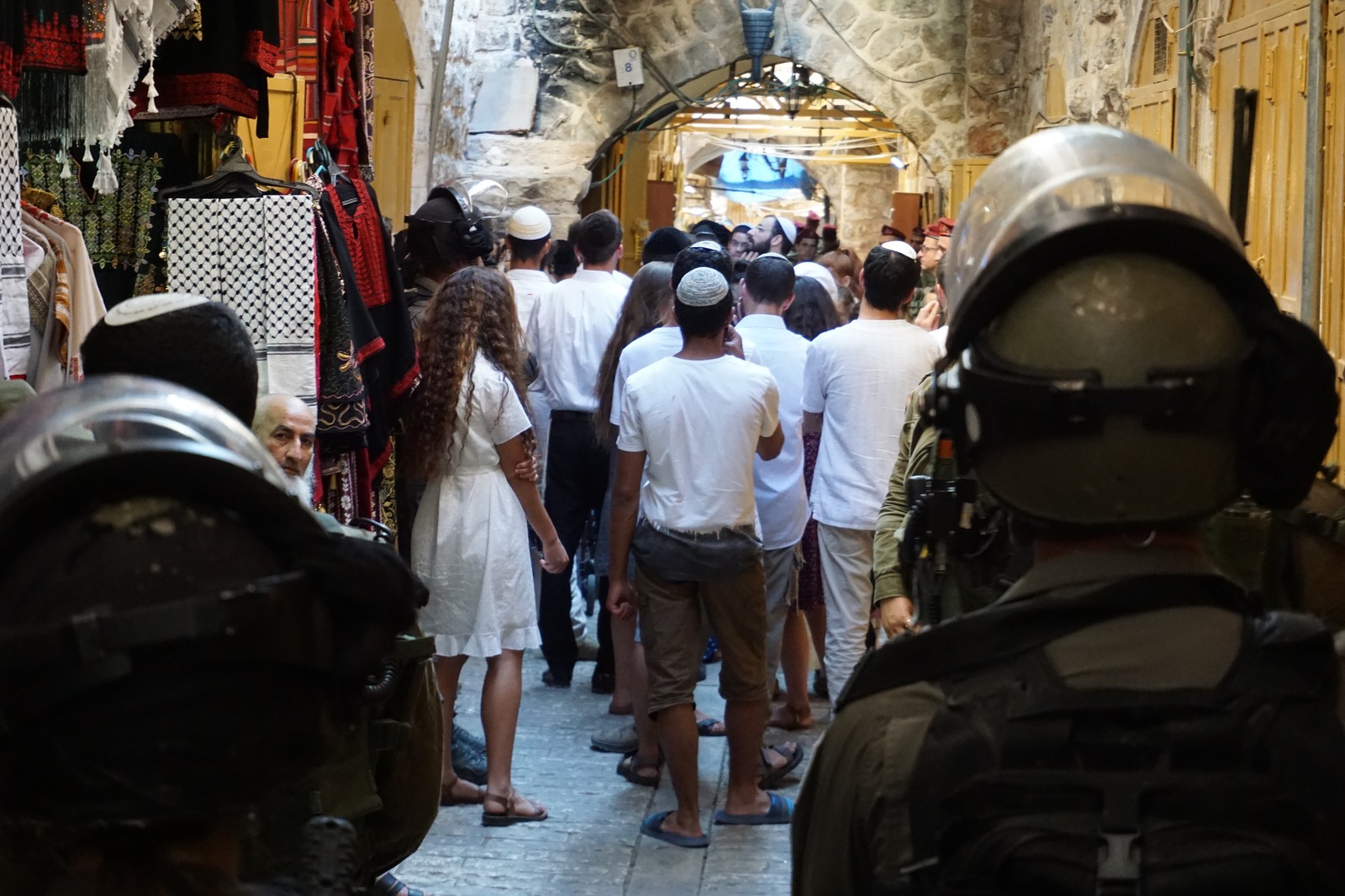
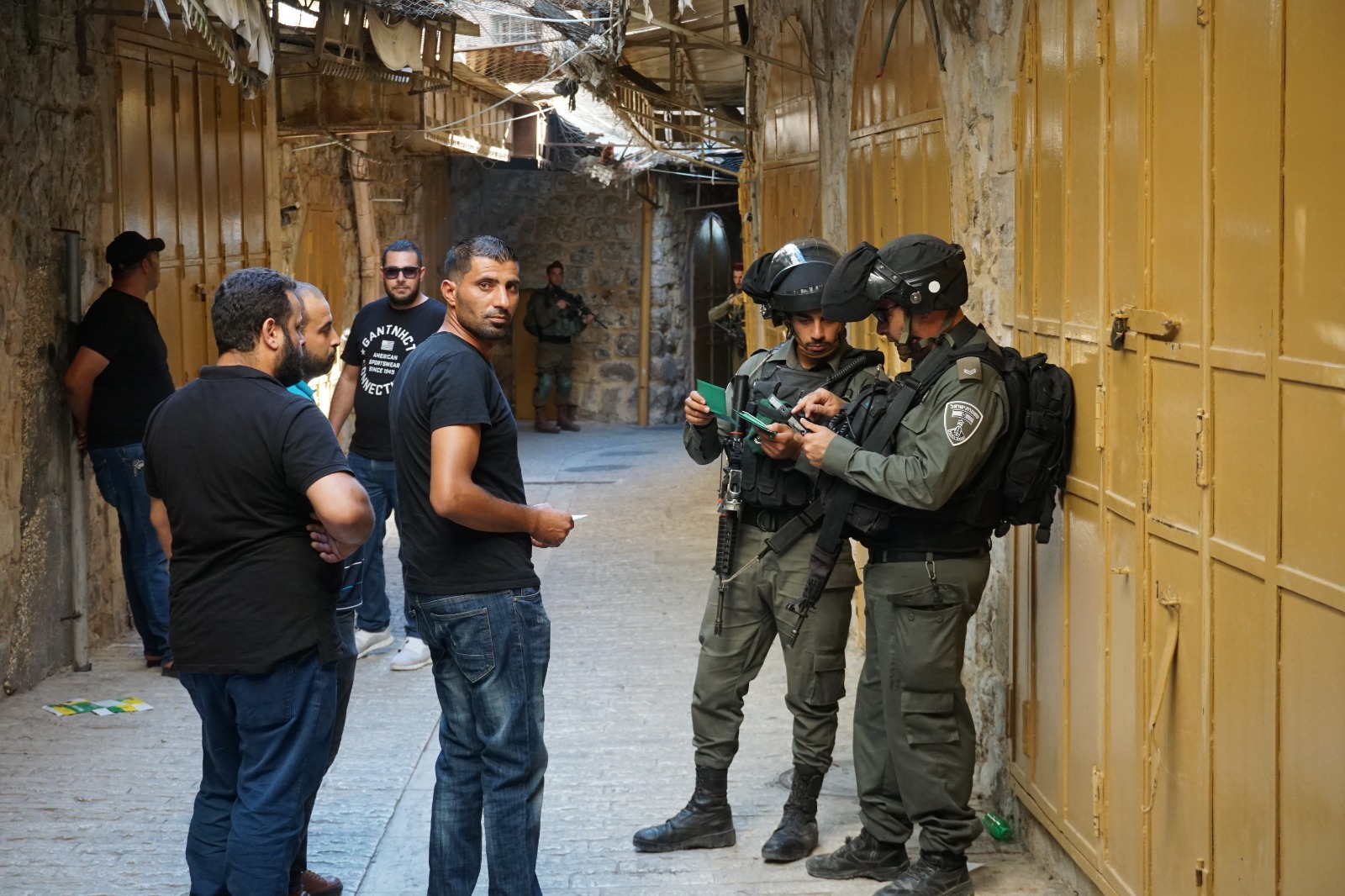
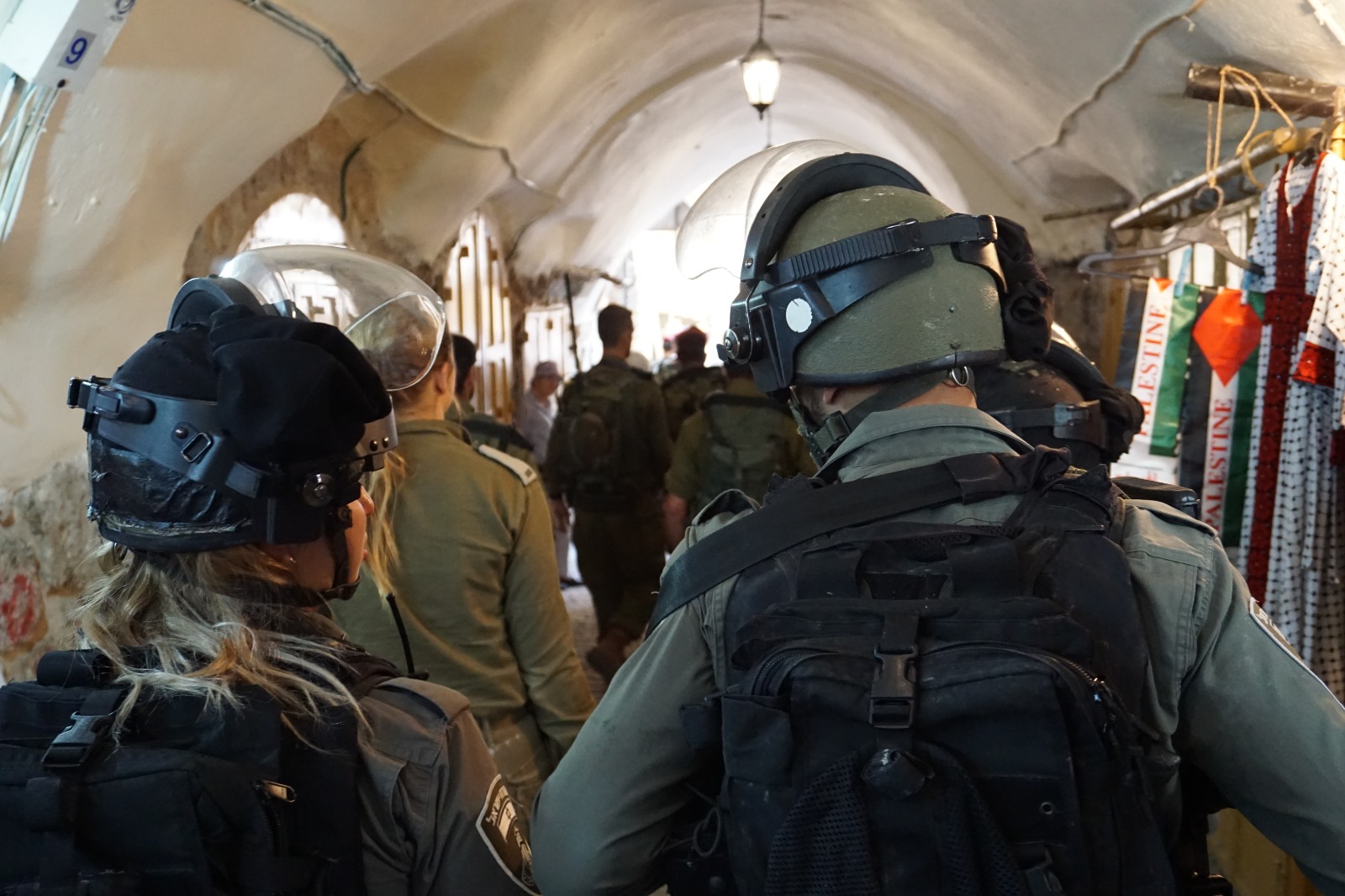
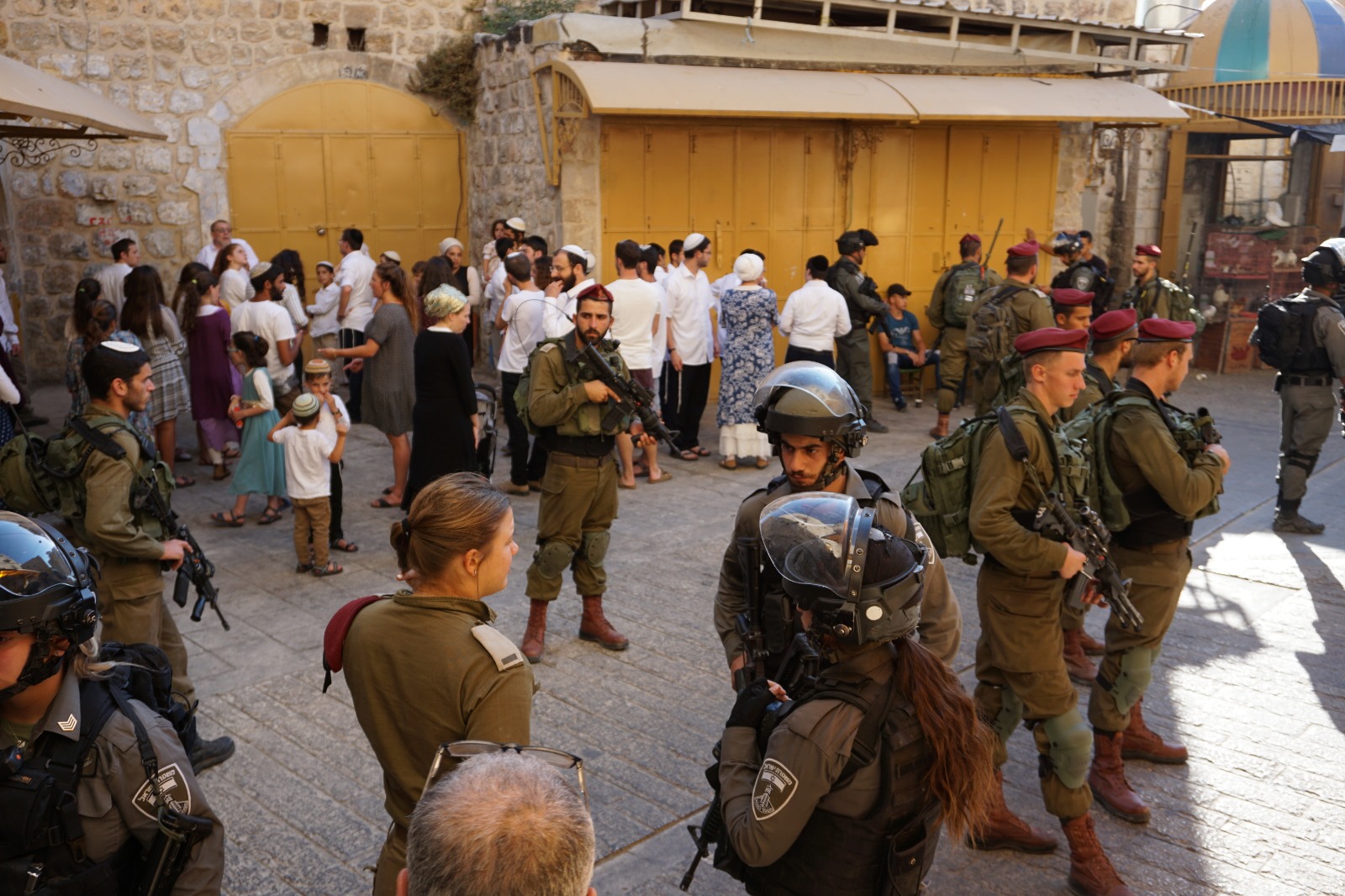
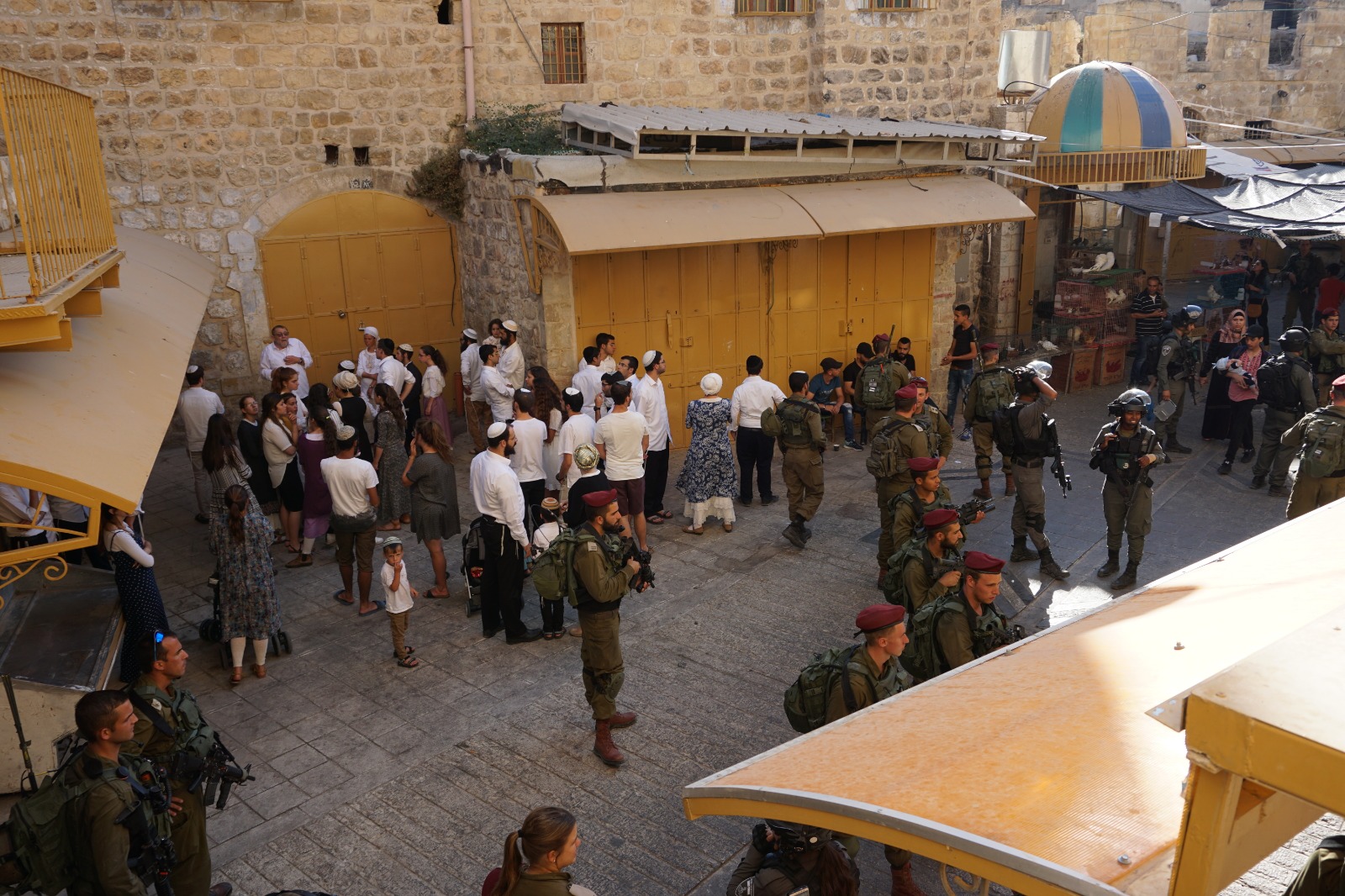
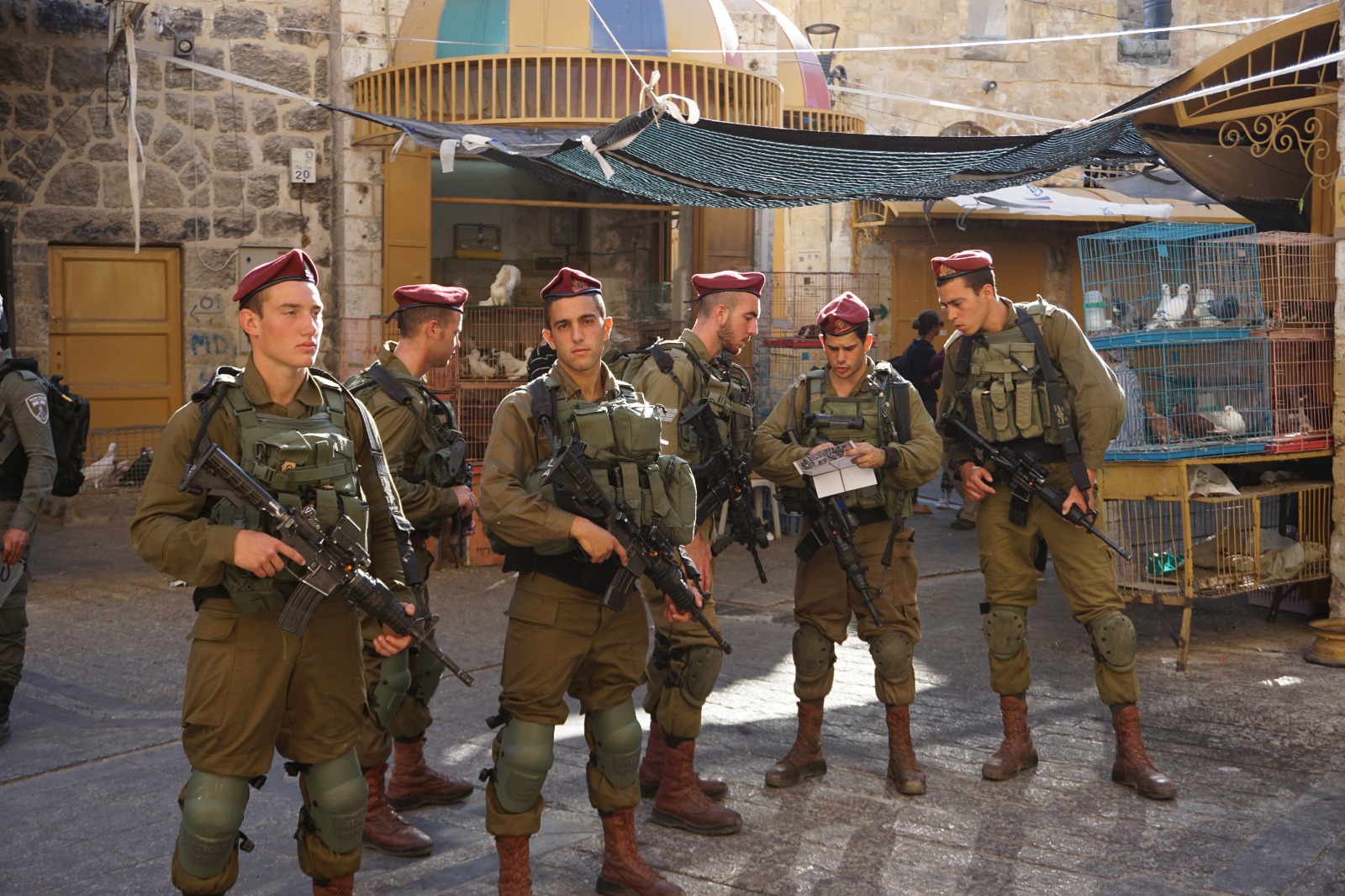
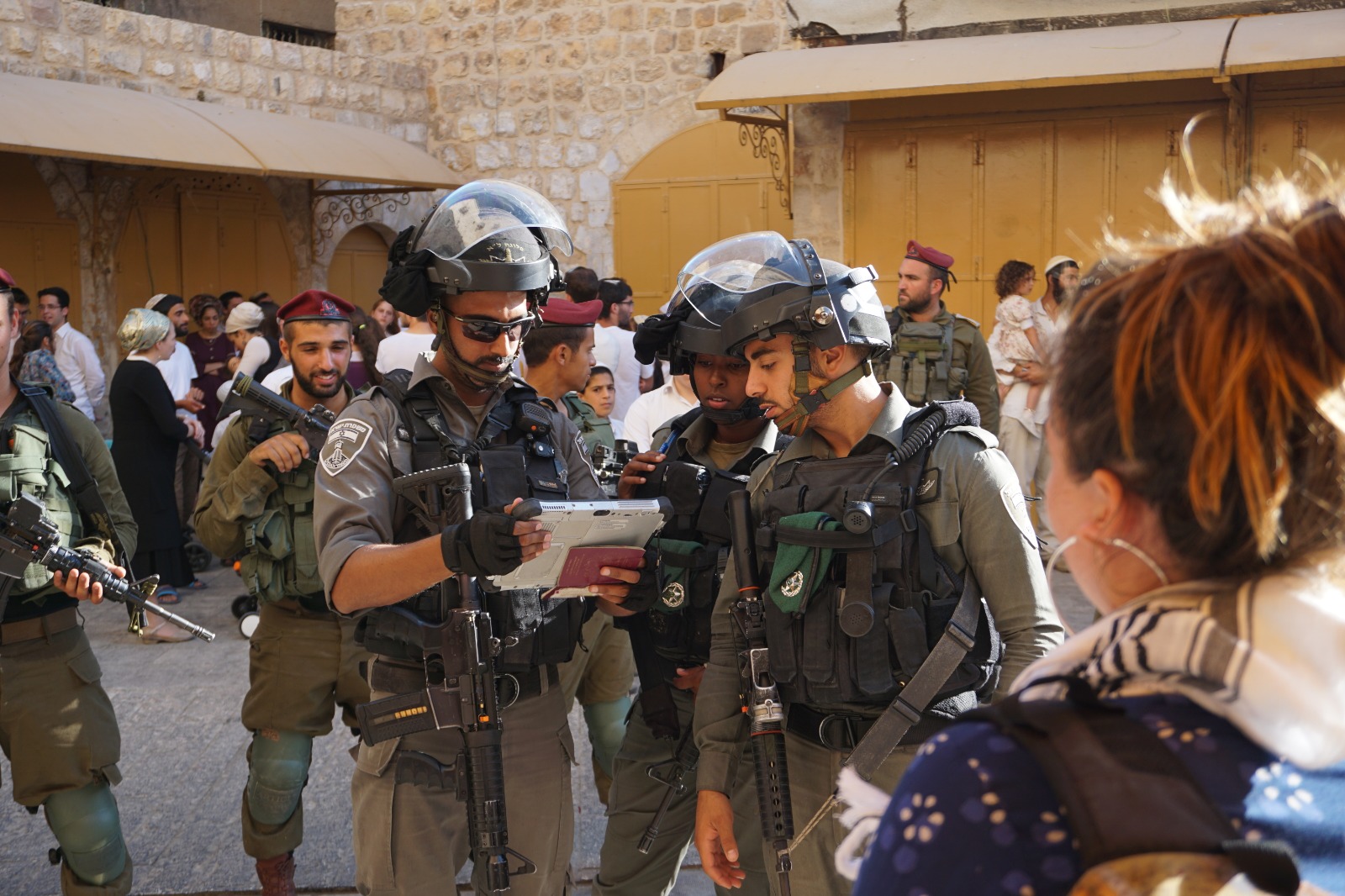
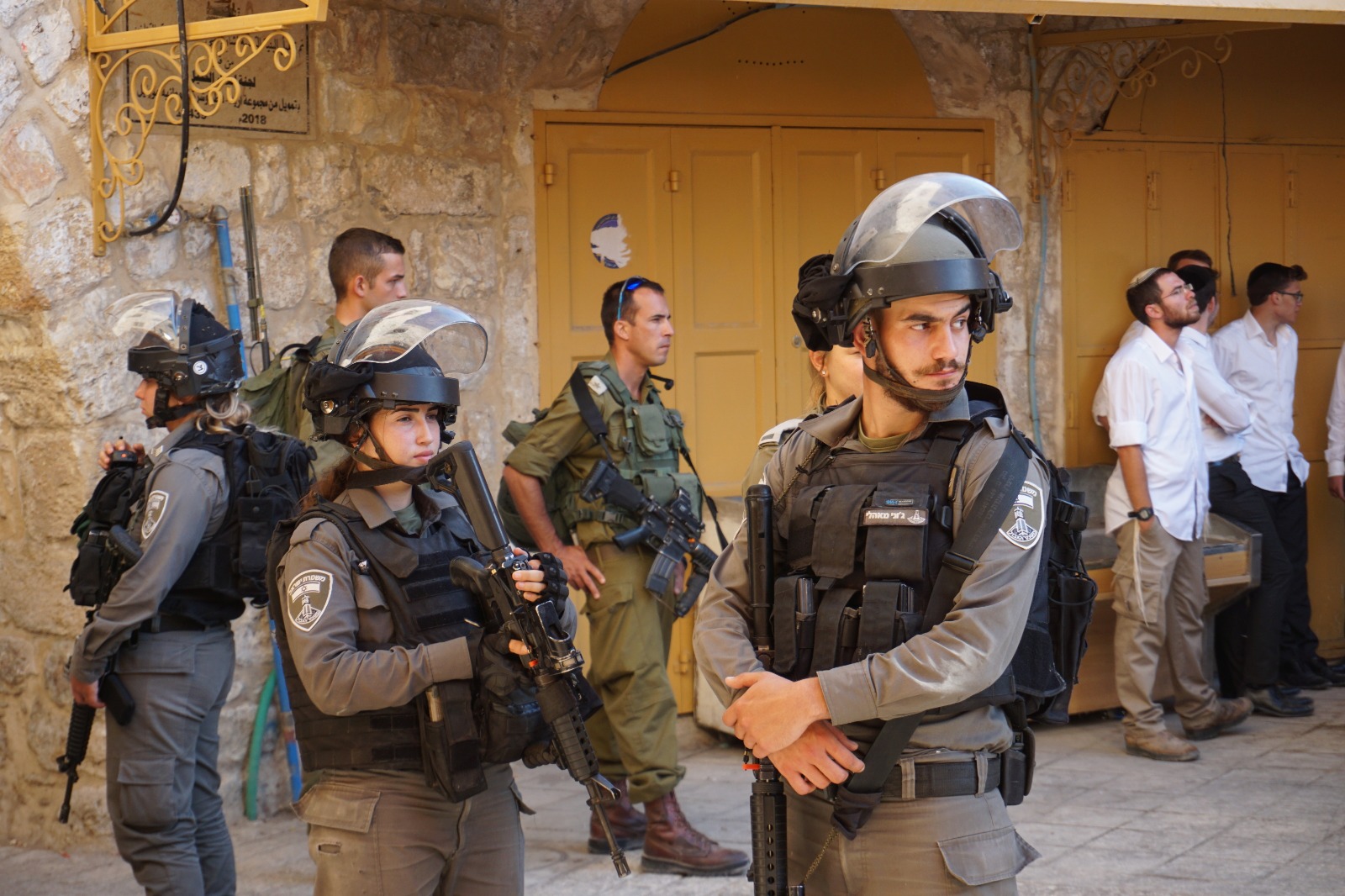
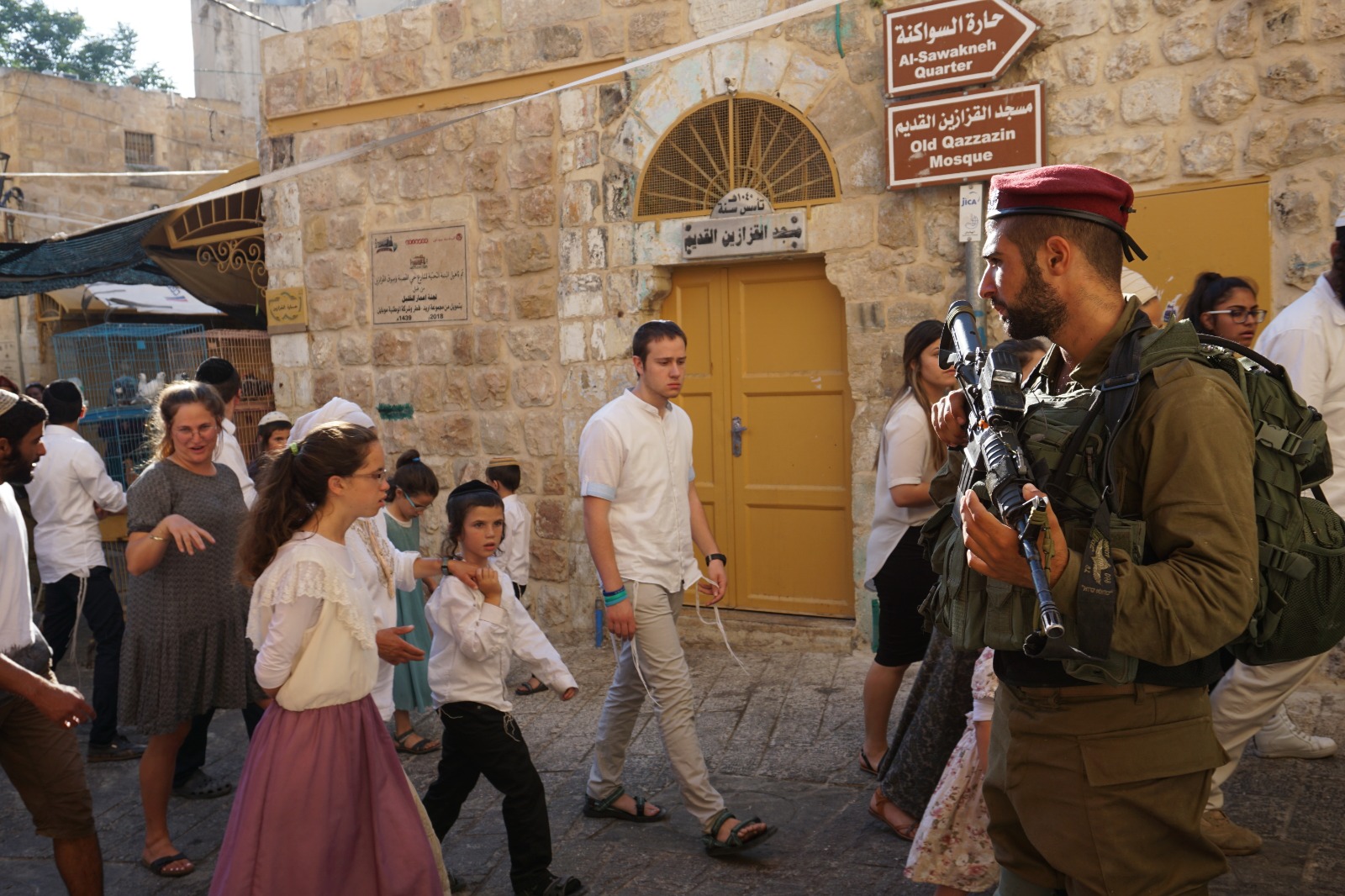
Hebron, occupied Palestine – Every Saturday, illegal Jewish settlers from around the West Bank take a “tour” of the busy souq (market) in Old City of Hebron, the busiest market street in the area since the closure of Shuhada Street. Local Palestinians believe that the Israeli authorities facilitate the tour as a deliberate method of intimidation, making life intolerable and unsustainable for them in order to prompt displacement.
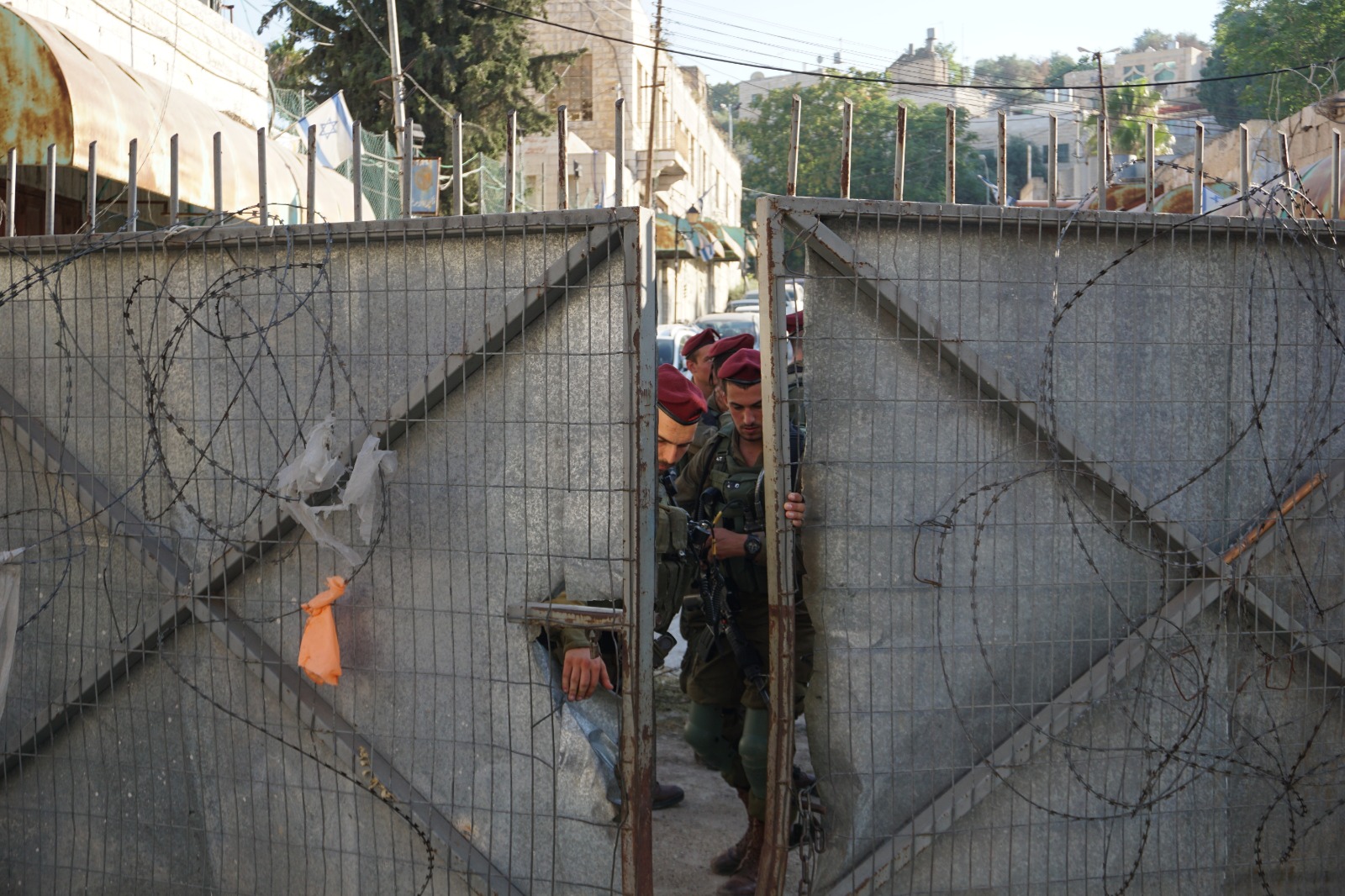
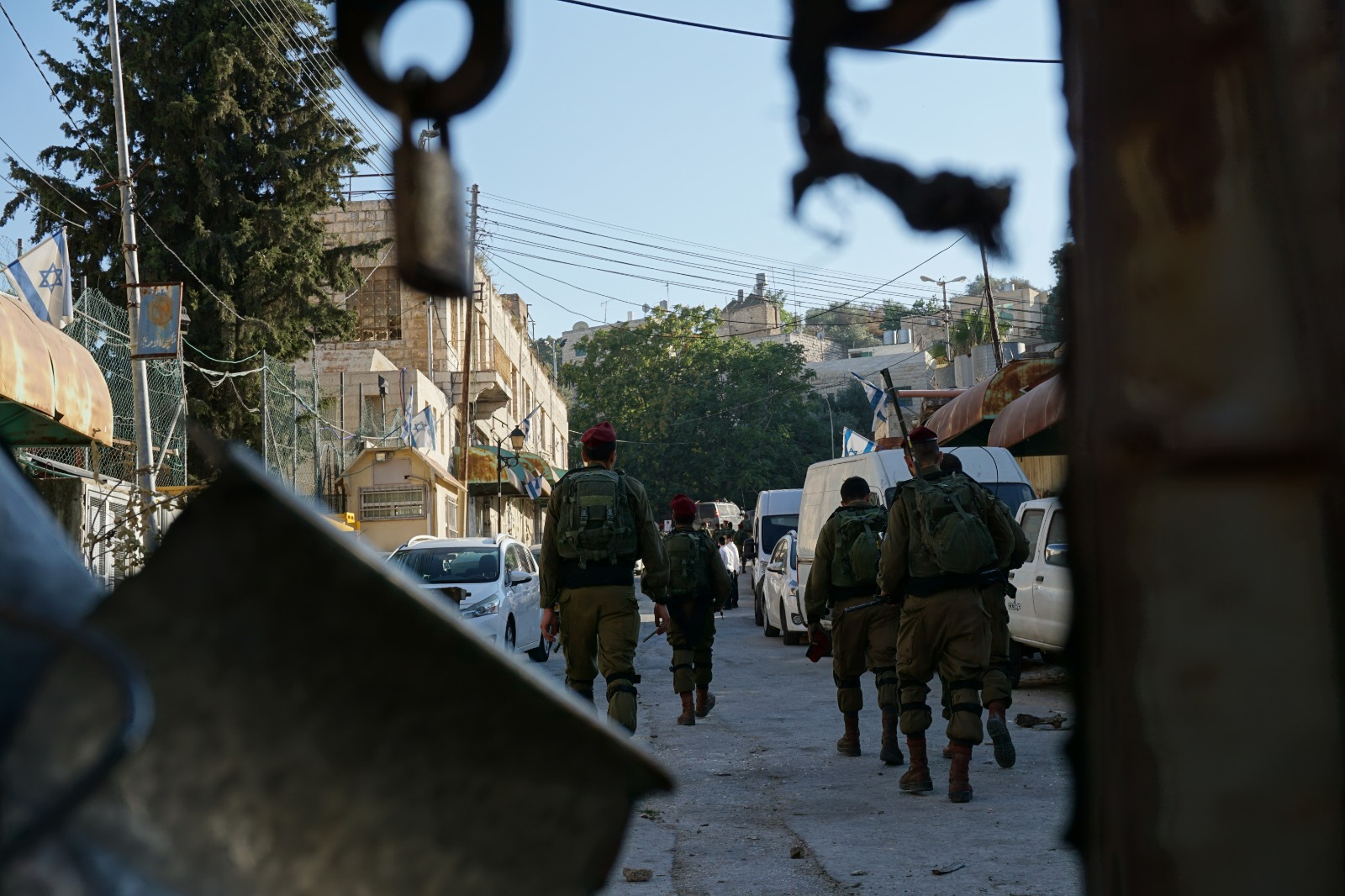
On the tour, current and prospective settlers are given a skewed history of Hebron which disregards and contradicts the documented history of peaceful coexistence between Arabs and Jews in the city before 1948. Instead, it identifies the land’s heritage as solely Jewish. As shown, the settlers are escorted by numerous Israeli soldiers and Border Police officers, who randomly detain Palestinians for ID checks and prevent free movement in the souq during the duration of the tour.
Military and police can also be seen on the rooftops of Palestinian homes, many of which are now empty as a result of forced evictions for surveillance purposes. Palestinians living in the Old City are under constant threat of home invasions by the Israeli military and Jewish settlers, further contributing to displacement and the theft of Palestinian property.





For Israel, Annexation of the West Bank is a Long-established Goal
With Benjamin Netanyahu under pressure and the US signalling its support, the time to realise this catastrophic ambition may be fast approaching
By Jonathan Cook • The National • June 17, 2019
When Israeli prime ministers are in trouble, facing difficult elections or a corruption scandal, the temptation has typically been for them to unleash a military operation to bolster their standing. In recent years, Gaza has served as a favourite punching bag.
Benjamin Netanyahu is confronting both difficulties at once: a second round of elections in September that he may struggle to win; and an attorney general who is widely expected to indict him on corruption charges shortly afterwards.
Mr Netanyahu is in an unusually tight spot, even by the standards of an often chaotic and fractious Israeli political system. After a decade in power, his electoral magic may be deserting him. There are already rumblings of discontent among his allies on the far right.
Given his desperate straits, some observers fear that he may need to pull a new kind of rabbit out of the hat.
In the past two elections, Mr Netanyahu rode to success after issuing dramatic last-minute statements. In 2015, he agitated against the fifth of Israel’s citizens who are Palestinian asserting their democratic rights, warning that they were “coming out in droves to vote”.
Back in April, he declared his intention to annex large chunks of the occupied West Bank, in violation of international law, during the next parliament.
Amos Harel, a veteran military analyst with Haaretz newspaper, observed last week that Mr Netanyahu may decide words are no longer enough to win. Action is needed, possibly in the form of an announcement on the eve of September’s ballot that as much as two-thirds of the West Bank is to be annexed.
Washington does not look like it will stand in his way.
Shortly before April’s election, the Trump administration offered Mr Netanyahu a campaign fillip by recognising Israel’s illegal annexation of the Golan Heights, territory Israel seized from Syria in 1967.
This month David Friedman, US ambassador to Israel and one of the chief architects of Donald Trump’s long-delayed “deal of the century” peace plan, appeared to offer a similar, early election boost.
In interviews, he claimed Israel was “on the side of God” – unlike, or so it was implied, the Palestinians. He further argued that Israel had the “right to retain” much of the West Bank.
Both statements suggest that the Trump administration will not object to any Israeli moves towards annexation, especially if it ensures their favoured candidate returns to power.
Whatever Mr Friedman suggests, it is not God who has intervened on Israel’s behalf. The hands that have carefully cleared a path over many decades to the West Bank’s annexation are all too human.
Israeli officials have been preparing for this moment for more than half a century, since the West Bank, East Jerusalem and Gaza were seized back in 1967.
That point is underscored by an innovative interactive map of the occupied territories. This valuable new resource is a joint project of the Israeli human rights group B’Tselem and Forensic Architecture, a London-based team that uses new technology to visualise and map political violence and environmental destruction.
Titled Conquer and Divide, it reveals in detail how Israel has “torn apart Palestinian space, divided the Palestinian population into dozens of disconnected enclaves and unravelled its social, cultural and economic fabric”.
The map proves beyond doubt that Israel’s colonisation of the West Bank was never accidental, defensive or reluctant. It was coldly calculated and intricately planned, with one goal in mind – and the moment to realise that goal is fast approaching.
Annexation is not a right-wing project that has hijacked the benign intentions of Israel’s founding generation. Annexation was on the cards from the occupation’s very beginnings in 1967, when the so-called centre-left – now presented as a peace-loving alternative to Mr Netanyahu – ran the government.
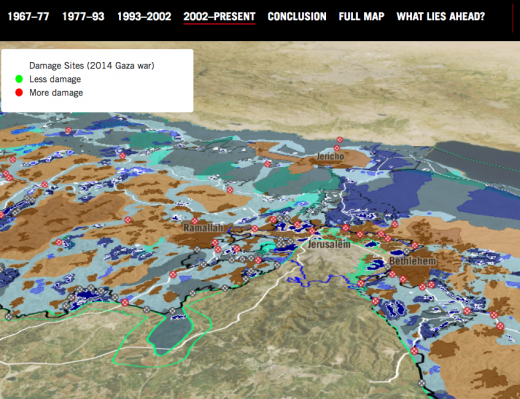
The map shows how Israeli military planners created a complex web of pretexts to seize Palestinian land: closed military zones today cover a third of the West Bank; firing ranges impact 38 Palestinian communities; nature reserves are located on 6 per cent of the territory; nearly a quarter has been declared Israeli “state” land; some 250 settlements have been established; dozens of permanent checkpoints severely limit movement; and hundreds of kilometres of walls and fences have been completed.
These interlocking land seizures seamlessly carved up the territory, establishing the walls of dozens of tightly contained prisons for Palestinians in their own homeland.
Two Nasa satellite images of the region separated by 30 years – from 1987 and 2017 – reveal how Israel’s settlements and transport infrastructure have gradually scarred the West Bank’s landscape, clearing away natural vegetation and replacing it with concrete.
The land grabs were not simply about acquisition of territory. They were a weapon, along with increasingly draconian movement restrictions, to force the native Palestinian population to submit, to recognise its defeat, to give up hope.
In the immediate wake of the West Bank’s occupation, defence minister Moshe Dayan, Israel’s hero of the hour and one of the architects of the settlement project, observed that Palestinians should be made “to live like dogs, and whoever wants to can leave – and we shall see where this process leads”.
Although Israel has concentrated Palestinians in 165 disconnected areas across the West Bank, its actions effectively won the international community’s seal of approval in 1995. The Oslo accords cemented Israel’s absolute control over 62 per cent of the West Bank, containing the Palestinians’ key agricultural land and water sources, which was classified as Area C.
Occupations are intended to be temporary – and the Oslo accords promised the same. Gradually, the Palestinians would be allowed to take back more of their territory to build a state. But Israel made sure both the occupation and the land thefts sanctioned by Oslo continued.
The new map reveals more than just the methods Israel used to commandeer the West Bank. Decades of land seizures highlight a trajectory, plotting a course that indicates the project is still not complete.
If Mr. Netanyahu partially annexes the West Bank – Area C – it will be simply another stage in Israel’s tireless efforts to immiserate the Palestinian population and bully them into leaving. This is a war of attrition – what Israelis have long understood as “creeping annexation”, carried out by stealth to avoid a backlash from the international community.
Ultimately, Israel wants the Palestinians gone entirely, squeezed out into neighbouring Arab states, such as Egypt and Jordan. That next chapter is likely to begin in earnest if Mr Trump ever gets the chance to unveil his “deal of the century”.
Settler filmed starting fire in West Bank field is Israeli soldier

MEMO | May 27, 2019
One of the two Jewish settlers recently caught on video starting a fire in the occupied West Bank is an Israeli soldier, it has been revealed.
According to reports in the Israeli media, “the army knows the identity of the settler”, and “two security sources confirmed the details, saying that the soldier was on leave when the arson took place”.
The military said that “the Israel Police are expected to handle the incident”, while “the police said that they have yet to arrest the soldier”.
The incident took place on Friday, 17 May, when settlers attacked Palestinians and their properties in three West Bank villages.
While the Israeli military initially blamed Palestinians for starting the fires, the army was forced to change its story after a video clip published by human rights NGO B’Tselem clearly showed settlers lighting fires in fields.
In a separate video taken by local Palestinians that day, settlers are seen throwing rocks at villagers’ homes, while Israeli soldiers “can be seen standing among the settlers and doing nothing to stop them”.
To date, no one has been arrested for any of these attacks.
Israeli settlers in the occupied West Bank routinely assault Palestinians and vandalise their property, attacks which are almost never investigated or prosecuted by Israeli occupation authorities.
All Israeli settlements in the occupied West Bank and East Jerusalem are illegal under international law.
Featured Video

Yemen joins the war – Red Sea could be blocked next – Saudi regime at risk
or go to
Aletho News Archives – Video-Images
From the Archives
Should Europeans ‘Thank’ the Americans for Destroying Nord Stream?
By Robert Bridge | Strategic Culture Foundation | September 29, 2022
With an investigation continuing into the destruction of the Nord Stream gas pipeline that provided energy supplies to Europe from Russia, there appears to be just one prime suspect, and that should surprise nobody.
Following the sabotage of the Nord Stream 1 and 2 gas pipelines, former Polish Foreign Minister Radoslaw Sikorski already seemed to know the identity of the perpetrator when he tweeted out: “Thank you, USA.”
At first glance, it seemed that Sikorski was speaking sarcastically, berating Washington for carrying out an attack that will have severe repercussions for the people of Europe. After all, how could anyone see any good coming from the termination of Europe’s primary source of gas reserves with winter just around the corner? It was Sikorski’s homeland of Poland, after all, that urged its citizens to collect firewood in the face of dwindling gas reserves.
In fact, the Polish diplomat was speaking one-hundred percent literally… continue
Blog Roll
 Aletho News
- Growing insecurity, soaring prices fuel protests in north as regime bans evacuation: Sources
- Iran denies responsibility for ‘depraved’ attack on Kuwait desalination plant
- Bring The Troops Back. End This War Now!
- Can we please stop calling Israel the ‘only democracy in the Middle East’ now?
- US should start removing its troops for Germany, proposes AfD co-leader Chrupalla
- Iran Red Crescent: 600 educational centers attacked in US-Israeli ‘war crimes’
- Russian Oil Tanker Arrives in Cuba Amid U.S. Blockade
- America Racing to Strategic Defeat in Iran: Lt Col Daniel Davis
- FTC Warns Visa, Mastercard, PayPal, Stripe Over Political Debanking
- Russian tanker approaches Cuba despite US oil blockade
- If Americans Knew
- Israeli police block Catholic cardinal from entering Church of the Holy Sepulchre on Palm Sunday
- Israel is assassinating journalists again, more than any other nation, anywhere, ever – Not a ceasefire Day 170
- Over 300 US service members wounded, majority have brain injuries – Not a ceasefire Day 169
- Researchers at Human Rights Watch Resign Over Blocked Report on Palestinian Refugee Return
- Jewish Groups Are Backing a War Americans Don’t Want
- Eric Fingerhut Thinks He’s the President of the Jews
- Top Jewish Philanthropists, Rabbis Urge Israeli President to Take Action Against ‘Jewish Extremists’
- Don’t Be Fooled. Zionist Leaders Have Always Wanted to Control Southern Lebanon
- Israel’s widespread use of torture is a core element of its genocide against the Palestinian people
- In Israel’s War on Iran, Many Middle East US Bases Rendered “All But Uninhabitable”
- No Tricks Zone
- New Study Finds Warming Saves Lives…Cold Temperatures 12 Times More Deadly Than Excess Heat
- German Science Blog Accuses PIK Climate Institute Of Hallucinating Climate Tipping Points
- Devastating Assessment Of Comirnaty Vaccine By Former Senior Pfizer Europe Toxicologist
- New Study: CO2 Is ‘Effectively Negligible’ As An Explanatory Climate Change Factor Since 2000
- Former Pfizer Toxicologist Dr. Helmut Sterz Tells Bundestag Hearing Pfizer Vaccine Should Have Never Been Approved
- Energy Expert: Germany’s Nuclear Phaseout Was A “500 Billion Euro Mistake”
- New Research: South Australia’s Mid-Holocene Sea Surface Temperatures Were 4°C Warmer Than Today
- Storing Green Energy To Last Germany 10 Days Would Require A 60-Million Tonne Battery
- New Studies: UK Sea Levels Were 4 Meters Higher Than Today During The Mid-Holocene
- Destructive Green New Deal: German Energy And Metal Group Warns Of Drastic Crisis
 Aletho News