A Tale of Two Walls
Congress prefers the Israeli version

Palestinian women walk next to the separation wall in the West bank village of Abu Dis, November 19, 2007. Photo by Anna Kaplan/Flash90.
By Philip Giraldi | Unz Review | January 22, 2019
The demand of President Donald Trump that congress should appropriate money to build a wall securing the nation’s southern border has resulted in the longest federal government shutdown in history with no end in sight. There is considerable opposition to the wall based on two quite different perceptions of border security. The generally “progressive” view is that there is no border threat at all, that the thousands of migrants heading for the U.S. can be assimilated and indeed should be allowed entry because of U.S. government policies in Central America that have created the ruined states that the would-be immigrants have been fleeing.
There is certainly some truth to that argument, though it suggests that the United States should essentially abandon sovereignty over its own territory, which most Americans would reject. The alternative viewpoint, which has a much broader bipartisan constituency, consists of those who do feel that border security is a national priority but are nevertheless critical of building a wall, which will be expensive, possibly ineffective and environmentally damaging. They prefer other options, to include increased spending on the border guards, more aggressive enforcement against existing illegals and severe punishment of businesses in the U.S. that hire anyone not possessing legal documentation. Some also have argued in favor of a national ID issued only to citizens or legal permanent residents that would have to be produced by anyone seeking employment or government services.
Whether the wall will ever be built is questionable, but one thing that is certain is that there is more than enough hypocrisy regarding it to go around. Democratic Presidents including Bill Clinton and Barack Obama when campaigning have called for better border security, as have Democratic Congressional leaders who are now smelling blood and attacking Trump for seeking to do what they have long at least theoretically sought.
Apart from that, many of the Democrats who are currently criticizing the southern border wall on moral grounds have failed to apply the same standard to another infamous wall, that which is being built by Israel. Israel’s “separation wall” is arguably being constructed at least in part using “aid” and charitable money provided by Washington while also being enabled politically by the U.S. government’s acquiescence to the Israeli violations of international law. And if the moral argument for not having a wall to aid suffering refugees has any meaning, it would be many times more so applied to the Israeli wall, which is an instrument in the maintenance of apartheid in areas under Israeli control while also making permanent the stateless status of the more than one million Palestinian refugees, far more in number than the would-be immigrants marching through Mexico.
The Israeli wall is at many points larger and more intimidating than that planned by Trump, and it is also designed to physically and economically devastate the Palestinian population adjacent to it. Israel’s wall is undeniably far more damaging than anything being considered for placement along the U.S.-Mexican border as it operates as both a security measure and a tool for confiscating more Arab land by including inside the barrier illegal West Bank settlements.
There are both physical similarities and differences relating to the two walls. Judging from prototypes, Trump currently appears to favor prefabricated mostly metal sections with barbed wire coils on top that would be high and intimidating enough to deter climbing over. The sections would be set in foundations sufficiently deep to deter most tunneling and there would be sensors at intervals to alert guards to other attempts to penetrate the barrier. Israel’s wall varies in terms of structural material, including large concrete blocks 28 feet high in some areas while other less populated stretches that are considered low security make do with multiple lines of barbed wire and sensors. It is interesting to note that some Israeli companies have apparently expressed interest in building the Mexico wall and, as one of the many perks Israel receives from congress includes the right to bid on U.S. government contracts, they might well wind up as a contractors or subcontractors if the barrier is ever actually built.
As noted above, the principal difference between the U.S. wall and that of Israel is that the American version is all on U.S. land and is engineered to more or less run in a straight line along the border. The Israeli version is nearly 90% built on Palestinian land and, as it is designed to create facts on the West Bank, it does not run in a straight line, instead closing off some areas to the Palestinians by surrounding Arab villages. It therefore keeps people in while also keeping people out, so it is not strictly speaking a security barrier. Indeed, some Israeli security experts have stated their belief that the wall has been only a minor asset in preventing violence directed by Palestinians against Israelis.
If the Israeli wall had followed the Green Line that separated Israel proper from Palestinian land it would be only half the estimated 440 miles long that it will now be upon completion. The extra miles are accounted for by the deep cuts of as much as 11 miles into the West Bank, isolating about 9% of it and completely enclosing 25,000 Palestinian Arabs from areas nominally controlled by the Palestinian Authority. One often cited victim of the barrier is the Palestinian town of Qalqilyah, with a population of 45,000, which is enclosed on all sides by a wall that in some sections measures more than 25 feet high. Qalqilyah is only accessible through an Israeli controlled military checkpoint on the main road from the east and a tunnel on the south side that links the town to the adjacent village of Habla.
The wall is therefore only in part a security measure while also being a major element in the Israeli plan to gradually acquire as much of the West Bank as possible – perhaps all of it – for Israeli settlers. It is a form of collective punishment based on religion to make life difficult for local people and eventually drive them from their homes.
The human costs for the Palestinians have consequently been high. A United Nations 2005 report states that :
… it is difficult to overstate the humanitarian impact of the Barrier. The route inside the West Bank severs communities, people’s access to services, livelihoods and religious and cultural amenities. In addition, plans for the Barrier’s exact route and crossing points through it are often not fully revealed until days before construction commences. This has led to considerable anxiety amongst Palestinians about how their future lives will be impacted… The land between the Barrier and the Green Line constitutes some of the most fertile in the West Bank. It is currently the home for 49,400 West Bank Palestinians living in 38 villages and towns.”
Amnesty International in a 2004 report observed:
“The fence/wall, in its present configuration, violates Israel’s obligations under international humanitarian law… Since the summer of 2002 the Israeli army has been destroying large areas of Palestinian agricultural land, as well as other properties, to make way for a fence/wall which it is building in the West Bank. In addition to the large areas of particularly fertile Palestinian farmland that have been destroyed, other larger areas have been cut off from the rest of the West Bank by the fence/wall. The fence/wall is not being built between Israel and the Occupied Territories but mostly (close to 90%) inside the West Bank, turning Palestinian towns and villages into isolated enclaves, cutting off communities and families from each other, separating farmers from their land and Palestinians from their places of work, education and health care facilities and other essential services. This in order to facilitate passage between Israel and more than 50 illegal Israeli settlements located in the West Bank.”
Of course, the situation has become far worse for Palestinians since the two reports dating from 2004 and 2005. Israel has accelerated its settlement construction and the wall has expanded and shifted to accommodate those changes, making life impossible for the indigenous population.
Any pushback from the United States has been rare to nonexistent, with successive administrations only occasionally mentioning that the settlements themselves are “troubling” or a “complication” vis-à-vis a peace settlement. The first direct criticism of the wall itself took place in 2003, when the Bush administration briefly considered reducing loan guarantees to discourage its construction. Then Secretary of State Colin Powell remarked “A nation is within its rights to put up a fence if it sees the need for one. However, in the case of the Israeli fence, we are concerned when the fence crosses over onto the land of others.”
On May 25, 2005, Bush repeated his concerns, noting that “I think the wall is a problem. And I discussed this with Ariel Sharon. It is very difficult to develop confidence between the Palestinians and Israel with a wall snaking through the West Bank.” In a letter to Sharon he stated that it “should be a security rather than political barrier, should be temporary rather than permanent and therefore not prejudice any final status issues including final borders, and its route should take into account, consistent with security needs, its impact on Palestinians not engaged in terrorist activities.”
Congress is, of course, Israeli occupied territory so its response was directed against Powell and Bush in support of anything Israel chose to do. Then Senator Joe Lieberman complained “The administration’s threat to cut aid to Israel unless it stops construction of a security fence is a heavy-handed tactic. The Israeli people have the right to defend themselves from terrorism, and a security fence may be necessary to achieve this.”
In 2005, Senator Hillary Clinton declared her support for the wall by claiming that the Palestinian Authority had failed to fight terrorism. “This is not against the Palestinian people. This is against the terrorists. The Palestinian people have to help to prevent terrorism. They have to change the attitudes about terrorism.” Senator Charles Schumer, also from New York, added “As long as the Palestinians send terrorists onto school buses and to nightclubs to blow up people, Israel has no choice but to build the Security Wall.”
So, for many in Washington a legal and relatively apolitical wall by the United States to protect its border is a horrible prospect while the Israeli version built on someone else’s land with the intention to damage the local Arab population as much as possible is perfectly fine. The reality is that America’s Establishment, which is dominated by veneration of Israel for a number of reasons, is completely hypocritical, more prepared to criticize actions taken by the United States even when those actions are justified than they are to condemn Israeli actions that amount to crimes against humanity. That is the reality and it is playing out in front of us right now.
Philip M. Giraldi, Ph.D., is Executive Director of the Council for the National Interest, a 501(c)3 tax deductible educational foundation that seeks a more interests-based U.S. foreign policy in the Middle East. Website is www.councilforthenationalinterest.org, address is P.O. Box 2157, Purcellville VA 20134 and its email is inform@cnionline.org.
Israel minister calls to expel international observers from Hebron

MEMO | January 18, 2019
Israel’s Security Minister Gilad Erdan has called for international observers to be expelled from Hebron.
Erdan yesterday sent a letter to Israeli Prime Minister Benjamin Netanyahu, demanding that he end the mandate of the Temporary International Presence in Hebron (TIPH), in the south of the occupied West Bank.
According to the Jerusalem Post, Erdan claimed that the mission is “hostile to Israel rather than a neutral force, and is harmful to both the Israeli soldiers stationed in Hebron and the [illegal] Jewish settlers that live there”. Erdan reportedly gave Netanyahu a secret police report “with data to back up his assertion”.
The letter read:
It is no wonder that a force, composed of policemen from a hostile Islamic state such as Turkey and pro-Palestinian countries that sponsor boycotts [of Israel] such as Sweden and Norway, interferes with IDF soldiers and police, creates friction with the settlers, cooperates with radical organizations and promotes the delegitimization of Israel.
Erdan continued: “It is [therefore] right and proper for the Israeli government to prevent the continued activity of this ‘temporary’ force acting to harm Israel.”
The TIPH – a civilian observer mission which has been present in Hebron since 1997 – has a mandate which is renewed every six months by the Palestinian Authority (PA) and Israel. The mission’s current mandate ends in 14 days, which likely explains the timing of Erdan’s appeal. In doing so, he joins the right-wing campaign led by Deputy Foreign Minister, Tzipi Hotovely, to pressure Netanyahu to end the mission’s mandate.
In November, Netanyahu said he would review the mission’s status in December, but made no public statement on the issue.
The mission was formed in the aftermath of a massacre committed by Jewish extremist rabbi, Baruch Goldstein, who killed 30 Palestinian worshippers during their morning prayers at the Ibrahimi Mosque in Hebron.
Israel orders administrative detention of martyr’s father
Palestine Information Center – January 14, 2019
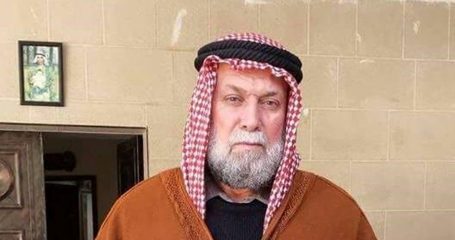 RAMALLAH – The Israeli occupation authorities on Sunday issued a three-month administrative detention order against the Palestinian prisoner Omar al-Barghouti, the father of martyr Saleh al-Barghouti.
The Palestinian Prisoner Society said that Omar al-Barghouti, 66, has been subjected to harsh interrogation at al-Maskoubiyya detention center since he was arrested on 12 December 2018.
The Israeli occupation forces arrested al-Barghouti and dozens of Palestinian youths during a raid into Kobar village in Ramallah hours after they killed his son Saleh.
Al-Barghouti’s family have been subjected to collective punishment since the killing of Saleh. Most of the family members are currently held in Israeli jails, including al-Barghouti’s sons Asem, Asef, and Mohammed.
Omar al-Barghouti had spent over 26 years in Israeli lock-ups. He is the brother of the well-known Palestinian prisoner Nael al-Barghouti who is serving his 39th year in Israeli prisons.
Israel threatens family of ‘wanted’ Palestinian with expulsion
Ma’an – January 5, 2019
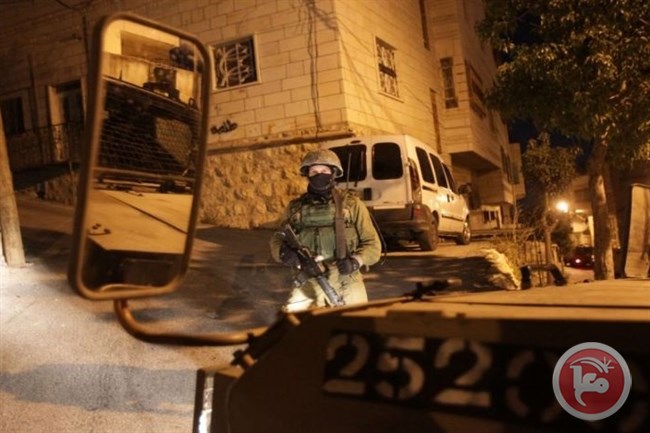
RAMALLAH – The Israeli army informed members of the al-Barghouthi family from Kobar village, northwest of central occupied West Bank district of Ramallah and al-Bireh, on Saturday, that the family would be expelled to the Jericho district, if their son, Assem, does not turn himself in to the Israeli army.
Israel accuses Assem of carrying out an attack killing two Israeli soldiers near Ramallah on December 13, one day after his brother, Saleh, was reportedly shot and killed by Israeli soldiers north of Ramallah.
Assem has been ‘wanted’ by Israeli forces since then; on December 19th, Israeli forces took measurements of al-Barghouthi’s home in preparation for its demolition as punishment.
Saleh’s family says that Saleh was detained alive and might have died in custody.
Palestinian human rights organization Al-Haq had sent a sent a joint urgent appeal to the United Nations (UN) Special Procedures regarding the enforced disappearance of al-Barghouthi.
Israeli soldiers claim that Saleh, who they say was allegedly responsible for shooting and injuring seven Israelis days earlier near Ramallah, was shot and critically injured and later died of his wounds.
Al-Barghouthi’s mother said that large numbers of Israeli force raided their home early Saturday morning, interrogated her and told her son, Assem, has three days to turn himself in or the entire family will be expelled to Jericho.
She added that Israeli forces also detained her youngest son, Muhammad, 17, and her brother, Lutfi al-Barghouthi.
Israeli forces had previously detained her husband and other son a day after the alleged attack.
Clashes erupted between Israeli forces and locals of Kobar; soldiers fired tear gas, causing tear-gas suffocation cases.
Last week, Israeli forces detained 10 Palestinians from Kobar as part of Israel’s “collective punishment” policy against the village following al-Bsrghouthi’s alleged attack.
Israel’s plan to ‘worsen conditions’ for Palestinian prisoners is an opportunity for unity
By Ramona Wadi | MEMO | January 4, 2019
 Depriving Palestinian political prisoners in Israeli jails of their basic rights is a “moral duty”, according to Israeli Public Security Minister Gilad Erdan. News reports have confirmed that the Israeli cabinet has approved plans to “worsen conditions”, after Erdan set up a committee specifically tasked with devising “harsher” conditions for Palestinian prisoners involved in resistance activities.
Rationing water, eliminating cooking rights and visits to Palestinian prisoners, as well as halting the process of separating prisoners pertaining to different Palestinian political factions will be implemented in the coming weeks.
To put it briefly, Israel is aiming to enact the same violations that Palestinians experience outside prison. The only difference is the absence of community support for Palestinian prisoners.
According to Erdan: “We must make conditions worse [for prisoners] to fulfil our moral duty to terror victims and their families.”
Indeed Israel does have a moral obligation towards its settler population – dismantling the settler colonial state would eliminate the need for Palestinian anti-colonial resistance which is a right under international law. Instead of facing its responsibilities for creating a colonial entity on stolen territory and replacing the indigenous population with an assortment of complicit settlers, it has instead renewed its efforts to criminalise Palestinian resistance and invent premises upon which it seeks to extend its violation of Palestinian rights.
Meanwhile, Palestinian prisoners in Israeli jails are already in a precarious situation. Revered as the epitomes of Palestinian resistance, yet their remembrance outside family circles often occurs at times when Israel announces additional oppressive measures. Not to mention the fact that some prisoners, or their fates, attract more publicity than others when it comes to raising awareness.
Erdan’s measures shift this focus which, in part, can be attributed to Israel and its singling out of individual prisoners to make the case for its alleged security concerns. Till now, the visibility of some Palestinian political prisoners has eclipsed the fate of the rest. Unfortunately, even well-intentioned activism has become ensnared in this façade. But the Palestinian struggle is a collective endeavour.
Differentiating between prisoners in terms of visibility has fractured Palestinian unity even further. As Israel moves to implement additional violations against all Palestinian political prisoners, the focus should be on supporting the Palestinian collective struggle.
Ironically, Erdan is also provoking a sense of unity among Palestinians. As the fine line between Israel’s human rights violations outside and behind bars blurs further, the distinction between Palestinian prisoners and the Palestinian people undergoes the same process. Israel is bringing the theft of water – this time by depriving prisoners of a basic right – to a space which is inhabited by Palestinians dedicated to resistance.
The response to these violations, therefore, cannot be limited to the usual perfunctory statements about Israel respecting and applying international law. Israel acts with impunity and the international community has already sealed the deal with tacit approval. Such violations call for a strategy which goes beyond a retaliatory response. The only way to do this is for Palestinian institutions to step down from their pedestals and acknowledge the people’s political power. For all intents and purposes, international law must come secondary to Palestinian demands.
See also:
Thousands of West Bank farmers denied access to their lands in 2018
Palestine Information Center | January 3, 2019
OCCUPIED JERUSALEM – Israel has drastically reduced the number of Palestinian farmers who are allowed to work their lands located between the separation barrier or wall and the Green Line, according to Israeli official data.
According to Haaretz newspaper, in 2018, 72 percent of Palestinian requests for farming permits were rejected, compared to 24 percent in 2014.
There are also very few permits issued for relatives of the plot owner who work with him and paid laborers.
This information was sent by the Israeli army’s civil administration to Hamoked—the center for the defense of individual human rights—in response to a freedom of information law request, according to the newspaper.
However, that information lacks valuable data concerning, for example, the number of seasonal, short term permits which Hamoked believes often replace the long term permits.
The statistics correspond to reports submitted by farmers to Hamoked, to Machsom Watch activists and to Haaretz about bureaucratic obstacles that have been added over the past four years to get the permits to cultivate their land.
The land between the barrier and the Green Line, which Israel refers to as the “seam zone,” totals 137,000 dunums (33,853 acres), a report released by Haaretz pointed out.
Since the start of 2018 through November 25, the civil administration approved only 1,876 requests for farming permits of the 7,187 requests submitted, which constitutes an unprecedented refusal rate of 72 percent. This compares to a refusal rate of 24 percent in 2014, when the number of requests totaled 4,288, and the number of permits issued was 3,221.
Hamoked, has been assisting farmers who are denied permits since 2009, said the obtained data confirm that “contrary to the high court of justice ruling that recognizes the residents’ right to work their lands with their families and employees, the army is acting systematically to deprive the Palestinians of this basic right, to restrict the entry of Palestinian farmers into the seam zone and to gradually dispossess them of their land.”
Israel arrested 175 Palestinian women, girls in 2018
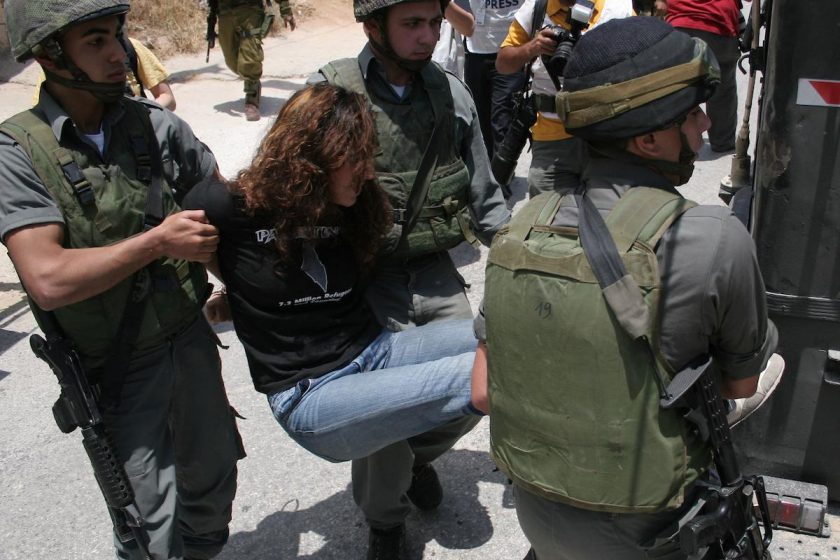
Israeli soldiers arrest a woman protester during a demonstration against Israel’s controversial separation barrier which crosses the Palestinian territories in the West Bank town of Beit Jala, near the town of Bethlehem, on 27 June 2010 [Mamoun Wazwaz/Apaimages]
MEMO | January 2, 2019
Israeli occupation forces arrested 175 Palestinian women and girls in 2018 and summoned hundreds in for interrogation, the Palestine Prisoners’ Centre for Studies said yesterday.
In a statement reported by the Safa News Agency, the Director of the centre Riyadh Al-Ashqar said that the Israeli occupation escalated its aggression on Palestinian women and girls this year in order to punish them for their participation in anti-occupation activities.
He also said that the Israeli occupation arrested female relatives of male prisoners, describing this as a “form of illegal punishment”.
Al-Ashqar documented the detention of 15 females who’s male relatives are being held in Israeli detention including Bayan Faroun. The twenty-four-year-old was handed a 40 months prison term. She is the fiancé of Ahmed Azzam who was sentenced to six-years in jail.
Female prisoners face harsh conditions in jail, Al-Ashqar said, including violation of their rights, humiliation and a lack of access to health care.
Nineteen Palestinian Journalists Are Still Imprisoned By Israel
IMEMC News – December 31, 2018
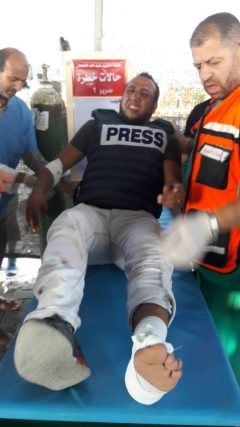 The Palestinian Information Ministry has reported that there are nineteen Palestinian journalists who are still imprisoned by Israel, in direct violation of various treaties and International Law.
In a press statement Monday, the Ministry said that the Israeli occupation and its military courts are ongoing with their serious violations against the journalists and various media outlets in occupied Palestine.
It said that many journalists have also been forced under house arrest, others were forced out of their towns, in addition to facing high fines by the Israeli military courts for performing their duties.
The Ministry also said that some of the abducted journalists were shot and injured, while others are sick, in need of specialized medical treatment but are denied that right.
The soldiers also invaded and violently searched many media outlets across the West Bank, and confiscated equipment.
The Information Ministry stated that Israel’s violations are ongoing attempts to silence the Palestinian media outlets and the journalists, and urged the International Federation of Journalists, Reporters Without Borders, and various related organizations around the world to intervene and stop the escalating abuses against the media and the Freedom of the Press in occupied Palestine.
It is worth mentioning that the soldiers have also killed Palestinian Photojournalist Yasser Mortaja, and journalist Ahmad Abu Hussein, in the Gaza Strip, in addition to wounding dozens of journalists, during the Great Return March processions.
Israeli Settler Drives into Sheep near Ramallah, Kills 12
IMEMC News & Agencies – January 1, 2019
 In what appears as a premeditated terror attack, an Israeli settler rammed his vehicle into a herd of sheep in the village of al-Mughayyer, to the east of Ramallah, on Monday, killing 12 and injuring 18 others.
Local sources told WAFA correspondence that the settler rammed into the herd on purpose and with full force, to cause as much damage as possible. They said he ran over 30 sheep, killing 12 and injuring the others, of which six were in critical condition.
The attack happened on what is known as Alon settlement road.
Raising sheep is the only source of income for Khaled Abu Illia, victim of the premeditated terror attack.
Shepherds are often seen in the open pastures during this season, when the fields are covered with green grass.
Israel demolished 538 homes, facilities in West Bank in 2018

Palestinian boys watch Israeli excavators demolish an allegedly unauthorised Palestinian apartment block in E. Jerusalem, 1 May 2018 [Mostafa Alkharouf/Anadolu Agency]
MEMO | December 29, 2018
Israel demolished 538 Palestinian homes and facilities across the occupied West Bank and Jerusalem in 2018, leaving 1,300 Palestinians and 225 children homeless.
A report issued yesterday by the Abdullah Al-Hurani Centre – an affiliate of the Palestine Liberation Organisation (PLO) – stressed that these demolitions were carried out in violation of the Fourth Geneva Convention and other international laws.
In the report, the centre said that Israel “continues its policy of ethnic cleansing against the Palestinians in the occupied West Bank and Jerusalem,” pointing out that, in addition to the demolitions, Israel had issued 460 “stop-building orders” during the same period.
Israel’s Civil Administration – which carries out Israeli policy in the occupied West Bank – issued a military order to demolish all the targeted buildings less than 30 days before the demolition was carried out, a move the centre sees as aiming to cut short the possibility of appealing such orders.
The report also documented the demolition or closure of 12 Palestinian schools and kindergartens built by the Palestinian Authority (PA) in the West Bank.
Inside Banksy’s The Walled Off Hotel in Bethlehem
We check in to Banksy’s bizarre Palestinian hotel, where the hospitality is as peculiar as the message is powerful
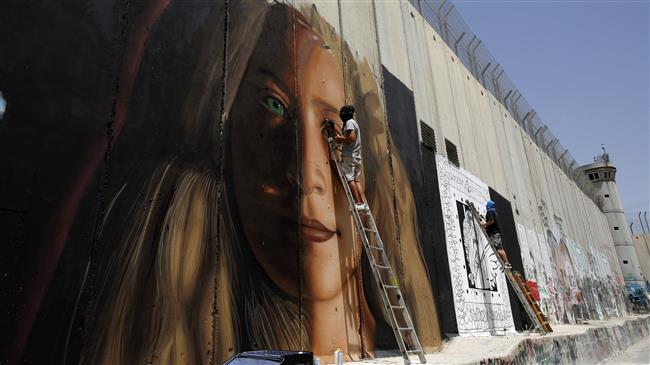
By Jonathon Cook – The National – December 21, 2018
Anonymous British street artist Banksy made headlines in October when his $1.4 million artwork Girl with Balloon self-destructed by passing through a shredder concealed in its frame at a London auction moments after it had been bought.
But in the Palestinian city of Bethlehem, a much larger Banksy art project – a hotel boasting “the worst view in the world” – appears to be unexpectedly saving itself from similar, planned destruction.
When it opened in March last year, The Walled Off Hotel – hemmed in by the eight-metre-high concrete wall built by Israel to encage Bethlehem – was supposed to be operational for only a year. But nearly two years on, as I joined those staying in one of its nine Banksy-designed rooms, it was clearly going from strength to strength.
Originally, The Walled Off Hotel was intended as a temporary and provocative piece of installation art, turning the oppressive 700-kilometre-long wall that cuts through occupied Palestinian land into an improbable tourist attraction. Visitors drawn to Bethlehem by Banksy’s art – both inside the hotel and on the colossal wall outside – are given a brief, but potent, taste of Palestinian life in the shadow of Israel’s military infrastructure of confinement.
It proved, unexpectedly, so successful that it was soon competing as a top tourist attraction with the city’s traditional pilgrimage site, the reputed spot where Jesus was born, the Church of the Nativity. “The hotel has attracted 140,000 visitors – local Israelis, Palestinians, as well as internationals – since it opened,” says Wisam Salsa, the hotel’s Palestinian co-founder and manager. “It’s given a massive boost to the Palestinian tourism industry.”
Exception to Banksy’s rule
The Walled Off Hotel was effectively a follow-up to Banksy’s “Dismaland Bemusement Park”, created in the more familiar and safer setting of a British seaside resort. For five weeks, that installation in Weston-super-Mare, Somerset, England, offered holidaymakers a dystopian version of a Disney-style amusement park, featuring a nuclear mushroom-cloud, medical experiments gone wrong, boat people trapped on the high seas and the Cinderella story told as a car crash.
But unlike Girl with Balloon and Dismaland, Banksy appears uncharacteristically reluctant to follow through with the destruction of his Bethlehem creation. Some 21 months later, it seems to have become a permanent feature of this small city’s tourist landscape.
Given that Banksy is notoriously elusive, it is difficult to be sure why he has made an exception for The Walled Off Hotel. But given his well-known sympathy for the Palestinian cause, a few reasons suggest themselves. One is that, were he to abandon the hotel, it would delight the Israeli military authorities. They would love to see The Walled Off Hotel disappear – and with it, a major reason to focus on a particularly ugly aspect of Israel’s occupation. In addition, dismantling the hotel might echo rather uncomfortably Israel’s long-standing policy of clearing Palestinians off their land – invariably to free-up space for Jewish settlement.
Israel strenuously claims the wall was built to aid security by keeping out Palestinian “terrorists”. But the wall’s path outside The Walled Off Hotel seals off Bethlehem from one of its major holy sites, Rachel’s Tomb, and has allowed Jewish religious extremists to take it over.
A rare success story
In sticking by the hotel, Banksy appears to have been influenced by Palestinian “sumud”, Arabic for steadfastness, a commitment to staying put in the face of Israeli pressure and aggression. But significantly, there is a practical consideration: The Walled Off Hotel has rapidly become a rare success story in the occupied territories, boosting the struggling Palestinian economy. That has occurred in spite of Israel’s best efforts to curb tourism to Bethlehem, including by making a trip through the wall and an Israeli checkpoint a time-consuming and discomfiting experience.
Israel’s attitude was highlighted last year when the interior ministry issued a directive to travel agencies warning them not to take groups of pilgrims into Bethlehem to stay overnight. After an outcry, the government relented, but the message was clear.
Salsa notes that The Walled Off Hotel has not only attracted a new kind of visitor to Bethlehem, but has also persuaded many to spend time in other parts of the occupied West Bank, too.
Salsa understands the importance of tourism personally. He was an out-of-work guide when mutual friends first introduced him to Banksy in 2005, shortly after the wall cutting off Bethlehem from nearby Jerusalem had been completed. The city was economically dead, with tourists too fearful to visit its holy sites as armed uprisings raged across the occupied territories. The Second Intifada from 2000-2005 was the Palestinians’ response after Israel refused to grant them the viable state most observers had assumed was implicit in the Oslo Accords of the 1990s.
Banksy arrived in 2005 to spray-paint on what was then a largely pristine surface, creating a series of striking images. It unleashed a wave of local and foreign copycats. The wall in Bethlehem quickly became a giant canvas for artistic resistance, says Salsa.
Much later, in 2014, Banksy came up with the idea of the hotel. Salsa found a large residential building abandoned for more than a decade because of its proximity to the wall. In secret, The Walled Off was born. “It was a crazy spot for a hotel,” says Salsa. “It felt like divine intervention finding it. It was close to the main road from Jerusalem so no one could miss us.”
Palestinians’ reality
Importantly, the hotel was also in one of the few areas of Bethlehem inside “Area C”, parts of the West Bank classified in the temporary Oslo Accords as under full Israeli control. That meant the army could not bar Israelis from visiting. “Nowadays there are no channels open between Palestinians and Israelis. So The Walled Off Hotel is a rare space where Israelis can visit and taste the reality lived by Palestinians.
“True, Israelis mostly come to see the art. But they can’t help but learn a lot more while they are here.”
Salsa is happy that the Walled Off Hotel provides a good salary to 45 local employees and their families. His hope in setting up the hotel was to “encourage more tourists to stay in Bethlehem and for them to hear our story, our voice”.
But Banksy’s grander vision had been fully vindicated, he says. “The Walled Off Hotel gives tourists an experience of our reality.
“But it also emphasises other, creative ways to struggle and speak up. It offers art as a model of resistance.
“The hotel magnifies the Palestinian’s voice. And it makes the world hear us in a way that doesn’t depend on either us or the Israelis suffering more casualties.”
Global impact
The hotel’s continuing impact was underscored last month when it featured for the first time at the Palestinian stand at the annual World Travel Market in London, the largest tourism trade show in the world. The event attracts 50,000 travel agents, who conduct more than $4 billion in deals over the course of the show.
Banksy had announced beforehand that he would bring a replica of one of his artworks on the wall just outside the Bethlehem hotel: cherubs trying to prise open two concrete slabs with a crowbar. He also promised a limited-edition poster showing children using one of Israel’s military watchtowers as a fairground ride. A slogan underneath reads: “Visit historic Palestine. The Israeli army liked it so much they never left!” As a result, there was a stampede to the Palestinian stand, one of the smallest, that caught the show’s organisers by surprise.
Rula Maayah, the Palestinian tourism minister, praised Banksy for changing the image of Palestinian tourism by diverting younger people into the West Bank, often during a visit to Israel. “He promotes Palestine and focuses on the occupation, but at the same time he is talking about the beauty of Palestine,” she said.
At the Walled Off Hotel, however, Israel has made it much harder to see the beauty. Most windows provide little more than a view of the wall, which dwarfs in both height and length the Berlin Wall to which it is most often compared. That is all part of the Walled Off “experience” that now attracts not only wealthier visitors keen to stay in one the hotel’s rooms, but a much larger audience of day trippers.
So successful has the Walled Off Hotel proved in such a short space of time that even some locals concede it upstages the Church of the Nativity – at least for a proportion of visitors. A local taxi driver who was guiding two French sisters along the wall outside the hotel said many independent tourists now prioritised it ahead of the church.
Only wanting to be identified as Nasser, he said: “We may not know who Banksy is, but the truth is, he has done us a huge favour with this hotel and his art.”
Sanctuary in a police state
If Dismaland created a dystopian amusement park in the midst of a fun-filled seaside resort, the Walled Off Hotel offers a small sanctuary of serenity – even if a politically charged one – in surroundings that look more like a post-apocalyptic police state.
Along the top of the wall, there are innumerable surveillance cameras, as well as looming watchtowers, where ever-present Israeli soldiers remain out of view behind darkened glass. They can emerge unexpectedly, usually to make raids on the homes of unsuspecting Palestinians.
When I made a trip to the Walled Off in October, I parked outside to find half a dozen armed Israeli soldiers on top of the hotel’s flat roof. When one waved to me, I was left wondering whether I had been caught up in another of Banksy’s famous art stunts. I hadn’t. They were real – there to watch over Jewish extremists celebrating a religious holiday nearby at Rachel’s Tomb.
The hotel’s lobby, though not the rooms, are readily accessible to the public. It is conceived as a puzzling mixture: part cheeky homage to the contrived gentility of British colonial life, part chaotic exhibition space for Banksy’s subversive street art. Visitors can enjoy a British cream tea, served in the finest china, sitting under a number of Israeli surveillance cameras wall-mounted like hunting trophies or alongside a portrait of Jesus with the red dot of a marksman’s laser-beam on his forehead.
A history of resistance
The lobby leads to a museum that is probably the most comprehensive ever to document Israel’s various methods of colonisation and control over Palestinians, and their history of resistance.
At its entrance sits a dummy of Lord Balfour, the foreign secretary who 101 years ago initiated Britain’s sponsorship of Palestine’s colonisation. He issued the infamous Balfour Declaration promising the Palestinians’ homeland to the Jewish people. Press a button and Balfour jerks into life to furiously sign the declaration on his desk. Upstairs is a large gallery exhibiting some of the best of Palestinian art, and the hotel reception organises twice-daily tours of the wall.
Entry to the rooms is hidden behind a secret door, disguised as a bookcase. Guests need to wave a room key, shaped like a section of the wall, in front of a small statue of Venus that makes her breasts glow red and the door open.
A stairway leads to the second and third floors, where the landings are decorated with more fading colonial splendour and Banksy art. Kitsch paintings of boats, landscapes and vases of flowers are hidden behind tight metal gauze of the kind Israel uses to protect its military Jeeps from stone-throwers.
A permanent “Sorry – out of service” sign hangs from a lift, its half-open doors revealing that it is, in fact, walled up.
No mementos
Although the rooms are designed thematically by Banksy, only a few contain original artworks, most significantly in the Presidential Suite.
Hotels may be used to customers taking shampoos and soaps, even the odd towel, as mementos of their stay. But at the Walled Off, the stakes are a little higher. Guests are issued with an inventory they must sign on departing, declaring that they have not pilfered any art from their room. But it is the wall itself that is the dominant presence, towering over guests as they come and go, trapping them in a narrow space between the hotel entrance and an expanse of solid grey.
A proportion visit the neighbouring graffiti shop, Wall Mart, where they can get help on how to leave their mark on the concrete. Most of the casual graffiti is short-lived, with space regularly cleared so that new visitors can scrawl their messages and use art as a tool of resistance.
Protest pieces
Banksy’s better-known artworks, however, are saved from the spray-paint pandemonium elsewhere.
The crowbar-armed cherubs he brought to London were painted in time for Christmas last year, when he recruited film director Danny Boyle – of Slumdog Millionaire fame – to stage an alternative nativity play for local families in the hotel car park. The “Alternativity”, featuring a real donkey and real snow produced by a machine on the Walled Off’s roof, became a BBC documentary. Banksy had once again found a way to persuade prime-time TV to shine a light on Israel’s oppressive wall.
Another artwork is his “Er sorry”, a leftover from the Walled Off’s “apologetic street party” of November last year, marking the centenary of the Balfour Declaration’s signing. Children from two neighbouring refugee camps were invited to wear Union-Jack crash helmets and wave charred British flags. A person dressed as Queen Elizabeth II unveiled “Er Sorry” stencilled into the wall. It served both as a hesitant apology on behalf of Britain and as a play on the initials of the Queen’s official Latin title, Elizabeth Regina.
The event, however, illustrated that Banksy’s subversive message, directed chiefly at western audiences, does not always translate well to sections of the local Palestinian population. The party was hijacked by local activists who stuck a Palestinian flag into the Union Jack-adorned cake and chanted “Free Palestine”.
Is this ‘war tourism’?
Salsa outright rejects claims from some locals and foreign critics that the hotel is exploiting Palestinian misery and is an example of “war tourism”.
He points out: “The Balfour party got the media interested in a story they probably would not have covered otherwise, because it lacked violence and bloodshed.”
He adds that the area of Bethlehem in which the Walled Off is located would have been killed off by the wall were it not for Banksy investing his own money and time in the project. As well as the staff, it has brought work to tour guides, taxi drivers, neighbouring and cheaper hotels, shops and petrol stations. “That is a very important form of resistance,” he says.
It is also a rare example of Palestinians reclaiming land from the Israeli army. On the other side of the wall there had been a large army camp until the hotel started drawing significant numbers of visitors.
“The army didn’t like lots of tourists taking pictures nearby, so they moved further away, out of sight.”
Eternal memories
Canadian tourist Mike Seleski, 30, visited the hotel to see Banksy’s art before standing in front of the wall. He said he had heard about the Walled Off from an Israeli he befriended in Vietnam during a year travelling.
This was a detour from his stay in Israel – his only stop in the occupied territories. “I don’t like the usual tourist experiences,” he said. “It is important to hear the other side of the story when you travel.”
In every one of the 32 countries he has visited, he has stood to be photographed before a famous local spot holding a cardboard sign with words to reassure his worried mother: “Mum – I’m OK.”
In Bethlehem, he said it was obvious he’d take the photo in front of Banksy’s art on the wall, rather than the Church of the Nativity. “You see the wall on TV and forget about it. You get on with your life. But when you stand here, you realise Palestinians don’t have a choice. They simply can’t ignore it.”
Israel soldiers shot Palestinian teen, ‘dragged him around’ and chased away ambulance
MEMO | December 21, 2018
Israeli soldiers who fatally shot a Palestinian child last week prevented him from receiving potentially life-saving medical treatment, reported Haaretz.
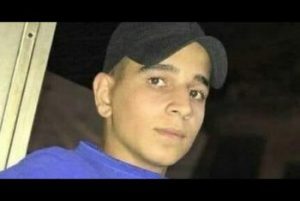 Seventeen-year-old Mahmoud Nakhle was shot on Friday 14 December as Israeli occupation forces suppressed protests around Al-Jalazun refugee camp near Ramallah.
The confrontations between residents and soldiers had already slowed down when Israeli forces “began chasing after the youths” and “suddenly… started shooting, using live ammunition”.
According to the paper, Nakhle was returning home “by way of a dirt path that passes above the camp”, when “the soldiers ran after him and one of them shot him once, in the lower back”.
The soldiers lifted Nakhle up and carried him a few dozen metres away, “laying him down at the side of the road”; one eyewitness said they carried him “like you haul a slaughtered sheep”.
After a few minutes, soldiers lifted the boy up again, and “carried him a few dozen metres more”. A Palestinian ambulance “was chased off by the soldiers, who threatened the driver with their rifles”. As far as is known, Haaretz reported, “the soldiers did not give Nakhle any sort of medical aid”.
It was only after a quarter of an hour “that the soldiers allowed an ambulance to be summoned”, but Mahmoud died en route to the hospital.
His death certificate states that the teen “died from loss of blood after a bullet entered his lower back, struck his liver and hit a main artery, damaging other internal organs”.
The paper described how “Mahmoud attended school until the 10th grade and then studied electrical engineering at a professional college”. After a year of apprenticeship, he had been “waiting to find a job as an electrician”. He is survived by his parents and two sisters aged 14 and four.
The Israeli military spokesperson told Haaretz “a Palestinian holding a suspicious object approached one of the soldiers” when “the soldier fired at him”. The incident is being investigated by the Military Police, who routinely whitewash the killing of Palestinians by Israeli occupation forces.
READ:
Featured Video

No Threat Can Force Iran’s Surrender /Trita Parsi & Lt Cl Daniel Davis
or go to
Aletho News Archives – Video-Images
From the Archives
An Expert Military Analysis of War with China
Actually, None is Necessary
By Fred Reed • Unz Review • December 13, 2020
The Correlation of Armed Forces: U.S. goods and services trade with China totaled an estimated $634.8 billion in 2019. Exports were $163.0 billion; imports were $471.8 billion. The U.S. goods and services trade deficit with China was $308.8 billion in 2019. Trade in services with China (exports and imports) totaled an estimated $76.7 billion in 2019. Services exports were $56.5 billion; services imports were $20.1 billion. The U.S. services trade surplus with China was $36.4 billion in 2019.
There is talk within the Washingtoniat of a possible war with China. Steve Bannon, who apparently was dropped on his head as a child, actually favors such a war. We hear the usual shoo-the-boobs alarm about how the Chinese are doing something terrible and we must gird our loins and American values and show them what for, bow wow, woof. The danger is that the current game of who-blinks-first in Asian waters might actually provoke a shooting war. You know the kind of thing: One warship refuses to get out of the way of another, a collision ensues, some retard lieutenant who signed up on waivers opens fire, and we’re off and running. It is not a good idea to let children play with matches.
The said war is discussed either in emotional terms by idiots or in purely naval terms by those familiar with such things, so we hear of the First Island Chain and the Second Island Chain and whose missiles against the other’s missiles and so on. This would be appropriate if we were fighting World War Two again. Which we aren’t. Let’s take a quick-and-dirty look at how such a war might go.
To begin the war, America would overestimate itself and underestimate China. This is doctrine in the Pentagon. … continue
Blog Roll
 Aletho News
- Theodore Postol: Iran’s Missiles & Drones Were Underestimated
- Iran To Target Military Industrial-Tech Complex That Facilitated Gaza Genocide
- Collapsing Empire: The Resistance Disarms ‘Israel’
- Suicide Should Not Be a Government Service
- Rethinking America’s greatest threat: Iran vs. Israel-Firsters
- Iran accuses adversaries of false flags to strain Turkey ties
- Poland rules out sending Patriot missiles to US/Israel amid war on Iran
- Tehran approves new Hormuz plan with major restrictions
- No Threat Can Force Iran’s Surrender /Trita Parsi & Lt Cl Daniel Davis
- UK’s New Pandemic Plan Would Turn Big Tech Into a Mass Location Tracking Network
- If Americans Knew
- Ann Coulter Rips Into Fox News for Iran War Coverage, Compares to False Rigged 2020 Election Reporting
- Joe Kent Urges Americans To Call White House and Congress To Object To Sending Troops Into Iran
- DNC Resolution to Reject AIPAC Funding Puts Democratic Leaders in the Hot Seat
- Swedish foundation to build 400 schools as over 650,000 Gaza children remain without education for 2 years
- Israeli army admits photshopping image of slain Lebanese journalist
- This is how Israel is systematically killing health workers under the cover of war in Lebanon
- Carrying life under fire: Israeli invasion of Lebanon leaves pregnant women facing deadly risks
- Champagne all around for the new death penalty (for Palestinians) law – Not a ceasefire Day 172
- Why are Palestinian books struggling to be seen on Amazon?
- The Line Between Affinity and Conspiracy
- No Tricks Zone
- New Study Finds Warming Saves Lives…Cold Temperatures 12 Times More Deadly Than Excess Heat
- German Science Blog Accuses PIK Climate Institute Of Hallucinating Climate Tipping Points
- Devastating Assessment Of Comirnaty Vaccine By Former Senior Pfizer Europe Toxicologist
- New Study: CO2 Is ‘Effectively Negligible’ As An Explanatory Climate Change Factor Since 2000
- Former Pfizer Toxicologist Dr. Helmut Sterz Tells Bundestag Hearing Pfizer Vaccine Should Have Never Been Approved
- Energy Expert: Germany’s Nuclear Phaseout Was A “500 Billion Euro Mistake”
- New Research: South Australia’s Mid-Holocene Sea Surface Temperatures Were 4°C Warmer Than Today
- Storing Green Energy To Last Germany 10 Days Would Require A 60-Million Tonne Battery
- New Studies: UK Sea Levels Were 4 Meters Higher Than Today During The Mid-Holocene
- Destructive Green New Deal: German Energy And Metal Group Warns Of Drastic Crisis
 Aletho News