Israel kills Palestinian at checkpoint in West Bank, fourth to be killed in 24 hours
![26-year-old Ahmad Manasra from the local village of Wadi Fuqin [Twitter]](https://i2.wp.com/www.middleeastmonitor.com/wp-content/uploads/2019/03/4-1.jpg?resize=1200%2C800&quality=75&strip=all&ssl=1)
26-year-old Ahmad Manasra from the local village of Wadi Fuqin [Twitter]
MEMO | March 21, 2019
Israeli forces have shot dead a Palestinian man in the occupied West Bank near the city of Bethlehem; the fourth such killing in 24 hours.
The Palestinian Red Crescent reported that one of its crew treated a man with two bullet wounds near an Israeli military checkpoint near Bethlehem yesterday. The man was identified by the Palestinian Health Ministry as 26-year-old Ahmad Manasra from the local village of Wadi Fuqin.
According to the ministry, Manasra was shot in the chest, shoulder and hand by a checkpoint at the southern entrance of Al-Khader village, while another Palestinian was also shot and critically wounded.
The Israeli soldier who shot Manasra allegedly did so by accusing him of throwing stones, but eyewitnesses at the scene reported that Israeli forces at the checkpoint fired live bullets into the car of a Palestinian family consisting of a man and his wife and children. The man, identified as Alaa Ghayatha from the village of Nahalin, was shot in the abdomen and is said to be in critical condition. Manasra was in the car behind Ghayatha, and when the latter was shot Manasra came out to help him and was also shot at as he returned to his car.
The Israeli military issued a statement hours later claiming that the soldier stationed at the post had “identified rocks being thrown at Israeli vehicles” and “in response, he fired his weapon”. The statement did not, however, identify the soldier’s intended target, and the military said that “Details regarding the incident are being reviewed and the incident will be examined.”
Manasra’s death marks that of the fourth Palestinian killed by Israeli forces within 24 hours in the occupied West Bank, having closely followed another two incidents. On Tuesday night, Israeli forces killed 19-year-old Omar Abu Leila near the city of Ramallah, after he stabbed and killed an Israeli occupation soldier.
In another incident on Tuesday, two other Palestinians – Raed Hamdan, 21, and Zaid Nouri, 20 – were killed by Israeli soldiers as they were driving their car near the city of Nablus in the occupied West Bank after hundreds of Israeli settlers stormed Joseph’s Tomb in the city.
The Governor of Bethlehem, Kamel Hamid, told local news that what happened was a direct execution of a young man, calling on the international community to intervene and put an end to the Israeli occupation.
In Hebron, Israel Removes the Last Restraint on Its Settlers’ Reign of Terror
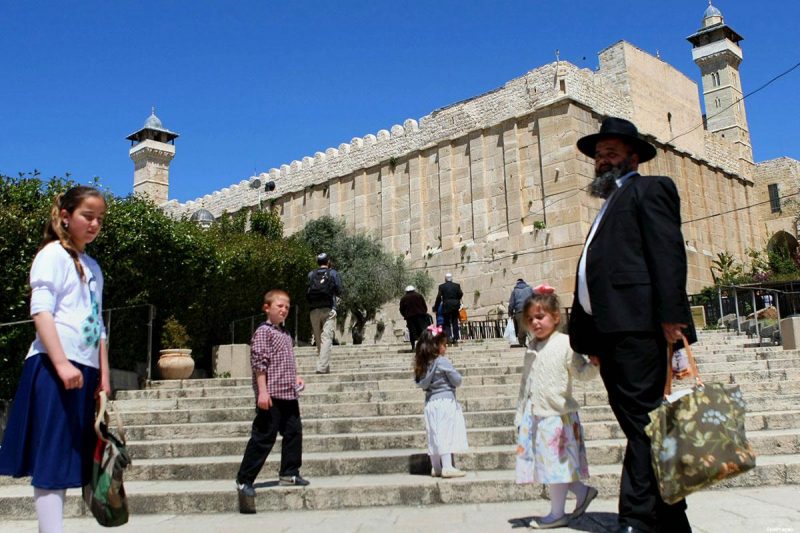
By Jonathan Cook | The National | February 13, 2019
You might imagine that a report by a multinational observer force documenting a 20-year reign of terror by Israeli soldiers and Jewish settlers against Palestinians, in a city under occupation, would provoke condemnation from European and US politicians.
But you would be wrong. The leaking in December of the report on conditions in the city of Hebron, home to 200,000 Palestinians, barely caused a ripple.
About 40,000 separate cases of abuse had been quietly recorded since 1997 by dozens of monitors from Sweden, Norway, Switzerland, Italy and Turkey. Some incidents constituted war crimes.
Exposure of the confidential report has now provided the pretext for Israeli prime minister Benjamin Netanyahu to expel the international observers. He shuttered their mission in Hebron this month, in apparent violation of Israel’s obligations under the 25-year-old Oslo peace accords.
Israel hopes once again to draw a veil over its violent colonisation of the heart of the West Bank’s largest Palestinian city. The process of clearing tens of thousands of inhabitants from central Hebron is already well advanced.
Any chance of rousing the international community into even minimal protest was stamped out by the US last week. It blocked a draft resolution at the United Nations Security Council expressing “regret” at Israel’s decision, and on Friday added that ending the mandate of the Temporary International Presence in Hebron (TIPH) was an “internal matter” for Israel.
The TIPH was established in 1997 after a diplomatic protocol split the city into two zones, controlled separately by Israel and a Palestinian Authority created by the Oslo accords.
The “temporary” in its name was a reference to the expected five-year duration of the Oslo process. The need for TIPH, most assumed, would vanish when Israel ended the occupation and a Palestinian state was built in its place.
While Oslo put the PA formally in charge of densely populated regions of the occupied territories, Israel was effectively given a free hand in Hebron to entrench its belligerent hold on Palestinian life.
Several hundred extremist Jewish settlers have gradually expanded their illegal enclave in the city centre, backed by more than 1,000 Israeli soldiers. Many Palestinian residents have been forced out while the rest are all but imprisoned in their homes.
TIPH faced an impossible task from the outset: to “maintain normal life” for Hebron’s Palestinians in the face of Israel’s structural violence.
Until the report was leaked, its documentation of Israel’s takeover of Hebron and the settlers’ violent attacks had remained private, shared only among the states participating in the task force.
However, the presence of observers did curb the settlers’ worst excesses, helping Palestinian children get to school unharmed and allowing their parents to venture out to work and shop. That assistance is now at an end.
Hebron has been a magnet for extremist settlers because it includes a site revered in Judaism: the reputed burial plot of Abraham, father to the three main monotheistic religions.
But to the settlers’ disgruntlement, Hebron became central to Muslim worship centuries ago, with the Ibrahimi mosque established at the site.
Israel’s policy has been gradually to prise away the Palestinians’ hold on the mosque, as well the urban space around it. Half of the building has been restricted to Jewish prayer, but in practice the entire site is under Israeli military control.
As the TIPH report notes, Palestinian Muslims must now pass through several checkpoints to reach the mosque and are subjected to invasive body searches. The muezzin’s call to prayer is regularly silenced to avoid disturbing Jews.
Faced with these pressures, according to TIPH, the number of Palestinians praying there has dropped by half over the past 15 years.
In Hebron, as at Al Aqsa mosque in Jerusalem, a Muslim holy site is treated solely as an obstacle – one that must be removed so that Israel can assert exclusive sovereignty over all of the Palestinians’ former homeland.
A forerunner of TIPH was set up in 1994, shortly after Baruch Goldstein, an Israeli army doctor, entered the Ibrahimi mosque and shot more than 150 Muslims at prayer, killing 29. Israeli soldiers aided Goldstein, inadvertently or otherwise, by barring the worshippers’ escape while they were being sprayed with bullets.
The massacre should have provided the opportunity for Yitzhak Rabin, Israel’s prime minister of the time, to banish Hebron’s settlers and ensure the Oslo process remained on track. Instead he put the Palestinian population under prolonged curfew.
That curfew never really ended. It became the basis of an apartheid policy that has endlessly indulged Jewish settlers as they harass and abuse their Palestinian neighbours.
Israel’s hope is that most will get the message and leave.
With Israeli Prime Minister Benjamin Netanyahu in power for a decade, more settlers are moving in, driving out Palestinians. Today Hebron’s old market, once the commercial hub of the southern West Bank, is a ghost town, and Palestinians are too terrified to enter large sections of their own city.
TIPH’s report concluded that, far from guaranteeing “normal life”, Israel had made Hebron more divided and dangerous for Palestinians than ever before.
In 2016 another army medic, Elor Azaria, used his rifle to shoot in the head a prone and badly wounded Palestinian youth. Unlike Goldstein’s massacre, the incident was caught on video.
Israelis barely cared until Azaria was arrested. Then large sections of the public, joined by politicians, rallied to his cause, hailing him a hero.
Despite doing very little publicly, TIPH’s presence in Hebron had served as some kind of restraint on the settlers and soldiers. Now the fear is that there will be more Azarias.
Palestinians rightly suspect that the expulsion of the observer force is the latest move in efforts by Israel and the US to weaken mechanisms for protecting Palestinian human rights.
Mr Netanyahu has incited against local and international human rights organisations constantly, accusing them of being foreign agents and making it ever harder for them to operate effectively.
And last year US President Donald Trump cut all aid to UNRWA, the United Nations’ refugee agency, which plays a vital role in caring for Palestinians and upholding their right to return to their former lands.
Not only are the institutions Palestinians rely on for support being dismembered but so now are the organisations that record the crimes Israel has been committing.
That, Israel hopes, will ensure that an international observer post which has long had no teeth will soon will soon lose its sight too as Israel begins a process of annexing the most prized areas of the West Bank – with Hebron top of the list.
Israeli Army Admits the Palestinian Motorcyclist They Killed Had No Explosives
IMEMC News – February 11, 2019
 Following an investigation by the Israeli military into the killing of a Palestinian motorcycle rider on February 5th, and the severe wounding of his passenger, the military was forced to admit that their initial claim that the young man had explosives was a false claim.
Abdullah Faisal Omar Tawalba, 19, was shot and killed by Israeli forces on February 5th, 2019, at an Israeli military checkpoint in Jenin, in the northern part of the West Bank.
His passenger, Omar Ahmad Hanana, 15, was also shot by the Israeli military and badly injured, but is in stable condition at the Jenin Governmental Hospital run by the Palestinian Authority.
Initially, the Israeli military reported to the media that the young men had approached the checkpoint and “tried to plant explosives”.
An investigation by Israeli military police found no evidence whatsoever of any explosives of any kind.
The soldiers claimed that they “heard an explosion,” and were sure “an explosive was thrown at the roadblock, before they opened fire.”
The checkpoint where Abdullah was killed by the soldiers is located near the entrance of the al-Jalama village, northeast of Jenin in northern West Bank. The army’s initial statement claimed that Palestinians were riding a motor cycle and “hurled an explosive at the soldiers”.
There were no injuries of any soldiers.
Mahmoud Sa’adi, the director of the Emergency Department of the Palestinian Red Crescent in Jenin, said the slain Palestinian has been identified as Abdullah Faisal Omar Tawalba, 19, from the al-Jalama village, and added that Omar Ahmad Hanana, 15, was injured but is in a stable condition.
Palestinian medical sources said the medics moved the slain Palestinian, and the wounded teen, to Jenin Governmental Hospital.
They added that Tawalba was shot with several live rounds in the head and legs.
Netanyahu to expel international observers out of Hebron
Ma’an – January 29, 2019
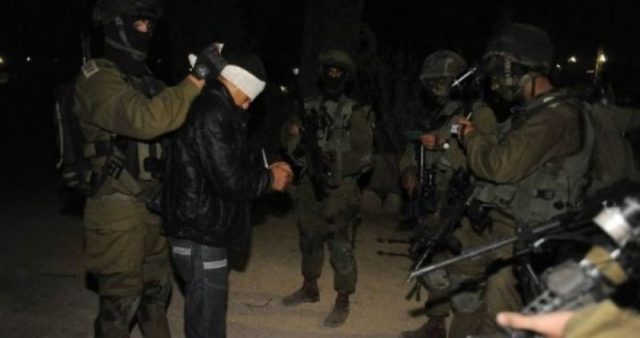
BETHLEHEM – Israeli Prime Minister, Benjamin Netanyahu, announced on Monday evening that Israel will not be renewing the mandate of the Temporary International Presence in Hebron (TIPH).
TIPH has been monitoring the southern occupied West Bank’s city for twenty years; the group’s mandate is renewed every six months; their current mandate expires by the end of the this month.
According to Israeli news outlets, Netanyahu said in a statement “We will not allow the continuation of an international force that acts against us,”
TIPH is an international civilian observer group that, according to its mandate, is tasked with “monitoring and reporting efforts to maintain normal life in the city of Hebron, thus creating a sense of security among the Palestinians in Hebron.” It also reports alleged human rights abuses and violations of accords in the city between Israel and Palestinians. Observers for the group come from Norway, Denmark, Sweden, Switzerland, Italy, and Turkey. TIPH has roughly a dozen staff operating locally and an additional 64 working abroad.
The Old City of Hebron is under full military control by Israel imposing restrictions on the movement of Palestinians living there.
Between 500,000 and 600,000 Israelis live in Jewish-only settlements across occupied East Jerusalem and the West Bank in violation of international law.
The Palestinian government has no jurisdiction over Israelis in the West Bank, and acts carried out by Israeli settlers often occur in the presence of Israeli military forces who rarely act to protect Palestinian residents.
Israel warns Ireland over bill boycotting settlement goods, summons ambassador
RT | January 25, 2019
Israel has warned Ireland over passing a bill to ban imports of West Bank settlement products, saying the legislation, if adopted, would have “severe ramifications” on mutual relations, AP reported.
Israel’s Foreign Ministry said Friday it summoned Irish Ambassador Alison Kelly to the headquarters in Jerusalem and made Israel’s stance on the matter clear to her.
The ministry says the bill, which was advanced in Ireland’s lower house of parliament on Thursday, is “hypocritical and anti-Semitic.”
The law envisions prison terms and high fines for Irish businesses trading with goods originating from illegal settlements on occupied land.
If the bill becomes law, Ireland would become the first European country to ban settlement goods and would apply to illegal occupations anywhere in the world, not just Palestine and Israel.
The EU in 2015 issued guidelines on labeling settlement products. Palestinians see the West Bank as part of their future state.
A Tale of Two Walls
Congress prefers the Israeli version

Palestinian women walk next to the separation wall in the West bank village of Abu Dis, November 19, 2007. Photo by Anna Kaplan/Flash90.
By Philip Giraldi | Unz Review | January 22, 2019
The demand of President Donald Trump that congress should appropriate money to build a wall securing the nation’s southern border has resulted in the longest federal government shutdown in history with no end in sight. There is considerable opposition to the wall based on two quite different perceptions of border security. The generally “progressive” view is that there is no border threat at all, that the thousands of migrants heading for the U.S. can be assimilated and indeed should be allowed entry because of U.S. government policies in Central America that have created the ruined states that the would-be immigrants have been fleeing.
There is certainly some truth to that argument, though it suggests that the United States should essentially abandon sovereignty over its own territory, which most Americans would reject. The alternative viewpoint, which has a much broader bipartisan constituency, consists of those who do feel that border security is a national priority but are nevertheless critical of building a wall, which will be expensive, possibly ineffective and environmentally damaging. They prefer other options, to include increased spending on the border guards, more aggressive enforcement against existing illegals and severe punishment of businesses in the U.S. that hire anyone not possessing legal documentation. Some also have argued in favor of a national ID issued only to citizens or legal permanent residents that would have to be produced by anyone seeking employment or government services.
Whether the wall will ever be built is questionable, but one thing that is certain is that there is more than enough hypocrisy regarding it to go around. Democratic Presidents including Bill Clinton and Barack Obama when campaigning have called for better border security, as have Democratic Congressional leaders who are now smelling blood and attacking Trump for seeking to do what they have long at least theoretically sought.
Apart from that, many of the Democrats who are currently criticizing the southern border wall on moral grounds have failed to apply the same standard to another infamous wall, that which is being built by Israel. Israel’s “separation wall” is arguably being constructed at least in part using “aid” and charitable money provided by Washington while also being enabled politically by the U.S. government’s acquiescence to the Israeli violations of international law. And if the moral argument for not having a wall to aid suffering refugees has any meaning, it would be many times more so applied to the Israeli wall, which is an instrument in the maintenance of apartheid in areas under Israeli control while also making permanent the stateless status of the more than one million Palestinian refugees, far more in number than the would-be immigrants marching through Mexico.
The Israeli wall is at many points larger and more intimidating than that planned by Trump, and it is also designed to physically and economically devastate the Palestinian population adjacent to it. Israel’s wall is undeniably far more damaging than anything being considered for placement along the U.S.-Mexican border as it operates as both a security measure and a tool for confiscating more Arab land by including inside the barrier illegal West Bank settlements.
There are both physical similarities and differences relating to the two walls. Judging from prototypes, Trump currently appears to favor prefabricated mostly metal sections with barbed wire coils on top that would be high and intimidating enough to deter climbing over. The sections would be set in foundations sufficiently deep to deter most tunneling and there would be sensors at intervals to alert guards to other attempts to penetrate the barrier. Israel’s wall varies in terms of structural material, including large concrete blocks 28 feet high in some areas while other less populated stretches that are considered low security make do with multiple lines of barbed wire and sensors. It is interesting to note that some Israeli companies have apparently expressed interest in building the Mexico wall and, as one of the many perks Israel receives from congress includes the right to bid on U.S. government contracts, they might well wind up as a contractors or subcontractors if the barrier is ever actually built.
As noted above, the principal difference between the U.S. wall and that of Israel is that the American version is all on U.S. land and is engineered to more or less run in a straight line along the border. The Israeli version is nearly 90% built on Palestinian land and, as it is designed to create facts on the West Bank, it does not run in a straight line, instead closing off some areas to the Palestinians by surrounding Arab villages. It therefore keeps people in while also keeping people out, so it is not strictly speaking a security barrier. Indeed, some Israeli security experts have stated their belief that the wall has been only a minor asset in preventing violence directed by Palestinians against Israelis.
If the Israeli wall had followed the Green Line that separated Israel proper from Palestinian land it would be only half the estimated 440 miles long that it will now be upon completion. The extra miles are accounted for by the deep cuts of as much as 11 miles into the West Bank, isolating about 9% of it and completely enclosing 25,000 Palestinian Arabs from areas nominally controlled by the Palestinian Authority. One often cited victim of the barrier is the Palestinian town of Qalqilyah, with a population of 45,000, which is enclosed on all sides by a wall that in some sections measures more than 25 feet high. Qalqilyah is only accessible through an Israeli controlled military checkpoint on the main road from the east and a tunnel on the south side that links the town to the adjacent village of Habla.
The wall is therefore only in part a security measure while also being a major element in the Israeli plan to gradually acquire as much of the West Bank as possible – perhaps all of it – for Israeli settlers. It is a form of collective punishment based on religion to make life difficult for local people and eventually drive them from their homes.
The human costs for the Palestinians have consequently been high. A United Nations 2005 report states that :
… it is difficult to overstate the humanitarian impact of the Barrier. The route inside the West Bank severs communities, people’s access to services, livelihoods and religious and cultural amenities. In addition, plans for the Barrier’s exact route and crossing points through it are often not fully revealed until days before construction commences. This has led to considerable anxiety amongst Palestinians about how their future lives will be impacted… The land between the Barrier and the Green Line constitutes some of the most fertile in the West Bank. It is currently the home for 49,400 West Bank Palestinians living in 38 villages and towns.”
Amnesty International in a 2004 report observed:
“The fence/wall, in its present configuration, violates Israel’s obligations under international humanitarian law… Since the summer of 2002 the Israeli army has been destroying large areas of Palestinian agricultural land, as well as other properties, to make way for a fence/wall which it is building in the West Bank. In addition to the large areas of particularly fertile Palestinian farmland that have been destroyed, other larger areas have been cut off from the rest of the West Bank by the fence/wall. The fence/wall is not being built between Israel and the Occupied Territories but mostly (close to 90%) inside the West Bank, turning Palestinian towns and villages into isolated enclaves, cutting off communities and families from each other, separating farmers from their land and Palestinians from their places of work, education and health care facilities and other essential services. This in order to facilitate passage between Israel and more than 50 illegal Israeli settlements located in the West Bank.”
Of course, the situation has become far worse for Palestinians since the two reports dating from 2004 and 2005. Israel has accelerated its settlement construction and the wall has expanded and shifted to accommodate those changes, making life impossible for the indigenous population.
Any pushback from the United States has been rare to nonexistent, with successive administrations only occasionally mentioning that the settlements themselves are “troubling” or a “complication” vis-à-vis a peace settlement. The first direct criticism of the wall itself took place in 2003, when the Bush administration briefly considered reducing loan guarantees to discourage its construction. Then Secretary of State Colin Powell remarked “A nation is within its rights to put up a fence if it sees the need for one. However, in the case of the Israeli fence, we are concerned when the fence crosses over onto the land of others.”
On May 25, 2005, Bush repeated his concerns, noting that “I think the wall is a problem. And I discussed this with Ariel Sharon. It is very difficult to develop confidence between the Palestinians and Israel with a wall snaking through the West Bank.” In a letter to Sharon he stated that it “should be a security rather than political barrier, should be temporary rather than permanent and therefore not prejudice any final status issues including final borders, and its route should take into account, consistent with security needs, its impact on Palestinians not engaged in terrorist activities.”
Congress is, of course, Israeli occupied territory so its response was directed against Powell and Bush in support of anything Israel chose to do. Then Senator Joe Lieberman complained “The administration’s threat to cut aid to Israel unless it stops construction of a security fence is a heavy-handed tactic. The Israeli people have the right to defend themselves from terrorism, and a security fence may be necessary to achieve this.”
In 2005, Senator Hillary Clinton declared her support for the wall by claiming that the Palestinian Authority had failed to fight terrorism. “This is not against the Palestinian people. This is against the terrorists. The Palestinian people have to help to prevent terrorism. They have to change the attitudes about terrorism.” Senator Charles Schumer, also from New York, added “As long as the Palestinians send terrorists onto school buses and to nightclubs to blow up people, Israel has no choice but to build the Security Wall.”
So, for many in Washington a legal and relatively apolitical wall by the United States to protect its border is a horrible prospect while the Israeli version built on someone else’s land with the intention to damage the local Arab population as much as possible is perfectly fine. The reality is that America’s Establishment, which is dominated by veneration of Israel for a number of reasons, is completely hypocritical, more prepared to criticize actions taken by the United States even when those actions are justified than they are to condemn Israeli actions that amount to crimes against humanity. That is the reality and it is playing out in front of us right now.
Philip M. Giraldi, Ph.D., is Executive Director of the Council for the National Interest, a 501(c)3 tax deductible educational foundation that seeks a more interests-based U.S. foreign policy in the Middle East. Website is www.councilforthenationalinterest.org, address is P.O. Box 2157, Purcellville VA 20134 and its email is inform@cnionline.org.
Israel minister calls to expel international observers from Hebron

MEMO | January 18, 2019
Israel’s Security Minister Gilad Erdan has called for international observers to be expelled from Hebron.
Erdan yesterday sent a letter to Israeli Prime Minister Benjamin Netanyahu, demanding that he end the mandate of the Temporary International Presence in Hebron (TIPH), in the south of the occupied West Bank.
According to the Jerusalem Post, Erdan claimed that the mission is “hostile to Israel rather than a neutral force, and is harmful to both the Israeli soldiers stationed in Hebron and the [illegal] Jewish settlers that live there”. Erdan reportedly gave Netanyahu a secret police report “with data to back up his assertion”.
The letter read:
It is no wonder that a force, composed of policemen from a hostile Islamic state such as Turkey and pro-Palestinian countries that sponsor boycotts [of Israel] such as Sweden and Norway, interferes with IDF soldiers and police, creates friction with the settlers, cooperates with radical organizations and promotes the delegitimization of Israel.
Erdan continued: “It is [therefore] right and proper for the Israeli government to prevent the continued activity of this ‘temporary’ force acting to harm Israel.”
The TIPH – a civilian observer mission which has been present in Hebron since 1997 – has a mandate which is renewed every six months by the Palestinian Authority (PA) and Israel. The mission’s current mandate ends in 14 days, which likely explains the timing of Erdan’s appeal. In doing so, he joins the right-wing campaign led by Deputy Foreign Minister, Tzipi Hotovely, to pressure Netanyahu to end the mission’s mandate.
In November, Netanyahu said he would review the mission’s status in December, but made no public statement on the issue.
The mission was formed in the aftermath of a massacre committed by Jewish extremist rabbi, Baruch Goldstein, who killed 30 Palestinian worshippers during their morning prayers at the Ibrahimi Mosque in Hebron.
Israel orders administrative detention of martyr’s father
Palestine Information Center – January 14, 2019
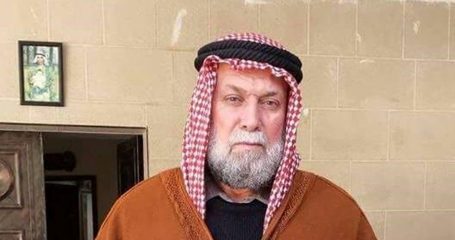 RAMALLAH – The Israeli occupation authorities on Sunday issued a three-month administrative detention order against the Palestinian prisoner Omar al-Barghouti, the father of martyr Saleh al-Barghouti.
The Palestinian Prisoner Society said that Omar al-Barghouti, 66, has been subjected to harsh interrogation at al-Maskoubiyya detention center since he was arrested on 12 December 2018.
The Israeli occupation forces arrested al-Barghouti and dozens of Palestinian youths during a raid into Kobar village in Ramallah hours after they killed his son Saleh.
Al-Barghouti’s family have been subjected to collective punishment since the killing of Saleh. Most of the family members are currently held in Israeli jails, including al-Barghouti’s sons Asem, Asef, and Mohammed.
Omar al-Barghouti had spent over 26 years in Israeli lock-ups. He is the brother of the well-known Palestinian prisoner Nael al-Barghouti who is serving his 39th year in Israeli prisons.
Israel threatens family of ‘wanted’ Palestinian with expulsion
Ma’an – January 5, 2019
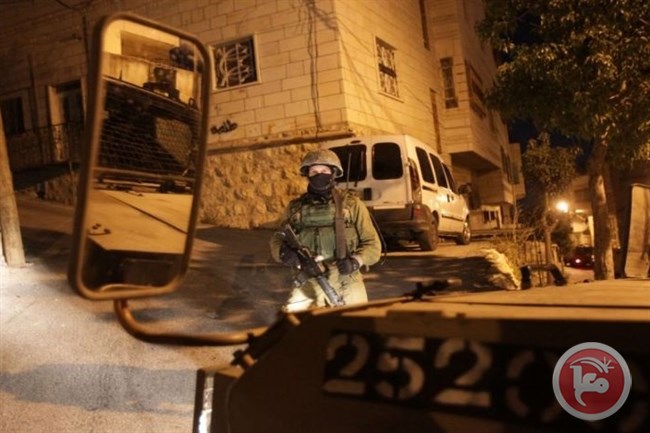
RAMALLAH – The Israeli army informed members of the al-Barghouthi family from Kobar village, northwest of central occupied West Bank district of Ramallah and al-Bireh, on Saturday, that the family would be expelled to the Jericho district, if their son, Assem, does not turn himself in to the Israeli army.
Israel accuses Assem of carrying out an attack killing two Israeli soldiers near Ramallah on December 13, one day after his brother, Saleh, was reportedly shot and killed by Israeli soldiers north of Ramallah.
Assem has been ‘wanted’ by Israeli forces since then; on December 19th, Israeli forces took measurements of al-Barghouthi’s home in preparation for its demolition as punishment.
Saleh’s family says that Saleh was detained alive and might have died in custody.
Palestinian human rights organization Al-Haq had sent a sent a joint urgent appeal to the United Nations (UN) Special Procedures regarding the enforced disappearance of al-Barghouthi.
Israeli soldiers claim that Saleh, who they say was allegedly responsible for shooting and injuring seven Israelis days earlier near Ramallah, was shot and critically injured and later died of his wounds.
Al-Barghouthi’s mother said that large numbers of Israeli force raided their home early Saturday morning, interrogated her and told her son, Assem, has three days to turn himself in or the entire family will be expelled to Jericho.
She added that Israeli forces also detained her youngest son, Muhammad, 17, and her brother, Lutfi al-Barghouthi.
Israeli forces had previously detained her husband and other son a day after the alleged attack.
Clashes erupted between Israeli forces and locals of Kobar; soldiers fired tear gas, causing tear-gas suffocation cases.
Last week, Israeli forces detained 10 Palestinians from Kobar as part of Israel’s “collective punishment” policy against the village following al-Bsrghouthi’s alleged attack.
Israel’s plan to ‘worsen conditions’ for Palestinian prisoners is an opportunity for unity
By Ramona Wadi | MEMO | January 4, 2019
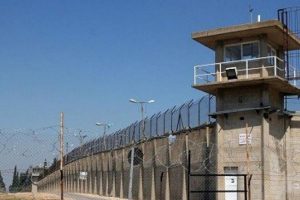 Depriving Palestinian political prisoners in Israeli jails of their basic rights is a “moral duty”, according to Israeli Public Security Minister Gilad Erdan. News reports have confirmed that the Israeli cabinet has approved plans to “worsen conditions”, after Erdan set up a committee specifically tasked with devising “harsher” conditions for Palestinian prisoners involved in resistance activities.
Rationing water, eliminating cooking rights and visits to Palestinian prisoners, as well as halting the process of separating prisoners pertaining to different Palestinian political factions will be implemented in the coming weeks.
To put it briefly, Israel is aiming to enact the same violations that Palestinians experience outside prison. The only difference is the absence of community support for Palestinian prisoners.
According to Erdan: “We must make conditions worse [for prisoners] to fulfil our moral duty to terror victims and their families.”
Indeed Israel does have a moral obligation towards its settler population – dismantling the settler colonial state would eliminate the need for Palestinian anti-colonial resistance which is a right under international law. Instead of facing its responsibilities for creating a colonial entity on stolen territory and replacing the indigenous population with an assortment of complicit settlers, it has instead renewed its efforts to criminalise Palestinian resistance and invent premises upon which it seeks to extend its violation of Palestinian rights.
Meanwhile, Palestinian prisoners in Israeli jails are already in a precarious situation. Revered as the epitomes of Palestinian resistance, yet their remembrance outside family circles often occurs at times when Israel announces additional oppressive measures. Not to mention the fact that some prisoners, or their fates, attract more publicity than others when it comes to raising awareness.
Erdan’s measures shift this focus which, in part, can be attributed to Israel and its singling out of individual prisoners to make the case for its alleged security concerns. Till now, the visibility of some Palestinian political prisoners has eclipsed the fate of the rest. Unfortunately, even well-intentioned activism has become ensnared in this façade. But the Palestinian struggle is a collective endeavour.
Differentiating between prisoners in terms of visibility has fractured Palestinian unity even further. As Israel moves to implement additional violations against all Palestinian political prisoners, the focus should be on supporting the Palestinian collective struggle.
Ironically, Erdan is also provoking a sense of unity among Palestinians. As the fine line between Israel’s human rights violations outside and behind bars blurs further, the distinction between Palestinian prisoners and the Palestinian people undergoes the same process. Israel is bringing the theft of water – this time by depriving prisoners of a basic right – to a space which is inhabited by Palestinians dedicated to resistance.
The response to these violations, therefore, cannot be limited to the usual perfunctory statements about Israel respecting and applying international law. Israel acts with impunity and the international community has already sealed the deal with tacit approval. Such violations call for a strategy which goes beyond a retaliatory response. The only way to do this is for Palestinian institutions to step down from their pedestals and acknowledge the people’s political power. For all intents and purposes, international law must come secondary to Palestinian demands.
See also:
Thousands of West Bank farmers denied access to their lands in 2018
Palestine Information Center | January 3, 2019
OCCUPIED JERUSALEM – Israel has drastically reduced the number of Palestinian farmers who are allowed to work their lands located between the separation barrier or wall and the Green Line, according to Israeli official data.
According to Haaretz newspaper, in 2018, 72 percent of Palestinian requests for farming permits were rejected, compared to 24 percent in 2014.
There are also very few permits issued for relatives of the plot owner who work with him and paid laborers.
This information was sent by the Israeli army’s civil administration to Hamoked—the center for the defense of individual human rights—in response to a freedom of information law request, according to the newspaper.
However, that information lacks valuable data concerning, for example, the number of seasonal, short term permits which Hamoked believes often replace the long term permits.
The statistics correspond to reports submitted by farmers to Hamoked, to Machsom Watch activists and to Haaretz about bureaucratic obstacles that have been added over the past four years to get the permits to cultivate their land.
The land between the barrier and the Green Line, which Israel refers to as the “seam zone,” totals 137,000 dunums (33,853 acres), a report released by Haaretz pointed out.
Since the start of 2018 through November 25, the civil administration approved only 1,876 requests for farming permits of the 7,187 requests submitted, which constitutes an unprecedented refusal rate of 72 percent. This compares to a refusal rate of 24 percent in 2014, when the number of requests totaled 4,288, and the number of permits issued was 3,221.
Hamoked, has been assisting farmers who are denied permits since 2009, said the obtained data confirm that “contrary to the high court of justice ruling that recognizes the residents’ right to work their lands with their families and employees, the army is acting systematically to deprive the Palestinians of this basic right, to restrict the entry of Palestinian farmers into the seam zone and to gradually dispossess them of their land.”
Featured Video
Houthis Keep Advancing as the Red Sea Crisis Deepens
or go to
Aletho News Archives – Video-Images
From the Archives
Clash of Civilization, Iran Part II
By Jamal Kanj – Intifada-Palestine.com – January 14, 2011
Israel’s survival kit is: perpetuate conflict, insecurity to rationalize collective hate and finally playing victim.
Devoid of conflict, Israel implodes internally; without hate, Zionism loses its justification; and playing eternal victim to continue blackmailing the West. Absence of this holy trinity, Israel ceases to exist. … continue
Blog Roll
 Aletho News
- ‘We are not like everyone else’ laws that bind other nations do not apply to Israel, says Likud lawmaker
- Report: Saudi Arabia seeks allies’ assistance as missiles deplete amid war on Yemen
- Fuel Crisis Deepens: Pakistan Warns Tanker Attack in Red Sea Would Be an ‘Act of War’
- ‘Bucha massacre’ a false flag orchestrated by UK – Moscow
- China Rejects Outside Pressure on Trade Ties After New US Russia Sanctions Bill
- Houthis Keep Advancing as the Red Sea Crisis Deepens
- Iran spent $1 million to wipe out $30 billion in data center plans, and take down Amazon in the ME
- Zionist billionaire pressure to silence Macklemore sparks exodus from Ed Sheeran tour
- House Votes to End Iran War for Third Time
- North Korea Slams US Plan for ‘AUKUS 2.0’ with South Korea and Japan
- If Americans Knew
- Biden’s Genocide Accomplices Targeted by New Accountability Campaign
- AIPAC’s Network Has Already Spent $67.2 Million to Shape the Midterm Elections
- Jewish Supremacist Manufacturing a Civilizational Threat to License Bigotry
- US bans Palestinian president from speaking at the UN
- Israeli Forces Detain Journalist Alaa al-Rimawi amid Widespread West Bank Raids
- Even a pro-Israel Congress member has put a hold on 40,000 one-ton bombs to Israel
- As Gaza crumbles, Israel preps new ground invasion – Daily Update
- ‘We are not like everyone else’ laws that bind other nations do not apply to Israel, says Likud lawmaker
- Trump’s govt makes ‘treasonous’ claim of weapons shortages
- Palestinian-American Journalist Naqaa Hamed Imprisoned by Israeli Forces After Settlers Targeted Her
- No Tricks Zone
- New Study: ‘Global Drought Shows No Detectable Recent Acceleration Under Climate Warming’
- Economic Masterminds: German Socialists Suggest Taxing Productivity Gains Stemming From Using AI
- The South China Sea Has Not Been Cooperating With The Climate Change Narrative
- Energy Crisis: Germany Enters Heating Season With Historically Low Gas Reserve Fill Levels
- New Study: The Antarctic Ice Sheet Gained Mass From 2020-2024 Due To Staggering Snow And Ice Accumulation
- Study: Ocean Heating Rates From Thousands Of Years Ago ‘Dwarf’ Modern Ocean Heating Rates
- Climate Extremists Target, Attack Large-Scale Power Grid Infrastructure In Germany!
- New Study: Antarctic Ice Melt Has Contributed Less Than 1 Centimeter To Sea Level Rise In The Last 30 Years
- Fear Of Debate: Alarmist German Climate Scientist Calls On Mainstream Media To Discredit Skeptic Voices
- End-Of-August Arctic Sea Ice Extent Hasn’t Fallen In 20 Years, Official Data Show!
 Aletho News