Israel Supreme Court told that settlements law violates apartheid convention
MEMO | June 4, 2018
Israel’s Supreme Court heard a petition yesterday against a law that allows the expropriation of privately-owned Palestinian land for Israeli settlers, reported AFP.
The court, meeting in an expanded panel of nine justices, has been petitioned by Israeli and Palestinian rights groups, on behalf of 17 Palestinian villages.
The law was passed by the Knesset in February 2017. In August, the court issued a restraining order against the law’s implementation, pending its ruling.
According to AFP, the petition “argues that by giving preference to Jewish settlers over the rights of Palestinian landowners it [the law] breaches an international convention on Apartheid”.
“The clear, declared purpose of the law, which seeks to privilege the interests of one group on an ethnic basis and leads to the dispossession of the Palestinians, leaves no doubt that this law involves crimes under the convention,” it says.
Attorney Harel Arnon “argued in defence of the legislation in place of attorney-general Avichai Mandelblit, who has warned the government the law could be unconstitutional and risked exposing Israel to international prosecution for war crimes”, AFP reported.
Arnon told the court that striking down the law would be “abetting a coup against this administration”. It would be “the dismemberment of the sovereignty of the Knesset”, he added.
It was not known yeserday when the court would deliver its ruling, AFP noted.
The law is designed to retroactively “legalise” dozens of settlement outposts and thousands of settler homes across the occupied West Bank, homes built on privately-owned Palestinian land.
Under international law, including as reflected in United Nations Security Council resolutions, all Israeli settlements in the West Bank, and East Jerusalem, are illegal.
Israeli forces detain activist who filmed fatal shooting of Hebron man
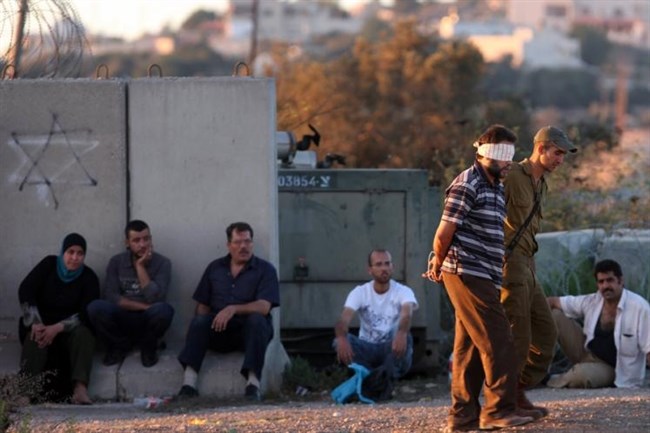
File Photo
Ma’an – | June 2, 2018
HEBRON – Israeli soldiers on Saturday briefly detained a local activist who filmed the fatal shooting of a Palestinian worker earlier in the morning in the southern occupied West Bank city of Hebron.
Locals told Ma’an that Israeli forces detained Aaref Jaber, who filmed the moment when Israeli forces shot and killed Rami Sabarneh, 36, and that Jaber taken into the Kiryat Arba settlement in Hebron.
Official Palestinian Authority (PA)-owned Wafa news agency reported that Israeli forces confiscated Jaber’s phone.
The Israeli army alleged that Sabarneh, who worked in construction in the area, attempted to run soldiers over with a bulldozer. However, no injuries were reported among the soldiers.
Jaber denied the Israeli army’s account, saying that “Sabarneh was driving a Bobcat excavator while another worker walked next to him, Israeli soldiers asked them to stop when he was at least 10 meters away from them, the walking worker stopped, but Sabarneh apparently did not hear the soldiers and continued his way so they opened fire at him until he was killed.”
Last week, Israeli lawmakers proposed a new bill in the Israeli Knesset that would criminalize the photographing or recording of Israeli soldiers while on duty.
The bill was proposed with the support of right-wing Israeli Defense Minister Avigdor Lieberman, and if passed, those found in violation of the law could face a prison sentence of up to five years.
UN Officials Call on Israel to Halt Khan Al-Ahmar Demolition
IMEMC | June 1, 2018
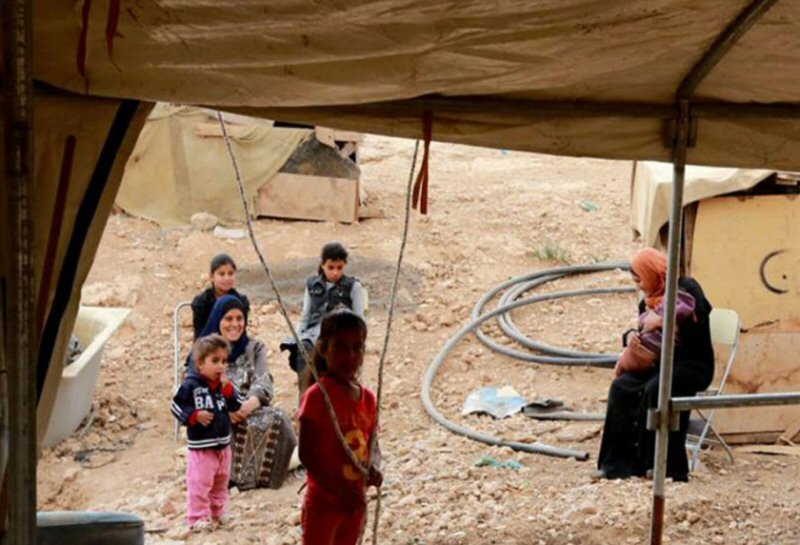
United Nations officials, on Friday, called on Israel to abandon plans to demolish the Palestinian community of Khan al-Ahmar, east of Jerusalem.
Humanitarian Coordinator, Jamie McGoldrick, and United Nations Relief and Works Agency for Palestine Refugees (UNRWA) Director of Operations in the West Bank, Scott Anderson, joined others in the international community in calling on the government of Israel to cease its plans to carry out the mass demolition and transfer of the Palestinian Bedouin community of Khan al Ahmar – Abu al Helu, located on the outskirts of East Jerusalem in the occupied West Bank.
“Like many Palestinians in Area C, the residents of Khan al Ahmar – Abu al Helu have fought for years to live with dignity, to protect their children, their homes, and their community,” said McGoldrick. “They have struggled in the face of tremendous daily pressure and are asking for the continued support of the international community to prevent the demolition of their homes.”
Following the Israeli Supreme Court’s May 24 rejection of the community’s petition to prevent the demolitions, marking an end to years-long legal efforts and leaving virtually no legal options to protect the community, nearly all of Khan al Ahmar – Abu al Helu’s structures are now at immediate risk of demolition by the Israeli authorities, including the school, initially built with donor support. The school serves some 170 students from the community and four surrounding ones. The proposed transfer seeks to move the rural livestock-dependent community to an urban site unsuitable for Bedouin livelihood, culture and traditions and is likely to increase their level of humanitarian need.
“After nine years of legal battle, this refugee community now faces the demolition of their homes, the loss of traditional livelihoods and the imminent risk of forcible transfer should the demolitions be conducted and the community be compelled to relocate, which would be a grave breach of the Geneva Convention,” said Anderson. “Many already displaced from the [Naqab] as a result of the 1948 conflict; they now face being displaced for a second time. As we have seen in similar circumstances in the past, the transfer of rural Bedouin to the urban setting of Jabal West, proposed by the Israeli state, will likely prove socially and economically devastating,” he concluded, according to WAFA.
Khan al Ahmar – Abu al Helu is one of 18 communities located in or next to an area slated in part for the E1 settlement plan, aimed at creating a continuous built-up area between the Maale Adumim settlement and East Jerusalem. This week, the Israeli authorities approved a planning scheme providing for the construction of 92 new housing units and an educational institution in the Kfar Adumim settlement, immediately adjacent to Khan al Ahmar; this settlement has also petitioned the High Court for the implementation of the outstanding demolition orders against the community.
“Israel’s obligations as an occupying power to protect the residents of Khan al Ahmar are clear,” said McGoldrick. “Should the Israeli authorities choose to implement the outstanding demolition orders in the community and force the people to leave, they would not only generate significant humanitarian hardship but also commit one of the grave breaches of international humanitarian law,” he concluded.
Israel bill to limit Palestinians’ access to High Court passes first reading
MEMO | May 29, 2018
Israeli politicians waved through a bill that would limit Palestinians’ access to the High Court last night, according to the Jerusalem Post.
The bill would prevent many cases, including those of housing demolitions and Israeli land grabbing offences, from reaching the High Court, instead redirecting them to district courts in the occupied West Bank.
Right-wing politicians stated that the bill would reduce the number of complaints pertaining to land ownership that are often filed by Palestinians and left-wing organisations in the aftermath of settler occupation.
Justice Minister Ayelet Shaked, a supporter of the bill, rejoiced in its passing of the first reading.
“The move will also reduce the heavy burden imposed on the High Court of Justice,” she said adding that the High Court “handles more than 2,000 petitions each year, and should reject many of them outright.”
Critics however argued that the bill was a step towards annexation of the West Bank, by expanding the power of district courts outside of Israeli sovereignty.
Zionist Union MK Tzipi Livni expressed concern that the move would strengthen the argument that Palestinians should have the right to vote in Israel, as has been suggested as part of the one-state solution.
Shaked defended the bill, stating that in the case of land ownership claims, it would place the burden of proof on the Palestinians filing the case, not the Israeli settlers.
The bill will also refer other issues to the lower court, such as restraining orders and Israel entry permits.
Israel has long sought to annex the occupied West Bank to preserve the illegal settlements in the area, but has struggled with what the fate of Palestinians would be.
Earlier this month, Israel’s deputy defence minister, MK Rabbi Eli Ben-Dahan, claimed that Israel could annex the entirety of the occupied West Bank, without giving its Palestinian residents the right to vote.
“The clear and absolute thing is that we are here in the Land of Israel and we are not afraid of any attempts to frighten us,” he said. “They want to scare us that maybe soon we will not be a majority and therefore we have to abandon Judea and Samaria [the West Bank]. This is a grave mistake.”
Read also:
Palestinians call to save their homes from Israeli demolition orders
Palestinians call to save their homes from Israeli demolition orders
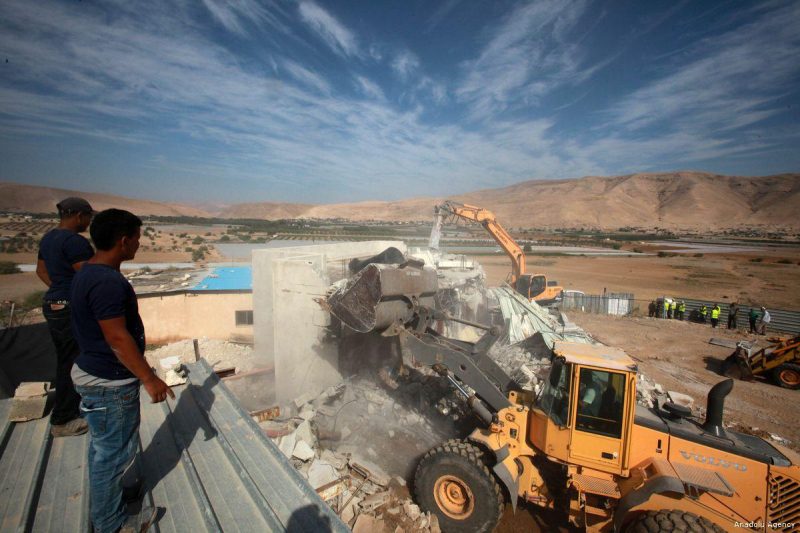
Palestinians watch the demolition of their home in the West Bank on 7 November 2017 [Nedal Eshtayah/Anadolu Agency]
MEMO | May 28, 2018
Palestinian families in the village of Aqaba, north of the West Bank, on Sunday called on Palestinian human rights organizations and the government to save their homes from the Israeli demolition orders.
The Israeli authorities have recently issued orders to demolish the homes of 20 families in the village of Aqaba under the pretext of being built in Area C.
The head of Aqaba village council, Sami Sadiq said the decision was issued by the Israeli Defence Ministry and ordered the all houses built during the past six months in Area C to be demolished if they were not inhibited by their owners.
He added that the village council has been trying to contact human rights organizations and the media in an attempt to stop the decision and protect the homes.
In an interview with Turkey’s Anadolu news agency, he pointed out that the houses are built on land owned by their owners who have owner documents.
Ibrahim Yusuf Jaber, the owner of one of the houses threatened with demolition said the decision stipulates to demolish the house within 60 days if I do not move in, but 40 days have already passed while we received the orders only two days ago.
Watch: Video of about Al Aqaba village
Award-winning photographer shot by Israel soldier in the West Bank

Internationally-acclaimed and award-winning photographer, Tanya Habjouqa [Happeningarts/Twitter]
MEMO | May 17, 2018
An internationally-acclaimed, award-winning photographer was shot by an Israeli soldier in the occupied West Bank on Tuesday, reports the Art Newspaper.
Tanya Habjouqa, who won the 2014 World Press photo award, was struck in the leg by a rubber-coated metal bullet fired by Israeli occupation forces during a protest near Bet El checkpoint.
Habjouqa told the paper that she was some 40 metres from Palestinian protesters “when Israeli soldiers in the distance started shooting rubber bullets and tear gas in several directions”.
“She also saw soldiers aim at a Palestinian gas station where there were no protesters, just people filling up their gas tanks,” the report added.
“I was on the side with my camera at the beginning of the protest with cameras around my neck, so I feel I was definitely targeted though thankfully they chose not to aim for my head,” Habjouqa tells us. “It hurts like hell and the bruise is spreading front and back.”
Habjouqa is a founder of Rawiya, the first all-female photo collective in the Middle East, as well as a member of the Noor Photography collective, a Magnum Foundation grantee, and the author of the photo book Occupied Pleasures that the Smithsonian named one of the best photo books of 2015.
Her work is in the permanent collections of the Carnegie Museum of Art, the Museum of Fine Arts in Boston and the Institut du Monde Art in Paris.
Read also:
Media freedom watchdog warns of more Israel attacks on journalists in Gaza
Dawabsheh Family Survives Second Arson attack by Jewish Settlers

A Palestinian girl stands in her living room after it was set alight by Jewish settlers in the West Bank on 11 May 2018 [Nedal Eshtayah/Anadolu Agency]
MEMO | May 11, 2018
Jewish settlers set fire to a house belonging to the Dawabsheh family in the village of Duma near the occupied West Bank city of Nablus early this morning, according to eyewitness.
“A group of settlers attacked my home at dawn today, breaking a window and throwing a Molotov cocktail inside before fleeing the scene,” Yasser Dawabsheh said.
“We were lucky that I was able to hear them when they attacked, so I was able to evacuate all my family,” he said.
“Fire crews reacted quickly and put out the fire before the whole house burnt down,” he added.
Police are reportedly investigating the incident.
In July of 2015, Israeli settlers torched the Dawabsheh family home in an attack that claimed the lives of Saad and Riham Dawabsheh and their 18-month-old baby.
Their eldest son, Ahmed, 6, survived the attack, but suffered severe burns that have affected his mobility.
The attack sparked international outrage, with the family accusing Israel of dragging its feet in prosecuting the suspects, despite admissions by Israeli officials that they knew who was responsible.
Read also: Palestinian hospitalised after settler drives in to him
‘Partners in crime’: Israel settlers and soldiers attack Palestinians in West Bank village
MEMO | May 4, 2018
Israeli settlers attacked Palestinians in the West Bank village of ‘Einabus with the assistance of Israeli soldiers, according to a new report by human rights NGO B’Tselem.
On the morning of 6 March, two Palestinians – ‘Ahed Hamad and Yasser Hamad – went to the northern part of the village to pave a road intended to help residents access their farmland.
Shortly after they began work, some 30 Israeli settlers, “some of them masked”, arrived from the direction of the notorious Yitzhar settlement, located some four kilometres away.
“The settlers surrounded the bulldozer and began throwing stones at it, breaking the windshield,” stated B’Tselem. “The two men tried to escape, but some of the settlers pursued them, throwing stones and hitting them, until they managed to escape into the village.”
“The settlers who remained near the bulldozer threw stones and sticks at it and slashed its tyres.”
Some 50 village residents then went to protect their lands, after which “the settlers returned in larger numbers, accompanied by soldiers”.
Settlers and Palestinian residents “threw stones at each other”, while Israeli occupation forces “fired live bullets, rubber-coated metal bullets and teargas” at the Palestinians. Six Palestinians were injured, of whom four were taken to hospital.
According to B’Tselem: “This incident is not unusual: settlers have attacked Palestinians in the presence of soldiers hundreds of times, with the soldiers sometimes – as in the present case – joining in the assault.”
Israel effectively condones this conduct and reaps the benefits: the Palestinian residents, who know they face a possible attack with no protection at any given time, hold back from going to their farmland – to tend the land or graze flocks – and this makes it easier for the state to take over the land.
Israeli forces detain Dean of Student Affairs of Bethlehem University
Ma’an – April 24, 2018
 BETHLEHEM – Israeli army forces on Tuesday detained the Dean of Student Affairs at Bethlehem University, according to a statement from the Palestinian Prisoners’ Society (PPS).
PPS reported that the dean, Mahmoud Hammad, was detained. The circumstances surrounding his detention remain unknown.
The group added in a statement that Israeli forces also detained Muhammad Samer Sirhan, 14, from occupied East Jerusalem.
Israeli search and arrest operations are a near-nightly occurrence in the occupied West Bank and East Jerusalem.
According to UN documentation, between March 27th and April 9th, Israeli forces carried out 159 raids.
Palestinian prisoners rights group Addameer reported that as of March, there were 6,050 Palestinians being held as political prisoners in Israeli jails.
Israeli settlers attack Palestinian families, attempt to take over homes in Hebron

Ma’an – April 21, 2018
HEBRON – A group of Israeli settlers attacked a Palestinian family and attempted to take over two homes on Saturday in the southern occupied West Bank city of Hebron.
Local activist Aref Jaber told Ma’an that a group of Israeli settlers “attacked” two homes in the Old City and attempted to take them over, demanding that the families leave their homes.
The homes belonged to the Jaber and Kfeisheh families.
Jaber added that the same group of settlers had previously taken over a home belonging to the al-Zaatari family, near the Ibrahimi mosque in the Old City.
“These continuous threats by Israeli settlers are meant to terrify Palestinian families in order to force them to leave their homes.”
Located in the center of Hebron — one of the largest cities in the occupied West Bank — the Old City was divided into Palestinian and Israeli-controlled areas, known as H1 and H2, following the Ibrahimi Mosque massacre.
Some 6,500 Palestinians and 800 notoriously aggressive Israeli settlers live in the Old City of Hebron, according to a 2016 report by legal rights NGO BADIL.
Palestinian residents of the Old City face a large Israeli military presence on a daily basis, with at least 32 permanent and partial checkpoints set up at the entrances of many streets.
Additionally, Palestinians are not allowed to drive on al-Shuhada street, have had their homes and shops on the street welded shut, and in some areas of the Old City, are not permitted to walk on certain roads.
Meanwhile, Israeli settlers move freely on the street, drive cars, and carry machine guns.
Shadi Ma’ali seized by disguised Israeli occupation forces in the heart of Bethlehem
Samidoun Palestinian Prisoner Solidarity Network – March 25, 2018
 Former long-term hunger striker and Palestinian refugee, Shadi Ma’ali, was seized by undercover occupation forces at dawn on Saturday, 17 March in the heart of the city of Bethlehem on Manger Street.
Ma’ali, from Dheisheh refugee camp, was attacked by so-called “mustaribeen,” occupation forces that dress to appear as Palestinians.
Ma’ali, who was on hunger strike for over 40 days in 2015 with five of his comrades to demand an end to administrative detention, has been repeatedly arrested and has spent years in Israeli prisons. His fellow former hunger strikers have also been repeatedly targeted; Nidal Abu Aker is held without charge or trial under administrative detention while Ghassan Zawahreh has been transferred to the military courts after over a year and a half of imprisonment with no charge.
In a statement following Ma’ali’s abduction, the Popular Front for the Liberation of Palestine said that “the abduction… once again raises new questions about the Palestinian Authority security forces and their inability to protect Palestinian citizens or detect and respond to the ‘mustaribeen’ attackers… This crime will not succeed in breaking his will and determination.”
Meanwhile, the military court hearing of wounded Palestinian prisoner Abdel-Aziz Arafa, also from Dheisheh camp, was postponed until 8 April. Arafa was seized on 7 August 2017, the same night that fellow Palestinian refugee Raed al-Salhi was shot by Israeli occupation forces. Salhi was isolated from his family and denied visits in the hospital for a month before he was killed by his injuries. As Salhi was fatally shot, occupation forces also shot Arafa in the leg; he has been held in the Ramle prison clinic and has undergone multiple operations during his detention.
Salhi was a beloved son of the camp who was deeply involved in political organizing, library volunteering and many other aspects of camp life. From an impoverished family, he dedicated his life to the freedom of his people and was shot down, unarmed, by the occupation forces who sought to imprison him for this very reason.
Featured Video

No Threat Can Force Iran’s Surrender /Trita Parsi & Lt Cl Daniel Davis
or go to
Aletho News Archives – Video-Images
From the Archives
What is the Israeli Lobby in Australia Doing in Interfaith Dialogue?
By Ali Kazak | Dissident Voice | October 11, 2015
For years Israel and its lobby around the world have been trying to normalise their relations with Arabs and Muslims without solving the Palestine Question.
One of the methods they resorted to in the last few years is using human rights and community organizations such as interfaith dialogue and Multiculturalism to achieve this objective and to: isolate the Palestinians, marginalise the Palestine question, end Israel’s isolation, and prevent criticism of Israel, knowing that these organisations will be the first to stand against Israel’s violations, racial and religious discrimination.
The group responsible for this task in Australia is The Australia/Israel & Jewish Affairs Council (AIJAC); its Director of International & Community Affairs, Jeremy Jones is in charge of lobbying religious community organizations, specifically Muslims and Christians. Consequently he convened the Faith Communities for Reconciliation, founding participant in the Australian Partnership of Religious Organisations and the Australian National Dialogue of Christians, Muslims & Jews.
AIJAC is a private political propaganda group. It is recognised as the main Israeli lobby in Australia. It coordinates its activities and works intimately with the Israeli embassy in Canberra and different institutions in Israel. It is privately funded by some Jewish businessmen. It monitors closely Australian politicians, the media, ethnic and religious groups, (especially Arabs and Muslims), unions and academics on their stands towards Israel and the Palestine question. … continue
Blog Roll
 Aletho News
- The war of liberation of the Arab and Islamic peoples expands across the Gulf
- Envoy warns UN on Trump’s threat to ‘obliterate’ Iran’s civilian infrastructure
- The Larak Corridor: Iran’s Rial Gate With No US, No Israel, and No Way Around
- ‘Economic terrorism’: Steel facilities hit again in US-Israeli strike
- ‘War Crime’: Iran condemns attacks on Arak, Ardakan nuclear sites
- Two-thirds of Americans want quick end to Iran war even if goals unmet
- Trump to Give “Important Update on Iran” Wednesday in Prime-Time Speech
- Theodore Postol: Iran’s Missiles & Drones Were Underestimated
- Iran To Target Military Industrial-Tech Complex That Facilitated Gaza Genocide
- Collapsing Empire: The Resistance Disarms ‘Israel’
- If Americans Knew
- Israel wants US to bomb more of Iran’s civilian structures (113,000 is not enough) – Not a ceasefire Day 173
- Ann Coulter Rips Into Fox News for Iran War Coverage
- Joe Kent Urges Americans To Call White House and Congress To Object To Sending Troops Into Iran
- DNC Resolution to Reject AIPAC Funding Puts Democratic Leaders in the Hot Seat
- Swedish foundation to build 400 schools as over 650,000 Gaza children remain without education for 2 years
- Israeli army admits photshopping image of slain Lebanese journalist
- This is how Israel is systematically killing health workers under the cover of war in Lebanon
- Carrying life under fire: Israeli invasion of Lebanon leaves pregnant women facing deadly risks
- Champagne all around for the new death penalty (for Palestinians) law – Not a ceasefire Day 172
- Why are Palestinian books struggling to be seen on Amazon?
- No Tricks Zone
- New Study Finds Warming Saves Lives…Cold Temperatures 12 Times More Deadly Than Excess Heat
- German Science Blog Accuses PIK Climate Institute Of Hallucinating Climate Tipping Points
- Devastating Assessment Of Comirnaty Vaccine By Former Senior Pfizer Europe Toxicologist
- New Study: CO2 Is ‘Effectively Negligible’ As An Explanatory Climate Change Factor Since 2000
- Former Pfizer Toxicologist Dr. Helmut Sterz Tells Bundestag Hearing Pfizer Vaccine Should Have Never Been Approved
- Energy Expert: Germany’s Nuclear Phaseout Was A “500 Billion Euro Mistake”
- New Research: South Australia’s Mid-Holocene Sea Surface Temperatures Were 4°C Warmer Than Today
- Storing Green Energy To Last Germany 10 Days Would Require A 60-Million Tonne Battery
- New Studies: UK Sea Levels Were 4 Meters Higher Than Today During The Mid-Holocene
- Destructive Green New Deal: German Energy And Metal Group Warns Of Drastic Crisis
 Aletho News