On Sunday the Israeli Cabinet approved the expansion of several Israeli settlements in the West Bank and East Jerusalem, adding an additional 800 new units to the existing thousands of units constructed in Jewish-only settlements in direct contravention of international law.
Israeli officials say that the approval of 800 new housing units is meant to somehow ‘balance’ the implementation of a court ruling that 600 construction permits be approved for Palestinian families in Beit Safafa.
But while the Israeli officials may have political reasons for making such a claim, Palestinian analysts point out that there is no legal justification or comparison between the court decision about Beit Safafa and the announcement Sunday of the expansion of illegal Israeli settlements constructed on illegally-seized Palestinian land.
In the case involving Beit Safafa, an Israeli court ruled last month that the Israeli government had provided no sufficient evidence to back its claim that the Palestinian residents’ building permit applications should be denied, and ordered that construction could begin. But the Israeli government has, for the past month, prevented the court decision from being implemented.
The announcement Sunday that 800 new settlement units would be constructed in East Jerusalem and in the West Bank colonial settlement of Ma’ale Adumim came just two days after Israeli Prime Minister Binyamin Netanyahu approved the expansion of another colonial settlement in Hebron by 42 additional units.
All Israeli settlements constructed in the West Bank and East Jerusalem are considered illegal under international law, as they involve the direct transfer of Israel’s civilian population into areas seized by military force.
But the Israeli government considers many of these colonial settlements to be ‘legal’ under Israeli law, and provides infrastructure including water, sewage, electricity, policing and fire services to the majority of the hundreds of settlements that have been constructed on Palestinian land in East Jerusalem and the West Bank.
In the case of Beit Safafa, the Israeli government had put together a plan to completely encircle the Palestinian town with several Jewish-only settlements, thus cutting off the town from the rest of the West Bank and Jerusalem.
The plan had involved the expansion of a small trailer park currently housing Ethiopian immigrants to Israel, on a hilltop in Beit Safafa. The trailer park, dubbed ‘Givat HaMatos’, was slated for massive expansion by the Israeli government until Palestinian residents of Beit Safafa took the government to court to challenge the expansion.
In a surprise victory a month ago, the Palestinian residents of Beit Safafa won their court battle. but the Israeli government failed to implement the decision before now.
Upon the announcement that the court’s decision would be carried out, the Israeli Minister for Jerusalem, Ze’ev Elkin, stated, “Anyone who is concerned about the Jewish majority in Israel’s capital cannot push a building plan just for Arabs [in Givat HaMatos]… You cannot just approve construction for Arabs in Givat HaMatos without also approving at the same time building for Jews in the same planned neighborhood.”
The plan to encircle Beit Safafa, while currently under scrutiny by international media and bodies, is just one part of the larger E1 Jerusalem plan, which would encircle East Jerusalem, kick out most of its Palestinian residents, and claim all the ‘conquered’ territory for the state of Israel. The plan was first introduced in the early 2000s, and has expanded since then.
On Tuesday, UN Secretary General Ban Ki-moon finished his farewell trip to Israel and the occupied Palestinian territories. He is due to step down in December and used the occasion to urge some political will for a two-state solution as “the only way to meet the national aspirations of both peoples.” Ban also criticised the blockade of Gaza which, he said, “Suffocates its people, stifles its economy and impedes reconstruction efforts.” Interestingly, he added that it is “collective punishment for which there must be accountability.”
Speaking in Ramallah, the UN chief expressed an understanding of Palestinian frustration: “I’m aware that many Palestinians question the feasibility of reaching a just and lasting peace with Israel. They hear talk of peace but they see violence. They still live a life of checkpoints, permits, blockade, demolitions and profound economic hardships faced with growing indignities and the humiliating occupation that will soon enter its 50th year.”
During his time as Secretary General, Ban has condemned the status quo verbally but the organisation he leads has failed to take concrete action. Under his tenure, Gaza has been strangled by a tight blockade and its residents have witnessed three major Israeli offensives. In over half of his time at the top of the UN, the West Bank settler population has grown by 23 per cent (from the beginning of 2009 until the beginning of 2014), and at least two rounds of direct talks have failed. In 2014, more Palestinians were killed by Israel than in any other year since 1967. Violence and fatalities in the West Bank and East Jerusalem, meanwhile, were at their highest since the beginning of his tenure in 2007.
Following the most recent Israeli war against Gaza in 2014, a UN inquiry found that Israel was responsible for striking seven official sites used by the organisation as civilian shelters, during which 44 Palestinians were killed and 227 others were injured. Releasing the report, Ban condemned the attacks “as a matter of the utmost gravity.” He noted that it was the second time during his tenure as secretary general that he had been obliged to establish a board of inquiry into incidents involving UN premises and personnel in Gaza that have occurred during the course of “tragic conflicts” in the Gaza Strip. Concerning the children killed in the war, he commented during an earlier visit, “I met so many of the beautiful children of Gaza. More than 500 were killed in the fighting – many more were wounded. What did they do wrong? Being born in Gaza is not a crime.”
However, his inaction during the conflict forced 129 organisations and distinguished individuals to sign an open letter to him. “Until today,” they wrote, “you have taken no explicit and tangible measures to address the recent Israeli attacks in the occupied Palestinian territories since 13 June. Moreover, your statements have been either misleading, because they endorse and further Israeli false versions of facts, or contrary to the provisions established by international law and to the interests of its defenders, or because your words justify Israel’s violations and crimes.”
The number of Palestinian children killed during the 2014 war led to efforts to include the Israel Defence Forces on a UN list of serious violators of children’s rights. However, while the UN chief should have supported that inclusion made by Leila Zerrougui, the UN special envoy for children and armed conflict, he didn’t. He was accused of caving into pressure and omitting the Israeli military from the list. UN sources described the decision to override Zerrougui’s recommendation as “unusual”, while Human Rights Watch called it “a blow to UN efforts to better protect children in armed conflict.”
On his farewell visit to Gaza, Ban Ki- Moon told residents that, “The UN will always be with you.” As the two-year anniversary of the beginning of the 2014 Gaza war draws near, most of the 11,000 homes destroyed and 6,800 severely damaged or rendered uninhabitable remain in ruins, largely as a result of the Israeli-led blockade. As his time as UN leader comes to a close, the Palestinians will be hoping that his successor will give them more than words.
In an opinion released on June 29, 2016 The United Nations Working Group on Arbitrary Detention slammed Israel for its treatment of a Palestinian child arbitrarily detained, tortured, and forced to sign a document without first reading it. The Group also noted the discriminatory nature of the arrest based on the nationality of the victim, who was referred to as XXXXX, but acknowledged to be one of the children in the notorious Hares Boys case.
In the advance unedited version of the opinion, the Working Group “recommends the Government Israel to provide full reparations to XXXXX, starting with his immediate release,” and decided to refer the allegations of torture to the Special Rapporteur on torture for appropriate action.
Israeli authorities did not refute that on 16 March 2013 XXXXX was strip searched and locked in a small room for a long time, during which he was obliged to stay nakedly in stressful positions. In an interrogation room he was shackled, by hands and feet to a chair and was questioned for several hours. He was also subjected to verbal abuses and threats and was forced to sign a document that he was prevented from reading beforehand. For 21 days, XXXXX was held in solitary confinement with no access to the outside world and he was deprived of visits from his family and lawyer.
On 5 April 2013, he was transferred to Megiddo prison in northern Israel, where he was again held in solitary confinement for 19 days.
The Working Group noted that XXXXX was deprived of liberty when he was 17 years old, and had the right to be tried by a juvenile justice system in a speedy manner.
“Military Tribunals cannot be competent for civilians in accordance with relevant international human rights law. He was arrested without a warrant, was not informed of the reasons of the arrest and was not allowed to receive visits from his lawyer for several days following the date of his arrest. During interrogation,he was tortured and forced to sign a document without reading it first,” the Group found.
The Working Group concluded that the detention of XXXXX between 15 March 2013 and 9 April 2013 was arbitrary, being without any legal basis, nor any charge or trial.
It was also of the opinion that those acts from Israeli authorities are in violation of articles 9 and 10 of the Universal Declaration of Human Rights (UDHR), as well as articles 9, 10 and 14 of the International Covenant on Civil and Political Rights (ICCPR), and that detention of XXXXX was based in his Palestinian origin therefore was discriminatory in nature.
The Working Group has a mandate to investigate allegations of individuals being deprived of their liberty in an arbitrary way or inconsistently with international human rights standards, and to recommend remedies such as release from detention and compensation, when appropriate.
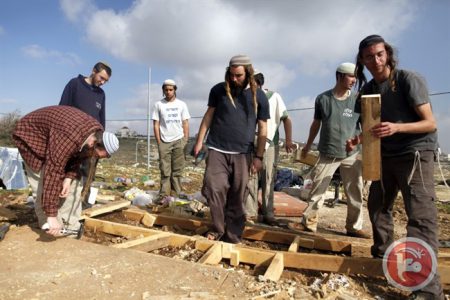
BETHLEHEM – Israeli settlers from the illegal Beitar Illit settlement raided Palestinian lands in the village of Wadi Fukin in the central occupied West Bank district of Bethlehem on Tuesday, according to local witnesses.
Ahmad Sukkar, head of the Wadi Fukin village council, told Ma’an that a group of Israeli settlers raided agricultural lands in the al-Fuwwar area of the village, destroying two greenhouses and tearing up plants belonging to Maher Sukkar, Jamil Assaf, and Muhammad Manasra.
Sukkar also said the Israeli settlers uprooted the plants of Muhammad Saleh Manasra and Naim Daoud Attiyeh, before spray-painting “Death to Arabs” on their property.
Israeli settlers from the illegal Beitar Illit settlement, which has been built on private Palestinian lands belonging to the villages of Husan, Nahalin, and Wadi Fukin, commonly raid the communities and destroy Palestinian property.
Beitar Illit is one of several settlements that comprise what Israel refers to as the “Gush Etzion” settlement bloc, which Israel plans to illegally annex into its territory, according to the Applied Research Institute – Jerusalem (ARIJ).
According to ARIJ, Israel’s plans of incorporating the Gush Etzion settlement bloc into the municipal boundaries of Jerusalem — boundaries that Israel continuously redefines in order to annex land further into Palestinian territory — parallels with Israel’s objectives of reshaping the demographics of the city by lowering the Palestinian population to 20 percent, and filling in the rest with Jewish Israelis.
Local Palestinians often attribute settler attacks on Palestinian communities — 51 of which have been reported since the start of this year, according to UN documentation — to Israel’s larger goals of depopulating Palestinian villages near settlements by scaring Palestinians into leaving their lands in an attempt to make room for the expansion or connection of the illegal settlement blocs.
While the Israeli government does not make Israeli settler population statistics public, most rights groups agree that some 600,000 settlers reside in Israeli settlements across the West Bank and East Jerusalem — all of which are considered illegal under international law.
Palestinian student Baraa Amer, 19, a student at an-Najah University and a resident of Kafr Qalil in southern Nablus, was sentenced on Monday, 27 June to 10 months imprisonment and a fine of 3,000 shekels ($675 USD).
Ahmed Khader
Arrested two months ago, Amer is involved with the student Islamic Bloc at the University, and was previously arrested along with 18 fellow students by Palestinian Authority forces in 2015.
Amer was arrested by Israeli occupation forces amid ongoing student elections at the university; active members of Palestinian student blocs are frequently targeted for arrest and persecution, especially at the height of election campaigning.
His father, Nawwaf, is a journalist and former political prisoner himself.
The arrests of Palestinian students continue. On Saturday, 25 June, Israeli occupation forces arrested Ahmed Hussam Khader, 19, as he traveled south of Nablus; Khader is the son of Fateh Palestinian Legislative Council member Hussam Khader and a student of political science at Bir Zeit University.
The Israeli human rights group B’Tselem has said that the shooting of a 15-year-old Palestinian boy on Tuesday night was “deliberate, entirely unjustified and a direct result of military policy.” The group’s report gave details of the incident during which Mahmoud Badran was shot and killed by Israeli soldiers. The boy from Beit Ur a-Tahta was with four of his friends at the time; they were wounded in the unprovoked attack.
“The shots were fired at a car with seven passengers inside, who were making their way back from a night out at a water park,” reported B’Tselem. “The military initially announced the soldiers had ‘targeted terrorists who were throwing stones and Molotov cocktails at Israeli cars on Road 443’, but later changed its version and stated the boy had been ‘mistakenly’ killed.” The organisation’s field-researcher indicated that “the soldiers used heavy fire against the moving car without any justification.”
According to B’Tselem, said: “At around 1:30am, seven residents… were making their way home after a night out at the Lin Land Waterpark in the village of Beit Sira. When the car approached a narrow underpass used by Palestinian vehicles to get across Road 443, [Israeli] soldiers standing on the road, on top of the underpass, opened massive fire at the car from a distance of 40 to 50 metres.”
Most of the passengers in the car were hit by the shots, including the driver, who lost control and crashed into a wall. “Five of the seven passengers were hit in the shooting: Mahmoud Badran was killed instantly, four passengers were injured.”
Deir Istiya, occupied Palestine – When Aziz ‘Aasee, the mayor of Qarawah Bani Hassan village drives through the streets, we’re stopped every few meters by one of his constituents, all of whom are asking the same question: When will we have water again? For some, the question is a joke; they are used to going without water for days, weeks, or even months each summer. Others are more aggressive, and the question comes off as a threat. People are looking for someone to blame for their thirst. The mayor, who is responsible for paying the town’s water bills, seems like an easy target.
In reality, there is little Aziz can do to ensure that his town has enough water. The village shares a water access network with two other municipalities, Sarta and Biddya. The three villages, with a combined population of approximately 30,000 people, depend on one 8 inch pipe, designed to deliver 145 cubic meters of water per hour. During the winter months when water tables are higher, the water flows at full capacity, ensuring coverage to the entire network. However for the past two months, the amount has been restricted to between 50 and 70 cubic meters per hour. With such a small amount in the pipes, the pressure is too low for the water to reach many of the houses at the end of the system. Qarawah, which sits at the highest elevation out of the three villages, suffers the most from the low water pressure: no house in the village has received water in over a week. The most remote properties have gone dry for over a month.
Qarawah’s only potable water source
Mekorot, the Israeli national water company which ostensibly owns the water infrastructure in question, and controls 87% of the aquifer located inside the West Bank, lies at the root of the problem. Since 1982, when the Israeli military sold their control of the West Bank’s water resources to Mekorot for a mere Shekel, the company has become the main enforcer of water apartheid between the Palestinians, and Israelis living in illegal settlements. While settlements enjoy a 24/7 supply of water year round, Mekorot caps its supply to Palestinians at the levels stipulated in the Oslo agreements over 20 years ago. Since then, the population of the West Bank has grown exponentially, and almost no improvements to Palestinian water infrastructure have been made. The Israeli military administration in the West Bank only makes matters worse. They routinely deny permits for new wells and pipes that would benefit villages like Qarawah by providing alternative sources of water or improving water pressure. In addition, the Israeli military has demolished 50 water and sanitation structures owned by Palestinians in 2016 alone. The result is that Palestinians have essentially no control over any of the water within their borders, or the infrastructure to deliver it.
Negotiations with Mekorot are almost impossible for small municipalities like Qarawah. Officials in the district capital of Salfit have spent the past two months trying to persuade the Israelis to increase the water supply without result. Even on the national level, appointees from the Palestinian Authority have refused to negotiate with Mekorot and the Israeli military administration. Aziz, for his part, chiefly contacts Mekorot through one of their Palestinian employees, and the communication is confusing at best. The representative will promise to show up on a certain day, and then never arrives. Or he’ll leave an update to say the water supply will be increased for one night to 100 cubic meters per hour, enough to ensure that at least some homes in Qarawah will receive water, yet the taps remain empty. Meanwhile, the illegal settlement of Kiryat Netafim, easily visible on a neighbouring hillside, boasts green lawns. It’s clear from a glance that the settlements are receiving more than adequate service from the same company.
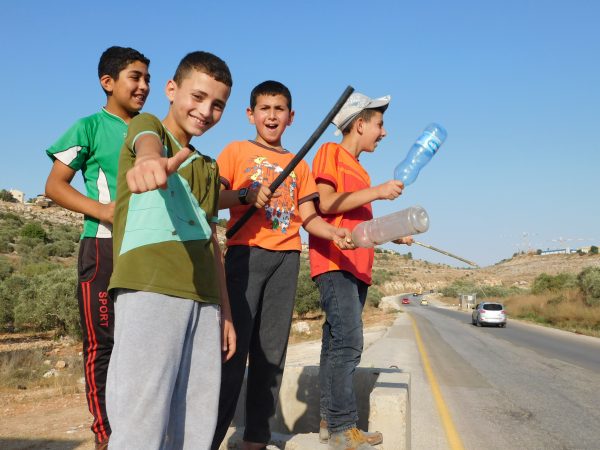
A few times over the past weeks, the municipalities of Qarawah, Satra and Biddya have called for popular protests, gathering at the meter access point for their shared pipe. Small groups of children and young men beat empty water bottles with sticks and shouted “Bidna may, bidna may” – “we want water” – at passing cars. Regardless, many in the three towns are afraid of a backlash from the protests. Shortly after the protests, armed Israeli soldiers arrived at the meter, demanding that the organizers cancel, or face repercussions. While it’s unclear what sort of consequences might be imposed, some worry that the water might be cut off completely as an act of collective punishment.
“Bidna may” – we want water protest
With no solution in sight, the villagers of Qarawah are finding ways to mitigate the effects of living under water apartheid. Villagers are using bottled water for drinking and showers, and hauling water up from local springs, located 4-6 kilometres outside the village limits, to use in toilets and irrigation. The springs also provide a small amount of potable water. However, this is not nearly enough to meet the village’s needs. Some houses in the village also have private wells; but with the summer stretching ahead, these limited resources are sure to be depleted far too soon. So until Mekorot is disbanded, or agrees to give equal service to Palestinians, the people of Qarawah will continue to suffer.
An Israeli minister says Tel Aviv must go ahead with a plan to annex more than half of the occupied West Bank after evicting thousands of Palestinians from the area.
Minister of Agriculture and Rural Development Uri Ariel made the remarks in Moscow where he traveled with Israeli Prime Minister Benjamin Netanyahu on Wednesday.
“We have to aspire to the annexation of Area C. These are areas where there are no Arabs at all. We would remove a few thousand, who do not constitute a significant numerical factor,” Ariel said.
Area C comprises over 60 percent of the occupied West Bank. Measuring about 330,000 hectares, the territory is totally run by the Israeli military even though it is home to nearly 300,000 Palestinians, according to the United Nations.
Israel, however, says only about 50,000 Palestinians are residing there.
Ariel, also a hawkish member of the Knesset, is fervently pushing for the annexation of Area C. In January, he strongly urged the Israeli regime to take full possession of the land.
“We should tell the prime minister, the government and the Knesset that the time has come to annex Area C. I am suggesting that we unite around this call,” he said.
Ariel has even hinted at annexing the occupied West Bank in whole. “If someone asks about Areas A and B, then their time will come. When, we will see. For now, let’s agree on Area C.”
Under the interim agreements reached between Tel Aviv and the Palestine Liberation Organization (PLO) in the 1990s, and as part of Oslo Accords, the West Bank was divided into three zones.
Area A, the smallest of all, constitutes about 18 percent of the land and the Palestinian Authority is supposed to control most civilian affairs and internal security.
Area B, constituting around 22 percent of the rural West Bank, is administered by the Palestinian Authority for its civil affairs and by Israel for its security issues.
In both zones, Israel holds full control of external security, meaning it retains the right to enter the zones at any time and make arrests or carry out any extrajudicial execution.
Virtually all of the Israeli settler population of the West Bank of more than 350,000 is based in Area C, living in 125 settlements and about 100 outposts.
The Israeli military almost never grants the Palestinians living in Area C building permits. According to a UN report, more than 11,000 demolition orders are currently outstanding in Area C.
The agreement on separating the West Bank into three zones was worked out to enable an incremental transfer of authority to the Palestinian Authority and to address the needs of a long-term demographic growth.
The UN announced in late April that a total of 588 Palestinian structures, mostly based in Area C, had been razed since January. It said the demolitions had affected more than 1,000 people as the residents had lost structures related to their source of income.
Jerusalem 2050: A largely-Jewish high-tech tourist destination with a minimal Palestinian presence. This is Israel’s vision of the city, and it is being implemented through three master plans – two of which are relatively unknown. Al-Shabaka Policy Fellow Nur Arafeh provides a succinct analysis of all three plans and the ways in which Palestinians can rebut them.
It is the year 2050 and Israel has fulfilled its vision for Jerusalem: Visitors will see a largely Jewish high-tech center amid a sea of tourists, with a minimal Palestinian presence. To achieve this vision, Israel is working on three master plans; one is well-known but two remain under the radar.
Edward Said had already warned in 1995 that “only by first projecting an idea of Jerusalem could Israel then proceed to the changes on the ground [which] would then correspond to the images and projections.” Israel’s “idea” of Jerusalem, as elaborated in its master plans, involves maximizing the number of Jews and reducing the number of Palestinians through a gradual process of colonization, displacement and dispossession (see Al-Shabaka policy brief on the methods used as well as this recent update).
The best known of the three Israeli master plans for the city is the Jerusalem 2020 Master Plan, which has not been deposited for public view even though it was first published in 2004. The least known are the Marom Plan, a government-commissioned plan for the development of Jerusalem, and the “Jerusalem 5800” Plan, also known as Jerusalem 2050, which is the outcome of a private sector initiative and is presented as a “transformational master plan for Jerusalem” (see below).
As Israel plans for 2050, the Palestinian Authority (PA) “idea” of Jerusalem dates back to 2010 when the Strategic Multi-Sector Development Plan for East Jerusalem (SMDP) 2011-2013 was published. And the PA’s current national development plan for 2014-2016 simply refers back to the 2010 plan. In addition, while the Palestinian leadership speaks of East Jerusalem, which Israel occupied and illegally annexed in 1967, as the capital of the State of Palestine and a priority development zone, only 0.44% of the PA’s 2015 budget was to be allocated to the Ministry of Jerusalem Affairs and to the Jerusalem Governorate.
In this policy brief Al-Shabaka Policy Fellow Nur Arafeh analyzes all three Israeli master plans for Jerusalem, explaining how they aim to shape the city into a tourism and high-tech center, and the ways in which they use urban planning to reshape the city’s demography. She spotlights the dangerous new laws Israel has reactivated or passed to advance its colonization of the city – the Absentee Property Law and the “third generation law”. She also addresses the role of the PA and the international community as well as of civil society organizations, and identifies achievable measures that can be implemented by those concerned with Jerusalem’s fate. 1
Before analyzing the ways in which the three plans reinforce each other, it should be noted that Israel’s annexation of East Jerusalem is illegal under international law and is not recognized by the international community. In addition, Israel’s declaration that Jerusalem is its capital, both West and East, has no international legal standing, which is why there is no diplomatic representation in Jerusalem, not even by the United States.
The “Jerusalem 2020 Master Plan” was prepared by a national planning committee and first published in August 2004. It is the first comprehensive and detailed spatial plan for both East and West Jerusalem since Israel’s occupation of East Jerusalem in 1967. Although the plan has not been validated yet as it was not deposited for public review, Israeli authorities are implementing its vision. The plan addresses several development areas including urban planning, archeology, tourism, economy, education, transportation, environment, culture, and art. The plan is available online in Hebrew as well as in Arabic at the Civic Coalition for Defending the Palestinians’ Rights in Jerusalem; this policy brief draws on the “Local Outline Plan”- Report N.4.
The Marom Plan is a government-commissioned plan for the development of Jerusalem that will be implemented by the Jerusalem Development Authority. The Authority’s goal is to promote Jerusalem “as an international city, a leader in commerce and the quality of life in the public domain.” It is a major planning body for the Jerusalem Municipality, the land Administration, and other organizations in the fields of housing, employment, etc.
The Jerusalem Institute of Israeli Studies is conducting the consultation, research, and monitoring for the Marom Plan. The Institute is a multidisciplinary research center that plays a leading role in the planning and development policies for Jerusalem in the fields of urban planning, demography, infrastructure, education, housing, industry, labor market, tourism, culture, etc.
The “Jerusalem 5800” Master Plan, also known as “Jerusalem 2050,” is a private initiative founded by Kevin Bermeister, an Australian technology innovator and real estate investor. The plan provides a vision and project proposals for Jerusalem up to the year 2050, serving as a “transformational master plan for Jerusalem” that can be implemented together with other municipal and national government agencies. It is divided into various independent projects, each of which can be implemented on its own. The team for the implementation of the plan is said to include “the best Israeli tourism, transport, environment, heritage and security planners.”
A Jewish Destination for Tourism, Higher Education and High-Tech
The development of the tourism sector in Jerusalem is at the heart of the three development plans examined in this policy brief. For example, under the 2020 Plan, the Jerusalem Municipality seeks to promote the tourism sector and to especially enhance the cultural aspects of Jerusalem. It is planning a marketing campaign to increase the potential of real estate development, support international and urban tourism, and invest in tourism infrastructure to ensure the sector’s development.
The Marom Plan also aims to develop Jerusalem as a tourist city. In 2014 alone, the Jerusalem Institute of Israeli Studies conducted 14 of its 18 studies for that year on the tourism sector and submitted them to the Jerusalem Municipality, the Ministry of Jerusalem and Diaspora Affairs, and the Jerusalem Development Authority. Moreover, as part of the Marom Plan, the Israeli government earmarked around $42 million to boost Jerusalem as an international tourist destination, while the Ministry of Tourism was expected to allocate some $21.5 million for the construction of hotels in Jerusalem. The Authority also offers specific incentives to entrepreneurs and companies to establish or enlarge hotels in Jerusalem, and to organize cultural events to attract tourists such as the Jerusalem Opera Festival as well as events for the tourism industry, such as the Jerusalem Convention for International Tourism.
Promoting the tourism sector also lies at the core of the Jerusalem 5800 Master Plan, which envisages Jerusalem as a “Global City, an important tourist, ecological, spiritual, and cultural world hub” that attracts 12 million tourists (10 million foreign and 2 million domestic) and more than 4 million residents.
To make Jerusalem “the Middle East’s anchor tourist attraction and resource,” the Jerusalem 5800 plan aims to increase private investment and construction of hotels; build rooftop gardens and parks; and transform the areas surrounding the old city into hotels while prohibiting the use of vehicles. The plan also envisions the construction of high-quality transportation routes, including a “high-speed national rail line; an extensive network of buses and public transportation; the addition of numerous highways and the expansion of existing roads; and an express ‘super highway’ that transverses the country from north to south.” The plan also proposes the construction of an airport in the Horkania Valley between Jerusalem and the Dead Sea to serve 35 million passengers per year. The airport would be connected through access roads and rail to Jerusalem, Ben Gurion airport and other city centers.
Israeli Plans to Promote the Tourism Sector
$42 million: To boost Jerusalem as an international tourist destination (Marom Plan).
$21.5 million: For the construction of hotels in Jerusalem.
12 million tourists: Goal for annual visitors under the Jerusalem 5800 Master Plan
The Jerusalem 5800 plan attempts to present itself as an apolitical plan that promotes “peace through economic prosperity” but it has demographic goals that prove otherwise. In fact, it envisages that the $120 billion of total added value from the implementation of the plan, together with the 75,000 – 85,000 additional full time jobs in hotels plus 300,000 additional jobs in related industries would all reduce poverty – and would attract more Jews to Jerusalem, increasing the number of Jews living in Jerusalem and further tilting the Jewish-Palestinian demographic balance in their favor.
However, the tourism sector is not only seen as an engine of economic development to attract Jews into the city. Israel’s development of, and domination over, the tourism sector in Jerusalem, is a tool to control the narrative and ensure the projection of Jerusalem in the outside world as a “Jewish city” (see for example the official Ministry of Tourism map of the Old City.) Israel has strict rules over who can serve as tour guides and the narrative and history that the tourists are told. Palestinian tour guides who do not abide by Israel’s false branding and who try to give an alternative and critical analysis of the situation can lose their licenses.
These plans to promote the Israeli tourism industry have gone hand in hand with Israeli-imposed restrictions on the development of the Palestinian tourism industry in East Jerusalem. Israeli hurdles include: the isolation of East Jerusalem from the rest of the occupied Palestinian territory (OPT), especially after the construction of the Wall; shortage of land and the resulting high cost; weak physical infrastructure; high taxes; restrictions on the release of permits to build hotels or convert buildings to hotels; and difficult licensing procedures for Palestinian tourist businesses. These obstacles, even as millions of dollars are being poured into the Israeli tourism market, ensure that the Palestinian tourism industry has no hope of competing with Israel’s.
The Palestinian tourism sector is further hampered by the lack of a clear Palestinian vision and promotional strategy, severely impeding its ability to fuel the limited economic development possible under occupation. Moreover, although civil society organizations have stepped in to promote the sector, their efforts have been described as “fragmented and poorly coordinated” in an analysis inThis Week in Palestine.
Another common goal of the three plans is to attract Jews from all over the world to Jerusalem by developing two advanced industries: Higher education and high tech.
To promote the higher education industry, the 2020 Master Plan aims to build an international university in the city center with English as the main language of instruction. As for the Marom Plan, it seeks to make Jerusalem a “leading academic city” that is attractive to both Jewish and international students, who will be encouraged to settle in Jerusalem once they have finished their studies. In the same vein, the Jerusalem 5800 plan sees an opportunity to create jobs and achieve economic growth through “extended-stay educational tourism.”
The development of the higher education industry is intrinsically linked to the development of a high-tech, bio-information, and biotechnology industry. The 2020 Master Plan calls for the establishment of a university for management and technology in the city center of Jerusalem, and for government assistance in Research and Development (R&D) in the fields of high-tech and biotechnology. Similarly, the Marom Plan aims at promoting Jerusalem as a center of R&D in the field of biotechnology.
It is within this context that the Jerusalem Development Authority established the BioJerusalem Center to foster clusters of bio-med companies in Jerusalem as a potential engine of economic development. To attract these companies to Jerusalem, the Authority is offering very generous benefits including: Tax breaks, grants for hiring new workers in Jerusalem, and special grants to companies involved in R&D or in building physical infrastructure. High-tech and healthcare industries are also expected to be major beneficiaries of the “Jerusalem 5800” Master Plan.
Evicting Palestinians Using Urban Planning and the “Law”
While Israel works on creating Jerusalem as a business hub that attracts Jews and offers them employment opportunities, the problems faced in East Jerusalem are legion. They include a squeezed Palestinian business and trade sector, a weakened education sector, and a debilitated infrastructure. The result of the suffocation of East Jerusalem’s potential can be seen in the high poverty rates, with 75% of all Palestinians in East Jerusalem – and as many as 84% of children – living below the poverty line in 2015. In addition, there is a growing identity crisis in East Jerusalem, particularly amongst the youth, due to its isolation from the rest of the OPT, the leadership and institutional vacuum, and the loss of hope in the possibility of positive change.
The Wall is one of the most important demographic measures Israel has put in place to ensure a Jewish majority in Jerusalem and enforce Israel’s de-facto political borders of Jerusalem, thus transforming it into the largest city in Israel. The Wall is built in such a way as to enable Israel to annex an additional 160 km2 of the OPT while physically separating more than 55,000 Jerusalemites from the city center. Planning and development in neighborhoods that are now beyond the Wall is extremely poor and governmental and municipal services are virtually absent, despite the fact that the Palestinians who live in these areas continue to pay the Arnona (property) tax.
Urban planning is another major geopolitical and strategic tool Israel has used since 1967 to tighten its grip over Jerusalem and constrain the urban expansion of Palestinians as part of its efforts to Judaize the city. Urban planning is at the heart of the 2020 Master Plan, which views Jerusalem as one urban unit, a metropolitan center, and the capital of Israel. One of the main goals of the plan is to “maintain a solid Jewish majority in the city” by encouraging Jewish settlements in East Jerusalem and by reducing negative migration. Among other things, the plan aims to build affordable housing units in some existing Jewish neighborhoods as well as by building new neighborhoods. The plan also envisages connecting Israeli settlements in the West Bank, geographically, economically, and socially, to Jerusalem and Tel Aviv.
Evicting Palestinians
2,300 dunums planned for Palestinian construction vs. 9,500 dunums for Israeli Jews. (Nasrallah, 2015)
55.7% of additional housing for Palestinians through building within existing urbanized areas; 62.4% of Israeli Jewish building to happen through expansion of urban areas (including settlements).
$30,000: Approximate cost of building permits in Jerusalem. (source: author’s interview)
The 2020 Master Plan recognizes the housing crisis suffered by Palestinians, the inadequate infrastructure in Palestinian neighborhoods, and the dearth of public services provided. It aims to enable the densification and thickening of rural villages and existing urban neighborhoods; restore the Shu’fat refugee camp, which lies within Jerusalem’s Israeli-defined municipal borders; and implement infrastructure projects.
However, while on the surface it appears that the Plan has an equal interest in Palestinian areas, it is actually discriminatory. It does not take into account the Palestinian growth rate in East Jerusalem and the accumulated scarcity of housing. 2 It allocates only 2,300 dunums (2.3 sq. km.) for Palestinian construction compared to 9,500 dunums for Israeli Jews. 3 Moreover, most of the new housing units proposed for Palestinians are located in the northern or southern areas of East Jerusalem, rather than in the Old City, where the housing crisis is the most acute and where the settlement activity is also the most intense.
In addition, (62.4%) of the increase in Israeli Jewish building will happen through expansion and building of new settlements, thus increasing Jewish territorial control. By contrast, more than half (55.7%) of the addition of housing for Palestinians will happen through densification, i.e. building within the existing urbanized areas, including through vertical expansion. Moreover, while Palestinians tend to have higher household densities and build at lower densities per dunum than the average, Israeli Jewish areas have lower household densities but build at larger densities than the average. 4
Furthermore, the plan’s proposals to address the housing crisis in East Jerusalem will most likely remain ink on paper due to serious barriers to their implementation. In fact, several preconditions must be met before the Israeli authorities issue building permits, including an adequate road system (building permits for six-story buildings is conditional on access to roads that are at least 12 meters wide); parking spaces; sanitation and sewage networks; and public buildings and institutions. Palestinians have no control over these requirements, which are the responsibility of the municipality; needless to say, this makes it extremely hard for Palestinians to build new houses. 5 The plan also neglects the shortage in classrooms, health facilities, commercial areas, and other public institutions necessary to meet the demand of the growing Palestinian population.
The Palestinian presence in Jerusalem and the development of Palestinian neighborhoods is also severely constrained by the plan’s commitment to “a strict enforcement of the laws of planning and building…to impede the phenomenon of illegal building.” However, only 7% of building permits in Jerusalem were issued to Palestinians in the past few years. Israel’s discrimination in issuing building permits to Palestinians, combined with the high cost of these permits (around $30,000, according to information shared with the author), has forced many Palestinians to build illegally.
Palestinians also face discrimination when it comes to enforcement of regulations. According to a report by the International Peace and Cooperation Center, 78.4% of building violations took place in West Jerusalem between 2004 and 2008, compared with 21.5% in East Jerusalem. Yet, only 27% of all violations in West Jerusalem were subject to judicial demolition orders, compared with 84% of violations in East Jerusalem.
Furthermore, in addition to the emotional impact and instability caused by the demolition of their home, as well as the lost investment and belongings, Palestinians must also pay “illegal construction” fees to the Israeli municipality to cover the costs of house demolitions, generating a large income for the Israeli municipality. OCHA estimates that between 2001 and 2006, the municipality collected an annual amount of NIS 25.5 million (around $6.6 million) for ‘illegal construction.’
The 2020 Master Plan is thus a political plan that uses urban planning as a tool to ensure Jewish demographic and territorial control in the city. The plan also supports “spatial segregation of the various population groups in the city” and considers it a “real advantage.” It aims to divide Jerusalem into various planning districts based on ethnic affiliation in which no area would combine both Palestinians and Israeli Jews.
It is worth noting that state institutions are not the only ones involved in the Judaization of Jerusalem. Non-governmental organizations (NGOs) and religious organizations also take part in remaking urban space. The right-wing organization Elad, for example, has as its main goal settling Jews in the Palestinian neighborhood of Silwan and running tourist and archeological sites, especially in the Silwan neighborhood – which they call the “City of David” – Elad is seeking to re-create Jerusalem as a Jewish city with a predominantly Jewish history and heritage by erasing the Palestinians’ physical presence as well as their history. Elad employed 97 full-time workers in 2014 and, according to Haaretz, received donations of more than $115 million between 2006 and 2013, making it one of the wealthiest NGOs in Israel. Other organizations involved in changing the demographic composition of Jerusalem include Ateret Cohanim, which seeks to create a Jewish majority in the Old City and in Palestinian neighborhoods in East Jerusalem.
Israel has also been using law as a tactic to evict Palestinians and appropriate their land, so as to ensure its sovereignty and control over Jerusalem. As recently as 15 March 2015, the Israeli Supreme Court activated the Absentee Property law. This law was issued in 1950 with the aim of confiscating the property of Palestinians who were expelled during the 1948 Nakba. It was used as the “legal basis” to transfer the property of displaced Palestinians to the newly established State of Israel. After 1967, Israel applied the law to East Jerusalem, which allowed it to appropriate the property of Jerusalemites whose residence was found to be outside Palestine. The law newly activated in 2015 enables Israel to confiscate the property of East Jerusalem Palestinians currently living in the West Bank, and to consider their property in East Jerusalem as “absentee property.”
Furthermore, while Palestinians cannot claim the properties they lost in 1948 or in 1967 in what is now West Jerusalem, Israel’s Supreme Court has ruled in favor of Israeli settlers’ claims to win “back” homes that UNRWA had given to Palestinians who had fled West Jerusalem and Israel in 1948. In other words, the Supreme Court is being discriminatory since this law applies to Jews looking to return to property they had before 1948 but does not apply to Palestinians.
Another controversial and dangerous law is the third Generation law, which targets properties that were rented before 1968 and that are supposed to be protected by law. According to the new law, the protection period ends with the death of the third generation of Palestinian tenants after which the property goes back to its original owner, who are mainly Jews who owned the property before 1948. According to Khalil Tufakji, more than 300 Palestinians now face the threat of eviction from their home. In Silwan alone, 80 court orders threaten hundreds of Palestinians with eviction.
Saving Jerusalem
Since 2001, Israel has closed at least 31 Palestinian institutions, including the Orient House, the former headquarters of the Palestinian Liberation Organization (PLO), and the Chamber of Commerce and Industry. The Governorate of Jerusalem and the Ministry of Jerusalem Affairs are also prohibited from working in Jerusalem, and are forced to operate out of a building in Al-Ram, which lies to the northeast of Jerusalem and is outside the Israeli-imposed municipal boundaries of the city.
Given the leadership and institutional vacuum Israel has created in East Jerusalem, it is especially challenging to find ways to rebut its colonization of the city and dispossession of its Palestinian population. In the course of the research for this policy brief, I had the opportunity to speak to representatives of several organizations, official bodies, and community groups. There was broad agreement that one of the most urgent steps that should be taken is to establish popular committees in each East Jerusalem neighborhood. Such committees could raise East Jerusalem residents’ awareness about their rights as residents and about Israel’s plans for the future; encourage voluntary work; monitor and prevent Palestinians from selling their land to Israeli Jews; represent the neighborhood at national forums; and cooperate with each other to reinforce their efforts to defend Palestinian land.
Indeed, once these committees have been established in all neighborhoods, they could form what Jerusalemite organizations believe is also urgently needed: A representative body for Jerusalem at the national level, an inclusive body that would include the Jerusalem Governorate, representatives of civil society organizations and the private sector as well as independents. This body would work as a channel between Palestinians in East Jerusalem and the PA as well as with the rest of the world. Such a representative body could work on three main fronts:
1. The PA/PLO. A representative body for Jerusalem could lobby the PA/PLO to propel Jerusalem to the forefront of the Palestinian government’s commitments and ensure that it receives the budget and other support it needs in order to counter Israeli Judaization policies.
2. The Arab and international community. In this sphere, a representative body for Jerusalem should take the lead in advocacy, lobbying and campaigning at the regional and international level, in coordination with the Palestinian Diaspora. For example, Jordan should be lobbied as Custodian of Holy places in Jerusalem to help maintain a secure environment for Palestinians in East Jerusalem. Other Arab countries, in particular Morocco and Saudi Arabia given their special relationships with Jerusalem, should also be mobilized.
More efforts should be made to reach out to countries that have already shown solidarity with Palestinians, such as Sweden, Latin American countries, and the BRICS among others, so that they might use their good offices directly and in collaboration with other countries to hold Israel accountable for its illegal annexation and colonization of East Jerusalem. The fact that East Jerusalem is part of the occupied West Bank is a point that is often neglected in the official discourse and that should be emphasized.
These countries should also use their good offices, working with the PLO/State of Palestine, at the UN at all levels, including the Security Council, the General Assembly, the Human Rights Council, and the UN’s programs and specialized agencies to expose Israeli policies in East Jerusalem, and call on member states to fulfill their legal obligations. In particular, member states should activate Security Council Resolution 478 of 1980, which declared “all legislative measures and actions taken by Israel, the occupying power, which purport to alter the character and statues of the holy city of Jerusalem … are null and void and must be rescinded forthwith.”
The European Union (EU) also has an obligation to ensure full compliance with the principle of non-recognition of Israel’s sovereignty over East Jerusalem. The EU should translate its rhetoric into effective measures by halting all direct and indirect economic, financial, banking, investment, academic, and business activities in Israeli settlements in East Jerusalem and throughout the rest of the OPT.
The Organisation of Islamic Cooperation (OIC) could play a major role in safeguarding Palestinian rights in East Jerusalem, providing direct support as well as in lobbying the EU and the UN to provide support and to take measures to stop and reverse Israel’s violations. Such measures could include the establishment by the UN and/or the EU of a register of Israeli violations of human rights and the damage incurred by Palestinians as a result of Israeli Judaization policies and settlement expansion in East Jerusalem and in the rest of the OPT.
It is also vital to create a funding body or a development bank to overcome the lack of funding, which is one of the major issues faced by Palestinian institutions in East Jerusalem. Such a development bank could have several functions, including: providing credit facilities since most loans are only available at very high interest rates; helping to finance the development of the housing sector; and providing incentives to encourage investment and assist in the revival of the trade sector. The Palestinian private sector and Palestinian banks within and outside Palestine should also embrace their responsibilities and be part of this development bank.
3. Palestinian communities in their homeland as well as in the Diaspora. These communities should help to develop and project a clear vision and operational strategy for Jerusalem. Practical measures should be identified to counter Israel’s Judaization policies; enhance the productive capacity of the Palestinian economy in East Jerusalem and strengthen its links with the economy of the West Bank and Arab world; promote the tourism sector to support the limited economic development possible under occupation; revive the cultural and economic status of the Old City; enhance the educational and health sector; and foster the integration of Palestinians in East Jerusalem into the rest of the OPT.
Furthermore, the existing legal bodies that offer legal assistance to Palestinians in East Jerusalem – e.g. regarding revocation of residency IDs, family unification, land appropriation, house demolitions, and zoning and planning – should coordinate their efforts.
Palestinian civil society, particularly the Boycott, Divestment, and Sanctions (BDS) movement has a vital role to play in targeting Israeli plans for tourism and high tech in Jerusalem, through campaigns to boycott Israeli academic and cultural institutions as well as businesses that are involved in the Judaization of Jerusalem.
The development of a coordinated media strategy is urgently needed to raise Palestinian voices in a challenge to Israel’s discursive power and its de-historicized representation of Jerusalem. Academics and policy analysts also have a vital role to play: There is a dearth of research on the socio-economic development of East Jerusalem as well as Israel’s master plans for Jerusalem, with very few think tanks working in East Jerusalem. Future research should also move beyond diagnosis of problems to devise creative solutions, using a proactive approach rather than a reactive one. The gap between academics and policy makers needs to be bridged to ensure that all efforts are united towards the objective of achieving self-determination, dignity, freedom, and justice.
Notes:
The author thanks the Heinrich-Böll-Foundation’s Palestine/Jordan Office for their partnership and collaboration with Al-Shabaka in Palestine. The views expressed in this policy brief are those of the author and therefore do not necessarily reflect the opinion of the Heinrich-Böll-Foundation. The author also thanks the Jerusalem Industrial Chamber of Commerce, the Civic Coalition for Human Rights, the Sinokrot Core Group, the Jerusalem Governorate, and PASSIA for their time and the information they shared.
Ir Amim, 2009. “Too little too late. The Jerusalem Master Plan.”
Rami Nasrallah, 2015. “Planning the Divide: Israel’s 2020 Master Plan and Its Impact on East Jerusalem,” In: Turner, M. and Shweiki, O. (ed.), Decolonizing Palestinian Political Economy: De-Development and Beyond.
Nur Arafeh is the Policy Fellow of Al-Shabaka: The Palestinian Policy Network. She previously worked as a researcher at the Ibrahim Abu-Lughod Institute of International Studies at Birzeit University, as an Associate Researcher at the Palestine Economic Policy Research Institute (MAS), and as a Lecturer of Economics at Al-Quds Bard Honors College, Al-Quds University. Nur has a dual BA degree in political science and economics from Sciences Po University (France) and Columbia University (USA), and holds an MPhil degree in Development Studies from the University of Cambridge (UK). Her main research interests include the political economy of development in the Middle East, sociology and politics of development, and economic forms of resistance.
Palestinian children continue to be targeted for collective punishment and harsh sentences, as 14-year-old Muawiya Alqam was sentenced to six and one-half years in Israeli occupation prisons and fined 26,000 NIS (approximately $6,750).
Ma’an News reported that the sentence came in a plea bargain that will be officially pronounced at a sentencing in July. Palestinian children ages 14 and up are ostensibly limited to a 6-month maximum sentence; however, this limitation no longer applies for any conviction for which the maximum sentence is greater than five years, which includes throwing stones, one of the most common charges raised against Palestinian children. Israeli officials are frequently thought to postpone trials until children reach the age of 14, as in the case of Ahmad Manasrah.
Muawiya’s cousin, Ali Alqam, 12, is currently serving a 1 year sentence in a juvenile detention center; Ali was shot at least three times and underwent surgery to remove a bullet from his stomach. Muawiya and Ali were accused of stabbing and “moderately wounding” an Israeli security guard on the Jerusalem Light Rail.
Muawiya and Ali are among over 330 Palestinian children imprisoned by Israeli occupation forces, according to May 2016 statistics compiled by Palestinian organizations. Also in May 2016, Israeli occupation courts imposed fines of 88,000 NIS (Approximately $22,000 USD) on Palestinian children in Ofer prison. The Palestinian Prisoners’ Society reported that 48 children were convicted in May, with sentences ranging between three months and 30 months. There are 183 Palestinian children held in Ofer prison, 81 in Megiddo prison, and an additional number in multiple detention and interrogation centers, home detention centers, and juvenile detention facilities.
28 children in Ofer have also been denied family visits, according to the Palestinian Prisoners’ Society – 14 have been denied visits since their arrest, while 14 families have had their permits suddenly withdrawn or cancelled when they arrive at the checkpoint for visitation, on the grounds of “security.”
12-year-old Shadi Farrah, another of the youngest Palestinian prisoners in Israeli jails, was arrested along with 13-year-old Ahmad Zaatari on 30 December when they were accused of having knives in their possession after they were stopped and searched by Israeli police. Despite never touching or attempting to touch a single person, both are accused of possession of a knife with intent to kill, reports the International Solidarity Movement . The boys were interrogated in Moskobiya interrogation center without their lawyers or parents. They have made 11 appearances in court and are held in a juvenile detention center. Shadi’s letter to his mother, in which he says “Mum, I want you to keep your head up high like a palm tree that cannot be moved by the wind or even an earthquake… Don’t be sad about what’s happened, mum. Today I stand in front of the mirror to shed my faults and I can see my good side,” has been widely distributed.
Shadi’s mother is only able to visit monthly due to the approximately 800-shekel ($213 USD) cost to visit the distant detention center for the day, and according to the ISM, they have been denied assistance from the ICRC because Shadi is detained in a juvenile detention center rather than a prison. This comes as the ICRC has announced plans to reduce family visits that it organizes from the West Bank to Palestinian adult male prisoners held inside the Israeli state, from twice to once monthly, denying not only the prisoners but also their families ongoing connection and relationships. The Palestinian prisoners’ movement has broadly denounced the ICRC for this action; Samidoun is urging international action to restore family visits and protest “budget cuts” taking place at the cost of some of the most marginalized and vulnerable people in Palestine.
Tensions were high in al-Quds on Sunday as Zionists ‘celebrated’ the 1967 occupation of eastern part of the holy city.
AFP news agency reported there were strict security measures in al-Quds.
Meanwhile, Palestine Today reported that more than 27 Zionist organizations had called for storming the holy al-Aqsa Mosque in al-Quds on Sunday.
The website said that the Zionists are to mark anniversary of the 1967 Israeli invasion and occupation of the West Bank, Gaza, Sinai, and the Golan Heights that began on June 5.
In that day East al-Quds (Jerusalem) was occupied by the Israeli forces.
The Zionist organizations called Israelis on social media to commemorate what they called “unification of Jerusalem Day” through parades in the holy city.
The calls on social media noted that there is a deal between the organizations and the occupation authorities on ensuring security for the parades.
Israeli media also reported that the Israelis are marking “Jerusalem Day”, with multiple parades and events are scheduled in al-Quds on Sunday.
Earlier, Palestine Today said that Zionist settlers tried to torch shops in al-Quds early on Saturday, noting that Palestinian youth confronted such attempts.
RAMALLAH – Israeli authorities decided to renew the administrative detention of two PFLP leaders for six additional months, the Palestinian Prisoners’ Center for Studies said on Saturday, a day after leading member of the PFLP Khalida Jarrar was released from Israeli custody.
The center said in a statement that Jamal Barham, 56, and Shahir Ali al-Rai, 47, have been in Israel’s Ktziot prison in the Negev since their detention on June 3, 2015.
The center said that the two are being held for their activity in the Popular Front for the Liberation of Palestine (PFLP), which is designated by Israel as an “illegal terrorist organization.”
The majority of Palestinian political organizations are considered illegal by Israel, including those that make up the Palestine Liberation Organization (PLO), and association with such parties is often used as grounds for imprisonment, according to prisoners’ rights group Addameer.
The Israeli military prosecution said Barham and al-Rai held high ranks in the PFLP and took part in “incitement” against Israel, according to the center.
Both of the PFLP leaders had previously spent time in Israeli custody for their political activism.
Al-Rai, from the northern occupied West Bank city of Qalqilya, has spent a total of 12 years in Israeli jails, mostly under administrative detention — the controversial Israeli policy of internment without trial or charge based on undisclosed evidence.
Prior to his detention last year, Barham was arrested only once before, in December 1984, and released in August 1987.
Following his release, he and his family were the target of repeated house raids, while Barham was also wanted throughout the 1990s until the beginning of the second Intifada, according to Palestinian prisoners’ rights group Addameer.
During his detention in June 2015, Israeli forces ransacked his house, destroyed his computer, and confiscated flash drives belonging to his children.
Barham, from the village of Ramin in the northern district of Qalqiliya, was the head of the Arab Studies Department in PLO. He also suffers from various medical issues including high cholesterol, high blood pressure, and a disc in his neck.
Due to the lack of evidence against Barham to support Israel’s accusation that his previous political activity presented a security threat, his detention “is considered a violation of his right of expression and political activity,” insisted Addameer in their profile of Barham.
“His detention is arbitrary and a grave violation of the Fourth Geneva Convention. The decision to hold him under administrative detention confirms the occupation authorities’ arbitrary use of the administrative detention policy when sufficient information is not available to put any Palestinian on trial.”
Barham was among 50 other Palestinian administrative detainees that launched a boycott of Israel’s military courts in July 2015, in protest of the courts’ impartiality and “their utilization as a mere formality,” said Addameer.
The boycott served to emphasize the prisoners’ “continued detention based on secret information that neither the detainee nor his lawyer can review, and additionally to the fact that military courts are a tool to legitimize the occupation and arbitrary detention.”
Meanwhile, Palestinian lawmaker and leading member of the PFLP Khalida Jarrar was released from Israeli custody on Friday, after being held for 14 months in Israeli prison.
Detained on April 2, Jarrar was initially sentenced to six months of administrative detention, however international pressure later forced Israeli authorities to bring charges against her, all 12 of which focused on her political activism.
News of the Israeli military prosecution’s renewal of Barham’s and al-Ray’s administrative detention follows the announcement of prominent Israeli human rights organization B’Tselem last week that it was discontinuing its strategy of holding Israel accountable for its crimes against Palestinians through internal military mechanisms.
“B’Tselem has gradually come to the realization that the way in which the military law enforcement system functions precludes it from the very outset from achieving justice for the victims. Nonetheless, the very fact that the system exists serves to convey a semblance of law enforcement and justice,” the report stated.
Previously I argued whether Saudi Arabia’s repeated involvements in U.S. interventions and wars stem from free national will or in response to a specific condition. For starters, in Saudi Arabia there is no national will. In Saudi Arabia, the national will is the will of the Al Saud clan. Still, when a major Arab state allies itself with a superpower that committed unspeakable crimes against humanity in almost every Arab country, then something is wrong. This fact alone should compel us to examine the U.S.-Saudi relation for one exceptional reason. As a result of the U.S.-Saudi wars, hundreds of thousands of people in Afghanistan, Iraq, Iran, Libya, Syria, Yemen, and Somalia have lost their lives. Millions became displaced in their own homelands. And millions more rendered refugees.
Attributing the Saudi policies to the bonds of “partnership” with the U.S. is frivolous. There are no bonds between these two thugs except those of business, military deals, secret plots, and wars. Proving this point, bonds such as these have no space for the American and Saudi peoples to share significant cultural or societal exchanges. If partnership is not the reason for the Saudi contribution to the U.S. strategy of empire and imperialism, then another reason must exist.
This site is provided as a research and reference tool. Although we make every reasonable effort to ensure that the information and data provided at this site are useful, accurate, and current, we cannot guarantee that the information and data provided here will be error-free. By using this site, you assume all responsibility for and risk arising from your use of and reliance upon the contents of this site.
This site and the information available through it do not, and are not intended to constitute legal advice. Should you require legal advice, you should consult your own attorney.
Nothing within this site or linked to by this site constitutes investment advice or medical advice.
Materials accessible from or added to this site by third parties, such as comments posted, are strictly the responsibility of the third party who added such materials or made them accessible and we neither endorse nor undertake to control, monitor, edit or assume responsibility for any such third-party material.
The posting of stories, commentaries, reports, documents and links (embedded or otherwise) on this site does not in any way, shape or form, implied or otherwise, necessarily express or suggest endorsement or support of any of such posted material or parts therein.
The word “alleged” is deemed to occur before the word “fraud.” Since the rule of law still applies. To peasants, at least.
Fair Use
This site contains copyrighted material the use of which has not always been specifically authorized by the copyright owner. We are making such material available in our efforts to advance understanding of environmental, political, human rights, economic, democracy, scientific, and social justice issues, etc. We believe this constitutes a ‘fair use’ of any such copyrighted material as provided for in section 107 of the US Copyright Law. In accordance with Title 17 U.S.C. Section 107, the material on this site is distributed without profit to those who have expressed a prior interest in receiving the included information for research and educational purposes. For more info go to: http://www.law.cornell.edu/uscode/17/107.shtml. If you wish to use copyrighted material from this site for purposes of your own that go beyond ‘fair use’, you must obtain permission from the copyright owner.
DMCA Contact
This is information for anyone that wishes to challenge our “fair use” of copyrighted material.
If you are a legal copyright holder or a designated agent for such and you believe that content residing on or accessible through our website infringes a copyright and falls outside the boundaries of “Fair Use”, please send a notice of infringement by contacting atheonews@gmail.com.
We will respond and take necessary action immediately.
If notice is given of an alleged copyright violation we will act expeditiously to remove or disable access to the material(s) in question.
All 3rd party material posted on this website is copyright the respective owners / authors. Aletho News makes no claim of copyright on such material.





 Palestinian children continue to be targeted for collective punishment and harsh sentences, as 14-year-old Muawiya Alqam was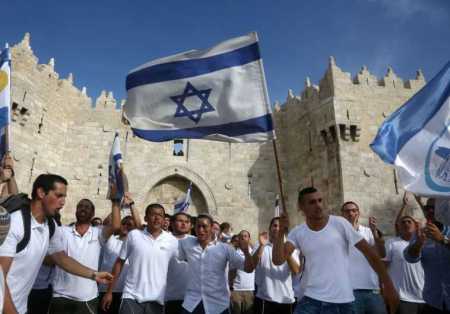

 Aletho News