Israeli forces shoot, kill Palestinian in Jenin camp
Ma’an – June 10, 2015
JENIN – Israeli forces shot dead a young Palestinian man in the Jenin refugee camp in the northern West Bank early Wednesday morning, Palestinian security officials say.
Izz al-Din Walid Bani Gharra, 21, was shot in the chest during clashes with Israeli forces who raided the camp at dawn. He was evacuated to the public hospital in Jenin where he died shortly after, sources told Ma’an.
Israeli police, in a statement on the incident, said a border police force was in the refugee camp to carry out arrests.
“Upon leaving the camp, the force identified a suspect trying to throw an explosive device at them,” it said.
One of the border police shot him and wounded him, the statement said, adding that the device probably exploded near the suspect.
In an online statement attributed to the Jenin branch of Hamas, the group appeared to claim Ghora as a member.
“Hamas bids farewell to its heroic martyr… and urges the Palestinian Authority and its security forces to stop their security coordination” with Israel, it said, referring to an unpopular agreement under the 1993 Oslo autonomy accords.
Gharra is the twelfth Palestinian to be killed by Israeli forces in occupied East Jerusalem, West Bank, and Gaza since the start of 2015, according to UN Office for the Coordination of Humanitarian Affairs, with over 900 injured, not including injuries resulting from settler violence.
One Israeli has been killed in the same time period.
Search and arrest raids are regular practice by Israeli forces, who have conducted a weekly average of 86 raids this year, up from 75 a week in 2014, according to a May report by the UN Special Coordinator (UNSCO).
Such raids often result in what rights groups argue is excessive use of force by Israeli soldiers against locals, who often throw rocks and bottles at the forces.
Since 2000, Israeli security forces have killed over 8,896 Palestinians, over 1,900 of whom have been children, according to rights group Defense for Children International.
A court of non-convictions for Israeli felons
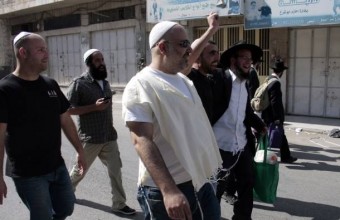
By Yossi Gurvitz | Yesh Din | June 8, 2015
Does everyone get his or her day in court? Not if they are Palestinian.
Every year Yesh Din publishes data about police investigative failures regarding offenses carried out by Israelis towards Palestinians in the West Bank. They are usually quite similar: the police fail to investigate approximately 85 percent of complaints of Palestinians who report being harmed by Israelis. The rate becomes much higher when it comes to the destruction of Palestinian trees by Israeli civilians: then the police failure rate grows to 97.4 percent.
The average Israeli may not be surprised that the police failure rates are so high, but he or she still has some expectations of the courts. After all, we are told time and again that Israel is governed by the rule of law.
Okay, says the average citizen to himself, yes, we seem to have a problem when it comes to investigations, and naturally if the investigation is a mess we are not likely to get to court. But once we step into the halls of justice, everything should be fine.
Or not.
Our latest data sheet, which was released in tandem with an exhaustive report on the failure of law enforcement in the West Bank, examines for the first time what happens to the cases we follow once they leave the limbo of the prosecution and make it to court. The situation, to put it mildly, is not “okay.”
To begin with, the chance that a complaint by a Palestinian victim will bloom into a an indictment against an Israeli felon stands at a mere 7.4 percent. This means that the chances an Israeli felon will appear in court for a crime he is suspected of committing is about 1:14. Most often, cases are closed due to police investigative failures; in a majority of the cases, the specific reason is the inability of the police to find a suspect – what is known as the the unknown perpetrator clause.
The fact that a case makes it to court does not, of course, mean it will end in a conviction. The defendants have the right to representation and have access to attorneys — as a human rights organization we entirely support this. The problem lies elsewhere.
In 10.5 percent of the cases, the defendants are convicted of all charges; in 22.8 percent of the cases, only some of the defendants are convicted, or they are convicted of some of the charges – sometimes reduced charges as part of a plea bargain. The rate of acquittals is high relative to other cases in Israeli courts (8.8 percent). But what is truly high is the rate of “non-conviction” (24.6 percent) and the rate of indictment withdrawal (22.8 percent).
What is a non-conviction? It is a relatively rare practice, in which the court believes there is reason to avoid tarring him/her with a criminal conviction for one reason or another — despite the fact that the felon has been found guilt of the charges. This almost never happens in the Israeli courts: the percentage of defendants in the magistrates courts found guilty without conviction is 5.3 percent; in district courts the number stands at only 1.2% percent. This is true unless the victim is a Palestinian; then the rare of non-conviction jumps to 24.6 percent. That’s four times that of magistrates courts, and almost 20 times that of the district courts. What a coincidence.
In many of the cases in which indictments against Israelis charged with harming Palestinians were withdrawn, the reason was, once again, investigative failure. The prosecution re-examined the evidence, apparently after the response of the defendants’ attorneys, and reached the conclusion that it did not have enough evidence for a conviction. And that, we note, is a perfectly legitimate decision.
But in many of the indictment withdrawal cases, one of the reasons given was that the defendants did not even bother to show up for the hearings. In most of the cases the government took the required steps – a fine, issuing warrants for arrest and subpoenas – but the indictments were frozen until the defendant was found. In one of the cases, the prolonged freezing caused the police prosecution to say that the evidence has been degraded, to the point of cancelling the indictment.
At the end of the day, the chance that a Palestinian who lodged a complaint about being harmed by an Israeli civilian will see a conviction is only 1.9 percent. Again, most of the blame for this lies with the police – but the courts have their share, as seen by the unusual rate of non-conviction.
Rule of law? Rule of the violent.
AL-KHALIL (HEBRON): A week in photos 24-30 May 2015
CPTnet | June 8,2015

STONED BY SETTLERS
Pictured here: A Mexican tourist in Hebron was struck in the head with a rock, thrown from the Beit Romano settlement. The Red Crescent ambulance responded. (30/05/2015)

RESISTANCE STARTS EARLY
Pictured here: A young Palestinian girl looks through the wall of the soldiers. The weekly settler tour restricts freedom of movement for Palestinians in Hebron’s old city. (30/05/2015)

ARMED FOR PRAYER
Pictured here: Despite the heavy military presence to protect them, some Israeli settlers walk to the Sanctuary of the Patriarchs armed with their own machine guns. No civilian is supposed to be allowed in with a weapon, yet every Shabbat armed settlers can be seen on their way to the sanctuary in Hebron. (29/05/2015)

UNPUNISHED ARSONISTS
Pictured here: ِAbu Shamsiyeh, a Palestinian resident of Tel Rumeida, is explaining to a CPTer the violent attack he and his family suffered from settlers on Saturday night. Around midnight, settlers set fire to a couch at his front entrance. It took a long time to extinguish the flames. The Israeli police haven’t charged anyone for the crime. The Abu Shamsiyeh family is one of the main targets of settler violence in Tel Rumeida, which almost always goes unpunished. (30/05/2015)

SOLDIERS ON THE ROOF
Pictured here: Israeli soldiers on top of a Palestinian rooftop in the Old City of Hebron. Soldiers also entered one house while providing escort for about 100 settlers and their visitors while they made a tour in the souq (old Market). (30/05/2015)

END OF SCHOOL YEAR
Pictured here: Last week was the end of the school year in Palestine. On the last morning of school, our Kindergarten friends sang for us. These children who are filled with joy, also brought us a lot of joy. (27/05/2015)

KINDNESS AMIDST TENSION
Pictured here: We are greeted with such warmth and kindness every day from this juice vendor in Hebron’s old city. (30/05/2015)
CEO: Orange in Israel ‘for good’
AFP – June 6, 2015
PARIS – The chairman of Orange told AFP on Saturday that he “sincerely” regretted a “controversy” over the French telecoms group’s relations with Israel, saying, the Orange Group “is in Israel to stay.”
Stephane Richard denied that the company’s decision to end its brand-licensing agreement with Partner, Israel’s second largest mobile operator, “as soon as possible from a contractual point of view,” in any way implied that Orange was seeking to withdraw.
Richard touched off a firestorm of criticism on Wednesday when he told reporters in Cairo he was ready to “withdraw Orange brand from Israel.”
“Our intention is to withdraw from Israel. It will take time,” but “for sure we will do it,” Richard said during an interview with Egyptian newspaper Daily News earlier this week.
Partner, which has a license from the French company to use its brand, has been attacked by rights groups for operating in illegal Jewish-only settlements in the occupied West Bank.
At the end of May, five non-governmental organizations and two unions in France asked Orange to state publicly its willingness to sever its ties with Partner and denounce “attacks on human rights” allegedly carried out by the Israeli firm.
Despite this, Richard said at the time it was a purely business decision, not political, that Orange does not license its brand.
The comments touched a raw nerve in Israel, which is growing increasingly concerned about global boycott efforts and the impact on its image abroad.
A furious Israeli Prime Minister Benjamin Netanyahu slammed the decision by Orange, which is part state-owned, as “miserable.”
The fresh Franco-Israeli spat comes after a high-profile diplomatic row in December when French lawmakers voted in favor of recognizing Palestine as a state.
France’s top diplomat Fabius also said that Paris and the European Union “have a consistent policy on settlement-building that is known to all.”
In addition to drawing criticism from the BDS movement, Partner’s servicing of settlements throughout the West Bank also point to larger inequalities between residents in Jewish-only settlements throughout the West Bank and neighboring Palestinian locals.
While Partner’s business activities allegedly contributing to the economic viability of illegal settlements, Israeli policies regarding mobile service itself in the occupied West Bank have been criticized by rights groups.
As countries across the Middle East graduate to 4G mobile service, service providers in the West Bank are unable to provide even 3G mobile data due to a refusal by Israel to grant the Palestinian Authority the bandwidth necessary.
As a result, Palestinians are forced to choose between outdated 2G service or buying contracts with Israeli companies servicing settlers illegally residing throughout the West Bank.
Despite rejection by French leadership of the potential break of Orange from Israel’s Partner, the BDS movement has gained momentum in France in recent years, with French corporate giant Veolia selling nearly all of its business activity in Israel last month.
~
Ma’an staff contributed to this report.
Nablus activists to deploy on hilltops to prevent settlement expansion
Ma’an – June 3, 2015
NABLUS – Palestinian activists in the Nablus area of the northern West Bank are preparing to launch what they describe as the largest campaign against settlement expansion in the area.
Palestinian official Ghassan Daghlas, who monitors settlement related activities in the northern West Bank, told Ma’an Wednesday that the activists plan to install movable houses on hilltops in 35 villages and towns across Nablus district under threat of confiscation by Israeli authorities.
The move comes amid an ongoing takeover of private Palestinian land in the hills surrounding Nablus, where several Jewish-only settlements have been established throughout the area over the years.
After small groups of Israeli settlers claim the land and gradually grow outwards with the protection of the Israeli military, private Palestinian land is confiscated through legal processes, according to Israeli human rights group B’Tselem.
There are currently 12 illegal settlements and 27 settlement outposts in the Nablus area housing around 23,000 of the “most extremist settlers in the Palestinian Territory,” according to Daghlas.
The settlements and outposts surrounding Nablus have gained such reputation largely due to high rates of violent acts by settlement residents against local Palestinians, including uprooting and burning olive trees, vandalism against private property, in addition to violent physical attacks.
Last week, residents from the illegal Yitzhar settlement expanded onto local Palestinian land near the village of Huwwara.
Israeli security forces estimated that the majority of incidents during a 2014 wave of anti-Palestinian hate crimes were carried out by Yitzhar residents, Israeli media reported at the time.
The hilltop campaign, added Daghlas, is a preemptive move to protect Palestinian land from the ongoing settlement expansion especially as the newly-formed rightist Israeli government begins to fulfill promises made to the settler bloc in the run up to the March elections.
The activity was organized by the Nablus district Committee Against Settlements in cooperation with the Fatah movement’s recruitment commission headed by Mahmoud al-Aloul.
Israeli forces demolish 3 houses in East Jerusalem

Ma’an – June 2, 2015
JERUSALEM – Israeli forces demolished three Palestinian homes in the Silwan neighborhood and Salah al-Din street in occupied East Jerusalem early Tuesday morning, the owners told Ma’an.
They were told that the houses were demolished because they had been built without necessary licenses from the municipal council.
Nidal Abu Rmeila said bulldozers under Israeli army escort had demolished two apartments, totaling 140 square meters, that he had been building in Silwan near the Moroccan Gate of the Al-Aqsa mosque compound.
Abu Rmeila said he had not been able to obtain a license from the Jerusalem municipality as the building was located close to the Al-Aqsa compound in an area he claimed the Israeli antiquities authority is “greedily” interested in.
He began construction in late 2014, after which the municipality inspectors ordered him to stop, issuing a demolition order.
Abu Rmeila said the order was postponed several times, adding that bulldozers had arrived two weeks ago to demolish the house, but left after it became clear they were too big to access the building.
Tuesday’s demolition was only possible, he said, after the Israelis “used a lift to carry small excavators and bring them close to the site.”
Abu Rmeila said Israeli troops had assaulted members of his family when they evacuated the home before the demolition.
He said that relatives Hashim Abu Rmeila, Izz al-Din Abu Rmeila and Nur al-Din Abu Rmeila sustained bruises, while his 70-year-old mother was injured when soldiers fired tear gas canisters into the house.
Separately on Tuesday, Israeli forces demolished the upper story of a house on Salah al-Din Street near the Old City belonging to Rafiq al-Salayma.
A relative of the owner Abu Jabir al-Salayma told Ma’an that Israeli troops raided the house at 6 a.m. and forcibly evacuated the family before workers set about demolishing the upper floor.
The family house was built long ago, al-Salayma said, but “because the house was too small” they had added a new floor and roofed it with clay tiles.
The demolitions come less than a week after another house was demolished in Silwan.
Silwan is one of many Palestinian neighborhoods in occupied East Jerusalem witness to an influx of Israeli settlers at the cost of ongoing demolition of Palestinian homes and eviction of Palestinian families.
While Jewish residents frequently take over Palestinian buildings with the protection of Israeli forces, government policies make it nearly impossible for Palestinian residents to obtain building permits, according to Israeli rights group the Association for Civil Rights in Israel.
Private Palestinian land in Jerusalem slated for confiscation
Ma’an – May 28, 2015
JERUSALEM – Israeli authorities on Wednesday morning left posters in the occupied East Jerusalem town of al-Isawiya notifying owners that the property is needed for urgent military purposes for two and a half years.
The confiscation order comes amid increasing incidents of demolition of Palestinian homes throughout occupied East Jerusalem and transfer of property from Palestinian to Jewish Israeli ownership in the area.
A local committee member told Ma’an that Wednesday’s orders were posted by officers of Israel’s Civil Administration who classify the confiscation as “seizure for military purpose.”
The land, measuring 8,200 square meters, is located in the eastern side of the neighborhood Al-Isawiya near an Israeli military base established 10 years ago, Hummus told Ma’an.
The order has been signed by head of the Israeli forces Central Command Nitzan Alon and the land will be used for military purposes until Dec. 31, 2017, according to the order.
High-profile Israeli military officers are expected to arrive Thursday morning to delineate the land slated for confiscation.
Hummus explained that seizure orders such as the one issued Wednesday “temporarily” reclassify private land for military purposes orders, however orders are automatically renewed and such properties are eventually confiscated from their owners.
The land slated for confiscation Wednesday houses a farm owned by heirs of Radi Ahmad Issa Abu Riyala. Riyala passed away four years ago and has been buried in the farm.
In the last two weeks, several buildings have been demolished in the nearby Silwan neighborhood including a large three-story building newly built for Palestinian residents.
Municipal inspectors ordered the building’s demolition because the construction had been carried out without a permit from the municipal council.
In effort to gain and maintain a Jewish majority in the city, government policies make it near impossible for Palestinian residents to obtain building permits, while Jewish residents frequently take over Palestinian buildings with the protection of Israeli security, according to the Israeli rights organization the Association for Civil Rights in Israel.
The majority of Israeli PM Benjamin Netanyahu’s newly built right-wing coalition has vowed to expand settlements in occupied East Jerusalem and West Bank, with many opposing a future independent Palestinian state.
Wednesday’s seizure order move comes shortly after the newly assembled government allocated $25 million for settlement expansion in Jerusalem last week.
Netanyahu allocates $26m for settlement activities in Al-Buraq Wall
MEMO | May 27, 2015
Israel’s Prime Minister Benjamin Netanyahu yesterday passed a decision in favour of allocating 100 million shekels ($25.8 million) towards investment in settlement activities in the vicinity of Al-Buraq Wall (also known as the Western Wall).
During his weekly meeting with his cabinet Netanyahu said that during the last five years there has been a large increase in the numbers of visitors to Al-Buraq Wall, claiming that “the Western Wall belongs to all the people of Israel” and that the decision taken today “reflects our commitment together; my commitment as a son of Jerusalem, and the commitment of ministers to continue with the construction activities in Jerusalem.”
Only yesterday, Netanyahu appointed Zeev Elkin, a Likud member of the Knesset who is known to be close to the prime minister, as minister for Jerusalem affairs.
Netanyahu repeated the statement he made last week about the intention of his new government to continue the construction work in the settlements in East Jerusalem, despite international demands to halt settlement activity, declaring “a united Jerusalem as the undivided capital of the State of Israel.”
Israeli Jewish settlers storm Al-Aqsa Mosque from the Maghribi door at Al-Buraq Wall almost daily. Extremist Jewish NGOs, rabbis and sometimes state officials have repeatedly called on settlers to storm the mosque and urged security officials to protect them.
Israeli court sentences Palestinian speaker to prison

Speaker of the Palestinian Legislative Council (PLC) Abdul Aziz Duwaik
Press TV – May 25, 2015
An Israeli military court has handed down a months-long prison term to the speaker of the Palestinian Legislative Council (PLC) and ordered him to pay more than a thousand dollars on charges on of delivering a speech at a pro-resistance celebration three years ago.
On Monday, the Ofer Court in northern Israel sentenced Abdul Aziz Duwaik to 12 months in jail and a fine of six thousand Israeli shekels (USD 1,550), Arabic-language Palestinian news agency Safa reported.
The Ahrar Center for Prisoner Studies and Human Rights condemned the verdict, demanding the immediate release of all Palestinian prisoners currently being held at Israeli detention facilities, the 67-year-old PLC speaker in particular.
Fuad al-Khafash, director of the Palestinian non-governmental organization (NGO), said the Tel Aviv regime has targeted the Palestinian parliament ever since the Palestinian resistance movement Hamas scored a landslide victory in Palestinian elections in 2006, preventing Palestinian lawmakers from serving their respective nation.
Khafash named Hassan Yousef, Mohammad al-Natsheh, Hassan al-Bourini, Mohammad Maher, Yousef Bader and Ezam Salhab as some of the Palestinian legislators that Israel holds captive in its jails.
Israeli soldiers abducted Duwaik in the occupied West Bank city of al-Khalil (Hebron) early on June 16, 2014. Palestinian sources said the senior Hamas official was taken away after his house in al-Khalil was stormed.
Meanwhile, Israeli forces have also arrested at least sixteen Palestinians, including a number of teenagers, during separate raids on a number of houses across the occupied West Bank.
Palestinian security sources, speaking on condition of anonymity, said Israeli military soldiers raided the town of Silwan, which lies on the edge of East al-Quds (Jerusalem) and al-Quds on Monday, and detained eleven Palestinians.
Israeli forces took away five other Palestinians from the entrance gate of the al-Aqsa Mosque compound in the occupied West Bank.
In recent months, Israeli forces have frequently raided the houses of Palestinians in the West Bank, arresting dozens of people, who are then transferred to Israeli prisons, where they are kept without any charges.
There have been many reports about the deteriorating health of Palestinian prisoners held inside Israeli jails.
More than 7,000 Palestinians are reportedly held in 17 Israeli prisons and detention camps. Moreover, 540 Palestinians are held without any trial under the so-called administrative detention, which is a sort of imprisonment without trial or charge that allows Israel to incarcerate Palestinians for up to six months. The detention order can be renewed for indefinite periods of time.
Israeli interrogators use ‘brutal’ methods to obtain false confessions

Ma’an – May 24, 2015
BETHLEHEM – Israeli interrogators are using “oppressive and brutal” methods to frighten Palestinian detainees and force them into confessing to attacks against Israel, a Palestinian official said Sunday.
Issa Qarage, who heads the Palestinian Authority prisoners’ affairs committee, made his comments during a visit to prisoners’ families in the northern West Bank village of Qusin in Nablus district, where he met with former detainee Noor Muhammad Hilmi Hamamrah, 15.
Hamamrah told him that during his interrogation in the Etzion detention center, Israeli interrogators had made him open his mouth while they used pincers to forcibly pry out part of his braces, causing bleeding.
An interrogator then told Hamamrah that he would pull out all of his teeth if he didn’t confess to throwing stones at Israeli vehicles, Qarage relayed.
Qarage said that the boy eventually made the confession.
Hamamrah was detained from his family home on April 15 at 3:00 a.m. and was taken in a military truck to the nearby Beitar Illit settlement where he was held for three hours before being taken to the detention center.
An Israeli prison spokesperson could not be reached for comment on Hamamrah’s account.
Prisoners’ rights group Addameer has long reported that treatment of Palestinian detainees by Israeli forces tantamount to torture is “widespread and systematic.”
In 2014, international rights group Defense for Children reported that 93 percent of children detained by Israeli forces were denied access to legal counsel, while others endured prolonged periods of solitary confinement for interrogation purposes, a practice that amounts to torture under international law.
“Fail to obey and we will break your legs”

Baraa Kalaid Madhun in his home
International Solidarity Movement | May 24, 2015
Al Khalil, Occupied Palestine – On the 21st of May, a 16-year old Palestinian, Baraa Kalaid Madhun, was banned from his own home in Al Khalil (Hebron). Armed Israeli soldiers came to his house at 8 pm and told him to step outside. Allegedly stones had been thrown at the military base, which is adjacent to Baraa’s home, and the soldiers were accusing him of this incident.
For four hours the Israeli forces searched the house, whilst Baraa was held at gunpoint outside. They then told him that for the next 30 days, he was not allowed to be in his house between 6 in the evening and 11 in the morning. The logic behind this arrangement is based on the assumption that if during these 30 days no stones were thrown, then Baraa would be found guilty of the initial incident. The soldiers threatened to break his legs if he did not acknowledge these restrictions. Since then, armed Israeli soldiers have been searching his house each night, to see if he is there.
This latest incident is one of many. The family is constantly being harassed by the Israeli occupation forces. Baraa himself has already been arrested six times. During those previous arrests, the soldiers have been very violent, once even fracturing his shoulder.
Israel To Confiscate 820 Dunams For New Settlements’ Dumping Ground
By Saed Bannoura | IMEMC News | May 24, 2015
 The Israeli Authorities have decided to confiscate around 820 Dunams (202 acres) of privately owned Palestinian lands to establish new dumping grounds for its illegal colonies, in the central West Bank, in the Ramallah district.
The dump, according to the Israeli authorities, “would serve the settlements and the Palestinians in the area,” but would be run completely by Israel and Palestinians would have no access to it.
If the Israeli government manages to take control of the 820 Palestinian Dunams, the total impacted area from the new dumping grounds would be around 2,000 Dunams, which would be contaminated by runoff and debris.
These lands contain fertile soil and farmland, in addition to many water wells, Palestine TV has reported.
The residents plant their lands with various crops, mainly wheat, and use parts of this land as grazing grounds for their livestock. Some of the land is slated for development as residential areas, but this would be impossible once Israel takes control of the land and turns it into a dump.
Local villagers told Palestine TV that Israel is trying to push them out of the area to turn their land into a dump – many of these villagers have already lost land in past seizures by the Israeli military for the construction of illegal colonies.
Featured Video
Laith Marouf: Hezbollah’s position on US-Iran ceasefire
or go to
Aletho News Archives – Video-Images
From the Archives
The Dirty Little Secret behind the “Global Terrorism Index”
The Omission of Israeli Terrorism in the Occupied Palestinian Territories
By Karin Brothers | Global Research | December 6, 2014
… The Israeli settlements — all of which are illegal – have been identified as a major impediment to peace. The refusal of a major “global” terrorism report to name the Israeli settlers as one of the groups most responsible for terrorism not only misrepresents a major source of regional violence but exposes the Global Terrorism Index as a propaganda tool that supports a U.S. agenda.
In recent years, governments have been attempting to thwart terrorism by blocking supportive fund-raising. When it comes to Israeli settlements, however, the US and Canada actually encourage fund-raising by giving organizations (such as Christian Friends of Israeli Communities (CFOIC) and the Jewish National Fund) financial support in the form of donor tax-deductions.
Charities which provide funds for the Israeli settlements should be regarded as terror-financing organizations. They should not only lose their tax-deductible status, but they should be banned because they support the violation of international humanitarian law. The terror-financing laws that are being strictly enforced for Muslim charities should be applied to Christian and Jewish charities as well. … Read full article
Blog Roll
 Aletho News
- Ukraine Sea Drone Fired From Libya Hit Russian Tanker in Mediterranean
- IRGC: Iranian forces launched no attacks during ceasefire hours
- Trump Administration Moves To Automate U.S. Military Draft Registration
- Spain orders reopening of Tehran embassy, condemns Israel’s carpet bombing of Lebanon
- Israel faces ‘unsustainable’ strategic crisis following 40-day war against Iran: Analyst
- Iran restricts Hormuz access to 15 vessels per day under ceasefire terms: Report
- The ‘Opposition Party’ Has Done Nothing to Stop the Iran War and Much to Goad Trump Into Continuing It
- Moscow backs Tehran on status of Lebanon in US-Iran deal
- How UK Regulator Ofcom Quietly Bypassed International Law to Police American Speech
- The Black Cube Files: How Former Mossad Operatives Flipped a Nation
- If Americans Knew
- Amnesty: Urgent – Protect Lebanese civilians from brutal escalation in Israeli attacks
- Is The War Against Iran Over?
- Inside the Israeli army’s propaganda wing
- Hundreds of Gaza Amputees Stranded in Legal Limbo
- The gallows law: Israel moves toward executing Palestinian children
- Tucker Carlson: The Path to Peace requires ending ‘special alliance’ with Israel
- This is ceasefire? Israel’s biggest massacre yet in Lebanon, another journalist killed in Gaza – Daily Update
- Tucker Carlson on Israel: This Is the Behavior of an Ally? Really?
- Gazans face a triple crisis: severe shortages of water and bread, healthcare in tatters
- NY Times reports how Netanyahu took the US into Iran War
- No Tricks Zone
- An Inconvenient Tree: Uncovered In Alps… Europe Much Warmer Than Today 6000 Years Ago
- New Study Reports A 60% Slowdown In Greenland’s Ice Loss Rate In The Last Decade
- Low Intensity Tornado Wrecks Major Solar Farm, Creating A Potential Toxic Dump
- New Study Finds Warming Saves Lives…Cold Temperatures 12 Times More Deadly Than Excess Heat
- German Science Blog Accuses PIK Climate Institute Of Hallucinating Climate Tipping Points
- Devastating Assessment Of Comirnaty Vaccine By Former Senior Pfizer Europe Toxicologist
- New Study: CO2 Is ‘Effectively Negligible’ As An Explanatory Climate Change Factor Since 2000
- Former Pfizer Toxicologist Dr. Helmut Sterz Tells Bundestag Hearing Pfizer Vaccine Should Have Never Been Approved
- Energy Expert: Germany’s Nuclear Phaseout Was A “500 Billion Euro Mistake”
- New Research: South Australia’s Mid-Holocene Sea Surface Temperatures Were 4°C Warmer Than Today
 Aletho News