Palestinian Teen Killed By Israeli Army Fire In Jerusalem
IMEMC & Agencies | April 25, 2015
 Israeli soldiers shot and killed, on Friday at night, a young Palestinian named Ali Sa’id Abu Ghannam, 16 years of age, near the Zaim military roadblock, east of occupied Jerusalem.
The Palestinian News & Info Agency WAFA has reported that the soldiers stopped the Palestinian, who was walking with a young woman from his family, and started provoking the two, before the soldiers uttered vulgar words towards the young woman.
The incident caused the young man to engage in a scuffle with the soldiers before one of them shot him dead.
The army is alleging the Palestinian “attempted to stab a soldier,” and was shot dead while trying to flee the scene.
The name of the slain Palestinian is Ali Sa’id Abu Ghannam, 16 years of age.
The Israeli army refused to hand the body of the slain Palestinian to the Red Crescent ambulance that arrived on the scene, and took it to an unknown destination.
The Israeli Police alleged the young Palestinian arrived at the roadblock “and started running towards the soldiers while carrying a butcher knife.”
Ynet News quoted a police statement alleging that one of the soldiers managed to hold the Palestinian, “but he continued to run towards the soldiers,” and they shot him dead.
In related news, Palestinian medical sources have reported that two Palestinians were shot and injured, on Friday, after Israeli soldiers opened fire on Palestinians east of Abasan town, east of the southern Gaza Strip city of Khan Younis.
One of the wounded was moved to Nasser Hospital in Khan Younis, suffering a gunshot injury, while the second received treatment by local medics after being shot with a rubber-coated metal bullet.
Israel denies South African education minister entry to Palestine
Ma’an – April 24, 2015
BETHLEHEM – The South African minister of higher education said late Thursday that he had been denied entry to Palestine by Israeli authorities in revenge for political stances against Israeli policies.
“This is not only an act against him, but also an act against him as a member of the Cabinet, so by extension it’s an anti-government protest by Israel,” spokesperson KhayeNkwanyana told South African news website News24.
Minister Blade Nzimande was due to travel to the West Bank for a six-day working visit to discuss collaborations between the University of Johannesburg and Palestinian universities, a follow up to an agreement signed when Palestinian President Mahmoud Abbas visited South Africa last year.
The Ministry said, however, that the Israeli consulate refused to grant him a visa as a result of his political views in what is being labeled an “attack” on the South African government itself in the local press.
Nkwanyana said that the visa rejection was creating a “serious diplomatic problem,” noting that it effectively barred all South African officials from visiting both Palestine as well as Israel.
All travel in and out of the West Bank is controlled by Israel, meaning that Israeli military authorities hold ultimate control over any individual trying to reach the Palestinian territories.
“We must just boycott Israel,” the minister said in a statement to the press, adding that Israel was trying to “minimize the number of people who can actually see what is happening on the ground.”
He also said that he would urge South African institutions of higher education to cut their ties to Israeli institutions.
Palestinian Foreign Minister Riyad al-Malki condemned the move in a statement released on the official Palestinian news agency Wafa.
“Israel’s policies would not succeed in isolating the Palestinians,” he said.
“It will only embolden them into more struggle for ending Israeli occupation of Palestinian territories.”
South Africa is a vocal supporter of the Palestinian cause and numerous government officials have repeatedly compared the Israeli occupation and the systematic discrimination practiced against Palestinians to the racial apartheid policies practiced by the South African government against its black citizens until 1994.
Israeli authorities have repeatedly denied entry to officials from other countries and even from international bodies such as the United Nations that it feel have taken antagonistic political stances.
In January, the UN Special Rapporteur on violence against women, its causes, and consequences, Rashida Manjoo said she had been denied entry by Israel.
She said she had tried for months to get permission to enter in order to undertake a fact-finding mission, but had been refused entry.
In November, Israeli authorities banned the Colombian foreign minister from visiting the West Bank after discovering that she did not plan to meet with Israeli officials as well.
Israeli court brings 12 charges against MP Khalida Jerrar
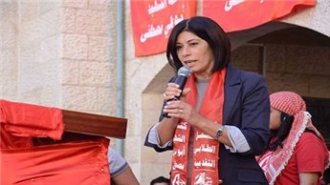
Ma’an – 18/04/2015
BETHLEHEM – An Israeli military court has brought 12 charges against Palestinian lawmaker Khalida Jerrar in connection to her membership of the Popular Front for the Liberation of Palestine, an international rights group said.
Having been detained and interrogated since Apr. 2, Jerrar was charged by the Israeli military prosecution on Wednesday, according to a report released Friday by Amnesty International.
Charges included membership of an illegal organization, participation in protests, and incitement to kidnap Israeli soldiers.
A review of the charges against her will take place on Apr. 29, the report said.
Jerrar’s defense team argued there was no basis to the incitement charge and that it was vindictive, according to Amnesty’s report.
The majority of Palestinian political organizations are considered illegal by Israel, including those that make up the PLO, and association with such parties is often used as grounds for imprisonment, according to prisoners’ rights group Addameer.
Jerrar was elected to the Palestinian Legislative Council in 2006 as a member of PFLP.
Jerrar was detained on Apr. 2 from her home in the Ramallah neighborhood of al-Bireh, and was afterwards held and interrogated at the Ofer detention center. She was later taken to Hasharon prison inside Israel.
An Israeli army spokeswoman told Ma’an that Jerrar had been detained for being the leader of a “terrorist organization,” and had encouraged “terror activities” in the previous few weeks.
The arrest also came after Jerrar refused a deportation order from Israeli authorities in August, demanding that she leave the Ramallah district for Jericho.
‘A symbol of resistance’
Jerrar has been targeted by Israeli authorities throughout her life, although Wednesday was the first time the lawmaker had been officially charged by Israeli military courts.
Palestinian factions have decried the arrest, with one PLO committee saying it was “an outrageous violation of her parliamentary immunity.”
Legislative Council lawmaker Jamil al-Majdalawi said: “Israel does not lose a chance to attempt to break the resistance’s will, the people’s resistance and their leadership symbols, and Khalida Jarrar is one of those symbols of resistance.”
In February, Jerrar joined the Palestinian committee in charge of conducting an International Criminal Court investigation into Israeli war crimes and crimes against humanity.
She is also vice-chair of prisoners’ rights group Addameer.
Until the charges against her on Wednesday, Jerrar had been held in Israeli prisons under administrative detention.
Palestinians held in administrative detention are often held without charge or trial for months and without access to the evidence that led to their detention, even though international law stipulates this tactic only be used in exceptional circumstances.
Israeli prisons currently hold 14 members of the PLC, eight of them in administrative detention
Prisoners’ day at weekly Bil’in demonstration
International Solidarity Movement | April 17, 2015
Bil’in, Occupied Palestine – Over 300 people attended the Prisoners’ Day demonstration in Bil’in. The Israeli army fired endless amounts of teargas and shot one person in the chest with a live ammunition.
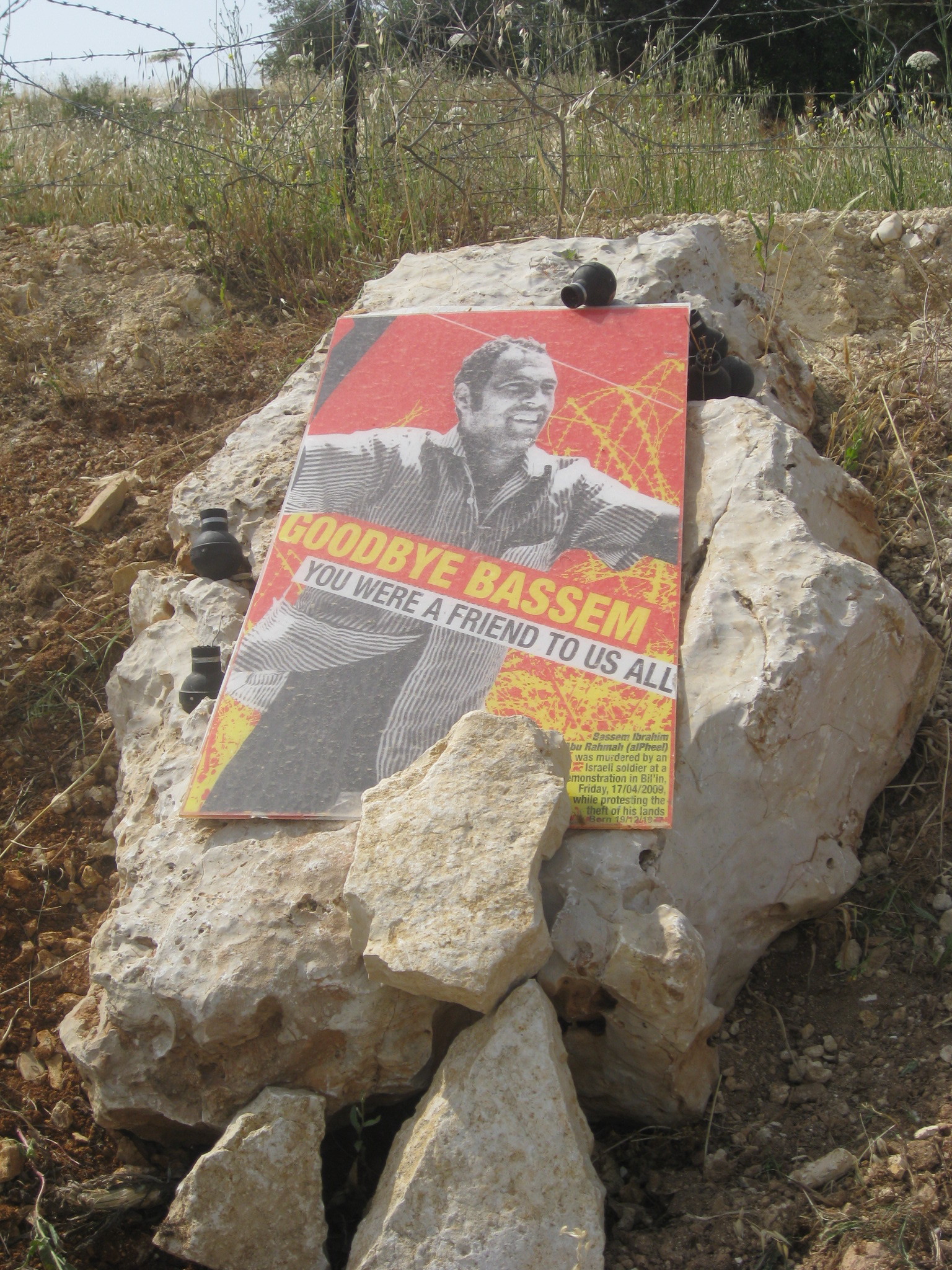
After the prayer, protesters marched towards the apartheid wall and the illegal settlement of Modi’in, situated just outside of Bil’in. A truck loaded with a sound system led the chanting crowd. Most were either waving Palestinian flags, holding up banners in support of the Palestinians imprisoned in Israeli prisons to mark Prisoners’ Day, or were holding posters of Bassem, a local who was killed six years ago by the Israeli army. As the march got closer to the wall, Israeli forces fired over 50 rounds of teargas canisters towards the protesters. The area was heavily clouded with this gas during most of the afternoon, which caused many to suffer from its inhalation. The shooting of this teargas also caused the dry grass between the olive trees to repeatedly catch fire.
During the protest, one person was shot with a rubber-coated steel bullet, while a 17 years old boy was shot in the chest with live ammunition. He was immediately taken to hospital by the ambulance. His condition is stable.
The 17th April is Prisoners’ Day in Palestine. Thousands of Palestinians are arrested arbitrarily on a daily basis by the Israeli forces, despite prohibition by international law. According to B’Tselem, “at the end of February 2015, 5,609 Palestinian security detainees and prisoners were held in Israeli prisons”. Since 1967, when Israel furthered its occupation to the West Bank, Gaza and East Jerusalem, an equivalent of approximately 20% of the total population in the Occupied Palestinian Territories (OPT), and 40% of all males have been detained (CEPR). While in prison, they are subject to wide-ranging violations of their rights and dignity. Such practices may include physical and psychological torture, deprivation of family visits, denial of access to lawyers and unlawful transfer out of the Occupied Palestinian Territories, among many other things. The Israeli occupying forces continue to violate the provisions of the Fourth Geneva Convention Relative to the Protection of Civilian Persons in Time of War, in particular against the Palestinian prisoners.
Today also marked the 6th anniversary of Bassem Abu Rameh’s death. Nicknamed Pheel, he was a much loved figure in the town of Bil’in. On the 17th April 2009, the Israeli army shot him with a teargas canister projectile which killed him shortly after. Aged 30, Pheel had been to all the non-violent protests, activities and creative actions against the apartheid wall in his town. Those who knew him remember him as a caring person who made everybody laugh and had the heart of a child, says Mohammad Khatib, a member of the Bil’in Popular Committee Against the Wall and Settlements.
According to the report by the United Nations Office for the Coordination of Humanitarian Affairs within the occupied Palestinian Territories, 442 people in the West Bank and 15 people in Gaza have been injured by the Israeli forces since the beginning of this year. On top of this, five people have been killed.
Palestinian Shot In The Eye In Jerusalem
IMEMC News | April 16, 2015
A young Palestinian man was shot in the eye by an Israeli rubber-coated metal bullet, on Wednesday evening, and three others shot in the legs, in the el-‘Eesawiyya town, south of the Al-Aqsa Mosque, in occupied East Jerusalem.
The Wadi Hilweh Information Center in Silwan (Silwanic) has reported that Suleiman Mahmoud at-Tarbi, 20, was walking in the town when the soldiers invaded it, and clashed with local youths.
Member of the Follow-up Committee in Silwan, Mohammad Abu Al-Hummus, said at-Tarbi left his home heading to a local shop, and had no idea the soldiers were going to invade the town.
He added that at-Tarbi came face to face with the soldiers before one of them pointed his rifle at him and fired; the rubber-coated metal bullet struck the Palestinian in the eye, before the soldiers assaulted him.
The young man was later moved the Hadassah Ein Karem Israeli hospital in Jerusalem for treatment, while Israeli army is still claiming he was participating in the clashes.
Three young men were injured in their legs after the soldiers fired rubber-coated metal bullets at them. The soldiers also fired at Palestinian cars shattering the front shields of three vehicles.
Earlier on Wednesday, soldiers invaded the Shu’fat refugee camp in Jerusalem, and clashed with dozens of local youths.
The soldiers invaded the camp just as schoolchildren were leaving school, and fired gas bombs, causing dozens of suffer the effects of tear gas inhalation.
The soldiers also invaded an under construction residential building, and searched it; the building is close to the military roadblock installed by the soldiers on the entrance of the camp.
On March 31, a Palestinian child identified as Zakariyya al-Joulani, 13 years of age, lost his left eye after being shot by an Israeli rubber-coated metal bullet while walking back home from school in Silwan.
His father said that Israeli soldiers occupied the rooftop of a multi-story under construction residential building and opened fire at schoolchildren walking back home.
Eyewitnesses confirmed to Silwanic that the shooting was not as a result of clashes as the situation was calm when it took place.
Sixteen Legislators Currently Imprisoned By Israel, Soldiers Kidnap Leftist Legislator Khaleda Jarrar
By Saed Bannoura | IMEMC News | April 2, 2015
The Palestinian Prisoners Society (PPS) has reported that Israel is currently holding captive sixteen democratically elected legislators, including Khalida Jarrar, who was kidnapped earlier Thursday.
The PPS issued a press release stating the nine of the imprisoned Palestinian legislators are held under arbitrary Administrative Detention, without charges or trial.
The Nine are Hasan Yousef, Abdul-Jaber Foqaha, Mohammad Jamal Natsha, Mohammad Bader, ‘Azzam Salhab, Nayef Rajoub, Bassem Za’arir, Mohammad Abu Teir and Abdul-Rahman Zeidan.
The PSS added that five legislators have been sentenced to different terms, including Marwan Barghouthi, who was kidnapped by the army in 2002, and was sentenced to five life terms, and legislator Ahmad Sa’adat, the secretary-general of the Popular Front for the Liberation of Palestine (PFLP), who was kidnapped in 2006, and was sentenced in 2008 to 30 years.
Israel is also holding captive legislators Nizar Ramadan, Hosni al-Bourini, Riyad Raddad, in addition to the head of the Palestinian Legislative Council (PLC) Dr. ‘Aziz Dweik.
Earlier on Thursday, soldiers stormed the home of legislator Khalida Jarrar, in the central West Bank city of Ramallah, and kidnapped her.
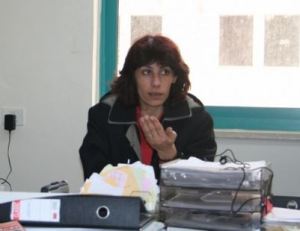 Media sources in Ramallah said at least sixty Israeli soldiers, and security officers, invaded Ramallah, before storming into the home of the feminist leader, and prominent human rights advocate, and violently searched her property, before kidnapping her.
The sources said the soldiers kicked down the door of Jarrar’s home, and held her husband in a separate room, while searching the property, and kidnapped the legislator.
Jarrar is also a senior political leader of the Popular Front for the Liberation of Palestine (PFLP), former executive director of the Addameer Prisoner Support and Human Rights Association, and a current member of its board.
The Legislator is also the chairwoman of the Prisoners’ Committee of the Palestinian Legislator Council (PLC).
The Palestinian Prisoner Solidarity Network has reported that Israel has been denying Jarrar the right to travel outside of Palestine since 1988, and that, in 2010, it took a public campaign lasting for six months before the Israeli Authorities allowed her to travel to Jordan for medical treatment.
On August 20 2014, Jarrar received an Israeli military order instructing her to leave Ramallah to Jericho, within 24 hours, but in September of the same year, the legislator managed to overturn the order.
Her abduction now raises concern that the Israeli Authorities might be planning to force her out of Ramallah, or to imprison her for an extended period.
Home demolition in Jerusalem: “They want our land. We need help to protect it.”
International Solidarity Movement | April 1, 2015
Jerusalem, Occupied Palestine – Nureddin Amro and his brother Sharif Amro and their families were awakened at 5:30 am by over a hundred Israeli soldiers who came to demolish their home in the Wadi Al-Joz neighborhood of occupied East Jerusalem on Tuesday, March 31, 2015. Both men are blind. The brothers live with their ill 79-year-old mother, their spouses and children. Nureddin has three young children, Sharif has four; all are under 14. Israeli soldiers pointed their guns in through the windows of the house while the children were still asleep and cut the electricity and phone lines to the house.
“We were asleep. They banged on the doors and shouted. Soldiers completely surrounded the neighborhood. There were dogs and aircraft. It was frightening,” said Nureddin. “There was no advanced notice. No reason given. They announced that they came to demolish the house and they started doing it while we were still inside.”
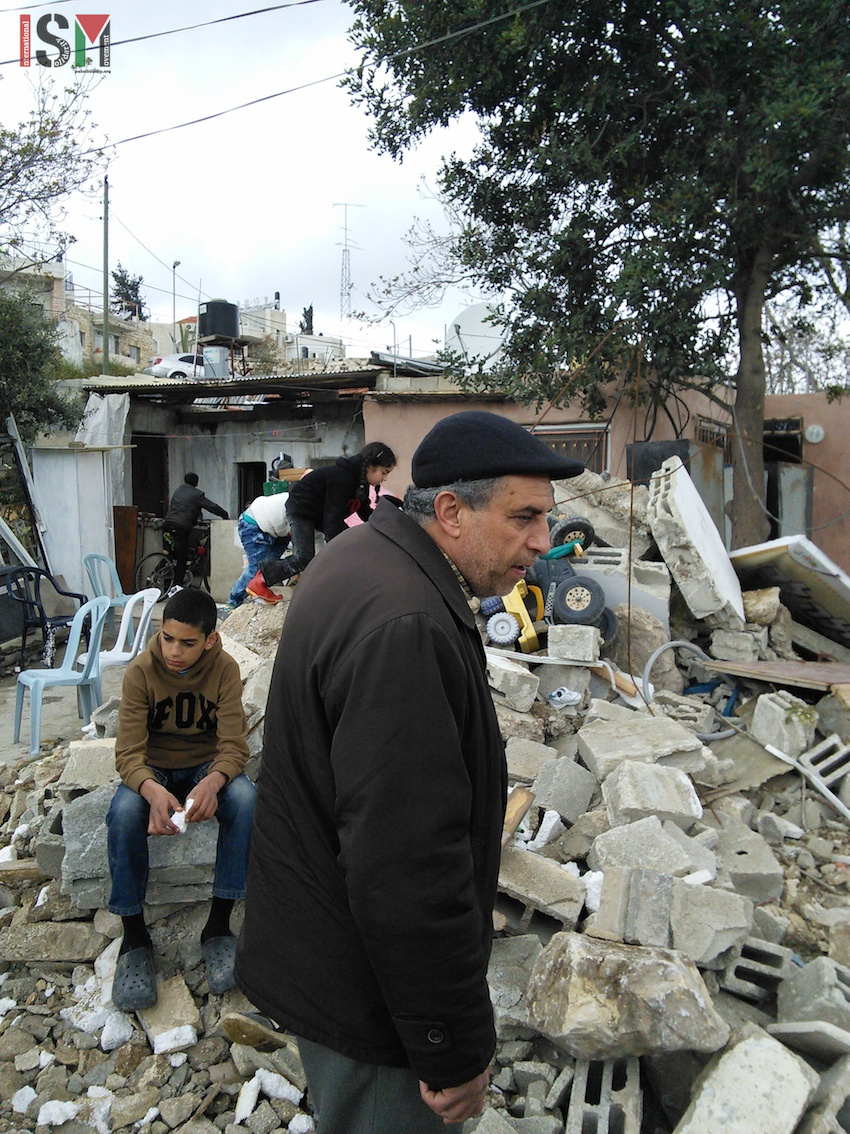
The Amro family stands in the rubble of their demolished home
Nureddin asked for time to go to court or the municipality for an explanation, but the soldiers refused. The soldiers assaulted the family, kicking Sharif and beating everyone, including the women and children. “They attacked us and locked us in one of the rooms. My son and brother were injured. They stayed for four hours and destroyed four rooms, the garden. They would not give us time to take anything from the rooms. All of our things, the children’s pets, their rabbits and chickens were killed under the rubble” Sharif was taken to the hospital after a soldier kicked the blind man hard in the ankle. Israeli forces refused to even let the family salvage their belongings before they tore it down.
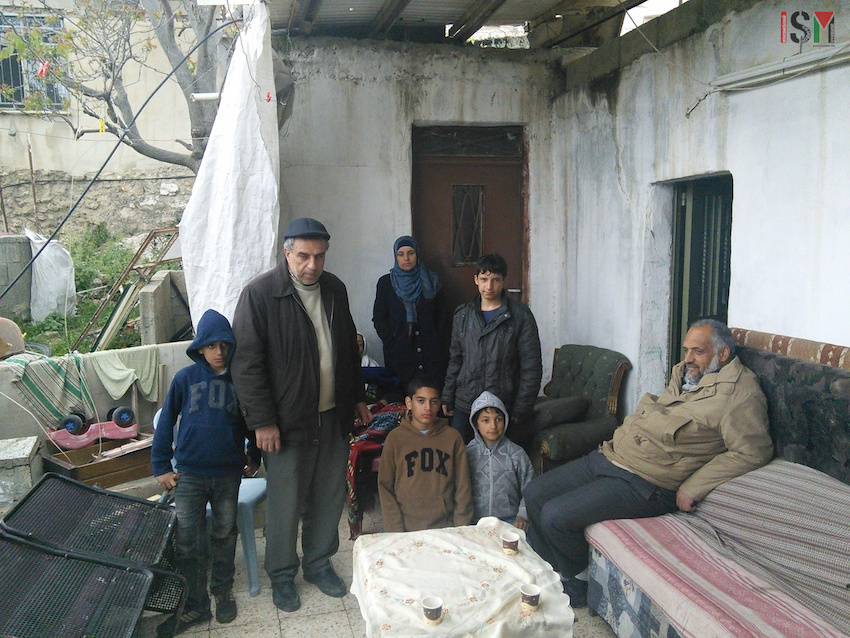
Members of the Amro family gathered beside the part of their home that is still standing
Nurredin is the founder and principal of the Siraj al-Quds School for visually impaired and sighted children in Jerusalem. He is a Synergos Institute Social Innovator and was recognized by the British Council for his leadership working for positive change and social development for people with special needs. According to Nureddin, there was no demolition order against the homes although there have been demolitions in the neighborhood before. They had received warnings a couple of months ago to clean up scrap wood, wires and materials that were around the house, and they did the cleaning as required.
While they were demolishing the rooms of the Amro family’s home Israeli forces destroyed a fence on the neighboring Totah family’s land, along with a shelter that housed a horse, chickens, and a dog. Soldiers also cut the family’s internet and broke the water line. The father of the Totah family was beaten, handcuffed, and arrested; he was later released.
As of this writing, the part of the house that remains standing where Nureddin and his brother are staying with their families; still has no electricity, water, sewage or telephone services. Soldiers returned to the family’s home again this morning, moving the rubble that was visible from the street and threatening that they would be back.
Israeli authorities have already annexed land across from the Wadi Al-Joz neighborhood, creating a national park which encompasses an illegal Israeli settlement. Local residents reported, speaking of the constant threat of settlement expansion under the Israeli occupation, that “they want to get rid of all the houses, all the neighborhood. They want to put their hands on this land from here to the Old City.”
Israeli forces briefly hold, threaten Ramallah governor
Ma’an – 28/03/2015
RAMALLAH – Israeli forces briefly detained the governor of the Ramallah and al-Bireh district, Laila Ghannam, at the entrance of Nabi Saleh village in the northern Ramallah district on Saturday.
Soldiers reportedly threatened the governor of “direct targeting” if she continues to participate in the weekly march organized by the popular committee against settlements and the separation wall in Nabi Saleh.
Ghannam said “we will not be frightened of detention even if we are directly targeted; we will take part in the weekly march and will not be prevented from exercising our rights on our land.”
Ghannam was detained in a similar incident in February last year while travelling from Jericho to Ramallah.
She said then that her detention was a political message from the Israeli government to PA leaders that Israel wants to impose its authority in every way possible.
 The people of Nabi Saleh have been protesting weekly for five years, demanding that land confiscated by Israeli authorities to build the separation wall be returned.
Earlier this month, a local activist committee reported that 11 Palestinians were injured during the weekly march when Israeli forces shot one Palestinian with live fire and beat ten others.
Three activists were also reportedly detained by Israeli forces during the march.
In 2004, the International Court of Justice called on Israel to stop construction of the separation wall within the occupied West Bank.
When completed, 85 percent of the wall will run inside the West Bank.
The internationally recognized Palestinian territories of which the West Bank and East Jerusalem form a part have been occupied by the Israeli military since 1967.
Photo of Nabi Saleh girl injured by Israeli occupation forces during weekly demonstration on March 21, 2015, by International Solidarity Movement.
Israeli forces conduct military training in Palestinian town
Ma’an – 28/03/2015
BETHLEHEM – Israeli forces conducted military training exercises in the Ramallah district earlier this week, according to Israeli media.
The Israeli force’s Territorial Brigade allegedly raided the town of Birzeit, just outside the central West Bank city of Ramallah, in what was reported by Israeli news source Haaretz as “preparation for a possible escalation on the ground.”
The forces engaged in a variety of potential scenarios including confronting violent mass demonstrations, shooting attacks, and use of live fire by members of Palestinian security forces.
While Haaretz reported the exercise was planned with the intention to cause “relatively little disruption to the routine of Palestinian life,” the account included a training exercise in the home of a Birzeit University college student, whose house was searched during the night while he stood in his pajamas with an Israeli soldier.
An Israeli army spokeswoman did not have any immediate information about the training, but told Ma’an she would look into recent military training activity in the area.
Birzeit is in Area A, falling under full control of the Palestinian Authority. Israeli forces repeatedly enter Area A despite their obligation by the Oslo Accords not to do so, most often in military raids launched on a near nightly basis to detain Palestinians.
Israeli human rights organization Yesh Din reported that Israeli forces have upheld the practice of using populated Palestinian areas for Israeli military drills since at least 2007.
The group filed a complaint against the Israeli Military Advocate General’s Corps in 2013, arguing that such military exercises “sow fear and panic and violate the security and dignity of the residents,” particularly because exercises are often not announced to Palestinian locals in advance, and thus it is not always clear to nearby residents that these are mere drills.
Legal Advisor for the West Bank declared in February 2014 that military training exercises were no longer authorized to be held in Palestinian villages without giving prior notification to the civilian population, however the rights group continues to criticize the practice.
Resistance to the destruction of olive trees in Wadi Qana
International Solidarity Movement | March 22, 2015
Tuesday, 17th March 2015, four farmers in the Salfit valley of Wadi Qana were issued with notices that they had 48 hours to remove their olives trees or they would be removed at their own cost. Failure to execute the orders are punishable by imprisonment, or fines up to the maximum penalty of the law.
Supporters, many from the nearby village of Deir Istiya, as well as locals and internationals, turned out in anticipation of soldier presence or settler provocation, but no conflict took place.

A crowd of approximately 250 supporters gathering in the valley were met by a festive atmosphere. Representatives from various organisations in conjunction with the Deir Istiya Municipality converged to remove waste from the spring and its surroundings.
In 2008 and 2011 farmers of Wadi Qana were issued with similar notices. These removal orders were not carried out. In 2012 trees were removed without notice. Approximately 3,000 trees have been destroyed in Wadi Qana by settler attacks and by order of Israeli authorities.
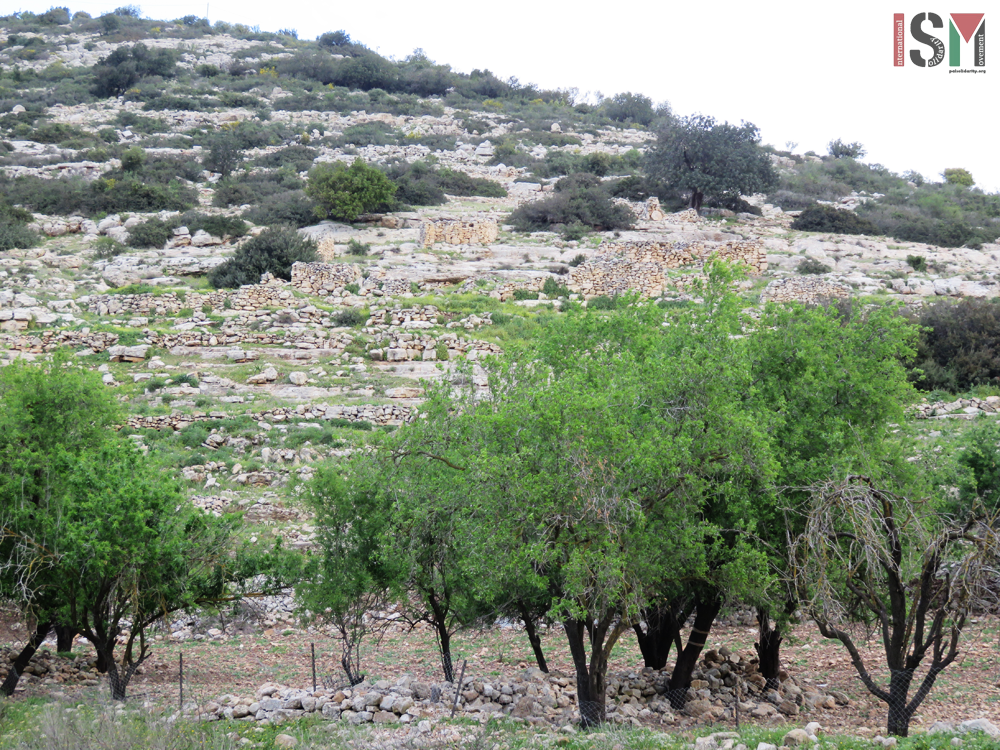
The Deir Istiya region has a population of approximately 12,000 people, 4,000 of whom live in town. The illegal settlements of the area, of which seven surround Wadi Qana, house approximately 15,000 settlers. Wadi Qana itself sits within the 31,000 hectares around Deir Istiya which has been zoned as Area C, leaving only the 1,527 hectares of the township in Palestinian controlled Area A. Under the Oslo Accords, Israeli law forbids Palestinians to build structures or plant trees in Area C, while conversely, entitling illegal Israeli settlements to develop and expand. (Al Jazeera has a good explanation of the different areas here.)
Speaking of the situation in Area C, a frustrated resident of Deir Istiya exclaimed, “They have the right to cut the old olive trees but we have no right to grow a new one. See the discriminations?”
Wadi Qana is a strategic area in the region, containing several significant natural springs. These springs and the crops which they irrigate have been under serious threat since 1994 when settlements began running sewage into the valley. While this practice was limited in 2005, many ocurrences have been identified, with four settlements’ waste currently believed to be pumping into the valley below.
While only two of the seventeen natural springs remain unpolluted, water from the underground aquifers is dropping due to the increasing demands of the ongoing settlement expansion. This has caused many farmers to move away from orange and vegetable crops to the more arid-adapted olive trees. The livelihoods of farmers of Wadi Qana are increasingly under threat because of the occupation and its apartheid laws.
The charade of Europe’s annual ‘threats’
By Jonathon Cook | The Blog from Nazareth | March 20, 2015
There is something deeply mendacious and cowardly about this ritual leaking by European diplomats of their annual report on Jerusalem. This year they’ve chosen to deposit the “confidential” report in the hands of the Guardian.
Obviously, the Europeans – and Americans – want this information about how angry they are with Israel disseminated as widely as possible in the wake of Netanyahu’s election win. “We’re mad and we’re not going to take it any more!” they shout – yet again, as they have done over the past four or five years.
As ever, the report is being described as “hard-hitting”; as ever, it threatens penalties against Israel; and as ever, it signifies nothing.
This is paltry theatre designed to persuade us – people with consciences – that our representatives care and that they are planning – at some point – to do something. But what it really indicates is that that something is going to amount to nothing more than empty threats. These are the same threats they have been making for more than a decade. And even were Europe actually to carry them out, they would have almost no impact on Israel.
Here’s what these “threats” consist of:
Known Jewish terrorists may face “restrictions” on entering Europe. (One would have hoped such “restrictions” were already in place.)
Europe may give its consumers more information about whether they are being misled into buying products from illegal settlements. (Such products should not even be available in Europe.)
And efforts will be made to “raise awareness” among European companies that it could be bad for business to be associated with the settlements. (And yet, according to free-market ideology, market forces ought to be enough to dissuade most companies from such associations – after all, they are supposed to want to maximise profits.)
In short, this list of potential “sanctions” is complete hot air. It’s zilch. And anyone claiming otherwise, including the Guardian, is simply conspiring in this diplomatic charade.
Nablus family says Israeli soldiers stole money during home raid
Ma’an – 18/03/2015
NABLUS – A Palestinian family has accused Israeli forces of stealing money and jewelry from their family home near Nablus during a military raid Sunday.
Family members of Wisdam Nassar from the village of Madama south of Nablus told Ma’an they realized Tuesday that 5,000 shekels ($1,200) and jewelry worth 12,000 shekels ($3,000) were gone after Israeli forces raided the home.
Israeli forces raided the village at 2 a.m. early Sunday and ransacked several homes for inspection, according to the family.
The family said they had notified the Palestinian security services of the robbery.
An Israeli army spokeswoman told Ma’an she was not aware of any theft that might have occurred and would look into the incident.
Israeli forces confiscated an estimated $2.9 million worth of cash and property from Palestinian homes, charities, and businesses during Operation Brother’s Keeper in the summer of 2014, according to a report by Geneva-based human rights organization Euro-Mid Observer.
The operation involved a three-week campaign of mass arrests throughout the occupied West Bank by Israeli forces, allegedly searching for those responsible for the deaths of three Israeli teenagers killed while hitchhiking in a Jewish settlement near Bethlehem.
Spokespople for the Israeli government justified confiscations during this time by claiming their planned use to fund or support terrorism.
The Euro-Mid Observer reported, however, that Israeli authorities neither provided evidence nor judicial permission for the confiscations.
Featured Video

Chinese jet fuel and the myth of energy independence
or go to
Aletho News Archives – Video-Images
From the Archives
The Dirty Little Secret behind the “Global Terrorism Index”
The Omission of Israeli Terrorism in the Occupied Palestinian Territories
By Karin Brothers | Global Research | December 6, 2014
… The Israeli settlements — all of which are illegal – have been identified as a major impediment to peace. The refusal of a major “global” terrorism report to name the Israeli settlers as one of the groups most responsible for terrorism not only misrepresents a major source of regional violence but exposes the Global Terrorism Index as a propaganda tool that supports a U.S. agenda.
In recent years, governments have been attempting to thwart terrorism by blocking supportive fund-raising. When it comes to Israeli settlements, however, the US and Canada actually encourage fund-raising by giving organizations (such as Christian Friends of Israeli Communities (CFOIC) and the Jewish National Fund) financial support in the form of donor tax-deductions.
Charities which provide funds for the Israeli settlements should be regarded as terror-financing organizations. They should not only lose their tax-deductible status, but they should be banned because they support the violation of international humanitarian law. The terror-financing laws that are being strictly enforced for Muslim charities should be applied to Christian and Jewish charities as well. … Read full article
Blog Roll
 Aletho News
- Chinese jet fuel and the myth of energy independence
- Ukraine Sea Drone Fired From Libya Hit Russian Tanker in Mediterranean
- IRGC: Iranian forces launched no attacks during ceasefire hours
- Trump Administration Moves To Automate U.S. Military Draft Registration
- Spain orders reopening of Tehran embassy, condemns Israel’s carpet bombing of Lebanon
- Israel faces ‘unsustainable’ strategic crisis following 40-day war against Iran: Analyst
- Iran restricts Hormuz access to 15 vessels per day under ceasefire terms: Report
- The ‘Opposition Party’ Has Done Nothing to Stop the Iran War and Much to Goad Trump Into Continuing It
- Moscow backs Tehran on status of Lebanon in US-Iran deal
- How UK Regulator Ofcom Quietly Bypassed International Law to Police American Speech
- If Americans Knew
- Amnesty: Urgent – Protect Lebanese civilians from brutal escalation in Israeli attacks
- Is The War Against Iran Over?
- Inside the Israeli army’s propaganda wing
- Hundreds of Gaza Amputees Stranded in Legal Limbo
- The gallows law: Israel moves toward executing Palestinian children
- Tucker Carlson: The Path to Peace requires ending ‘special alliance’ with Israel
- This is ceasefire? Israel’s biggest massacre yet in Lebanon, another journalist killed in Gaza – Daily Update
- Tucker Carlson on Israel: This Is the Behavior of an Ally? Really?
- Gazans face a triple crisis: severe shortages of water and bread, healthcare in tatters
- NY Times reports how Netanyahu took the US into Iran War
- No Tricks Zone
- An Inconvenient Tree: Uncovered In Alps… Europe Much Warmer Than Today 6000 Years Ago
- New Study Reports A 60% Slowdown In Greenland’s Ice Loss Rate In The Last Decade
- Low Intensity Tornado Wrecks Major Solar Farm, Creating A Potential Toxic Dump
- New Study Finds Warming Saves Lives…Cold Temperatures 12 Times More Deadly Than Excess Heat
- German Science Blog Accuses PIK Climate Institute Of Hallucinating Climate Tipping Points
- Devastating Assessment Of Comirnaty Vaccine By Former Senior Pfizer Europe Toxicologist
- New Study: CO2 Is ‘Effectively Negligible’ As An Explanatory Climate Change Factor Since 2000
- Former Pfizer Toxicologist Dr. Helmut Sterz Tells Bundestag Hearing Pfizer Vaccine Should Have Never Been Approved
- Energy Expert: Germany’s Nuclear Phaseout Was A “500 Billion Euro Mistake”
- New Research: South Australia’s Mid-Holocene Sea Surface Temperatures Were 4°C Warmer Than Today
 Aletho News