Eilat port faces worst crisis as Red Sea shipping collapses
Al Mayadeen | January 12, 2026
The southern port of Eilat in occupied Palestine is facing the most severe crisis in its history, with operations nearly paralyzed for more than two years amid disruptions to Red Sea shipping routes, attacks on vessels, and escalating regional tensions, according to Yedioth Ahronoth.
The newspaper reported that port workers arrive each morning to empty docks, prepared to work, but with no ships docking. Once generating around 240 million shekels annually, the port’s revenues have dropped to almost zero, while government assistance has amounted to just 15 million shekels.
According to the report, the General Federation of Labor, the Histadrut, pledged an additional 5 million shekels to prevent layoffs, but the funds have yet to be delivered due to a suspected conflict-of-interest scandal involving its head, Arnon Bar-David.
The crisis has been compounded by a recent decision by the finance and transport ministries not to extend the port’s operating concession, citing failure to meet required conditions. Port management is reportedly preparing to challenge the decision and demand that the government reverse its stance.
Yedioth Ahronoth noted that operations at the Port of Eilat came to a complete halt after Sanaa seized a vessel bound for the port in November 2023. This followed what had been a record year, with around 150,000 vehicles handled by October 2023 and expectations of another 15,000 arrivals.
Port finance vice president Batya Zafrani said that on the day of the incident, shipping companies NYK and ZIM suspended deliveries for several months. “We thought the government would intervene, but after three months we began worrying about the workers’ future,” she said, adding that the 15 million shekels in government aid would only cover two months of operations.
Avi Hormaro, chairman of the Eilat port and chief executive of the Nakash Group, criticized the government’s handling of the crisis, saying the Israeli occupation authorities had neglected the port. “The transport ministry is making efforts, but other ministries are not interested,” he said.
Hormaro added that just as Kiryat Shmona had been forgotten, the port was also being sidelined, arguing that “a group in Yemen is deciding for the Israeli occupation whether it has a southern port or not.” He stressed that responsibility for keeping Red Sea shipping lanes open lies with the government, not the port authority.
Eilat port shut down due to debt
The Israeli economic media outlet The Marker reported in July that the port of Eilat will completely cease operations starting next Sunday after the city municipality froze its bank accounts due to millions of shekels in accumulated debts.
This development comes as the port has faced near-total paralysis since November 2023, when Yemen imposed a naval blockade on ships heading to “Israel”, leading to a sharp decline in revenue and a collapse in commercial activity at the facility.
The Eilat Municipality announced that it had frozen the port’s bank accounts due to massive accumulated debts, and according to the Israeli economic outlet The Marker, all operations will come to a complete halt starting Sunday, signaling a total economic shutdown of the port.
The crisis at Eilat Port began when Yemeni forces imposed a naval blockade on ships heading to “Israel,” prompting international shipping companies to avoid the Red Sea route, which brought the port’s operations to a near standstill and caused a collapse in its revenue.
UAE begins ‘hurried evacuation’ from Somali air base: Report
The Cradle | January 12, 2026
The UAE has begun evacuating security personnel and heavy military equipment from Somalia, after officials in Mogadishu reportedly suspended Emirati use of their territory and airspace for military operations, Middle East Eye (MEE) reported on 12 January.
The Somali government informed the Emiratis that “all their military activities in Somalia, including the use of airspace and the landing of cargo military aircraft in Bosaso, Berbera and Mogadishu, had been suspended,” a senior Somali official told MEE, speaking on condition of anonymity.
The official said the UAE now appears to be evacuating its security personnel and military equipment to neighboring Ethiopia.
Citing flight-tracking data and two eyewitnesses, MEE reported that an average of six IL-76 cargo aircraft have arrived and departed the air base in Bosaso – the port city in Somalia’s Puntland – each day over recent days.
One source speaking with the UK news outlet described the flights as “resembling a hurried evacuation.”
“Unlike previous operations, where incoming cargo would be immediately transferred to another aircraft on standby, these planes have been arriving over several days, loaded with heavy military equipment, and departed without delay,” a source at Bosaso air base told MEE, describing the activity as highly unusual.
The UAE has long used Somalia as a rear operational base for its military engagements in both Sudan and Yemen. It had been using Bosaso’s port and airport in recent years to send weapons, mercenaries, and supplies to Sudan’s paramilitary Rapid Support Forces (RSF), which is fighting a civil war against Sudan’s military.
Bosaso is part of a cluster of airfields the UAE has constructed in an effort to dominate the southern end of the Red Sea, the Bab al-Mandab Strait, and the Gulf of Aden.
According to a source in Somalia’s federal government, Mogadishu has revoked the agreement allowing the UAE to use the Bosaso air base and other facilities in the country.
Somali authorities opened an investigation into Emirati activities at Bosaso after the UAE used the air base to help a Yemeni separatist leader escape to the Gulf nation.
The separatist leader, Aidarus al-Zubaidi, is the president of the UAE-backed Southern Transitional Council (STC).
He was wanted by Saudi Arabia amid fighting between the STC and Saudi-backed forces in Yemen that began in December. The UAE was supporting the STC’s bid to take territory from the Saudi-backed Presidential Leadership Council (PLC) in hopes of creating an independent state in southern Yemen.
Zubaidi was supposed to travel to Saudi Arabia for talks to end the violence, but the UAE secretly helped him escape to Abu Dhabi. He first traveled by ship to the breakaway region of Somaliland, then boarded a plane at the Bosaso air base to travel to the UAE.
After helping Zubaidi escape, the Somali government informed the Emiratis that all their military activities in Somalia were suspended.
Saudi Arabia and the UAE are increasingly competing for influence in both Yemen and Somalia.
The UAE is closely aligned with Israel, which has supported Somaliland in its effort to gain formal independence from Somalia.
In contrast, Saudi Arabia has supported Somalia’s unity and established closer relations with officials in Mogadishu.
Saudi officials held an Organisation of Islamic Cooperation conference on Somalia over the weekend and rallied the Arab League and Gulf Cooperation Council (GCC) to issue statements in support of Somalia’s unity after Israel recognized Somaliland.
Pakistan, the Gulf, and the high cost of Zionist alignment
By Junaid S. Ahmad | MEMO | January 6, 2026
Geopolitics is most dangerous not when it erupts, but when it reorganises quietly — when the ground shifts beneath familiar alliances while elites continue to speak the language of yesterday. The Gulf today is in precisely such a moment. What once masqueraded as a coherent bloc has fractured into rival power models, incompatible strategic visions, and diverging relationships to empire, Israel, and popular legitimacy. And Pakistan, true to form, is responding not with strategic intelligence but with institutional reflex — confusing obedience with balance and habit with foresight.
The rift between Saudi Arabia and the United Arab Emirates is no longer a matter of speculation or diplomatic gossip. It is an open contradiction — political, military, and infrastructural. Yemen has exposed it. Israel has radicalised it. The United States, particularly under Trumpism, has weaponised it. And Pakistan’s ruling elite — military and civilian alike — has chosen to drift toward the most toxic pole of this fracture while reassuring itself that it is merely being “pragmatic.” It is not. It is being complicit.
Two Gulf projects, one moral abyss
Saudi Arabia and the UAE are still lazily grouped together by analysts who mistake shared authoritarianism for shared strategy. This is intellectual malpractice. The two monarchies are pursuing fundamentally different regional projects.
Saudi Arabia’s current posture — hardly virtuous, often cynical, and deeply reactionary — nevertheless reflects a begrudging recognition of reality. After years of disastrous interventionism, Riyadh wants consolidation. It wants borders quieted, fires contained, and regional fragmentation slowed. Its outreach to Iran, cautious engagement with the
Houthis, and growing hostility to separatist militias are not gestures of enlightenment but acts of self-preservation. Endless chaos undermines Saudi ambitions at home.
The Emirati project is the opposite — and far more dangerous. Abu Dhabi does not seek order through states; it seeks domination through fragments. Ports, islands, militias, mercenaries, logistics corridors, surveillance hubs — these are its tools. Sovereignty is irrelevant. Fragmentation is not a failure; it is a business model.
If Saudi Arabia is a reactionary status-quo power, the UAE is a hyperactive destabiliser — an empire of nodes, happy to burn regions so long as trade flows and leverage compounds.
Yemen: Where the lie finally died
Yemen is where the fiction of Gulf unity collapsed beyond repair. What began as a joint intervention has devolved into a struggle over whether Yemen will exist at all as a state. The House of Saud — bloodied, embarrassed, and exposed — now insists on a unified Yemeni authority capable of enforcing borders and agreements. The UAE has invested
instead in carving out a southern enclave: separatist militias, port control, island bases, and economic chokeholds.
For Riyadh, this is existential. A fragmented Yemen exports instability directly into Saudi territory and sabotages any negotiated settlement with the Houthis. For Abu Dhabi, fragmentation is leverage — control of chokepoints matters more than Yemen’s survival as a polity.
That Saudi Arabia has now openly bombed weapons shipments linked to UAE-backed forces and issued public warnings is extraordinary. Gulf disputes are traditionally smothered in silence. When they go kinetic and public, it signals not a spat but a structural rupture. Pakistan’s establishment sees this — and chooses denial.
Israel: The cancer at the core
To understand the Emirati recklessness, one must confront the real axis around which it revolves: Apartheid, genocidal Israel.
The Abraham Accords were not peace agreements; they were an integration pact into Zionist regional supremacy. Israel does not merely occupy Palestine; it exports a model — militarised impunity, surveillance capitalism, permanent war dressed as security. The UAE did not normalize with Israel reluctantly. It embraced Israel as a force multiplier.
Israel provides Abu Dhabi with access to Washington’s coercive machinery, advanced surveillance, cyberwarfare, and a propaganda ecosystem that converts mass death into “stability.” In return, the UAE provides geography, ports, islands, mercenaries, and political insulation — doing Israel’s dirty work where Tel Aviv prefers not to appear.
Sudan. Somaliland. Socotra. Cyprus. The Red Sea. These are not isolated projects; they are components of a Zionist–Emirati expansion strategy designed to insulate Israel from economic pressure and accountability while strangling any resistance corridor before it matures.
Israel is the disease. The UAE is its most enthusiastic carrier.
Pakistan’s elite: Zionism in uniform and suits
Pakistan’s tragedy is not that it lacks options. It is that its ruling elite lacks dignity.
Rather than reassess its position amid this fracture, Pakistan’s military–civilian elite clings to the rhetoric of “balance” while deepening structural entanglement with the Emirati–Israeli axis. Ports, airports, logistics terminals, military-linked corporations — these are not neutral investments. They are instruments of alignment.
Pakistan’s generals and their civilian accessories imagine they are playing geopolitics. In reality, they are being used as infrastructure — cheap, deniable, disposable. Their behaviour is not naïveté. It is covert Zionism: collaboration without confession, obedience without ideological honesty. They mouth solidarity with Palestine while embedding Pakistan’s economy and security apparatus deeper into a regional order built to protect Israel from consequences. This is not pragmatism. It is moral and strategic bankruptcy.
Venezuela: When empire drops the mask
The illusion that empire prefers subtlety should have died long ago. Venezuela put the lie to it.
When sanctions failed and proxy pressure proved insufficient, the United States escalated —directly. US special forces were involved in a scandalous operation that culminated in the kidnapping of Venezuelan President Nicolás Maduro. This was not deniable proxy warfare. It was naked imperial contempt for sovereignty.
And what happens if Washington’s decapitation move fails at complete regime change in Caracas? Silence. Zero accountability. Empire simply moves on.
This is the future Pakistan’s elite is courting. When alignment fails to deliver stability, the costs will not be borne by Washington, Tel Aviv, or Abu Dhabi. They will be borne by Pakistan. Empire does not protect collaborators. It discards them.
Saudi Arabia: A lesser evil, still an evil
Saudi Arabia deserves no absolution. The House of Saud remains a reactionary monarchy, structurally hostile to popular sovereignty and deeply entangled with empire. Its version of “stability” is still oppression — merely quieter than the Emirati inferno.
Yet the difference matters. Saudi Arabia understands that Zionist expansionism generates perpetual instability. The UAE celebrates it. Riyadh conceals its servitude; Abu Dhabi flaunts it.
Pakistan’s elite has chosen to tilt slightly more towards the louder master.
Trumpism: Empire without shame
Hovering over this landscape is Trumpism — the ideological nakedness of empire. Trump dispenses with liberal hypocrisy entirely. Loyalty is transactional. Morality is a joke. Strongmen are preferred to institutions. Israel is sacred. Everyone else is expendable.
The UAE fits this worldview perfectly: ruthless, efficient, unburdened by public opinion. Pakistan’s rulers mistake proximity to this axis for relevance. In truth, it entrenches their subordination.
When things go wrong — as they inevitably will — Trumpism will shrug. Pakistan will bleed.
The reckoning Pakistan is avoiding
The Gulf is not merely fracturing; it is sorting. States will be forced to choose — between sovereignty and fragmentation, between justice and normalisation, between dignity and managed submission.
Pakistan’s establishment has already chosen. It just lacks the courage to admit it. History will not judge Pakistan for failing to be the Mafia Don of West Asia. It will judge it for failing to recognise a moral and strategic crossroads when it stood directly upon it.
The UAE will continue to burn regions in service of Zionism. Israel will continue its genocidal project. The United States will continue to kidnap, sanction, and discard. Saudi Arabia will continue to pretend restraint equals virtue.
And Pakistan — unless it breaks from habit — will continue confusing servitude for strategy.
Israel and the politics of fragmentation: The hidden hand behind secessionist projects in Yemen, Somalia, and Libya
By Ahmed Asmar | MEMO | January 3, 2026
Israel’s malicious, meddling role in the Arab countries has long extended beyond direct military confrontation, as seen in Palestine, Lebanon, and Syria. For long, Tel Aviv has pursued a quieter yet dangerous strategy of encouraging fragmentation, weakening central states, and cultivating ties with separatist actors in fragile and war-torn countries. Today, this pattern is increasingly clear and visible in Yemen, Somalia, and Libya; three countries that suffer from prolonged conflicts, administrative collapse, and foreign interference. In each case, Israel’s footprint is not accidental; it serves a broader strategic doctrine aimed at dividing Arab countries, controlling critical waterways, and reshaping the regional balance of power to its advantage and dominance.
Yemen: secession as a gateway to normalisation
In Yemen, Israel’s indirect involvement surfaces through its alignment with the so-called Southern Transitional Council (STC), a secessionist entity seeking to reestablish an independent state in southern Yemen. While the Yemeni conflict is often framed as a regional proxy war, the STC’s leader, Aidarous al-Zubaidi, has openly, and on several occasions, signaled willingness to normalize relations with Israel. He publicly declared that recognizing Israel is not an obstacle if southern Yemen’s independence is achieved; an extraordinary statement that was slammed by many Yemeni public figures and politicians.
This declaration is not merely rhetorical. Yemen’s southern geography grants access to some of the most sensitive maritime corridors in the world, particularly near the Bab al-Mandeb Strait. For Israel, influence over forces operating near this chokepoint aligns with its long-standing objective of securing Red Sea navigation and countering its perceived regional adversaries. Supporting or encouraging secessionist forces in southern Yemen offers Israel a strategic foothold without formal military deployment, turning internal Yemeni fragmentation into a geopolitical asset, and posing a direct threat against the Arab countries, especially the littoral countries of the Red Sea – Egypt and Saudi Arabia.
Somalia: Somaliland and the militarisation of recognition
Somalia presents an even clearer case of Israel exploiting separatism for strategic gain. The self-declared Republic of Somaliland, unrecognised by the international community, has actively sought foreign backing to legitimise its secession. Israel’s contacts and recognition of Somaliland’s de-facto authorities mark a dangerous precedent in international relations, and against the international law and the UN charter.
The strategic motivation is transparent. Somaliland’s coastline also overlooks the Bab al-Mandeb Strait and the Gulf of Aden, one of the world’s most critical maritime corridors. Somalia’s President Hassan Sheikh Mohamud warned of the Israeli malicious plan behind such recognition, where he said that Israel seeks from recognising Somaliland to resettle Palestinians from Gaza, who experienced a two-year genocide, and most importantly, to host an Israeli military or intelligence base. These plans are added to the dangers of undermining Somalia’s territorial integrity and encouraging further fragmentations across the Horn of Africa.
Israel’s move to recognize a secessionist entity reflects how Israel exploits weak entities and divided states to move ahead with its expansionist and dominance strategies at the expense of the region and its people.
Libya: Haftar and the normalisation through the back door
Not far from the examples in Yemen and Somalia, in Libya, Israel’s role is more discreet but visible too. General Khalifa Haftar, who controls eastern Libya and has long sought international legitimacy, reportedly maintained contacts with Israeli officials as part of efforts to secure external backing. These interactions fit within a wider pattern of covert normalization between Israel and authoritarian or factional actors seeking foreign support in exchange for political concessions.
Libya’s fragmentation has turned it into fertile ground for foreign manipulation. Israel’s engagement with Haftar is surely not about peace or stability, but about influence, leverage, and having a close foot near its surrounding Arab countries.
Fragmentation as a strategic doctrine
Altogether, Yemen, Somalia, and Libya illustrate a consistent Israeli strategy: exploiting internal conflicts to advance a regional agenda based on fragmentation. This approach intersects with Israel’s ongoing territorial expansion and military aggression, from its occupation of Palestinian land to its violations of sovereignty in Syria and Lebanon. Fragmented Arab states are less capable of resisting Israeli policies and more exposed to normalization under opportunistic conditions.
Israel’s encouragement of secessionist movements is not about supporting self-determination; it is about redrawing the region into weaker, smaller entities incapable of collective action. This strategy directly threatens Arab national security as a whole, adding a new dimension to Israel’s expansionism.
At a time when the Arab world faces unprecedented challenges, recognising and confronting this hidden hand of fragmentation is essential. While ignoring Israel’s role in these secessionist projects risks allowing instability to become permanent, solely in favor of Israel in the region and beyond.
Proxy Regime: Understanding the UAE-Israeli Conspiracy in Yemen, Saudi Arabia
By Robert Inlakesh | The Palestine Chronicle | January 2, 2026
The reason why the recent feud between the UAE and Saudi Arabia in Yemen is important is that it paves the way to a totally different reality on the ground.
The United Arab Emirates (UAE) and Saudi Arabia were once viewed as a unified power in Yemen; any semblance of such an alliance is now crumbling. As Riyadh and Abu Dhabi remain at loggerheads, it is clear that Tel Aviv is a key driver of the escalation across Yemeni territory.
Saudi Arabia had recently released a sternly worded statement condemning their Gulf neighbors in the United Arab Emirates, following the armed takeover of the Hadramaut and al-Mahra provinces by the Emirati-backed Southern Transitional Council (STC) forces. Saudi airstrikes were also launched, largely on soft targets as a warning, which prompted the UAE to announce the withdrawal of all its forces from the country.
The war in Yemen is one of the most underreported and misrepresented conflicts in the region, which often makes it difficult to decipher what is truly transpiring. What is important to understand here is that Abu Dhabi’s role inside Yemen is in large part driven by Israeli interests, which will not only potentially lead to blowback against the UAE itself, but also aims to destabilize the entire Arabian Peninsula. This is part and parcel of forging a way forward toward the “Greater Israel Project”.
The reason why the recent feud between the UAE and Saudi Arabia in Yemen is important is that it paves the way to a totally different reality on the ground. In 2015, the Ansarallah movement took over the Yemeni capital of Sana’a and received the backing of roughly two-thirds of the nation’s armed forces in doing so.
As a revolutionary Islamic movement, Ansarallah’s seizure of power was interpreted as an immediate challenge to the rulers across Arabia. Considering the long history of violence between Yemen and Saudi Arabia in particular, it was no surprise that tensions immediately rose. Yet, the Saudi-led coalition that initiated the war on Yemen to overthrow the newly ushered in Ansarallah leadership (often incorrectly referred to as “the Houthis”), was not driven by its own interests alone.
In fact, the US, UK, and Israel were in the picture from the very start and it was former American President Barack Obama who gave the green light for the war, which eventually resulted in the deaths of around 400,000 people. Saudi Arabia, for its part, decided to back the deposed president of Yemen, Abd Rabbuh Mansour Hadi, using his position and control over what is called the “internationally recognized government” of Yemen as its excuse for legitimacy for action inside the country.
The United Arab Emirates had instead thrown its weight behind southern separatists in Yemen’s south, with the goal of securing the strategic port city of Aden. Prior to 1990, Yemen was divided between north and south, yet there has always been the presence of separatist elements there. Without delving into the nation’s long history, the British had strategically occupied southern Yemen, utilizing the strategic port of Aden as a tool of empire; the UAE clearly sees the geostrategic weight of this location also.
After years of horrifying war, mass starvation due to the Saudi-US-imposed blockade, and a situation that began to come to a stalemate, by early 2022 Yemen’s Ansarallah-led government had not only established a strong, rooted rule, but the Yemeni Armed Forces under its command had clearly made breakthroughs in military technology. It had launched devastating long-range drone and missile attacks against not only Saudi Arabia, but also the UAE, even making a point of striking the Emiratis while Israeli President Isaac Herzog visited.
It wasn’t long until a ceasefire was reached, brokered by the United Nations, one that has largely held until now. Following the ceasefire, in April of 2022, the Saudi government created what is known as the Presidential Leadership Council (PLC). The PLC’s leader, sometimes referred to as the internationally recognized president of Yemen, is a man named Rashad al-Alimi, presiding over an eight-member council that is not elected by the Yemeni people.
The PLC, or “internationally recognized government,” was then based in Aden, and three of its seats were granted to members of the Emirati proxy group called the STC, the separatist militia that Abu Dhabi backed to seize Aden. Despite promising prosperity to the people in southern Yemen and not being under the same sanctions as Ansarallah’s government in Sana’a, the living conditions in the south continued to deteriorate and have since led to countless protests and even riots.
In early December, the STC suddenly swept over the eastern provinces of al-Mahra and Hadramaut, even forcing some Saudi-backed PLC officials to flee Aden. The Emirati proxy separatists have since openly declared their intent to divide Yemen and separate southern Yemen from the north, which is controlled by Ansarallah. This takeover meant that some 80% of the country’s oil resources fell into the hands of the Emirati-backed STC.
The takeover of these provinces also proved a massive threat to both Saudi and Omani security in the eyes of their leadership. The primary armed faction that fights for the southern separatist cause is called the “Southern Giants Brigades”, a large element of which are Salafist extremists, with former Al-Qaeda fighters forming the most experienced core of the militant organization.
Just as the UAE has been backing ISIS-linked gangs in the Gaza Strip to fight Hamas, it utilizes Salafist extremists in Yemen to fight its battles for it also. Evidently, such a powerful militia force is viewed rightly as a threat to regional stability.
Riyadh saw these recent developments as a major challenge to its regional project and stability. Not only because of the potential issues along its border, but also the birth of a new reality on the ground inside Yemen that will further weaken the “internationally recognized government” that they back.
If the UAE’s proxy forces succeed, despite the Emiratis withdrawing their own forces, then the STC will push for separation and undermine the Saudis’ role entirely. There is also a good chance that the Emirati proxy forces will launch an offensive aimed at seizing the Red Sea port city of Hodeidah from Ansarallah. Israel was seeking this outcome in early 2025, when it convinced the Trump administration to fight Ansarallah on its behalf, an attack which resulted in a resounding failure.
The Israelis not only maintain close ties with the Emirati-backed STC but have also directly participated in training their forces. Israel and the UAE have also established joint military positions in areas of Yemen, like the island of Socotra.
Recently, Israel became the first country to recognize Somaliland as a nation. Little attention has been paid to the fact that the UAE has quietly recognized Somaliland also; in fact, the UAE-Israeli cooperation and support for the separatist movement in Somalia goes well beyond recognition.
The Somaliland connection is key here. Some analysts have mentioned the value of the Berbera Port area to Israel and focused on the Israeli desire to build a military presence there for the sake of attacking Yemen. While this is true, it was actually the UAE that began to build the Berbera airbase in Somaliland back in 2017 and has invested greatly in establishing a military foothold there.
The UAE-Israeli alliance to establish dominance in North Africa and the Horn of Africa is directly tied to Yemen. So much so that the Emiratis used militants from Sudan’s Rapid Support Forces (RSF)—who are currently carrying out genocidal acts against the people of their own country—to fight in Yemen against Ansarallah.
All of this being said, if the UAE proxy forces succeed, it will certainly prove a major issue and lead to enormous bloodshed, yet the STC will not likely defeat Ansarallah, even with high-altitude air support provided by Israel. In fact, once Saudi Arabia is effectively out of the picture, Ansarallah will have one primary enemy to confront with full force: the United Arab Emirates.
The UAE, unlike Saudi Arabia, is a tiny country that is primarily made up of immigrants and foreign workers; it does not have a capable military, despite its Hollywood-style parades that it uses to try and demonstrate this. A sustained missile and drone attack campaign from the Yemeni Armed Forces will very likely be enough to force the UAE to wave the white flag.
Even if some kind of agreement is eventually reached as a result of the UAE being battered into submission—one that does not bring about an Ansarallah takeover that unifies the country—the Saudis will end up having to sign an agreement with Sana’a to properly end the conflict.
Riyadh understood this all well, which is why it quickly acted to draw red lines. It is more in Saudi Arabia’s interests to keep the status quo for now, because the UAE’s moves could end up creating a nightmare situation for it in the future. Saudi Arabia does not want a strong, unified Yemen under the control of Ansarallah; it will only accept a Yemeni leadership that bows to it, and like past Yemeni governments, bows to the West, while refusing to utilize the nation’s immense resource wealth and harness the power of its location.
Israel, on the other hand, most certainly will not accept a united Yemen under Ansarallah’s rule, but is adamant about “making them pay” for daring to impose a Red Sea blockade and fight in defense of Gaza. Therefore, the Israelis are willing to work with the UAE to totally destabilize the region in order to take a stab at dealing a major blow to Ansarallah and asserting their dominance.
It is unclear where exactly this is all heading, but it is possible that we may eventually see a drastic change in the situation on the ground, one which will perhaps lead to Saudi Arabia adopting a different posture toward the UAE altogether. It also appears that Tel Aviv is angry about Riyadh refusing to normalize ties, which could well have factored into this latest move. It is important to consider that the Emiratis will not move a fingernail without Israeli approval in this regard; they are, in essence, a proxy regime of Tel Aviv at this point.
– Robert Inlakesh is a journalist, writer, and documentary filmmaker. He focuses on the Middle East, specializing in Palestine.
What Is Actually Behind Israel’s Recognition Of Somaliland?
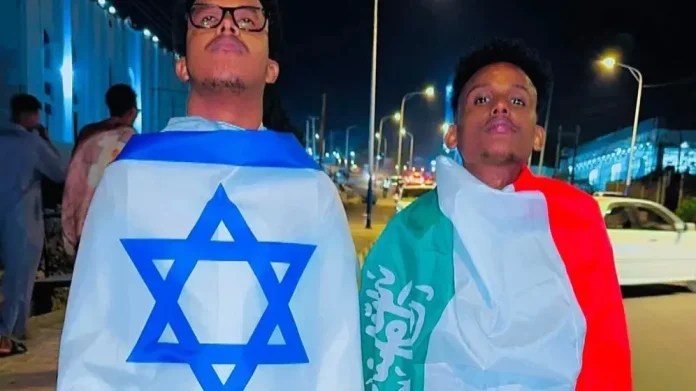
The Dissident | December 27, 2025
Recently, Israel became the first country to recognize Somaliland, a breakaway region of Somalia that declared independence in 1991 but until now has not been officially recognized by any UN member state.
But what is Israel’s real motive behind this move?
One motive appears to be the fact that Israel has taken part in negotiations with Somaliland to use the region as a place to relocate Palestinians ethnically cleansed from Gaza by Israel.
The Israeli newspaper Ynet, writing about Israel’s Recognition Of Somaliland, noted that, “The territory has recently been mentioned as a possible destination for Gazans, with officials there saying they would be willing to absorb ‘one million Gazans,’ though no formal agreement has been announced.”
Israeli journalist Amit Segal wrote, “Israel announced today its official recognition of Somaliland as an independent, sovereign state, in a joint declaration signed by the leaders and in the spirit of the Abraham Accords,” and went on to boast that “Somaliland was supposed to — and may still — absorb Gazans.”
A report from the Financial Times from March of this year reported that during a meeting with U.S. officials and leaders of Somaliland, “Washington had raised the possibility of relocating refugees from the US and Gaza”, adding that, “Israel was ‘in conversations’ with countries around the world, including in Africa, about taking in Gazans”.
An August report from the Times of Israel wrote that, “Israel is in talks with five countries — Indonesia, Somaliland, Uganda, South Sudan and Libya — about the potential resettlement of Palestinians from the Gaza Strip” and added, “‘Some of the countries are showing greater openness than before to accepting voluntary immigration from the Gaza Strip,’ a diplomatic source tells the outlet, naming Indonesia and Somaliland in particular.”
It noted that, “Somaliland is a breakaway region of Somalia that is reportedly hoping to secure international recognition through the deal.”
Previously, the Israeli newspaper, The Jerusalem Post, reported that Somaliland Foreign Minister, Abdirahman Dahir Adan, “does not rule out absorbing Gazan residents” but said that, “the most important thing for us is to receive recognition”, signalling that Somaliland would agree to Israel’s ethnic cleansing plan in exchange for recognition Of Somaliland.
Journalist Kit Klarenberg noted that forcibly sending Palestinians from Gaza into Somaliland would amount to forcing them “in yet another open air concentration camp”, noting that, “In late 2022, mass protests broke out in the contested Somalian city of Las Anod. Somaliland security forces crushed the upheaval using lethal force, leaving dozens dead” and adding that, “Somaliland’s appeal to Israel and its Western puppet masters as a dumping ground for Gazans is obvious. A well-armed repressive domestic security apparatus stands ever-ready to brutally quell any and all local resistance”.
Furthermore, Israel’s recognition of Somaliland will be a strategic boost to Israel’s war against Yemen’s Ansar Allah, or the Houthis, the resistance militia, which had put a naval blockade on Israeli ships in the Red Sea, in an attempt to force Israel to end the genocide in Gaza.
Mark Dubowitz, an official with the Neo-con think tank “Foundation for Defense of Democracies,” boasted that Israel’s recognition of Somaliland will aid their war on Yemen, writing, “For those mocking why Israel would engage Somaliland: look at the map. Somaliland sits on the Gulf of Aden, next to the Bab el-Mandeb—a chokepoint for global trade and energy. Across the water are Iran-backed Houthis firing on Israel and shipping. Somaliland offers stability, ports, intelligence access, and a non-Iranian platform on the Red Sea. Similar reason why the U.S. has a military base in Djibouti.”
The Israeli newspaper Ynet reported that, Israel, “has strong strategic interest in Somaliland due to its long coastline and location in the Horn of Africa, close to Yemen” adding that, “One reason Israel has taken a keen interest in Somaliland is its proximity to areas controlled by Yemen’s Houthi rebels … Strengthening ties with Somaliland is viewed in Israel as a potential force multiplier against the Houthis”.
The outlet wrote that, “Somaliland lies near the Bab el-Mandeb Strait, a key global shipping lane. Amid clashes between Israel and the Houthis following the war in Gaza, and against the backdrop of a US operation against the Houthis this year, waters near Yemen have become a danger zone for commercial vessels … Somaliland’s Port of Berbera, about 250 kilometers south of Yemen, is considered strategically significant in this context”.
Another article in Ynet reported that, “Israeli intelligence officials say the Mossad has been active in Somaliland for years, laying the groundwork for the recognition through long-standing, discreet relationships with senior figures there. Mossad chiefs have maintained personal ties with Somaliland officials, and Israeli officials hope the agreement will encourage additional countries to pursue strategic relations with Israel as part of a broader regional alignment” because, “One key factor driving Israel’s interest is Somaliland’s proximity to areas controlled by the Houthis in Yemen” adding that, “Strengthening ties with Somaliland is seen in Israel as a strategic force multiplier against the Houthis.”
Reports in Israeli media show that Israel’s real motive behind recognition of Somaliland is to ethnically cleanse Palestinians in Gaza, and to have a strategic boost to its war against the Houthis, one of the only forces left willing to fight in solidarity with Palestinians.
Israeli-UAE Aggression In Yemen Could Backfire Enormously
By Robert Inlakesh | The Palestine Chronicle |December 26, 2025
Although the Yemeni Armed Forces have halted their ballistic missile and drone attacks against Israel, adhering to the Gaza ceasefire, officials in Tel Aviv are continuing to insist that their front against Sana’a is not over.
Meanwhile, the United Arab Emirates (UAE) backed Southern Transitional Council (STC) has been busy seizing territory from Saudi-backed forces and signalling an intent to declare southern Yemen’s independence. Far from simply domestic disputes between armed groups, these developments will have major regional implications.
On December 3, the STC seized Hadramout province from forces aligned with Saudi Arabia, followed by a takeover of al-Mahra province. The UAE-backed separatists even went a step further, with a number of officials declaring their intent to break away and declare southern Yemen an independent state.
For context here, the UAE and Saudi proxies in Yemen were operating a joint governing body out of southern Yemen’s port city of Aden. For years, the Saudi-led coalition had attempted to prop up deposed Yemeni President, Abdrabbuh Mansur Hadi, with the backing of the US, UK, and Israel. Hadi was therefore referred to as the “internationally recognised” leader of the Yemeni State, when in reality he had no such power.
Despite the glaringly obvious fact that Ansarallah had set up and was operating a government in the nation’s capital, enjoying a lot of popular support, the United Nations continued to play along with the West’s demands to recognise Saudi’s puppet proxy regime. In 2022, Riyadh then created what is known as the Presidential Leadership Council (PLC), which was endowed with the powers of the Presidency and serves as the “internationally recognised government”.
The head of the PLC is a man named Rashad al-Alimi, who is an unelected leader and is part of the eight-member body. As of May 2023, three of the eight seats in the PLC were handed to officials belonging to the UAE-backed STC, which recently ran Saudi-backed officials out of Aden.
The STC’s recent territorial gains have posed an active security threat to Saudi Arabia and Oman, deepening the ongoing feud between Abu Dhabi and Riyadh. The UAE, for its part, also appears to have been sizing up an offensive campaign against Ansarallah at some stage, as it acts in coordination with the Israelis.
The recent developments in Yemen have triggered anxiety amongst Zionist analysts in Washington, as they see a UAE-Saudi conflict in Yemen between their proxies as detrimental to the fight against Ansarallah in Sana’a. In line with this way of thinking, the Washington Institute for Near East Policy (WINEP) recently published a Policy Analysis piece arguing that such a UAE-Saudi conflict should be avoided and instead both should focus on Ansarallah.
It is clear that the primary goal of the Israelis is to see their Emirati allies use the STC to try and seize the port city of Hodeidah, thus securing dominance over the Red Sea. This is important to Tel Aviv as it means weakening the Yemeni Armed Forces and preventing them from being able to effectively impose a blockade on their ships. Israel even pushed the Trump administration to launch a war in Yemen for over a month in an attempt to break the blockade in the Red Sea, which resulted in resounding failure.
The Zionist think-tank WINEP has warned that any conflict between Saudi proxies and Emirati proxies could open the door for Ansarallah’s forces to seize the oil-rich region of Marib, a major catastrophe for the Israelis and Americans. Yet, so far, no UAE-Saudi understandings appear to have come about to find any solution to their competition in Yemen.
Instead, the major agreement that was just brokered came between the Yemeni government in Sana’a and Saudi Arabia, the largest prisoner exchange deal since the beginning of the war. This meant agreeing upon the release of 1,700 Ansarallah detainees in exchange for 1,200 opposition prisoners.
Another important clarification is that the Ansarallah government is often labelled “the Houthis” in the Western media, and the Saudi proxy opposition is called the “Yemeni government”. This can sometimes get confusing, but it is important to point out that this propagandistic rhetoric is used to shape the conflict in a way that reflects Western bias, not the objective reality on the ground.
Some will try to argue that the Saudi proxy opposition is the “internationally recognised government” according to the United Nations, which is true, but again, this has little bearing on the reality on the ground. There simply aren’t enough powerful States or even smaller nations that are willing to bat for recognising the government in Sana’a, therefore the West and their Arab allies have managed to prevent any reflection of reality reaching the United Nations or even the international media.
At this phase, the UAE’s STC appears to be in control of the majority of opposition-held territory in Yemen, greatly undermining Saudi Arabia’s role. However, the STC is not exactly a movement with the popular support to sustain and operate a lasting, or stable, southern Yemeni State. The STC has faced countless protests against their rule, after failing to deliver even basic services to the people living under its control. Blatant corruption, combined with criminal activities and a lack of basic governing skills, has left people with very little. Even in the Hadramout and al-Mahra provinces, there is significant opposition that could lead to their swift overthrow.
Amidst this, if the STC decides to commit to offensives against the Yemeni Armed Forces of Ansarallah, the strategy to defeat the UAE-proxy forces is rather simple. Ansarallah will not only most likely batter these armed militants on the ground, but need only direct drone and missile fire towards the real headquarters of the STC, Dubai. If ballistic and cruise missiles, along with drones, flood Dubai and Abu Dhabi, the Emirati plot will quickly collapse.
When it comes to Saudi Arabia, it is a much larger nation and has the capacity to endure a lot more than the much smaller Emirates, making Riyadh a more formidable foe than Abu Dhabi. If the STC proxy forces become the main opposition and Saudi Arabia can no longer maintain any significant foothold in Yemen, the recipe for Yemeni unification becomes much simpler.
A war between Ansarallah and the STC has a very easy solution: flooding the UAE with missiles and drones for a sustained period, which will force them to give up and depart from Yemen. If this happens, Riyadh will have no choice but to reach a broader agreement with Sana’a, effectively ending the war altogether.
In the eyes of the Israelis and the United States, this outcome would be a catastrophe. If Ansarallah, even under a power-sharing styled agreement, reigned supreme over all of Yemen and became its officially recognised leadership, it would significantly increase its power and pose an even greater threat to Israel. In Tel Aviv’s eyes, this would be Iran 2.0 in the Arab World, an Islamic government that is openly hostile to Israel and a staunch supporter of the Palestinian resistance.
No matter which way you slice it, the US and Israel have no answer for the predicament they face in Yemen. The only option is to try and keep the nation in perpetual war, tightening the sanctions and ensuring immense suffering amongst its civilian population, all to avoid the inevitable rise of an Ansarallah-controlled Yemeni State, equipped with a military arsenal that will continue to develop.
UAE-backed militia in Yemen reaches out to Israel for alliance against ‘common foes’: Report
The Cradle | December 18, 2025
The UAE-backed Southern Transitional Council (STC) has reached out to Tel Aviv and pledged to recognize Israel in the event that its goal of an independent, secessionist state in south Yemen is achieved, Hebrew media reported.
According to Israel’s Broadcasting Corporation (KAN), the STC has called on Israel to support “independence” in southern Yemen, and that this would enhance a common agenda between the two sides.
A diplomatic source close to the STC was cited as saying by KAN that Israeli support for the secessionist cause in southern Yemen could contribute to “protecting maritime routes in the Gulf of Aden and Bab al-Mandab, in addition to combating the smuggling of Iranian weapons to Ansarallah and the terrorist cells affiliated with the Muslim Brotherhood that cooperate with Sanaa.”
The source added that the STC needs Israeli backing in military, security, and economic fields in order to form a “new state,” stressing that the two share “common enemies.”
The STC announced on 15 December the start of a new military operation in the southern Yemeni province of Abyan, tightening its grip on the south.
In recent weeks, UAE-backed STC forces have captured the provinces of Hadhramaut and Al-Mahra, and have seized the presidential palace in the southern city of Aden – where both the STC and the Saudi-backed Presidential Leadership Council (PLC) have been based for the past several years.
This prompted Saudi military forces to withdraw from Aden. Riyadh has since called for an immediate withdrawal of the STC from the areas it has captured – a demand which was rejected by the Emirati-backed group during negotiations last week.
The STC now controls practically all the territory that makes up the secessionist state it aspires to form along the borders of the pre-1990 southern Democratic Republic of Yemen.
The country will “never be unified again,” the STC has told western diplomats, according to a report by The Times from last week.
The report also revealed that the STC has sent delegates to meet with Israeli officials recently and discussed their “common cause” with Tel Aviv. The KAN report was not the first to reveal contact between Israel and the STC.
In December 2023, Hebrew media cited a source close to STC as saying that Israel will earn itself a partner in the fight against Ansarallah if it recognizes the secessionist aspirations of the STC.
The UAE was a major partner in the Saudi-led war launched against Yemen and the Ansarallah-led government in Sanaa, which began in 2015.
Despite this, Riyadh and Abu Dhabi have been embroiled in a rivalry for control and influence in Yemen over the past few years. Critics accuse both countries of seeking to divide Yemen to control its natural resources and strategic ports within their respective spheres of influence.
Since the start of the war, the UAE and Israel have established a joint occupation of the islands surrounding Yemen.
In 2023, Saudi Arabia and the Ansarallah-led government in Sanaa were close to reaching a peace deal. The agreement was never finalized or implemented, and the Saudi military continues to shell Saada and other border areas.
Despite this, the peace process halted a major Ansarallah and Yemeni Armed Forces (YAF) offensive against Marib province, which would have brought Sanaa’s forces to the borders of Hadhramaut and Shabwa.
The STC reportedly took a firm stance against the peace talks between Saudi Arabia and Ansarallah at the time.
After the start of the STC advance across Yemen several weeks ago, Saudi-backed tribal forces called for “all forms of resistance” against the UAE-backed militia.
According to The Guardian, up to 20,000 Saudi-backed troops are gathering on the border. Forces backed by the kingdom are also reportedly withdrawing from their positions in Aden and redeploying elsewhere.
Riyadh supports a tribal alliance of armed factions known as the Hadhramaut Protection Forces. It also backs the Muslim Brotherhood-linked Islah Party and the forces of Yemen’s internationally-backed government – the PLC.
While the PLC and STC are at odds with one another, the two are closely linked. Aidarous al-Zubaidi, the deputy head of the PLC, also serves as the president of the STC.
“We hope this can be resolved peacefully, but what happened in Hadhramaut is a dangerous development and negatively impacts the legitimate state institutions. Irregular forces not under state control have invaded stable and secure governorates throwing everything into chaos. Saudi Arabia is determined that these forces must leave and return to their own places. The legitimate government is being fragmented, and the only beneficiary of these intensified divisions will be the Houthis,” said Islah Party Secretary-General Abdulrazak al-Hijri, adding that Ansarallah “[does] not see Yemenis as people” but rather as “slaves.”
His comments contradicted reports from last year that Sanaa and the Islah Party improved their relations after Ansarallah began pro-Palestine operations against Israel.
The UAE’s reverse trajectory: From riches to rags
By Dr Zakir Hussain | MEMO | December 18, 2025
One of the most enduring and widely quoted dialogues in Indian cinema is: “Do not throw stones at others’ houses when your own house is made of glass.” Unfortunately, this wisdom appears to be lost on the United Arab Emirates. Instead of exercising restraint and responsibility, the UAE has increasingly been accused of conspiring with, financing, and backing a wide range of actors and armed groups that have contributed to chaos, instability, and even genocidal violence in several countries.
Over the years, the UAE has steadily expanded the scope of its controversial activities—from Libya and Sudan in North Africa to other mineral-rich Muslim-majority African countries, and further eastward to Afghanistan and Yemen. Its involvement in the Palestinian context also raises serious concerns, as there appears to be no clear moral or political limit to its actions. These interventions have not promoted peace or stability; rather, they have intensified conflicts, deepened humanitarian crises, and prolonged wars.
What makes this approach particularly perplexing is that the UAE itself lacks a credible and robust defensive shield to protect its own territory. It does not possess the capability to fully defend its iconic skyscrapers and critical infrastructure even against relatively unsophisticated, low-cost drones. A coordinated volley of such drone strikes would be sufficient to cause panic among the millionaires and billionaires who have invested heavily in Abu Dhabi and Dubai. Capital, after all, is highly sensitive to risk, and fear alone can trigger massive capital flight.
Against this backdrop, it is difficult to comprehend why Mohammed bin Zayed has chosen to indulge in a strategy of regional destabilisation and proxy warfare. History clearly demonstrates that mercenaries neither win wars nor sustain long, decisive military campaigns. They fight only as long as their financial incentives are met, avoid heavy casualties, and withdraw the moment the cost-benefit equation turns unfavourable.
The UAE has already experienced the consequences of such adventurism in Yemen, where its involvement against the Houthis proved costly and ultimately unproductive. The episode exposed the limits of Emirati military power and underscored its lack of preparedness for prolonged, brutal conflicts. The Emiratis have shown remarkable efficiency in event management, diplomacy branding, and global image-building, but they are ill-suited for sustained warfare or managing the complex realities of civil wars and insurgencies.
Despite these lessons, the UAE continues to deploy mercenaries, supply arms, and push destabilising agendas that risk mass civilian suffering. Such actions not only tarnish its international standing but also make the future of the UAE increasingly uncertain. More importantly, they significantly raise the vulnerability of those who have invested billions and billions of dollars in the country—particularly in real estate and financial assets that depend heavily on perceptions of safety and stability. The UAE has attracted the largest number of high net worth people since the Ukraine war started.
According to one estimate, in 2025 alone, approximately 9,800 high-net-worth individuals moved to the UAE. In 2024, the total number of millionaires who moved to the UAE from Russia, Africa, and the UK is around 130,000, thus fuelling its status as a premier global wealth hub. The reasons are zero tax, stability, and safety, lifestyle.
However, the overindulgence of MBZ and misuse of the sovereign wealth fund is likely to negate all the toil and troubles endured by the forefathers of the Emirates since 1972.
As an Indian, my concern is both professional and moral. A large number of Indians have invested substantial sums in the UAE, especially in real estate. It is therefore necessary to issue a timely warning and provide a realistic assessment of emerging risks, so that Indian interests can be protected before irreversible damage occurs.
I remain open to offering constructive suggestions and responsible assessments, with the sole objective of safeguarding long-term stability and protecting the legitimate interests of investors and the expatriate community.
The Myth of Total Victory and the Reality on the Ground: Is Israel Winning Its Seven-Front War?
By Robert Inlakesh | The Palestine Chronicle | December 2, 2025
From the Gaza genocide to the assassination of Hezbollah’s senior leadership, Israel has carried out unprecedented destruction across the region. Yet, despite everything that has happened since October 7, 2023, has Israeli Prime Minister Benjamin Netanyahu truly delivered the “total victory” he promised over his regime’s adversaries?
The current state of play across West Asia has left many in despair. Undoubtedly, the genocide in the Gaza Strip has inflicted a generational psychological wound, not only on the people of the region, but concerned citizens throughout the world.
When the genocide began in October of 2023, many assumptions were made regarding who or what was going to come to the aid of the Palestinian people.
Some trusted in international institutions, others believed that the Arab masses would mobilize or assumed that the rulers of Muslim Majority countries would utilize their trade leverage, resources, and even militaries to rescue the people of Gaza. Then there were those who depended upon the Iranian-led Axis of Resistance.
On the question of the international institutions, the Israelis were brought before the UN’s top judicial organ, the International Court of Justice (ICJ), which found Tel Aviv plausibly guilty of committing genocide. However, when it issued its provisional measures, the court was simply ignored.
The United Nations Security Council (UNSC) even passed resolution 2728 on March 25, 2024, which called for a ceasefire until the end of the Muslim Holy Month of Ramadan, which was supposed to be binding and was again ignored by Israel.
Then came along the International Criminal Court (ICC)’s arrest warrants for Israeli Prime Minister Benjamin Netanyahu and former Defense Minister Yoav Gallant. Tel Aviv and Washington decided to go after the court and its prosecutor, undermining its authority.
The Arab Nations, with the exception of Yemen’s Ansarallah government in Sana’a, refused to lift a finger, as did the rulers of most Muslim Majority nations. The populations of Jordan and Egypt that were expected to act, didn’t even live up to the popular actions taken by European populations. The people in the major cities of the West Bank and in occupied Jerusalem didn’t even stage notable protests.
The only ones who acted were the Axis of Resistance. Lebanese Hezbollah and Yemen’s Ansarallah waged support fronts in solidarity with Gaza, while some Iraqi factions occasionally sent suicide drones and rocket fire from Syria would occur periodically.
Yet the way that the Axis of Resistance dealt with the genocide appeared to be the execution of a strategy to ultimately de-escalate hostilities and bring the assault on Gaza’s people to an end. The Israelis, however, were not interested in a cessation of hostilities and were instead hell bent on destroying the entire Iranian-led Axis once and for all.
Israel broke every tenet of international law and violated all diplomatic norms. They would go on to carry out countless assassinations eventually stretching across Lebanon, Syria, Iraq, Iran, Yemen, with a failed attempt on the lives of Hamas leaders in Doha, Qatar. The consular segment of Iran’s embassy in Syria was even bombed.
Israel carried out the pager terrorist attacks across Lebanon, which wounded thousands and killed dozens, including countless women and children. This not only shook Lebanese society to the core, but also proved a major security and communications blow to Hezbollah itself. The infiltration of Hezbollah allowed Israel to murder the majority of the organization’s senior leadership. Perhaps the biggest psychological blow was the assassination of Hezbollah’s Secretary General, Seyyed Hassan Nasrallah.
Shortly after thousands had been murdered by Israel’s onslaught on Lebanon between September and late November, the next major blow to the Axis of Resistance came in the form of regime change in Syria. Suddenly, a US-backed government had been ushered into power and instantly opened up lines of communication with Israel.
What occurred in Syria was significant for a number of reasons, the most important of which was the collapse of the Syrian military and occupation of vast portions of territory in southern Syria, including the strategic high-ground of Jabal Al-Sheikh (Mount Hermon). It also meant that weapons transfers to Lebanon, to supply Hezbollah and the Palestinian armed factions, were instantly made much more difficult.
The resistance in the West Bank that had been growing in the north of the occupied territory since 2021 was significantly cut down through aggressive Israeli and Palestinian Authority military campaigns. In the Gaza Strip, the resistance forces were also degraded and had no supply lines. Meanwhile, the only consistent front that never buckled and only accelerated their attacks was the Yemeni Armed Forces, but due to their geographical constraints were limited in what impact they could have.
For all of the above-noted reasons, the Israelis have appeared to have gained the upper hand, and this has left many fearing what they have in store next. It is assumed that further attacks on Lebanon and Iran will be aimed at achieving regime change in Tehran, which, if successful, would indeed declare Israel the undisputed ruler of the region.
A Reality Check
Despite the gains that the Israelis have made, they have also suffered enormous blows themselves, which are often left out of many analyses offered on the current situation the region finds itself in. Before delving into this, to avoid accusations of “cope”, it is important to make note of a few different points.
Many refutations offered to the pessimistic view commonly adopted of the region engage in exaggeration, speculation, and refuse to even acknowledge the obvious losses their side has suffered. This is often the practice of those who remain die-hard supporters of resistance against the Israelis and their regional project.
When such positive and romanticized depictions are used to describe the current situation and are heard by those who are convinced that their side has already lost, they often experience a visceral opposition to that sense of optimism. Supporters of the resistance to Israel’s tyranny attempt to rescue morale through slogans and dogmatic rhetoric, which falls on deaf ears, as such explanations lack logical consistency.
This all being said, things are not exactly as doom-and-gloom as the popularized pessimism that prevails across the region suggests.
At this current moment, Israel has not won on any front; the caveat is obviously that the Axis of Resistance has not won either. Every front is a de facto stalemate. This being said, the Israelis have undoubtedly inflicted much greater damage on their adversaries in the short run.
Yes, the Palestinian factions in Gaza have been weakened, and the human cost of the war has been enormous, beyond anyone’s imagination, but they have not been defeated. Instead, they have waged a guerrilla war against the occupying army that has targeted the civilian population as a means of attempting to defeat them by proxy. Are they capable of defeating the Israeli military? No, not by themselves, but this has always been the case.
In Lebanon, the Israelis certainly dealt a massive blow to Hezbollah; there can be no doubt about it. Although they were incapable of collapsing the group and it is clear that they still retained an abundance of arms, something demonstrated throughout the course of the war in late 2024. Today, Hezbollah is rapidly rebuilding its capabilities and preparing for the inevitability of the next round.
One key takeaway from the Israel-Lebanon war was that, beyond assassinations and intelligence operations, the Israelis proved incapable on the ground and were even deterred from conquering villages like Khiam along with the Lebanese border area. Their greatest tactical achievements came at the beginning of the war, while the remainder of the battle proved that Israel’s only edge came through its air force.
The reason why the Lebanon war was a loss for Hezbollah was down to the collapse of Hezbollah’s image. Previously, the propaganda of the organization and the trust commanded by its leader, Seyyed Hassan Nasrallah, had convinced the world that the group was powerful enough to destroy Israel by itself. In his last speech, before he was murdered alongside 300 civilians, Nasrallah had publicly admitted that there is, in fact, no parity between Hezbollah and Israel militarily.
In 2006, just as occurred in 2024, the result of the war was a stalemate. No side decisively beat the other. Instead, it was the combined fact that Hezbollah’s performance was militarily stunning, from a planning and execution point of view, in addition to the fact that nobody expected the group to even survive, let alone force the Israelis to abandon their war plans. If you look at the difference in Lebanese to Israeli casualties in 2006, there is no comparison; in fact, it was even a major achievement for Hezbollah to have hit Haifa with rockets back then.
The 2006 war proved that Hezbollah was a force to be reckoned with, that it would inflict serious blows on Israel if it sought to re-invade and re-occupy southern Lebanon, so Tel Aviv made the calculation that it was best to leave it alone. This is why there were 17 years of deterrence, where Israel would not dare bomb Lebanon.
Fast forward to 2023, Hezbollah was a group capable of striking any target across occupied Palestine, and in 2024 hit Tel Aviv for the very first time. Compared to a force of an estimated 14,000 men in 2006, Hezbollah’s current armed forces consist of over 100,000 men, making them a larger armed group than many of the militaries of various countries.
The difference is that Hezbollah is fighting Israel, which is equipped with an endless supply of the world’s most technologically advanced weapons and equipment that enables it to pinpoint target leaders.
It suffices to say, the two sides are not equal, but by no means is Hezbollah finished or weak; it is simply that the group must suffer immense sacrifices in order to prove victorious in any confrontation with Israel. This is because the equation has changed since October 7, 2023; it is no longer the case that the Israelis can be deterred. It is a long war that will lead to the total defeat of one side or the other. What happens from here is largely down to leadership and the willingness to commit to total war.
Syria is itself a totally different issue. First, we must keep in mind that the government of Bashar al-Assad was not actively engaged in the war against Israel; instead, it allowed for the Axis of Resistance to operate inside its territory and establish a defensive front in southern Syria.
Again, being realistic, the new government in Syria has weakened the entire State and divided it even more than was already the case. Ahmed al-Shara’a is joined at the hip with his US allies and pursues policies that explicitly favor his backers in Western governments. All of the denialism in the world does not change this fact, nor does it change Damascus’s establishing direct communications and even coordination with the Israelis.
To avoid going through what is already well known and beating a dead horse, there are a number of key considerations to make when looking at the situation in Syria, which could lead in various different directions.
I will preface everything below by saying that it is plausible that for the foreseeable future, the Israelis are going to succeed at every turn in Syria, as they have done since the pro-US government took power.
Unfortunately, the Syrian conflict is the top cause of sectarian division in the region. These divisions work on two pillars: tribalism and propaganda. Round-the-clock propaganda is churned out to cause fitnah and you will still hear baseless claims, including totally fabricated statistics, spread to achieve this division. Some would blame these conflicts on religion, yet it is more about blood feuds, corruption, and tribalistic tendencies.
Putting this aside, the Syrian front is now open and various possibilities exist. There is a competition between Turkiye and Israel inside the country, meaning that a proxy conflict is not off the table. It is also very possible that Ahmed al-Shara’a, who has managed to create problems with even his once staunch allies, will be assassinated or ousted from power, creating a bloody power struggle that could pour into the streets of Damascus.
For now, the weapons flow into Lebanon to supply Hezbollah is ongoing and there are also indications that during the final days of the former regime, many advanced weapons fell into various hands. The US is now working alongside the government in Damascus to ensure that these weapons transfers are stopped or at least rendered much more difficult. In addition to this, in the event of a war between Hezbollah and Israel, it is safe to assume that weapons transfers will be put to a halt.
As Israel advances further into southern Syrian territory, more villages will likely choose to resist them, as occurred in Beit Jinn recently; this will happen independent of the government in Damascus. As Ahmed al-Shara’a does not enjoy full control over his country, this also provides opportunities for armed groups to pop up and begin resisting the occupying force, something that the Syrian President will not be able to control, especially if Israel makes mistakes and gets itself embroiled in a crisis.
This story is not over and Syria is a hostile environment for Israeli forces due to the rejection of the people there. Ultimately, just as occurred in southern Lebanon, when the government abandons its duties, the people end up taking matters into their own hands to resist occupation. Does this mean we can expect a robust fighting force there soon? Probably not for now, but various possibilities exist in the foreseeable future.
Then we look to Iran and Yemen, whose capabilities remain and only grow; neither has been defeated. Iraq’s Hashd al-Shaabi have not been mobilized until now, and it is unclear what role they could play in a broader regional war, but it is of note that they exist.
What has happened is that Israel has proven time and time again that it is willing to be daring with the one tactic that they can actually excel in, assassinations and intelligence operations. However, these operations do not win wars; they are undoubtedly blows, but they do not inflict a knockout punch.
When two sides engage in such a war, it is expected that losses will occur on both sides. The Israelis have suffered a battered economy, a divided society, their settlements in the north are still in ruins, they haven’t repaired the damage inflicted on their infrastructure, and they have lost public support across the world, including in the United States. They are a global pariah sustained only by their Western backers, incapable of defeating what was viewed as the weakest link of the Axis of Resistance in Gaza.
In their favor, they have eliminated most of Iran’s influence in Syria, committed one of the worst crimes in modern history against Gaza and weakened the armed resistance there as a result of it. They also took out Hezbollah’s senior leadership, while degrading it and its political standing. In addition to this, many leaders and generals in the Islamic Revolution Guard Corps (IRGC)’s chain of command were killed.
In Iran’s case, the so-called 12 Day War, back in June, had resulted in failure for the Israelis. Instead of achieving regime change and/or the destruction of Iran’s nuclear program, it is clear now that it has only succeeded in driving out international monitors and even united the population in a way previously unimaginable. Tehran has leaned into the growing trend of Iranian nationalism among its people and is preparing for another round. That battle also ended with Iran landing the last real blows.
The Israeli military must be viewed for what it is; it has the military edge in the air, possesses the most advanced weapons in the world [outside of Russia], enjoys full US support and is backed by one of the best intelligence agencies in the world. It also has something else on its side, which is that it does not care for morality or international law at all; it will break any rule to achieve an objective.
At the same time, its ground force is largely incapable, and it is also massively fatigued. The Israeli army was only really prepared to fight very brief battles and is an occupation force, which is why it now struggles to mobilize the soldiers necessary to carry out various offensive actions. It also needs to pay some of its soldiers’ danger money salaries. It has also recruited the private sector and civilians, paid as much as 800 dollars per day, to carry out their demolition missions in Gaza.
There is a reason why, on October 7, 2023, a few thousand Palestinian fighters armed with light weapons managed to collapse the Israeli southern command in a matter of hours and temporarily took control of the Israeli settlements surrounding Gaza. In other words, they are far from invincible.
Is this all to say that “Israel has lost”? No, clearly no side has won yet. There are various conspiracies in the works. In the Gaza Strip, the US is working alongside its allies to find a way to defeat the armed resistance groups. The Israelis clearly have their sights set on new wars against Lebanon and Iran; they will also likely strike Yemen hard again. However, they now find themselves in a much more vulnerable situation and could easily overextend themselves on one front, leading to significant losses.
So, can we say that Benjamin Netanyahu is closer to his “total victory”? The answer to this question is no. Is it possible that the “Greater Israel Project” will be implemented and that Iran will be toppled? This always has to be considered as a threat, because this is clearly Israel’s goal, but it is also just as likely that Tel Aviv will suffer a strategic defeat. It is especially the case because they are fighting an opposition that is more likely to commit to an all-out war, given what they have suffered up until this point.
Ansar Allah official slams UN sanctions, West’s double standards
Al Mayadeen | November 15, 2025
Mohammed al-Farah, a member of the Political Bureau of Yemen’s Ansar Allah movement, commented on the recent UN Security Council decision to extend sanctions on Yemen, stating that Yemen would respond in kind to anyone who attacks its people’s interests or attempts to undermine its sovereignty.
He emphasized, in this context, that Yemenis will not hesitate to defend their rights, religion, and national dignity by all legitimate means.
In a post on X, al-Farah accused the Security Council of perpetuating “the worst example of double standards,” noting that it has long turned a blind eye to crimes of genocide in Gaza, even supporting “Israel” while ignoring the bloodshed, and covering up the blockade and aggression against Yemen without any moral or legal stance.
He continued, saying the council “continues to apply double standards while Gaza is being devastated under two years of bombing and blockade with US and Western weapons,” reminding how “Yemen has been under siege for a decade.”
Al-Farah described the council as a platform for advancing Western interests, where “human rights are defined only as Western human rights and international interests are reduced to those of Washington alone.”
NGOs; culprits in espionage operations in Yemen
The Ansar Allah official also warned that some NGOs operating in Yemen have engaged in “dangerous practices”, including espionage on behalf of “Israel” under the guise of humanitarian work, exposing what he called the extent of “Zionist exploitation of UN institutions.”
Al-Farah, however, praised Russia and China for refusing to renew sanctions on Yemen, contrasting their stance with what he described as the “moral failure” of the UN Security Council. He said Moscow and Beijing’s positions reflect a “humanitarian and ethical awakening” and awareness of the dangers of US policies that use sanctions to subjugate nations.
At the same time, he expressed hope that Russia and China’s position would amount to a definitive rejection and veto of the resolution, describing it as a stand that “rejects the exploitation of the Security Council and restores some balance against Western dominance.”
Sanctions on Yemen are merely tools for Israeli objectives
Al-Farah also criticized the West and the United States for openly supporting “Israel” with weapons and financial aid while shielding it politically, arguing that the proposed sanctions on Yemen are merely “tools to serve Zionist objectives and punish the Yemeni people for their resilience, independent decision-making, and solidarity with Gaza.”
He concluded by reaffirming Yemen’s steadfast support for Gaza and for oppressed communities across the region, pledging to continue opposing Western and US hegemony over the countries and peoples of the region without hesitation.
UNSC extends sanctions on Yemen
On November 14, the UN Security Council approved a resolution extending financial sanctions and a travel ban on Yemen for another year, until November 14, 2026, while also extending the mandate of the panel of experts supporting the sanctions committee until December 15, 2026.
The resolution, adopted by a 13-member majority with Russia and China abstaining, renews Yemen’s international sanctions under Resolution 2140 for an additional year. It maintains frozen assets and travel restrictions on designated individuals and entities and extends the mandate of the expert panel overseeing Yemen sanctions until mid-December 2026.
The Security Council imposes these sanctions on Yemen under US pressure and under the cover of Chapter VII of the UN Charter, through Resolutions 2140 (2014) and 2216 (2015).
The UN Security Council first imposed sanctions on Yemen in 2014 through Resolution 2140, targeting individuals and entities linked to destabilizing activities during the country’s ongoing conflict.
These measures included asset freezes and travel bans aimed at those accused of threatening Yemen’s stability or obstructing peace efforts.
In 2015, Resolution 2216 expanded the sanctions framework, further restricting financial and travel activities of key figures aligned with armed groups and reinforcing the Council’s oversight through a dedicated panel of experts.
Featured Video
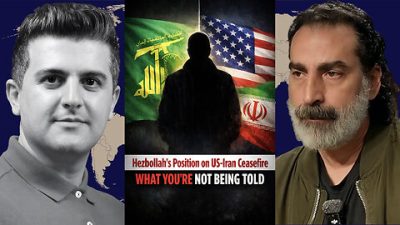
Laith Marouf: Hezbollah’s position on US-Iran ceasefire
or go to
Aletho News Archives – Video-Images
From the Archives
The Dirty Little Secret behind the “Global Terrorism Index”
The Omission of Israeli Terrorism in the Occupied Palestinian Territories
By Karin Brothers | Global Research | December 6, 2014
… The Israeli settlements — all of which are illegal – have been identified as a major impediment to peace. The refusal of a major “global” terrorism report to name the Israeli settlers as one of the groups most responsible for terrorism not only misrepresents a major source of regional violence but exposes the Global Terrorism Index as a propaganda tool that supports a U.S. agenda.
In recent years, governments have been attempting to thwart terrorism by blocking supportive fund-raising. When it comes to Israeli settlements, however, the US and Canada actually encourage fund-raising by giving organizations (such as Christian Friends of Israeli Communities (CFOIC) and the Jewish National Fund) financial support in the form of donor tax-deductions.
Charities which provide funds for the Israeli settlements should be regarded as terror-financing organizations. They should not only lose their tax-deductible status, but they should be banned because they support the violation of international humanitarian law. The terror-financing laws that are being strictly enforced for Muslim charities should be applied to Christian and Jewish charities as well. … Read full article
Blog Roll
 Aletho News
- The ‘Opposition Party’ Has Done Nothing to Stop the Iran War and Much to Goad Trump Into Continuing It
- Moscow backs Tehran on status of Lebanon in US-Iran deal
- How UK Regulator Ofcom Quietly Bypassed International Law to Police American Speech
- The Black Cube Files: How Former Mossad Operatives Flipped a Nation
- Laith Marouf: Hezbollah’s position on US-Iran ceasefire: What you’re not being told
- Israel’s priority lies in destroying chances of peace between Iran, US: Ex-UN nuclear chief
- Ceasefire for all or for none: Iran shuts Hormuz over Lebanon attacks
- Strait of Hormuz is Iran’s ‘nuclear weapon’ that forced US retreat: Medvedev
- Energy crisis will last for months – Kremlin envoy
- Europe’s quiet role in the war on Iran
- If Americans Knew
- This is ceasefire? Israel’s biggest massacre yet in Lebanon, another journalist killed in Gaza – Daily Update
- Tucker Carlson on Israel: This Is the Behavior of an Ally? Really?
- Gazans face a triple crisis: severe shortages of water and bread, healthcare in tatters
- NY Times reports how Netanyahu took the US into Iran War
- A sigh of relief over Iran, but Gaza and Lebanon in dire straits – Daily Update
- Thousands dead and neighborhoods razed to the ground: Aid agencies fear southern Lebanon is becoming the new Gaza
- The war the US is fighting for Israel could cost trillions
- ‘Cigarette Burns, Nail Wounds’: Toddler Tortured in Gaza to Coerce Father
- Trump Says US Sent ‘a Lot of Guns’ to Protesters in Iran
- Israeli forces destroy 17 UN peacekeeper cameras in south Lebanon
- No Tricks Zone
- An Inconvenient Tree: Uncovered In Alps… Europe Much Warmer Than Today 6000 Years Ago
- New Study Reports A 60% Slowdown In Greenland’s Ice Loss Rate In The Last Decade
- Low Intensity Tornado Wrecks Major Solar Farm, Creating A Potential Toxic Dump
- New Study Finds Warming Saves Lives…Cold Temperatures 12 Times More Deadly Than Excess Heat
- German Science Blog Accuses PIK Climate Institute Of Hallucinating Climate Tipping Points
- Devastating Assessment Of Comirnaty Vaccine By Former Senior Pfizer Europe Toxicologist
- New Study: CO2 Is ‘Effectively Negligible’ As An Explanatory Climate Change Factor Since 2000
- Former Pfizer Toxicologist Dr. Helmut Sterz Tells Bundestag Hearing Pfizer Vaccine Should Have Never Been Approved
- Energy Expert: Germany’s Nuclear Phaseout Was A “500 Billion Euro Mistake”
- New Research: South Australia’s Mid-Holocene Sea Surface Temperatures Were 4°C Warmer Than Today
 Aletho News