UN: Saudi Arabia, UAE used cluster bombs in Yemen
MEMO | September 1, 2020
UN reports revealed that the Saudi-UAE coalition has recently used internationally banned weapons in its military operations in the Hudaydah Governorate, western Yemen.
The United Nations report expressed the organisation’s “concern” after it revealed the use of cluster bombs by the Saudi-Emirati coalition in Yemen in one of the air strikes that targeted the Hudaydah Governorate.
The head of the United Nations mission to support the Hudaydah agreement, Abhijit Guha, said in a statement that he is concerned about the repeated air strikes in the Al-Arj area between the city of Hudaydah and the port of Salif between 16-23 August, according to the Yemeni Al-Mahrah Post website.
Guha, who chairs the redeployment committee, indicated that the heavy fighting that broke out around Hudaydah city on Thursday morning, is of “special concern”, in addition to “reports of the use of cluster weapons during one of these air strikes.” Guha called on the parties to the conflict in Yemen to “desist from any measures that harm the implementation of Al-Hudaydah agreement that was reached in Stockholm on 13 December 2018.”
The UN official urged the parties to the conflict in Yemen to “refrain from any other activities that put the lives of civilians in the governorate in danger.” The Houthi group, through an official source in Hudaydah, accused the Saudi-Emirati coalition of using a cluster bomb on 23 August, on a farm in the Al-Arj area, Bajil District.
US charges three over collecting monetary aid for war-torn Yemen
Press TV – August 29, 2020
The US Justice Department has charged three people in connection with a campaign to collect monetary assistance for the oppressed Yemenis, who are suffering under the years-long Saudi war and blockade.
It claimed that Muzzamil Zaidi and Asim Naqvi, US citizens living in Iran’s holy city of Qom and the American city of Houston, respectively, and Ali Chawla, a Pakistani national residing in Qom, had violated the International Emergency Economic Powers Act.
Justice Department officials alleged that the defendants “have considerable operational links” to the Islamic Revolution Guards Corps (IRGC) and moved US currency from the United States to Iran.
They claimed that Zaidi, Chawla and other members of an organization, called Islamic Pulse, received permission from Leader of the Islamic Revolution Ayatollah Seyyed Ali Khamenei to collect a religious tax on his behalf and send half the money to Yemen.
“Zaidi, Naqvi, and Chawla allegedly raised money in the United States on behalf of Iran’s Supreme Leader, and illegally channeled these dollars to the government of Iran. As a result of today’s charges, their unlawful scheme has been exposed and brought to an end. The US Department of Justice and its National Security Division are committed to holding accountable individuals who operate covert networks within the United States in order to provide support and funds to hostile foreign governments like Iran in violation of US law,” said Assistant Attorney General for National Security John C. Demers.
The Justice Department also said Zaidi, 36, was charged with acting in the US as an agent of the Iranian government without first notifying the Attorney General.
The charges come at a time when the US has been continuing to supply weapons and military equipment to Saudi Arabia despite war crimes committed by the regime in Yemen.
The Yemeni army says Washington arms Saudi Arabia and its regional allies, defines goals for them and is involved in a political cover-up for their acts of aggression.
Saudi Arabia waged the devastating military aggression against its southern neighbor in March 2015 in collaboration with a number of its allied states.
The purported aim was to return to power a Riyadh-backed former regime and defeat the popular Houthi Ansarullah movement that took control of state matters after the resignation of the then president and his government.
The UN refers to the situation in Yemen as the world’s worst humanitarian crisis, with more than half of hospitals and clinics destroyed or closed.
Democrats’ election platform demands end to ‘forever wars’ — most of which were launched last time Biden held office
By Helen Buyniski | RT | August 17, 2020
The Democratic Party’s 2020 electoral platform includes a call to end the US’ “forever wars” – which sounds great, except that a Democratic president started many of those wars and the party has stonewalled efforts to end them.
“Democrats know it’s time to bring nearly two decades of unceasing conflict to an end,” the platform, released in draft form on Monday and expected to be approved by Democratic leaders later this week, reads.
It’s a relatively uncontroversial statement in itself: at nearly 19 years and counting, the US war in Afghanistan is the longest conflict in American history. The various satellite wars that have sprung up as part of the “War on Terror” have devastated large swathes of the Middle East – and the US itself, which has spent upwards of $6 trillion on fighting them while much of the country slid into a permanent recession – over the past two decades.
However, the responsibility for many of those satellite conflicts lies with Democrat Barack Obama’s administration, which liberally bombed Syria, Libya, Pakistan, Yemen, and Somalia in addition to Afghanistan and Iraq, turning the already-disastrous two-front War on Terror of his predecessor George W. Bush into a regional quagmire. Democratic candidate Joe Biden was Obama’s vice president, cheering those wars on and defending his boss’ decisions. Now, the party wants Americans to believe only he can put an end to them.
The 2020 platform promises a “durable and inclusive political settlement in Afghanistan” along with an end to US support for the Saudi-led war in Yemen and a repeal of the threadbare 2001 Authorization for Use of Military Force (AUMF) that has been repeatedly (mis)used to excuse US interventions in the Middle East under the guise of fighting terrorism. All great ideas, but the party has been here before.
Despite receiving the Nobel Peace Prize shortly after his inauguration, Obama didn’t bring the peace he promised in his 2008 campaign – he just made war more palatable to the liberals who had previously protested against it. By dramatically expanding the US drone program and cloaking murderous airstrikes in the warm fuzzy rhetoric of spreading democracy and “responsibility to protect,” Obama, his Secretary of State Hillary Clinton, and the Democrats in his administration took the wars out of sight, and out of mind for the average American.
Even while taking credit for “ending” the war in Iraq, launched in 2003 on the fraudulent pretext that leader Saddam Hussein was amassing weapons of mass destruction and/or was somehow involved in the 9/11 terror attacks, Obama subsequently returned US troops to Iraq under the pretext of fighting the Islamic State terror group (IS, ISIS/ISIL). However, IS is widely considered an outgrowth of the US’ botched Iraq policy, which destabilized the region by flooding the country with many of the suddenly-unemployed (but still well-armed) remnants of Saddam Hussein’s military. At the same time, the CIA has a long history of supporting terror groups that dovetail with its political aims, from arming and training al-Qaeda’s predecessors to fight the Soviets in Afghanistan to arming and training so-called “moderate rebels” whose tactics are often indistinguishable from ISIL or al-Qaeda to take out the Syrian government. Terrorism has thrived amid the war “against” it.
That the Democrats should campaign in 2020 on ending forever wars suggests they might have learned something from 2016, when then-candidate Donald Trump pledged to do just that, luring disaffected liberals who couldn’t bring themselves to vote for notorious warmonger Hillary Clinton. Her flippant dismissal of the brutal murder of Libyan leader Muammar Gaddafi – “We came, we saw, he died!” – remains chilling years after she helped reduce the country with the highest standard of living on the African continent to a failed state where slaves are sold in open markets.
But while Trump has profoundly failed to keep his end-the-wars promise, instead increasing the number of drone strikes beyond Obama’s sky-high levels, even Trump’s minimal efforts to withdraw troops from Syria and Afghanistan have been ferociously opposed by the Democrats.
Indeed, the only foreign policy acts the self-styled #Resistance has praised from their political nemesis have been his bombings of Syria in response to extremely dubious reports of gas attacks by the Assad government. CNN’s Fareed Zakaria claimed the strike represented the day Trump “became president of the United States.”
The disingenuous call to end the military quagmires is far from the only lofty pledge embedded in the Democrats’ platform, which alternates between eye-rolling social-justice pandering and common-sense measures with broad appeal.
The party has also pledged to “end the Trump Administration’s politicization of the armed forces,” improve healthcare for veterans, “root out systemic racism from our military justice system,” and “prioritize more effective and less costly diplomatic, intelligence and law enforcement tools” over military invasions in conducting foreign policy.
It remains to be seen which, if any, of those promises they will keep.
Helen Buyniski is an American journalist and political commentator at RT. Follow her on Twitter @velocirapture23
Yemen’s Ansarullah slams UAE-Israel deal as ‘great betrayal’ of Palestinians
Press TV – August 14, 2020
Yemen’s Houthi Ansarullah movement has decried the deal reached between the United Arab Emirates and Israel to fully normalize relations as a “great betrayal” of the Palestinian cause.
In a statement issued on Friday, Ansarullah’s political bureau said the exposure of the UAE-Israel relations proved the emptiness of all the pan-Arabist slogans raised by the Saudi-led coalition in waging war on Yemen.
The statement added that the UAE was continuing to move forward on the wrong path of serving American and Israeli interests against the Muslim Ummah, referring to the Emirates’ participation in the Saudi-led war on Yemen, which began in March 2015 and has left tens of thousands of people killed.
Ansarullah dismissed assertions that normalization with the Israeli regime would lead to the establishment of peace and stability in the region as “mere delusions.”
It also called for isolating any regime that announces normalization with Israel and boycotting it economically and commercially, stressing that Arab and Muslim peoples were able to do a lot to help Palestine.
The deal between the UAE and Israel was announced on Thursday. US President Donald Trump, who apparently helped broker the deal, has attempted to paint it as a big breakthrough.
But the Palestinians have utterly rejected the deal.
Palestinian President Mahmoud Abbas referred to the deal as an “aggression” against the Palestinian people and a “betrayal” of their cause. The Palestinian resistance movement Hamas described it as “a stab in the back of the Palestinian cause.” And Palestinian people staged protests against the deal in the occupied West Bank and the besieged Gaza Strip on Friday.
The Emirates is now the third Arab country, after Egypt and Jordan, to normalize with Israel. Abu Dhabi was already believed to have clandestine relations with Tel Aviv.
Belgian court suspends issuing arms export licenses to companies dealing with Riyadh
Press TV – August 8, 2020
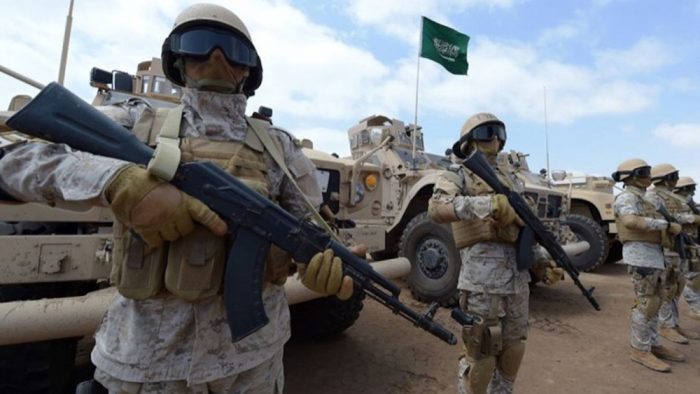
Belgium’s highest administrative court has suspended issuing arms export licenses for a number of Belgian companies in a bid to block the flow of arms to Saudi Arabia over its poor human rights record and the bloody campaign against Yemen.
On Friday, the Council of State decided on the move by an emergency ruling, which overturned the decision by the Wallonian minister-president, Elio di Rupo, who had granted licenses to two arms companies FN Herstal and CMI Defence.
Back in early July, Di Rupo had given authorization to the two Wallonia-based companies to sell weapons to the Saudi Arabia’s National Guard and Royal Guard. The licenses were meant to replace previous authorizations canceled by the same court.
“It cannot be excluded that there is a real risk for the weapons … to be used in the context of the conflict in Yemen or to contribute to internal repression,” the Friday ruling said.
The Saudi regime is the most important client of Wallonia’s arms industry. In 2018, Riyadh purchased weapons for $267 million from local arms companies, based in Belgium’s southern region, representing one-quarter of Wallonia’s total arms export.
Wallonian arms company John Cockerill, whose arms export license was suspended by a previous court ruling, gave military training to the Saudi army in eastern France two years ago, Amnesty International says.
Saudi Arabia has violated the very basics of human rights by killing tens of thousands of civilians in its war on Yemen, besides its other rights violations against its own citizens.
The Yemen conflict, which began in earnest in March 2015, has devastated large swathes of the country and triggered multiple humanitarian disasters, including famine and the internal displacement of millions of people into disease-infested camps and areas.
Saudi Arabia seeking to partition Yemen since 2011: Secret documents
Press TV – August 7, 2020
Leaked Saudi secret documents have revealed that the kingdom has been pursuing a policy to partition Yemen through supporting various tribal leaders.
According to the Qatari Arabic-language al-Jazeera television news network, which leaked the documents, they indicate that several plots adopted by the Riyadh regime have plunged Yemen into its current situation.
Some of the 162 pages of documents disclosed that the Saudi regime has been constantly trying to consolidate the authority of tribes by providing material support to some sheikhs in exchange for assurances that they would advance Riyadh’s agendas and policies.
The amount of support for the tribal leaders is definite, given the importance of each tribe and the extent of its sheikhs’ commitment to implement the directives and instructions received away from the sovereignty and authority of the Yemeni state.
The documents included a letter classified as “top secret” and dated February 14, 2010, in which then King Abdullah bin Abdulaziz instructed Saudi officials to provide 50 million riyals (about $13 million) to support and arm Yemeni tribes loyal to the kingdom and living in areas adjacent to the Saudi border.
The documents revealed that Saudi Arabia was dealing with the separation of southern Yemen as one of the main options for resolving what it describes as the “southern issue.”
A document dated from September 2012 showed that some southern entities received significant Saudi support after 2011.
Meanwhile, the kingdom had employed spies to report on meetings between southern leaders, which were held under international sponsorship.
The kingdom’s initiative towards southern powers took place without the knowledge of the Yemeni government, according to the document.
Other documents showed Saudi Arabia hindered German and Qatari reconstruction efforts in the northern Yemeni city of Sa’ada, after a ceasefire had ended six years of conflicts between Houthi fighters and forces loyal to then president, Ali Abdullah Saleh, in 2010.
In March 2015, Saudi Arabia launched a devastating war on Yemen with the declared aim of putting Abd Rabbuh Mansur Hadi back to power, and eliminating the popular Houthi Ansarullah movement.
Riyadh has not been alone in the bloody campaign, enjoying arms supplies from its Western backers and support from its regional allies, chief among them, the United Arab Emirates.
Over 100,000 people have been killed in the Saudi war on Yemen, according to some semi-official figures.
The Saudi regime has failed to fulfill the objective of its deadly campaign.
The war has also destroyed and shut down Yemen’s infrastructure. The Yemeni population has been subjected to large-scale hunger and diseases aggravated by the naval blockade imposed on the country by Saudi Arabia and its allies.
Britain’s Gentleman Posturing Comes Undone With Absurd Hypocrisy
By Finian Cunningham | Strategic Culture Foundation | July 13, 2020
It’s official Britain at its best, posing as the quintessential gentleman upholding morality while at the same time engaging in despicable double-dealing for grubby interests.
The British government announced sanctions against various nations last week, including Russia and Saudi Arabia, proclaiming the punitive measures were due to alleged human rights violations. Foreign minister Dominic Raab, summoning throaty British authority, declared to the House of Commons that it sent a “clear message” to the world of British rectitude.
The next day, however, London made a separate announcement that it was resuming arms sales to Saudi Arabia, despite an international outcry over war crimes committed in Yemen. Thousands of civilians have been killed in Yemen by Saudi warplanes bombing that country over the past five years.
It is estimated by the United Nations that the majority of civilian casualties have been caused by air strikes carried out by the Saudi-led coalition.
Britain, as well as the United States and France, has been arming the Saudi military coalition in its war in Yemen. The British arms trade was halted last year as “unlawful” by a court ruling out of concern for civilian deaths. Now though the British government has decided that the arms dealing can resume because violations were deemed by ministers to be “isolated” incidents. How quaint is the self-serving subjectivity of British officialdom.
The UK-based Campaign Against the Arms Trade (CAAT) slammed the government’s decision, saying it was “morally bankrupt”.
“The Saudi-led bombardment of Yemen has created the world’s worst humanitarian crisis, and the government itself admits that UK-made arms have played a central role in the bombing,” said CAAT, adding with wry irony: “The government claims that these are isolated incidents, but how many hundreds of isolated incidents would it take for the government to stop supplying the weaponry?”
What’s more, it turns out that the British posturing on human rights and sanctions was only meant for public appearance, not be taken seriously. That’s according to the British government itself.
The Independent newspaper reports that British defense minister Ben Wallace immediately phoned his counterpart in Riyadh to “apologize” for the latest imposition of sanctions. “The UK government privately showered Saudi Arabia’s government with praise,” it is reported.
The “discreet” phone call, which emphasized the importance of British arms sales to the oil-rich kingdom, was not publicly disclosed by London. Instead it was revealed by the Saudi state media which boasted about the lavish praise from the British government.
Between 2015 and 2019, it is estimated that Britain sold over £5.3 billion ($6.7 bn) worth of weapons to Saudi Arabia, much of that boosted by the war in Yemen.
The war has led to the world’s worst current humanitarian crisis with millions of Yemenis facing starvation and death from disease. Images of skeletal children dying from cholera and other preventable diseases should make anyone with a heart tremble with indignation.
The UK’s arms trade is fueling that catastrophe. Evidently, British avarice for profits is too great to put a check on its lucrative weapons dealing regardless of the death and destruction it generates.
But that best of British baseness is only matched by its government’s rank hypocrisy in posing as a defender of human rights and wielding sanctions against other nations.
The sanctions it imposed on Russia were, according to London, related the death in a Moscow prison of tax accountant Sergei Magnitsky in 2009. Russia claims Magnitsky died from an existing medical condition while in detention on massive corruption charges. Washington has used the case as a political stick to beat Moscow with. London is doing Washington’s bidding with its latest sanctions. It also fits the lurid narrative of Russia allegedly running assassination plots in Western states against dissidents and former spies. Thereby stoking a Cold War-style stand-off between the West and Russia.
Britain has been doing similar kowtowing to Washington with its belated ban on China’s Huawei telecoms firm being involved in modernizing mobile phone and internet networks.
Moscow has dismissed the latest British sanctions as “pointless” and said it would reciprocate with its own punitive diplomatic measures against London. That’s something which the British government may come to rue as it seeks to drum up wider international business in the post-Brexit world. The price for serving as Washington’s Jeeves-the-butler flunkey could be high indeed.
How absurd and surreal for London to lecture others about violations when it is complicit in genocide in Yemen. We could also cite Iraq and Afghanistan among many other foreign aggressions. That feat of preposterousness is a reflection of the insidious efficacy of British state propaganda and “education”. Polls show Britons are more likely (compared with other former colonial powers) to think that the British Empire was a good thing, despite the tens of millions who were killed under British subjugation.
One can only hope for the day when the world will actually implement human rights justice and the government in London will be sanctioned to the hilt for the pariah that it truly is.
Report finds UK enabled ‘unlawful’ Saudi-led naval blockade of Yemen, as London resumes arms sales to Riyadh
RT | July 8, 2020
The United Kingdom has been providing naval training to members of the Saudi-led coalition fighting in Yemen, skills which may have been used to impose a widely condemned embargo on the war-torn country, according to a new report.
The Royal Navy is instructing naval personnel from Saudi Arabia and the United Arab Emirates (UAE), Declassified UK has uncovered, even as the Gulf states continue to impose a devastating sea blockade on Yemen, resulting in millions of civilians living on the brink of starvation.
In September 2015, a UAE naval officer attended a four-week training course in southern England – just months after the Saudi-led coalition began its embargo on Yemen and bombed the port of Hodeidah, destroying warehouses, cranes and other infrastructure used to unload and store badly needed humanitarian supplies. The British program included instruction in ‘counter-smuggling’ and ‘board and search’.
Six months later, according to Declassified UK, Royal Navy officers spent a week in Saudi Arabia drilling 15 sailors on how to “board and search” vessels in “international waters or territorial seas.” The Saudi personnel were taught “high-risk search techniques” as well as detention procedures. Between September 2016 and March 2017, the UK also provided Saudi and UAE forces with instruction on protecting an Exclusive Economic Zone – the area off the coast of a country containing its exclusive fishing and other resource-gathering rights. The course was followed by training exercises with the Saudi Navy.
The relationship between the Royal Navy and the Saudi-led coalition continued even as the situation in Yemen rapidly deteriorated, the investigative report revealed. In 2019, the UAE navy received instruction on how to “board and search” vessels. The same year, nine Saudis, as well as personnel from Bahrain and the UAE, attended the Royal Navy’s officer academy at Dartmouth. Meanwhile, a number of commandos from the UAE were given instruction in amphibious operations during a 60-week Royal Marines course.
The training reportedly continues to the present day. According to the UK military watchdog, the Royal Navy has five sailors, including a lieutenant commander, on loan to the Saudi Navy. Three of the individuals are listed as instructors, suggesting that they could possibly be providing regular training to Saudi personnel. Some instruction coming from the UK has been provided by the private sector; BAE Systems, Britain’s largest arms firm, has a contract to train the Saudi navy.
The Saudi-led blockade, part of the coalition’s campaign against the Houthi rebels in Yemen, has been denounced by the international community as illegal. The UN’s special rapporteur on human rights and sanctions, Idriss Jazairy, warned that the embargo was “paralyzing a nation” and amounted to an “unlawful unilateral coercive measure under international law.” Millions of Yemenis now face starvation due in part to the sea blockade.
The humanitarian catastrophe has not deterred London from increasing its involvement in the conflict. On Tuesday, International Trade Secretary Liz Truss confirmed that the UK will resume arms sales to Saudi Arabia. The UK temporarily halted weapons deliveries to Riyadh after a court ruling in June 2019 found that the practice was unlawful. The British government now claims that, although there is cause for concern, “possible” war crimes carried out by the Saudi-led forces are only “isolated incidents.”
Israel’s ambitions in south Yemen increase risk of conflict with Houthis
By Omar Ahmed | MEMO | June 29, 2020
Israel’s involvement in the Yemen war throughout its five year duration is an open secret. In 2015, when the Saudi Arabian Embassy in the capital Sanaa was seized by the Houthi forces in retaliation for the Saudi-led coalition’s aggression, a large cache of Israeli-made weapons and ammunition was discovered, in addition to documents detailing intentions by the US to establish a military base on Perim Island near the Bab Al-Mandab Strait, “to protect [America’s] interests and ensure the security of Israel”. The island has been under the coalition’s control since it was wrested from the Houthis in the same year. Foreign mercenaries fighting on behalf of coalition-partner the UAE were also said to have been trained by the Israeli military at camps in the Negev Desert.
Amid the ever-growing normalisation of relations between Israel and Gulf states, it should come as no surprise that it was reported last week that Israel and the Emirati-backed separatist Southern Transitional Council (STC) are “secret friends” with meetings facilitated by the UAE.
The STC’s vice-chairman, Hani Bin Briek, confirmed that relations with Israel are “very good” while Tel Aviv reacted positively to the prospects of a “new autonomous state in Yemen”. The fragmentation of Arab states is, of course, consistent with Zionist strategies in the region; support for separatism in the south of Yemen echoes Israel’s decades-old policy of backing Kurdish statehood.
Covert Israeli interventions in Yemen are not without precedent. During the 1962-1970 civil war Israel airlifted arms and money in support of the royalist Mutawakkilite dynasty — ironically the predecessors of the Houthis — against the Nasserite republicans. The Saudis also supported the Zaydi monarchs who ultimately lost out in the war.
Securing Israel’s southern port of Eilat and a shipping lane which grants access not only to the Suez Canal but also the Red Sea and through Bab Al-Mandab to the Indian Ocean and beyond is of vital interest to Tel Aviv, especially as a gateway to the Far East and China, which is a major trading partner. The wars with Arab neighbours in 1956, 1967 and 1973 all involved blocking Israeli shipping. In the latter, Yemen closed off the Bab Al-Mandab Strait and blockaded the Red Sea. Ever since, Israel has viewed any attempt to block access to the Red Sea as an act of war and has threatened to deploy all branches of its military in the event of Iran doing so.
As with every other party involved in the current conflict in Yemen, access to all seaways leading to the Gulf of Aden, Arabian Sea and the Indian Ocean play a significant part in the underlying agendas. It is certainly one of the charges levied against the UAE over its involvement in the recent STC “coup” of Socotra Island.
However, the revelation of Israeli support for the STC is a worrying development for the prospects of maintaining a unified Yemen, however elusive that appears to be. Any attempts by Tel Aviv to back the emergence of a break-away “independent” state in the region should be treated with suspicion. The STC has made it clear that it intends to expand further beyond its current control of Aden and parts of the Dale and Lahj provinces. Clashes continue in the Abyan province with the Saudi-backed militia and there have been calls for solidarity with the STC in Hadhramout.
The Houthi-aligned government in Sanaa is committed to the territorial integrity of Yemen and is well-aware of Israel’s destructive ambitions. “The Israeli enemy sees Yemen as a threat to it, explained Information Minister Dhaifalla Al-Shami, “especially in its strategic location, so it has worked to find a foothold in Yemen through the UAE’s role.”
Earlier this month, the leader of the Houthi movement, Sayyid Abdul-Malik Al-Houthi, criticised Saudi Arabia and the UAE for siding with “the chief enemy of the Muslim world,” Israel.
“The US and Israel seek to enslave Yemeni people,” Al-Houthi said in a televised speech. “Their plots target the entire Muslim community, and are meant to disintegrate Islamic nations from within through sowing the seeds of discord and division.” He has stated previously that the Houthis are ready to support the resistance factions in Lebanon and Palestine against Israel.
Moreover, the Houthis, who are supported by most of the Yemeni armed forces, have threatened Israel once before with “revenge” over its known involvement in the Yemen war of aggression. The Defence Minister in the National Salvation Government (NSG), General Mohammed Al-Atefi, said late last year that a “bank of military and maritime targets” have already been identified and that they will not hesitate to attack them when the leadership decides to do so.
These are security challenges that Israel takes seriously, especially with the long-range ballistic missiles and armed drones in the Yemeni army’s arsenal, which cross-border offensives against Saudi have shown to be very accurate. Israel has also expressed a willingness to attack Houthi targets near Bab Al-Mandab.
The Houthis also have a consistent stance on supporting the Palestinian cause. Al-Houthi even went as far as to offer to exchange captured Saudi pilots for the release of prominent Hamas members imprisoned in the Kingdom.
Direct military confrontation between Israel and the Houthis is unlikely and unrealistic for the time being, although both sides have voiced a willingness to take action if necessary. However, Israel is playing a dangerous game; should it become more embedded in the war in Yemen it runs the risk of conflict with the Houthis. Just as Israel has securitised its access to the Bab Al-Mandab Strait, it should not be surprised if the Houthi authorities decide to react to Israeli attempts to sow further discord and break up the already fragile Yemeni state. The chief-backer of the STC, the UAE, has also been threatened by the Houthis. “Abu Dhabi can be attacked at any time,” claimed a pro-Houthi military spokesperson.
At the moment, the main focus of the Houthis is to take control of Marib city from the Saudi-backed militia fighting on behalf of the internationally-recognised government-in-exile, which is increasingly proving to be an irrelevant mouthpiece of Riyadh. The NSG, which controls most of Yemen in terms of population density, will turn its attention to the south once Marib has been secured. When the inevitable clash with the STC comes, we will see the indirect confrontation with Israel come out into the open.
UN Warns Many Will “Starve to Death” in Yemen as Saudi Fuel Blockade Hinders COVID-19 Battle
By Ahmed AbdulKareem | MintPress News | June 26, 2020
SANA’A, YEMEN — The streets of Sana’a have retained much of their character throughout the past six years of war. This, despite the ever-present threat of Saudi bombardment and the myriad viruses methodically working their way through the population, most recently COVID-19. The afternoon rush hour still brings out the buses, taxis and private vehicles that choke Haddah Street in northern Sana’a. Horns blare at junctions as drivers switch lanes, looking for any advantage they can find in a ritual that, until recently, brought a sense of welcome normalcy to a country faced with constant uncertainty. But six years of war have finally caught up with one of the last semblances of routine in Yemen.
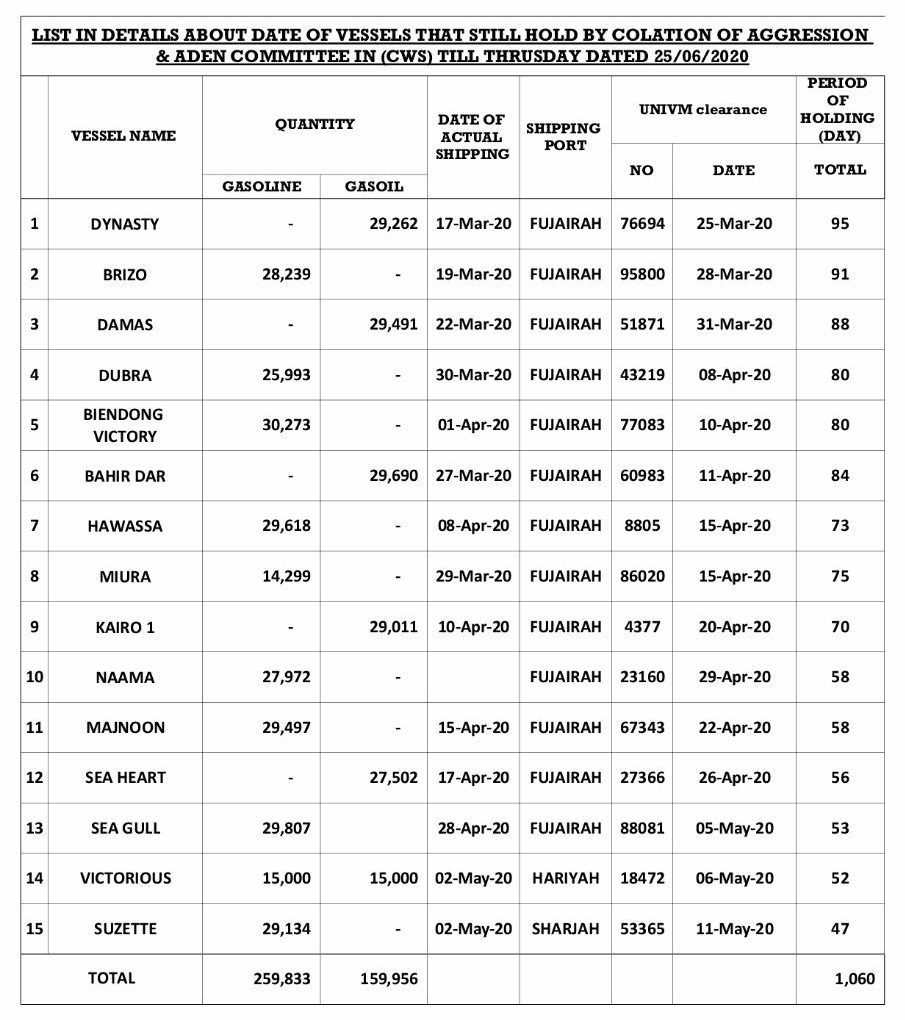
In move undertaken by Saudi Arabia that is sure to exacerbate the country’s already-dire situation, the oil-rich U.S. ally is preventing oil tankers from delivering much-needed fuel to Yemen’s hospitals, water pumps, bakeries, cleaning trucks, and gas stations, plunging it, particularly its northern districts, into an acute fuel crisis.
According to a statement released by the Yemen Oil Company, at least 15 tankers carrying over 419,789 tons of fuel have been trapped at sea for over a month despite being checked and issued permits by both the Saudi-led Coalition and the United Nations. Now, the situation in the war-torn country is no longer tolerable.
The CEO of Yemen Oil said in a press conference held in the front of the United Nation office in Sana’a on Wednesday that the company’s remaining reserves won’t last for more than a few days. A statement issued by the company’s branch in Hodeida confirmed that its reserve stock had reached a critical stage and is no longer sufficient to supply the most important sectors in the country.
“One of the biggest threats in the past 100 years”
This is not the first time that Saudi Arabia has triggered a fuel crisis in Yemen, however, this blockade is significantly larger than previous ones and comes at a time when Yemen is battling COVID-19, which is spreading rapidly across the country. “It is the worse than what we expected to happen,” taxi driver Mohammed Abdullah Masoud said from beneath his mask, bags under his tired eyes. He had been waiting in line for two days for petrol. His older brother died last week from COVID-19 and he is now responsible for providing his brother’s wife and children with food and medicine as they stay quarantined at home. “My brother’s family needs bread and some vegetables. Nobody except me can provide them with essential necessities to stay alive. If I don’t have the fuel by the end of the day, something bad could happen to them.” he told MintPress.
The Saudi fuel blockade has not only forced thousands of Yemenis already struggling against an unprecedented explosion of famine, disease, and epidemics to wait for days in lines as far as the eye can see, it has also left water pumps, hospital generators, and transport vehicles without fuel and that lack of fuel has accelerated the spread of the COVID-19 as empty generators shut down facilities including an oxygen factory, hospital, nurseries, and a kidney failure center, all which need uninterrupted and stable electricity 24 hours a day.
Cholera, dengue fever, and malaria rates have also spiked, particularly in Hodeida, Sadaa, and Hajjah where summer temperatures can reach 129 degrees and the lack of fuel has left residents unable to escape the heat as the generators used to power air conditioners sit idle.
The price of food and medicine is also skyrocketing and the already negligible crops in Yemen are at risk of dehydration as farmers are unable to power the wells and pumps needed o to irrigate their fields. At least 80 percent of Yemen’s 28 million-strong population is reliant on food aid to survive in what the United Nations has called the world’s worst humanitarian crisis and the decimation of the remaining agricultural sector is likely to increase that figure.
On Wednesday, Mark Lowcock, the United Nations Under-Secretary-General for Humanitarian Affairs and Emergency Relief Coordinator, told a closed UN Security Council meeting that many more people are likely to starve to death, succumb to COVID-19 and die of cholera, adding that the coronavirus was spreading rapidly across Yemen and about 25 percent of the country’s confirmed cases have died – “five times the global average.”
He added, “We have never before seen in Yemen a situation where such a severe acute domestic economic crisis overlaps with a sharp drop in remittances and major cuts to donor support for humanitarian aid – and this of course is all happening in the middle of a devastating pandemic.” For her part, UN Humanitarian Coordinator Lise Grande described COVID-19 in Yemen as “one of the biggest threats in the past 100 years.”
The Saudi blockade comes amid sustained Saudi-coalition bombing runs. Warplanes have been hovering over Sana’a and other provinces and have targeted several areas in Bydha, al-Jawf, Marib, and Sana’a, killing and injuring dozens of people. On Thursday, at least five people were killed and dozens were injured when Saudi warplanes destroyed four cars traveling on public roads in Radman and Qaneih.
The only effective option
Despite the challenges, Yemenis have strong morale and a seemingly unbreakable will to continue to withstand the Saudi ambitions for their country. “We die silently but with glory. We will never give in to Saudi Arabia,” 37-years-old Hamid told MintPress as he stood in a fuel line at a gas station in Sana’a. It has become a weekly ritual for Hamid, who queues in line for hours to get 30 liters of fuel every seven days. Hamid and the others waiting in line were gleefully checking their social media feeds and celebrating news reports that explosions were taking place in the Saudi capital following attacks bu the Houthi-led Yemeni Army.
In retaliation for the fuel embargo and the continued airstrikes on their country, the Houthi-led Yemeni army carried out large-scale attacks on a number of strategic sites in Saudi Arabia using a barrage of ballistic and winged missiles and drones which targeted the headquarters of the Saudi Defense Ministry and the General Intelligence Agency as well as King Salman Air Base, among other military targets in the capital Riyadh and the southern regions of Najran and Jizan. For many, retaliation against the Kingdom represents the only effective option to quell the Saudi attacks and blockade on their country.
Mohammed Abdulsalam, the spokesman and chief negotiator for Ansar Allah, the political wing of the Houthis, emphasized that the operation was aimed at restoring stability to the country and securing an end to the Saudi-led blockade. He said that Yemenis have no option but to confront and resist Saudi Arabia and urged international bodies to pressure the Saudi regime into ending the offensive.
The Saudi-led coalition has acknowledged the attacks but claims that the missiles and drones were intercepted and destroyed but provided no evidence to back that claim. Coalition spokesman Colonel Turki al-Malki called the strike a “deliberate and systematic operation to target civilians and civilian objects,” adding later that the coalition had “ intercepted” eight bomb-laden drones and three ballistic missiles. A high-ranking Houthi official told MintPress that the raids did indeed hit their intended targets, adding the army used a new weapon in the attack that will be soon be revealed.
The United States and other countries, including France and Britain, condemned the attack on their Saudi ally. They have thus far remained silent on the recent Saudi attacks and fuel blockade on Yemen which preceded the attacks on Saudi Arabia. Yemenis have accused Western countries of abandoning their much-touted commitment to human rights in exchange for Saudi arms deals. “We are killed by weapons belong[ing] to these countries, and get nothing from them except dirty statements that offend their [own] people,” a Yemeni tribal leader who spoke on condition of anonymity for fear of reprisals, told MintPress in response to the U.S. condemnation.
For their part, Ansar Allah censured statements condemning their retaliatory attacks. Abdulsalam said that “condemnations of our operations are no longer effective. They come within the framework of political courtesies and are in part funded by Saudi Arabia.” He insisted that Western countries should instead pressure the kingdom to stop the war. “The American administration practices the most heinous looting of Saudi money,” he added, “The statement of the American mission in Saudi Arabia following our operation is a kind of blackmail, nothing else.”
The Yemeni attacks are the tip of the iceberg as multiple high-ranking officials in the Houthi-backed Yemeni Army revealed to MintPress that they are preparing more attacks against targets in Saudi Arabia, including on oil facilities, royal palaces, military bases, airports, Saudi oil carriers, and other “sensitive targets” that they declined to mention. The consequences for Saudi Arabia will be dire until the blockade is lifted and the offensive comes to an end, they promise. “We should not let Saudi Arabia starve us and carry on enjoying stability and wealth.”
The Saud-led Coalition is heavily backed by Western countries, especially the United States, Britain, and Frace, which have used systematic economic strangulation as a weapon of war — targeting jobs, infrastructure, the agricultural sector, fuel and water pumping stations, factories, and the provision of basic services, as well as imposing a land, sea, and air embargo.
Meanwhile, as a direct result of the oil blockade, many Yemeni officials say that they are already seeking assistance from Iran, hoping that the Iranian government will come to their aid as they did in Venezuela, where six Iranian vessels carried fuel, food, and medicine to Caracas in defiance of U.S. sanctions. They asked Ansar Allah to work with Iran to circumvent the blockade and supply the vital facilities in the country with fuel. If such a move is carried out, Tehran will no doubt win the hearts and minds of Yemenis wary of any foreign intervention, all thanks to the Saudi-led coalition and the United States which in large part are carrying out the war with hopes to limit “Iranian influence” in Yemen.
Ahmed AbdulKareem is a Yemeni journalist. He covers the war in Yemen for MintPress News as well as local Yemeni media.
Yemen’s UAE-Backed Transitional Council ‘Secret friends’ with Zionist Entity: Israeli Report
Al-Manar | June 22, 2020
According to an article in Israel Today, the UAE-backed Yemeni separatist Southern Transitional Council (STC) are “secret friends” with the Zionist entity.
A new state in the Middle East had been declared behind closed doors, the article said, referring to the STC-held territory which includes the interim capital of Aden and more recently the seizure of the Socotra island from the Saudi-backed government in Yemen.
The piece, which suggests the Port of Aden “casts a friendly eye on the Jewish state”, cites a recent press conference held by the STC which expressed a positive attitude towards the Zionist entity, although the issue of diplomatic relations are yet to be discussed.
Hani Bin Briek, the vice-chairman of the STC, tweeted that “relations between Israel and Qatar are very good” and also recounted former Israeli President Shimon Peres’ visit to Doha and current Prime Minister Benjamin Netanyahu’s recent visit to Oman.
“Arabs and Israelis agree on a two-state solution, and Arab countries normalizing relations with Israel.”
The stance on normalizing ties with Tel Aviv follows current trends among Gulf states, including the STC’s patron, the UAE.
The report also states that many Israelis reacted positively and welcomed the developments of a “new autonomous state in Yemen”, with sources telling Israel Today that Tel Aviv has been conducting secret meetings with the STC.
Earlier on Friday, leader of the Houthi revolutionary movement, warned Saudi Arabia and the UAE against normalization with the Zionist entity. “Saudi Arabia and the UAE are siding with Israel, which is the chief enemy of the Muslim world,” Abdul-Malik Al-Houthi said in a televised speech broadcast live from the Yemeni capital Sanaa.
The Emirati-backed group, which is led by former Aden governor Aidrus Al-Zoubaidi, announced in April its autonomy, although this has been rejected by the Saudi-backed Yemeni government-in-exile as well as the UN.
Earlier this month the STC also confirmed it had withdrawn from the so-called Riyadh Agreement, which was a power-sharing deal intended to end the on-going conflict between the STC and the Saudi-backed forces in Yemen.
Despite court ban, UK continues arms sales to Saudi Arabia: Report

Smoke billows following an airstrike by Saudi-led coalition in the Yemeni capital, Sana’a, June 16, 2020. (Photo by AFP)
Press TV – June 21, 2020
The British government has apparently turned a blind eye to a landmark court ruling that restricts the sales of arms to Saudi Arabia for use against Yemen.
According to a report published by the British daily Guardian on Sunday, the court of appeals declared last year that British arms sales to the kingdom were “unlawful,” and accused ministers of ignoring whether airstrikes that killed civilians in Yemen broke humanitarian law.
At the time, the court barred the UK government from approving any new license to Saudi Arabia and ordered then Secretary of State for International Trade Liam Fox to hold an immediate review of at least 4.7 billion pounds’ worth of arms deals with Saudi Arabia.
British international trade authorities said at the time that the process would take “up to several months.”
Nevertheless, arms exports continue without properly assessing the risk to civilians, a year after the verdict, and fighter jet components as well as aircraft maintenance services are being offered to the Riyadh regime.
British multinational defense, security, and aerospace company BAE Systems, which is recognized as the UK’s largest arms exporter to Saudi Arabia, confirmed in its 2019 report that it continues to provide the kingdom with support services for twin-engine and multirole Eurofighter Typhoon warplanes under a contract struck in 2018.
Lately, Shadow Secretary of State for International Trade Emily Anne Thornberry, together with members of other opposition parties, wrote a letter to Secretary of State for International Trade Liz Truss in protest at the arms licenses that continue to operate.
“We are left to assume that – despite being ordered to review these licenses by the courts, and having 12 months to do so – your department has simply chosen not to comply,” they argued.
They warn that the British government’s expected failure to comply “creates the illogical situation where a UK company that applies for a license today will have that application rejected, but another company that was granted its license prior to 20 June last year may export exactly the same arms without restriction.”
Andrew Smith, of the Campaign Against the Arms Trade, said, “The UK government has consistently put arms company interests ahead of the rights and lives of people in Yemen. The government has proven that it cannot be trusted to implement its own rules.”
The United Kingdom has reportedly licensed the sale of arms worth over 5.3 billion pounds to Saudi Arabia ever since Riyadh and a number of its regional allies launched a devastating war on Yemen in March 2015 in order to bring former President Abd Rabbuh Mansur Hadi back to power and crush the Houthi Ansarullah movement.
The US-based Armed Conflict Location and Event Data Project (ACLED), a nonprofit conflict-research organization, estimates that the war has claimed more than 100,000 lives over the past five years.
Featured Video

Deception – Submarines against Olof Palme
or go to
Aletho News Archives – Video-Images
From the Archives
Woolsey Fire started at Santa Susana Field Lab — where “radioactive materials released were never accurately measured”
By John Laforge | CounterPunch | November 30, 2018
In my Nov. 16 column, I reported on potential radiation risks posed by California’s Woolsey wildfire having burned over parts or all of the Santa Susana Field Laboratory—south of Simi Valley, Calif., 30 miles outside Los Angeles—site of at least four partial or total nuclear reactor meltdowns.
The field laboratory operated 10 experimental reactors and conducted rocket engine tests. In his 2014 book Atomic Accidents, researcher James Mahaffey writes, “The cores in four experimental reactors on site … melted.” Reactor core melts always result in the release of large amounts of radioactive gases and particles. Clean up of the deeply contaminated site has not been conducted in spite of a 2010 agreement.
Los Angeles’s KABC-7 TV reported Nov. 13 that the Santa Susana lab site “appears to be the origin of the Woolsey Fire” which has torched over 96,000 acres. Southern Calif. Public Radio said, “According to Cal Fire, the Woolsey Fire started on the afternoon of Thursday, Nov. 8 … on the Santa Susana site.” … continue
Blog Roll
 Aletho News
- Dr. Abu-Sitta: Beirut ‘felt like a day in Shifa Hospital’
- Iran Has Won the War, It Will Be Up to the US to Secure the Peace: Mohammad Marandi
- Iran condemns assassination threats against Iranian negotiators amid US talks
- Brussels cannot say where its own pipeline inspectors are as Hungary’s oil lifeline remains shut
- Israel’s Iran War: Myth and Reality
- Between war and industrial breakdown: The US-Israeli attrition crisis
- Pressure builds on Iran to ‘drop’ Lebanon ceasefire demand as Islamabad talks hang in balance
- In another clash report, US denies agreement to release Iran’s assets
- What is fueling unrest across the EU?
- Why no power can undermine Iran’s eternal dominance over the Strait of Hormuz
- If Americans Knew
- Pro-Israel ‘Thinktanks’ and Individuals who Influence U.S. Foreign Policy
- Mearsheimer reveals how Israel dictates US policies on Iran, Gaza – video
- After killing 350+, Israel still has a “score to settle” with Lebanon before ceasefire – Daily Update
- Military aid to Israel emerges as the latest political litmus test for Democrats
- The only Palestinian children’s rights organization closes following years-long Israeli campaign against it
- ‘I Can’t Forget the Smell’: Lebanese Reel After Israel Kills Over 300 in Single Day
- DNC Shoots Down Resolutions Calling Out AIPAC and Limiting Arms to Israel
- TCN: Is Israel Blackmailing President Trump?
- Israel killed at least 303 Lebanese yesterday – who were they? Daily Update
- Amnesty: Urgent – Protect Lebanese civilians from brutal escalation in Israeli attacks
- No Tricks Zone
- German Expert: Heat Dome Led To Record Temps In Western USA…Warmer In 1934, 1936
- New Study: No Linear Warming Or Glacier Retreat Along Northern Antarctic Peninsula Since 1980s
- An Inconvenient Tree: Uncovered In Alps… Europe Much Warmer Than Today 6000 Years Ago
- New Study Reports A 60% Slowdown In Greenland’s Ice Loss Rate In The Last Decade
- Low Intensity Tornado Wrecks Major Solar Farm, Creating A Potential Toxic Dump
- New Study Finds Warming Saves Lives…Cold Temperatures 12 Times More Deadly Than Excess Heat
- German Science Blog Accuses PIK Climate Institute Of Hallucinating Climate Tipping Points
- Devastating Assessment Of Comirnaty Vaccine By Former Senior Pfizer Europe Toxicologist
- New Study: CO2 Is ‘Effectively Negligible’ As An Explanatory Climate Change Factor Since 2000
- Former Pfizer Toxicologist Dr. Helmut Sterz Tells Bundestag Hearing Pfizer Vaccine Should Have Never Been Approved
 Aletho News